
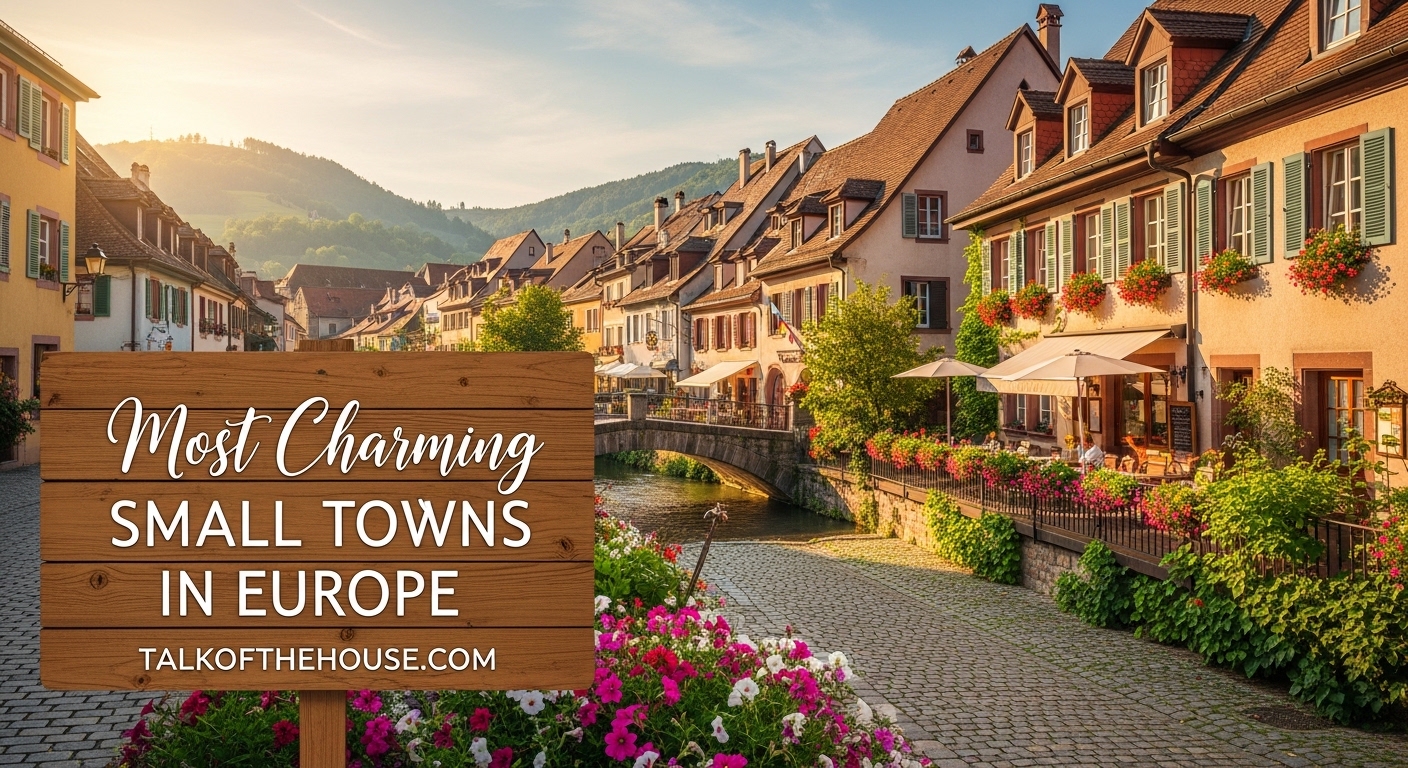
There is something magical about stumbling upon a small European town that time seems to have forgotten. I still remember my first encounter with Dingle, Ireland, where the pub owner knew everyone’s name and the music flowed as freely as the Guinness. That moment sparked my obsession with finding the most charming small towns in Europe, places where cobblestone streets lead to ancient cathedrals and half-timbered houses line winding alleys.
The most charming small towns in Europe are those that transport you to another era while offering authentic connections to local culture. These destinations combine medieval architecture with genuine hospitality, creating experiences that major cities simply cannot replicate. From colorful fishing villages to fairytale castle towns, each destination on this list has earned its place through centuries of history and undeniable visual appeal.
This guide covers 12 of the most charming small towns across Europe based on my travels through 23 countries over the past decade. You will discover what makes each town special, when to visit, how to get there without a car, and insider tips for experiencing the authentic charm that drew me to these places in the first place.
Table of Contents
Quick Answer: The 12 Most Charming Small Towns
Here are the destinations that define European charm in 2026:
- Dingle, Ireland – Traditional music and coastal beauty on the Wild Atlantic Way
- Cesky Krumlov, Czechia – A medieval gem wrapped around a horseshoe bend in the Vltava River
- Burano, Italy – Rainbow-colored houses reflected in quiet Venetian canals
- Beilstein, Germany – Sleeping Beauty of the Moselle with castle ruins and Riesling vineyards
- Rothenburg ob der Tauber, Germany – Germany’s best-preserved medieval walled town
- Colmar, France – Half-timbered houses and flower-decked canals in Alsace wine country
- Eguisheim, France – Concentric medieval circles surrounding a castle in Alsace
- Bled, Slovenia – A turquoise lake with an island church and cliff-top castle
- Brugge, Belgium – The Venice of the North with canals and medieval grandeur
- Hallstatt, Austria – Alpine perfection with a mirror-like lake and mountain backdrop
- Albarracin, Spain – Pink-hued medieval fortress town hidden in the Spanish hills
- Portofino, Italy – Pastel perfection on the Italian Riviera with celebrity harbor views
Towns at a Glance
| Town | Country | Region | Best For | Top Highlight |
|---|---|---|---|---|
| Dingle | Ireland | County Kerry | Traditional culture | Fungie the dolphin tours |
| Cesky Krumlov | Czechia | South Bohemia | Medieval architecture | Castle tower views |
| Burano | Italy | Veneto | Photography | Colorful canal houses |
| Beilstein | Germany | Rhineland-Palatinate | Wine lovers | Metternich Castle ruins |
| Rothenburg | Germany | Bavaria | Christmas markets | Medieval city walls |
| Colmar | France | Alsace | Food and wine | Little Venice district |
| Eguisheim | France | Alsace | Quiet charm | Concentric village layout |
| Bled | Slovenia | Upper Carniola | Outdoor activities | Lake island church |
| Brugge | Belgium | West Flanders | Chocolate and beer | Medieval Belfry |
| Hallstatt | Austria | Upper Austria | Scenic beauty | Skywalk viewpoint |
| Albarracin | Spain | Aragon | Off the beaten path | Medieval fortress walls |
| Portofino | Italy | Liguria | Coastal glamour | Harborfront promenade |
What Makes a European Town Truly Charming
After visiting dozens of small towns across Europe, I have developed a personal criteria for what separates genuinely charming places from tourist traps. Authentic charm requires more than just pretty buildings. It demands a sense of history that remains alive in daily life, local residents who still outnumber visitors, and an atmosphere that invites you to slow down and savor the moment.
The towns on this list share several characteristics. They feature historic architecture spanning centuries, from medieval walls to baroque cathedrals. Their streets were designed for walking, not cars, with cobblestone alleys that reveal new discoveries around every corner. Most importantly, they have maintained their traditional culture, whether through local crafts, regional cuisine, or festivals that have occurred annually for generations.
1. Dingle, Ireland – Music and Coastal Magic
Dingle was the first small European town that truly stole my heart. Located on the Dingle Peninsula in County Kerry, this colorful harbor town feels like Ireland distilled into its purest form. Brightly painted pubs line the main street, musicians gather for spontaneous sessions, and the locals greet you like an old friend from the moment you arrive.
The town sits on the Wild Atlantic Way, Ireland’s spectacular coastal driving route. What makes Dingle special is its commitment to traditional Irish culture in an age of globalization. You can still hear Gaelic spoken in the pubs, watch artisans craft traditional items in local workshops, and experience music sessions that continue until the early morning hours.
My favorite spot in Dingle is Murphy’s Ice Cream shop, where they make flavors using locally foraged ingredients like gorse flower and sea salt. But the real magic happens after dark when the pubs fill with locals and visitors alike, and the traditional Irish music begins. Every pub seems to have its own character, from Dick Mack’s, where you can enjoy a pint in a converted hardware store, to O’Sullivan’s Courthouse Pub, famous for its late-night sessions.
Beyond the town itself, the Dingle Peninsula offers some of Ireland’s most dramatic scenery. The Slea Head Drive takes you past ancient beehive huts, stunning cliff views, and the occasional dolphin sighting. Fungie, the famous bottlenose dolphin who lived in Dingle Harbor for decades, may no longer be with us, but boat tours still operate and dolphin sightings remain common.
Best Photo Spots in Dingle
Photographers will find endless opportunities throughout Dingle. The harbor at sunrise offers reflections of the colorful buildings in calm water. St. John’s Street provides the iconic view of pastel houses climbing the hillside. For dramatic coastal shots, drive to Coumeenoole Beach where the Atlantic crashes against golden sand with the Blasket Islands visible offshore.
Solo Travel in Dingle
Dingle ranks among the safest and most welcoming towns for solo travelers I have encountered in Europe. The pub culture encourages conversation, and you will rarely find yourself drinking alone for long before someone strikes up a chat. The town is small enough to walk everywhere, and locals are genuinely happy to offer directions or recommendations.
2. Cesky Krumlov, Czechia – A Medieval Fairytale
Cesky Krumlov looks like it was plucked from the pages of a Brothers Grimm story. The Vltava River wraps around the old town in a perfect horseshoe bend, with a commanding castle perched on the rocky promontory above. Despite its popularity, this UNESCO World Heritage site remains one of the most visually stunning towns in Europe.
The town’s history spans over 700 years, with the Rosenberg family castle dominating the skyline. What struck me most was the sense of stepping back in time. The old town is a maze of narrow lanes lined with Renaissance and baroque buildings, many still housing family businesses that have operated for generations. The castle complex is the second largest in Czechia, featuring a unique revolving theater in the gardens.
Yes, Cesky Krumlov attracts crowds. I visited in July and found the main square packed with tour groups by midday. But here is my secret: stay overnight. Most visitors arrive on day trips from Prague, leaving by late afternoon. The town transforms after 5 PM when the day-trippers depart. That is when you can wander the empty streets, enjoy dinner at a riverside restaurant, and truly appreciate the magic of this place.
The castle tower offers panoramic views worth the climb. From the top, you can see how the town fits within the river bend, with the orange rooftops creating a stunning visual pattern. The bear moat, still inhabited by a bear family, adds a quirky historical touch dating back to the Rosenberg family’s coat of arms.
Best Photo Spots in Cesky Krumlov
The classic view comes from the castle gardens overlooking the old town, especially beautiful at golden hour when the rooftops glow. Another stunning perspective is from the Vltava riverbank near the lazebnicky bridge, capturing the castle reflection in the water. For a unique angle, climb to the castle’s Baroque theater terrace.
Avoiding the Crowds
Visit between November and March for a completely different experience. Winter transforms Cesky Krumlov into a peaceful retreat with occasional dustings of snow. The Christmas market here is more authentic than Prague’s tourist-heavy version. Even in summer, arriving before 9 AM gives you the streets to yourself for a few precious hours.
3. Burano, Italy – Venice’s Colorful Neighbor
Burano is what would happen if a rainbow collided with a fishing village. This small island in the Venetian Lagoon is famous for its brightly painted houses, each one a different shade of blue, pink, yellow, or green. The tradition of painting houses in vivid colors dates back centuries, originally helping fishermen identify their homes from the sea.
I arrived in Burano on a misty morning when the colors seemed almost surreal against the gray sky. The island is small enough to explore in a few hours, but those hours will provide enough photographic material to last a lifetime. Beyond the colorful facades, Burano is known for its lace-making tradition, which has been practiced here since the 16th century.
The town is quieter than Venice proper, though it does see significant day-tripper traffic. The key difference is the pace. While Venice can feel overwhelming with its crowds and maze-like alleys, Burano invites you to stroll leisurely along its canals, admire the reflections of colored houses in the water, and enjoy fresh seafood at waterfront restaurants.
The Lace Museum offers insight into the intricate craft that sustained the island for centuries. You can still watch artisans at work in small shops throughout the town, though much of the lace sold today is imported. The leaning bell tower of San Martino Church adds a touch of Pisa-like charm to the island’s skyline.
Best Photo Spots in Burano
Every canal offers photo opportunities, but the most iconic view is along Via Galuppi where the houses create a perfect rainbow reflection. Visit early morning or late afternoon for the best light. The Tre Ponti area, where three canals meet, provides particularly charming compositions.
Getting There Without a Car
Burano is accessible only by water, making it refreshingly car-free. Take the vaporetto from Venice’s Fondamente Nove stop. The journey takes about 45 minutes and passes the cemetery island of San Michele and the glass-making island of Murano. Consider buying a day pass if you plan to visit multiple islands.
4. Beilstein, Germany – The Sleeping Beauty of the Moselle
Beilstein is so small you might miss it if you blink while driving along the Moselle River. This tiny village, nicknamed the Sleeping Beauty of the Moselle, clings to a hillside beneath the ruins of Metternich Castle. With fewer than 150 residents, it offers one of the most intimate small-town experiences in Germany.
I discovered Beilstein during a wine-tasting road trip through the Moselle Valley. While larger towns like Cochem draw busloads of tourists, Beilstein remains surprisingly peaceful. The village consists of essentially one main street of half-timbered houses leading up to the castle ruins. A few small hotels and restaurants cater to visitors who make the journey.
The climb to Metternich Castle rewards you with panoramic views over the Moselle River and surrounding vineyards. The ruins are free to explore and offer an atmospheric setting for sunset photography. The castle was destroyed by French troops in the 17th century and never rebuilt, leaving romantic stone walls covered in ivy.
The Moselle region is Riesling country, and Beilstein makes an excellent base for wine exploration. Local wineries offer tastings in their historic cellars, and many have been family-operated for generations. The steep slate slopes of the surrounding hillsides produce some of Germany’s finest white wines.
Best Photo Spots in Beilstein
The view from the castle ruins overlooking the village and river bend is the classic shot. For a different perspective, photograph the village from across the river near the bridge. The half-timbered houses glow golden in late afternoon light.
Accessibility Without a Car
Beilstein is reachable by the Moselsteig trail for hikers, or by boat on the Moselle River. The KD river cruise line stops here seasonally. The nearest train station is in Bullay, about 6 kilometers away, with infrequent bus connections. Having a car makes visiting easier, but the difficulty reaching Beilstein is precisely what keeps it peaceful.
5. Rothenburg ob der Tauber, Germany – Medieval Perfection
Rothenburg ob der Tauber represents the pinnacle of medieval German charm. Its completely intact city walls, half-timbered houses, and cobblestone streets make it feel like a living museum. The town has appeared in films and inspired Disney animators for good reason. Walking through the old gate feels like stepping through a time portal.
My first visit to Rothenburg was during December, when the Christmas market filled the main square with wooden stalls and the scent of mulled wine. The town takes Christmas seriously, with the famous Käthe Wohlfahrt Christmas store operating year-round. But even without holiday decorations, Rothenburg’s medieval architecture impresses.
The town’s preservation is remarkable considering it was heavily damaged during World War II. American soldiers approaching the town were so moved by its beauty that they negotiated a surrender rather than bombard it. This story is told in detail at the Imperial City Museum, along with the town’s fascinating history as a free imperial city during the Middle Ages.
Walking the complete circuit of the city walls takes about an hour and offers unique perspectives of the town from above. The Plönlein, a picturesque fork in the road framed by half-timbered houses, is one of Germany’s most photographed spots. At night, the Night Watchman’s tour provides entertaining historical stories as you explore the darkened streets.
Best Photo Spots in Rothenburg
The Plönlein intersection is the iconic shot, best photographed early morning before crowds arrive. The castle gardens offer elevated views of the old town. For atmospheric shots, walk the walls at golden hour when the stone glows warm. The Burgtor gate provides a dramatic entrance framing.
Budget Considerations
Rothenburg is more expensive than many German small towns due to its popularity. Hotel rates spike during Christmas market season and summer weekends. Visit midweek in shoulder season (April-May or September-October) for better prices. The town has a touristy feel in the center, but wander a few streets away from the main square for more authentic dining options at lower prices.
6. Colmar, France – Alsace Wine Country Jewel
Colmar surprised me with its blend of French and German influences, a result of changing borders throughout history. The old town is a masterpiece of half-timbered architecture, flower-filled window boxes, and canals that earned it the nickname Little Venice. Located in the heart of Alsace wine country, Colmar combines visual charm with exceptional food and wine.
The old town is divided into distinct quarters, each with its own character. The Petit Venise (Little Venice) district features canals lined with restaurants and colorful houses. The Tanneurs district showcases the medieval tanning industry with its distinctive tall houses. Walking through these areas, you will understand why Colmar inspired the animated film “Howl’s Moving Castle.”
Colmar is larger than many towns on this list, with a population around 70,000. This means more amenities, better restaurant options, and excellent public transportation. The town serves as an ideal base for exploring the Alsace wine route, with its string of picturesque villages stretching north toward Strasbourg.
The Unterlinden Museum houses the Isenheim Altarpiece, one of the most important works of German Renaissance art. But you do not need to enter museums to appreciate Colmar’s beauty. Simply wandering the streets, admiring the baroque St. Martin’s Church, and stopping at a winstub (traditional Alsatian tavern) provides a perfect day.
Best Photo Spots in Colmar
The canals of Petit Venise offer endless reflections, especially beautiful during early morning calm. The Maison des Têtes, with its 111 sculpted heads, provides unique architectural detail. The Quai de la Poissonnerie is the classic postcard view of Colmar. Visit in December for the Christmas market when the town glows with lights.
Best Time to Visit
Spring brings flowers to every window box, creating a riot of color. September is ideal for wine harvest season with grape festivals throughout the region. December transforms Colmar into a Christmas wonderland with multiple themed markets. Avoid August when the combination of European vacationers and heat can make the town feel crowded and uncomfortable.
7. Eguisheim, France – Concentric Circles of Charm
Eguisheim is what happens when a medieval town planner thinks in circles. This tiny Alsatian village is built in concentric rings around a central castle, creating a unique layout that feels like wandering through a snail shell of half-timbered houses. With a population under 2,000, Eguisheim offers an intimate experience just a short drive from Colmar.
I visited Eguisheim on a rainy Tuesday in autumn and found myself nearly alone among the colorful houses. The circular streets are lined with Renaissance and medieval buildings, many featuring the traditional Alsatian timber framing. Flower boxes overflow with geraniums, and the occasional stork nest on a rooftop reminds you that you are in traditional Alsace.
The village has won recognition as one of France’s most beautiful, and it is easy to see why. Walking the circular route takes less than an hour, but you will want to stop frequently to admire architectural details, sample local wines at tasting rooms, and photograph the endless charm of the setting. The Château d’Eguisheim, while not open to the public, provides a fairytale centerpiece.
Unlike its larger neighbor Colmar, Eguisheim feels genuinely lived-in. You will see locals chatting in the street, children playing in the central square, and the rhythm of daily life continuing much as it has for centuries. The village is surrounded by vineyards, and many families have been making wine here for generations.
Best Photo Spots in Eguisheim
The concentric layout means every corner offers a new composition of colorful facades and curved streets. The central square with the castle fountain is the heart of the village. The Rue du Rempart provides views of the outer ring of houses with vineyards behind. Morning light brings out the warm tones of the half-timbered walls.
How Long to Stay
Eguisheim can be seen in a half-day, but staying overnight allows you to experience the village after day-trippers depart. With limited accommodation options, book well in advance. Alternatively, stay in nearby Colmar and visit Eguisheim as a day trip combined with other wine route villages like Riquewihr and Kaysersberg.
8. Bled, Slovenia – Alpine Lake Perfection
Lake Bled looks like it was designed by a romantic painter. A turquoise lake fills a valley surrounded by the Julian Alps, with a tiny island church in the center and a medieval castle perched on a cliff above. Bled offers the kind of natural beauty that makes you stop and stare, then reach for your camera repeatedly.
I arrived in Bled on a clear autumn morning when the lake was perfectly still, creating mirror reflections of the island and mountains. The 6-kilometer path around the lake takes about an hour to walk and offers ever-changing perspectives of the scenery. Rowing to the island in a traditional pletna boat, operated by local boatmen using a distinctive standing rowing technique, is a must-do experience.
The Church of the Assumption on Bled Island dates to the 17th century, though a church has stood here since the 9th century. Local tradition says that ringing the church bell three times and making a wish will make it come true. Whether or not you believe, the 99 steps leading up to the church provide excellent lake views.
Bled Castle, perched 130 meters above the lake on a rocky cliff, claims to be Slovenia’s oldest castle. The views from the terrace justify the admission price alone, offering panoramic vistas of the lake, island, and surrounding mountains. The castle also houses a museum and traditional printing press demonstrations.
Best Photo Spots in Bled
The classic view is from Ojstrica viewpoint, reached by a short but steep hike offering elevated perspective of the entire lake. Mala Osojnica provides another excellent vantage point. For sunrise shots, position yourself along the western shore. The Vila Zlatorog terrace offers iconic views with the castle in the background.
Outdoor Activities
Bled serves as a base for adventure activities beyond the lake itself. Hiking trails lead into Triglav National Park, including routes to spectacular waterfalls and mountain viewpoints. Paragliding from the surrounding hills provides unforgettable aerial views. In winter, nearby ski resorts offer excellent slopes with the lake as a backdrop.
9. Brugge, Belgium – The Venice of the North
Brugge (Bruges) earned its nickname “The Venice of the North” for good reason. Canals wind through a remarkably preserved medieval city center, lined with Gothic architecture, cobblestone streets, and some of the world’s finest chocolate shops. The entire historic center is a UNESCO World Heritage site, protecting its visual splendor.
My first impression of Brugge was the towering Belfry, visible from throughout the old town. Climbing its 366 steps rewards you with panoramic views over the red rooftops and canals. The Markt square, dominated by the Belfry and Provincial Court, serves as the heart of the city and the site of bustling markets for centuries.
Canal cruises offer the classic Brugge experience, floating beneath stone bridges and past gabled houses reflected in the water. But I found the most charm in simply walking the streets, discovering hidden corners, quiet squares, and the city’s many small museums. The Groeningemuseum houses an exceptional collection of Flemish Primitive art, including works by Jan van Eyck.
Belgium is famous for chocolate, and Brugge takes this reputation seriously. Artisan chocolatiers operate throughout the old town, many with workshop windows where you can watch pralines being made by hand. The smell of chocolate wafts through certain streets, making resistance nearly impossible.
Best Photo Spots in Brugge
Rozenhoedkaai provides the iconic canal view with the Belfry reflected in the water. The Bonifacius Bridge and surrounding area offer romantic canal shots. At night, the illuminated buildings along the Markt create magical images. For elevated views, the Belfry and brewery rooftop tours provide unique perspectives.
Food and Drink Highlights
Brugge is beer paradise, with hundreds of Belgian varieties available. Visit the Half Moon Brewery for a tour and rooftop views, or explore the numerous cafes offering extensive beer menus. For chocolate, Dumon and The Chocolate Line are local favorites. Try the local specialty, waterzooi, a creamy chicken stew, at a traditional restaurant away from the main tourist areas.
10. Hallstatt, Austria – Alpine Fairytale
Hallstatt is so picturesque that it spawned an exact replica in China. Nestled between a pristine lake and steep mountain slopes, this Austrian village has attracted visitors for centuries with its combination of natural beauty and historic salt mining heritage. The setting feels almost too perfect to be real.
I visited Hallstatt in late autumn when morning mist drifted across the lake, partially obscuring the village in atmospheric mystery. The narrow strip of land between mountain and water forces the village into a linear layout, with houses stacked above each other on the hillside. The effect is a photographer’s dream of reflections, pastel colors, and mountain backdrops.
The village’s history revolves around salt, which has been mined here for over 7,000 years. The Salzwelten salt mine offers tours including a funicular ride up the mountain and underground exploration of ancient mining tunnels. The Skywalk viewing platform extends dramatically over the valley, providing vertigo-inducing views of Hallstatt and the lake below.
Hallstatt’s popularity creates challenges. The village has just 750 residents but receives up to 10,000 visitors daily during peak season. Overtourism has become such an issue that the village briefly considered limiting entry. Visiting outside peak hours and seasons helps you appreciate the magic without the crowds.
Best Photo Spots in Hallstatt
The classic viewpoint is from the northern shore of the lake near the L547 road, where you can capture the village framed by mountains. For a different angle, take the funicular up to the Skywalk for aerial perspectives. The village itself offers charming alleyways and the distinctive Evangelical Church tower reflected in the lake.
Managing the Crowds
Hallstatt is busiest between 10 AM and 4 PM when tour buses arrive from Salzburg. Stay overnight to experience the village in early morning and evening when it returns to its peaceful self. Visit in November through March (excluding Christmas week) for the most tranquil experience. Rainy days see fewer visitors and create moody atmospheric conditions for photography.
11. Albarracin, Spain – Hidden Medieval Treasure
Albarracin represents the hidden gems that make European travel so rewarding. This small town in the hills of Aragon is often overlooked by international visitors, leaving it remarkably authentic. The pink-hued buildings and dramatic fortress location create a setting unlike anywhere else on this list.
The town’s distinctive salmon-colored stone comes from the local quarries, giving Albarracin a warm glow that intensifies at sunset. The medieval walls still encircle much of the old town, and the castle ruins crown the hilltop above. Walking the narrow, winding streets feels like exploring a labyrinth designed by medieval architects.
I discovered Albarracin while researching lesser-known Spanish destinations, and it quickly became one of my favorites. The town receives a fraction of the visitors that flock to better-known Spanish destinations, preserving an authentic atmosphere. Local life continues much as it has for generations, with small family businesses and traditional festivals.
The surrounding landscape of red rock formations creates an otherworldly setting. The protected Pinares de Rodeno forest offers hiking trails through unique geological formations and prehistoric rock paintings. The area feels remote and wild, adding to Albarracin’s appeal as an off-the-beaten-path destination.
Best Photo Spots in Albarracin
Viewpoints along the approach road provide stunning panoramas of the town perched on its hillside. The Plaza Mayor with its octagonal tower creates a distinctive composition. The narrow streets with their overhanging houses offer endless intimate shots. Sunset transforms the pink stone into shades of orange and gold.
Accessibility Challenges
Albarracin’s remoteness is both its charm and its challenge. The nearest train station is in Teruel, over an hour away by bus. Having a car makes the journey much easier, though the winding mountain roads require careful driving. The difficulty of access keeps mass tourism away, ensuring Albarracin remains genuinely charming.
12. Portofino, Italy – Coastal Glamour
Portofino represents a different kind of charm: Mediterranean glamour on the Italian Riviera. This tiny harbor village, with its pastel-colored houses clustered around a perfect crescent bay, has attracted artists, celebrities, and travelers seeking la dolce vita since the 19th century.
My first glimpse of Portofino came from the hiking trail above the village, where the harbor appears like a jewel set into the green coastline. The contrast between the colorful buildings, the blue-green water, and the lush vegetation creates an undeniably beautiful scene. Yachts bob in the harbor alongside fishing boats, telling the story of Portofino’s dual identity.
The village is tiny, with a permanent population of less than 500. You can walk from one end to the other in ten minutes. But what Portofino lacks in size, it makes up for in style. Designer boutiques line the harborfront, restaurants serve exceptional seafood, and the general atmosphere whispers exclusivity.
Brown Castle, perched above the village, offers panoramic views and hosts outdoor concerts in summer. The path to the castle continues to the lighthouse at Punta Portofino, providing an easy hike with stunning coastal scenery. Swimming in the harbor or at nearby Paraggi Beach offers refreshing relief from summer heat.
Best Photo Spots in Portofino
The classic view is from the harbor looking back at the colorful houses, best captured in late afternoon when they glow golden. The approach by boat provides the traditional arrival perspective that has inspired painters for generations. From the castle, you can photograph the entire harbor layout with the open sea beyond.
Budget Reality Check
Portofino is expensive. Hotels, restaurants, and shops cater to an upscale crowd, and prices reflect this reality. A single coffee at a harborfront cafe can cost triple what you would pay elsewhere in Italy. Visit as a day trip from nearby Santa Margherita Ligure or Rapallo for a more budget-friendly experience. Alternatively, hike in from Camogli or Santa Margherita via the scenic trails that connect the villages.
How to Plan Your Small Town European Adventure
Visiting multiple small towns requires thoughtful planning. Unlike major cities with frequent connections, these destinations often have limited transportation options and seasonal schedules. Here is what I have learned from years of exploring Europe’s smaller destinations.
Best Time to Visit Small European Towns
Shoulder season (April through June, September through October) offers the ideal combination of good weather, manageable crowds, and open attractions. Spring brings flowers and green landscapes. Autumn offers harvest festivals, wine events, and golden foliage. Summer provides the best weather but brings peak crowds and higher prices. Winter can be magical for Christmas markets but means some businesses close in smaller destinations.
Each season transforms these towns differently. Dingle is wonderful year-round but particularly atmospheric during traditional music festivals. Cesky Krumlov hosts a five-petalled rose festival in June that fills the streets with Renaissance costumes. Colmar’s Christmas markets make December magical despite the cold. Research your specific destinations to align visits with local events.
Getting Around Without a Car
European train systems connect many small towns directly. The German rail network particularly excels at serving smaller destinations. Regional trains in France, Italy, and Switzerland reach surprising places. Bus networks fill gaps where trains do not run, though schedules may be infrequent.
Ferry services connect coastal and lake destinations. Burano requires the vaporetto from Venice. Bled is easily reached by bus from Ljubljana. Lake steamers serve Hallstatt from other lakeside towns. Research multi-day transit passes that might save money if you are visiting several destinations.
Renting a car provides maximum flexibility, especially for remote destinations like Albarracin or the Moselle Valley. However, many old town centers are car-free or have restricted access. Park outside the center and walk in. Automatic transmission vehicles are less common and more expensive in Europe, so book early if you need one.
How Long to Stay in Each Town
Most small towns can be explored thoroughly in one to two days. Stay overnight whenever possible. Day trips from major cities mean sharing the experience with crowds and missing the magic of early mornings and evenings when locals reclaim their streets.
Consider using larger small towns as bases for exploring the surrounding region. Colmar works perfectly for exploring Alsace wine villages. Bled serves as a hub for Triglav National Park. Brugge provides access to other Belgian destinations while offering more dining and entertainment options than the tiniest villages.
Insider Tips for the Best Experience
After years of exploring these destinations, I have developed strategies for maximizing the experience while avoiding common pitfalls. These practical tips will help you travel smarter.
Solo Travel in Small European Towns
Small towns are generally safer and more welcoming for solo travelers than major cities. You will rarely feel isolated as locals tend to be curious and friendly. Dingle and Cesky Krumlov particularly excel at solo-friendly atmospheres where meeting fellow travelers happens naturally in pubs and cafes.
Dining alone in small towns is completely normal and accepted. Many restaurants have bar seating perfect for solo diners. Walking tours provide instant social connections and local insights. Hostels in smaller destinations often have a more intimate, social atmosphere than big-city versions.
Photography Tips for Small Towns
Early morning provides the best light and fewest people. I set my alarm for sunrise in every small town and rarely regretted it. The golden hour transforms ordinary streets into magical scenes. Blue hour after sunset creates beautiful artificial lighting effects in old town centers.
Telephoto lenses compress architectural features and eliminate distracting modern elements. Wide angles capture the full context of narrow streets and market squares. Tripods are essential for dawn and dusk shots, though some locations restrict their use during busy periods. Always respect local rules about photography in churches and private property.
Avoiding Tourist Traps
The restaurants closest to main squares and famous viewpoints typically offer the worst value. Walk five minutes away from tourist centers for better food at lower prices. Follow locals to find authentic experiences. If a restaurant has menus in six languages and photos of the food, keep walking.
Many small towns offer tourist information offices with maps and recommendations. Use them, but also ask your accommodation hosts for their personal favorites. Hotel and B&B owners usually know the hidden gems that guidebooks miss. A simple conversation can unlock experiences no amount of online research will reveal.
Budget Breakdown by Town
Accommodation costs vary dramatically. Dingle and Cesky Krumlov offer budget hostel beds starting around €25. Mid-range hotels in Rothenburg and Colmar typically run €80-120. Portofino and Hallstatt start at €150 and climb rapidly during peak periods. Book well in advance for the smallest and most popular destinations.
Food costs follow similar patterns. A full meal with wine might cost €15 in Portugal, Spain, or Eastern European towns, while the same experience in Switzerland or upscale Italian destinations approaches €40. Markets and grocery stores help control costs, and picnicking with local cheeses, bread, and wine provides memorable meals for a fraction of restaurant prices.
Frequently Asked Questions
What is the most beautiful small town in Europe?
While beauty is subjective, Cesky Krumlov in Czechia and Hallstatt in Austria consistently rank as Europe’s most visually stunning small towns based on their fairy-tale settings, medieval architecture, and dramatic natural surroundings. Both feature UNESCO World Heritage status and have inspired artists and photographers for generations.
Which is the most beautiful village in Europe?
Eguisheim in France’s Alsace region has been officially named the most beautiful village in France multiple times, with its unique concentric circular layout of half-timbered houses. Burano in Italy also ranks highly for its distinctive rainbow-colored houses reflected in tranquil canals.
Where to go in Europe for hidden gems?
Albarracin in Spain, Beilstein in Germany, and smaller Alsatian villages like Eguisheim offer authentic European charm with fewer crowds than famous destinations. Slovenia’s Lake Bled region contains numerous lesser-known villages beyond the main tourist sites. Consider visiting during shoulder season (April-May or September-October) for the most peaceful experience.
Where is the cheapest but nicest place to live in Europe?
Portugal offers excellent value with charming towns like Monsaraz and Marvão providing authentic experiences at lower costs than major Western European destinations. Eastern European countries including Czechia, Slovenia, and parts of Spain offer beautiful small towns with significantly lower living costs than France, Italy, or Switzerland.
What makes a European town charming?
Charming European towns typically feature historic architecture (often medieval or Renaissance), cobblestone streets designed for walking, preserved traditional culture, scenic natural settings, and authentic local life that continues beyond tourism. The best examples maintain genuine character rather than feeling like museum pieces or tourist traps.
How do I get to small towns in Europe without a car?
European train networks serve many small towns, particularly in Germany, Switzerland, and France. Regional buses fill gaps where trains don’t run. Ferries and boats access coastal and lake destinations. Some remote towns like Albarracin require creative combinations of train and bus, while others like Burano are accessible only by water.
Which small towns in Europe are best for solo travelers?
Dingle in Ireland ranks highest for solo travelers due to its welcoming pub culture and safe atmosphere. Cesky Krumlov, Brugge, and Bled also offer excellent solo travel experiences with abundant hostels, walking tours, and social atmospheres that make meeting fellow travelers easy. Solo female travelers report feeling particularly safe in these destinations.
Conclusion: Finding Your Own Charming Small Towns
The most charming small towns in Europe offer something increasingly rare in modern travel: authentic experiences in settings that have remained essentially unchanged for centuries. From Dingle’s music-filled pubs to Hallstatt’s alpine perfection, these destinations reward travelers willing to venture beyond Europe’s major cities.
I encourage you to use this guide as a starting point, not a definitive list. Some of my favorite small town discoveries came from wrong turns, local recommendations, and spontaneous decisions. The joy of European travel lies in those unexpected moments when you stumble upon your own hidden gem.
Start planning your small town adventure for 2026. Whether you visit one destination or attempt to see them all, these charming European towns will leave you with memories that last a lifetime. The cobblestone streets, medieval architecture, and warm hospitality await your arrival.