
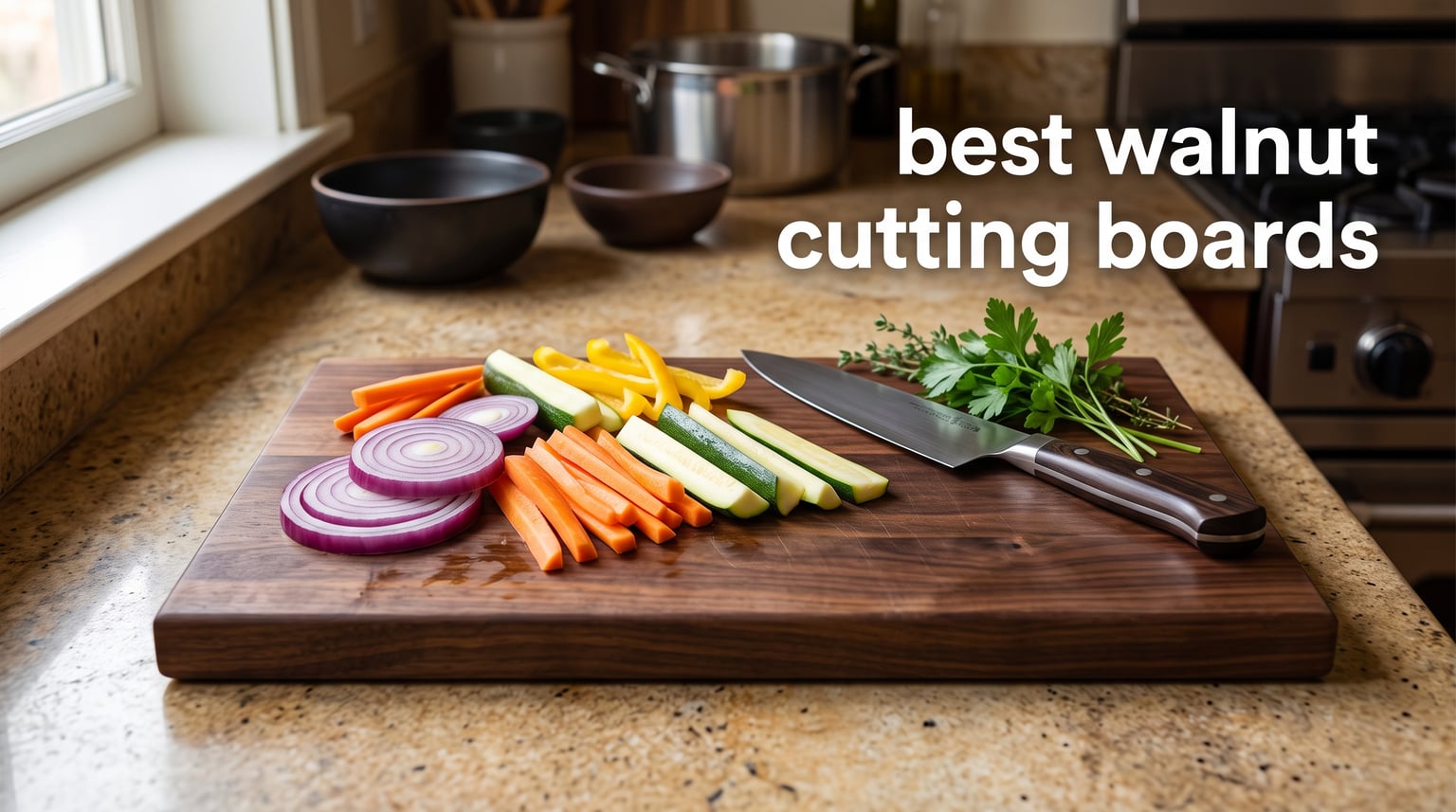
Walk into any well-equipped kitchen in 2026 and chances are you will find a walnut cutting board front and center on the counter. American black walnut brings a deep, chocolatey warmth that maple and bamboo simply cannot match, and it happens to be one of the most forgiving woods for your knife edges. After months of chopping, slicing, serving cheese, and comparing notes with home cooks and entertaining enthusiasts, we put together this guide to the best walnut cutting boards worth your counter space.
We tested boards ranging from $39 budget picks to $250 handmade end-grain butcher blocks. Some impressed us with clever features like built-in sorting compartments and deep juice grooves. Others won us over with raw craftsmanship and heritage that spans more than a century. What every board on this list shares is genuine walnut construction, a food-safe finish, and enough real-world performance to earn a permanent spot in our kitchens.
This guide is written for the Talk of the House reader who wants a board that works as hard during Tuesday night dinner prep as it does during Saturday charcuterie night with friends. We cover edge grain versus end grain construction, what to look for in size and thickness, and exactly how to keep walnut looking new for years. Whether you are shopping for yourself or hunting for the perfect housewarming gift, the picks below will steer you right.
A quick note on why walnut specifically. On the Janka hardness scale, American black walnut rates around 1,010 lbf, which is softer than hard maple at 1,450 lbf but firmer than many woods used for decorative serving boards. That middle ground is exactly what makes it special. The grain gives slightly under your blade, which means fewer visible scratches and less frequent sharpening. It also hides knife marks better than lighter woods, so your board keeps looking beautiful even after months of daily use.
Top 3 Walnut Cutting Boards for 2026
Sonder Los Angeles Alfred
- End grain construction
- 3 sorting wells
- Juice groove
- Non-slip feet


If you want to skip the deep dive and just know which boards rose to the top, here is our quick summary. The Sonder Los Angeles Alfred earned our Editor’s Choice spot because it combines end-grain construction with three built-in sorting wells that make meal prep genuinely faster. With over 10,600 reviews and a 4.7-star average, it has clearly resonated with a lot of home cooks.
For best value, Virginia Boys Kitchens delivers a handmade, reversible walnut board for under $100. It is lighter and thinner than the premium options, but the American black walnut is sustainably sourced, USA-made, and ready for everything from brisket carving to cheese plating.
Our budget pick goes to the Babilonia walnut board, which brings end-grain construction to a price point that genuinely surprised us. At well under $50 with a 4.7-star rating and a free oil bottle included, it is the most accessible way to try a genuine walnut cutting board without a big commitment.
Best Walnut Cutting Boards in 2026
Here is the full comparison of all eight boards we tested. Each one earned its place through a specific strength, whether that is end-grain craftsmanship, extra-large workspace, or unbeatable value. Use this table to compare specs at a glance, then read the individual reviews below for the full picture.
| Product | Specifications | Action |
|---|---|---|
| Sonder Los Angeles Alfred |
|
Check Latest Price |
 John Boos R-Board Walnut John Boos R-Board Walnut |
|
Check Latest Price |
 Mevell End Grain Walnut Mevell End Grain Walnut |
|
Check Latest Price |
| Virginia Boys Walnut Board |
|
Check Latest Price |
 Mevell Walnut Edge Grain Mevell Walnut Edge Grain |
|
Check Latest Price |
 THETCHRY Walnut Board Set THETCHRY Walnut Board Set |
|
Check Latest Price |
 CONSDAN Walnut Board CONSDAN Walnut Board |
|
Check Latest Price |
| Babilonia Walnut Board |
|
Check Latest Price |
1. Sonder Los Angeles Alfred – Best End Grain Walnut Board
- End grain construction self-heals knife marks
- 3 built-in sorting compartments
- Deep juice groove catches liquids
- Non-slip feet for stability
- Sustainably sourced American black walnut
- Requires oiling every 2-3 weeks
- Premium price point
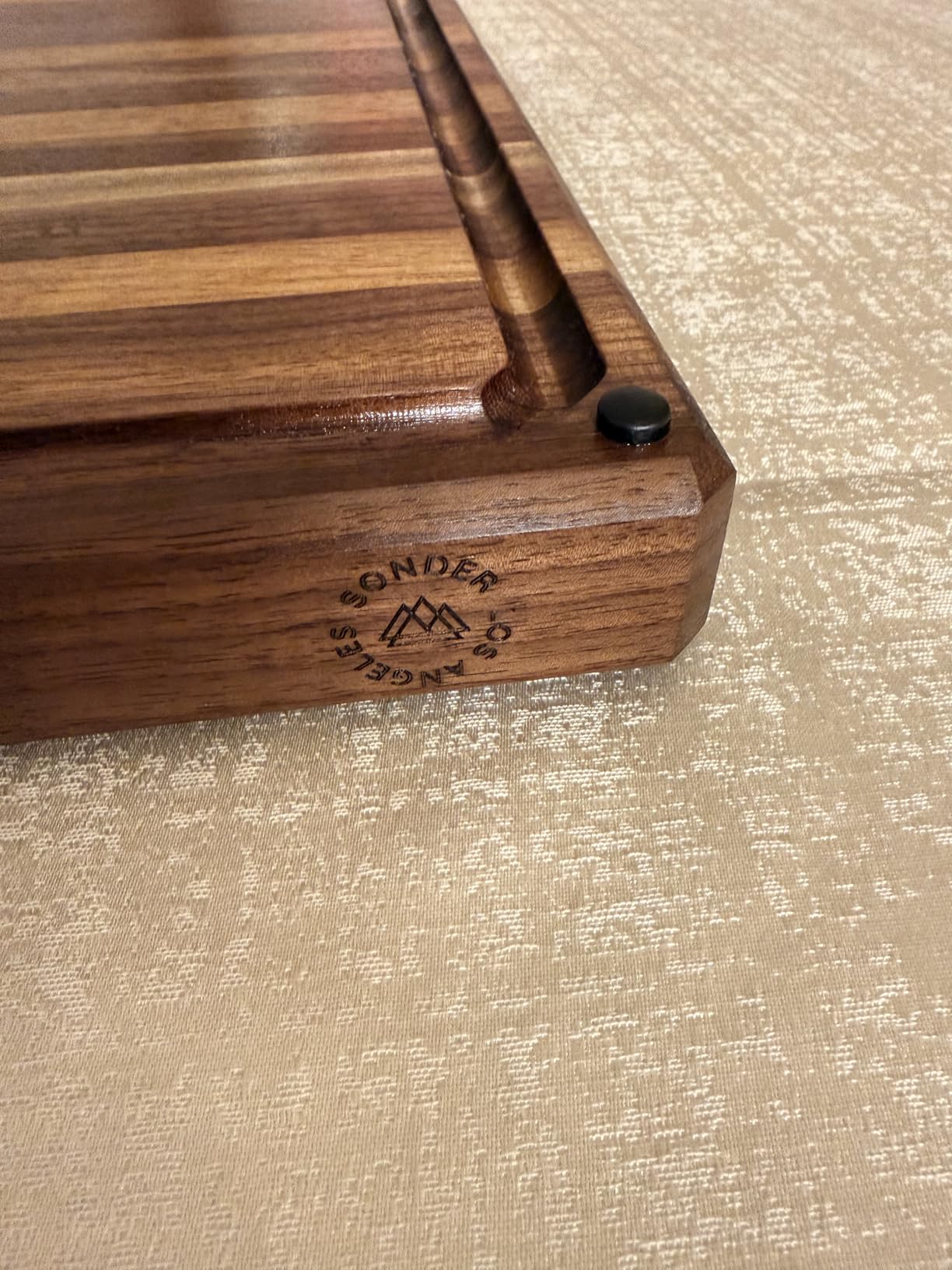
I have used a lot of cutting boards over the years, but the Sonder Los Angeles Alfred genuinely changed how I prep meals. The three built-in sorting wells along the side let me chop onions, bell peppers, and garlic and sweep each ingredient into its own compartment without dirtying extra bowls. That alone saved me time and dishes on busy weeknights.
The end-grain construction is the real star, though. After three months of daily chopping, my board still looks remarkably clean because the vertical wood fibers close back up after each cut. My chef’s knife stays sharper longer compared to when I used bamboo and edge-grain maple boards.
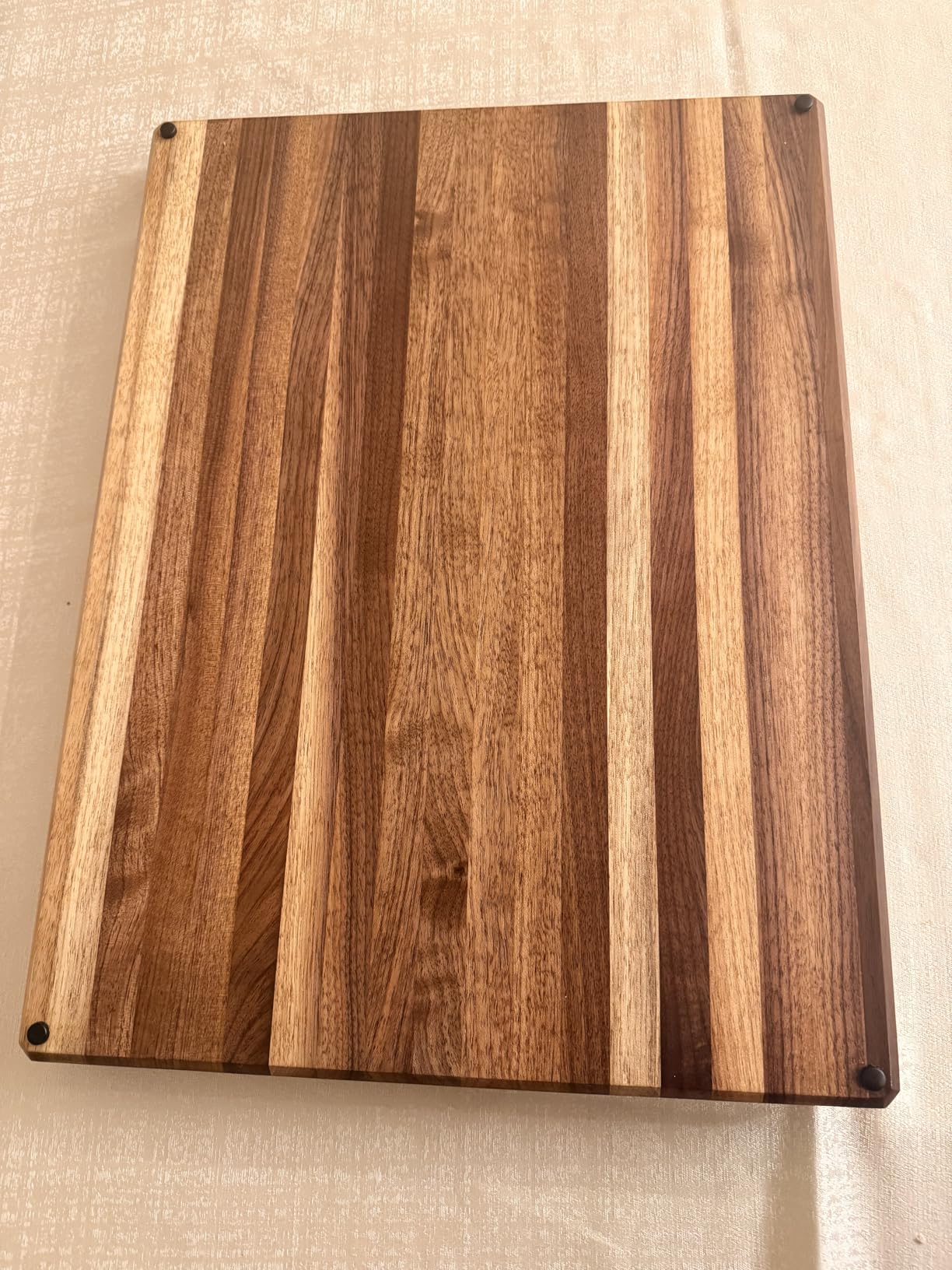
The 17 by 13 inch surface gives plenty of room for breaking down a whole chicken or laying out a charcuterie spread for guests. At 1.5 inches thick and 7.5 pounds, it feels substantial without being unwieldy. The non-slip rubber feet keep it planted on my granite counter even when I am pressing down hard on a tough butternut squash.
Sonder finishes the board with a food-safe oil treatment and sources American black walnut that is sustainably harvested. The deep juice groove holds about 3.5 fluid ounces, which is enough to catch the runoff from a resting steak without spilling onto the counter. It arrives in a gift box, making it a natural pick for weddings and housewarming presents.
Best For: Home Cooks Who Love Organization
If you meal prep regularly or cook dishes that involve lots of separate ingredients, the sorting wells on this board are a genuine productivity boost. It is also an excellent choice for anyone who wants the knife-protecting benefits of end-grain construction without spending $250 on a handmade butcher block. The 4.7-star rating across more than 10,600 reviews tells you this board has earned its reputation with real home cooks.
What to Consider Before Buying
The Alfred requires hand washing and oiling every two to three weeks to maintain the end-grain surface. At its price point it sits in the premium tier, so budget-conscious shoppers may prefer an edge-grain option like the Virginia Boys board. The sorting wells also take up about 2 inches of width, which slightly reduces the flat chopping area compared to a plain rectangular board.
2. John Boos R-Board Walnut – Best Heritage Edge Grain Board
- Trusted Boos craftsmanship since 1887
- Reversible for extended board life
- Recessed finger grips for easy handling
- Solid edge-grain walnut construction
- Oil finish for initial protection
- Requires regular Boos Mystery Oil treatment
- Stock often limited
- Quality control concerns reported
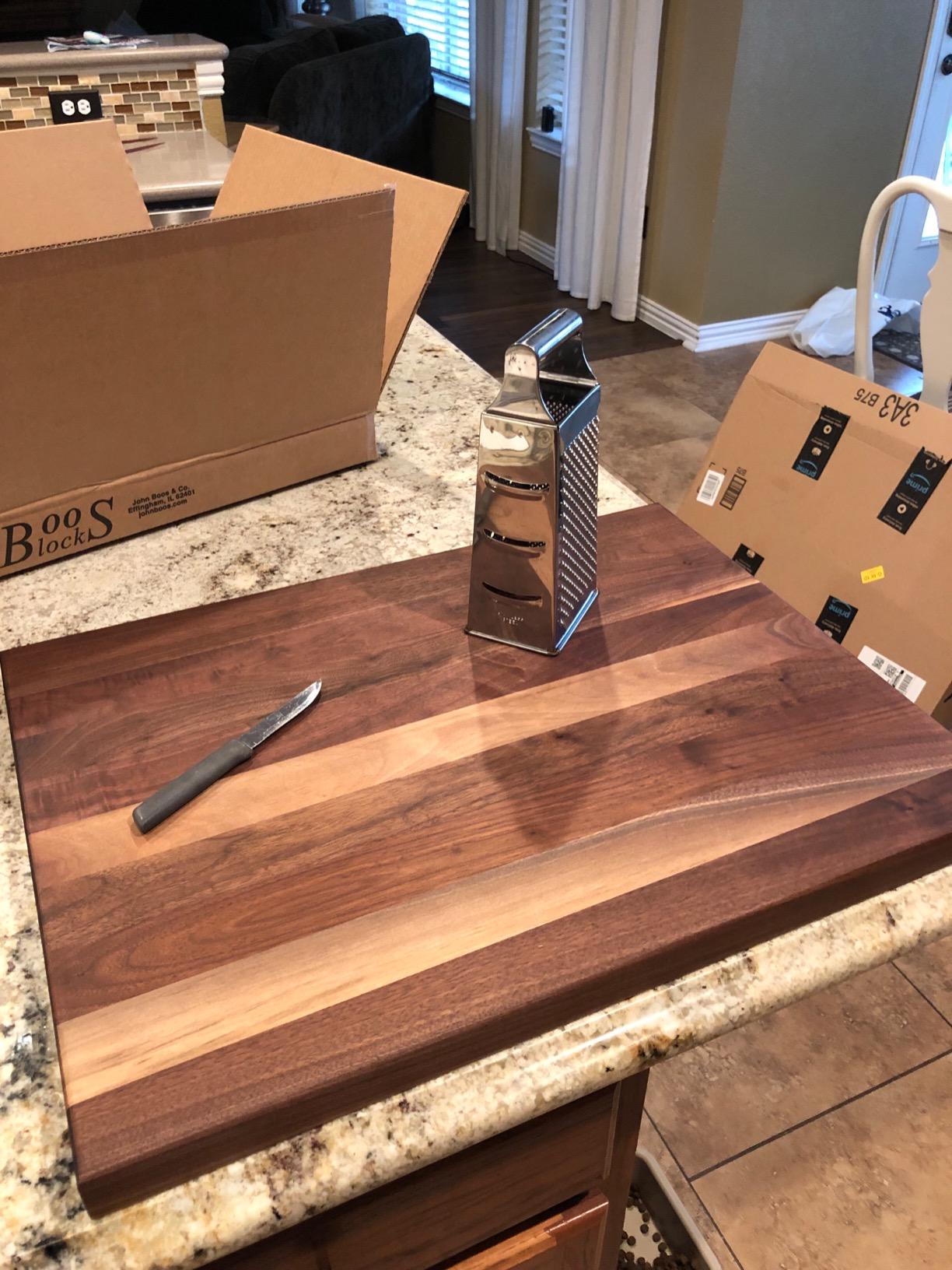
John Boos has been making butcher blocks in Effingham, Illinois since 1887, and that heritage shows in every detail of this walnut R-Board. The moment I picked it up, the density and finish told me this was a board built to outlast most kitchen appliances. The edge-grain construction uses long strips of walnut laminated together, which creates a striking visual pattern and a very stable chopping surface.
I appreciate the recessed finger grips carved into each side. They make it easy to lift an 8-pound board with one hand when I need to transfer it to the sink or flip it over for a clean serving side. The reversible design means you get two working surfaces, effectively doubling the life of the board before it needs resurfacing.
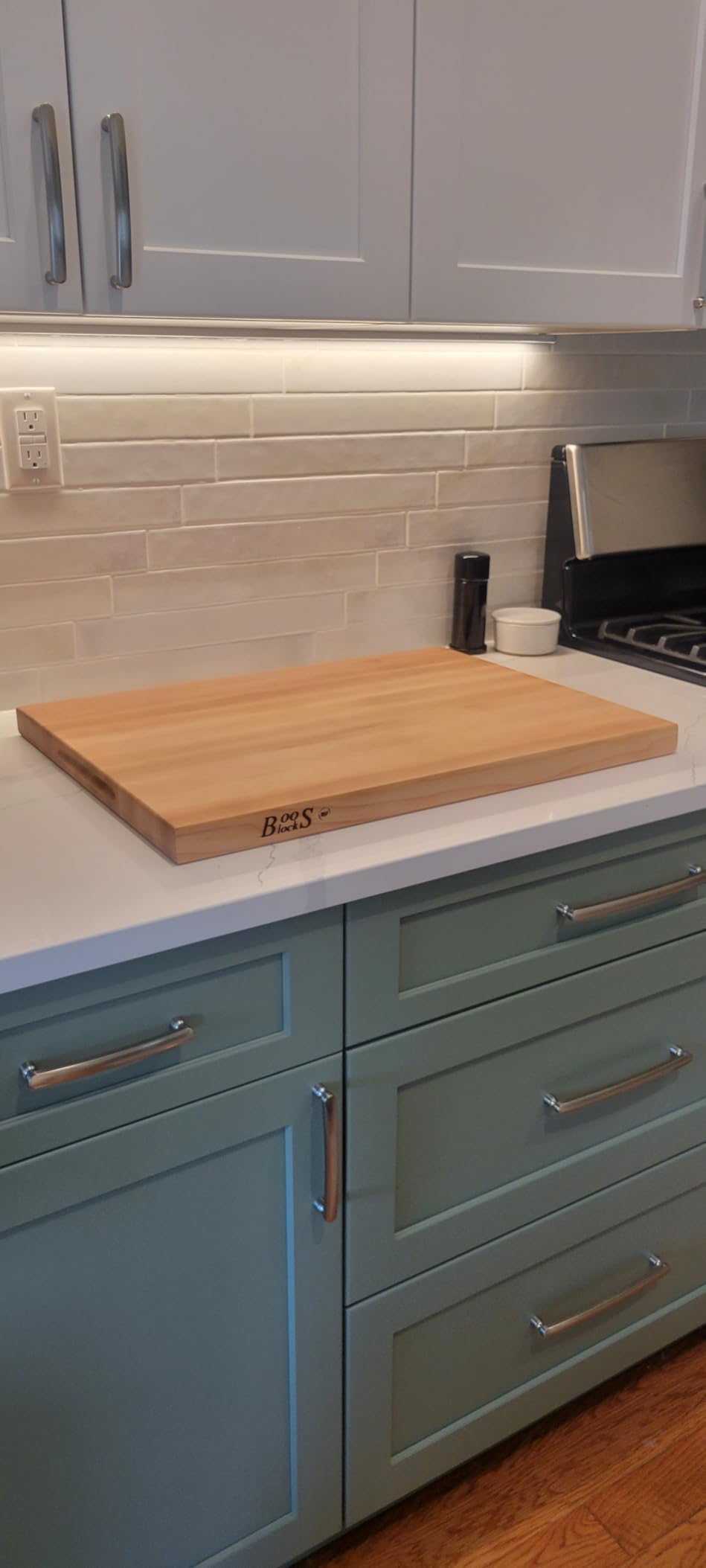
The 18 by 12 inch size hits a sweet spot for most home kitchens. It is large enough to handle a brisket or Thanksgiving turkey carving session, yet it still fits in a standard sink for cleaning. At 1.5 inches thick, the board absorbs the impact of heavy chopping without bouncing or sliding around.
Boos ships the board with their signature oil finish already applied. This gives you a head start on protection, but you will need to continue treating it with Boos Block Mystery Oil every few weeks. Some reviewers have noted occasional quality control variation between batches, so inspect yours carefully when it arrives and contact Boos if anything looks off.
Best For: Traditionalists Who Want a Board That Lasts Decades
The R-Board is ideal for cooks who value provenance and want a board from a manufacturer with over 130 years of woodworking experience. The reversible edge-grain design is perfect if you prefer a simpler, classic board without extra features like sorting wells or rubber feet. It also makes an impressive gift for anyone who takes their kitchen seriously.
What to Know About Long-Term Maintenance
Edge-grain boards show knife marks more readily than end-grain models, so expect to see scuffs develop over time. The Boos oil regimen is non-negotiable if you want to prevent cracking and warping. Stock availability can also be inconsistent for the walnut version specifically, so if you see it in stock it is worth grabbing rather than waiting.
3. Mevell End Grain Walnut – Best Extra Large Butcher Block
- Extra large 20x13 inch workspace
- 2 inch thickness for heavy chopping
- End grain self-healing surface
- Pre-seasoned with oil and beeswax
- One tree planted per purchase
- Heavy at 12 pounds
- Stock frequently limited
- Higher price point
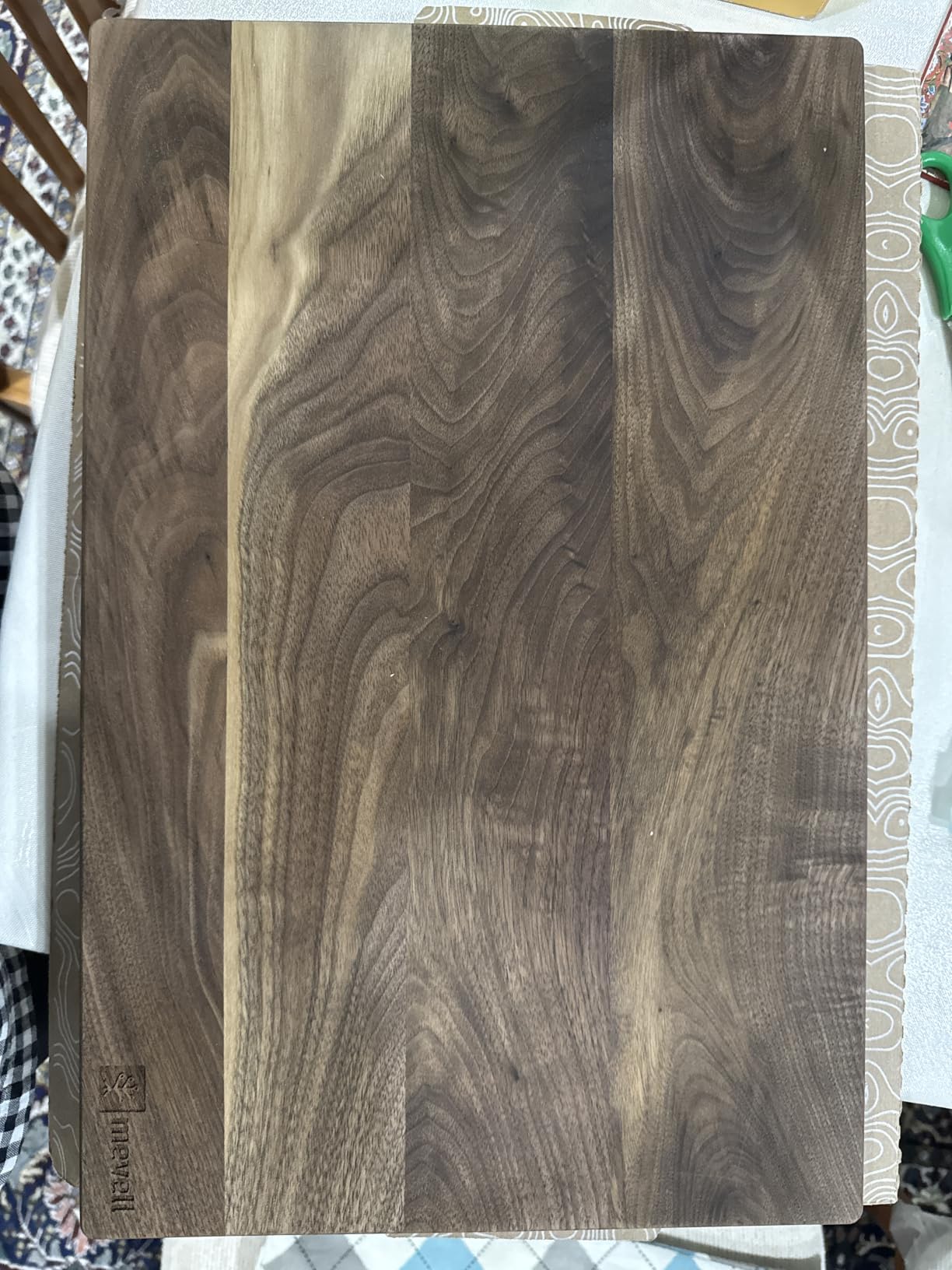
When I first unboxed the Mevell end-grain walnut board, I was struck by the sheer size of it. At 20 by 13 inches and a full 2 inches thick, this is a board that means business. It weighs 12 pounds, which tells you immediately that this is solid walnut all the way through, not a veneered imitation.
The end-grain checkerboard pattern is beautiful to look at and functional in practice. After weeks of hacking through butternut squash, breaking down whole chickens, and chopping herbs, the surface still looks nearly new. The self-healing property of end-grain construction means the wood fibers separate and close back together rather than getting sliced through permanently.
Mevell pre-seasons this board with a blend of mineral oil and beeswax, so it arrives ready to use the same day. The reversible design gives you a juice groove on one side for meat prep and a completely flat surface on the other for bread, pastry, and charcuterie presentation. That flat side is where this board really shines for entertaining.
I also appreciate that Mevell plants a tree for every board purchased. The walnut is sustainably sourced American black walnut, and the board is handmade in Canada. The craftsmanship is visible in the tight seams between the end-grain blocks and the smooth, rounded edges that will not catch your cloth when wiping down.
Best For: Serious Home Cooks and Entertainers
This board is built for people who cook in large volumes or regularly host gatherings. The 20-inch length accommodates a full rack of ribs or a large brisket without crowding. If you want a single board that doubles as a statement serving piece for charcuterie and cheese, the Mevell’s size and beauty make it a natural centerpiece on any table.
Size and Weight Considerations
Twelve pounds is heavy for a cutting board, and you will feel it when moving it around the kitchen. It does not fit easily in a standard sink, so cleaning requires a wipe-down approach rather than full submersion. The 2-inch thickness also means it takes up real counter real estate, so measure your space before committing.
4. Virginia Boys Kitchens Walnut Board – Best Value Walnut Board
- Handmade from sustainable USA walnut
- Built-in juice well keeps counters clean
- Lightweight and easy to handle
- Reversible dual-purpose design
- Affordable price for solid walnut
- Thinner profile at 0.75 inches
- Requires regular oiling maintenance
The Virginia Boys Kitchens board is the one I recommend most often to friends who want a genuine walnut cutting board without spending over $100. Handmade in the USA from sustainably sourced walnut, it delivers the rich color and knife-friendly surface walnut is known for at a price that feels accessible to most home cooks.
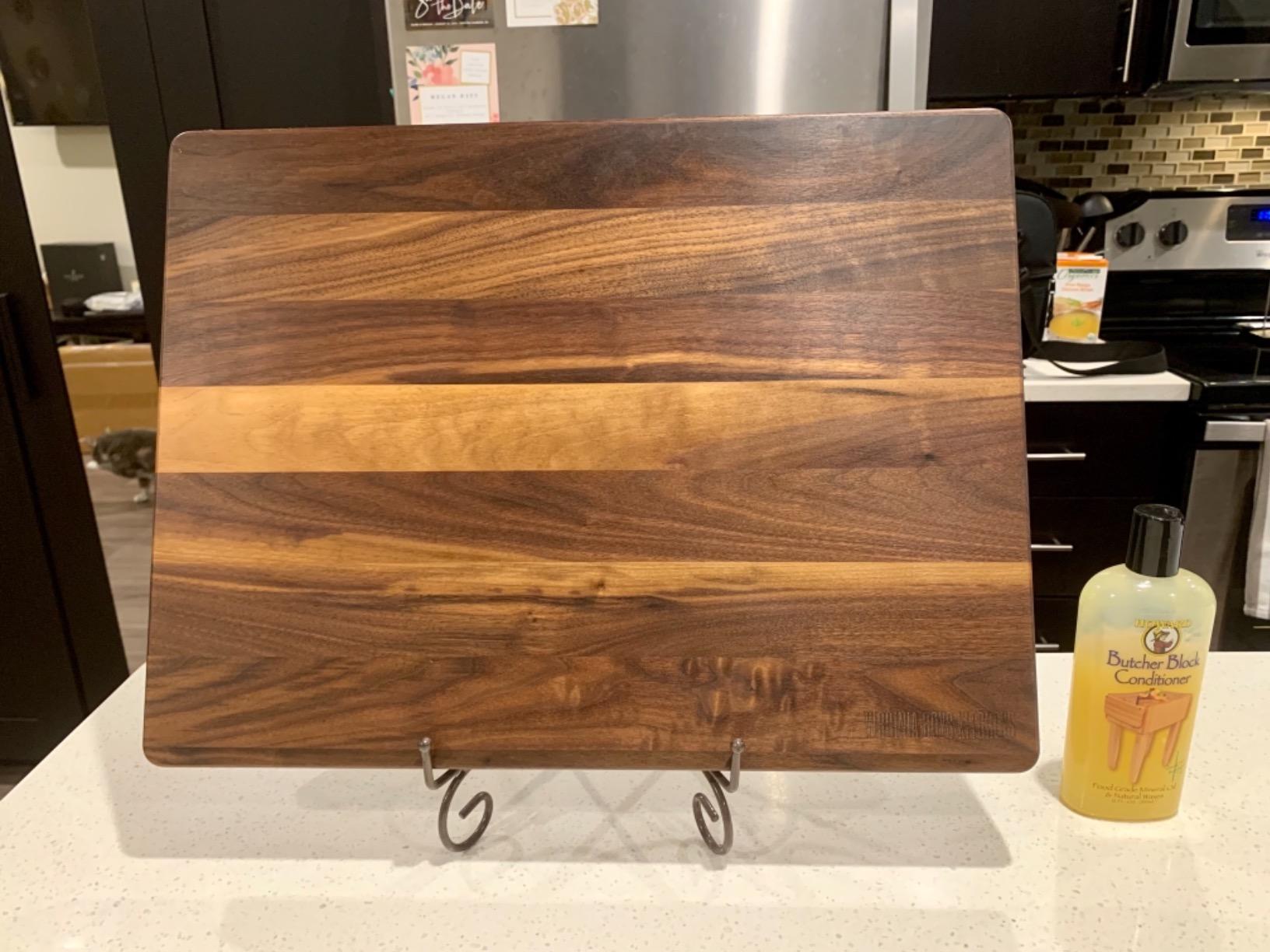
At 17 by 11 inches and just 3.6 pounds, this board is noticeably lighter than the end-grain options on this list. That makes it easy to grab from the cabinet, carry to the table for serving, and wash in the sink without straining your wrists. The thinner 0.75-inch profile is a trade-off, but it also makes the board far more manageable for everyday use.
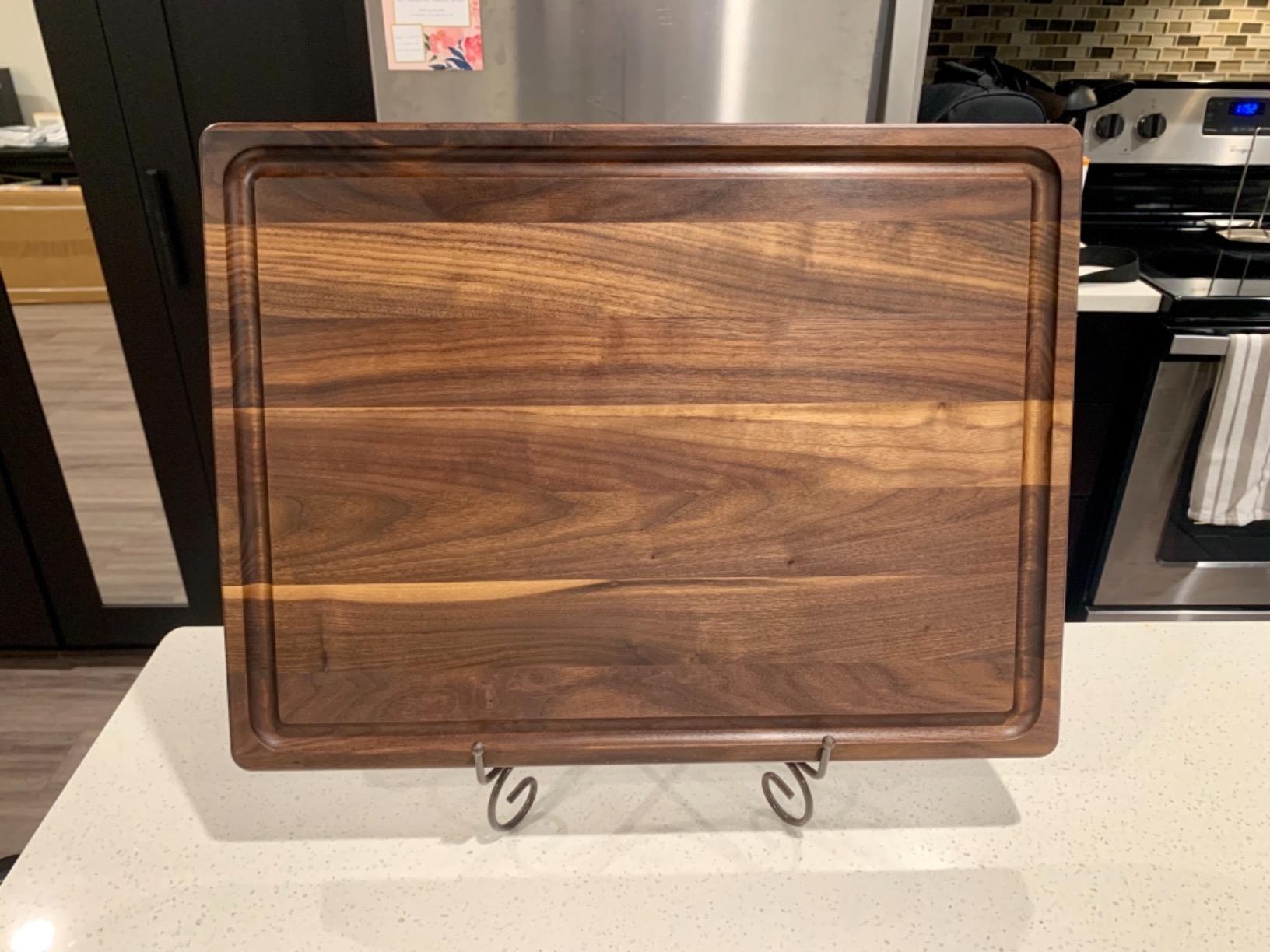
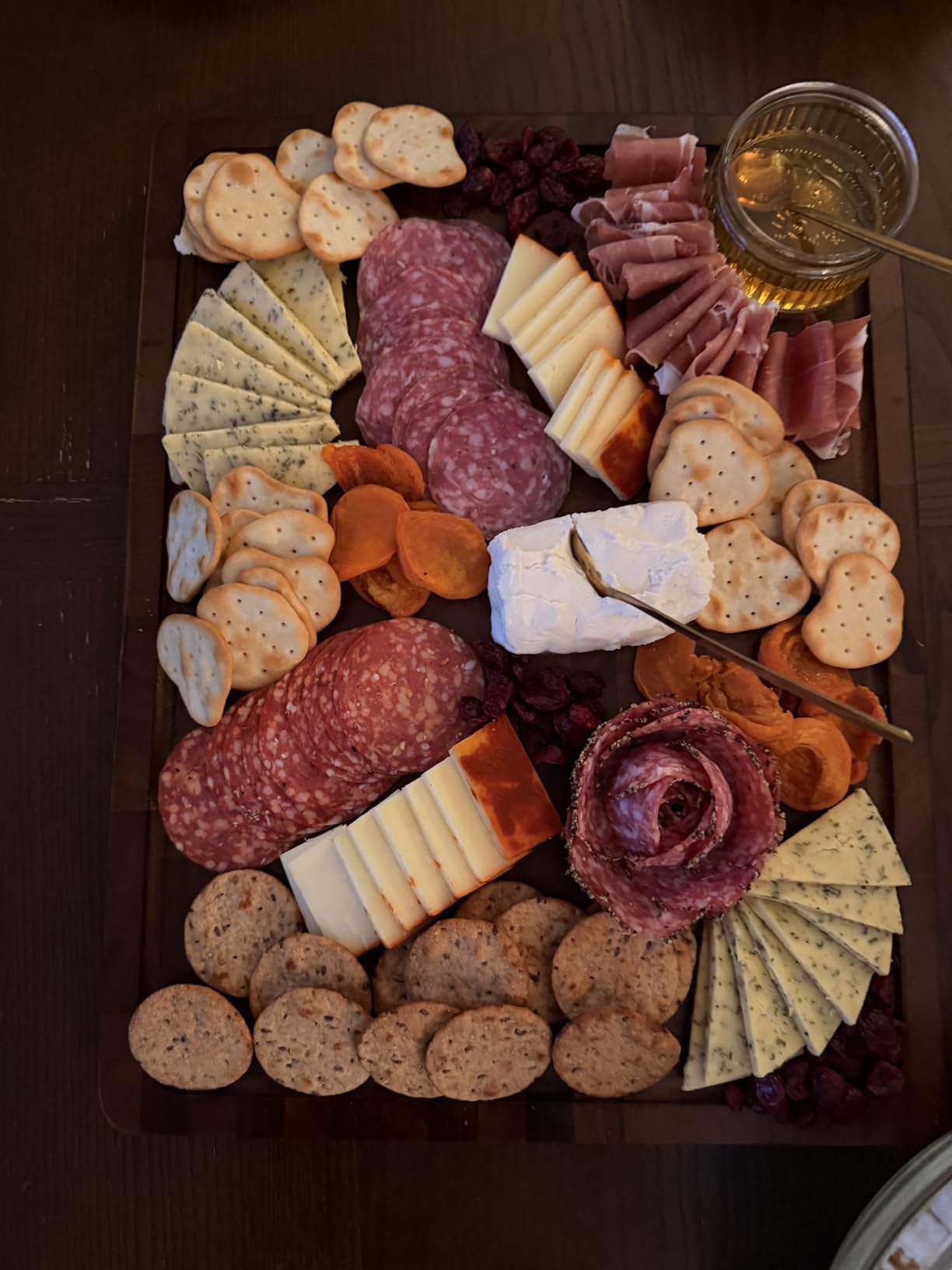
The reversible design gives you a juice well on one side for carving meats and a flat surface on the other for bread, cheese, and charcuterie. I found myself reaching for the flat side constantly when putting together quick appetizer boards for guests. The walnut grain looks stunning with a few slices of aged cheddar and some prosciutto arranged on top.
Virginia Boys sources 100 percent sustainable walnut from American forests, and the craftsmanship is solid for the price point. The edges are smoothly sanded, and the juice well is deep enough to catch the runoff from a medium rare steak without spilling. With over 3,100 reviews backing it up, this board has clearly found its audience.
Best For: Budget-Conscious Entertainers
This board hits a sweet spot for anyone who wants the look and feel of walnut for both cooking and serving without the premium price tag. It is particularly well-suited for apartment dwellers and small kitchen owners who need a lighter, more manageable board. The reversible design makes it a versatile choice for households that use one board for everything.
Understanding the Thinner Profile
The 0.75-inch thickness means this board will not absorb heavy chopping the way a 1.5 or 2-inch board will. It can develop warping over time if not properly maintained, especially if exposed to moisture on one side only. Regular oiling and proper drying habits are essential to keep it flat and stable for years of use.
5. Mevell Walnut Edge Grain – Best Budget Edge Grain Board
- Handcrafted from sustainable black walnut
- Reversible with juice groove and flat side
- Pre-seasoned and ready to use
- Budget-friendly solid walnut
- Trees planted with every purchase
- Thinner 0.75 inch profile
- Monthly oiling required
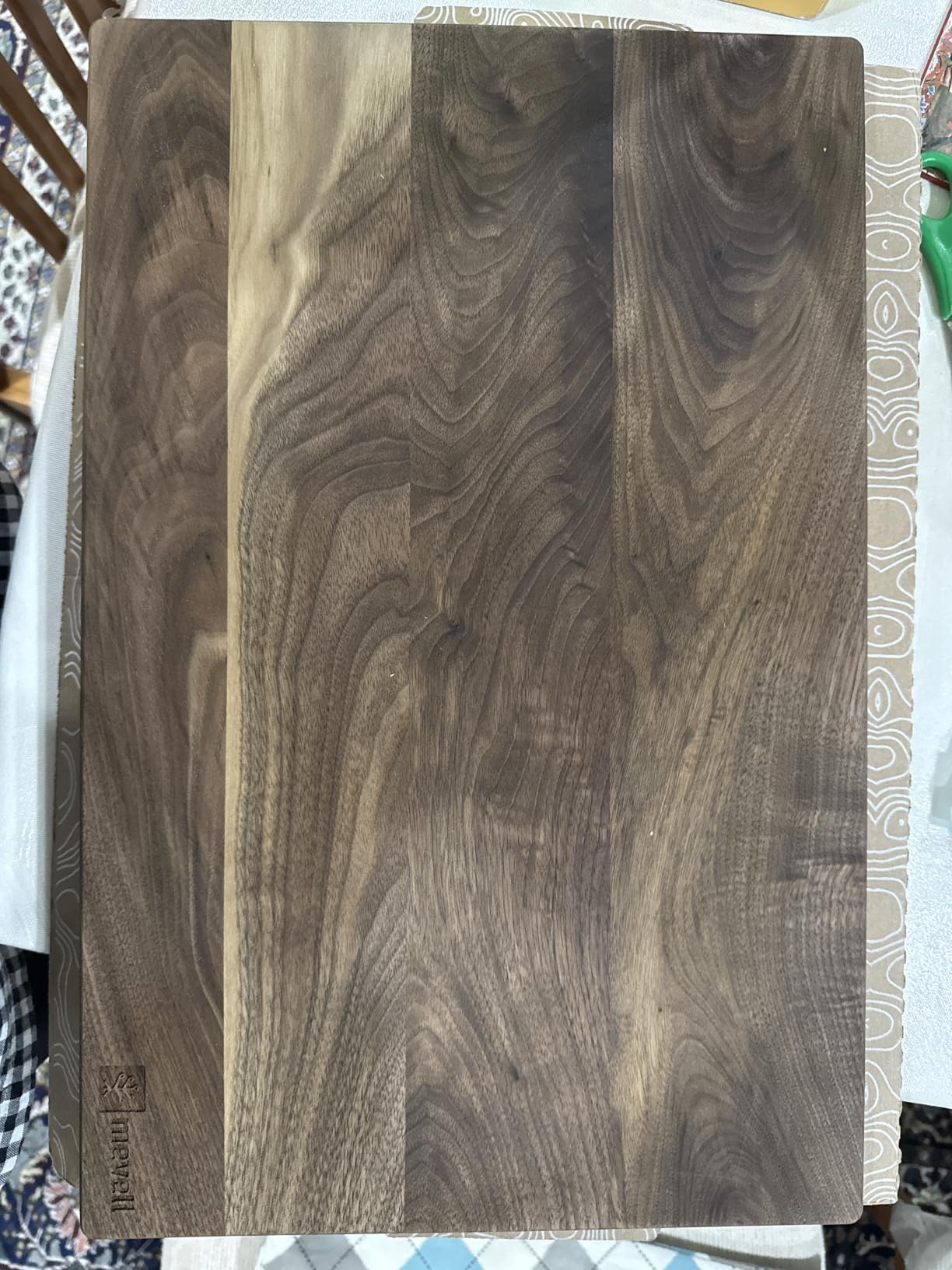
The Mevell edge-grain walnut board is the little sibling of the end-grain model above, and it shares the same commitment to sustainable sourcing and handcrafted quality. At around $70, it is one of the most affordable ways to get a genuine American black walnut cutting board from a reputable maker.
I tested this board alongside its pricier end-grain counterpart, and the edge-grain strips create a beautiful linear grain pattern that many people actually prefer aesthetically. The board arrives pre-seasoned with mineral oil and beeswax, so you can start chopping the day it shows up at your door with zero prep work needed.
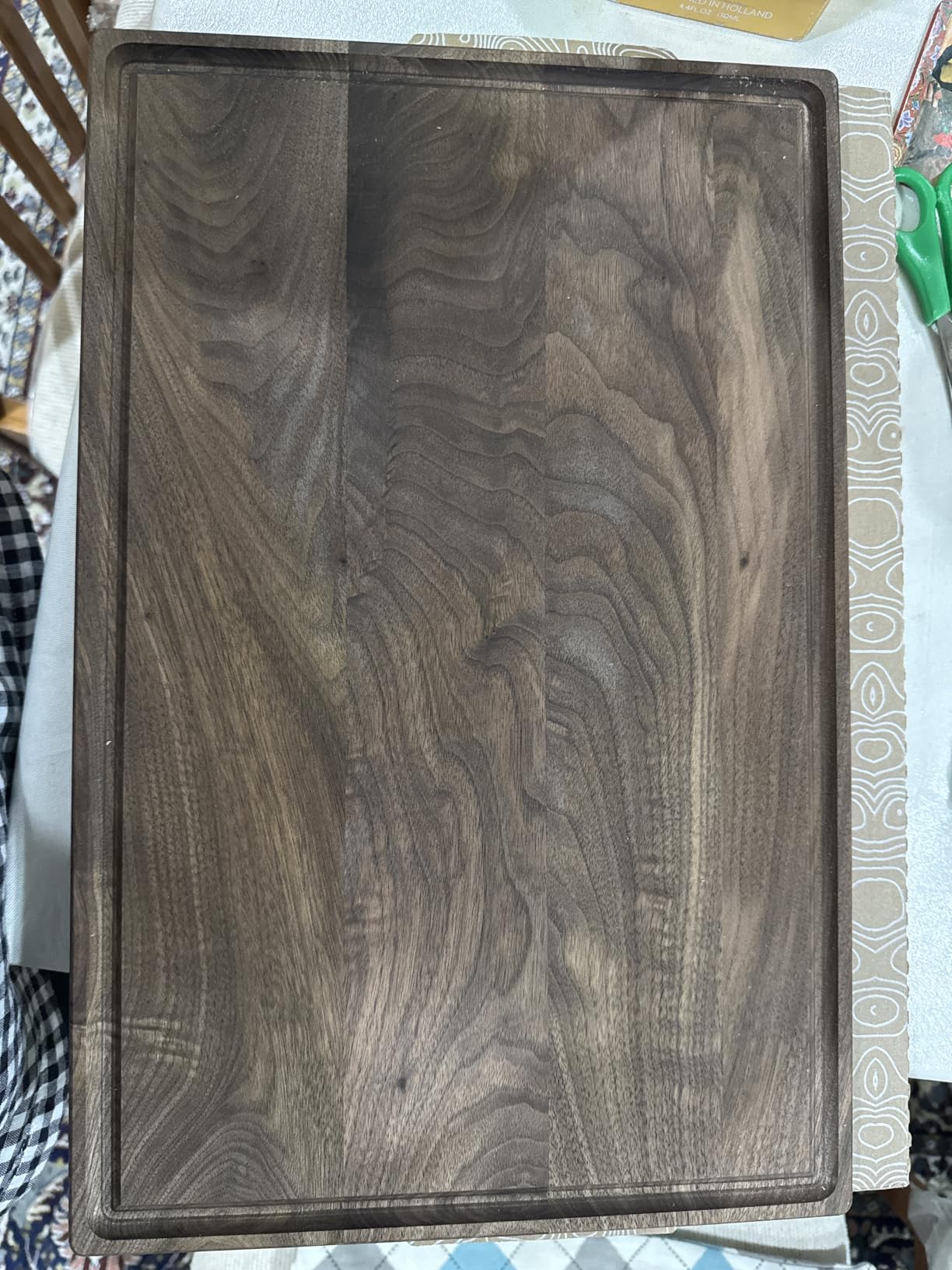
The reversible design features a juice groove on one side for meats and a completely flat surface on the other. I found the flat side perfect for slicing bread and arranging cheese and crackers for impromptu entertaining. At 3.2 pounds, it is the lightest board on this list and an absolute breeze to handle.
Mevell plants a tree for every board sold, which adds a feel-good factor to the purchase. The sustainably sourced American black walnut has the same rich chocolate tones as the more expensive models, just with a simpler edge-grain construction that keeps the price accessible for first-time walnut board buyers.
Best For: First-Time Walnut Board Buyers
If you have never owned a walnut cutting board and want to try the material without a big investment, this is the ideal entry point. The pre-seasoned finish means zero prep work, and the lightweight design suits cooks who prefer a more agile board. It also makes a thoughtful, affordable gift for a new homeowner or recent graduate setting up their first kitchen.
How It Compares to End Grain Models
Edge-grain boards show knife marks more visibly than end-grain boards because the blade cuts across the wood fibers rather than between them. Over time you will see more surface scuffing, though walnut’s dark color helps disguise the marks better than maple would. The thinner construction also means less impact absorption, so heavy-duty chopping may feel harsher on your knife and wrist.
6. THETCHRY Walnut Board Set – Best Walnut Cutting Board Set
- Three sizes for every kitchen task
- FSC certified sustainably sourced walnut
- End grain construction minimizes marks
- Includes maintenance kit and stand
- Gift box perfect for presents
- Hand wash only
- Requires regular oiling maintenance
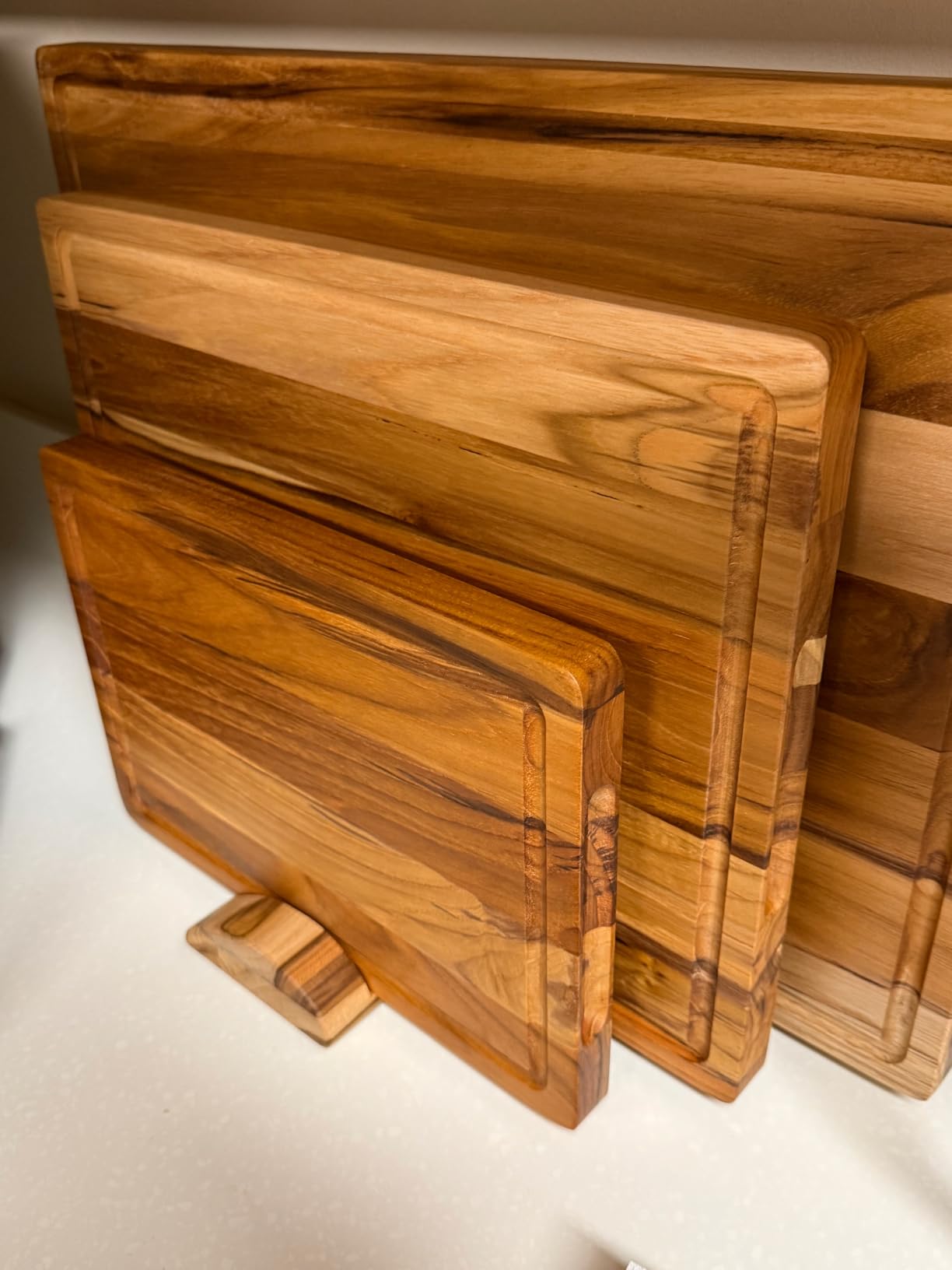
The THETCHRY walnut cutting board set caught my attention because it is one of the few multi-board sets made from genuine end-grain walnut. You get three boards in different sizes, which means you can dedicate each one to a specific purpose and reduce cross-contamination risk in the kitchen.
I found the largest board perfect for breaking down proteins, the medium one ideal for vegetable prep, and the smallest great for quick tasks like slicing lemons or assembling a small cheese plate. Having dedicated boards for different tasks is a small luxury that genuinely improves kitchen workflow and food safety.
The end-grain construction across all three boards means your knives stay sharper and the surfaces self-heal from daily use. THETCHRY uses FSC-certified walnut, which is the gold standard for sustainable forestry certification. That third-party verification matters if environmental impact factors into your purchasing decisions.
The set comes with a maintenance kit that includes an oil brush and beeswax paste, so you have everything needed to keep the boards in top condition from day one. A wooden stand is also included for display and storage. The gift box presentation makes this set an excellent choice for weddings, holidays, or housewarming celebrations.
Best For: Gifting and Multi-Board Households
This set is a standout choice if you are buying for someone else, since the gift box, maintenance kit, and three-board variety make it feel like a premium present. It also works well for households that cook a lot and want dedicated boards for meat, vegetables, and serving. The included stand keeps everything organized on the counter when not in use.
What Comes in the Box
You receive three end-grain walnut boards in graduated sizes, an oil brush for applying maintenance oil, beeswax paste for sealing and protecting the surface, and a wooden display stand. The included care kit means you do not need to buy additional supplies right away. All three boards require hand washing and regular oiling to stay in good condition.
7. CONSDAN Walnut Cutting Board – Best Large Format Board
- Extra large 20x15 inch workspace
- Knife-friendly smooth walnut surface
- Invisible inner handles for easy lifting
- Deep juice groove catches liquids
- Lifetime warranty against defects
- Too large for some sinks
- Hand wash only
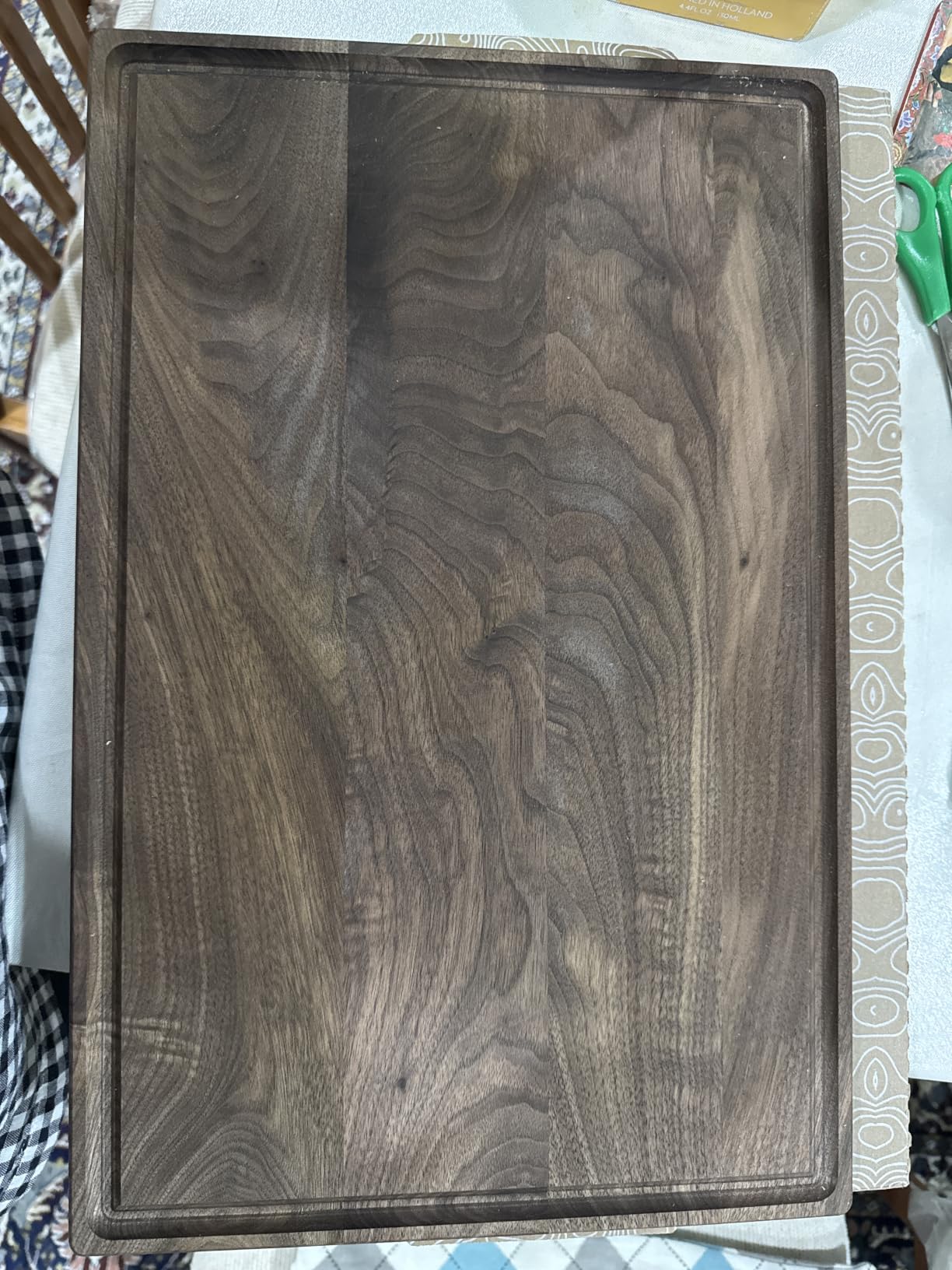
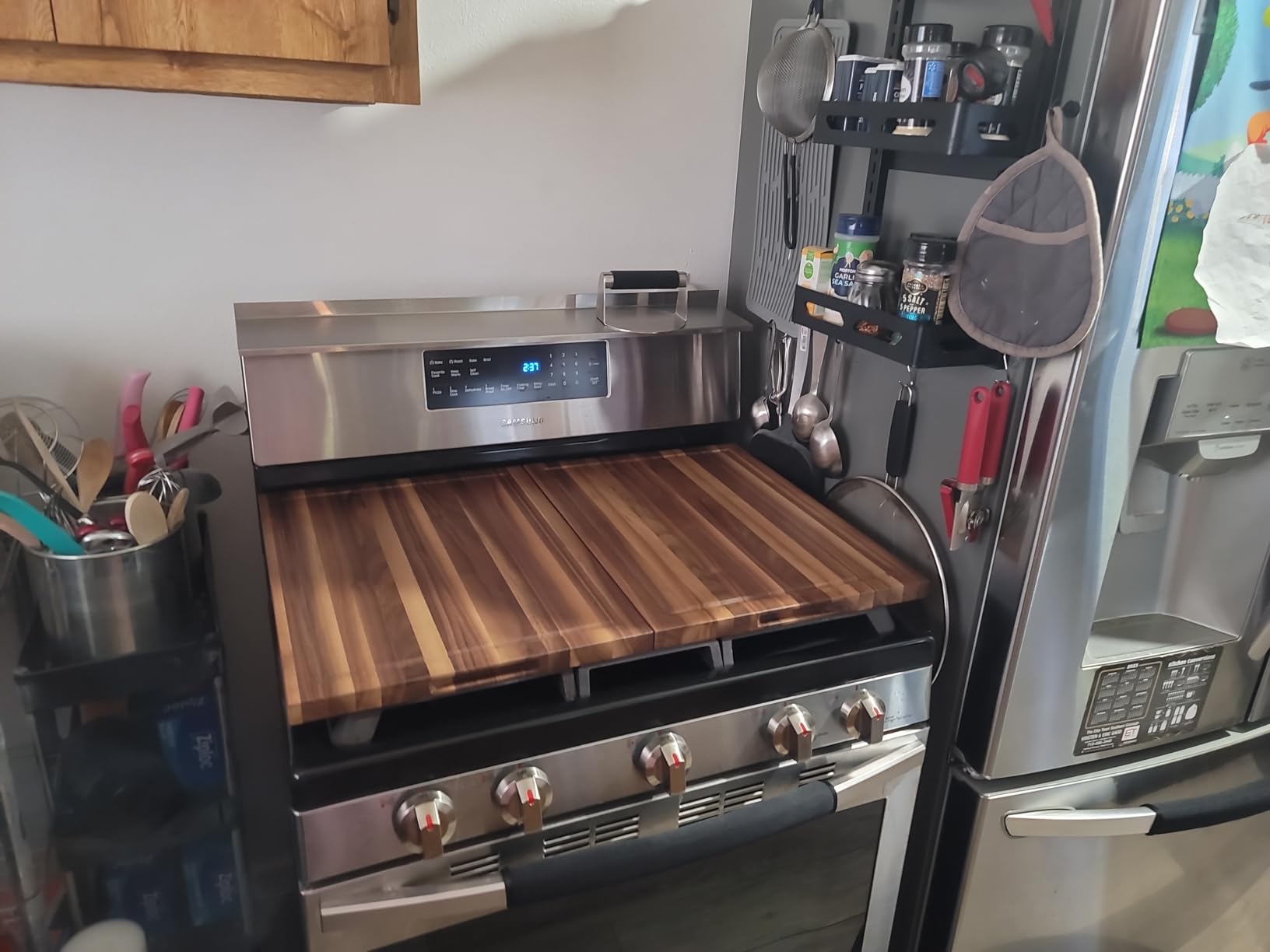
The CONSDAN walnut board is the largest edge-grain board on this list, and that 20 by 15 inch surface makes a big difference for batch cooking. I tested it during a weekend meal prep session and was able to chop vegetables for four different recipes without stopping to clear the board once.
What sets the CONSDAN apart is the invisible inner handle design. Recessed cutouts on the underside let you grip and lift the board without visible handles interrupting the clean rectangular profile. It is a thoughtful detail that makes moving a board this large much more manageable.
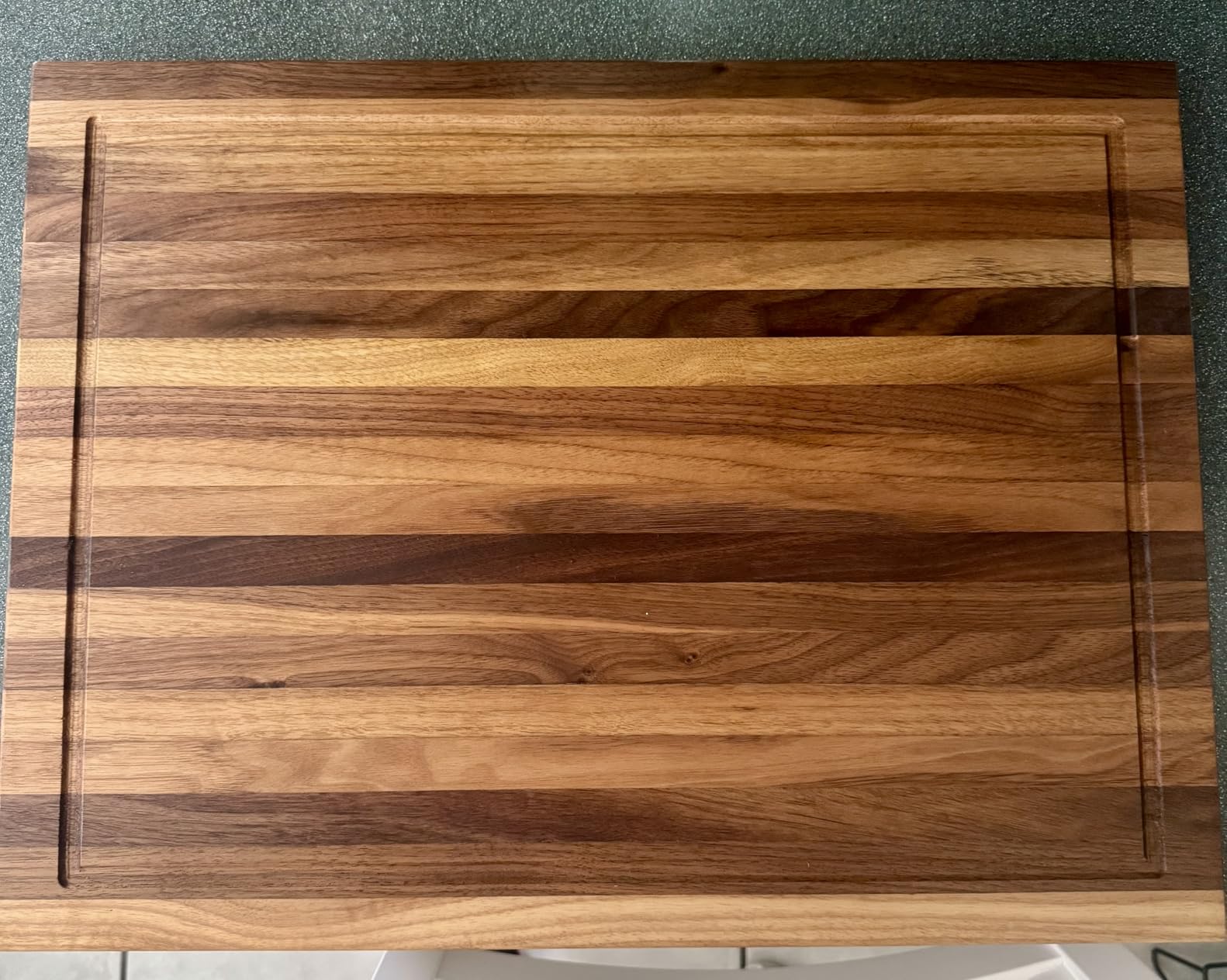
The board is made from USA-grown black walnut and prefinished with food-grade oil before shipping. The surface is smooth and dense, with a consistent edge-grain pattern that looks great on any counter. At 1 inch thick, it provides solid impact absorption without the extreme weight of the 2-inch Mevell end-grain board.
CONSDAN backs this board with a lifetime warranty against defects in materials and workmanship. That kind of confidence from the manufacturer tells you something about the build quality. The deep juice groove runs the full perimeter and handles the runoff from carving without any spillover onto the counter.
Best For: Large-Batch Cooking and Family Meal Prep
If you regularly cook for a family of four or more, batch cook on weekends, or simply like having maximum workspace, the CONSDAN’s 20 by 15 inch surface is hard to beat. The invisible handles and 1-inch thickness make it practical for daily use despite its generous size. The lifetime warranty also makes it appealing for buyers who want long-term peace of mind.
Cleaning and Care Realities
The main challenge with a board this large is cleaning it. At 20 by 15 inches, it may not fit in your sink, which means you will need to wipe it down with a damp cloth and mild soap rather than submerging it. This is actually the recommended cleaning method for all wooden boards, but the size makes it feel more constraining. Never put this or any walnut board in the dishwasher.
8. Babilonia Walnut Cutting Board – Best Budget End Grain Board
- Premium end grain at a budget price
- Pre-seasoned and ready to use
- Includes free organic oil bottle
- Heavy-duty professional grade
- Knife-friendly surface
- Hand wash only
- Rare splitting reports with heavy use
The Babilonia walnut cutting board genuinely surprised me. Finding end-grain walnut construction at this price point is rare, and the 4.7-star rating from early reviewers suggests I am not the only one impressed. This board proves you do not need to spend $200 to get the knife-protecting benefits of end-grain walnut.
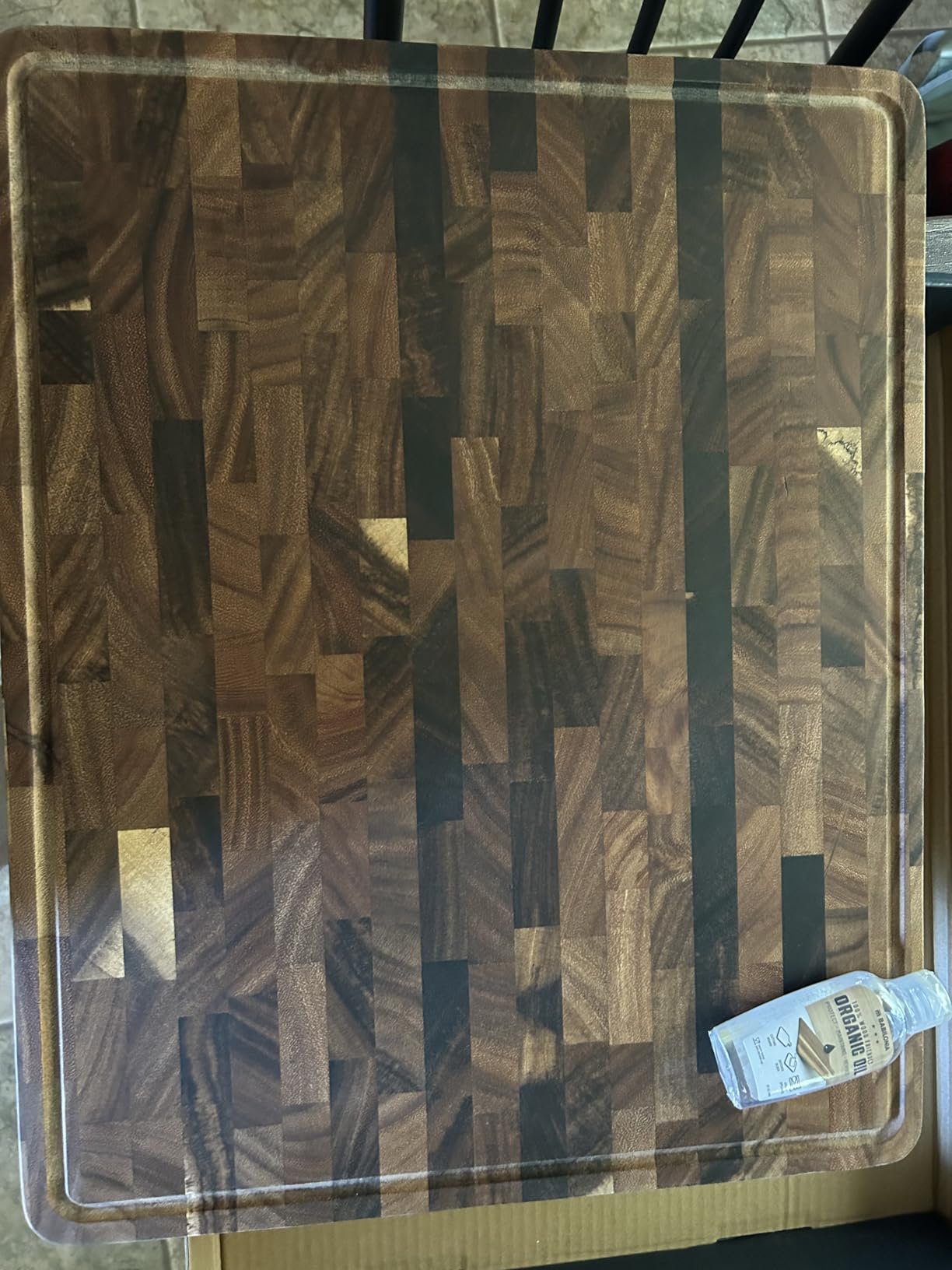
At 17 by 13 inches and 1 inch thick, it hits a practical middle ground between the lightweight Virginia Boys board and the heavy-duty Mevell. The board arrives pre-seasoned, so you can start using it immediately without any prep. Babilonia even includes a free bottle of organic maintenance oil, which is a remarkably thoughtful touch at this price.
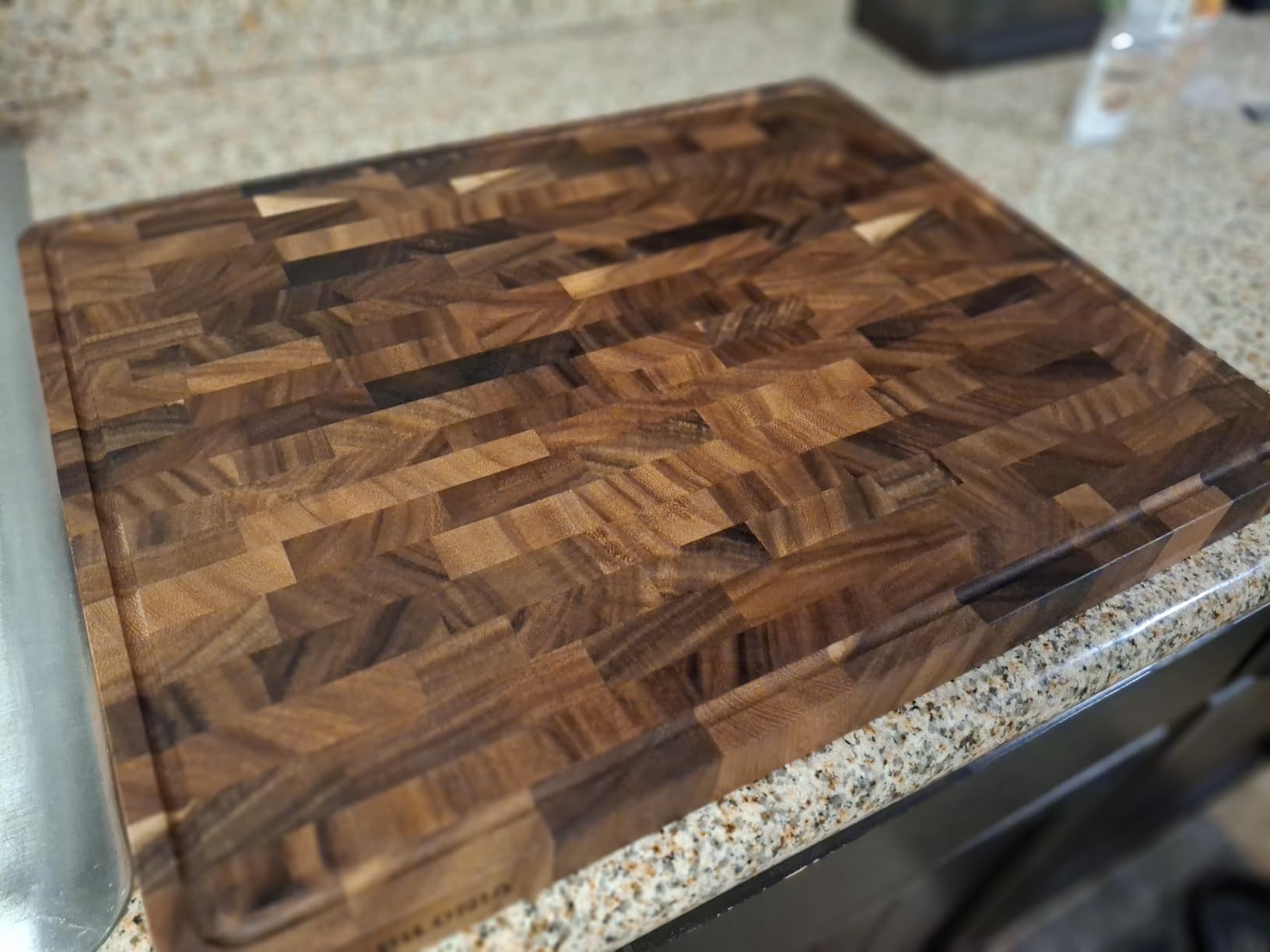
The end-grain surface performs well in daily use. My knives glide through vegetables without sticking, and the self-healing properties of the vertical wood fibers keep visible marks to a minimum. The built-in handles make it easy to carry from counter to table when transitioning from prep to serving mode.
Babilonia markets this as a professional-grade board, and the construction does feel solid for the price range. The 2-year warranty with money-back guarantee gives you a safety net if anything goes wrong. A small number of reviewers have reported splitting under very heavy use, but this appears to be rare and likely related to inconsistent maintenance habits.
Best For: Beginners and Casual Home Cooks
If you are curious about end-grain walnut but hesitant to spend $150 or more, the Babilonia is the perfect low-risk way to try it. The included oil bottle means you can maintain the board properly from day one without buying additional supplies. It is also a solid pick for a second board to keep alongside a larger primary cutting surface.
Long-Term Durability Expectations
While the initial quality is impressive for the price, this board may not match the decades-long durability of a John Boos or premium Mevell. The key to longevity is consistent oiling and proper cleaning habits. Avoid submerging it, never use the dishwasher, and re-oil whenever the surface starts to look dry. With good care, this board should provide years of reliable service.
Buying Guide: How to Choose the Best Walnut Cutting Board
Choosing the right walnut cutting board comes down to understanding a few key factors. Construction type, size, thickness, and maintenance requirements all play a role in which board will work best for your kitchen. Here is what we learned from testing these eight boards side by side over several months of daily use.
End Grain vs Edge Grain: What Actually Matters
This is the single most important decision when shopping for a walnut cutting board. End-grain boards are made by standing wood blocks on end so the knife cuts between the vertical fibers, which then close back up after the blade passes through. This self-healing property means fewer visible scratches and less wear on your knife edges over time.
Edge-grain boards are built from long strips of wood laid side by side, so your knife cuts across the grain. They show marks more readily but are typically more affordable, lighter, and easier to maintain. If you use high-quality knives and want to minimize sharpening frequency, end grain is worth the investment. If you want a practical, everyday board at a lower price, edge grain is the way to go.
Walnut vs Maple vs Cherry
Walnut rates around 1,010 lbf on the Janka hardness scale, making it softer than hard maple at 1,450 lbf and slightly harder than cherry at approximately 950 lbf. That relative softness is actually an advantage for cutting boards because it is gentler on knife edges. Walnut also has a rich, dark color that hides knife marks far better than lighter woods like maple.
Maple is more durable in terms of dent resistance and is the traditional choice for professional butcher blocks. Cherry offers a warm reddish tone but is slightly too soft for heavy-duty chopping. Walnut hits the sweet spot between knife protection, visual appeal, and long-term durability, which is why so many home cooks and professional chefs have made it their preferred board material in 2026.
Size and Thickness Guide
For a household of one to two people, a board in the 15 by 11 to 17 by 11 inch range provides adequate workspace without overwhelming your counter. Families and frequent entertainers should look at 18 by 12 or larger. If you regularly break down large cuts of meat or batch cook for the week, boards in the 20 by 15 inch range like the CONSDAN give you room to work comfortably.
Thickness matters for stability and impact absorption. Boards under 1 inch thick are lighter and easier to handle but may warp over time if not properly maintained. Boards between 1 and 1.5 inches offer a good balance of durability and manageability. Boards at 2 inches or thicker, like the Mevell end-grain, are built for heavy-duty use and will last the longest with proper care.
Features Worth Paying For
Juice grooves catch liquid runoff from meats, tomatoes, and juicy fruits, keeping your counter clean during prep. Look for grooves that are at least a quarter inch deep to handle real cooking volume. Reversible designs double your working surface and extend the life of the board significantly. Non-slip feet or rubber grips keep the board planted during aggressive chopping sessions.
Built-in handles or finger grips make a big difference for larger boards. The CONSDAN’s invisible inner handles and the John Boos recessed finger grips are both thoughtful solutions to the weight problem. Sorting compartments, like those on the Sonder Los Angeles Alfred, are a niche feature but genuinely useful for meal prep enthusiasts who want to streamline their workflow.
Maintenance and Care Basics
All walnut cutting boards require hand washing with mild soap and warm water. Never submerge them or put them in the dishwasher, as prolonged moisture exposure causes warping and cracking. Dry the board immediately after washing with a clean towel and let it air dry standing upright so air circulates around both sides.
Oil your board every two to four weeks with food-grade mineral oil or a specialized cutting board oil. Apply a generous coat, let it absorb overnight, and wipe off any excess in the morning. For extra protection, follow up with a beeswax-based board butter to seal the surface and repel moisture. Boards that arrive pre-seasoned, like the Mevell and Babilonia, still need regular oiling to stay in top condition over the years.
Walnut Sustainability and Sourcing
American black walnut is a domestically grown hardwood, which means lower transportation emissions compared to imported woods like teak or acacia. Several brands on this list, including Mevell and THETCHRY, prioritize sustainable sourcing and environmental initiatives that go beyond the baseline. THETCHRY’s FSC certification and Mevell’s tree-planting program are worth noting if environmental impact factors into your purchasing decisions. When shopping, look for boards that specify American black walnut and mention sustainability practices on their packaging or product listings.
Frequently Asked Questions
What are the top walnut cutting board models?
The best walnut cutting boards for 2026 include the Sonder Los Angeles Alfred for its end-grain construction and sorting wells, the John Boos R-Board for heritage craftsmanship, and the Mevell end-grain board for heavy-duty use. For budget options, the Babilonia and Virginia Boys Kitchens boards deliver solid walnut performance at lower prices.
How does walnut compare to maple for cutting boards?
Walnut is softer than maple on the Janka hardness scale (1,010 lbf vs 1,450 lbf), which makes it gentler on knife edges. Walnut also has a darker color that hides knife marks better than maple’s light surface. Maple is more dent-resistant and traditional for butcher blocks, but walnut offers a better balance of knife protection and visual appeal for home cooks.
How do you maintain a walnut cutting board?
Hand wash your walnut cutting board with mild soap and warm water, dry it immediately, and never put it in the dishwasher. Oil the board every two to four weeks with food-grade mineral oil, letting it absorb overnight. For added protection, apply a beeswax-based board butter after oiling to seal the surface and repel moisture.
What is end grain vs edge grain walnut cutting board?
End-grain boards are built with wood fibers oriented vertically, so the knife passes between the fibers rather than across them. This creates a self-healing surface that resists knife marks and protects blade edges. Edge-grain boards use horizontal wood strips, which are more affordable and lighter but show cuts more visibly over time.
Is walnut or maple better for knife edges?
Walnut is better for knife edges because its lower Janka hardness (1,010 lbf) creates a more forgiving surface that dulls blades more slowly than harder maple (1,450 lbf). The softer grain absorbs impact and reduces micro-damage to the edge. If preserving sharpness on premium knives is your priority, walnut end-grain boards are the superior choice.
Final Thoughts on the Best Walnut Cutting Boards
After testing eight boards across months of daily cooking and entertaining, the Sonder Los Angeles Alfred remains our top pick for the best walnut cutting board in 2026. Its combination of end-grain construction, sorting wells, and 10,600-plus positive reviews makes it a board that genuinely improves kitchen workflow. For value, the Virginia Boys Kitchens board delivers handmade American walnut at a price most home cooks can justify.
If budget is the deciding factor, the Babilonia end-grain board brings premium construction to a price that defies expectations. Whatever you choose, treat your walnut board with regular oiling and proper hand washing, and it will reward you with years of beautiful, knife-friendly service. That is the real appeal of walnut. It is not just a kitchen tool but a piece of your home that gets better with age.