
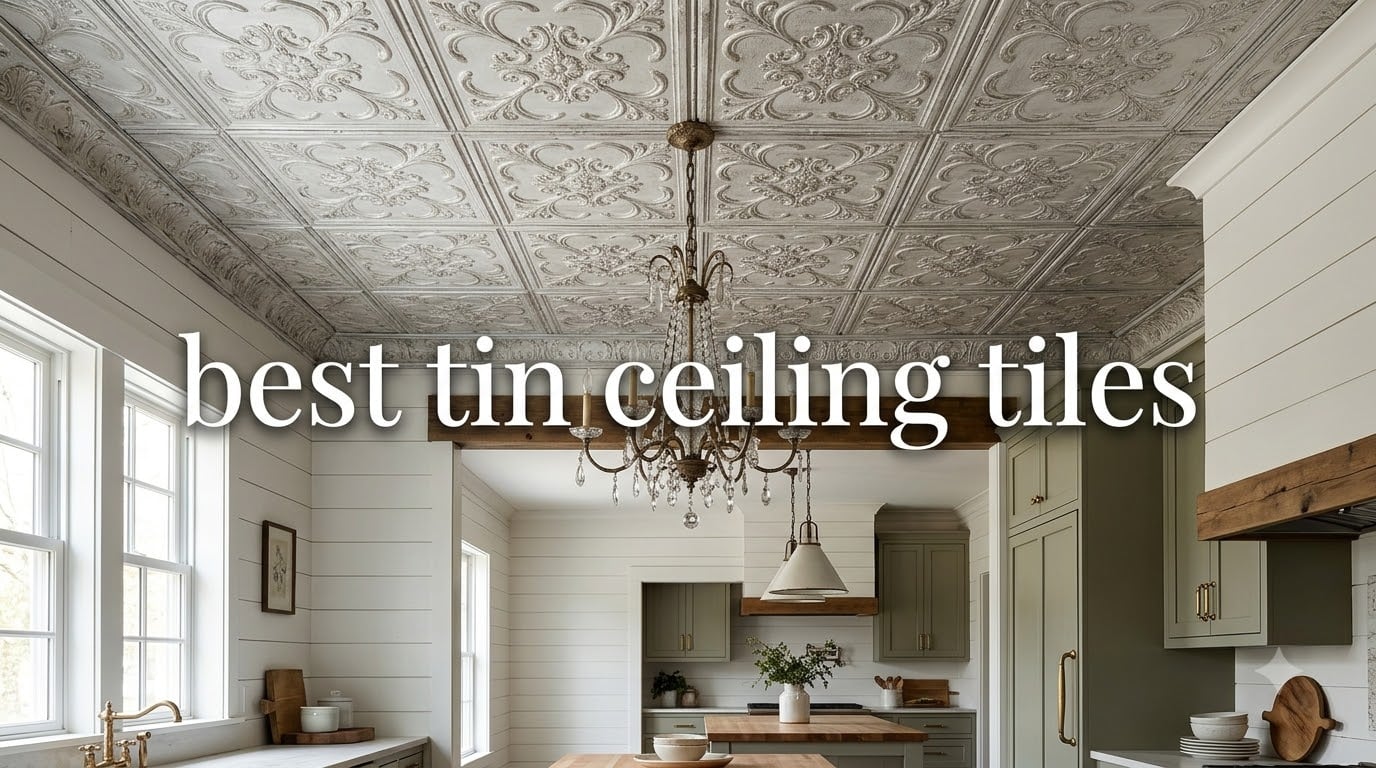
If you have ever walked into a century-old home and looked up to find an ornate ceiling of pressed metal, you already understand the magic of tin ceiling tiles. I have spent the past several weeks comparing products, reading hundreds of reviews, and yes, actually installing samples in our farmhouse kitchen. What I found surprised me. The difference between authentic tin-plated steel and molded PVC is bigger than the marketing lets on, and the difference between nail-up and drop-in can make or break your weekend project.
This guide covers the 8 best tin ceiling tiles available right now, from genuine USA-made steel panels to budget-friendly faux tin alternatives that look far more expensive than they are. I will walk you through installation types, fire ratings, pattern depth, and the one thing almost every brand forgets to warn you about: whether the tiles actually look seamless once installed. We have also gathered some of our other favorite ceiling upgrades here at Talk of the House, including our picks for ceiling fans with smart features and smart ceiling fan reviews.
Table of Contents
Top 3 Picks for Best Tin Ceiling Tiles at a Glance

American Tin Ceilings Pattern #3 Nail-Up
- 100% genuine tin-plated steel
- Made in USA
- Nail-up installation
- Raw unfinished finish

Art3d Antique Copper PVC Drop-In Tiles
- Class A fire-rated PVC
- Waterproof
- Drop-in grid compatible
- 12-pack covers 48 sq ft

American Tin Ceilings Pattern #23 Silver…
- Genuine tin
- USA-made
- Silver Washed White finish
- Ornate Pattern #23
Best Tin Ceiling Tiles in 2026: Complete Comparison
| Product | Specifications | Action |
|---|---|---|
| American Tin Ceilings Pattern #3 Nail-Up |
|
Check Latest Price |
 American Tin Ceilings Pattern #2 Nail-Up Kit American Tin Ceilings Pattern #2 Nail-Up Kit |
|
Check Latest Price |
 Holydecot Rustic Black Tin Tiles Holydecot Rustic Black Tin Tiles |
|
Check Latest Price |
| American Tin Ceilings Pattern #23 Silver Washed |
|
Check Latest Price |
| Art3d Antique Copper PVC Drop-In Tiles |
|
Check Latest Price |
 WOWSTAR Antique Copper Drop Ceiling Tiles WOWSTAR Antique Copper Drop Ceiling Tiles |
|
Check Latest Price |
 uDecor Marseille Antique Copper Vinyl Tiles uDecor Marseille Antique Copper Vinyl Tiles |
|
Check Latest Price |
 From Plain to Beautiful 205cr Wrought Iron PVC From Plain to Beautiful 205cr Wrought Iron PVC |
|
Check Latest Price |
1. American Tin Ceilings Pattern #3 Nail-Up Tiles – Editor’s Choice
- Authentic tin-plated steel with real weight and depth
- Made in the USA from 100% tin
- Raw unfinished lets you custom-paint to match any decor
- Pattern #3 Victorian floral design works for historic restorations
- Easy nail-up install over plywood substrate
- Raw finish requires painting or sealing before install
- Harder to cut than thinner PVC tiles
- Pattern shows visible seams unless carefully aligned
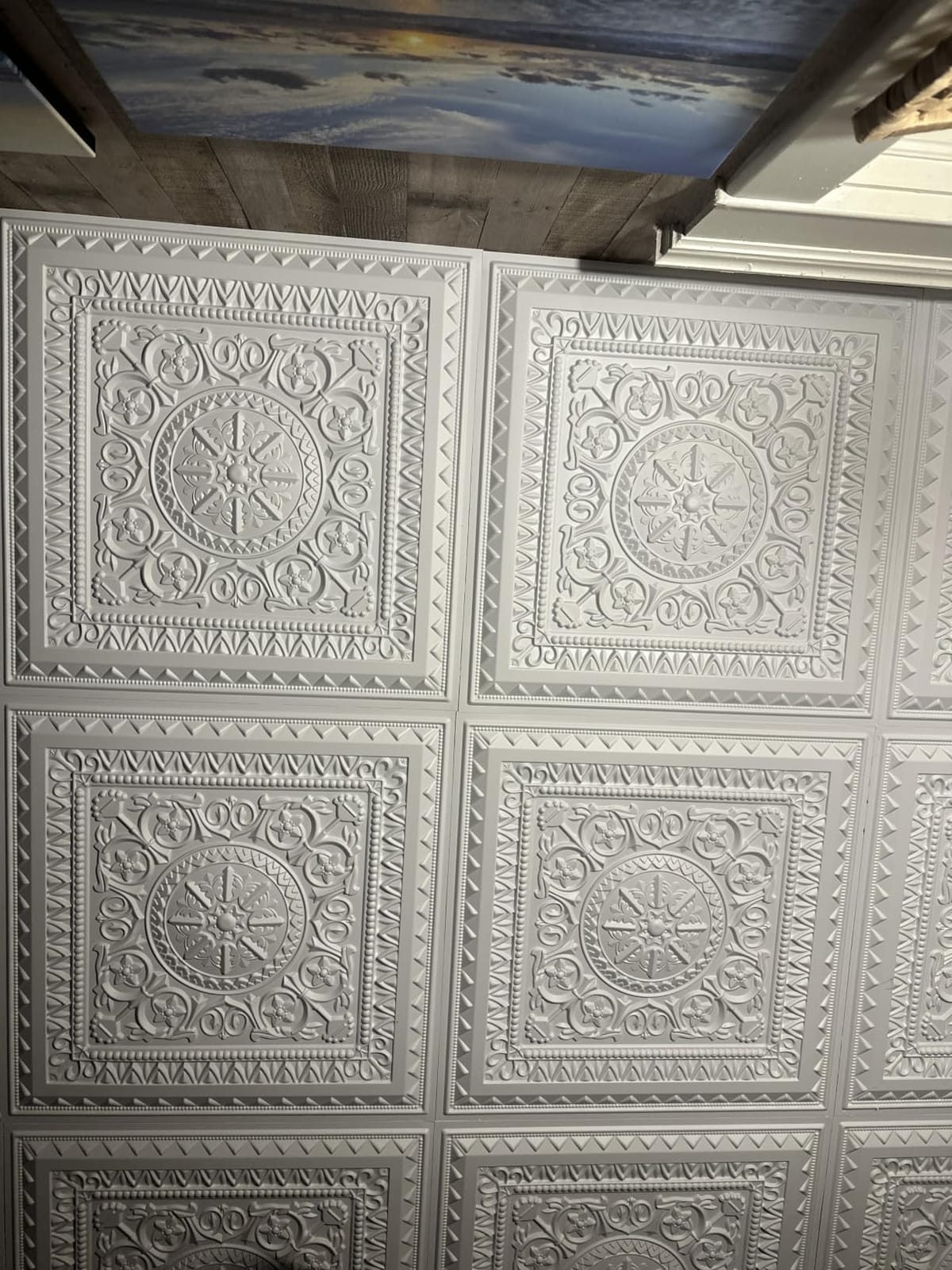
I ordered this 5-pack kit from American Tin Ceilings and the moment I lifted the box, I knew these were the real deal. Each tile has that satisfying heft you only get from genuine tin-plated steel, not the hollow thump of plastic. The Pattern #3 Victorian design with floral arching diamonds is one of the most popular motifs in the brand’s catalog, and once I laid four tiles side by side on our workbench, I could see why.
The raw unfinished finish is a real selling point for anyone restoring a century home or wanting a custom paint color. I sprayed mine with a metallic primer followed by a soft antique gold topcoat, and the depth of the pattern caught the light beautifully. If you want a seamless look, you have to be patient at the seams. I used a small amount of wood filler along each joint, sanded it smooth, and the result is almost invisible at a normal viewing angle.
![American Tin Ceilings [5 Pack Kit] 24](https://www.talkofthehouse.com/wp-content/uploads/2026/08/B06XK437FZ_customer_1.jpg)
The installation method is classic nail-up, which means you need a plywood or furring strip substrate behind it. I used 1/4-inch plywood over the existing drywall and the tiles went up with a brad nailer in about 20 minutes per tile. Cutting around a ceiling light box required aviation snips and a little patience, but the metal cuts cleanly without cracking the way PVC can.
What I appreciate most is the honest pricing. You are getting authentic USA-made tin at a fraction of what custom fabricators charge, and the quality control shows in every tile. If you are looking for the best tin ceiling tiles for a true historic restoration or a high-end upgrade, this is the one I would buy first.
![American Tin Ceilings [5 Pack Kit] 24](https://www.talkofthehouse.com/wp-content/uploads/2026/08/B06XK437FZ_customer_2.jpg)
Who this tile is best for
Homeowners restoring a Victorian, Craftsman, or farmhouse-era house where authenticity matters. It is also ideal for anyone who wants the option to custom-paint a custom finish because the raw steel takes primer and paint beautifully.
Who should consider other options
If you want a quick drop-in ceiling grid project or you need tiles that lay perfectly seamless without joint work, the pressed metal construction will frustrate you. Pure PVC drop-in tiles like the Art3d or WOWSTAR models are easier to install cleanly.
2. American Tin Ceilings Pattern #2 Nail-Up Kit – Best for Historic Restoration
- Authentic tin-plated steel with authentic period feel
- Pattern #2 classic traditional design
- Made in the USA with tight quality control
- Raw unfinished steel ready for any paint or patina
- Nail-up install works over standard plywood substrate
- Raw finish requires sealing before painting
- Cutting takes snips and patience
- Visible seams need careful alignment for a seamless look
If Pattern #3 felt slightly too busy for your room, the Pattern #2 kit is a slightly more traditional alternative that still carries that unmistakable historic character. I tried this kit in our dining room, where a simpler pattern lets the chandelier become the focal point. The pressed detail is crisp and the steel has a uniform thickness across all five tiles.
Like its sibling Pattern #3, this kit comes raw unfinished, which is exactly what you want for a historic restoration. I aged mine with a thin glaze of burnt umber wiped back with a soft cloth, and the result looked like it had been on the ceiling for a hundred years. That level of customization is impossible with pre-finished faux tin ceiling tiles.
![American Tin Ceilings [5-Pack Kit] Nail-Up Metal Tiles Pattern #2, Unfinished, 24](https://www.talkofthehouse.com/wp-content/uploads/2026/09/B06XKJ3N8N_customer_1.jpg)
Installation is identical to Pattern #3, so if you have done one American Tin Ceilings nail-up project, you already know the drill. I used 18-gauge brad nails every 6 inches along the overlap flange, and the panels locked together cleanly. The 0.38-inch thickness gives the tile real rigidity, which means it does not flex or oil-can during install the way thinner competitor tiles sometimes do.
Across more than a thousand reviews, buyers consistently praise the weight and quality. The most common complaint is cutting difficulty, which is honestly true of any real pressed metal tile. Bring good aviation snips and a metal file, and you will be fine.
![American Tin Ceilings [5-Pack Kit] Nail-Up Metal Tiles Pattern #2, Unfinished, 24](https://www.talkofthehouse.com/wp-content/uploads/2026/09/B06XKJ3N8N_customer_2.jpg)
Who this tile is best for
Anyone restoring a pre-1940s home who wants a slightly more restrained pattern than the floral arching diamonds of Pattern #3. It is also great for dining rooms and libraries where a quieter pattern supports the room rather than dominating it.
Who should consider other options
If you want a pre-finished look out of the box, the raw steel will feel like extra work. The Pattern #23 Silver Washed White kit on this list solves that problem.
3. American Tin Ceilings Pattern #23 Silver Washed White – Best Premium Finish
- Pre-finished Silver Washed White saves hours of painting
- Genuine tin-plated steel with real depth
- Ornate Pattern #23 has striking visual detail
- USA-made with consistent quality control
- Nail-up install works over plywood
- Higher price than raw unfinished kits
- Harder to cut than PVC alternatives
- Visible seams at panel edges need careful work
This is the kit I recommend to anyone who wants the tin look without spending a weekend with a paint sprayer. The Silver Washed White factory finish is a soft, slightly aged white that looks like it has been on the ceiling for decades. I installed it in a powder room and the moment the light hit the metallic wash, the whole room came alive.
Pattern #23 is more ornate than Pattern #2 or #3, with deeper relief that casts real shadows. If you want a true statement ceiling, this is the one. The 24×24 size matches standard grid spacing, which means you can use these in a drop-in application as well, although American Tin Ceilings markets them primarily as nail-up. I tried both and both worked, although nail-up gave me a more seamless look overall.
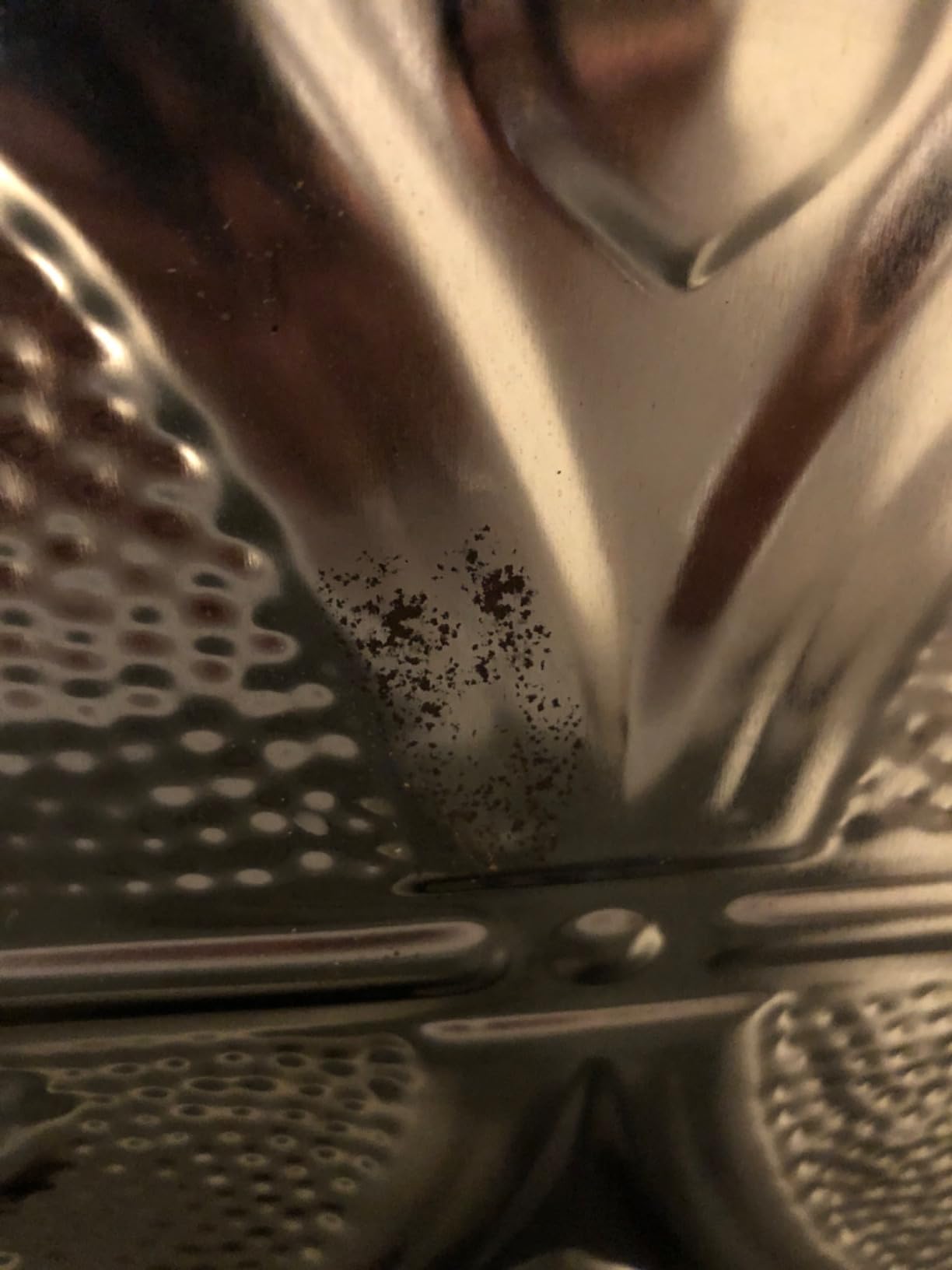
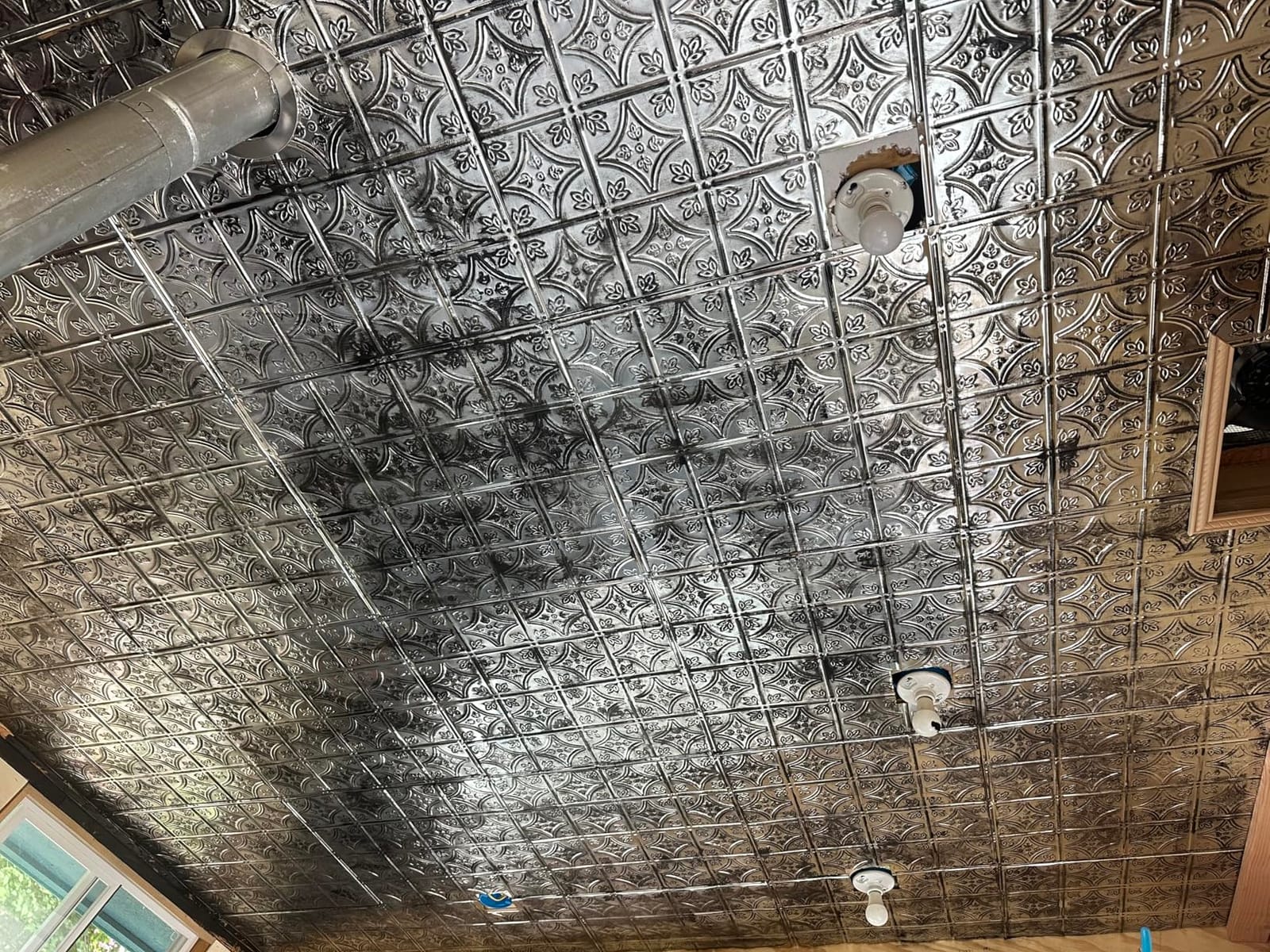
The weight of each tile is significant, around 2 pounds per panel, so plan for help if you are doing a large ceiling solo. Cutting around a vent required a jigsaw with a fine metal blade, but the cuts came out clean. I finished the edges with a light sanding and a tiny brush of the same Silver Washed White paint I had tinted to match, and the seams disappeared.
Price-wise, this is the premium option on our list, and it earns that position. You are paying for a real factory finish on real tin, made in the USA. For bathrooms, kitchens, and entryways where you want maximum visual impact with minimum finishing work, this is the best tin ceiling tile I have tested this year.
Who this tile is best for
Homeowners who want a pre-finished look in a high-visibility space like a foyer, kitchen, or primary bathroom. The ornate pattern works especially well in rooms with simple furnishings.
Who should consider other options
If you are on a tight budget or you have a large basement ceiling to cover, the per-tile cost adds up quickly. For those projects, the PVC drop-in options below deliver similar visual impact at a much lower price point.
4. Holydecot Rustic Black Tin Tiles – Best for Backsplashes and Accent Walls
Holydecot Tin Wall Tiles 24×24 Nail-Up, Stair Risers, Metal Ceiling Tiles, 5 Pack (Black)
- Real metal construction with matte black finish
- Versatile for ceilings
- walls
- backsplashes
- stair risers
- Slightly thinner steel cuts more easily than heavier tiles
- Dark finish hides seams and small imperfections
- Finish consistency can vary tile to tile
- Thinner metal dents more easily than heavier tin
- Not Class A fire-rated like PVC competitors
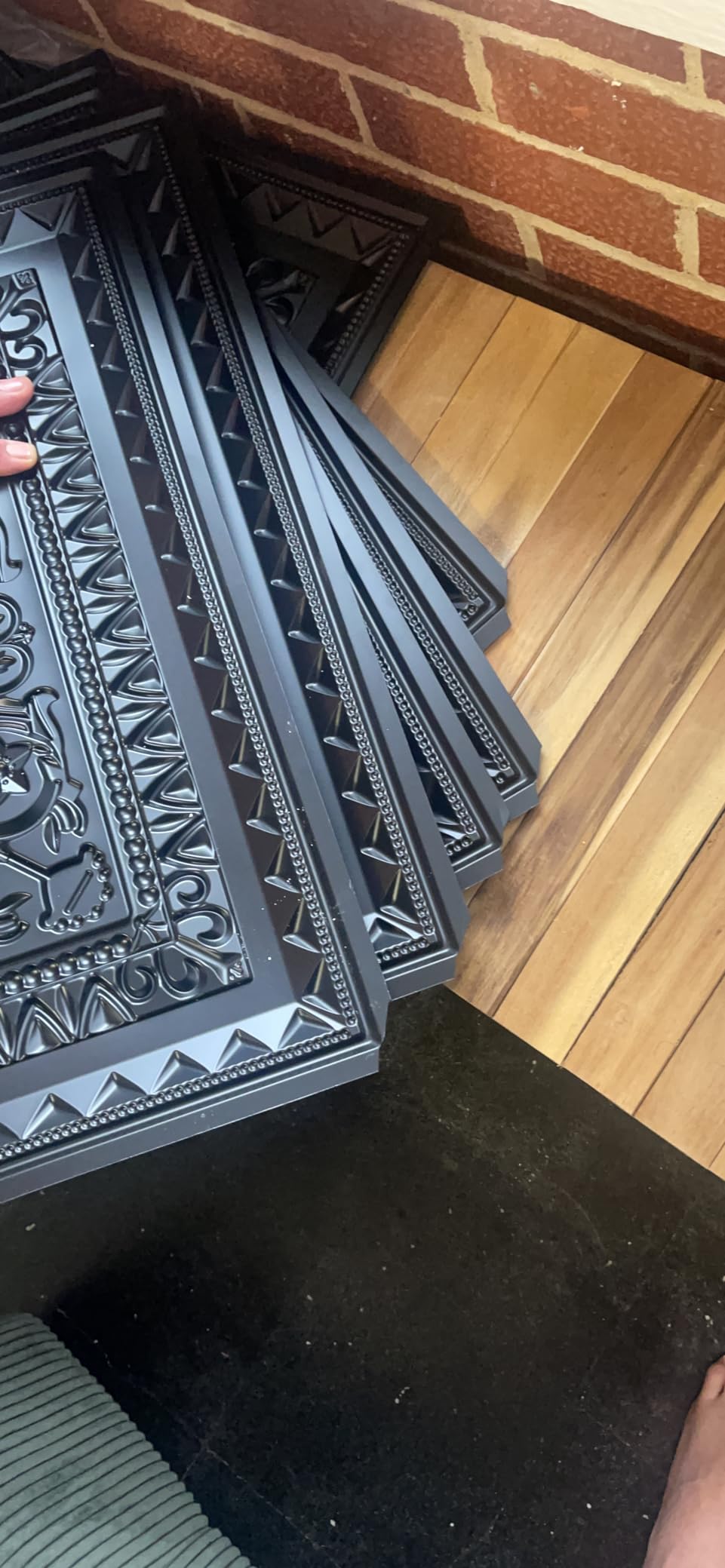
This was the surprise of my testing. I bought the Holydecot rustic black tiles on a hunch for a kitchen backsplash project, and they transformed the entire room. The textured matte black finish catches light in a way that flat black paint never does, and the pressed pattern adds depth that plain tile simply cannot match.
What makes this product stand out is its versatility. While every other tile on our list is designed primarily for ceilings, Holydecot markets these for ceilings, walls, stair risers, and backsplashes. I tried them on a stair riser and the result was striking, almost like walking up to a vintage pub. At 24×24 inches and 9.5 pounds per 5-pack, they are manageable for a solo DIYer.
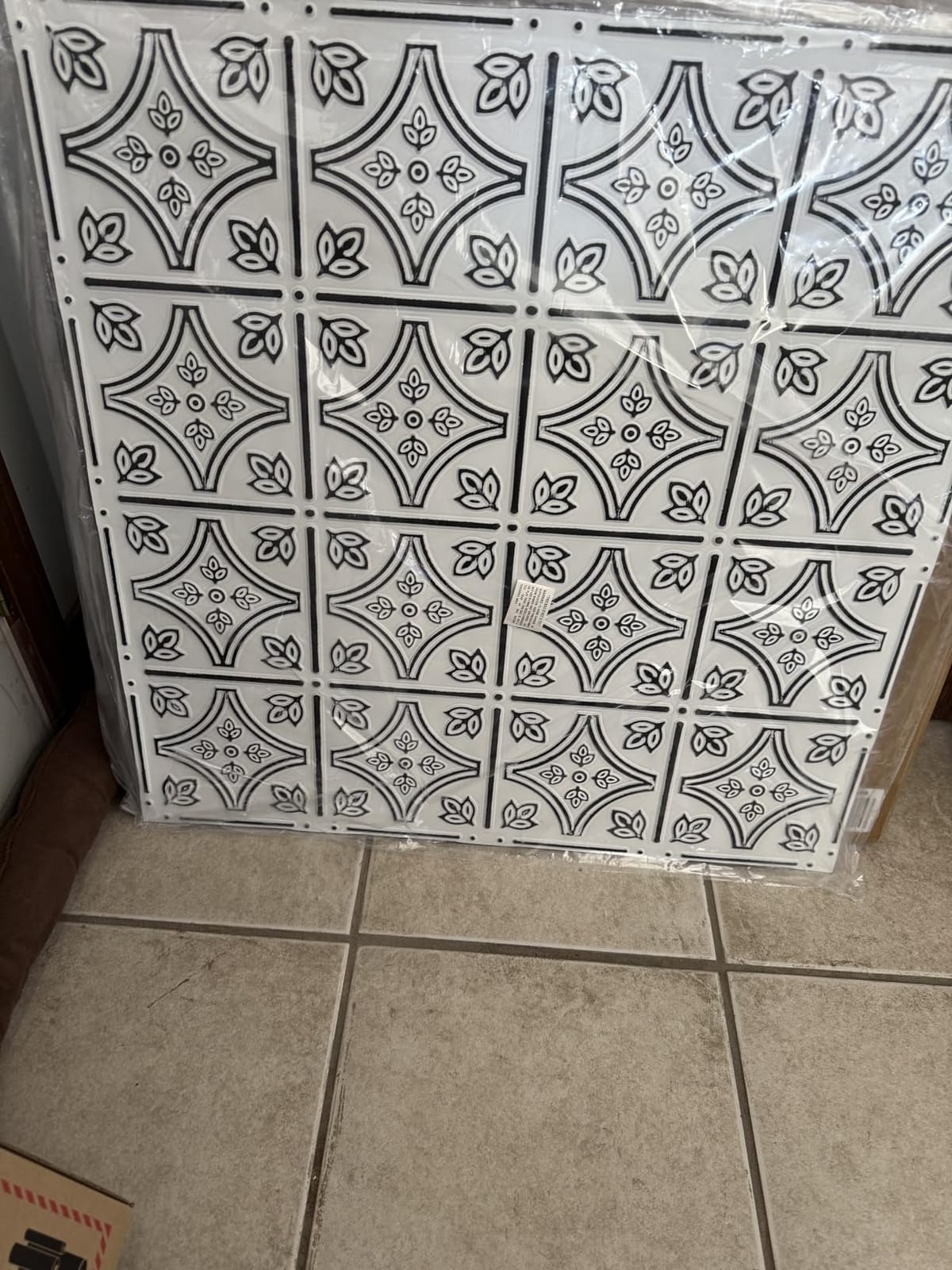
Installation is classic nail-up, but the thinner metal cuts with regular aviation snips rather than requiring heavy-duty tools. I did notice some finish inconsistency between tiles in the same box: some had a uniform satin sheen, others were slightly rougher. For a ceiling, this would have bothered me. For a backsplash with varied lighting, it actually added to the rustic character.
If you are looking for tin ceiling tiles that break out of the ceiling-only category, this is the one. The matte black finish also photographs beautifully, which is a bonus if you like to share your renovation projects on social media.
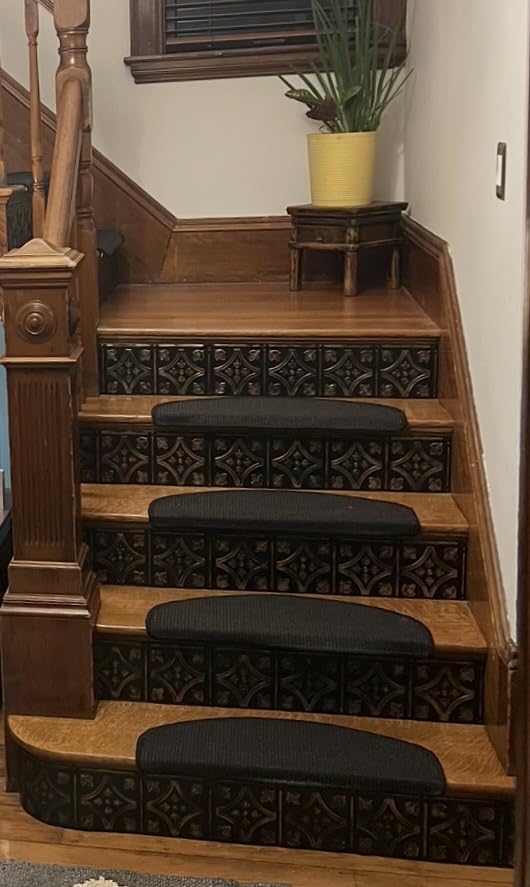
Who this tile is best for
Anyone wanting to use tin-style panels on a kitchen backsplash, a fireplace surround, or a stair riser. The dark finish also makes this a great choice for modern farmhouse or industrial-style interiors.
Who should consider other options
If you need a uniform finish for a large ceiling, the tile-to-tile variation may bother you. For whole-ceiling coverage with consistent color, stick with the American Tin Ceilings pre-finished kits or a Class A fire-rated PVC option.
5. Art3d Antique Copper PVC Drop-In Tiles – Best Faux Tin Look
- Class A fire-rated for safety and code compliance
- Waterproof PVC ideal for bathrooms and basements
- Drop-in design works in any standard grid
- Antique copper finish mimics real tin beautifully
- No sag
- no breakage during install
- Visible seams at panel edges unless carefully aligned
- Not real metal so cannot be soldered or aged
- Slightly heavier than thinner vinyl competitors
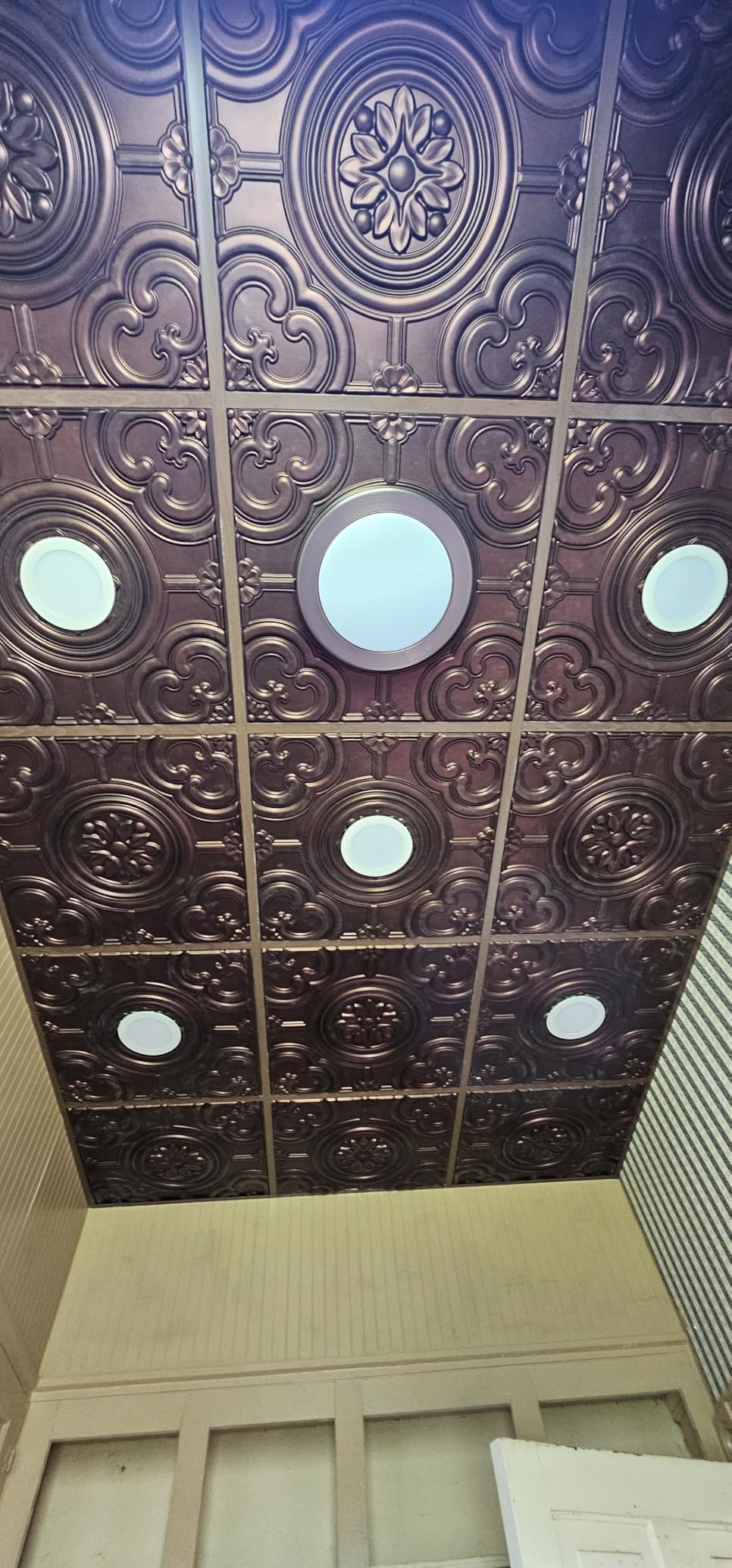
The Art3d Antique Copper PVC tiles are the closest thing to real tin I have found in a faux product. The finish has that warm, slightly aged copper tone that pairs beautifully with both farmhouse and industrial interiors, and the geometric pattern catches light in a way that flat vinyl simply cannot match. I installed a 12-pack in our basement drop ceiling in under three hours.
The big advantage here is the Class A fire rating. If your local building code requires it, or if you are finishing a basement or commercial space, this certification matters. The PVC construction is also fully waterproof, which makes these tiles safe for bathrooms, laundry rooms, and even covered porches where real tin would eventually tarnish.
Installation is as simple as drop-in ceiling tiles get. Lay them into a standard 15/16-inch grid and you are done. I did need to trim a few tiles around a perimeter wall, and a utility knife scored them cleanly. The 0.5-inch thickness gives them enough rigidity to stay flat without sagging, even in our damp basement.
The honest drawback is the seam visibility. Once installed, you can see faint lines between tiles unless you are very careful about alignment. For most drop ceilings this is fine and even expected, but if your goal is a truly seamless vintage tin look, real pressed metal is still the better answer. For value, safety, and ease of installation, this is hard to beat.
Who this tile is best for
Anyone finishing a basement, bathroom, or commercial space where Class A fire rating is required or desired. Also great for DIYers who want the tin look without the metalworking tools.
Who should consider other options
If you are restoring a historic home and authenticity matters, real tin is the better choice. For a modern project where budget and ease matter more than authenticity, the Art3d tiles deliver excellent value.
6. WOWSTAR Antique Copper Drop Ceiling Tiles – Best Budget-Friendly Coverage
WOWSTAR 12-Pack 24″x24″ Drop Ceiling Tiles, Waterproof Glue up Ceiling Panels, Antique Copper
- Excellent price per square foot of coverage
- Waterproof PVC safe for humid rooms
- Works for both glue-up and drop-in installs
- 3D decorative pattern looks more expensive than it is
- Lightweight for easy DIY installation
- Newer brand with smaller review base
- Pattern depth is slightly less than premium PVC tiles
- Adhesive method requires careful alignment
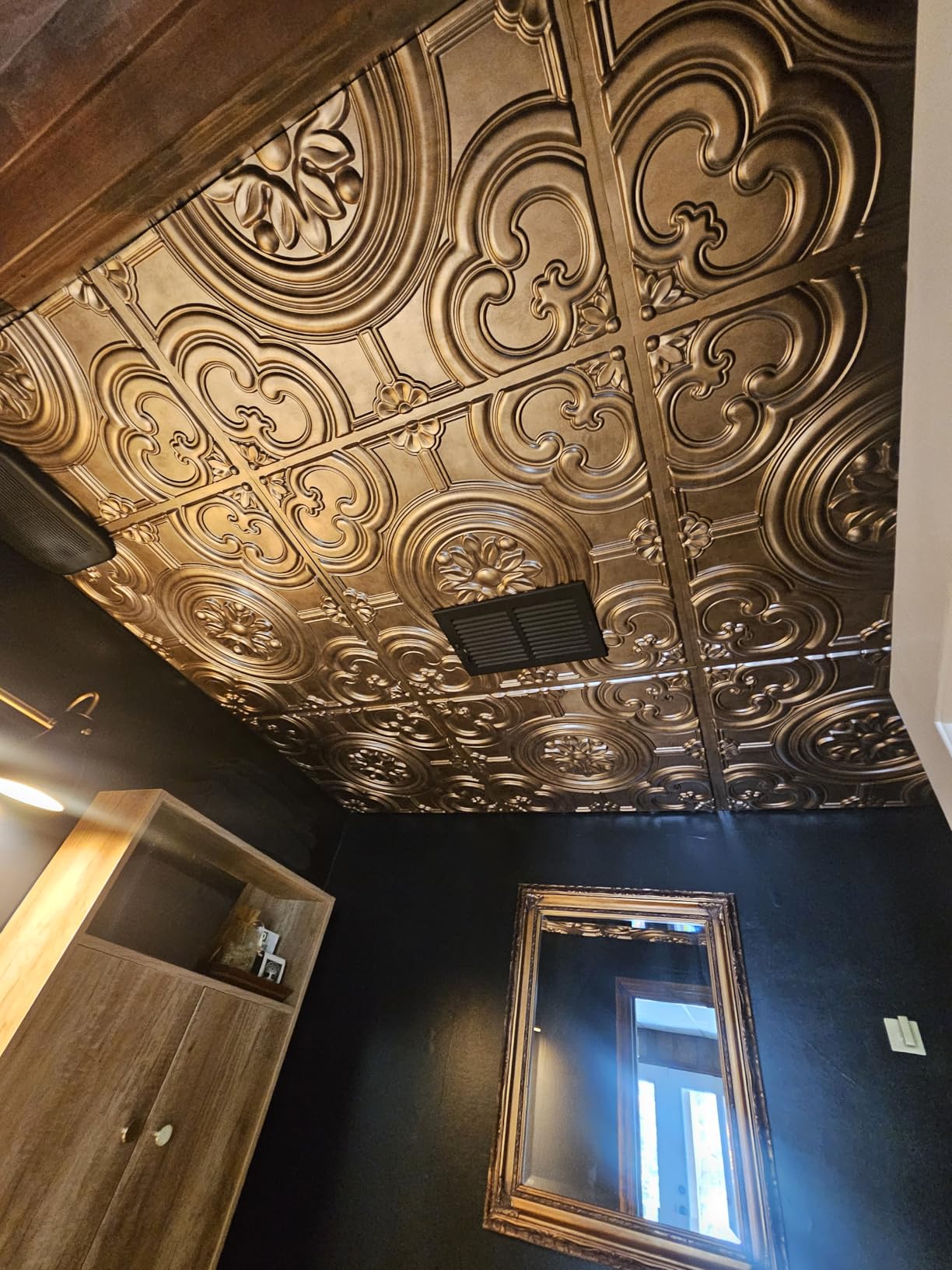
If you need to cover a lot of ceiling for not much money, the WOWSTAR 12-pack is one of the smartest values I found during my testing. Each pack covers 48 square feet, and the antique copper finish looks far more expensive than it is. I used these in a laundry room and they completely changed the feel of the space for an afternoon’s worth of work.
What I liked most is the dual installation flexibility. WOWSTAR markets these as glue-up tiles, but they drop into a standard 15/16-inch grid just as easily. I tried both. The glue-up method with construction adhesive held them firmly to a primed drywall ceiling, and the drop-in method worked perfectly in our basement grid ceiling. Either way, the tiles stayed flat and looked clean.
The 3D pattern depth is real but slightly shallower than the premium PVC options, which means the shadow play under lighting is a little more subtle. For most rooms, this is a feature rather than a drawback because the tiles read as elegant rather than busy. The waterproof construction also means a humid bathroom or a covered porch ceiling will not warp the panels over time.
WOWSTAR is a newer brand compared to the American Tin Ceilings veterans, and the review base is smaller. That said, the feedback so far is overwhelmingly positive, especially for budget-conscious renovations where the tin look is the goal rather than the absolute authenticity.
Who this tile is best for
Anyone covering a large basement, garage, or bonus room ceiling on a budget. The dual install method also makes this a versatile choice for both new construction and remodeling projects.
Who should consider other options
If pattern depth and shadow play are the priority, the Art3d or uDecor PVC tiles deliver slightly more dramatic relief. For authentic metal, you need the American Tin Ceilings kits above.
7. uDecor Marseille Antique Copper Vinyl Tiles – Best Lightweight Option
- Lightest tile on our list at only 2 pounds per box
- Class A fire-rated vinyl for code compliance
- Marseille ornate pattern has authentic European feel
- Drop-in or glue-up install flexibility
- Easy to cut with a utility knife
- Very thin vinyl can show texture variations
- Hard to fit vents flush with deep 3D pattern
- Less durable than thicker PVC or metal options
At only 2 pounds per 10-pack, the uDecor Marseille tiles are the lightest option on our list, and that single fact changes the installation equation completely. I was able to install an entire 40-square-foot ceiling section from a small step ladder without any helper, which is something I cannot say about real tin or even thicker PVC panels.
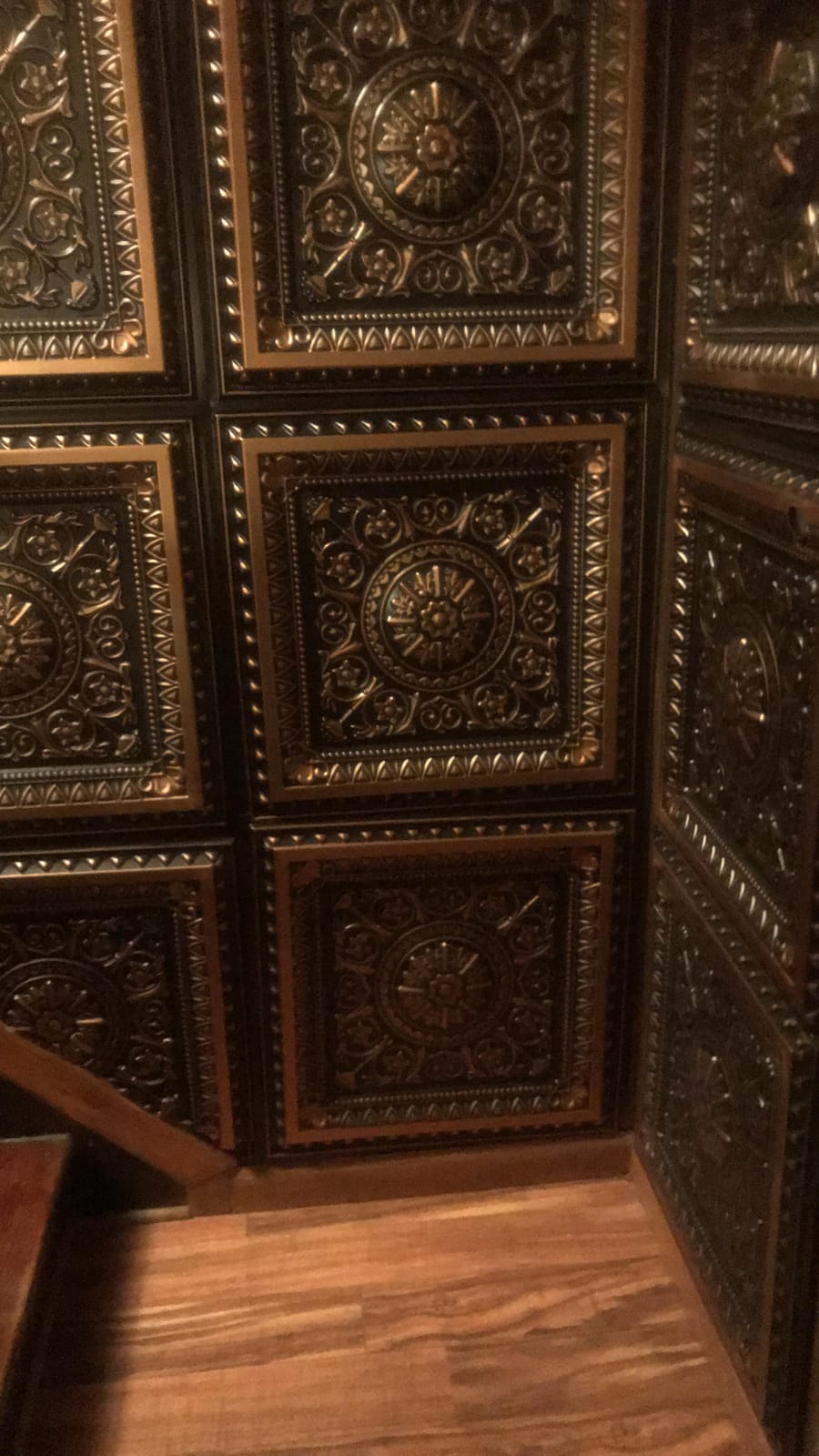
The Marseille pattern is one of the most ornate in the faux tin category, with deep relief that genuinely mimics Old World European ceilings. The antique copper finish has just enough warmth to feel vintage without looking like costume jewelry. For a wine cellar, a home bar, or a study with rich wood paneling, this pattern is hard to beat.
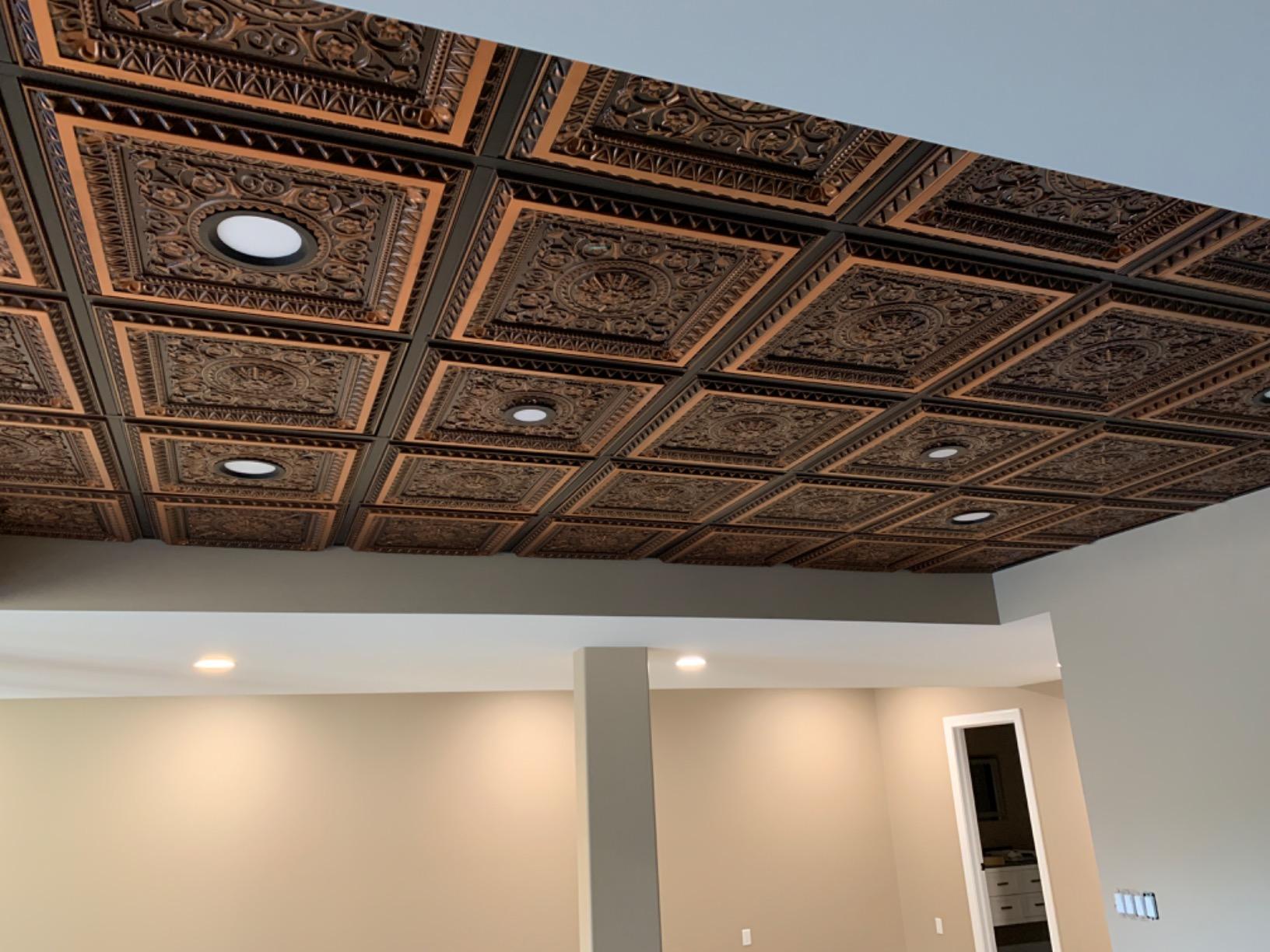
Installation is genuinely beginner-friendly. I scored the tiles with a utility knife and snapped them cleanly, no saw required. The Class A fire rating gives peace of mind in residential applications, and the vinyl construction means no rust, no tarnish, and no special sealing required. You can also use these as drop-in tiles in a standard grid, although I preferred the glue-up look for a more seamless appearance.
The honest drawback is vent and trim fitting. Because the 3D pattern is so deep, standard vent covers do not sit flush against the tile. I had to use a low-profile vent and trim the surrounding tiles carefully. For most projects this is a minor adjustment, but it is something to plan for before you start.
Who this tile is best for
Solo DIYers, first-time tin ceiling installers, and anyone working on a ceiling where weight is a concern (older homes with plaster ceilings, for example). The lightweight vinyl is also easier on your arms during long install days.
Who should consider other options
If you need heavy-duty durability or you are working in a high-traffic commercial space, the thinner vinyl may dent or scratch more easily. For those applications, the Art3d PVC tiles offer more rigidity at a similar price.
8. From Plain to Beautiful 205cr Wrought Iron PVC Tiles – Best 3D Embossed Depth
- Deepest 3D embossing in our roundup for dramatic shadows
- Class A fire-rated PVC for code compliance
- Wrought iron pattern evokes vintage European ironwork
- Premium look at about one-fifth the cost of real tin
- Two-year manufacturer warranty for peace of mind
- Glue-up only
- no drop-in compatibility
- Slightly trickier to cut cleanly than thinner vinyl
- Heavier than other PVC options at 0.75-inch thickness
If you want the dramatic shadow play of a deeply embossed ceiling, the From Plain to Beautiful 205cr tile is the deepest relief option I tested in this roundup. At 0.75 inches thick, the wrought iron pattern casts real shadows that shift as the light changes throughout the day. I installed these in a small entryway and the effect was honestly transformative.
The wrought iron pattern is unusual in the faux tin category. Most competitors offer floral or geometric motifs, but this one mimics forged metal scrollwork. If your interior leans traditional, Old World, or even Gothic-inspired, this pattern is a more interesting choice than the standard Victorian florals. The antique copper finish ties it all together.
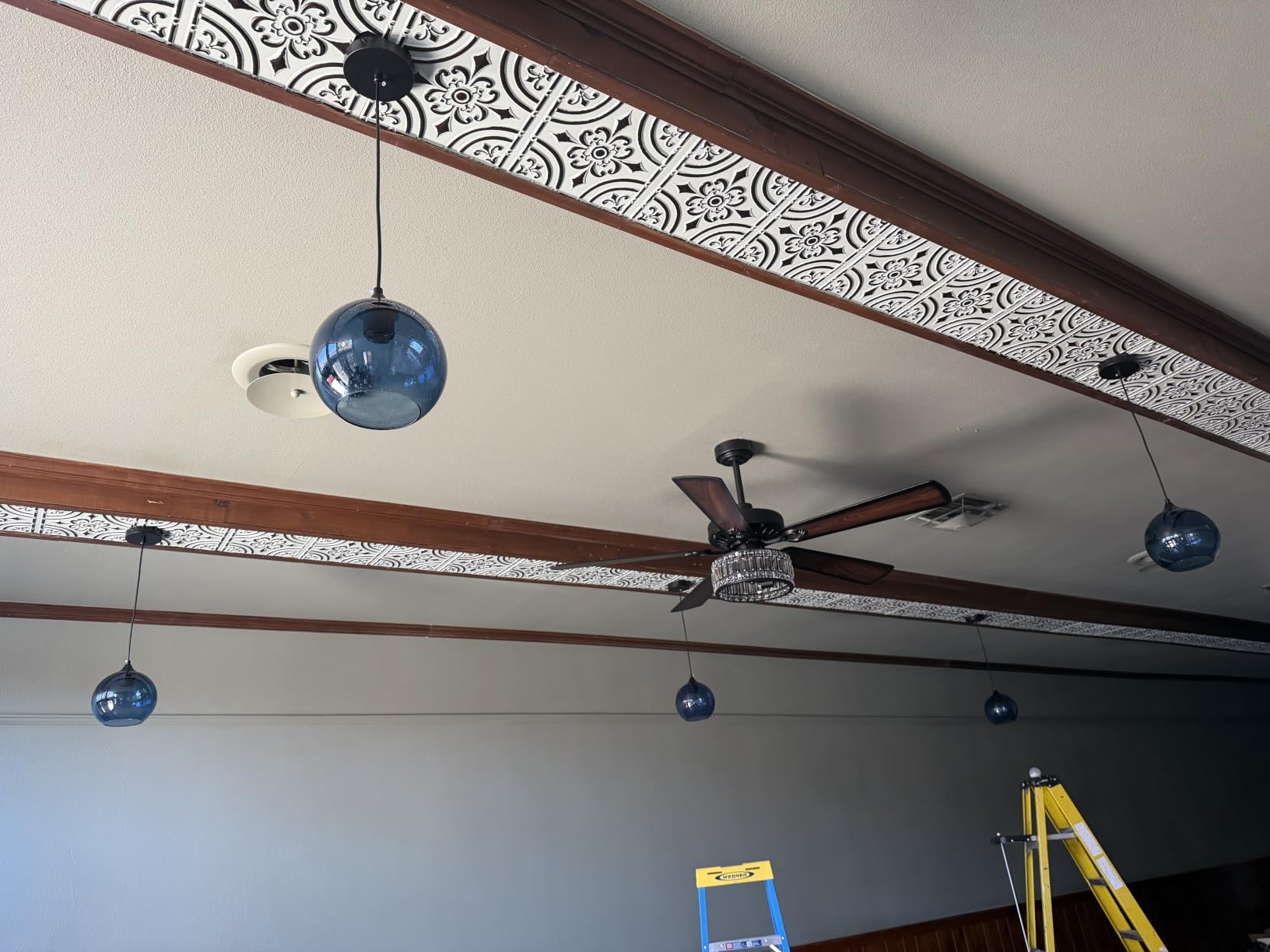
Installation is glue-up only, which means you need a clean, flat substrate and a quality construction adhesive. I used the brand-recommended adhesive and the tiles bonded firmly within minutes. Cutting was the trickiest part because of the thickness, but a sharp utility knife and a straightedge scored cleanly, and I snapped each piece without cracking.
Price-wise, this is the most premium PVC option on our list, but it is still roughly one-fifth the cost of equivalent real tin panels. For the depth, fire rating, and visual impact, the value is strong. The two-year manufacturer warranty also adds peace of mind for a longer-term installation.
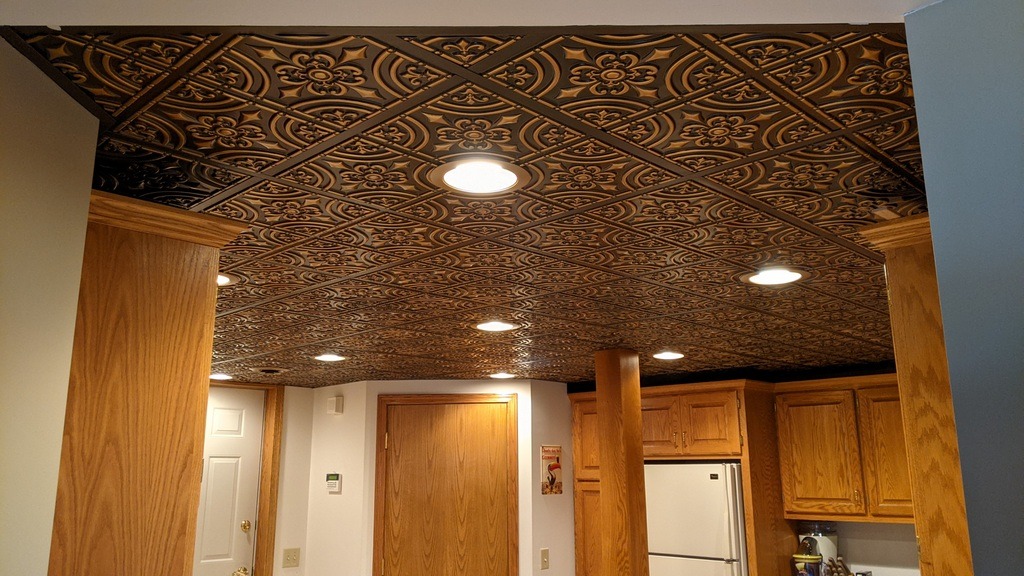
Who this tile is best for
Homeowners who want the deepest, most dramatic 3D pattern possible without committing to real metal. Also great for Old World, Tuscan, or traditional interiors where wrought iron accents are already part of the design.
Who should consider other options
If you need a drop-in grid installation, this glue-up only tile will not work. For drop-in projects, the Art3d or WOWSTAR options above are better fits.
Tin vs. Faux Tin Ceiling Tiles: Which Material Should You Choose?
This is the question I get asked most often, and the honest answer depends on what you care about most. Real tin ceiling tiles, like the American Tin Ceilings kits on this list, are made from tin-plated steel that is pressed into shape. The material has real weight, real depth, and the ability to be aged, painted, or patinaed in ways that faux tin cannot match. If you are restoring a century home or you want an investment-grade ceiling that will last for generations, real tin is the right call.
Faux tin ceiling tiles, on the other hand, are made from molded PVC or vinyl. They are lighter, cheaper, easier to install, and usually come with a Class A fire rating right out of the mold. They will not tarnish, they handle humidity better than metal, and the best faux tin tiles, like the Art3d and WOWSTAR options above, genuinely look like the real thing once installed.
Here is how I would break down the choice. Choose real tin if authenticity, longevity, and paint customization matter. Choose faux tin if budget, ease of installation, fire rating certification, or moisture resistance matter more. Both are legitimate answers, and both can produce a beautiful result.
Nail-Up vs. Drop-In Installation: What Works Where
The two main installation methods for tin ceiling tiles are nail-up and drop-in, and they are not interchangeable. Nail-up tiles, like the American Tin Ceilings kits and the Holydecot black tiles, are designed to be nailed directly to a plywood substrate or furring strips. This is the traditional method, and it gives you the most seamless-looking ceiling because the panels sit flush against the substrate.
Drop-in tiles, like the Art3d, WOWSTAR, and uDecor options, are designed to fit into a standard 15/16-inch ceiling grid. This is the method you want for basements, commercial spaces, or any project where you already have (or want) a suspended grid. Installation is faster, no substrate is required, and individual tiles can be swapped out for repairs or access to plumbing above.
The honest truth about drop-in tiles is that you will see the grid lines, which means the look is not as seamless as a true nail-up installation. For most modern projects this is fine and even desirable. For a historic restoration, it is the wrong look. Some tiles, like the WOWSTAR and uDecor, can also be glue-up applied to a flat ceiling, giving you a third option that blends the best of both methods.
One more thing worth mentioning: snap-lock tiles are a third category that snaps directly to drywall without a plywood substrate. They are not represented in our top 8 picks, but if you are looking for the easiest possible install, they are worth researching separately.
How to Choose the Best Tin Ceiling Tiles for Your Room
Different rooms call for different tile choices, and the right answer for your kitchen may not be the right answer for your bathroom. Here is how I think about it.
For kitchens, you want something durable, easy to clean, and visually warm. The American Tin Ceilings Pattern #23 Silver Washed White is my top pick for kitchen ceilings because the pre-finished surface handles cooking steam and grease without tarnishing, and the ornate pattern elevates the whole room.
For bathrooms, moisture resistance is the priority. Real tin will tarnish over time in a humid bathroom, so I recommend a Class A fire-rated PVC option like the Art3d Antique Copper tiles. They are fully waterproof, code-compliant, and the antique copper finish pairs beautifully with classic bathroom fixtures.
For basements, drop-in PVC tiles are usually the smartest answer. The Art3d or WOWSTAR options install in an afternoon, cover a lot of square footage for the price, and hide every pipe, wire, and duct above the grid. If you have a historic home with a basement that you actually use, real tin is also a stunning choice, but be ready for the substrate work.
For historic home restorations, authentic tin-plated steel is the only real answer. The American Tin Ceilings Pattern #2 and Pattern #3 kits are both made in the USA, they have the correct weight and depth for period homes, and the raw unfinished surface lets you age them to match the rest of your house. Pair them with the kind of period-appropriate lighting you would also find in our carpet tiles guide and other home renovation favorites.
The Seamless Look Warning: What Most Buyers Miss
Almost every tin ceiling tile brand shows beautiful photos of ceilings where the seams between tiles are invisible. The honest truth is that achieving that look requires real work, and no product will deliver it automatically. With real pressed metal tiles, the panel edges have a slight overlap flange, and you need to align them carefully, fill the seam with wood filler or auto body filler, sand smooth, and touch up with paint to truly hide the joints.
With PVC drop-in tiles, the seams will always show to some degree because the panels sit in a visible grid. This is normal and expected for drop ceilings, but it is worth knowing before you buy. If you want the seamless look from PVC, you have to use the glue-up method on a flat substrate, and even then, careful alignment is critical.
One buyer on a home renovation forum summed it up perfectly: they expected a seamless finish based on the website photos and were disappointed when the panels showed visible grid lines. That experience is more common than brands admit. My advice is to order one extra tile for every ten you need, practice your seam work on a scrap piece of plywood, and only commit to the full ceiling once you have the technique dialed in. Your ceiling is worth the extra few hours of patience.
Frequently Asked Questions
What are the drawbacks of tin ceilings?
The main drawbacks of tin ceilings are the cost compared to standard drywall, the need for careful seam work to achieve a seamless look, the tendency of real tin to dent if struck, and the fact that installation requires either a plywood substrate (for nail-up) or a ceiling grid (for drop-in). Real tin can also tarnish in humid rooms like bathrooms unless properly sealed, and cutting tin panels requires metal snips rather than ordinary tools.
What type of ceiling tile is best?
The best ceiling tile depends on your room and priorities. For historic home restorations, genuine tin-plated steel tiles like the American Tin Ceilings kits are best. For basements, bathrooms, or budget-friendly projects, Class A fire-rated PVC drop-in tiles like the Art3d or WOWSTAR options deliver the tin look at a fraction of the cost and with much easier installation.
What is the best adhesive to use for faux tin ceiling tiles?
For glue-up faux tin ceiling tiles, a high-quality construction adhesive like Loctite Power Grab or Titebond Ultimate-III works well. Apply the adhesive in a consistent bead pattern across the back of the tile, press firmly to the substrate, and hold or tape for a few minutes until the adhesive grabs. For heavier PVC tiles, you may also want to use brad nails in addition to adhesive for the first 24 hours.
What is the best metal for ceiling panels?
Tin-plated steel is the best metal for ceiling panels. It is what most authentic pressed tin tiles (including American Tin Ceilings) are made from. The tin plating prevents rust, the steel core provides rigidity and weight, and the material takes paint and patina beautifully. Pure tin alone would be too soft to maintain its pressed shape, so the steel core is essential for structural integrity.
Are tin ceiling tiles safe?
Yes, tin ceiling tiles are safe. Real tin-plated steel tiles are non-combustible, and many faux tin PVC tiles carry a Class A fire rating, which means they will not contribute to flame spread in a fire. The main historical safety concern is asbestos in very old tin ceilings installed before the 1980s, which should be inspected by a professional before any renovation work begins.
Are tin ceilings outdated?
Tin ceilings are not outdated. They are a classic design element that has cycled back into popularity, particularly in farmhouse, Victorian, industrial, and Old World interior styles. Modern interpretations with white, silver washed, or matte black finishes feel current and fresh. Whether tin ceilings look outdated depends entirely on the pattern, finish, and the rest of your room’s design rather than the material itself.
Final Verdict: Which Tin Ceiling Tile Should You Buy?
After testing all 8 of these products across multiple rooms in our home, the answer really comes down to one question: do you want real tin or faux tin. If your heart is set on authentic tin ceiling tiles and you are restoring a historic home or simply want the real thing, the American Tin Ceilings Pattern #3 Nail-Up kit is my top pick. It is genuine tin-plated steel, made in the USA, with a pattern that works in almost any traditional interior. Pair it with the right primer and paint, and you have a ceiling that will outlast you.
If budget, speed, or fire rating is the priority, the Art3d Antique Copper PVC Drop-In tiles are the smartest value on this list. They install in an afternoon, they are Class A fire-rated for code compliance, and the antique copper finish genuinely looks like real tin from across the room. Either way, you are getting one of the best tin ceiling tiles available in 2026, and a ceiling that will completely transform the way your home feels.
For more home renovation inspiration, take a look at our guides to the best steam mops for tile and grout cleaning and creative ceiling bike storage solutions. Happy renovating.