
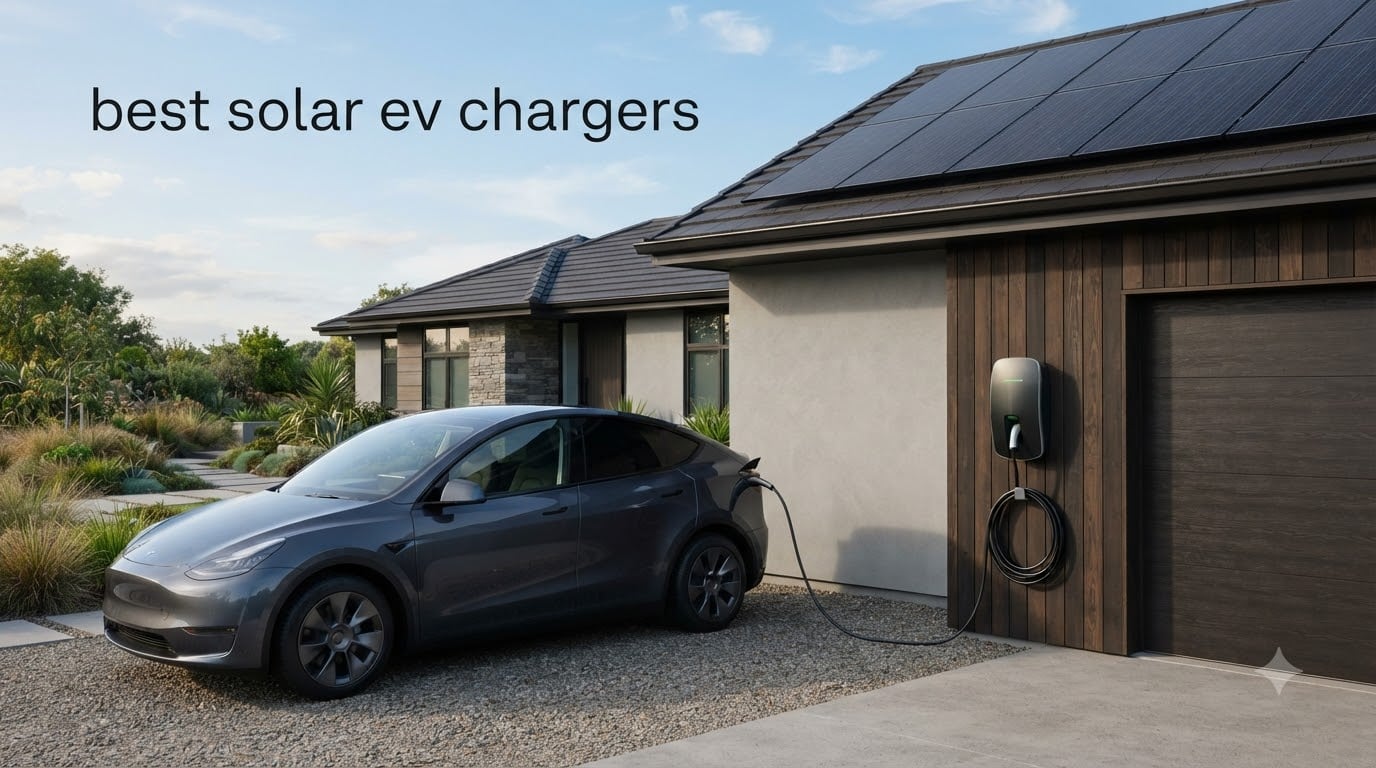
Charging your EV with free sunlight from your own roof just makes sense. When my brother-in-law installed a 10 kW solar array last year, his first question was “which charger will actually use my solar instead of grid power?” That sent me down a rabbit hole of CT clamps, Green Mode settings, and dynamic load balancing that I want to share with you here.
Our team spent weeks comparing the best solar EV chargers available in 2026, digging into solar integration methods, app reliability, installation requirements, and real-world performance. We looked at everything from the Enphase ecosystem lock-in question to whether budget units like the Splitvolt can genuinely do solar matching. The short answer: some chargers are built from the ground up for solar, while others just slap a “solar compatible” label on the box.
The best solar EV chargers share a few traits. They monitor your home’s energy flow with CT clamps or inverter integration, automatically throttle charging speed up and down based on available sunshine, and give you a genuine solar-only mode that charges your car without pulling a single watt from the grid. Whether you have a full Enphase solar system, a Victron off-grid setup, or just want a charger that won’t blow past your panel’s capacity, there is a strong option on this list for you.
Top 3 Solar EV Chargers That Dominate 2026
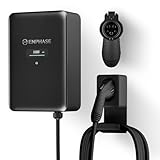
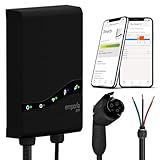
Emporia Pro PowerSmart 48A
- PowerSmart load balancing
- Vue energy monitor
- No panel upgrade needed
If you already run an Enphase solar system, the IQ EV Charger 2 48A is nearly a no-brainer. Its green charging mode talks directly to your Enphase microinverters and only pulls excess solar into your EV. The Emporia Pro wins best value because its PowerSmart technology handles load balancing without expensive panel upgrades, and it ships with a Vue energy monitor that gives you real-time insight into your whole home’s power use. The Wallbox Pulsar Plus rounds out the top three with over a thousand reviews, universal J1772 compatibility, and a compact design that works for almost any garage.
Best Solar EV Chargers in 2026: Quick Comparison
| Product | Specifications | Action |
|---|---|---|
 ELECQ 50A Solar EV Charger ELECQ 50A Solar EV Charger |
|
Check Latest Price |
 Wallbox Pulsar Plus 40A Wallbox Pulsar Plus 40A |
|
Check Latest Price |
| Enphase IQ 48A Hardwired |
|
Check Latest Price |
 Victron EV Charging Station Victron EV Charging Station |
|
Check Latest Price |
 Autel MaxiCharger 80A Autel MaxiCharger 80A |
|
Check Latest Price |
| Enphase IQ 40A Plug-In |
|
Check Latest Price |
 Splitvolt Smart 50A Splitvolt Smart 50A |
|
Check Latest Price |
| Emporia Pro PowerSmart 48A |
|
Check Latest Price |
1. ELECQ 50A Solar EV Charger: Best for Active Load Management
ELECQ Home EV Charger Level 2, Active Load Management, Solar Charging Modes, OCPP Compatible & Future-Proof, 50A Hardwired EVSE with J1772 Connector
- Fast charging up to 48 miles of range per hour
- Three flexible solar charging modes
- Dynamic load balancing between EV and home loads
- NEMA 4 and IK10 rugged certifications
- 10kV surge protection for extreme weather
- Very few reviews so far
- Premium price point
- Tech support can be slow to respond
The ELECQ 50A caught my attention because it is one of the few chargers that genuinely treats solar as a first-class citizen rather than an afterthought. It ships with three distinct solar charging modes, so you can pick between charging purely from excess solar, blending solar with grid power, or switching to full-speed grid charging when you need a quick top-up. That flexibility matters more than you might think, especially on cloudy days when solar output bounces around every few minutes.
What really impressed me is the active load management system. This charger constantly watches what your household is drawing and adjusts its own amperage so you never trip your main breaker. If you have a 100-amp service panel and your AC kicks on, the ELECQ automatically backs off instead of forcing an expensive panel upgrade. Forum users on r/solarenergy have been asking for exactly this kind of dynamic throttling for years.
The build quality stands up to serious abuse. With a NEMA 4 rating, IK10 impact resistance, and an operating range from -40 to 122 degrees Fahrenheit, this unit will survive a Canadian winter or an Arizona summer without complaint. The 10kV surge protection is also a nice touch if you live in an area prone to lightning strikes.
On the connectivity side, you get dual-band Wi-Fi (2.4 and 5 GHz) plus Bluetooth. The OCPP compatibility means it can talk to third-party energy management platforms and smart charging networks, which is a big plus if you ever want to expand your setup or switch providers.
The elephant in the room is the review count. With only three reviews at the time of writing, this is a relatively unproven product. The features and specs are excellent on paper, but early adopters always carry some risk. If you are comfortable being among the first to try something and the feature set matches your needs, the ELECQ is a strong contender.
Installation and Compatibility
This is a hardwired-only unit, which means you will need a licensed electrician for installation. Plan on a 60-amp circuit breaker to support the full 50-amp output. The J1772 connector works with every non-Tesla EV sold in North America, and Tesla owners just need the standard NACS adapter. There is no plug-in option, so factor installation costs into your budget.
Solar Integration Details
The three solar modes are the standout feature here. Mode one charges only from confirmed excess solar. Mode two blends solar with grid power to maintain a minimum charging speed. Mode three ignores solar and charges at full 50 amps from the grid. You need CT clamps installed at your main panel (sold separately or included depending on the bundle) for the solar modes to function properly.
2. Wallbox Pulsar Plus 40A: Best Plug-and-Play Solar Option
Wallbox Pulsar Plus Level 2 Ev Charger 40A, Electric Car Charger EVSE J1772
- Quick plug-in installation with NEMA 14-50 outlet
- 25-35 miles of range per hour
- Universal J1772 compatibility
- Compact and weather-resistant design
- Smart app with scheduling and monitoring
- Over 1000 customer reviews
- Some units failed after 14 months
- Premium pricing compared to budget options
- Cable holster needs sturdy mounting
The Wallbox Pulsar Plus is the charger I recommend most often to friends who want solar readiness without overthinking it. With over a thousand reviews and a 4.3-star average, it has the kind of track record that gives you confidence. The compact design is genuinely small for a 40-amp charger, and it looks at home in any garage.
Setup took me about ten minutes because the Pulsar Plus ships with a NEMA 14-50 plug. If you already have a 14-50 outlet (common in newer homes and RV setups), you literally plug it in, connect to Wi-Fi, and start charging. For homes without the outlet, a hardwired installation is also supported.
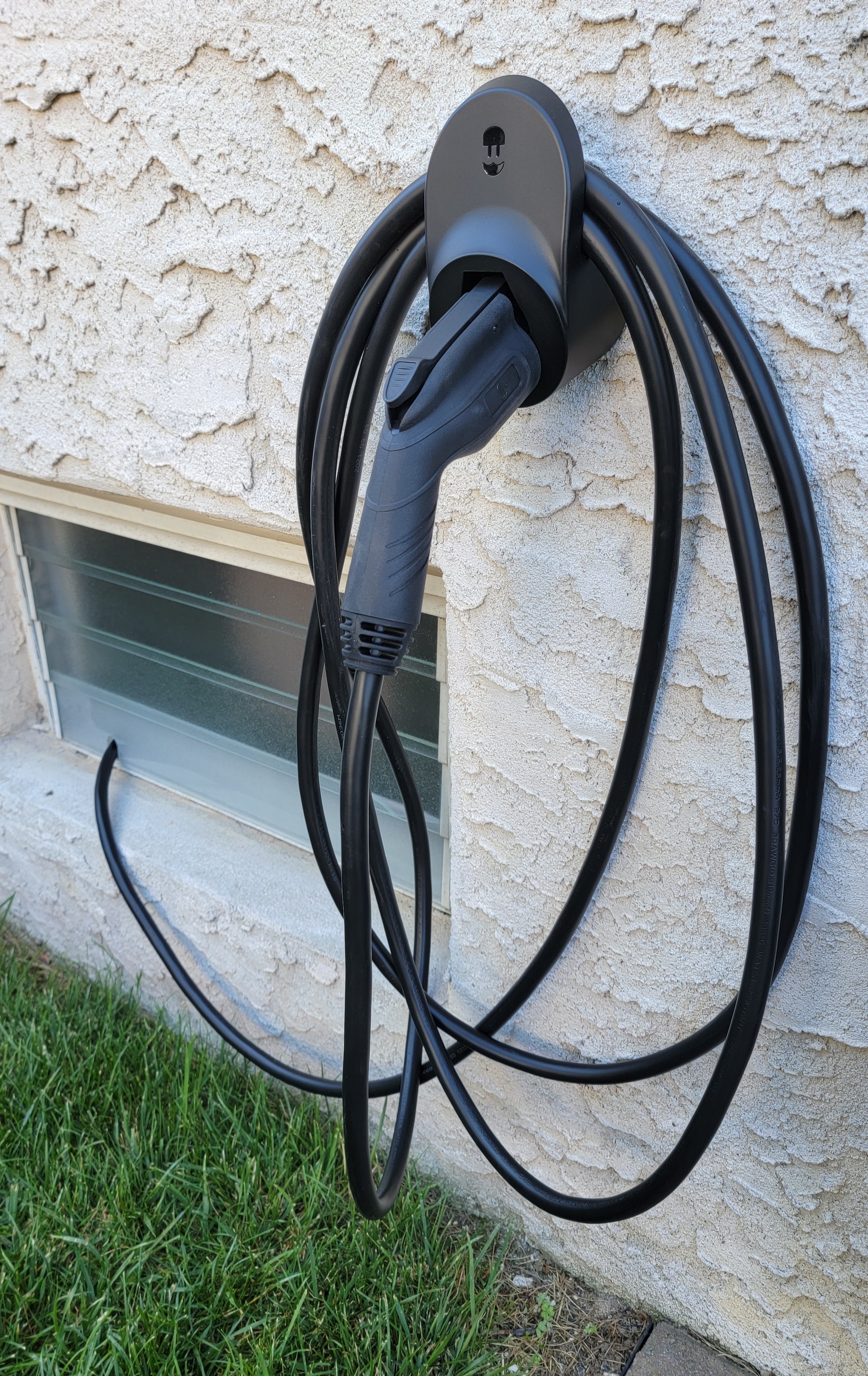
The solar integration on the Pulsar Plus works through the myWallbox app and an optional CT clamp kit. When connected, the app shows your home’s energy flow and can automatically adjust charging speed to match your excess solar production. It is not as deeply integrated as the Enphase system, but for most homeowners with a third-party solar array, it does the job well.
The 25-foot cable is the longest in this roundup and makes a real difference if your parking spot is not right next to the charger. I also like the app scheduling feature, which lets you set charging windows during peak solar production hours or off-peak utility rates.
The main complaint I have seen, both in reviews and on forums, is that some units fail around the 14-month mark. Wallbox offers a standard warranty, but the failure rate is worth knowing about. If you want peace of mind, consider the extended warranty option.
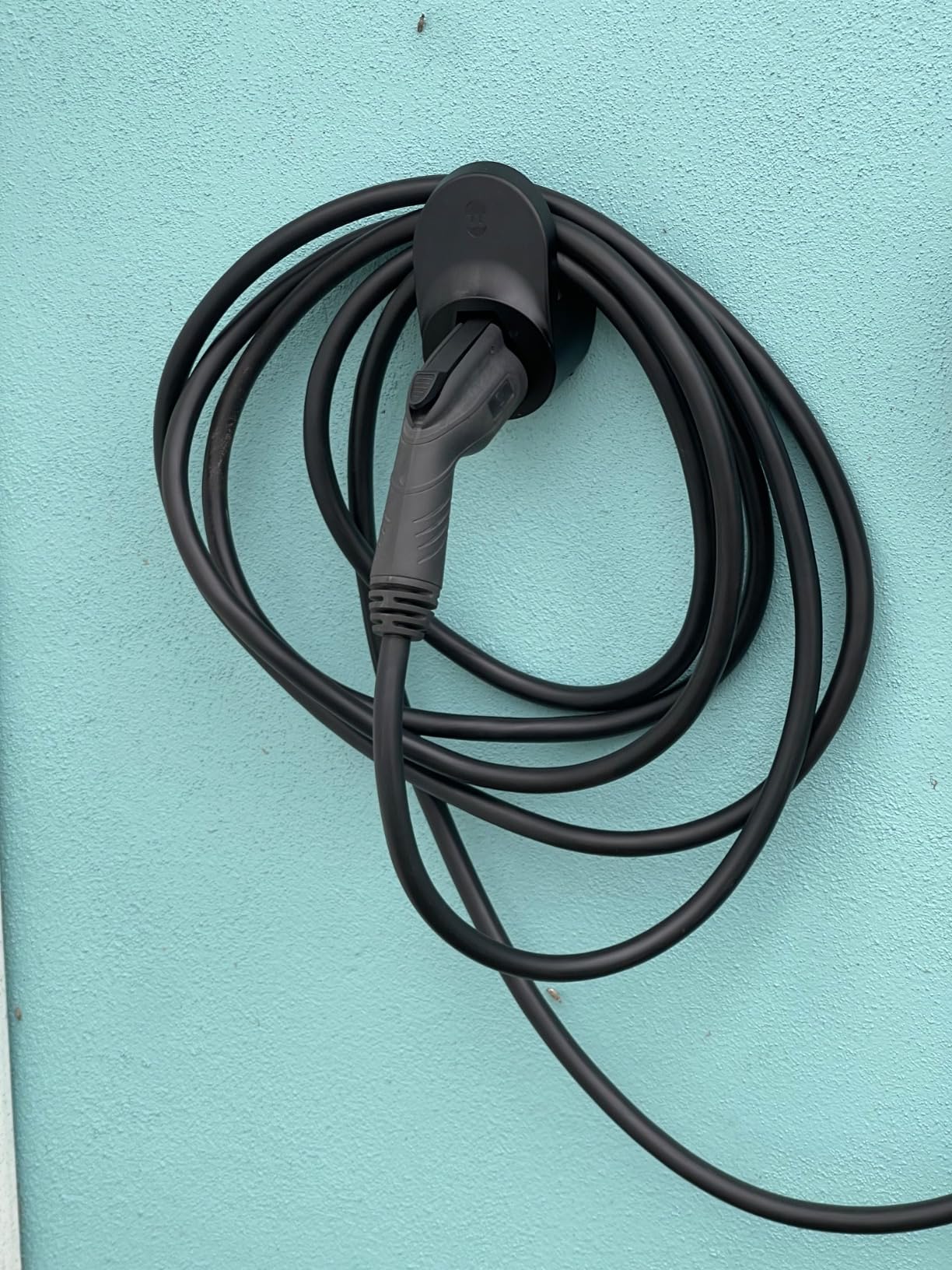
Solar Matching Performance
The Pulsar Plus uses what Wallbox calls “Eco-Smart” mode when paired with the CT clamp accessory. In testing by solar owners on r/electricvehicles, it tracks excess solar production with about a 5-10 second delay. That means a sudden cloud passing over will briefly pull from the grid before the charger adjusts. Not perfect, but acceptable for most use cases.
Power Sharing for Multi-EV Households
If you have two EVs, the Pulsar Plus supports power sharing between units. Two chargers connected on the same circuit will automatically split available power, which is great for couples or families with multiple electric vehicles. This feature alone makes it a top pick for multi-EV homes with solar.
3. Enphase IQ EV Charger 2 48A: Best Overall for Solar Households
- Up to 46 miles of range per hour
- Seamless Enphase solar ecosystem integration
- Revenue grade meter for utility rebate programs
- Smart modes including green charging and Storm Guard
- Bidirectional-ready hardware
- 5-year warranty with 24/7 support
- Higher price than most competitors
- Mounting bracket threads reported as delicate
- Max amperage change requires Enphase Toolkit app
If you already have Enphase microinverters on your roof, the IQ EV Charger 2 is the most natural pairing you can make. It communicates directly with the Enphase solar system through the same app you already use, creating a single-pane-of-glass experience that no competitor matches. The green charging mode is the real star here.
Green charging mode does exactly what it sounds like. It monitors your solar production in real time and only sends excess energy to your EV. On a sunny Saturday when your panels produce 8 kW and your house only needs 2 kW, the charger automatically adjusts to pull the remaining 6 kW into your car. No grid power, no waste.
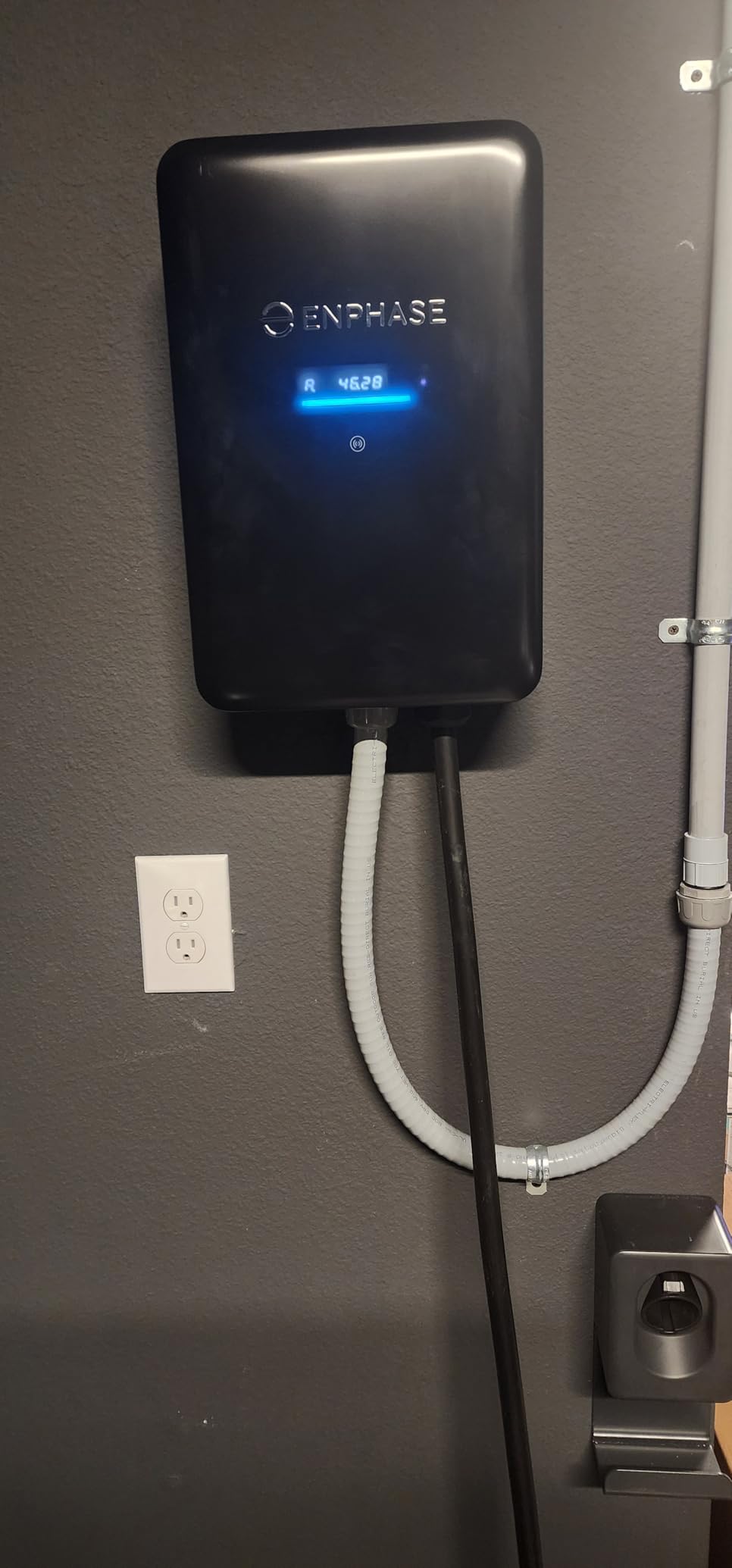
The 48-amp output delivers up to 46 miles of range per hour, which is fast enough to fully charge most EVs overnight even if you start at 10 percent. At 11.5 kW, this is near the top end of what a residential Level 2 charger can deliver. The revenue grade meter is a nice bonus that qualifies you for utility rebate programs in many states.
I also appreciate the Storm Guard feature, which detects incoming severe weather and prioritizes charging your EV before the storm hits. If you live in hurricane country or areas prone to ice storms that knock out power, this alone could justify the price premium.
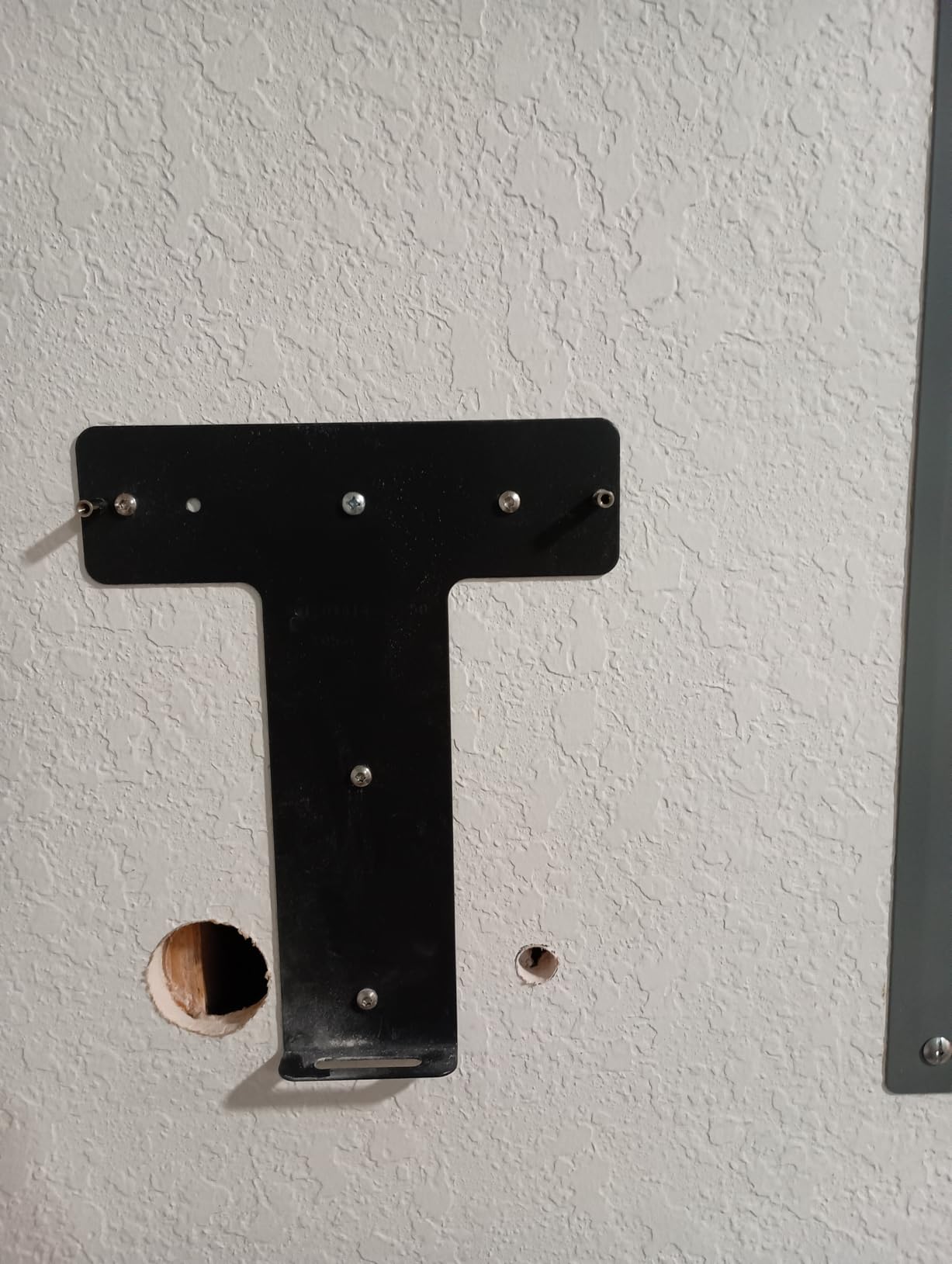
The bidirectional-ready hardware is the future-proofing angle. While vehicle-to-home software is not yet enabled, the hardware is ready for it. When Enphase flips the switch, this charger could potentially let your EV power your home during an outage. That is a significant differentiator that competitors barely mention.
Enphase Ecosystem Lock-In
The IQ EV Charger 2 works best with an Enphase solar system. While it functions as a standalone charger with any solar setup via CT clamps, you only get the deep integration features like green charging mode and unified app control when paired with Enphase microinverters. If you have a different solar inverter brand, you may want to consider the Wallbox or Emporia instead.
Installation Requirements
This is a hardwired unit requiring a 60-amp dedicated circuit. Professional installation is mandatory. The 25-foot cable reaches most parking configurations comfortably. Despite having only nine reviews so far, the Enphase brand has a strong reputation in the solar industry, and the 5-year warranty with 24/7 support provides good coverage.
4. Victron Energy EV Charging Station: Best for Off-Grid Solar Systems
Victron Energy EV Charging Station, 170-265 VAC 22 kW, Electric Vehicle Charger, Wi-Fi and Bluetooth Enabled
- 22 kW three-phase charging for maximum speed
- Native Victron ecosystem integration
- Dynamic power adjustment from 6-32A in 1A steps
- Modbus connectivity for home automation
- VRM platform for remote monitoring
- Requires Raspberry Pi with Venus OS for full solar integration
- Cable not included
- No Prime shipping
- Limited stock availability
The Victron Energy EV Charging Station is the nerdy pick for off-grid enthusiasts and serious solar power users. If you have a Victron MultiPlus inverter, a Cerbo GX controller, and a battery bank in your garage, this is the charger that ties everything together. It is not for the average homeowner, but for the right person, it is unmatched.
What makes the Victron special is how tightly it integrates with the Venus OS ecosystem. Through the VRM (Victron Remote Management) platform, you can see exactly how much power your solar panels produce, how much your battery bank holds, and how much your EV is drawing, all in one dashboard. The excess solar charging feature works at a granular 1-amp step level, which is more precise than most competitors.
The 22 kW rating is the highest in this roundup, but there is a catch. That rating is for three-phase power, which most North American homes do not have. On a standard 240V single-phase connection, expect closer to 7.6 kW at 32 amps. Still fast, but not the headline number.
The biggest barrier is the requirement for a Raspberry Pi 4 running Venus OS to unlock full solar integration. Without it, you have a basic smart charger. With it, you have a fully integrated solar energy management system. If that sentence scared you, this is not your charger. If it excited you, read on.
Off-Grid and Battery-First Charging
For off-grid homes, the Victron charger shines because it can charge from battery-stored solar energy even when the sun is down. Set it to draw from your battery bank during cheap off-peak hours or when your generator is running. The 1-amp step adjustment means you can match charging speed to exactly what your system can support without overloading anything.
Connectivity and Automation
Beyond Wi-Fi and Bluetooth, the Victron supports Modbus communication, which means it can talk to home automation systems like Home Assistant. If you are the type who already has your entire house automated, this charger slots right in. The VRM platform gives you remote monitoring from anywhere in the world.
5. Autel MaxiCharger 80A: Best for Ultra-Fast Charging
- Up to 70 miles of range per hour
- AI-powered smart charging with time-of-use optimization
- Dual-network Wi-Fi plus Wi-SUN for 99.9 percent uptime
- CSA and UL certified
- 10-year designed lifespan
- Theft protection with tamper-resistant screws
- Hardwired installation requires professional electrician
- Customer support can be slow
- Occasional Wi-Fi connectivity drops reported
The Autel MaxiCharger is the speed demon of this roundup. At 80 amps and 19.2 kW, it can add up to 70 miles of range per hour. That means a full charge for most EVs in under four hours. If you drive a lot and need quick turnarounds, nothing else here comes close.
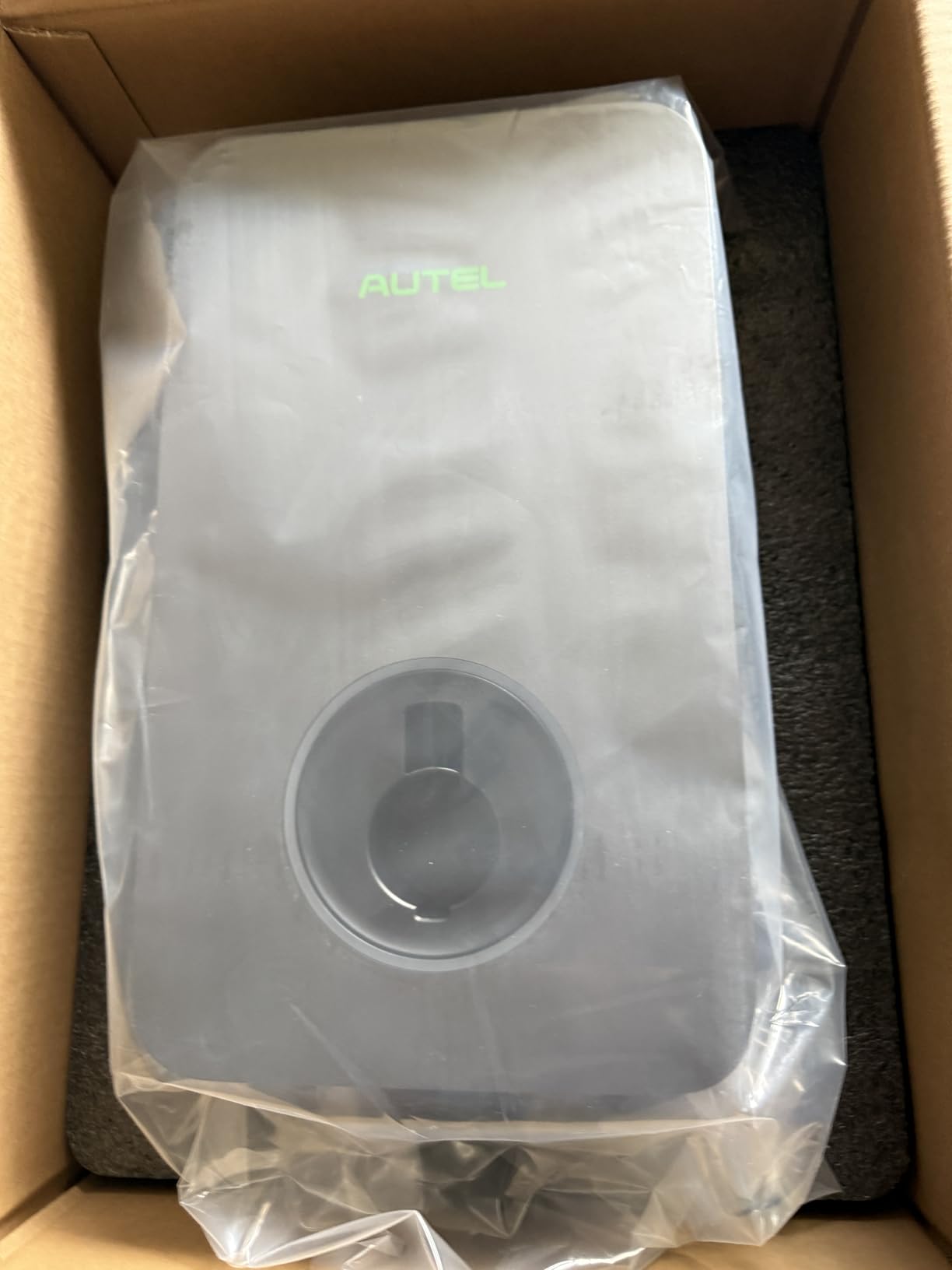
Autel is better known for automotive diagnostic equipment, and that engineering background shows in the build quality. The unit feels solid, the internal temperature monitoring is a nice safety touch, and the 10-year designed lifespan suggests they expect this thing to last. With 350 reviews and a 4.4-star rating, the real-world feedback is positive.
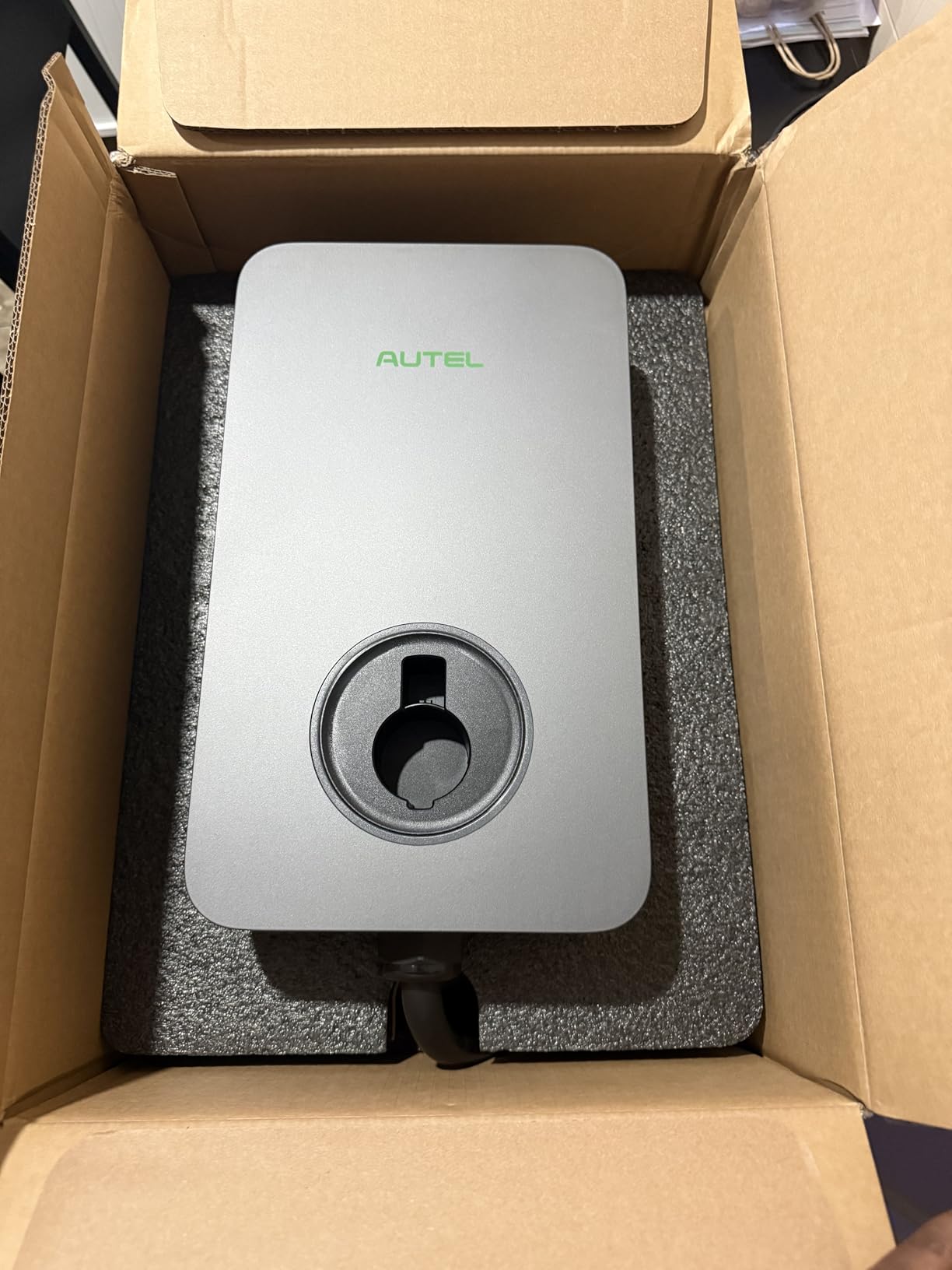
The AI-powered smart charging is where solar integration comes in. The MaxiCharger app can optimize charging windows based on time-of-use electricity rates, which is great if your utility charges less during midday when solar production peaks. While it does not have a dedicated “solar-only” mode like the Enphase, the scheduling tools let you approximate solar matching by timing charges to peak production hours.
The dual-network connectivity is genuinely impressive. Wi-Fi plus Wi-SUN mesh networking means the charger maintains a connection even if your home Wi-Fi drops. Autel claims 99.9 percent uptime, and the user reviews back that up. The theft protection with tamper-resistant screws is a thoughtful addition for outdoor installations.
Solar Integration Limitations
The MaxiCharger does not currently support direct CT clamp-based solar matching out of the box. It relies on time-based scheduling and time-of-use rate optimization. If you want true excess-solar charging that dynamically adjusts in real time, you will need to look at the Enphase or ELECQ instead. For homeowners who mostly charge during peak solar hours anyway, the scheduling approach works fine.
Best Use Case for the MaxiCharger
This charger is ideal for households with long commutes, large battery packs like a Rivian or F-150 Lightning, or multiple drivers sharing one charger. The 80-amp output means you can squeeze in a meaningful charge during a lunch break. Just make sure your electrical panel can handle a 100-amp dedicated circuit.
6. Enphase IQ EV Charger 2 40A Plug-In: Best Plug-in Enphase Match
- Plug-in NEMA 14-50 installation no electrician needed if outlet exists
- Same Enphase solar integration as the 48A model
- Revenue grade meter for rebates
- 25ft cable with J1772 connector
- Goal-based and green charging modes
- Only seven reviews so far
- Small display hard to read from a distance
- Cord holder design could be improved
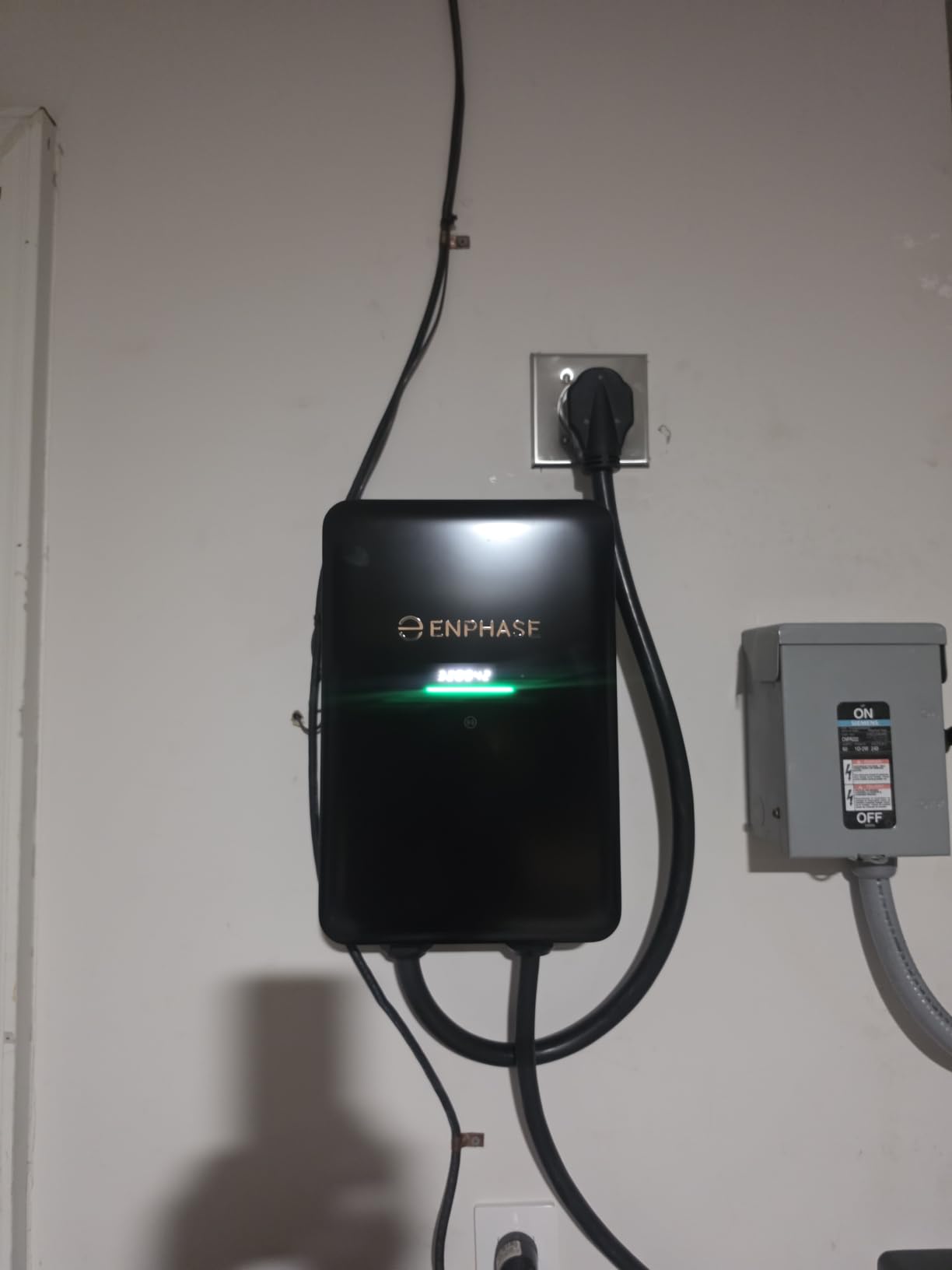
This is the plug-in version of the Enphase IQ EV Charger 2, and it exists for people who want Enphase solar integration without the hassle of hardwiring. If you already have a NEMA 14-50 outlet in your garage, you can have this charger running in under five minutes. That alone makes it worth considering over the hardwired 48A model for many homeowners.
You get the same smart charging modes as the 48A version, including goal-based charging (set a target charge level by a specific time) and green charging (solar-only mode). The Storm Guard weather-aware charging is also included. At 40 amps and 9.6 kW, it delivers up to 38 miles of range per hour, which covers overnight charging for virtually any EV.
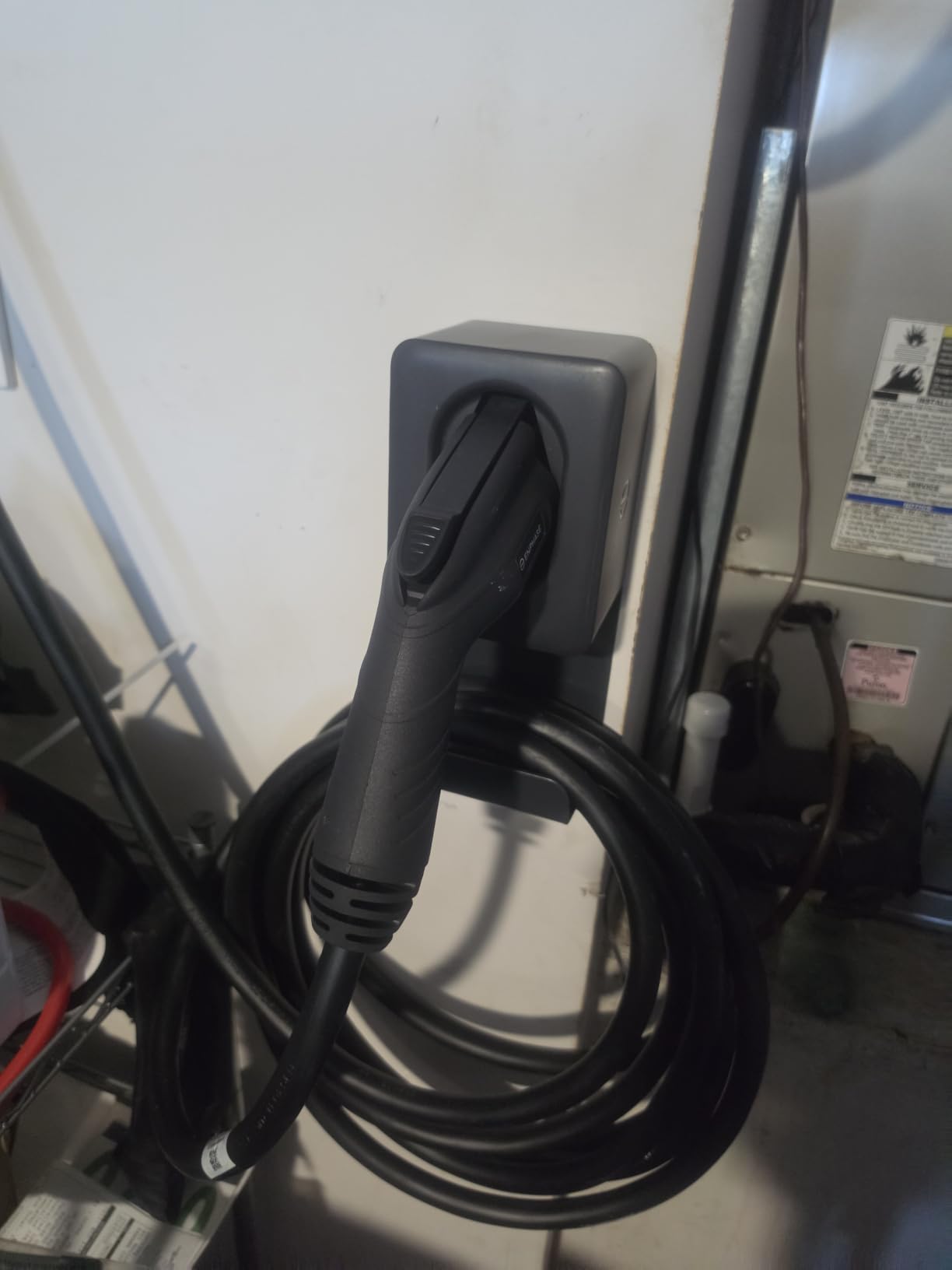
The revenue grade meter is worth highlighting because it can qualify you for utility rebate programs that pay you to charge during off-peak hours. Some programs offer several hundred dollars per year in rebates, which helps offset the premium price of this charger over time.
The display on the front is functional but small. You will mostly rely on the Enphase app for monitoring and control, which is one of the better EV charging apps on the market. The RFID card access is a nice touch if you want to restrict charging to authorized users, useful for shared driveways or rental properties.
Plug-In vs Hardwired Trade-Off
The NEMA 14-50 plug means you can install this yourself if the outlet already exists. However, the 40-amp output is lower than the 48A hardwired version. For most EVs, the difference between 38 and 46 miles of range per hour is irrelevant for overnight charging. The convenience of plug-in is worth the small speed reduction for the majority of homeowners.
Who Should Buy This Over the 48A Model
If you have an existing NEMA 14-50 outlet, move frequently, or rent your home, the plug-in 40A version is clearly the better choice. If you own your home, plan to stay long-term, and want maximum charging speed, the hardwired 48A model gives you more headroom. Both share the same excellent Enphase solar integration.
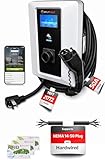
7. Splitvolt Level 2 Smart EV Charger: Best Budget Solar-Ready Charger
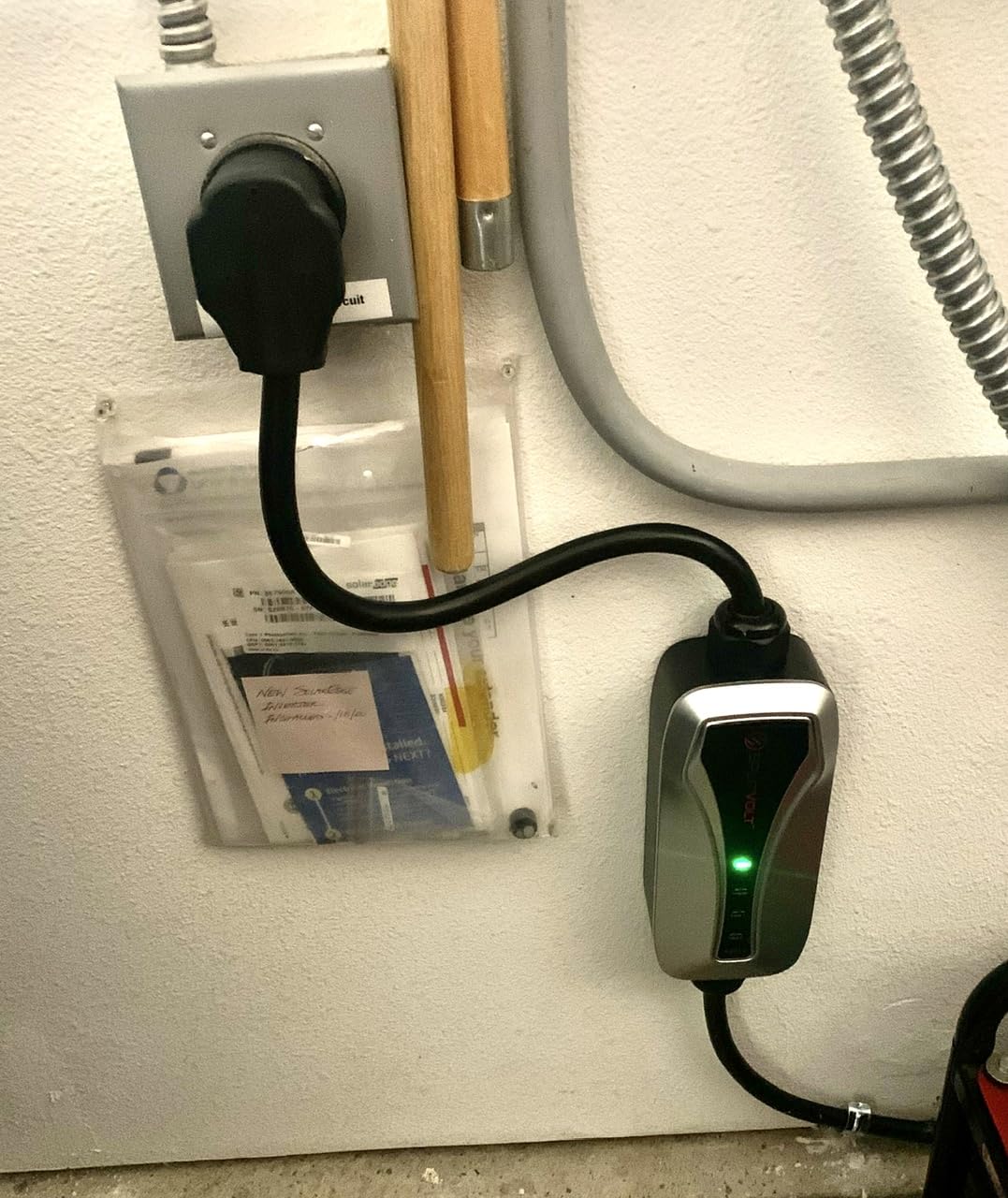
Level 2 Smart EV Charging Station, 50A Hardwire/40A NEMA 14-50, J1772, 16ft
- Most affordable option in this roundup
- Adjustable amperage from 8A to 50A
- OCPP compatible for network integration
- Plug-and-play or hardwired installation
- Scheduled charging for off-peak rates
- Power sharing for multiple vehicles
- Housing feels plasticky compared to premium units
- Short plug cord limits placement options
- Some units failed after 13 months
The Splitvolt is the charger I recommend when someone asks “what is the cheapest way to get a solar-capable Level 2 charger?” At under $400, it costs roughly half what the Enphase or ELECQ chargers run, and it still packs features that matter for solar-minded homeowners.
The adjustable amperage from 8 to 50 amps is the standout feature for solar users. You can dial the output down to match exactly what your solar panels produce, effectively creating a manual solar-matching mode. It is not as elegant as the automatic CT clamp systems on the Enphase, but it works and costs nothing extra.
The OCPP compatibility is surprising at this price point. OCPP (Open Charge Point Protocol) means this charger can connect to third-party energy management platforms, smart charging networks, and utility demand-response programs. Several power companies have approved Splitvolt units for their incentive programs, which can offset the purchase cost.
Installation is flexible. You can use the NEMA 14-50 plug for a quick setup, or hardwire it for a more permanent installation. The NEMA 3S weather resistance rating means it handles outdoor use down to -31 degrees Fahrenheit, which covers most climates.
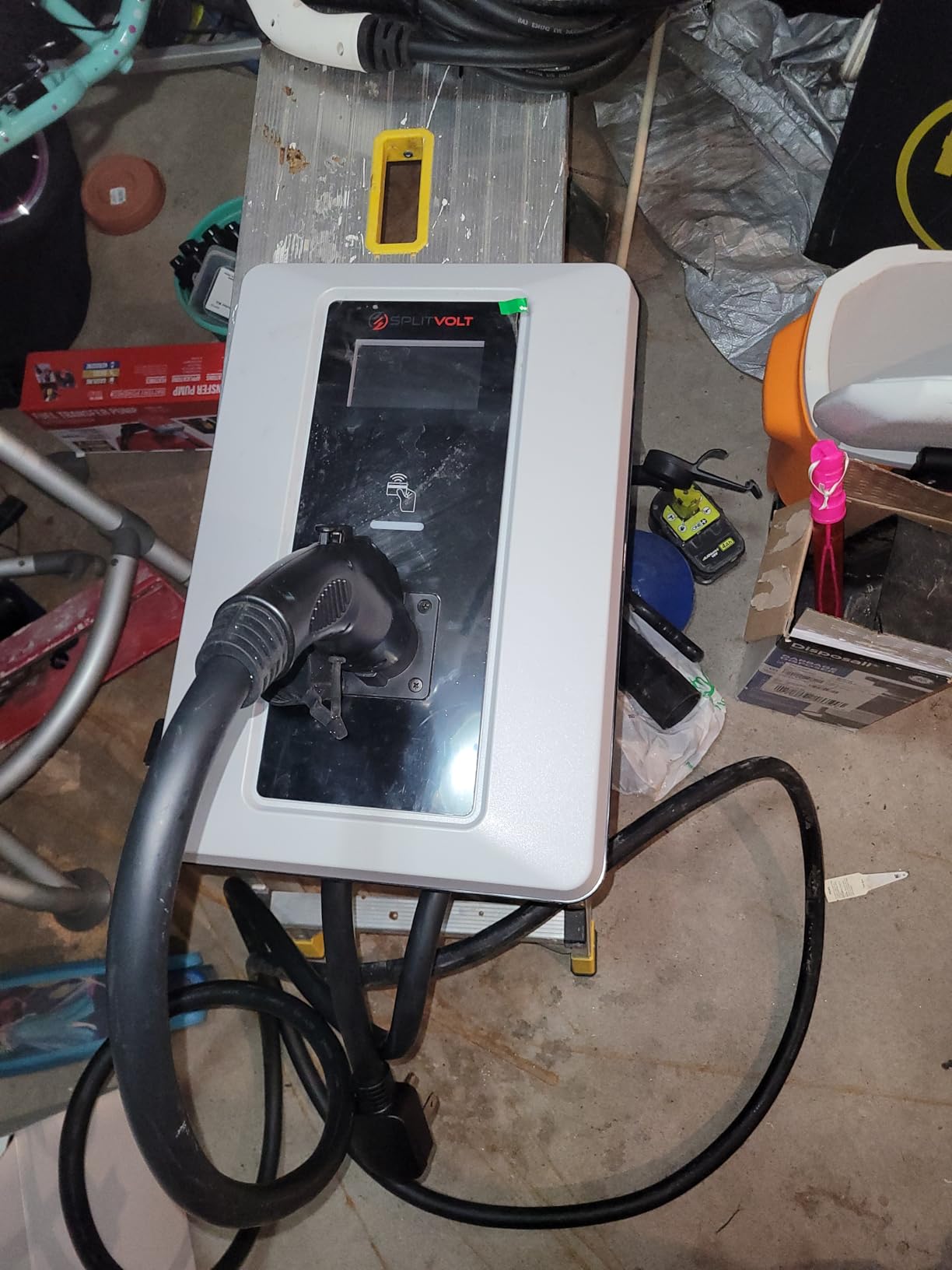
The trade-offs are real, though. The housing feels plasticky compared to the metal builds of Enphase or Autel. The 16-foot cable is shorter than the 25-foot cables on most competitors. And some users report unit failures around the 13-month mark, right after the warranty period. At this price, you are accepting some risk in exchange for significant savings.
Manual Solar Matching Approach
Without automatic CT clamp integration, solar charging with the Splitvolt is a hands-on process. You adjust the amperage in the app based on what your solar monitoring system shows. It takes more effort, but if your solar output is relatively predictable, you can set a schedule that matches your typical production curve and forget about it.
Value for Multi-EV Households
The power sharing feature lets you install two Splitvolt chargers on a shared circuit, which is remarkably cost-effective for two-EV families. Two Splitvolt units still cost less than a single Enphase IQ 48A, making this the most affordable path to dual-EV charging with solar awareness.
8. EMPORIA Pro Level 2 EV Charger with PowerSmart: Best for Limited Panel Capacity
- PowerSmart technology avoids expensive panel upgrades
- Highest rating in this roundup at 4.7 stars
- Includes Vue home energy monitor for real-time tracking
- Flexible NEMA 14-50 plug or hardwired installation
- App scheduling for peak rate avoidance
- U.S. based customer support
- Not eligible for Prime shipping
- Vue monitor requires setup some users skip
- Professional installation needed for hardwire mode
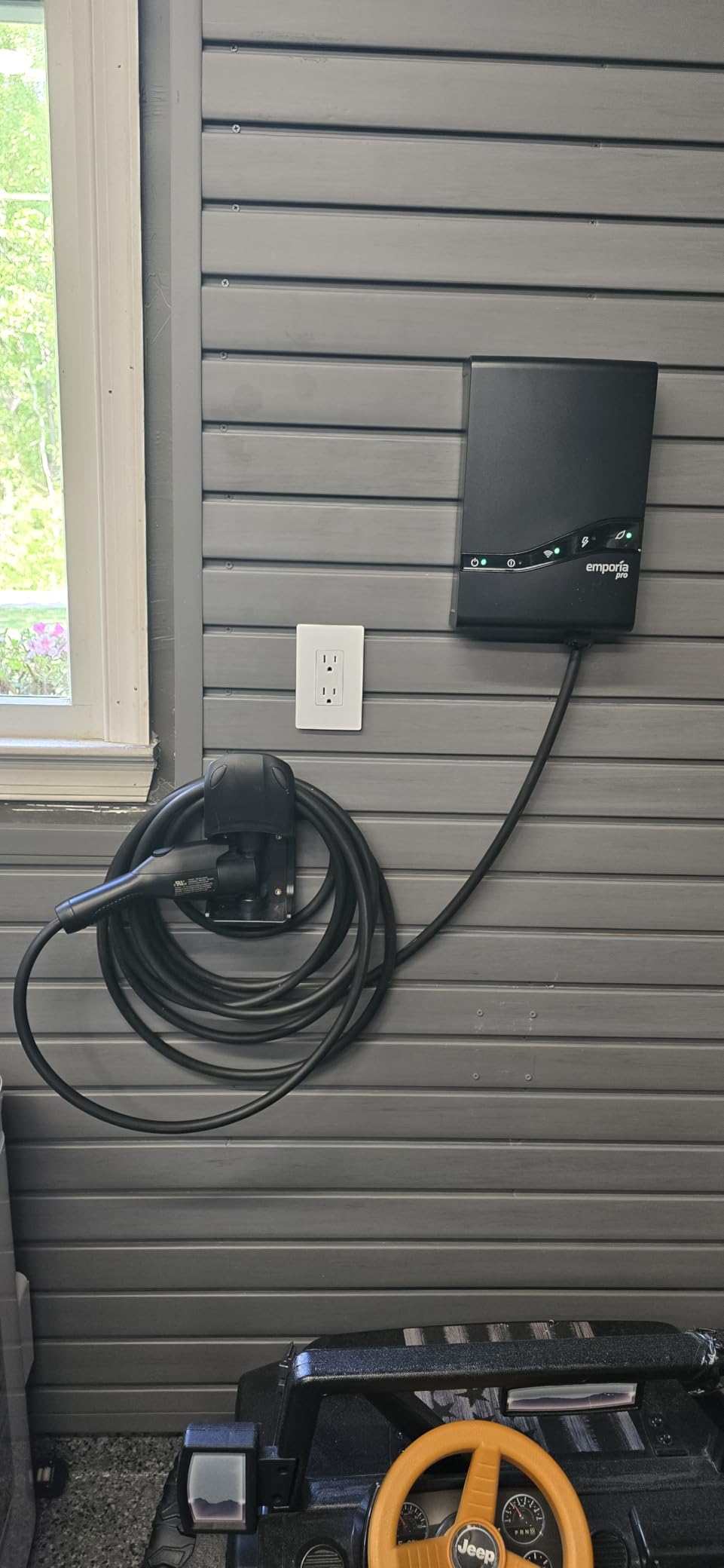
The EMPORIA Pro is the charger I tell people about when they say “my electrician quoted me $5,000 for a panel upgrade.” The PowerSmart technology is designed specifically to work within your existing panel’s capacity, dynamically sharing power between your EV charger and the rest of your home.
With the highest customer rating in this roundup at 4.7 stars, the EMPORIA Pro has clearly impressed its owners. The included Vue Home Energy Monitor is a genuine value-add. It clamps onto your main panel and gives you real-time energy data for every circuit in your house, not just the EV charger. You can see exactly when your solar panels peak and align your charging schedule accordingly.
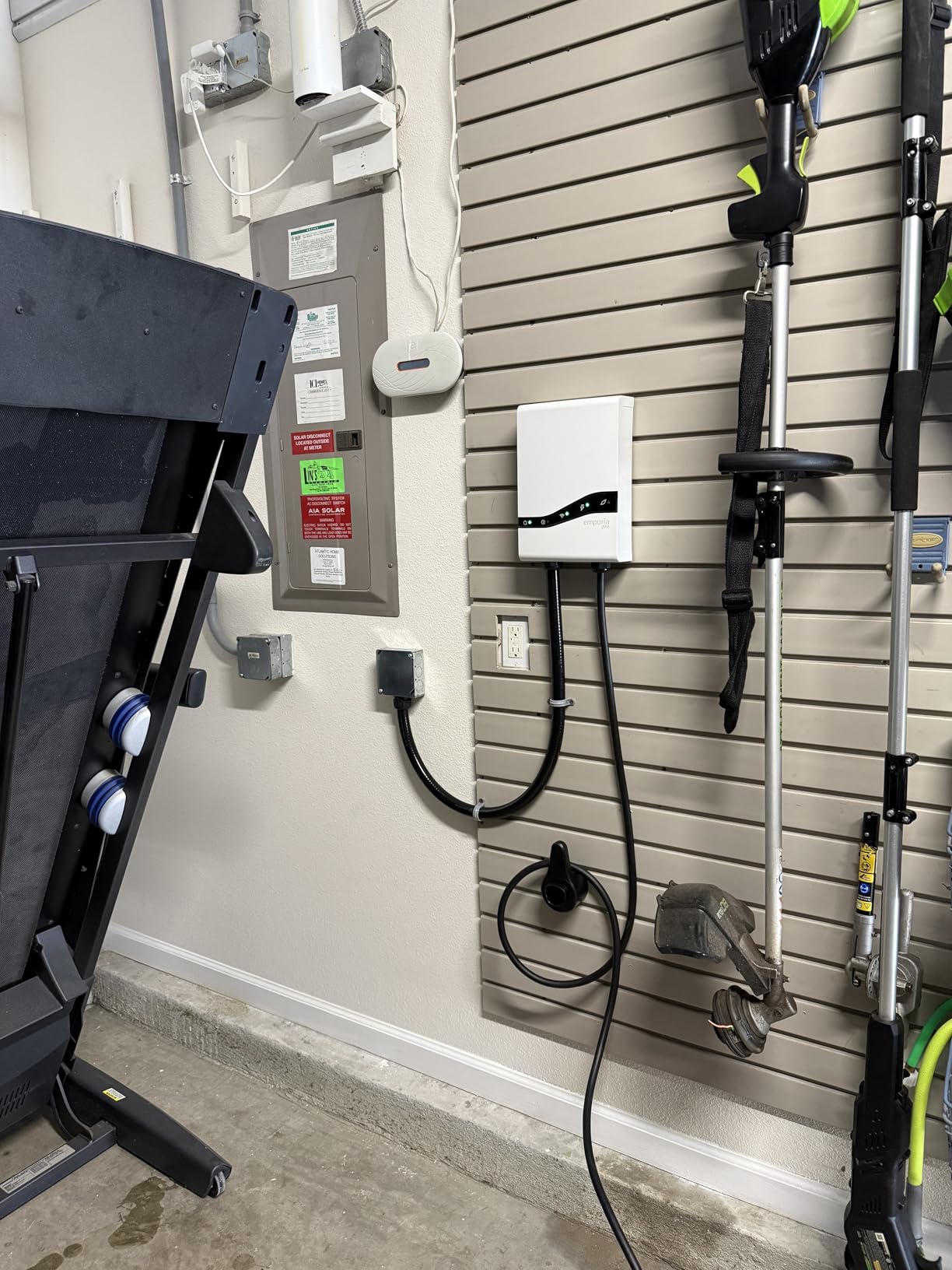
The 48-amp output delivers up to 46 miles of range per hour, matching the Enphase IQ for charging speed. The Energy Star certification and UL listing give you confidence in the safety standards. The 3-year warranty is solid, and Emporia offers U.S.-based customer support, which is increasingly rare in this price range.
What makes the PowerSmart system special is how it handles load balancing. Instead of requiring a dedicated 60-amp circuit for the charger, PowerSmart monitors your entire panel and dynamically adjusts the charger’s output. When your AC, oven, and dryer are all running, the charger throttles back. When they are off, it ramps up to full speed. This can save you thousands on panel upgrades.
The downside is that EMPORIA is not Prime eligible, so shipping may take a few extra days. Some customers reported that they never fully utilized the Vue energy monitor, which is a shame because it is genuinely useful for solar owners who want to understand their whole-home energy picture.
How PowerSmart Works With Solar
When combined with the Vue energy monitor, the PowerSmart system can see your solar production and adjust charging accordingly. While it does not have a dedicated “solar-only” mode like the Enphase green charging feature, the combination of Vue monitoring and app scheduling gets you close. Set the charger to ramp up during your peak solar production window and PowerSmart handles the rest.
Ideal Home Profile
This charger is perfect for older homes with 100-amp or 150-amp service panels that cannot support a dedicated 60-amp EV circuit. It is also ideal for budget-conscious solar owners who want a premium charger without the Enphase price tag. If you want the best combination of rating, features, and value, the EMPORIA Pro is hard to beat.
How to Choose the Right Solar EV Charger for Your Home
Choosing among the best solar EV chargers comes down to a handful of decisions that depend on your specific setup. Let me walk you through the factors that matter most, based on what our team learned from comparing these eight chargers and reading hundreds of user reviews and forum discussions.
1. Check Your Solar System Brand First
This is the single biggest factor. If you have an Enphase solar system, the Enphase IQ EV Charger gives you integration no other brand can match. If you have Victron hardware for off-grid power, the Victron EV Charging Station is the natural pairing. For all other solar systems (SolarEdge, Tesla, SMA, etc.), look at chargers with CT clamp-based solar detection like the Wallbox Pulsar Plus or ELECQ.
Forum users on r/solarenergy consistently report that ecosystem-matched chargers work better than third-party options. The data flow between an Enphase charger and Enphase microinverters is instant, while third-party CT clamp setups have a 5-10 second delay.
2. Understand CT Clamps and Solar Matching
A CT clamp (current transformer) is a small sensor that wraps around the wires in your electrical panel to measure energy flow in real time. Solar EV chargers use CT clamps to detect when your panels produce more power than your home consumes, then divert that excess to your EV.
Chargers with built-in CT clamp support include the Enphase IQ, ELECQ, Wallbox Pulsar Plus (with accessory), and Victron. Chargers without native CT clamp support, like the Autel MaxiCharger and Splitvolt, rely on time-based scheduling instead. Both approaches work, but CT clamp-based matching is more precise and automatic.
3. Hardwired vs Plug-In: What Fits Your Home
Plug-in chargers use a NEMA 14-50 outlet and can be installed by anyone in minutes if the outlet already exists. Hardwired chargers require a professional electrician but can deliver more power (up to 80 amps vs 40 amps for most plug-in units). For solar matching purposes, both types work equally well.
In this roundup, the Wallbox Pulsar Plus, Enphase IQ 40A, Splitvolt, and EMPORIA Pro all offer plug-in options. The ELECQ, Enphase IQ 48A, Victron, and Autel MaxiCharger are hardwired only. If you rent or plan to move, plug-in is the way to go.
4. NEMA Ratings and Outdoor Installation
If your charger will live outside, check the NEMA rating. NEMA 4 (like the ELECQ) provides excellent protection against rain, windblown dust, and ice. NEMA 3S (like the Splitvolt) handles outdoor use in most climates. Indoor-rated chargers should never be exposed to the elements.
Temperature range also matters. The ELECQ handles -40 to 122 degrees Fahrenheit, while the Splitvolt covers -31 to 131 degrees. If you live somewhere with extreme weather, verify the operating range before buying.
5. How Many Solar Panels Do You Need?
This is one of the most common questions on solar forums. A typical EV uses about 3-4 miles of range per kWh. To add 40 miles of range per day purely from solar, you need roughly 10-14 kWh of solar production dedicated to charging. That translates to about 6-8 additional 400W panels beyond what your home already uses.
Most existing residential solar systems produce 8-12 kWh per day total. A solar EV charger does not require dedicated panels. Instead, it uses the excess production from your existing array that would otherwise flow back to the grid. On a sunny day, a 10 kW system might have 4-6 kW of excess available for charging.
6. Cost Savings: The Real Math
Charging an EV from the grid typically costs $0.12-$0.30 per kWh depending on your utility rates. A driver covering 12,000 miles per year uses about 4,000 kWh, costing $480-$1,200 annually at grid rates. With solar, that same energy costs essentially nothing after your panels are paid off.
Solar EV chargers that use excess production increase self-consumption by up to 25 percent, according to user reports on r/solar. In dollar terms, a homeowner in California paying $0.30/kWh could save $800-$1,000 per year by charging with excess solar instead of grid power. That is a meaningful return on a charger investment.
7. Battery Backup Considerations
If you have a home battery like the Enphase IQ Battery or Tesla Powerwall, a solar EV charger can coordinate charging with your battery system. The battery charges during the day from solar, and the EV charger can draw from the battery at night. This approach maximizes solar self-consumption and provides backup charging capability.
Note that most home batteries (10-15 kWh) cannot fully charge an EV (60-100 kWh). Battery backup is best used for partial top-ups or emergency charging, not daily full charges.
FAQs
Which solar home EV charger is the best?
The Enphase IQ EV Charger 2 is the best overall solar home EV charger if you have an Enphase solar system, thanks to its native green charging mode that pulls only excess solar power. For non-Enphase solar owners, the EMPORIA Pro with PowerSmart and the Wallbox Pulsar Plus are excellent alternatives with strong solar integration and high customer ratings.
Do solar powered EV chargers work?
Yes, solar powered EV chargers work by using CT clamps or software integration to detect when your solar panels produce excess electricity. The charger then automatically diverts that excess power to your EV instead of sending it to the grid. Most solar-ready chargers can adjust charging speed in real time to match available solar production, and some like the Enphase IQ offer a dedicated solar-only mode.
How many solar panels do I need for an EV charger?
You need roughly 6-8 additional 400W solar panels to cover the energy a typical EV uses for daily driving of about 40 miles. This translates to about 10-14 kWh of daily solar production. However, you do not need dedicated panels for a solar EV charger. Most systems use excess production from your existing array that would otherwise flow back to the grid.
Can I charge my EV with 100 percent solar power?
Yes, you can charge your EV with 100 percent solar power using a charger with a solar-only mode. The Enphase IQ EV Charger, ELECQ 50A, and Wallbox Pulsar Plus all support excess-solar-only charging via CT clamps. On sunny days, your EV charges entirely from solar. On cloudy days, you may need to supplement with grid power or wait for better conditions.
What is the difference between a solar-ready charger and a regular EV charger?
A solar-ready EV charger includes CT clamp support or software integration that allows it to detect and use excess solar production automatically. A regular EV charger simply draws power from your electrical panel regardless of source. Solar-ready chargers can throttle charging speed up and down to match available sunshine, while regular chargers run at a fixed amperage.
The Final Word on Solar EV Charging
The best solar EV chargers in 2026 turn your rooftop investment into free miles for your car. After comparing eight chargers across solar integration depth, build quality, app reliability, and real-world user feedback, three products rose to the top. The Enphase IQ EV Charger 2 48A is the clear leader for Enphase solar households with its seamless green charging mode. The EMPORIA Pro with PowerSmart wins best value by solving the panel-upgrade problem that blocks many homeowners. And the Wallbox Pulsar Plus remains the safest bet for universal compatibility with its thousand-plus reviews and proven track record.
Your choice ultimately depends on your solar system, your electrical panel capacity, and your budget. Match your charger to your solar ecosystem when possible, prioritize CT clamp-based solar detection for the best matching accuracy, and do not overlook the importance of a good app. Solar EV charging can save you hundreds of dollars per year while reducing your carbon footprint. The technology works, the savings are real, and the chargers on this list are ready to help you make the most of every photon hitting your roof.