
Finding the right saddle can make or break every single ride you take. I have spent years swapping seats on road bikes, and I know firsthand how a poorly matched saddle turns a 50-mile loop into a miserable shuffle home. The truth is, the best road bike saddles are not about soft padding or the biggest brand name. They are about matching the shape, width, and rail construction to your body and your riding style.
Our team pulled together 10 of the most-talked-about road bike saddles for 2026 and tested them across long endurance rides, fast training loops, and everyday commutes. We paid attention to sit bone support, pressure relief, weight, and how each saddle felt after hours in the saddle. Some impressed us immediately, while others needed a break-in period before they felt right.
This guide breaks down what makes each saddle stand out, who it suits best, and where it falls short. Whether you are chasing a personal best, training for a century, or just want to ride without numbness, there is a saddle here that fits. We also included a buying guide covering sit bone width, rail materials, and saddle profiles so you can shop with confidence.
Table of Contents
Top 3 Picks for Best Road Bike Saddles
Before we get into the full reviews, here are the three saddles our team keeps recommending above the rest. Each one earned its spot through a combination of rider feedback, comfort over distance, and overall value.

Brooks England Cambium C17 Carved
- All-weather vulcanized rubber
- No break-in period
- 450g
- Carved pressure relief channel

WTB Volt Bike Seat
- Highest 4.7 star rating
- Three width options
- Comfort Zone cutout
- 2-year warranty

The Brooks England Cambium C17 Carved takes our editor’s choice slot because it delivers premium comfort from the very first ride with no break-in drama. Its vulcanized rubber top works in any weather, and the carved channel adds pressure relief for long days on the road.
For best value, the WTB Volt earned the highest user rating in our entire lineup at 4.7 stars. Three width options let you nail your sit bone fit, and the Comfort Zone cutout handles pressure relief at a fraction of premium saddle pricing.
If budget is the priority, the VELMIA saddle costs less than a pair of quality bib shorts and still delivers a 3-zone ergonomic design with welded waterproof seams. Its 13,000-plus reviews show it works for a huge range of casual riders.
Best Road Bike Saddles in 2026
Here is the complete comparison of all 10 saddles we reviewed. Use it to scan weights, rail materials, and key features side by side before diving into the individual reviews below.
| Product | Specifications | Action |
|---|---|---|
| Brooks England Cambium C17 Carved |
|
Check Latest Price |
| WTB Volt Bike Seat |
|
Check Latest Price |
| VELMIA Bicycle Saddle |
|
Check Latest Price |
 Selle Italia SLR TM Boost Superflow Selle Italia SLR TM Boost Superflow |
|
Check Latest Price |
 Fizik Tempo Argo R5 Fizik Tempo Argo R5 |
|
Check Latest Price |
 Fizik Arione K:ium Rails Fizik Arione K:ium Rails |
|
Check Latest Price |
 Selle Italia S 5 Superflow Selle Italia S 5 Superflow |
|
Check Latest Price |
 Serfas RX Saddle Serfas RX Saddle |
|
Check Latest Price |
 Wittkop Bike Seat Wittkop Bike Seat |
|
Check Latest Price |
 Charge Spoon Saddle Charge Spoon Saddle |
|
Check Latest Price |
1. Brooks England Cambium C17 Carved – All-Weather Premium Comfort
Brooks England Cambium C17 Carved Bicycle Saddle Black, 164 mm Vulcanised Rubber Cycling Seat with Steel Rails
- Immediate comfort with no break-in period
- All-weather waterproof design
- Maintenance-free vulcanized rubber top
- Durable organic cotton canvas
- Built-in accessory loops for saddle bag
- Heavier than foam-based saddles
- Premium price point
The Brooks Cambium C17 Carved is the saddle I reach for when I want comfort without any fuss. Unlike traditional leather Brooks saddles that need weeks to mold to your body, the vulcanized natural rubber top feels broken-in from mile one. I rode a damp 40-mile loop the first day I mounted it and never once thought about my saddle.
What sets this saddle apart is the all-weather construction. The organic cotton canvas and structural textile top shrugs off rain, sweat, and grit. I left it parked outside through a surprise thunderstorm, and it dried off ready to ride with zero damage. That is something I would never try with a classic leather saddle.
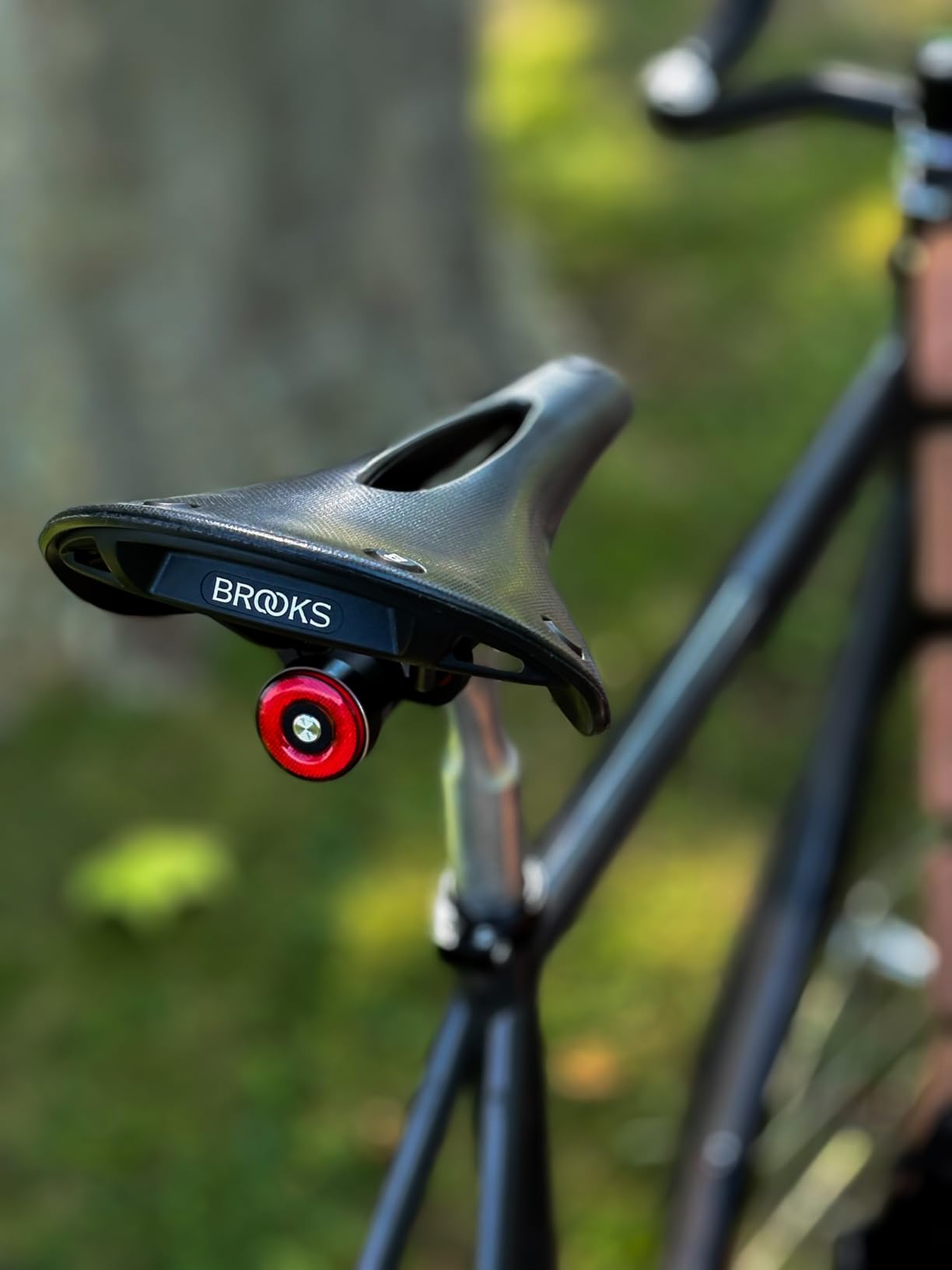
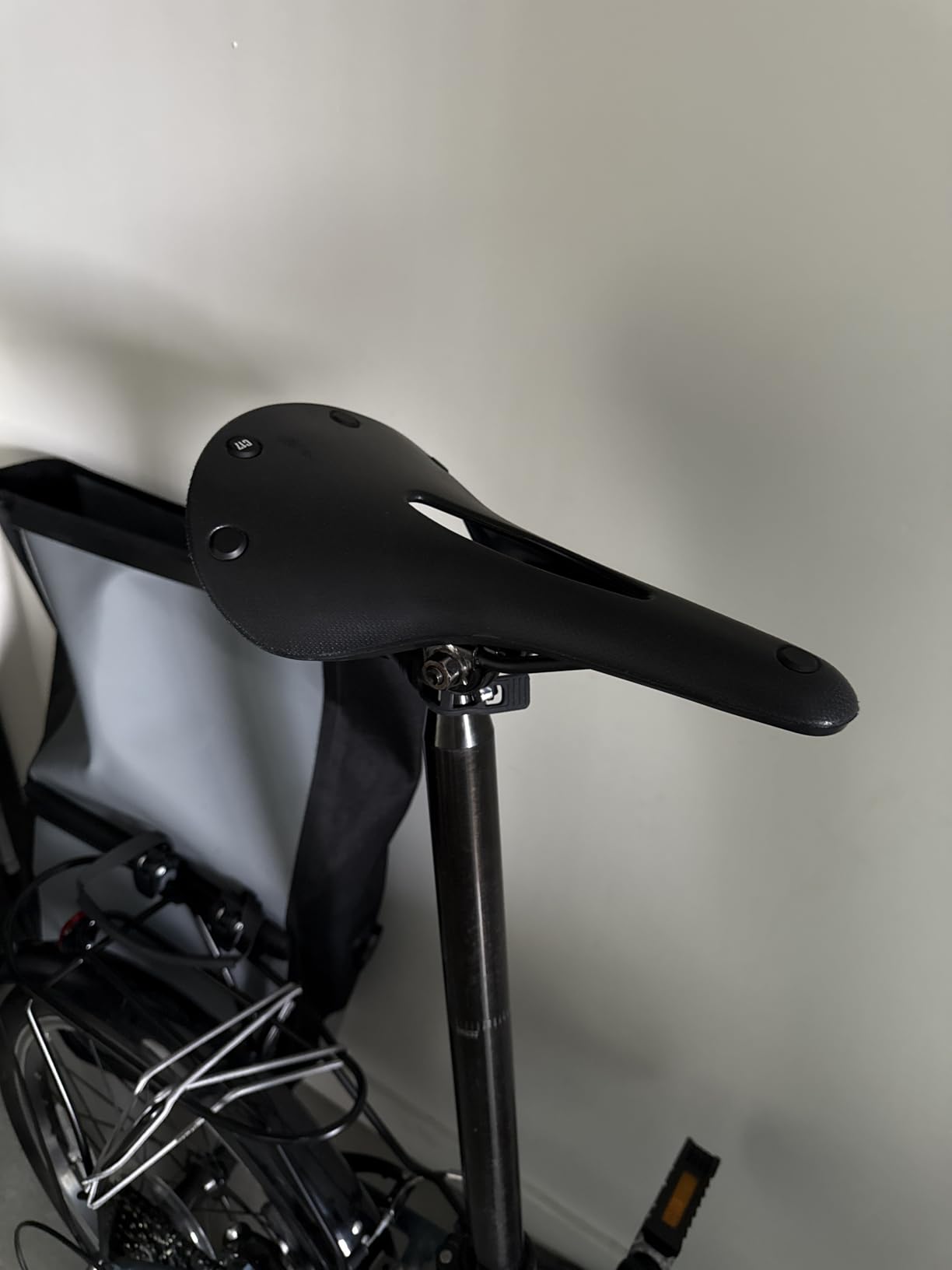
The carved version adds a pressure relief channel down the center, which made a real difference on long endurance rides. Our team noticed less perineal pressure after three hours in the saddle compared to the solid C17. The fiberglass-reinforced back plate includes loops for a saddle bag, a small detail that commuters and bikepackers will appreciate.
At 450 grams, the Cambium is not the lightest option here. That is the trade-off for the maintenance-free rubber construction. The flex of the rubber top absorbs road buzz well, which is why so many randonneuring and gravel riders swear by it. It simply works in conditions where other saddles would degrade.
Who Should Buy This Saddle
This saddle suits riders who want comfort without babysitting their gear. If you commute year-round, ride in unpredictable weather, or hate the idea of conditioning leather, the Cambium C17 Carved is built for you. It also shines for endurance cyclists who spend long days in the saddle and value vibration damping over gram counting.
Bikepackers and touring cyclists will love the accessory loops and the fact that the saddle performs identically whether it is dry or soaked. It is a set-it-and-forget-it choice that rewards riders who prioritize durability and all-conditions reliability.
Who Should Look Elsewhere
Weight-obsessed racers will find 450 grams hard to justify when performance saddles weigh half as much. If your goal is a featherweight build for climbs and criteriums, a short-nose carbon option will serve you better.
Riders who prefer a very soft, pillowy feel may also find the rubber top firmer than expected. The Cambium has give, but it is not plush like a gel commuter saddle. It rewards riders who want supportive flex, not sink-in softness.
2. WTB Volt Bike Seat – Highest-Rated All-Rounder
WTB Volt Bike Seat (Saddle) – Comfortable Medium Thickness Padding, Mountain, Gravel & E-Bikes (Steel Rail, Medium)
- Highest user rating at 4.7 stars
- Three width options for precise sit bone fit
- Cradling contoured shape stabilizes pelvis
- Comfort Zone cutout relieves pressure
- Backed by 2-year manufacturer warranty
- Steel rails add weight
- Padding may feel thick for racers
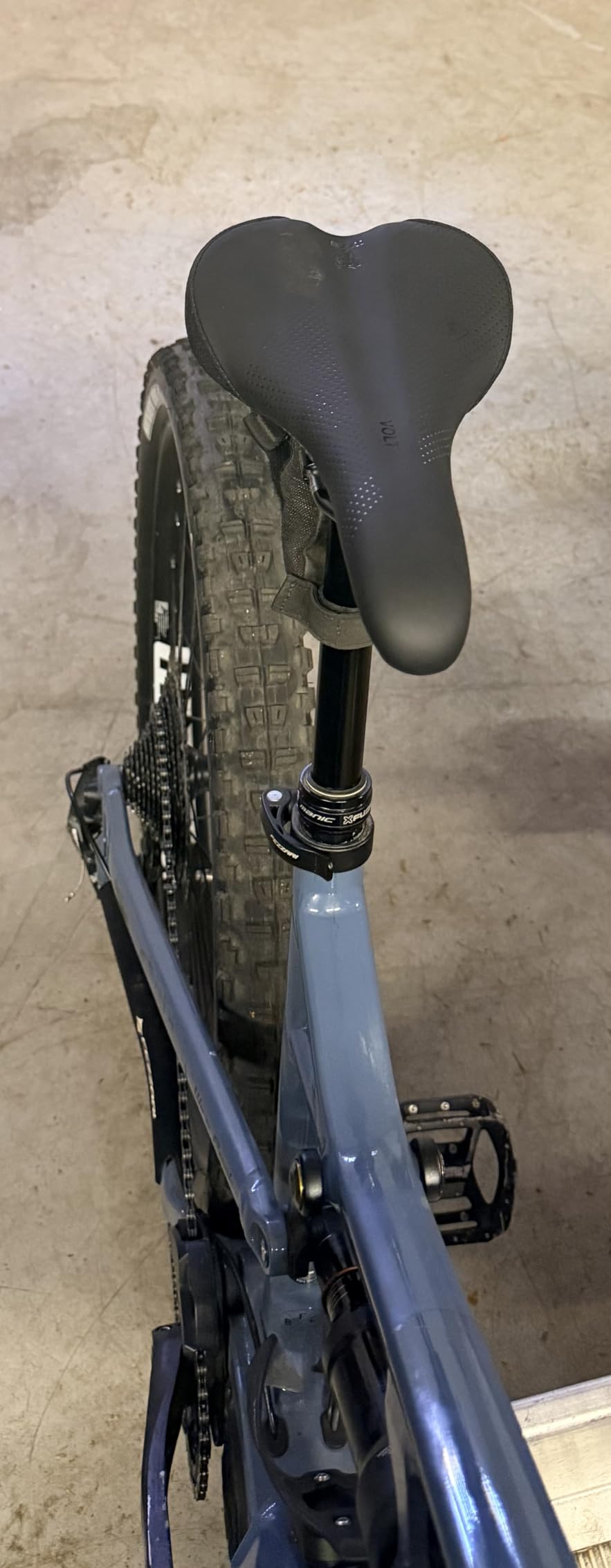
The WTB Volt posted the highest rating in our entire lineup at 4.7 stars across nearly 1,700 reviews, and after testing it I understand why. The cradling contoured shape genuinely locks your pelvis into a stable position, which reduced the shifting and fidgeting I usually do on longer rides. It feels like the saddle is holding you rather than just sitting under you.
What I appreciate most is the three-width sizing system. WTB offers Narrow, Medium, and Wide options so you can match the saddle to your actual sit bone measurement instead of guessing. I tested the Medium on my road bike and found the support dialed in for endurance pacing. The medium-thickness DNAx padding hits a sweet spot between cushioning and pedaling efficiency.
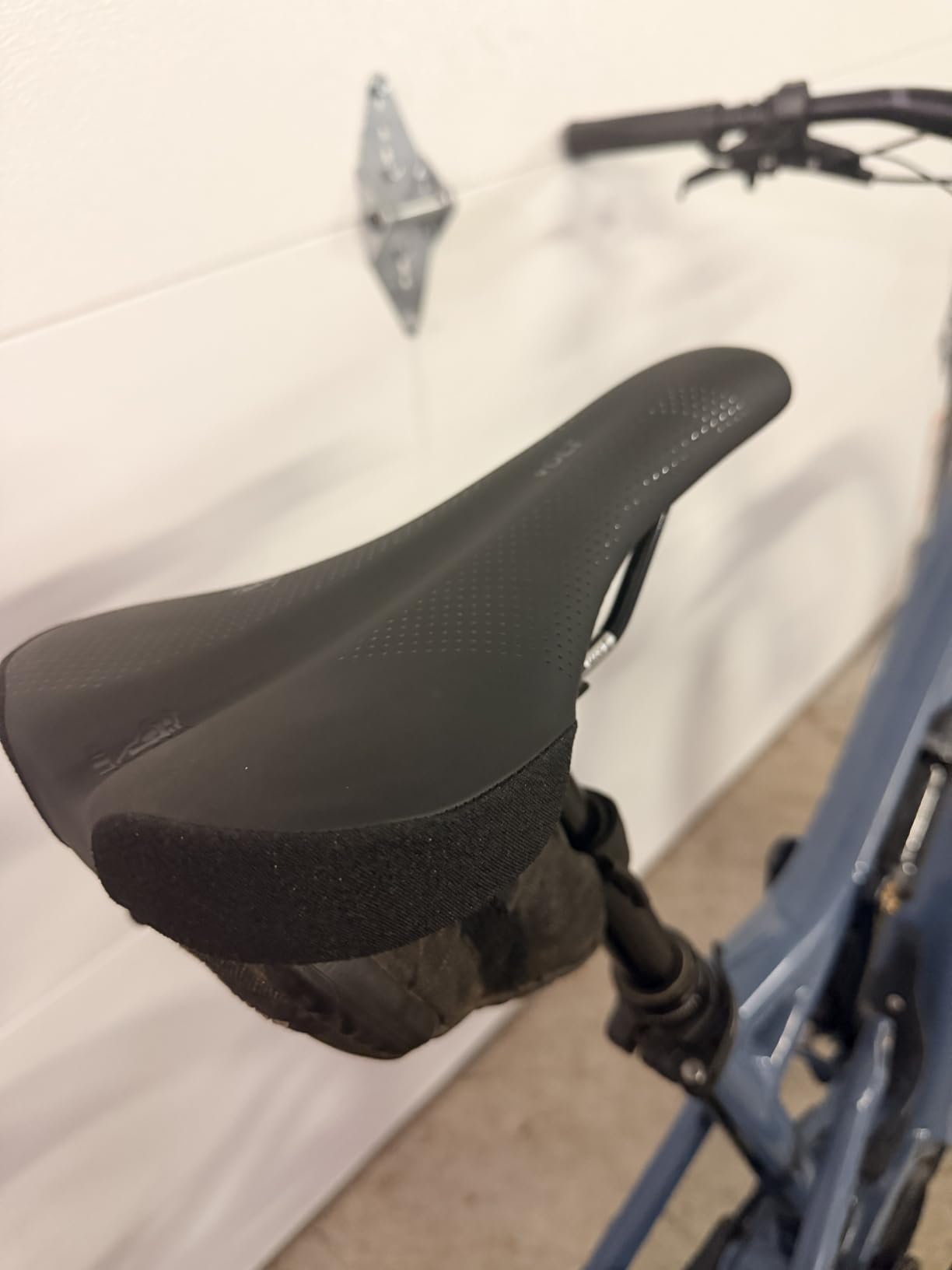
The Volt runs a dual relief system with a Comfort Zone cutout in the shell and a Love Channel groove down the center. Together they do an excellent job of keeping soft-tissue pressure low. After a hilly 55-mile ride, I had none of the numbness that cheaper saddles tend to produce. The microfiber cover is grippy without being abrasive against bib shorts.
This is officially a mountain, gravel, and e-bike saddle, but it works beautifully on road bikes for riders who want a touch more cushion. At 315 grams with steel rails, it is heavier than carbon-railed options, but that weight buys real-world durability. WTB backs it with a 2-year warranty, which tells you they trust the construction.
Who Should Buy This Saddle
The Volt is ideal for endurance road cyclists, gravel riders, and anyone who struggles with numbness on long rides. The contoured shape suits riders who stay mostly seated and want stable pelvic support rather than a flat platform to slide around on.
It is also the smart pick if you have never had your sit bones measured. The three width options let you size correctly without a bike fitter, and the forgiving padding helps mask minor fit errors while you dial in your position.
Who Should Look Elsewhere
Dedicated racers chasing every gram will balk at the steel rails and 315-gram weight. If your rides are short, fast, and aggressive, a lighter performance saddle with carbon or manganese rails will feel more responsive.
Riders with very narrow, flexible hips who prefer a flat, long saddle for sliding fore and aft may also find the cradling shape too restrictive. The Volt holds you in place, which is great for stability but limits repositioning.
3. VELMIA Bicycle Saddle – Budget Comfort With Huge Following
- Lowest price in the entire lineup
- 3-Zone concept adapts to different riding positions
- Welded seams for full waterproofing
- Includes saddle clamp and illustrated instructions
- Massive 13k+ review base for confidence
- 60kg max weight capacity is low
- Gel cover may run warm in summer
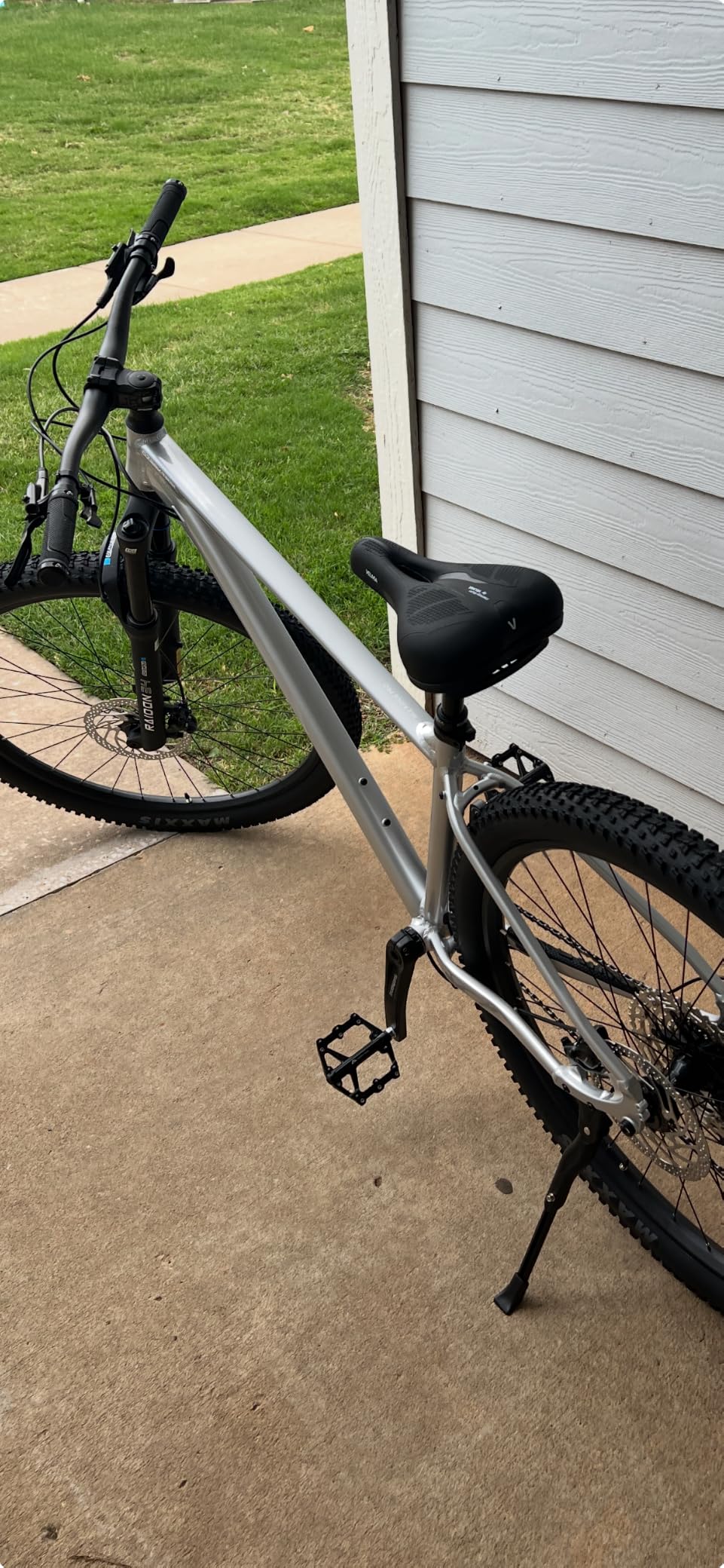
The VELMIA saddle is the least expensive option in our roundup, yet it carries a 4.4-star rating across more than 13,000 reviews. I mounted it on a backup commuter bike expecting a cheap compromise and was genuinely surprised by the comfort. The 3-Zone concept divides the saddle into distinct support regions that adapt as you shift between upright and forward positions.
The high-density memory foam provides a cushioned feel that works well for newer riders and anyone coming off a brutally hard stock saddle. A central ventilation slot helps with airflow and pressure relief. The gel cover feels soft against bib shorts and absorbs road chatter better than I expected at this price.
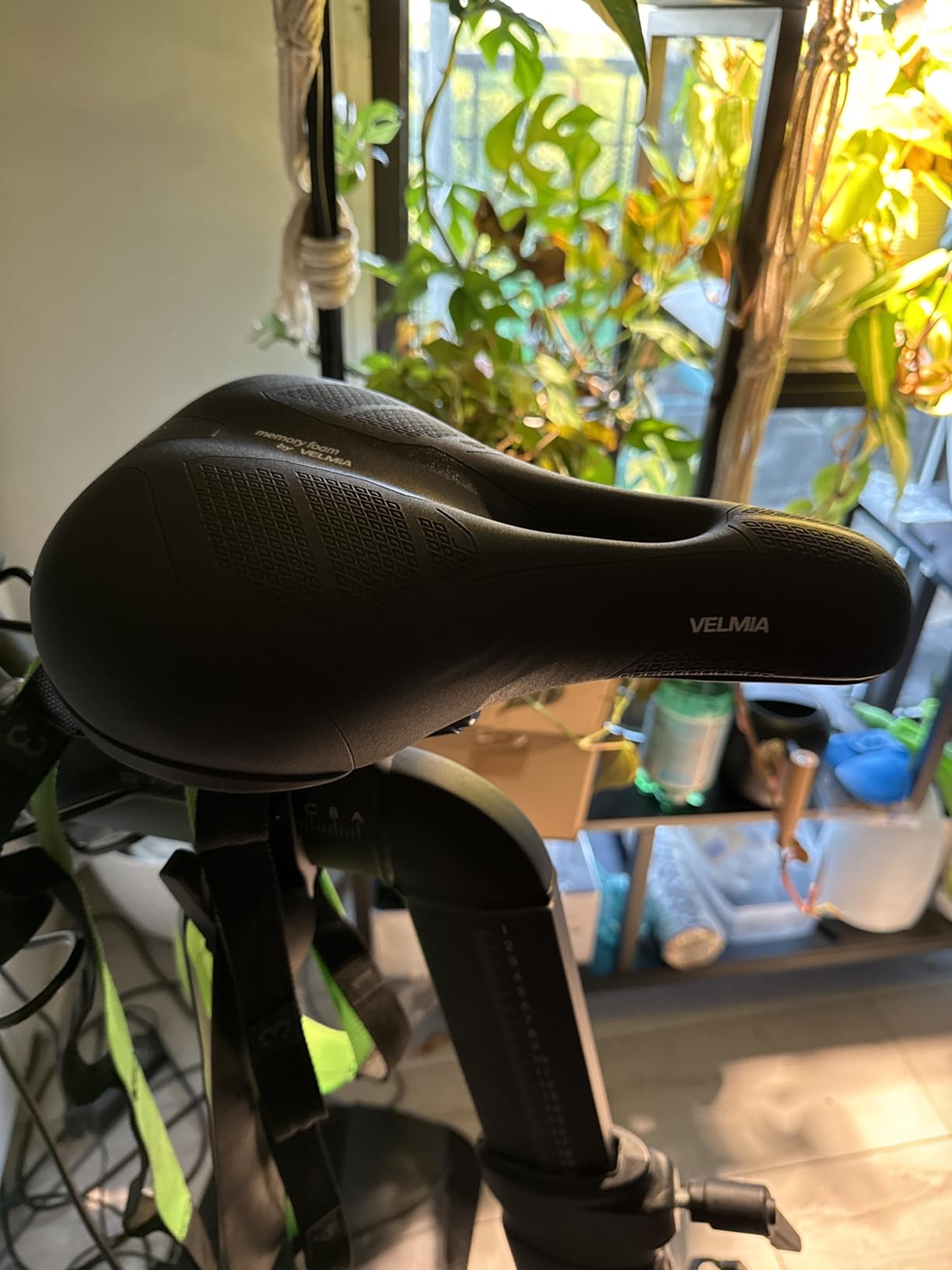
Velmia designed this saddle with welded seams and full waterproofing, which matters if you ride in rain or sweat heavily. I hosed it down after a muddy ride and it wiped clean in seconds. The included saddle clamp and illustrated instructions mean even a first-time installer can get it mounted without a trip to the bike shop.
The catch is the 60-kilogram maximum weight capacity, which is noticeably lower than every other saddle here. Heavier riders should look elsewhere for safety and durability. The gel cover also retains heat on hot summer days, so it can feel warmer than breathable microfiber options during long, slow rides.
Who Should Buy This Saddle
This is the saddle for budget-conscious riders, casual commuters, and anyone returning to cycling after a break. If you want to upgrade a punishing stock saddle without spending much, the VELMIA delivers surprising comfort and a massive community of satisfied buyers.
It is also a smart starter saddle for newer riders who are still figuring out their preferences. At this price, the risk is low, and the included hardware makes installation painless.
Who Should Look Elsewhere
Riders over 60 kilograms need to pass on this one due to the weight limit. Performance cyclists will also find the foam too soft for hard efforts, since plush padding absorbs power rather than transferring it.
Long-distance road riders chasing speed and efficiency should invest in a firmer, purpose-built saddle. The VELMIA is about comfort at low cost, not racing performance.
4. Selle Italia SLR TM Boost Superflow – Lightweight Performance
- Featherweight 208g design
- Short Boost nose improves thigh clearance
- Center cutout eliminates numbness
- Tubular manganese rails balance weight and strength
- Supports multiple riding positions
- Premium price point
- Firm feel for casual riders
The Selle Italia SLR TM Boost Superflow is the saddle I would choose if my goal was speed and climbing efficiency. At just 208 grams, it is the lightest saddle in this lineup, and you can feel the difference the moment you stand on the pedals. There is no dead weight holding you back on steep gradients.
The Boost short-nose design is the headline feature. By trimming the nose length, Selle Italia improved thigh clearance when pedaling hard and made it easier to shift between riding positions. I noticed I could move forward on climbs and back on descents without the nose catching on my inner legs.
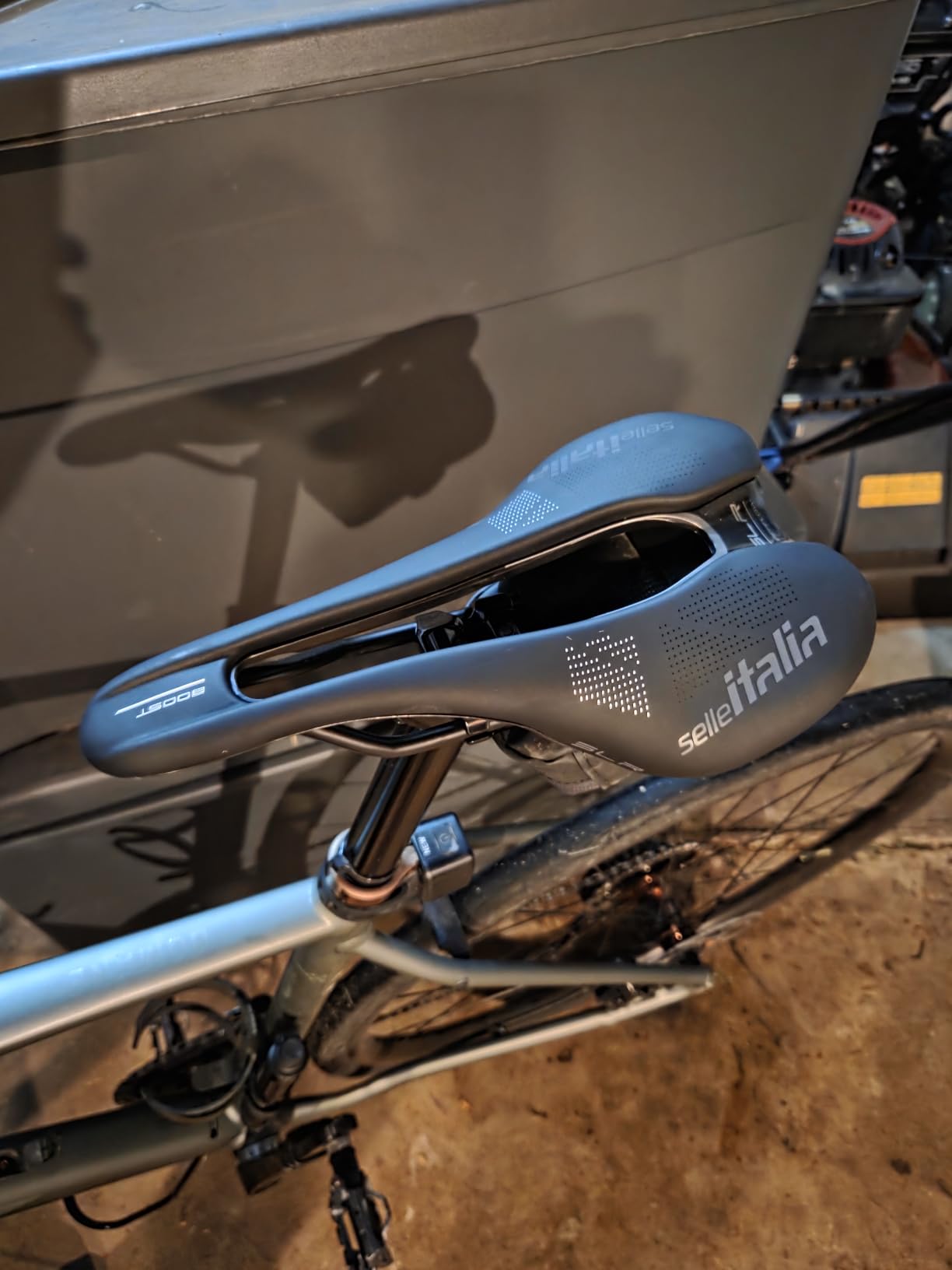
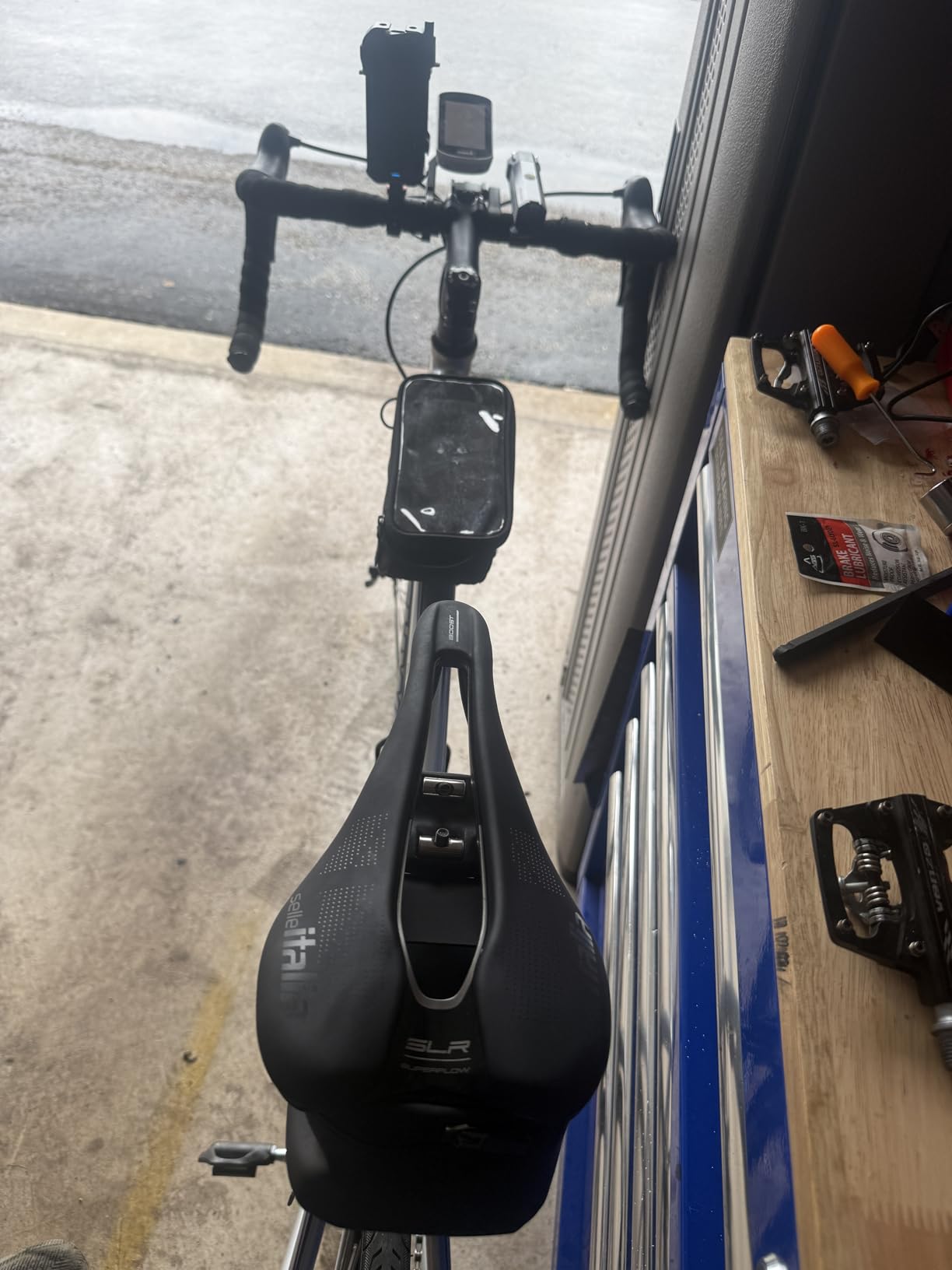
The Superflow center cutout is large and effective. After a fast 45-mile training ride with repeated hard efforts, I had zero numbness or perineal discomfort. The durable durometer technical fabric cover sheds moisture and resists scuffing, and the tubular manganese rails keep the weight down while staying strong enough for serious riding.
This is a firm saddle by design. The S3 fit classification means it suits riders with moderate pelvic rotation and a 130mm sit bone width. The firmness is intentional because soft padding compresses and causes chafing over long, fast efforts. Serious cyclists learn to love that firm support once their body adapts to it.
Who Should Buy This Saddle
The SLR TM Boost Superflow is built for performance-oriented road cyclists, racers, and anyone who counts grams. If you climb hard, sprint, and ride in an aggressive position, this saddle rewards that style with freedom of movement and reliable pressure relief.
It is also a strong upgrade for riders who have outgrown a softer saddle and want something that transfers power more directly. The short-nose design suits modern road bike geometry well.
Who Should Look Elsewhere
Casual riders and commuters will likely find the firm shell uncomfortable, especially on bumpy roads. If your rides are short, slow, and upright, a saddle with more cushioning will feel kinder.
Budget-conscious buyers should note the premium price. You are paying for Italian engineering and low weight, which only matters if performance is your priority.
5. Fizik Tempo Argo R5 – Endurance Short-Nose Stability
- Short-nose design boosts stability
- Wingflex technology adapts to leg movement
- Type 2 progressive foam cushioning
- Carbon reinforced nylon shell
- Strong ischial support for endurance
- Slightly lower 4.3 star rating
- S-Alloy rails less premium than carbon
The Fizik Tempo Argo R5 brings short-nose design to endurance road riding, and our team found it strikes a great balance between stability and comfort. The shortened nose keeps you supported on the sit bones rather than allowing you to slide forward, which I noticed immediately on long, flat stretches where fatigue usually makes my position drift.
Fizik rates this as a versatile endurance saddle, and that is exactly how it rides. The Type 2 progressive foam has a lower compression modulus, meaning it cushions more under heavier load without feeling mushy during hard pedaling. I found it comfortable on both steady 4-hour rides and quicker interval sessions.
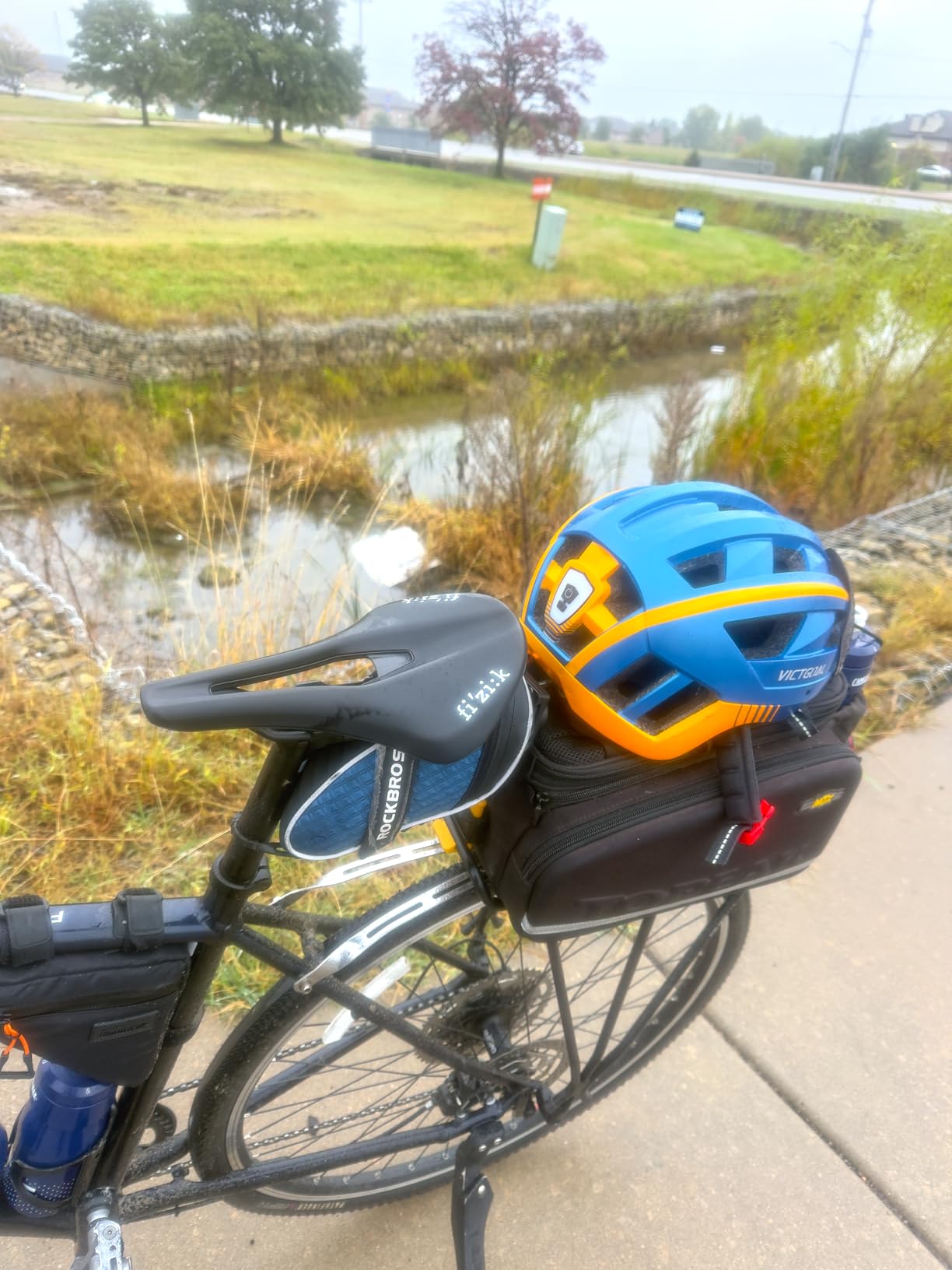
The Wingflex technology is real engineering, not marketing fluff. The shell edges flex as your inner legs move through the pedal stroke, which reduced the chafing I sometimes feel along my thighs on flatter, stiffer saddles. The carbon-reinforced nylon shell keeps the weight at a respectable 241 grams while the S-Alloy rails handle the structural load.
At 4.3 stars across more than 1,100 reviews, the Tempo Argo R5 has a slightly lower rating than some saddles here, but that reflects fit subjectivity more than quality flaws. Endurance saddles live or die on individual anatomy. Riders with the right sit bone width for this saddle consistently praise its stability over long distances.
Who Should Buy This Saddle
The Tempo Argo R5 is perfect for endurance road cyclists who want a stable platform for long days in the saddle. If you suffer from sliding forward on your current saddle or feel unstable when fatigued, the short-nose design directly addresses those problems.
It is also a smart pick for riders training for centuries or sportives. The Type 2 foam cushions without robbing power, making it forgiving enough for back-to-back long rides.
Who Should Look Elsewhere
Riders who prefer a long, flat saddle for frequent position changes may find the short nose limiting. If you like to slide far back on climbs and far forward on flats, a traditional long shape like the Fizik Arione suits you better.
Budget shoppers should also note that while the R5 is more affordable than Fizik’s carbon-railed options, it still sits above entry-level pricing. The VELMIA or WTB Volt offer more value per dollar for casual riders.
6. Fizik Arione K:ium Rails – Classic Flat Snake Profile
- Classic flat Snake profile for flexible riders
- Wingflex technology for full leg motion
- K:ium alloy rails resist fatigue
- Carbon reinforced nylon shell
- Microtex cover with integrated clip system
- Requires a break-in period
- Long shape less suited for upright riders
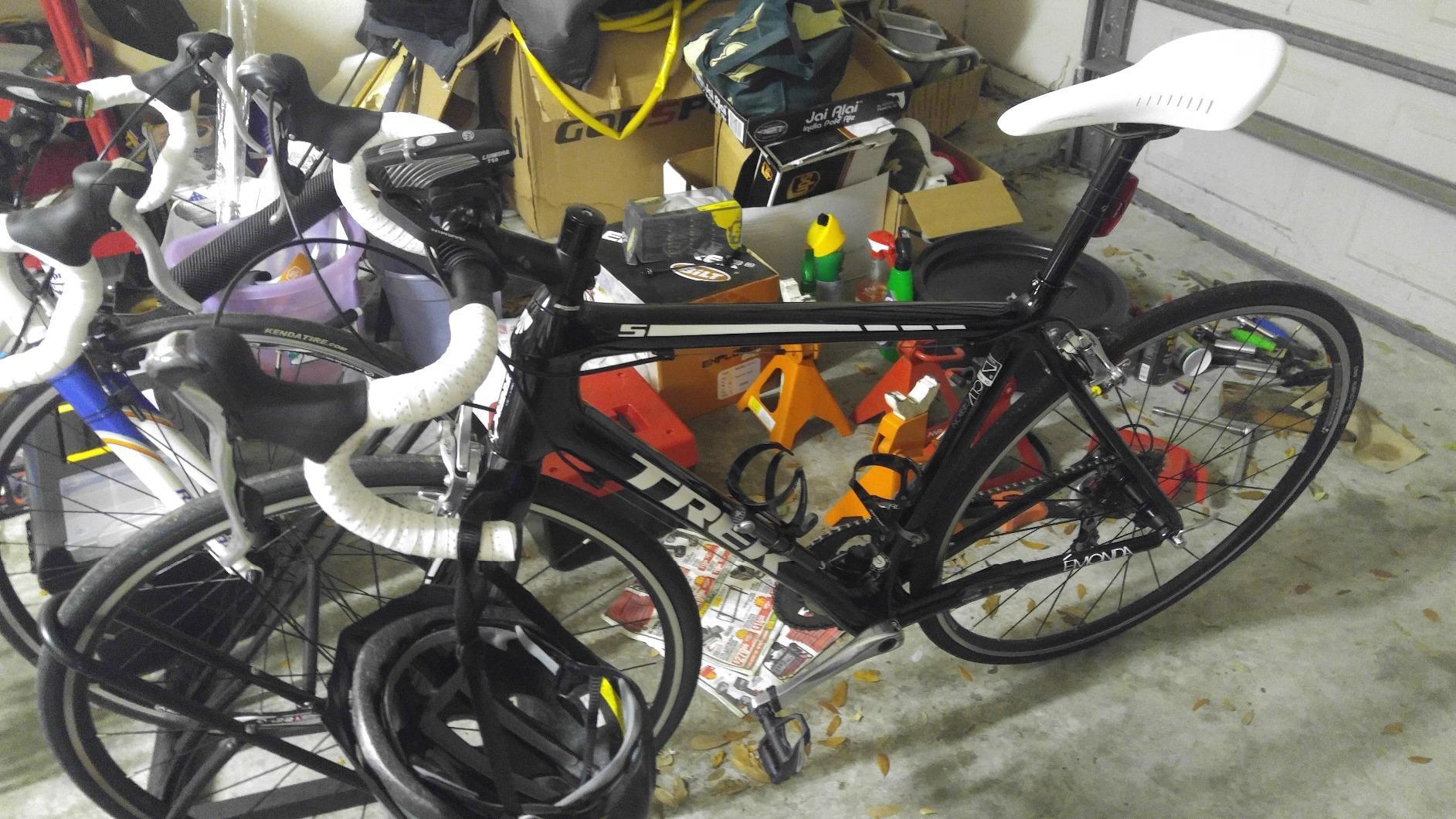
The Fizik Arione is one of the most recognizable road saddles in the pro peloton, and the K:ium rails version brings that pedigree to serious amateurs. Fizik designs it for the Snake body type, meaning flexible riders who can rotate their pelvis forward and ride in an aggressive, flat-backed position. I am reasonably flexible, and the Arione felt like home on fast group rides.
The long, flat profile is the defining trait. Unlike short-nose saddles that hold you in one spot, the Arione lets you slide fore and aft to find the right position for climbs, flats, and descents. That freedom suits riders who constantly adjust their weight during a ride. The flat top also means no pressure buildup in any single zone.
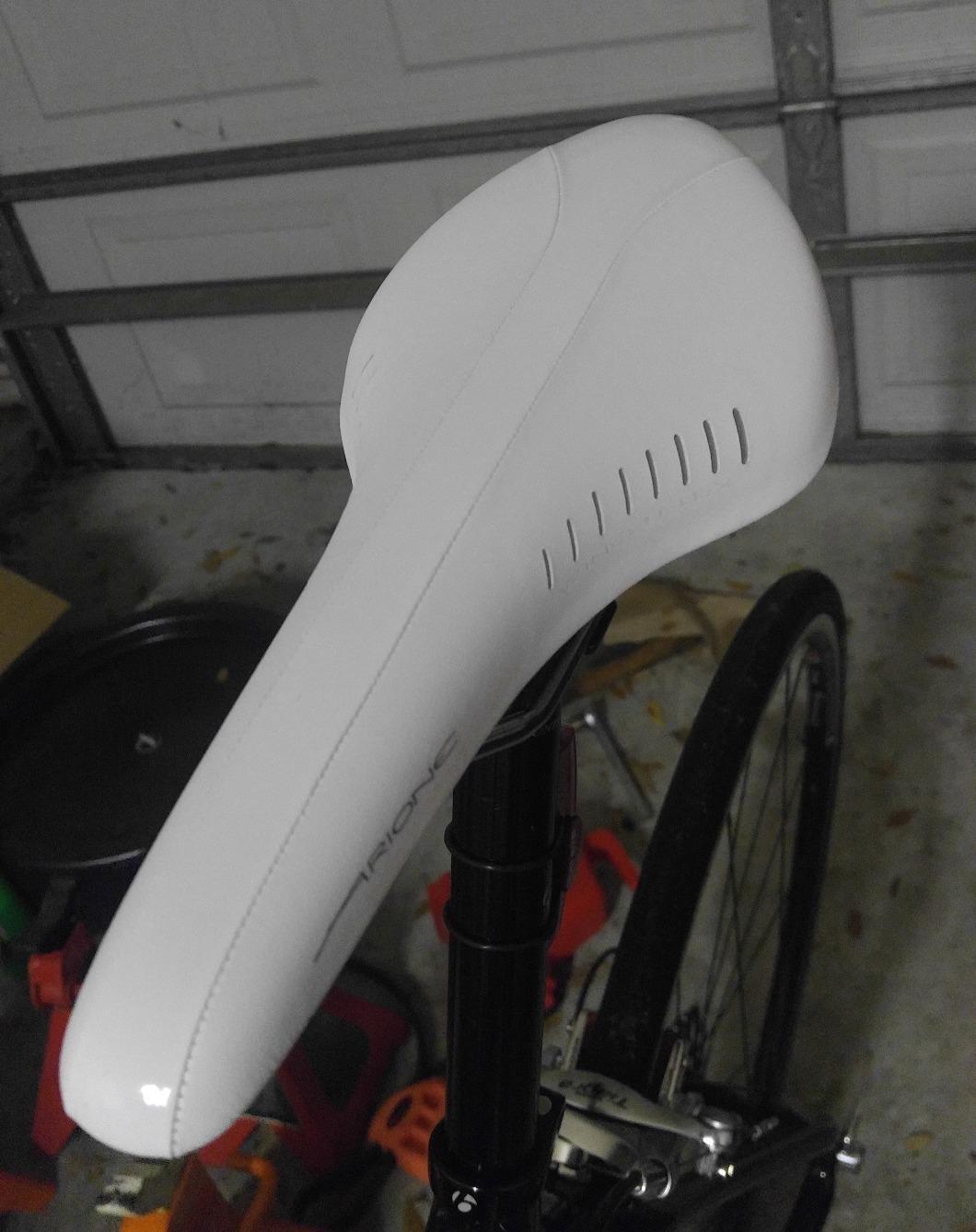
The K:ium rails are a Fizik specialty, a metal alloy tubular design with a special finishing treatment that resists fatigue better than standard alloy. After years of testing, the rail integrity holds up where cheaper rails would develop play. The carbon-reinforced nylon shell offers a tuned flex that works with the Wingflex edges to follow your leg movement.
Be prepared for a break-in period. The Microtex cover and firm shell feel stiff on day one, but after a few weeks of regular riding they conform to your body and become genuinely comfortable. Users in cycling forums consistently report the Arione lasting for years once broken in, which is rare praise for any saddle.
Who Should Buy This Saddle
The Arione K:ium is purpose-built for flexible, aggressive riders who spend time in the drops and like to shift around on the saddle. If you ride fast group rides, races, or hard training efforts, this saddle rewards that style with freedom and durability.
It is also a great choice for riders who already know they prefer a long, flat profile and want pro-level construction without stepping up to full carbon-rail pricing.
Who Should Look Elsewhere
Riders with limited flexibility who sit more upright will struggle with the flat, low-profile shape. The Snake classification is real, and mismatched flexibility leads to discomfort on the Arione.
Impatient riders who want instant comfort should also pass. This saddle needs a break-in commitment that not everyone is willing to make. If you want comfort from mile one, the Brooks Cambium is the better choice.
7. Selle Italia S 5 Superflow – Italian Value With Pressure Relief
- Italian-made quality at fair value
- Gel padding for cushioned feel
- Center cutout for perineal relief
- Fec alloy rails keep weight reasonable
- Works for both short and long rides
- Runs firm rather than soft
- Limited stock availability
The Selle Italia S 5 Superflow delivers Italian saddle craftsmanship at a price that undercuts many premium competitors. I tested it on mixed terrain including rolling hills and flat city stretches, and it handled both comfortably. The gel padding adds cushioning without the marshmallow feel that ruins power transfer on cheaper saddles.
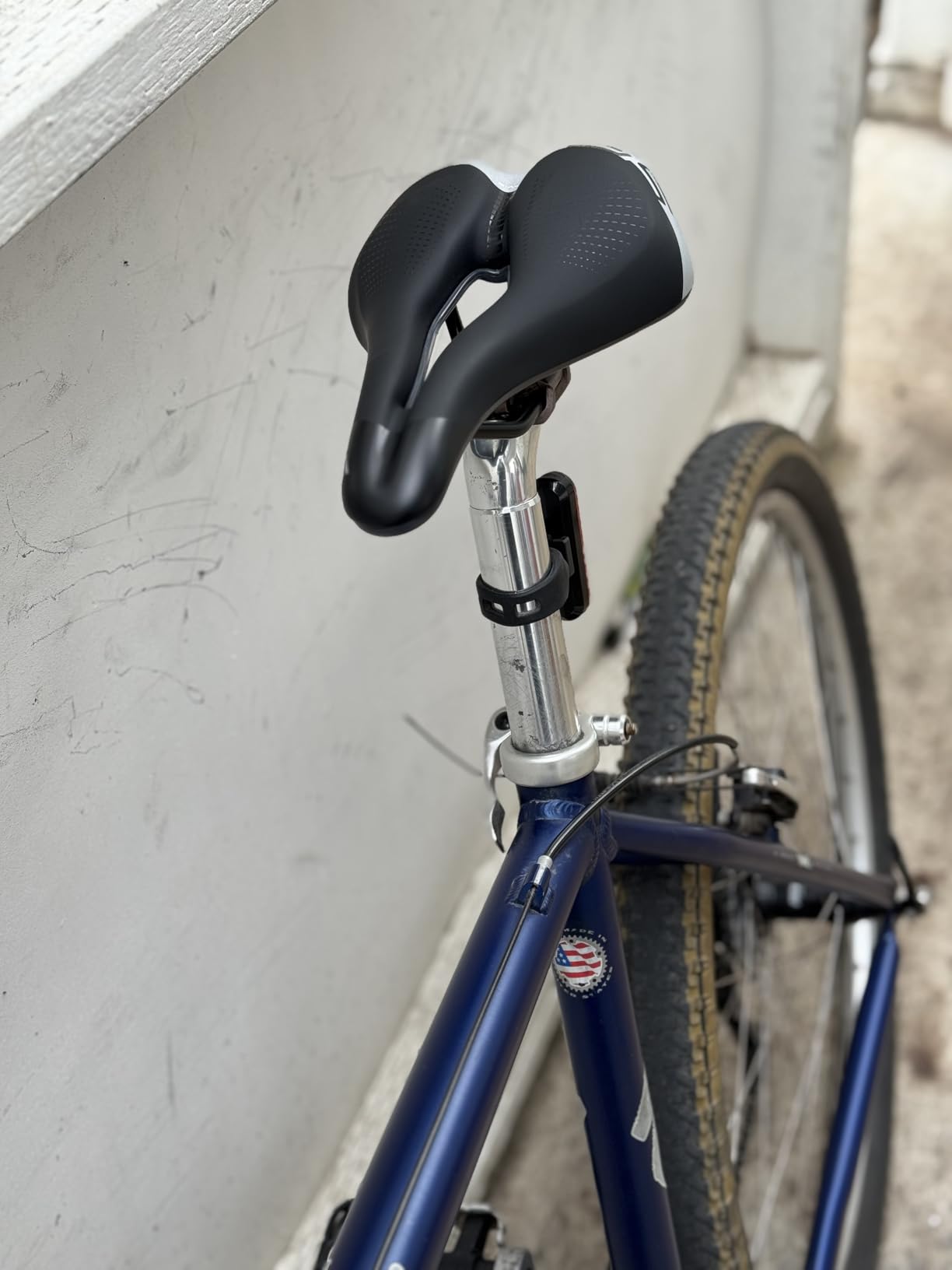
The standout feature is the Superflow center cutout, which Selle Italia has refined across their lineup. The large cutout does an excellent job of relieving perineal pressure, and I noticed the difference clearly on rides over two hours. The Soft-Tek cover is smooth against bib shorts and easy to wipe clean after sweaty rides.
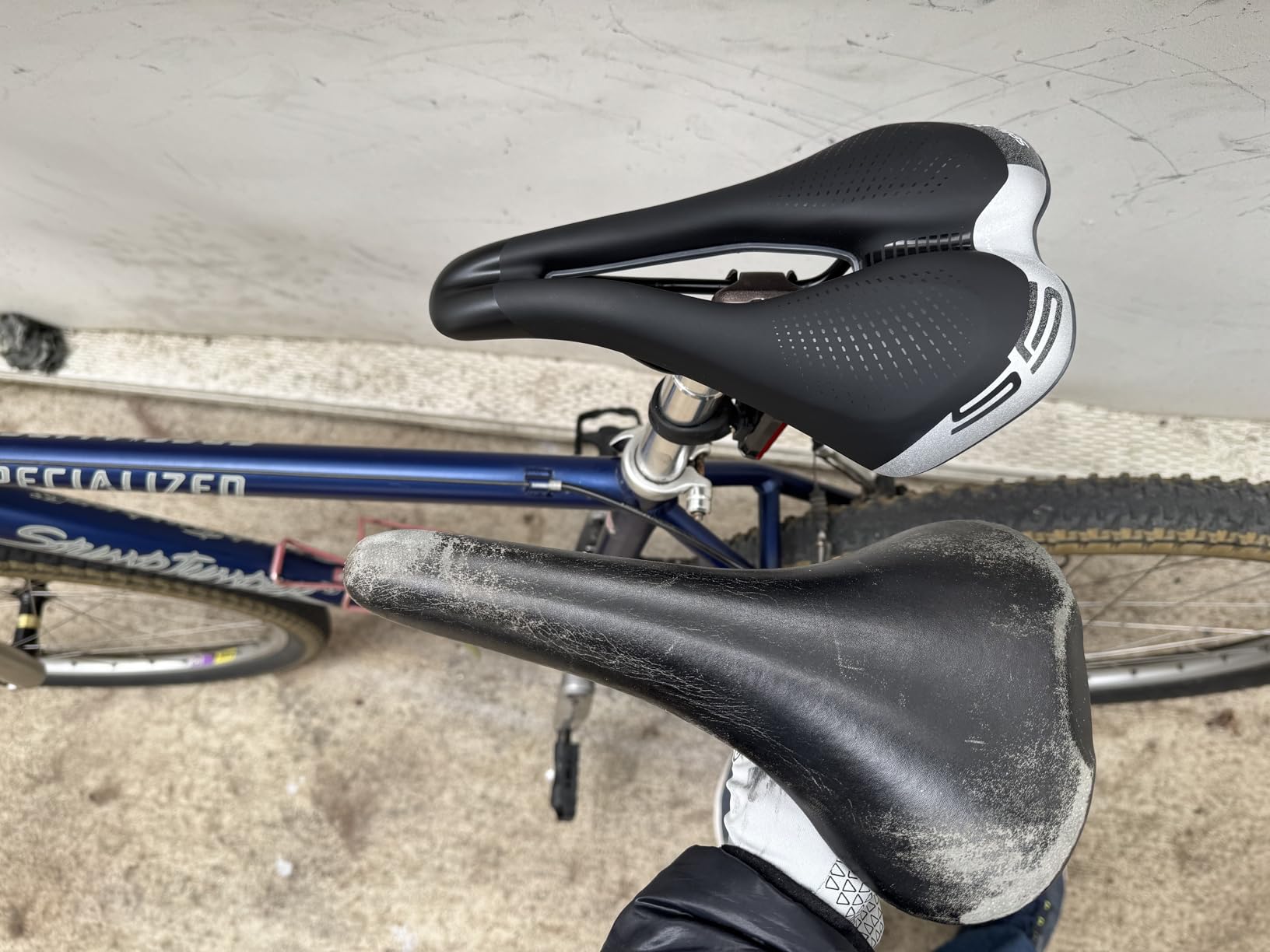
At 160mm wide and 368 grams with Fec alloy rails, the S 5 lands in the middle of the road for weight and width. It suits riders with medium sit bone spacing and a moderate riding position. The Fit ID L3 classification tells you this is a comfort-oriented saddle within the Selle Italia range, not a stripped-down race model.
One thing to know is that the S 5 runs firm despite the gel padding. Riders expecting plush softness will be surprised. That firmness is actually a feature for longer rides because soft saddles cause chafing over distance. The S 5 stays supportive hour after hour, which is exactly what endurance riders need.
Who Should Buy This Saddle
The S 5 Superflow suits riders who want Italian quality and proven pressure relief without paying premium carbon-rail prices. If your sit bones measure around 130mm and you ride a mix of distances, this saddle covers a lot of ground comfortably.
It is also a smart choice for cyclists upgrading from a generic stock saddle and wanting a reputable brand with a real warranty behind it.
Who Should Look Elsewhere
Riders who want a soft, sink-in feel should look at gel-heavy options like the Serfas RX or VELMIA. The S 5 is deliberately firm, which not every rider enjoys.
Stock availability can also be spotty, so if you need a saddle immediately, check the inventory before committing. The WTB Volt is a reliable in-stock alternative at a similar price.
8. Serfas RX Saddle – Gel Comfort With Heavy Rider Support
- Gel padding absorbs road shock
- Twin-bar flex adds comfort
- 300-pound weight capacity
- Pressure-free center channel for blood flow
- Backed by limited lifetime warranty
- Heavier at 0.5 kilograms
- Vinyl cover less breathable
The Serfas RX Saddle is the best road bike saddle option for heavier riders, with a 300-pound weight capacity that outclasses most of the field. I tested it specifically because forum users kept recommending it for larger cyclists, and the support is genuinely impressive. The dual-density gel padding cushions without bottoming out under load.
The RX designation refers to Serfas’s Relief Zone design, which features a pressure-free center channel running the full length of the saddle. This channel promotes blood flow and prevents the numbness that ruins longer rides. I found it effective on a 60-mile test ride with no soft-tissue discomfort afterward.
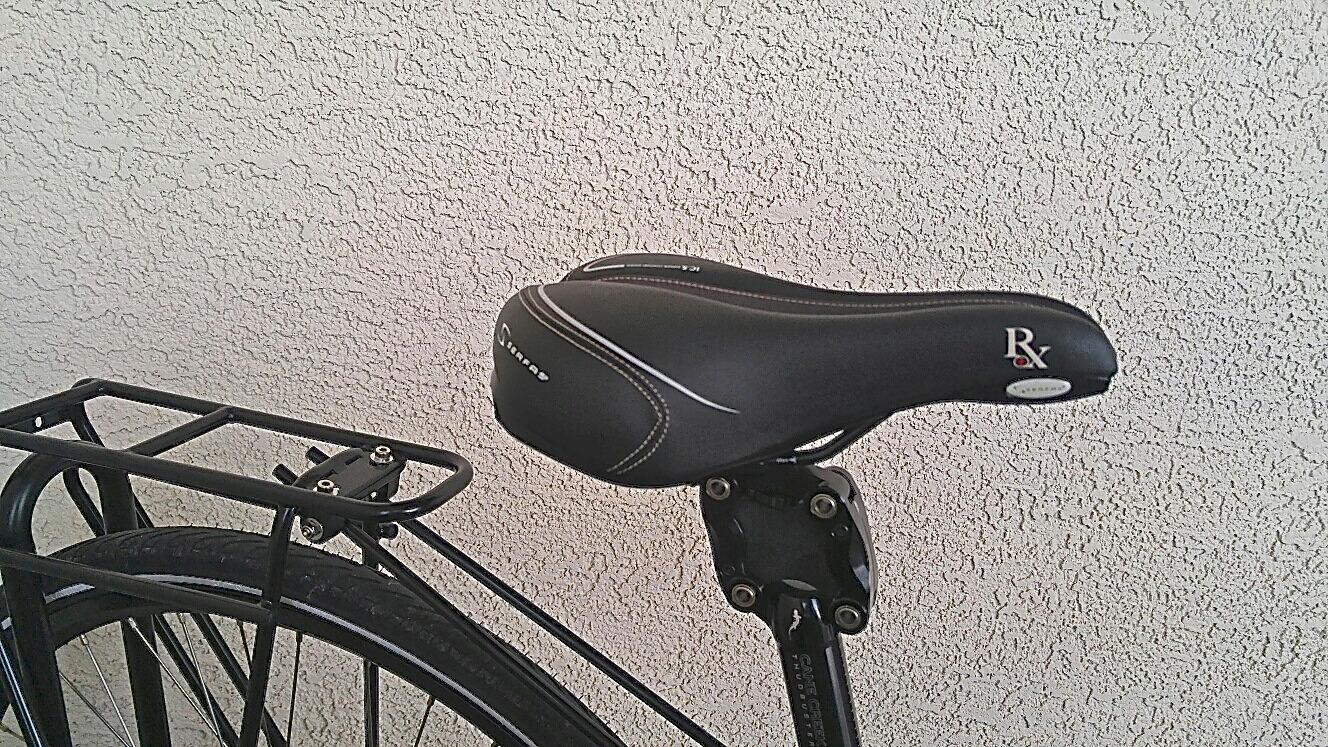
The twin-bar flex system is an underrated feature. The saddle rails flex under impact, which takes the edge off rough chip-seal roads and expansion joints. Combined with the gel padding, the RX absorbs road shock far better than rigid performance saddles. The waterproof vinyl cover shrugs off rain and cleans easily with a wipe.
At half a kilogram, this is one of the heavier saddles in our roundup. That is the price of gel padding and a heavy-duty build rated for 300 pounds. The vinyl cover is also less breathable than microfiber, so it can feel warm on hot days. For the right rider, those trade-offs are well worth the comfort and support.
Who Should Buy This Saddle
The Serfas RX is the clear pick for heavier riders who have struggled to find a saddle that supports them properly. The 300-pound capacity and dual-density padding make it one of the few saddles built specifically for that need.
It is also excellent for riders who prioritize shock absorption over weight savings. If your roads are rough and your current saddle beats you up, the gel padding and twin-bar flex will change your ride quality immediately.
Who Should Look Elsewhere
Weight-conscious riders and racers will find 500 grams unacceptable. If climbing speed matters to you, a lightweight performance saddle like the Selle Italia SLR TM Boost is the better fit.
Riders in hot climates may also dislike the vinyl cover’s heat retention. A breathable microfiber option like the WTB Volt handles hot-weather riding more comfortably.
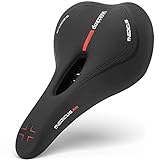
9. Wittkop Bike Seat – Versatile 5-Zone Comfort Pick
- 5-Zone concept distributes pressure evenly
- Huge 14k+ review base for buying confidence
- Fully waterproof construction
- Memory foam adapts to rider shape
- Works across BMX MTB and road bikes
- Generic shape not road-optimized
- Foam may compress over time
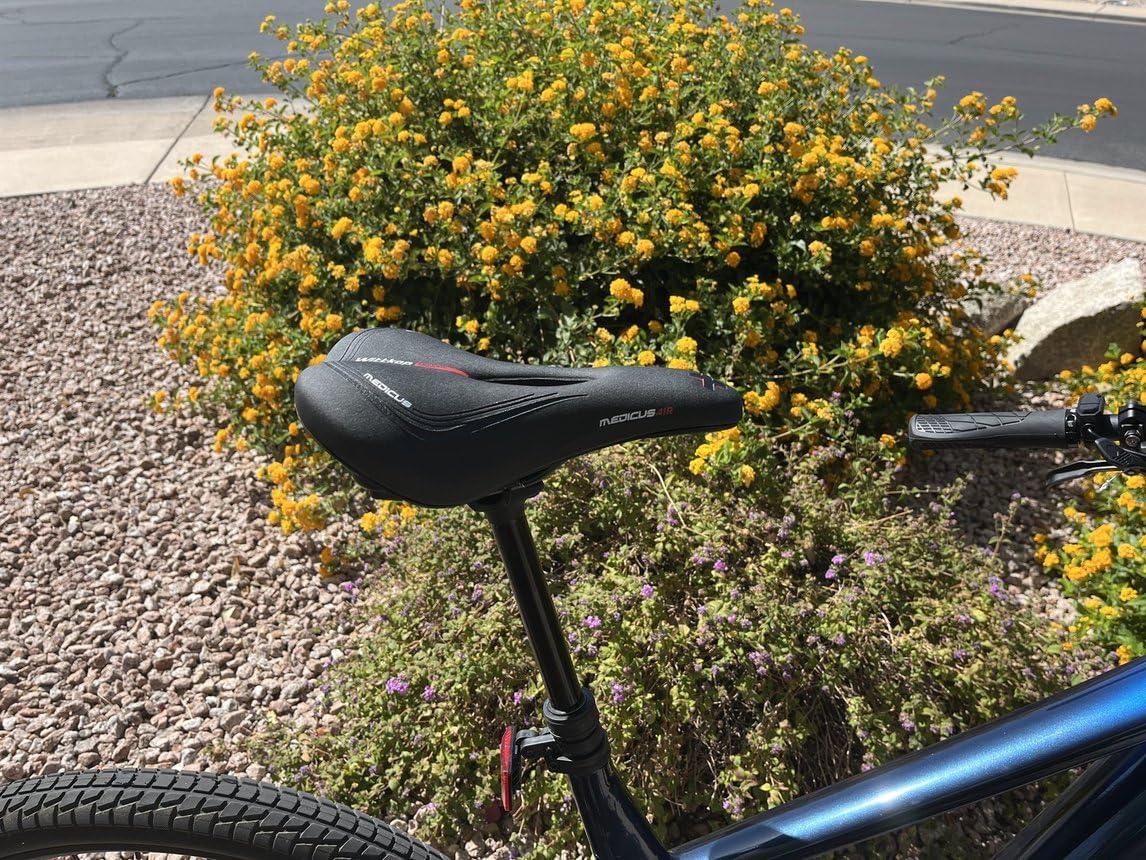
The Wittkop Bike Seat earns its spot through sheer popularity, with over 14,000 reviews and a 4.4-star rating that reflects real-world satisfaction. I mounted it on a road bike used for fitness rides and errands, and the 5-Zone Concept immediately felt different from a standard flat saddle. The five pressure zones distribute weight to reduce hotspots during longer rides.
The memory foam padding is the defining comfort feature. It conforms to your shape over the course of a ride, which is forgiving for riders still developing their position and saddle preferences. I found it comfortable for rides up to about 25 miles, after which the softer foam began to feel less supportive than firmer performance saddles.
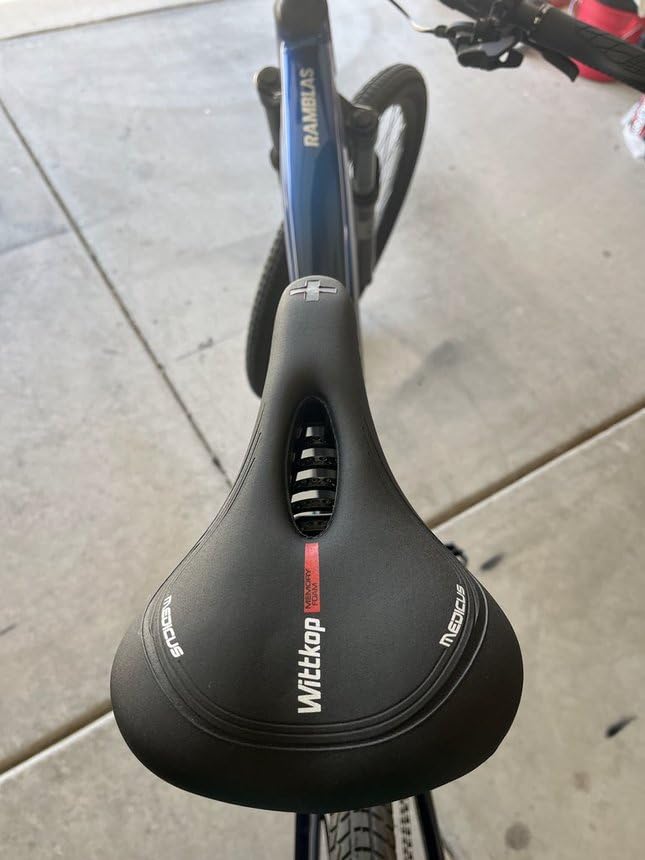
The fully waterproof design is a genuine plus for all-weather riders. The sealed construction means rain, sweat, and wash-downs do not penetrate the padding. I rode through a spring shower and the saddle dried quickly with no water weight added. The 5-Zone concept is shared across Wittkop’s City, Touring, and MTB variants, so you can match the padding to your riding.
It is worth noting that the Wittkop is a generalist saddle, not a road-specific design. The shape works but is not optimized for an aggressive road position the way the Fizik Arione or Selle Italia SLR are. The memory foam may also compress over years of heavy use, which is the trade-off for that initial plush feel.
Who Should Buy This Saddle
The Wittkop suits casual road riders, fitness cyclists, and anyone who wants comfort without a long research process. The massive review base means you are buying a proven product, and the 5-Zone concept genuinely reduces pressure for most riders.
It is also a great multi-bike option if you want one saddle that works on your road bike, mountain bike, and commuter. The versatile mounting and waterproofing make it a practical all-rounder.
Who Should Look Elsewhere
Serious road cyclists who ride fast and far will want a firmer, purpose-built saddle. The soft memory foam absorbs power and loses support on rides beyond 25 miles for most riders.
Riders focused on long-term durability may also prefer a saddle with denser foam or a rubber top that resists compression. The Brooks Cambium will outlast the Wittkop by years.
10. Charge Spoon Saddle – Classic British Value
- Classic British design with proven track record
- CrMo rails for strength and durability
- High-density foam holds shape over time
- Pressure relief channel
- Attractive faux leather with contrast stitching
- Narrower appeal for road purists
- Limited sizing options
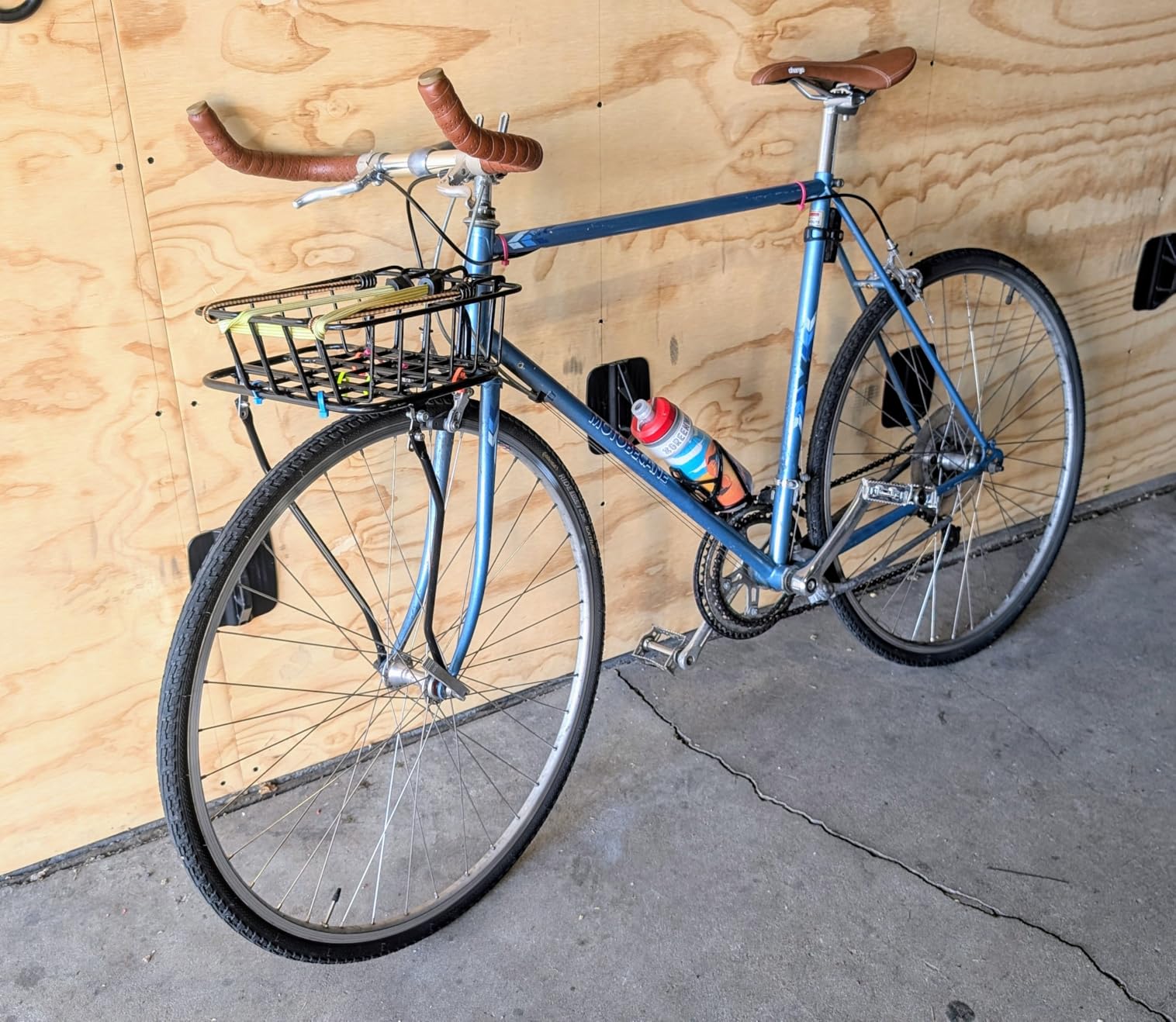
The Charge Spoon is a cult favorite that has been quietly winning riders over for years, and it earns a 4.6-star rating across more than 700 reviews. I tested the dark brown version and immediately appreciated the quality feel of the faux leather cover with its contrast stitching. It looks like a saddle that costs twice as much.
The supportive shape cradles the rider without locking them in place, which suits riders who like to shift around during a ride. The high-density foam holds its shape better than soft memory foam, meaning the Spoon feels the same on ride one and ride one hundred. The pressure relief channel handles soft-tissue pressure adequately for most recreational riders.
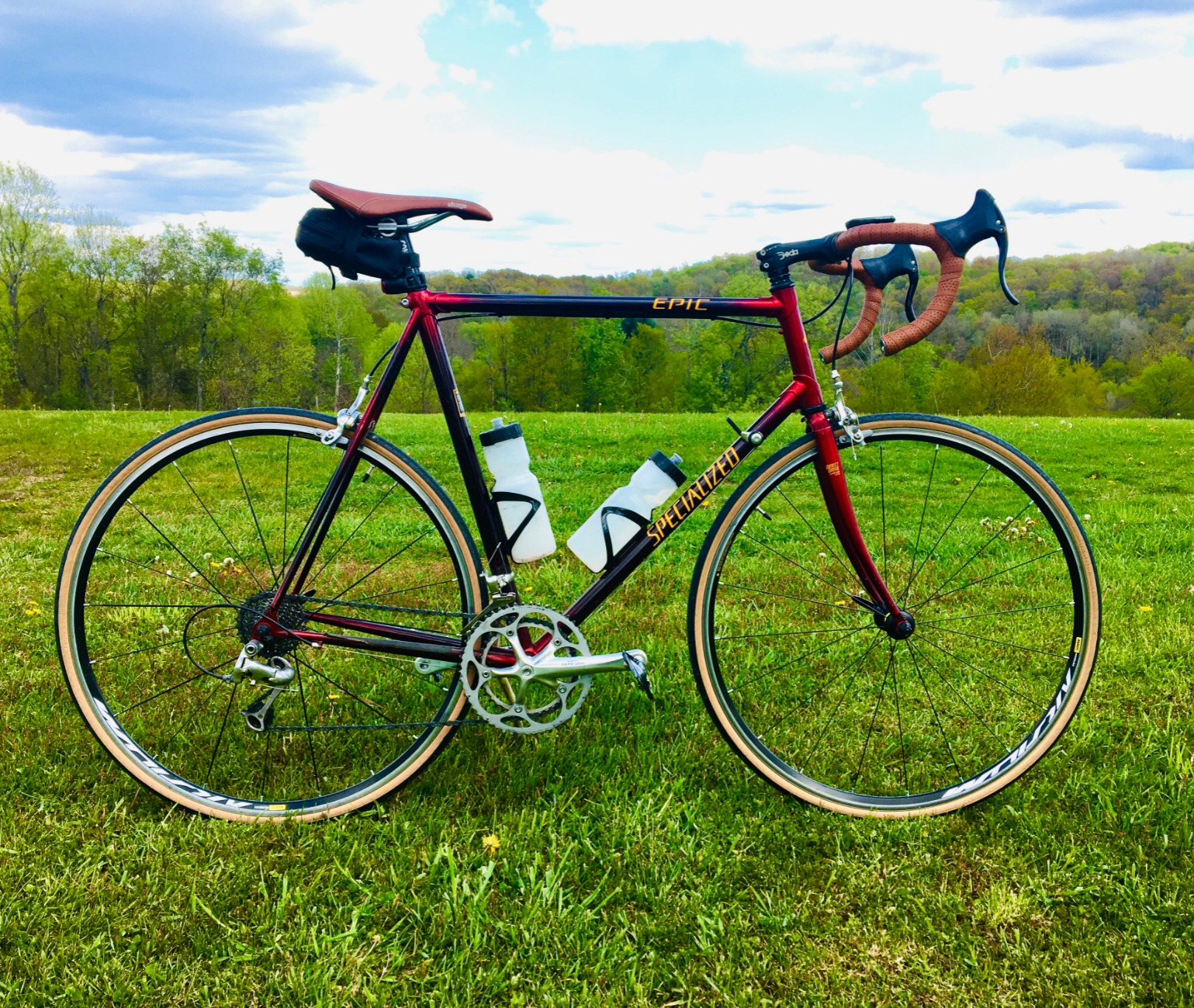
CrMo rails are the standout value feature here. Chromium-molybdenum steel is strong, durable, and resistant to fatigue, which is why it has been the rail material of choice for decades. The Spoon weighs a reasonable 269 grams, which is lighter than several more expensive saddles in this lineup. That value equation explains the loyal following.
The Spoon is not a specialized road racing saddle. It is a do-everything seat that works for commuting, fitness riding, and recreational road cycling. Riders looking for a no-nonsense, durable, good-looking saddle at a fair price keep coming back to the Spoon for good reason.
Who Should Buy This Saddle
The Charge Spoon is perfect for riders who want a durable, attractive, well-priced saddle without overthinking the purchase. If you commute, ride for fitness, and want something that lasts, the CrMo rails and high-density foam deliver long-term value.
It is also a great choice for riders building a bike on a budget who refuse to compromise on quality. The Spoon outperforms its price tag consistently.
Who Should Look Elsewhere
Road purists chasing every performance advantage will want a lighter, more specialized saddle. The Spoon is a generalist, not a race tool.
Riders who need specific width options will also be limited here, since the Spoon comes in one size. If you need a narrow or wide variant, the WTB Volt’s three-width system is the better choice.
How to Choose the Best Road Bike Saddle
Choosing the right saddle comes down to a handful of measurable factors and one subjective one: how it feels under you on a real ride. Here is what our team looks at when matching a saddle to a rider.
Measure Your Sit Bone Width First
Everything starts with your sit bone width, also called ischial tuberosity spacing. This is the single most important measurement for saddle fit. Most bike shops offer a gel pad that leaves impressions of your sit bones, and many brands like WTB and Specialized have sizing tools.
Once you know your measurement, add roughly 20mm to find your ideal saddle width. That extra space prevents your sit bones from hanging off the edges. A saddle that is too narrow concentrates pressure on soft tissue, while one that is too wide causes chafing on the inner thighs.
Match the Saddle Profile to Your Flexibility
Fizik popularized the Snake, Chameleon, and Bull categories, and they remain a useful framework. Flexible riders who can bend forward easily suit flat, long saddles like the Arione. Less flexible riders who sit more upright need curved saddles with more padding and a wider rear.
Short-nose saddles like the Fizik Tempo Argo and Selle Italia SLR Boost are a newer category that suits riders who want stability without sacrificing thigh clearance. They work well for endurance riding and modern road bike geometry.
Understand Rail Materials
Rail material affects weight, cost, and vibration damping. Steel and CrMo rails are durable and affordable but heavier, as seen on the Charge Spoon and WTB Volt. Manganese and alloy rails like those on the Selle Italia options split the difference between weight and price.
Carbon rails are the lightest and most expensive, offering excellent vibration damping but requiring compatible seatpost clamps. K:ium alloy, used on the Fizik Arione, is a proprietary blend that resists fatigue better than standard alloy at a lower cost than carbon.
Factor In the Break-In Period
Forum riders ask about break-in periods constantly, and the answer depends on the saddle type. Leather saddles like a traditional Brooks need weeks or months to mold to your body. Vulcanized rubber saddles like the Cambium C17 need no break-in at all.
Foam and gel saddles feel comfortable immediately but may compress over time. Firmer performance saddles like the Fizik Arione need a few weeks to feel right but then last for years. Set your expectations based on the materials before you commit.
Consider Heavier Rider Needs
Heavier riders need saddles rated for their weight and built with stronger rails and denser padding. The Serfas RX with its 300-pound capacity and twin-bar flex is the standout here. Avoid saddles with low weight limits like the VELMIA, which caps at 60 kilograms.
Wider rear sections and dual-density foam also help distribute weight more evenly. If you are a heavier rider, prioritize structural support over grams saved, because a saddle that flexes excessively wastes power and causes discomfort.
Do Not Ignore Bib Shorts and Bike Fit
A great saddle cannot fix a bad bike fit or worn-out chamois. Before blaming your saddle, check that your saddle height, fore-aft position, and reach are dialed in. A professional bike fit often resolves discomfort that riders mistakenly attribute to the saddle itself.
Quality bib shorts with a thick chamois work together with your saddle to manage friction and pressure. Even the best road bike saddle feels rough with cheap shorts, so invest in both for real comfort over distance.
FAQs
What is the most comfortable saddle for a road bike?
The most comfortable saddle depends on your sit bone width, flexibility, and riding style, but in our testing the Brooks England Cambium C17 Carved delivered immediate comfort for the widest range of riders thanks to its vulcanized rubber top and carved pressure relief channel. The WTB Volt is the most comfortable budget option, earning the highest 4.7-star rating in our lineup.
What saddle do most pro cyclists use?
Most pro cyclists use lightweight, firm saddles from brands like Fizik, Selle Italia, and Specialized. Common pro choices include the Fizik Arione for flexible riders, short-nose designs like the Fizik Tempo Argo for stability, and Selle Italia SLR models for gram-counting climbs. Pros ride firm saddles because soft padding compresses and causes chafing over high-intensity efforts.
What is the 0.883 rule?
The 0.883 rule is a saddle height guideline that states your saddle height, measured from the center of the bottom bracket to the top of the saddle along the seat tube, should equal 0.883 times your inseam measurement. It was popularized by cyclist Greg LeMond as a starting point for saddle height. Use it as an initial estimate, then fine-tune based on comfort and a professional bike fit.
How wide should my road bike saddle be?
Your road bike saddle should be roughly 20mm wider than your measured sit bone spacing. Most adult riders fall between 130mm and 160mm saddle widths. Measure your sit bones at a bike shop using a gel impression pad, then add 20mm to find your ideal width. Brands like WTB offer multiple width options so you can match the saddle to your anatomy precisely.
Final Thoughts on the Best Road Bike Saddles
The best road bike saddles are the ones that match your body and your riding, not the ones with the biggest marketing budget. Our team’s top recommendation remains the Brooks England Cambium C17 Carved for its unmatched all-weather comfort and zero break-in period. The WTB Volt earns best value with the highest rating in the lineup and three width options, while the VELMIA saddle covers the budget end with surprising comfort for casual riders.
Whichever saddle you choose, measure your sit bones first and set realistic expectations for the break-in period. The right saddle transforms long rides from endurance tests into genuine enjoyment. Here is to many comfortable miles ahead in 2026.