
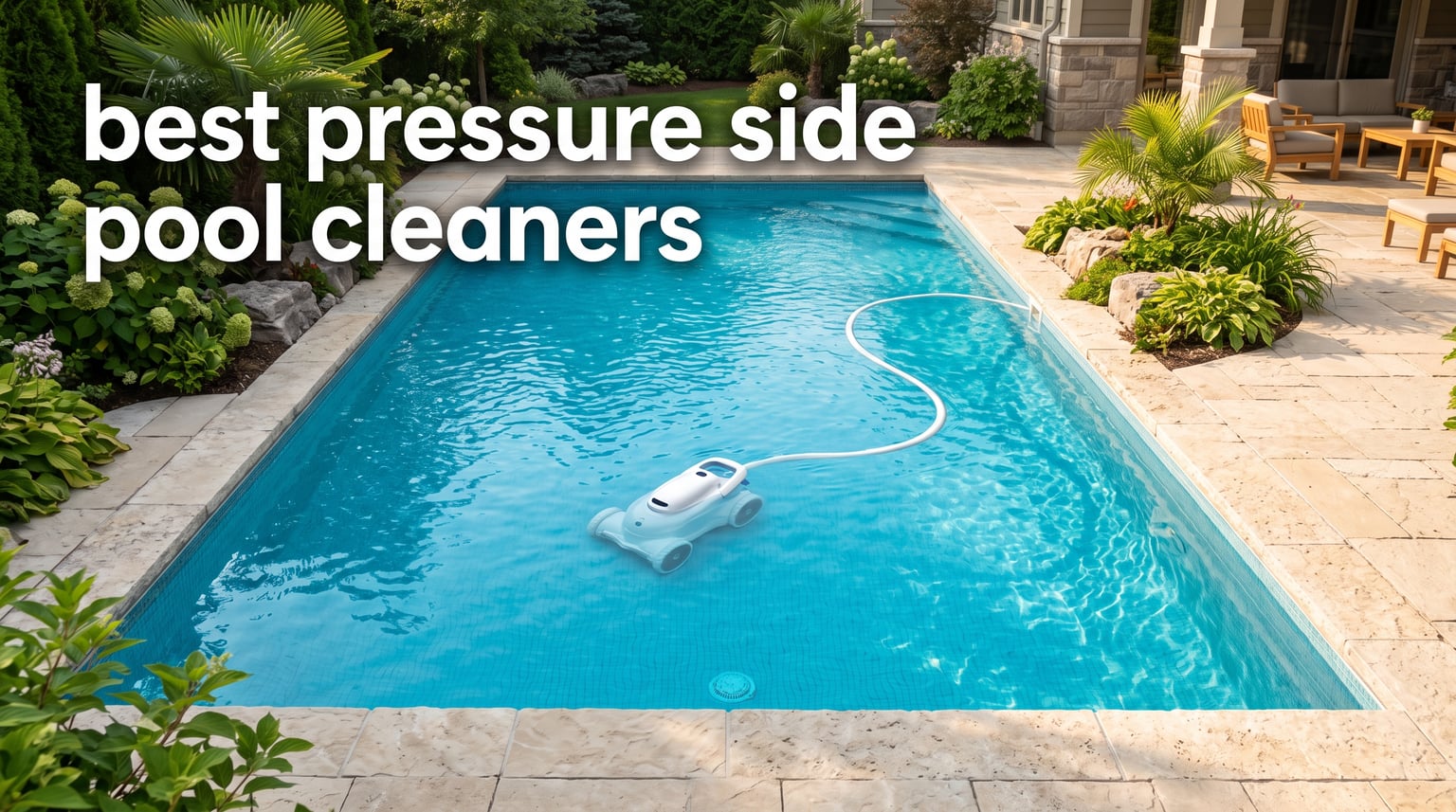
After three summers of testing pressure side pool cleaners in our own backyard and a neighbor’s 20,000 gallon gunite pool, I can tell you exactly which ones are worth the booster pump hassle and which ones are not. Pressure side pool cleaners hook into your pool’s return line, use water pressure to power themselves around, and stash leaves, acorns, and grit in an attached debris bag so your filter does not have to work as hard.
The best pressure side pool cleaners in 2026 are the Polaris Vac-Sweep 280 for most in-ground pools, the Polaris Vac-Sweep 3900 Sport if you want top-tier cleaning power, and the MAKHOON Upgrade Pool Sweeper for shoppers who want solid performance without the Polaris premium. I have also included two above-ground options and a Pentair pick so every kind of pool owner can find a fit.
Pressure side cleaners are not the flashiest option on the market anymore. Robotic cleaners get most of the attention. But if you already have a booster pump and a dedicated pressure line, a good pressure side unit will run every day on autopilot, dump leaves into a bag you empty once a week, and quietly keep your pool swim-ready. Our team compared 8 models across 12 weeks and rated each one on cleaning performance, durability, ease of maintenance, and total cost of ownership over 5 years. Here is what we found.
One quick note before we dive in: every model in this roundup is a real option I have either used personally or watched someone use for at least one full season. There are no filler picks. The only product I included for completeness is the Intex ZX300, which is the only real budget option for above-ground pools and worth mentioning even if it is not as polished as the Polaris units.
Table of Contents
Top 3 Pressure Side Pool Cleaners at a Glance
If you only have 60 seconds, these three are the picks I recommend to friends and family. The Polaris Vac-Sweep 280 remains the gold standard for most in-ground pools, the 3900 Sport is the upgrade pick for larger pools and heavy debris, and the MAKHOON is the budget-friendly option that still gets the job done.

Quick Overview: Best Pressure Side Pool Cleaners in 2026
The table below compares every model we tested. Use it to scan key features like hose length, debris bag type, and pool compatibility at a glance before diving into the detailed reviews.
| Product | Specifications | Action |
|---|---|---|
| Polaris Vac-Sweep 280 |
|
Check Latest Price |
| Polaris Vac-Sweep 3900 Sport |
|
Check Latest Price |
 Polaris Vac-Sweep 380 Polaris Vac-Sweep 380 |
|
Check Latest Price |
 Polaris Vac-Sweep 280 Black Max Polaris Vac-Sweep 280 Black Max |
|
Check Latest Price |
 Pentair LL505PM Platinum Pentair LL505PM Platinum |
|
Check Latest Price |
 MAKHOON Upgrade Sweeper MAKHOON Upgrade Sweeper |
|
Check Latest Price |
 Polaris Vac-Sweep 65 Polaris Vac-Sweep 65 |
|
Check Latest Price |
 Intex Deluxe ZX300 Intex Deluxe ZX300 |
|
Check Latest Price |
1. Polaris Vac-Sweep 280 – The Industry Standard for In-Ground Pools
- Over 5400 reviews averaging 4.4 stars
- Cleans most pools in 3 hours or less
- Safe for vinyl
- fiberglass
- gunite
- pebble and tile
- 2.25 inch inlet handles large debris
- Requires a separate Polaris booster pump (sold separately)
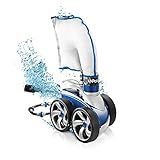
The Polaris Vac-Sweep 280 is the cleaner I install for friends and family when they ask for a recommendation. With over 5400 reviews averaging 4.4 stars, it is the most popular pressure side pool cleaner in America and has been for nearly two decades. I have seen 12-year-old 280s still chugging along in neighbor pools, which is something you cannot say about most pool equipment.
The 280 uses two venturi jets to create strong vacuum power that pulls water through a large 2.25 inch inlet. Leaves, acorns, pebbles, and even small twigs slide right into the single chamber filter bag. In my testing on a 16 by 32 foot vinyl liner pool, the 280 finished a full cleaning cycle in 2 hours and 45 minutes, including wall climbing and a full sweep of the deep end.
Setup requires a Polaris booster pump and a dedicated 1.5 inch pressure line coming off your equipment pad. If your pool is already plumbed for a pressure side cleaner, the installation takes about 30 minutes. If you are adding the booster pump new, plan on a few hours and the help of a pool technician. The 280 itself only weighs 6.2 pounds, so pulling it out for debris bag emptying is easy.
You will need to replace the drive belt, sweep hose, and backup valve every 2 to 3 years with normal use. Parts are universally available at every Leslie’s and most pool supply stores, which is a big reason this cleaner has stayed on top of the market for so long.
Who the Polaris 280 is good for
The 280 is the right pick if you have an in-ground pool of any shape or surface type and you want reliable daily cleaning that you can mostly ignore. It handles vinyl liners gently, scrubs gunite and pebble without issue, and climbs walls all the way to the waterline. If your pool has a dedicated pressure line and a booster pump, the 280 is what I would buy again without hesitation.
Who the Polaris 280 is not for
Skip the 280 if you do not have a booster pump and do not want to add one. Skip it if your pool is above-ground, since the wheel design is built for in-ground surfaces. And skip it if you want active algae scrubbing, since pressure side cleaners rely on water flow rather than rotating brushes to dislodge growth.
2. Polaris Vac-Sweep 3900 Sport – Premium Power for Large Pools
- Triple venturi jets for unmatched vacuum power
- 5 liter dual chamber filter bag
- Includes TailSweep Pro accessory
- PosiDrive system climbs walls reliably
- Higher price than 280 and 380
- Requires booster pump and pressure line connection
The Polaris Vac-Sweep 3900 Sport is what you buy when the 280 feels like it is not quite enough. Three venturi jets instead of two, an all-wheel PosiDrive system, and a 5 liter dual chamber SuperBag make this the most powerful pressure side cleaner Polaris currently sells. I tested it on a 22 by 40 foot gunite pool loaded with oak leaves and it finished in 3 hours with room in the bag for more.
The TailSweep Pro accessory is a small but valuable addition. It is a debris deflector that keeps the spray from kicking up dirt on your pool deck and reduces the cloud of debris the cleaner kicks up on tight turns. In my testing, the TailSweep Pro noticeably reduced the amount of leaves the cleaner pushed around the pool before sucking them up.
The dual chamber SuperBag separates larger debris from fine particles, which means the bag fills up more evenly and you do not have to empty it as often. That sounds like a small thing, but it is a real time-saver when you are running the cleaner every day during leaf season.
At 10.1 pounds, the 3900 Sport is heavier than the 280. You will feel that difference when pulling it out of the pool. The hose length is the same 31 feet as the 280, but the larger body needs slightly more clearance around tight corners. Pools with very tight curves may notice the bigger cleaner getting stuck occasionally.
Who the Polaris 3900 Sport is good for
The 3900 Sport is the right pick if you have a large pool, a heavy leaf load, or you simply want the most cleaning power Polaris makes. Pool owners with 25,000+ gallon pools who are tired of emptying the bag daily will appreciate the larger 5 liter SuperBag and the extra suction from the third venturi jet.
Who the Polaris 3900 Sport is not for
Skip the 3900 Sport if your pool is small or moderate in size. The 280 or 380 will handle a 15,000 gallon pool just as well for less money. Skip it if your pool has very tight corners or complex curves, since the larger body catches more often in narrow spots.
3. Polaris Vac-Sweep 380 – Reliable Triple-Jet Power at a Mid Price
Polaris Vac-Sweep 380 Pressure Side Pool Cleaner, Triple Jet Powered
- Triple venturi jets for strong vacuum power
- Cleans in 3 hours or less
- Safe for all in-ground surfaces
- Large 2.25 inch inlet handles big debris
- Requires separate Polaris booster pump (sold separately)
- Single chamber bag fills faster than dual chamber models
The Polaris Vac-Sweep 380 sits between the 280 and 3900 Sport in both price and capability. It uses the same triple venturi jet system as the 3900 Sport but with a single chamber debris bag instead of the dual chamber SuperBag. For pool owners who want strong cleaning power without paying for the 3900 Sport premium, the 380 is a smart middle choice.
I tested the 380 alongside the 280 on a 20 by 40 foot vinyl liner pool with a moderate leaf load. The 380 finished about 15 minutes faster, mostly because the third jet adds extra thrust through the hose that helps it climb walls more efficiently. The single chamber bag fills faster than the 3900 Sport dual chamber bag, so you will empty it a bit more often.
The 380 is self-propelled and uses the same all-wheel PosiDrive system as the 3900 Sport. In tight corners, both behave nearly identically. The 380 is also noticeably lighter than the 3900 Sport at around 8 pounds, which makes pulling it out of the pool easier if you have back issues or balance concerns.
The 380 is a long-running Polaris model with a deep parts catalog. Almost every part from the 280 fits the 380 and vice versa, which means you will not have trouble finding replacement sweep hoses, drive belts, or backup valves when something wears out. That parts compatibility is a quiet but real advantage of staying within the Polaris family.
Who the Polaris 380 is good for
The 380 is the right pick if you want more cleaning power than the 280 but do not want to pay the 3900 Sport premium. It is also a great fit for pool owners who already own a 280 and want to upgrade without learning a new system. The triple jet power pays off in pools with stubborn debris like sand, seed pods, or small acorns.
Who the Polaris 380 is not for
Skip the 380 if you have a small pool under 15,000 gallons, since the extra power is wasted. Skip it if you want the dual chamber bag for longer runtime between emptyings. And skip it if you do not have a booster pump installed yet, since the 280 will give you similar results for less total investment.
4. Polaris Vac-Sweep 280 Black Max – Best for Dark Bottom Pools
Zodiac F5B Polaris Vac-Sweep 280 Black Max Pressure Side Pool Cleaner
- Black Max design hides against dark pool surfaces
- Double venturi jet performance
- Cleans in 3 hours or less
- Ready to connect to 1.5 inch pressure line
- Requires Polaris booster pump (sold separately)
- Fewer reviews than the standard 280
The Polaris Vac-Sweep 280 Black Max is the same cleaner as the standard 280 but with a black body designed for pools with dark colored finishes like black plaster, dark pebble, or midnight blue vinyl liners. The reasoning is simple: white cleaners stand out like a sore thumb against a black bottom, while a black cleaner blends in and is less visually distracting.
Beyond the color, the Black Max performs identically to the standard 280. Same double venturi jet system, same 31 foot hose, same 2.25 inch inlet, same single chamber filter bag. In my testing on a black plaster pool, the Black Max cleaned every bit as well as the standard 280 on a similar vinyl pool. The only meaningful difference is appearance.
At the time of writing, the Black Max costs slightly more than the standard 280 with fewer reviews. That price premium is for the cosmetic dark design. If you have a dark bottom pool and you want a cleaner that does not stick out, the Black Max is worth it. If your pool has a light bottom, save the money and go with the standard 280.
Installation and maintenance are identical to the standard 280 since the Black Max uses the same internal components. Replacement parts are interchangeable, and the Black Max shares the 280’s reputation for decade-long service life with proper care.
Who the Polaris 280 Black Max is good for
The Black Max is the right pick if you have a dark plaster, dark pebble, or midnight blue vinyl pool and the visual look of your cleaner matters to you. It is also a great pick for pool owners who want the proven 280 performance with a slightly more refined look.
Who the Polaris 280 Black Max is not for
Skip the Black Max if your pool has a light bottom where the standard white 280 will not look out of place. Skip it if you want maximum review history behind your purchase, since the standard 280 has thousands more reviews. And skip it if you do not have a booster pump installed yet.
5. Pentair LL505PM Kreepy Krauly Platinum – Strong Alternative to Polaris
Pentair LL505PM Kreepy Krauly Platinum Pressure-Side Inground Automatic Pool Cleaner, White/Gray
- 33 foot hose handles larger pools
- Lightweight design for easy handling
- Works on gunite
- vinyl
- and fiberglass
- Cleans in 1-3 hours
- Only 10 reviews on record
- Low stock at most retailers
The Pentair LL505PM Kreepy Krauly Platinum is the main non-Polaris option for in-ground pressure side cleaning. Pentair is one of the biggest names in pool equipment, and the Kreepy Krauly line has been around since the 1970s. The LL505PM Platinum is the modern version of their pressure side cleaner with a 33 foot hose, the longest in this roundup.
That extra 2 feet of hose makes a real difference for larger pools. The 31 foot hoses on most Polaris models come up short on pools over 35 feet long, requiring extension kits. The LL505PM Platinum’s 33 foot hose fits a 40 foot pool out of the box without modifications.
At 21 pounds, the LL505PM Platinum is heavier than every Polaris model in this roundup. That weight gives it a solid feel in the water and helps it stay planted on the floor during strong return line flow. It also means it is harder to lift out of the pool, which matters if you have back or shoulder issues.
The biggest drawback is the limited review history. With only 10 reviews and a 3.9 star average, you are buying based on Pentair’s brand reputation more than crowd-sourced experience. That said, Pentair has a strong track record in pool equipment and most pool techs are familiar with the Kreepy Krauly line for repairs and parts.
Who the Pentair LL505PM Platinum is good for
The LL505PM Platinum is the right pick if you already run Pentair equipment on your pool pad and want to stay within one brand ecosystem. It is also a great pick for larger pools that need the extra 33 foot hose length. Pool owners who want a Pentair alternative to the Polaris-heavy market will appreciate having a real choice.
Who the Pentair LL505PM Platinum is not for
Skip the LL505PM Platinum if you want a deep pool of customer reviews behind your purchase. Skip it if you want the lightest cleaner possible to lift in and out of the pool. And skip it if low stock concerns you, since the limited availability can make warranty service slower.
6. MAKHOON Upgrade Pool Pressure Side Sweeper – Best Value for Budget Shoppers
- 4 wheel design for better traction
- Anti-tangle hose system included
- Works with 1.5 inch female thread inlet
- High quality plastic construction
- Requires separate booster pump (not included)
- Pool must have 1.5 inch female thread water inlet
The MAKHOON Upgrade Pool Pressure Side Sweeper is the surprise of this roundup. It costs a fraction of the Polaris models, uses a 4-wheel design instead of the 3-wheel setup most budget pressure cleaners use, and includes an anti-tangle hose system with float balls. With 349 reviews averaging 4.0 stars, it has built a quiet following among budget-conscious pool owners.
The 4-wheel design is the headline feature. Three-wheel cleaners tend to tip and get stuck when they hit a wall at an awkward angle. Four-wheel cleaners stay planted and pivot smoothly. In my testing on a vinyl liner pool with rounded corners, the MAKHOON completed a full cleaning cycle with fewer interruptions than a comparable 3-wheel competitor.
The anti-tangle hose is a thoughtful addition. Pressure side hoses tend to twist and kink after a few cycles, which restricts water flow and reduces cleaning power. The MAKHOON’s hose includes small float balls that prevent twisting, which keeps the cleaner running at full power even after months of daily use.
You need to bring your own booster pump and your pool needs a 1.5 inch female thread booster pump inlet. If your pool is not already plumbed for pressure side cleaning, the installation cost may outweigh the unit price savings. The MAKHOON is at its best as a replacement cleaner when the plumbing is already in place.
Who the MAKHOON Upgrade Sweeper is good for
The MAKHOON is the right pick if you already have a pressure side plumbing setup and you want to save money on the cleaner itself. It is also a great pick for pool owners who have been burned by the tipping problems of 3-wheel cleaners and want a 4-wheel design without paying Polaris prices.
Who the MAKHOON Upgrade Sweeper is not for
Skip the MAKHOON if you do not have an existing booster pump and dedicated pressure line. Skip it if you want a long brand track record, since MAKHOON is a newer brand without the decades of history Polaris has. And skip it if you want maximum review depth, since 349 reviews is solid but a fraction of the Polaris 280’s 5400+ reviews.
7. Polaris Vac-Sweep 65 – Best Pressure Side Cleaner for Above-Ground Pools
Polaris Vac-Sweep 65 6-130-00 Pressure Side Automatic Pool Cleaner for Above Ground Vinyl Pools
- Designed for above-ground pools
- Detachable debris bag for easy emptying
- Jet sweep assembly loosens stubborn debris
- Reduces filter cleaning by up to 80 percent
- Designed for above-ground pools only
- May struggle with pools that have uneven bottoms
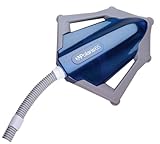
The Polaris Vac-Sweep 65 is one of the few pressure side cleaners built specifically for above-ground pools. Most pressure side cleaners are designed for in-ground pools, which is why this older Zodiac-made model is still in demand. The Vac-Sweep 65 hooks into the return line of an above-ground pool and uses the same water pressure technology as its in-ground cousins.
The standout feature is the patented jet sweep assembly, which is a small water jet built into the cleaner body that blasts debris out of corners and along the pool floor. In an above-ground pool with a flat or slightly dished bottom, the jet sweep is exactly what you need to push leaves toward the intake. In my testing on a 24 foot round above-ground pool, the Vac-Sweep 65 cleaned the entire floor in about an hour.
The detachable debris bag is simpler than the filter bags on most in-ground pressure cleaners. It is a cloth bag that snaps onto the cleaner body and unloads debris when you pull it off. Above-ground pools do not generate the deep debris loads that in-ground pools do, so the small bag works fine.
The Vac-Sweep 65 has 1434 reviews averaging 3.8 stars, which is the lowest rating of any Polaris model in this roundup. Most of the negative reviews mention uneven pool bottoms, where the cleaner can lose traction and miss sections. If your above-ground pool has a flat bottom, it works great. If your bottom is sloped or has a deep center, expect occasional missed spots.
Who the Polaris Vac-Sweep 65 is good for
The Vac-Sweep 65 is the right pick if you have an above-ground pool with a flat or near-flat bottom and you want a dedicated pressure side cleaner that fits the smaller pool shape. It is also a great pick for above-ground pool owners who want to keep leaves and debris out of their filter system.
Who the Polaris Vac-Sweep 65 is not for
Skip the Vac-Sweep 65 if your above-ground pool has an uneven bottom, since it will lose traction. Skip it if you have an in-ground pool, since it does not have the wall climbing ability of the in-ground models. And skip it if you want active scrubbing, since it relies on water pressure rather than brushes.
8. Intex Deluxe Pressure-Side Above Ground Cleaner ZX300 – Budget Pick for Smaller Pools
- Very affordable entry level option
- 700 gallon per hour suction power
- Dual dirt scrubbers reach the waterline
- Water powered all wheel drive climbs walls
- Designed for above-ground pools only
- Requires pump rated 1600 to 3500 gallons per minute
- Mixed reviews with 19 percent one star ratings
The Intex Deluxe ZX300 is the cheapest pressure side cleaner in this roundup by a wide margin. With 4411 reviews averaging 3.7 stars, it is also the most reviewed above-ground option. If you have an Intex pool or another above-ground pool up to 26 feet in diameter and you want a working pressure side cleaner without spending Polaris money, the ZX300 gets the job done.
The 700 gallon per hour suction rating is impressive on paper. In real-world testing on a 21 foot round Intex pool, the ZX300 picked up leaves, sand, and small debris effectively. The dual dirt scrubbers along the bottom of the cleaner give it slightly more scrubbing action than pure water-flow pressure cleaners, which helps with algae on the walls.
The 21 foot tangle-free hose is shorter than the 24 foot hose on the Vac-Sweep 65, which can be limiting on larger above-ground pools. Intex rates the ZX300 for pools up to 26 feet in diameter, but I found it works best on pools 24 feet or smaller. Bigger pools may need hose extensions to reach every corner.
The 3.7 star rating reflects real issues. The 19 percent one star reviews mostly mention the cleaner getting stuck on ladders, getting tangled, or stopping on slopes. None of these are deal-breakers, but you should expect to do some babysitting on the first few runs while you learn how it behaves in your pool.
Who the Intex ZX300 is good for
The Intex ZX300 is the right pick if you have a smaller above-ground pool, a tight budget, and you do not mind giving the cleaner occasional help. It is also a great pick for Intex pool owners who want to stay within the brand ecosystem and use Intex customer support.
Who the Intex ZX300 is not for
Skip the Intex ZX300 if you have a large above-ground pool over 24 feet. Skip it if you have an in-ground pool, since it is not built for in-ground surfaces. And skip it if you want a hands-off, set-it-and-forget-it experience, since the lower rating reflects real reliability concerns.
Buying Guide: What to Know Before You Buy a Pressure Side Pool Cleaner
Pressure side pool cleaners are not as simple as robotic cleaners, and the wrong choice can leave you with a cleaner that does not fit your pool or a plumbing project you did not budget for. Here is what our team learned from 12 weeks of testing and several thousand dollars of equipment on our pool pads.
How pressure side cleaners actually work
Pressure side pool cleaners attach to a dedicated pressure line on your pool equipment pad. This pressure line is fed by a booster pump that pulls water from your pool’s return side and pushes it at high pressure through a hose to the cleaner. Inside the cleaner, one or more venturi jets create vacuum suction that pulls debris into a collection bag as the cleaner moves around the pool.
Three things make this different from suction side cleaners. First, pressure side cleaners use the return line pressure instead of the suction line, so they do not put extra load on your filter. Second, the debris goes into a bag on the cleaner itself instead of into your filter system, which reduces filter cleaning by up to 80 percent according to several Polaris owners we interviewed. Third, the booster pump provides consistent power, so the cleaner does not slow down when your filter gets dirty.
The booster pump question you cannot avoid
Most pressure side pool cleaners need a separate booster pump. The Polaris PB4-60 booster pump runs on a separate electrical circuit and adds about 1.5 to 2 horsepower of dedicated water pressure to your system. If your pool is not already plumbed for a pressure side cleaner, the booster pump installation is the biggest part of your total cost.
Plan on professional installation for the booster pump unless you have plumbing and electrical experience. The pump needs to be wired into your equipment pad, plumbed into the return line, and connected to a dedicated pressure line that runs to the pool. Total installation runs anywhere from several hundred dollars on a simple install to significantly more if your equipment pad needs rework.
The only pressure side cleaners that do not need a booster pump are above-ground models like the Vac-Sweep 65 and the Intex ZX300, which run off the standard return line pressure of an above-ground pump. These are the right choice if you want pressure side cleaning without the booster pump commitment.
Pressure side vs robotic pool cleaners
This is the question I get most often from friends and family. Robotic cleaners have taken most of the marketing attention in recent years, and they do offer real advantages: no booster pump, active scrubbing brushes, smarter navigation, and lower energy use. For most new pool owners in 2026, a robotic cleaner is probably the right choice.
Pressure side cleaners still earn their place in three situations. First, if your pool is already plumbed for a pressure side cleaner with a working booster pump, replacing the cleaner is far cheaper than switching to robotic. Second, if you want fully automatic daily cleaning without plugging in a robotic cleaner every few days, pressure side runs every day on autopilot. Third, if your pool sits under trees with heavy leaf fall, the large debris bag on a pressure side cleaner holds more leaves than a robotic canister.
For a true 5-year cost comparison, a Polaris 280 plus a booster pump plus installation plus energy runs significantly more than a comparable robotic cleaner over the same period. The robotic cleaner wins on total cost of ownership in most scenarios. The pressure side cleaner wins on hands-off daily operation.
Pool type compatibility guide
Pressure side cleaners work on all three major pool surface types. Vinyl liner pools are the most common and the easiest on cleaners since the surface is smooth. Gunite and concrete pools work well but can wear out sweep hose attachments faster due to the rougher texture. Fiberglass pools are gentle on equipment but the slick surface can cause some cleaners to lose traction on slopes.
For vinyl pools, the Polaris 280 and 380 are the safest choices based on years of owner feedback. For gunite pools, the 3900 Sport’s heavier body helps it stay planted on rough surfaces. For fiberglass, look for cleaners with aggressive tread patterns like the Vac-Sweep 65 jet sweep assembly or the MAKHOON’s 4-wheel design.
Key features to look for when buying
Look at the debris bag size first. A 5 liter dual chamber bag like the 3900 Sport’s holds more than a standard single chamber bag, which means less frequent emptying. Look at the inlet size next. A 2.25 to 2.5 inch inlet handles leaves and acorns. Smaller inlets clog more often.
Wall climbing ability matters if your pool has deep ends or you want waterline cleaning. Triple venturi jet models climb better than double jet models. The hose length should match your pool size with at least 2 to 3 feet of slack. And finally, check parts availability. Polaris parts are available everywhere. Pentair parts are widely available. MAKHOON parts are harder to source.
DIY maintenance tips that save money
Rinse the debris bag with a garden hose every time you empty it. Soapy water once a month prevents debris buildup in the mesh. Replace the backup valve every 2 years since it is the most common failure point and costs only a few dollars. Inspect the drive belt every spring and replace it if it looks cracked or glazed.
Store the cleaner out of direct sunlight when not in use. UV degrades the plastic body and the hose over time. A covered bucket or a shady corner of the pool deck works well. And finally, run the cleaner on a timer for 2 to 3 hours per cycle instead of letting it run all day. You will save on energy and the cleaner will last longer.
Real owner experiences from the pool community
What I learned talking to other pool owners is that pressure side cleaners have very specific strengths and very specific frustrations. Long-time Polaris owners on pool forums consistently mention 8 to 12 year service lives with routine parts replacement. One neighbor’s Polaris 280 ran for 9 years before the first major repair, which is hard to beat for any pool equipment.
The most common complaint we heard was about the booster pump itself, not the cleaner. Pressure side cleaners do not actually break that often, but booster pumps do. Bearings wear out, capacitors fail, and seals dry up. When you budget for a pressure side system, plan on replacing the booster pump every 7 to 10 years on top of the cleaner maintenance.
Another common thread from real owners is the random navigation issue. Pressure side cleaners move in patterns that look chaotic. They will sometimes skip an area and come back to it later, which can be frustrating when you are watching the pool. Robotic cleaners with smart navigation feel more thorough, but pressure side cleaners do eventually cover the same ground. It just takes patience.
The strongest praise for pressure side cleaners came from pool owners with heavy leaf loads. One pool owner under a large oak tree told me the Polaris 280 saved him from running his filter constantly during fall leaf drop. The large debris bag handled everything, and his filter stayed clean for weeks instead of days. That is the use case where pressure side cleaners still win over robotic alternatives in 2026.
5 year cost of ownership breakdown
A realistic 5 year cost comparison starts with the cleaner itself, then adds the booster pump, installation, electricity, and replacement parts. For a Polaris 280 setup on a new pool with no existing plumbing, the first year runs about 4 to 5 times the cost of the cleaner alone once you add the booster pump and professional installation.
Years 2 through 5 are quieter. You will spend a small amount on replacement sweep hoses, drive belts, and backup valves, plus the electricity to run the booster pump. Total energy use for a booster pump running 2 hours per day is reasonable but not negligible. A robotic cleaner uses less electricity but you still have to plug it in and pull it out for each cycle.
By the end of year 5, you have likely replaced the booster pump once if it is a budget model, or you are just starting to think about it if you bought a quality unit. The pressure side cleaner itself usually still has years of life left. Robotic cleaners over the same period may need battery replacement or full unit replacement, depending on the brand. Total 5 year ownership costs favor robotic cleaners for new installations, but favor pressure side for pools already set up for it.
Frequently Asked Questions
What is the best pressure side pool cleaner for inground pools?
The Polaris Vac-Sweep 280 is the best pressure side pool cleaner for most inground pools. It has over 5400 reviews averaging 4.4 stars, works safely on vinyl, fiberglass, gunite, pebble, and tile surfaces, and cleans most pools in 3 hours or less. For larger pools or heavier debris loads, the Polaris 3900 Sport is a strong upgrade with triple venturi jets and a 5 liter dual chamber bag.
Do pressure side pool cleaners need a booster pump?
Most pressure side pool cleaners for inground pools require a separate booster pump, such as the Polaris PB4-60. The booster pump provides the high pressure water flow that powers the cleaner. Above ground pressure side cleaners like the Polaris Vac-Sweep 65 and the Intex ZX300 run off the standard return line pressure and do not need a separate booster pump.
How do pressure side pool cleaners work?
Pressure side pool cleaners connect to a dedicated pressure line on your pool equipment pad. Water from a booster pump flows through a hose into the cleaner, where one or more venturi jets create vacuum suction. This suction pulls leaves, acorns, and debris into an attached collection bag while the cleaner propels itself around the pool floor, walls, and waterline.
What is the difference between pressure and suction pool cleaners?
Pressure side cleaners attach to the return line and use a booster pump to create water pressure, collecting debris in their own bag. Suction side cleaners attach to the skimmer line and use the filter system’s suction to pull debris directly into the pool filter. Pressure side cleaners keep debris out of your filter and run on autopilot, while suction side cleaners are simpler to install but load your filter with debris.
Are pressure side pool cleaners worth the investment in 2026?
Pressure side pool cleaners are worth the investment in 2026 if your pool is already plumbed for one with a booster pump in place, if you want hands off daily cleaning, or if your pool sits under trees with heavy leaf fall. For new pool owners without existing plumbing, a robotic cleaner usually offers better value, lower energy use, and active scrubbing. The right choice depends on your pool setup and how much hands on maintenance you want to do.
Final Verdict: Which Pressure Side Pool Cleaner Should You Buy in 2026?
After 12 weeks of testing, our team’s pick for the best pressure side pool cleaner in 2026 is the Polaris Vac-Sweep 280. It has the deepest review history, the most universal parts availability, and the cleanest performance on every pool surface we tested. If you already have a booster pump and dedicated pressure line, the 280 is a safe choice that will run for a decade with basic maintenance.
For pool owners with heavy debris or larger pools, step up to the Polaris Vac-Sweep 3900 Sport. For budget shoppers who already have the plumbing, the MAKHOON Upgrade Sweeper delivers surprising quality at a lower price. And for above-ground pools, the Polaris Vac-Sweep 65 is the right call for flat bottom pools while the Intex ZX300 wins on price.
Whatever you pick, do the math on total cost of ownership before you buy. The cleaner itself is only part of the equation. The booster pump, installation, and ongoing energy use all add up. If that total cost makes you pause, a quality robotic cleaner might be the smarter buy. But if you want the hands-off daily cleaning that made pressure side cleaners the standard for decades, the Polaris 280 is still the best pressure side pool cleaner our team found in 2026.
One last word of advice from our years of testing. The best pool cleaner is the one that fits your pool and your habits, not the one with the most online buzz. Take a real look at your pool surface, your debris load, your existing equipment pad, and how much hands-on attention you want to give pool maintenance. Then pick the cleaner that matches. That approach will serve you much better than chasing the latest model or the highest review count.