
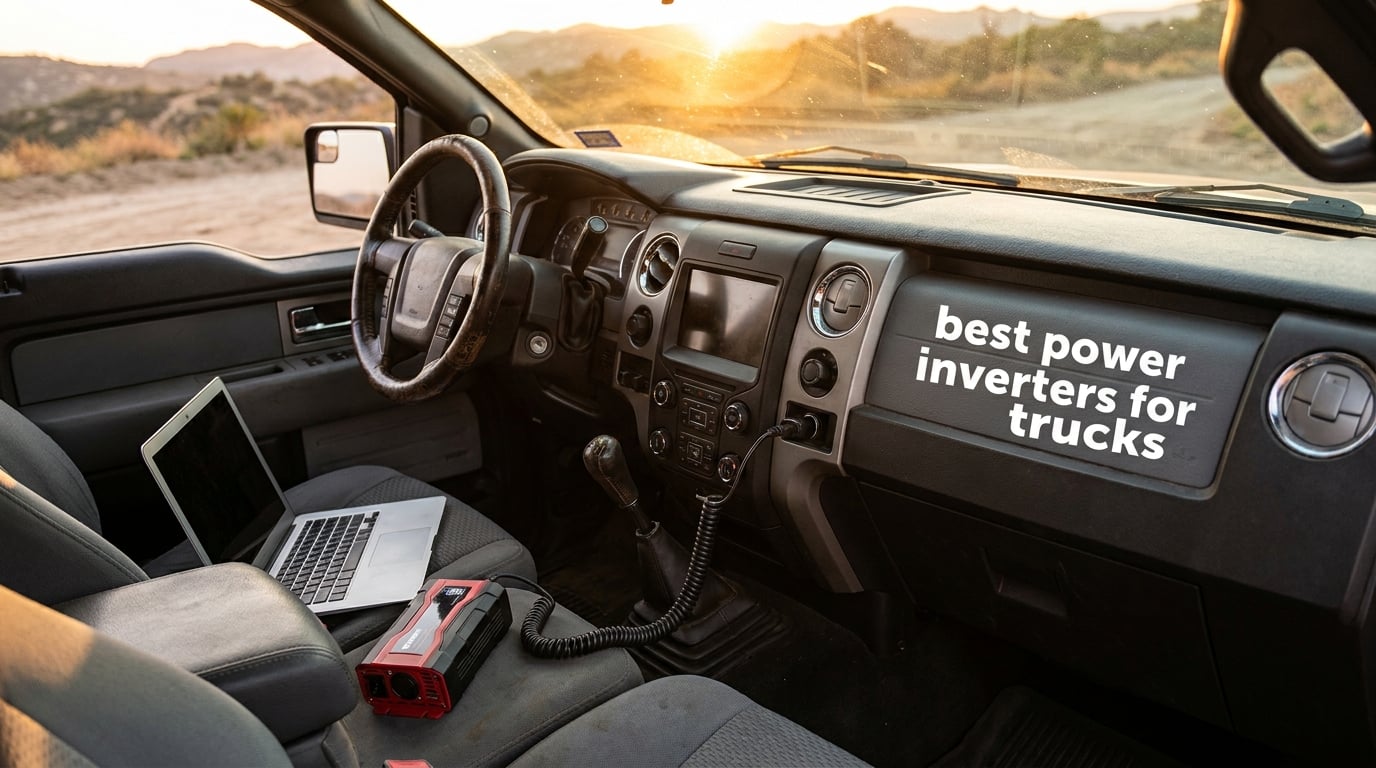
A truck cab is a rolling office, a lunchroom, and a job-site power station all at once — but none of that works without 110V AC. That is exactly the gap the best power inverters for trucks fill: they convert your 12V battery power into standard wall outlet current so you can charge a laptop between deliveries, run a heated blanket in a sleeper cab, or top off a drill battery without hunting for a job-site outlet.
The catch is that trucks are harder on inverters than cars. Cigarette lighter sockets are usually fused around 10–15 amps, which caps real-world output near 150W no matter what the box claims. Sensitive electronics hate dirty waveforms. And a 1000W draw on an idling engine can pull a battery flat in under an hour. So we sorted eight of the most-reviewed 12V truck inverters on the market by what they actually do well — not by the peak wattage printed on the label — and matched each one to a specific job, from a pocket-sized unit for phone charging to a 750W continuous workhorse with alligator clamps.
Table of Contents
Best Power Inverters for Trucks at a Glance
- Best overall: BESTEK 300W Power Inverter — 300W continuous, two outlets, two 4.8A USB ports
- Best for work trucks: BESTEK 500W with battery clamps — direct-to-battery power for tools and chargers
- Best pure sine wave: BESTEK 300W Pure Sine Wave — clean power for medical and sensitive gear
- Best high wattage: TWING 1000W — 750W continuous with a digital display
- Best budget: FOVAL 150W — credit-card sized and the lightest pick here
Key Takeaways
- Size your inverter to continuous watts, not peak watts, then add 20% headroom for startup surge.
- Anything above roughly 150W needs a direct battery connection with alligator clamps or ring terminals — the cigarette lighter socket cannot safely deliver more.
- Pure sine wave costs more but is the safe choice for CPAP machines, drone chargers, camera batteries, and anything with a motor or microprocessor.
- Run the engine when you are pulling more than about 200W for an extended period, or you risk a no-start situation.
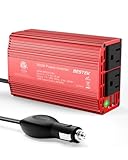
BESTEK 300W Power Inverter
- 300W continuous with 700W peak
- 2 AC outlets and 2x 4.8A USB ports
- Ultra compact iPhone-sized design
- 5-year warranty and ETL certified
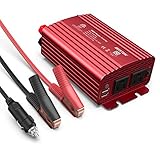
BESTEK 500W Power Inverter with Battery…
- 500W continuous with 1000W peak
- Alligator battery clamps and cigarette lighter plug included
- Built-in 2x 40A fuse protection
- ETL listed with 18-month warranty

BESTEK 300W Pure Sine Wave Power Inverter
- 300W pure sine wave output with 700W peak
- 2 AC outlets and 2x 4.8A USB ports
- Compatible with 11-17V including Tesla
- ETL RoHS and FCC certified
Truck Power Inverter Comparison Chart
| Product | Specifications | Action |
|---|---|---|
| BESTEK 300W Power Inverter |
|
Check Price |
| BESTEK 500W Power Inverter with Battery Clamps |
|
Check Price |
| BESTEK 300W Pure Sine Wave Power Inverter |
|
Check Price |
 TWING 1000W Car Power Inverter TWING 1000W Car Power Inverter |
|
Check Price |
 FOVAL 150W Car Power Inverter FOVAL 150W Car Power Inverter |
|
Check Price |
 BESTEK 300W Car Power Inverter with USB-C BESTEK 300W Car Power Inverter with USB-C |
|
Check Price |
 BESTEK 200W Cup Holder Power Inverter BESTEK 200W Cup Holder Power Inverter |
|
Check Price |
 BESTEK 150W Power Inverter with PD 30W BESTEK 150W Power Inverter with PD 30W |
|
Check Price |
1. BESTEK 300W Power Inverter — Best Overall for Trucks
- Compact phone-sized footprint fits any cab
- Dual 4.8A USB ports charge fast
- Durable aerospace aluminum housing sheds heat
- Quiet cooling fan
- 5-year warranty and ETL certified
- Modified sine wave not ideal for sensitive electronics
- Cigarette lighter connection caps real output near 150W
- Internal fuses require disassembly to replace

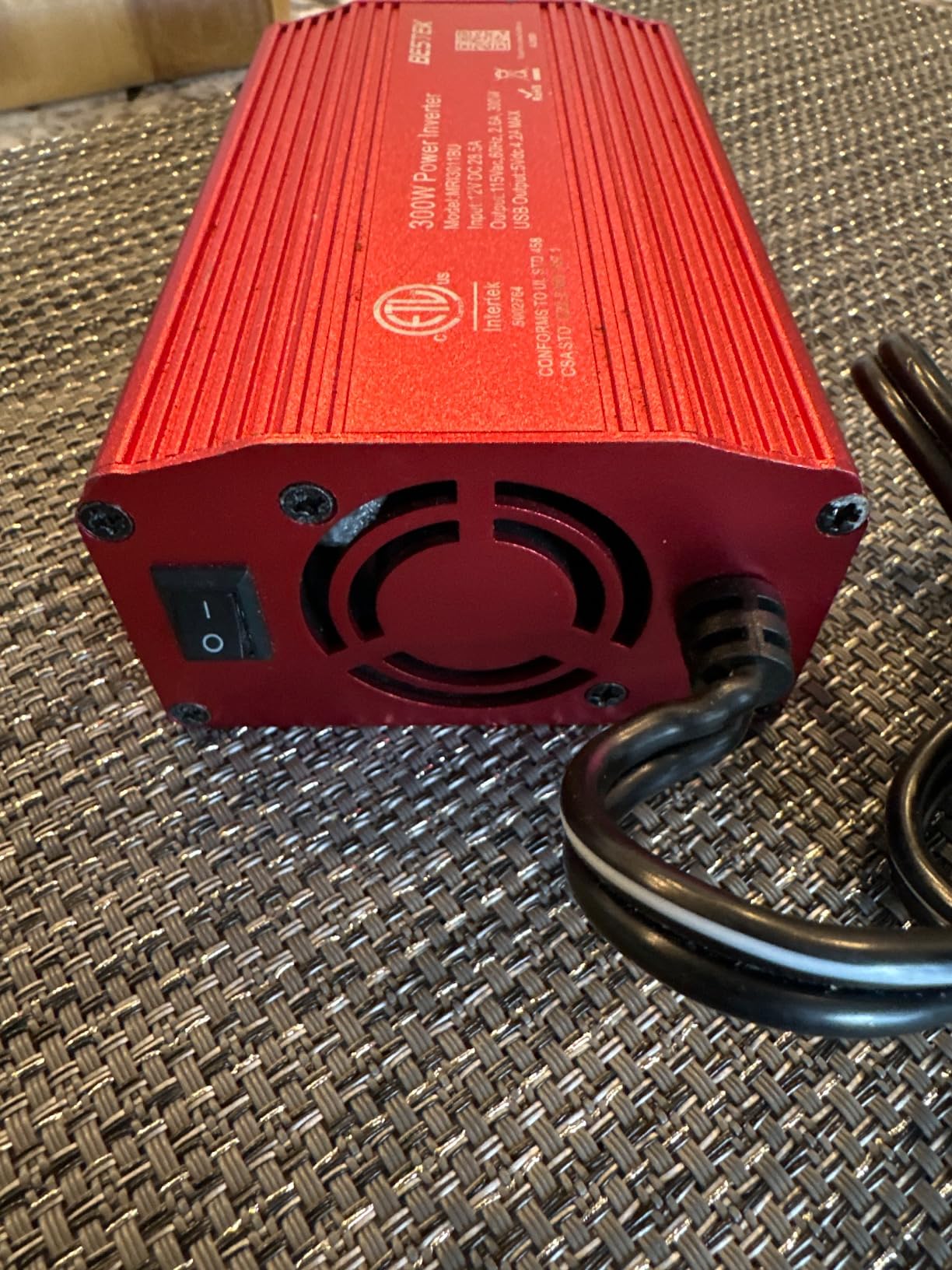
With nearly 34,000 ratings and a 4.5-star average, this is the truck power inverter most drivers end up owning. It puts 300W of continuous power (700W peak) through two three-prong AC outlets and adds two 4.8A USB ports, which is enough to run a laptop charger and a cooler fan while keeping two phones topped off. The aerospace-grade aluminum housing doubles as a heat sink, and the cooling fan is quiet enough that it disappears under road noise.
Why It Works in a Truck
The 12–17V input range is the underrated feature here. Truck electrical systems spike well above 12V when the alternator is charging hard, and many cheap inverters shut down or fail when that happens. This one tolerates it, which is also why it works in newer 16V-socket vehicles. At 14.4 ounces it can hang from the plug lead without stressing the socket, and the built-in 40A fuse plus over-voltage, over-load, and over-temperature protection means it shuts itself down rather than taking your dash fuse with it.
Pros and Cons
Pros
- Compact, phone-sized footprint fits any cab
- Dual 4.8A USB ports charge fast
- Durable aluminum housing sheds heat well
- Quiet cooling fan
- Wide 11–17V compatibility
- 5-year warranty and ETL certified
Cons
- Modified sine wave is not ideal for sensitive electronics
- Cigarette lighter connection caps real output near 150W
- Internal fuses require disassembly to replace
Key Specs
- Output: 300W continuous / 700W peak
- Input: 12–17V DC
- Outlets: 2 AC + 2 USB (4.8A)
- Waveform: Modified sine wave
- Size / weight: 4.8″ x 3.1″ x 1.9″ / 14.4 oz
Who should buy it: Drivers who want one inverter that handles laptops, camera batteries, small fans, and phone charging without any wiring work.
2. BESTEK 500W Power Inverter with Battery Clamps — Best for Work Trucks and Tools
BESTEK 500W Power Inverter with Alligator Battery Clamps
- 500W continuous handles real tool loads
- Alligator clamps included for full rated output
- Spare 40A fuses in the box
- Quiet fan and solid build quality
- ETL listed with 18-month warranty
- Modified sine wave limits use with sensitive gear
- Clamp cables are only 24 inches
- Packaging offers little protection in transit
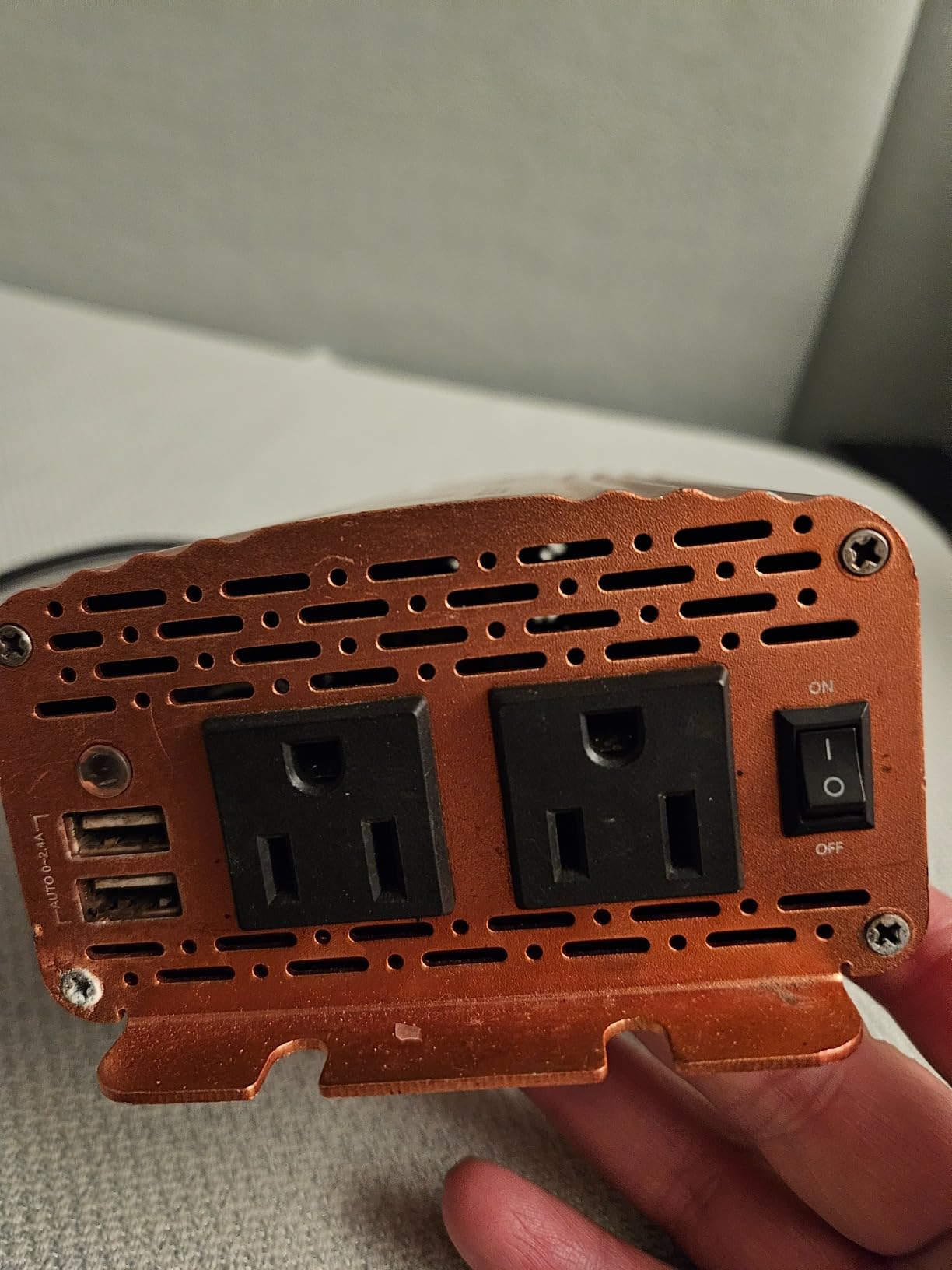
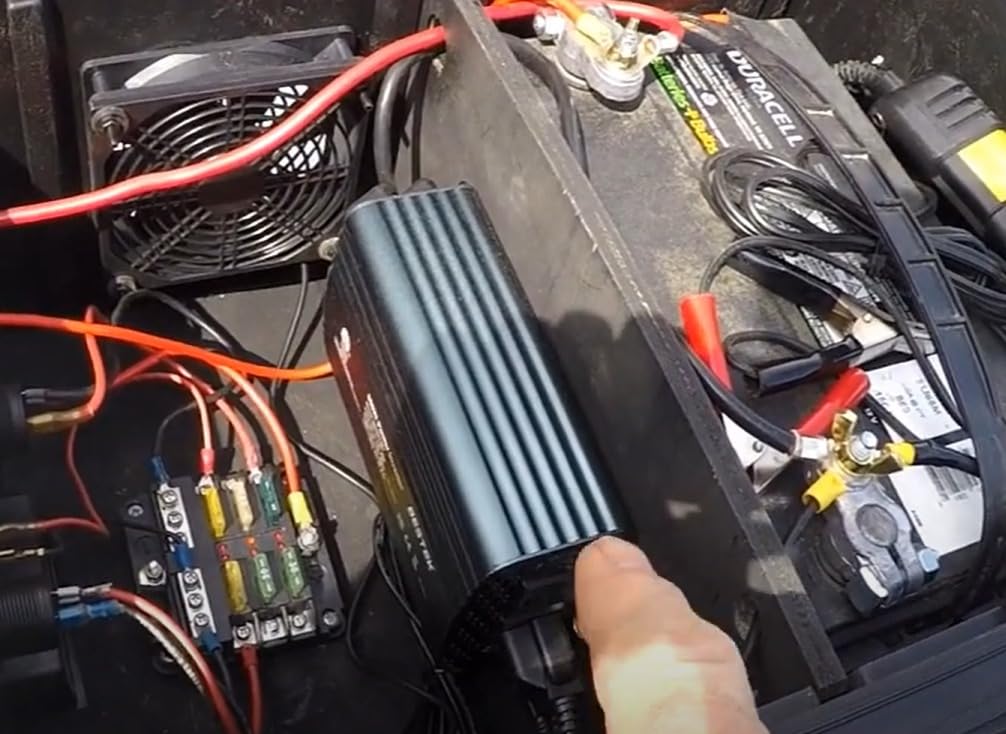
This is the highest-rated inverter in the lineup at 4.6 stars, and it is the one we would put in a contractor’s pickup. The 500W continuous rating (1000W peak) is enough for a tool battery charger, a work light, a small heat gun, or a laptop plus a job-site radio, and BESTEK includes both a cigarette lighter plug and alligator battery clamps so you can choose your connection based on the load.
Why It Works in a Truck
Direct battery connection is the whole story. Clip onto the terminals and the inverter can actually deliver its rated 500W instead of being throttled to the ~150W a lighter socket allows. Two 40A fuses sit inline for protection, and BESTEK ships spares — a small thing that matters when a surge blows one in a parking lot at 6 a.m. The fan is noticeably quiet for a unit this size, and the no-load draw of 0.42A is low enough that you can leave it connected between jobs without worrying much about parasitic drain (though we still recommend unplugging overnight).
Pros and Cons
Pros
- 500W continuous handles real tool loads
- Alligator clamps included for full output
- Spare 40A fuses in the box
- Quiet fan and solid build quality
- ETL listed with 18-month warranty and 24/7 support
Cons
- Modified sine wave limits use with sensitive gear
- Clamp cables are only 24 inches
- Packaging offers little protection in transit
Key Specs
- Output: 500W continuous / 1000W peak
- Input: 12V DC
- Outlets: 2 AC + 2 USB
- Waveform: Modified sine wave
- Size / weight: 7.28″ x 4.33″ x 2.44″ / 2.3 lbs
Who should buy it: Tradespeople and work truck owners who need to charge tool batteries and run corded equipment away from shore power. If you like this style of modified sine wave inverter, it is worth seeing how larger models compare.
3. BESTEK 300W Pure Sine Wave Inverter — Best Pure Sine Wave Inverter for Trucks
- Verified true pure sine wave output
- Clean 60Hz frequency and strong voltage regulation
- Safe for medical devices and drone chargers
- Works with 11-17V systems including Tesla
- ETL RoHS and FCC certified
- Internal fuses are soldered in
- Power cord is not detachable
- Costs more than modified sine alternatives
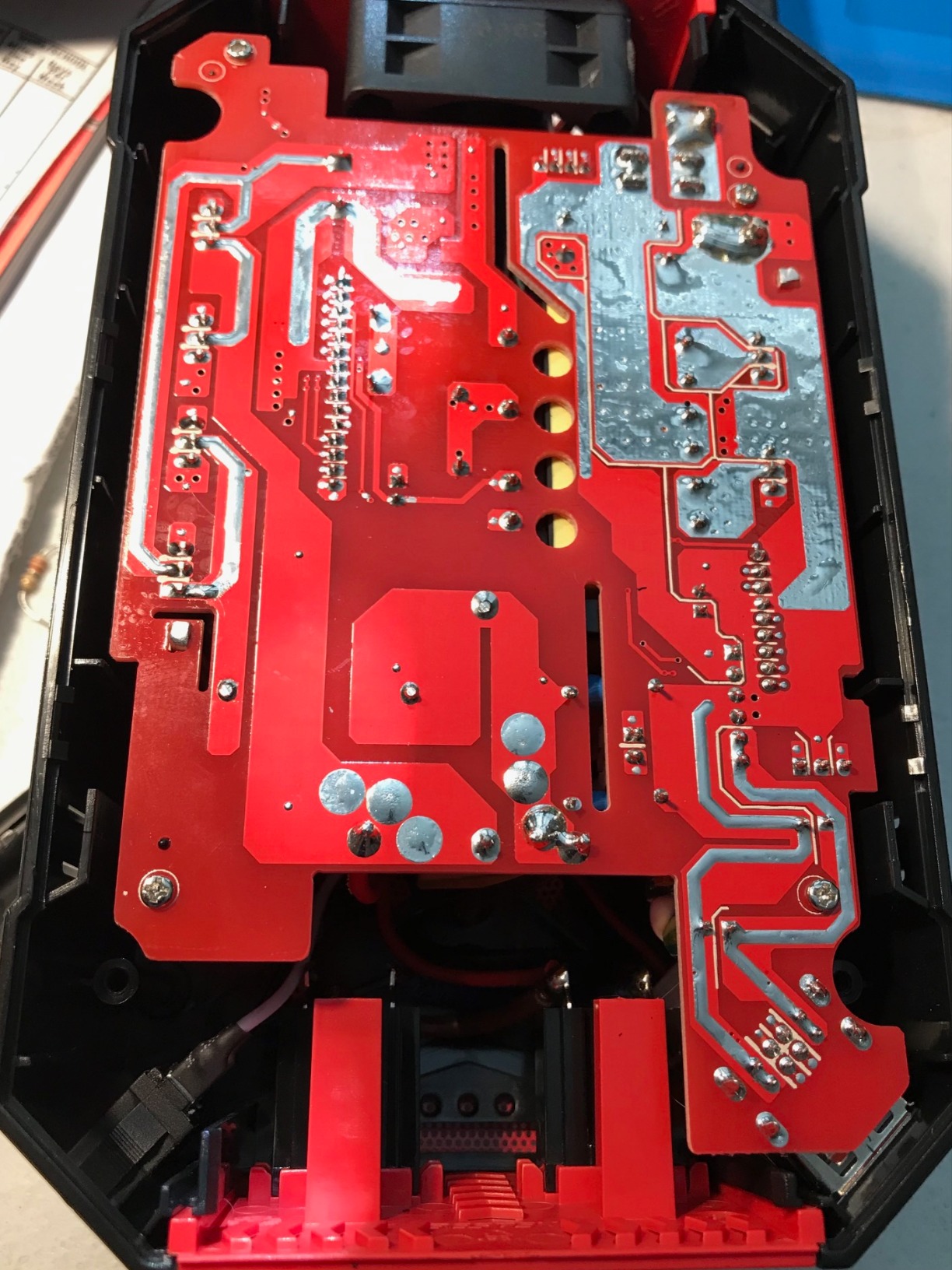
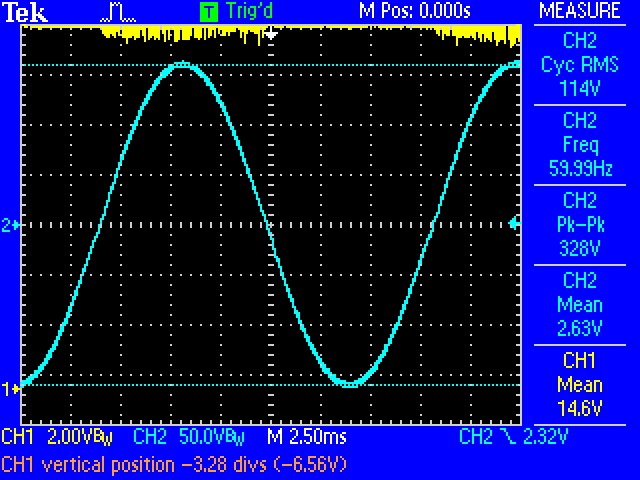
Modified sine wave is fine for a phone brick. It is not fine for a CPAP humidifier, a DJI battery charger, or a laptop with a finicky power supply. This BESTEK model produces true pure sine wave output, and reviewers with test equipment have confirmed a clean 59.99Hz waveform with excellent voltage regulation under load — the kind of validation you rarely get in this price bracket.
Why It Works in a Truck
Sleeper cab drivers running medical equipment simply cannot use a cheap inverter, and this is the least expensive way to get genuinely clean power in a 12V truck. It carries the same wide 11–17V input range as the flagship model, two AC outlets, two 4.8A USB ports, and a 40A fuse, plus ETL, RoHS, and FCC certification. It is bigger than the modified sine models at 8.1 inches long, so plan a spot for it on the floor or in a console rather than dangling from the socket.
Pros and Cons
Pros
- Verified true pure sine wave output
- Clean 60Hz frequency and strong voltage regulation
- Safe for medical devices, drone and camera chargers
- Works with 11–17V systems including newer EV sockets
- ETL, RoHS, and FCC certified
Cons
- Internal fuses are soldered in
- Cord is not detachable
- Costs more than modified sine alternatives
- Some RF interference on the AM band
Key Specs
- Output: 300W continuous / 700W peak
- Input: 12–17V DC
- Outlets: 2 AC + 2 USB (4.8A)
- Waveform: Pure sine wave
- Size / weight: 8.1″ x 5.3″ x 2.6″ / 1.4 lbs
Who should buy it: Anyone powering a CPAP, medical device, drone batteries, or audio gear from the cab. For higher-capacity options in the same category, see our guide to the best pure sine wave inverters.
4. TWING 1000W Car Power Inverter — Best High-Wattage Pick
- Highest power output in this lineup
- QC 3.0 and 30W USB-C PD charging
- Digital display shows voltage and load
- Clamp or cigarette lighter connection
- CE and FCC certified with impact-resistant ABS housing
- Included battery cables are only 18 inches
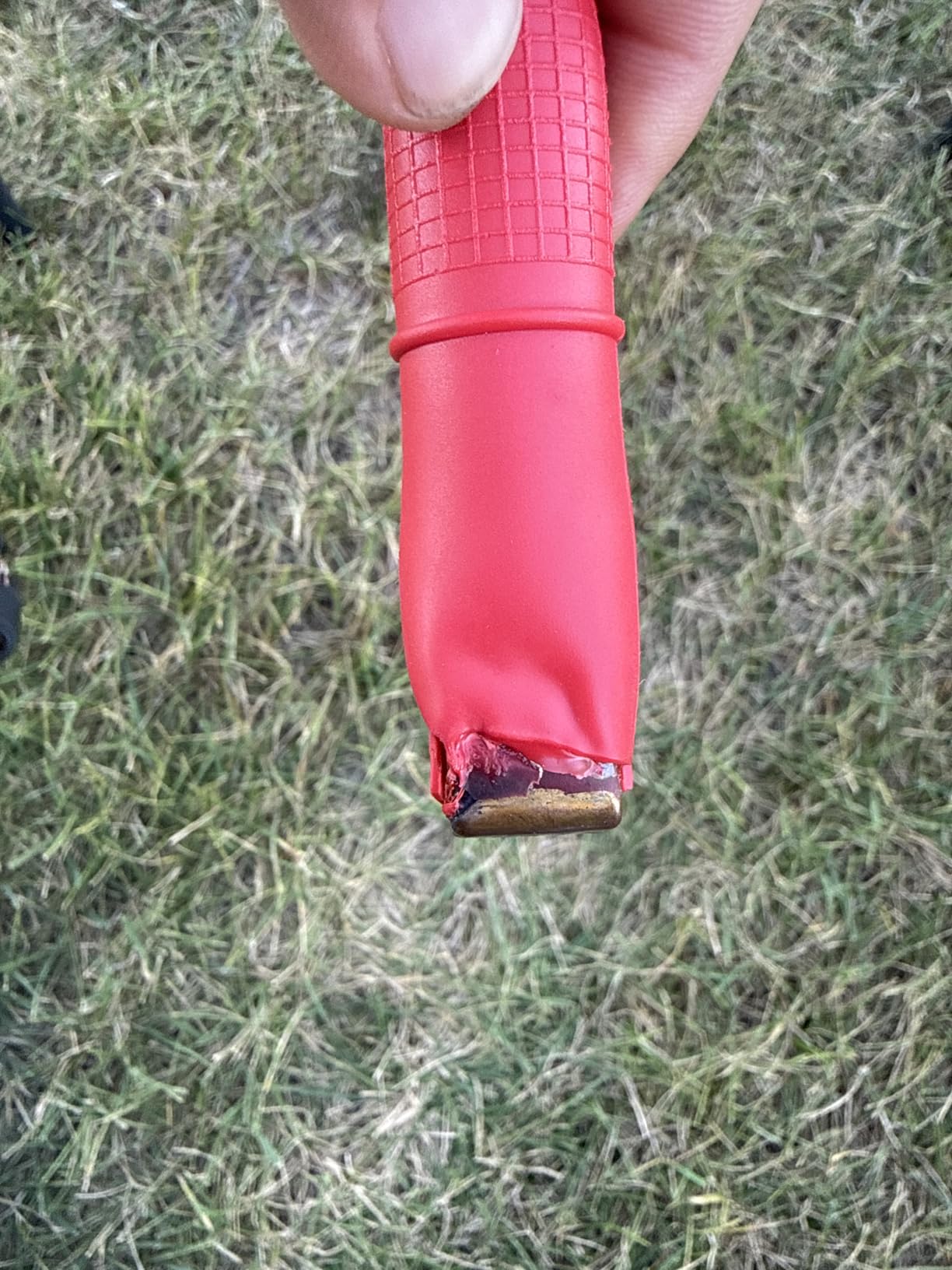
- Some reports of overheating under sustained load
- Requires a strong alternator to run at full output
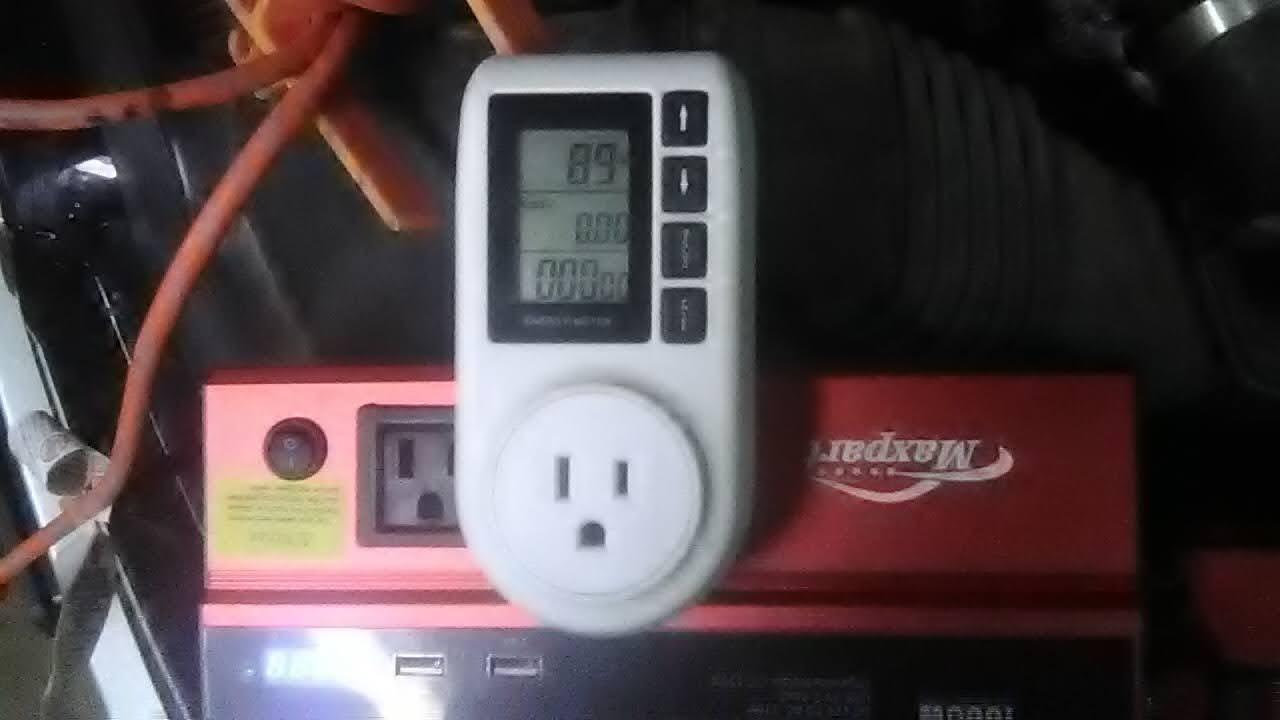
When you need more than 500W — a small microwave, a 12V fridge plus a laptop, or a coffee maker in a sleeper cab — the TWING is the highest-output unit here. It is rated 750W continuous with a 1000W peak, and it pairs that with a QC 3.0 USB-A port and a 30W USB-C PD port, so modern devices charge at full speed rather than trickling.
Why It Works in a Truck
The digital display is the feature that earns it a spot. On a heavy-duty inverter you want to see battery voltage sagging before you get stranded, and this one shows input voltage and load in real time. The ABS crashworthy housing survives being tossed behind a seat, and dual connection options let you clip to the battery for high loads or use the socket for light ones. Be honest about your electrical system, though: pulling 750W means roughly 70 amps from a 12V battery, which needs a healthy alternator and an idling engine.
Pros and Cons
Pros
- 750W continuous / 1000W peak, the most power here
- QC 3.0 and 30W USB-C PD charging
- Digital display for voltage and load monitoring
- Clamp or socket connection
- CE and FCC certified with impact-resistant housing
Cons
- Included battery cables are only 18 inches
- Cigarette lighter use still caps output near 150W
- Some reports of overheating under sustained load
- Higher 1-star review rate than the BESTEK models
- Demands a strong alternator
Key Specs
- Output: 750W continuous / 1000W peak
- Input: 12V DC
- Outlets: 2 AC + QC 3.0 USB-A + 30W USB-C
- Waveform: Modified sine wave
- Size / weight: 7.6″ x 4.1″ x 2.5″ / 3 lbs
Who should buy it: Semi truck and RV-style users with a stout charging system who need appliance-level wattage. Similar high-output builds show up in our best power inverters for RVs roundup.
5. FOVAL 150W Car Power Inverter — Best Budget Truck Inverter
- Credit card-sized and only 8 ounces
- Silent cooling fan
- Proven multi-year reliability in owner reviews
- Durable aluminum shell
- 2-year manufacturer warranty
- 150W ceiling rules out tools and appliances
- Housing warms up during long sessions
- Only one AC outlet
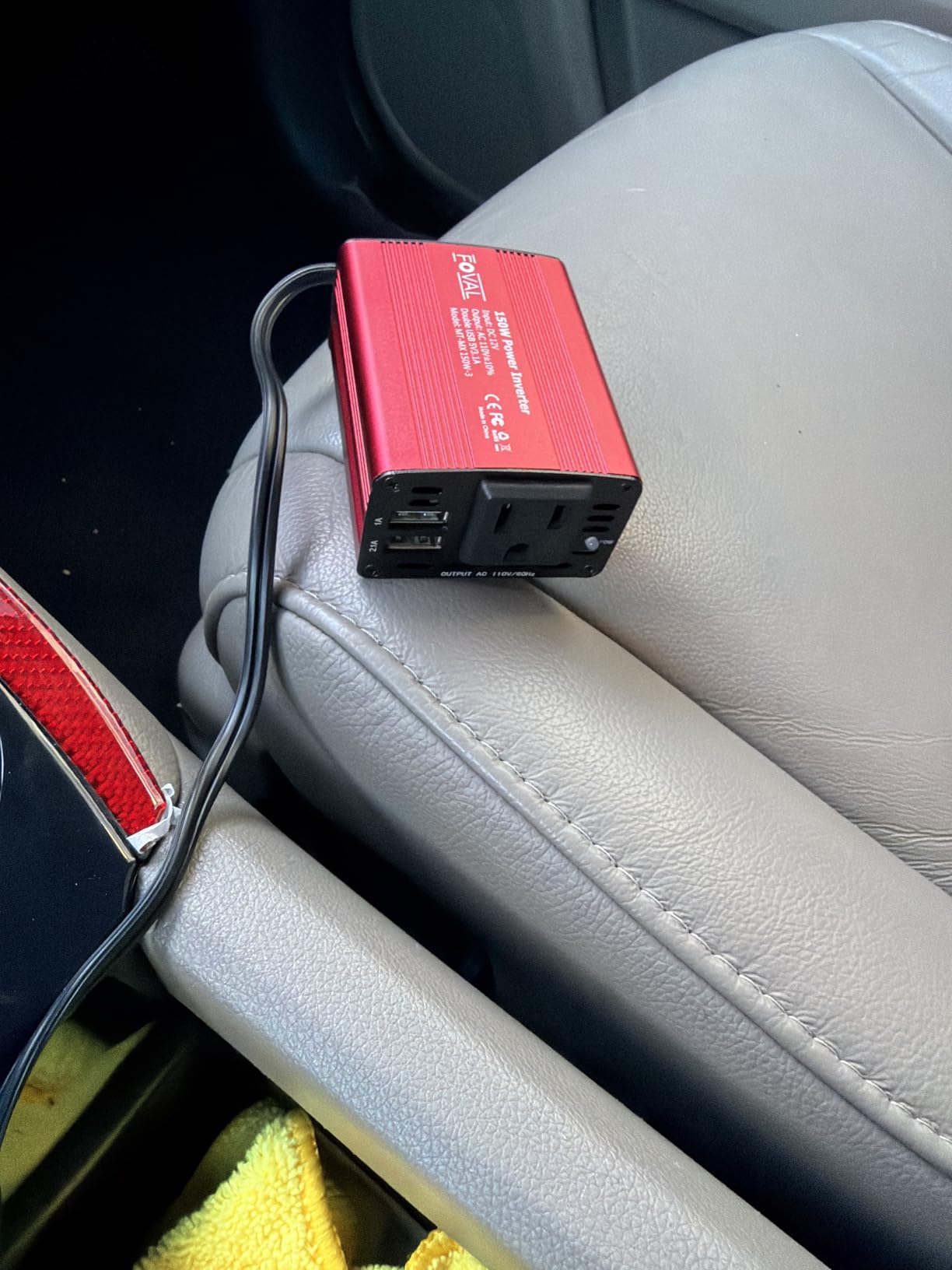
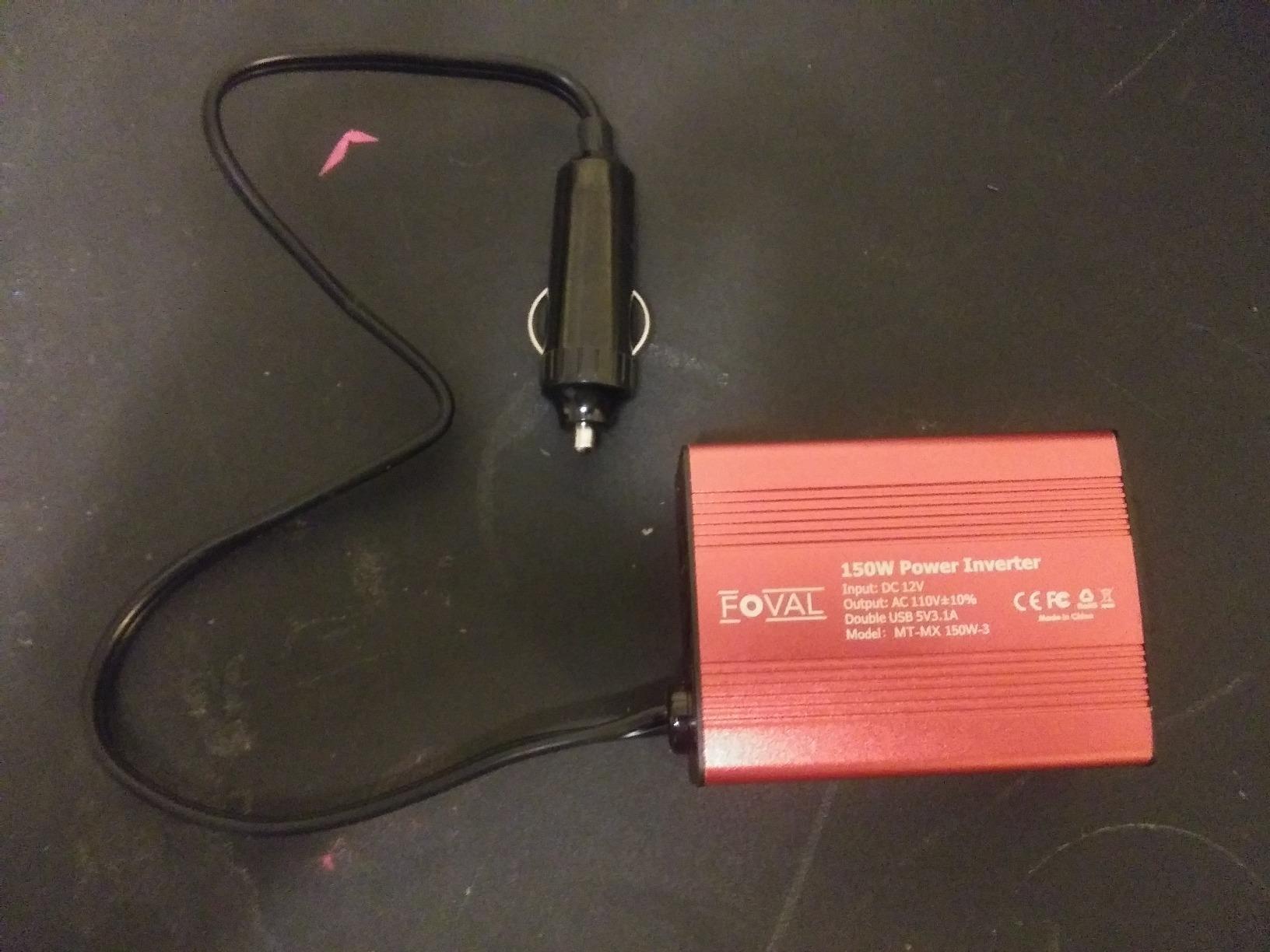
Backed by more than 31,000 ratings, the FOVAL is the easiest recommendation for drivers who just need a real outlet occasionally. It delivers 150W continuous (300W peak) through a single AC outlet plus 3.1A of shared USB output — plenty for a laptop charger, a tablet, a camera battery, or a small fan.
Why It Works in a Truck
Because 150W is exactly what a cigarette lighter socket can comfortably supply, this inverter is honest about its limits and never trips your dash fuse. The aluminum shell handles heat, the fan is genuinely silent, and multiple long-term reviewers report two-plus years of daily use without failure. Keep it in the glove box as a backup even if you run a larger inverter for tools.
Pros and Cons
Pros
- The most affordable pick in this lineup
- Credit-card-sized and only 8 ounces
- Silent cooling fan
- Proven multi-year reliability in reviews
- 2-year manufacturer warranty
Cons
- 150W ceiling rules out tools and appliances
- Housing warms up during long sessions
- Only one AC outlet
Key Specs
- Output: 150W continuous / 300W peak
- Input: 12V DC
- Outlets: 1 AC + dual USB (3.1A)
- Waveform: Modified sine wave
- Size / weight: 3.2″ x 2.5″ x 1.5″ / 8 oz
Who should buy it: Commuters, rideshare drivers, and anyone who wants a cheap, dependable outlet for laptops and phones.
6. BESTEK 300W Inverter with 30W USB-C — Best for Laptops and Fast Charging
- 30W USB-C PD charges laptops and phones fast
- 18W Quick Charge USB-A for Android
- Wide 11-17V input covers Tesla Model Y sockets
- Compact cool-running aluminum housing
- UL certified with 18-month warranty
- Alligator clamps are not included
- Modified sine wave output
- Socket connection limits sustained wattage
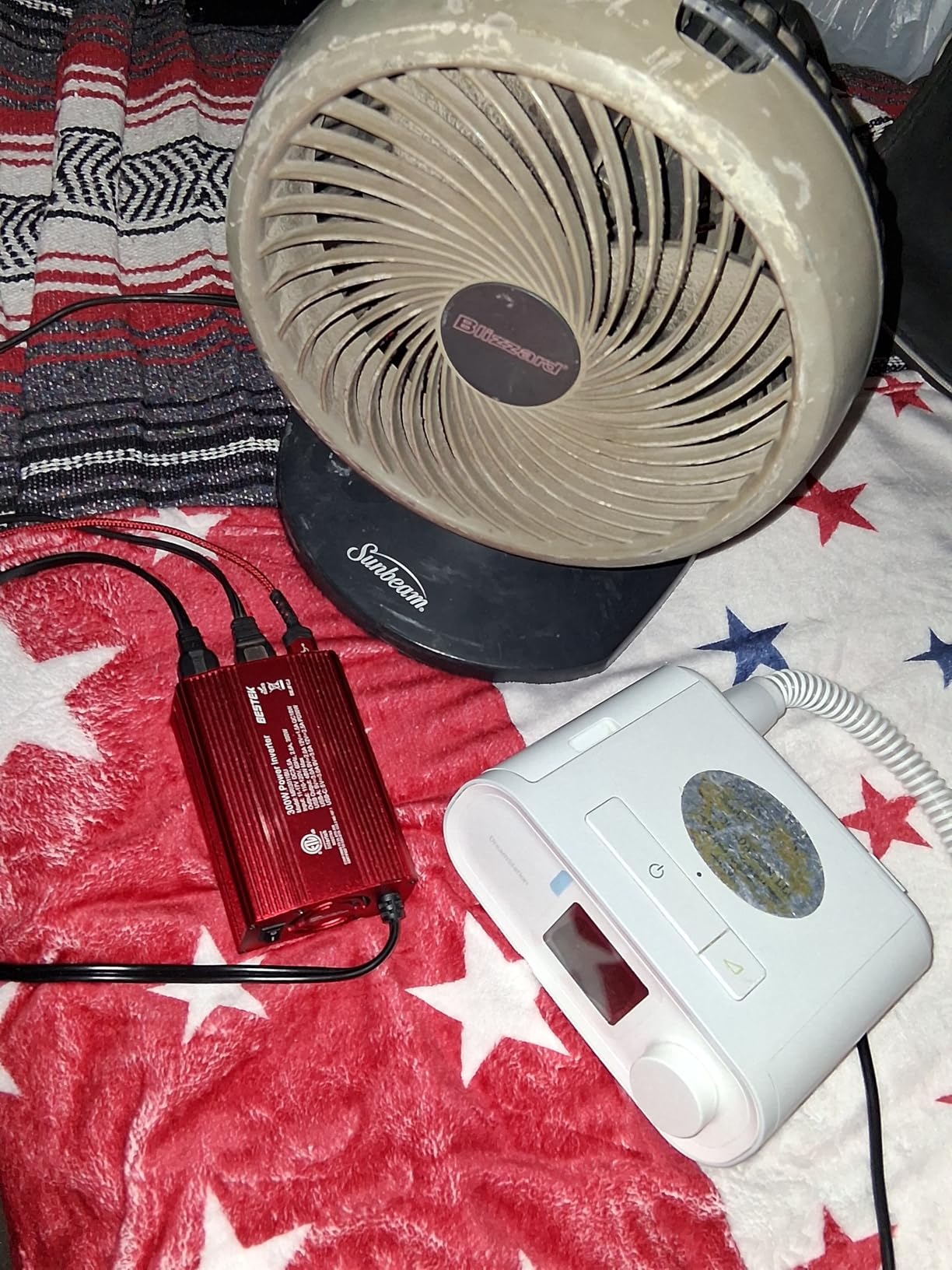
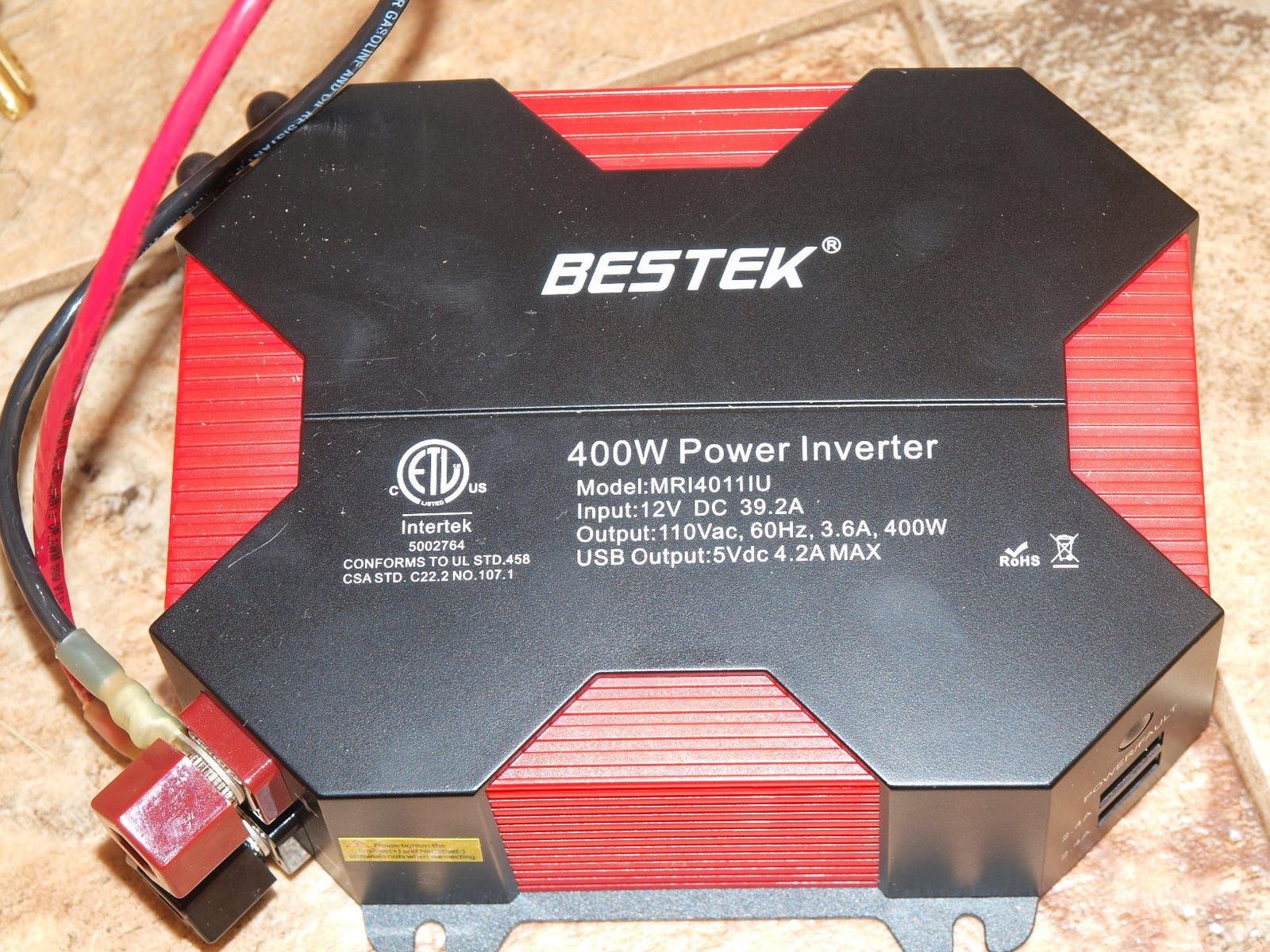
This is the flagship 300W design updated for how people actually charge in 2026. Alongside the two AC outlets you get a 30W USB-C Power Delivery port and an 18W Quick Charge USB-A port — enough to fast-charge an iPhone, a Switch, or a USB-C laptop directly, skipping the wall brick entirely and reducing conversion losses.
Why It Works in a Truck
Dropping the AC adapter from the chain matters more than it sounds. Every conversion step wastes battery, so charging a laptop over USB-C PD pulls noticeably less from the truck battery than routing through a 110V brick. The 11–17V input range covers modern high-voltage sockets (including Tesla Model Y’s 16V outlet), the aluminum body stays cool, and BESTEK’s design patent housing keeps it compact enough for a console cubby. Note that alligator clamps are not included, so treat this as a socket-powered unit.
Pros and Cons
Pros
- 30W USB-C PD charges laptops and phones fast
- 18W Quick Charge USB-A for Android
- Two AC outlets plus wide 11–17V input
- Compact, cool-running aluminum housing
- 18-month warranty and UL certified
Cons
- No battery clamps in the box
- Modified sine wave output
- Socket connection limits sustained wattage
Key Specs
- Output: 300W continuous / 700W peak
- Input: 11–17V DC
- Outlets: 2 AC + 30W USB-C + 18W USB-A
- Waveform: Modified sine wave
- Size: 4.2″ x 3.1″ x 1.8″
Who should buy it: Mobile professionals who live on a laptop and phone and want fast charging without carrying a bag of adapters.
7. BESTEK 200W Cup Holder Inverter — Best Cab-Friendly Design
- Cup holder form factor keeps the cab tidy
- 12V pass-through socket preserves your outlet
- 30W USB-C PD and 18W USB-A fast charging
- Removable cord and dust-proof flip lid
- ETL certified with a 25A fuse
- AC outlets are spaced too tightly for two large plugs
- Wobbles in oversized cup holders
- Modified sine wave output
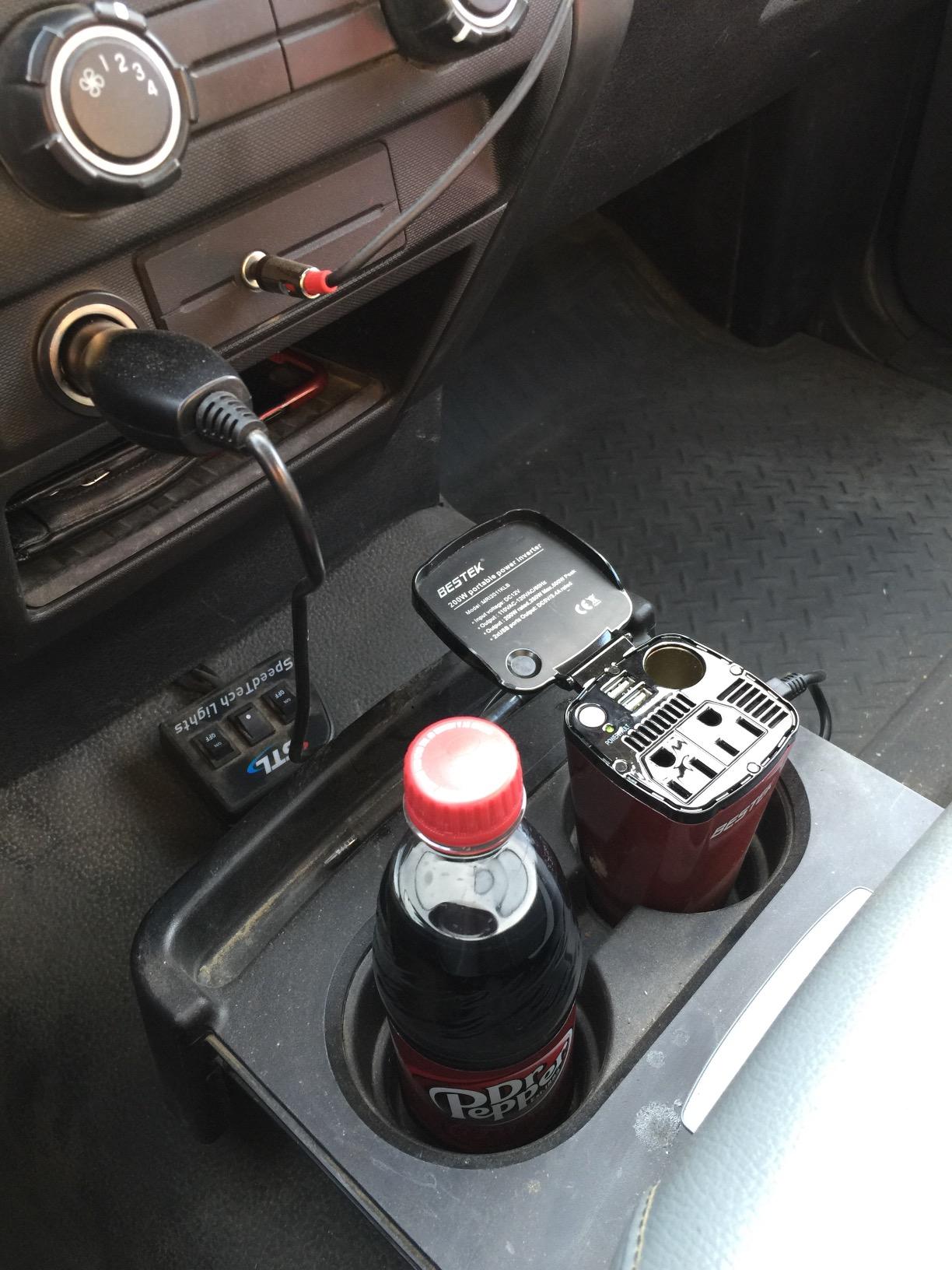
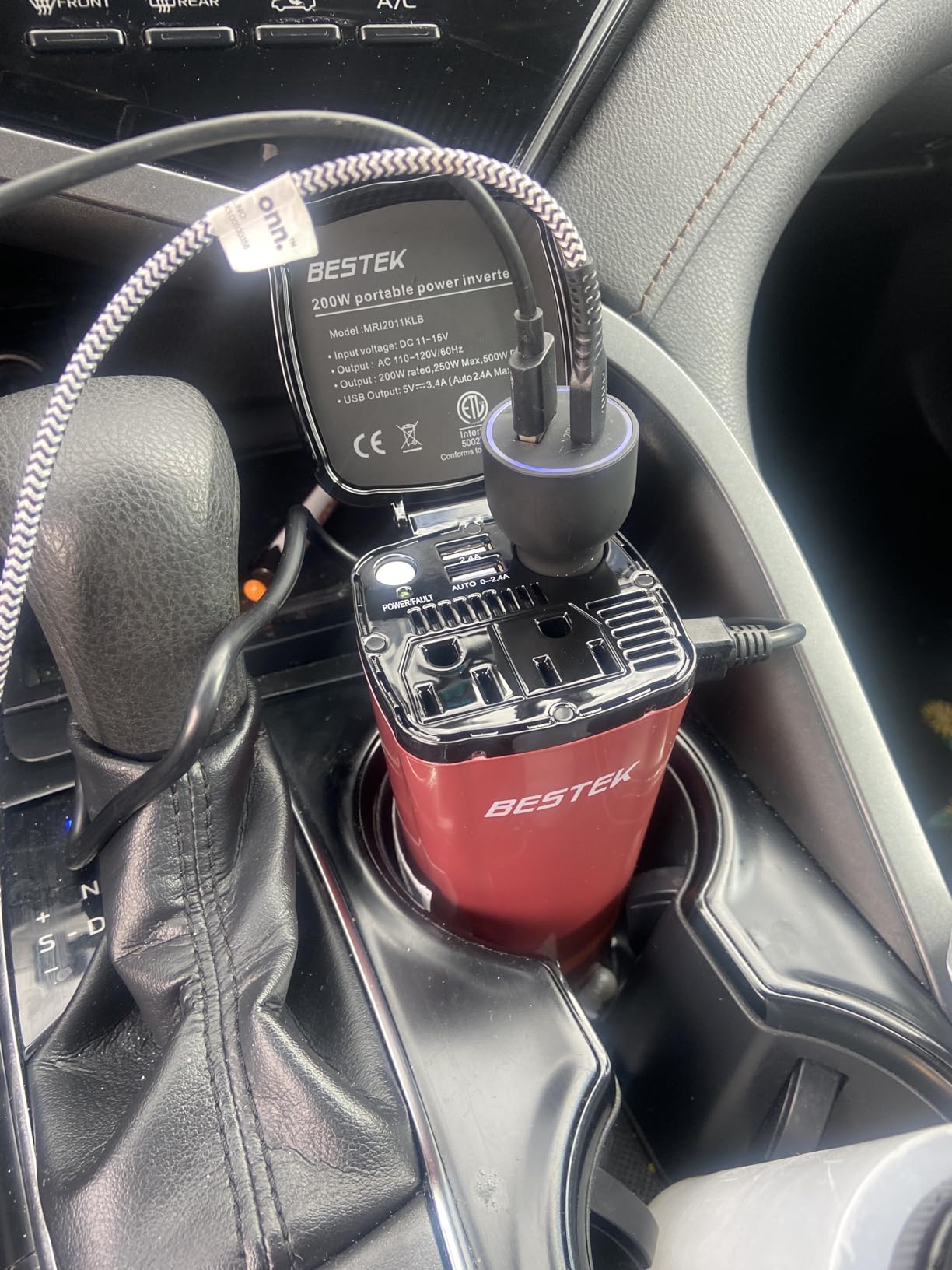
Cab clutter is a real problem in a truck, and this 200W unit solves it by living in a cup holder instead of sliding around the passenger seat. It is a genuine 5-in-1: two AC outlets, a 30W USB-C PD port, an 18W USB-A Quick Charge port, and a 12V pass-through socket so you do not lose your only lighter plug to the inverter.
Why It Works in a Truck
The pass-through socket is the standout. Most inverters occupy your single 12V outlet; this one gives it back, so your dash cam or tire inflator still has a home. The removable power cord makes storage tidy, the flip lid protects the ports from the dust that gets into every work truck, and 200W continuous covers laptops, small fans, and chargers. Two caveats: the AC outlets sit close together, so bulky plugs will fight each other, and it can wobble in oversized cup holders.
Pros and Cons
Pros
- Cup holder form factor keeps the cab tidy
- 12V pass-through socket preserves your outlet
- 30W USB-C PD and 18W USB-A fast charging
- Removable cord and dust-proof flip lid
- ETL certified with a 25A fuse
Cons
- AC outlets are spaced too tightly for two large plugs
- Wobbles in wide cup holders
- Modified sine wave output
Key Specs
- Output: 200W continuous / 500W peak
- Input: 11–17V DC
- Outlets: 2 AC + USB-C + USB-A + 12V pass-through
- Waveform: Modified sine wave
- Weight: 0.97 lbs
Who should buy it: Drivers with limited dash space who want one tidy device handling every charging need.
8. BESTEK 150W Inverter with PD 30W — Best for Tight Dash Spaces
- Rotatable 90-degree plug fits awkward socket locations
- 30W USB-C PD charges up to 6x faster than 2.4A
- Independent USB ports maintain full output
- Smart variable-speed cooling fan
- ETL certified with 18-month replacement warranty
- 150W limits it to small electronics
- Only one AC outlet
- Modified sine wave output
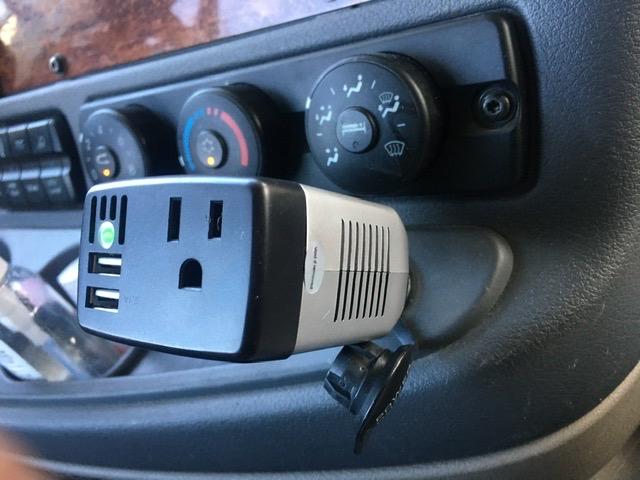
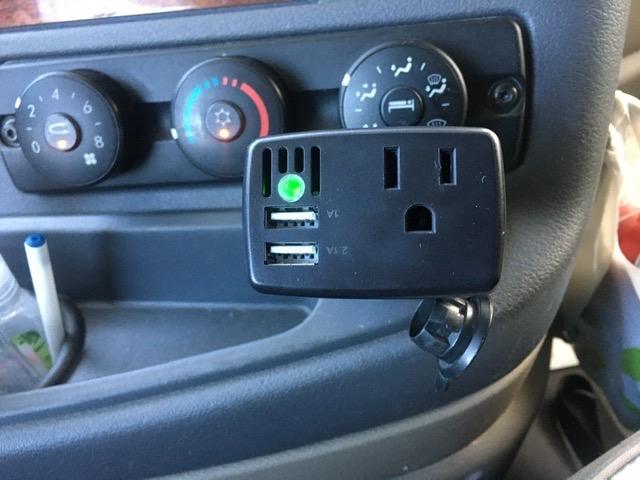
Some truck 12V sockets are tucked under the dash, behind the shifter, or inside a center console where a straight inverter body simply will not fit. This 150W BESTEK solves that with a rotatable cigarette lighter plug that pivots 90 degrees, letting the unit lie flat against the trim. Output is modest, but the charging tech is current: 30W USB-C PD and 18W USB-A QC, 48W total.
Why It Works in a Truck
The independent USB architecture matters if you charge two devices at once — using both ports does not throttle either one, which is not true of many budget chargers. Add ETL certification, a variable-speed smart fan, and an 18-month replacement warranty, and it becomes a reliable everyday charging station for the cab. Just do not expect it to run tools; 150W is a phone-and-laptop budget.
Pros and Cons
Pros
- Rotatable plug fits awkward socket locations
- 30W USB-C PD charges up to 6x faster than 2.4A
- Independent USB ports maintain full output
- Smart variable-speed cooling fan
- ETL certified with 18-month replacement warranty
Cons
- 150W limits it to small electronics
- Only one AC outlet
- Modified sine wave output
Key Specs
- Output: 150W continuous / 300W peak
- Input: 12V DC
- Outlets: 1 AC + 30W USB-C + 18W USB-A
- Waveform: Modified sine wave
- Size: 5.5″ x 2.56″ x 1.5″
Who should buy it: Drivers with hard-to-reach 12V sockets who mainly need fast device charging.
How to Choose the Best Power Inverter for Your Truck
What Size Power Inverter Do I Need for My Truck?
Add up the continuous wattage of everything you will run at the same time, then add about 20% headroom for startup surge. A laptop charger is 45–100W, a CPAP is 30–90W, a 12V fridge is 45–60W, a tool battery charger is 100–200W, and a 700W microwave actually draws closer to 1,000W. That math usually lands truck owners in one of three tiers:
- 150–300W: Phones, tablets, laptops, camera batteries, small fans. Runs off the 12V socket.
- 500–750W: Tool battery chargers, work lights, small appliances. Requires direct battery wiring.
- 1,000W and up: Microwaves, coffee makers, sleeper-cab appliances. Requires heavy-gauge cable, an inline fuse, and often an auxiliary battery.
Remember that peak or surge wattage is a two-second rating for motor startup, not a number you can run continuously. Buy on the continuous figure every time.
Pure Sine Wave vs. Modified Sine Wave
Modified sine wave inverters approximate AC power with a stepped square wave. They are cheaper and perfectly fine for resistive loads, simple chargers, and most laptop bricks. Pure sine wave inverters produce the smooth waveform utility power delivers, which is what medical equipment, variable-speed motors, microprocessor-controlled chargers, and audio gear need to run cool and quiet. If you hear buzzing, see a device run hot, or a charger refuses to engage, the waveform is usually the culprit. When in doubt for medical or expensive electronics, go pure sine.
Cigarette Lighter vs. Direct Battery Connection
This is the single most misunderstood spec in the category. A 12V accessory socket is typically fused at 10–15 amps, which works out to roughly 120–180 watts before the fuse blows — regardless of whether your inverter says 300W or 1000W on the label. Anything above about 150W of sustained draw needs alligator clamps or a hardwired connection with appropriately sized cable and an inline fuse within 18 inches of the battery terminal. Undersized wire is a fire risk, not just an efficiency problem.
Safety Features That Actually Matter
Look for ETL or UL certification, a replaceable external fuse, low-voltage shutdown (protects your ability to start the truck), over-temperature shutdown, overload protection, and short-circuit protection. A variable-speed fan is worth having too: fans that run constantly are noisy on long hauls, while fans that never run mean heat is building up somewhere. Ground the chassis on any hardwired install.
Installation Tips for Truck Owners
- Mount the inverter where air can move around it — never inside a sealed console or under a blanket.
- Keep DC cable runs short; voltage drop on the 12V side is what kills performance.
- Fuse the positive lead as close to the battery as possible.
- Run the engine for loads above roughly 200W, and check voltage periodically if your inverter has a display.
- Disconnect when parked overnight — even a 0.4A no-load draw adds up over a weekend.
If your power needs are outgrowing the cab entirely, a fixed installation with a charger and transfer switch may make more sense; our guides to the best hybrid inverters and the best power inverters for homes cover those larger systems.
How We Chose These Truck Power Inverters
We started with the highest-volume 12V inverters sold for automotive use and filtered for units with meaningful review histories — every pick here has at least 3,200 verified ratings, and the lineup represents more than 94,000 combined reviews. From there we weighted four things: honest continuous wattage ratings, connection type (socket versus clamps), waveform quality relative to price, and safety certification. We read through long-term review patterns for recurring failure modes, which is how the TWING’s cable length and heat complaints and BESTEK’s soldered-fuse limitation surfaced. Products with strong specs but thin or inconsistent review histories were excluded, and each remaining pick was matched to one clear truck use case rather than stacked against a generic “best” ranking.
Frequently Asked Questions
What is the best heavy-duty power inverter for trucks?
For most work trucks, the BESTEK 500W with alligator clamps is the sweet spot u0026mdash; it delivers real 500W continuous output for tool chargers and work lights and carries the highest rating in this lineup at 4.6 stars. If you need appliance-level power in a sleeper cab, step up to the TWING 1000W with its 750W continuous rating, but only if your alternator and battery bank can support roughly 70 amps of draw.
What size power inverter do I need for my truck?
Total your simultaneous continuous loads and add 20%. Phones and laptops need 150u0026ndash;300W, tool battery chargers and work lights need 500u0026ndash;750W, and microwaves or coffee makers need 1,000W or more. Sizing far above your actual need wastes money and increases no-load battery drain.
What is the largest power inverter suitable for a truck?
A standard pickup with a stock alternator and single battery tops out around 1,000u0026ndash;1,500W for short bursts with the engine running. Semi trucks and upfitted work trucks with dual batteries or an auxiliary bank can support 2,000u0026ndash;3,000W, but that requires hardwired 2/0 cable, a properly sized fuse, and often a second alternator. The largest unit in this roundup, the TWING, peaks at 1,000W.
Which brand of power inverter is considered the best?
In the compact 12V category, BESTEK dominates on review volume and consistency u0026mdash; six of our eight picks are BESTEK models, spanning modified and pure sine wave designs with ETL or UL certification. FOVAL is the value leader in the compact tier. For hardwired high-output systems above 2,000W, brands like AIMS Power, Renogy, and Victron are more common.
Can a power inverter damage my truck battery?
Not directly, but repeatedly discharging a starting battery below about 50% will shorten its life significantly u0026mdash; starting batteries are built for short high-current bursts, not deep cycling. Use an inverter with low-voltage shutdown, run the engine during heavy loads, and consider a deep-cycle auxiliary battery if you regularly draw power with the engine off.
How do I install a power inverter in my truck?
Under 150W, just plug into the 12V socket. Above that, connect directly to the battery: run appropriately gauged positive and negative cables, install an inline fuse within 18 inches of the positive terminal, mount the inverter in a ventilated spot away from moisture, and ground the chassis. Disconnect the negative terminal before wiring, and if you are pulling 1,000W or more, have a professional size the cable for you.
Can I run power tools off a truck inverter?
Battery chargers for cordless tools run fine on a 500W inverter. Corded tools are harder because motors surge two to three times their rated draw on startup u0026mdash; a 700W circular saw can spike past 2,000W. Charging tool batteries in the truck and using them cordless is almost always the better strategy.
Do I need to run the engine while using an inverter?
For light loads under about 200W, a healthy battery will handle 30u0026ndash;60 minutes with the engine off. Above that, run the engine or you risk not starting. A 500W draw pulls roughly 45 amps from a 12V battery, which can flatten a typical starting battery in under an hour.
The Bottom Line
The best power inverters for trucks are the ones matched to the job rather than the biggest number on the box. For most drivers, the BESTEK 300W is the right answer: cheap, compact, proven across 33,000-plus reviews, and capable of everything a laptop-and-phone user needs. Work truck owners should spend the extra money on the BESTEK 500W with battery clamps to get real tool-charging capability, and anyone running a CPAP, drone batteries, or other sensitive gear should not compromise on the BESTEK 300W Pure Sine Wave model. Size it by continuous watts, connect it directly to the battery once you pass 150W, and keep the engine running when the load gets heavy — do that and a well-chosen compact inverter will outlast several trucks.