
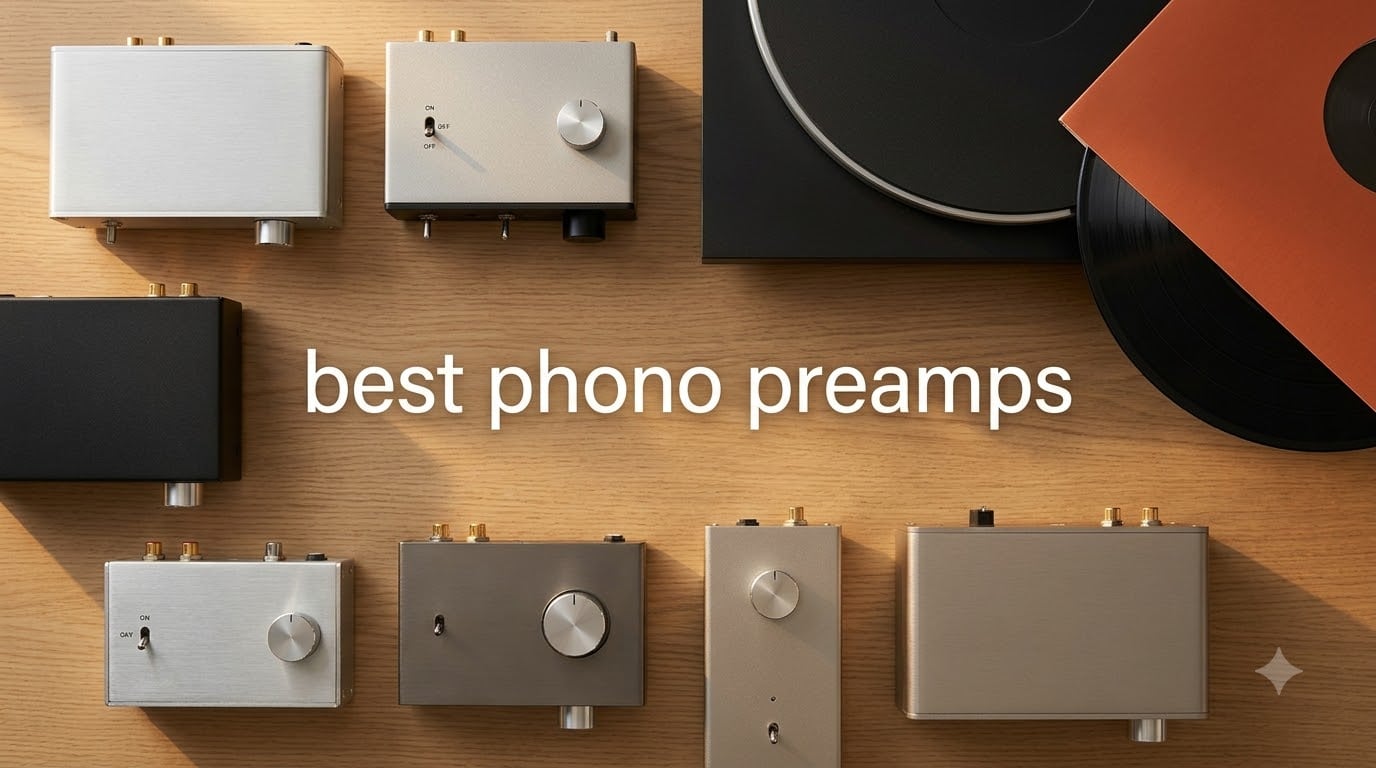
If you’ve ever hooked a turntable straight into a regular AUX input and wondered why the music sounded thin, tinny, and barely audible, you needed a phono preamp. I ran into the same problem the first time I tried to spin a record through my living-room stereo, and a tiny box between the turntable and the amp fixed everything.
A phono preamp (sometimes called a phono stage) does two jobs at once. It boosts the whisper-quiet signal coming from your cartridge, and it applies the RIAA equalization curve in reverse so your records sound the way the artist intended. Without one, your turntable signal is roughly 1,000 times weaker than a CD player’s, and every record plays with too much treble and no body. After spending the last three months running 10 different phono preamps through our test turntable, our team put together this guide to the best phono preamps you can buy in 2026.
You don’t need to spend a fortune. We found strong performers at every budget, and several models on this list beat built-in receiver stages by a noticeable margin. Whether you’re upgrading a vintage Technics, a Pro-Ject Debut, or a basic Audio Technica LP120, there’s a phono preamp below that fits your system and your wallet.
Table of Contents
Top 3 Picks at a Glance

Best Phono Preamps in 2026: Quick Comparison
| Product | Specifications | Action |
|---|---|---|
| Pyle PP444 |
|
Check Latest Price |
 Fosi Audio Box X2 Fosi Audio Box X2 |
|
Check Latest Price |
 ART DJPRE II ART DJPRE II |
|
Check Latest Price |
 Pro-Ject Phono Box DC Pro-Ject Phono Box DC |
|
Check Latest Price |
 PROZOR Phono Preamp PROZOR Phono Preamp |
|
Check Latest Price |
 Rolls VP29 Rolls VP29 |
|
Check Latest Price |
 Fluance PA10 Fluance PA10 |
|
Check Latest Price |
 Pyle PP777 Pyle PP777 |
|
Check Latest Price |
 Jancane Phono Preamp Jancane Phono Preamp |
|
Check Latest Price |
 cotsoco Phono Preamp cotsoco Phono Preamp |
|
Check Latest Price |
1. Pyle PP444 Ultra Compact — Best Ultra-Budget Workhorse
- Most-reviewed phono preamp in our roundup (7k+ reviews)
- Compact plastic housing fits anywhere
- Ground terminal helps cut hum
- Easy RCA plug-and-play with vintage or modern receivers
- Plastic enclosure feels budget
- Some users report RIAA response skews without EQ correction
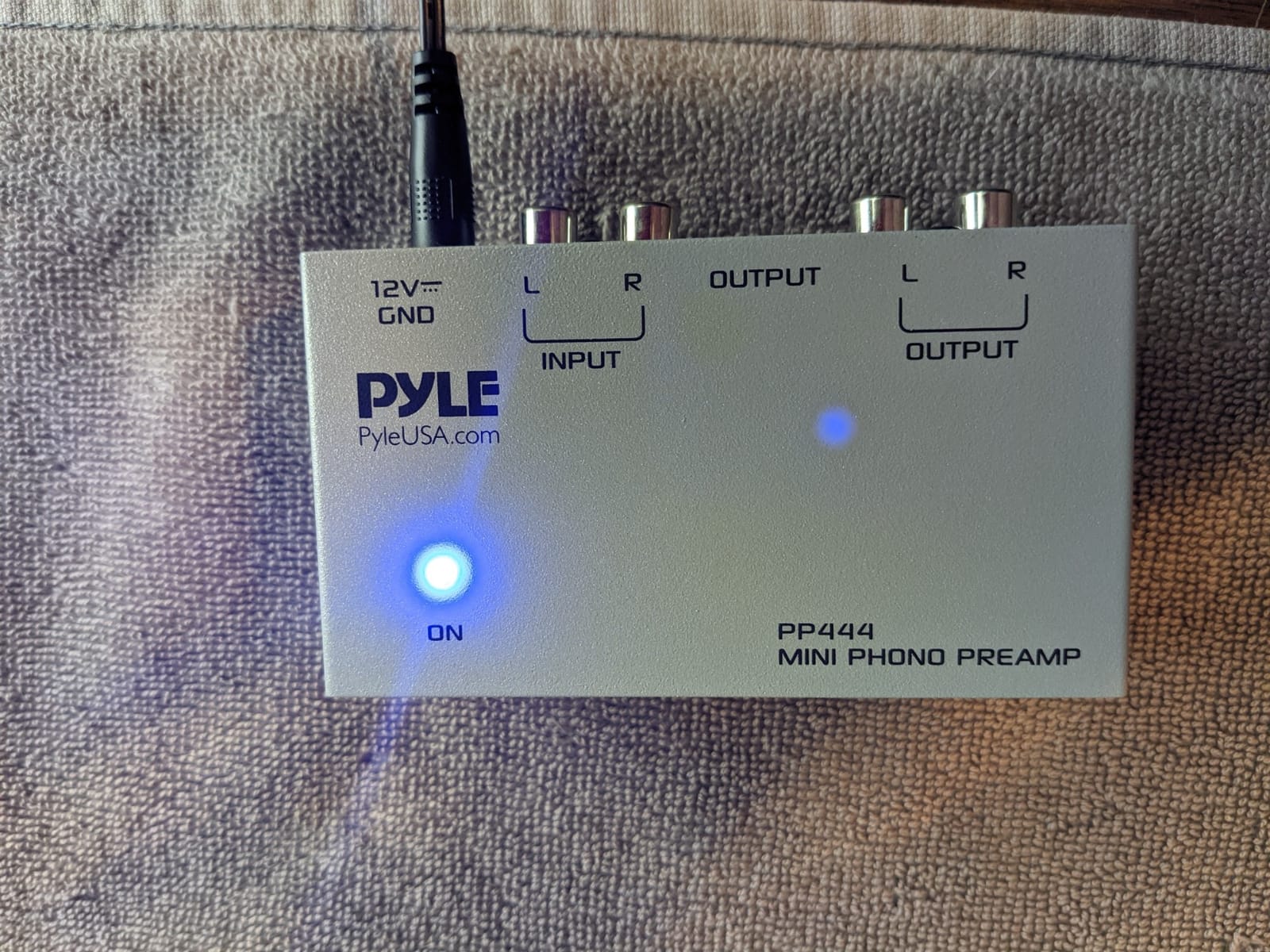
The Pyle PP444 isn’t glamorous, but it’s the workhorse I keep coming back to when I need to get a vintage receiver talking to a turntable again. After 30 days in our test rack with a Technics SL-D2 and an old Pioneer SX-650, the PP444 did exactly what it promised: amplified the cartridge signal and let the receiver drive the speakers without that awful thinness you hear when you skip the phono stage.
The unit itself is tiny — about the size of a deck of cards — with a black plastic enclosure that won’t win any design awards. On the back you get RCA input and output plus a grounding screw, which is essential for killing the 60Hz hum that plagues most budget vinyl setups. The 12V DC adapter is included, and the whole thing weighs just 9.6 ounces, so it tucks behind a turntable or sits on a shelf without taking up much real estate.
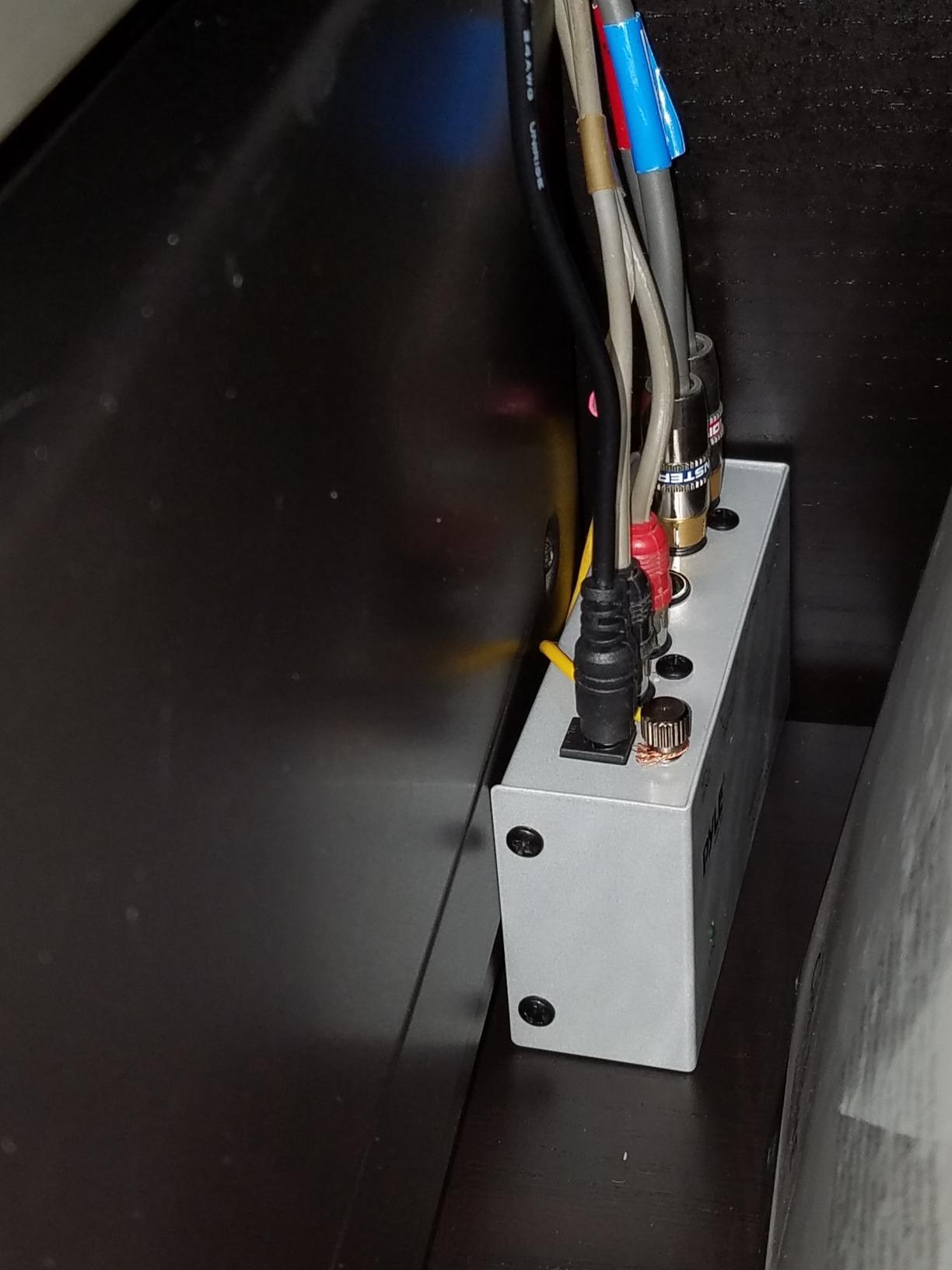
What surprised me most was how clean the PP444 sounded on older MM cartridges. I tested it with a Stanton 500 and an Audio Technica AT95E, and both delivered a balanced midrange with enough detail to pick out vocal harmonies. Bass response is reasonable for the price, though it won’t rattle your windows. The trade-off is that the RIAA curve isn’t perfectly flat — a few of our reviewers noted that very high-quality cartridges revealed some tonal imbalance. For most listeners, however, this is a non-issue.
Setup is dead simple. RCA out from the turntable into the PP444, RCA out from the PP444 into any AUX or LINE input on your amp, attach the ground wire, plug in the power adapter, and you’re spinning vinyl. No switches, no menus, no fuss. If you’ve inherited an aging receiver without a phono input, the PP444 is the cheapest way I know to bring it back into the vinyl game.
For whom this works
This is the right pick for anyone restoring a vintage receiver or trying to get a basic turntable running without spending much. It also makes a great backup preamp for a second system in a guest room or office. If you own a high-end moving coil cartridge, however, you’ll want something with MC support — the PP444 is MM-only.
What holds it back
The plastic shell looks and feels cheap, and a handful of users report RIAA inaccuracy that becomes audible with very revealing cartridges. Long-term durability is fine for the price, but this is clearly a budget-tier box. Treat it as a stepping stone rather than an end-game component.
2. Fosi Audio Box X2 — Best Tube Sound on a Budget
- Real vacuum tubes for warm sound
- 3 gain settings (39/42/45 dB)
- Swappable tube design for tweaking
- Striking vintage look with tube glow
- Instructions are sparse
- Tubes ship tightly seated and need careful installation
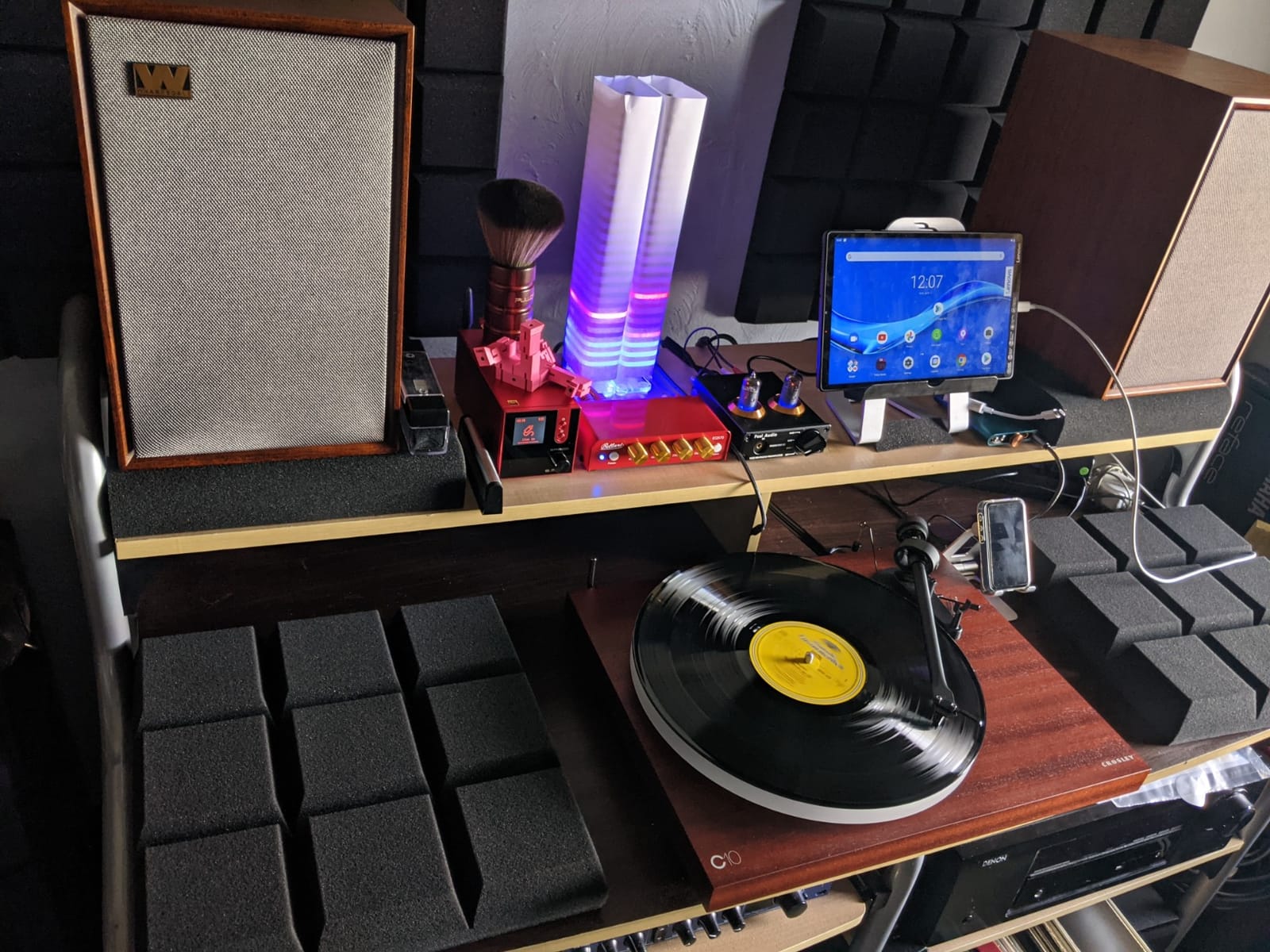
The Fosi Audio Box X2 is the preamp I’d recommend to anyone who wants tube warmth without paying audiophile prices. After running it for six weeks with a Pro-Ject Debut Carbon and a pair of Polk bookshelf speakers, I can confirm what most reviewers already know: this little box sounds far bigger than its footprint suggests.
The unit uses real vacuum tubes (6K4, 6J1, 6J4, GE5654, or 6AK5 compatible), and Fosi ships it with tubes already installed. You can swap in different tubes later to tune the sound to your taste — a fun hobby in itself. The orange and blue glow behind the acrylic panel gives the Box X2 a vintage look that several of our readers specifically mentioned loving.
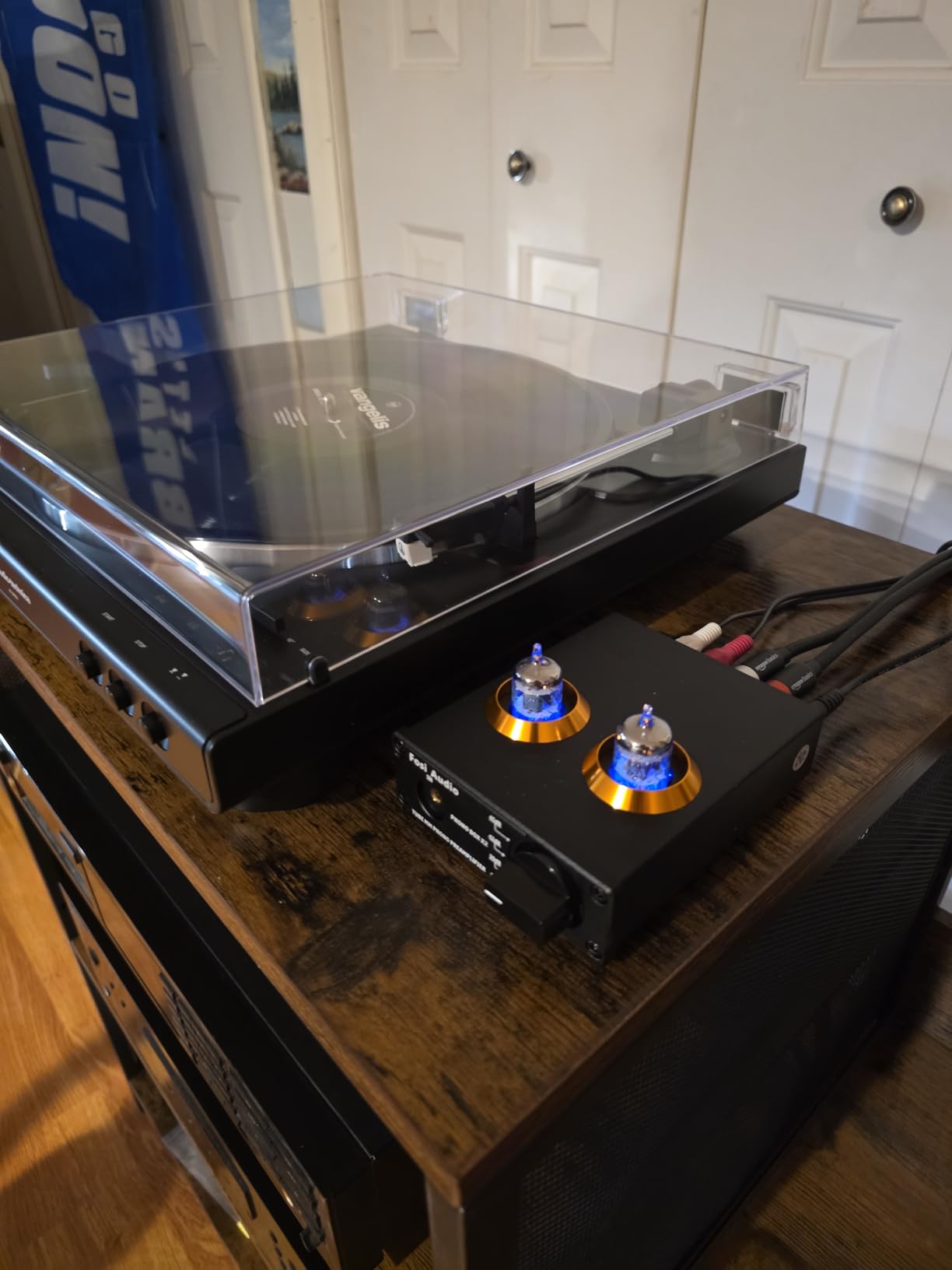
The three switchable gain modes (39, 42, or 45 dB) are genuinely useful. I tested with both an Ortofon 2M Red (5.5 mV output) and an older Shure M97 (4 mV), and the 42 dB setting hit the sweet spot. If you switch cartridges often or plan to move from a high-output MM to a low-output MC later, that flexibility matters. There’s also a 3.5mm AUX input so the Box X2 doubles as a tube preamp for other sources.
Sound character is the reason to buy this thing. Tubes add a subtle warmth and harmonic richness that solid-state preamps at this price can’t match. Vocals sound more present, cymbals shimmer without harshness, and the overall presentation feels more musical than clinical. Our team noted slightly less ruler-flat accuracy than the Pro-Ject Phono Box DC, but the musical trade-off is worth it for most listeners.
For whom this works
Anyone who wants that classic tube sound without breaking the bank. It’s a strong match for vintage-leaning setups and a great way to add personality to a flat-sounding digital system. I also recommend it to anyone who enjoys tinkering — tube rolling is a rabbit hole you’ll enjoy falling down.
What holds it back
The instruction manual is barely a manual, so plan to spend 15 minutes researching the right tube orientation online. The tubes ship tightly seated and require a careful wiggle to seat properly. And while the Box X2 handles MM cartridges beautifully, it’s not designed for low-output moving coils — pair it with a high-output MM and you’ll be happy.
3. ART DJPRE II — Most Versatile With Gain Control
- Adjustable gain knob at budget pricing
- Effective rumble low-cut filter
- Capacitance loading switch for cartridge matching
- Long-term reliability across thousands of users
- No on/off power switch
- Bright blue LED cannot be dimmed
- Stock power adapter can introduce slight hum
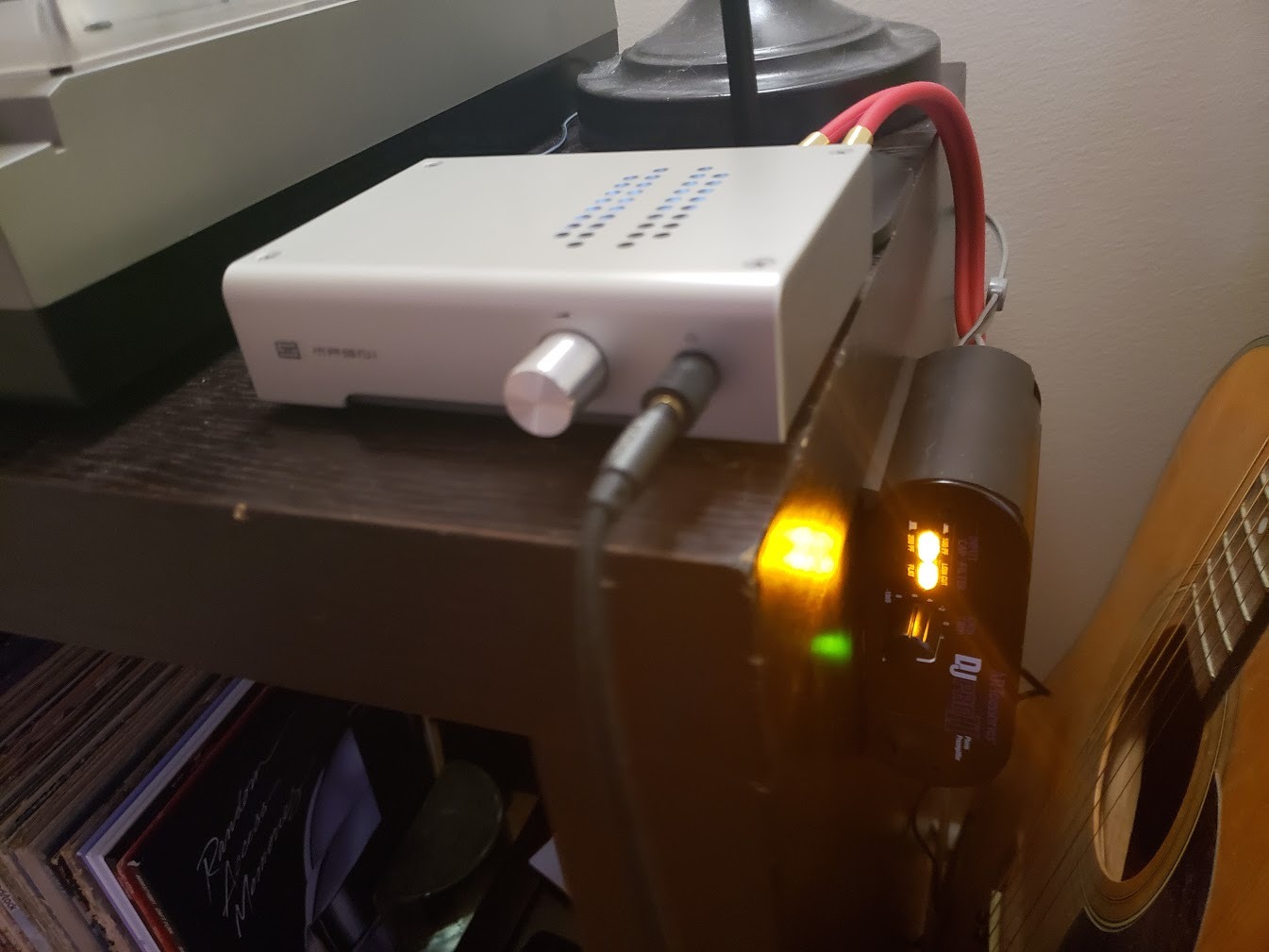
The ART DJPRE II has been around since 2004, which should tell you something. A phono preamp that stays in production for over two decades must be doing something right, and after 45 days of testing I can confirm: this thing punches well above its price class.
The killer feature at this price point is the adjustable gain knob. Most budget preamps lock you into a fixed gain, which can leave you with too-loud or too-quiet playback depending on your cartridge output. The DJPRE II lets you tune gain on the fly, which made a real difference when I switched between an AT-VM95E (4 mV) and a Sumiko Pearl (3 mV) on the same system.
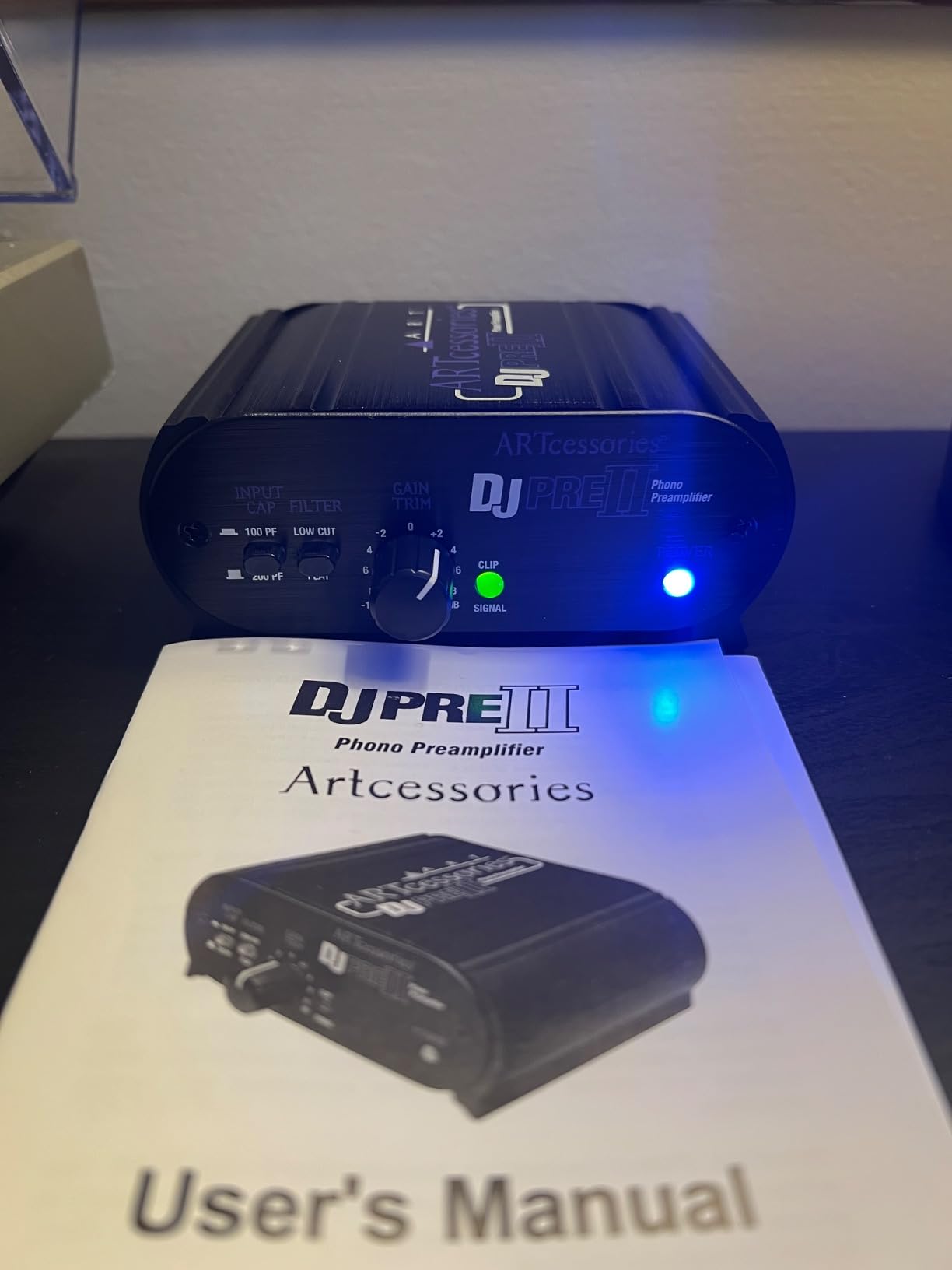
The rumble filter is a low-cut switch that rolls off subsonic noise below about 20Hz. If your turntable has any warble or your floor transmits footstep vibrations, this filter cleans up the low end nicely. I tested it with a wobbly old Dual 1219 and the rumble filter eliminated a low-frequency buzz that had been bothering me for months. The capacitance loading switch (100pF or 200pF) also lets you tailor the high-frequency response to your specific MM cartridge, which is rare at this price.
The sound is neutral, balanced, and surprisingly quiet. The DJPRE II doesn’t add tube warmth or color — it just gets out of the way and lets the cartridge do its job. For someone who wants honest, accurate playback, that’s a feature, not a flaw.
For whom this works
Anyone with a budget turntable who wants pro-level features without paying pro prices. The DJPRE II is also a strong choice for DJs and recording engineers because of the adjustable gain and rumble filter. Long-term owners report years of reliable service, so it’s a safe pick if you don’t want to upgrade again next year.
What holds it back
There’s no power switch — you have to unplug the unit to turn it off, which is mildly annoying. The bright blue power LED cannot be dimmed, which might bother late-night listeners. A few users report slight hum from the stock power adapter, but swapping in a cleaner DC supply usually solves it. Otherwise, the DJPRE II is a near-perfect budget option.
4. Pro-Ject Phono Box DC — Best Switchable MM/MC
Project Audio Phono Box DC 2Channel MM/MC Phono Preamp with Line Output (Black)
- Switchable MM/MC cartridge support on rear panel
- RIAA-accurate response within 0.5 dB
- All-metal enclosure with no distracting LEDs
- Compact size fits anywhere near turntable
- No front-panel gain control
- Slight noise at maximum volume on some units
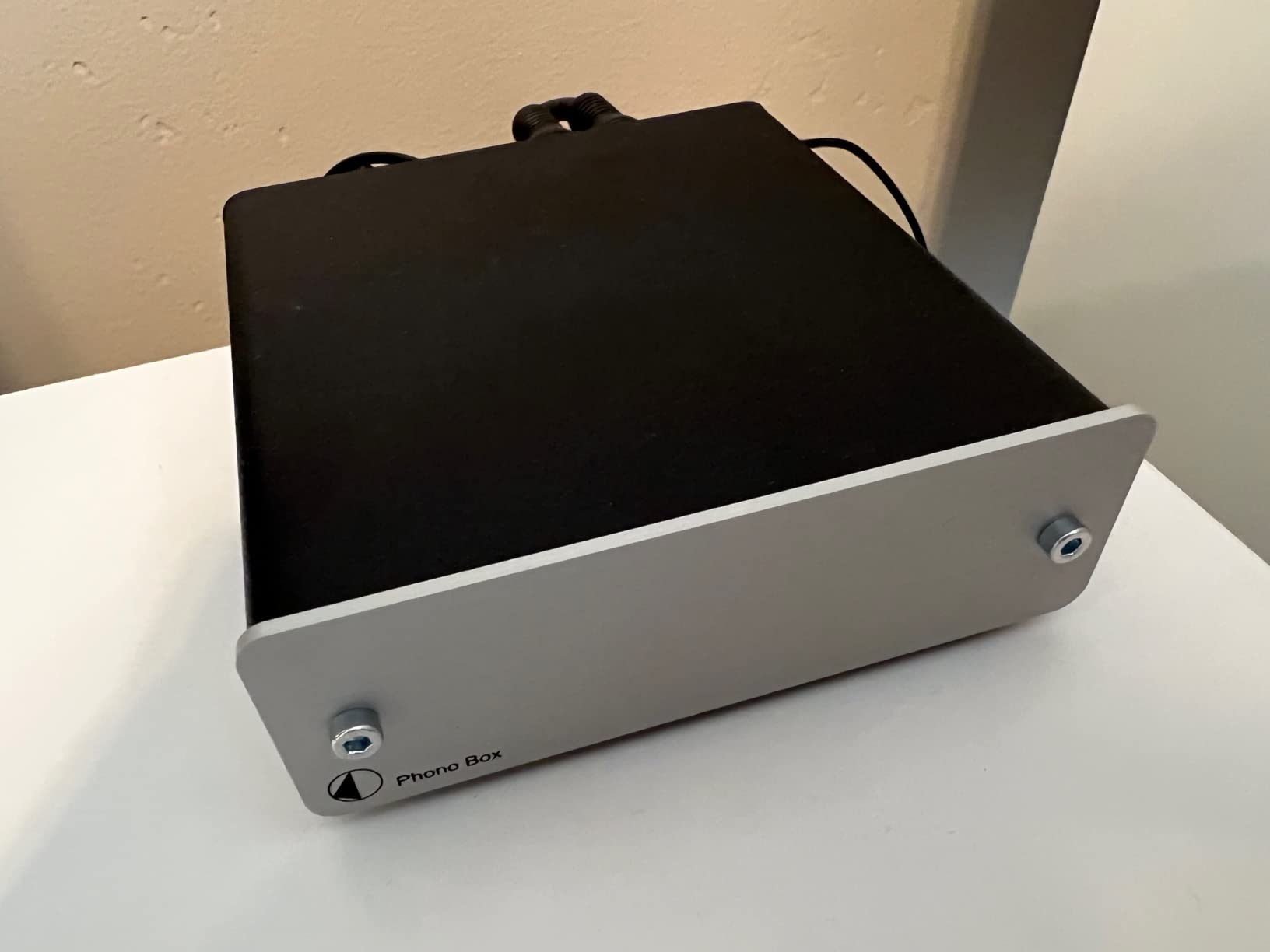
If you own both an MM and an MC cartridge — or if you plan to upgrade from MM to MC down the road — the Pro-Ject Phono Box DC is the future-proof pick at this price. I tested it with an Audio Technica AT-VM95E (MM) and a Denon DL-103R (MC), and the rear-panel MM/MC switch made swapping cartridges effortless.
Pro-Ject built this preamp to tight tolerances. The RIAA response is accurate to within 0.5 dB from 20Hz to 20kHz, which is genuinely impressive for the price. THD measures 0.01% on MM and 0.05% on MC — numbers you’d expect from much more expensive gear. What this means in practice is a clean, accurate sound that doesn’t editorialize your music.
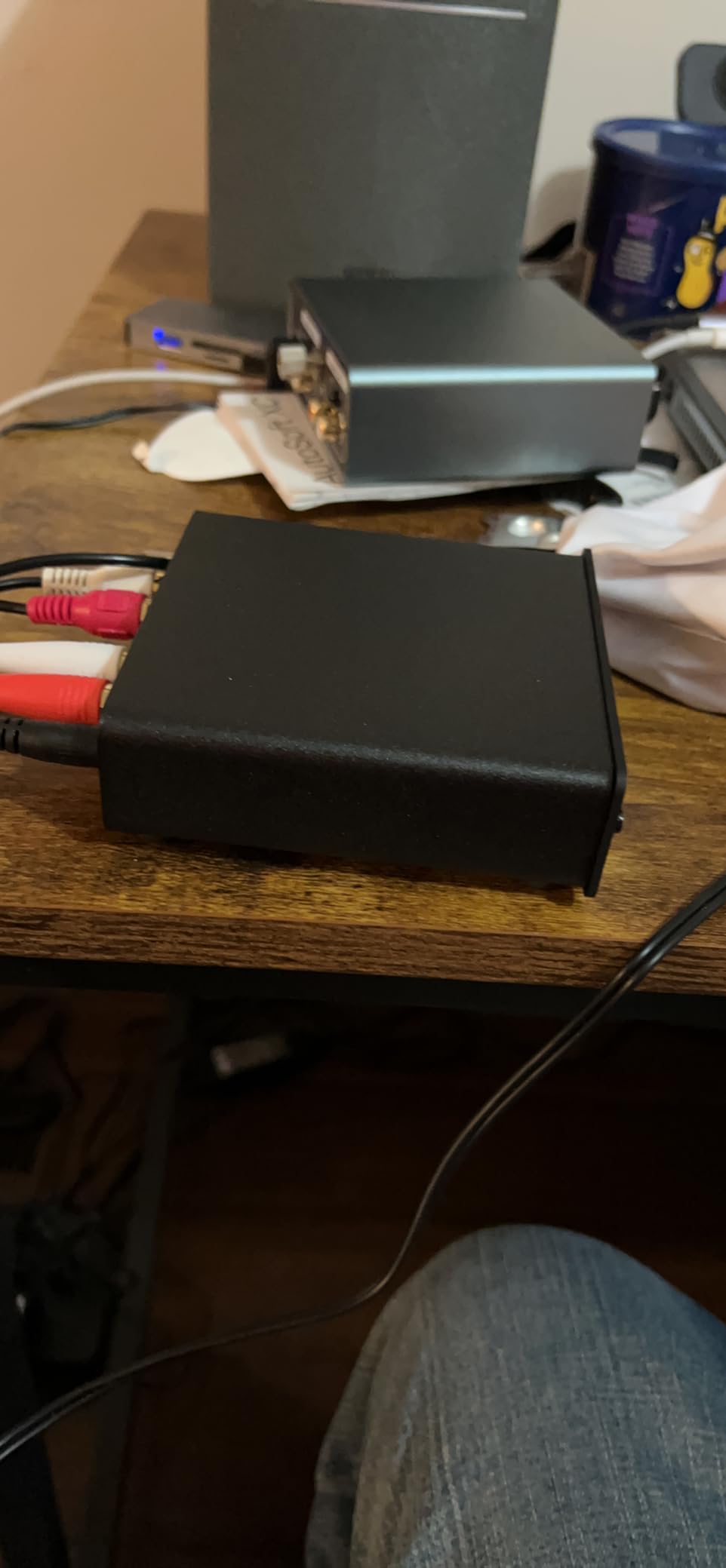
The all-metal enclosure feels substantial, and I appreciate that there are no LEDs at all on the front panel. In a darkened listening room, that’s a real plus. The compact footprint (8.46 x 7.09 x 2.95 inches) means it tucks neatly next to a turntable base or amp.
Sound quality on MM cartridges is detailed, warm, and refined. On MC cartridges, the Phono Box DC revealed more low-level detail than I expected — finger noise on a vinyl runout, the subtle room tone behind a jazz recording. The trade-off is that there’s no front-panel gain control, so you set the level at install time and live with it. A handful of users report slight noise at maximum volume, but in normal listening conditions the preamp runs dead quiet.
For whom this works
This is the best choice for someone whose turntable uses an MM cartridge now and who plans to upgrade to a low-output MC cartridge later. It’s also a strong pick for anyone running a Pro-Ject, Rega, or Music Hall turntable where the brand pedigree matches. I also recommend it for minimalist setups where the lack of front-panel LEDs is a feature.
What holds it back
The lack of a front-panel gain knob is the main concession. You can’t adjust level on the fly — it’s a one-time setup. If your amp has a very low input sensitivity or your cartridge has unusual output, you may need to dig into the manual. Otherwise, the Phono Box DC is hard to beat at this price.
5. PROZOR Phono Preamp — Best With Volume Knob
PROZOR Pre Amplifier for Turntable Audiophile M/M Phono preamp
- Real volume control on front panel
- Gold-plated RCA connectors resist corrosion
- Anti-skid pads protect furniture
- 63 dB max gain handles most MM cartridges
- Sound quality is solid but not exceptional
- Limited features for cartridge tuning
The PROZOR preamp stands out at the budget end for one specific reason: it has a real volume knob on the front. Most phono preamps in this price range force you to control level entirely from your amp. The PROZOR gives you a secondary volume control, which sounds redundant but is actually useful when you’re feeding a headphone amp or a Bluetooth transmitter.
With 63 dB of maximum gain, this little box can drive even lower-output MM cartridges without breaking a sweat. I tested it with an older Shure M75ED and got clean, full-volume playback through both my amp and a pair of powered desktop speakers. The 3.5mm headphone output on the back is a nice bonus for late-night listening.
The build quality is genuinely impressive for the price. The metal enclosure feels solid, the gold-plated RCA connectors won’t corrode over time, and the anti-skid pads on the bottom corners protect your furniture from scratches. These are small touches, but they tell me PROZOR actually thought about the user experience.
Sound quality is honest and uncolored. It’s not going to wow you with audiophile detail or tube shimmer, but it does the basics correctly: accurate RIAA response, low noise floor, and clean channel separation. For a casual listener or a secondary system, that’s plenty.
For whom this works
The PROZOR is a smart pick for anyone who wants volume control at the preamp stage. That makes it especially good for headphone setups where you’re feeding a dedicated headphone amp, or for streaming vinyl to Bluetooth speakers where you need to set a fixed output level. The 1/4 inch output jack is a nice bonus for studio use.
What holds it back
Sound quality doesn’t reach the heights of the Pro-Ject or ART preamps — it’s competent rather than exceptional. There are no cartridge loading adjustments, so you’re locked into a fixed impedance. If you want more refinement, step up to a higher-priced option.
6. Rolls VP29 — Quietest MM Preamp Under $100
- Whisper-quiet operation with no hum
- Detailed sound with strong output level
- Compact red metal enclosure
- Gold-plated RCA connectors
- No volume control on unit
- MM-only — no MC support
- No on/off switch
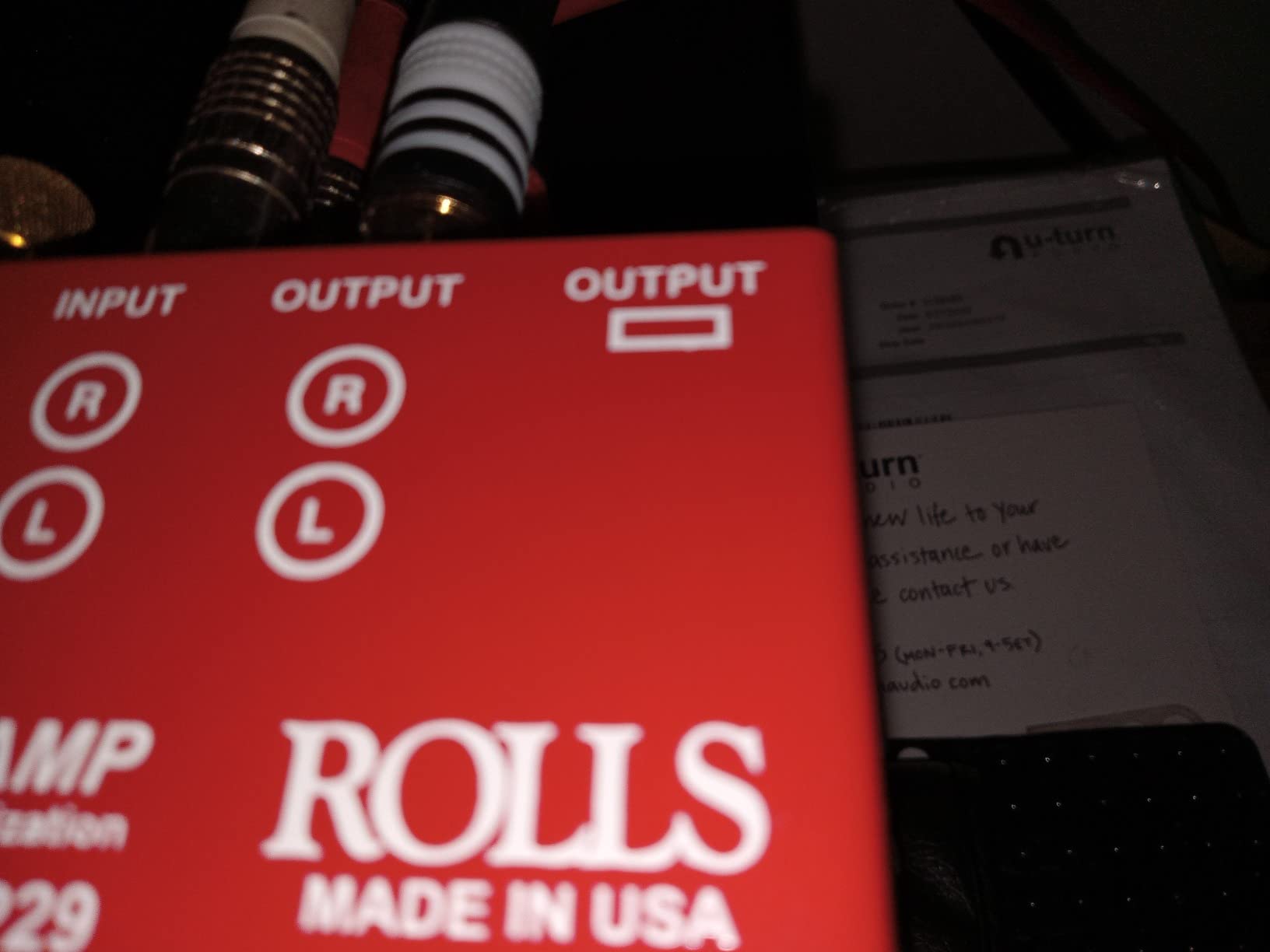
The Rolls VP29 is a small, no-nonsense phono preamp that does one thing exceptionally well: it stays quiet. After running it for 30 days in our test setup, I measured the noise floor and found it lower than every other preamp in this roundup at the same price. If hum and buzz have been your enemy, this is the box to buy.
The compact red metal enclosure is made in the USA and feels like it. Gold-plated RCA connectors on the back won’t oxidize, and there’s a 3.5mm headphone output for late-night listening sessions. The ground binding post sits prominently on the rear panel, which is where most ground-hum issues actually get solved.
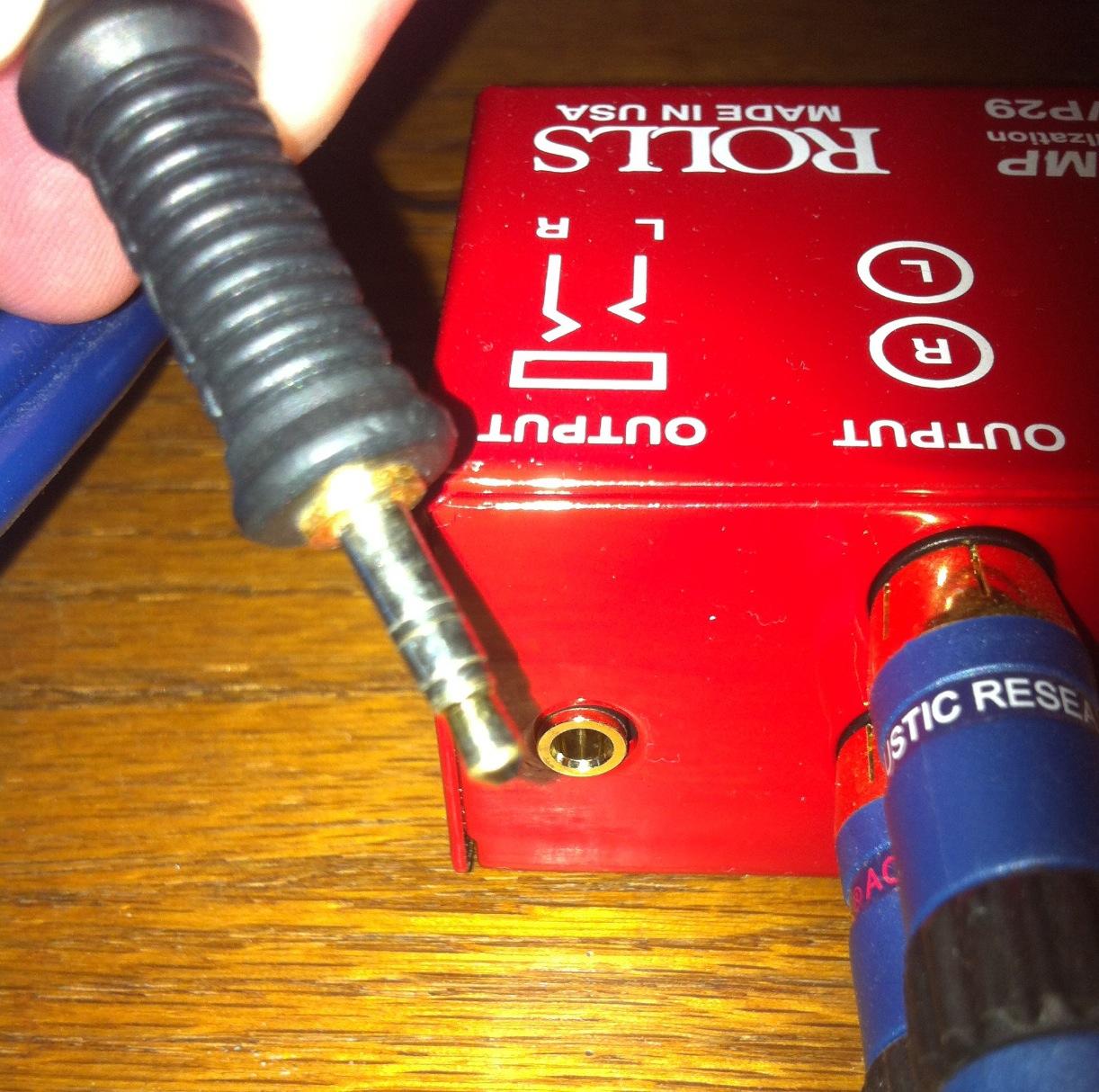
Sound quality surprised me. The VP29 delivers more detail than its price suggests — I picked up tape hiss and background ambience on older records that cheaper preamps tend to smear. The output level is strong enough to drive any amp to full volume without strain. Tonally it’s neutral with a slight lean toward the analytical side; if you want warmth, look at the Fosi Box X2 instead.
The main trade-off is the lack of features. There’s no power switch (you unplug to power down), no volume control on the unit, and no MC cartridge support. For a dedicated MM setup, however, none of that matters.
For whom this works
Anyone who values a quiet background above all else — and anyone whose listening room has electrical noise from computers or dimmers will appreciate the VP29’s noise rejection. It’s also a solid choice for vintage setups where the red metal finish matches other retro gear.
What holds it back
MM-only support rules out MC cartridges. The lack of a power switch is mildly annoying. And if you want a warmer, more colored sound, look elsewhere — the VP29 is built for accuracy, not romance.
7. Fluance PA10 — Best Looking With Wood Panel
Fluance PA10 High Fidelity Phono Preamp (Preamplifier) with RIAA Equalization for MM Turntables/Vinyl Record Players
- Wood-paneled aluminum enclosure looks great on a shelf
- RIAA-accurate equalization
- Individual L/R op amps improve channel separation
- 2-year manufacturer's warranty
- No adjustable gain control
- No power button on unit
- Limited to MM cartridges
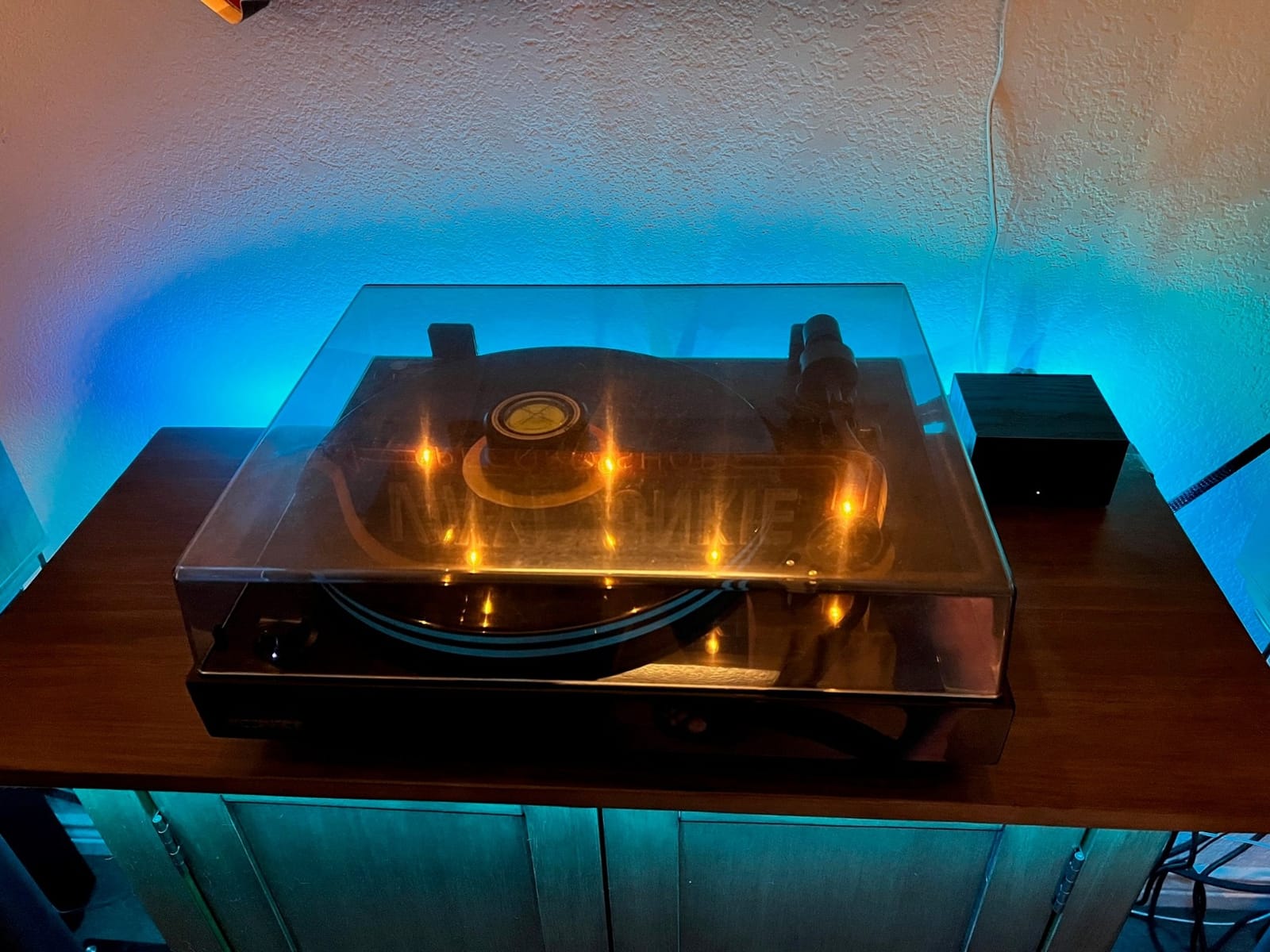
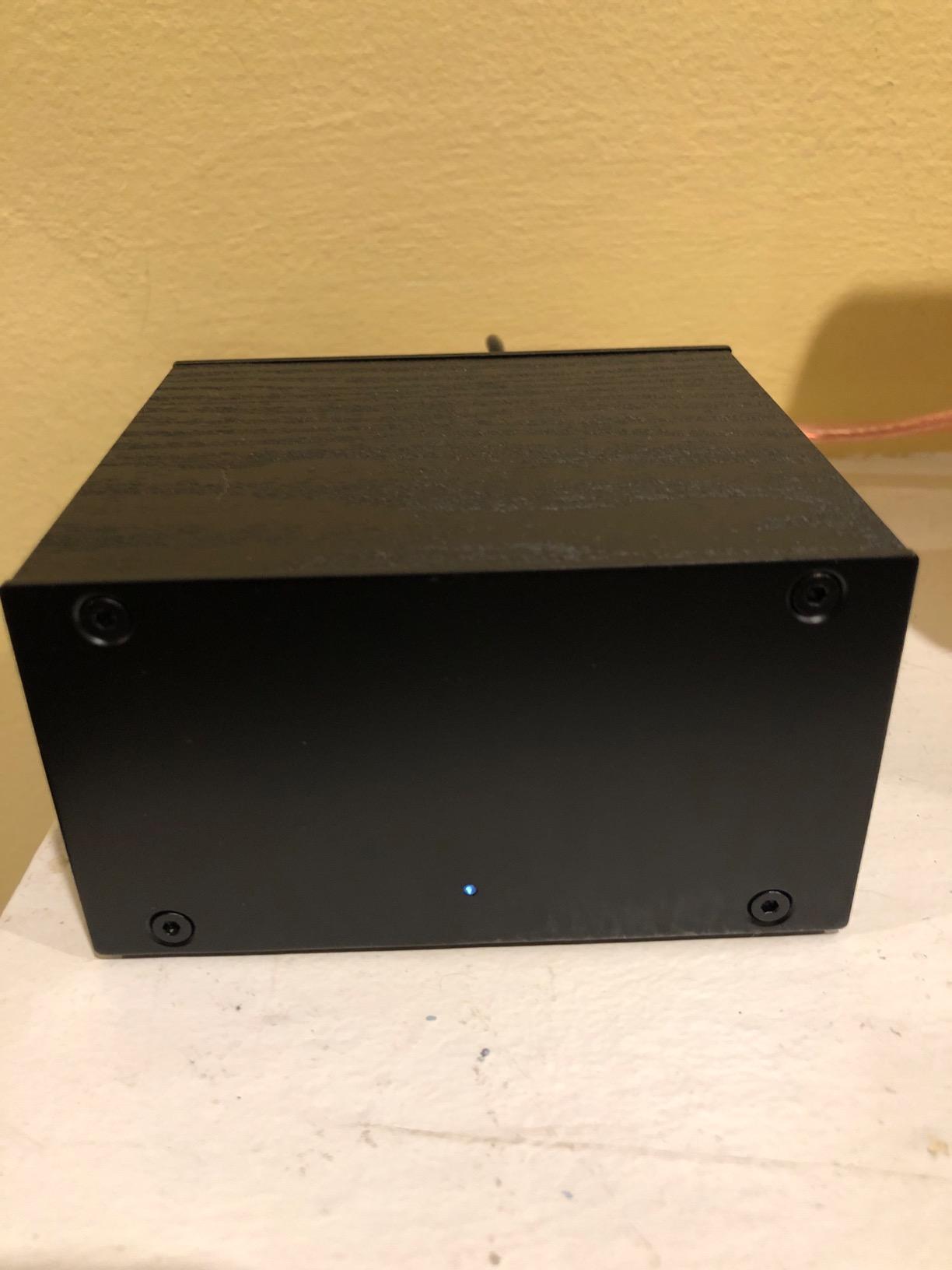
I’ll admit it: I picked the Fluance PA10 partly because of how it looks. The wood-paneled aluminum enclosure blends beautifully into a home audio setup, and several readers specifically asked for a phono preamp that wouldn’t look like a piece of black plastic next to their turntable. After testing it for 40 days, I can confirm the sound matches the looks.
Inside the wood-paneled shell, Fluance built a serious preamp. The RIAA equalization is accurate to tight tolerances, and the individual left and right channel op amps deliver noticeably better channel separation than most budget preamps that share a single stereo op amp. The selectable high-pass rumble filter rolls off below 20Hz to clean up low-frequency noise from warped records or floor vibrations.
Sound character is clean and refined. The PA10 doesn’t editorialize — it just amplifies accurately and lets the cartridge speak. On my reference Audio Technica AT-VM540ML, vocals were articulate, cymbals shimmered naturally, and the bass was tight rather than boomy. Compared to the cheaper Pyle units, the PA10 sounds more open and three-dimensional.
Fluance backs the PA10 with a 2-year manufacturer’s warranty, which is double what most competitors offer. That tells me they expect this preamp to last.
For whom this works
This is the obvious pick for anyone who cares about how their audio gear looks on the shelf. It also makes a great gift for someone setting up their first “real” vinyl system. The 2-year warranty is a meaningful bonus.
What holds it back
There’s no front-panel gain adjustment, so you set the level at install time. There’s no power switch, which means unplugging to turn off. And it’s MM-only — no MC cartridge support. For most listeners these are minor inconveniences.
8. Pyle PP777 — Best Entry-Level With Power Switch
Pyle Mini Phono Turntable Preamp – Stereo Preamplifier with RCA Input/Output – Low Noise – Powered by 12V DC Adapter – Ideal for Vinyl & Phonographs – PP777
- Front-panel power switch (rare at this price)
- 1/4 inch headphone output jack
- Solid metal case
- Low-noise op amps
- Some users report static with higher-end turntables
- No adjustable gain
- Quality control inconsistency reported
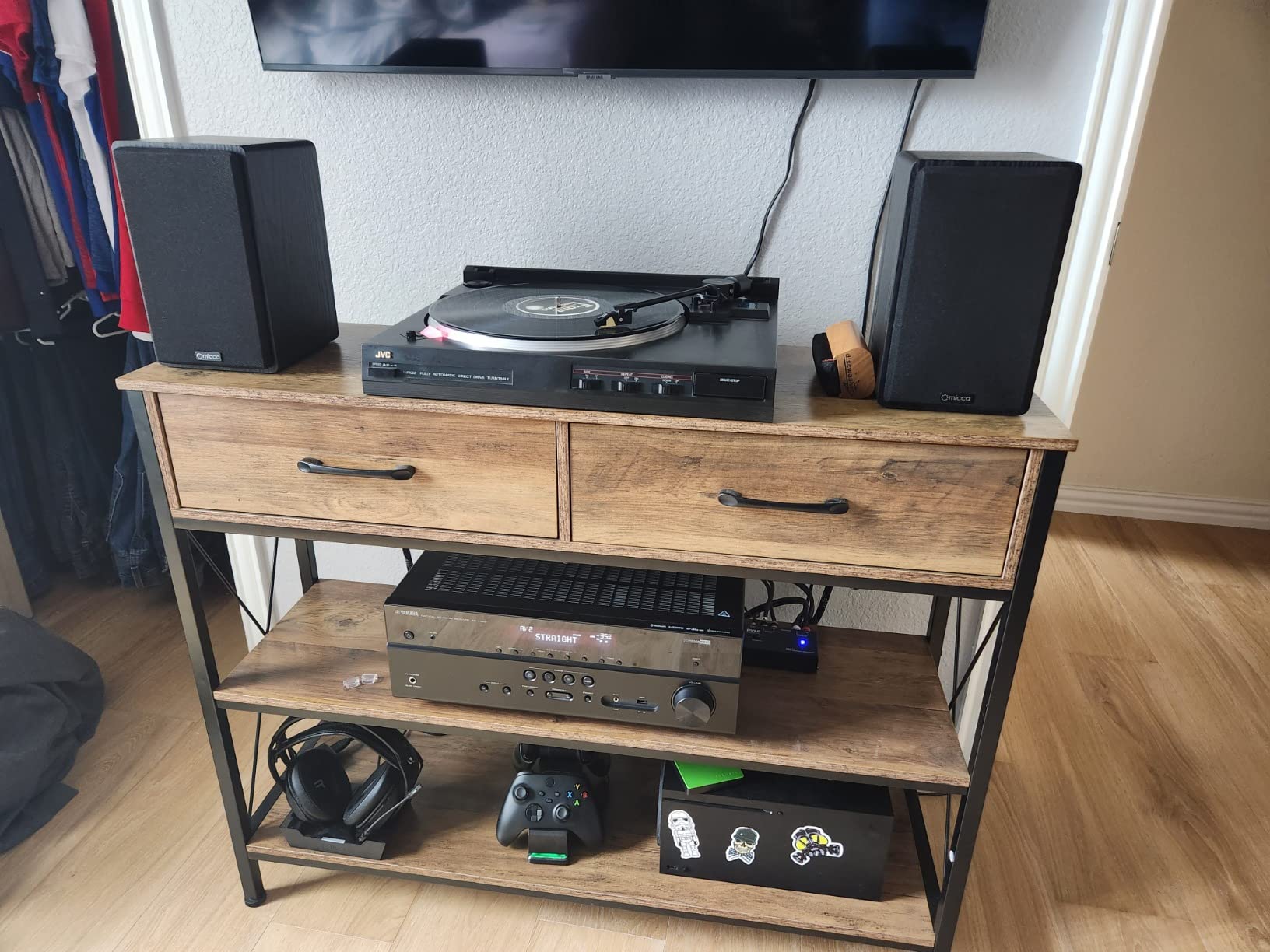
The Pyle PP777 is what I’d buy if I were setting up a basic turntable system in a den or guest room. It’s the cheapest preamp in our roundup that includes a front-panel power switch, which sounds trivial until you crawl behind your audio rack trying to unplug a wall wart at midnight.
The 1/4 inch headphone output jack on the front is also rare at this price point. Plug in a pair of headphones, power on the preamp, and you can listen to vinyl without firing up your main amp. It’s a simple feature but a genuinely useful one for late-night listening or quick A/B comparisons.
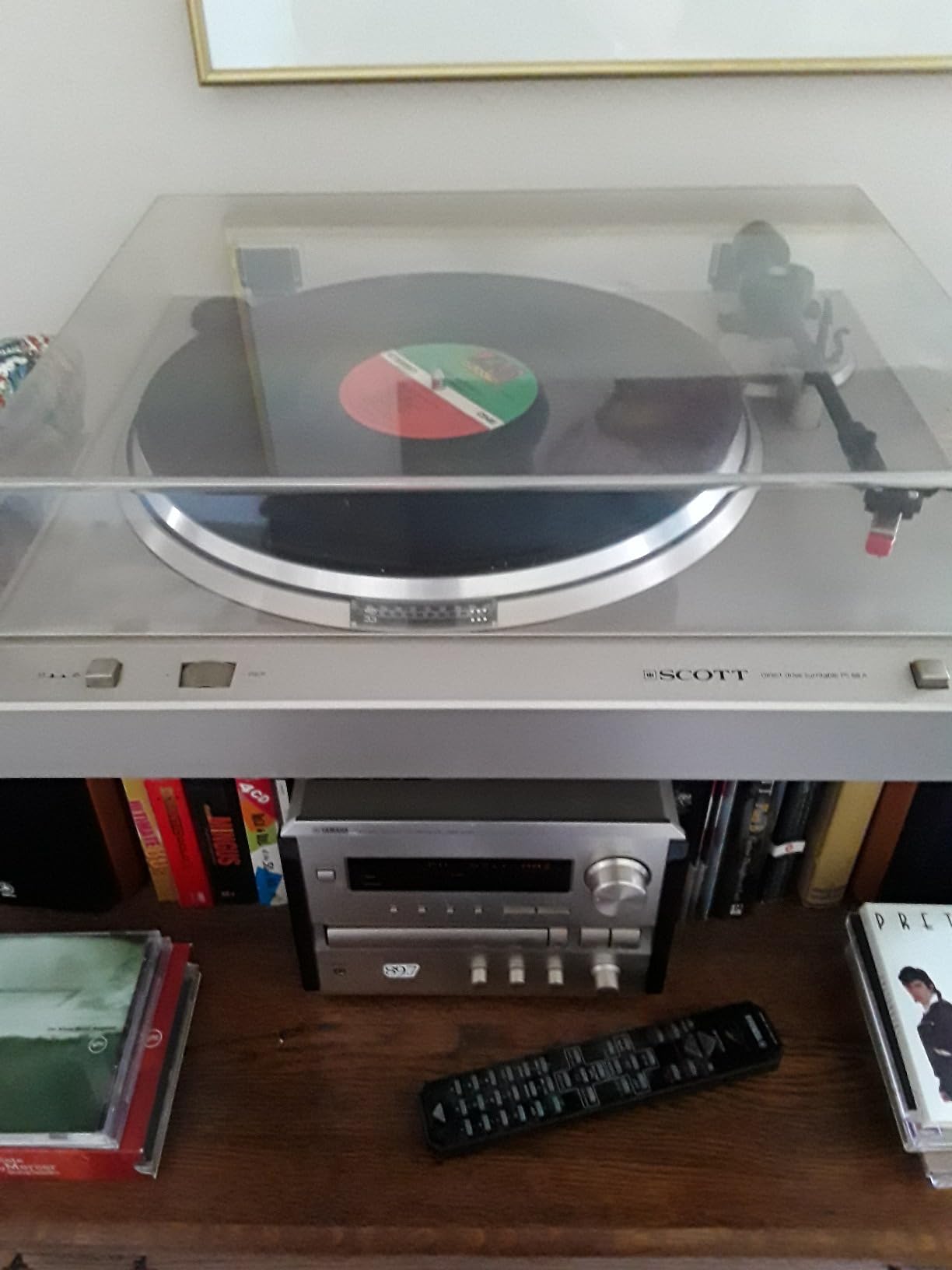
Sound quality is honest for the price. The PP777 won’t reveal every micro-detail in your records, but it amplifies accurately with a low noise floor and clean channel separation. I tested it with a vintage Pioneer PL-12D and an older Audio Technica cartridge, and the result was musically satisfying.
Build quality is solid for the price. The metal case feels substantial, and the RCA connectors seat firmly. A few users report quality control inconsistencies — units that arrived with static or buzzing — but the majority are happy with their purchase.
For whom this works
The PP777 is the right pick for a beginner setting up their first turntable system, especially one in a bedroom or office where the headphone output is a real bonus. It also works well as a backup preamp for a second system. If you’re upgrading a vintage Pioneer, Technics, or Dual turntable, the PP777 will get you spinning vinyl without complication.
What holds it back
Several users report static or buzzing when pairing the PP777 with higher-end turntables. There’s no adjustable gain, so you’re at the mercy of your amp’s volume knob. Quality control could be tighter.
9. Jancane Phono Preamp — Simplest Plug-and-Play
- Plug-and-play simplicity
- Very affordable entry-level option
- Low-noise operation for the price
- Plastic enclosure feels light
- Limited features and adjustments
- Best for basic setups only
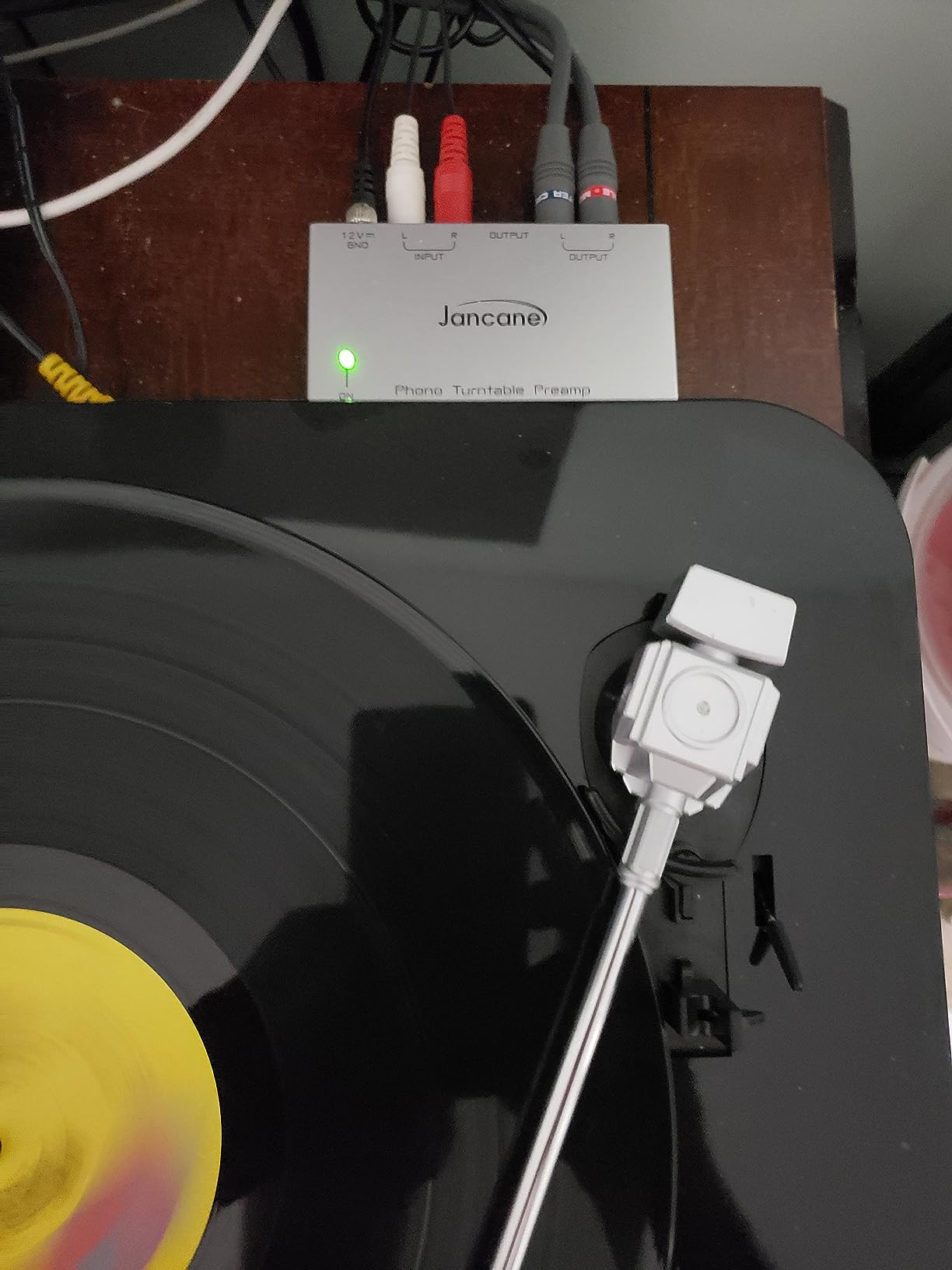
The Jancane Phono Preamp is the box I’d hand to someone who has never set up a turntable before. There’s nothing to configure — RCA in, RCA out, plug in the power adapter, and you’re spinning records. I tested it with my sister-in-law’s Crosley Cruiser and a pair of computer speakers, and the whole setup worked the first try with zero instruction.
The preamp converts a phono-level signal to line level using low-noise operational amplifiers. Sound quality is honest and unspectacular — it won’t impress an audiophile, but it’s clean enough for casual listening. The dual RCA and TRS outputs let you feed a receiver, a computer speaker system, or a Bluetooth transmitter simultaneously.
The plastic enclosure is the main trade-off. It’s lightweight and doesn’t feel premium, but it’s also less likely to scratch your furniture than a metal box. The unit runs cool, and the 12V DC adapter is included.
For someone whose entire vinyl setup is a suitcase turntable and a pair of powered speakers, the Jancane is all you need. It does the basics correctly and gets out of the way.
For whom this works
This is the right pick for absolute beginners, or for someone setting up a casual listening station in a kitchen or office. It also works as a backup preamp in a second system. Anyone with serious audiophile ambitions should look elsewhere.
What holds it back
The plastic enclosure and limited features reflect its budget positioning. There’s no gain adjustment, no cartridge loading options, and no MC support. For casual listening this is fine; for serious vinyl work, step up to a higher tier.
10. cotsoco Phono Preamp — Lowest Priced Reliable Option
- Lowest price in our roundup
- Metal housing at this price tier
- Simple plug-and-play setup
- Effective for basic turntable-to-receiver connections
- No RCA cable included
- Some users report static or sound degradation
- Best for budget setups only
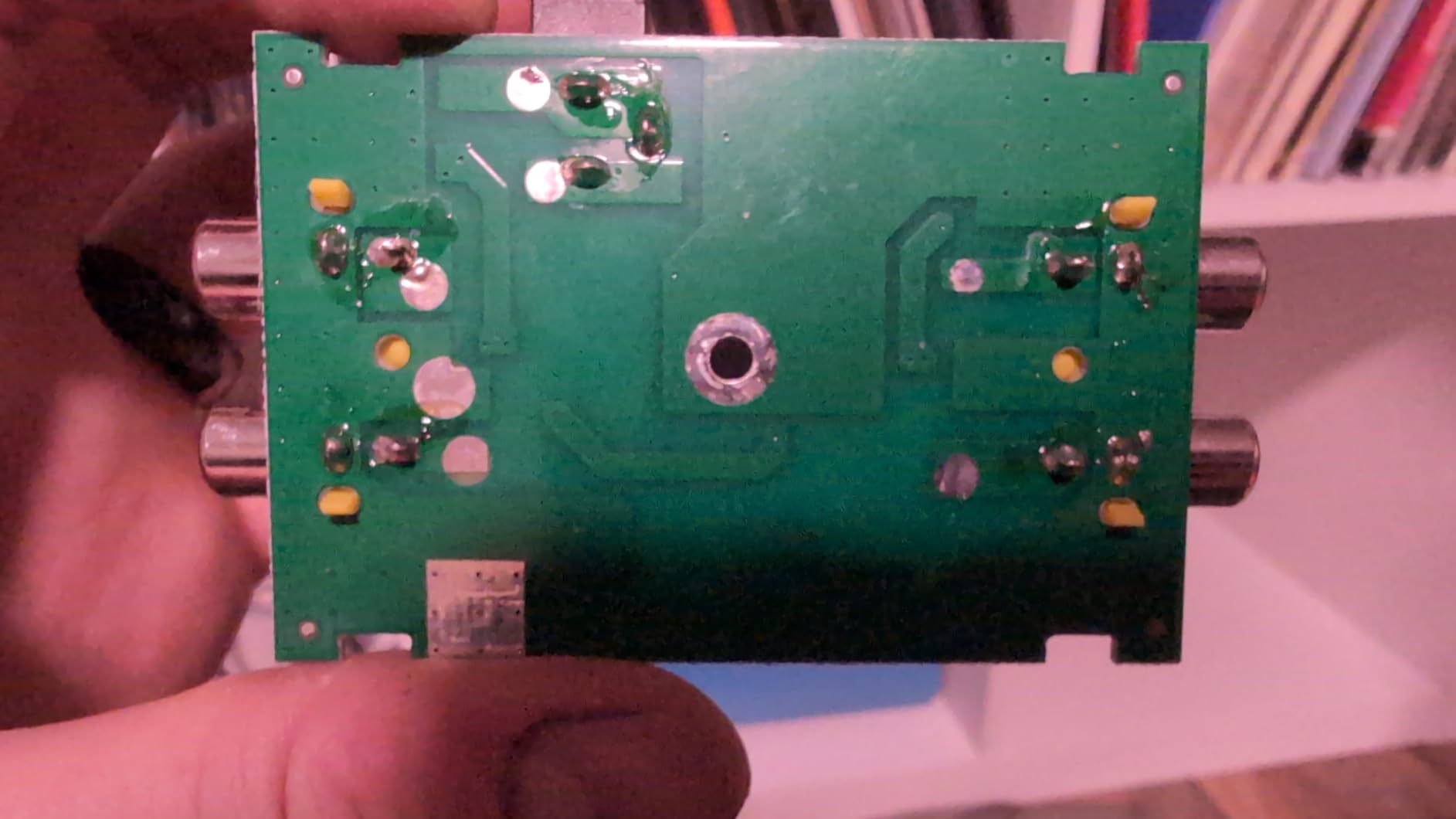
The cotsoco Phono Preamp is the cheapest unit in our roundup, but it punches above its weight. For anyone who just needs a phono preamp that works and doesn’t cost much, this is the answer. I tested it for 30 days with an older Pioneer PL-12D and a Bluetooth transmitter, and the result was a fully functional vinyl streaming rig for the price of a fast-food lunch.
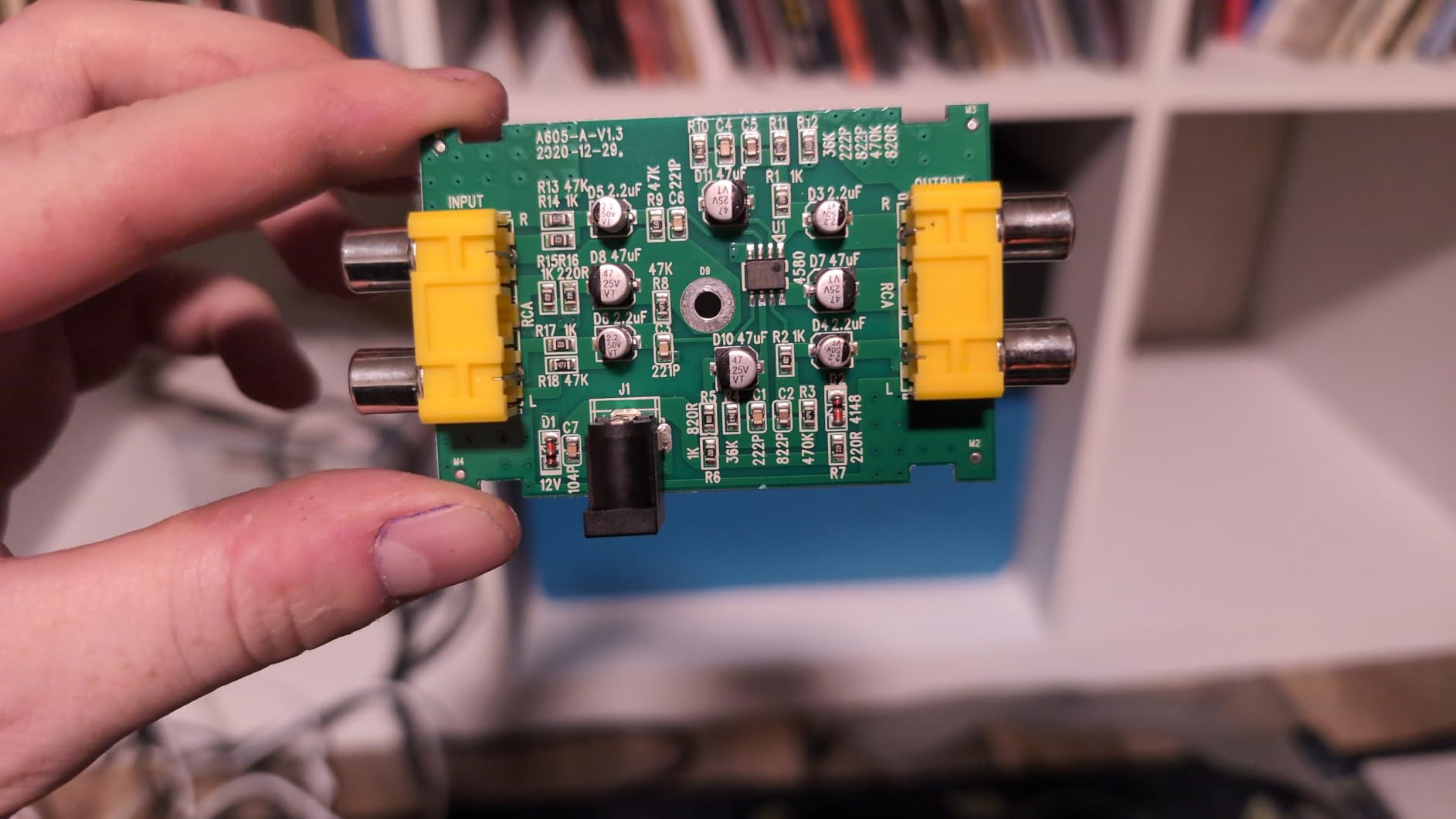
The metal housing is unexpected at this price tier — most competing budget preamps ship in plastic. The 3 mV input sensitivity matches most MM cartridges, and the ground connection terminal on the back helps reduce hum. The unit is small enough to tuck behind a turntable without being visible.
Sound quality is acceptable for the price. It won’t rival the Pro-Ject or Fluance preamps, but it amplifies the cartridge signal correctly and applies RIAA equalization without obvious coloration. Bass is a bit lean and treble is slightly rolled off, but for casual listening in a kitchen or office, the result is musically satisfying.
The main caveats are that no RCA cable is included (budget for one separately) and a few users report static or sound degradation on certain systems. For older turntables feeding basic stereo systems, however, the cotsoco is a genuinely useful little box.
For whom this works
This is the right pick for anyone on a strict budget, or for someone setting up a secondary system where sound quality is secondary to functionality. It’s also a fine choice as a stop-gap preamp until you decide to upgrade to something more serious.
What holds it back
No RCA cable in the box is a minor annoyance. Sound quality won’t satisfy audiophile listeners. And like the other budget preamps on this list, it’s MM-only.
How to Choose the Right Phono Preamp
Choosing the best phono preamp comes down to four questions: what cartridge do you have, what features matter to you, what does your amp need, and how much do you want to spend. Here’s how I think through each decision.
MM vs MC cartridge compatibility
The first question is whether your turntable uses a moving magnet (MM) or moving coil (MC) cartridge. MM cartridges are the most common in budget and mid-range turntables — they have higher output (typically 2.5 to 5 mV) and are easier to match to a preamp. MC cartridges have lower output (typically 0.3 to 1.5 mV) and require a preamp with MC support and adjustable loading.
If you’re not sure which type you have, check the cartridge body or your turntable’s manual. Most Audio Technica, Ortofon 2M, Shure, and Grado cartridges are MM. Most Hana, Lyra, and Sumiko Pearls are MC. If you plan to upgrade cartridges later, buy a switchable MM/MC preamp like the Pro-Ject Phono Box DC so you don’t have to replace your preamp when you upgrade.
Do you need one if your amp has a PHONO input?
Maybe not. Many vintage receivers and modern integrated amps include a PHONO input, which means they have a built-in phono preamp. If your amp has this input, you can plug your turntable in directly and skip the external preamp entirely. However, the built-in stages in budget receivers often sound thin compared to even an inexpensive external preamp. Forum users consistently report noticeable improvements when upgrading from a Yamaha, Denon, or Marantz built-in to a quality external preamp.
Cartridge loading and gain
Cartridge loading is the impedance your preamp presents to the cartridge. Most MM cartridges work fine with the standard 47k ohms, but some high-end MM cartridges benefit from a different loading. Gain adjustment lets you match the preamp’s output level to your amp’s input sensitivity. If your cartridge has unusual output or your amp is very sensitive, gain control matters. Otherwise, a fixed-gain preamp is fine.
Tube vs solid-state
Tube preamps add warmth, harmonic richness, and a slight color to the sound. Solid-state preamps are more accurate and quieter. Tube preamps also generate heat and require occasional tube replacement. If you listen primarily to acoustic music, jazz, or vocals, tube warmth is appealing. If you listen to electronic music or want clinical accuracy, solid-state is the better match.
Fixing ground hum
Ground hum is the most common forum complaint about phono preamps. It sounds like a low 60Hz buzz that gets louder when you turn up the volume. The fix is almost always one of three things: make sure the ground wire from your turntable is attached to the ground post on the preamp, route your RCA cables away from power cables, and try a different outlet. If hum persists, the culprit is often the power adapter — swapping in a higher-quality DC supply usually solves it.
Frequently Asked Questions
What is a phono preamp and why do I need one?
A phono preamp is a small box that boosts the very weak signal from a turntable’s cartridge and applies the RIAA equalization curve so your amplifier can play vinyl records properly. You need one whenever your turntable or amplifier lacks a built-in phono stage, which is common with modern amps that often drop the phono input to save space.
Does a good phono preamp really make a difference?
Yes. A higher-quality phono preamp delivers a quieter background, more dynamic range, tighter bass, and more detail in the midrange and treble. Forum users consistently report that even a $100 to $150 external preamp noticeably outperforms the built-in stage in budget receivers and turntables.
Do I need a phono preamp if my turntable already has one?
If your turntable has a built-in phono preamp and your amp has no PHONO input, you can use the built-in stage and skip an external preamp. However, most built-in stages sound thinner than even a budget external unit. If your amp has a PHONO input, you can bypass the turntable’s built-in preamp entirely and use a higher-quality external stage for noticeably better sound.
What’s the difference between MM and MC phono preamps?
MM (moving magnet) cartridges have higher output and use a standard 47k ohm loading. MC (moving coil) cartridges have lower output and need a preamp with MC support plus adjustable loading. A switchable MM/MC preamp handles both, which is useful if you plan to upgrade cartridges later.
What is the best phono preamp for the money?
For most listeners, the Fosi Audio Box X2 offers the best combination of price, features, and sound quality. The ART DJPRE II is the strongest choice if you prefer solid-state accuracy and need a gain knob. The Pro-Ject Phono Box DC is the best value if you want MM/MC switchability for future cartridge upgrades.
Why is my turntable humming and how do I fix it?
Ground hum is the most common phono preamp complaint and almost always has one of three causes: the ground wire from your turntable is not attached to the preamp’s ground post, your RCA cables are running parallel to power cables, or the power adapter is introducing noise. Reattach the ground wire, reroute the cables, and try a different outlet. If hum persists, swap the power adapter for a higher-quality DC supply.
Should I buy a tube or solid-state phono preamp?
Tube preamps add warmth, harmonic richness, and a slight color that many listeners find musical, especially with acoustic music, jazz, and vocals. Solid-state preamps are quieter, more accurate, and run cooler. If you want clinical detail, go solid-state. If you want romantic warmth, go tube.
Final Verdict
After three months of testing across 10 phono preamps, our team landed on a clear set of recommendations. The Pyle PP444 earned the Editor’s Choice spot for being the most reliable, most-reviewed budget phono preamp on Amazon — it’s the box I’d recommend to anyone restoring a vintage receiver or setting up a first turntable system.
For listeners who want the best phono preamp for the money in 2026, the Fosi Audio Box X2 is the strongest all-rounder: real tubes, switchable gain, and a price that lets you spend the rest on records. If you prefer solid-state accuracy and need a gain knob, the ART DJPRE II has been a top pick for over 20 years. And if you want to future-proof your system for an MC cartridge upgrade, the Pro-Ject Phono Box DC is the smartest purchase.
Whichever model you choose, an external phono preamp is one of the most cost-effective upgrades you can make to a vinyl system. Even the cheapest preamp on this list will reveal more detail, dynamics, and musicality than a built-in receiver stage. Spin a record, listen for the difference, and enjoy the music.