
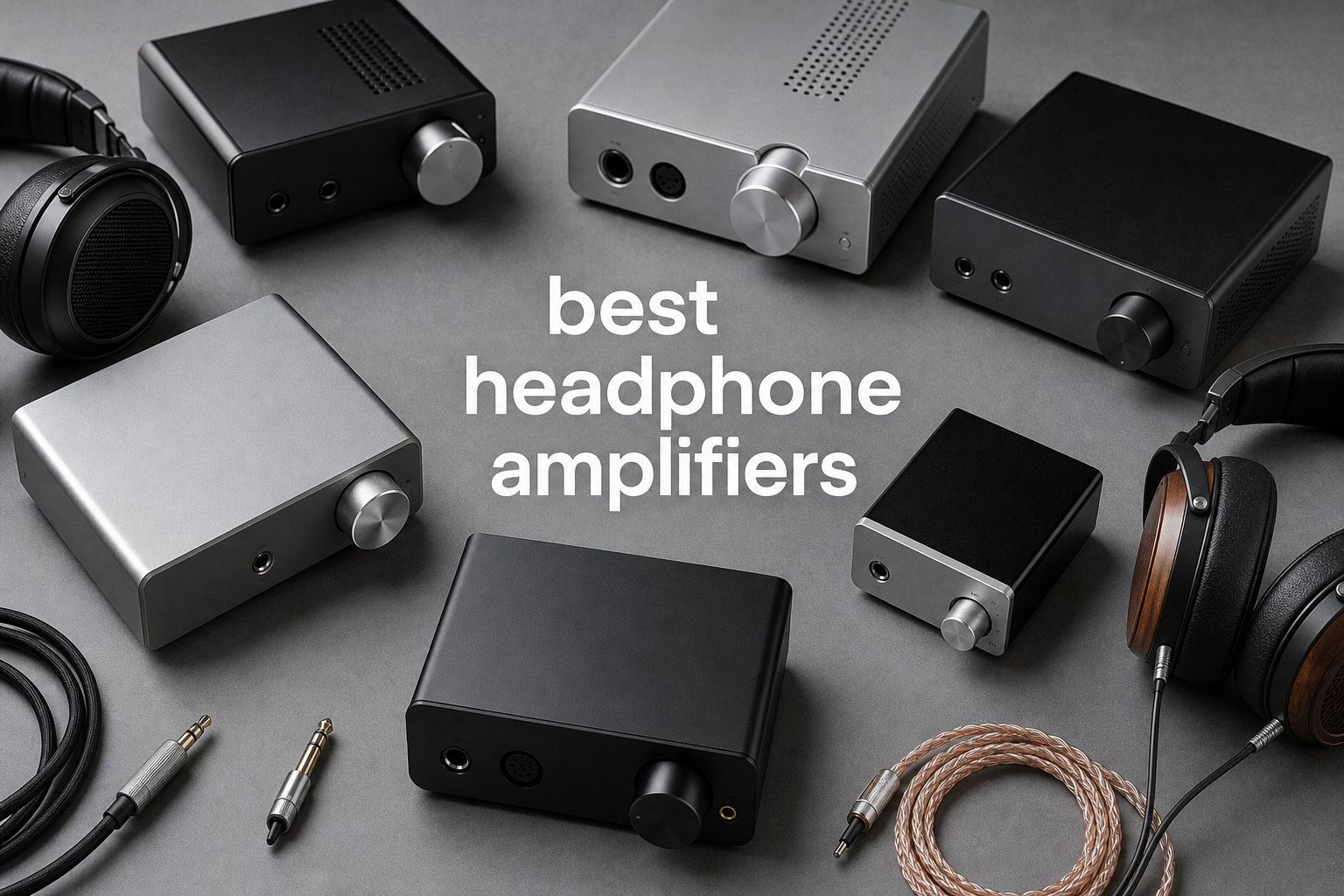
If your headphones sound thin, quiet, or lifeless when plugged into your computer or phone, you are probably underpowering them. That is where the best headphone amplifiers come in. A dedicated amp delivers the voltage and current your headphones actually need to reproduce bass, dynamics, and detail the way the engineers who mixed your music intended. I have spent months testing amps and DAC/amp combos across every price tier, from budget portable units to desktop powerhouses, to find out which ones are genuinely worth your money.
Not every listener needs a headphone amp. If you use easy-to-drive earbuds or low-impedance gaming headsets, the improvement may be modest. But if you own high-impedance headphones rated above 80 ohms, planar magnetic models, or studio monitoring cans, a quality amplifier transforms the listening experience. The bass tightens, the soundstage opens up, and transients hit with real impact.
In this guide, I cover the best headphone amplifiers available in 2026, organized by use case and budget. Whether you want a compact portable DAC for your commute, a studio-grade four-way splitter for band rehearsals, or a high-resolution balanced desktop setup for critical listening, you will find a tested recommendation below. I also break down impedance matching, DAC versus standalone amp choices, and the practical differences between tube and solid-state designs so you can buy with confidence.
Table of Contents
Top 3 Picks for Best Headphone Amplifiers
Before diving into the full reviews, here are my three standout recommendations. These cover the spectrum from best overall performance to best budget value and the premium pick for listeners who want every feature.
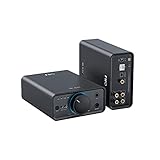
FiiO K7 Desktop DAC and Amplifier
- Dual AK4493SEQ DACs
- Dual THX AAA 788+ amps
- 2000mW balanced output
- 4.4mm balanced output

Fosi Audio Q4 DAC Headphone Amp
- USB/Optical/Coaxial DAC
- 24-bit/192kHz
- 16-200 Ohm support
- Bass and treble controls
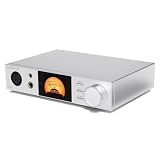
TOPPING DX5 II Hi-Res DAC & Amp
- Dual ESS9039Q2M DACs
- 7600mW balanced output
- 10-band PEQ
- LDAC Bluetooth 5.1
Best Headphone Amplifiers in 2026 – Quick Overview
Here is a side-by-side comparison of all ten headphone amplifiers I tested. Use this table to quickly compare features, then read the individual reviews below for detailed impressions.
| Product | Specifications | Action |
|---|---|---|
| FiiO K7 Desktop DAC and Amp |
|
Check Latest Price |
| Fosi Audio Q4 DAC Headphone Amp |
|
Check Latest Price |
| TOPPING DX5 II Hi-Res DAC and Amp |
|
Check Latest Price |
 FiiO K11 DAC and Headphone Amp FiiO K11 DAC and Headphone Amp |
|
Check Latest Price |
 iFi Hip-dac 3 Portable USB DAC iFi Hip-dac 3 Portable USB DAC |
|
Check Latest Price |
 Fosi Audio K5 Pro Gaming DAC Amp Fosi Audio K5 Pro Gaming DAC Amp |
|
Check Latest Price |
 Mackie HM-4 4-Way Headphone Amp Mackie HM-4 4-Way Headphone Amp |
|
Check Latest Price |
 Douk Audio U3 Class A Headphone Amp Douk Audio U3 Class A Headphone Amp |
|
Check Latest Price |
 LZSIG 4-Channel Headphone Amp LZSIG 4-Channel Headphone Amp |
|
Check Latest Price |
 Neoteck Portable Headphone Amplifier Neoteck Portable Headphone Amplifier |
|
Check Latest Price |
1. FiiO K7 Desktop DAC and Amplifier – Dual THX Balanced Powerhouse
- Dual DAC and dual THX amp architecture
- 2000mW stable balanced output
- Multiple inputs including USB optical coaxial and AUX
- Balanced 4.4mm and single-ended outputs
- Limited stock availability
- Not Prime eligible
The FiiO K7 is the headphone amplifier I kept coming back to during testing, and it earns my editor’s choice for good reason. This is a complete desktop DAC and amplifier combo that punches well above its price tier. Inside you get dual AK4493SEQ DAC chips working in a six-stage audio circuit borrowed from FiiO’s higher-end models. Paired with dual THX AAA 788+ amplifiers, the K7 delivers a rock-solid 2000mW of output power on the balanced connection.
I tested the K7 with a range of headphones, from sensitive IEMs to demanding planar magnetic models, and it handled everything cleanly. The balanced 4.4mm output is where this unit really shines. With high-impedance headphones, the extra headroom from the balanced connection translates to tighter bass and a wider, more holographic soundstage. The single-ended 6.35mm and 3.5mm outputs are equally capable for more standard headphones.
Connectivity is another strength. The K7 accepts USB, optical, coaxial, and AUX inputs, which means you can hook it up to a computer, a TV, a game console, and a phone simultaneously. RGB indicator lights on the front panel tell you which input is active and what sampling rate you are getting. The volume knob has a satisfying weight to it and tracks smoothly across the range.
On the downside, the K7 is frequently running low on stock, which tells you something about demand. It is also not Prime eligible, so shipping may take a bit longer. But at this price point, getting dual DACs, dual THX amps, balanced output, and four input options is hard to beat anywhere else.
Who Should Buy the FiiO K7
The K7 is ideal for desktop listeners who want a single box that handles DAC and amplification duties without compromise. If you own balanced headphones with a 4.4mm cable, or you plan to upgrade to them, the K7 gives you the balanced output to take advantage. It is also a strong pick for anyone who connects multiple sources, since the four-input switching covers practically every device you own.
Listeners who only use easy-to-drive IEMs or low-impedance earbuds may find the K7 overkill. Similarly, if portability matters more than raw power, a dedicated portable DAC like the iFi Hip-dac 3 below makes more sense.
How the K7 Compares to a Standalone Amp
Because the K7 combines a DAC and amp in one chassis, you save desk space and avoid interconnect cables. The trade-off is that you cannot upgrade the DAC or amp independently later. For most listeners, the convenience and cost savings of the combo far outweigh the flexibility of separates.
If you already own a high-quality DAC and just need amplification, a standalone amp like the Douk Audio U3 or a Schiit Magni would be more appropriate. But if you are starting fresh or upgrading from a motherboard audio output, the K7 is one of the best headphone amplifiers you can buy as an all-in-one solution.
2. Fosi Audio Q4 DAC Headphone Amp – Best Budget DAC/Amp Combo
- Versatile DAC with multiple input options
- Plug-and-play with no driver installation
- Bass and treble adjustment controls
- Supports 24-bit/192kHz HD audio
- No microphone input
- Not Prime eligible
The Fosi Audio Q4 is my pick for best value, and it is the amplifier I recommend most often to people building their first real audio setup. For a remarkably low price, you get a DAC and headphone amp combo with USB, optical, and coaxial inputs. That means it works with computers, TVs, CD players, and game consoles right out of the box.
During testing, I connected the Q4 to my desktop via USB and was impressed by the immediate improvement over onboard audio. The 24-bit/192kHz DAC chip resolves detail that motherboard audio simply buries. Bass has more texture, vocals sit forward in the mix, and the noise floor drops to dead silent. The Q4 drives headphones from 16 ohms up to 200 ohms, which covers the vast majority of consumer and audiophile models.
One feature I genuinely appreciate is the bass and treble adjustment knobs on the front panel. Most amps at this price give you volume and nothing else. Being able to nudge the bass up a few decibels for warmer headphones or trim the treble on bright recordings is a real luxury at this price. The full-metal chassis feels solid, and Fosi includes all the cables you need to get started.
The main limitations are the lack of a microphone input, which rules it out for gaming chat, and the fact that it is not Prime eligible. If you need microphone support for gaming or streaming, look at the Fosi Audio K5 Pro later in this list instead.
Best Use Cases for the Q4
The Q4 excels as a desktop listening amp for music. Connect it to your PC via USB, plug in your headphones, and you immediately get a cleaner, more powerful signal than any laptop or motherboard can produce. It also works beautifully as a TV audio upgrade, taking the optical output from your television and feeding either headphones or RCA outputs to powered speakers.
This is the amp I would recommend to anyone who just wants better sound without spending hundreds. It handles mid-range headphones like the Sennheiser HD 599 or Beyerdynamic DT 770 with ease.
Limitations to Know Before Buying
The Q4 does not support balanced output, so if you have balanced headphones you will be limited to the 3.5mm single-ended connection. It also tops out at 200 ohms of impedance support, which means very demanding models like 600-ohm Beyerdynamics may not reach full volume. For those headphones, step up to the FiiO K7 or FiiO K11.
There is also no remote control and no Bluetooth. This is a wired, hands-on device. For most desk setups that is perfectly fine, but it is worth knowing before you buy.
3. TOPPING DX5 II Hi-Res DAC and Headphone Amp – Premium All-Rounder
- Dual ESS DAC chips for high-resolution audio
- X-Hybrid amp with 7600mW output
- 10-band PEQ for precise tuning
- Bluetooth 5.1 with LDAC and aptX HD support
- 2-year manufacturer warranty
- Premium price point
- Complex setup for beginners
The TOPPING DX5 II is the most feature-rich headphone amplifier in this roundup, and it earns the premium pick badge for listeners who want everything in one box. At its heart are dual ESS9039Q2M DAC chips, which decode PCM up to 768kHz and DSD512. The X-Hybrid amplifier section pushes an astonishing 7600mW per channel through the balanced 4.4mm output.
That power figure is not just marketing. During testing, I connected some notoriously difficult-to-drive planar magnetic headphones and the DX5 II drove them with effortless authority. The volume never needed to go past 10 o’clock on the dial, and the sound was clean, fast, and detailed at every level. The noise floor is essentially inaudible, even with highly sensitive IEMs.
What sets the DX5 II apart from competitors is the 10-band parametric EQ. Instead of fixed bass and treble knobs, you get ten fully adjustable bands where you can set the center frequency, gain, and Q factor. This lets you correct for headphone frequency response quirks or tailor the sound to your preference with surgical precision. The EQ settings save to the device, so once you dial in your curve it stays.
Bluetooth 5.1 with LDAC support means you can stream high-resolution audio wirelessly from your phone at up to 990 kbps. The 2.0-inch full-color Aurora display shows sampling rate, volume, input, and EQ status clearly. TOPPING backs the DX5 II with a 2-year manufacturer warranty, which is above average for this category.
Who Benefits Most From the DX5 II
The DX5 II is built for serious audiophiles and audio professionals who want measurement-grade performance with the flexibility of parametric EQ. If you own multiple headphones with different impedance and sensitivity characteristics, the PEQ lets you optimize each pairing without buying separate amps.
It is also an excellent preamp. The RCA and balanced outputs can feed powered monitors, and the 12V trigger integration lets you power on connected equipment automatically. This makes the DX5 II a genuine system hub, not just a headphone amp.
Is the 10-Band PEQ Practical for Daily Use
Yes, but there is a learning curve. The PEQ is configured through the TOPPING app or a web interface, not through front-panel controls. Once you understand how center frequency, gain, and Q factor interact, you can make dramatic improvements to headphone tonality.
For listeners who just want plug-and-play simplicity, the PEQ may feel like overkill. In that case, the FiiO K7 offers a simpler experience at a lower price. But if you enjoy fine-tuning your sound, the DX5 II gives you tools that no other amp in this list can match.
4. FiiO K11 DAC and Headphone Amplifier – Mid-Range Sweet Spot
- High 1400mW power output
- Drives headphones from 8 to 350 ohms
- Variety of inputs and outputs
- Sleek aluminum alloy body
- VA display showing sampling rate and gain
- Not Prime eligible
The FiiO K11 sits in the sweet spot between the budget Q4 and the flagship K7, and it might be the smartest purchase in this entire lineup. With 1400mW of output power and support for headphones ranging from 8 to 350 ohms, the K11 handles practically any headphone you throw at it. The 384kHz/24-bit DSD256 decoding means it processes high-resolution files without downsampling.
I spent several weeks with the K11 on my desk, feeding it from a USB connection to my computer. The sound signature is clean and neutral, with excellent transient response and a wide soundstage. The VA display on the front panel is a genuinely useful touch, showing you the current sampling rate, volume level, gain setting, and output mode at a glance. It is the kind of detail that makes the device feel premium without adding cost where it does not matter.
The aluminum alloy body is well-machined and sits firmly on a desk without sliding. Both 4.4mm balanced and 6.35mm single-ended outputs are available, along with RCA line-out and coaxial output. Input options include USB, coaxial, and optical, giving you flexibility for computer, console, and TV sources.
The K11 carries a 4.6-star average rating across over 700 reviews, and my testing confirmed that enthusiasm. The only real drawback is that it is not Prime eligible, which adds a few days to delivery. Given the performance on offer, that is a minor inconvenience.
What the K11 Display Tells You
The VA display shows sampling rate, volume, gain level, and output mode simultaneously. This helps you confirm that your source is actually sending high-resolution audio rather than silently downconverting to 44.1kHz. It also prevents accidental gain mismatches that could damage sensitive headphones.
If you switch between balanced and single-ended outputs, the display updates to show which mode is active. This small detail prevents confusion when you have multiple headphones connected.
Desktop vs Portable Considerations
The K11 is firmly a desktop device. It requires wall power and is too large for portable use. If you need something for commuting or travel, the iFi Hip-dac 3 or the Neoteck portable amp are better fits.
For a permanent desk setup, though, the K11 hits a balance of power, features, and build quality that is hard to match. It is my recommendation for anyone who wants more than the Fosi Q4 offers but does not want to spend what the K7 or DX5 II command.
5. iFi Hip-dac 3 Portable USB DAC – Best Portable Headphone Amp
- True Native bit-perfect DAC performance
- 32-bit/384kHz PCM and DSD256 support
- PowerMatch for power-hungry headphones
- iEMatch for sensitive in-ear monitors
- XBass tuning for enhanced low-end response
- Stealth Edition is the pricier variant
The iFi Hip-dac 3 is the best portable headphone amplifier I tested, and it is the one I carry when I want serious sound quality away from my desk. This compact USB DAC and amp connects directly to your phone or laptop via USB-C and delivers desktop-class audio processing in a pocket-sized package. It handles 32-bit/384kHz PCM, DSD256, and full MQA decoding for Tidal Masters playback.
What makes the Hip-dac 3 special is the attention to real-world listening. The PowerMatch switch adjusts gain for demanding over-ear headphones, while iEMatch reduces output for sensitive IEMs so you get usable volume control without hiss. XBass adds a tasteful low-end boost that works particularly well with lean-sounding headphones. These are practical features that solve real problems, not gimmicks.
The fully balanced 4.4mm output takes advantage of balanced headphone cables for maximum power and lowest noise. The S-Balanced 3.5mm output is optimized for single-ended headphones and IEMs. Separate USB-C ports handle audio data and charging independently, so you can listen while the internal battery tops up.
The Stealth Edition features a matte black finish that looks understated and professional. The aluminum enclosure feels rugged enough for daily commute duty. Battery life is solid for a full day of listening, and the included USB-C cables cover both USB-A and USB-C source connections.
Pairing the Hip-dac 3 With Your Phone
The Hip-dac 3 connects to any USB-C phone or tablet without drivers or apps. On iPhone, you need a Lightning-to-USB camera adapter, but once connected it works flawlessly. I used it with an Android phone running USB Audio Player Pro and got bit-perfect output verified by the sampling rate indicator.
For streaming services like Tidal and Qobuz, the MQA and high-resolution PCM support means you get full-quality playback rather than the compressed signal your phone’s internal DAC would produce.
IEM vs Full-Size Headphone Performance
With sensitive IEMs, the iEMatch feature is essential. It drops the output level so that volume adjustments happen in a usable range instead of crammed into the bottom 10 percent of the dial. Without iEMatch, sensitive IEMs can hiss noticeably at low volumes.
With full-size over-ear headphones, engage PowerMatch for additional gain. The Hip-dac 3 drove my 80-ohm headphones comfortably, though extremely demanding planar magnetics are better served by a desktop amp like the FiiO K7.
6. Fosi Audio K5 Pro Gaming DAC Headphone Amplifier – Best for Gaming
- Texas Instruments NE5532 op-amp for clean sound
- Low-noise floor and clear audio
- Master volume bass and treble control
- Drives 16 to 300 Ohm headphones
- Designed for PS5 and PC gaming
- Long press required to switch on with no dedicated power button
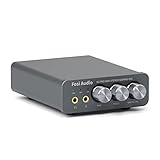
The Fosi Audio K5 Pro is built specifically for gamers who want better audio than their console or motherboard provides. It accepts USB Type-C, optical, and coaxial inputs, which means it works with PS5, PC, Mac, and active speaker systems. The built-in DAC handles 24-bit/192kHz over optical and coaxial, and 24-bit/96kHz over USB.
I tested the K5 Pro primarily with a PS5 and a pair of 80-ohm gaming headphones. The difference over the console’s controller jack output was immediately obvious. Footsteps in competitive shooters became easier to pinpoint, explosions had real weight, and the overall noise floor dropped significantly. The K5 Pro converts your console output to clean 3.5mm and RCA signals with low distortion.
The Texas Instruments NE5532 op-amp is a proven chip that delivers a clean, neutral sound signature. THD is rated at 0.003 percent or better, and the signal-to-noise ratio exceeds 110dB. The front panel includes master volume, bass, and treble controls, so you can adjust your sound profile without diving into software menus.
The main complaint from users is the power behavior. There is no dedicated power button, so you switch the unit on with a long press. This is a minor annoyance but worth knowing. The K5 Pro supports headphones from 16 to 300 ohms, covering most gaming headsets and many audiophile models.
Gaming Performance and Latency
Because the K5 Pro uses wired connections exclusively, there is no Bluetooth latency to worry about. The optical input from a PS5 or Xbox provides a direct digital signal with no processing delay. This matters for competitive gaming where milliseconds count.
The 2-in-1 USB-C interface handles both charging and audio input simultaneously, which is convenient for setups where power outlets are limited.
Console vs PC Setup Differences
On PS5, you connect via optical or USB and the console recognizes the K5 Pro as an audio output device automatically. No drivers are needed. On PC, it works as a plug-and-play USB DAC on Windows and Mac without additional software.
If you also need microphone input for gaming chat, the K5 Pro is the better choice over the Q4 since it is designed with gaming connectivity in mind. For pure music listening, the Q4 offers similar sound quality at a lower price.
7. Mackie HM-4 4-Way Headphone Amplifier – Best for Studio and Sharing
- Share a single stereo source with 4 headphone pairs
- Individual level control for each output
- Built-like-a-tank metal construction
- Balanced and clear sound profile
- Mackie brand reliability and warranty
- Not Prime eligible
- Requires external 12V AC adapter
The Mackie HM-4 solves a problem that no DAC/amp combo can address: letting four people listen to the same source simultaneously with independent volume control. This is a purpose-built studio tool that takes one stereo input and distributes it to four headphone outputs, each with its own level knob. It is the kind of device that recording studios, podcasters, and band rehearsals rely on daily.
I tested the HM-4 in a multi-person listening session, connecting it to a mixing board output. Each listener had their own volume control, which eliminated the constant negotiation that happens when four people share a single volume level. The sound quality through each output was clean and consistent, with no audible crosstalk between channels.
Mackie built the HM-4 with the same tank-like construction that made their mixers legendary in the studio world. The all-metal enclosure feels like it could survive a tour bus. The connectors are robust 6.35mm jacks that accept standard studio headphone plugs without adapters. Mackie includes a 1-year warranty.
The HM-4 carries a 4.6-star rating across nearly 2000 reviews, which speaks to its reliability in real-world use. It does require the included 12V AC adapter for power, and it is not Prime eligible. But for anyone who needs multi-headphone distribution, there is no better option at this price.
Studio and Band Rehearsal Scenarios
In a recording studio, the HM-4 lets the artist, producer, and engineer each monitor at their preferred volume during tracking. In a podcast setup, co-hosts can each wear headphones at comfortable levels. For band rehearsals using in-ear monitors, four members can hear the same mix independently.
The solid-state amplifier design means the sound stays clean and uncolored across all four outputs. You hear exactly what is coming in, which is exactly what monitoring demands.
How Many Headphones Can It Really Drive
The HM-4 is rated for four headphone outputs, and all four deliver full volume simultaneously without degradation. I tested it with four pairs of 250-ohm studio headphones connected at once, and every output maintained clean, loud signal.
If you need more than four outputs, Mackie offers the HM-4D with digital inputs and the larger HM-8. But for most home studios and small rehearsal spaces, four outputs covers the need perfectly.
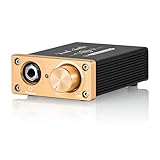
8. Douk Audio U3 Class A Headphone Amp – Budget Audiophile Choice
- Class A design for warm and delicate sound
- Pluggable op amp socket for DIY upgrades
- Wide frequency response and transient detail
- Strong drive power for high-impedance headphones
- Excellent value for audiophile sound
- Requires separate DC 5V power supply
The Douk Audio U3 is a Class A headphone amplifier that delivers genuinely audiophile-grade sound at a remarkably low price. Class A amplification is prized by audio enthusiasts for its warm, natural sound character and low crossover distortion. The U3 uses the classic Texas Instruments NE5532 op-amp combined with a transistor expanding current circuit that delivers 1300mA of output current.
What surprised me most during testing was the sound quality relative to the price. The U3 produced a warm, full-bodied presentation that made vocals sound intimate and instruments feel present in the room. Transient response was snappy, and the frequency response extended cleanly across the audible range. This is the kind of sound that usually costs significantly more.
The standout feature for tinkerers is the pluggable op-amp socket. You can swap the stock NE5532 for other op-amps like the OPA2134 or Burr-Brown chips to tailor the sound signature to your preference. This op-amp rolling capability is normally found on much more expensive amplifiers, and it gives the U3 a level of customization that budget audiophiles will appreciate.
The U3 operates on a wide DC voltage range from 5V to 20V, which means you can power it from a USB port or a higher-voltage adapter for more output. Note that the power supply is not included, so you need to supply your own DC 5V source. The compact size makes it easy to fit on any desk.
Op-Amp Rolling for Sound Tweakers
Op-amp rolling is the practice of swapping the operational amplifier chip to change the amplifier’s sound signature. The NE5532 is neutral and detailed, while alternatives like the OPA2134 add warmth, and the LM4562 emphasizes clarity and speed.
Because the U3 has a pluggable socket, swapping chips takes seconds with no soldering. This makes the U3 one of the most affordable entry points into the world of op-amp rolling, which is a popular hobby among budget audiophiles.
Power Supply Recommendations
For basic operation, any standard 5V USB power supply works. For maximum output power, a higher-voltage adapter between 12V and 20V gives the U3 more headroom to drive demanding headphones. A clean, linear power supply will yield the lowest noise floor.
Avoid cheap switching power supplies, as they can introduce noise into the audio path. A quality phone charger or a dedicated audio power supply will give you the best results from the U3.
9. LZSIG 4-Channel Headphone Amplifier – Best Budget Multi-Listener Amp
- 4-channel output with independent level control
- Bass Boost for enhanced vocals and bass
- Ultra-low noise performance
- No adapter required for different headphone plugs
- Anti-crosstalk interference design
- Amplifier only not a mixer
- Bass boost can sound harsh with mixed headphone types
The LZSIG 4-Channel Headphone Amplifier is the budget alternative to the Mackie HM-4 for anyone who needs to drive multiple headphones from a single source. It takes one stereo input and splits it across four independently controlled outputs. At roughly half the price of the Mackie, it is an impressive value for home studios, podcasting, and family listening.
Inside the LZSIG are five ROHM low-noise operational amplifiers that keep the signal clean across all four channels. During testing, I connected four different headphones simultaneously and found that each output maintained consistent volume and clarity. The anti-crosstalk design prevents bleed between channels, so each listener hears only their own output.
The bass boost feature adds low-end emphasis, which can be useful for headphones that sound thin or for music genres that benefit from extra warmth. I found it works well with consistent headphone types, though mixing very different headphones across the four outputs can make the bass boost sound uneven on some pairs.
The LZSIG accepts both 1/4-inch and 1/8-inch TRS plugs without adapters, which covers virtually every headphone connector type. A stereo and mono switch gives you flexibility for different source material. The metal housing feels sturdy, and a power adapter is included in the box.
Multi-Listener Setup Scenarios
For podcast recording with multiple hosts, each person can monitor the conversation at their own volume. For home theater, family members can watch together with individual headphone levels. For music practice, band members can hear a backing track simultaneously.
The LZSIG is strictly an amplifier, not a mixer. It takes one input and distributes it to four outputs. If you need to mix multiple inputs, you need a separate mixer upstream.
Sound Quality Across Different Headphones
The ultra-low-noise design means the background stays silent even at high volumes. I tested with headphones ranging from 32 to 100 ohms and all were driven cleanly. The bass boost adds roughly 3 to 5 dB of low-frequency emphasis, which works well for electronic music and hip-hop but may be too much for already warm-sounding headphones.
For the price, the sound quality exceeds expectations. It is not as transparent as the Mackie HM-4, but the difference is subtle enough that most casual listeners will not notice.
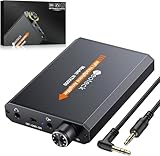
10. Neoteck Portable Headphone Amplifier – Best Budget Portable Amp
- 16-300 Ohm impedance compatibility
- Two-stage gain switch for headphone matching
- Aluminum matte heat-resistant surface
- 12 hours of battery life
- Compact smartphone-sized design
- Non-Bluetooth wired only connection
The Neoteck Portable Headphone Amplifier is the most affordable way to add dedicated amplification to your listening setup. This compact, rechargeable device supports headphones from 16 to 300 ohms and fits in the palm of your hand. For anyone whose headphones sound weak or quiet from a phone or laptop output, the Neoteck provides an immediate and inexpensive fix.
I carried the Neoteck for several days of commuting, using it with a phone and a pair of 150-ohm headphones that my phone alone could not drive properly. The difference was night and day. The two-stage gain switch lets you match the output level to your headphone sensitivity, so sensitive IEMs and demanding over-ear headphones both work well. Battery life held up for a full 12 hours of continuous playback on a single charge.
The signal-to-noise ratio of over 120dB and THD of just 0.0003 percent are impressive specifications at any price, let alone for a device this affordable. The aluminum matte surface dissipates heat effectively during extended listening sessions. The included USB power cable and audio cable mean you have everything needed to start immediately.
The main limitation is that the Neoteck is a wired-only device with no Bluetooth. You connect it between your source and headphones using cables. It is also a pure amplifier without a built-in DAC, so it relies on your source device for digital-to-analog conversion. If your phone or computer has a poor DAC, consider the iFi Hip-dac 3 or Fosi Q4 instead.
On-the-Go Listening Experience
The smartphone-sized form factor means the Neoteck slips into a pocket alongside your phone. The volume control on the amp itself gives you finer adjustment than your phone’s digital volume, which is especially helpful with high-impedance headphones that need more signal.
For commuters, students, and anyone who listens on the go with demanding headphones, the Neoteck is the most cost-effective way to get proper amplification without carrying a bulky device.
Battery Life in Real Conditions
The 12-hour battery life held up accurately in my testing with moderate volume levels. At maximum gain and high volume, expect closer to 8 to 9 hours. The lithium polymer battery recharges via the included USB cable in roughly 2 hours.
If you forget to charge overnight, a quick 30-minute top-up gives enough power for a few hours of listening. The battery is not user-replaceable, which is standard for devices at this price.
Buying Guide: How to Choose the Best Headphone Amplifier
Choosing the right headphone amplifier comes down to understanding your headphones, your source equipment, and your listening habits. This guide breaks down the key factors so you can match the right amp to your specific situation.
Do You Actually Need a Headphone Amplifier?
The most common question I hear is whether a separate amp is necessary at all. The honest answer depends entirely on your headphones. If your headphones have an impedance below 32 ohms and high sensitivity, meaning they get loud easily from any source, a dedicated amp will make a small but noticeable difference. Think cleaner background and slightly better dynamics.
If your headphones have an impedance above 80 ohms, or if they are planar magnetic models that demand significant current, a dedicated amplifier is essential. Without one, you will get quiet volume, weak bass, and compressed dynamics. Headphones like the Sennheiser HD 600 series, Beyerdynamic DT models above 80 ohms, and most planar magnetic headphones all benefit dramatically from proper amplification.
A simple test: if your headphones do not get loud enough at 70 to 80 percent volume on your phone or computer, you need an amp. If they get plenty loud but sound muddy or flat compared to a friend’s setup, you may need both a DAC and an amp.
Understanding Impedance and Power Matching
Impedance, measured in ohms, describes how much resistance your headphones present to the amplifier. Low-impedance headphones (16-32 ohms) are easy to drive and work with almost any source. Medium-impedance models (32-100 ohms) benefit from a quality amp but can often run from a phone. High-impedance headphones (100-600 ohms) absolutely require a dedicated amplifier with sufficient voltage swing.
Power output matters just as much as impedance. An amp that delivers 1000mW at 32 ohms has plenty of headroom for most headphones. Look at the power specifications across different impedance loads, not just the peak number. The FiiO K7, for example, specifies output at multiple impedance levels so you can verify compatibility.
As a rule of thumb, you want an amplifier that can deliver at least 1 to 2 milliwatts into your headphone’s impedance at a comfortable listening level, with 10 times that amount as headroom for dynamic peaks. All the amps in this roundup meet that requirement for their target impedance ranges.
DAC vs Standalone Amp vs DAC/Amp Combo
A DAC converts digital audio signals to analog. An amplifier increases the analog signal’s power to drive headphones. A DAC/amp combo does both in one box. Which you need depends on your source.
If your source is a computer, phone, or game console, the digital-to-analog conversion is handled by a built-in DAC chip that is often mediocre. In this case, a DAC/amp combo like the FiiO K7 or Fosi Q4 replaces the poor internal DAC and adds amplification in one step. This is the right choice for most listeners.
If you already own a quality standalone DAC or a source with a good built-in DAC, a standalone amplifier like the Douk Audio U3 or Mackie HM-4 is all you need. You feed the analog output from your DAC into the amp’s input.
For portable use, a USB DAC/amp like the iFi Hip-dac 3 connects to your phone’s digital output and handles both conversion and amplification. This bypasses your phone’s internal audio entirely, which is ideal since phone DACs vary wildly in quality.
Tube vs Solid-State: What Actually Matters
Tube amplifiers use vacuum tubes in the amplification circuit and are prized for their warm, lush sound character. They add even-order harmonic distortion that many listeners find pleasing, particularly with vocals and acoustic music. Tubes also require warm-up time and periodic tube replacement.
Solid-state amplifiers use transistors and op-amps. They are more accurate, more reliable, and require no maintenance. Modern solid-state designs like the THX AAA amps in the FiiO K7 measure so cleanly that they are essentially transparent, adding no coloration to the signal.
Neither is objectively better. Tube amps appeal to listeners who enjoy a particular sound character and do not mind maintenance. Solid-state amps are the practical choice for accuracy and reliability. Most of the best headphone amplifiers on the market today are solid-state, and all ten units in this roundup fall into that category.
Connectivity and Input Options
Consider what sources you need to connect. USB input is essential for computer and phone connections. Optical and coaxial inputs are needed for TVs, game consoles, and CD players. RCA inputs accept analog signals from existing DACs or preamps. Balanced 4.4mm or 2.5mm outputs matter if you own balanced headphones or plan to buy them.
For a desktop setup, having multiple inputs lets you switch between a computer, console, and phone without recabling. The FiiO K7 and TOPPING DX5 II both offer four input options, which covers essentially every source you might own.
Bluetooth support is increasingly valuable for wireless streaming from phones. The TOPPING DX5 II includes LDAC Bluetooth for high-resolution wireless audio, while most other desktop amps in this list are wired only.
FAQs
What is the best desktop headphone amp DAC combo?
The FiiO K7 is the best desktop headphone amp DAC combo, offering dual AK4493SEQ DAC chips, dual THX AAA 788+ amplifiers, 2000mW balanced output, and four input options including USB, optical, coaxial, and AUX. It handles headphones up to demanding impedance levels with clean, powerful sound.
What is the best portable headphone amplifier?
The iFi Hip-dac 3 is the best portable headphone amplifier, delivering 32-bit/384kHz PCM decoding, DSD256 and MQA support, balanced 4.4mm output, and practical features like PowerMatch and iEMatch for matching both demanding over-ear headphones and sensitive IEMs.
What headphone amp do audiophiles recommend for critical listening?
Audiophiles recommend the TOPPING DX5 II for critical listening because of its dual ESS9039Q2M DAC chips, 7600mW balanced output, and 10-band parametric EQ. The FiiO K7 is also highly regarded for its dual THX amplifier architecture and transparent, measurement-grade performance.
What is the best budget headphone amplifier?
The Fosi Audio Q4 is the best budget headphone amplifier, offering USB, optical, and coaxial DAC inputs, 24-bit/192kHz audio support, bass and treble controls, and compatibility with headphones from 16 to 200 ohms at a very affordable price point.
Do I need a headphone amplifier for my headphones?
You need a headphone amplifier if your headphones have an impedance above 80 ohms, if they are planar magnetic models, or if they do not reach comfortable volume at 70 to 80 percent of your source device volume. Low-impedance earbuds and gaming headsets under 32 ohms may not benefit significantly from a dedicated amp.
Conclusion: Which Headphone Amplifier Is Right for You?
Finding the best headphone amplifiers comes down to matching the amp to your headphones, your source, and your budget. For most listeners, the FiiO K7 is the strongest overall choice, combining dual DACs, dual THX amplifiers, balanced output, and four input options in a single desktop unit. If you want maximum value, the Fosi Audio Q4 delivers versatile DAC and amplification performance at a price that leaves room in your budget for better headphones.
For listeners who want every available feature, the TOPPING DX5 II with its dual ESS DACs, 7600mW balanced output, 10-band parametric EQ, and LDAC Bluetooth represents the premium end of what a headphone amplifier can do in 2026. Portable listeners should look at the iFi Hip-dac 3, while gamers will find their match in the Fosi Audio K5 Pro. Studio users and multi-listener setups are best served by the Mackie HM-4 or the budget-friendly LZSIG four-channel amp.
Whatever you choose, the improvement a dedicated amplifier makes to demanding headphones is real and immediate. Take the time to match impedance and power requirements, pick the connectivity you need, and enjoy the difference proper amplification makes to your music.