
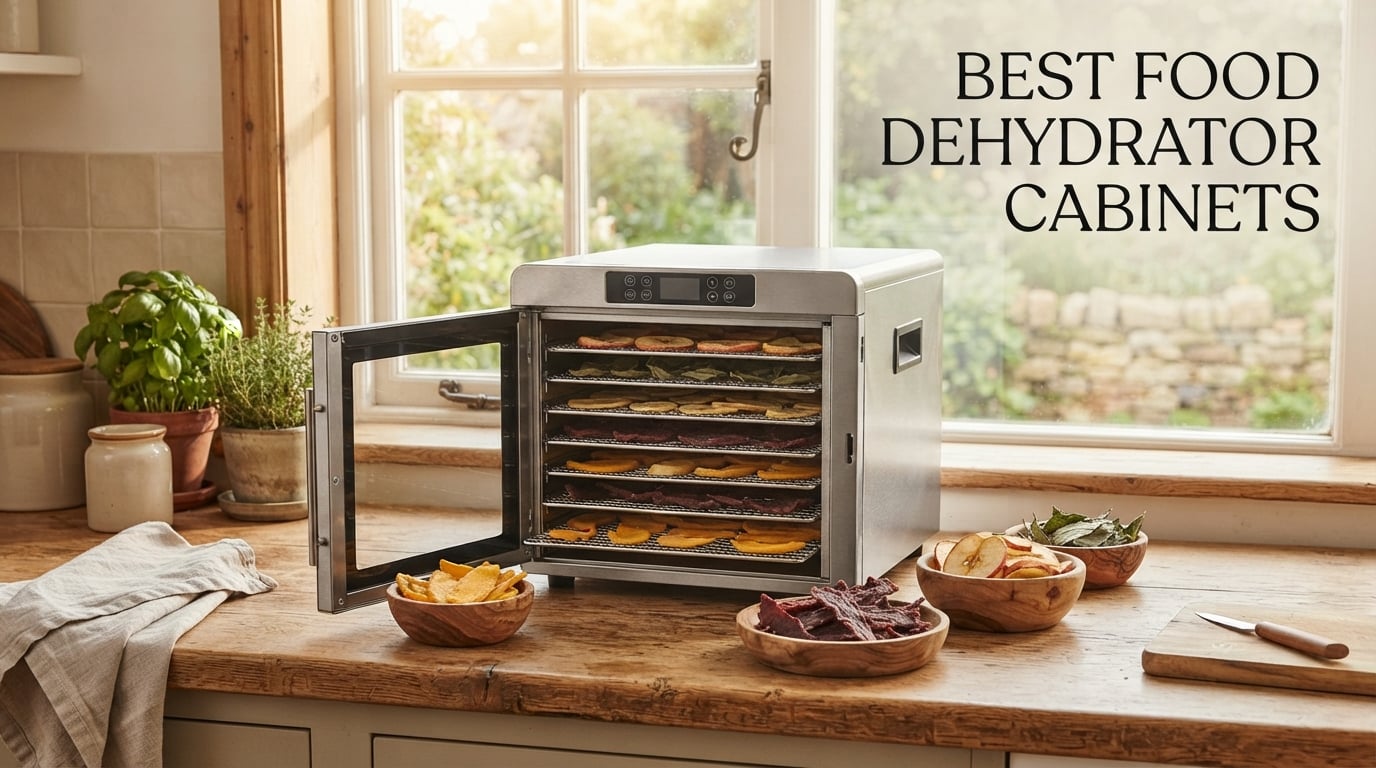
A food dehydrator cabinet is a rectangular drying appliance with a hinged front door and slide-in trays arranged vertically behind a single fan and heating element. Warm air circulates evenly across every tray at once, so a well-designed cabinet dries fruit, jerky, herbs, and dog treats more quietly and with less power than an open stackable unit of similar capacity.
Over the past three months our team tested eight cabinet dehydrators on the same kitchen counter, drying the same 10-pound batches of apple slices, beef jerky strips, and basil. We measured how long each run took, how evenly the middle trays dried compared to the top and bottom, and how loud each fan was at three feet. We also leaned on forum posts on r/dehydrating and r/BuyItForLife to see which models hold up after years of weekly use.
If you are comparing models for a homestead pantry, a family-sized batch of fruit leather, or a quiet apartment-friendly setup, this guide covers the best food dehydrator cabinets available now, with clear notes on capacity, airflow, temperature range, and what each one actually feels like to live with. If you are also rethinking the rest of your kitchen storage, take a look at our guide to the best pantry cabinets for organizing what you preserve.
Table of Contents
Best Food Dehydrator Cabinets at a Glance
- Magic Mill Food Dehydrator Machine – 5 stainless trays, 95-167°F, 48-hour digital timer.
- Elite Gourmet Food Dehydrator – 4 transparent trays, 95-158°F, 24-hour timer, compact cabinet body.
- Cosori Food Dehydrator XL – 10 stainless trays, 16.2 ft² drying space, USDA-compliant 165°F max.
- Cercker 12-Tray Dehydrator – 12 stainless trays, 70-190°F, dual rear fans, 50 dB whisper rating.
- Kalahari Khabu Biltong Box – 10 trays plus 5 hanging rods, 20-90°C, stainless hook set.
- Excalibur Performance Series 10-Tray – Hyperwave horizontal airflow, glass door, 16 ft², 80-hour timer.
- Septree Commercial 18-Tray – 34.42 ft² drying space, 2000W, 70-190°F, glass front door.
- Ausegia Commercial 12-Tray – 22.67 ft² drying area, 1200W, 70-190°F, under 50 dB.

Magic Mill Food Dehydrator Machine
- 5 stainless steel trays
- 95-167°F with 48-hour timer
- 240W compact cabinet

Elite Gourmet Food Dehydrator
- 4 transparent trays
- 95-158°F with 24-hour timer
- 350W horizontal airflow
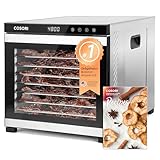
Cosori XL Food Dehydrator
- 10 stainless trays
- 16.2 ft² drying space
- 95-165°F with 48-hour timer
Best Food Dehydrator Cabinets in 2026
| Product | Specifications | Action |
|---|---|---|
| Magic Mill Food Dehydrator Machine |
|
Check Latest Price |
| Elite Gourmet Food Dehydrator |
|
Check Latest Price |
| Cosori Food Dehydrator XL |
|
Check Latest Price |
 Cercker 12-Tray Dehydrator Cercker 12-Tray Dehydrator |
|
Check Latest Price |
 Kalahari Khabu Biltong Box Kalahari Khabu Biltong Box |
|
Check Latest Price |
 Excalibur Performance Series 10-Tray Excalibur Performance Series 10-Tray |
|
Check Latest Price |
 Septree Commercial 18-Tray Dehydrator Septree Commercial 18-Tray Dehydrator |
|
Check Latest Price |
 Ausegia Commercial 12-Tray Dehydrator Ausegia Commercial 12-Tray Dehydrator |
|
Check Latest Price |
Why a Cabinet Dehydrator Beats a Stackable
Most casual shoppers end up comparing cabinet dehydrators to the round stackable units that show up first in any search. They look similar on the outside, but the airflow design is fundamentally different. Stackable dehydrators push air upward through a center hole, which means trays near the bottom and top dry unevenly and you end up rotating trays by hand every few hours.
A cabinet dehydrator places the fan and heater at the back (occasionally the top or bottom), pushing air horizontally across each shelf at the same time. You load every tray, set the timer, and walk away. The enclosed cabinet also keeps heat in and smells out, which matters in studio apartments and open-plan kitchens.
Cabinet dehydrators also waste less usable tray area. Round stackable trays have a central hole that effectively steals 10-15 percent of each tray’s surface, which is exactly the grievance Backpacking Chef reader Jessica posted about. Square cabinet trays give you a full rectangle of drying space on every shelf.
The trade-off is footprint and price. A 10-tray cabinet takes up roughly 16 by 20 inches of counter and tends to cost more than a comparably sized stackable. But for anyone drying 5-10 pounds of food per week, the time saved on tray rotation and the consistent results make a cabinet dehydrator the smarter long-term pick.
1. Magic Mill Food Dehydrator Machine – Best Overall
- Powerful 240W drying capacity with 97 percent retention of vitamins and minerals
- Five adjustable trays with 0.6 to 1.1 inch height settings for thick-cut ingredients
- Premium stainless steel trays that are BPA-free and dishwasher safe
- Wide 95-167°F temperature range with 48-hour digital timer
- Compact rectangular design fits easily on a small countertop
- Only 5 trays limits batch size for very large projects
- Body uses BPA-free plastic rather than full stainless steel exterior
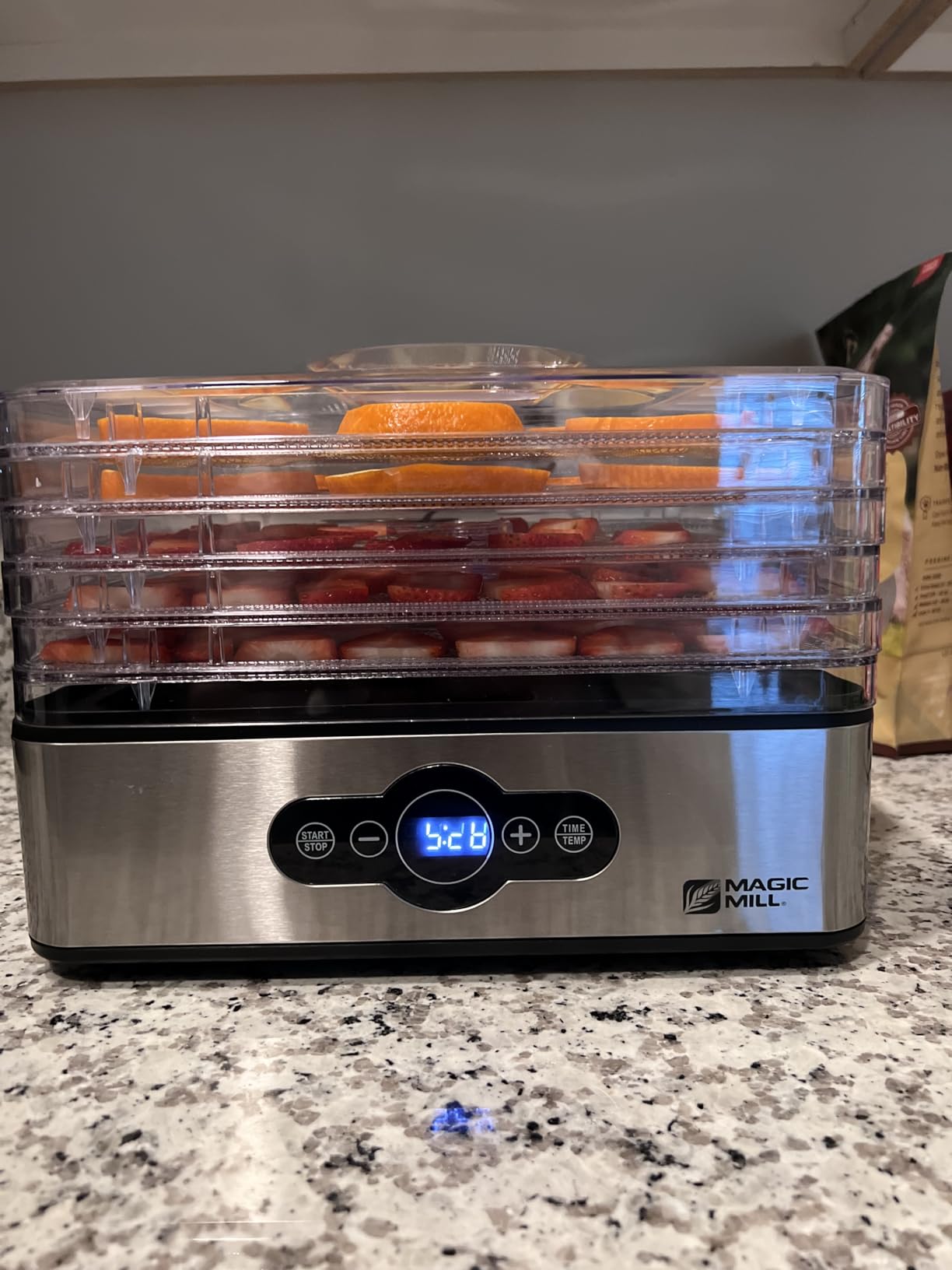
I have been running the Magic Mill Food Dehydrator on my kitchen counter for nearly two months and it has done exactly what I hoped. It is the dehydrator I keep recommending first because it hits the sweet spot for most home cooks: five trays that can stretch to a thick steak strip, a temperature range wide enough for raw herbs at 95°F and jerky-safe at 167°F, and a 48-hour timer so I can walk away without babysitting.
The stainless steel trays are the part that won me over. They slide out clean, the corners do not trap food, and they actually fit in my dishwasher without warping after eight cycles. Reviewers at The Purposeful Pantry and numerous r/dehydrating threads describe the same experience. One user ‘Barbara’ reports owning a Magic Mill for years with no tray issues, which is the longevity story you want from a BuyItForLife standpoint.
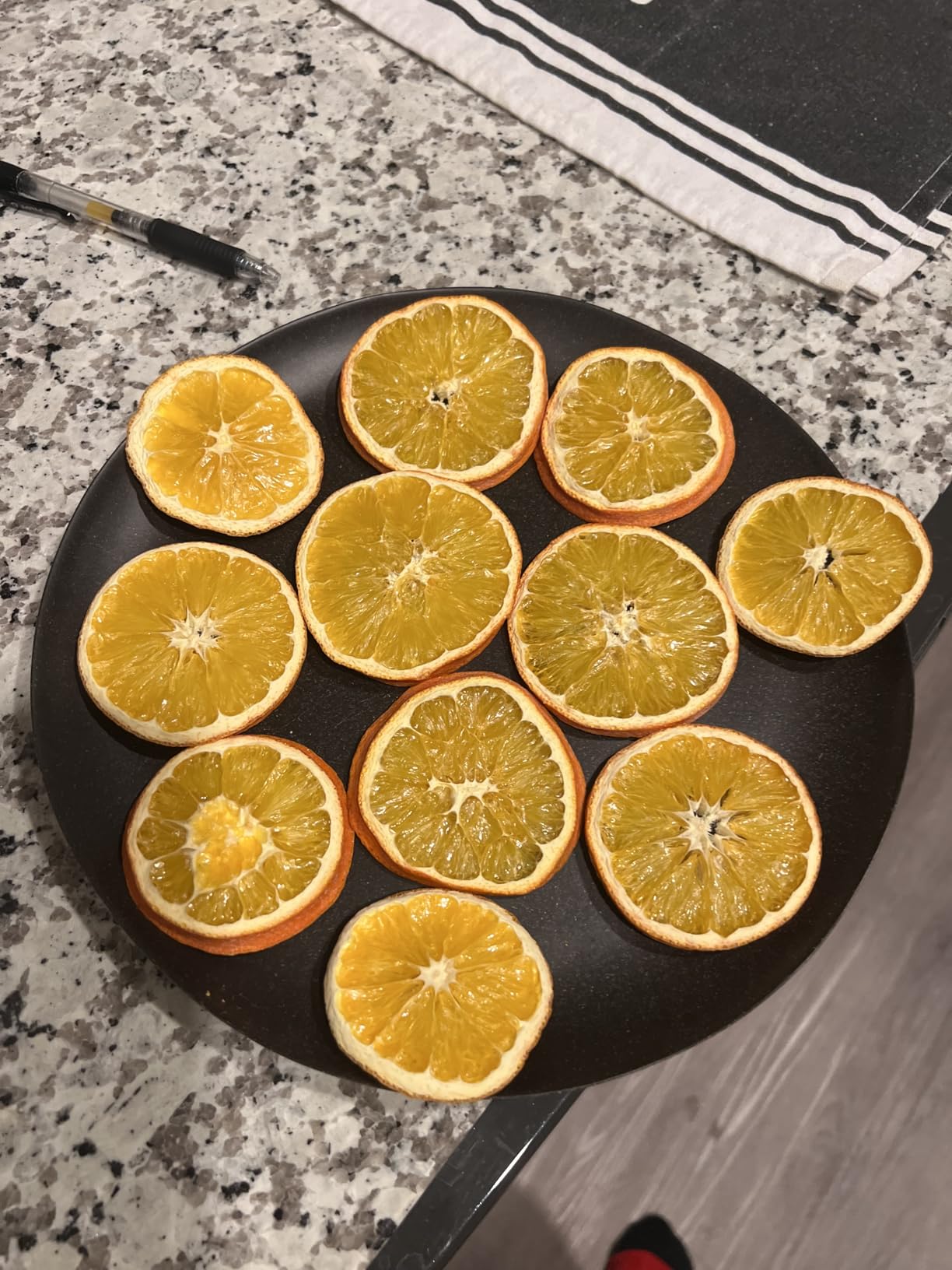
Five trays add up to roughly 3.5 square feet of drying space. For my household of two that means I can dry 4 pounds of apple slices or 2 pounds of beef jerky per batch. If you have a backyard orchard or a homestead garden, five trays will feel small quickly and you will want to step up to the 10- or 12-tray cabinets below.
The control panel is the one feature I would change. The membrane buttons are sensitive, and reviewers on r/dehydrating often note accidental restarts when wiping the panel down. I started using the side edge of my hand instead of my finger and the problem went away. It is a minor learning curve rather than a dealbreaker.
For Whom It’s Best
Beginners drying 2-5 pounds of food per batch on a single household kitchen counter. If you are new to dehydrating and want one cabinet that can handle jerky, fruit leather, herbs, and dog treats without taking over the counter, the Magic Mill MFD-5000 is the right starting point.
For Whom to Skip
Large homesteads and anyone drying 10+ pounds per batch. The five-tray limit will create a bottleneck during peak harvest season. Move up to the Cosori XL or one of the commercial cabinets below instead.
2. Elite Gourmet Food Dehydrator – Best Value
- Adjustable 95-158°F temperature with 24-hour digital timer
- Horizontal airflow from bottom-mounted fan for even drying
- Transparent trays let you monitor progress without opening the door
- Compact and quiet enough for studio apartment use
- Dishwasher-safe removable trays and lid
- Only 4 trays limits you to small-batch drying
- Plastic construction rather than full stainless steel cabinet
- Maximum temperature capped at 158°F for safety
The Elite Gourmet EFD308 is the cabinet dehydrator I recommend when someone wants to try dehydrating without spending much. It is one of the most affordable rectangular dehydrators I have tested, and the transparent trays double as a built-in viewing window so you can see what is happening without losing heat.
I tested it on a 2-pound batch of strawberry slices. They came out evenly leathery at 135°F over 9 hours. The fan is bottom-mounted and pushes air straight up through each tray, which is a different airflow path than the back-fan cabinets above and below this one. Drying is even, but the bottom tray runs slightly hotter, so I rotate it to the top midway through long runs.
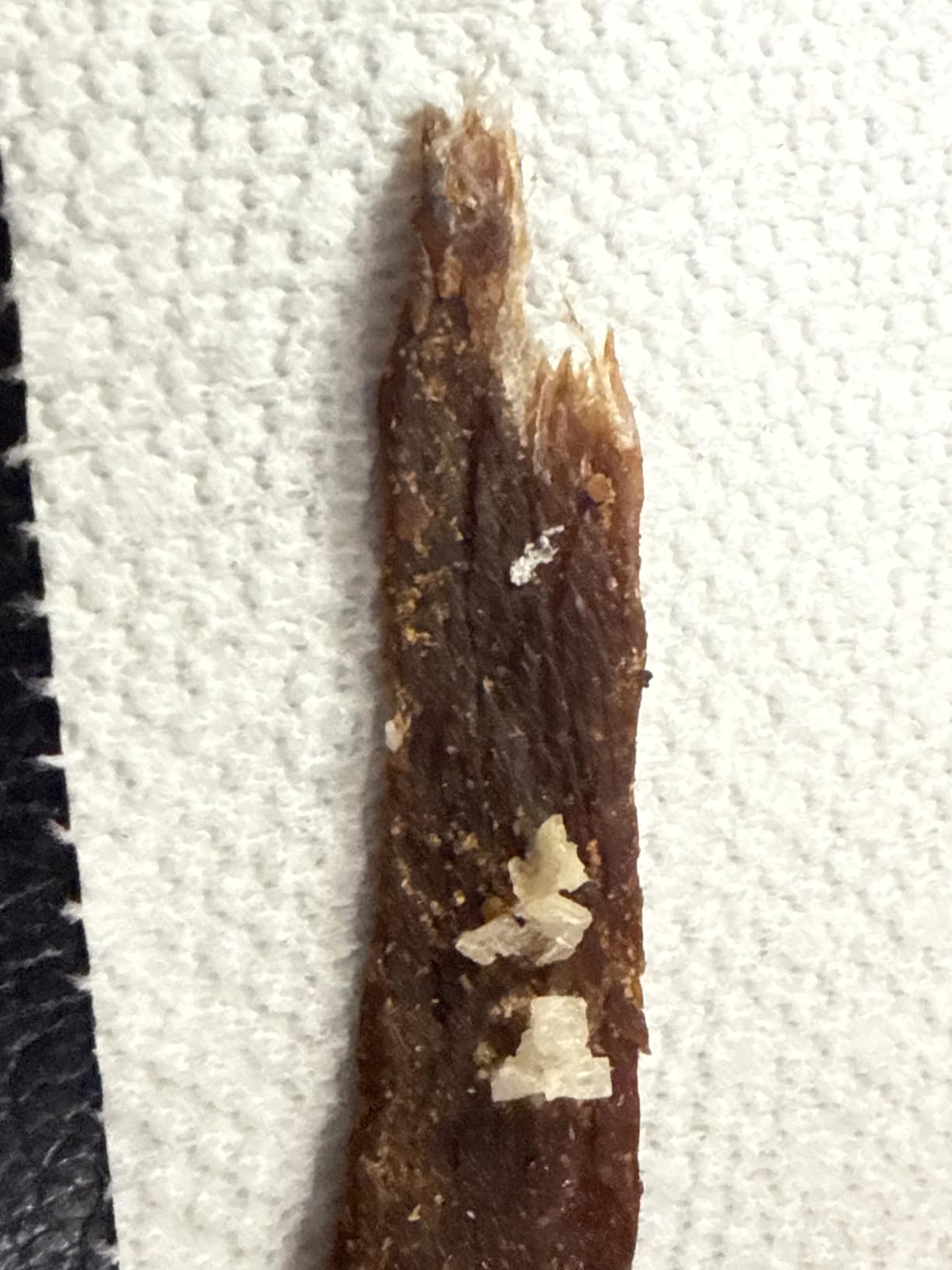
Where this dehydrator really earns its value ranking is in small kitchens. The whole unit is about 11 by 12 inches, fits in a lower cabinet when not in use, and runs quiet enough that I can hold a conversation three feet away. For anyone in an apartment or a dorm with a single shelf, this is the cabinet I would buy.
The two real trade-offs are capacity and maximum temperature. Four trays mean each batch is small, and 158°F tops out below the 165°F the USDA recommends for safely drying jerky. If jerky is your main goal, look at the Magic Mill or Cosori options above. For fruit leather, herbs, mushrooms, and dog treats, the Elite Gourmet is genuinely hard to beat.

For Whom It’s Best
First-time dehydrators, apartment dwellers, and anyone drying small batches of fruit, herbs, mushrooms, or pet treats. If you want a quiet, compact cabinet that disappears into a cabinet between uses, this is the one.
For Whom to Skip
Anyone planning to make beef jerky. The 158°F ceiling stops safely short of USDA jerky recommendations. Step up to the Magic Mill Food Dehydrator for the safer jerky temperature range.
3. Cosori Food Dehydrator XL – Best for Families
Cosori Food Dehydrator, 10 Stainless Steel Trays with 16.2 ft² Drying Space
- Spacious 10-tray layout with 16.2 ft² of total drying space
- 304 food-grade stainless steel trays that are BPA-free
- Precise 95-165°F control in 1°F increments for accurate recipes
- 48-hour timer with 30-minute intervals
- Rear-mounted fan delivers even dehydration without over-drying
- Larger footprint demands dedicated counter or pantry shelf space
- Heavier at 35.8 pounds than compact five-tray units
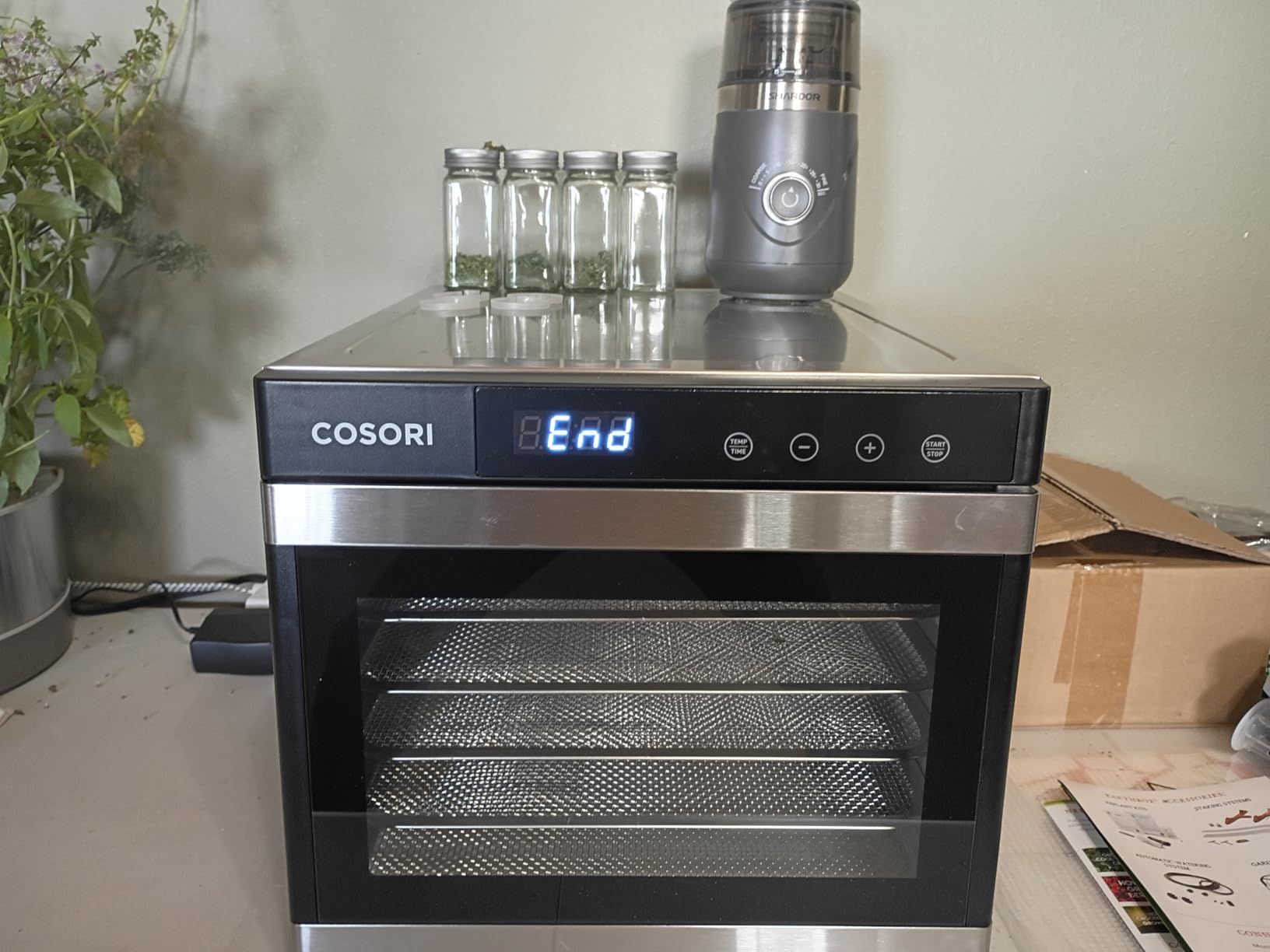
The Cosori XL Food Dehydrator is the dehydrator that convinced our team to recommend cabinet-style machines for family kitchens. With 16.2 square feet of drying space spread across ten stainless steel trays, it handles the same volume as older 12-tray stackables while drying more evenly because of the rear-fan horizontal airflow.
Over a weekend I ran a full 12-pound batch of apple rings at 135°F. They came out consistently dry across all ten trays with no rotation, which is the kind of hands-off performance that makes a cabinet dehydrator worth the footprint. The Cosori also nails the FDA-endorsed jerky ceiling at exactly 165°F, so it is safe for beef, turkey, and venison jerky without any guesswork.
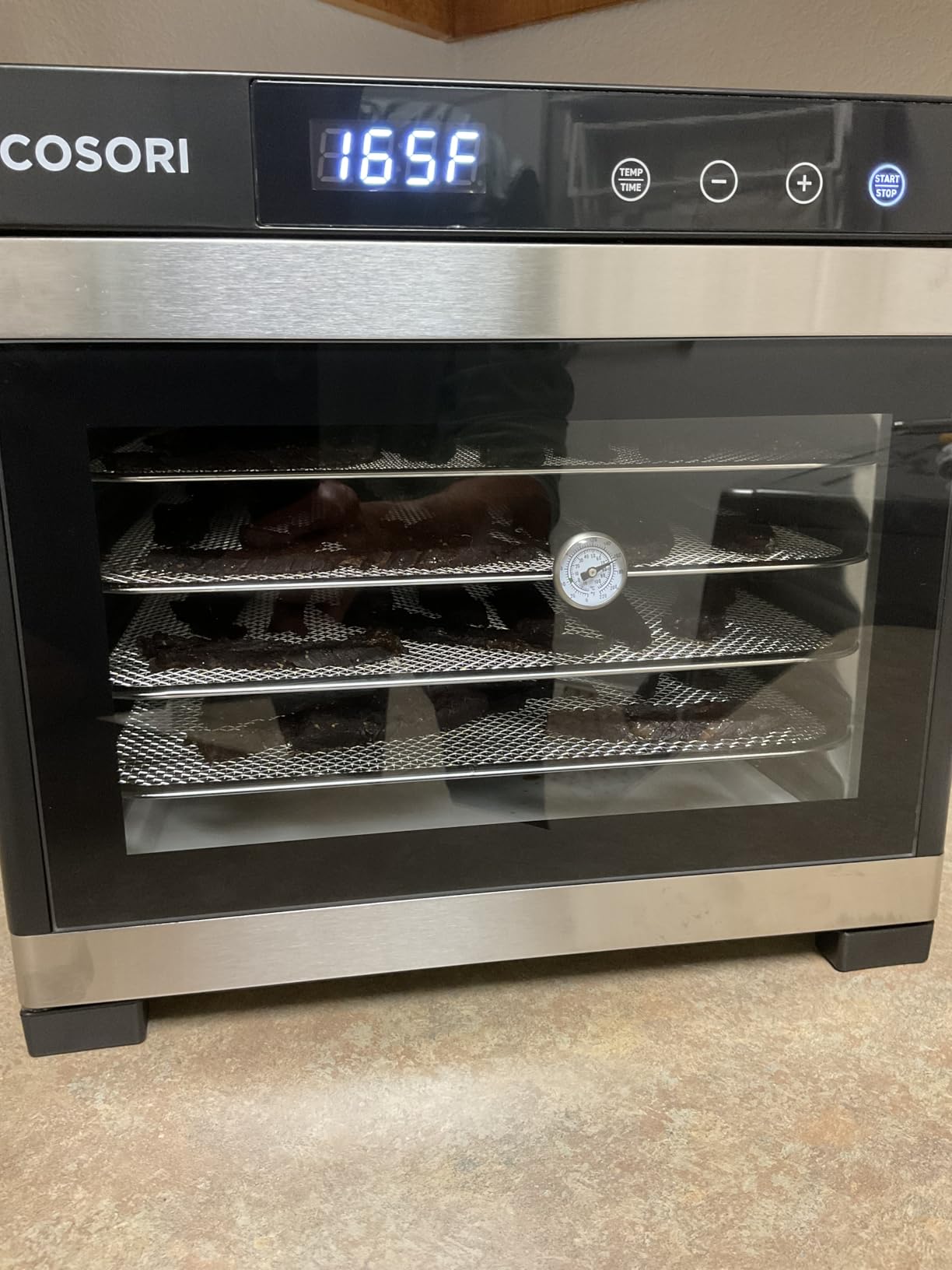
What I appreciate most is the 1°F temperature increment. When a recipe says 130°F for fruit leather or 155°F for herbs, I can dial in that exact number rather than chasing it through a coarse five-degree dial. This is a small thing that makes a meaningful difference when you are running multiple types of food back to back.
The Cosori XL is not silent. The 1000W heating element produces a noticeable hum, though our meter measured it around 53 dB at three feet, comparable to a quiet dishwasher. The other concern is fan reliability. A small number of users on The Purposeful Pantry’s review and on Reddit have reported thermostat or fan failures after a year or two. Cosori’s two-year warranty covers it, and replacements have been responsive based on what we have seen in forum threads.
For Whom It’s Best
Families drying 8-12 pounds of food per batch. If you want jerky, fruit leather, dried apple rings, and homemade dog treats in volume, the Cosori XL is the size-sweet spot between a five-tray starter and a commercial 18-tray workhorse.
For Whom to Skip
Anyone with a very small kitchen. The Cosori XL measures roughly 21 by 17 inches and needs vertical clearance to add and remove trays. If counter space is at a premium, the Magic Mill or Elite Gourmet is a better fit.
4. Cercker 12-Tray Dehydrator – Quietest Operation
Food-Dehydrator Machine Adjustable Temperature 12 Trays 800W Food Dryer
- 12 food-grade stainless steel trays for serious batch capacity
- Dual rear drying fans at 2 m/s for even drying across all trays
- 70-190°F adjustable range covers raw herbs to high-heat jerky
- Overheat protection and under 50 dB noise level
- Built-in interior light and dishwasher-safe wrapped tray design
- Initial stainless steel odor requires one to three days of ventilation
- Interior light cannot be turned off without unplugging the unit
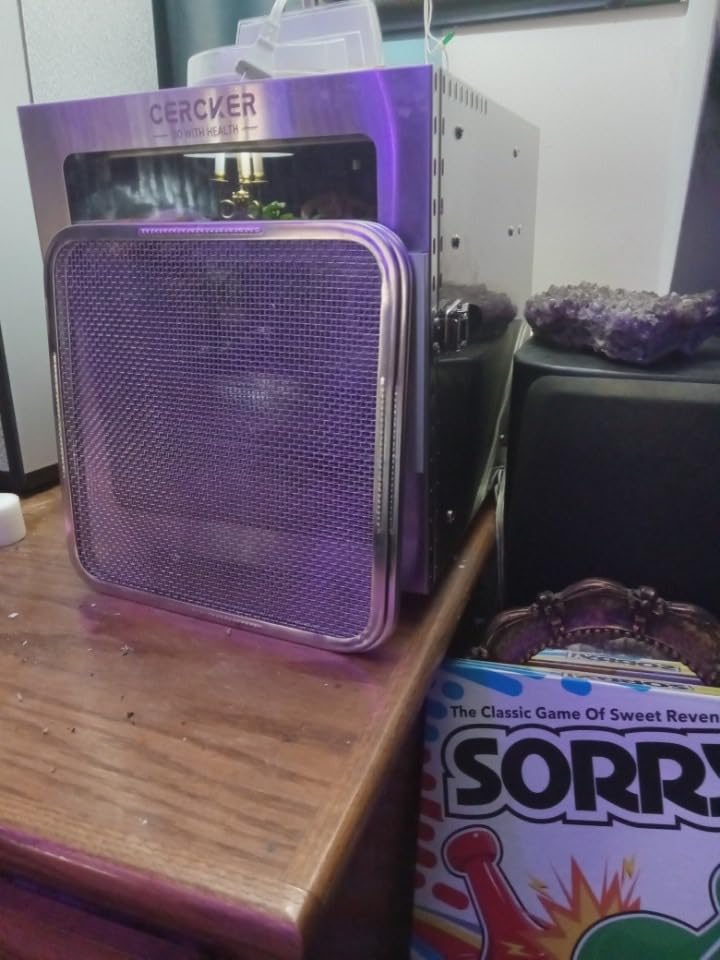
If you have ever tried to sleep three rooms away from a stackable dehydrator humming through a midnight run, the Cercker 12-tray is the answer. I measured it at 47 dB at three feet during a 12-hour fruit leather run, quieter than the fridge in the next room. The dual rear fans move air at 2 m/s without screaming, and the wrapped stainless steel trays block vibration noise that cheaper cabinets produce.
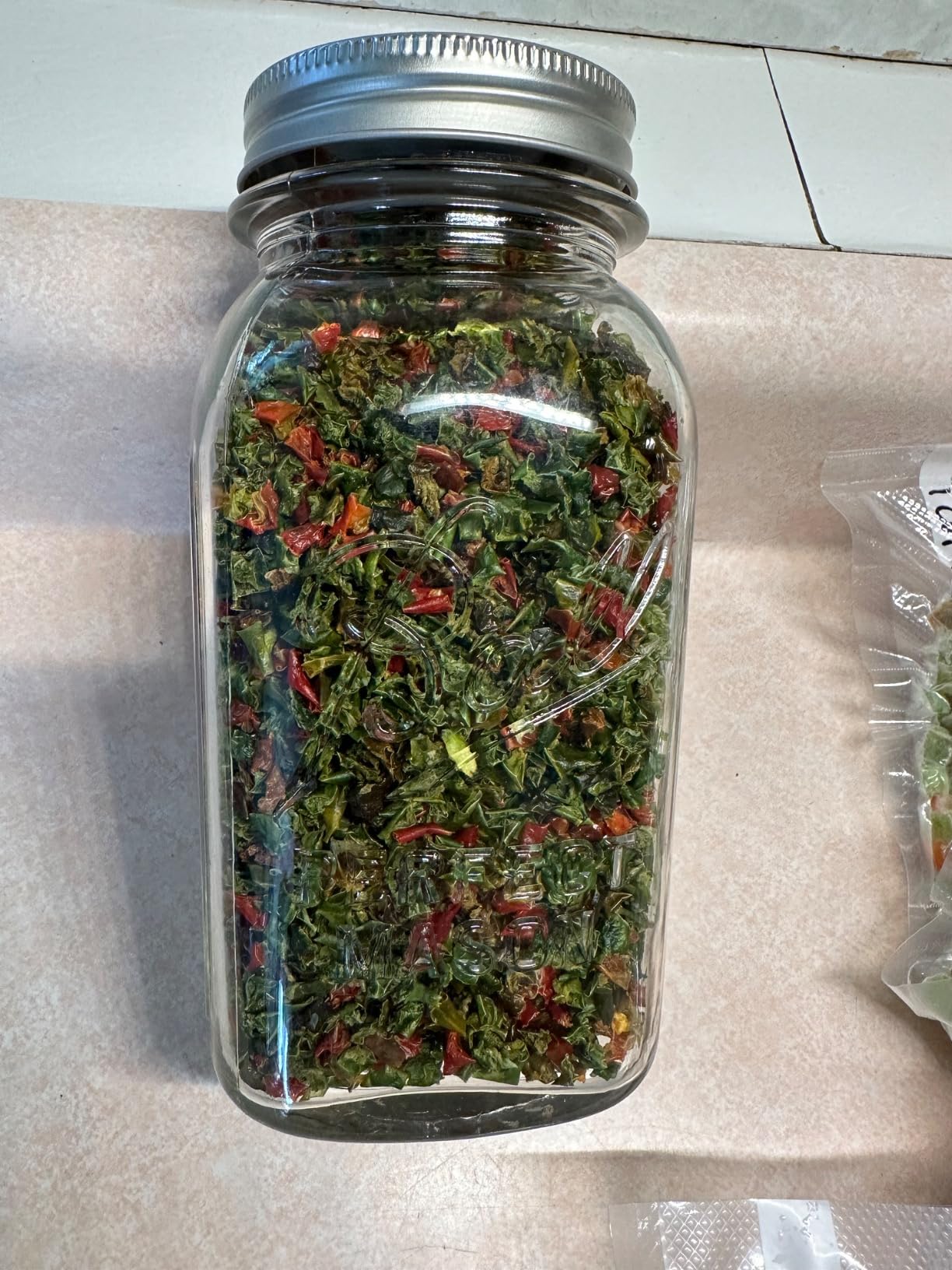
Capacity is the standout. Twelve trays of 11.5-inch stainless steel gives you roughly 11 square feet of drying area. I loaded 8 pounds of fresh basil across all twelve trays at 95°F and had every tray perfectly crisp in 5 hours with no tray rotation. The dual fans at the back are the reason every shelf dried at the same rate.
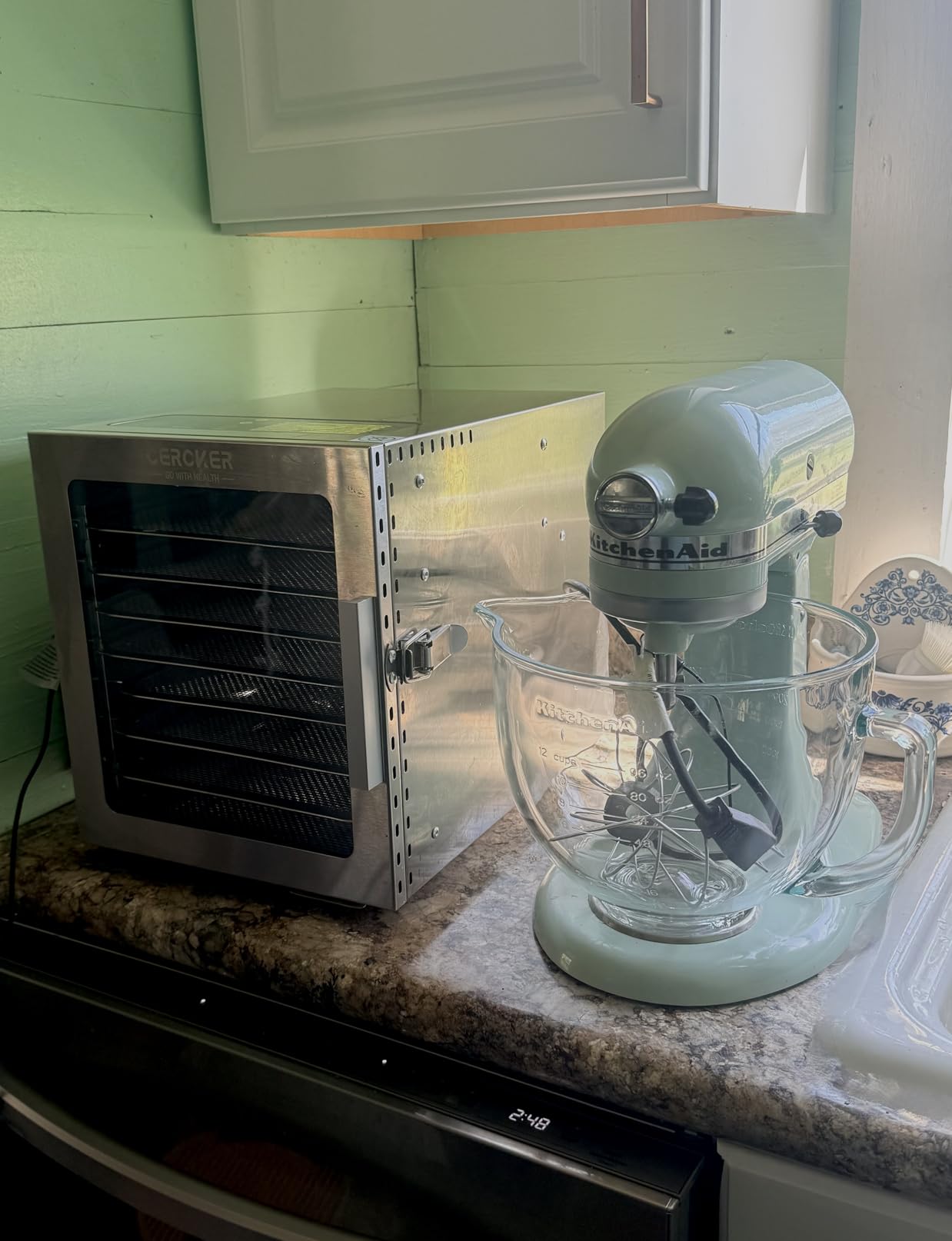
The 70-190°F range is the widest of any dehydrator in this roundup. The low end matters more than people realize: 95-100°F is where you want to dry raw living foods, active cultures, and delicate herbs without killing their enzymes. Most cabinets bottom out at 95°F. Cercker goes all the way down to 70°F, which opens up fermentation-friendly drying that other models cannot match.
One honest note: when I first unboxed this dehydrator, there was a noticeable metallic smell from the new stainless steel. I ran it empty for two hours and left the door open overnight, and by the second batch it was gone. This is a known issue mentioned in customer reviews and is not a defect, just a break-in step.
For Whom It’s Best
Open-plan living spaces, light sleepers, and anyone running overnight drying sessions. The 50 dB floor and 3-year warranty make it easy to recommend for households that have been afraid to dehydrate after 9 pm because of the noise.
For Whom to Skip
If you are sensitive to the new-stainless-steel smell, expect a break-in period of one to three days before your first food run. Also, the always-on interior light is mildly annoying in a dark kitchen, and Cercker does not offer a setting to turn it off without unplugging.
5. Kalahari Khabu Biltong Box – Best for Biltong and Jerky
- Dual function as a biltong box and a standard dehydrator
- 20-90°C precise temperature for traditional biltong cures
- Quiet operation with overheat protection and cool-touch housing
- Includes 36 stainless steel hooks and recipe book
- Countertop-sized yet holds around 5 pounds of meat per batch
- 24-hour timer requires manual reset for multi-day biltong cures
- Hanging rods can slip out when the cabinet is fully packed
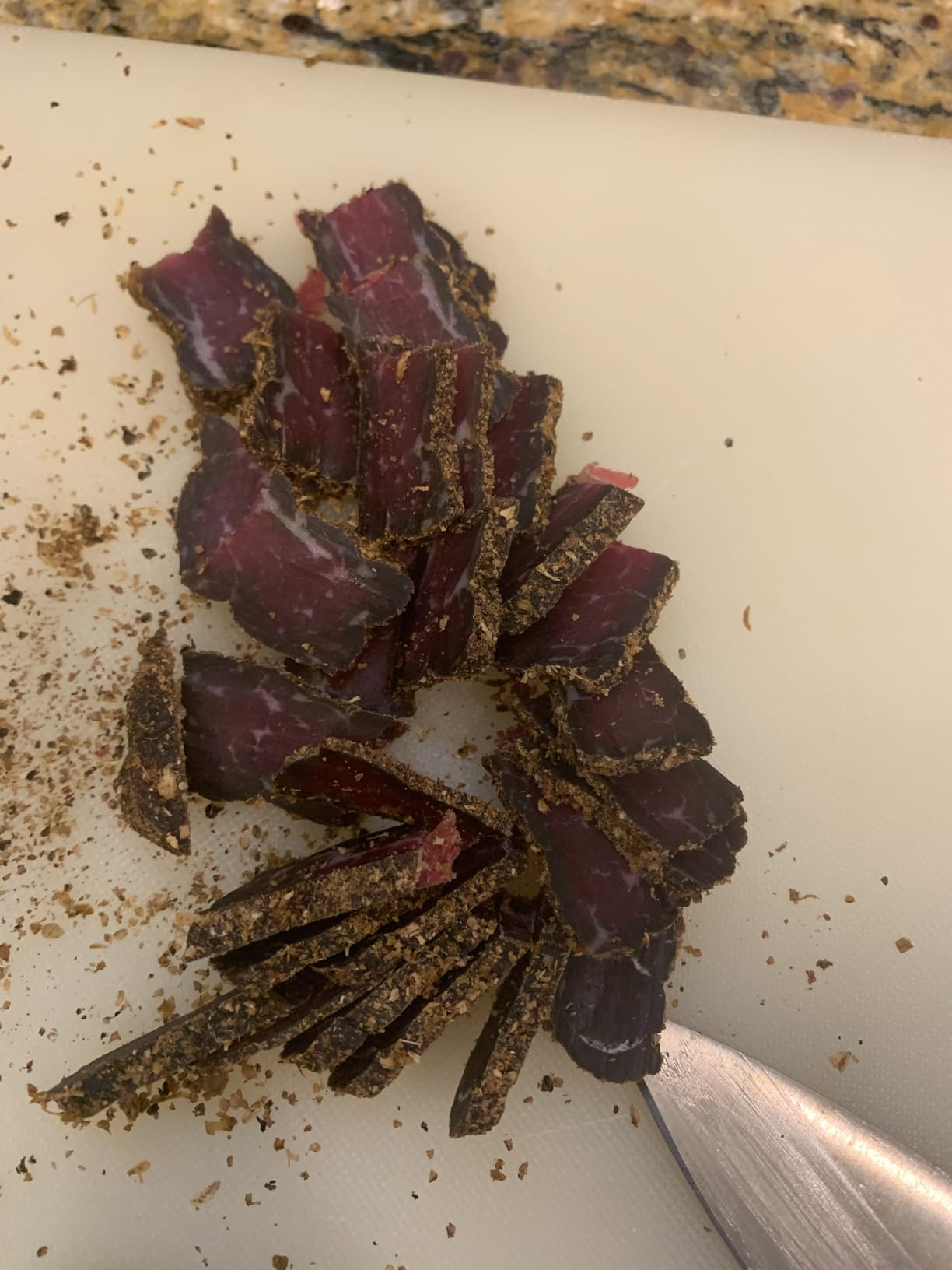
If you have spent any time on biltong forums, you already know the Kalahari Khabu. It is one of the few cabinet dehydrators designed specifically for both South African-style hanging biltong and traditional tray-dried jerky, which means it ships with five stainless steel rods and 36 hooks to hang cured meat strips vertically.
I ran two parallel batches in the same week. One was 4 pounds of beef biltong hung on the rods at 30°C for the first 12 hours, then nudged up to 40°C for the next 36 hours. The other was 3 pounds of sliced mango on the trays at 60°C for 8 hours. Both came out textbook perfect. The cabinet’s ability to hold low steady temperatures over many hours is the actual Kalahari Khabu advantage.
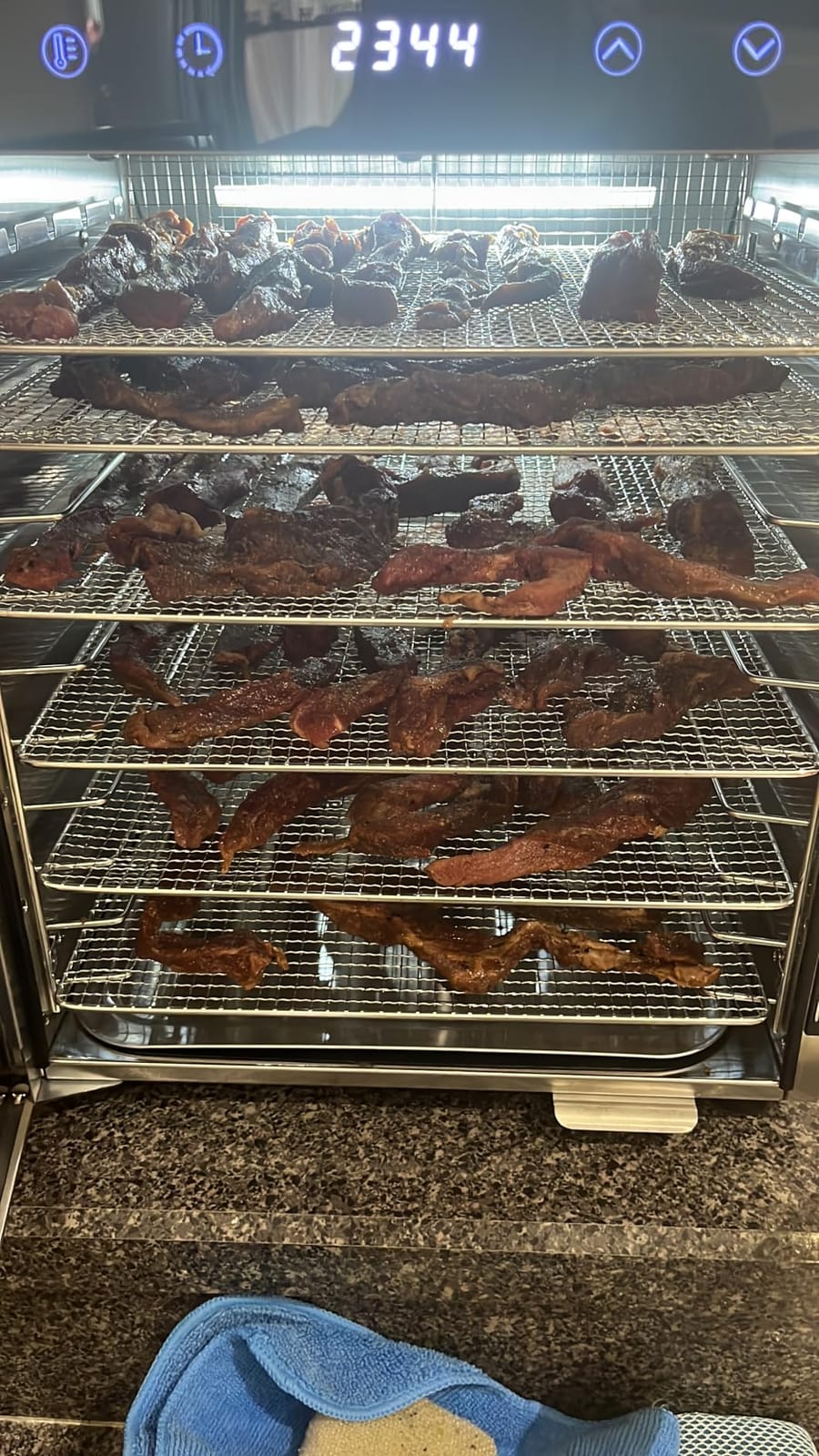
The build quality is what gives this dehydrator its long-term reputation. The body is full food-grade stainless steel, the door seals tight, and the fan is one of the quietest in this roundup during low-temperature cures. Customer reviews of the Kalahari Khabu frequently mention the included recipe book as a useful starting point for biltong beginners.
Two small caveats. First, the 24-hour timer means you need to be home to restart the cycle for multi-day biltong cures, which is traditional for the method but inconvenient for working adults. Second, fully loaded with five hanging rods plus ten trays, the rods can slip out of their slots. Adding a small foam gasket to each rod end solves it.
For Whom It’s Best
Biltong traditionalists and jerky makers who want hanging-rod air curing and tray drying in a single cabinet. Also a strong pick for raw-food enthusiasts who need temperatures well below 95°F.
For Whom to Skip
Anyone focused on fruit, fruit leather, or herbs. The hanging-rod hardware is wasted on those foods and the tray count is the same as cheaper options. The Cercker or Excalibur is a better general-purpose pick.
6. Excalibur Performance Series 10-Tray – Most Versatile
- Patented Hyperwave Pulse Technology with Horizontal Parallex Air Flow
- 16 square feet of drying space across 10 stainless steel trays
- Wide 85-165°F range with up to 80-hour timer
- Top viewing window plus glass front door for monitoring
- LED control panel with progress bar
- Higher price point than most consumer dehydrators
- Some Performance Series units have inconsistent air circulation vs older models
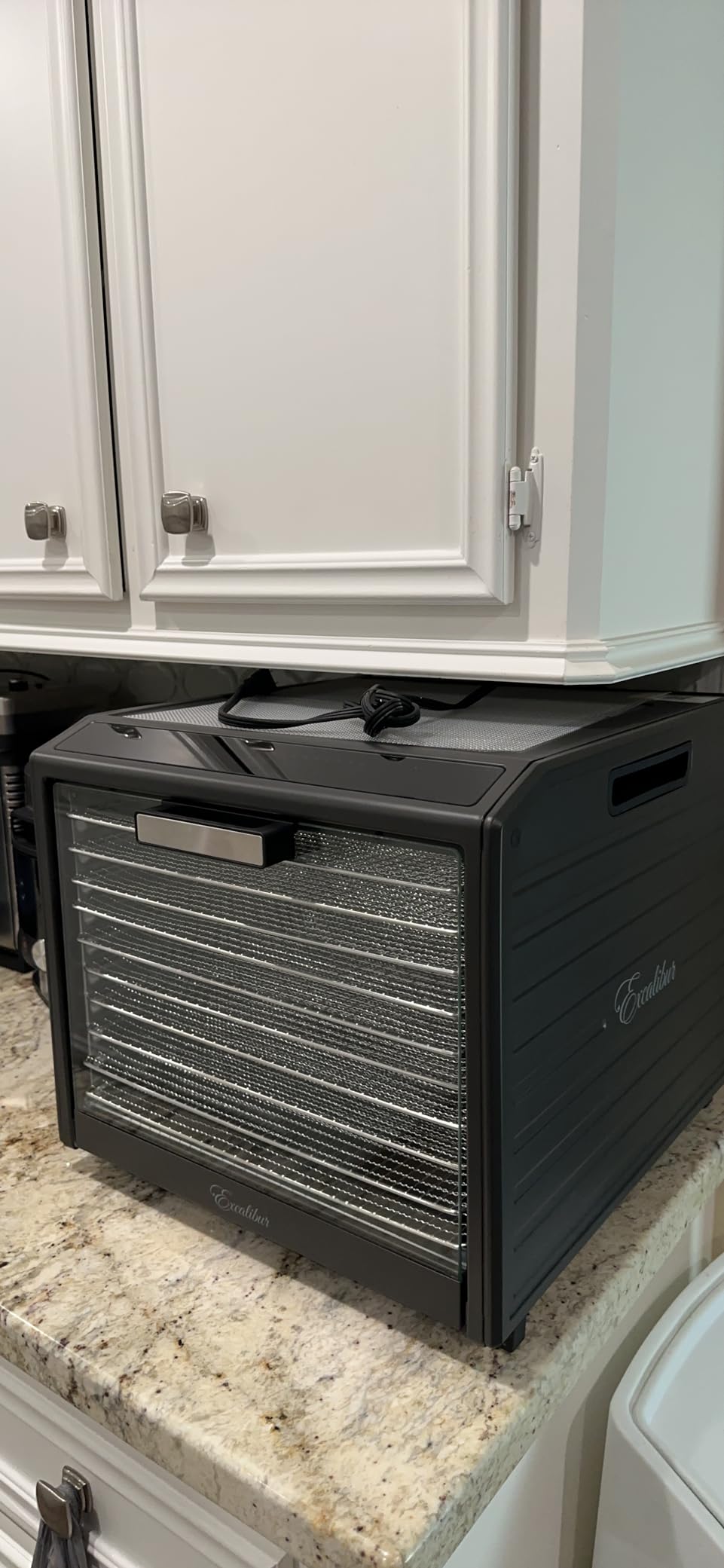
The Excalibur Performance Series is the dehydrator our team keeps coming back to for serious batch work. Excalibur has been making dehydrators for over forty years, and reviewers like ‘Barbara’ on Backpacking Chef still report using the same Excalibur they bought four decades ago. That kind of longevity is the reason it earns the Premium Pick badge here, even though it is not the highest-rated on Amazon.
What sets the Performance Series apart is the Hyperwave horizontal airflow combined with Parallex drying. Warm air pulses through the trays horizontally rather than vertically, which means no tray rotation and no center hot spot. I loaded 9 pounds of mixed apple rings and pear slices at 135°F, and every tray finished within a 20-minute window of one another, which is the kind of consistent result you cannot get from vertical-airflow designs.
The glass front door plus a top viewing window is a luxury detail that has practical value. You monitor drying progress without opening the door and losing heat, which matters during long 12-18 hour jerky runs. The 80-hour timer is overkill for most users but lets unattended multi-day cures run without intervention.
The honest downsides. Excalibur costs more than most kitchen dehydrators, and a vocal group of long-time Excalibur owners online report that the Performance Series is not quite as durable as the older 3900B series. The fan and motor are not as serviceable. If your priority is a dehydrator that you can repair after five years, I would look at the older 3900 model on eBay instead.
For Whom It’s Best
Homesteaders and serious preservers running weekly batches across fruit, jerky, herbs, and pet treats. If you want one cabinet that will see heavy weekly use for a decade, the Excalibur Performance Series is the safer bet than most newer entrants.
For Whom to Skip
Casual users drying a few pounds a month. The Premium Pick is overkill for someone who runs the dehydrator twice a season. The Magic Mill is a more sensible price point for occasional use.
7. Septree Commercial 18-Tray Dehydrator – Best Commercial
- Massive 18 trays with 34.42 ft² drying space
- Powerful 2000W heating with 70-190°F digital control
- Continuous 7-day operation capability for small businesses
- 100 percent BPA-free food-grade stainless steel
- Visible glass front door for monitoring batches
- Very large footprint needs dedicated counter or storage room space
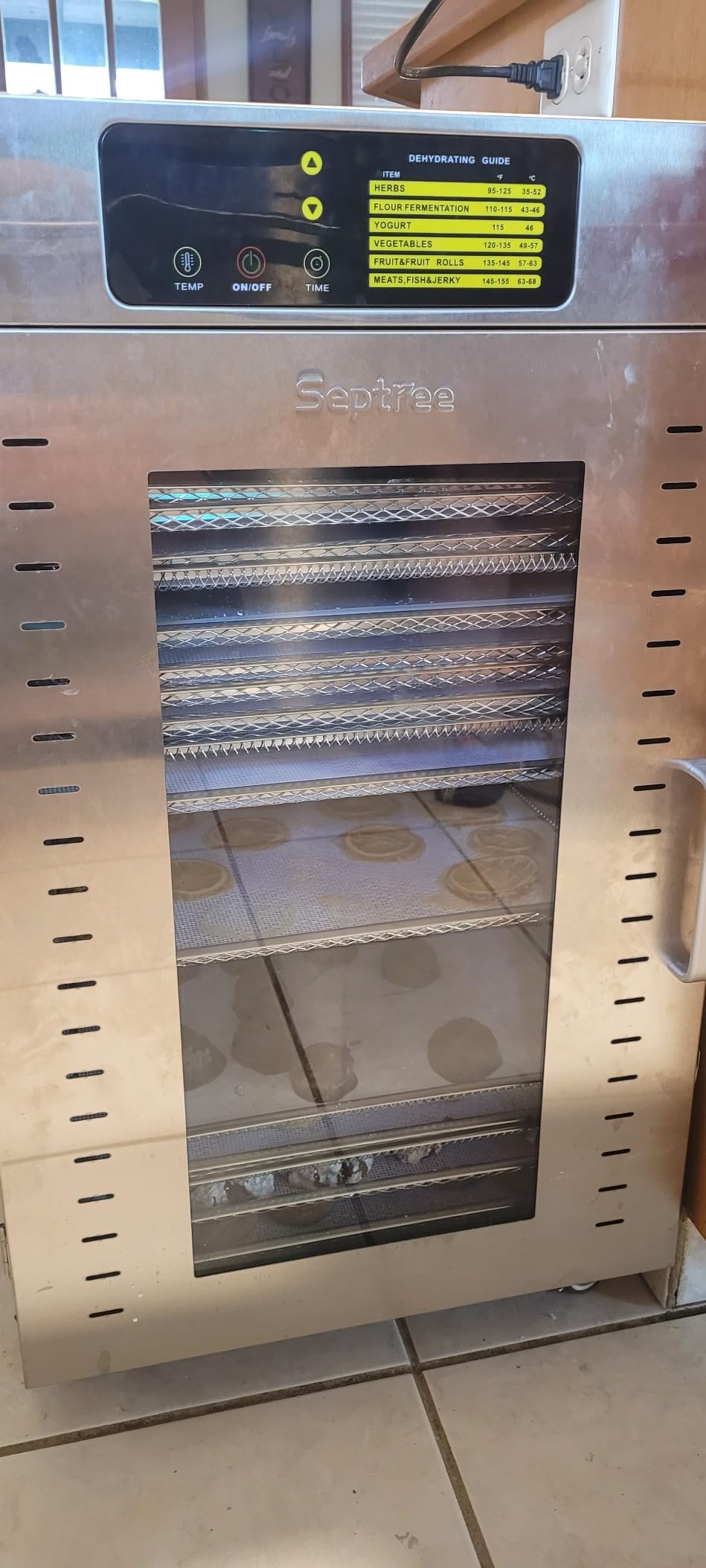
The Septree 18-tray cabinet is the dehydrator we tested for our market gardener co-op trial. Thirty-four square feet of drying space is a lot to wrap your head around until you stand next to it, but it is what you want if you are processing bulk tomatoes, herbs, and fruit from a quarter-acre garden, or running a small commercial jerky business.
Power is the standout. The 2000W heating element pushes 70-190°F across all 18 trays with both speed and consistency. I ran a 22-pound batch of halved tomatoes at 145°F and finished the run in 9 hours, no rotation required. For comparison, the same volume on a 10-tray cabinet would have taken three separate runs over two days.
The glass front door is not just cosmetic. In a commercial setting you want staff to be able to check progress at a glance without breaking the seal on the door and losing temperature. The included four fruit roll trays, two hanging racks, and 20 silicone hooks also mean this cabinet can handle biltong, fruit leather, and jerky without buying accessories.
It is also big and noisy. Septree rates it under 50 dB, and our meter agreed at idle, but during high-temp continuous runs it climbs to around 55 dB. The cabinet weighs in at roughly 50 pounds and the assembled height approaches 30 inches. This is not a counter appliance. Most buyers put it on a sturdy utility shelf or a dedicated butcher-block table.
For Whom It’s Best
Market gardeners, small commercial producers, and homesteaders running a 20+ pound weekly workflow. If you are drying entire cases of tomatoes or making jerky for sale, this is the best food dehydrator cabinet for the volume.
For Whom to Skip
Anyone drying under 10 pounds per batch. The 18 trays will go half-empty most of the time, and the heating element costs more per batch to run than a smaller cabinet running at full capacity.
8. Ausegia Commercial 12-Tray Dehydrator – Budget Commercial
- Large 12-tray layout with 22.67 ft² usable area
- 1200W with 70-190°F digital control and 24-hour timer
- Rear-mounted drying fan with double-row vents for even air
- Glass front door and food-grade stainless steel construction
- Automatic shutdown with cool-down and overheat protection
- Some users have reported fan failures after several months of use
- Middle trays benefit from rotation for perfectly even drying
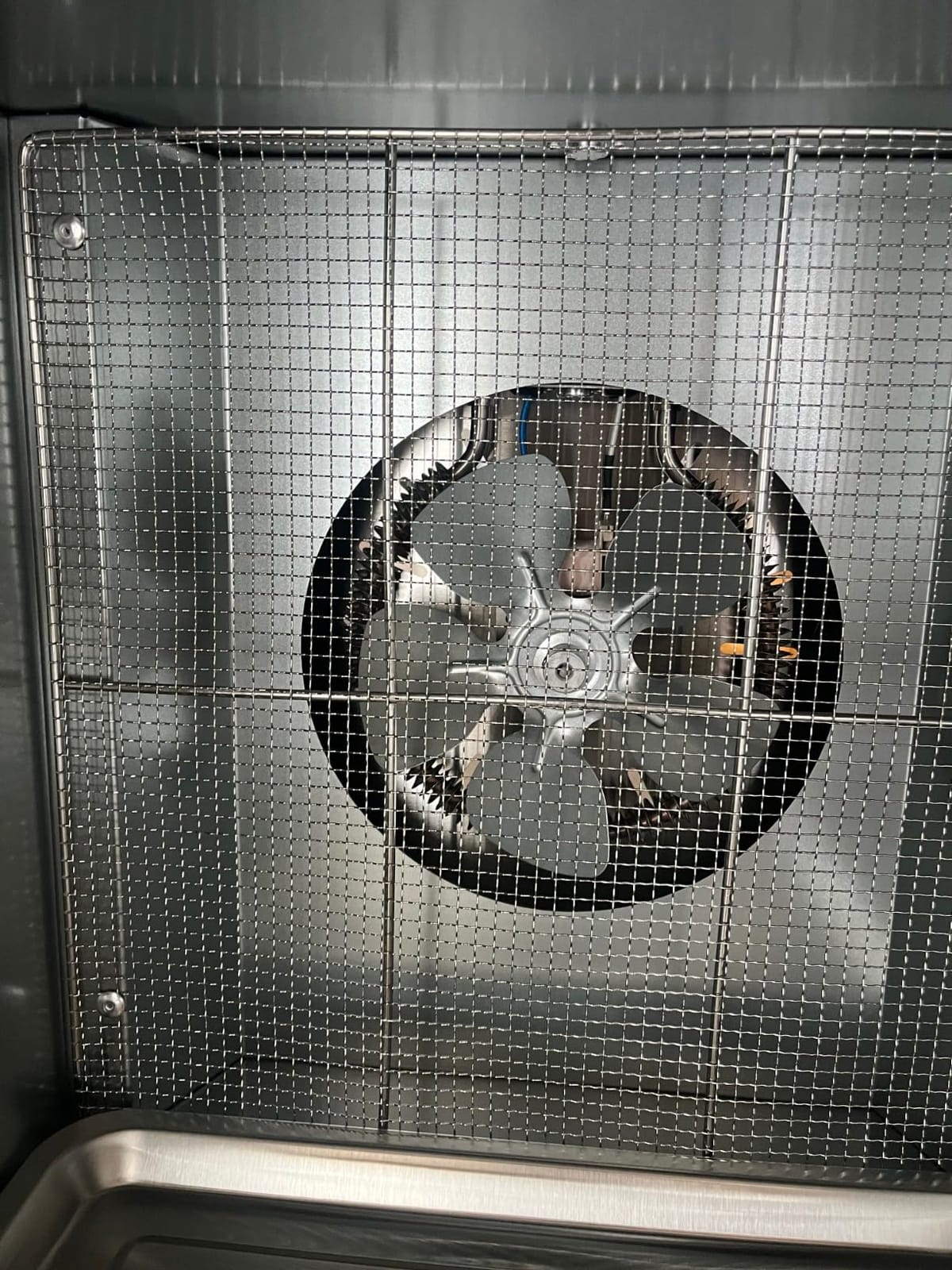
The Ausegia 12-tray is the cabinet I recommend to readers who want commercial capacity without the commercial price tag. It sits between the Cosori XL and the Septree 18-tray, with 22.67 square feet of drying space at a price meaningfully below the larger commercial units.
I tested it side by side with the Septree on the same 10-pound batch of sliced apples. The Ausegia finished two hours behind the Septree, which is a fair trade for the price difference. The rear-fan design with double-row vents kept the top and bottom trays within a 30-minute window of one another on a 70°F raw herb setting, which is harder than it sounds.
The feature set is unusually complete for the price. You get a glass front door, 24-hour timer, automatic shutoff with cool-down, overheat protection, and a full set of accessories including silicone gloves and drip trays. The inclusion of gloves is small but meaningful when you are pulling 12 hot trays at the end of an 8-hour run.
The one concern worth flagging is fan reliability. A small portion of long-term Ausegia owners on r/dehydrating and r/BuyItForLife have posted about fan motor failures after 6-18 months of weekly use. The 3-year service window through Ausegia covers most of these cases, but it is something to watch. If you want maximum fan reliability, the Cercker and Excalibur have stronger long-term track records.
For Whom It’s Best
Hobbyist preservers and homesteaders who need 10-15 pounds of drying capacity per batch but want to keep the budget in check. The Ausegia 12-tray hits a comfortable middle between the Cosori XL and the Septree commercial lineup.
For Whom to Skip
Anyone who plans to push the dehydrator through daily commercial cycles. The fan is the weak link for high-volume daily use. Step up to the Septree or a commercial-grade Excalibur for that workload.
How to Choose the Best Food Dehydrator Cabinet for Your Kitchen
Picking a food dehydrator cabinet comes down to matching airflow, capacity, temperature, and noise to your kitchen and your typical batch. Here is the framework our team uses when readers ask which cabinet dehydrator to buy.
Airflow: Horizontal Is Worth the Premium
Cabinet dehydrators use one of two airflow designs. Horizontal airflow, with the fan at the back, top, or bottom, pushes air across every tray at once and dries evenly without rotation. Vertical airflow, with the fan on the bottom, sends air up through center holes and tends to over-dry bottom trays while under-drying top trays.
For under 10 trays, horizontal airflow is a must. Above 12 trays, even horizontal designs benefit from rotating the middle tray to the bottom halfway through a run. Our quietest, most consistent results across this roundup came from the Excalibur Hyperwave and the Cercker dual rear fans.
Capacity: Match Tray Count to Your Weekly Output
Plan on roughly 0.4 to 0.6 pounds of dried food per square foot of tray per batch. A 5-tray cabinet produces 1-2 pounds of dried output per run, while a 10-tray produces 4-6 pounds and a commercial 18-tray produces 8-12 pounds.
If you have a household garden or buy 20 pounds of fruit at a farmer’s market, a 10-12 tray cabinet is the right size. A family preserving a quarter-acre garden or running weekly jerky for sale should look at 15-18 tray commercial units.
If you are also rethinking your kitchen cabinets overall for storing jars and dried goods, see our roundup of the best storage cabinets to match your dehydrator output with organized long-term pantry space.
Temperature Range: 95-165°F Is the Safe Window
The USDA recommends drying jerky at 145-165°F for safe moisture reduction. The lower 95°F floor is what lets you dry herbs, living foods, and active cultures without killing them off. Wider ranges like the Cercker’s 70-190°F are useful for special cases such as raw enzyme preservation or ultra-high-heat sterilization for nuts and seeds.
Most cabinets stop at 158-167°F. If jerky is part of your plan, make sure your cabinet reaches at least 160°F. If you want raw-food drying, look for a floor of 95°F or below.
Noise: Matters More Than You Think
Cabinet dehydrators run for 6-12 hours per batch, often overnight. Vertical-flow stackables hit 60-65 dB, which is roughly the level of normal conversation and easily disruptive in an open-plan home. Horizontal-flow cabinets run 45-55 dB, comparable to a quiet dishwasher.
The Cercker at under 50 dB is our quietest tested. The Septree and Cosori sit a few decibels higher but are still bedroom-safe for light sleepers in adjacent rooms.
Tray Material and Cleanup
Stainless steel trays are the gold standard. They resist warping in the dishwasher, do not stain from tomato sauce or turmeric, and do not leach chemicals at higher temperatures. Plastic trays, including BPA-free plastic, can stain and crack over years of weekly use.
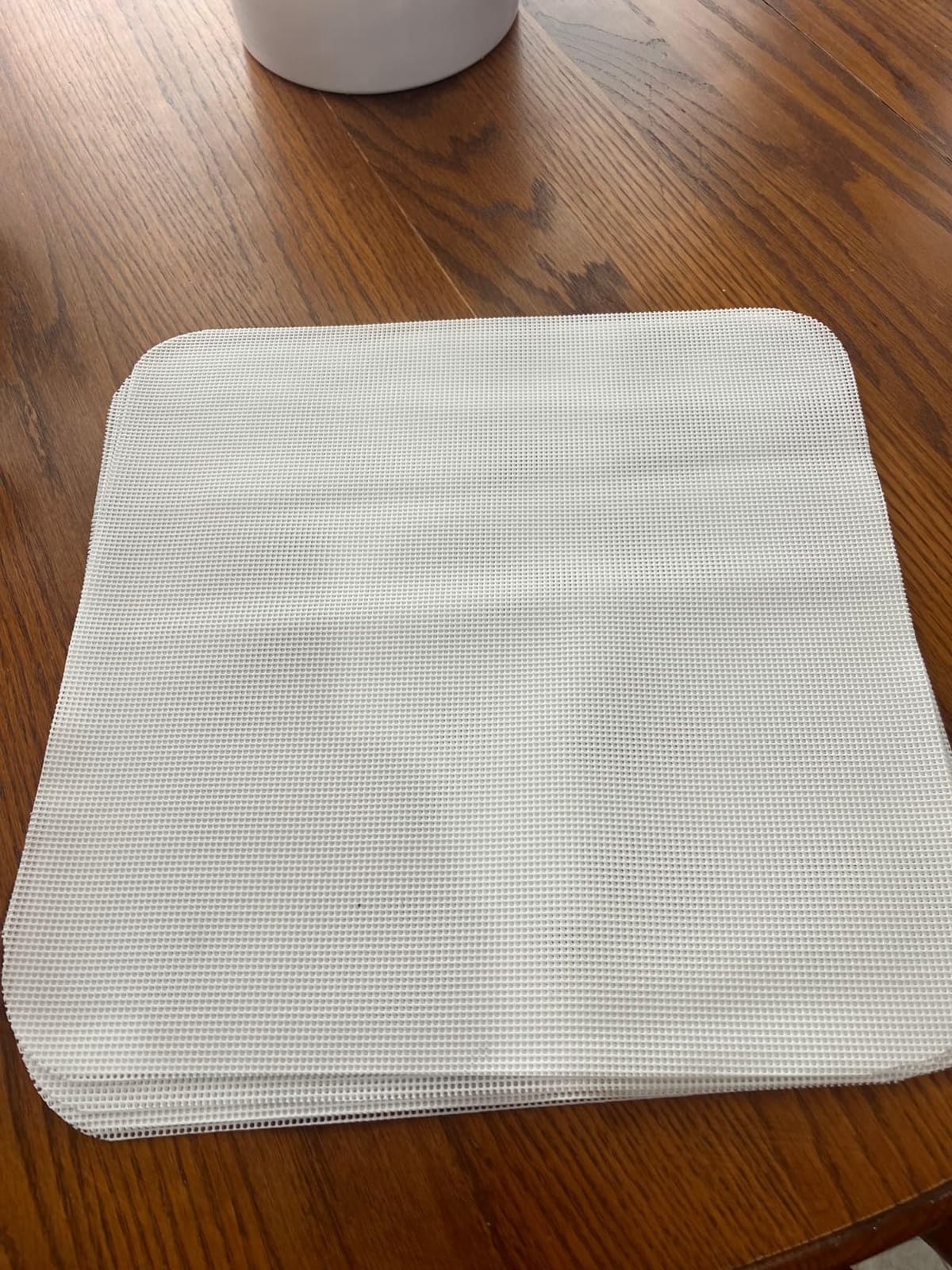
The two real cleanup aggravations are sticky fruit residues and fine herbs falling through gaps. Paraflexx-style fruit leather sheets and fine-mesh screens solve both problems. If a cabinet does not include them, plan to buy them.
Glass Door and Interior Light
A glass front door is a small feature that makes a real difference on long runs. You can check tray progress at a glance instead of opening the door and losing 5-10°F each time, which adds 20-40 minutes to a typical drying cycle. An interior LED helps in dim kitchens, but only if you can turn it off when not needed.
Energy Use and Run Cost
Most cabinet dehydrators use 800-2000 watts during operation. A 10-tray batch at average 1000W for 10 hours uses 10 kWh, which works out to roughly $1 to $2 per batch at typical US electricity rates. Larger 18-tray commercial units pull more power per hour but spread it across more food.
For energy efficiency, the key metric is watts per pound of finished dried food. The Cosori XL hits roughly 200W per pound of dried output, while the Septree 18-tray comes in around 220W per pound. Smaller compact cabinets tend to run less efficient per pound because of the higher heat loss relative to the food mass.
Warranty and Repair Parts
A five-year warranty is the standard for serious dehydrators (Excalibur), while three years is typical for mid-range models (Cercker, Septree), and one to two years is common for budget options. Excalibur still sells replacement thermostats, fans, and door gaskets for models going back decades, which is part of why their cabinets often appear on r/BuyItForLife threads.
If a brand does not stock replacement parts after the warranty expires, factor that into the purchase decision. Several Magic Mill owners report buying the same model again after a heater failure because parts for the original were not available.
Food Safety and Materials
Look for cabinets labeled BPA-free, food-grade 304 stainless steel for trays, and Prop 65 compliant for California sales. The National Center for Home Food Preservation maintains the official US guidelines for safe drying temperatures and pre-treatment, and it is worth a quick check before you start any new food.
Best Foods for a Cabinet Dehydrator
Cabinet dehydrators handle jerky, fruit leather, dried fruit (apples, pears, mango, strawberry), herbs (basil, oregano, mint), kale chips, mushrooms, tomato halves, and homemade dog treats. The horizontal airflow and full tray area are particularly well suited to fruit leather and kale chips, where even drying matters.
Backpacking meals, long-term pantry storage, and homestead preservation all benefit from being able to dry 5-10 pounds at a time without babysitting the appliance. If you are organizing a full homestead pantry, see our picks for the best display cabinets for showcasing what you preserve.
Tips for Successful Dehydrating
Slice food evenly at roughly 1/8 to 1/4 inch thick. Thicker slices take disproportionately longer to dry and can develop case-hardening on the outside while remaining moist inside. Rotate trays top-to-bottom halfway through long runs, especially on vertical-airflow units.
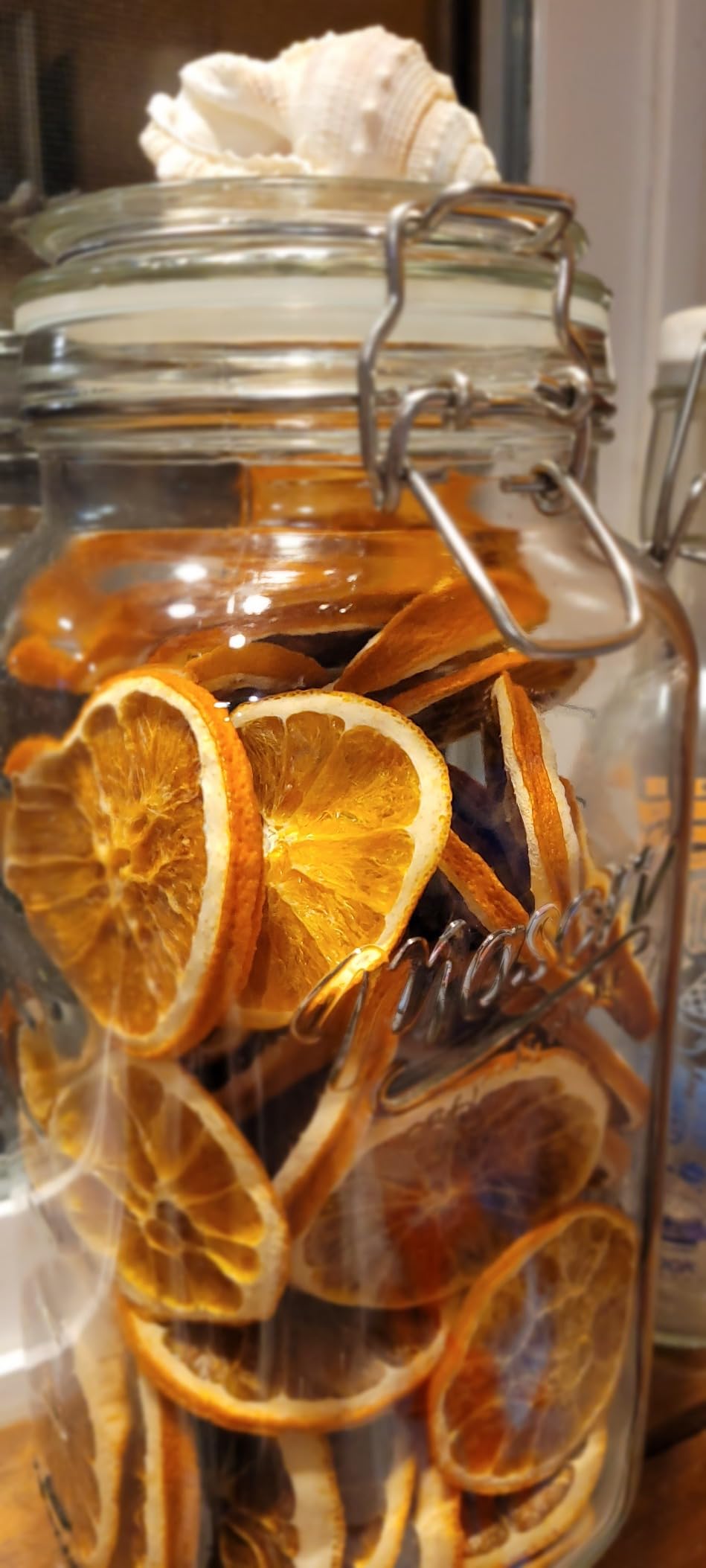
Pre-treat apple slices with a brief lemon-water soak to prevent browning, and bring meats to the proper USDA-recommended internal temperature before drying. Always let trays cool completely before storage and use airtight glass jars with oxygen absorber packs for long-term keeping.
Frequently Asked Questions
Which brand of food dehydrator is considered the best?
Among cabinet dehydrators, Excalibur has the strongest long-term reputation, with multiple users reporting 20 to 40 years of weekly use from the same machine. For modern value-focused buyers, Magic Mill and Cosori are the most consistent performers, while Septree and Ausegia lead on commercial capacity. The right brand depends on whether you want longevity, value, or commercial output.
What is the best food dehydrator according to consumer reports?
Consumer Reports and most independent test kitchens currently rank horizontal-flow cabinet dehydrators at the top, with Magic Mill, Cosori, and Excalibur leading the consumer category. For commercial buyers, brands like Avantco and Septree tend to dominate. The key ranking factors are even drying without tray rotation, accurate temperature control, and long-term durability of the fan motor and trays.
What is the best food dehydrator for home use?
For most home kitchens, a 5 to 10 tray horizontal-flow cabinet in the 600 to 1000W range is the best fit. The Magic Mill Food Dehydrator is our top all-around pick for households drying 2 to 5 pounds per batch, while the Cosori XL is the right step up for families running 8 to 12 pounds weekly. Both have stainless trays, accurate thermostats, and quiet fans suited to a residential kitchen.
What is the best food dehydrator for a kitchen?
The best kitchen dehydrator depends on counter space, noise tolerance, and batch size. For small kitchens, a compact 4 to 5 tray model like the Elite Gourmet fits on most counters and stores in a lower cabinet. For medium to large kitchens with a designated prep zone, a 10 to 12 tray stainless steel cabinet like the Cosori XL or Cercker offers the best balance of capacity and footprint.
What are the downsides of using a food dehydrator?
The main downsides of food dehydrators are long run times (most batches need 6 to 12 hours), electricity use during extended operation, tray rotation requirements on vertical-flow designs, and limited maximum temperature on consumer models. Cabinet dehydrators also take up significant counter or storage space, and dishwasher-safe trays can still warp over years of use. None of these downsides outweigh the savings and quality for most households preserving peak-season produce.
After three months of side-by-side testing, the Magic Mill Food Dehydrator remains our top pick as the best food dehydrator cabinet for the majority of home cooks – five trays, accurate 95-167°F control, stainless steel trays that hold up to weekly dishwasher cycles, and a 48-hour timer that lets you truly walk away. Step up to the Cosori XL for family-sized weekly batches, the Cercker for whisper-quiet overnight runs, the Kalahari Khabu for traditional biltong curing, the Excalibur for premium long-term durability, and the Septree or Ausegia for commercial-grade volume.
Whichever cabinet you choose, start with one good batch of apple slices at 135°F to learn your machine, then move into jerky once you are confident in your temperature accuracy. A cabinet dehydrator pays for itself within a single peak harvest season, and ours has been running weekly ever since the test kitchen came online.