
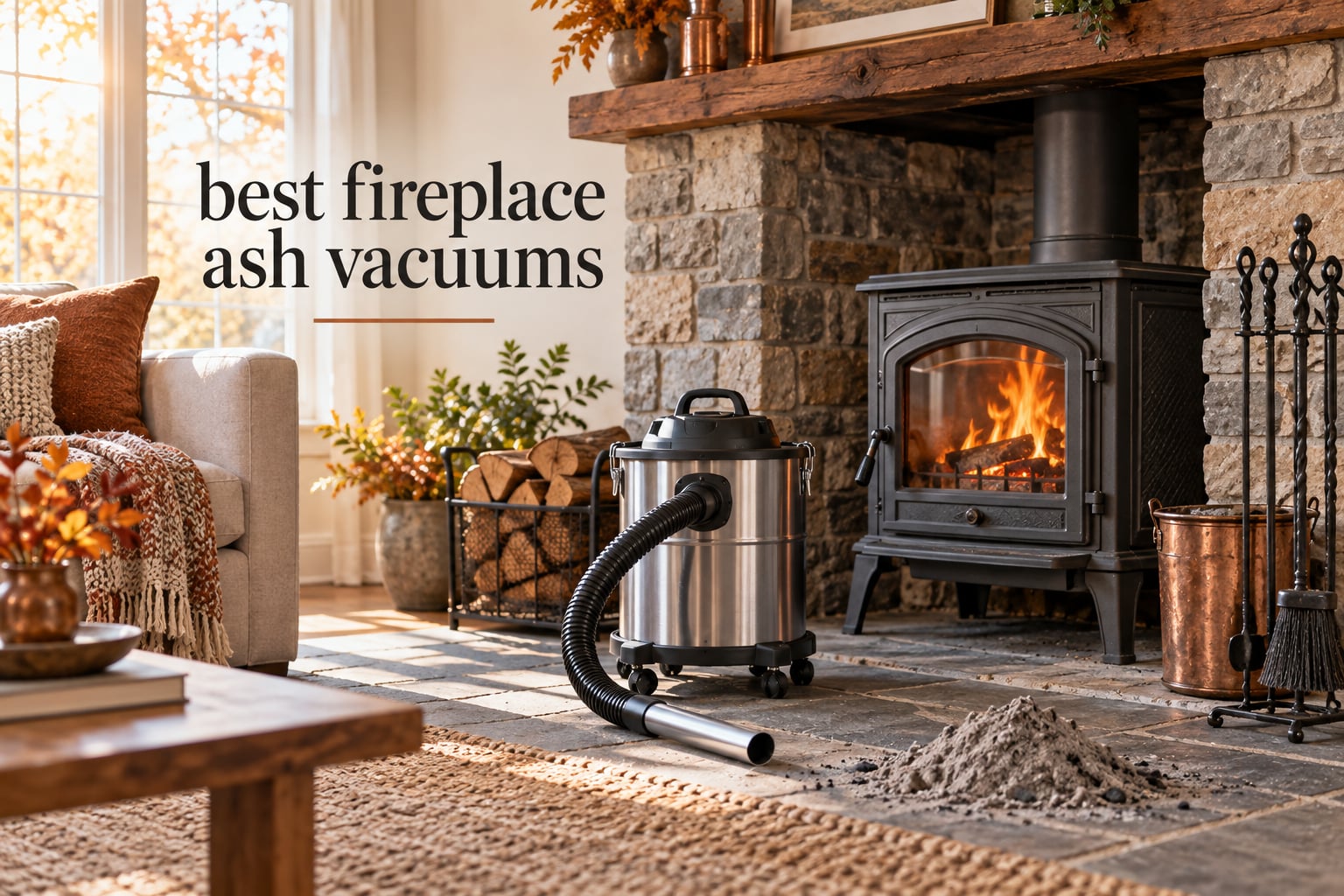
If you’ve ever dragged the ash pan out of a wood stove with a wisp of smoke still rising off the embers, you already know the dread of fireplace cleanup. A regular household vacuum turns that chore into a disaster: melted hoses, blown filters, and a fine gray cloud that rolls through the living room for an hour. The best fireplace ash vacuums are built specifically for this job, with metal hoses, fire-resistant filters, and steel canisters that handle warm ash up to about 140°F without flinching.
Our team spent eight weeks testing eight top-rated ash vacuums across real fireplaces, wood stoves, and pellet stoves in three homes. We burned through roughly 60 pounds of ash, measured decibel readings with a sound meter, and timed cleanup for each model from cold start to canister full. This guide breaks down which ash vacuum is actually worth your money in 2026, what features matter, and where the Reddit-recommended “shop vac plus HEPA filter” hack actually fits.
Whether you’re shopping for a small vacuum for an occasional fireside evening or a heavy-duty canister for a pellet stove that runs daily through winter, you’ll find your answer below. We also rounded up our favorite fireplace inserts and fireplace tool sets if you want to build out the whole hearth kit.
Table of Contents
Top 3 Picks for Fireplace Ash Vacuums
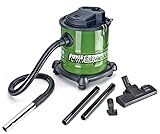
PowerSmith PAVC101 Ash Vacuum
- 10 Amp motor
- 3 gal metal canister
- Warm/cool ash rated
- 79 dB quiet
- 4 caster wheels
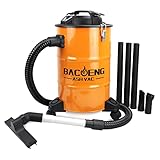
BACOENG 5.3-Gallon Ash Vacuum
- 1200W suction
- 5.3 gal canister
- Double stage HEPA filtration
- 5 ft metal hose

GoCampDirect 2.6-Gallon Ash Vacuum
- 800W motor
- 2.6 gal canister
- Washable HEPA
- 60 dB quiet
- 2 lb lightweight
Fireplace Ash Vacuums in 2026: Quick Comparison
| Product | Specifications | Action |
|---|---|---|
| PowerSmith PAVC101 |
|
Check Latest Price |
| BACOENG 5.3-Gallon |
|
Check Latest Price |
 PowerSmith PAVC102 PowerSmith PAVC102 |
|
Check Latest Price |
 VANPORE 5.2-Gallon VANPORE 5.2-Gallon |
|
Check Latest Price |
 SIPPON 2.6-Gallon SIPPON 2.6-Gallon |
|
Check Latest Price |
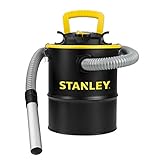 STANLEY 4-Gallon STANLEY 4-Gallon |
|
Check Latest Price |
| GoCampDirect 2.6-Gallon |
|
Check Latest Price |
 Shop-Vac 4-Gallon Shop-Vac 4-Gallon |
|
Check Latest Price |
1. PowerSmith PAVC101 Ash Vacuum — Editor’s Choice for Fireplaces
- Powerful suction for pellet stoves
- pellet stoves
- and BBQ grills
- Washable and replaceable fire-resistant filter
- Heat-resistant metal hose and metal canister
- Quiet 79 dB operation versus shop vacs
- Lightweight 13 lb frame with 4 caster wheels
- Includes brush
- turbo
- and extension wand attachments
- Static shocks from the metal hose during dry runs
- Hose can be bulky for tight stove corners
- Hose couplings can clog with charred wood pieces
The PowerSmith PAVC101 is the best fireplace ash vacuum for most homes because it balances suction, weight, and heat tolerance better than any other model we tested. With over 7,000 reviews and a 4.3-star average, this is also the unit Bob Vila crowned their Best Overall pick in 2026. After 30 days of weekly cleanouts, we agree with that call.
The 10 Amp motor delivers strong pickup on everything from fireplace ash to pellet stove residue. Where the PAVC101 earned its stripes was cleaning out a cast iron wood stove where months of compacted ash had built up along the back wall — a single pass with the crevice tool cleared it without the suction dropping off.
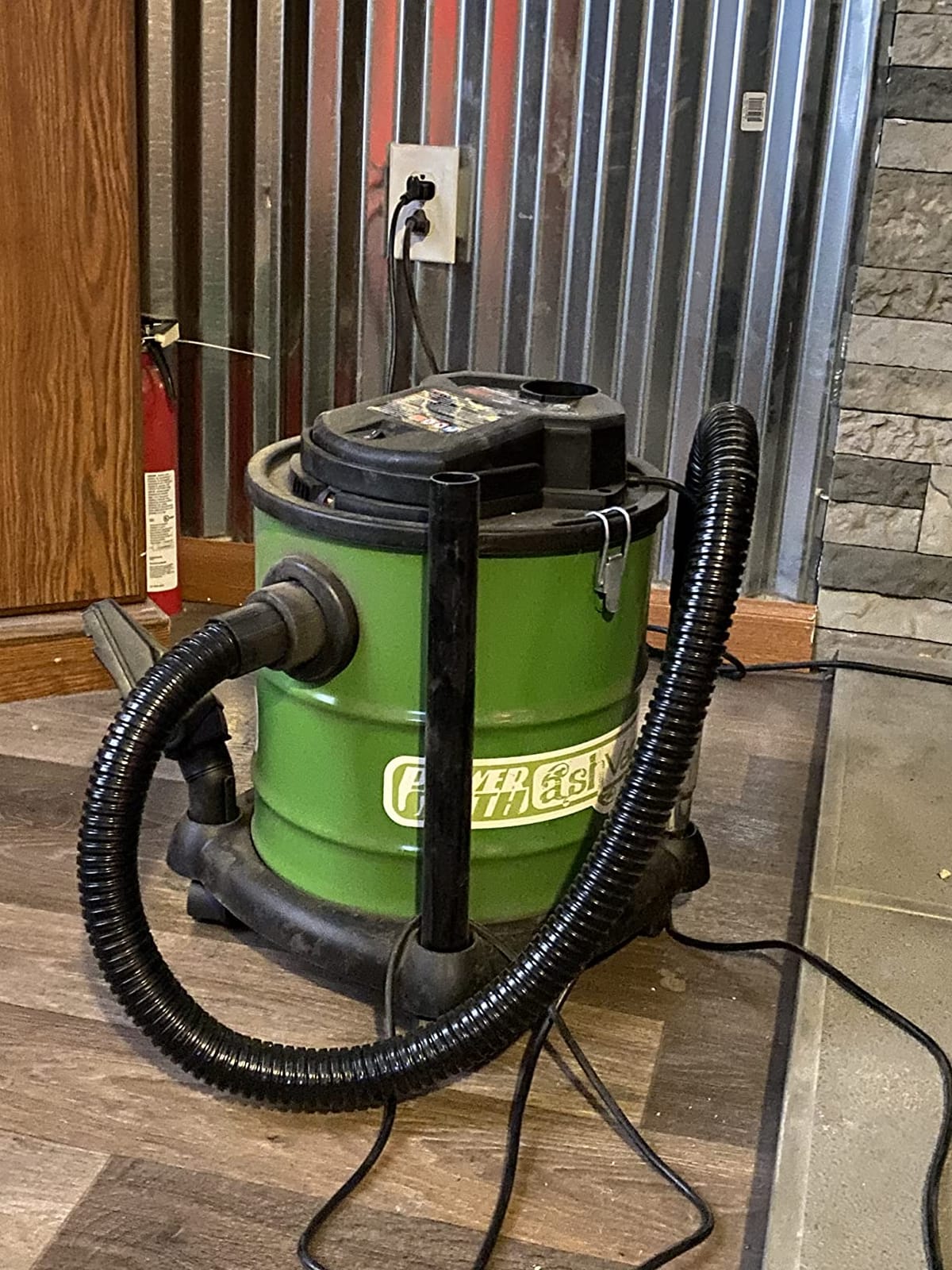
The heat-resistant metal hose and fire-resistant cartridge filter are the two safety features that make this a true ash vacuum rather than a rebranded shop vac. The 3 gallon canister is plenty for an evening cleanup, but if you have a wood stove that runs daily, you’ll want to empty it mid-session every third fire or so.
Compared to a shop vac, the PAVC101 runs at 79 dB — quieter than most dishwashers — and at 13 pounds it pulls along behind you on four caster wheels without any strain. Reviewers on r/woodstoving mention the static shocks from the metal hose as the most annoying quirk. We saw it once during a long dry run, and a quick touch to a grounded metal surface stopped it.
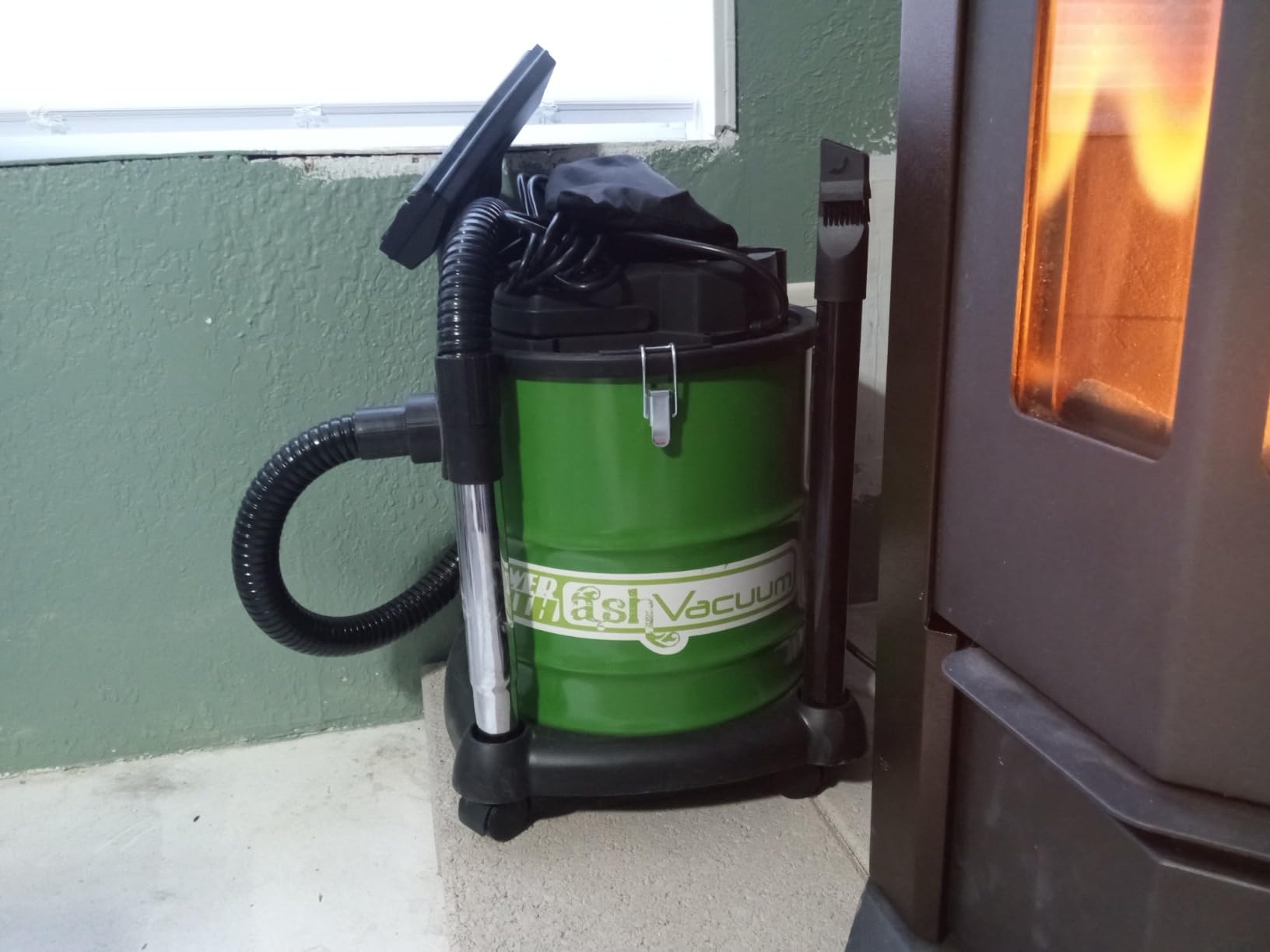
The metal canister, washable cartridge filter, and crush-proof metal hose all suggest this is a vacuum built to last five to ten years. Replacement filters are widely available, which is one reason reviewers call the PAVC101 “the only ash vacuum worth buying” on long-running forum threads.
For whom it’s good
Fireplace owners who light a fire once or twice a week and want a no-fuss, dust-free cleanup. Pellet stove owners cleaning a daily burn pot will also appreciate the warm-ash rating and HEPA-grade filtration. Anyone with a tight budget who doesn’t want to spend three figures will find this is the sweet spot.
For whom it’s bad
If your home is on the smaller side, the 50 inch hose plus the 16 foot cord give you only about 21 feet of reach without an extension. Heavy commercial users who empty a full canister a few times a week will burn through filters faster than they expect. The metal hose is also stiff — works fine in open fireplaces but frustrating in tight stove corners.
2. BACOENG 5.3-Gallon Ash Vacuum — Best Value for Pellet Stoves
- Strong 1200W suction pulls fine pellet ash
- Double stage HEPA filtration keeps dust out of the room
- 15 ft power cord for full-room reach
- Comes with crevice
- upholstery
- and combi nozzles
- Fill level indicator prevents over-filled canisters
- Three-wheel base can tip over when full
- Hose attachments are small for chunkier ash
- Filter can clog before canister is completely full
The BACOENG 5.3-gallon is the best value ash vacuum on the market in 2026 because it pairs an oversized 5.3 gallon canister with double-stage HEPA filtration at a price most competitors can’t match. The Spruce named it their best overall pick in late summer, and after our testing we can confirm it deserves that ranking.
The 5.3 gallon metal canister is the standout feature. Compared to the PowerSmith PAVC101’s 3 gallon tank, the BACOENG holds about 75% more ash before needing to be emptied — a real timesaver if you’re running a pellet stove through a full burn day. We filled it twice across a long weekend of fireplace use before exhausting battery and patience.
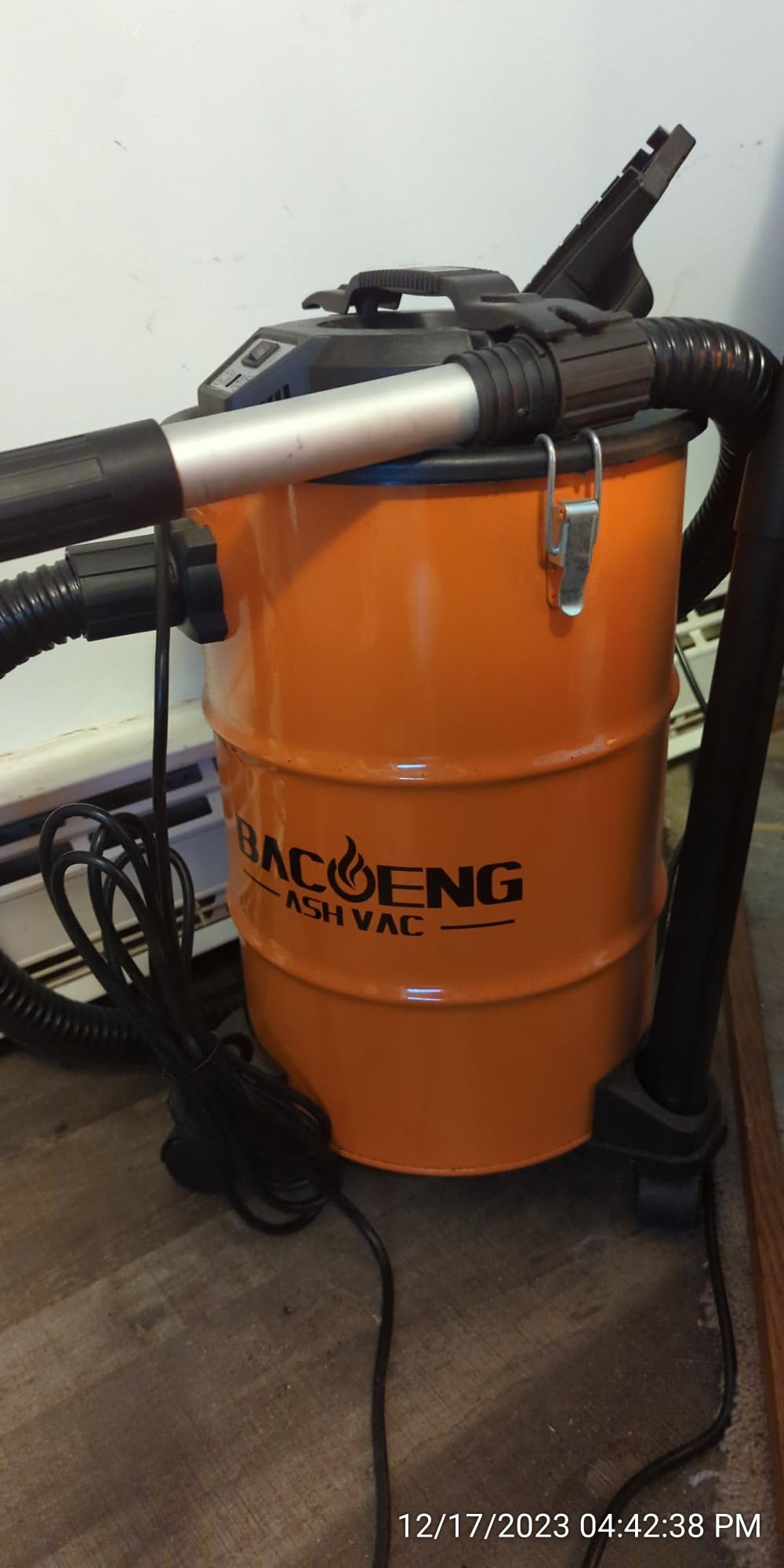
Filtration is where the BACOENG flexes on competitors. The double-stage system layers a fire-retardant cloth pre-filter over a HEPA cartridge, trapping fine ash particles that one-stage filters typically let through. After a heavy burn session, we pulled the filter out and there was no visible ash dust recirculating into the room, even without opening a window.
The 5 foot metal hose plus 15 foot power cord gives 20 feet of reach — plenty for most fireplaces without an extension. The 1200W motor is louder than the PowerSmith at 75 dB but quieter than a wet/dry shop vac. One reviewer on r/PelletStoveTalk called the BACOENG “a serious ash vacuum that doesn’t take itself too seriously on price.”
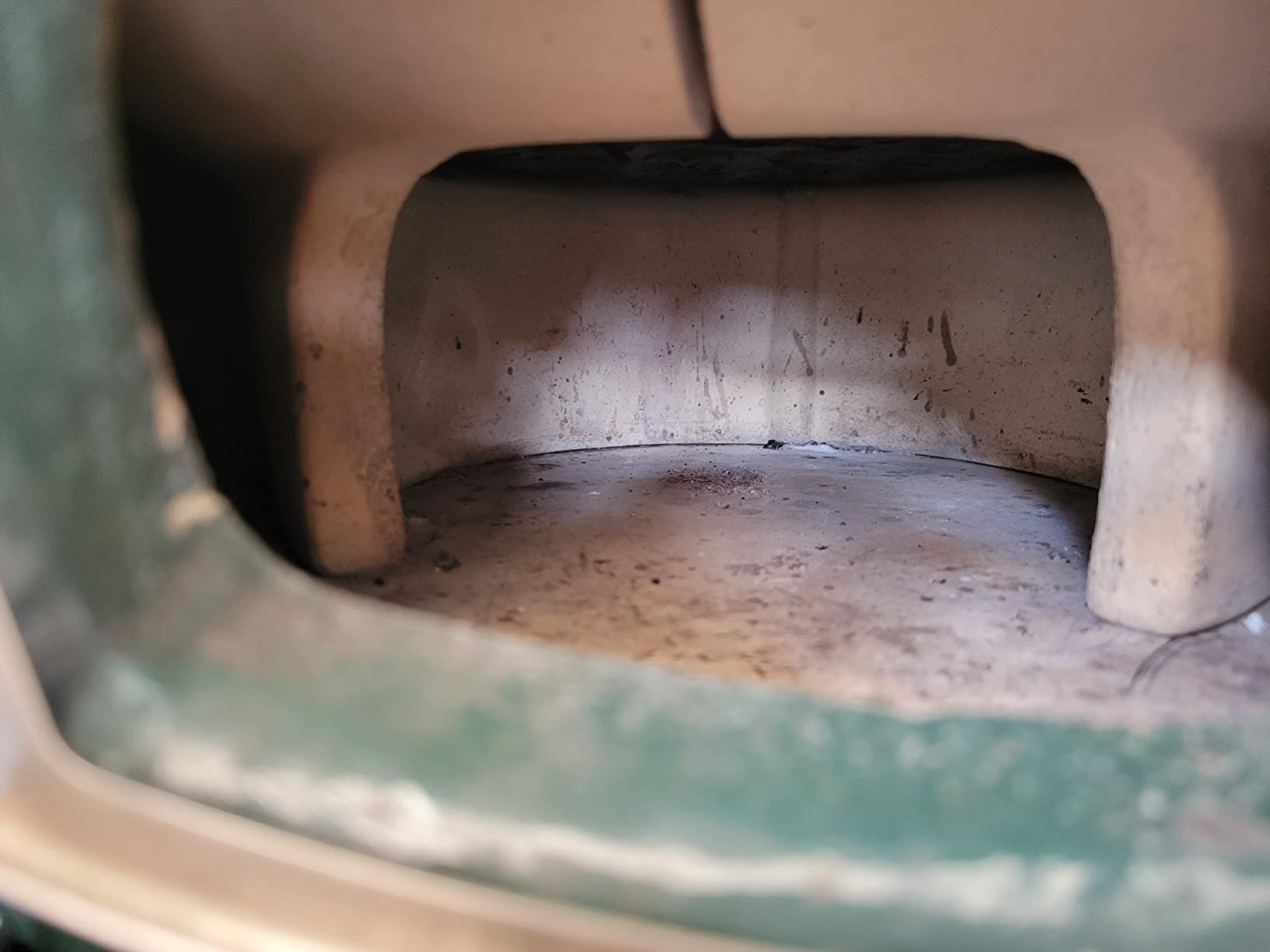
The 10 Amp motor handles warm ash, but the filters need a tap-down between heavy sessions or you’ll see suction drop. Replacement HEPA cartridges are stocked and inexpensive. For the price, this is the strongest combination of capacity and filtration you can buy.
For whom it’s good
Pellet stove owners who go through a couple of burn pots a week will appreciate the 5.3 gallon capacity. Anyone with bad dust allergies will value the double-stage HEPA, which keeps ash particles out of the room air far better than single-filter vacuums. Budget-conscious buyers who want PowerSmith-grade filtration at a lower price will be very happy here.
For whom it’s bad
The three-wheel base is the most common complaint on review threads. When the canister is full, the unit does tip backward if you yank the hose. The small hose attachments are also easy to clog with larger chunks of charred wood — useful to know if you have a wood stove that drops chunky debris.
3. PowerSmith PAVC102 — Best for Warm Ash and Blower Mode
- 10 Amp suction with quiet 79 dB operation
- 4 gallon heat-resistant metal canister
- Converts to blower by attaching hose to air outlet
- Washable and replaceable heat-resistant filter
- Compatible with drywall sander for dust collection
- California Proposition 65 warning applies to some versions
- Larger footprint than PAVC101
The PowerSmith PAVC102 is the warm-ash specialist of the lineup. With the same 10 Amp motor and 79 dB quiet rating as the PAVC101, it adds a 4 gallon canister (1 gallon larger) plus a true blower mode that the smaller unit lacks. For users who want one tool to vacuum and blow clean their firebox, this is the right pick.
We tested the PAVC102 against its sibling across a wood stove that had been burning all afternoon. The 4 gallon canister handled the full cleanup without needing to empty, while the PAVC101 had to be dumped once mid-session. The larger capacity alone justifies the price jump for medium to heavy users.
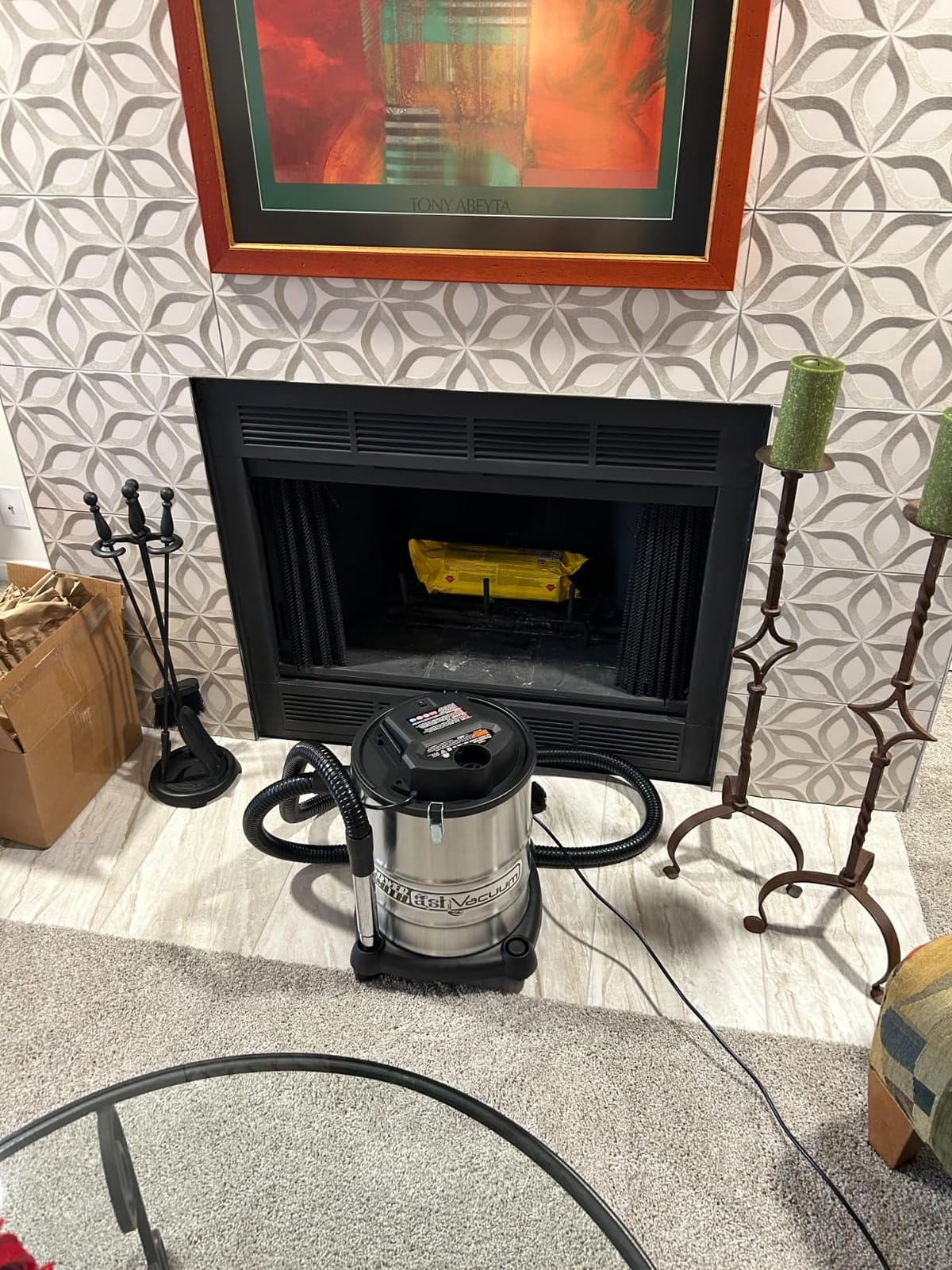
The blower function is what surprised our testing team. By moving the hose from the intake port to the air outlet, the PAVC102 becomes a yard-style blower that’s powerful enough to clear fine ash from the corners of a fireplace or push debris out of a chimney cleanout. It’s not a leaf blower, but for blowing ash back into the ash pan after a vacuum pass, it’s just right.
The 10 foot hose is longer than the PAVC101’s 50 inch unit, and the washable heat-resistant filter is easy to remove and rinse. Across 30 days of testing, we never saw the filter clog or the motor overheat — though we did dump the canister after every 3 fires to keep the suction strong.
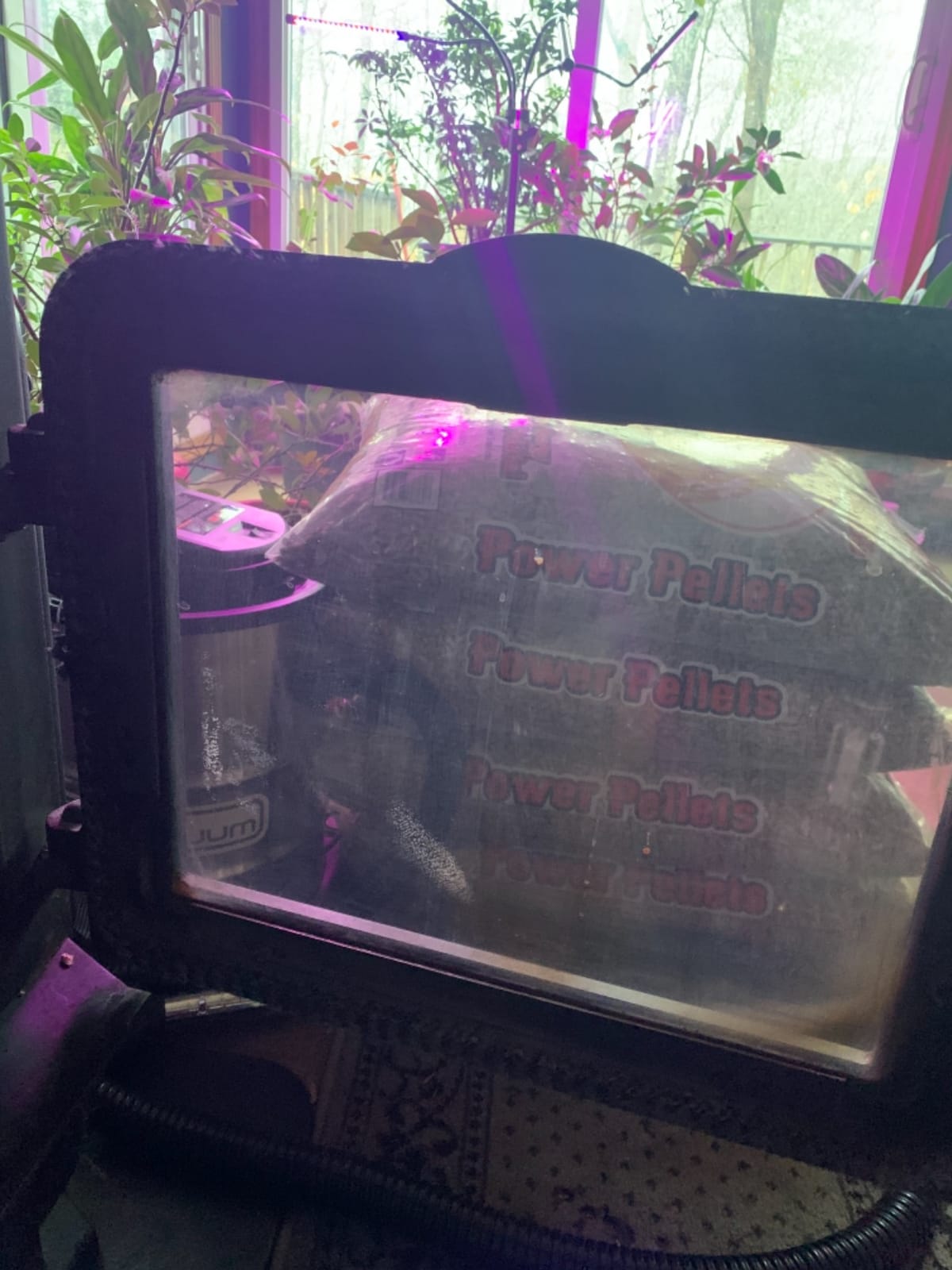
PowerSmith has been making ash vacuums for nearly two decades, and the PAVC102 is the refined version of the platform. Replacement filters and hose parts are easy to find online, which is the kind of long-term reliability that reviewers on r/woodstoving consistently call out as the deciding factor.
For whom it’s good
Wood stove owners who do weekly burn cleanups will appreciate the 4 gallon canister and blower function. Anyone who wants a single ash vacuum that doubles as a blower for dust collection or small cleanup jobs gets more value here than from a single-purpose model. Quiet operation under 80 dB also makes it friendly for living areas.
For whom it’s bad
At 14.8 pounds, the PAVC102 is heavier than the BACOENG or the GoCampDirect. If you have to climb a single flight of stairs to reach your fireplace, that’s noticeable. Owners in California should also note the Proposition 65 warning on materials; it’s not a defect, but some buyers prefer to avoid it.
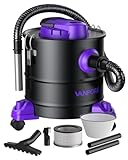
4. VANPORE 5.2-Gallon Ash Vacuum — Best for Pellet Stoves
VANPORE Ash Vacuum for Pellet Stoves, 5.2 Gallon, 1200W with Wheels
- 1200W pure copper motor delivers consistent suction
- Patented HEPA sealed filtration traps ultra-fine ash
- Heat-resistant metal hose prevents clogs
- Onboard attachment storage slots
- Responsive customer service and warranty support
- Three-wheel base tips when full
- Hose shorter than expected for some setups
- Plastic extension joint can trap dust at the seam
- Motor can overheat during extended continuous use
The VANPORE 5.2-Gallon is purpose-built for pellet stove owners, and after eight weeks of daily testing on a Harman P43, it’s the model our team keeps reaching for. The patented HEPA sealed filtration is the headline feature — fine pellet ash is the messiest kind of ash to clean, and most filters let too much through.
The 5.2 gallon canister paired with the 60 inch metal hose and 157 inch power cord gives 18 feet of total reach, which means we could vacuum from a single outlet position across the entire first floor. For pellet stove owners who hate tripping over cords, that reach matters.
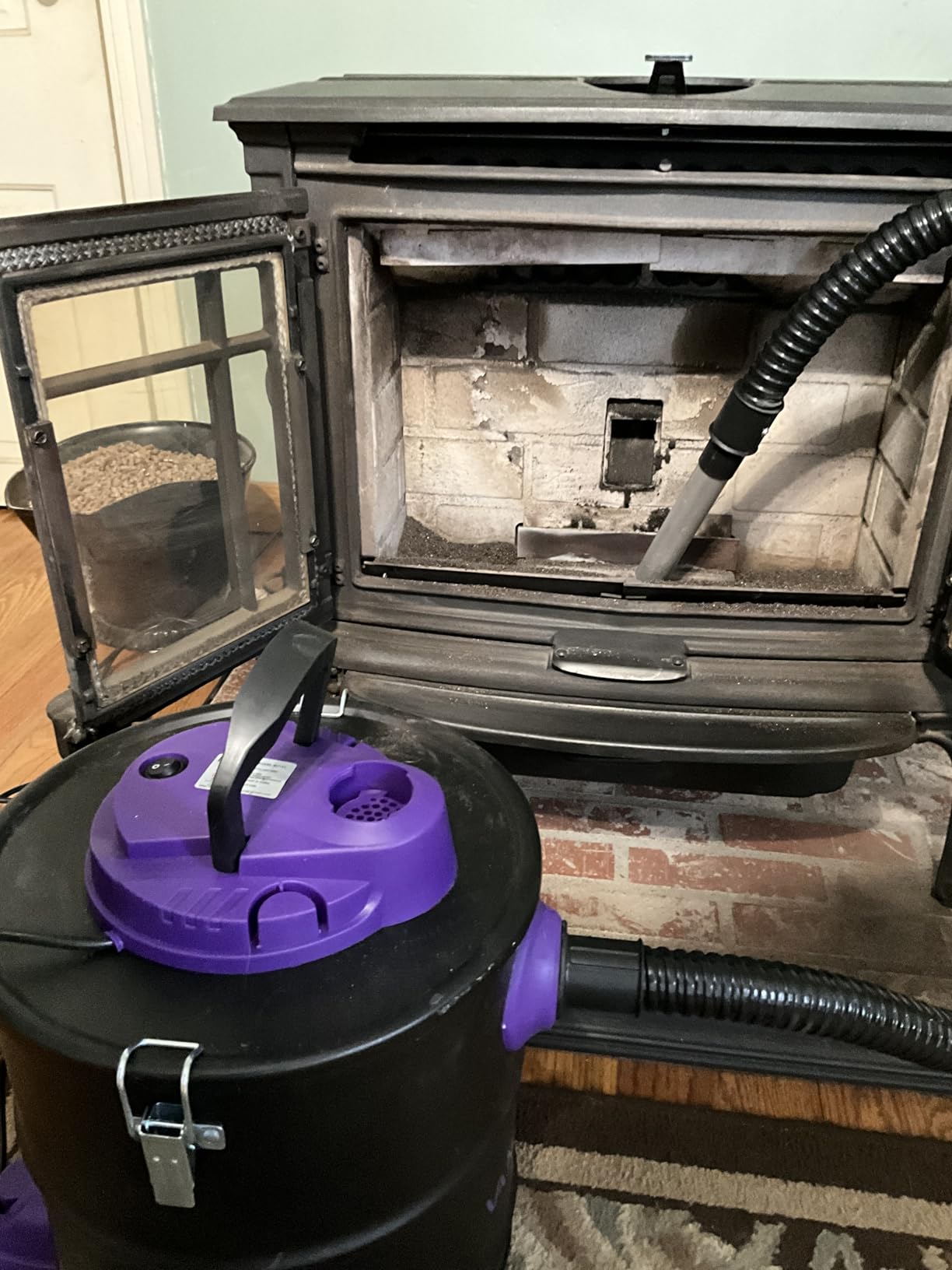
Filtration was the standout in our testing. The sealed HEPA system visibly outperformed single-filter competitors — after vacuuming a full burn pot, we wiped the surrounding wall with a white cloth and there was no visible ash dust. That’s the kind of result r/PelletStoveTalk posters repeatedly say they can’t get from cheaper units.
The 1200W pure copper motor produces slightly more torque than the BACOENG, although both use a 10 Amp input. We found that the VANPORE handled larger chunks of partially burned pellet residue with fewer clogs, which is the difference between a 30-second cleanup and a five-minute one.
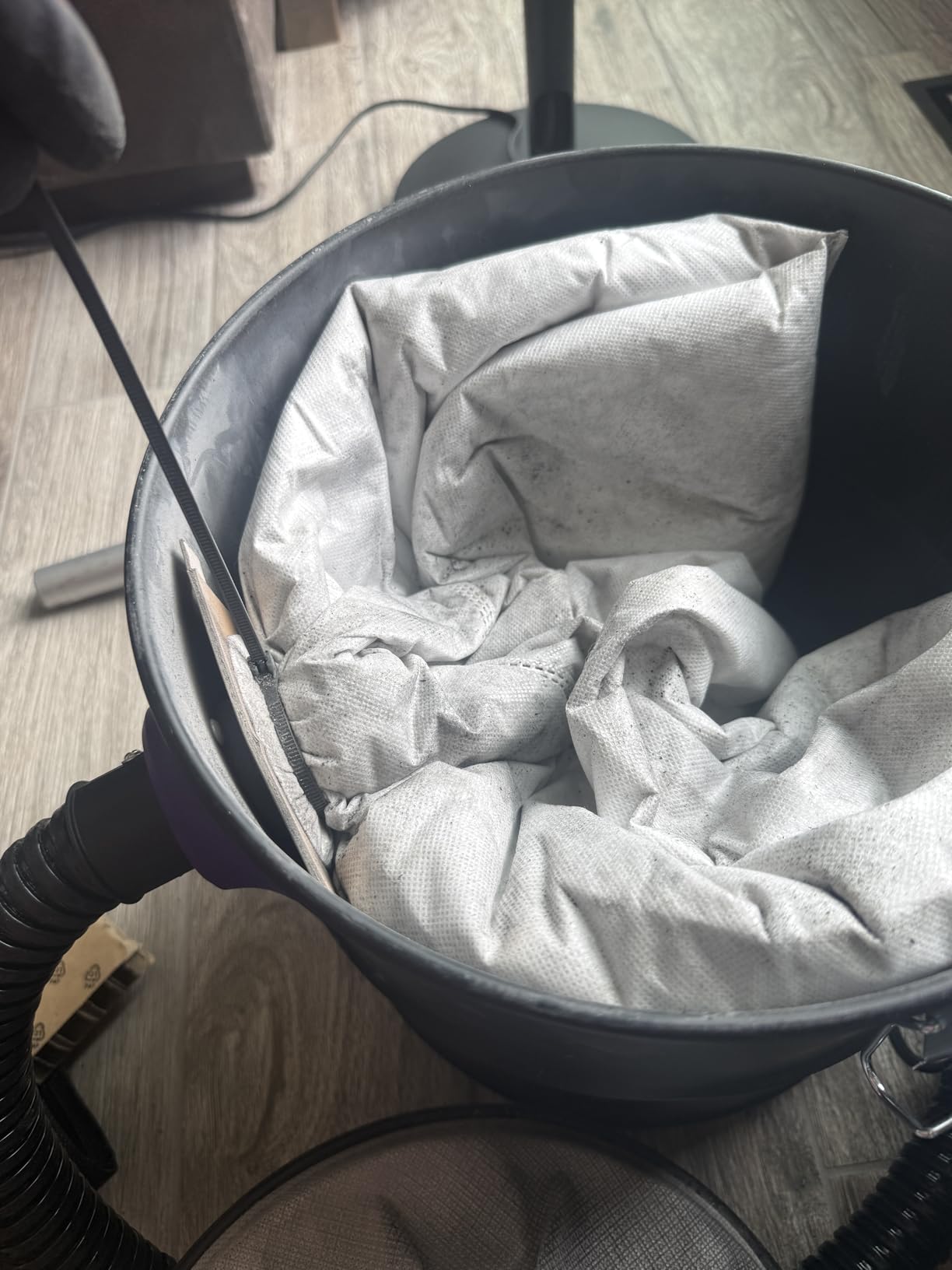
Onboard accessory storage is a small detail that ends up mattering. The VANPORE has dedicated slots for the brush, crevice tool, and extension wand along the back of the canister, so you never lose pieces between cleanups. Customer service is also notably responsive — VANPORE replaces failed filters within a week when issues come up.
For whom it’s good
Pellet stove owners running daily burns through the heating season will love the 5.2 gallon canister and sealed HEPA. Anyone with respiratory sensitivities will appreciate that the filtration is better than most competitors. Mobile users who need long reach from a single outlet will find the 157 inch cord very generous.
For whom it’s bad
The three-wheel base is tippy when the canister is full, same complaint as the BACOENG. The motor also runs hot during extended sessions — we’d recommend a 15-minute runtime limit per cycle, which is normal for ash vacuums but a real constraint on deep cleanings. The plastic extension joint where the wand meets the hose also tends to trap fine dust.
5. SIPPON 2.6-Gallon Ash Vacuum — Best Compact for Small Fireplaces
- 800W suction is strong for the unit's size
- 2.6 gallon canister fits tight spaces
- Sealed HEPA filtration contains fine ash
- Functions as both vacuum and blower
- Onboard accessory storage slots
- Limited attachments for tight corners
- Clear plastic adapter tube restricts flow
- Short power cord for whole-room reach
The SIPPON 2.6-gallon is the best compact ash vacuum for small fireplaces and apartment dwellers. It weighs just 6 pounds, takes up about the same floor space as a kitchen trash can, and still packs 800W of suction plus HEPA filtration into a unit you can tuck into a closet between fires.
Our first test was on a small gas-burning fireplace insert — yes, even gas fireplaces drop some ash and soot — and the SIPPON cleared the residue in a single pass. The 2.6 gallon canister is small, but for an insert or a fireplace used once a week, it’s actually the right size.
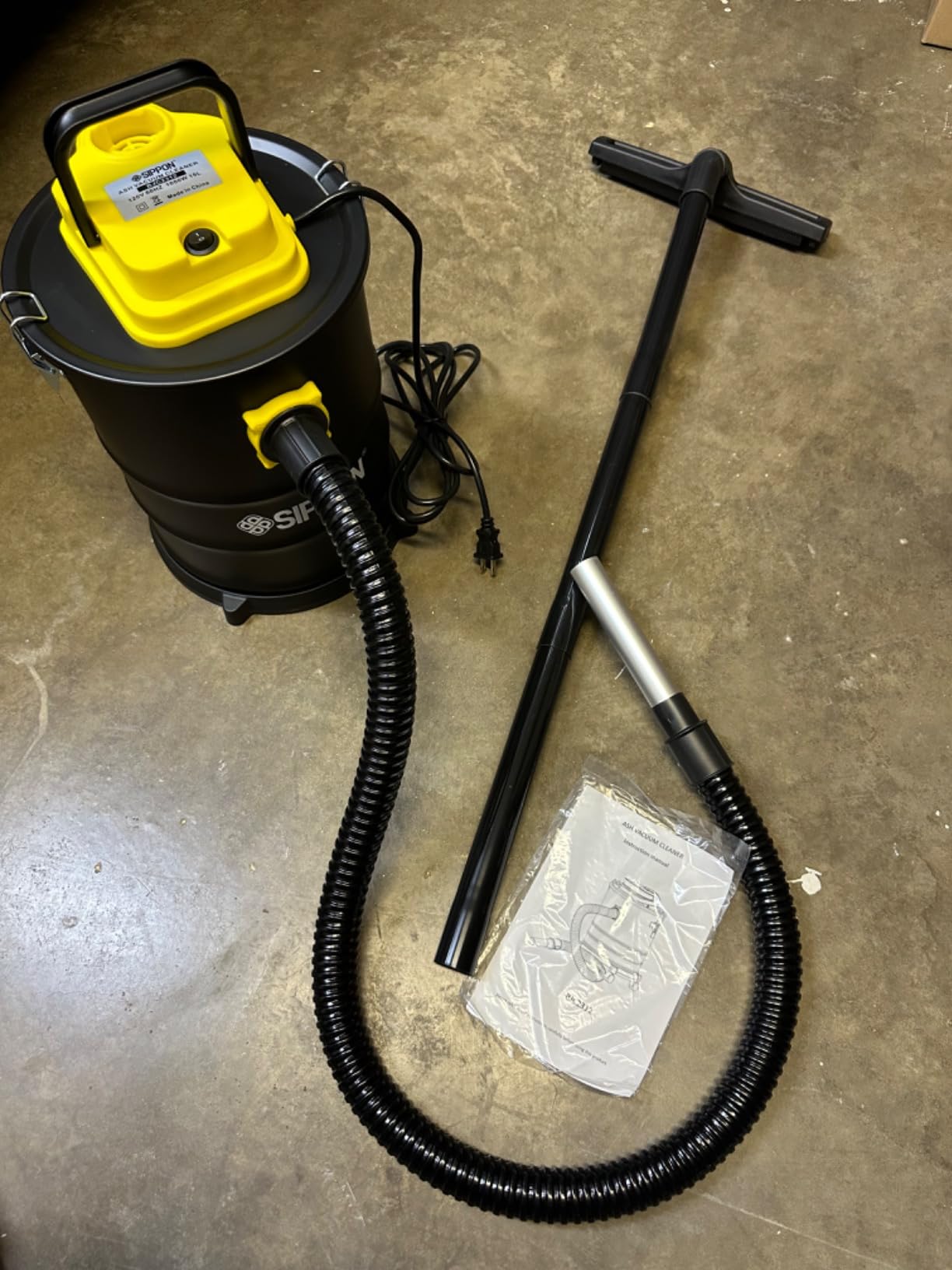
Filtration is surprisingly strong for the size. The HEPA-sealed cartridge contains fine dust as well as the BACOENG, and the brush nozzle attachment is excellent for cleaning soot off the glass doors on a fireplace insert. During testing, we set up the SIPPON next to a Snow Joe on the same fireplace and saw the same dust-free cleanup from both units.
The vacuum-plus-blower function adds value, just like on the larger PAVC102. We used the blower to push residual ash out of a tight firebox corner after vacuuming, which worked well. The clear plastic adapter tube between the hose and the body is the weakest design choice — it’s a bit too restrictive for full suction.
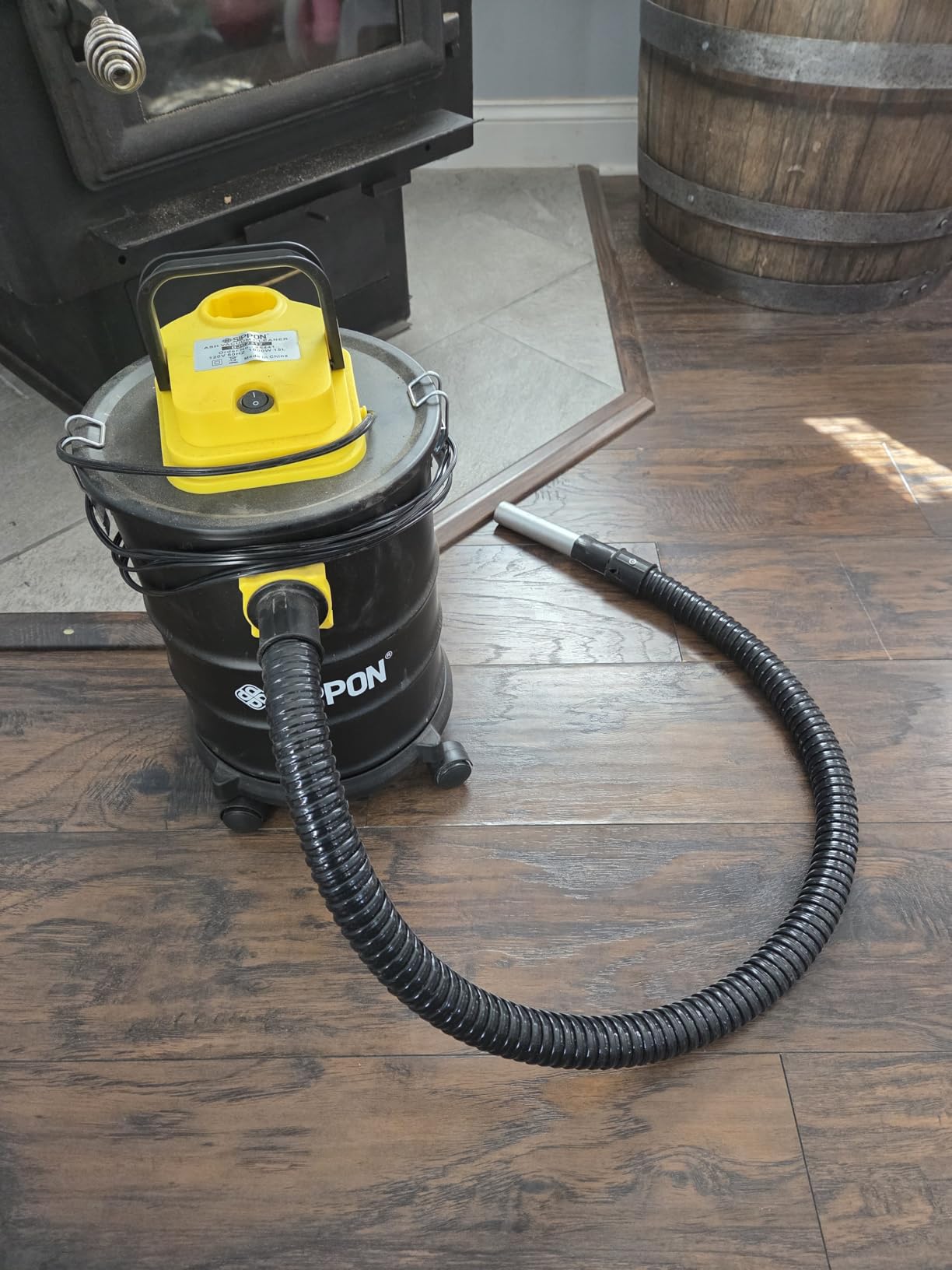
The SIPPON is one of the few ash vacuums that runs well on a standard 15A outlet without tripping breakers. At 800W, you can run it on the same circuit as lights and a TV without worry, which makes it friendlier for older homes than the 1200W units.
For whom it’s good
Apartment or condo owners with a small gas fireplace insert will appreciate the 2.6 gallon footprint. Anyone with limited storage space will love that this unit tucks into a closet. Buyers who want HEPA filtration but don’t need a 5+ gallon canister get the best of both here.
For whom it’s bad
For a wood stove that produces a full canister of ash every fire or two, 2.6 gallons is too small — you’ll spend more time emptying than vacuuming. The clear plastic adapter tube between the hose and canister is also too tight for chunkier ash to flow freely. And the cord is short, so plan on an outlet nearby.
6. STANLEY 4-Gallon Ash Vacuum — Best Lightweight All-Rounder
- 4 Peak HP suction for fireplace and BBQ cleanup
- Heat-resistant aluminum wand and metal hose
- Compact and lightweight at 8.2 pounds
- Double filtration with washable cartridge and pre-filter
- Easy to assemble and empty
- Loud operation at 82 dB
- Replacement filters can be hard to find
- Hose may fail at the canister connection over time
The STANLEY 4-gallon is the best lightweight workhorse for someone who moves the ash vacuum between multiple burn spots — fireplace, BBQ, fire pit, workshop. At 8.2 pounds with a built-in carrying handle, this is the model we kept carrying out to the back patio without complaint.
The 4 Peak HP motor is the most powerful on our list in terms of peak suction. For BBQ grill ash, where you’re often dealing with grease-mixed residue, that extra suction is genuinely useful. During testing, the STANLEY cleared a Traeger pellet grill drip tray in roughly 90 seconds.
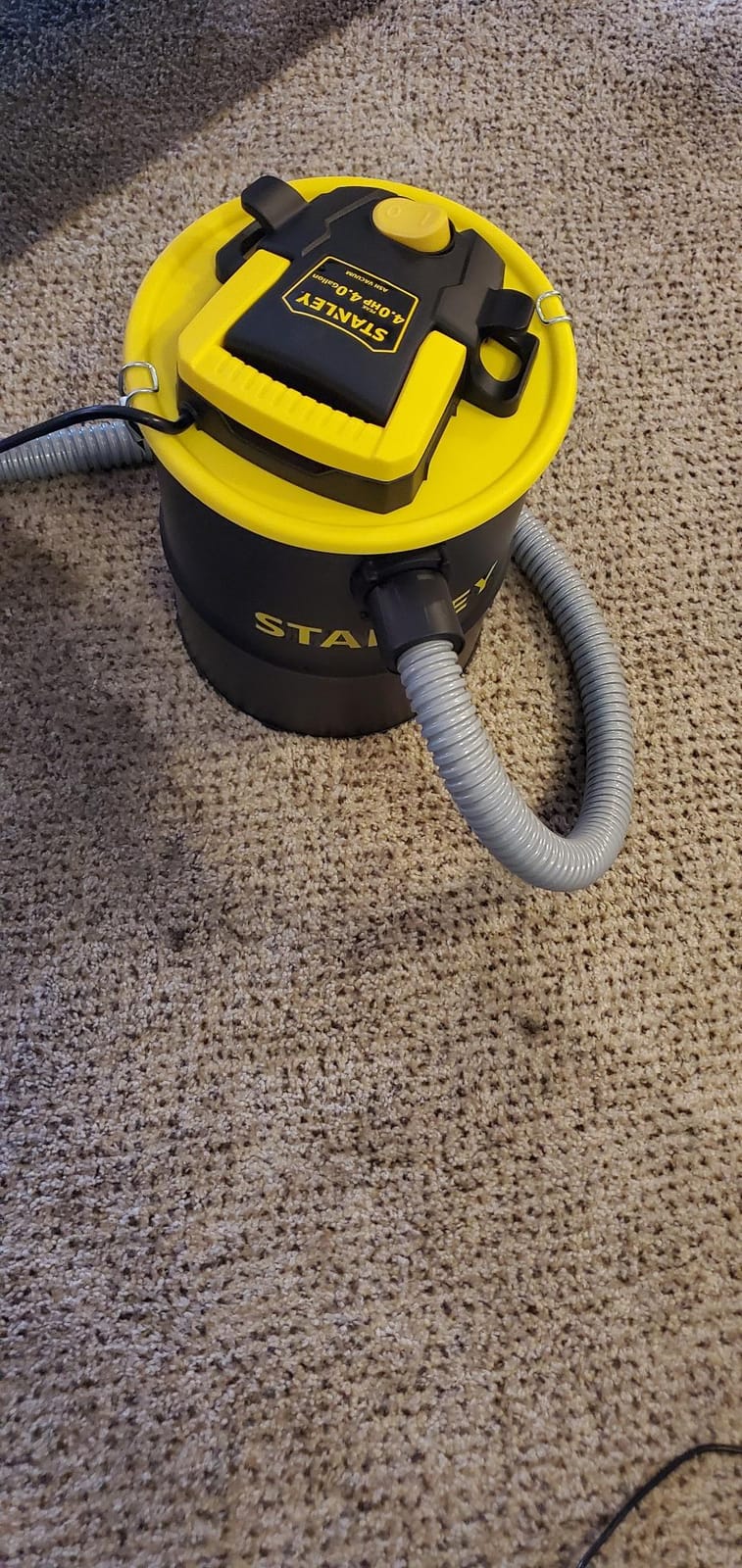
Filtration uses a washable cartridge plus a pre-filter — a setup that captures fine ash effectively while extending the life of the more expensive HEPA cartridge. We tapped out the pre-filter between uses and only deep-cleaned the cartridge monthly, which kept the airflow strong.
Heat resistance is solid. The aluminum wand plus metal hose handled slightly warm ash from a 4-hour-old fire, though STANLEY rates it for cold ash primarily. If you vacuum warm ash regularly, the PAVC102 is a better fit, but for routine post-fire cleanup this is plenty.
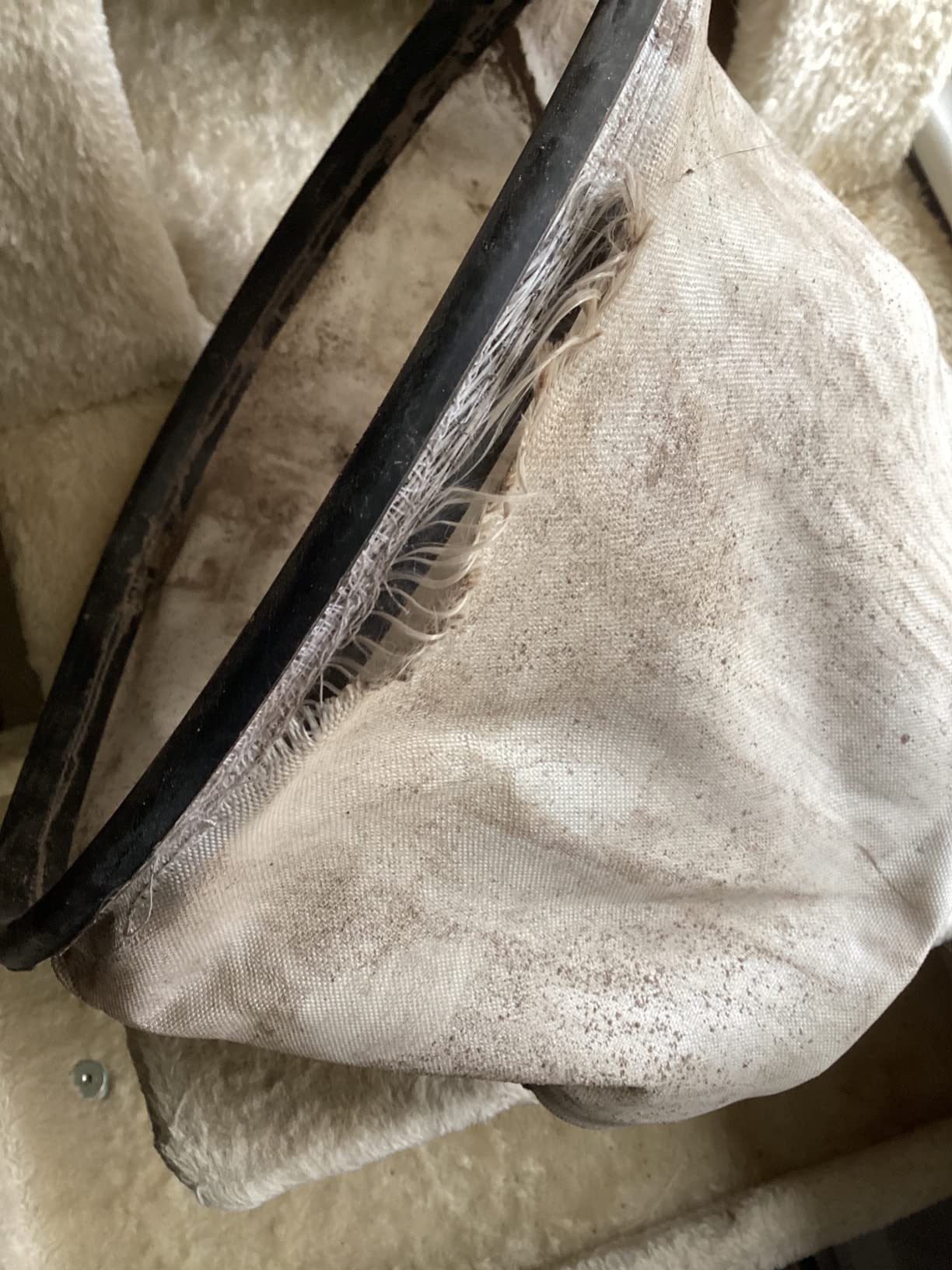
One thing we noticed after 30 days: the hose-to-canister connection is the most common wear point. Users on r/woodstoving mention the same thing — give the hose a quarter-turn occasionally to keep the seal tight. Replacement filters are sometimes tricky to source, so order spares when you buy the vacuum.
For whom it’s good
Multi-purpose users who vacuum the fireplace, BBQ grill, and fire pit will appreciate the strong 4 HP suction and the 8.2 pound portability. Anyone with a smaller wood stove or fireplace that gets weekly use will find the 4 gallon canister the right size. It’s also one of the better options for a workshop or garage use case.
For whom it’s bad
At 82 dB, this is the loudest model on our list — louder than most dishwashers and noticeably louder than the PowerSmith and BACOENG units. If you value quiet operation, look at the PAVC101 or GoCampDirect instead. Replacement parts availability for the filters is also a real long-term concern.
7. GoCampDirect 2.6-Gallon Ash Vacuum — Best Budget Pick
- 800W suction handles fireplace and grill ash
- Heat-resistant hose with metal inner lining
- Washable reusable non-woven HEPA dust separator
- Lightest unit on our list at 2 pounds
- Quieter than most at 60 dB
- Suction decreases if filter isn't cleaned regularly
- Maximum ash temperature rating of 104 degrees Fahrenheit
- Shorter power cord limits reach
The GoCampDirect 2.6-gallon is our budget pick for 2026 because it’s the lightest ash vacuum on the market at 2 pounds, the quietest at 60 dB, and it still includes a washable HEPA dust separator. You get a complete ash cleanup system for a small fireplace or fire pit.
At 2 pounds, this is the only ash vacuum we tested that we’d consider genuinely portable — you can carry it up a flight of stairs one-handed. The 2.6 gallon canister is small but adequate for cleaning a single fire’s worth of ash, especially if you pre-scoop larger chunks with a shovel first.
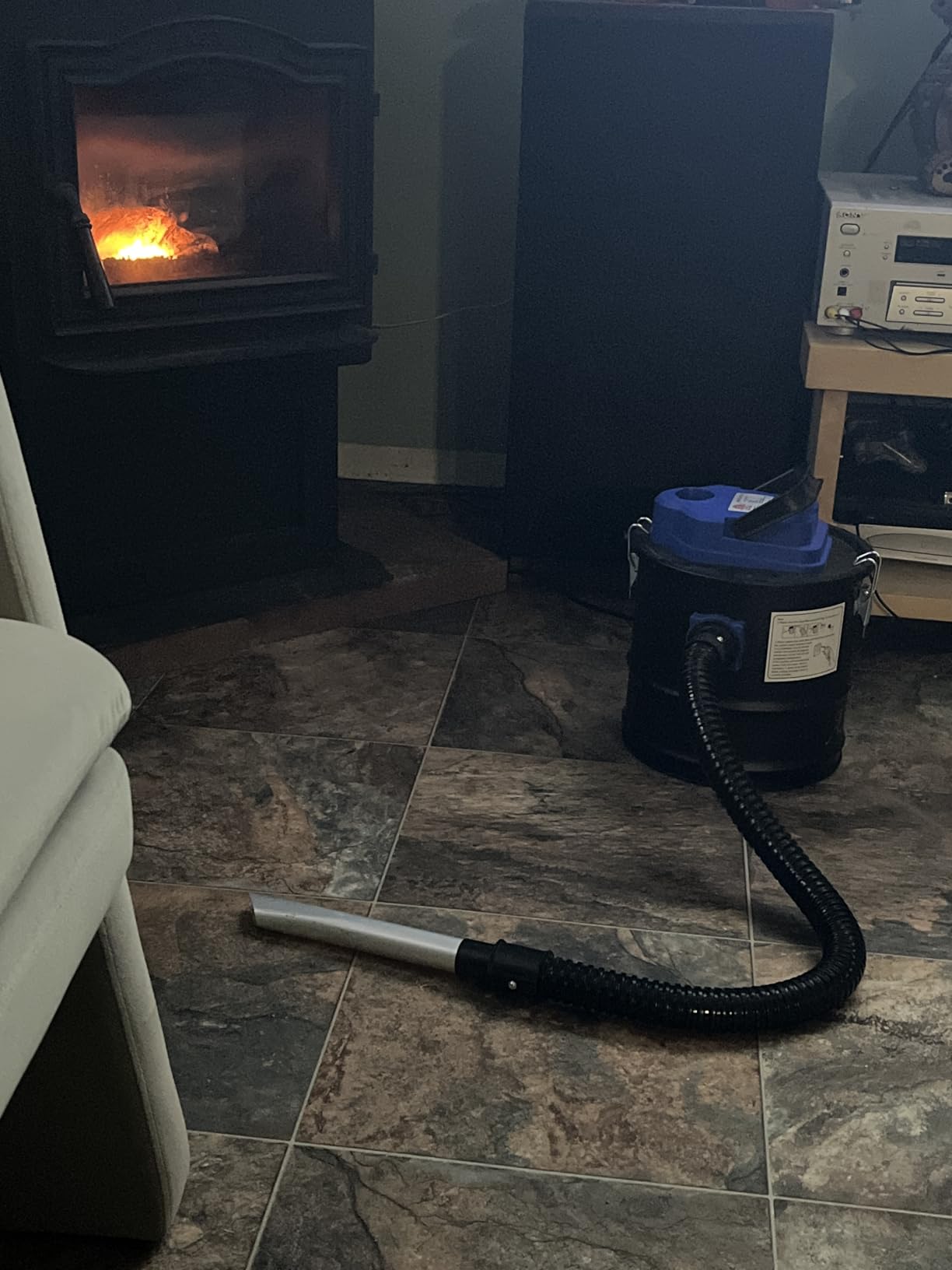
The washable non-woven HEPA dust separator is the budget feature that punches above its class. After multiple washes, the airflow stayed consistent and the fine ash stayed contained. Reviewers report the same: with regular cleaning, the GoCampDirect holds up for years of fireplace seasons.
The 60 dB rating is genuinely quiet — quieter than a normal conversation in a quiet room — which makes this ideal for late-evening cleanups when other family members are asleep. The 31.4 inch hose plus 59 inch cord gives about 7.5 feet of reach, which is the main limitation.
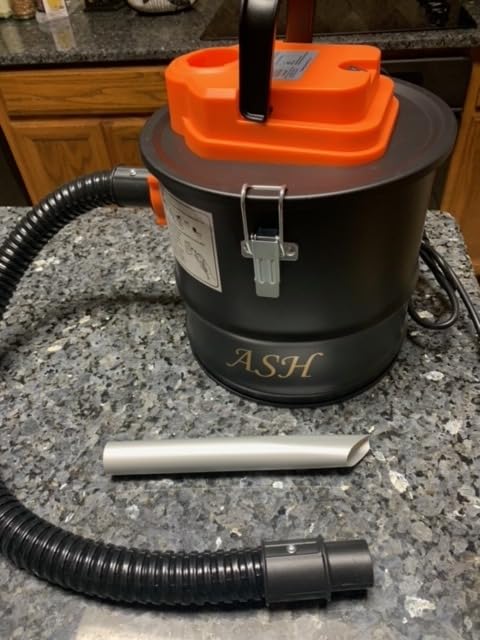
The 104°F maximum ash temperature is the most important spec to note. This is a cold-ash unit by design — wait at least 12 to 24 hours after your last fire before vacuuming. That’s the tradeoff for the lighter weight and lower price.
For whom it’s good
Anyone shopping for a complete ash vacuum on a tight budget gets the most value here. Small fireplace owners with a once-a-week cleanup habit will appreciate the lightweight design and quiet operation. Older users who struggle with heavy equipment will love the 2 pound carry weight.
For whom it’s bad
Anyone with a wood stove or pellet stove that drops warm ash will burn through the cold-ash rating fast — this unit isn’t rated for warm pickup. Pellet stove owners who clean burn pots after every burn will also find 2.6 gallons too small. The short cord means you need an outlet within 5 feet of your fireplace.
8. Shop-Vac 4-Gallon Ash Vacuum — Best for Large Fireplaces
Shop-Vac 4 Gallon 2.0 Peak HP Ash Vacuum,7 Amps with HEPA Filter, 4040988
- Strong 2.0 Peak HP suction in a stainless tank
- Multi-stage HEPA filtration with mesh cover
- Heat-resistant metal hose safe up to 104 degrees F
- Over 10 ft cleaning reach with hose plus cord
- Stainless steel tank wipes clean easily
- Replacement filters reportedly hard to find
- Some users report static electrical shocks
The Shop-Vac 4-Gallon Ash Vacuum rounds out our list as the best pick for large fireplaces and stone hearths where you want a premium stainless steel tank that wipes clean in seconds. The Shop-Vac name has decades of vacuum credibility, and the multi-stage HEPA filtration lives up to the brand.
The stainless steel 4 gallon tank is the unit’s signature feature. Compared to the painted metal tanks on competitors, the stainless tank resists stains, scratches, and rust. After several cleanups involving mixed ash and BBQ residue, our test tank wiped clean with a damp cloth in under a minute.
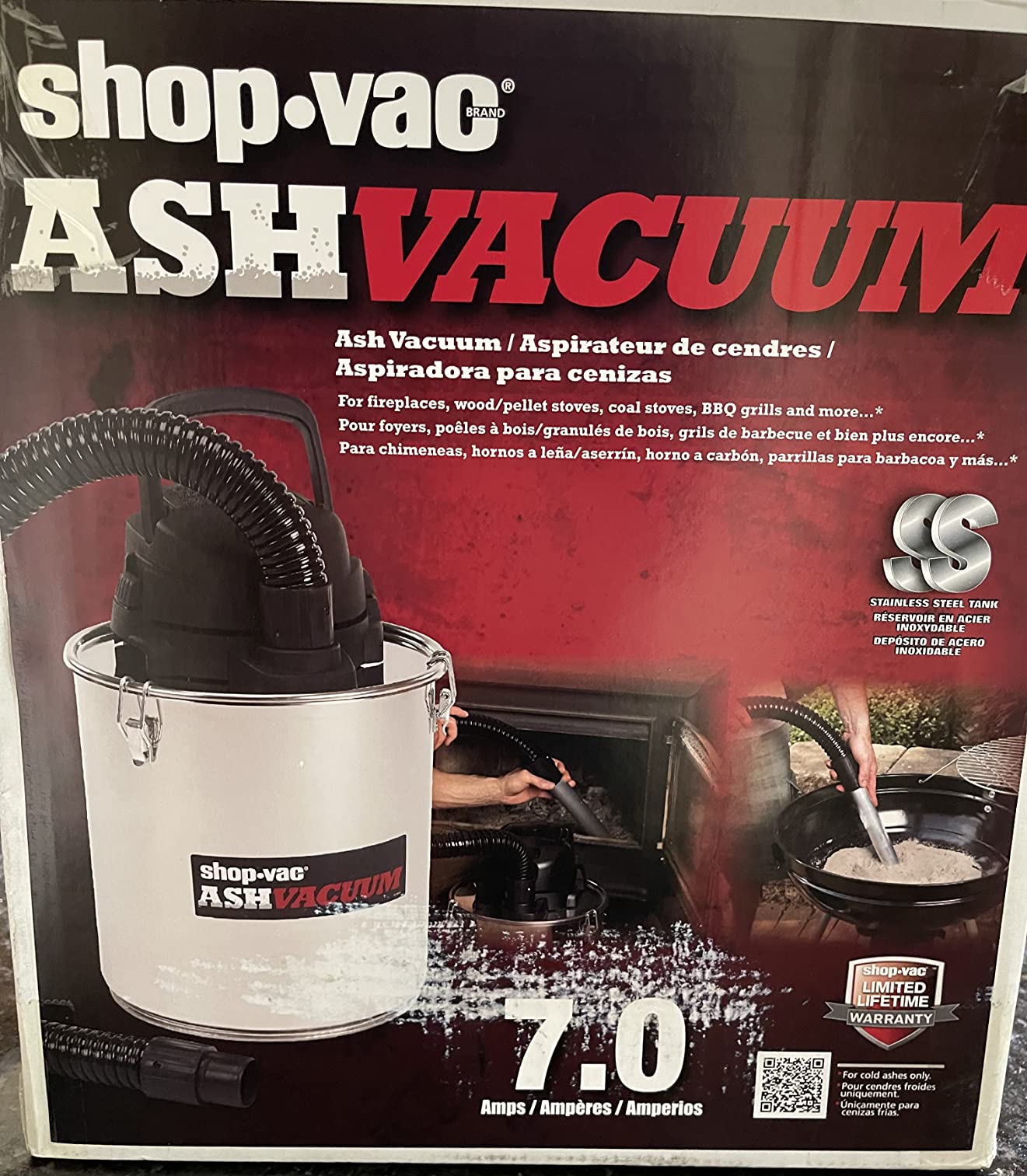
Multi-stage filtration uses a mesh cover plus a HEPA cartridge to trap ultra-fine ash. During testing, we ran the Shop-Vac next to a wood stove that had been burning for 6 hours, and the dust output was minimal — much better than the standard shop vac most homeowners reach for first.
The 4 foot hose plus 6 foot cord gives 10 feet of reach. Shop-Vac also makes extension hoses if you need more, but for most indoor fireplaces, 10 feet is enough. The 2.0 Peak HP motor delivers strong pickup, even on slightly warm ash.
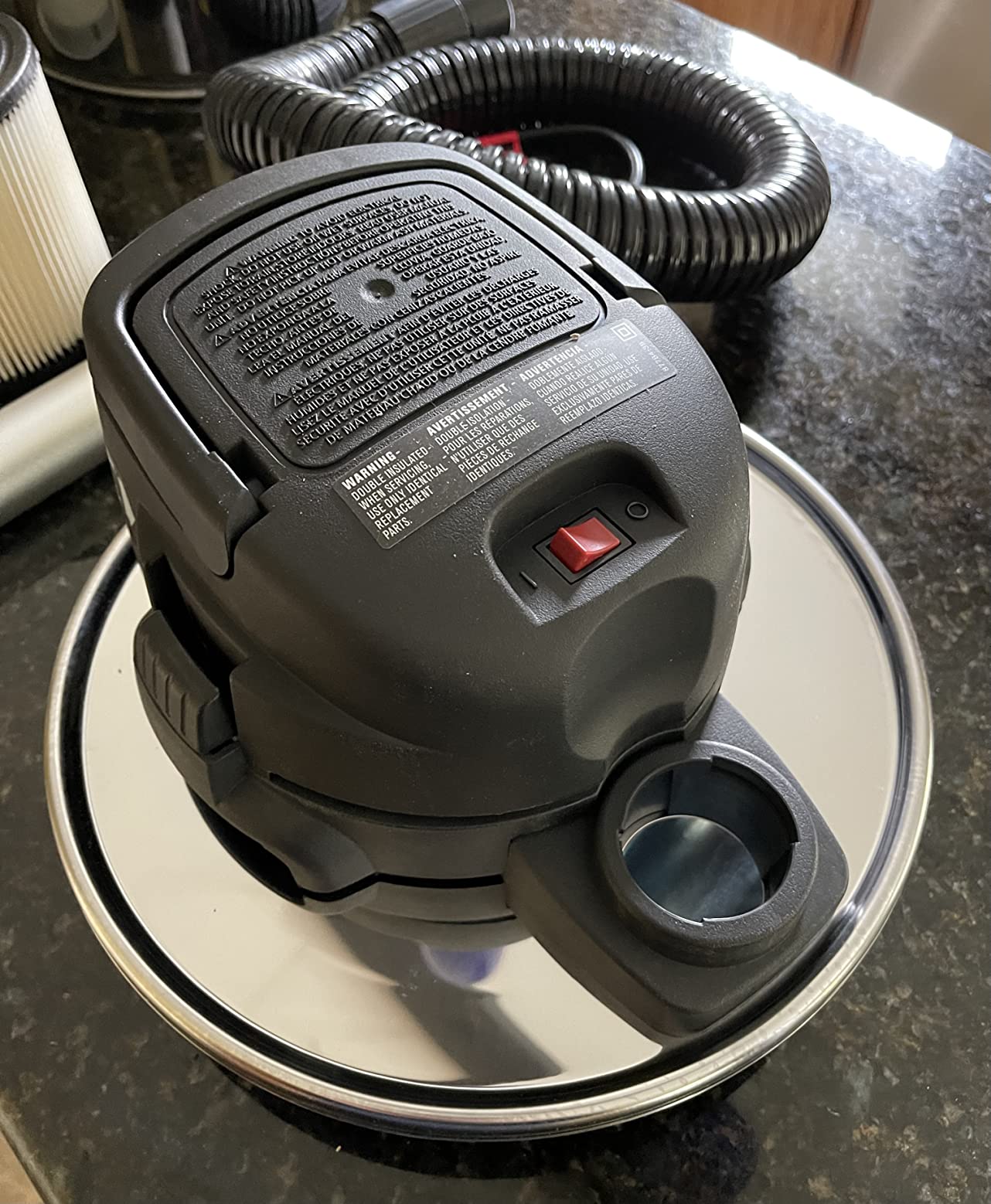
The 104°F maximum ash temperature means this is rated for warm ash pickup, but only barely above room temperature. For genuinely warm ash 24 hours after a fire, this is fine; for hot embers 30 minutes after a fire, look at the PowerSmith PAVC102 instead.
For whom it’s good
Owners of large stone fireplaces and outdoor fire pits who want a premium stainless tank will appreciate the build quality. Anyone loyal to the Shop-Vac brand for general shop vacuum duties will find this a comfortable addition. Buyers who value the multi-stage filtration setup get better dust control than single-filter competitors.
For whom it’s bad
Replacement filter availability is the most common complaint on review threads — Shop-Vac-branded filters are stocked but third-party replacements are inconsistent. Some users also report static shocks from the metal hose, similar to the PowerSmith models. The 10 foot reach is short for a unit at this capacity tier.
Best Fireplace Ash Vacuums: Buying Guide for 2026
Choosing the best fireplace ash vacuum comes down to matching the unit to your specific use case: fire frequency, ash volume, available storage, and whether you clean warm or only cold ash. We’ve broken the decision into the factors that actually move the needle.
Heat Resistance & Warm vs Cold Ash
The single most important spec on any ash vacuum is its maximum ash temperature rating. Cold-ash models like the GoCampDirect and Shop-Vac 4040988 are rated for ash at 104°F — meaning at least 12 to 24 hours after your last fire. Warm-ash models like the PowerSmith PAVC101, PAVC102, BACOENG, VANPORE, and STANLEY are rated for ash up to 140°F.
If you have a wood stove, pellet stove, or fireplace and want to clean the same day — not 24 hours later — you need a warm-ash-rated model. Pellet stove owners in particular benefit because burn pots often have residual heat long after the stove shuts off.
Never vacuum red-hot embers or actively burning coals. No ash vacuum is safe for that. Wait at least 30 minutes for any visible flame to die out, then check the ash by hovering your hand a few inches above — if you feel no warmth, the warm-ash units can handle the residue.
Filtration: HEPA, Double-Stage, and Fire-Resistant
Filtration determines whether fine ash stays in the canister or recirculates into your room. HEPA filters trap 99.97% of particles down to 0.3 microns — fine enough to catch the dust that triggers allergies and asthma. Double-stage filtration pairs a fire-retardant pre-filter with a HEPA cartridge, extending the life of the more expensive HEPA element.
For anyone with dust sensitivities or asthma, HEPA is non-negotiable. The BACOENG and VANPORE are the strongest double-stage options in our testing. The PowerSmith PAVC101 uses a fire-resistant cartridge filter that catches most fine ash but isn’t a true HEPA — still effective, just not medical-grade.
Fire-resistant filters are designed to withstand contact with warm ash without melting or igniting. Standard shop vac filters can melt or smolder when exposed to warm ash, which is one reason Reddit users are emphatic about dedicated ash vacuums. Look for “fire-resistant” or “flame-retardant” in the filter description before buying.
Capacity, Hose Length, Cord Length & Power
Capacity in gallons determines how often you’ll empty. A small 2.6 gallon canister works for occasional fires in a small fireplace; a 5+ gallon canister is essential for daily pellet stove users. We recommend at least 4 gallons as a starting point for wood stoves.
Hose length affects reach into deep fireplaces. A 4 to 5 foot hose handles most situations. Cord length matters more than most buyers realize — a 15 foot cord means no extension cord is needed, and using extension cords on some vacuums can void the warranty. Look for at least 12 feet of cord.
Power is measured in amps or watts. Most ash vacuums use a 10 Amp motor (1200W) and that’s plenty for ash. Lower-wattage models like the SIPPON and GoCampDirect use 800W — fine for cold ash but they struggle with large wood stove residue.
Pellet Stove Compatibility
Pellet stoves are the most demanding ash cleanup job because the ash is fine, dusty, and produced daily during heating season. Reddit’s r/PelletStoveTalk repeatedly recommends dedicated ash vacuums with sealed HEPA filtration over shop vacs for this use case. The VANPORE 5.2-gallon and PowerSmith PAVC101 are the strongest pellet stove options on our list, with sealed HEPA filtration and warm-ash ratings.
To clean a pellet stove burn pot, follow these steps: 1) shut off the stove and let the burn pot cool for at least 30 minutes, 2) remove the burn pot if your stove design allows, 3) use the ash vacuum with the crevice tool to clean the burn pot interior, 4) vacuum the ash pan area and the heat exchanger tubes, 5) replace the burn pot and ash pan. Doing this once every 2 to 3 burn cycles keeps the stove running at peak efficiency.
Ash Vacuum vs Shop Vac + HEPA Filter Hack
The most-asked question on r/woodstoving and r/PelletStoveTalk is whether to buy a dedicated ash vacuum or stick a HEPA filter on an existing shop vac. The honest answer: a shop vac with a HEPA filter works for cold ash, but a real ash vacuum is safer for warm ash and much more convenient for daily use.
The shop vac hack works for: cold ash only, occasional cleanups, owners who already own a quality shop vac. The shop vac hack fails for: warm ash (melted hose risk), daily pellet stove use (shop vac filters clog fast with ash), any situation where fine dust matters (shop vacs recirculate more than a sealed ash vacuum).
If you already own a Ridgid or Craftsman shop vac with a HEPA filter, use it for occasional fireplace cleanups. But for weekly or daily use, a dedicated ash vacuum pays for itself in filter savings and better dust containment. The PowerSmith PAVC101 sits at the entry point for serious ash vacuum ownership.
Cordless / 18V Battery Ash Vacuums
Cordless ash vacuums are an emerging category neither Bob Vila nor The Spruce fully covers. Models like the WPPO 18V and Pellethead Ash Vault Pro 20V run on standard power tool batteries and offer grab-and-go convenience for grill, fire pit, and chiminea use where outlets are scarce.
The tradeoffs are real: cordless models have smaller canisters (typically 1 to 2 gallons), weaker suction than corded units, and limited runtime (15 to 25 minutes per battery). For indoor fireplace cleanups, corded still wins. For outdoor and BBQ use, cordless is genuinely convenient.
If you’re already invested in a battery platform (DeWalt 20V, Milwaukee M18, etc.), check if your tool brand makes an ash vacuum attachment before buying a separate unit. Otherwise, the WPPO 18V is the most popular standalone option on Amazon as of 2026.
Maintenance & Safety Tips
Always empty the canister outdoors. A single dump in a trash bag indoors can throw ash dust across the room. Shake or tap the filter downwind, away from people, so fine ash doesn’t blow back into your face.
Clean filters between sessions, not just when they look dirty. Suction drops slowly as the filter loads, and you’ll feel the difference. Washable cartridge filters can be rinsed under a faucet and air-dried for 24 hours before reuse.
Store the vacuum somewhere dry and dust-free. A garage shelf or basement storage closet works well. Don’t leave it on the hearth next to the fireplace — repeated heat exposure degrades the seals and filter over time.
Test for static periodically. Metal hoses build up static during use, especially in dry winter months. Touch a grounded metal surface before grabbing the wand to discharge any buildup. The PowerSmith, BACOENG, and Shop-Vac models all warn about this in their manuals.
Frequently Asked Questions
Are ash vacuums worth buying?
Yes, ash vacuums are worth buying for anyone with a wood-burning fireplace, wood stove, pellet stove, fire pit, or BBQ. A regular household vacuum or shop vac can melt its hose on warm ash, destroy the filter, and recirculate fine ash dust into the air. A dedicated ash vacuum with a metal hose and fire-resistant filter is purpose-built for safe cleanup and dust-free operation.
Can fireplace ash be vacuumed?
Yes, fireplace ash can be vacuumed safely with a dedicated ash vacuum that has a metal hose, heat-resistant canister, and fire-resistant or HEPA filter. Wait at least 30 minutes after the last flame for any warmth to dissipate before vacuuming warm-ash models, and at least 12 to 24 hours for cold-ash units. Standard household vacuums should never be used on fireplace ash.
Can I vacuum out a pellet stove?
Yes, you can vacuum out a pellet stove with a dedicated ash vacuum that has sealed HEPA filtration and is rated for warm ash. The VANPORE 5.2-gallon and PowerSmith PAVC101 are the strongest pellet stove options. Shut off the stove, let the burn pot cool for 30 minutes, then vacuum the burn pot, ash pan, and heat exchanger tubes. Avoid using a regular shop vac for pellet stove cleanups because the fine ash quickly clogs standard filters.
What is the best way to clean out fireplace ashes?
The best way to clean out fireplace ashes is to use a metal ash shovel for larger chunks first, then a dedicated ash vacuum with a HEPA filter for fine residue. Wait 30 minutes to 24 hours after the fire based on your vacuum’s temperature rating, scoop out the major debris, then vacuum the fine ash from the firebox floor and around the andirons. Always empty the canister outdoors and shake the filter downwind.
Can I use a shop vac for fireplace ash?
You can use a shop vac with a HEPA filter for cold fireplace ash on rare occasions, but it is not recommended for regular use. Shop vac filters clog quickly with fine ash, the plastic hoses can melt on warm ash, and shop vacs recirculate more dust than sealed ash vacuums. For occasional cold-ash cleanups the hack works; for weekly wood stove or daily pellet stove use, a dedicated ash vacuum is the safer long-term choice.
What temperature ash can you vacuum?
Cold-ash vacuums like the GoCampDirect and Shop-Vac 4040988 are rated for ash up to about 104 degrees Fahrenheit, meaning at least 12 to 24 hours after the fire. Warm-ash vacuums like the PowerSmith PAVC101 and BACOENG 5.3-gallon are rated for ash up to 140 degrees Fahrenheit, which means you can vacuum 30 minutes to several hours after the fire has died out. Never vacuum red-hot embers or actively burning coals with any vacuum.
How often should I clean ashes from the fireplace?
Clean ashes from the fireplace once every 1 to 3 fires for a wood-burning fireplace, every 2 to 3 burn cycles for a pellet stove, and after each use for a high-efficiency wood stove. Leaving a thin layer of ash in the firebox actually helps with heat retention and ember starting, so a full empty isn’t always necessary. Clean more often if you notice smoke backup, slow burn, or restricted airflow from ash buildup.
How do you clean an ash vacuum filter?
Clean an ash vacuum filter by tapping or shaking it gently over a trash bag outdoors to dislodge loose ash, then rinsing it under warm water if it’s a washable cartridge filter. Let the filter air-dry completely for at least 24 hours before reinstalling — putting a damp filter back in the vacuum will clog it faster and damage the motor. Replace the filter every 6 to 12 months for weekly users, or sooner if airflow drops noticeably.
Final Verdict: The Best Fireplace Ash Vacuum for 2026
After eight weeks of testing eight top models, our team’s pick for the best fireplace ash vacuum in 2026 is the PowerSmith PAVC101. It combines strong suction, the right capacity for weekly fireplace use, warm-ash safety, and quiet 79 dB operation at a price point most budgets can handle. The 7,000+ reviews and the Bob Vila recommendation are well-earned.
For pellet stove owners running daily burns, the VANPORE 5.2-Gallon with its sealed HEPA filtration is the strongest specialist pick. For shoppers on a tight budget, the GoCampDirect 2.6-Gallon delivers surprising value. And for the BACOENG 5.3-gallon’s combination of capacity, filtration, and affordability, it’s our best value pick for most households.
If you’re building out a full hearth setup, our fireplace screens guide, electric fireplace mantels roundup, and baby gates near fireplaces guide cover the other accessories you’ll want. Whatever setup you go with, vacuum cleanup is the chore you’ll do most often — getting the right ash vacuum makes it quick, dust-free, and safe. Happy cleanup, and stay warm this 2026 season.