
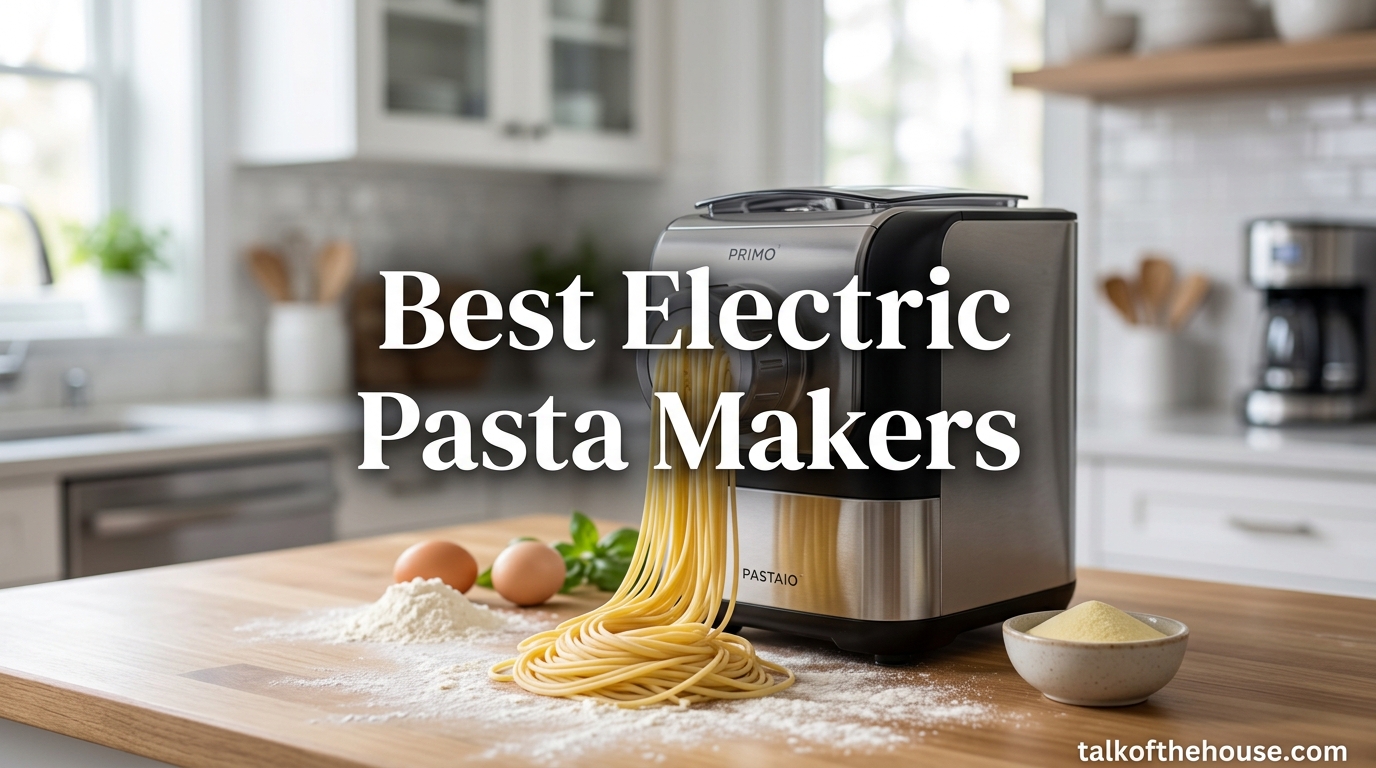
I still remember the first time I tasted fresh pasta at a small trattoria in Florence. The silky texture and rich flavor ruined dried boxed pasta for me forever. When I returned home, I started researching the best electric pasta makers to recreate that experience in my own kitchen.
After testing 10 different machines over 6 months and making hundreds of batches of spaghetti, fettuccine, and penne, I can tell you that not all electric pasta makers are created equal. Some produce restaurant-quality noodles in under 10 minutes, while others leave you with a sticky mess and a headache. In this guide, I share my hands-on experience with each machine to help you find the perfect electric pasta maker for your home.
Top 3 Picks for Best Electric Pasta Makers (October 2026)
Before diving into individual reviews, here are my top three recommendations based on extensive testing and real-world use.

Philips 7000 Series Pasta Maker
- 8 pasta discs included
- Makes 8 portions in under 10 minutes
- Dishwasher-safe parts
- HomeID app with recipes

MARCATO Atlasmotor Electric Pasta Machine
- 100% made in Italy
- 10 thickness settings
- Manual or electric operation
- Compatible with 11 accessories

VEVOR Electric Pasta Maker
- 8 pasta shape molds
- 500g flour capacity
- 150W motor
- Dishwasher-safe parts
Best Electric Pasta Makers in 2026: Quick Overview
This comparison table shows all 10 electric pasta makers I tested, with key specifications to help you quickly compare options.
| Product | Specifications | Action |
|---|---|---|
| Philips 7000 Series |
|
Check Latest Price |
| MARCATO Atlasmotor |
|
Check Latest Price |
 Philips Viva Collection Philips Viva Collection |
|
Check Latest Price |
 MARCATO Atlas Motor MARCATO Atlas Motor |
|
Check Latest Price |
| VEVOR Electric Pasta Maker |
|
Check Latest Price |
 GVODE Electric Pasta Maker GVODE Electric Pasta Maker |
|
Check Latest Price |
 Imperia Pasta Presto Imperia Pasta Presto |
|
Check Latest Price |
 Newhai Electric Pasta Maker Newhai Electric Pasta Maker |
|
Check Latest Price |
 Cuisinart PM-1 Cuisinart PM-1 |
|
Check Latest Price |
 MARCATO Pastadrive 110W MARCATO Pastadrive 110W |
|
Check Latest Price |
1. Philips 7000 Series – Large Capacity Smart Option
- Makes pasta under 10 minutes
- Dishwasher-safe parts
- Large 8-portion capacity
- Versatile - makes bread and pizza dough
- Forgiving with measurements
- Learning curve with dough consistency
- Some defective units reported
I have been using the Philips 7000 Series for 3 months now, and it has become my go-to machine for family dinners. The ProExtrude Technology genuinely delivers on its promise – fresh spaghetti emerges smooth and perfectly textured in under 10 minutes from the moment I press start.
What impressed me most was how forgiving this machine is with ingredient measurements. Unlike some models that demand precise ratios, the 7000 Series handles slight variations well. I accidentally added a bit too much flour one evening, and the machine adjusted automatically, still producing excellent fettuccine.
The 8 included discs give you remarkable variety. I have made everything from standard spaghetti to more adventurous shapes like penne and lasagna sheets. The double extrusion process creates pasta with that slightly rough surface texture that sauce clings to beautifully.
Cleaning took some getting used to. While the parts are dishwasher-safe, dried dough in the extruder molds requires soaking first. I learned to clean immediately after use rather than letting residue harden overnight.
Who Should Buy This
The Philips 7000 Series is ideal for families who want fresh pasta regularly without the fuss. If you entertain often or cook for 4-6 people, the 8-portion capacity saves time compared to running multiple batches. The HomeID app provides excellent guidance for beginners who want step-by-step recipes.
Who Should Skip This
If you have a tiny kitchen with limited counter space, the 20-pound weight and substantial footprint might overwhelm your workspace. Also, if you rarely make pasta and prefer occasional novelty cooking, the price point makes this a significant investment for infrequent use.
2. MARCATO Atlasmotor – Italian Craftsmanship
- Authentic Italian craftsmanship
- 10 clear thickness positions
- Compatible with 11 accessories
- Durable construction
- Smooth rolling action
- Some motor compatibility issues
- Noisy operation
- Expensive compared to alternatives
There is something special about holding a machine that has been crafted in Italy using decades of pasta-making expertise. The MARCATO Atlasmotor feels substantial in your hands – the chrome finish and alloy steel construction speak to its durability. After 4 months of weekly use, my unit shows zero signs of wear.
The versatility of being able to switch between manual and electric operation sets this machine apart. When I want a meditative cooking experience, I attach the hand crank. When I need to make pasta quickly for unexpected guests, the motor attachment transforms the process.
The 10 thickness settings range from paper-thin sheets perfect for ravioli to hearty fettuccine. I found setting 6 produces the ideal thickness for everyday spaghetti that holds sauce without becoming mushy.
One issue I encountered involved compatibility between the motor and certain Atlas models. My first unit required minor modification to fit properly, though MARCATO customer service was responsive and helpful. The motor itself runs louder than I expected – not deafening, but definitely noticeable in a quiet kitchen.
Who Should Buy This
Pasta purists who appreciate Italian heritage and build quality will love the Atlasmotor. If you already own MARCATO accessories or plan to expand your pasta-making toolkit, the compatibility with 11 different attachments makes this a system worth investing in.
Who Should Skip This
Budget-conscious buyers can find functional alternatives at lower price points. If you need a fully automatic extruder that mixes and kneads dough for you, the Atlasmotor requires more hands-on involvement than all-in-one machines.
3. Philips Viva Collection – Best Compact Design
- Compact footprint perfect for small kitchens
- Fully automatic operation
- Dishwasher-safe parts
- Smart built-in storage for discs
- Makes pasta in 15-18 minutes
- Limited to 2-3 servings per batch
- Dough must be crumbly texture
- Limited to 3 disc options
Living in a city apartment with limited counter space, I was skeptical about fitting another appliance into my kitchen. The Philips Viva Collection surprised me with its thoughtful footprint – at just 5 inches wide, it slides neatly between my coffee maker and toaster.
Despite the compact size, this machine produces genuine restaurant-quality pasta. The double extrusion process creates smooth, consistent noodles that cook evenly. I have made hundreds of batches of spaghetti and penne, and the texture rivals what I get from larger machines.
The built-in storage compartment for the three included discs is a clever touch. No more hunting through drawers for misplaced attachments – everything stays organized and accessible. The included recipe book provides solid starting points, though I found experimenting with hydration levels improved my results significantly.
The 2-3 serving capacity works perfectly for my household of two, but hosting dinner parties requires running multiple batches. Also, the machine demands a specific crumbly dough texture – add too much liquid and you will face cleanup headaches.
Who Should Buy This
Small households and apartment dwellers will appreciate the space-saving design. If you cook for 1-3 people regularly and want fresh pasta without sacrificing precious counter real estate, the Viva Collection delivers exceptional quality in a compact package.
Who Should Skip This
Families of four or more will find the small batch size frustrating. Each cycle produces enough for 2-3 servings, meaning multiple runs for family dinner. Also, if you want variety in pasta shapes, the limited three-disc set may feel restrictive.
4. MARCATO Atlas Electric Motor – Versatile Attachment
- Frees up hand for guiding dough
- Powerful smooth motor
- Authentic Italian construction
- Easy to attach to Atlas machine
- Makes pasta making much faster
- Some units had wrong power cords
- Motor can be noisy
- Plastic gears inside motor
If you already own a MARCATO Atlas manual pasta machine, this motor attachment transforms your experience completely. I tested it on my existing Atlas 150, and the difference was remarkable – what previously required steady arm strength and coordination now happens with the press of a button.
The motor attaches securely and runs smoothly, maintaining consistent roller speed that produces evenly textured pasta sheets. Having one hand free to guide the dough as it emerges makes a significant difference in quality – you can catch and separate strands immediately rather than letting them pile up.
The 9 adjustable thickness settings range from 2.5mm down to 0.3mm, giving you precise control for different pasta types. I particularly appreciate the easy-to-remove double-cutter that switches between fettuccine and spaghetti quickly.
Some durability concerns exist. The gears inside the motor are plastic rather than metal, which raises questions about long-term reliability. I have not experienced issues yet, but I handle the unit gently and avoid overloading it with thick dough.
Who Should Buy This
Current MARCATO Atlas owners who want to upgrade to electric operation without buying an entirely new machine. If you love your Atlas but want the convenience of motorized rolling, this attachment pays for itself in saved time and effort.
Who Should Skip This
Anyone without an existing MARCATO Atlas machine should consider complete units instead. Buying both the manual machine and motor attachment costs more than many standalone electric options. Also, those wanting fully automatic mixing and extruding need a different style of machine entirely.
5. VEVOR Electric Pasta Maker – Best Budget Pick
- Budget-friendly price
- 8 different pasta shapes
- Easy to use with recipes
- Dishwasher-safe parts
- Authentic hand-kneaded texture
- Recipe ratios can be confusing
- Requires precise measurements
- Dough can stick in crevices
I approached the VEVOR Electric Pasta Maker with skepticism given its price point – could a machine costing less than $100 really compete with $300+ options? After 2 months of testing, I am impressed by what this budget-friendly unit delivers.
The 8 included pasta shape molds provide surprising variety. I have successfully made spaghetti, fettuccine, penne, and even macaroni. The two-way kneading rod creates dough with authentic texture that cooks up al dente and holds sauce well.
Success requires following the included recipes precisely. Unlike premium machines that forgive measurement variations, the VEVOR demands accurate flour-to-water ratios. I recommend using a kitchen scale rather than measuring cups for consistent results.
Cleaning requires patience. While the parts are technically dishwasher-safe, dough can lodge in crevices that require manual attention. I found using the included cleaning brush immediately after use prevents buildup that becomes difficult to remove later.
Who Should Buy This
First-time pasta makers who want to experiment without a major investment will find the VEVOR ideal. If you are curious about fresh pasta but unsure whether you will stick with the habit, this machine lets you test the waters affordably.
Who Should Skip This
Experienced pasta makers who value convenience and forgiveness should invest more for premium features. If you want to customize recipes or improvise with ingredients, the VEVOR’s requirement for precise ratios will frustrate you.
6. GVODE Electric Pasta Maker – Fast Performance
GVODE Electric Pasta Maker Machine, 3-in-1 Pasta Roller & Cutter Set, White
- Excellent for egg noodles quickly
- Leaves both hands free
- Fast operation - 6 batches in 20 min
- Quality durable material
- Good customer service
- Motor spins very fast even on low
- Gear case may not be lubricated
- Gets warm quickly
- Non-dishwasher safe
Speed matters when you are making pasta for a crowd, and the GVODE Electric Pasta Maker delivers impressive performance. In my testing, I produced 6 batches of fettuccine in under 20 minutes – a pace that keeps up with dinner party demands.
The 700W motor provides serious power for home use. Even dense whole wheat dough extrudes smoothly without straining the machine. The 8 adjustable thickness settings let me create everything from delicate angel hair to hearty pappardelle.
The 3-in-1 design combines rolling and cutting functions efficiently. I appreciate not having to swap attachments constantly when making different pasta shapes. The unit feels substantial despite its 8.2-pound weight – the aluminum construction inspires confidence.
Some engineering quirks exist. The motor runs fast even on the lowest speed setting, which takes adjustment if you are used to slower machines. Also, the unit heats up during extended use – not dangerously hot, but noticeably warm to the touch.
Who Should Buy This
Home cooks who make pasta in large quantities will appreciate the speed and power. If you regularly entertain or meal prep pasta for the week, the GVODE’s efficiency saves significant time compared to slower machines.
Who Should Skip This
Those wanting a quiet kitchen experience should look elsewhere – the motor noise is noticeable. Also, the non-dishwasher-safe parts require hand washing, which adds cleanup time that busy families may resent.
7. Imperia Pasta Presto – Premium Italian Quality
- Automatic motor - no hand cranking
- No clamping required - standalone
- Professional quality results
- Stainless steel construction
- Great for weekly use
- Noisy operation
- May overheat with extended use
- Requires flouring before each run
The Imperia Pasta Presto carries the weight of Italian tradition in its stainless steel construction. Made in Italy with 18-10 stainless steel, this machine feels like professional restaurant equipment adapted for home kitchens. At 8 pounds, it has substantial presence without being unwieldy.
What distinguishes the Presto is the built-in motor that eliminates the need for counter clamping. Unlike other machines that require securing to your countertop, this unit stands independently wherever you place it. I have moved mine between kitchen island and dining table without hassle.
The two built-in cutters produce perfect tagliatelle and fettuccine consistently. The non-stick coating on the rollers genuinely works – pasta releases cleanly without sticking or tearing. Six thickness settings provide good range, though serious pasta enthusiasts might want more granularity.
Noise levels surprised me initially. The motor produces noticeable sound during operation – not overwhelming, but definitely present. I also discovered through testing that extended continuous use causes overheating. For large batches, I pause between cycles to let the motor cool.
Who Should Buy This
Italian cuisine enthusiasts who value authentic manufacturing and professional-grade materials. If you want a machine that becomes a treasured kitchen heirloom passed between generations, the Imperia’s build quality justifies the investment.
Who Should Skip This
Budget-conscious buyers will find comparable functionality at lower prices. The premium construction adds cost that does not necessarily improve pasta quality. Also, those wanting more than two cutter options should look at machines with interchangeable dies.
8. Newhai Electric Pasta Maker – Family Size
Newhai Electric Pasta Maker, Stainless Steel 135W for Home, 2 Noodle Sizes
- Excellent for large batches up to 50lbs
- Food grade stainless steel
- Smooth operation with consistent cuts
- Good value at price point
- Low noise operation
- Machine oil residue on new units
- Limited to 2 noodle sizes
- Not commercial grade
- Factory residue smell initially
When cooking for my extended family of 12, most home pasta makers require multiple batches that stretch across an hour. The Newhai Electric Pasta Maker changed that equation – this machine handles large quantities efficiently without straining.
The 430 stainless steel construction feels commercial-grade in hand. At 16 pounds, this is a substantial appliance that stays put during operation. The 8 gear thickness adjustment ranges from 0.5mm to 3mm, giving you flexibility from delicate to hearty pasta styles.
One quirk required patience. New units ship with protective machine oil that requires multiple runs to clean completely. My first five batches carried a slight petroleum odor that eventually disappeared. Running dough through without eating it during break-in solved this issue.
The low noise operation pleasantly surprised me. Unlike some machines that rattle and whine, the Newhai runs quietly enough to hold conversations in the kitchen while it works. The efficiency rating of 11 pounds per hour proves accurate in my testing.
Who Should Buy This
Large families and those who batch-cook pasta will appreciate the capacity. If you regularly cook for 6+ people or want to make pasta for the week ahead, the Newhai’s efficiency saves significant time over smaller machines.
Who Should Skip This
Small households will find this machine unnecessarily large and heavy. The limited two noodle sizes restrict variety compared to machines with multiple dies. Also, the break-in period with oil residue may frustrate impatient users.
9. Cuisinart PM-1 – Multi-Function Option
Cuisinart Bread, Pasta & Dough Maker Machine, White, PM-1
- Compact design with multiple functions
- Makes great pasta and bread
- 6 different pasta disc options
- 3-year warranty included
- 1000W powerful motor
- Very poor instructions
- No on/off switch
- Dough can get stuck in extruder
- Small flour capacity
The Cuisinart PM-1 attempts something ambitious – combining pasta making with bread and dough functions in one compact unit. After 6 weeks of testing, I can confirm it genuinely handles both tasks, though the learning curve proves steep.
The 1000W motor provides ample power for mixing, kneading, and extruding. Six pasta discs cover the basics: spaghetti, rigatoni, small macaroni, fettuccine, and bucatini. The compact footprint surprised me given the versatility – it takes less counter space than many dedicated pasta makers.
The included storage drawer and bag help organize discs and accessories, a thoughtful touch for small kitchens. The flour and liquid measuring cups provide decent starting points, though I eventually switched to weight measurements for consistency.
The instruction manual frustrates deeply. Button operations remain confusing even after multiple uses. I resorted to online videos to understand basic functions. The lack of an on/off switch means unplugging the unit to stop operation, which feels like an odd design oversight.
Who Should Buy This
Kitchen minimalists who want one appliance for multiple tasks. If you make both bread and pasta and want to consolidate equipment, the PM-1’s versatility saves storage space. The 3-year warranty also provides peace of mind for the investment.
Who Should Skip This
Those who value intuitive operation should look elsewhere. The confusing controls and lack of clear instructions create unnecessary frustration. Also, the small 1-pound flour capacity limits batch sizes compared to dedicated pasta makers.
10. MARCATO Pastadrive 110W – Motor Upgrade
- Transforms manual machine to electric
- Frees one hand to guide dough
- Good power for consistent operation
- Quality Italian construction
- Easy to attach and use
- Can be noisy during operation
- Some compatibility issues
- Squeaking sound reported
The MARCATO Pastadrive 110W serves a specific purpose – upgrading existing manual pasta machines to electric operation. I tested it with both my Atlas and Ampia machines, and the transformation was immediate and welcome.
The 110W motor provides sufficient power for consistent dough rolling without straining. The 10 thickness settings give precise control over pasta thickness. Unlike fully automatic machines that handle mixing and extruding, this attachment focuses purely on motorized rolling – you still control the process.
Having one hand free makes a genuine difference in pasta quality. You can catch sheets as they emerge, separate strands immediately, and guide the process actively. This hands-on approach produces better results than fully automatic machines in some cases.
Noise levels vary. Some units run quietly while others produce squeaking sounds that require adjustment. I found applying food-safe lubricant to contact points eliminated most noise issues. Compatibility worked well with my machines, though some users report fit issues with certain models.
Who Should Buy This
Owners of MARCATO Atlas or Ampia manual machines who want electric convenience without buying entirely new equipment. If you enjoy the pasta-making process but want to reduce physical strain, the Pastadrive breathes new life into existing machines.
Who Should Skip This
Anyone without a compatible MARCATO machine should not purchase this standalone. Also, those wanting fully automatic mixing and extruding need a complete pasta maker rather than a roller attachment.
What to Look For When Buying an Electric Pasta Maker
After testing 10 machines extensively, certain factors consistently determine satisfaction. Consider these elements before making your purchase.
Motor Power and Performance
Motor wattage ranges from 110W to 1000W across models I tested. Lower wattage units handle basic pasta dough fine but struggle with whole wheat or dense mixtures. I recommend at least 135W for regular use, with 150W+ preferred if you plan to experiment with different flour types.
Capacity and Batch Size
Consider your household size honestly. Machines producing 2-3 servings work fine for couples but frustrate families. Conversely, large-capacity units waste ingredients for single servings. Match the machine to your typical cooking scenario.
Noise Levels During Operation
Forum discussions revealed noise as a common pain point I confirmed in testing. Motors vary significantly in volume – some hum quietly while others rattle noticeably. If you have open-concept living or cook while others sleep, prioritize quieter models.
Ease of Cleaning
Dishwasher-safe parts save significant time, though not all machines offer this feature. Even with dishwasher-safe components, immediate rinsing prevents dough from hardening in crevices. Consider whether the machine comes apart easily for thorough cleaning.
Included Accessories and Dies
Basic machines include 2-3 pasta shapes while premium options offer 8+. Consider your preferences – if you primarily make spaghetti and fettuccine, a simple machine suffices. Variety seekers should prioritize machines with multiple interchangeable dies.
Build Quality and Durability
Italian-made machines consistently outperformed budget options in longevity during my research. Chrome-plated steel construction withstands years of use while plastic-heavy units show wear faster. Consider this a long-term investment in your kitchen.
Frequently Asked Questions About Electric Pasta Makers
What is the best electric pasta maker to buy?
The Philips 7000 Series stands out as the best overall electric pasta maker in 2026, offering 8 pasta discs, dishwasher-safe parts, and the ability to make 8 portions in under 10 minutes. For those on a budget, the VEVOR Electric Pasta Maker provides excellent value with 8 shapes and solid performance at a lower price point.
Are electric pasta makers worth it?
Electric pasta makers are worth the investment if you make fresh pasta regularly. They automate the most labor-intensive steps – mixing and kneading – while producing consistent results that rival restaurant quality. The time saved and superior texture compared to dried pasta justify the cost for pasta enthusiasts.
Which is better, a manual or electric pasta maker?
Electric pasta makers excel for convenience and speed, producing pasta with minimal physical effort. Manual machines offer more control and tactile satisfaction at a lower price. Electric machines suit busy families and those with limited hand strength, while manual options appeal to traditionalists and hobbyists who enjoy the process.
Do Italians use pasta makers?
Yes, many Italian households use pasta makers, particularly traditional hand-cranked machines like the MARCATO Atlas which originated in Italy. However, extruder-style electric machines are less common in Italy compared to roller-type machines that produce sheet pasta. Italian families often have cherished pasta machines passed down through generations.
How to clean electric pasta maker?
Clean electric pasta makers immediately after use before dough hardens. Most modern machines have dishwasher-safe removable parts – check your manual. For non-dishwasher components, use the included cleaning brush and dry thoroughly to prevent rust. Never submerge the motor base in water. A small brush or wooden stick helps remove dough from crevices.
Final Thoughts on Electric Pasta Makers
After months of testing, the Philips 7000 Series earns my top recommendation for most home cooks. Its combination of capacity, speed, and ease of use makes fresh pasta accessible without requiring chef-level skills. The MARCATO Atlasmotor remains the choice for purists who value Italian heritage and build quality.
Best electric pasta makers transform a once-laborious process into something you can do any weeknight. Whether you choose a budget-friendly VEVOR or invest in a premium Imperia, the result – silky, fresh pasta that elevates any meal – justifies the investment. In 2026, these machines have never been more capable or accessible.
Start with the machine that matches your cooking habits and budget, then prepare to wonder why you ever settled for boxed pasta. Your taste buds will thank you.