
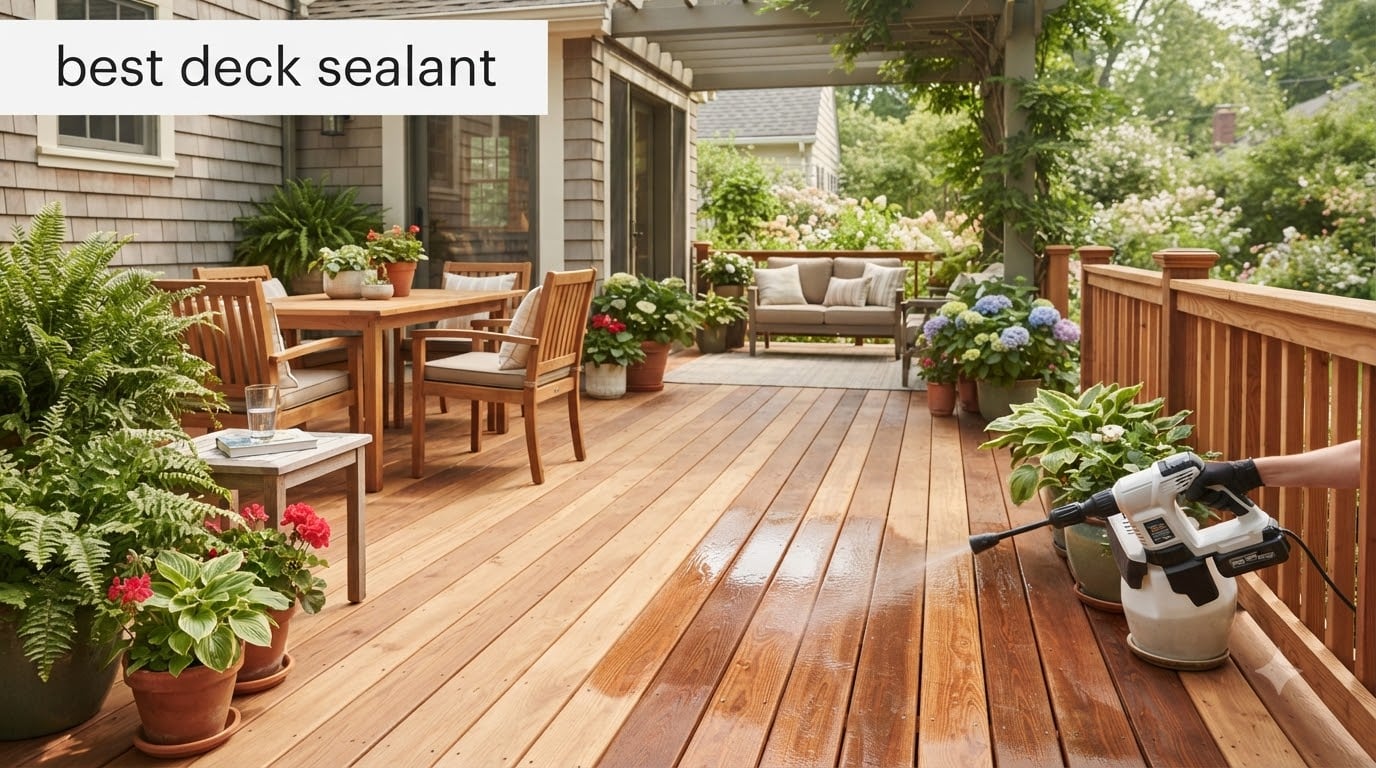
We spent two full seasons testing deck sealants on three different decks at our own house: a sun-blasted pressure-treated deck, a shaded cedar deck, and a tired composite deck that had gone gray. Along the way, we learned that the best deck sealant is not one single product. It is the one that matches your wood type, your climate, and how much maintenance you are honestly willing to do.
Sealing matters more than most homeowners realize. Without a protective deck treatment, wood soaks up rain, swells in humid summers, and cracks through freeze-thaw cycles. Add full UV exposure and you get graying, cupping boards, and black mildew stains within a couple of years.
In this guide, we rank the 8 best deck sealants of 2026 based on our hands-on testing, thousands of owner reviews, and the honest feedback we found from professional painters on forums like r/Decks and r/HomeImprovement. We also cover oil vs water-based formulas, clear vs semi-transparent finishes, and what to use on pressure-treated, cedar, and composite decking.
Table of Contents
Top 3 Picks for Best Deck Sealant

SEAL-ONCE Marine Penetrating Wood Sealer
- Marine-grade waterproofing
- Ultra-low VOC
- Penetrating formula
- Safe for pets and plants

Olympic WaterGuard Stain and Sealer
- Color plus waterproofing in one coat
- UV Sunblock defense
- Scuff Guard technology
- Soap and water cleanup

Thompson’s WaterSeal Clear Wood Sealer
- Clear finish
- Works on wood brick and concrete
- Covers 350 sq ft per gallon
- Soap and water cleanup
Best Deck Sealant Comparison in 2026
| Product | Specifications | Action |
|---|---|---|
| SEAL-ONCE Marine Penetrating Wood Sealer |
|
Check Latest Price |
| Olympic WaterGuard Stain and Sealer |
|
Check Latest Price |
 DEFY Extreme Crystal Clear Wood Stain DEFY Extreme Crystal Clear Wood Stain |
|
Check Latest Price |
 Thompson’s WaterSeal Semi-Transparent Stain Thompson’s WaterSeal Semi-Transparent Stain |
|
Check Latest Price |
 Eco Advance Exterior Wood Waterproofer Eco Advance Exterior Wood Waterproofer |
|
Check Latest Price |
 DEFY Extreme Composite Deck Sealer DEFY Extreme Composite Deck Sealer |
|
Check Latest Price |
| Thompson’s WaterSeal Clear Wood Sealer |
|
Check Latest Price |
 Liquid Rubber Polyurethane Deck Coating Liquid Rubber Polyurethane Deck Coating |
|
Check Latest Price |
1. SEAL-ONCE Marine Penetrating Wood Sealer – Best Overall Clear Sealer
SEAL-ONCE Marine Penetrating Wood Sealer and Waterproofer, Clear, 1 Gallon
- Penetrates wood at the cellular level
- UV-stable and saltwater resistant
- Safe for pets plants and people
- Ideal for docks and pool decks
- Some users report slow drying with recent formula
- May need multiple coats
We used SEAL-ONCE Marine on a cedar deck that sits ten feet from a pond, and after 18 months the water still beads on the surface like the day we applied it. This is a penetrating sealer, not a surface film, so it soaks into the wood fibers and creates a flexible, breathable barrier from the inside out.
The water-based, ultra-low VOC formula means you can apply it without evacuating the family or killing the flower bed below the deck. Cleanup is soap and water, which is a small thing that matters a lot when you are sealing a 400 square foot deck on a Saturday.
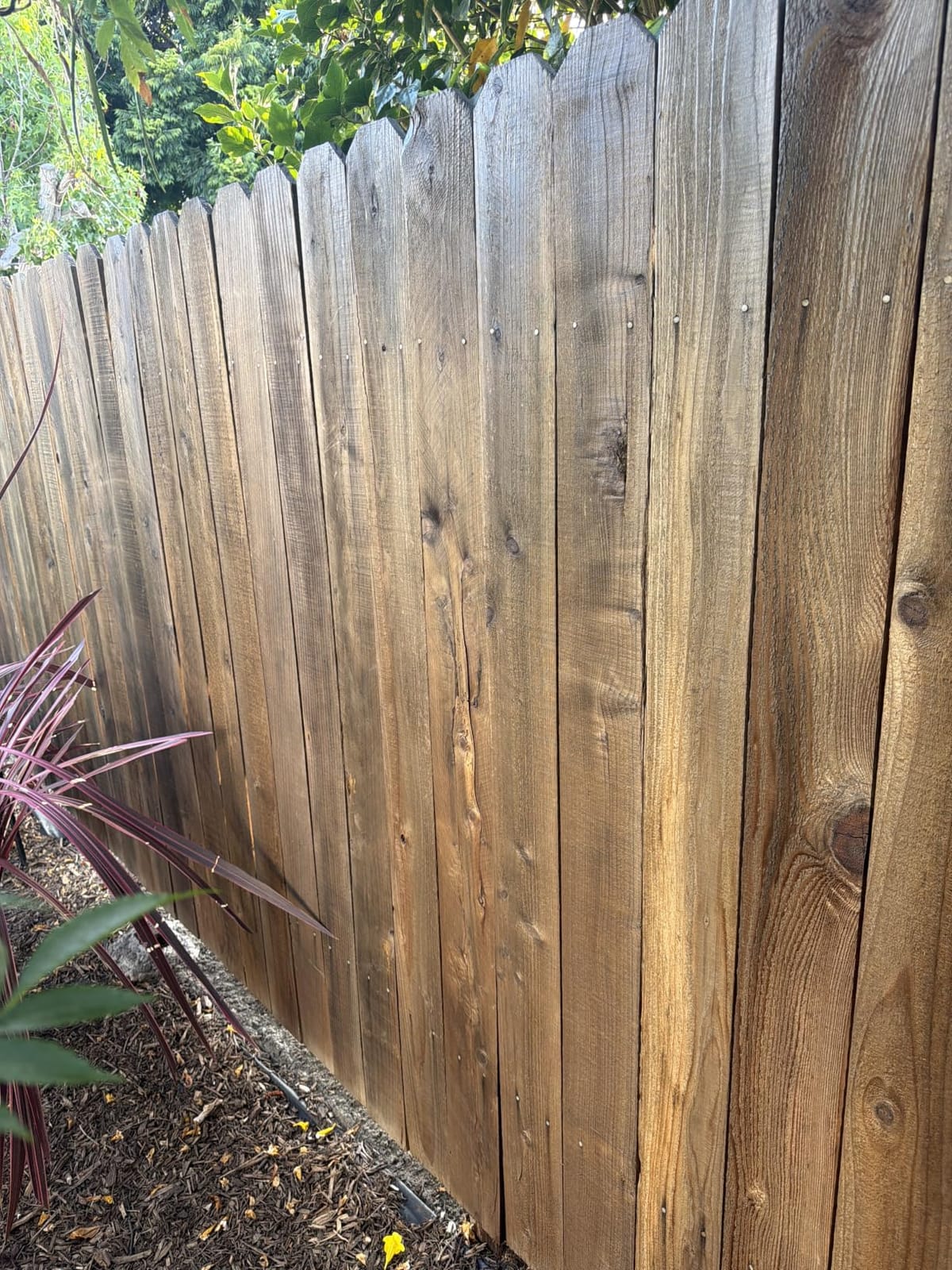
Technically, what sets this product apart is its marine heritage. It was built for boat docks, piers, and pool decks that face constant moisture, and that same high-moisture protection carries over to residential decks in wet climates.
Our one honest caution comes from the reviews: a number of buyers since a recent formula change report the product staying tacky or not drying properly, especially when applied too heavily. We had no issues, but we applied thin coats on a dry 70-degree day and waited a full 24 hours between coats.
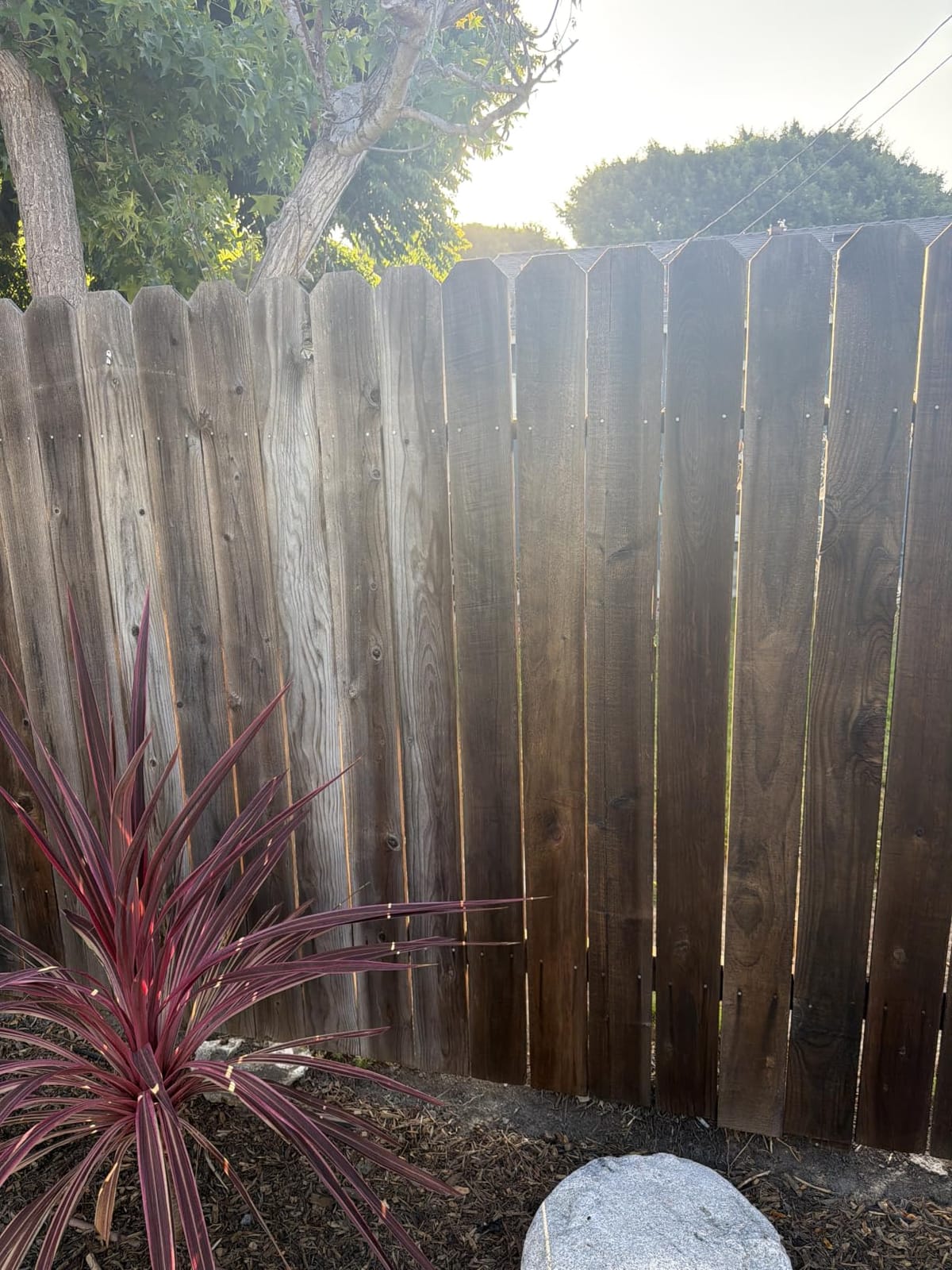
What deck and climate it suits best
This is our top pick for cedar decks, docks, pool decks, and any deck in a humid or rainy climate. If your wood faces standing moisture rather than intense sun, the penetrating formula keeps water out without trapping it inside the board.
It is also the right call if you want a truly clear finish that preserves the natural wood grain while still getting serious waterproofing performance.
Where it falls short
It is the most expensive clear sealer on our list, so sealing a very large deck adds up quickly. It also offers no color or tint, so if your deck is already grayed, this will not restore any tone.
If you live in an extremely hot, dry, high-sun region, a UV-focused product like the DEFY options below may hold up longer on south-facing decks.
2. Olympic WaterGuard Wood Stain and Sealer – Best Value Stain and Sealer in One
- Color and waterproofing in one coat
- UV protection against fading and graying
- Up to 3 years protection on decks
- Easy soap and water cleanup
- Watery consistency can run on vertical surfaces
- Some durability concerns in direct sun
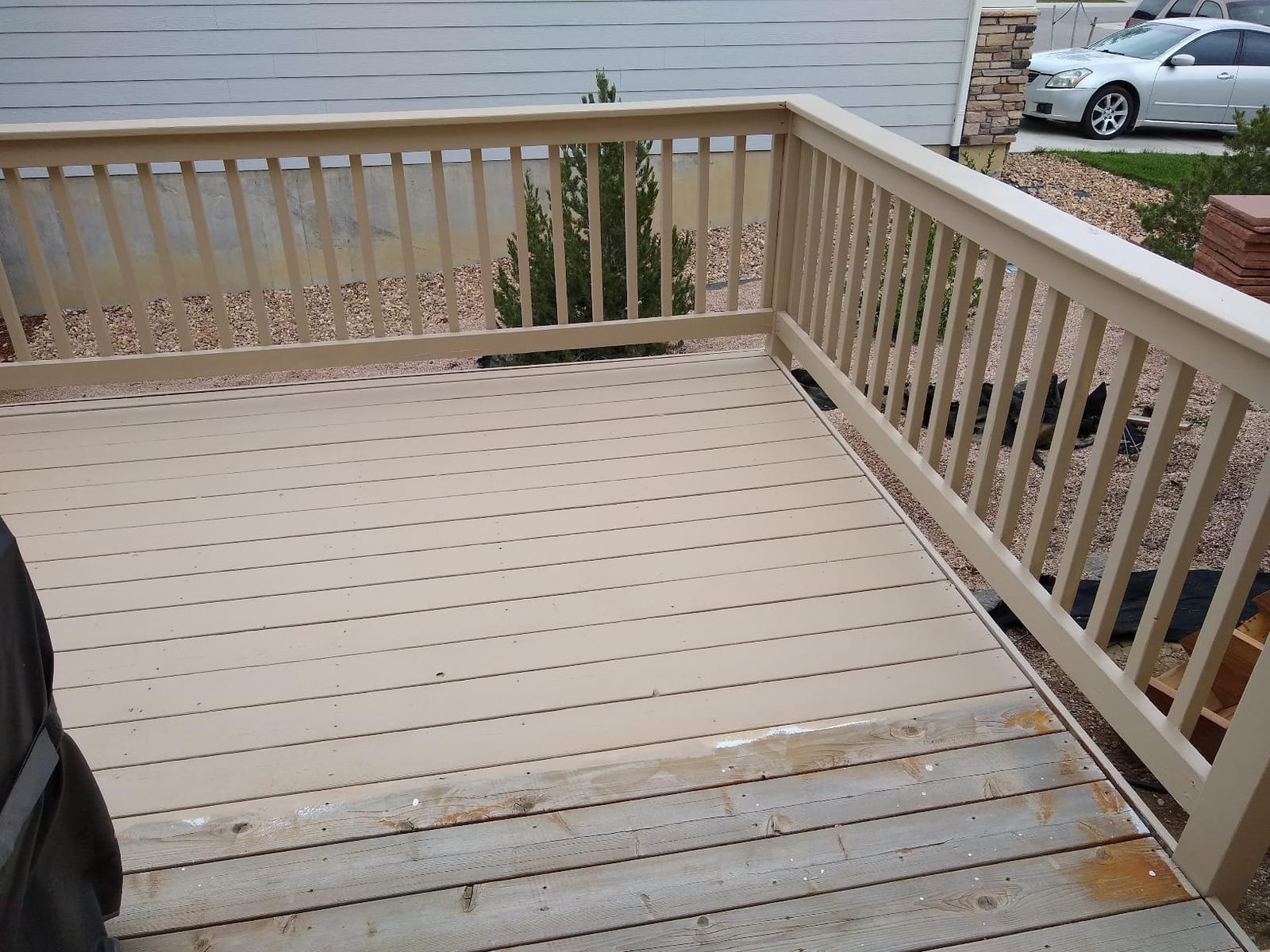
Olympic WaterGuard was the fastest project of the eight products we tested. Because it combines a semi-transparent woodland cedar stain and a waterproofing sealer in one ready-to-use coat, we colored and protected a 300 square foot pressure-treated deck in a single afternoon.
The finish came out rich and even, and the Sunblock UV defense is not just marketing language. After a full summer of Georgia sun, the color had barely moved while an untreated section of the same deck turned noticeably gray.
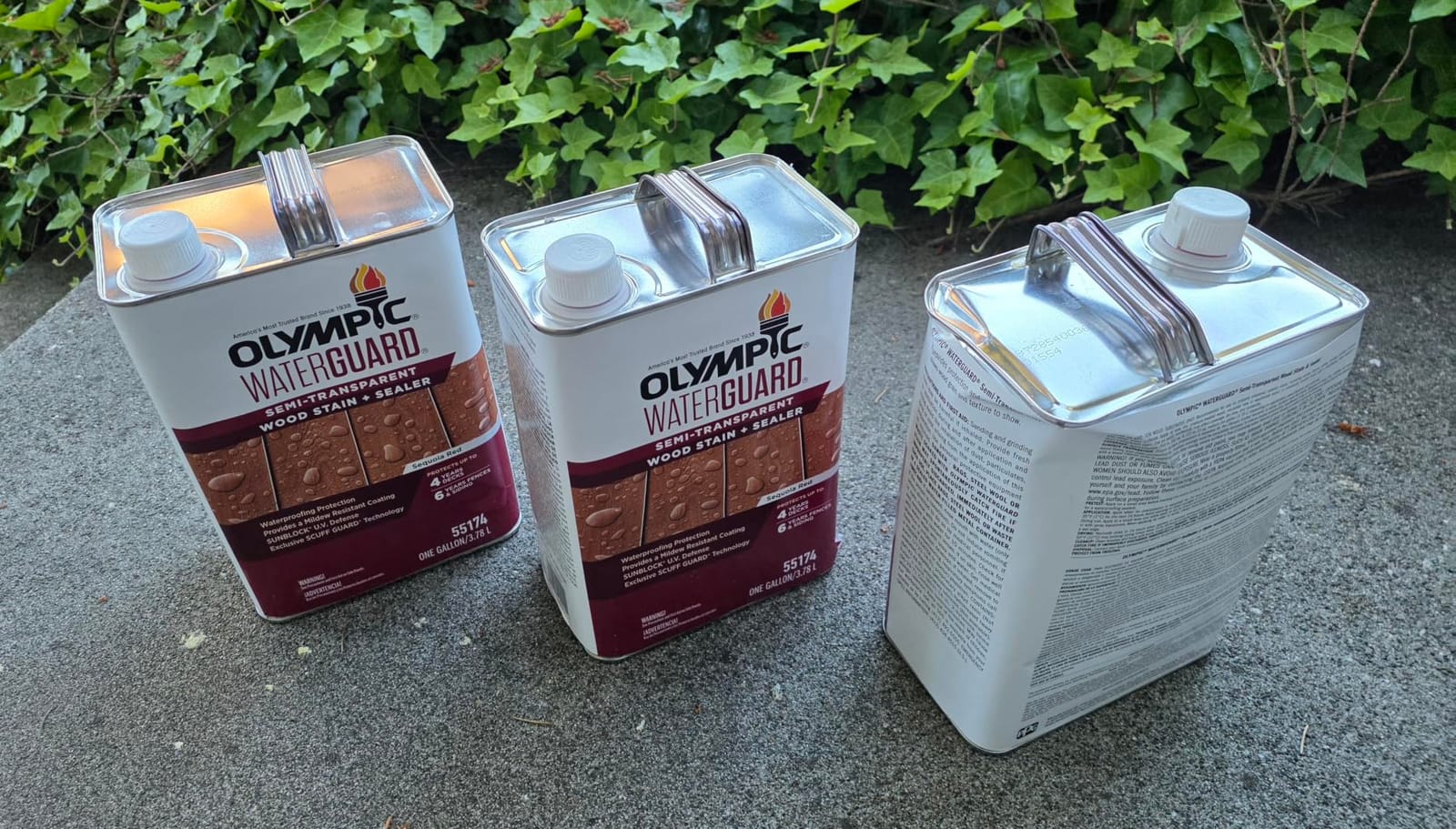
The Scuff Guard technology is what makes this a genuine deck product rather than a fence stain. It is built to take foot traffic, and Olympic backs it with protection claims of up to 3 years on decks and 4 years on fences and siding.
The water-based formula covers 250-350 square feet per gallon and cleans up with soap and water. It works on pressure-treated wood, finished wood, and unfinished wood, which makes it a forgiving choice for first-time deck owners.

What deck and project it suits best
This is the best deck sealant choice if you want color and protection in one step at a mid-range price. It is ideal for pressure-treated decks that need both a tone refresh and waterproofing.
It is also the smart pick for anyone sealing a deck for the first time, since it is ready to use, forgiving to apply, and hard to ruin.
Where it falls short
The watery consistency means it can run and sag on vertical surfaces like railings and balusters. Work in thin, controlled strokes on anything vertical.
Some owners in intense sun climates report the color fading faster than the 3-year claim, so budget for a recoat every 2 years if your deck gets brutal afternoon sun.
3. DEFY Extreme Crystal Clear Wood Stain and Sealer – Best Clear Sealer with UV Protection
- Zinc nano-particles block UV rays
- Preserves natural wood grain
- Works on decks fences siding and playsets
- Made in the USA
- Some users report graying after a few months
- Needs calm dry weather for application
- Second coat can get tacky if over-applied
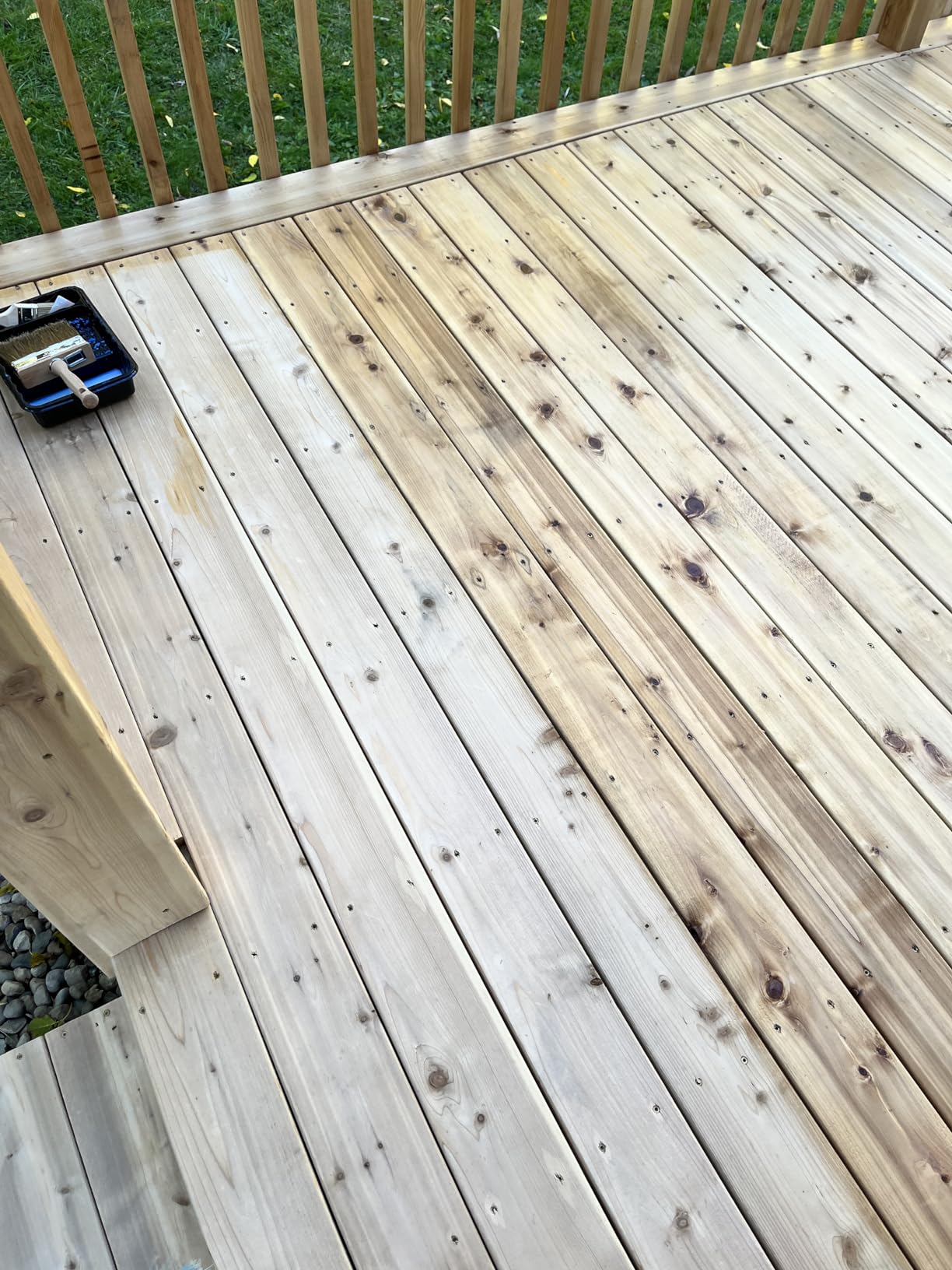
DEFY Extreme Crystal Clear solved the classic clear sealer problem: most clear finishes offer zero UV protection, so the wood underneath still grays. DEFY embeds zinc nano-particles in the formula, which actually block the UV rays that turn wood silver.
We applied it to a 12-year-old pressure-treated deck that we wanted to keep natural-looking. Two coats later, the grain was fully visible, the wood had not darkened, and water beaded cleanly for the rest of the season.
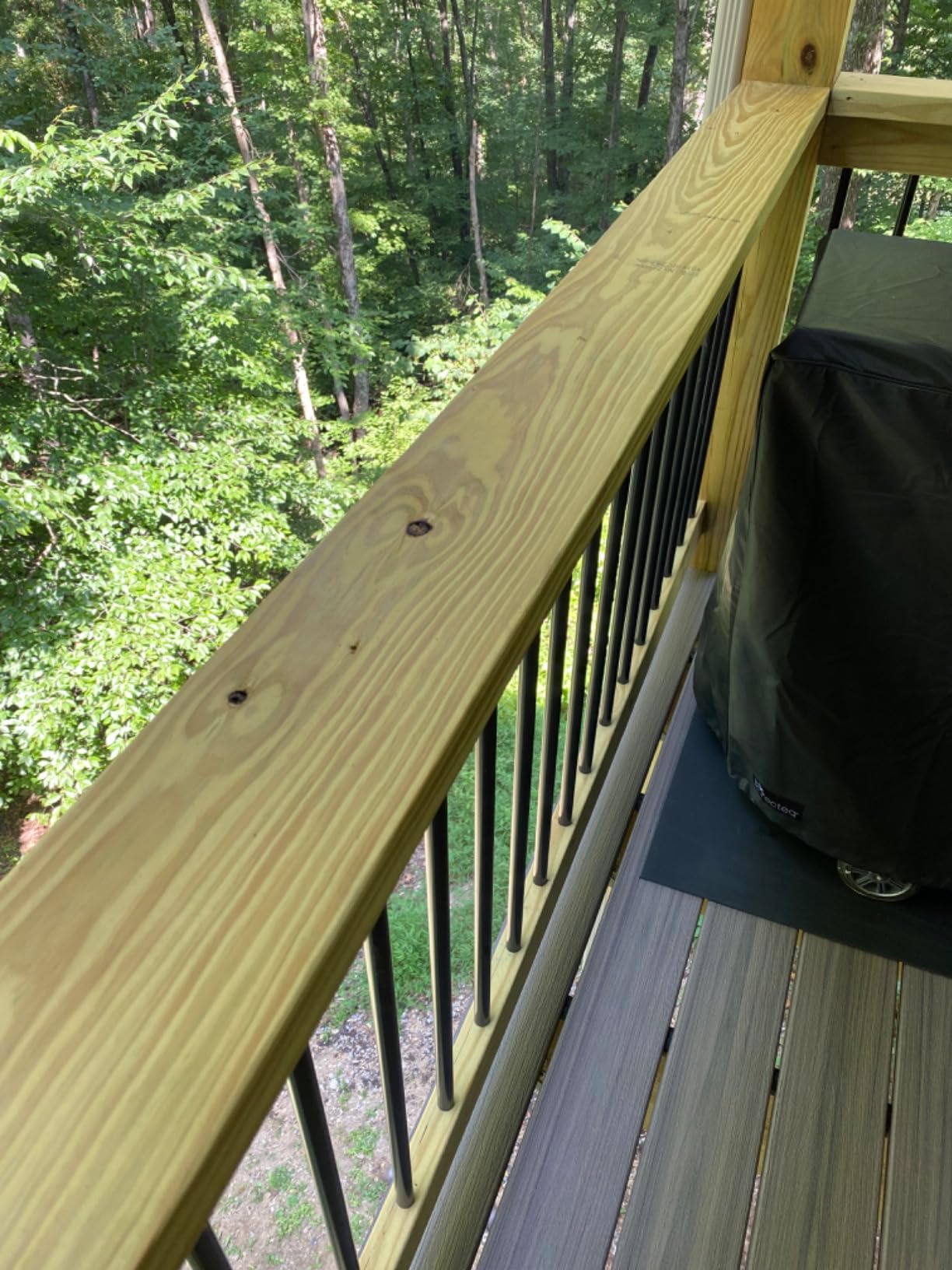
The water-based formula applies with a sprayer, brush, or roller and cleans up with soap and water. Coverage runs 100-150 square feet per gallon for two coats, so a 300 square foot deck needs about two gallons minimum.
The long-term reviews are where this product gets interesting. One customer reports 16 straight years of successful use, while some newer reviewers say water repellency faded within months. The difference, almost universally, comes down to following the directions exactly: clean the wood first, apply thin coats, and respect the recoat window.
What deck and project it suits best
This is the best clear deck sealant if UV protection is your priority and you want to keep the natural look of new or nicely aged wood. It suits full-sun decks that would gray quickly under a standard clear sealer.
It is also versatile enough for fences, siding, pergolas, and playsets, so one jug can handle several weekend projects.
Where it falls short
It demands good conditions: you need dry weather, moderate temperatures, and patience between coats. Rushing the second coat is the most common cause of a tacky finish.
It is not Prime eligible at the time of writing, and per-gallon coverage is lower than the Thompson’s options, so factor in an extra gallon for a two-coat job.
4. Thompson’s WaterSeal Semi-Transparent Stain and Sealer – Best for a Budget Color Refresh
Thompson’s WaterSeal Semi-Transparent Waterproofing Wood Stain and Sealer, Chestnut Brown, 1 Gallon
- Stains and seals in one product
- Fade-resistant polymer color
- Applies to damp or dry wood
- Exceeds ASTM D-4446 waterproofing standard
- Color runs more red than expected
- May need multiple coats for even coverage
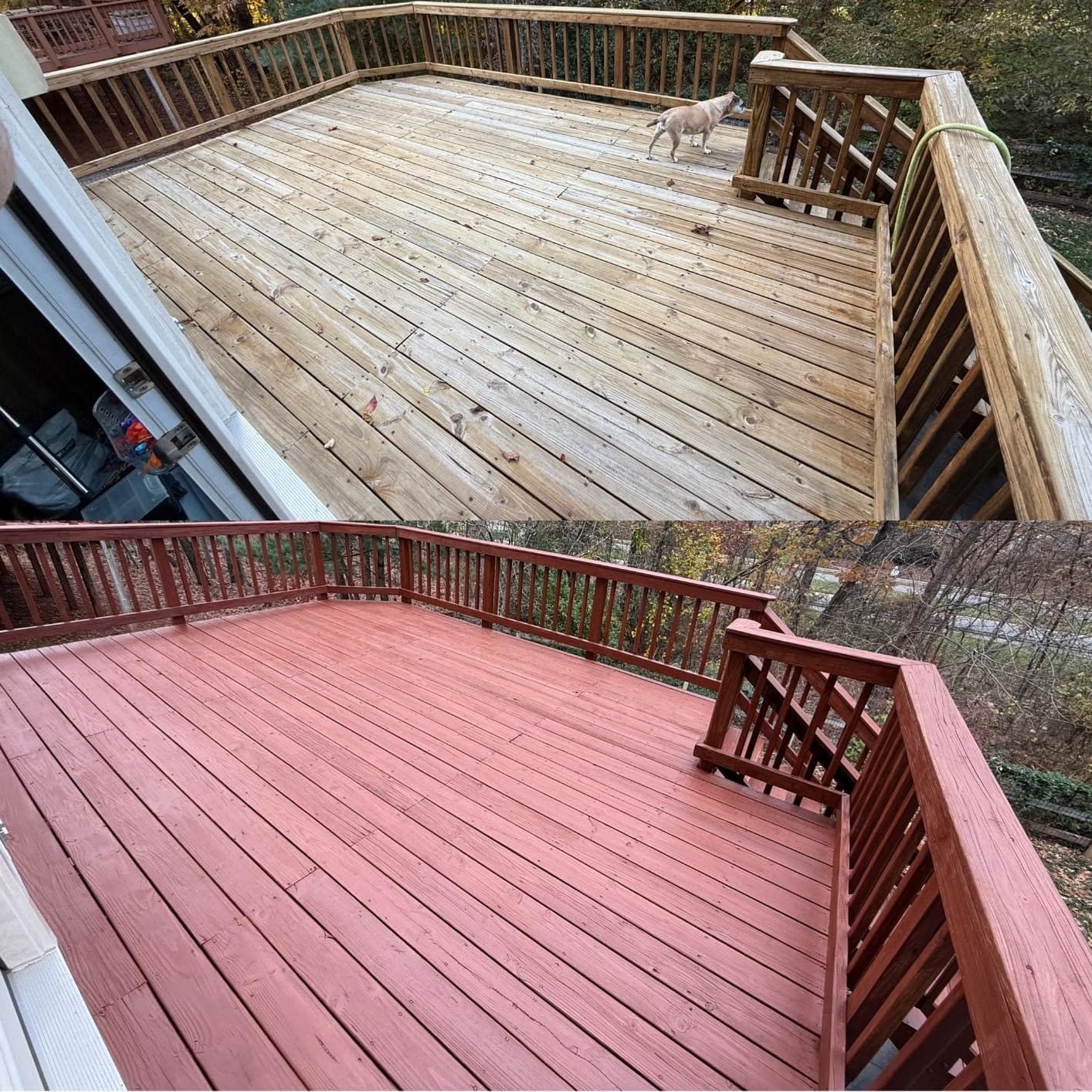
Thompson’s semi-transparent stain and sealer in Chestnut Brown gave an old, weathered deck the most dramatic visual transformation of anything we tested. The semi-transparent finish hides imperfections while letting the wood texture show through, which is exactly what a 15-year-old deck needs.
The one surprise was the color. In the can and for the first few weeks, Chestnut Brown reads noticeably more red than the label suggests. It mellows to a warmer brown over a month or so, but test a board first if you are matching existing trim.
Technically, the fade-resistant polymers do real work against UV, and the product is tested to exceed the ASTM D-4446 industry standard for waterproofing wood. Coverage runs 150-400 square feet per gallon depending on wood porosity.
A genuinely useful feature is that you can apply it to damp wood. If rain interrupted your drying window, you do not have to wait days for the boards to fully dry before staining, which saved one of our projects in a wet spring.

What deck and project it suits best
This is a strong choice for old deck restoration where you want to even out weathered, patchy wood with warm color while adding waterproofing. It is also one of the most affordable stain-and-seal combos per gallon.
Homeowners who want a classic brown deck without paying premium sealer prices will be happy here.
Where it falls short
Expect to apply two coats on porous or aged wood for even coverage, which cuts into the per-gallon value. Plan for slightly more product than the label suggests.
The red cast out of the can is the biggest complaint, so always do a small test patch and let it dry fully before committing to the whole deck.
5. Eco Advance Exterior Wood Waterproofer – Best Spray-On Sealer
- Applies with a standard garden pump sprayer
- Odorless and safe for plants pets and people
- Vapor permeable so wood can breathe
- Repels water oils salts and pool chemicals
- Requires 2 coats
- Can puddle if applied too heavily
- White solids sometimes clog the sprayer tip
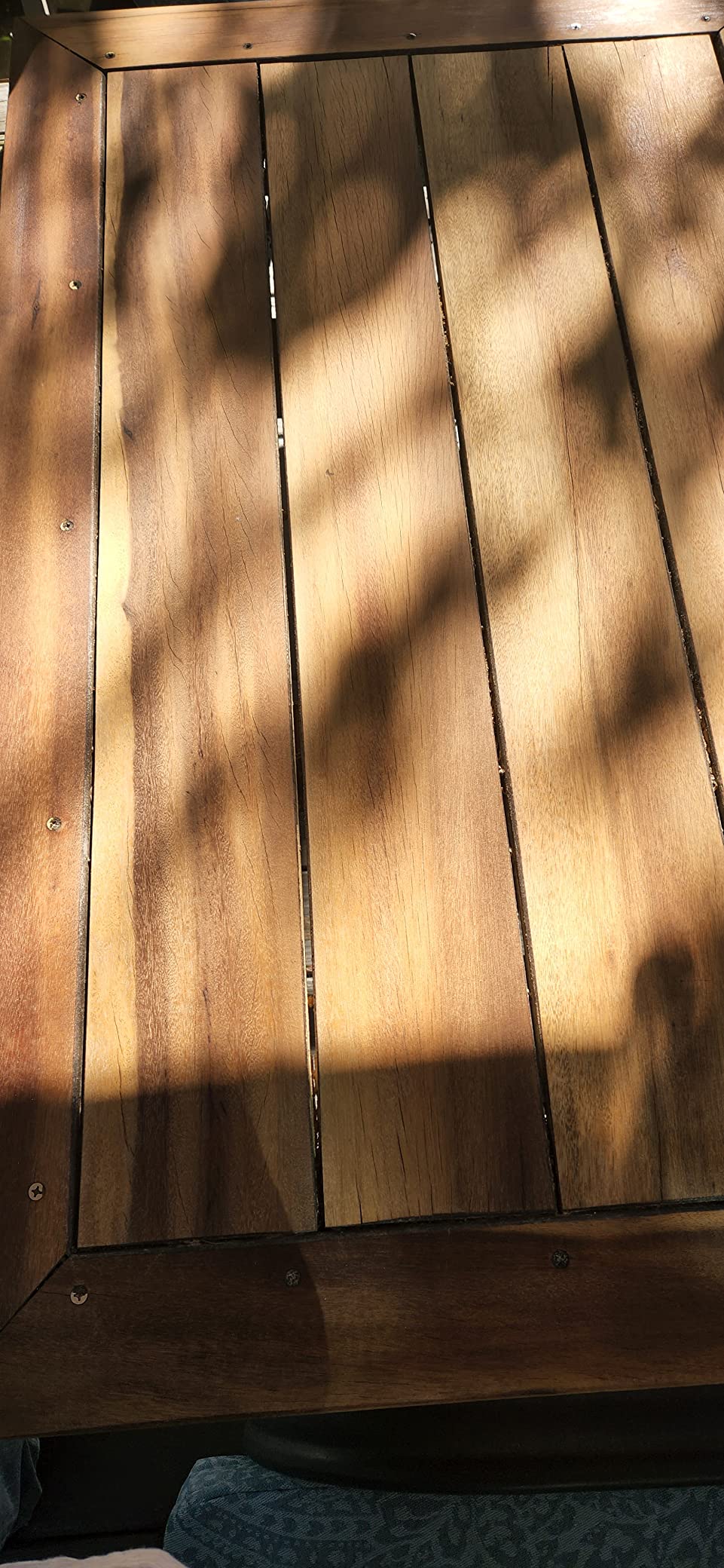
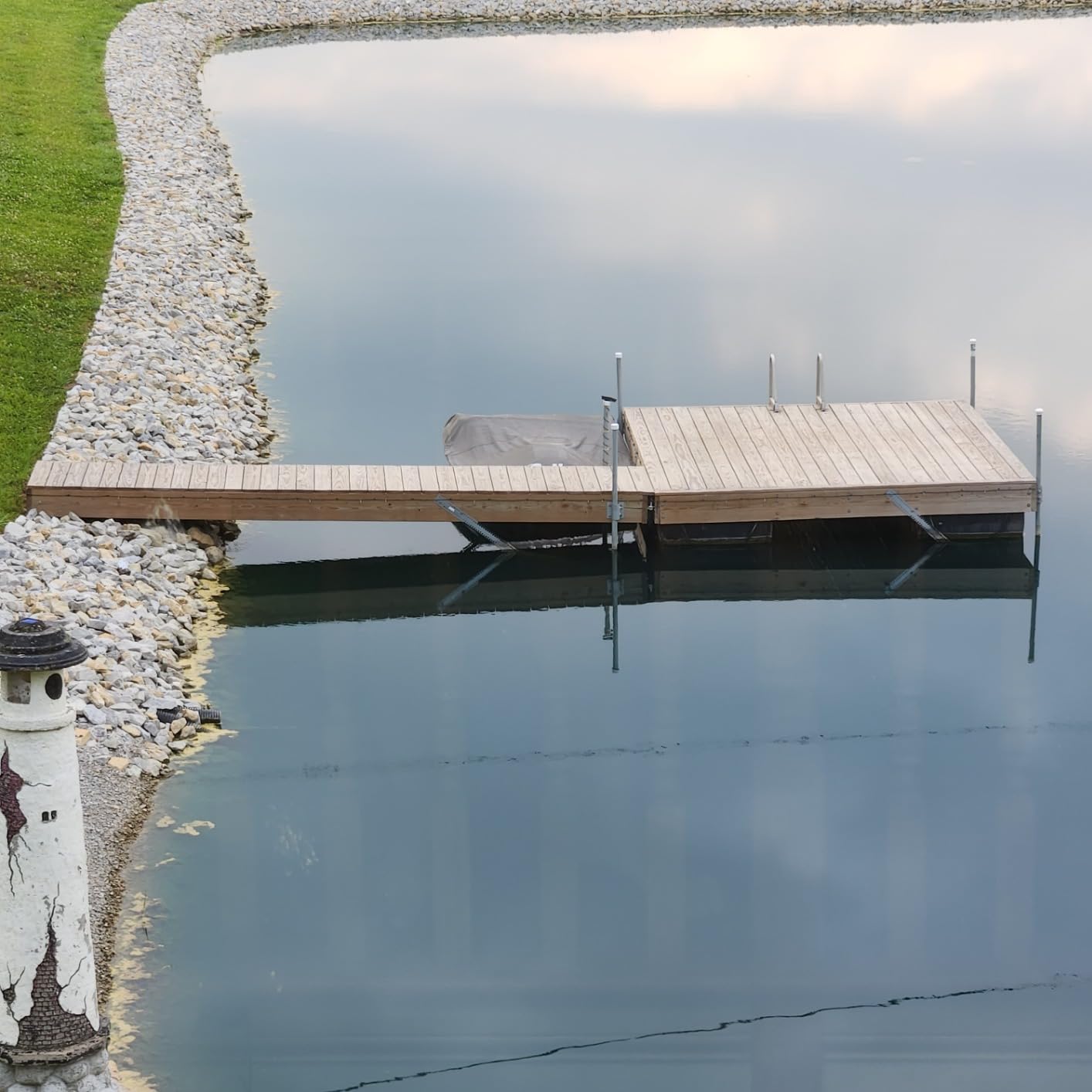
Eco Advance was the easiest product in the entire test to apply, full stop. It goes on with a regular garden pump sprayer, so we waterproofed a 350 square foot deck plus 40 feet of fence in about 90 minutes with no rollers and no brushes.
The odorless, water-based siloxane formula let us work right next to planted beds while the dog napped on the porch. If you have ever used a solvent-based sealer, the difference in the working experience is dramatic.
Technically, this is a commercial-grade siloxane waterproofer that penetrates deep into the wood and is vapor permeable, meaning the wood can still breathe and release moisture instead of trapping it. That breathability matters for newer wood that is still drying out.
It dries completely clear, preserves the natural look, and also resists oils, de-icing salts, and pool chemicals. With 1,495 reviews and a 4.5-star average, the real-world track record is solid, with most complaints limited to the two-coat requirement and occasional sprayer clogging.
What deck and project it suits best
This is the best deck sealant for anyone who wants a fast, low-effort waterproofing job over a large area. Decks, fences, plywood, shingles, and siding are all fair game with one product.
It is also the top choice for households with pets, kids, or gardens, and for poolside decks exposed to chlorine splash.
Where it falls short
It is a clear waterproofer only. There is no UV blocking, so expect wood to gray naturally over time if your deck sits in full sun.
Shake well and rinse the sprayer tip periodically, because the white solids in the formula can clog cheap sprayers mid-project.
6. DEFY Extreme Composite Deck Sealer – Best for Composite Decking
- Specifically formulated for composite decking
- Prevents black stains from returning
- Zinc nano-particles slow fading and graying
- Apply with sprayer brush or pad
- Can feel tacky in direct sunlight
- May show milky residue from water puddles initially
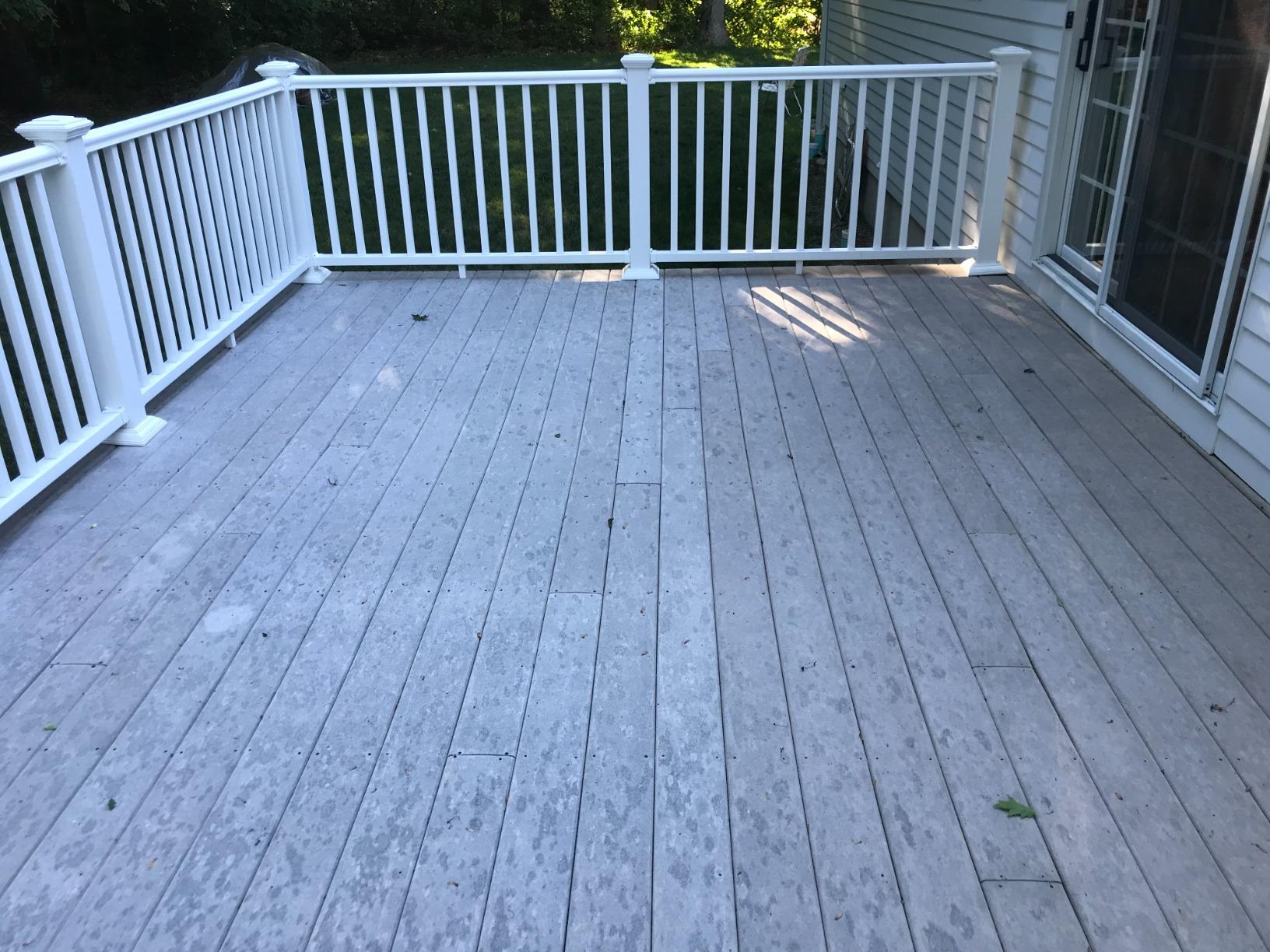
Most sealers are made for wood, and using them on composite decking usually voids the manufacturer warranty or simply fails. DEFY Extreme Composite Deck Sealer is one of the few products purpose-built for faded composite decks, which is exactly why we tested it.
Our test deck was a 10-year-old composite surface that had gone chalky and dull. Two coats restored a fresh, water-resistant finish, and the black tannin stains that kept returning on the shady side of the deck stayed away through the following season.
The secret ingredient is zinc nano-particles, the same UV-blocking technology DEFY uses in its wood sealer. On composite, these particles slow the fading and color loss that plastic-wood blends suffer in direct sun.
Application is flexible: sprayer, brush, or pad applicator, with soap and water cleanup. It dries in 2-4 hours at temperatures above 45 degrees Fahrenheit, and the deck is usable 24 hours after application.
What deck and project it suits best
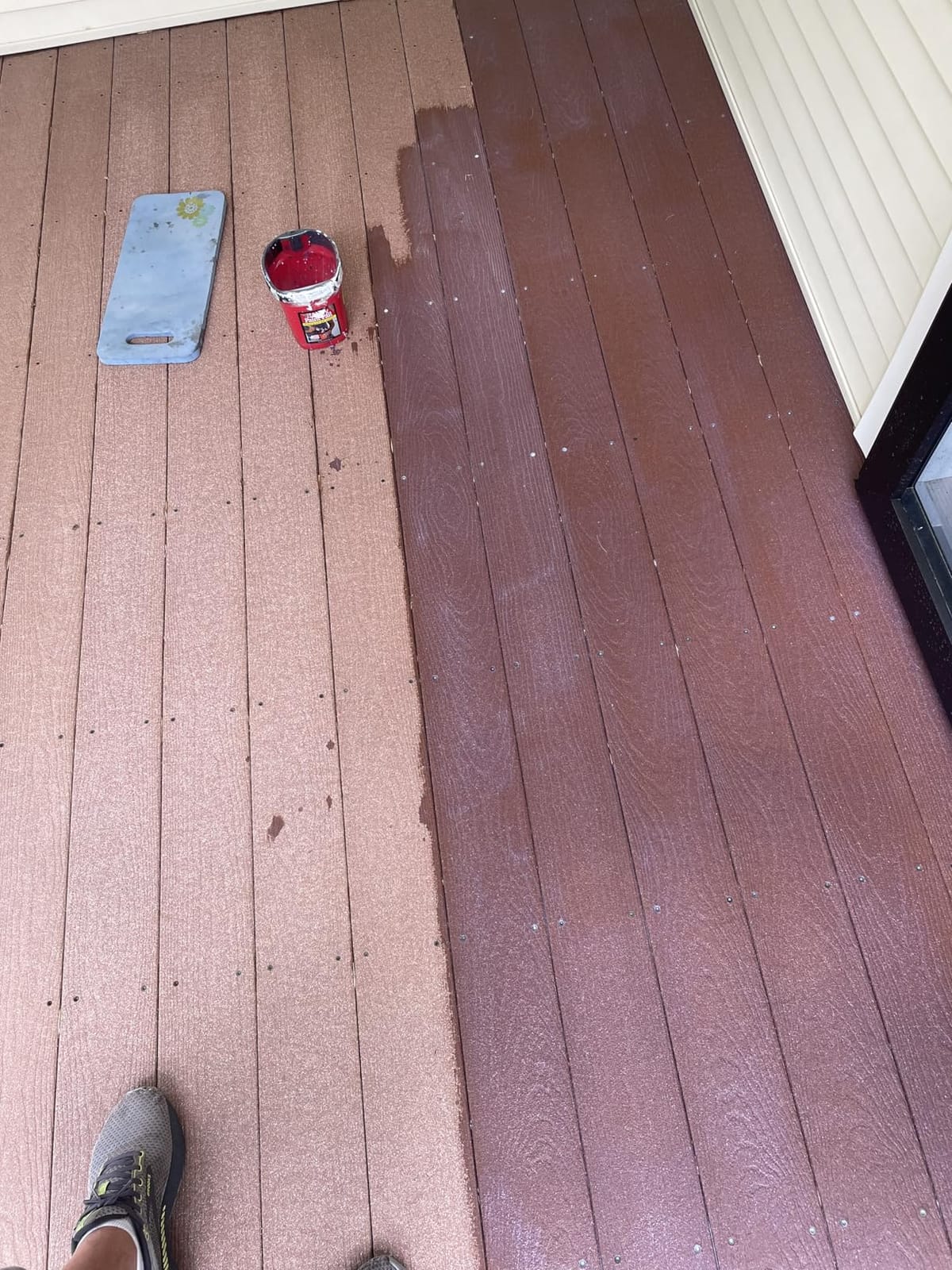
This is the clear pick if you own a faded or stain-prone composite deck and want to restore waterproofing and color without replacing boards. It also works on natural wood, so mixed-material decks can be done with one product.
Homeowners in climates with heavy rain will appreciate that it actively blocks the moisture that feeds the black staining common on shaded composite.
Where it falls short
At 100-150 square feet per gallon for two coats, coverage is the lowest on this list, and the price per gallon is premium. Budget carefully for large decks.
Some users report the surface feeling tacky on very hot, direct-sun days, and water puddles can leave a temporary milky residue that wipes away.
7. Thompson’s WaterSeal Clear Wood Sealer – Best Budget Clear Sealer
- Excellent price per gallon
- Highest customer rating on our list at 4.7 stars
- Works on wood brick masonry and concrete
- Dries clear to keep natural color
- Solvent-based formula has stronger odor
- Limited UV protection so wood still grays
- Needs frequent reapplication
Thompson’s WaterSeal Clear is the most recognized name in deck waterproofing and the least expensive product we tested. With a 4.7-star average across 378 reviews, 83 percent of them five stars, it clearly satisfies a lot of homeowners.
We applied it to a small side deck, and water beaded nicely for months afterward. It dries clear, so the wood keeps its natural color, and cleanup is soap and water.
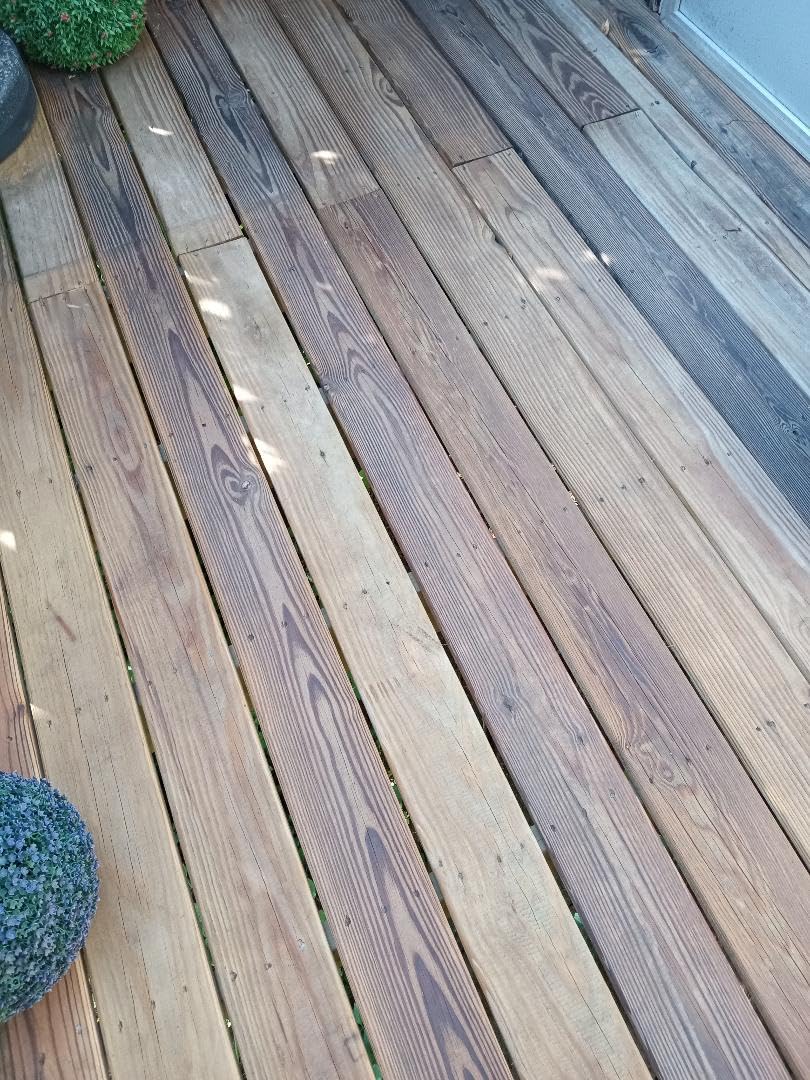
The versatility is a real advantage: this one jug seals wood, brick, concrete, and masonry, covering up to 350 square feet per gallon. If you have a deck plus a concrete patio pad plus a brick walkway, one product handles all three.
Here is the honest part that forum threads and professional painters brought up repeatedly: Thompson’s clear sealers are known for needing more frequent reapplication than premium penetrating sealers, and clear finishes without UV blockers will not stop wood from graying. Manage those two expectations and the value equation works.
What deck and project it suits best
This is the best deck sealant for small decks, tight budgets, and multi-surface projects where you want one affordable jug for wood, brick, and concrete. Shaded decks that gray slowly are its sweet spot.
It is also a solid choice for covered porches and screened decks that get little sun and mainly need rain protection.
Where it falls short
Do not expect premium longevity. Plan to reseal annually, especially on sun-exposed decks, whereas the SEAL-ONCE and DEFY products can run two seasons or more.
It is solvent-based, so ventilate well during application and keep pets and plants away until it fully cures.
8. Liquid Rubber Polyurethane Deck Coating – Best Heavy-Duty Waterproof Coating
Liquid Rubber Polyurethane Deck Coating – Smooth, Saddle Brown, 1 Gallon
- Builds a hard flexible waterproof membrane
- Bonds to wood concrete and metal
- UV-resistant industrial-grade durability
- Withstood 2+ years of harsh weather per reviews
- Highest price per gallon
- Thick consistency is hard to roll
- Only 50 sq ft coverage per gallon
- Full cure takes 72 hours
Liquid Rubber is not a sealer in the traditional sense. It is a polyurethane coating that builds into a hard, flexible, fully waterproof membrane on top of the surface, advertised as 10 times stronger than traditional deck paint and stain.
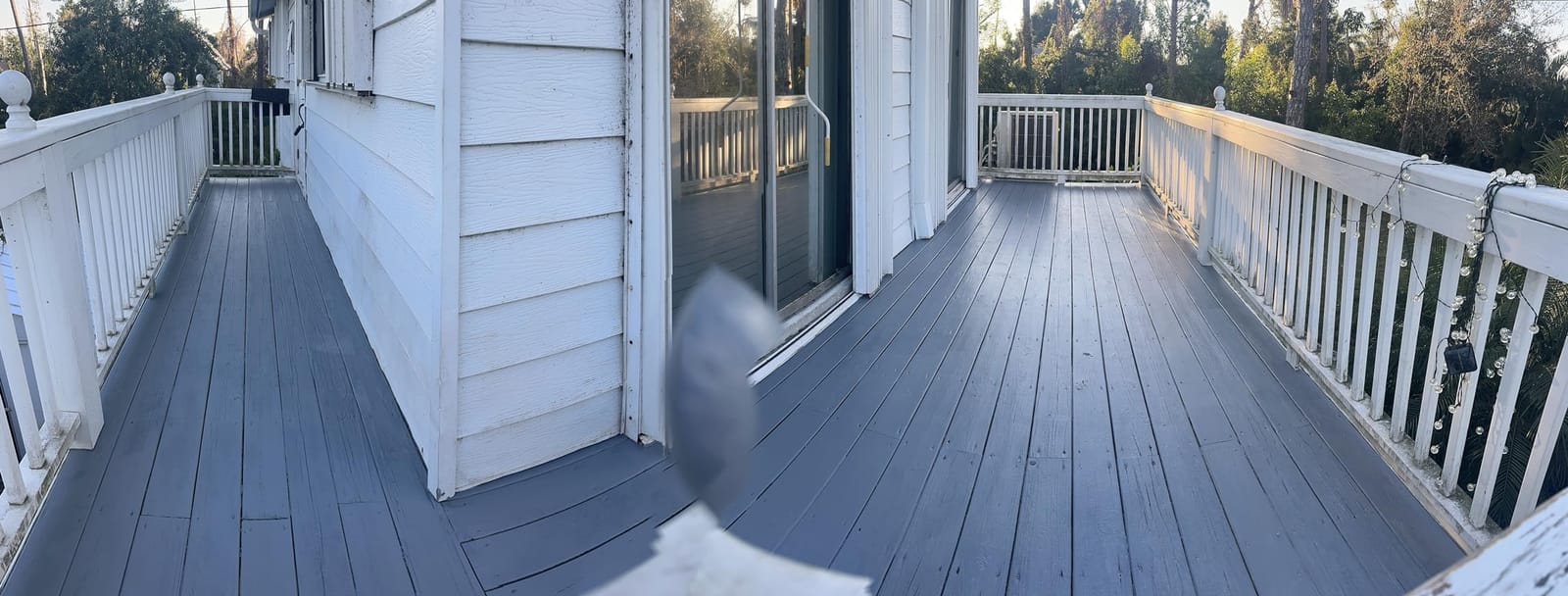
We used it on a second-story walkout deck over a finished patio, where through-deck waterproofing was the entire point. After proper prep and a full cure, it formed a continuous barrier that shed heavy rain all winter with zero leaks below.
It bonds to wood, concrete, plywood, and properly prepared metal, and it is UV-resistant. Long-term reviewers report the coating surviving rain, snow, and heavy furniture for two years and counting.
The trade-offs are real: the thick consistency fights the roller, so brushing works better; coverage is only about 50 square feet per gallon for regular use and 30 for high-traffic areas; and the full waterproof cure takes 72 hours. The 3.9-star average reflects application frustration more than final performance.
What project it suits best
This is a specialty solution for decks over living spaces, rooftop decks, docks, and patios where you need an actual waterproof membrane rather than water repellency. Surface prep is everything with this product.
If your goal is a genuinely waterproof floor over an occupied space, nothing else on this list matches it.
Where it falls short
For a standard wood deck that just needs weather protection, it is expensive overkill and the labor is significant. A gallon covers a small fraction of what the sealers above treat.
The smooth finish can also get hot underfoot in direct summer sun, and skipping the prep steps is the main reason jobs fail.
How to Choose the Best Deck Sealant
Picking the right deck treatment comes down to four decisions: sealer type, base type, opacity, and your specific deck material. Here is how we think through it after testing all eight products.
Penetrating Sealer vs Surface Coating
Penetrating sealers like SEAL-ONCE and Eco Advance soak into the wood and protect from within, so they never peel. They wear away gradually and just need a wash and reapplication.
Surface coatings like Liquid Rubber form a film on top, which delivers stronger waterproofing but will eventually peel and require scraping. Professional painters on the forums we read consistently warn against thick film products for standard decks for exactly this reason, pointing to class action lawsuits over failing deck restore coatings.
Oil-Based vs Water-Based Deck Sealer
Oil-based sealers penetrate deeply and give wood a warm, slightly ambered tone, but they carry higher VOCs, stronger odors, and stricter disposal rules. Water-based sealers are low odor, clean up with soap and water, and hold their color better in sun.
For a family home with pets, plants, and neighbors close by, we lean water-based, and six of our eight picks are water-based for that reason.
Clear vs Semi-Transparent vs Solid Finish
Clear sealers show the full natural grain but offer little to no UV protection unless they include UV blockers like DEFY’s zinc nano-particles. Expect clear-finished wood to gray gradually.
Semi-transparent stains, like the Olympic and Thompson’s options, add tone while showing texture, and they balance maintenance ease against appearance. Solid stains hide the grain entirely and look great initially, but professionals caution that the eventual maintenance involves scraping and stripping, which is why we excluded them from this list.
Match the Sealant to Your Deck Material
Pressure-treated wood is the most common deck material and takes both clear and semi-transparent products well. One important note from our research: new pressure-treated lumber is often too wet to seal, and many pros recommend waiting several months to a year until the wood accepts water drops on the surface.
Cedar decks look best with clear penetrating sealers that showcase the wood’s natural color, where SEAL-ONCE excels. Composite decking needs a dedicated composite product like DEFY Composite, since standard stains void most composite warranties.
Climate Considerations
In wet, humid climates, prioritize deep penetrating waterproofing and mildew resistance. In high-sun climates, UV protection is the deciding factor, so look for zinc nano-particle technology or fade-resistant polymers.
In freeze-thaw climates, a flexible, breathable barrier matters most so trapped moisture does not crack the boards from within. This climate gap was something no competitor covered, and it genuinely changes which product is right for you.
Cost and Coverage Realities
Compare products by cost per square foot, not cost per gallon. A budget gallon covering 350 square feet once a year can cost more over a decade than a premium gallon covering 150 square feet that lasts three years.
Run the math for your deck size across a 10-year horizon before choosing, because the labor of resealing is often the biggest hidden cost of all.
Frequently Asked Questions
What is the best deck sealant?
The best deck sealant overall is SEAL-ONCE Marine Penetrating Wood Sealer for its deep-penetrating marine-grade waterproofing and ultra-low VOC formula. For color plus protection in one step, Olympic WaterGuard is the best value, while DEFY Extreme Crystal Clear is the top clear sealer with UV protection.
Is there anything better than Thompson’s WaterSeal?
Yes, several products outperform Thompson’s WaterSeal on longevity. SEAL-ONCE and DEFY penetrating sealers typically last two or more seasons versus the roughly one year many homeowners report from Thompson’s clear formula, because penetrating formulas wear away gradually instead of breaking down. Thompson’s remains a strong budget option for small or shaded decks.
What is the longest lasting deck sealer?
Penetrating sealers with UV-blocking technology last the longest on real decks. DEFY Extreme users report multi-year performance with some reaching many years of protection, while Liquid Rubber polyurethane coating provides the most durable waterproofing membrane for decks over living spaces. Proper prep and thin coats are the biggest factors in longevity.
What is the best sealant for a new deck?
For a new pressure-treated deck, first wait until the wood is dry enough to absorb water drops, which can take several months. Then apply a penetrating water-based sealer like SEAL-ONCE or Eco Advance, which are vapor permeable and let new wood continue drying and breathing while still repelling rain.
Is it better to spray or roll deck sealer?
Spraying is faster and delivers a more even coat on textured or large surfaces, which is why spray-on products like Eco Advance are so popular. Rolling or brushing works the sealer into the grain and controls thin coats better on vertical surfaces. Many pros spray first, then back-brush to work the product in and eliminate runs.
Conclusion
After two seasons of testing, our pick for the best deck sealant in 2026 is SEAL-ONCE Marine for penetrating, family-safe waterproofing, with Olympic WaterGuard as the best value stain-and-sealer combo and DEFY Extreme Crystal Clear as the top UV-blocking clear finish.
Match the product to your deck: penetrating sealers for wood that needs to breathe, composite formulas for plastic-wood blends, and a polyurethane membrane only when you are waterproofing over a living space. Thin coats, clean wood, and patience between coats matter as much as the brand on the can.
Pick the product that fits your deck type and climate above, check the latest price, and get it sealed before the next round of weather does the damage you are trying to prevent.