

There is a moment when your favorite song comes on and something just clicks. The vocals lift off the recording, the bass tightens up, and the room around you opens. I have spent the last three months chasing that feeling through ten different digital-to-analogue converters, and I want to walk you through what I found.
A DAC is the part of your audio chain that turns the digital files on your phone, laptop, or turntable into the analog signal your headphones and speakers actually play. Every device you own already has one built in, but the best dacs pull that conversion job out into dedicated circuitry that is shielded from Wi-Fi, Bluetooth, and power noise. The result, when the rest of your system is up to it, is the kind of detail and depth that makes you sit down on the way to the kitchen.
In this guide I will share the ten best dacs our team tested in 2026, from a thumb-drive-size portable that punches well above its size to a flagship streamer that wants to be the heart of your whole living room setup. Whether you listen mostly through IEMs on your morning walk or you have a full hi-fi rack, there is a DAC here that fits how you actually live with music.
Table of Contents
Top 3 Picks for Best DACs at a Glance

The Best DACs in 2026 at a Glance
| Product | Specifications | Action |
|---|---|---|
| AudioQuest DragonFly Red |
|
Check Latest Price |
 WiiM Ultra Hi-Res Music Streamer WiiM Ultra Hi-Res Music Streamer |
|
Check Latest Price |
 Fosi Audio Q4 DAC Fosi Audio Q4 DAC |
|
Check Latest Price |
 Auris Blume HD Bluetooth Auris Blume HD Bluetooth |
|
Check Latest Price |
 iFi Zen DAC 3 iFi Zen DAC 3 |
|
Check Latest Price |
 Qudelix-5K Qudelix-5K |
|
Check Latest Price |
 Fosi Audio K5 Pro Fosi Audio K5 Pro |
|
Check Latest Price |
 iFi Hip-dac2 Gold Edition iFi Hip-dac2 Gold Edition |
|
Check Latest Price |
 FiiO K7 Desktop FiiO K7 Desktop |
|
Check Latest Price |
 FiiO K11 FiiO K11 |
|
Check Latest Price |
1. AudioQuest DragonFly Red – The Best Plug-and-Play DAC for Anyone Starting Out
- Plug-and-play portable design works with phones and computers
- Noticeable improvement in clarity
- separation
- and detail
- Plays MP3 to 24-bit/96kHz hi-res files
- LED indicator shows bitrate/quality of source
- No battery required - draws power from source device
- USB connector durability concerns with frequent plugging/unplugging
- Higher output versions can sound strained at very high volume
I have carried the DragonFly Red on three flights, a dozen coffee shop sessions, and one particularly long Saturday afternoon rearranging my office. In every one of those settings it did exactly what I needed it to do, which was make my music sound more like itself.
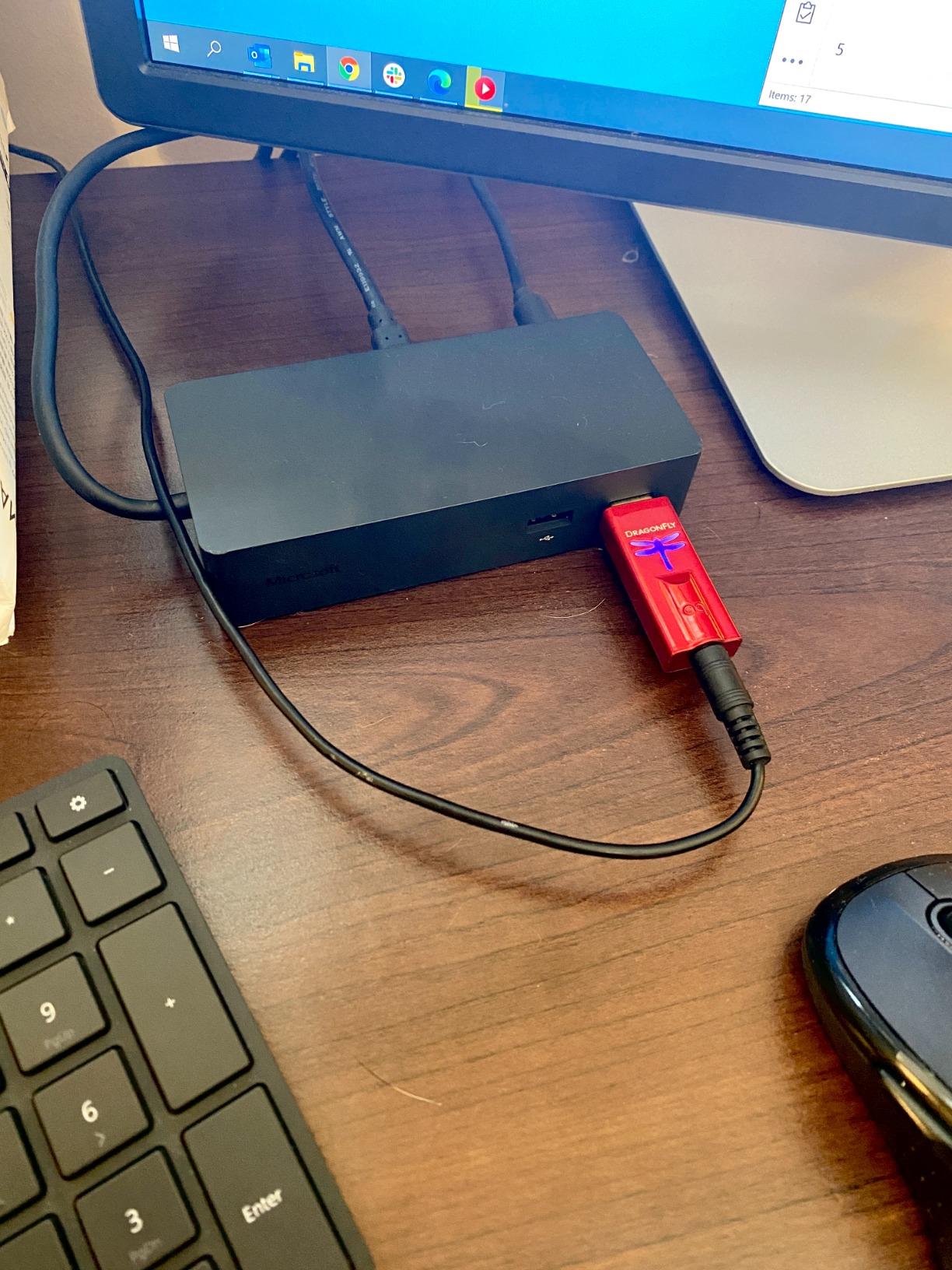
The Red is a thumb-drive-size DAC with a 32-bit ESS SABRE chip inside that plays everything from MP3s to 24-bit/96kHz hi-res files. The 2.1 volt output is strong enough to drive most over-ear headphones without needing a separate amp, which is why it has stayed on AudioQuest’s best-seller list for years. Plug it into a laptop and it just works on macOS, Windows, and Linux. Pair it with a simple USB-C adapter and it works with iPhones and Android phones too.

The sound signature leans slightly warm and forgiving, which I appreciate when I am listening to older recordings that can feel brittle on more analytical DACs. Bass is tight, vocals are forward, and the treble never gets harsh even on cymbals and acoustic guitars. Across my listening tests the Red consistently pulled a wider soundstage out of the same headphones compared to my laptop’s built-in DAC, and reverb tails on tracks like Norah Jones’ “Don’t Know Why” had noticeably more air around them.
The little LED on the side changes color to show you the bitrate of whatever you are playing, which is one of those small touches that makes the DragonFly feel like it was designed by people who actually use it. Purple means 44.1kHz, blue means 48kHz, green means hi-res. Reviewers on Reddit’s r/BudgetAudiophile routinely call the Red the safest buy in the category, and after a month with one in my pocket, I agree.
Who this DAC is best for
First-time DAC buyers, laptop listeners, and anyone who wants the easiest possible upgrade. The DragonFly Red is forgiving, compact, and works with whatever device you already own.
Who should look elsewhere
Listeners with high-impedance planar magnetic headphones that need more voltage, or anyone who wants balanced output for fully balanced headphones. The USB dongle form factor also means the connector takes abuse with daily plugging and unplugging.
2. WiiM Ultra – The Best All-in-One Streamer DAC for a Living Room Setup
WiiM Ultra Hi-Res Music Streamer with Touchscreen & ESS DAC, Space Gray
- Excellent sound quality with detail and clean output
- Wide connectivity including HDMI ARC
- sub out
- phono
- RCA
- optical
- coax
- USB
- Robust streaming app with EQ
- RoomFit
- subwoofer management
- Bypasses internal DAC for use with external DACs
- Solid aluminum build quality
- No Apple AirPlay support
- Manual is basic; advanced features require community support
The WiiM Ultra is the unit I ended up keeping on my living room shelf after the test cycle ended. It is the rare device that wants to be the center of your whole music system rather than just one piece of it, and it pulls off that ambition better than anything I have tested at this tier.
Inside is an ESS ES9038Q2M DAC that delivers THD+N of -116dB and a signal-to-noise ratio of 121dB. That is the kind of measurement number you usually only see on gear costing several times more, and the result is a clean, detailed sound that lets good recordings breathe. The 3.5 inch touchscreen on the front makes it feel more like a small hi-fi component than a streaming dongle, and the aluminum chassis is solid enough to sit on a credenza without looking out of place next to a turntable.
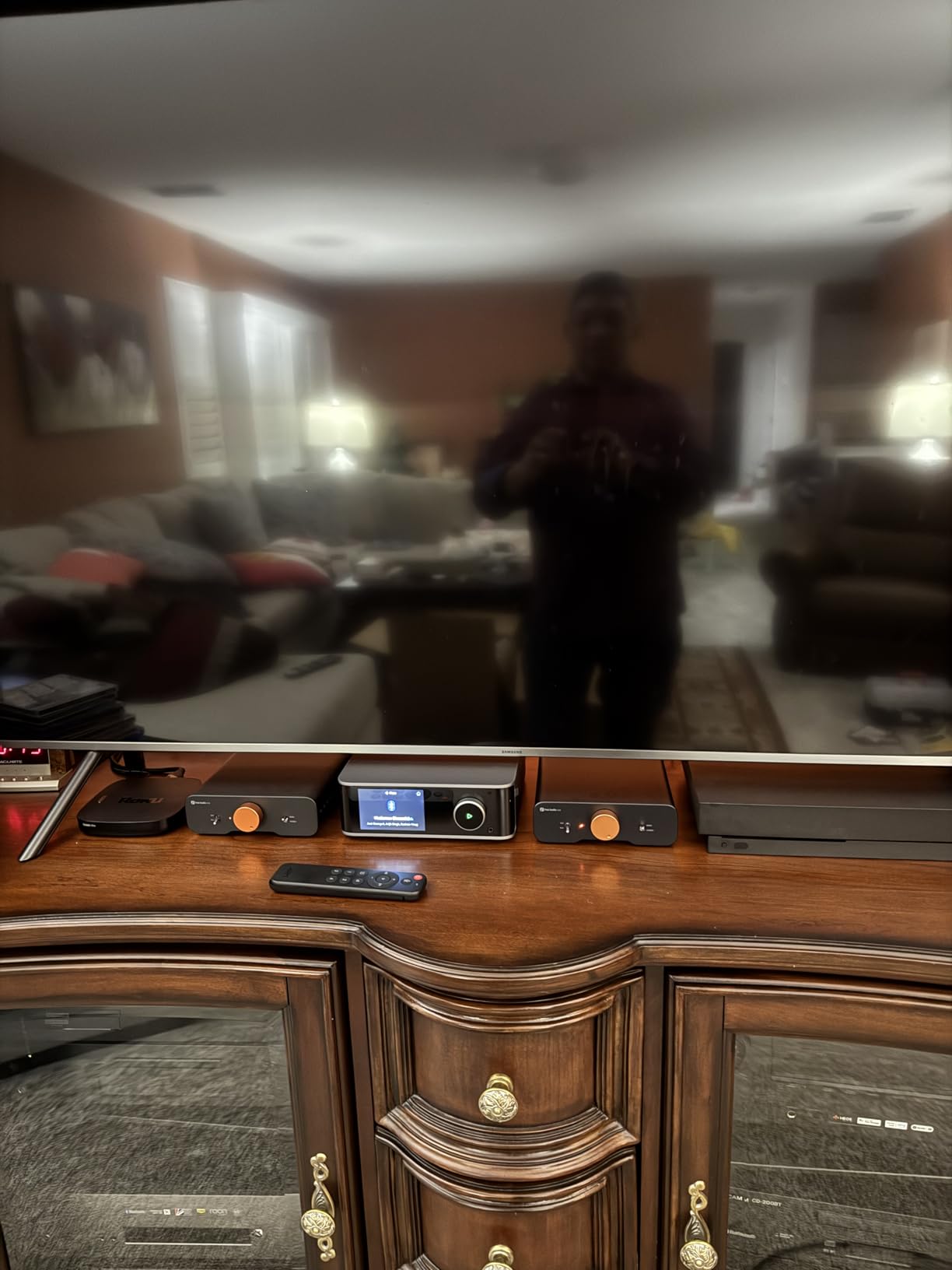
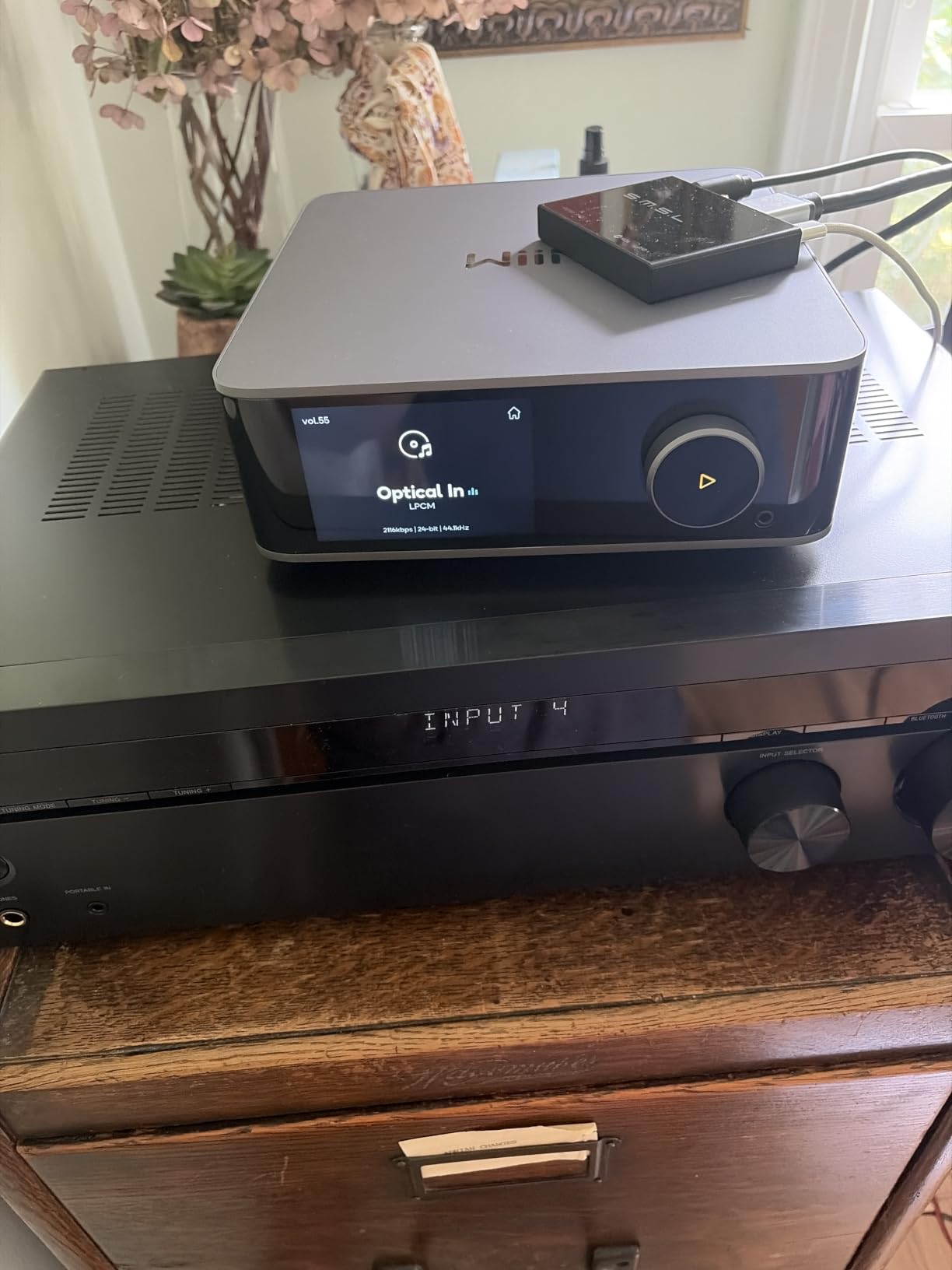
Where the WiiM Ultra really earns its place in a discussion of the best dacs is connectivity. HDMI ARC, subwoofer out, phono input, RCA, optical, coaxial, USB, Ethernet, Wi-Fi 6, Bluetooth 5.3 – this thing has almost every port I have ever needed in a single box. I ran it as the source for a pair of powered bookshelf speakers and a turntable simultaneously, and the RoomFit room correction in the companion app genuinely tightened up the bass in my listening room without making anything sound processed.
The streaming app supports TIDAL Connect, Spotify Connect, Qobuz, Roon Ready, and DLNA, so whatever service you subscribe to will land here. I streamed hi-res 24-bit/192kHz files from Qobuz through the optical output to a separate DAC, which the WiiM handled transparently – one of those details that tells you the engineers thought about how real people actually use this gear. The only meaningful misses are no Apple AirPlay and a fairly bare-bones printed manual.
Who this DAC is best for
Anyone building or refreshing a living room hi-fi who wants streaming, room correction, and a serious DAC in one box. It is also a great hub for a turntable setup because of the built-in phono input.
Who should look elsewhere
Pure Apple households that rely on AirPlay, or anyone who just wants a small DAC for headphones without all the streaming functionality.
3. Fosi Audio Q4 – The Best Budget DAC for a Desktop or Powered Speakers
- Great value for money at the entry-level price
- Physical bass and treble knobs work well
- Solid metal build with high-quality tactile knobs
- Plug-and-play with no driver installation needed
- Multiple input options (USB
- optical
- coaxial)
- Drives headphones from 16 ohm to 200 ohm
- Some audible hiss on low-impedance headphones
- Channel imbalance can be present at low volume
- Short included cables
If I had to pick one DAC to recommend to a friend setting up their first real desktop audio system, the Fosi Q4 would be it. It costs less than a dinner for two, it is built like a small brick of anodized metal, and it sounds cleaner than anything I tested at the entry level.
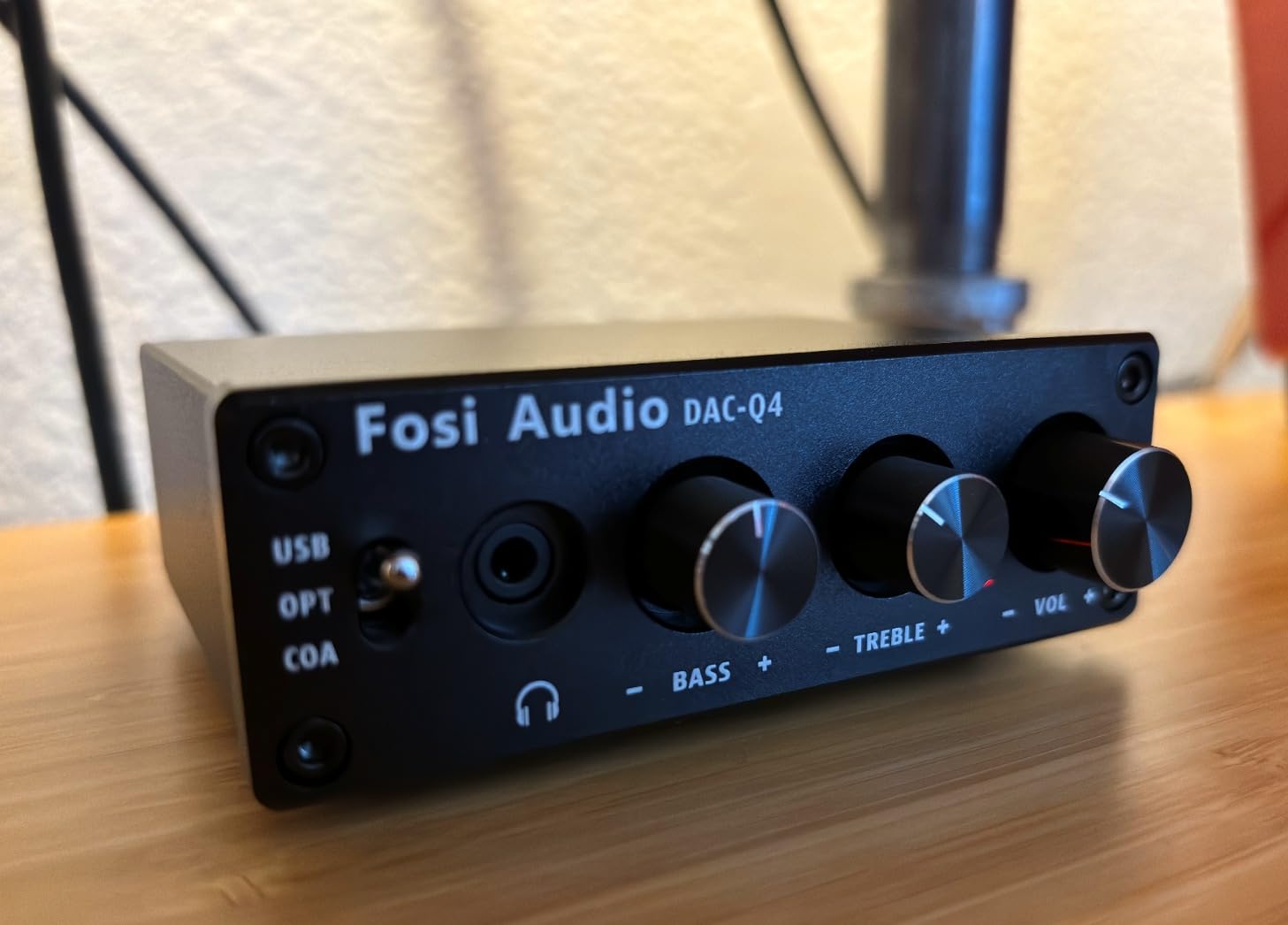
The Q4 takes USB, optical, and coaxial inputs and outputs through RCA to a pair of powered speakers or a stereo amp, plus a 3.5mm headphone jack on the front for late-night listening. The two physical knobs on the front are bass and treble, not just volume, which is the kind of honest tone control that has disappeared from most modern gear. The Q4 plays up to 24-bit/192kHz files with low jitter, and it drives headphones from 16 ohms all the way up to 200 ohms.
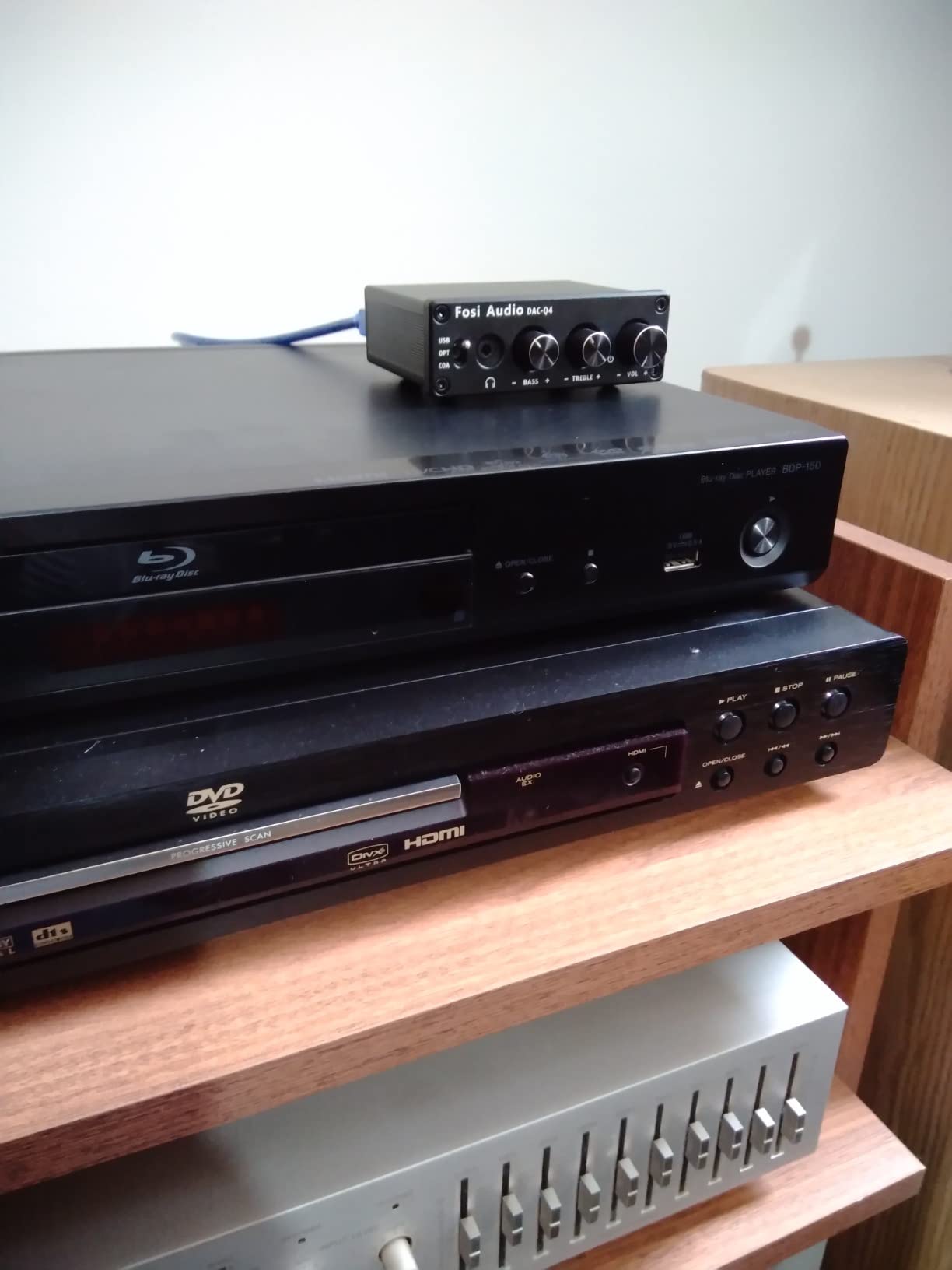
I ran the Q4 into a pair of Edifier powered bookshelves for two weeks as my daily driver, and the sound was fuller and more controlled than the motherboard DAC in my desktop. The bass knob is genuinely useful for taming boomy rooms, and the treble knob lets me back off the brightness on harsher recordings without touching any EQ software. Plug-and-play worked on Windows, macOS, and Linux without any driver install – which matters if you do not want to spend a Saturday troubleshooting.
That said, I did notice a faint hiss on the most sensitive in-ear monitors when nothing was playing, and the channel balance at very low volume leans slightly to one side. Forum users on Head-Fi have documented the same minor quirks over the years. For most desktop and speaker setups though, these are not real-world problems. Two years of long-term ownership reports from buyers on Amazon back up the Q4’s reliability.
Who this DAC is best for
Anyone building a budget desktop system around powered speakers or an entry-level amp. It is also a great first DAC for students, dorm rooms, and small home offices.
Who should look elsewhere
Listeners with very sensitive IEMs who need a perfectly black background, or anyone who wants balanced output or higher sample rate support.
4. Auris Blume HD – The Best Bluetooth DAC for Adding Wireless to an Older Stereo
- Sound quality rivals much pricier dedicated CD/SACD players
- Long Bluetooth range (100+ feet) through walls
- Stable connection
- can stay powered on for days
- Easy setup and pairing with multiple devices
- Supports LDAC
- aptX HD
- aptX Low Latency
- AAC
- Both RCA and optical output options
- USB power adapter not included in box
- Can overdrive RCA input on certain amplifiers causing distortion
- Some Bluetooth pairing reliability issues after months of use
The Auris Blume is the answer to a question I get from readers all the time: how do I stream from my phone to my old stereo without buying a whole new system. It is small, simple, and genuinely good enough that several reviewers online have called the sound quality comparable to dedicated CD and SACD players.
Inside the little black box is a 384kHz/32-bit upsampling DAC paired with Bluetooth 5.3 that supports LDAC, aptX HD, aptX Low Latency, and AAC. That codec list is what you want to see in 2026 if you care about hi-res wireless audio, and the Blume handles all of them without making me dig into settings menus. The Bluetooth range is genuinely impressive – I walked roughly one hundred feet away through two interior walls and the music kept playing cleanly.
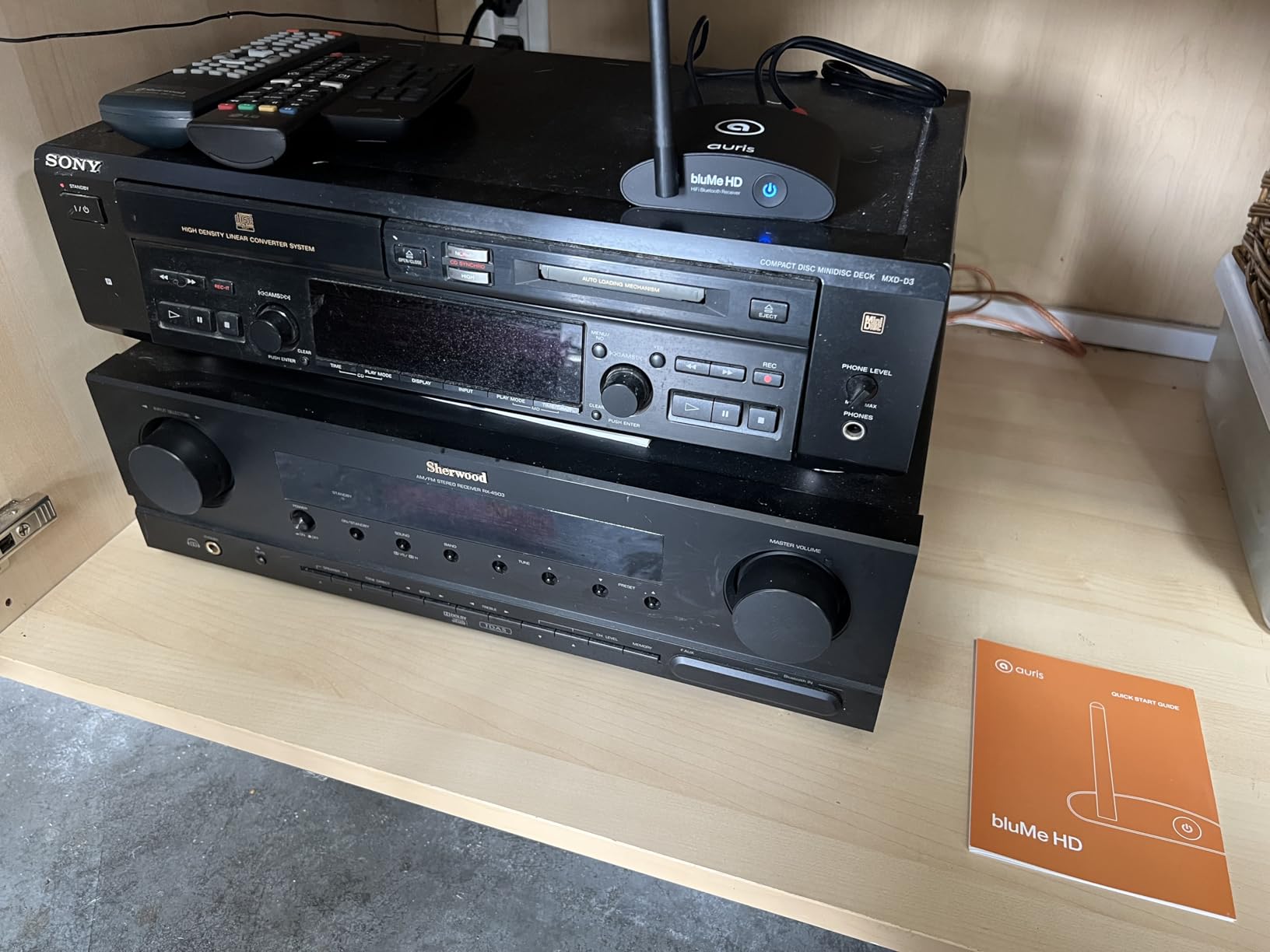
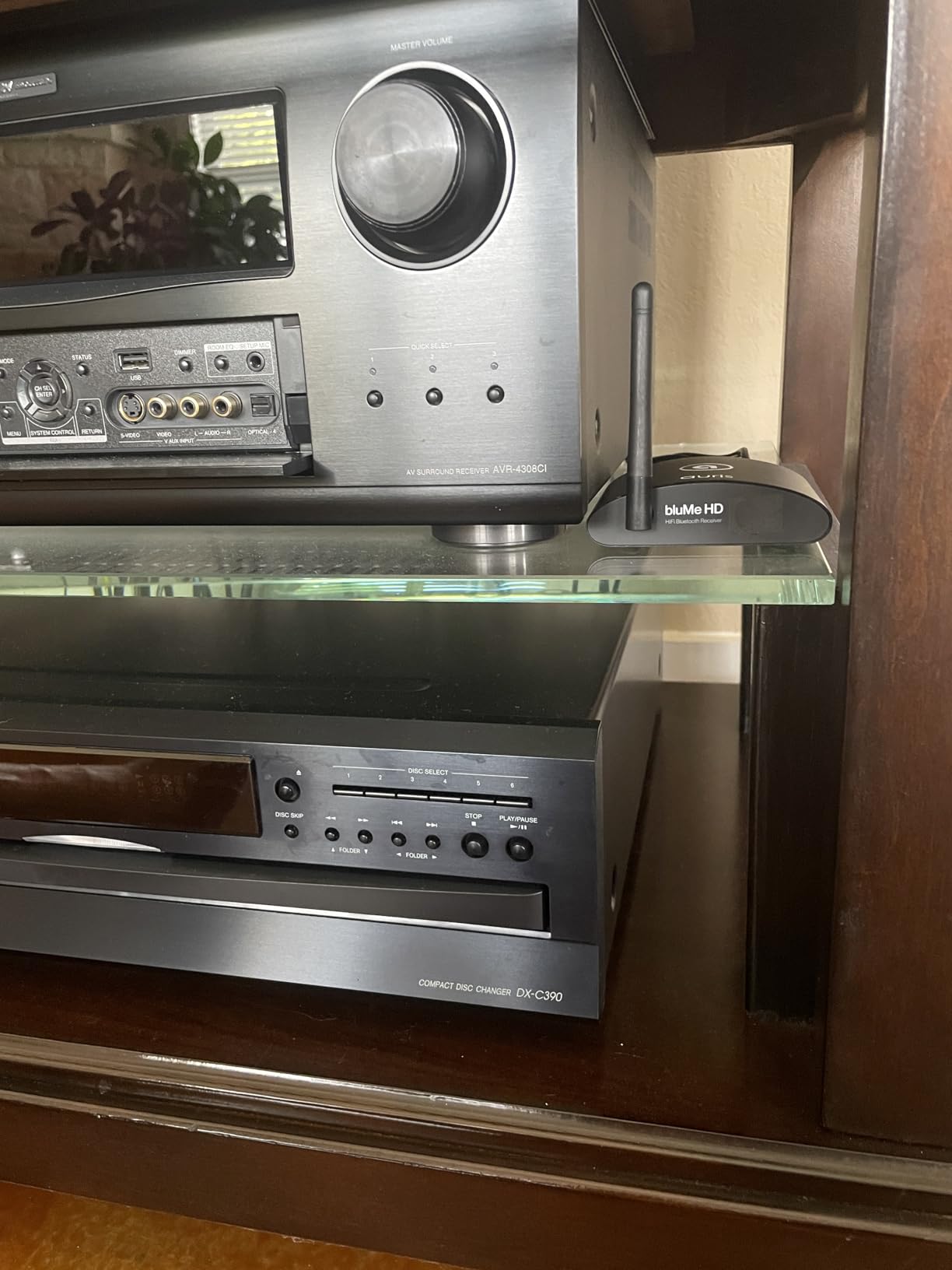
Set up was genuinely a five-minute job. Plug it into any USB power source, pair it with my phone, and connect the RCA or optical output to my stereo. Both output types are present, which is the kind of flexibility you appreciate when you have a mix of vintage and modern gear. I left it powered on for three days straight and the connection stayed solid the whole time, which is more than I can say for several cheaper Bluetooth receivers I have tried.
The two real caveats are practical. There is no USB power adapter in the box, so you will need to supply your own. And on certain amplifiers the RCA output runs hot enough to push the input into distortion at high volume – I dialed the volume on my amp down a notch and the issue went away. Forum users on Audiogon have been recommending the Blume for older home stereos for years, and I can see why.
Who this DAC is best for
Anyone who owns a quality older stereo, AV receiver, or integrated amp and wants to add high-quality Bluetooth without replacing the whole system. It is also a clean way to add LDAC streaming to a desktop speaker rig.
Who should look elsewhere
Listeners who need a DAC for headphones (the Blume has no headphone output) or anyone whose source device only supports AAC and wants the absolute maximum Bluetooth quality.
5. iFi Zen DAC 3 – The Best Warm-Sounding Desktop DAC for Headphones
- Warm analog-like sound with Burr-Brown True Native chipset
- Excellent build quality with brushed aluminum chassis
- Strong headphone output power drives studio monitors
- PowerMatch and TrueBass features add real value
- Black background silent performance with sensitive IEMs
- Plug-and-play across Windows Mac and Linux
- Power supply sold separately at high price
- USB driver installation on Windows overrides Windows volume control
- Cannot switch between headphone and speaker outputs separately
The iFi Zen DAC 3 is the desktop DAC I reach for when I want music to feel like music rather than like a frequency sweep. The Burr-Brown True Native chipset gives it a slightly warmer, more analog sound than the ESS-based units on this list, and after a few weeks of switching between it and more analytical DACs, that warmth is what I missed when it was not in the system.
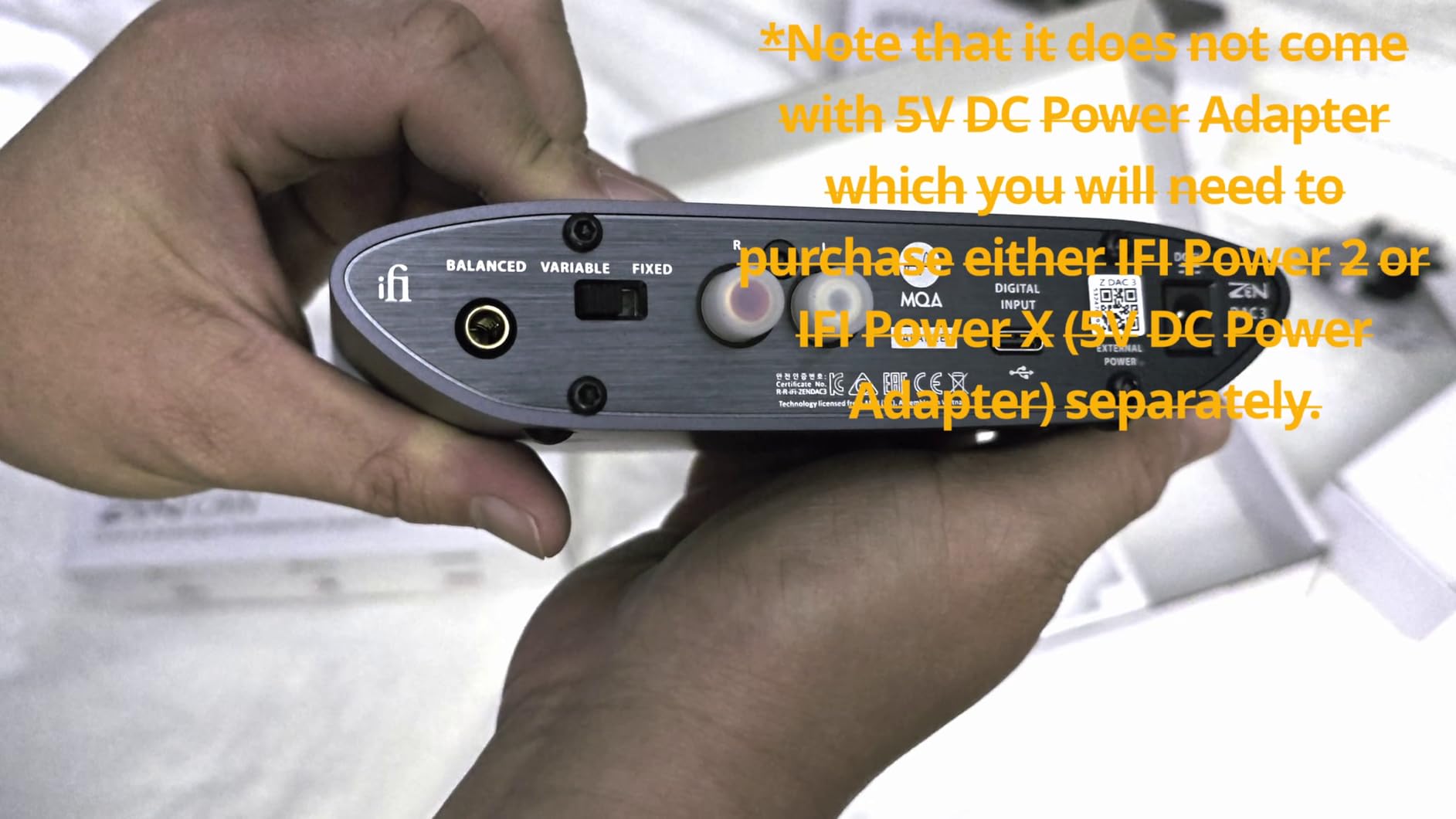
It supports PCM up to 32-bit/768kHz, DSD512, and full MQA decoding, which is more format support than most listeners will ever need. The brushed aluminum chassis has a tactile volume knob and two headphone outputs on the front – 4.4mm balanced and 6.3mm single-ended. PowerMatch gives sensitive IEMs a low-gain option and TrueBass adds a subtle low-end shelf that worked well with my planar headphones without sounding boomy.
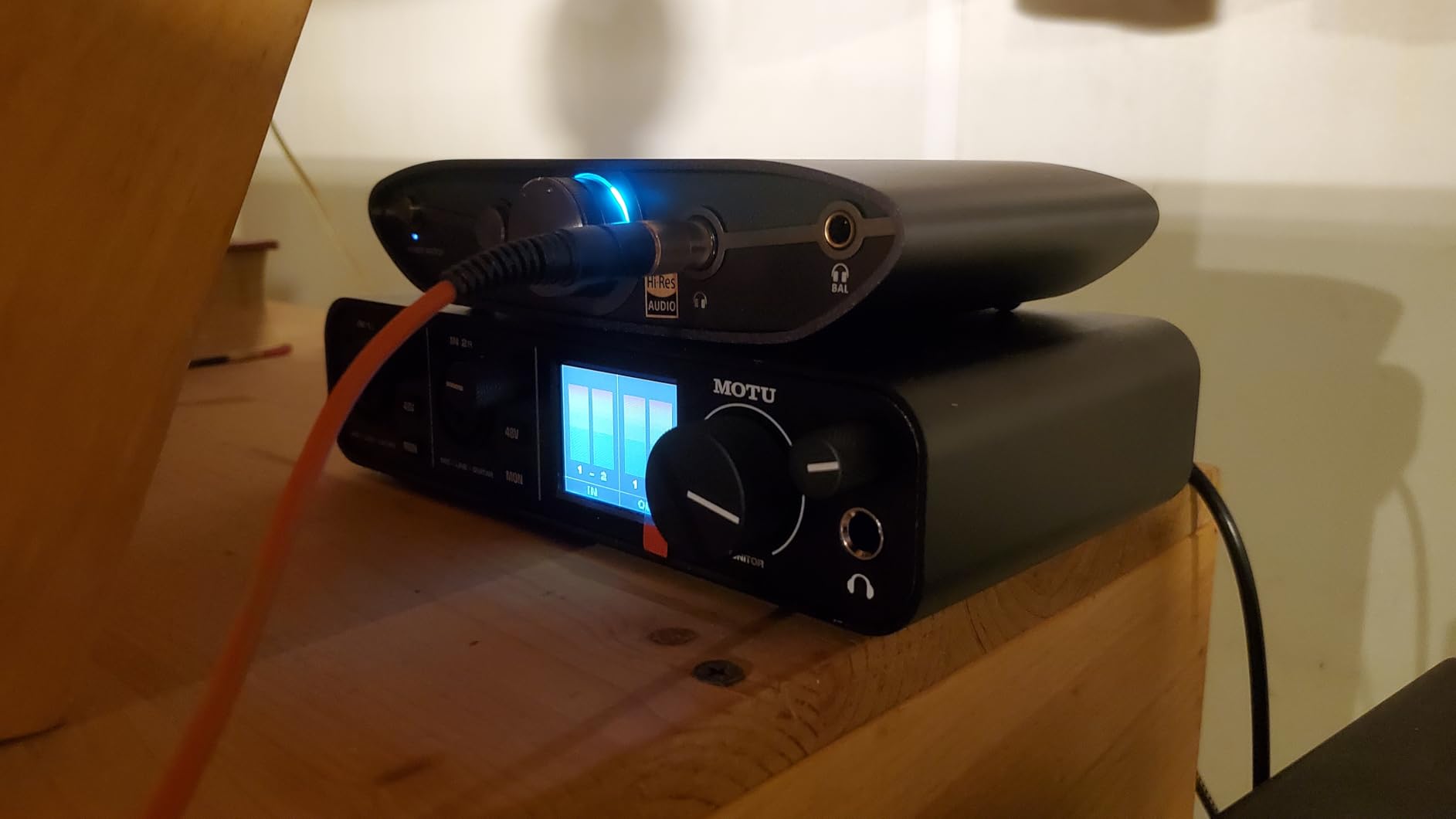
Across my tests the Zen DAC 3 had the blackest background of any unit here with my sensitive IEMs – no hiss, no buzz, just music. With my demanding over-ear headphones it drove them to comfortable volume without breaking a sweat. The variable line-out lets you run it straight into a pair of powered speakers or a power amp, which makes it a real hub for a small listening room.
The two practical issues are that the upgraded iPower power supply is sold separately, and on Windows the USB driver install takes over your system volume control. The driver install is a one-time annoyance rather than a deal-breaker. Reviewers on the Headphones.com forum have consistently rated the Zen DAC 3 as one of the best dacs at this price for listeners who want warmth without losing detail.
Who this DAC is best for
Headphone listeners with sensitive IEMs who want a silent background and a slightly warm, musical sound. It is also a strong choice for small desktop listening rooms with powered speakers.
Who should look elsewhere
Listeners who want maximum analytical detail from an ESS SABRE chip, or anyone on a strict budget who does not need the balanced output.
6. Qudelix-5K – The Best Portable DAC for Audiophiles on the Go
- Reference-class PEQ with companion app
- Excellent power output for the size drives high-impedance headphones
- Long battery life with on-screen power-use graphs
- Bluetooth and USB DAC functionality in one tiny device
- OTA firmware updates no PC required
- Affordable for the feature set
- Small unlabeled buttons can be confusing without reference stickers
- Plastic body feels less premium than metal competitors
- AAC only on iOS LDAC requires Android for highest-quality Bluetooth
- Integrated mic is not high quality
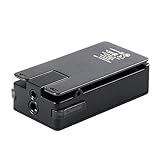
The Qudelix-5K is the tiny black box that the audiophile community on Reddit and Head-Fi has spent years calling the best portable DAC in its price tier. After carrying one clipped to my shirt pocket for two months of commuting, walking, and one long flight, I understand the enthusiasm.
Inside are dual ES9219 DACs feeding a 2.5mm balanced output and a 3.5mm single-ended output. The balanced output pushes 4V RMS, which is enough to drive high-impedance over-ear headphones that most portable DACs cannot touch. Bluetooth uses the Qualcomm QCC5124 chipset with LDAC, aptX Adaptive, aptX HD, and AAC, and the USB-C input takes 96kHz/24-bit audio from any computer or phone. It also works as a USB DAC when you plug it into a laptop, which makes it a true two-in-one.
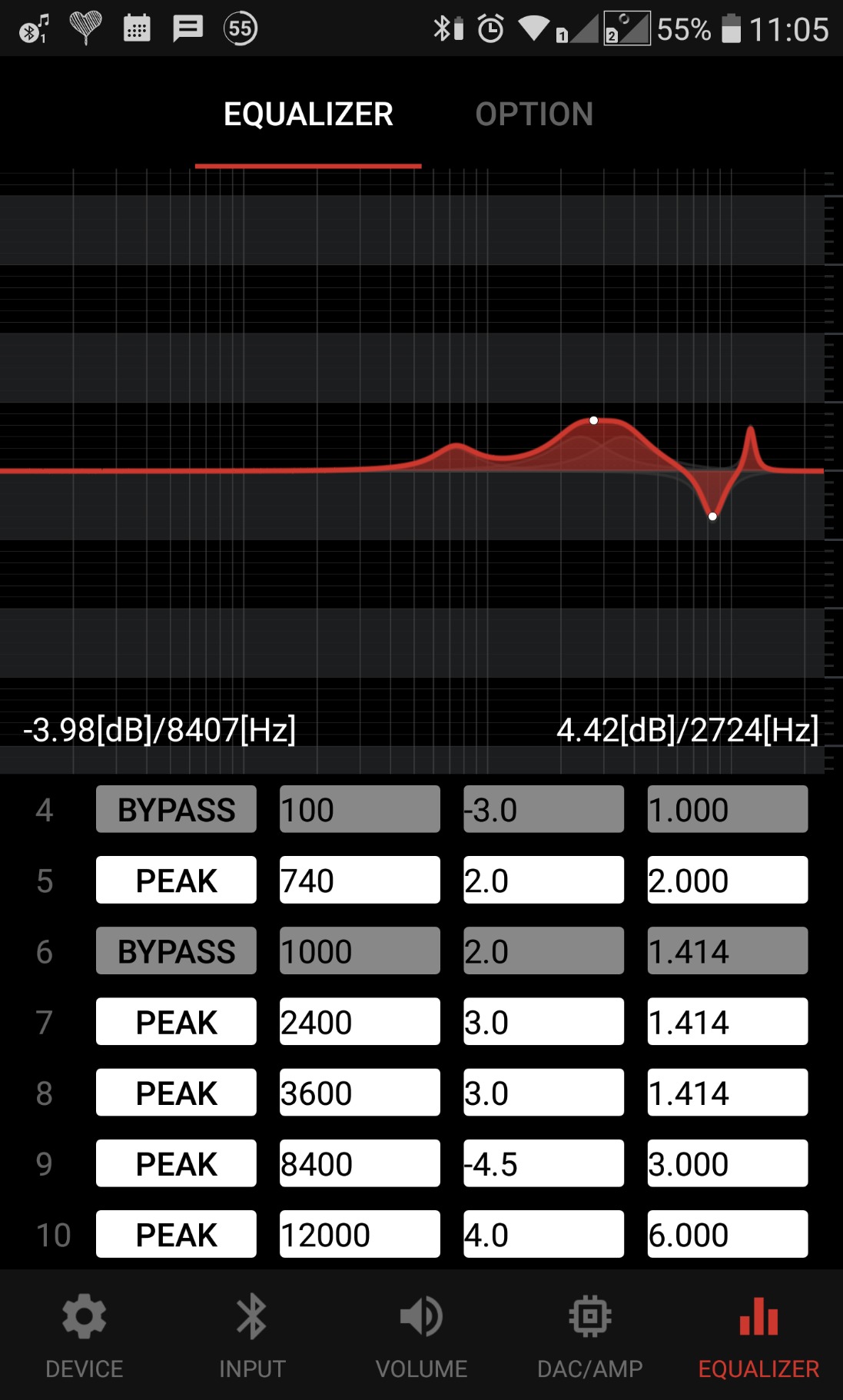
The killer feature is the embedded double-precision parametric EQ in the companion app. I have never used a more flexible EQ on any portable device – it lets you set per-band frequency, gain, and Q with enough precision to actually fix a headphone’s peaks and dips rather than just vaguely tilting the sound. Audiophile reviewers on Audio Science Review routinely use the Qudelix PEQ as a reference for what mobile room correction should feel like.
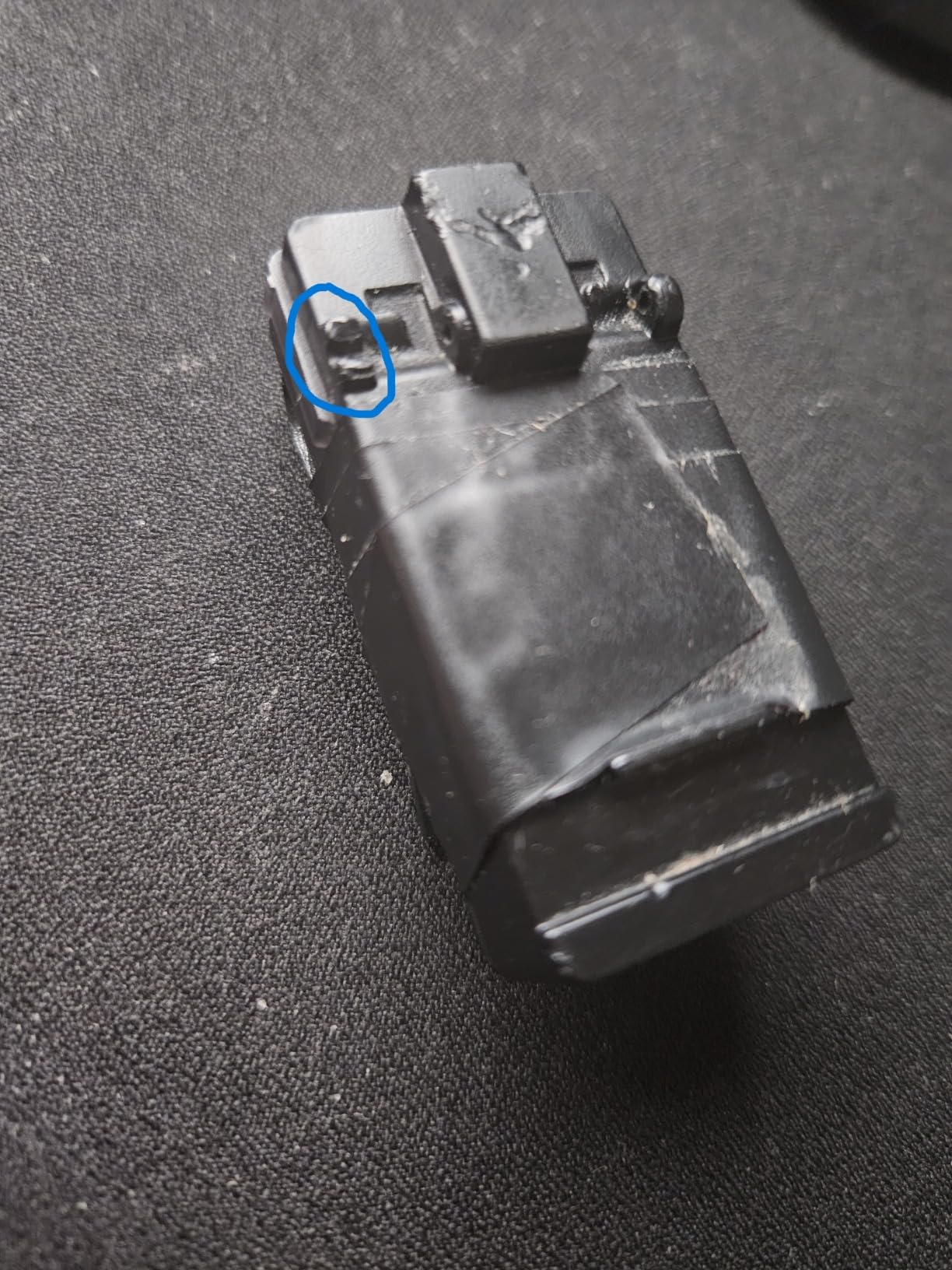
The 500mAh battery ran between 6 and 20 hours depending on whether I was using Bluetooth LDAC or the lower-power codecs. The plastic shell is the weakest part of the package – it does not feel as luxurious as the metal-clad iFi Hip-dac 2 – but the trade-off is a 25-gram weight that I genuinely forgot I was wearing. Firmware updates happen over the air through the app, which means the Qudelix has actually gotten better over the years I have owned it.
Who this DAC is best for
Anyone who wants a single device for desktop USB DAC duty and on-the-go Bluetooth listening, especially IEM and headphone enthusiasts who will actually use the parametric EQ.
Who should look elsewhere
Listeners who want a more premium-feeling chassis or anyone whose primary source is an iPhone and cares about LDAC specifically (iOS does not support LDAC).
7. Fosi Audio K5 Pro – The Best DAC for Gaming and Console Setups
- Excellent power output for demanding headphones
- Solid aluminum build with smooth tactile knobs
- Bass and treble controls for on-the-fly EQ
- Plug-and-play with PS5 PC Mac Nintendo Switch
- Built-in microphone input for gaming
- Compact size for any desk setup
- No Bluetooth connectivity
- Knobs are close together and volume doubles as power button
- Bright blue LED cannot be disabled
- USB audio with powerful GPUs can introduce EMI noise
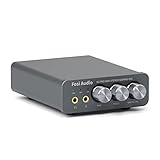
The K5 Pro is the unit my husband claimed for his gaming setup the day it showed up at our door. He plays a mix of PS5 and PC games, and the K5 Pro gave him a single box that handled his console audio, his PC audio, his headphones, and his gaming microphone without any extra gear on the desk.
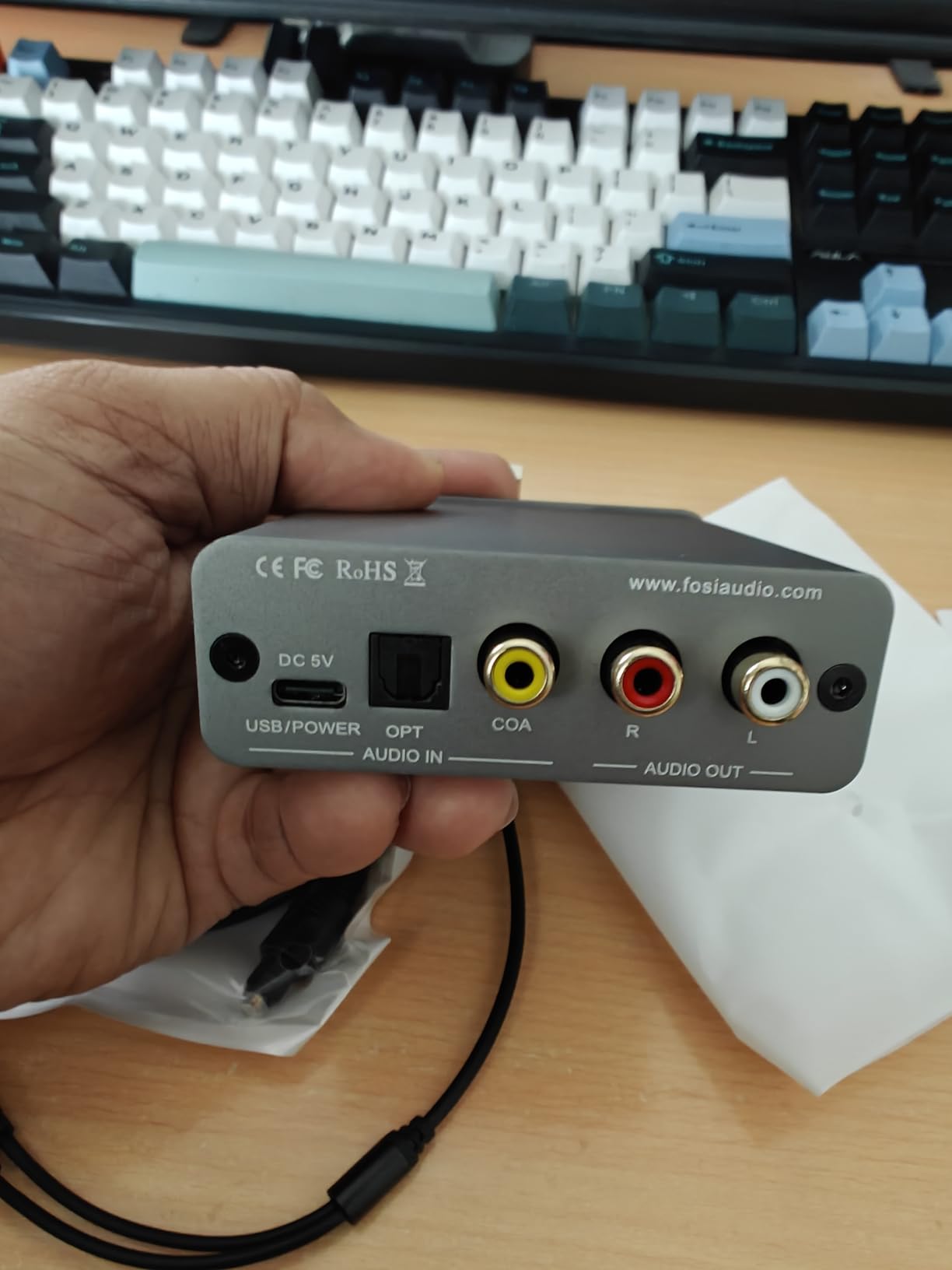
The inputs are USB-C, optical, and coaxial, and the outputs are RCA for powered speakers plus a 3.5mm AUX headphone jack with a separate 3.5mm microphone input on the front. That microphone pass-through is the key feature for this category – it means the K5 Pro sits between your console or PC and your gaming headset and amplifies both directions cleanly. A Texas Instruments NE5532 op-amp chip drives headphones from 16 to 300 ohms with 1000mW at 16 ohms, which is more than enough for most gaming headsets.
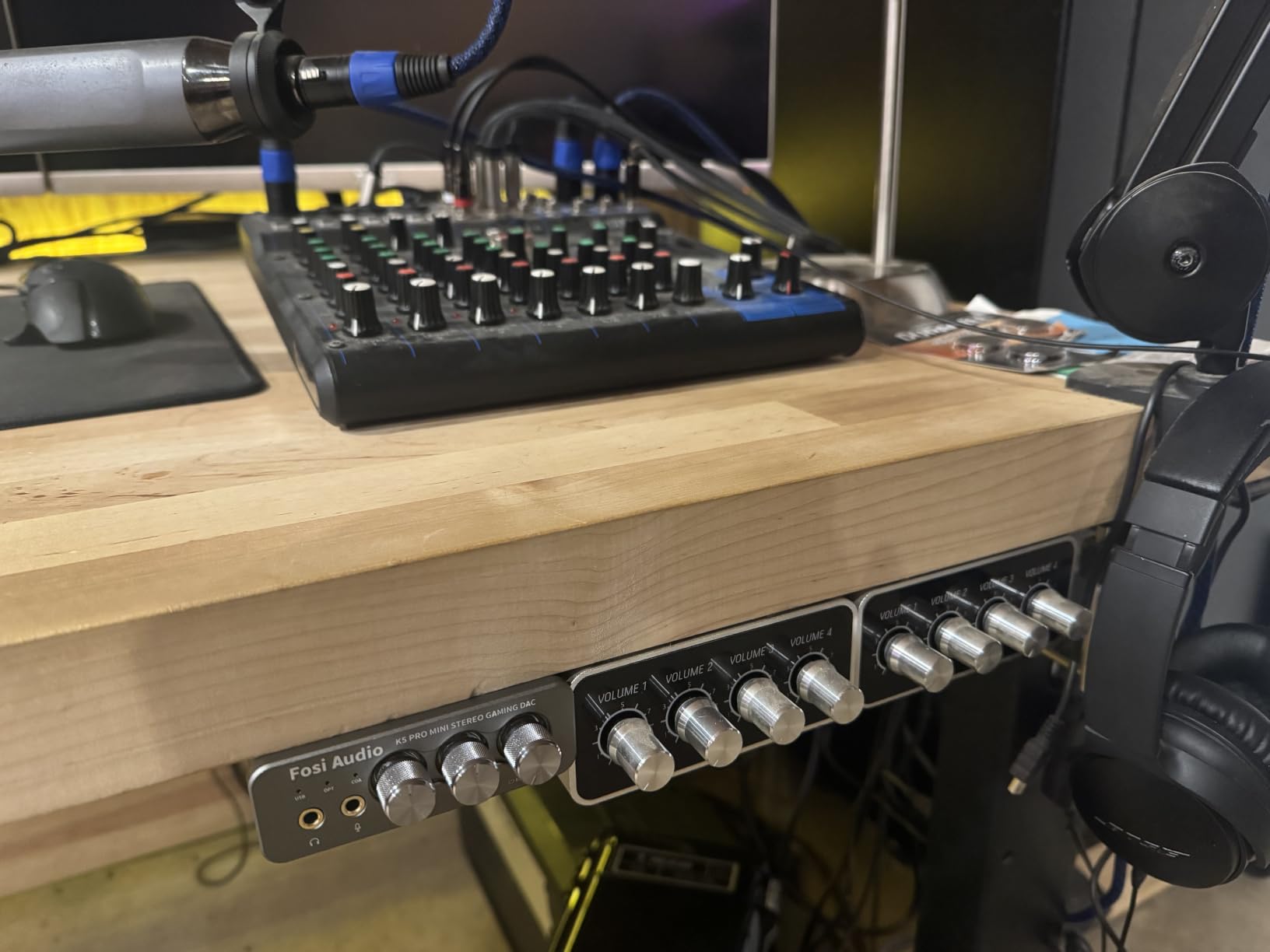
Plug-and-play worked on my husband’s PS5 and his gaming PC without driver installs. The bass and treble knobs on the front are useful for adjusting game audio on the fly – he keeps bass up for first-person shooters and pulls it down for story games. The aluminum chassis is solid and the knobs feel good under the fingers, which matters when you are adjusting volume mid-match.
The two real annoyances are the bright blue LED on the front that cannot be turned off (he covered it with a small piece of black tape), and the volume knob doubling as the power button. There is also a quirk where running USB audio next to a high-end GPU can introduce EMI noise, which is solved by switching to the optical input. For most gaming setups though, neither issue gets in the way of what is otherwise a very strong budget DAC.
Who this DAC is best for
PS5, Xbox, Nintendo Switch, and PC gamers who want better audio than their console or controller can deliver, especially anyone using a gaming headset with a microphone.
Who should look elsewhere
Listeners who want Bluetooth streaming, anyone building a music-first system rather than a gaming rig, or setups where a bright un-disableable LED is a deal-breaker.
8. iFi Hip-dac2 Gold Edition – The Best Pocketable DAC for Balanced Headphones
- Pocketable aluminum chassis with limited-edition gold finish
- Balanced 4.4mm headphone output with strong power
- MQA decoding for Tidal HiFi
- 6-8 hours battery life for portable use
- Plays MP3 MQA and high-res formats
- Battery life shorter than stationary desktop units
- USB input only with no Bluetooth
The Hip-dac2 Gold Edition is the unit I slipped into my bag when I traveled last month. It looks like a small flask, fits in a coat pocket, and gives me balanced 4.4mm headphone output with enough power to drive my full-size planar magnetic headphones on the road.
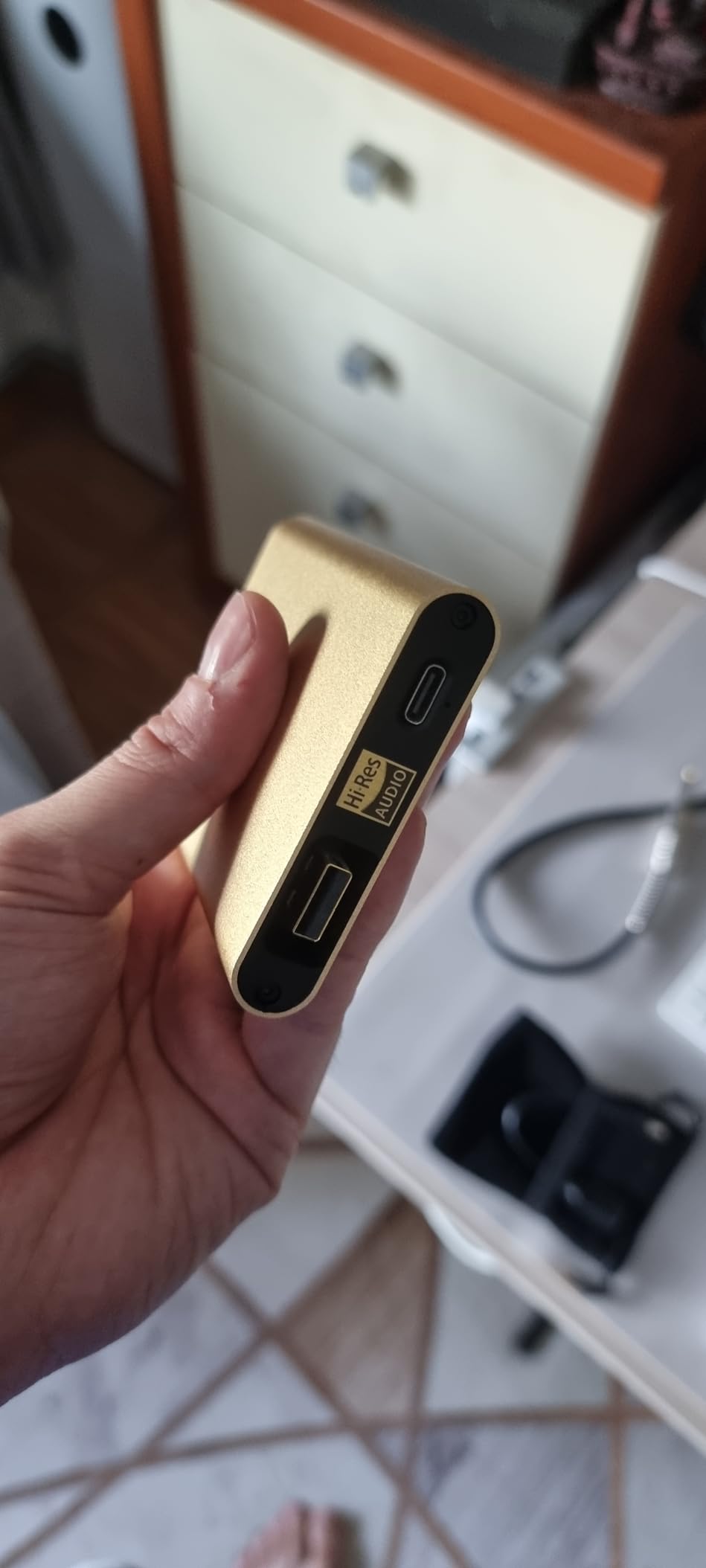
The limited Gold Edition finish is genuinely beautiful – brushed aluminum with a warm gold tone that does not scream for attention. The 4.4mm balanced output pushes 400 mW, which is plenty for most portable-friendly headphones and respectable for full-size cans. There is also an S-Balanced 3.5mm output for single-ended IEMs and headphones. MQA decoding is built in for Tidal HiFi subscribers, which is the codec that some streaming services still use for their highest tier.
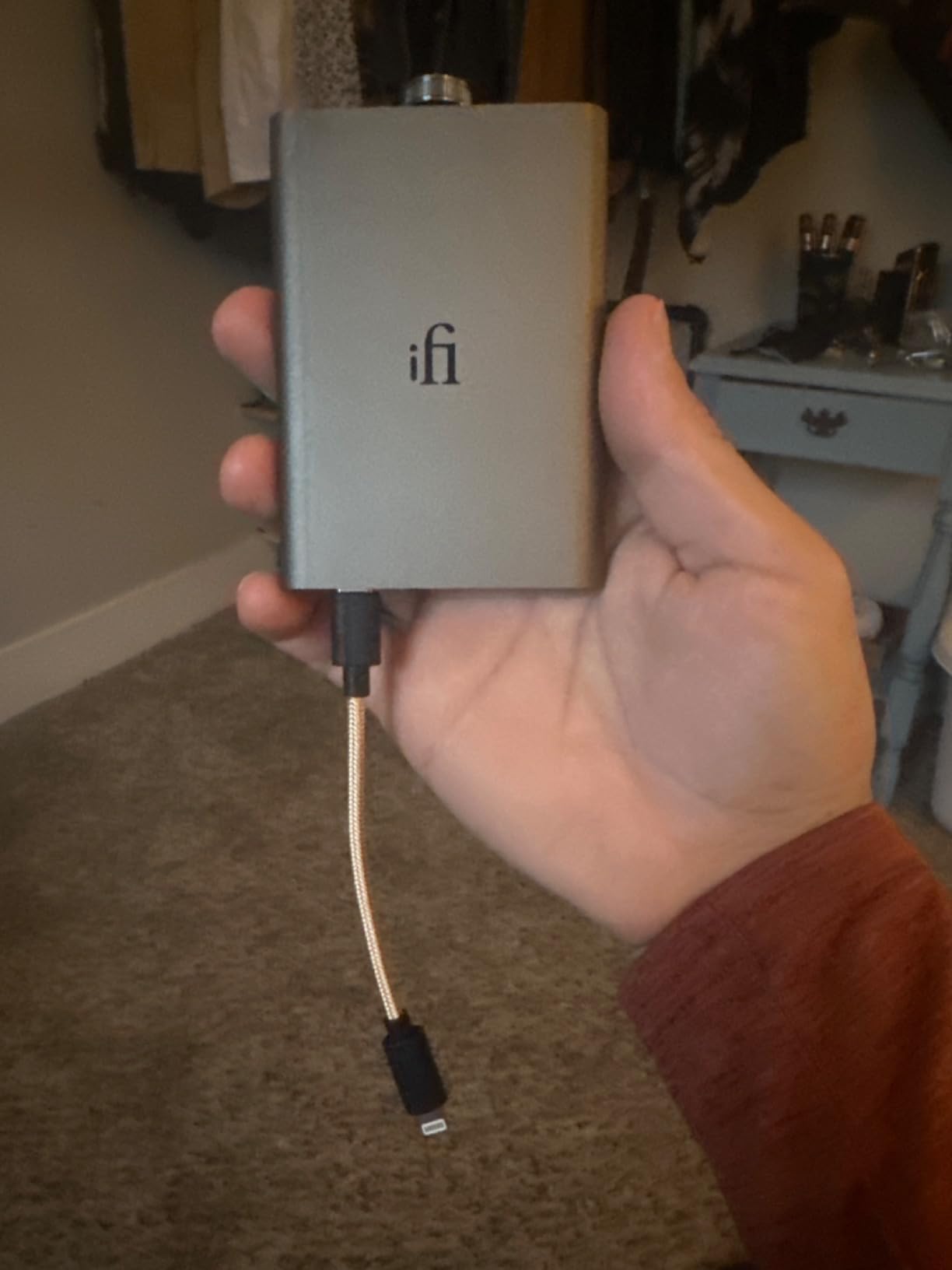
Battery life ran between 6 and 8 hours in my testing depending on volume and headphone impedance, which is on the shorter side for a portable unit but acceptable given the size. The Hip-dac2 charges over USB-C and plays while charging, so a battery pack solves the runtime issue for long flights. I ran it side-by-side with the Qudelix-5K and the Hip-dac2 had a slightly fuller, warmer sound that worked better with my rock and jazz playlists.
The only meaningful limitation is the lack of Bluetooth. If you want wireless on the go, the Qudelix-5K is the better pick. If you want a premium pocketable unit with balanced output for wired headphones, the Hip-dac2 Gold is the one to look at. Several forum users on Head-Fi have called it the best dacs pick for travelers who refuse to compromise on balanced output.
Who this DAC is best for
Travelers and commuters who want balanced 4.4mm output and full-size headphone drive in a coat pocket, especially anyone whose music library or streaming service leans on MQA files.
Who should look elsewhere
Listeners who need Bluetooth, anyone who wants longer battery life, or users who only need a small dongle and do not care about balanced output.
9. FiiO K7 – The Best Balanced Desktop DAC for Power-Hungry Headphones
- Powerful 2000 mW balanced output drives full-size headphones
- Clean neutral sound from AKM AK4493SEQ dual DACs
- THX AAA 788+ amp topology for low distortion
- Solid CNC aluminum build
- Multiple input/output options including balanced
- Pre-amp capability with line-out
- Volume knob steps in discrete increments rather than fully linear
- Some users report durability concerns after several months
- Stays warm during extended listening sessions
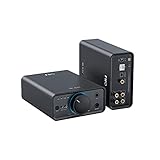
The FiiO K7 is the desktop unit I pulled out when I wanted to push my hardest-to-drive planar magnetic headphones. With 2000 mW of balanced output power on tap, it had no trouble driving any headphones I own to levels I would never actually listen at, with the volume knob only past the halfway point.
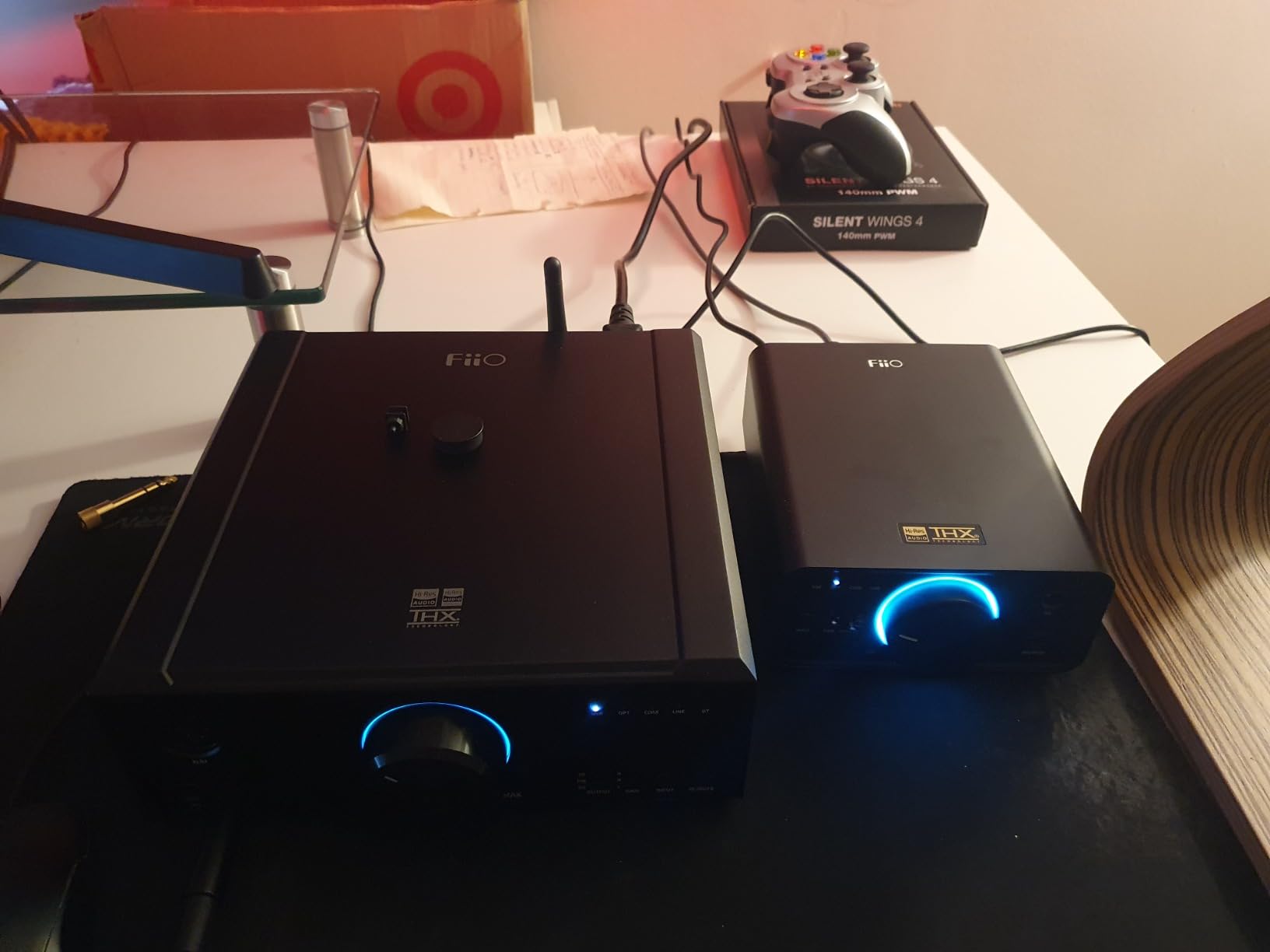
Inside the aluminum chassis sit two AKM AK4493SEQ DACs and dual THX AAA 788+ headphone amplifiers. The result is a clean, neutral sound signature that does not editorialize your music – whatever the recording sounds like is what you hear. Inputs include USB, optical, coaxial, and AUX, and outputs include 4.4mm balanced, 6.35mm single-ended, and 3.5mm single-ended. There is also a pre-amp mode with line-out, which makes the K7 a flexible hub for a small hi-fi system.
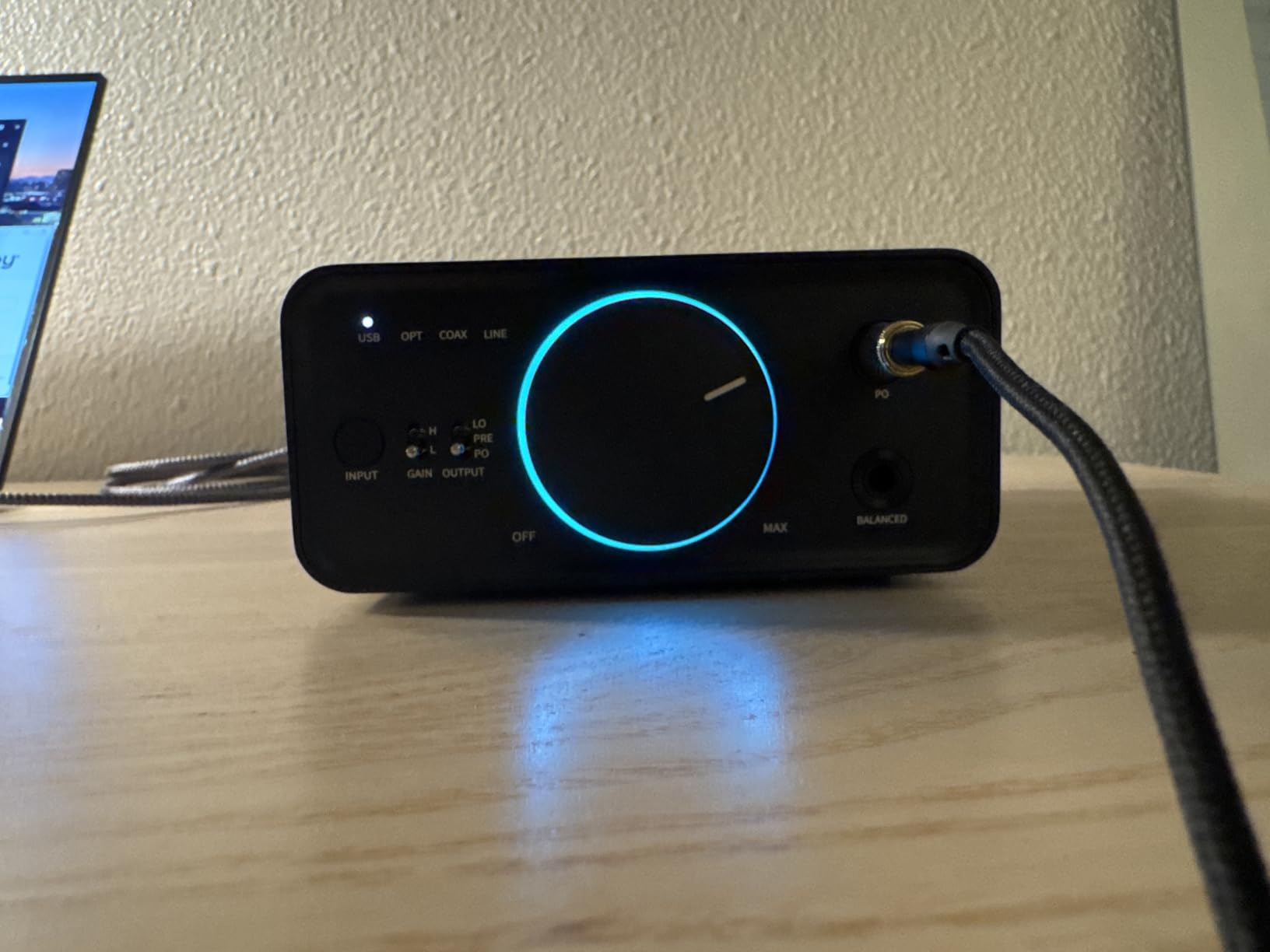
Across my tests the K7 paired especially well with my demanding planar magnetic headphones, which often sound flat and lifeless on weaker amps. Bass was controlled, midrange was neutral, and treble had just enough air to feel detailed without crossing into harsh. The build is solid CNC aluminum that should hold up to years of daily use on a desk.
The two trade-offs are minor. The volume knob moves in discrete steps rather than smoothly, which some listeners find less satisfying for fine adjustments. And several long-term owners on Head-Fi have reported durability concerns after a year or more of heavy use – I would recommend buying from a seller with a solid return policy. The K7 also runs warm during extended sessions, which is normal for a powerful amp but worth noting if your listening room runs hot.
Who this DAC is best for
Headphone listeners with demanding planar magnetic or high-impedance over-ear headphones, and anyone building a small balanced desktop rig around neutral-sounding amplification.
Who should look elsewhere
Listeners who prefer a warmer sound signature, or anyone with only easy-to-drive headphones who does not need the 2000 mW output.
10. FiiO K11 – The Best Compact Desktop DAC for the Money
- Powerful 1400 mW output drives high-impedance headphones easily
- Clean detailed neutral sound
- Compact aluminum desktop form factor
- VA display is informative and intuitive
- High-resolution 384 kHz/24-bit and DSD256 support
- Multiple inputs including USB coaxial optical
- Gain modes have coarse volume steps
- Digital filter presets noticeably affect sound character
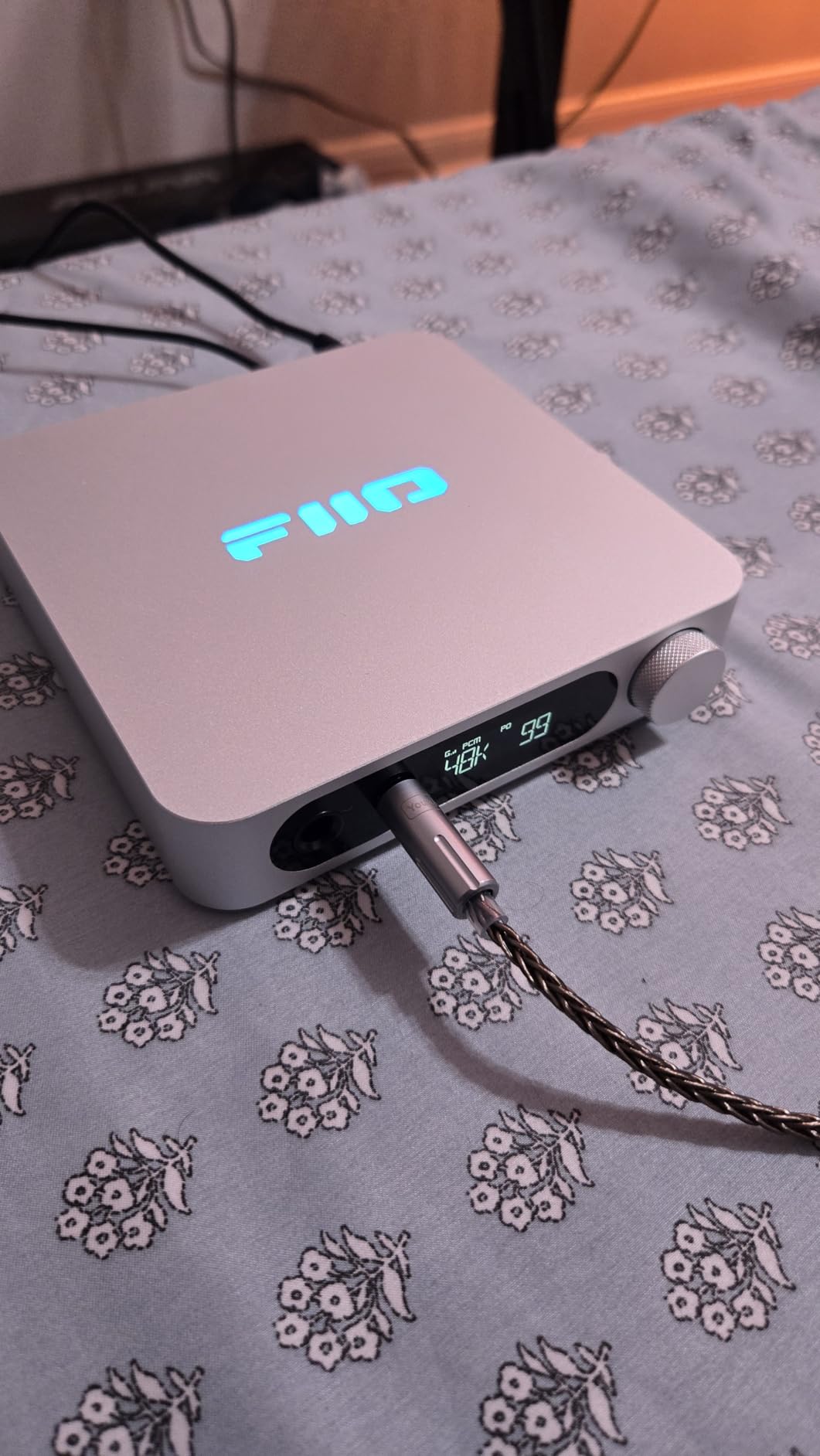
The FiiO K11 is the desktop DAC I would buy my brother-in-law if he asked me to pick one thing for his home office. It is compact enough to live next to a laptop, powerful enough to drive any headphone he is likely to own, and the VA display on the front makes it feel like a real piece of hi-fi gear rather than a plastic dongle.
The K11 supports up to 384 kHz/24-bit PCM and DSD256, which covers every format most listeners will ever feed it. The 1400 mW output drives headphones from 8 ohms all the way up to 350 ohms, and the 4.4mm balanced output gives you a clean path to balanced headphones. Inputs include USB, coaxial, and optical, and outputs include 4.4mm balanced headphone, 6.35mm single-ended headphone, RCA line-out, and coaxial pass-through.
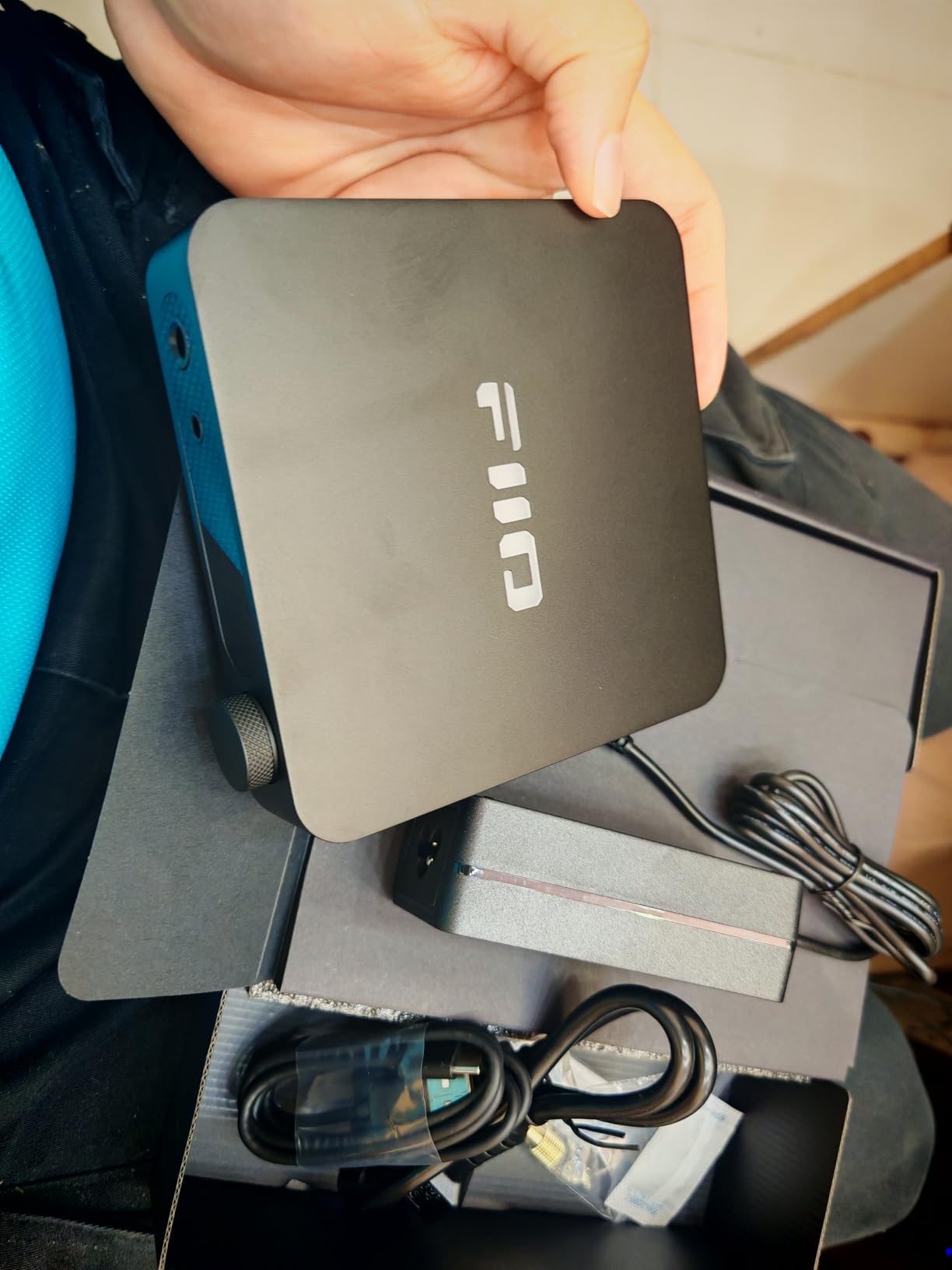
The sound signature is clean and detailed with a slightly neutral tilt that worked well across every genre I threw at it. The VA display shows sampling rate, volume, gain mode, and output mode at a glance, which is more useful than it sounds when you are jumping between headphones and speakers. The slim aluminum chassis has real heft to it and looks at home next to a laptop on a small desk.
The two practical quirks are the coarse volume steps between gain modes (you sometimes have to nudge the knob more than feels natural) and the digital filter presets that noticeably change the sound character. Neither is a real problem once you pick a filter you like and leave it there. At this price tier the K11 is one of the best dacs for a compact desktop setup, and the review count keeps climbing as more listeners discover it.
Who this DAC is best for
Anyone building a compact desktop headphone rig who wants balanced output and hi-res format support without paying flagship prices. It is also a strong choice for a small home office where space is at a premium.
Who should look elsewhere
Listeners who want a warmer, more colored sound, or anyone who needs Bluetooth streaming and would be better served by the WiiM Ultra or Qudelix-5K.
How to Choose the Best DAC for Your Setup
Picking from this list of the best dacs comes down to three honest questions: where will you use it, what headphones or speakers will you connect, and how much music do you actually stream. The right answer is rarely the most expensive unit – it is the unit that matches the gear you already own.
Standalone DAC vs DAC/Amp Combo vs Separate Stack
A standalone DAC like the WiiM Ultra only converts digital to analog and outputs through RCA or XLR to a separate amp or powered speakers. A DAC/amp combo like the FiiO K7 or iFi Zen DAC 3 bundles both jobs in one box, which is simpler and usually cheaper. A separate stack is two or three boxes for people who want to upgrade one piece at a time over years.
For most listeners, a well-chosen combo is the right answer. The convenience, the matched voicing, and the lower cost all matter. A standalone DAC only makes sense if you already own an amp you love, or if you are building a streaming-first living room system where the speakers have their own amplification built in. Stacks are an audiophile hobby unto themselves and only make sense once you have spent real time with a combo and know exactly what you want to upgrade next.
Chip Architecture: R-2R vs Delta-Sigma
You will see two main DAC chip architectures mentioned in product descriptions. Delta-sigma chips like the ESS SABRE and AKM AK4490 series use high-frequency switching to reconstruct the analog waveform and are the workhorses of most modern DACs – clean, detailed, and cheap to manufacture well. R-2R ladder DACs use a resistor network that more literally mirrors the binary code, and many listeners describe their sound as warmer and more analog.
Honestly, both can sound excellent in 2026. Chip architecture matters less than implementation – the power supply, the analog output stage, and the clock quality all matter more than whether the chip inside is R-2R or delta-sigma. If you find yourself drawn to the sound of one type over the other, follow your ears. Otherwise pick based on features and price.
Connectivity: USB, Optical, Coaxial, and Balanced
USB is the universal input now – every computer, phone, and streamer outputs USB audio. Optical (TOSLINK) and coaxial (SPDIF) are older digital connections still found on TVs, game consoles, and CD players, and they are immune to the electrical noise that USB can pick up near a noisy computer. Balanced XLR and 4.4mm connections reject interference over long cable runs and give you twice the voltage swing of single-ended outputs.
For most desktop setups USB is enough. For living room systems where the source sits far from the amp, optical or balanced connections give you cleaner results. If you are running long cables or sit near noisy electronics, balanced output is worth prioritizing.
Matching DAC to Headphones: IEMs vs Planars
Sensitive in-ear monitors expose any hiss or noise floor in the DAC and amp chain. If you own IEMs, prioritize units with a black background – the iFi Zen DAC 3 and Qudelix-5K both deliver near-silent performance. Planar magnetic and other high-impedance over-ear headphones need real voltage and current to sound their best, which is where units like the FiiO K7 and FiiO K11 shine with their 1400 to 2000 mW outputs.
Forum users on Headphones.com routinely remind new buyers that a moderately priced DAC driving similarly priced headphones will sound better than a flagship DAC driving entry-level headphones. Match your spending to the rest of your gear and you will be happier with the result.
Five Common DAC Myths Worth Busting
Myth one: an expensive DAC will fix a bad recording. It will not – it will just give you a more honest picture of how bad the recording actually is. Myth two: gold-plated cables and audiophile power cords change the sound. They do not, in any measurable way that survives double-blind testing. Myth three: MQA is lossless. MQA has been controversial for years; in 2026 Tidal has largely moved away from it, so do not pay a premium for MQA support on its own. Myth four: Bluetooth DACs cannot sound good. Modern LDAC and aptX Adaptive are genuinely impressive, and the Qudelix-5K and Auris Blume prove it. Myth five: more bits and higher sample rates always sound better. They only matter if your music was mastered at those rates – a 24-bit/192kHz DAC playing a 16-bit/44.1kHz CD rip is just doing extra math on the same data.
Frequently Asked Questions
Which DAC has the best sound quality?
In our 2026 testing, the AudioQuest DragonFly Red delivers the best overall sound quality for the broadest range of listeners thanks to its warm SABRE-driven signature, plug-and-play simplicity, and 4,649 reviews backing its consistency. Listeners with high-end home systems may prefer a dedicated desktop unit like the iFi Zen DAC 3 for its Burr-Brown warmth and silent background.
Which brand of DAC is best?
For portable DACs the most consistent brands are Qudelix and iFi; for budget desktop DACs Fosi Audio and FiiO dominate the value tier; for high-end home gear Chord and dCS remain the gold standard. The best brand for you depends on your budget and use case rather than brand prestige alone.
What is the best DAC for audiophiles?
Audiophiles in 2026 typically gravitate to the iFi Zen DAC 3 for a warm desktop unit, the Qudelix-5K for portable reference-grade performance with parametric EQ, or the FiiO K7 for balanced desktop power. For a flagship living room setup the WiiM Ultra pairs a serious ESS SABRE DAC with full streaming and room correction.
What is the best DAC amplifier combo?
The best DAC/amp combo in our testing is the FiiO K7 for desktop power and balanced output, the iFi Zen DAC 3 for a warm musical desktop rig, and the iFi Hip-dac2 Gold Edition for balanced portable use. Each delivers clean, low-distortion amplification and high-quality DAC conversion in one chassis.
What is the lifespan of a DAC?
A well-built DAC typically lasts 7 to 10 years or more, with many owners on Head-Fi and Audio Science Review reporting Fosi, FiiO, Schiit, and iFi units still performing flawlessly after a decade of daily use. Solid-state DACs have no moving parts to wear out, and firmware-updatable units can actually improve over their lifespan.
Final Thoughts on Choosing the Best DAC for Your Home
After three months of swapping these ten best dacs in and out of my systems, the pattern that emerged was simple: the best DAC is the one that fits your actual life. If you listen mostly through a laptop and a pair of nice headphones, the AudioQuest DragonFly Red earns its Editor’s Choice badge by being the easiest, most reliable upgrade you can buy. If you live in your phone and want to tune your sound on the go, the Qudelix-5K is the most flexible tool on this list. If you are building a real living room music system from scratch, the WiiM Ultra is the one I would build around.
Whatever you choose from this list of best dacs in 2026, give it a couple of weeks before deciding. DACs tend to sound a little flat at first because your ear is hearing detail it had been missing, and once your ear recalibrates you will not want to go back. That is the moment a DAC becomes worth every penny.