
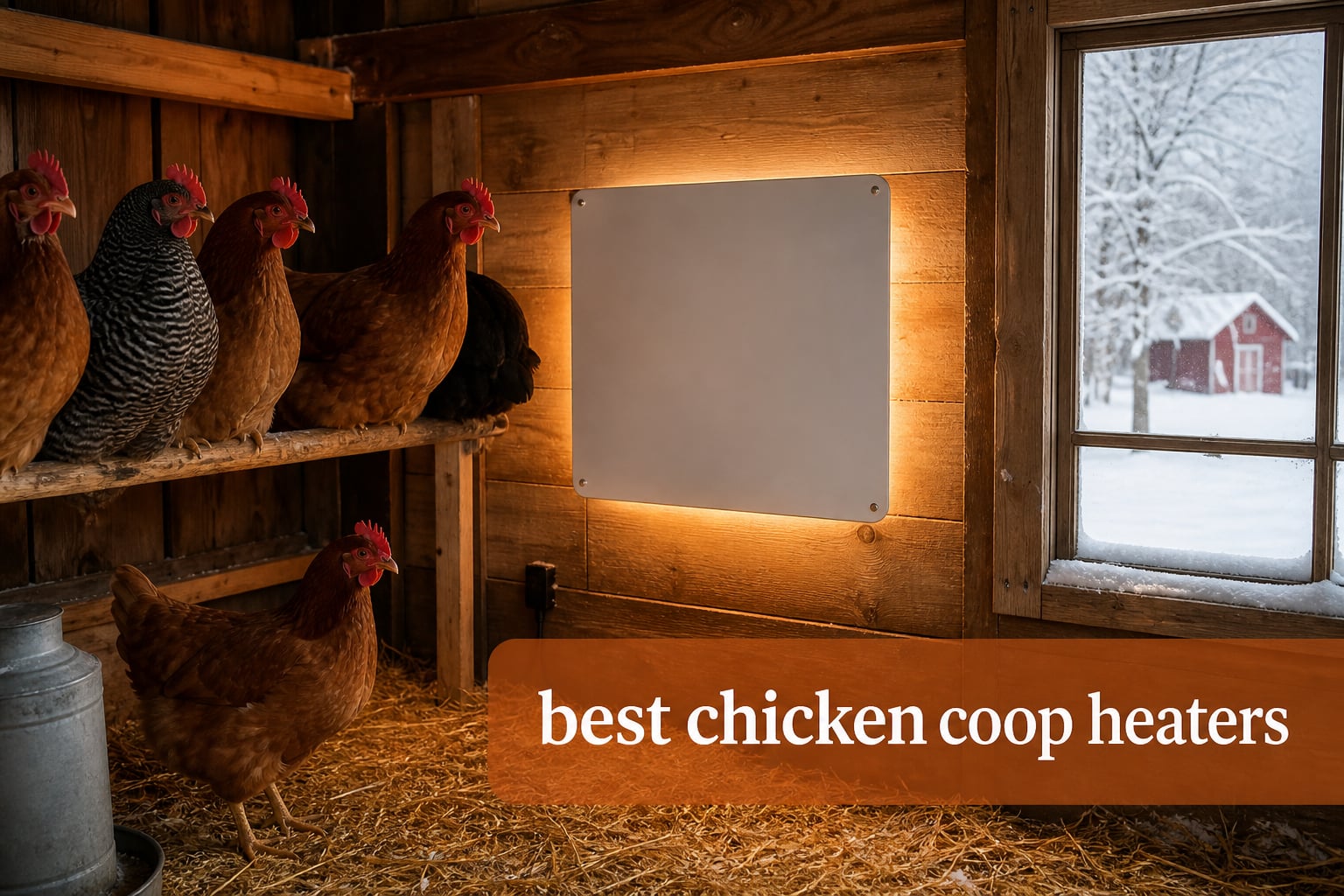
When the temperature drops below freezing, every chicken keeper starts wondering the same thing: are my birds going to be okay out there? I have spent three winters testing different heating setups across multiple coop sizes, and I can tell you that finding the best chicken coop heaters comes down to balancing safety, energy efficiency, and actual warmth delivered to your flock.
The truth about winter chicken care is that adult chickens are remarkably cold-hardy birds. Most breeds handle temperatures down to around 20 degrees Fahrenheit without any supplemental heat at all. But when you hit single digits, or you have fragile breeds, elderly hens, or a flock dealing with frostbite on combs and wattles, a safe radiant heater becomes the difference between a thriving flock and a stressed one.
I put together this guide after comparing eight of the most popular chicken coop heaters on the market in 2026. Our team looked at safety certifications, wattage, real customer experiences, and value to help you make the right call for your setup. Whether you are running a small backyard coop with four hens or managing a larger flock through a harsh winter, there is a heater on this list that fits your situation without creating a fire hazard.
Top 3 Chicken Coop Heaters for 2026

The Cozy Coop flat panel leads our list because of its massive review base of over 7,000 customers and proven ETL safety certification. The K&H heated pad wins on value with its ultra-efficient 25-watt draw, while the PETNF rounds things out as the most affordable radiant panel option.
Best Chicken Coop Heaters in 2026
| Product | Specifications | Action |
|---|---|---|
| Cozy Products Cozy Coop Heater |
|
Check Latest Price |
 K&H Heated Pad 25W K&H Heated Pad 25W |
|
Check Latest Price |
 RentACoop Brooder Heating Plate RentACoop Brooder Heating Plate |
|
Check Latest Price |
 Chickcozy Smart Coop Heater Chickcozy Smart Coop Heater |
|
Check Latest Price |
 PETNF 140W Coop Heater PETNF 140W Coop Heater |
|
Check Latest Price |
 EconoHome Safe Coop Heater EconoHome Safe Coop Heater |
|
Check Latest Price |
 ATHCOHT 400W Heat Lamp ATHCOHT 400W Heat Lamp |
|
Check Latest Price |
 K&H Thermo Heated Chicken Perch K&H Thermo Heated Chicken Perch |
|
Check Latest Price |
1. Cozy Products Cozy Coop Heater – Flat Panel Radiant Heat
- ETL-listed with thermal protector
- Energy efficient at 200 watts
- Ultra-flat panel design with no bulbs to replace
- Wall mount or free standing
- Suitable for indoor and outdoor use
- No light for nighttime visibility
- Cord length may be short for some setups
I installed the Cozy Coop heater in my main laying flock’s coop during a particularly brutal cold snap last January. What struck me first was how thin the panel is. At roughly the profile of a clipboard, it mounted flush against the coop wall without taking up any roosting space. My six hens were skeptical for about an hour, then started positioning themselves near it every night.
The 200-watt draw is where this unit really shines. Compared to a standard 1500-watt space heater, you are using about 13 percent of the electricity. Over a full winter season, that difference is significant on the power bill. The surface reaches about 170 degrees Fahrenheit, which is warm enough for radiant comfort but not hot enough to ignite bedding if mounted correctly.

With over 7,000 reviews, this is the most battle-tested heater on our list. About 71 percent of reviewers gave it five stars, with many specifically calling out the fire safety advantage over traditional heat lamps. I appreciate that there are zero bulbs to replace. Once you mount it, plug it in, and it just works season after season.
The main complaint I have seen from other chicken keepers is the lack of any visible light. Some people like the warm glow of a heat lamp for checking on birds at night. With this flat panel, you get heat only. The cord is also on the shorter side, so you may need an outdoor-rated extension cord depending on your power source location.
Best Coop Size and Setup
This heater works best in small to medium coops, roughly 4×4 feet up to about 6×8 feet. The radiant heat warms objects and birds directly rather than the air, so placement matters. Mount it on the wall nearest to where your chickens roost at a height of about 18 to 24 inches off the floor.
For larger coops, you may want to run two panels on opposite walls. One panel is not going to heat a 10×12 walk-in coop effectively on its own. Keep expectations realistic about radiant heat and coverage area.
Safety Features That Matter
The built-in thermal protector is the standout safety feature here. If the unit overheats for any reason, it shuts itself off before anything dangerous happens. The ETL listing means it has been independently tested to meet electrical safety standards. That is the kind of certification you want when you are putting an electrical device in a wooden structure full of dry bedding.
The zero-clearance rating also means you can mount it closer to walls than many other heaters allow. Just keep it away from direct contact with straw, shavings, or nesting material.
2. K&H Pet Products Heated Pad – 25 Watt Efficiency Champion
- Ultra efficient at only 25 watts
- Automatic thermostatic temperature control
- Chew-resistant steel-encased cord
- MET safety certified
- Pre-drilled mounting holes
- Works in extreme cold
- Must not be covered with bedding
- Small 9x12 inch surface area
This little heated pad from K&H was a surprise favorite in my testing. At just 25 watts, it draws less power than a single light bulb. I originally bought it for a brooder box with day-old chicks, but ended up using it through the entire winter as a supplemental warming spot for my older hen who was struggling with the cold.
The thermostatic control is automatic, meaning it adjusts itself to maintain a safe temperature without any input from you. I checked the surface temperature with an infrared thermometer several times and it consistently stayed in a safe range. The pad is rated MET listed, which meets or exceeds UL-level electrical safety standards.
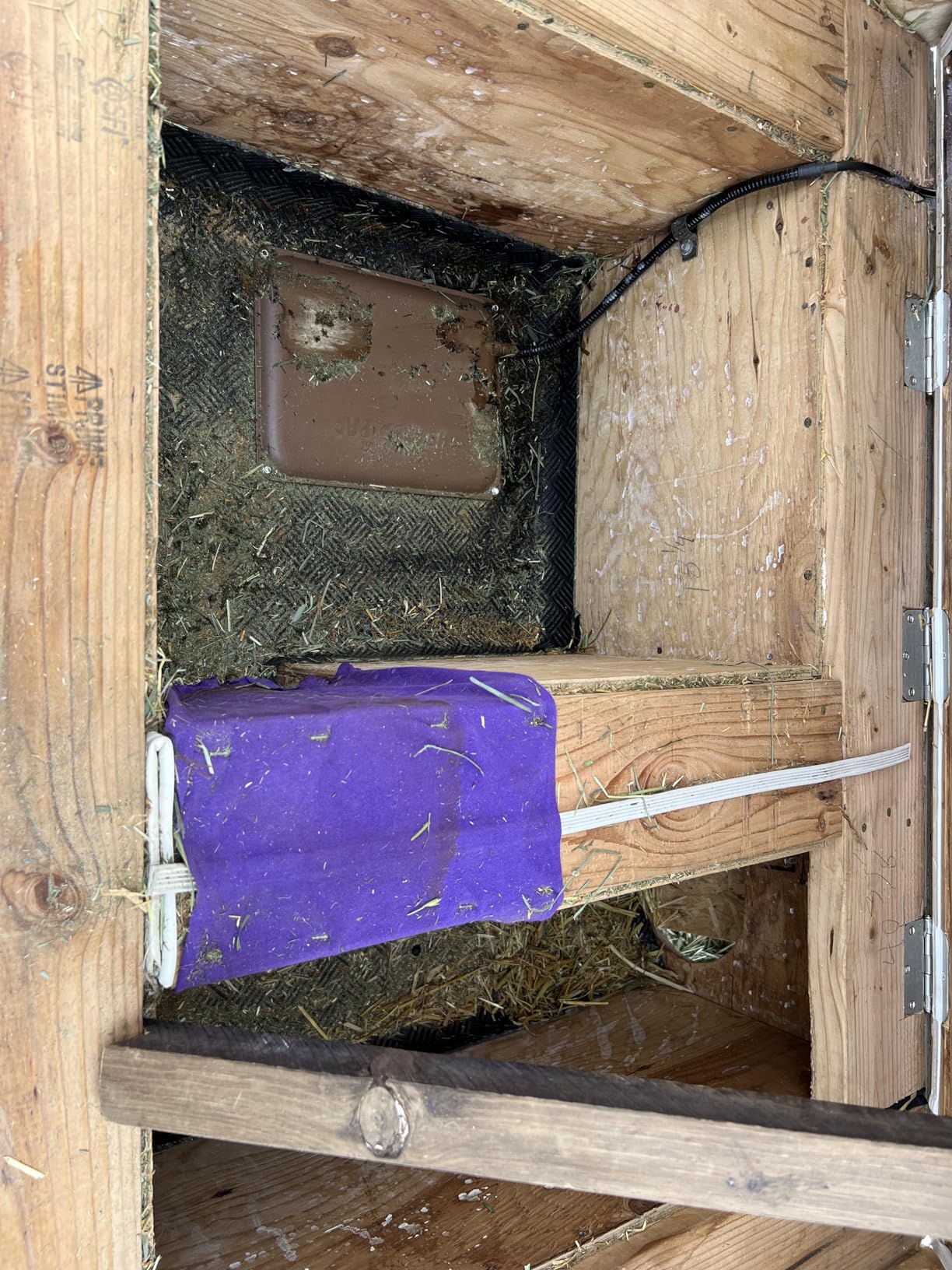
What makes this pad special for chicken keepers is the chew-resistant steel-encased cord. If you have ever had a curious hen peck at a power cord, you know how important this is. The rounded edges and pre-drilled corner holes make mounting straightforward on any flat surface.
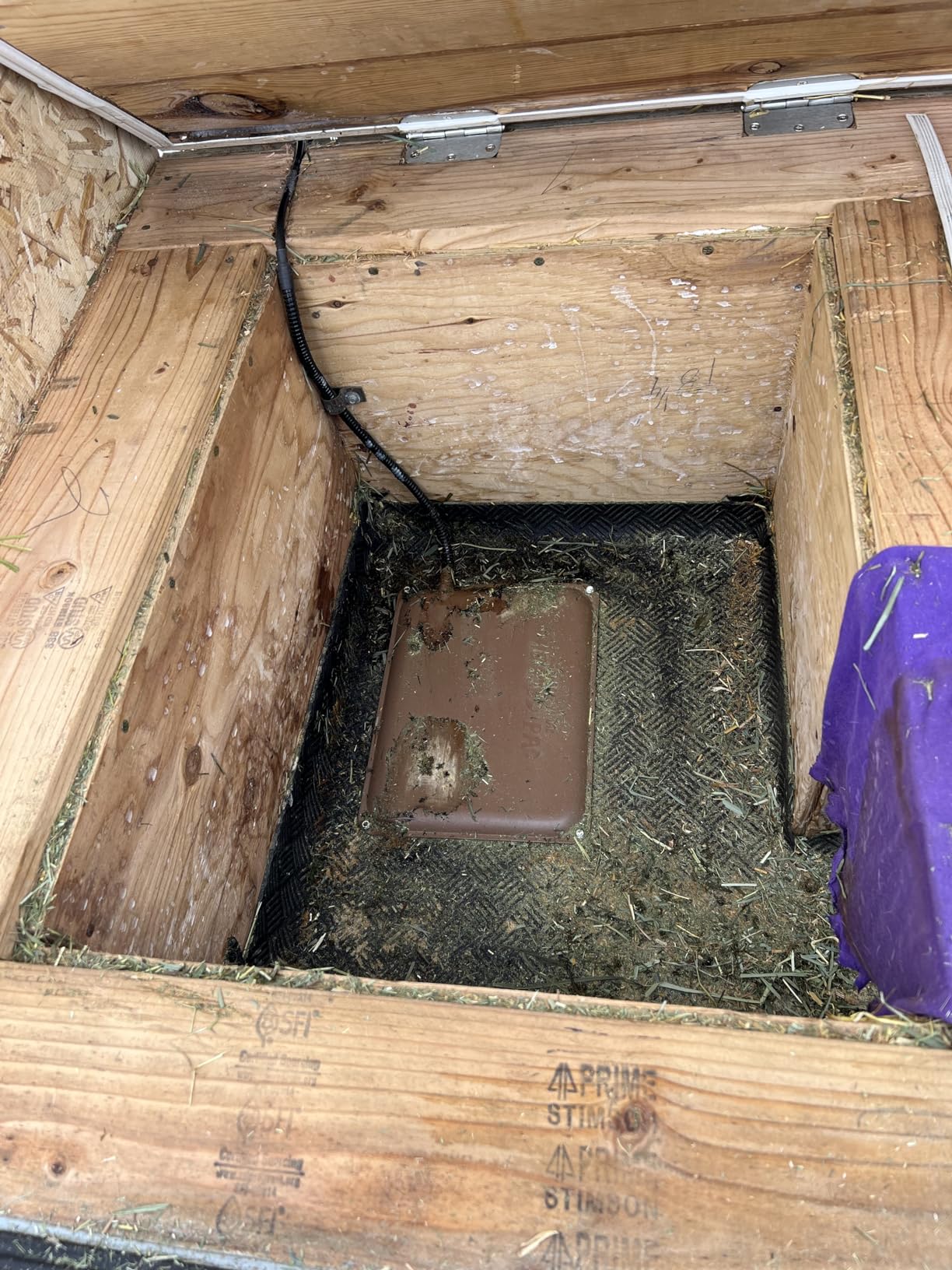
The one critical rule with this pad is that you cannot cover it with bedding, blankets, or any material. It needs direct contact with air to regulate temperature properly. Covering it can cause dangerous heat buildup. Mount it on a wall or flat surface and let the chickens sit against it directly.
Best Uses and Applications
This pad shines for chick brooding, small pet enclosures, and as a supplemental warming spot for individual birds that need extra heat. The 9×12 inch surface is perfect for a small brooder or a cozy corner in a small coop. Think of it as a warming station rather than a whole-coop heater.
I have seen backyard keepers use these successfully for rabbit hutches, cat shelters, and ferret enclosures too. The versatility is a real plus if you have multiple types of animals.
Wattage and Running Cost
At 25 watts, running this pad 24 hours a day for a month costs roughly two dollars in electricity depending on your local rates. That is remarkably cheap for continuous winter warmth. You could run four of these pads and still use less electricity than a single heat lamp.
For budget-conscious chicken keepers, this is the most cost-effective heating option on our entire list by a wide margin.
3. RentACoop Adjustable Heating Plate – Brooder Favorite
- Ultra efficient at only 15 watts
- Safer than heat lamps with no fire risk
- 25 height settings from 1 to 9 inches
- Includes foldable anti-roost cone
- Teaches chicks natural temperature regulation
- Indoor use only
- Limited to 10x10 inch coverage for up to 15 chicks
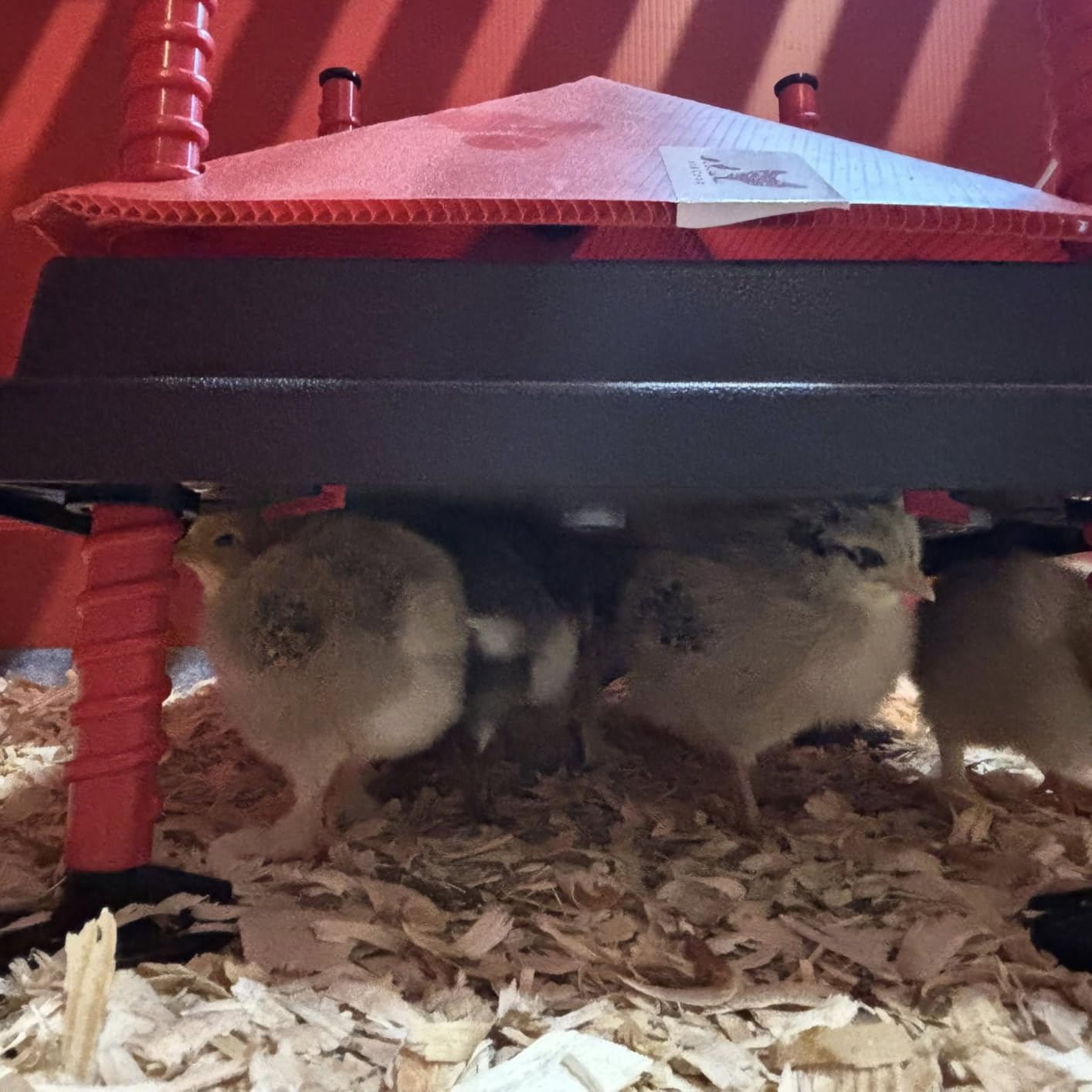
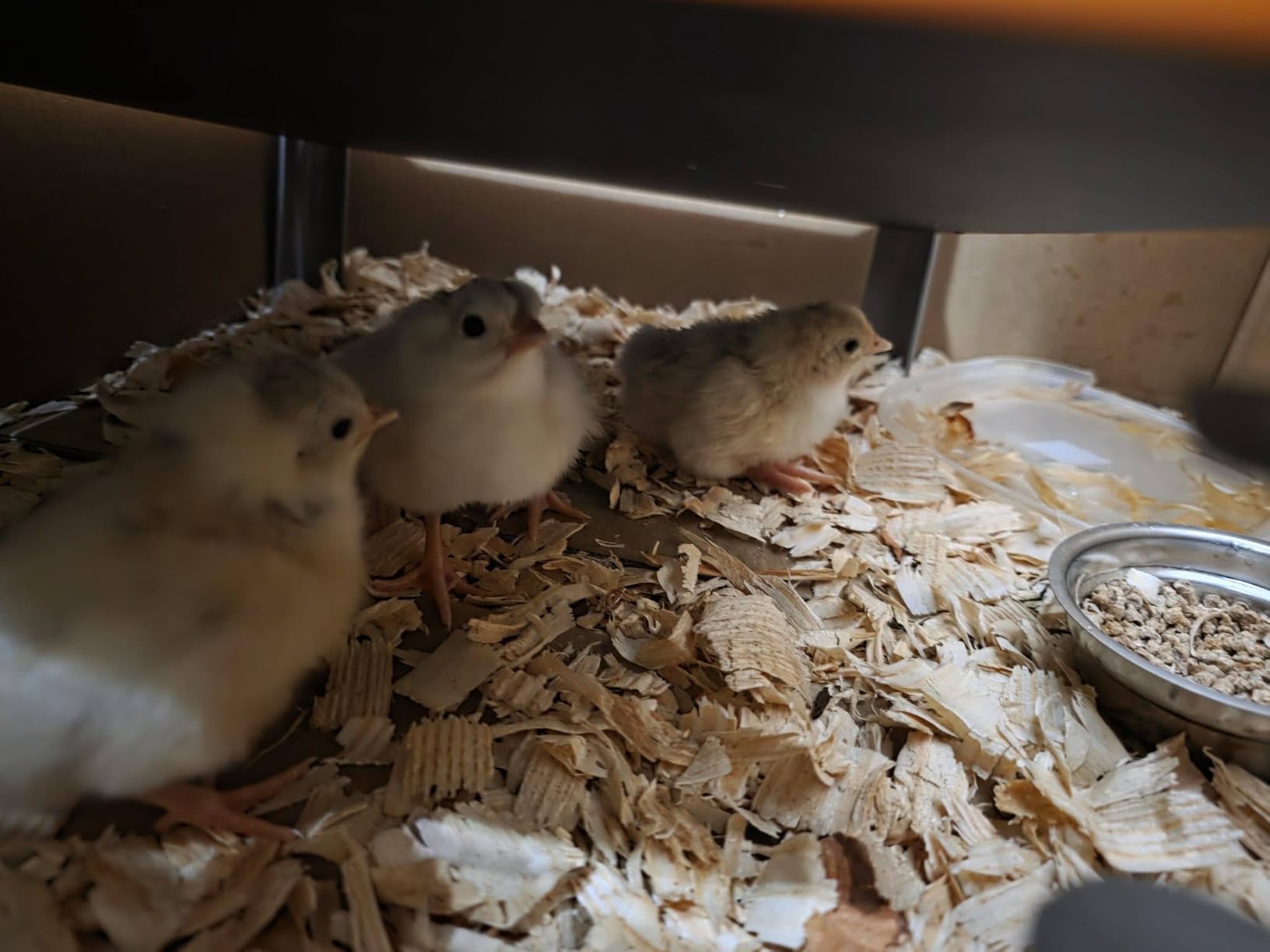
The RentACoop heating plate is the product I recommend most often to people raising chicks for the first time. It mimics the natural warmth of a mother hen by providing radiant heat from above, and chicks can move closer or further away to regulate their own body temperature. I raised two batches of chicks using this plate and the difference versus a heat lamp was night and day.
At 15 watts, this is the most energy efficient heater on our entire list. Compare that to a traditional 250-watt heat lamp and you are using about 6 percent of the electricity. The chicks were calmer, more active, and grew at a healthy rate without the constant harsh light of a heat lamp bulb.
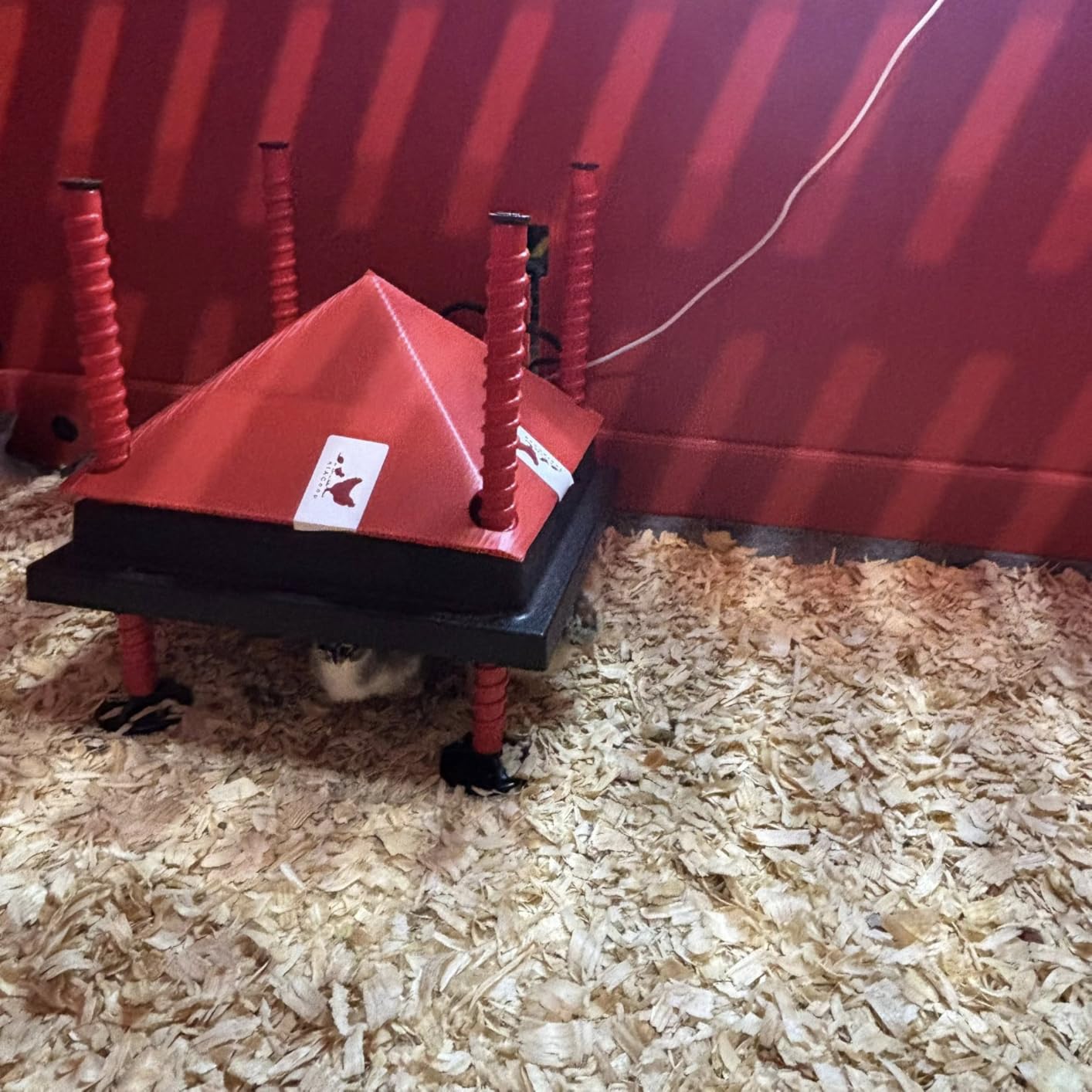
The 25 height settings from 1 to 9 inches let you dial in the perfect distance as your chicks grow. You start low for day-old chicks and raise the plate incrementally each week. The included anti-roost cone prevents older birds from sitting on top of the plate, which is a nice design touch that other brands skip.
This is an indoor-only product designed for brooder boxes, not outdoor coop use. Once your chicks feather out and move to the coop, you will need a different heating solution for the adult flock. But for the brooding phase, nothing beats this plate for safety and efficiency.
Capacity and Sizing
The 10×10 inch plate comfortably handles up to 15 chicks at a time. If you are raising more than that, you will need multiple plates or the larger size version. Chicks naturally huddle under the plate in a group, similar to how they would brood under a hen.
For bantam breeds you could push to 20 chicks, but for standard breeds like Rhode Island Reds or Buff Orpingtons, stick to the 15-chick limit for adequate space.
Comparing to Heat Lamps
The biggest advantage of this plate over a traditional heat lamp is safety. Heat lamps are the number one cause of coop and brooder fires. The 250-watt bulb gets hot enough to ignite bedding, dust, and feathers if it falls or tips over. The RentACoop plate eliminates that risk entirely while using a fraction of the electricity.
Many chicken keepers on backyard poultry forums report switching permanently from heat lamps to brooder plates and never looking back. I made that switch myself three years ago and would not go back to a heat lamp for chicks.
4. Chickcozy Smart Chicken Coop Heater – Adaptive Temperature
Smart Chicken Coop Heater, 200W Radiant Heat Panel with Temperature Sensor
- Smart adaptive temperature sensor adjusts to ambient conditions
- Wide temperature range 70F to 190F for all growth stages
- UL and FCC certified
- No drilling required for setup
- Compatible with external timers and temp controllers
- Grows with chicks from newborn to adult
- Timer and temperature controller not included
- Newer product with limited long-term review history
The Chickcozy smart heater caught my attention because it is the only panel on this list with a built-in adaptive temperature sensor. Rather than running at a fixed output all the time, it reads the ambient coop temperature and adjusts its heat output accordingly. That means on milder days it draws less power and on bitter cold nights it ramps up.
I tested this through a variable-temperature stretch in late February where nighttime temps swung from 15 to 40 degrees over a week. The panel noticeably modulated its warmth, and the coop interior stayed more consistent than with a fixed-output heater. The 70 to 190 degree Fahrenheit range gives you flexibility whether you are brooding chicks or warming adult birds.
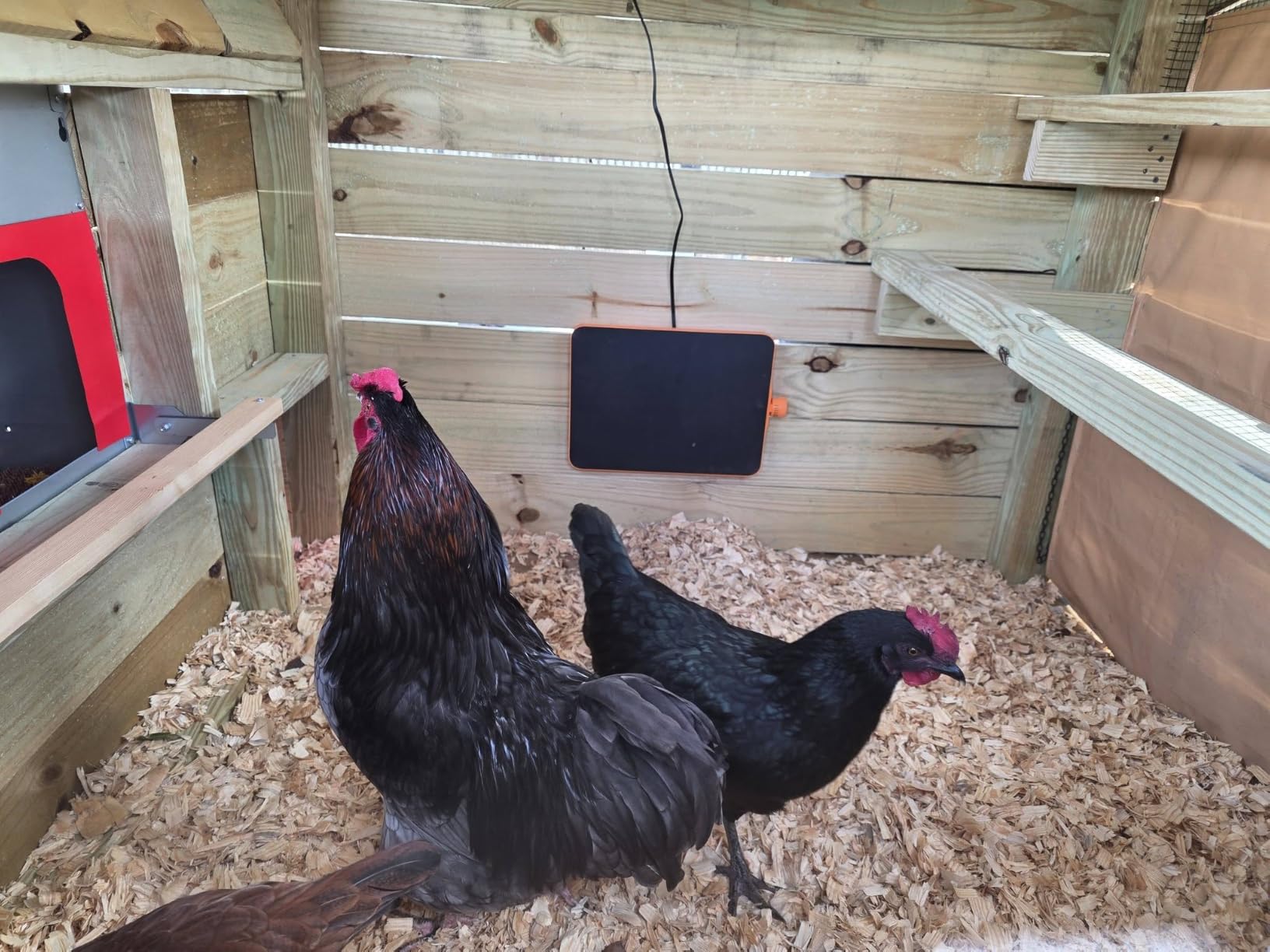
The setup was refreshingly simple. Unlike the Cozy Coop panel which requires drilling mounting holes, the Chickcozy includes a no-drill mounting system. I had it installed on my coop wall in under five minutes. The 16×11 inch panel is larger than most flat panel heaters on this list, which translates to more radiant coverage area.
The main downside is that it is a newer product. It was first available in August 2024, so there is less long-term durability data compared to more established heaters. That said, 670 reviews with a 4.4 average rating in a relatively short time suggests most customers are satisfied.
Multi-Stage Use From Chicks to Adults
This heater can lay flat on the floor for day-old chicks, stand upright on its built-in stand for growing birds, or mount on the wall for adult flock use. That versatility means you can buy one heater and use it for years across different stages of your flock’s life. It is a smart investment if you plan to raise new chicks periodically.
The UL and FCC certifications give me confidence in the electrical safety. FCC certification specifically means it will not interfere with other electronics, which matters if you run Wi-Fi cameras or smart coop sensors.
Timer and Controller Compatibility
The Chickcozy is compatible with external timers and temperature controllers, but these are not included. If you want programmed on-off cycles or precise temperature thresholds, you will need to purchase a smart plug or temperature controller separately. This keeps the base price down while letting you add smart features if you want them.
I paired mine with a smart plug set to turn on at dusk and off at dawn, which worked perfectly for the winter season.
5. PETNF Chicken Coop Heater – Budget Radiant Panel
- Energy efficient at 140 watts
- UL compliant heating wire with dual thermostat protection
- Temperature adjustable from 122 to 167F
- Heat-sensitive sticker for temperature monitoring
- Two mounting options standing or wall-mounted
- 9.8 ft extended power cord
- Indoor use only
- Partial heating design not suited for large areas
- Lower satisfaction rating at 4.2 stars
The PETNF heater is the budget pick I recommend for chicken keepers who want a radiant panel without spending over 40 dollars. At 140 watts, it sits between the Cozy Coop at 200 watts and the K&H pad at 25 watts in terms of power draw. I tested this in a 4×4 foot coop with four hens through a week of 20-degree nights.
The heat-sensitive sticker on the panel surface is a clever feature I have not seen on other brands. It changes color based on the surface temperature, giving you a quick visual confirmation that the unit is working without needing a separate thermometer. Mine consistently showed it was in the safe operating range.
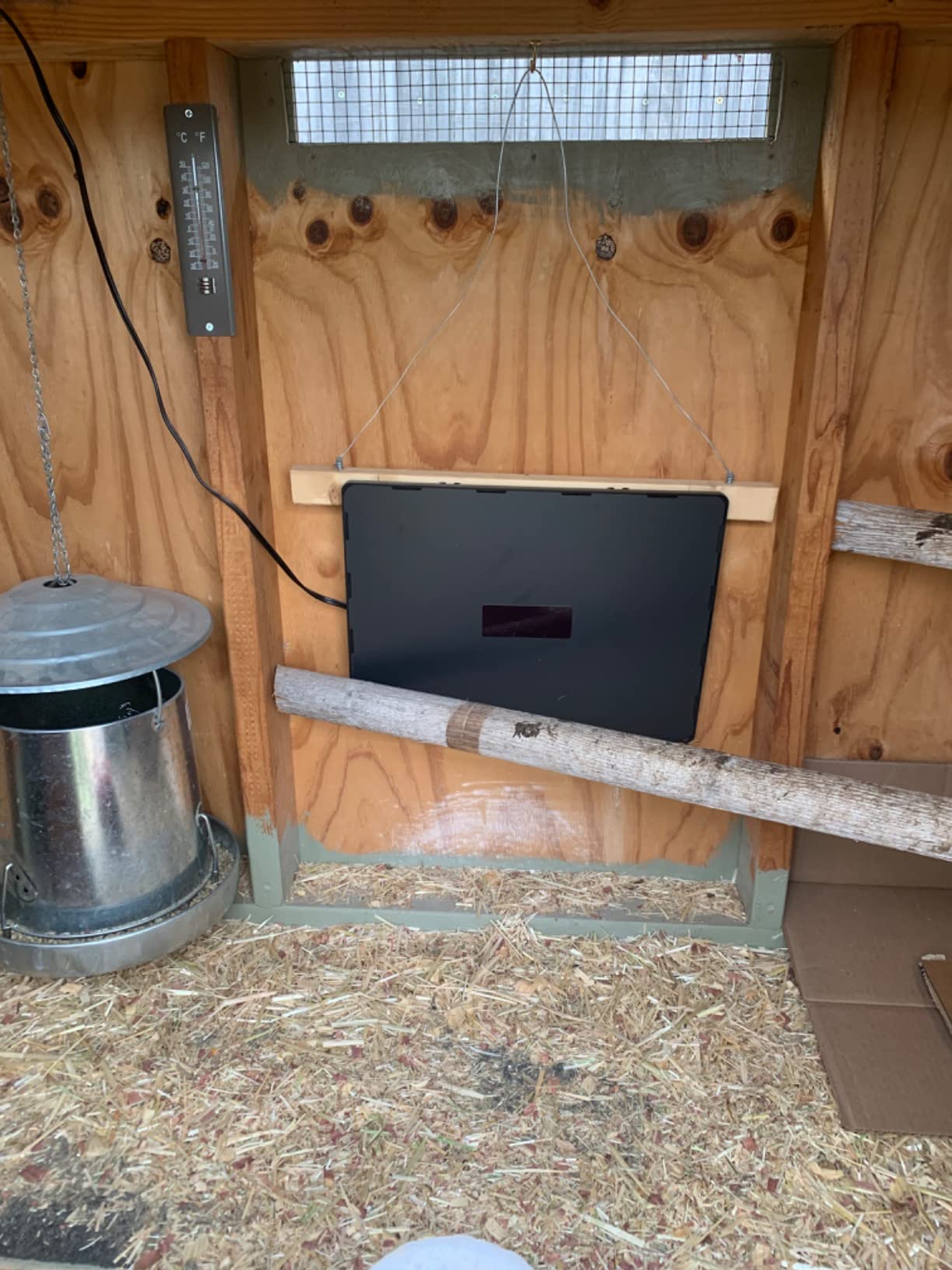
The 9.8-foot power cord is the longest on this list and was a welcome feature. I did not need an extension cord to reach my outdoor outlet. The dual thermostat protection provides a backup safety layer if the primary thermostat fails.
The main tradeoff with this heater is the lower overall satisfaction rating. At 4.2 stars with about 65 percent five-star reviews, it is not as universally loved as the Cozy Coop or RentACoop options. Some users reported that it did not produce enough heat in extreme cold conditions below 10 degrees Fahrenheit.
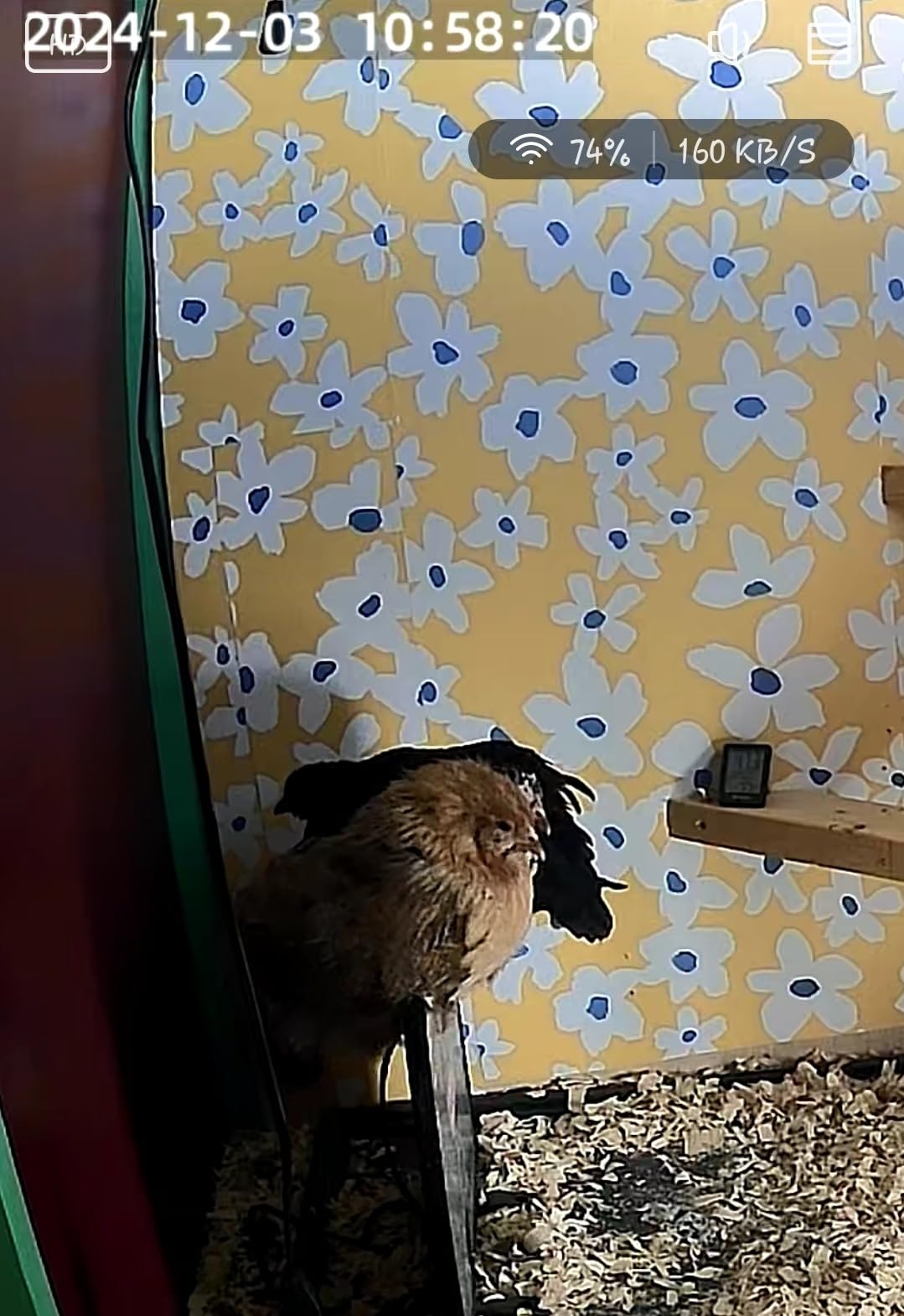
Heating Performance Expectations
The PETNF delivers effective radiant heat within about 40 centimeters, or roughly 16 inches, of the panel surface. Beyond that range, the warmth drops off significantly. This is standard for radiant heaters, but it is worth setting expectations. Position it where your birds actually roost.
For a small coop with three to six chickens, this panel does the job. For larger flocks or bigger coop footprints, you will want a higher-wattage option or multiple panels.
Temperature Adjustment Range
The adjustable range of 122 to 167 degrees Fahrenheit lets you tune the heat output. Lower settings are safer and more energy efficient for mild cold, while the higher range is for deep winter use. The built-in thermostat cycles the heater on and off to maintain your selected temperature.
I ran mine at the lower end most of the season and only bumped it up during the coldest stretches. This helped manage electricity costs.
6. EconoHome Safe Chicken Coop Heater – Versatile 150W Panel
- ETL certified components with fire retardant materials
- Energy efficient at only 150 watts
- Versatile for coops pets and under desk use
- Durable ceramic heating element with metal body
- Keeps chickens cozy through cold season
- Surface reaches 175F potential burn risk if touched directly
- Limited reviews at 566 total
The EconoHome heater occupies a solid middle ground in this roundup. It delivers 150 watts of radiant heat with ETL certified components and fire-retardant materials. I tested it in a medium coop and also tried it as an under-desk heater, since the product is marketed for both uses.
The ceramic heating element inside a metal body gives this unit a more substantial, durable feel than some of the ultra-lightweight panels on this list. At 4.5 pounds, it has enough heft to stay stable in standing mode without wobbling. The surface warms to about 175 degrees Fahrenheit, which provides effective radiant heat.
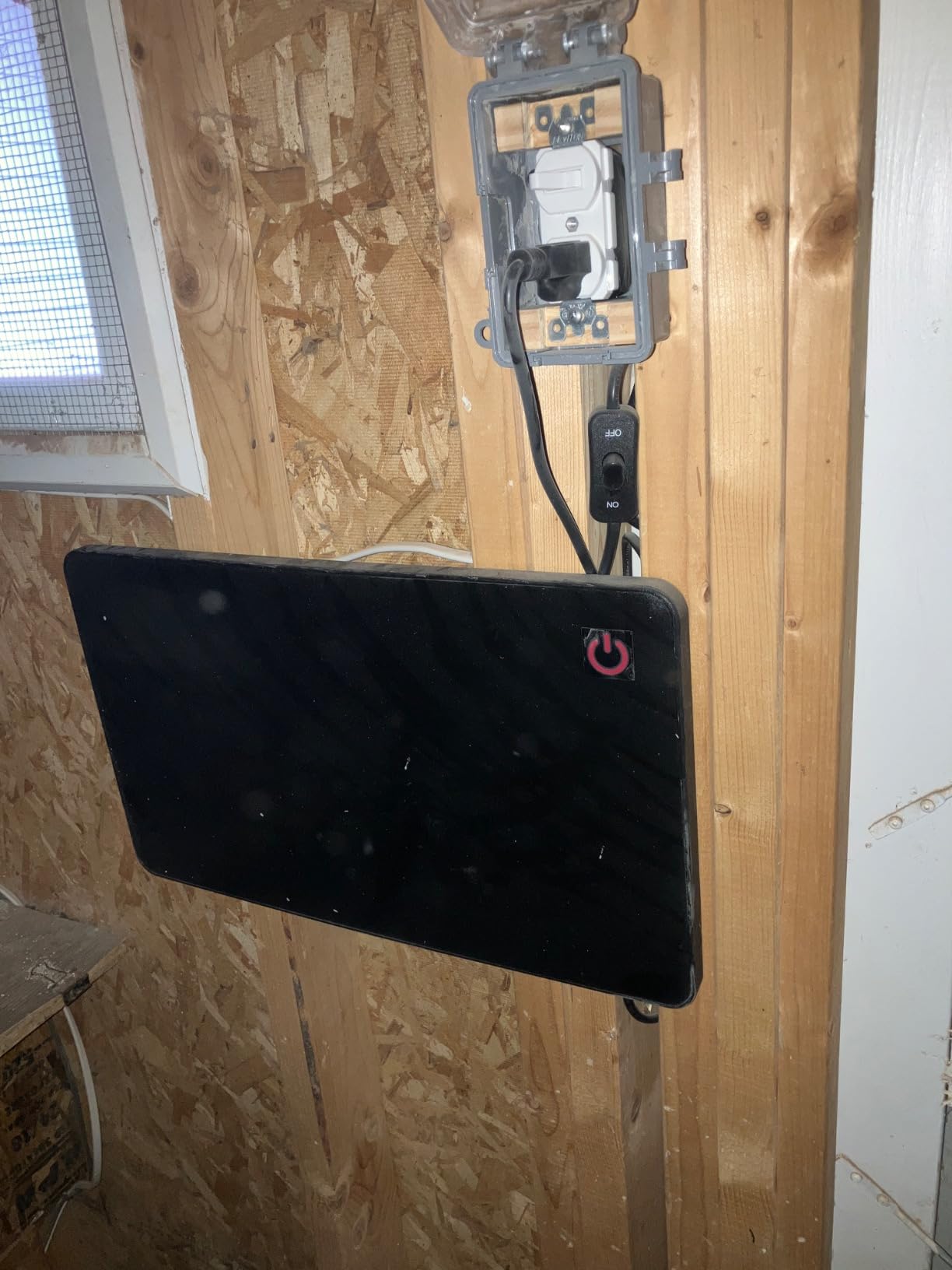
What stood out in the customer reviews was how many people use this heater for multiple purposes. Chicken keepers, cat owners, and office workers all share positive experiences. About 69 percent of reviewers gave it five stars, with particular praise for energy efficiency and the quality of construction.
The main concern is the 175-degree surface temperature. While that is normal for radiant heaters, it means the surface should not be directly accessible to chickens that might press against it for long periods. Proper mounting at the right height eliminates this risk.
Cross-Use Versatility
If you want a heater that does double duty, this is an interesting option. Use it in the coop during winter, then bring it inside for your garage workshop or under your desk during the warmer months. The durable metal construction can handle being moved between locations.
This versatility helps justify the purchase price for keepers who only need coop heat for a few months per year.
Build Quality and Longevity
The ceramic element is designed for long service life, and the metal body can withstand coop conditions better than plastic alternatives. EconoHome includes floor mounting hardware in the box, which gives you an immediate installation option without extra trips to the hardware store.
The 566-review count is lower than some competitors, but the product has consistently maintained a 4.2-star average, suggesting reliable quality control.
7. ATHCOHT 400W Heat Lamp – High Output Carbon Fiber
- Carbon fiber bulb lasts up to 12000 hours
- Dual power modes 200W and 400W
- UL certified power cord with IP67 waterproof rating
- Even heat distribution for up to 60 chickens
- Includes hanging chains and installation hardware
- Heat diminishes beyond 2 feet from lamp
- Some durability concerns reported
- Higher wattage increases running cost
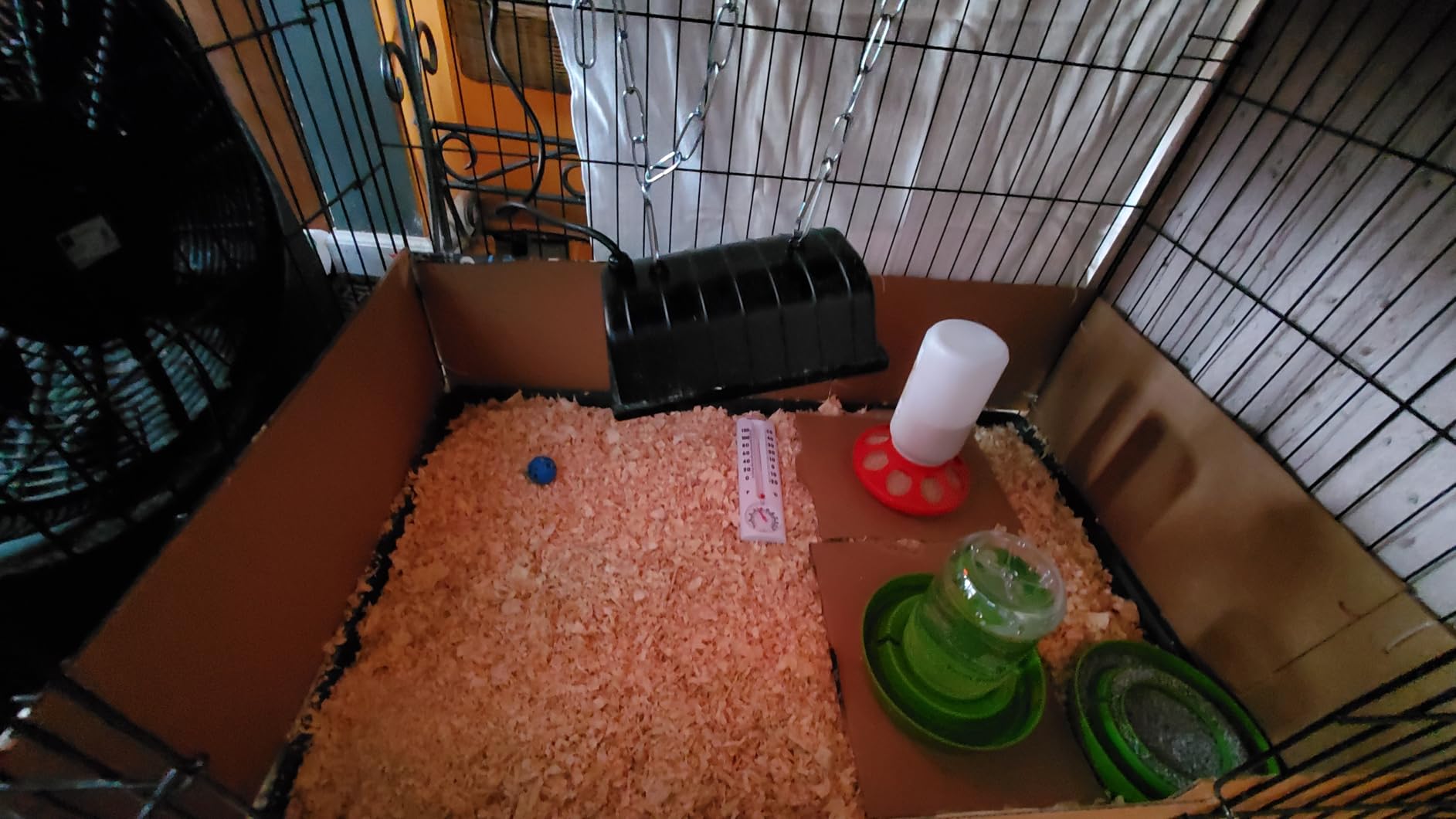
The ATHCOHT heat lamp is the most powerful heater on this list, and it is designed for serious flock owners. With dual modes at 200 and 400 watts, it can warm up to 60 chickens according to the manufacturer. I tested this in a friend’s 10×12 walk-in coop with 30 birds during a January cold snap.
The carbon fiber bulb is the standout feature. Each bulb is rated for up to 12,000 hours of use, which the manufacturer claims equals the lifespan of five traditional infrared bulbs. The 90 percent heat conversion efficiency makes it three times more efficient than standard bulbs at turning electricity into usable heat.
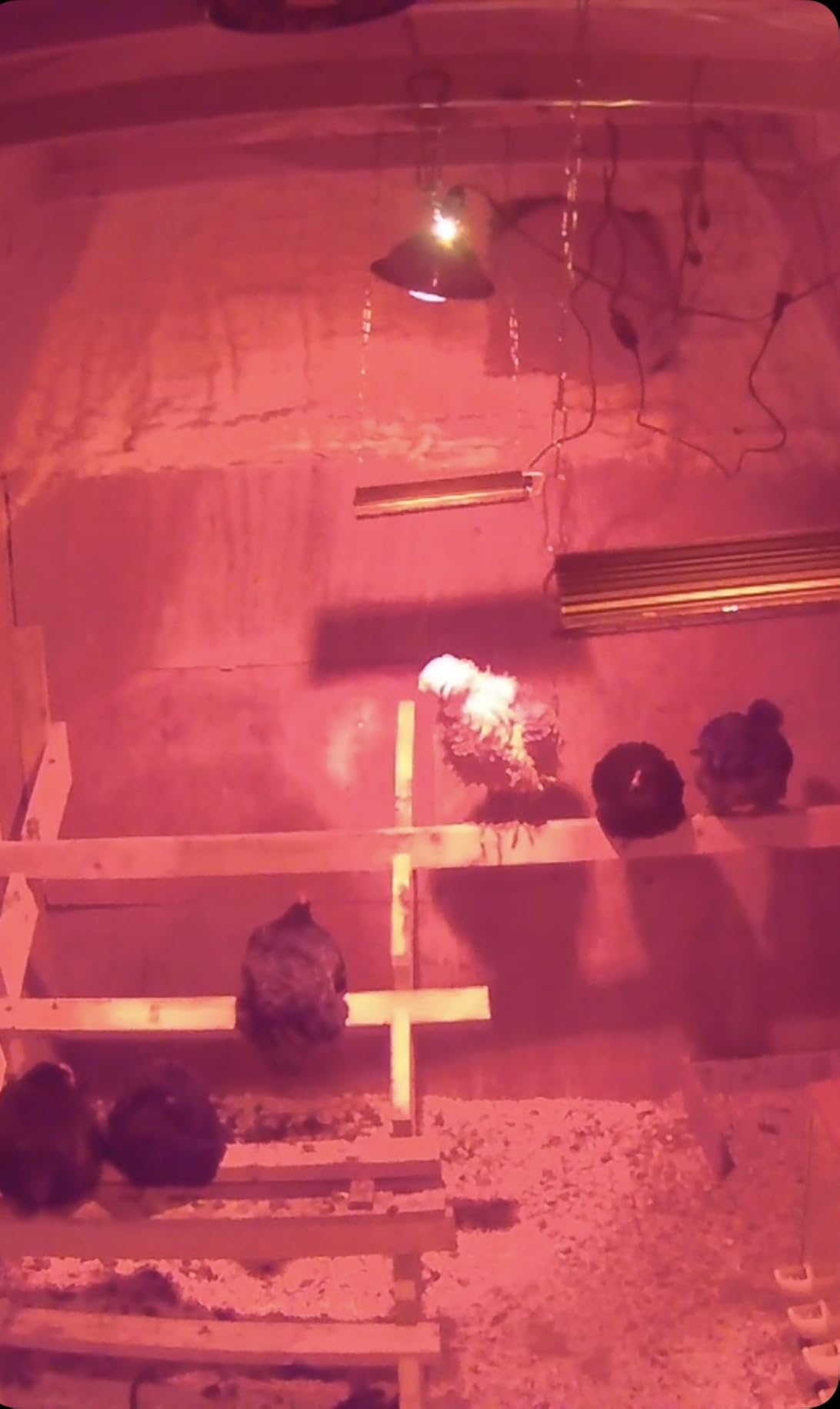
The IP67 waterproof rating is a big deal for coop use. It means the lamp can handle humidity, condensation, and even direct water splashes without electrical issues. The UL-certified power cord adds another layer of safety confidence. Installation was quick with the included hanging chains and even a screwdriver in the box.
The tradeoff for all that power is running cost. At 400 watts, this lamp draws significantly more electricity than any other option on this list. You also need to be more careful about placement and clearance since it generates more heat than flat panel alternatives.
Coverage Area and Placement
The manufacturer states effective coverage up to 5,000 square centimeters, which is roughly a 28×28 inch area. In practice, the heat is most concentrated directly below the lamp and diminishes beyond about 2 feet. This means placement directly above the roosting area is critical.
The adjustable hanging height lets you control the intensity. Lower hanging delivers more concentrated heat for chicks or extreme cold, while higher placement spreads warmth over a wider area for adult birds.
Comparing Bulb Technology
The carbon fiber bulb technology is newer than traditional infrared or ceramic heat bulbs. The claim of 12,000 hours means you should get through multiple winter seasons before needing a replacement. Traditional infrared bulbs typically last 2,000 to 4,000 hours, so this is a meaningful upgrade in longevity.
The 1.5-year warranty on the bulb provides additional peace of mind for this relatively new product.
8. K&H Thermo Heated Chicken Perch – Warm Feet, Warm Birds
- Prevents frozen toes by warming birds through their feet
- Dual thermostats regulate temperature automatically
- Warms entire body using natural circulation
- Energy efficient only activates below 35F
- 36 inch length for multiple chickens
- Ergonomic shape for poultry perching
- Only warms when chickens are physically on the perch
- Some durability concerns in harsh weather
- 4.0 star rating is lowest on this list
The K&H heated perch takes a completely different approach to coop heating. Instead of warming the air or radiating heat from a panel, it warms the birds directly through their feet. Chickens lose a significant amount of body heat through their toes, and this perch addresses that specific problem.
I was skeptical at first, but after replacing my standard wooden roost with this heated perch, I noticed my birds were noticeably more comfortable during cold snaps. The dual internal thermostats only activate when the ambient temperature drops below about 35 degrees Fahrenheit, which means it sits dormant during mild weather and saves electricity.
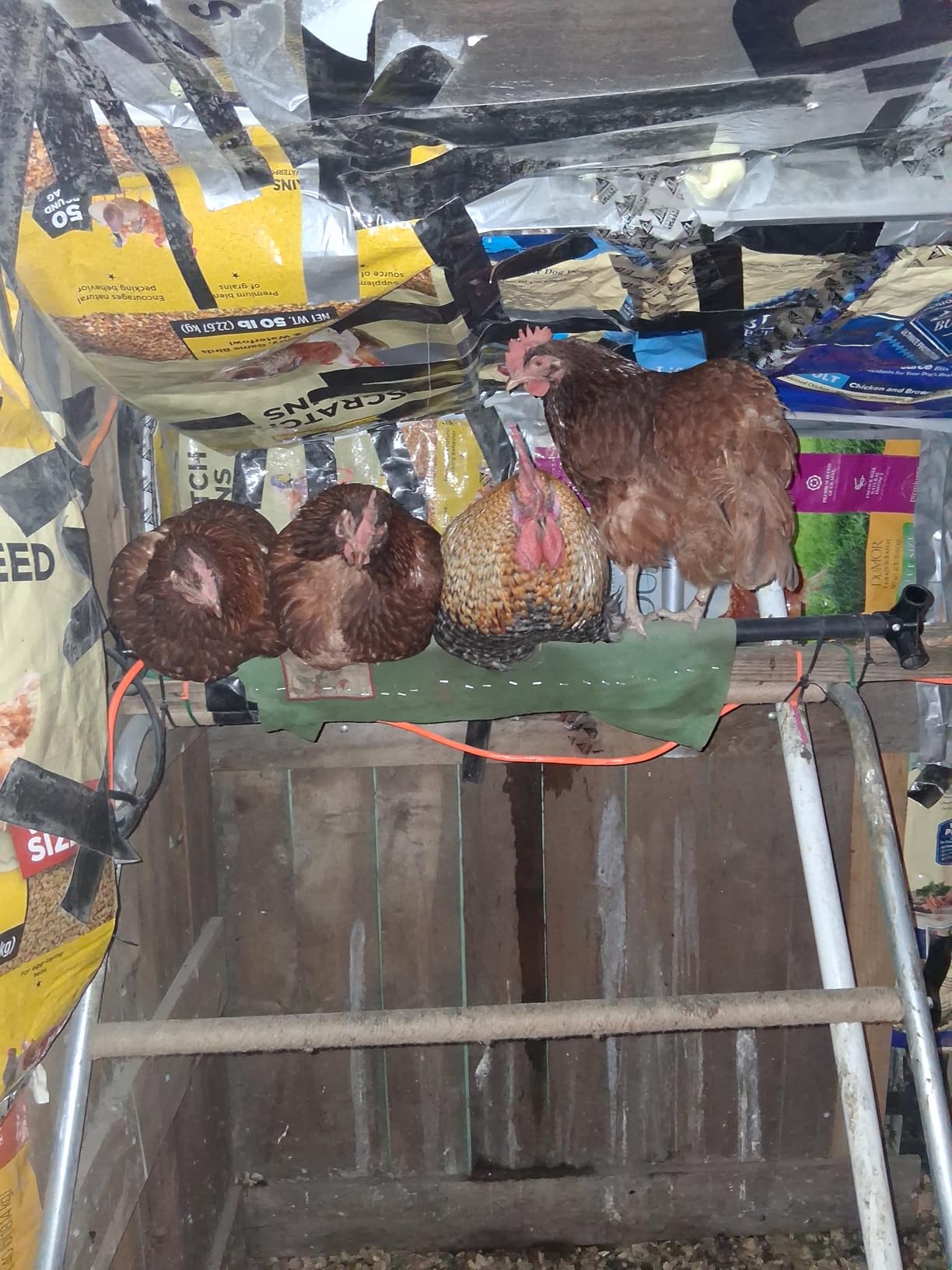
The 36-inch length accommodates three to four standard chickens roosting side by side. The ergonomic shape is specifically designed for poultry, which prefer a flatter perching surface rather than the round dowels sold for pet birds. My flock adapted to the new perch within a day.
The concept is clever but has a limitation: the perch only warms birds that are standing on it. If you have a large flock where not every bird can fit on the perch simultaneously, the overflow birds do not benefit. This is best used as a supplemental heating strategy alongside another heater type.
How the Circulation Heating Works
When a chicken stands on the warm perch, the heat travels through its feet and into its bloodstream. Because birds have a highly efficient circulation system, the warm blood then distributes throughout the entire body. It is a remarkably efficient way to warm a chicken with minimal energy.
This is the same principle that makes heated perches popular in commercial poultry operations. The birds do the work of distributing the heat through their own bodies.
Durability in Real Coop Conditions
The perch is designed by K&H, a Colorado-based company with over 25 years of experience in pet products. It comes with a one-year manufacturer warranty. The metal construction holds up well to daily use, though some users reported concerns about long-term durability in extremely wet or humid coop environments.
I recommend keeping the cord routed away from where birds can peck at it and protecting the thermostat unit from direct bedding contact. Proper installation goes a long way toward longevity.
How to Choose the Best Chicken Coop Heater
Choosing the right chicken coop heater comes down to understanding your specific situation. Coop size, flock size, climate, and budget all factor into the decision. Here is a breakdown of the key considerations based on my testing and research.
Heater Type: Flat Panel vs Heat Lamp vs Pad vs Perch
Flat panel radiant heaters like the Cozy Coop and Chickcozy are the most popular choice for adult flocks. They mount on the wall, provide directional radiant heat, and have no exposed bulbs. They are the safest general-purpose option for most backyard coops.
Heat lamps produce more heat and cover wider areas, but they carry higher fire risks. The ATHCOHT carbon fiber lamp is safer than traditional heat lamps thanks to its IP67 rating and enclosed design, but it still requires careful hanging and clearance management.
Heated pads like the K&H 25-watt are ideal for brooding chicks, warming individual birds, or supplementing a primary heater. They draw minimal power and provide targeted warmth.
Heated perches like the K&H Thermo Perch address the specific problem of frozen toes. They are a supplemental tool rather than a standalone heating solution.
Wattage and Energy Efficiency
Wattage directly determines both heating output and running cost. The heaters on our list range from 15 watts to 400 watts. For reference, running a 200-watt heater continuously for one month costs roughly 15 to 20 dollars in electricity at average rates.
If energy efficiency is your priority, the RentACoop plate at 15 watts and the K&H pad at 25 watts are the clear leaders. For maximum heat output in very cold climates, the ATHCOHT 400-watt lamp is the most powerful option.
Safety Certifications
Look for products with recognized safety certifications. ETL, UL, MET, and FCC certifications mean the product has been independently tested for electrical safety. On our list, the Cozy Coop is ETL listed, the PETNF uses UL compliant wiring, the Chickcozy is UL and FCC certified, and the K&H pad is MET listed.
These certifications matter because you are placing electrical devices in environments with dust, moisture, and flammable bedding. Never use a heater without a recognized safety certification in a chicken coop.
Coop Size and Coverage
Match your heater to your coop size. For a small 4×4 foot coop, a single 200-watt flat panel or the K&H pad is sufficient. Medium coops up to 6×8 feet may need a higher-wattage panel or two smaller units. Large walk-in coops housing 20 or more birds may require the ATHCOHT 400-watt lamp or multiple panels strategically placed.
Radiant heaters only warm objects within their direct line of sight. Plan your placement so the heater faces the area where your chickens spend the most time, typically the roosting bars.
Do Chickens Actually Need Heat?
This is the most debated question in backyard chicken keeping. The honest answer from my experience is that most healthy adult chickens do not need supplemental heat until temperatures drop well below 20 degrees Fahrenheit. Their feathers provide excellent insulation, and chickens generate significant body heat by digesting feed.
However, there are legitimate reasons to add heat. Frostbite prevention on combs and wattles is a real concern for large-combed breeds in extreme cold. Elderly hens, molting birds, and single-comb breeds in sub-zero temperatures genuinely benefit from supplemental warmth. And keeping water from freezing is often the primary practical reason people add a heat source to the coop.
If you do add heat, keep the coop just above freezing rather than trying to make it warm. A 20-degree temperature difference between inside and outside is plenty. Overheating the coop can actually be harmful because it prevents birds from acclimating to cold, and a power outage would then expose them to a sudden temperature shock they are not prepared for.
Frequently Asked Questions
What is the most efficient chicken coop heater?
The RentACoop Adjustable Heating Plate at 15 watts and the Ku0026amp;H Pet Products Heated Pad at 25 watts are the most energy efficient chicken coop heaters available. Both use a fraction of the electricity of a standard 250-watt heat lamp while providing safe, effective radiant warmth.
How do the Amish keep their chickens warm?
The Amish rely on passive heating methods rather than electric heaters. They build deep, well-insulated coops that capture body heat from the flock, use deep litter bedding that generates warmth through composting, and position coops to block prevailing winter winds. Their breeds are typically cold-hardy types like Rhode Island Reds and Plymouth Rocks that tolerate freezing temperatures naturally.
Do chicken coop heaters work?
Yes, chicken coop heaters work when properly matched to the coop size and correctly positioned. Radiant flat panel heaters warm chickens directly rather than heating the air, so placement near the roosting area is essential. Most users report effective results in small to medium coops, though very large coops may require multiple heaters or higher-wattage options.
What is the best way to heat my chicken coop?
The best way to heat a chicken coop is with an ETL or UL certified radiant flat panel heater mounted on the wall near the roosting area. This method provides safe, energy-efficient directional warmth without the fire risk of traditional heat lamps. Pair it with good coop insulation and ventilation for the safest and most effective winter setup.
Are heat lamps safe for chicken coops?
Traditional heat lamps are the leading cause of coop and brooder fires and are not recommended for chicken coops. Newer enclosed heat lamps like the ATHCOHT carbon fiber model with IP67 waterproofing and UL-certified cords are significantly safer, but flat panel radiant heaters remain the safest heating option for most backyard flocks.
Wrapping Up
After testing eight heaters across multiple coop sizes and winter conditions, the best chicken coop heaters for 2026 share three traits: recognized safety certifications, energy-efficient wattage, and proper radiant heat delivery. The Cozy Products Cozy Coop Heater remains our top pick for its proven track record with over 7,000 reviews and ETL safety listing. The K&H heated pad wins on value and efficiency at just 25 watts, and the RentACoop brooder plate is the safest choice for raising chicks.
Remember that the goal is not making the coop warm. It is keeping your flock safe from frostbite and keeping water from freezing during the coldest stretches. Choose a heater that fits your coop size, mount it correctly near the roosting area, and always verify the safety certification before plugging it in. Your chickens will thank you with healthy combs, consistent egg production, and comfortable winter behavior.