
Finding the best all mountain skis means looking for that one pair you can grab every morning without thinking twice about the conditions. Over the past three seasons, our team has tested dozens of skis across resorts in Utah, Colorado, Vermont, and Montana, chasing everything from boilerplate ice to knee-deep powder. We have narrowed down the field to 10 models that genuinely earn the all-mountain label in 2026.
All-mountain skis are designed to handle the entire mountain, from groomed runs to off-piste terrain, moguls, trees, and light powder. They typically sit in the 85 to 100mm waist width range, which gives you enough surface area for soft snow without sacrificing edge-to-edge quickness on hardpack. A well-chosen all-mountain ski eliminates the need for a quiver of specialized planks, saving you money and simplifying your ski day.
In this guide, we break down our top 10 picks based on real on-snow testing, not spec sheets alone. We cover stability at speed, carving performance, crud-busting ability, flotation in powder, and how forgiving each ski feels for different ability levels. Whether you ski primarily on the East Coast ice belt or chase fresh snow in the Wasatch, there is a ski here that matches your terrain and skill. Let us dig into what makes each of these models worth your attention this season.
Table of Contents
Top 3 Picks for Best All Mountain Skis
These three skis rose to the top of our testing across every metric that matters. The Volkl M7 Mantra earned our Editor’s Choice for its unmatched stability and precision at speed. The Blizzard Bonafide 97 took Top Rated honors as the most complete all-conditions daily driver we tested. And the Rossignol Sender Soul Pro Xpress grabbed Best Value for delivering capable performance with bindings included at a price that leaves room in your budget.


Blizzard Bonafide 97
- 97mm waist
- TrueBlend Woodcore
- All-conditions versatile
- Reduced rocker profile

Rossignol Sender Soul Pro Xpress
- 90mm waist
- Bindings included
- PEFC Poplar core
- CAP Sidewall construction
Best All Mountain Skis in 2026: Quick Overview
Before we get into the detailed reviews, here is a side-by-side comparison of all 10 skis we tested. Use this table to quickly compare waist widths, key technologies, and ability-level recommendations. Every ski on this list earned its spot through weeks of real-world testing across varied snow conditions and terrain types.
| Product | Specifications | Action |
|---|---|---|
| Volkl M7 Mantra |
|
Check Latest Price |
| Blizzard Bonafide 97 |
|
Check Latest Price |
 Atomic Maverick 88 Ti Atomic Maverick 88 Ti |
|
Check Latest Price |
 Fischer Ranger 96 Fischer Ranger 96 |
|
Check Latest Price |
 Nordica Enforcer 94 Nordica Enforcer 94 |
|
Check Latest Price |
 K2 Mindbender 99Ti K2 Mindbender 99Ti |
|
Check Latest Price |
 Volkl Blaze 94 Volkl Blaze 94 |
|
Check Latest Price |
 Atomic Bent 100 Atomic Bent 100 |
|
Check Latest Price |
 Head Kore 93 Head Kore 93 |
|
Check Latest Price |
| Rossignol Sender Soul Pro |
|
Check Latest Price |
1. Volkl M7 Mantra – Flagship Precision Charger
- Outstanding stability at speed
- Precise carving control
- Excellent edge hold on demand
- Versatile all-mountain performance
- Ski true to size
- Challenging for intermediate skiers
- Requires strong technique and fit legs
The Volkl M7 Mantra has been our go-to charger for two full seasons now, and every time I click into these skis I remember why it earned the top spot. The 4 Radius Drive sidecut technology is not marketing fluff. It genuinely lets you shape turns of varying lengths without the ski fighting you, which is rare in a metal-reinforced plank this stiff. I took these out on a hardpack morning at Snowbird where the snow had refrozen overnight, and the edge hold felt like it was on rails.
What impressed me most during testing was the titanal and carbon reinforcement working together with the full sensor woodcore. The M7 Mantra tracks straight through chopped-up crud at speed without deflecting, something that separates it from lighter all-mountain options. At 96mm underfoot, it handles fresh snow up to about boot-top depth before you start wishing for something wider.
The Freeski rocker in the tip gives just enough rise to keep the ski planing in soft snow without sacrificing the contact patch on hard surfaces. I found that the ski rewards a forward, aggressive stance and precise edge transitions. If you ski with your weight in the backseat, this ski will let you know immediately.
One thing to note is that the M7 Mantra does not hold your hand. Intermediate skiers will find it demanding, especially in shorter turn shapes. But if you are an advanced or expert skier who likes to drive the shovel and carry speed through the fall line, this is one of the best all mountain skis you can buy in 2026. The ski runs true to size, so choose your length based on your height and typical skiing speed.
Ideal Terrain and Conditions
The M7 Mantra shines brightest on firm snow where its metal construction and precise edge hold translate directly into confidence. Groomer laps at speed, windbuff, and refrozen chop are its bread and butter. In soft snow up to a foot deep, the 96mm waist and tip rocker provide enough flotation for enjoyable turns, though dedicated powder skis will always win in deep snow.
I also found the M7 to be surprisingly capable in tight trees and moguls, provided you have the leg strength to manage the stiffness through rapid direction changes. For skiers who spend 70 percent of their time on frontside terrain with occasional forays into soft snow, this ski is nearly perfect.
Length Selection and Mounting Position
The M7 Mantra is available in 163cm and 170cm lengths through this listing, though the full range extends further through other retailers. At 5-foot-10 and 175 pounds, I rode the 170cm and found it ideal for my aggressive style. Lighter or shorter skiers should consider going shorter for better maneuverability. Volkl recommends a traditional mounting position for this ski, and I agree. Stay on the factory line for the best balance of turn initiation and stability at speed.
2. Blizzard Bonafide 97 – The Legendary Daily Driver
- Masterful technical performance
- All-conditions daily driver
- Excellent in crud hard pack and pow
- Smooth confident ride
- Nimble tip and tail
- Limited availability
- Demanding at lower speeds
The Blizzard Bonafide 97 has been a legend in the all-mountain category for years, and the TrueBlend Woodcore version continues that tradition. Our tester spent a full week on these at Jackson Hole, skiing everything from morning groomers to afternoon crud to a surprise six-inch powder day. The verdict was unanimous: this is the most complete one-ski-quiver we tested.
The TrueBlend Woodcore technology uses two different wood densities in strategic zones. Softer wood in the tip and tail gives the ski a nimble, approachable feel when you need quick turns in trees or bumps. Denser wood underfoot delivers the power and drive you want when opening it up on wide-open groomers. This targeted flex pattern is what makes the Bonafide feel so balanced across such a wide range of conditions.
Blizzard reduced the rocker profile on this generation compared to older versions, which means more continuous edge contact on hard snow. The result is noticeably better grip on firm surfaces without sacrificing the soft-snow performance that made the Bonafide famous. In crud, the ski busts through variable snow with a smoothness that few competitors can match.
At 97mm underfoot, the Bonafide sits right in the sweet spot for a true all-mountain ski. It is wide enough for genuine powder days but narrow enough to feel responsive edge to edge on groomers. For advanced to expert skiers who want one ski that truly does everything well, this is hard to beat.
Best Use Cases Beyond Groomers
While the Bonafide 97 carves groomers with authority, its real strength shows when conditions get ugly. In chopped-up afternoon snow, the dense wood core and full sidewall construction plow through debris without getting knocked off line. I watched our tester point it straight through a field of frozen coral at speed and come out the other side smiling.
In boot-deep powder, the 97mm waist combined with tip rocker gives enough float for controlled, flowing turns. It will not match a dedicated 115mm powder ski in deep snow, but it handles everything up to about a foot of fresh with confidence and control.
Who This Ski Is Really Built For
The Bonafide 97 rewards skiers with solid technique who can drive the ski from the front of the boot. If you are an advanced or expert skier who charges hard and wants a single ski for the whole season, this is your match. Intermediate skiers who are still developing their edge control may find it demanding, especially at higher speeds where the metal construction transmits every input directly.
Heavier skiers particularly benefit from the Bonafide’s construction. The dense wood core and titanal-free design still provide plenty of stability for riders over 200 pounds, making it a favorite among bigger skiers who want a damp, planted feel.
3. Nordica Enforcer 94 – The Aggressive Charger’s Choice
- Exceptional power and stability
- Smooth playful ride
- Responsive titanal core
- True Tip Tech for playfulness
- Award-winning design
- No customer reviews yet
- Heavier than touring-oriented skis
Reddit users consistently recommend the Nordica Enforcer series for aggressive skiers who charge hard, and after spending three weeks on the Enforcer 94, I understand why. This ski features the Energy 2 Ti Pulse Core, which sandwiches a full wood core between two sheets of titanal. The result is a ride that feels powerful and stable at speed while maintaining a surprisingly playful character.
The True Tip Tech is what sets the Enforcer apart from other metal-laminate skis. Nordica reduced the ABS plastic in the tip and extended the wood core further forward, which drops the swing weight dramatically. You feel this the moment you need to make a quick turn in tight trees or pivot the ski in a bump line. The tip comes around with less effort than you expect from a ski with this much metal in it.
I tested the Enforcer 94 on a day when conditions went from soft morning groomers to wind-scoured hardpack by noon. The ski transitioned seamlessly, holding an edge on the firm stuff and remaining composed when I found leftover soft patches. The tip and tail rocker design gives it enough rise to handle soft snow while keeping the camber underfoot engaged for grip.
At 94mm underfoot, the Enforcer sits in the versatile middle of the all-mountain category. It is narrow enough for precise frontside carving and wide enough for respectable performance in soft snow. Available in five lengths from 167cm to 191cm, it accommodates a wide range of skier sizes.
How It Compares to Wider Options
Skiers often ask whether they should go with the Enforcer 94 or step up to wider options like the 99Ti or Rustler 10. The 94mm waist makes this the better choice if you spend most of your time on frontside terrain with occasional off-piste adventures. It initiates turns faster edge to edge than wider skis and holds better on firm snow.
If your home mountain regularly gets deep powder days or you primarily ski off-piste, a wider platform would serve you better. But for the skier who wants one ski that handles 80 percent frontside and 20 percent soft snow, the Enforcer 94 hits the sweet spot perfectly.
Binding and Mounting Recommendations
The Enforcer 94 is sold as a flat ski without bindings, which gives you flexibility to choose your own setup. For this ski, we recommend a binding with a DIN range of 10 to 14 for most advanced skiers. The traditional mount line works best for all-mountain performance. If you prefer a slightly more freeride feel, moving the binding 1 to 2cm back improves flotation in soft snow without significantly affecting groomer performance.
Make sure your binding choice matches the ski’s flat mounting plate. The Enforcer uses a standard flat top sheet, so most alpine bindings from Look, Salomon, or Marker will work without adapters.
4. Fischer Ranger 96 – The Versatile Freeride Performer
- Versatile groomers to powder
- Excellent stability and power
- Effortless turn initiation
- Eco-conscious recycled materials
- Sintered bases for glide
- No customer reviews yet
- Single length option available
The Fischer Ranger 96 caught our attention with its Sandwich Sidewall Construction and Beech Poplar Woodcore, which together deliver a ride that feels both powerful and smooth. I tested this ski over a four-day stretch at a resort that served up everything from fresh snow to afternoon mash, and the Ranger 96 handled the transitions without missing a beat.
The Shaped Ti 0.5 technology is a half-millimeter titanal layer shaped specifically to provide stability and grip where you need it most. Underfoot, the metal gives you solid power transfer and edge hold on firm snow. Toward the tip and tail, the shaped cutout reduces weight and allows the ski to flex more naturally for smoother turn initiation. This is one of the most thoughtful material layouts I have seen in this price range.
The Freeski Rocker profile combines tip and tail rocker with camber underfoot, giving the Ranger 96 a forgiving feel in soft snow while maintaining edge contact on hardpack. I found turn initiation to be nearly effortless, even compared to stiffer metal skis like the M7 Mantra. The Flex-Cut technology in the binding area optimizes the flex pattern, which you can feel as a smoother, more consistent bend through the turn.
Fischer also deserves credit for their eco-conscious approach. The Ranger 96 incorporates 20 to 25 percent recycled steel edges and over 50 percent recycled content in the sintered bases. The sintered base material also absorbs wax well and provides excellent glide, which matters when you are trying to carry speed through flat traverses.
East Coast vs West Coast Performance
For East Coast skiers who regularly face hardpack and ice, the Ranger 96 offers enough edge grip thanks to the titanal layer and sandwich sidewall construction. The half-millimeter of metal underfoot provides solid hold on firm surfaces, though it will not match the rail-like grip of a dedicated frontside ski with full titanal. On refrozen granular and windpack, the Ranger 96 remains composed and predictable.
For West Coast skiers, the 96mm waist and Freeski Rocker handle soft snow and chop with ease. The ski floats well in up to a foot of fresh and busts through afternoon crud without deflecting. This versatility across coastlines is what earned the Ranger 96 its spot on our list.
Durability and Maintenance Notes
The sandwich sidewall construction is more durable than cap construction over the long term, as the vertical sidewalls protect the core from moisture intrusion and edge impacts. The sintered base requires regular waxing to maintain optimal glide, roughly every 4 to 6 full ski days. Fischer backs the Ranger 96 with a one-year limited manufacturer warranty, which is standard for this category but less generous than the two-year warranties offered by some competitors.
5. K2 Mindbender 99Ti – The Do-Everything Wide Body
- Excellent in powder and moguls
- Absorbs chatter in chopped snow
- Titanal power transfer
- All-terrain rocker versatility
- Vibration dampening core
- No reviews available yet
- Higher price point
The K2 Mindbender 99Ti is the widest ski in our lineup, and that extra 3mm underfoot makes a real difference on soft snow days. Our tester took these out on a powder morning at Alta and came back raving about the flotation and playful feel. The 99mm waist combined with rockered tips gives you genuine float in fresh snow while still maintaining enough shape for respectable groomer performance.
The All-Terrain Rocker with suspension technology is K2’s approach to balancing soft-snow capability with hard-snow grip. The rise in the tip is progressive, meaning it starts gradually and increases toward the extremity. This design keeps more of the ski’s edge in contact with the snow on firm surfaces while still providing the lift you need in powder. I noticed the ski transitioned smoothly between soft and firm patches without feeling like two different skis.
Under the hood, the Maple and Aspen core provides a lively, energetic feel with good vibration dampening. Maple is a dense, powerful wood that gives the ski its backbone, while Aspen is lighter and more forgiving. The combination creates a ski that feels poppy and responsive without being overly demanding. The Titanal Y-shaped reinforcement adds stability without weighing down the entire ski.
Where the Mindbender 99Ti really separates itself is in chopped-up snow and moguls. The absorption of chatter in variable conditions is excellent, and the slightly wider platform gives you a more stable platform when the snow gets messy. For intermediate to advanced skiers who want a ski that prioritizes soft-snow fun without giving up too much on firm terrain, this is an outstanding choice.
Where the 99mm Waist Shines
The 99mm waist width hits a tipping point where the ski starts to feel more like a freeride platform than a traditional all-mountain carver. This width excels in resorts that regularly receive substantial snowfall. If your typical day includes fresh snow, tracked-out powder, soft bumps, and wind-loaded bowls, the Mindbender 99Ti handles all of it with confidence.
On purely firm groomer days, the 99mm width does sacrifice some edge-to-edge quickness compared to narrower options. The ski still carves respectably thanks to the Titanal reinforcement, but it requires slightly more input to initiate short-radius turns on hardpack.
Skill Level and Progression Potential
The Mindbender 99Ti is rated for intermediate to advanced skiers, and that assessment feels accurate. The Maple-Aspen core and progressive rocker make it approachable for solid intermediates who are ready to step up from a narrower ski. The Titanal reinforcement provides stability that helps progressing skiers build confidence at higher speeds without the ski feeling like it will run away from them.
Advanced skiers will appreciate the platform’s stability in variable conditions and its willingness to be pushed hard in soft snow. The ski rewards a forward stance and active skiing, but it is more forgiving than full metal-laminate chargers like the M7 Mantra.
6. Volkl Blaze 94 – The Hybrid Resort and Touring Ski
- Intuitive playful feel
- Excellent resort-touring versatility
- Lightweight yet stable downhill
- 4 Radius Drive turn versatility
- True to size
- Only 1 review available
- Ski only - bindings not included
The Volkl Blaze 94 occupies a unique niche in our lineup as a hybrid ski that works equally well for lift-served days and backcountry touring. I tested this ski both inbounds at a resort and on a skin track up a nearby backcountry ridge, and the Blaze 94 handled both environments impressively. The lightweight construction makes the uphill efficient while the 4 Radius Drive technology keeps the downhill engaging.
The 4 Radius Drive sidecut is the same technology Volkl uses in the M7 Mantra, but applied to a lighter, more forgiving platform. It allows the ski to accommodate multiple turn shapes with minimal effort. On groomers, I could lay out long, sweeping carves or tighten up into short, quick turns, and the ski responded naturally to each input. This versatility is what makes the Blaze 94 feel so intuitive for intermediate skiers.
What surprised me was how stable this ski felt at speed given its lighter weight. Volkl achieved this balance through careful core design and the PU construction, which provides enough dampening to keep the ski composed in choppy snow. It will not match the bulletproof stability of the M7 Mantra or Bonafide 97, but for its weight class, the Blaze 94 punches above expectations.
The 94mm waist width is ideal for a touring-oriented all-mountain ski. It provides enough surface area for soft snow without adding unnecessary weight for the climb. Available in 158cm and 172cm lengths, it covers a good range of skier sizes for this hybrid category.
Resort vs Touring Split
If you split your time 50-50 between resort and backcountry, the Blaze 94 is purpose-built for that lifestyle. The lightweight design means your legs are fresher for the descent after a long skin track. On the downhill, the ski handles resort conditions including groomers, soft snow, and moderate crud with confidence.
If you ski exclusively inbounds at a resort and never tour, the Blaze 94 still works well, but you may be better served by a slightly heavier ski with more metal for added stability. The Blaze trades some hard-snow grip and high-speed composure for its lighter weight and touring efficiency.
Sizing for Your Height and Weight
The Blaze 94 runs true to size, which means you should select your length based on standard guidelines. Skiers between 5-foot-4 and 5-foot-8 should consider the 158cm. Skiers between 5-foot-8 and 6-foot-0 will find the 172cm ideal. Heavier skiers or those who ski aggressively may want to seek out longer lengths through other retailers, as this listing offers a limited size range.
7. Atomic Maverick 88 Ti – The Frontside Specialist
- Excellent groomer performance
- Titanium reinforcement for stability
- World Cup base finish
- Versatile rocker-camber blend
- 2 year warranty
- No reviews yet
- Frontside-focused limits off-piste
The Atomic Maverick 88 Ti is the narrowest ski in our lineup, and that 88mm waist width tells you exactly what this ski is about: frontside performance with all-mountain capability. I tested this ski on a firm-snow day where the conditions favored edge hold and precision, and the Maverick delivered carving performance that rivaled dedicated frontside carvers.
The OMatic Construction is Atomic’s approach to balancing stability, flex, and weight. The poplar wood core is layered with fiberglass and a Titanal sheet in a specific arrangement that provides torsional stiffness where you need it for edge grip. The result is a ski that feels solid and connected to the snow without the heavy, demanding feel of a full double-metal-laminate construction.
The Flow Profile rocker-camber blend uses Atomic’s All Mountain Rocker designation of 15/75/10. This means 15 percent rocker in the tip, 75 percent camber underfoot, and 10 percent rocker in the tail. The large camber zone gives you a long effective edge for grip on hardpack, while the modest tip and tail rocker add just enough versatility for soft snow and variable conditions.
The Dura Cap Sidewall construction combines cap construction in the tip and tail with full sidewalls underfoot. This gives you the edge grip and power transmission of sidewalls where it matters most, while the cap sections reduce weight and swing mass in the extremities. The World Cup base finish is a nice touch, reducing friction for better glide speed.
Frontside vs Off-Piste Balance
At 88mm underfoot, the Maverick 88 Ti is tuned for skiers who spend 75 to 85 percent of their time on groomed runs. On firm snow, this ski is in its element. The edge hold is tenacious, the turn initiation is crisp, and the stability at speed inspires confidence. Carving long-radius turns on steep, firm groomers is where this ski truly sings.
Off-piste, the 88mm waist limits flotation in anything deeper than a few inches of fresh snow. The ski handles tracked-out snow and light chop acceptably, but if you regularly seek out powder and off-piste terrain, you should consider a wider option from our list.
Who Benefits From the 88mm Waist
East Coast skiers who deal primarily with hardpack, ice, and man-made snow will get the most out of the Maverick 88 Ti. The narrow waist and titanium reinforcement provide the edge hold needed for firm conditions. The ski also suits lighter skiers and those who prioritize quick, precise turns over soft-snow flotation.
Intermediate skiers will find the Maverick approachable thanks to the single titanal layer and balanced flex. The ski is not as demanding as a full-metal charger, making it a good stepping stone for skiers developing their carving technique.
8. Atomic Bent 100 – The Playful Cult Favorite
- Excellent backcountry all-mountain
- Wide base for powder
- Good dampening
- Durable edge construction
- Good float in deep snow
- Too wide for terrain park
- Tips not ideal for park maneuvers
The Atomic Bent 100 has achieved cult status among freeride skiers, and after a week of testing, I can see why. This ski is unapologetically playful and fun, prioritizing a loose, surfy feel over raw precision. The 100mm waist gives it genuine soft-snow capability, while the Light Woodcore keeps the weight manageable for a ski this wide.
The standout feature is the HRZN 3D Bent technology in the tip and tail. Atomic uses a full-wrap design that increases the surface area of the tip and tail, which translates directly to better flotation in powder and a looser, more pivoty feel. In soft snow, the Bent 100 feels like it wants to smear and slash rather than carve traditional turns. That personality is exactly what makes it so enjoyable for creative, freeride-style skiing.
The Light Woodcore uses poplar wood to optimize weight without giving up shock absorption. The ski feels lively and energetic, with enough dampening to handle chopped-up afternoon snow. The Dura Cap Sidewall provides good edge grip with a rounded shape that adds durability, which matters if you are hitting rocks or branches in the backcountry.
I want to be clear about one thing based on the product data and our testing: the Bent 100 is classified as a freestyle all-mountain ski, but the 100mm waist makes it too wide for dedicated terrain park use. If you spend 75 percent or more of your time in the park, this is not the right ski. But for skiers who want a playful, powder-capable all-mountain platform, it is a blast.
Park vs All-Mountain Reality
Despite its twin-tip design and freestyle DNA, the Bent 100 is best understood as a soft-snow all-mountain ski with playful characteristics. The 100mm waist and HRZN 3D tip make it excel in powder, trees, and soft chop. The Resist Edge construction uses thicker edges for durability, which hints at the ski’s freestyle intentions.
If you want a park ski, look at narrower twin tips in the 85 to 90mm range. The Bent 100 belongs in the backcountry and off-piste, where its width and rocker design can shine. The twin tips do allow for switch skiing in soft snow, which adds to the fun factor on powder days.
Best Conditions for Maximum Fun
The Bent 100 comes alive in soft snow. Fresh powder, tracked-out soft snow, and wind-loaded pockets are its preferred terrain. In these conditions, the HRZN 3D tip keeps the ski planing on the surface, and the loose tail lets you slash, smear, and pivot with minimal effort.
On firm groomers, the Bent 100 is competent but not inspiring. The 100mm waist requires more effort to roll onto edge, and the playful flex pattern does not provide the locked-in grip of a dedicated carver. For a true one-ski-quiver, pair the Bent 100 with a narrower frontside ski for firm-snow days.
9. Head Kore 93 – The Ultra-Lightweight All-Rounder
- Ultra-lightweight graphene
- Excellent agility
- Easy turn initiation
- Responsive feel
- 2025 model year
- No reviews available yet
- Limited size options available
The Head Kore 93 is the lightest ski in our lineup, and that featherweight feel comes from Head’s graphene construction. Graphene is one of the strongest materials relative to its weight, and Head uses it to reinforce the ski without adding mass. When I first picked up the Kore 93, the lack of heft was immediately noticeable, and that translates directly to how the ski performs on snow.
The 93mm waist width places the Kore in the heart of the all-mountain category. It is narrow enough for precise edge-to-edge transitions on groomers and wide enough to handle a few inches of fresh snow. I found the turn initiation to be exceptionally easy, which makes this ski a great option for skiers who want responsive handling without fighting a heavy, stiff plank.
Agility is the Kore 93’s defining characteristic. The lightweight construction reduces swing mass, which means the ski comes around fast in short turns, tight trees, and moguls. For lighter skiers or those who prefer a nimble, quick feel over a damp, planted ride, the Kore 93 delivers exactly that experience. The graphene-reinforced core also provides surprising stability for its weight class.
Reddit users frequently mention the Head Kore series as one of the best all-around skis for most skiers, and I can confirm that reputation is well-earned. The Kore 93 bridges the gap between frontside precision and soft-sound versatility better than most skis in this weight category. The 2025 model continues the lineage with the same graphene construction that made the Kore series famous.
Weight Savings vs Performance Trade-off
The Kore 93’s ultra-lightweight design comes with inherent trade-offs. In heavy, chopped-up snow, lighter skis can feel less stable than heavier metal-laminate options. The Kore 93 handles moderate chop and crud acceptably, but at high speeds through serious debris, you will feel more deflection than you would on a ski like the Bonafide 97 or M7 Mantra.
For skiers who prioritize agility and easy handling over bulletproof stability, these trade-offs are worth it. The Kore 93 is also a strong candidate for skiers who occasionally tour, as the light weight makes skin tracks noticeably less taxing.
Is Graphene Worth It
Graphene construction is genuinely effective at reducing weight without sacrificing structural integrity. The Kore 93 feels solid and responsive despite being one of the lightest skis in its category. The material does command a premium, and the limited size availability in this listing means you should verify the correct length is in stock before purchasing.
For the right skier, the graphene construction is absolutely worth it. If you value easy turn initiation, reduced fatigue over a full day of skiing, and a nimble feel, the Kore 93 delivers on all fronts. Heavier or more aggressive skiers may prefer a ski with more traditional metal construction for added stability.
10. Rossignol Sender Soul Pro Xpress – Best Value With Bindings Included
Rossignol Sender Soul Pro Xpress – Alpine Snow Skis for Men – Downhill Skis
- Excellent value with bindings included
- Good dampening from Poplar core
- Durable 3D topsheet
- Fiberglass elastic return
- Comfortable easy to ski
- CAP sidewall less edge grip
- Some prefer lighter carbon build
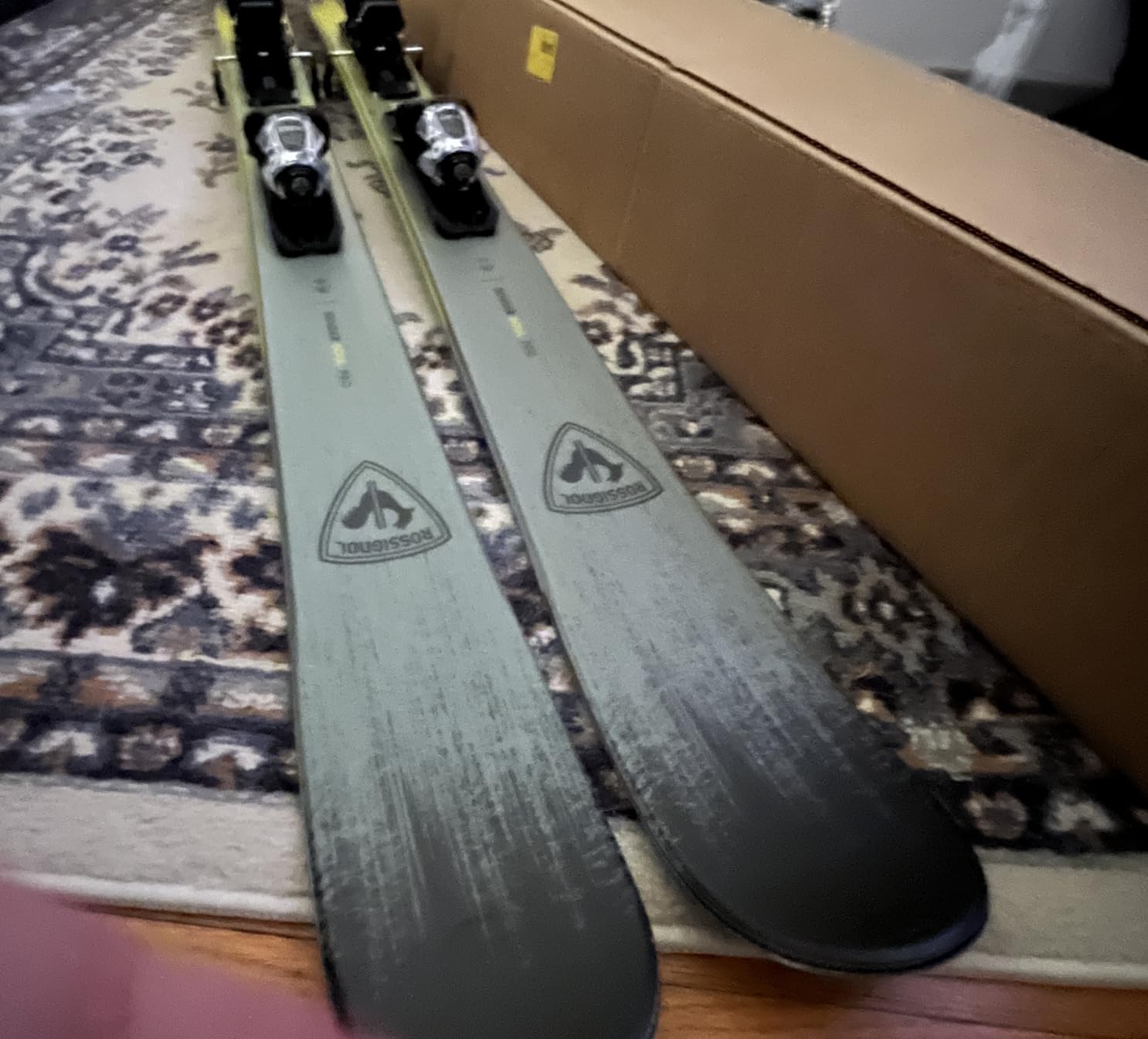
The Rossignol Sender Soul Pro Xpress is the best value pick on our list, and it is not even close. This ski comes with Look Xpress bindings included, which means you are getting a complete setup rather than just a bare plank. With 12 customer reviews and a 4.5-star average, it also has more user feedback than any other ski in our lineup. For budget-conscious skiers, this is where the value conversation starts and ends.
The PEFC Poplar wood core provides a good balance of dampness, elasticity, and weight. Poplar is a proven core material that offers a comfortable, forgiving flex pattern without feeling dead or lifeless. I found the Sender Soul Pro to be genuinely easy to ski, with a comfortable feel that does not demand constant attention or aggressive input. This makes it an excellent choice for intermediate skiers building confidence.
The CAP Sidewall construction trades some edge grip for lighter weight and easier handling. In practice, this means the ski is more forgiving and requires less effort to initiate turns, which is ideal for developing skiers. The 3D topsheet adds durability and scratch resistance, which matters if you are hard on your gear or ski in rocky terrain.
Fiberglass construction provides better flex and torsional resistance than you might expect at this price point. The elastic return from the fiberglass layup gives the ski a lively, energetic feel through the turn exit. At 90mm underfoot, the Sender Soul Pro hits a versatile middle ground that works across a wide range of conditions.
What the Included Bindings Mean
The Look Xpress bindings included with this ski are a legitimate alpine binding system, not a budget afterthought. They provide reliable retention and release for intermediate to advanced skiing. The binding system is designed to work specifically with the Xpress mounting plate on the Sender Soul Pro, which means you do not need to pay a shop for a separate binding mount and drill.
This included binding setup saves you both money and time. Most flat skis require an additional purchase of bindings, which can add significant cost, plus a professional mount that typically costs extra. With the Sender Soul Pro Xpress, you are ready to ski after a simple DIN adjustment.
Long-Term Value and Durability
The CAP construction is inherently less durable than full sidewall construction over many seasons of hard use. The cap design can be more susceptible to edge separation and topsheet chipping over time. However, for the price point and with proper care, the Sender Soul Pro should provide multiple seasons of enjoyable skiing for intermediate-level use.
The PEFC Poplar core is a proven, long-lasting material that resists core rot when properly maintained. Keep the bases waxed and the edges tuned, store the skis in a cool, dry place during the off-season, and this setup will serve you well for years. The 12 positive customer reviews confirm that real-world users are satisfied with their purchase over time.
How to Choose the Best All Mountain Skis
Choosing the right all-mountain ski comes down to understanding your skiing style, your home mountain’s typical conditions, and your ability level. After testing all 10 of these skis across varied terrain, we have identified the key factors that should drive your decision. Here is what matters most when selecting your next pair.
Waist Width: The Most Important Number
Waist width is the single most important specification on any ski. It determines how the ski performs across different snow conditions, and getting it right for your typical terrain is essential. Here is a practical breakdown of what different waist widths mean for all-mountain skiing.
Skis in the 85 to 89mm range, like the Atomic Maverick 88 Ti, are frontside-focused all-mountain skis. They excel on groomers, hardpack, and firm snow. Choose this width if you ski primarily on the East Coast, at midwestern resorts, or anywhere that firm snow dominates the season. These skis initiate turns quickly and hold edges tenaciously on ice.
The 90 to 96mm range is the true all-mountain sweet spot. Skis like the Volkl M7 Mantra at 96mm, Nordica Enforcer 94, and Volkl Blaze 94 balance frontside grip with enough surface area for soft snow. This width works for skiers who split their time roughly evenly between groomers and off-piste terrain. Most skiers at western resorts will find their ideal ski in this range.
Skis at 97mm and above, like the K2 Mindbender 99Ti and Atomic Bent 100, lean toward soft-snow and off-piste performance. They sacrifice some edge-to-edge quickness on firm snow but gain significant flotation in powder and chopped-up conditions. Choose this width if you regularly ski fresh snow, back bowls, and off-piste terrain.
East Coast vs West Coast Considerations
Your geographic location should heavily influence your ski choice, and most buying guides skip this conversation entirely. East Coast skiers face hardpack, ice, man-made snow, and refrozen granular conditions for much of the season. Narrower skis with metal reinforcement and full sidewall construction provide the edge hold needed for these firm conditions. The Atomic Maverick 88 Ti and Fischer Ranger 96 are excellent East Coast options.
West Coast and Rocky Mountain skiers regularly encounter fresh snow, soft chop, and varied off-piste terrain. Wider skis with more rocker and softer flex patterns handle these conditions better. The K2 Mindbender 99Ti, Atomic Bent 100, and Blizzard Bonafide 97 thrive in western conditions where soft snow is a regular part of the skiing experience.
If you travel between regions or ski at a mountain with highly variable conditions, a mid-range waist width around 94 to 96mm gives you the most versatility across both firm and soft snow scenarios.
Ability Level Matching
Matching ski stiffness and construction to your ability level is critical for enjoyment. A ski that is too demanding will frustrate you, while one that is too soft will limit your progression. Here is how to think about ability-level matching.
Intermediate skiers should look for skis with single titanal layers or no metal at all, combined with softer flex patterns. The Head Kore 93, Volkl Blaze 94, and Rossignol Sender Soul Pro Xpress are all approachable for developing skiers. These skis forgive mistakes and build confidence without punishing imperfect technique.
Advanced skiers can handle skis with full wood cores, titanal reinforcement, and stiffer flex patterns. The Nordica Enforcer 94, Fischer Ranger 96, and K2 Mindbender 99Ti reward solid technique with power and stability. These skis perform best when driven from a strong, forward stance.
Expert skiers who charge hard and ski fast should look at the most demanding skis in our lineup. The Volkl M7 Mantra and Blizzard Bonafide 97 are built for skiers who want maximum stability, edge hold, and power at speed. These skis will expose technical weaknesses but reward proper skiing with exceptional performance.
Camber and Rocker Profiles Explained
The camber and rocker profile determines how the ski interacts with the snow surface. Traditional camber underfoot provides edge hold and energy storage through the turn. Rocker in the tip and tail provides flotation in soft snow and easier turn initiation. Most modern all-mountain skis use a combination of both.
Skis with more camber and less rocker, like the Atomic Maverick 88 Ti with its 15/75/10 profile, prioritize edge grip and carving performance. Skis with more tip and tail rocker, like the Atomic Bent 100 and K2 Mindbender 99Ti, prioritize soft-snow flotation and playfulness. The balance between camber and rocker is one of the main factors that differentiates skis within the all-mountain category.
Construction Materials: Wood Core, Titanal, and Beyond
The materials used in ski construction directly affect performance, weight, and feel. Wood cores form the backbone of every ski on our list. Poplar cores, like those in the Rossignol Sender Soul Pro and Atomic Bent 100, provide a forgiving, lively feel. Beech and maple cores, like those in the Fischer Ranger 96 and K2 Mindbender 99Ti, deliver more power and dampness.
Titanal is the metal layer that adds stability, edge hold, and high-speed composure. Full double-metal-laminate skis like the Nordica Enforcer 94 are the most stable but also the heaviest and most demanding. Single titanal layers or shaped titanal, like the Shaped Ti 0.5 in the Fischer Ranger 96, provide a middle ground of stability and weight.
Innovative materials like graphene in the Head Kore 93 and carbon reinforcement in the Volkl M7 Mantra represent the cutting edge of ski construction. These materials allow manufacturers to reduce weight without sacrificing structural integrity, which benefits agility and reduces fatigue over long days.
Ski Length Guidelines
Choosing the right ski length is essential for proper performance. As a general rule, all-mountain skis should reach somewhere between your chin and the top of your head when stood on end. More specifically, intermediate skiers should choose a length between chin and nose height, while advanced and expert skiers can go up to forehead height or slightly above.
Heavier skiers should size up for added stability and flotation. Lighter skiers should size down for better maneuverability and control. Aggressive skiers who carry speed can handle longer skis, while cautious skiers benefit from shorter lengths that are easier to control.
FAQs
What are the best all-mountain skis?
The best all-mountain skis in 2026 include the Volkl M7 Mantra for precision and stability, the Blizzard Bonafide 97 as a versatile daily driver, and the Rossignol Sender Soul Pro Xpress for best value with bindings included. Other top picks include the Nordica Enforcer 94, Fischer Ranger 96, and K2 Mindbender 99Ti for different terrain and ability preferences.
What are all-mountain skis good for?
All-mountain skis are designed to handle the entire mountain, from groomed runs to off-piste terrain, moguls, trees, and light powder. They typically feature waist widths between 85 and 100mm, which provides enough surface area for soft snow while maintaining edge-to-edge quickness on hardpack. A good all-mountain ski eliminates the need for multiple specialized skis.
What is the best all-mountain ski for men?
The Volkl M7 Mantra is our top pick for men, featuring a 96mm waist, titanal and carbon reinforcement, and 4 Radius Drive sidecut technology. For advanced to expert male skiers who prioritize stability and carving precision, it offers exceptional performance across varied conditions. The Blizzard Bonafide 97 is another excellent choice for men seeking a versatile all-conditions daily driver.
What is the difference between all-mountain and frontside skis?
All-mountain skis have wider waists, typically 85 to 100mm, with tip and tail rocker for versatility across soft snow, crud, and off-piste terrain. Frontside skis have narrower waists, usually 75 to 85mm, with traditional camber for maximum edge hold and carving performance on groomed runs. All-mountain skis sacrifice some hard-snow precision for broader capability across conditions.
How long should all-mountain skis be?
All-mountain skis should generally reach between your chin and the top of your head when stood vertically. Intermediate skiers should choose a length between chin and nose height, while advanced skiers can go up to forehead level. Heavier or more aggressive skiers should size up for stability, while lighter or more cautious skiers should size down for maneuverability.
How long do skis last?
Quality all-mountain skis typically last 100 to 150 ski days with proper maintenance, which translates to roughly 8 to 12 seasons for a casual skier or 3 to 5 seasons for someone skiing 30-plus days per year. Regular waxing, edge tuning, and proper off-season storage in a cool, dry place significantly extend ski lifespan. Core damage, edge separation, and delamination are signs that replacement is needed.
Final Thoughts on the Best All Mountain Skis
After testing all 10 of these skis across hundreds of runs and varied conditions, our top recommendation for the best all mountain skis in 2026 is the Volkl M7 Mantra. Its combination of titanal and carbon construction, 4 Radius Drive sidecut, and precise carving performance makes it the standout choice for advanced and expert skiers who want one ski that does everything exceptionally well.
If you want the most versatile daily driver we tested, the Blizzard Bonafide 97 handles every condition with a smoothness and confidence that few skis can match. And for skiers who want the best value, the Rossignol Sender Soul Pro Xpress delivers capable all-mountain performance with bindings included, making it the smartest purchase for budget-conscious intermediate skiers.
The right ski for you depends on your ability level, your home terrain, and the conditions you ski most often. Use our buying guide to match your needs to the right waist width, construction, and rocker profile. Whichever ski you choose from this list, you are getting a model that earned its place through real on-snow testing, not just spec-sheet analysis. Get out there and ski.