
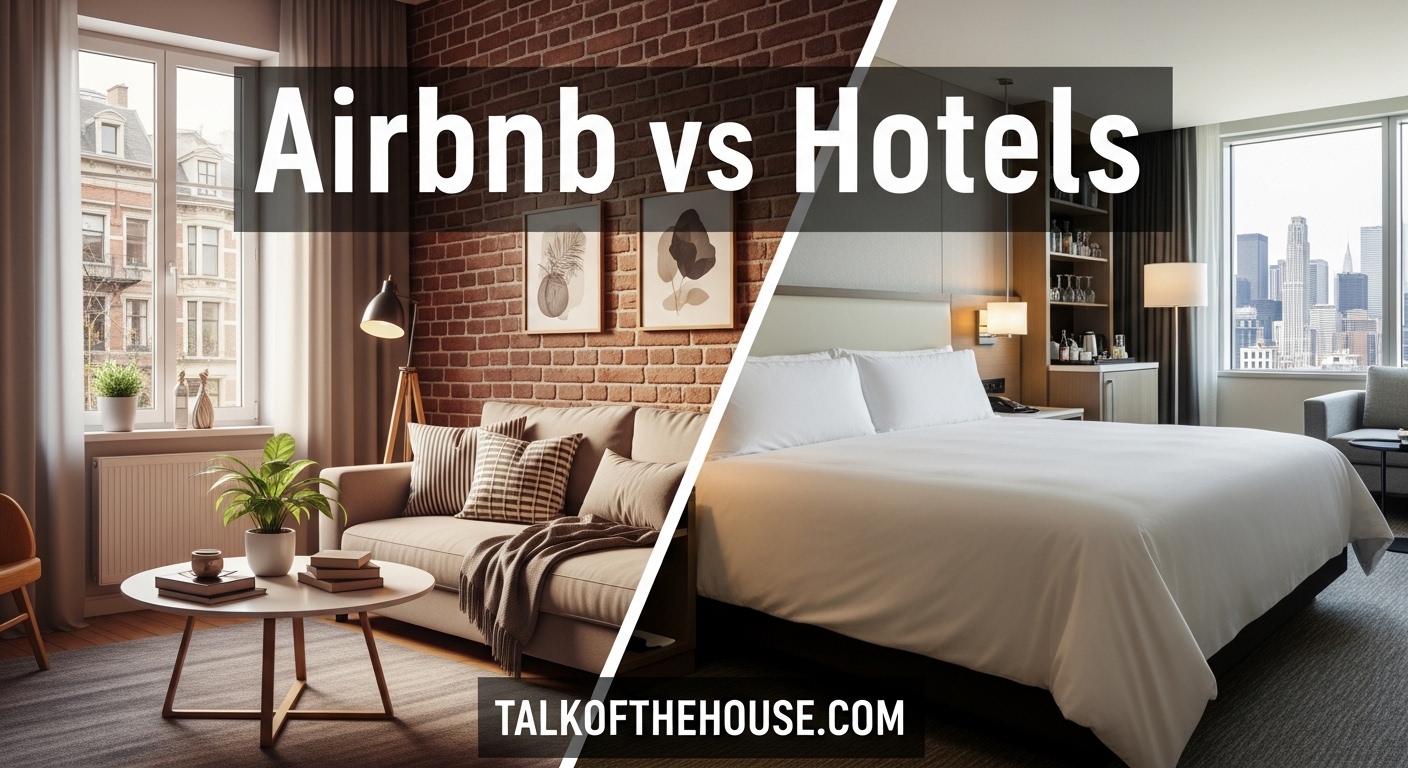
Planning your next trip and wondering whether to book an Airbnb or a hotel? The answer depends entirely on your situation. If you are traveling with a family or a large group, Airbnb typically offers better value. But for solo travelers or couples on a short stay, hotels often come out ahead. Let me break down exactly how the costs and experiences compare so you can make the right choice for your trip.
Table of Contents
The Quick Verdict: Airbnb vs. Hotels
Here is the bottom line based on current data and traveler experiences:
- Airbnb wins for: Families, groups of 4+, stays longer than 4 nights, beach or mountain destinations, travelers who want kitchen access and more space
- Hotels win for: Solo travelers, couples, business trips, short city breaks, travelers who want daily housekeeping and consistent service
The average Airbnb for six people was 33% cheaper than booking three separate hotel rooms, according to NerdWallet analysis. However, the same data showed that hotels were 29% cheaper than Airbnbs when comparing just two people. Your group size and length of stay make all the difference.
Breaking Down the Real Costs
Comparing Airbnb vs. hotels requires looking beyond the nightly rate. Both platforms have fees that can dramatically affect your final bill.
Nightly Rates and Per-Person Costs
Airbnb nightly rates often appear lower than hotel rates, especially for entire homes. However, Airbnb prices do not include cleaning fees, which typically range from $50 to $250 per stay. Hotels usually include housekeeping in the room rate, though some budget options charge extra for daily cleaning.
When you divide by person, Airbnb becomes more economical as group size increases. A family of four splitting a $200 Airbnb with a $100 cleaning fee pays $62.50 per person for one night. Four people in separate $150 hotel rooms would pay $150 per person. That is a significant difference for larger groups.
The Length of Stay Impact
For short stays of one or two nights, hotels typically cost less once you factor in Airbnb cleaning fees. The math changes for stays longer than four nights. Many Airbnb hosts offer weekly or monthly discounts that can bring the per-night cost well below hotel alternatives.
Hotels may offer multiday discounts, but these are less common than in the past. The 75-55 rule for Airbnb pricing suggests that longer stays receive progressively lower nightly rates, though this varies by host and market.
Hidden Fees Comparison
Both options have fees that catch travelers off guard:
Airbnb fees include cleaning fees, service fees (typically 3-14% of the subtotal), and sometimes extended cleaning fees if hosts claim excessive mess. Hotel fees may include resort fees, parking charges, Wi-Fi costs, and early check-in or late checkout fees.
One frustration many travelers share from forum discussions: paying cleaning fees at Airbnb but still being expected to strip beds, run the dishwasher, and take out trash before leaving. This is not universal, but it happens often enough that forum threads are full of complaints about this practice.
Airbnb Pros and Cons
The Advantages of Choosing Airbnb
Our team has tested dozens of short-term rentals, and several Airbnb benefits stand out consistently.
- More space for your money. An entire apartment or house typically offers far more square footage than a hotel room. You get separate living areas, full kitchens, and often outdoor spaces. For families with young children, this space makes a huge difference in comfort.
- Kitchen access saves money. Being able to cook simple meals instead of eating every dinner at restaurants adds up quickly. A week of breakfasts and dinners prepared in your own kitchen can save $200-400 per person compared to dining out for every meal.
- Local neighborhood experience. Airbnbs are usually in residential areas rather than tourist zones. You get to experience how locals live, shop at nearby grocery stores, and find restaurants that are not designed for tourists.
- Privacy and independence. With self check-in and no daily housekeeping interruptions, you come and go as you please. This appeals to many travelers who find hotel staff interactions awkward or unnecessary.
- Pet-friendly options. Many Airbnb hosts welcome pets, while hotels typically charge extra pet fees or prohibit animals entirely.
The Drawbacks of Airbnb
Despite the advantages, our travel community consistently reports several frustrations with Airbnb stays.
- Cleaning fees feel unfair. Forum discussions reveal this is the number one complaint. Paying $150 cleaning fee and then being told to start the dishwasher, take out trash, and strip beds before checkout feels like double-dipping to many guests. Some hosts even charge additional cleaning fees if they deem the place too messy.
- Inconsistent quality between listings. Unlike hotels with brand standards, every Airbnb is different. Photos can be misleading. Some properties that look sparkling clean in listings turn out to have hidden issues once you arrive.
- Host control issues. Several travelers have reported hosts who adjust thermostats remotely, monitor noise levels through devices, or cancel reservations unexpectedly. While not common, these situations are stressful when they happen.
- Limited support when problems arise. Self check-in means no front desk to help when your key fob stops working or you lock yourself out. Customer service responsiveness varies widely.
- No luggage storage flexibility. Most Airbnbs require you to check out by 11am with no option to leave bags. Hotels typically offer bag storage for guests, which is valuable for travelers with late flights.
Hotel Pros and Cons
The Advantages of Hotels
Hotels remain the default choice for millions of travelers, and they offer compelling benefits.
- Consistent experience every time. A Marriott is a Marriott. You know what you are getting: clean sheets, working Wi-Fi, a working coffee maker, and predictable amenities. This reliability matters for business travelers or anyone who dislikes surprises.
- Daily housekeeping included. Your room gets cleaned every day. Fresh towels, made beds, and emptied trash make longer stays much more comfortable. Some travelers report that Airbnb stays feel progressively dirtier over multiple nights because they must clean up after themselves.
- On-site staff and security. Hotels have 24-hour front desks, security personnel, and management you can speak with immediately. If something goes wrong, help is available within minutes rather than hours of waiting for host responses.
- Central locations in cities. Hotels cluster near business districts, tourist attractions, and transportation hubs. Finding an Airbnb in a convenient location requires more research, especially in unfamiliar cities.
- Rewards programs and credit card benefits. Frequent hotel guests earn points, receive free nights, and get upgrades. Business travelers often have corporate rates and direct billing options that make booking and expensing simpler.
- Luggage storage and late checkout. Hotels store bags before check-in and after checkout. Many offer late checkout for elite members or for a reasonable fee.
The Drawbacks of Hotels
Hotels are not perfect, and travelers have legitimate gripes.
- Small rooms, especially in cities. Urban hotel rooms can feel cramped. Two adults with two suitcases barely have room to move. Families often need two rooms, doubling costs.
- No kitchen means expensive meals. Every breakfast, lunch, and dinner requires finding a restaurant. This adds up fast, especially in expensive tourist destinations.
- Noise and lack of privacy. Hotels have thin walls, neighboring rooms, and staff who may knock for housekeeping at inopportune times. You hear every footstep from the room above.
- Impersonal experience. Hotels can feel sterile and interchangeable. There is no character, no sense of place, no local connection.
- Some hotels adopting Airbnb policies. Forum discussions note that some hotel chains have reduced daily housekeeping, added checkout fees, and shortened check-in times, mimicking the worst aspects of short-term rentals.
9 Key Differences Between Airbnb and Hotels
Based on competitor analysis and traveler feedback, here are the main factors that distinguish your choices:
1. Price structure: Hotels quote rates that include most basics. Airbnbs quote lower base rates but add cleaning and service fees that can make the total cost higher for short stays.
2. Amenities: Hotels offer pools, gyms, business centers, and restaurants on-site. Airbnbs offer kitchens, washers/dryers, and living spaces you would find in a real home.
3. Space: Airbnb entire homes provide multiple rooms, full kitchens, and often outdoor space. Hotel rooms are typically one room with an attached bathroom.
4. Privacy: Hotels have staff who can access your room for housekeeping. Airbnbs are yours exclusively during your stay unless the host has cameras outside (which must be disclosed).
5. Safety: Hotels have security personnel, key card access, and cameras. Airbnbs have varied security measures, and you may be sharing spaces with previous guests who had door codes.
6. Check-in/out: Hotels have front desks with staff. Airbnbs typically use self check-in with codes or lockboxes, which removes human interaction but allows more flexibility.
7. Housekeeping: Hotels clean your room daily. At Airbnbs, you often clean before leaving and may pay a cleaning fee on top of that.
8. Location: Hotels cluster in convenient areas. Airbnbs can be anywhere, including neighborhoods tourists rarely see.
9. Accessibility: Hotels typically meet ADA requirements. Airbnb accessibility varies widely and requires careful review of listings to confirm wheelchair access and other accommodations.
When Airbnb Is the Better Choice
Based on data and real traveler experiences, here are situations where Airbnb makes more sense:
Family vacations with young children. Having separate rooms, a kitchen, and a living area keeps everyone comfortable. Parents can cook meals, do laundry, and put kids to bed in separate spaces while adults stay up.
Beach or mountain getaways. Renting a house provides ocean views, backyard space, and proximity to nature that hotels cannot match. These trips typically involve cooking meals, making the kitchen invaluable.
Group trips with four or more people. Splitting a house is almost always cheaper than multiple hotel rooms. You also get common spaces to gather, which makes the trip more social.
Stays longer than five nights. Weekly discounts and the ability to settle into a space make longer Airbnb stays increasingly economical.
Travelers with dietary restrictions. Having a full kitchen means you can prepare safe meals instead of relying on restaurants that may not accommodate allergies or special diets.
When Hotels Are the Better Choice
Hotels shine in these situations:
- Solo travelers. Safety, social spaces, and the ability to ask for help at any hour make hotels more comfortable for those traveling alone.
- Business trips. Reliable Wi-Fi, business centers, convenient locations near meetings, and predictable service make hotels the professional choice.
- Short city breaks of one to three nights. The math favors hotels for brief stays when cleaning fees make Airbnb more expensive per night.
- Travelers who want daily housekeeping. Some people do not want to think about cleaning at all during their vacation. Daily service makes longer hotel stays feel like a luxury.
- First-time visitors to a destination. Hotel staff can provide recommendations, help with bookings, and offer concierge services that Airbnb hosts may not match.
FAQ: Common Questions About Airbnb vs. Hotels
Would a hotel or Airbnb be cheaper?
It depends on your group size and length of stay. For groups of 4 or more staying 4+ nights, Airbnb is typically cheaper. For solo travelers or couples on short stays, hotels are usually the better value. The average Airbnb for six people was 33% cheaper than booking three hotel rooms, but hotels were 29% cheaper for two people.
What is the 80/20 rule for Airbnb?
The 80/20 rule in real estate investing suggests that 80% of your returns come from 20% of your properties. In the context of Airbnb hosting, it generally refers to hosts earning the majority of their income from a minority of their listings, or that 80% of guests have positive experiences while 20% encounter significant issues.
What is the downside of Airbnb?
The main downsides include high cleaning fees that still require self-cleaning before checkout, inconsistent quality between listings, limited support when problems arise, potential host control issues like remote thermostat adjustments, and the lack of luggage storage flexibility at checkout.
What is the 75-55 rule for Airbnb?
The 75-55 rule refers to Airbnb host pricing strategies where hosts aim to keep their nightly rate at 75% of what a hotel charges while maintaining 55% of the occupancy rate. This balance supposedly maximizes revenue while staying competitive with traditional hotels.
Making Your Decision
Both Airbnb and hotels have earned their place in the travel market. The choice comes down to your specific situation.
For families and groups, Airbnb offers space, kitchen access, and per-person savings that hotels cannot match. For solo travelers, business professionals, and anyone wanting consistency and convenience, hotels remain the smarter choice.
Before booking your next trip, ask yourself these questions: How many people are traveling? How long will you stay? Do you need kitchen access? Is daily housekeeping important to you? What is your true total budget including all fees?
Answering these honestly will lead you to the right choice every time. Safe travels.