
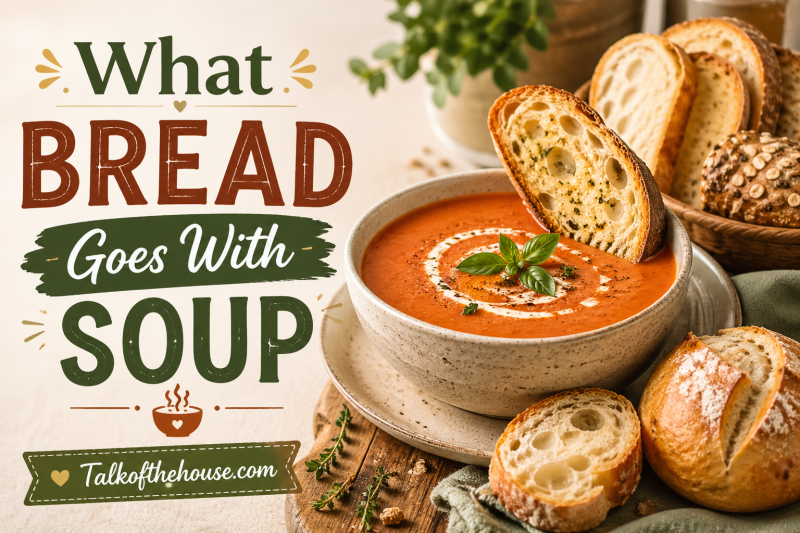
There is nothing quite as comforting as wrapping your hands around a warm bowl of soup on a chilly evening. But here is the truth: soup alone is only half the experience. The right slice of bread transforms a simple bowl into a complete, soul-warming meal. Our team has tested countless combinations over the years, and we have learned that choosing what bread goes with soup is both an art and a science.
In this guide, you will discover exactly which breads pair best with every type of soup. We have organized everything by soup category so you can quickly find the perfect match for tonight’s dinner. Whether you are serving a silky butternut squash bisque or a chunky beef stew, we have the bread recommendation that will elevate your meal from good to unforgettable.
Table of Contents
What Bread Goes With Soup: Quick Answer
The best breads for soup are crusty varieties with sturdy textures that hold up to dipping without falling apart. Sourdough bread leads the pack for its tangy flavor and chewy crumb that absorbs broth beautifully. French baguette offers the ideal crunchy crust against smooth soups. Ciabatta provides airy pockets that capture broth without becoming mushy. For hearty stews, cornbread adds a sweet counterpoint to savory flavors. Each of these options delivers the textural contrast and absorption capability that makes the soup and bread pairing so satisfying.
Quick Reference: Bread Pairing by Soup Type
Use this table to quickly find your perfect match:
| Soup Type | Best Bread Options | Why It Works |
|---|---|---|
| Creamy Soups | Sourdough, Baguette, Ciabatta | Crunchy crust contrasts smooth texture; sturdy crumb holds up to dipping |
| Brothy Soups | Dinner Rolls, Focaccia, Pita | Light texture won’t overwhelm delicate broth; moderate absorption |
| Hearty Stews | Cornbread, Rye, Pumpernickel | Dense structure matches robust flavors; flavor pairing enhancement |
| Tomato Soup | Grilled Cheese Bread, Garlic Bread, Challah | Classic comfort pairing; buttery richness balances acidity |
Why Bread and Soup Are the Perfect Pair
Bread and soup have been served together across virtually every culture for centuries. This pairing works on multiple levels that go beyond mere tradition. Understanding why these two foods complement each other will help you make better choices for your own table.
The primary reason bread pairs so well with soup is textural contrast. A crusty exterior provides satisfying crunch against the smooth, liquid consistency of soup. When you bite into a piece of sourdough with a shattering crust and give way to a chewy interior, then follow it with a spoonful of creamy bisque, your palate experiences a delightful interplay of sensations.
Absorption is another critical factor. The porous structure of bread, particularly varieties with an open crumb like ciabatta or artisan sourdough, soaks up flavorful broth and delivers concentrated taste with each bite. This is why stale bread actually works better for soup serving than fresh; it has slightly less moisture content and can absorb more liquid without becoming soggy immediately.
From a nutritional perspective, bread adds carbohydrates that transform soup from a light starter into a complete meal. The combination of protein-rich broth and complex carbohydrates from whole grain breads creates sustained energy and genuine satiety. Our family has found that adding bread increases satisfaction significantly, often eliminating the need for a second bowl.
Finally, there is the comfort factor. There is something deeply satisfying about the ritual of breaking bread and dipping it into warm soup. It slows down the eating process, encourages mindful enjoyment, and creates a cozy atmosphere that defines comfort food at its finest.
Best Bread for Creamy Soups
Creamy soups like butternut squash bisque, broccoli cheddar, potato leek, and clam chowder present a specific challenge: you need bread that can stand up to thick, rich liquid without immediately turning to mush. The solution is a crusty bread with a sturdy, chewy interior.
Sourdough bread is our top recommendation for creamy soups. The tangy flavor profile cuts through the richness of cream-based soups, preventing palate fatigue. More importantly, sourdough’s chewy crumb and substantial crust maintain their structure even when dipped into thick chowder. We recommend toasting slices lightly to enhance the textural contrast even further.
French baguette offers another excellent option. The shattering crust provides audible crunch with each bite, while the airy interior absorbs just enough soup to become flavorful without falling apart. Slice baguette on the diagonal to create larger surface areas for optimal dipping.
Ciabatta works beautifully with creamy soups thanks to its distinctive hole structure. Those open pockets capture soup like little vessels, delivering bursts of flavor with each bite. The chewy texture holds up remarkably well, and the rustic appearance adds visual appeal to your table setting.
Focaccia deserves mention for creamy soups, particularly when topped with herbs or sea salt. The dimpled surface creates natural pockets for oil and soup, while the olive oil-enriched dough provides richness that complements rather than competes with creamy bases.
Best Bread for Brothy and Clear Soups
Brothy soups like chicken noodle, French onion, vegetable broth, and consomme require a different approach. These lighter soups can be overwhelmed by heavy, dense breads. The goal is accompaniment that adds interest without stealing focus from the delicate flavors.
Dinner rolls, particularly soft Parker House or Hawaiian rolls, work wonderfully with brothy soups. Their light, pillowy texture absorbs broth without becoming leaden. Split rolls and toast the cut sides lightly to create a barrier that prevents immediate sogginess while maintaining that satisfying soft interior.
Focaccia appears again on this list, but for different reasons than with creamy soups. A thinner, crispier focaccia provides structure without heaviness. The herbed oil on top adds flavor complexity that enhances rather than masks the broth beneath.
Pita bread offers a practical solution for brothy soups. Warm pita pockets can be torn into pieces that dip easily, or you can toast pita triangles until crisp for a cracker-like experience. The neutral flavor profile lets your soup shine while providing textural interest.
Naan brings subtle yeasty sweetness that pairs beautifully with aromatic broths. The slight chewiness holds up to gentle dipping, and the soft texture feels comforting against lighter soups. Warm naan briefly in a dry skillet before serving for best results.
Best Bread for Hearty Stews and Chili
Hearty stews, beef bourguignon, minestrone, and chili demand breads with substance. These robust dishes need equally assertive accompaniments that won’t disappear against bold flavors.
Cornbread is the undisputed champion for chili and bean soups. The slight sweetness creates a magical flavor pairing with spicy, savory stews. Whether you prefer Northern-style sweet cornbread or Southern-style savory, the dense, crumbly texture provides perfect contrast to chunky stews. We bake cornbread in a cast iron skillet for maximum crust development.
Rye bread brings earthy, slightly sour notes that complement beef-based stews beautifully. The caraway seeds traditionally included in rye add aromatic complexity that elevates the entire meal. Look for Jewish-style rye or pumpernickel for the most robust flavor profiles.
Irish soda bread offers a quick solution when you need hearty bread without the wait. The dense, slightly sweet crumb stands up to thick stews, and the traditional cross-cut top creates natural breaking points for sharing. Serve it warm with plenty of butter.
Challah, with its egg-enriched tender crumb and slightly sweet flavor, works surprisingly well with hearty vegetable stews. The richness of the bread stands up to bold flavors while maintaining a certain elegance that makes it appropriate for both casual family dinners and entertaining.
Best Bread for Tomato Soup
Tomato soup occupies a special category because of its iconic pairing: the grilled cheese sandwich. But beyond this classic combination, several breads enhance tomato soup specifically.
Grilled cheese on white bread remains the classic for good reason. The buttery, crispy exterior and melty cheese interior create a textural and flavor experience that defines comfort food. The bread soaks up tomato soup while the cheese provides richness that balances tomato acidity.
Garlic bread offers an aromatic alternative that complements tomato soup beautifully. The garlic and butter flavors enhance the natural sweetness of tomatoes. Toast garlic bread until quite crisp so it maintains structure when dipped.
Challah works wonderfully with tomato soup, especially when lightly toasted. The eggy richness provides a flavor bridge between the acidic tomatoes and your palate, creating a more balanced taste experience.
Bread bowls deserve special mention for thick tomato bisque. Hollow out round crusty bread loaves and ladle soup directly inside. The bread gradually absorbs the soup, and diners can tear off pieces of the bowl as they eat, creating an interactive, waste-free experience.
Gluten-Free Bread Options for Soup
Finding gluten-free bread that holds up to soup dipping has traditionally been challenging. Most store-bought GF breads become crumbly or gummy when exposed to moisture. However, several options work well for those avoiding gluten.
Seeded gluten-free loaves with whole grains like teff, millet, and quinoa tend to hold structure better than rice-flour based breads. The seeds add texture and create a more robust crumb that resists immediate breakdown. Look for brands that include xanthan gum or psyllium husk for better binding.
Homemade cornbread is naturally gluten-free when made with certified cornmeal and appropriate precautions against cross-contamination. The absence of gluten actually helps cornbread maintain its characteristic crumbly texture that many prefer for soup pairing.
Almond flour biscuits offer a protein-rich alternative that holds up surprisingly well to broth. The fat content in almond flour creates a moisture barrier that prevents immediate sogginess. These work particularly well with creamy soups.
Alternative GF accompaniments include roasted root vegetable chunks, which provide the carbohydrate satisfaction of bread without gluten concerns. Crispy roasted chickpeas offer crunch for topping soups. Cheese crisps made from baked shredded cheese create a crouton-like experience that is naturally gluten-free.
Prevention tip: For any GF bread, toasting is essential. A good toaster cycle creates a protective crust that significantly extends dipping time before sogginess sets in. We recommend toasting GF bread about 30 seconds longer than wheat bread for optimal structure.
Things to Know: Serving Tips for Soup and Bread
After years of soup nights, our family has collected practical wisdom that elevates the bread and soup experience. These tips solve common problems and enhance enjoyment.
Toasting Technique Matters
Toasting bread before serving is the single most important step for successful soup pairing. A light toast creates a moisture barrier that prevents immediate sogginess while maintaining a tender interior. For crusty breads, toast cut sides only to preserve the natural crust. For softer breads, toast both sides until just golden. The goal is protection without hardness.
Butter application should happen immediately after toasting while the bread is still warm. This allows the butter to melt into the surface, creating flavor and an additional moisture seal. For garlic bread, rub cut garlic cloves over toasted bread before buttering for authentic flavor without overwhelming raw garlic.
Preventing the Soggy Bread Problem
The number one complaint about bread and soup is bread becoming mushy too quickly. Beyond toasting, several strategies help. Serve bread on the side rather than floating on top of soup. Provide a small plate for resting dipped bread between bites. Cut bread into thick slices or chunks that resist quick saturation.
Stale bread actually works better than fresh for soup serving. Day-old bread has lost some moisture, creating more capacity to absorb broth without falling apart. If you only have fresh bread, a light toast compensates effectively.
Store-Bought vs Homemade
For busy weeknights, quality store-bought artisan bread from a local bakery provides excellent results. Look for loaves with visible air pockets and a firm crust that springs back when pressed. Avoid pre-sliced sandwich bread, which lacks the structural integrity for serious dipping.
Homemade bread brings unmatched freshness and the ability to customize for specific soups. No-knead bread recipes require minimal effort and produce professional-quality crusty loaves perfect for soup night. Consider baking a batch on weekends and freezing portions for quick weeknight thawing.
Croutons as Alternative
When you want crunch without the dipping experience, homemade croutons offer an excellent solution. Cube day-old bread, toss with olive oil and seasonings, and bake until crisp. These provide textural contrast while eliminating the sogginess concern entirely. They work particularly well with smooth soups where you want crunch in every spoonful.
Frequently Asked Questions
What bread is best to eat with soup?
Crusty artisan breads with sturdy textures work best for soup. Sourdough bread is the top choice for its tangy flavor and chewy crumb that absorbs broth without falling apart. French baguette and ciabatta are excellent alternatives. For specific soup types: choose sourdough or baguette for creamy soups, lighter rolls for brothy soups, and cornbread or rye for hearty stews.
What is a good accompaniment to soup?
Beyond bread, excellent soup accompaniments include crackers, cheese crisps, breadsticks, roasted vegetable chunks, popcorn, and fresh herb garnishes. For a complete meal, serve soup with a simple green salad, grilled cheese sandwich, or savory scone. The key is providing textural contrast and additional sustenance to transform soup from a light starter into a satisfying meal.
What bread goes nicely with soup?
Rustic artisan breads with crunchy crusts and chewy interiors pair nicely with most soups. Sourdough offers versatility across soup types. French baguette provides elegant simplicity. Ciabatta delivers excellent dipping capability. For casual meals, dinner rolls or cornbread create a cozy, approachable pairing. The best choice depends on your soup’s consistency: crusty breads for creamy soups, lighter options for brothy soups.
Do bread and soup go together?
Yes, bread and soup are a classic pairing enjoyed across virtually every culture. The combination works because bread provides textural contrast to smooth soup, absorbs flavorful broth, and adds carbohydrates that create a complete, satisfying meal. The ritual of dipping bread into warm soup creates a comforting, mindful eating experience that has made this pairing endure for centuries.
Conclusion
Choosing what bread goes with soup does not need to be complicated. Remember the core principle: match the bread’s heartiness to your soup’s richness. Creamy soups need crusty, chewy breads like sourdough and baguette. Delicate broths pair best with lighter options like rolls or focaccia. Hearty stews call for robust breads like cornbread or rye that can stand up to bold flavors.
The most important tip we can offer is this: do not overthink it. The beauty of soup and bread lies in its simplicity and comfort. A warm bowl and a decent slice of bread, shared with people you care about, will always be satisfying regardless of whether you chose the theoretically perfect pairing. Now that you understand the principles, feel confident experimenting and finding your own favorite combinations in 2026.