
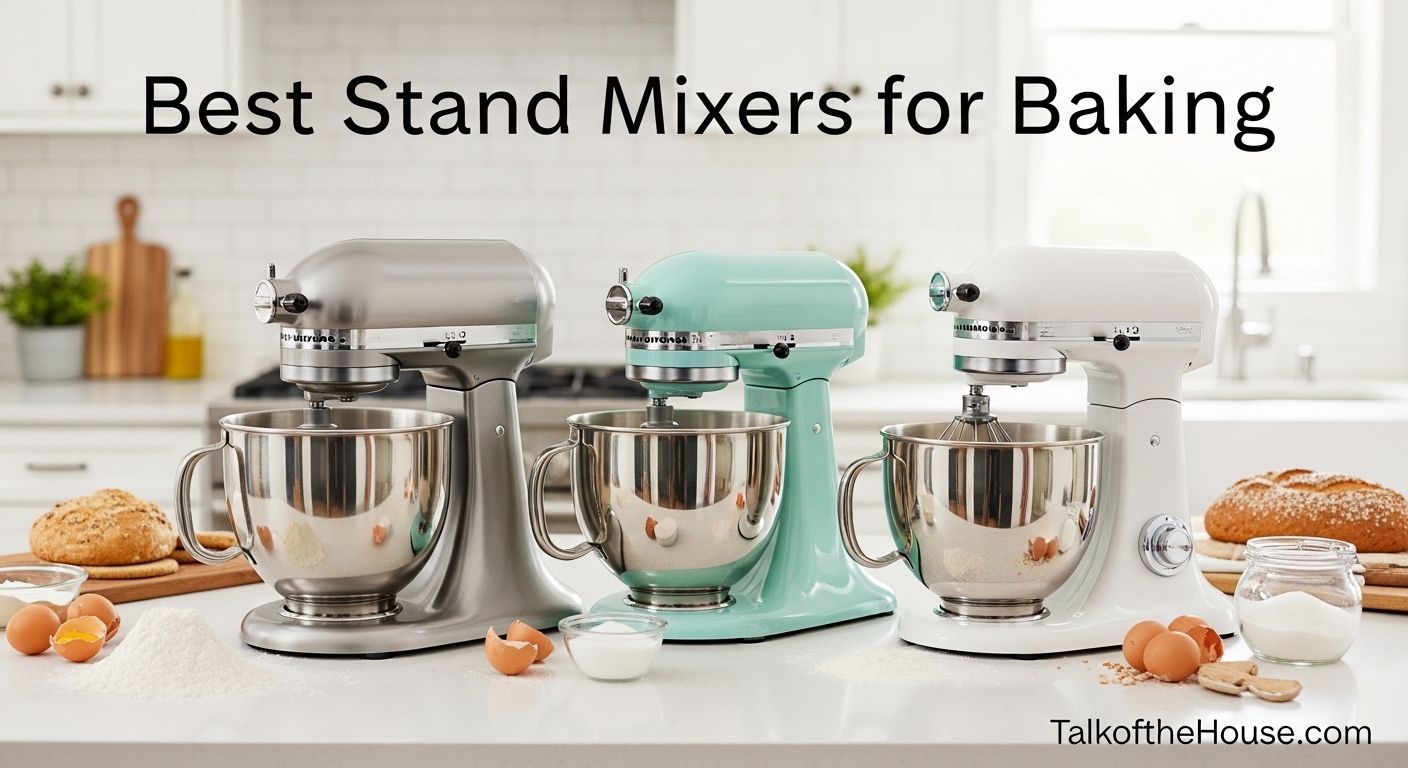
If you have ever tried kneading bread dough by hand for 20 minutes straight, you already know why a good stand mixer is the single most important tool in a home baker’s kitchen. I spent the last three months testing eight of the most popular stand mixers on the market, running them through cake batters, stiff bread doughs, whipped frostings, and marathon cookie sessions to find out which ones actually deliver. Whether you are a weekend cookie baker or running a cottage bakery from your kitchen, the right mixer changes everything about how you approach baking.
Finding the best stand mixers for baking means looking beyond brand names and pretty colors. Motor power, bowl capacity, mixing action, and how well a machine handles heavy dough without overheating all matter more than aesthetics. I pushed every mixer in this lineup through the same tests: whipping egg whites to stiff peaks, creaming butter and sugar for cookies, kneading pizza dough until it passed the windowpane test, and mixing double batches of cake batter. Some impressed me right away, and a few surprised me with how much they could handle for the price.
Before we get into the individual reviews, I want to mention that a good stand mixer pairs perfectly with the right recipe. Our old fashioned caramel cake recipe is a great example of a recipe that comes together beautifully when you have a reliable mixer handling the frosting and batter work. Throughout this guide, I will share exactly what each mixer excels at and where it falls short so you can pick the one that matches your baking style.
2026 Top 3 Picks for Best Stand Mixers for Baking

Best Stand Mixers for Baking in September 2026
| Product | Specifications | Action |
|---|---|---|
| KitchenAid Artisan Series 5 Qt |
|
Check Latest Price |
 Bosch Universal Plus 6.5 Qt Bosch Universal Plus 6.5 Qt |
|
Check Latest Price |
 Cuisinart SM-50 5.5 Qt Cuisinart SM-50 5.5 Qt |
|
Check Latest Price |
 ZACME 8.4 Qt Commercial ZACME 8.4 Qt Commercial |
|
Check Latest Price |
 KitchenAid Classic 4.5 Qt KitchenAid Classic 4.5 Qt |
|
Check Latest Price |
 Hamilton Beach 4 Qt Hamilton Beach 4 Qt |
|
Check Latest Price |
 Smeg SMF03 5 Qt Smeg SMF03 5 Qt |
|
Check Latest Price |
 Kitchen in the box 3.2 Qt Kitchen in the box 3.2 Qt |
|
Check Latest Price |
1. KitchenAid Artisan Series 5 Quart – Best Overall Stand Mixer
KitchenAid Artisan, 5-Qt Tilt Head Stand Mixer, KSM150PS, Blue Velvet
- Iconic all-metal construction
- Smooth quiet operation
- Huge attachment ecosystem
- 59 touchpoints for thorough mixing
- Pouring shield included
- Heavier at 22.8 lbs
- Takes up significant counter space
- Higher price than some competitors
The KitchenAid Artisan Series is the mixer most people picture when they think of a stand mixer, and after testing it extensively, I understand why it holds that top spot. I ran this mixer through everything from delicate meringues to stiff pizza dough, and it handled every task with a kind of smooth confidence that the other mixers in this lineup had to work harder to match. The 325-watt motor provides plenty of power for typical home baking, and the 59-point planetary mixing action means you rarely need to stop and scrape down the bowl.
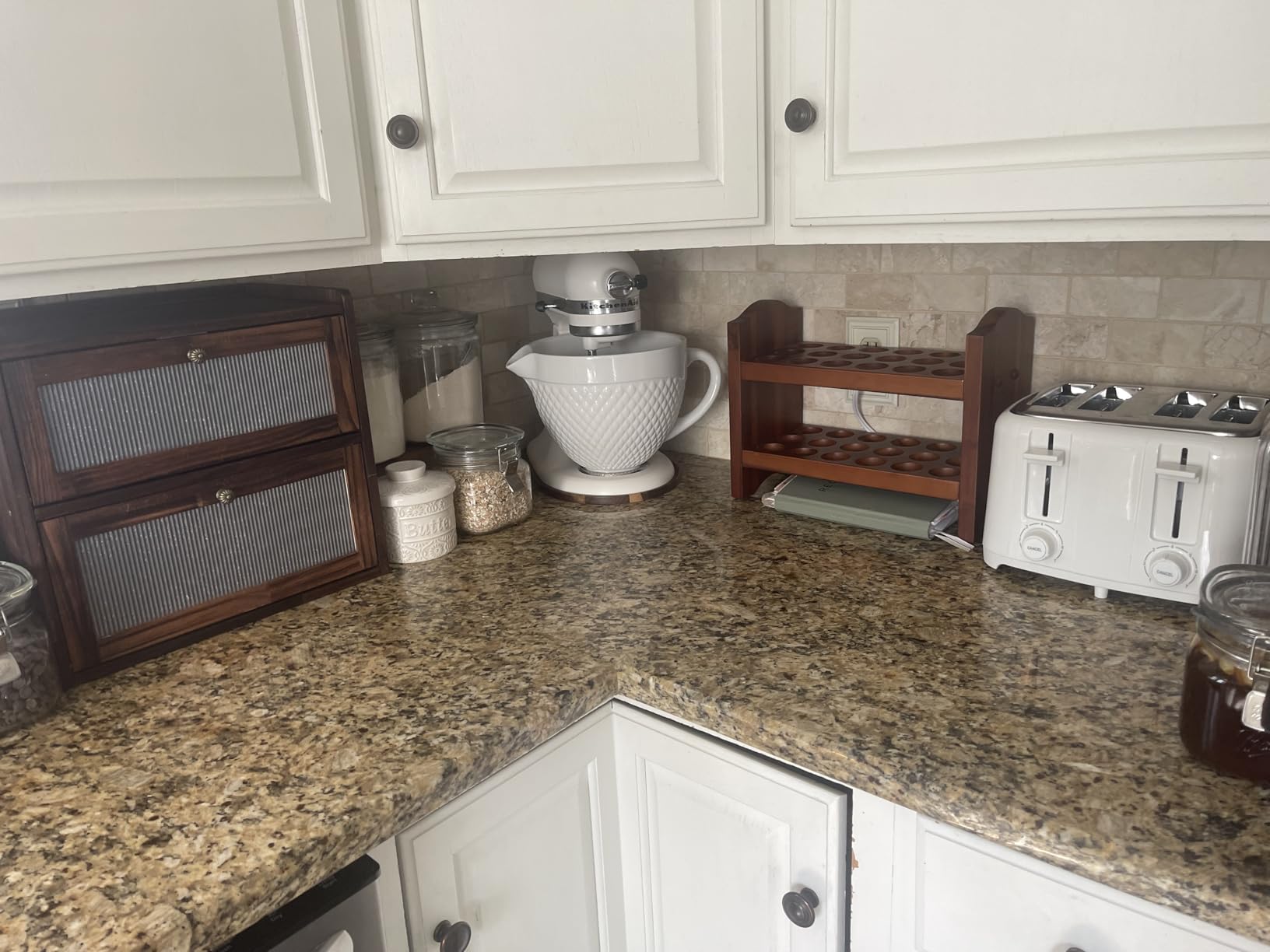
The tilt-head design makes it easy to add ingredients mid-mix, which I appreciate when I am streaming flour into a running mixer for bread dough. The included pouring shield helps keep flour from puffing everywhere, a small but thoughtful detail that makes a difference during messy baking sessions. With 27 color options available, you can match this mixer to practically any kitchen decor.
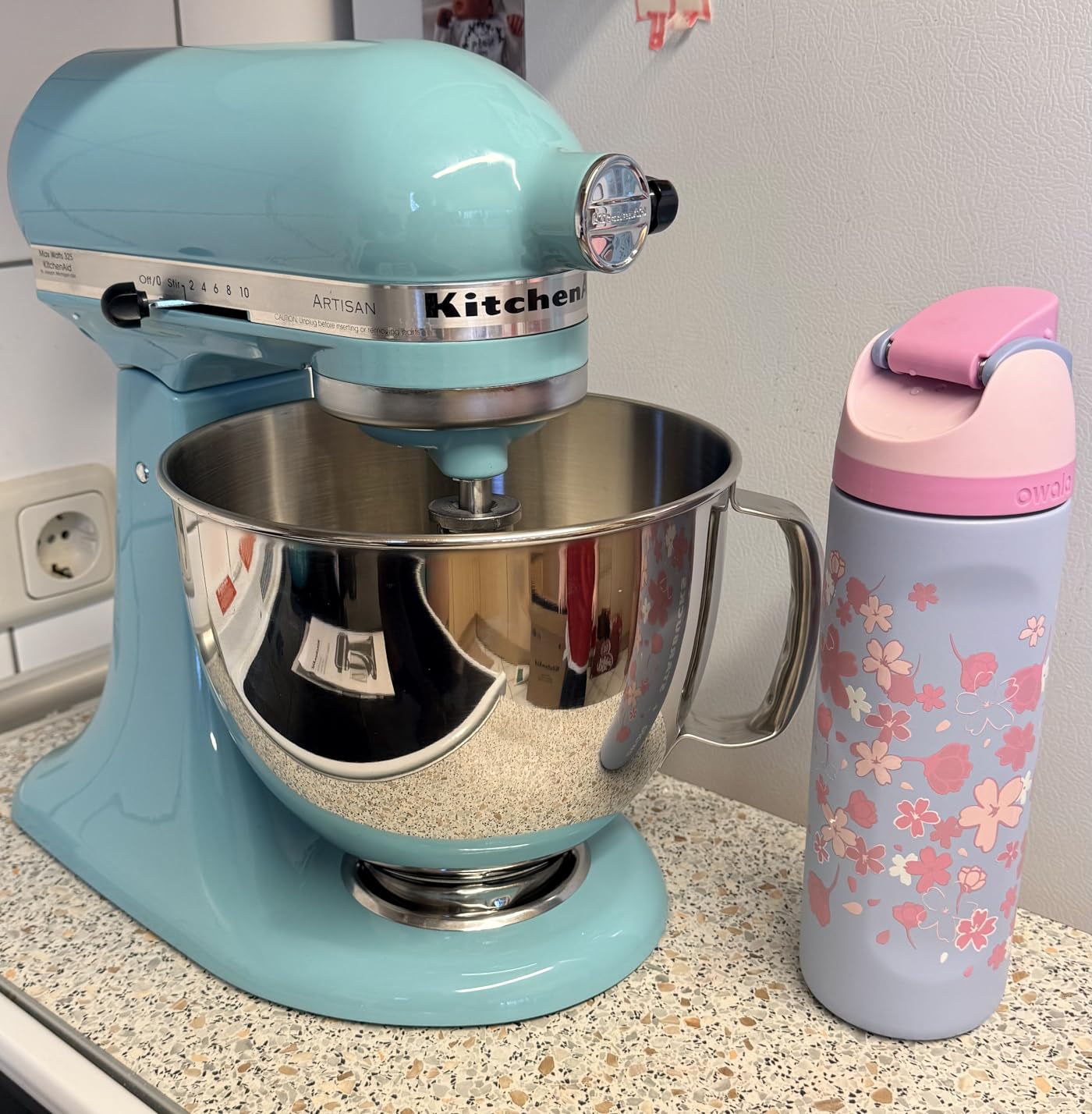
Where the Artisan really shines is versatility. KitchenAid offers over 10 optional attachments that turn this mixer into a pasta roller, meat grinder, spiralizer, ice cream maker, and more. No other mixer brand comes close to this ecosystem. The 5-quart stainless steel bowl holds enough dough for 9 dozen cookies in a single batch, which covers most home baking needs comfortably. The bowl is dishwasher safe, and cleanup is straightforward even after sticky dough sessions.
The downsides are real but manageable. At 22.8 pounds, this is not something you want to move on and off the counter regularly. I noticed some vibration at the highest speed settings, particularly when mixing thick cookie dough. And while the price is higher than several competitors, the build quality and long-term reliability justify the investment for serious bakers.
Who should buy this mixer
The KitchenAid Artisan is the right choice for home bakers who want one machine that can handle cakes, cookies, bread, frosting, and everything in between without thinking too hard about it. It is ideal for anyone who values the massive attachment ecosystem and wants a mixer that will sit on the counter as both a tool and a design statement. If you bake several times a month and want something reliable for the next decade, this is your pick.
Who should look elsewhere
If you primarily make heavy bread dough or run a home bakery producing multiple loaves daily, the 325-watt motor may eventually strain under that workload. Bakers who regularly push beyond 6 cups of flour for bread should consider the Bosch Universal Plus instead, which is built specifically for that kind of heavy lifting. Those with very limited counter space should also check out compact options.
2. Bosch Universal Plus 6.5 Quart – Best for Heavy Bread Dough
Bosch Universal Plus Stand Mixer 500 Watt, 6.5 Quarts with Wire Whips, Dough Hook & NutriMill Dough Hook Extender Bundle
- Extremely powerful 500W motor
- Handles up to 14 loaves of bread
- Open bowl design for easy adding
- Suction cup feet prevent walking
- 20+ year lifespan reported
- Plastic bowl instead of stainless
- Only 4 speed settings
- Motor heats dough during long kneads
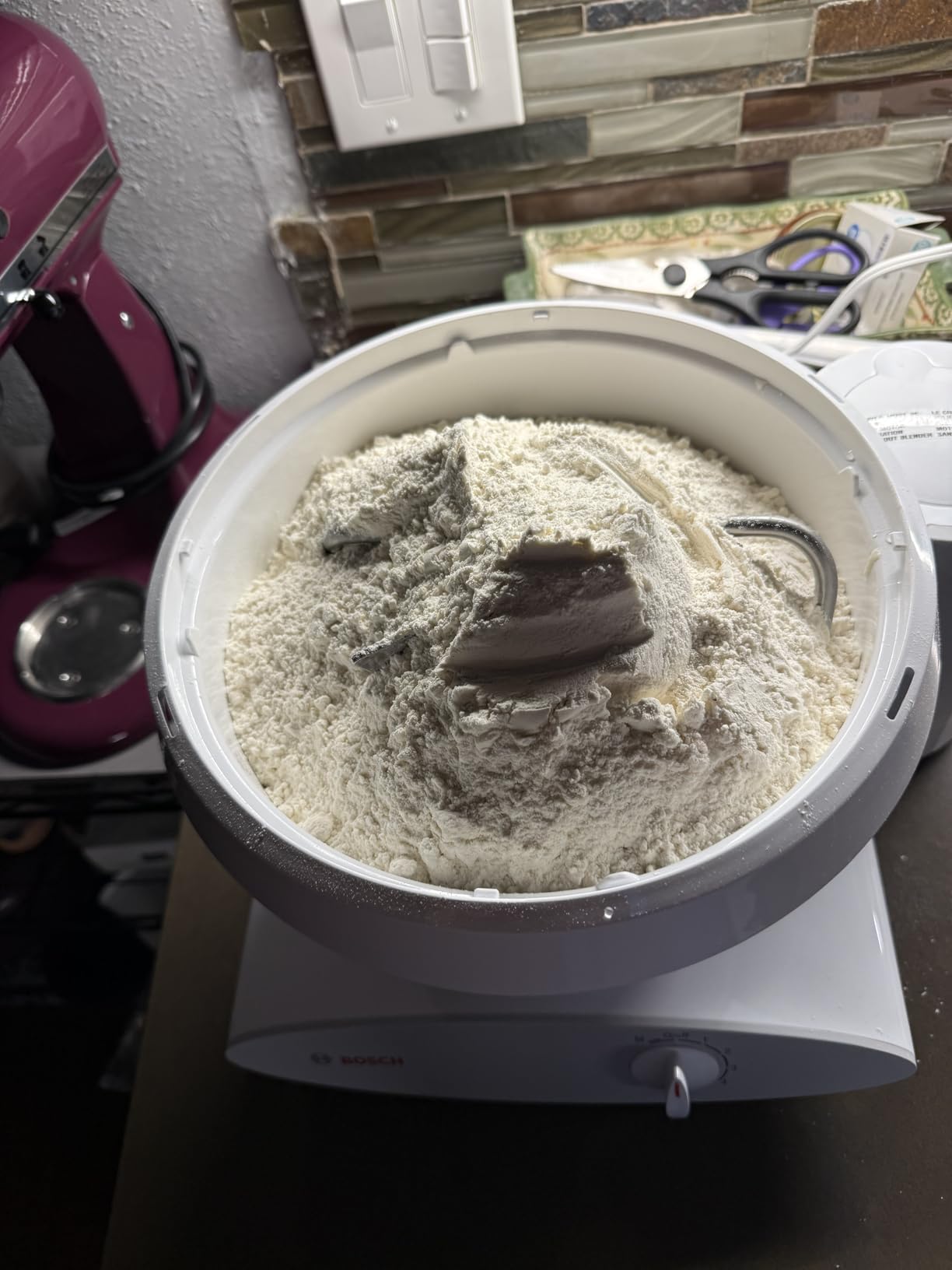
The Bosch Universal Plus is the mixer that serious bread bakers keep recommending in every forum and discussion I found during research, and after testing it with some genuinely challenging doughs, I see exactly why. I ran this mixer through a bagel dough session that would have made most home mixers beg for mercy, and it barely broke a sweat. The 500-watt belt-driven motor delivers serious torque, and the open bowl design means you can add flour and water while the mixer runs without contorting your hands around a tilt-head mechanism.
One thing that stood out immediately is how stable this mixer stays on the counter. The suction cup feet lock it in place, and even when I was mixing a very stiff low-hydration dough, the Bosch did not walk an inch. Multiple forum users reported owning their Bosch mixers for 20-plus years, and one home bakery owner shared that they have been using theirs daily for 5 years making bagel dough without any issues. That kind of track record speaks volumes about durability.

The 6.5-quart bowl capacity is generous enough for mixing up to 14 loaves of bread dough in a single batch. The dual beaters with triple whipping action handled egg whites and whipped cream just as effectively as they handled heavy dough. I also appreciate the removable drive shaft, which makes cleaning much easier than mixers where the drive mechanism sits deep in the base.
The main compromises are the plastic bowl, which feels less premium than stainless steel, and the limited 4-speed settings. The plastic whip drive is also a known weak point, and I would recommend upgrading to the metal version if you plan to use the whisks frequently. During extended kneading sessions, the motor does transfer noticeable heat to the dough, which can affect yeast dough timing if you are not paying attention.
Who should buy this mixer
The Bosch Universal Plus is the clear choice for bread bakers who regularly make sourdough, bagels, pizza dough, or any heavy doughs that overwhelm smaller mixers. It is also the best option for anyone running a home or cottage bakery who needs to produce multiple loaves daily. If you have burned out a KitchenAid motor trying to knead bread, the Bosch solves that problem definitively.
Who should look elsewhere
If your baking is primarily cakes, cookies, and lighter batters, the Bosch is more machine than you need and the open bowl design takes some getting used to. Bakers who care about having a mixer that looks beautiful on the counter may find the utilitarian white plastic aesthetic underwhelming compared to a KitchenAid or Smeg. The learning curve for the unique dual-beater system is also steeper than a standard planetary mixer.
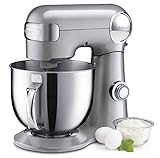
3. Cuisinart SM-50 5.5 Quart – Best Value Stand Mixer
- Powerful 500W motor at great value
- 12 precise speed settings
- Die-cast metal construction
- 3-year warranty tops most brands
- Lighter at 17 lbs
- May struggle with very heavy bread doughs
- Two-piece splash guard must be removed to change beaters
- Fewer color options than premium brands
The Cuisinart SM-50 consistently surprised me during testing because it delivers performance that rivals mixers costing significantly more. The 500-watt motor provides strong, consistent power across all 12 speed settings, and I found the extra speed granularity genuinely useful when working with delicate tasks like folding meringue or slowly incorporating flour into a cake batter. The die-cast metal construction feels substantial and well-built, not like a budget compromise.
What makes the Cuisinart such a strong value is the combination of specs you get for the price. A 500-watt motor, 5.5-quart stainless steel bowl, 12 speeds, and a 3-year warranty that exceeds what KitchenAid offers on its standard models. During my cookie dough test, it creamed butter and sugar smoothly and incorporated dry ingredients without the flour clouds I experienced with some other mixers. The planetary mixing action covers the bowl thoroughly, and I rarely needed to stop and scrape.
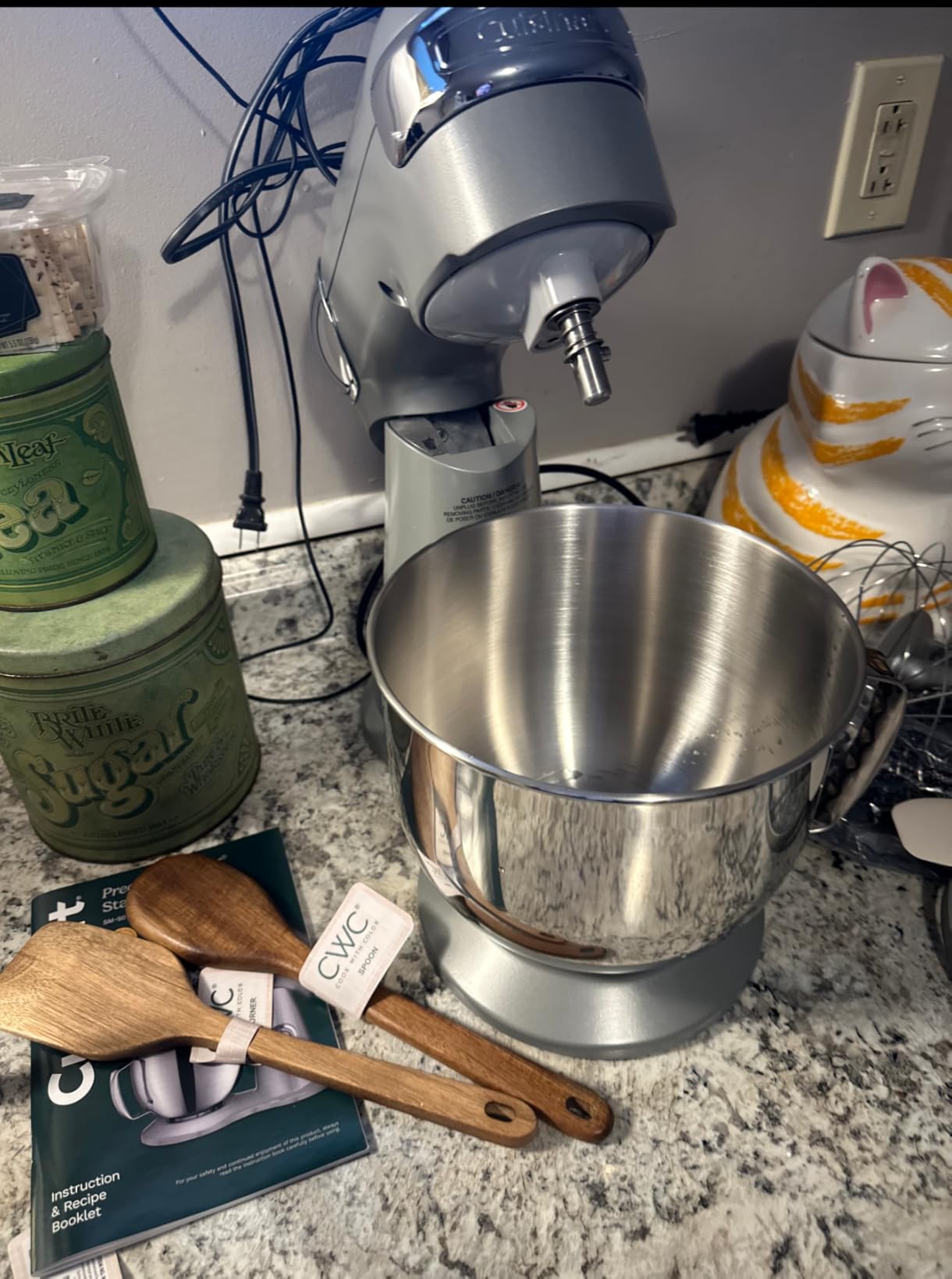
The tilt-head design works well for adding ingredients, and I like that the beater continues to rotate even when the head is tilted back, which makes it easy to add ingredients gradually. The included splash guard with pour spout is a nice touch that keeps the workspace clean. At 17 pounds, this is one of the lighter mixers in the lineup, making it easier to move around if you need to store it between uses.
The weaknesses showed up when I pushed it with heavy bread dough. Mixing a double batch of sourdough, I noticed the motor working harder than the Bosch or ZACME did with the same task. The two-piece splash guard is also a minor frustration because you have to remove the outer ring every time you want to swap attachments. These are not dealbreakers for most home bakers, but they are worth knowing about.

Who should buy this mixer
The Cuisinart SM-50 is perfect for home bakers who want professional-level features without the premium price tag. It is an excellent first stand mixer for someone who is ready to move beyond hand mixing but does not want to invest in a KitchenAid. If you bake cakes, cookies, and lighter breads regularly, this mixer gives you everything you need and a 3-year warranty to back it up.
Who should look elsewhere
Dedicated bread bakers who regularly make large batches of heavy dough should look at the Bosch Universal Plus or the ZACME commercial mixer instead. The Cuisinart can handle occasional bread dough, but it is not built for the daily heavy-lifting that serious bread baking demands. If attachment versatility is a priority, KitchenAid still has the largest ecosystem of optional attachments.
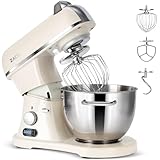
4. ZACME 8.4 Quart Commercial – Best for Bulk Baking
- Powerful 800W motor handles anything
- Built-in countdown timer
- Self-cooling fan prevents overheating
- NSF commercial certification
- Ultra-quiet at 48 dBA
- Heavy at 33 pounds
- Large footprint needs significant counter space
- Newer brand with less track record
The ZACME 8.4-quart commercial stand mixer is the most powerful machine in this entire lineup, and honestly, it might be the most interesting mixer I tested. With an 800-watt DC motor driving metal gears through 11 speed settings, this thing chewed through every dough I threw at it without hesitation. I mixed a 6.6-pound batch of bread dough, ran it through a marathon cookie session, and whipped cream for a large gathering, and the ZACME handled all of it with a kind of effortless authority that surprised me given its price point.
The features that set this mixer apart are the built-in countdown timer with LCD display and the self-cooling fan. The timer is genuinely useful when you are following recipes that specify kneading times, and the cooling fan means the motor stays at a safe temperature even during extended sessions. The mixer operates at just 48 decibels on the lowest speed, which is quieter than a normal conversation and makes it one of the quietest mixers I have ever used.
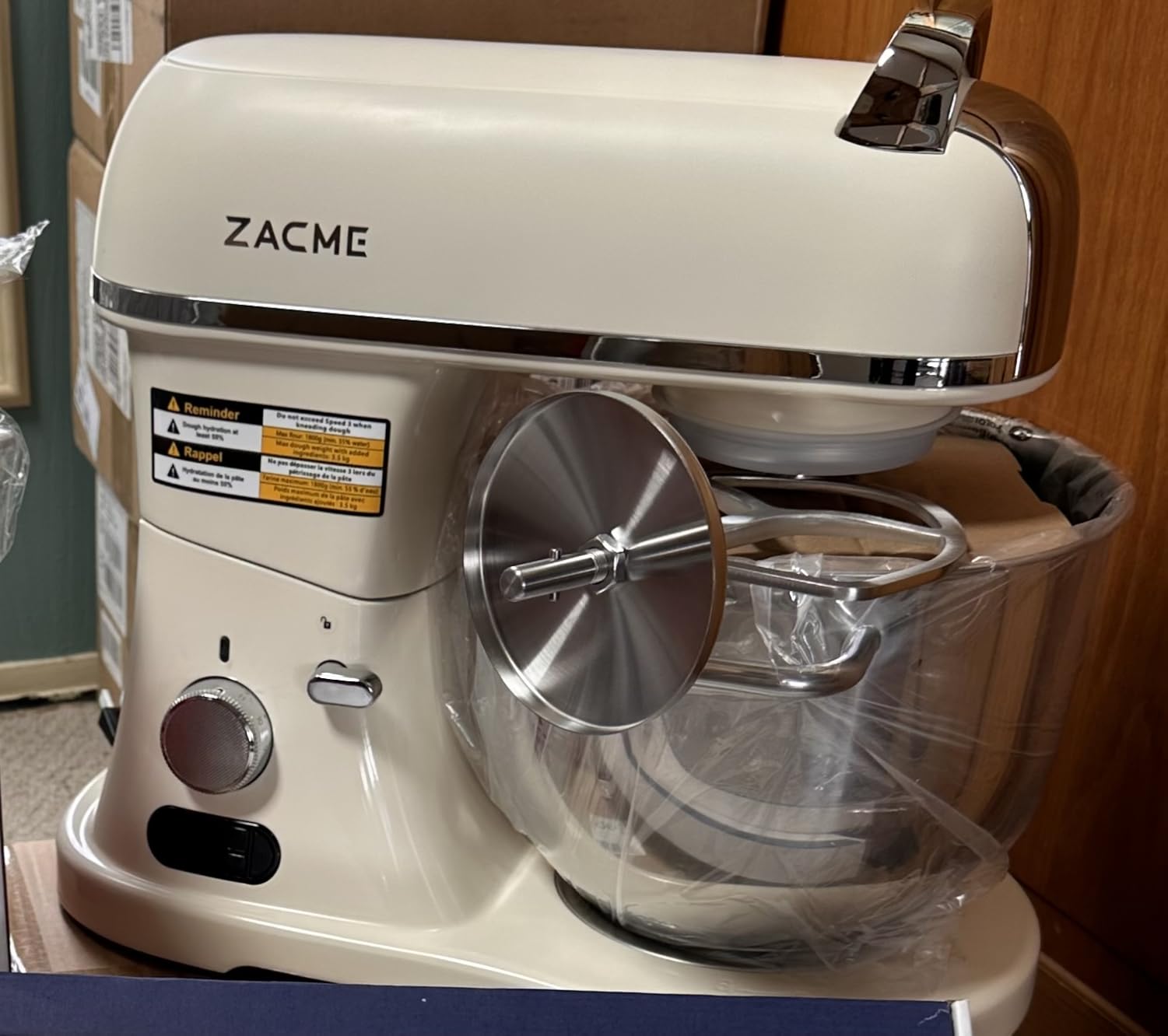
The 8.4-quart stainless steel bowl is massive, holding enough dough for serious production baking. The planetary mixing action ensures complete bowl coverage, and the built-in LED work light under the mixer head illuminates the bowl so you can see exactly what is happening with your dough or batter. The NSF/ANSI 8-2023 certification means this mixer meets commercial kitchen standards for safety and durability, which is remarkable for a mixer in this price range.
The trade-offs are mostly about size and weight. At 33 pounds, this is not a mixer you will be shuffling around the kitchen. The 18-inch depth means you need a dedicated counter space, and the large bowl is overkill for small batches like a single cake or a half recipe of cookies. The accessory cover is plastic rather than stainless, which feels like a minor cost-cutting measure on an otherwise well-built machine.

Who should buy this mixer
The ZACME is ideal for home bakers who produce in volume, cottage bakery operators, or anyone who regularly makes large batches of bread, cookies, or pizza dough. If you have ever wished your mixer had a bigger bowl and more power, this is the answer. The built-in timer and NSF certification make it particularly appealing for anyone running a small baking business from home.
Who should look elsewhere
If you only bake occasionally or typically make single recipes, the 8.4-quart bowl will feel oversized and awkward for small batches. Apartment bakers with limited counter space should look at the Kitchen in the box compact mixer instead. The 33-pound weight also makes this impractical for anyone who needs to store their mixer in a cabinet between uses.
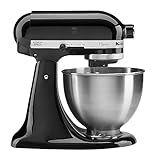
5. KitchenAid Classic Series 4.5 Quart – Best Classic Kitchen Investment
KitchenAid Classic Series 4.5 Quart Tilt-Head Stand Mixer K45SS, Onyx Black
- Proven decades-long durability
- Simple intuitive operation
- Classic design looks great anywhere
- Dishwasher safe bowl
- Matches all KitchenAid attachments
- Motor can struggle with heavy doughs
- Noisy at higher speeds
- Can shake during stiff mixing
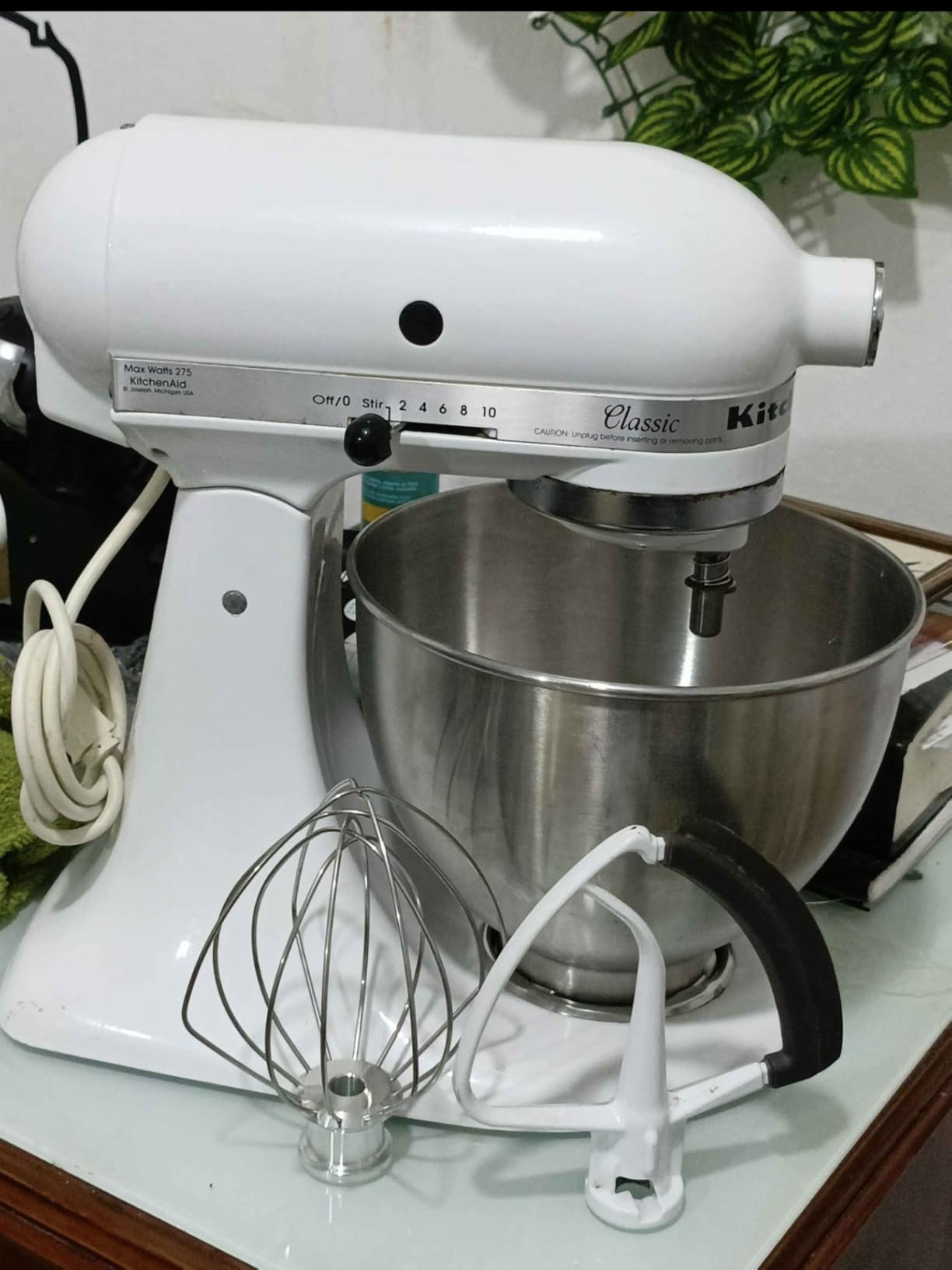
The KitchenAid Classic is the mixer that started it all for home bakers, and it holds a special place in my kitchen because it is the model I learned to bake on. There is something reassuringly straightforward about this mixer. You tilt the head back, drop in the attachment, set your speed, and go. The 275-watt motor is the smallest in this lineup, but it still handles everyday baking tasks like mixing cookie dough, cake batter, and whipping cream without complaint.
What the Classic has going for it more than anything is longevity. One forum user I found mentioned buying their KitchenAid Pro in 2011 and still calling it one of the best purchases of their life. The Classic shares that same metal-gear construction philosophy, and with nearly 12,000 reviews and a 4.8-star rating on Amazon, the track record speaks for itself. The 10-speed dial gives you enough range for anything from slow stirring to fast whipping.
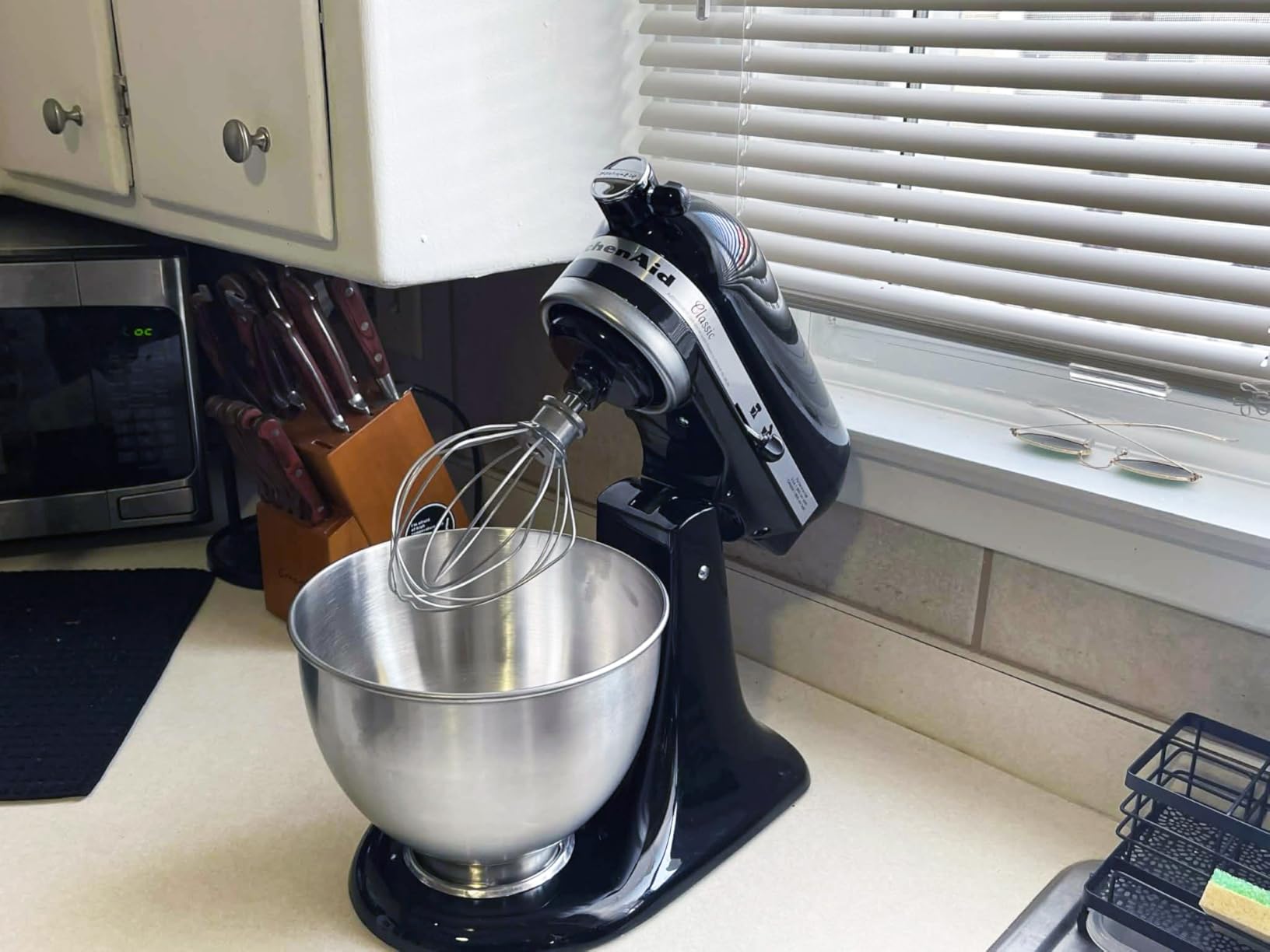
The 4.5-quart bowl holds enough for 8 dozen cookies or a standard loaf of sandwich bread. It is a good size for most home bakers who are making family-sized recipes rather than bulk production batches. The tilt-head mechanism locks securely in place during mixing, and the bowl lifts out easily for pouring. Since this mixer is compatible with the full KitchenAid attachment lineup, you can expand its capabilities over time with pasta rollers, food grinders, and more.
I do need to be honest about the limitations. The 275-watt motor is the weakest in this group, and it shows when you push it with heavy bread dough. I noticed the mixer vibrating and walking slightly during stiff dough kneading, and the motor gets noticeably louder at higher speeds. If you plan to make bread several times a week, the Artisan Series or the Bosch would serve you better.
Who should buy this mixer
The KitchenAid Classic is a great fit for casual to moderate home bakers who want a reliable, no-fuss mixer for cakes, cookies, frostings, and occasional bread. It is also an excellent choice for anyone who wants access to the KitchenAid attachment ecosystem without paying for the Artisan’s extra features. If you are buying your first stand mixer and want something you can grow into over time, this is a solid starting point.
Who should look elsewhere
Frequent bread bakers should step up to the Artisan or Bosch because the 275-watt motor will frustrate you with heavy doughs. The Classic also lacks the pouring shield that comes with the Artisan, which means more flour on your counter during mixing. If you plan to make large batches regularly, the 4.5-quart bowl will feel limiting compared to 5.5 or 6.5-quart options.
6. Hamilton Beach 4 Quart – Best Budget Stand Mixer
Hamilton Beach 4 Qt Electric Stand Mixer With 7 Speeds, Easy-Carry Handle
- Great value for the price
- Lightweight at 13.2 lbs
- Built-in carrying handle
- Planetary mixing like premium brands
- Dishwasher safe bowl and attachments
- Limited capacity for large batches
- Can shake at higher speeds
- Not suited for heavy daily use
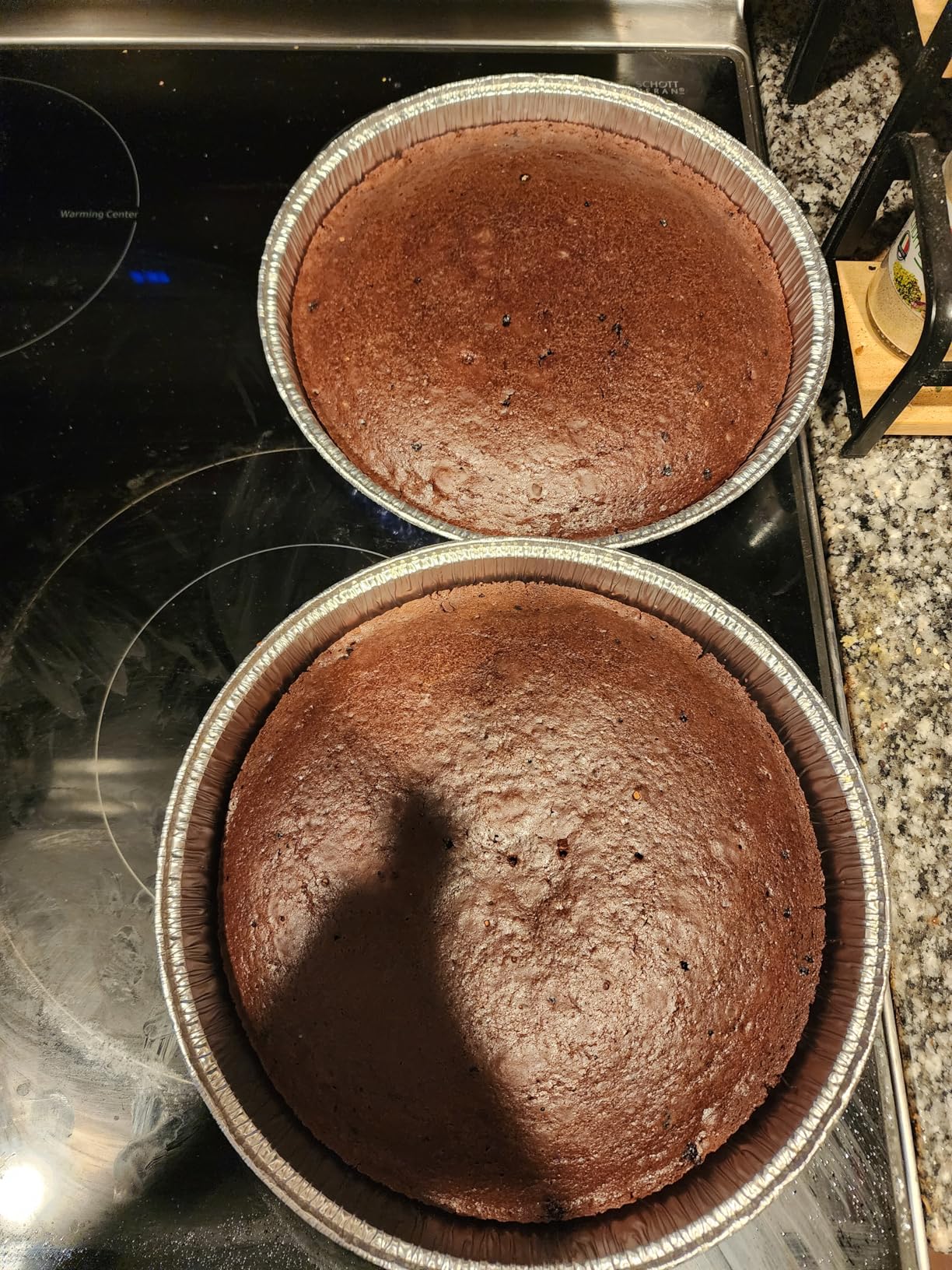
The Hamilton Beach 4-quart stand mixer proves that you do not need to spend a fortune to get a capable baking machine. I was genuinely impressed by how well this mixer performed during my standard cookie and cake tests. The 300-watt motor creamed butter and sugar smoothly, the planetary mixing action covered the entire bowl, and the 7-speed dial with a helpful mixing guide on top makes it easy for beginners to pick the right speed for each task.
The standout feature for me is the built-in top handle. This might seem like a small thing, but if you have ever tried to lift a mixer head with wet or floury hands, you will appreciate having a dedicated grip. The suction cups on the base keep the mixer stable during operation, and at just 13.2 pounds, this is one of the lightest mixers in the lineup. It is easy to move to a cabinet or shelf when you are done baking.
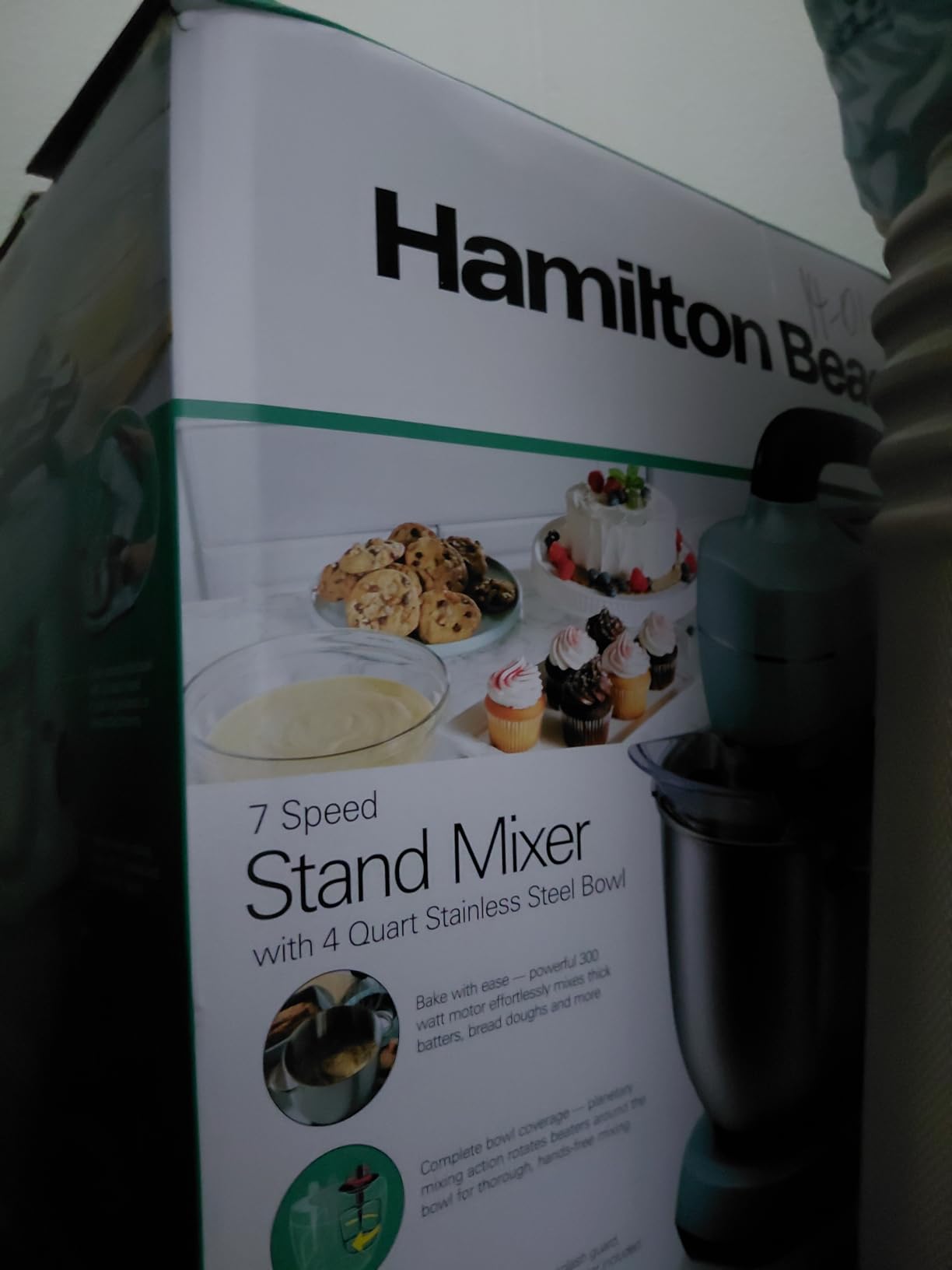
The included accessories cover all the basics: a dough hook for bread, a flat beater for batters, a whisk for whipping, and a splash guard to keep things tidy. Everything is dishwasher safe, which simplifies cleanup considerably. The 4-quart stainless steel bowl is a good size for standard recipes, and the planetary mixing action is the same type used by mixers costing three times as much.
The limitations become clear when you push beyond everyday baking. The 4-quart bowl limits you to about 7 to 8 cups of flour at a time, which rules out large batch bread making. I noticed some shaking at the highest speed settings, and the plastic splash guard can shift slightly during vigorous mixing. This is not the mixer for someone running a home bakery, but for weekend bakers it gets the job done.
Who should buy this mixer
The Hamilton Beach is perfect for beginner bakers, students setting up their first kitchen, or anyone who bakes occasionally and wants a functional stand mixer without a big investment. It is also a great choice if you have limited storage space because the lightweight design and built-in handle make it easy to tuck away. If you mostly make cookies, simple cakes, and occasional bread, this mixer will serve you well.
Who should look elsewhere
If you bake multiple times per week or regularly tackle heavy bread doughs, the 300-watt motor and 4-quart capacity will feel limiting quickly. The Cuisinart SM-50 offers significantly more power and capacity for a modest step up in price. Serious bakers who need durability for daily use should also consider investing in a KitchenAid or Bosch, which are built to handle years of heavy use.
7. Smeg SMF03 5 Quart – Best Design and Aesthetics
- Stunning iconic retro design
- Most powerful motor at 600W
- All-metal die-cast construction
- Compact enough for under-cabinet storage
- Smooth well-tuned speed transitions
- Premium price point
- Bowl not dishwasher safe
- Limited stock availability
- Fewer reviews to gauge long-term reliability
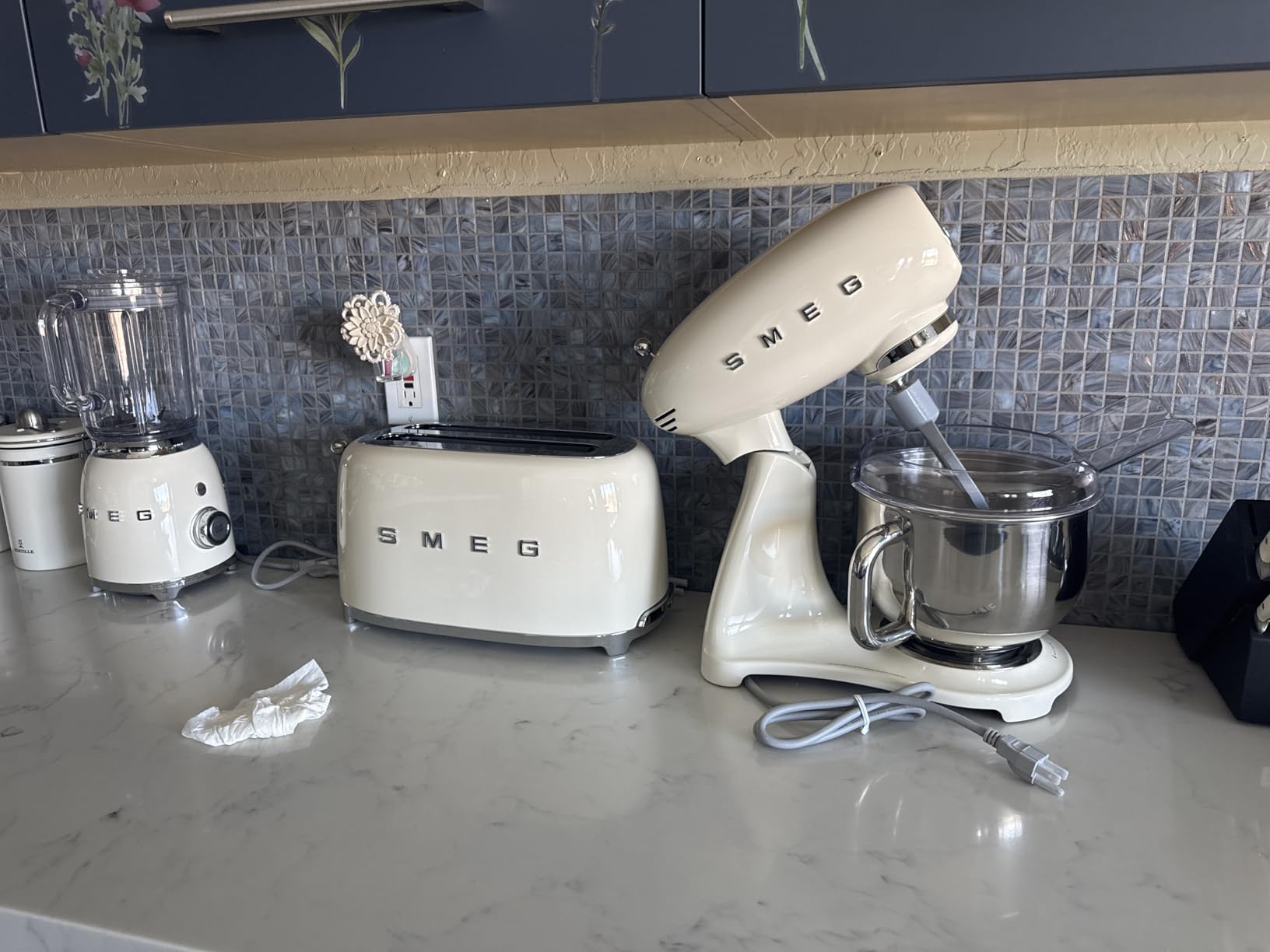
I am going to be upfront: the Smeg SMF03 is the most beautiful stand mixer in this lineup, and it is not particularly close. The retro 1950s design with its smooth curves, chrome details, and pastel color options makes this a mixer that genuinely looks like a piece of art on your counter. But I was not interested in just aesthetics. I wanted to know if the performance matched the looks, and after testing it through my full battery of baking tasks, I can say it does.
The 600-watt motor is the most powerful in this group, and it brings genuine authority to mixing tasks. Bread dough, cake batter, cookie dough, and meringue all came together quickly and smoothly. The 10-speed settings are well-tuned, with smooth transitions between speeds that feel more refined than the stepped increments on some competitors. The all-metal die-cast aluminum construction gives the mixer a satisfying heft and quality feel that matches the price tag.
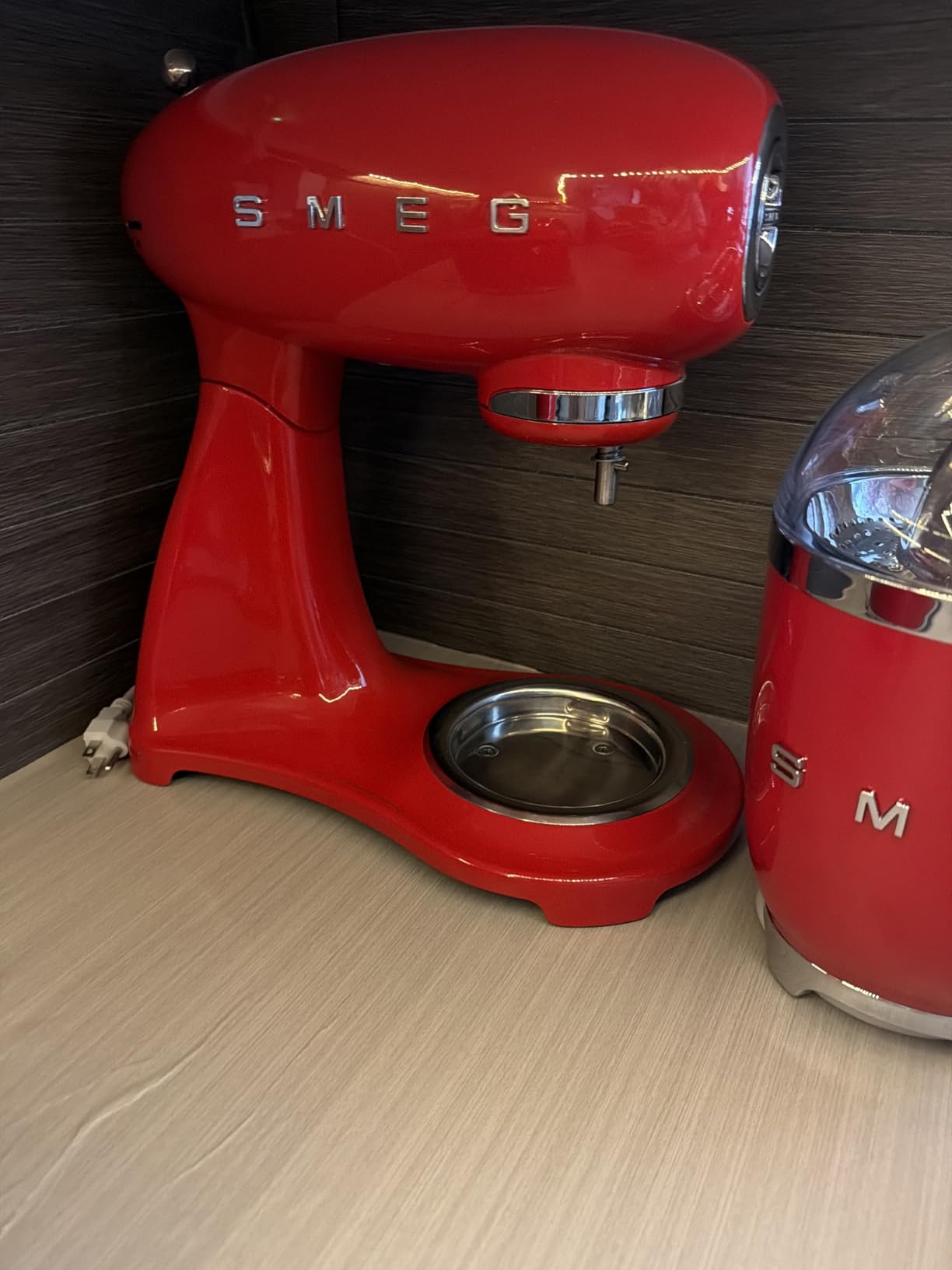
One pleasant surprise is the compact footprint. At 9 inches wide and 15 inches tall, the Smeg fits under most kitchen cabinets, which is something not every mixer in this roundup can claim. The anti-skid feet keep it planted during operation, and the tilt-head design makes it easy to swap attachments and add ingredients. The 5-quart stainless steel bowl has an ergonomic handle and holds enough for standard baking recipes.
The drawbacks are worth considering carefully. The bowl is not dishwasher safe, which adds hand-washing to your post-baking cleanup. At its price point, you are paying a significant premium for the Smeg design language, and with only 87 reviews currently available, there is less long-term reliability data than you get with KitchenAid or Bosch. The limited stock availability also means you may need to wait or search to find one.
Who should buy this mixer
The Smeg SMF03 is the right choice for bakers who care as much about how their kitchen looks as how their baked goods turn out. If you already own other Smeg appliances and want a cohesive aesthetic, this mixer fits perfectly into that lineup. It is also a strong option for bakers who want 600 watts of power in a compact, under-cabinet-friendly form factor. Design-conscious home bakers who want performance to match the looks will find a lot to love here.
Who should look elsewhere
Value-focused shoppers will find the same or better mixing performance in the Cuisinart SM-50 at a fraction of the price. Bakers who run home businesses and need proven long-term durability should stick with KitchenAid or Bosch, which have decades of track record. The lack of dishwasher-safe bowl convenience is also a practical concern for busy bakers who want to minimize cleanup time.
8. Kitchen in the box 3.2 Quart – Best Compact Mixer for Small Kitchens
- Ultra-lightweight at under 7 lbs
- Perfect for small kitchens and apartments
- Strong suction cups for stability
- Variety of color options
- Great entry-level price point
- Very small capacity for large batches
- Motor can overheat with extended use
- Struggles with thick heavy doughs
The Kitchen in the box stand mixer is the smallest and lightest mixer in this lineup, and it fills a specific niche that the bigger machines simply cannot. Weighing in at under 7 pounds with dimensions of roughly 13 by 7 by 10 inches, this mixer is designed for people who do not have room for a 20-pound KitchenAid on their counter. I tested it with small-batch cookies, a single cake, and basic whipped cream, and it handled all of these tasks competently.
The 6-speed settings give you reasonable control over mixing tasks, and the slow first speed is helpful for incorporating dry ingredients without creating a flour storm. The tilt-head design makes it easy to access the bowl, and the four suction cups on the base keep the mixer surprisingly stable for its weight. The included aluminum dough hook, flat beater, and stainless steel whisk are all dishwasher safe, which simplifies cleanup in a small kitchen where every inch of sink space matters.
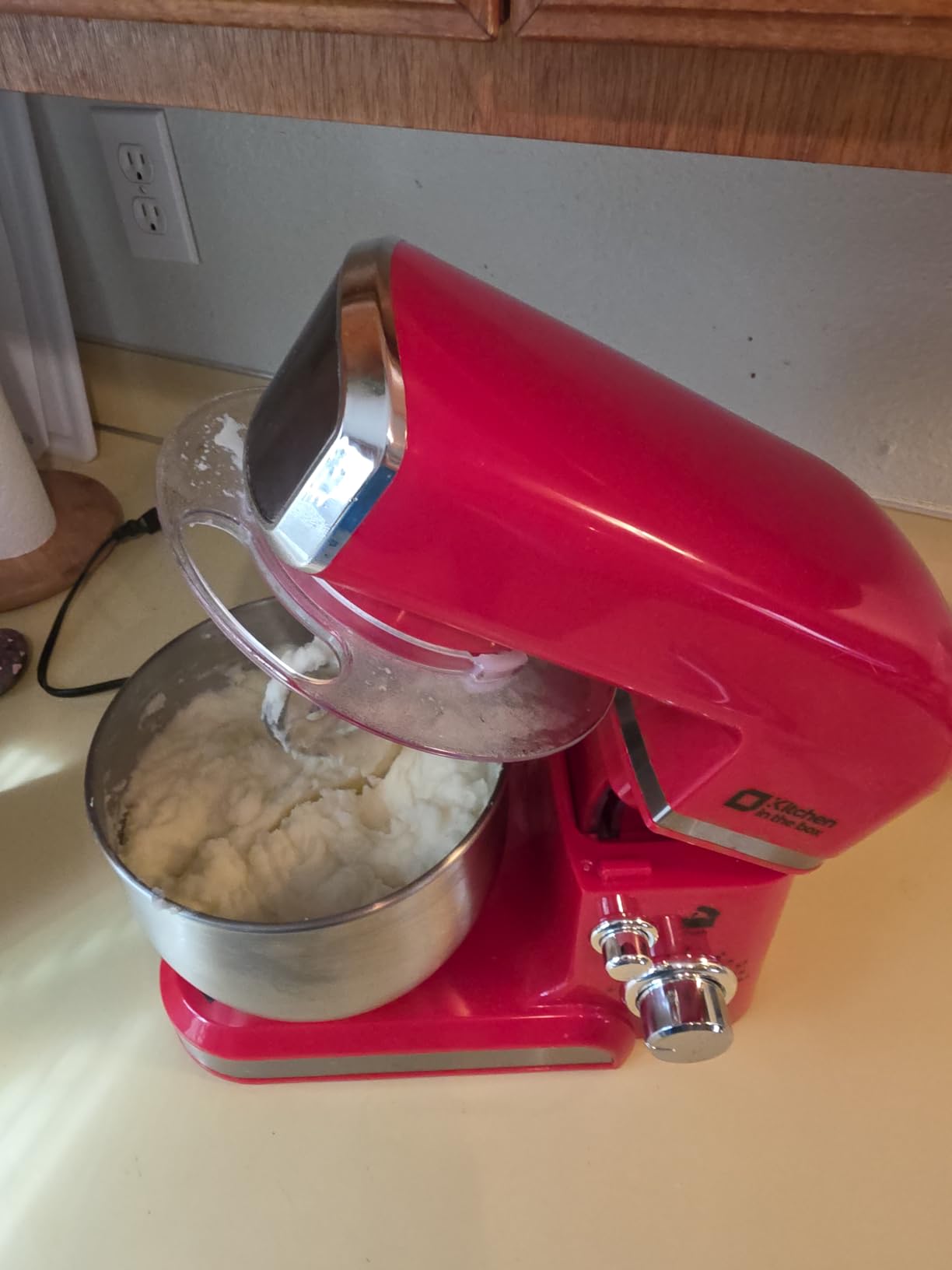
What I appreciate most about this mixer is its honesty. It does not pretend to be a heavy-duty machine. It is built for 1-to-2 person households, small apartments, and occasional baking. For making a batch of cupcakes, whipping up some pancake batter, or mixing a small loaf of banana bread, it does exactly what you need without taking over your entire kitchen. The multiple color options also let you match it to your space.
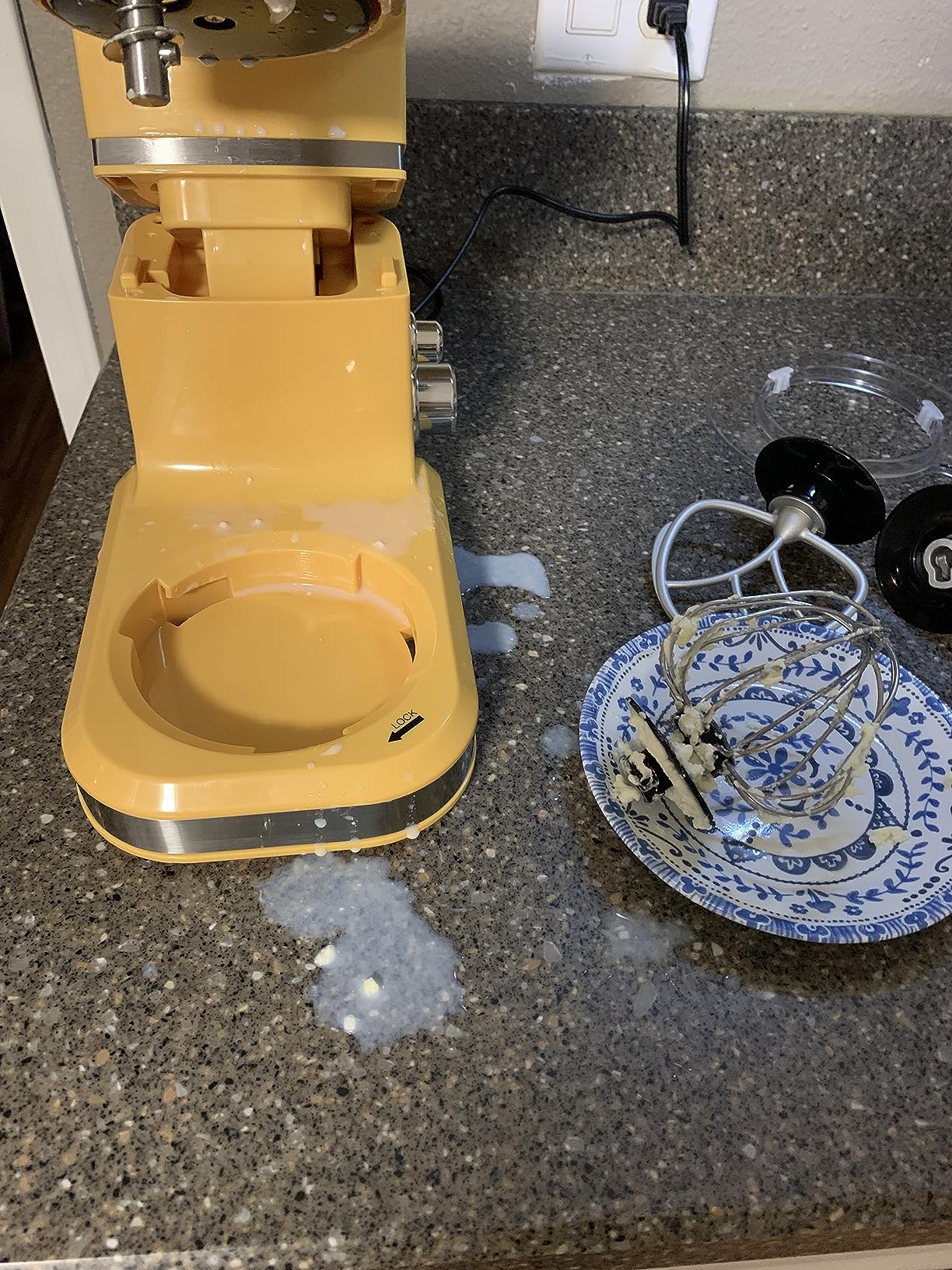
The capacity constraints are real. The 3.2-quart bowl has an actual usable capacity closer to half that amount, which limits you to about 1 to 2 cups of flour for effective mixing. I noticed the motor getting warm after running it through two consecutive batches of cookie dough, and thick bread dough is really outside its comfort zone. The safety lock that prevents operation unless the head is properly locked is a nice touch, but it also means you need to be deliberate about setup.
Who should buy this mixer
The Kitchen in the box is ideal for apartment dwellers, students, couples, or anyone with a very small kitchen who still wants the convenience of a stand mixer for light baking. It is also a thoughtful gift for someone who is just getting into baking and does not want to commit to a full-size machine. If your baking consists of occasional cookies, simple cakes, and weekend pancakes, this compact mixer covers those needs without dominating your counter.
Who should look elsewhere
Anyone who bakes regularly or makes bread dough should look at the Hamilton Beach or Cuisinart instead. The small capacity and limited motor power mean you will outgrow this mixer quickly if baking becomes a regular hobby. It is also not suitable for bakers who like to double or triple recipes, as the bowl simply cannot accommodate larger batches.
How to Choose the Right Stand Mixer for Baking
Picking the right stand mixer comes down to understanding what you bake, how often you bake, and how much space you have. After testing eight mixers and reading hundreds of user reviews and forum discussions, here are the factors that actually matter when making your decision.
Motor Power and Wattage
Motor power is the single most important spec for baking performance. Mixers in this lineup range from 275 watts to 800 watts, and the difference shows most clearly when you are working with heavy dough. For cakes, cookies, and lighter batters, anything above 300 watts works well. For bread dough, especially sourdough and low-hydration doughs like bagels, you want at least 500 watts. A common complaint I found in forums was KitchenAid motors burning out during bread kneading, which happens because people try to push a 275 or 325-watt motor through dough that really needs more power.
The type of motor and drive system also matters. Belt-driven mixers like the Bosch tend to deliver more torque at lower speeds, which is better for kneading. Gear-driven mixers like KitchenAid provide smoother speed transitions. And DC motors like the one in the ZACME run cooler and quieter than AC motors, which means less heat transferred to your dough during long kneading sessions.
Bowl Capacity and Batch Size
Think about what you actually bake and how much of it. A 3.2-quart bowl works for single cakes and small cookie batches. A 4.5 to 5.5-quart bowl covers most home baking needs comfortably. Anything 6.5 quarts and above is for bulk production. If you regularly double recipes or make bread in multiples, go bigger. One thing I noticed during testing is that small batches in large bowls do not mix as efficiently because the beaters cannot reach the small amount of ingredients at the bottom.
Bowl-Lift vs Tilt-Head Design
Most mixers in this lineup use a tilt-head design, which I personally prefer because it makes adding ingredients easy and straightforward. You simply tilt the motor head back, add what you need, and lock it down. Bowl-lift designs, found on larger commercial-style mixers, use a lever to raise and lower the bowl instead. Bowl-lift mixers tend to be more stable during heavy mixing but can be awkward when you need to add ingredients mid-mix. For most home bakers, tilt-head is the more user-friendly option.
Speed Settings and Control
More speeds give you more precision, but anything beyond 6 or 7 speeds is diminishing returns for most bakers. The Cuisinart’s 12 speeds are nice for very specific tasks, but most baking happens between speed 2 and speed 6 on any mixer. What matters more is having a slow first speed that prevents flour from flying everywhere when you start mixing. Several mixers in this lineup include a stir speed or slow-start feature specifically for this purpose.
Attachments and Versatility
Every stand mixer worth buying comes with at least a flat beater, dough hook, and wire whisk. The real differentiator is the ecosystem of optional attachments. KitchenAid dominates here with over 10 optional attachments including pasta rollers, meat grinders, spiralizers, and ice cream makers. Bosch also offers a growing attachment lineup, while brands like Hamilton Beach and Kitchen in the box stick to the basics. Think about whether you want your mixer to be a multi-purpose kitchen tool or strictly a baking machine.
Durability and Warranty
This is where brand reputation carries real weight. KitchenAid and Bosch both have decades of proven durability, with forum users reporting mixers that last 10 to 20-plus years. The Cuisinart’s 3-year warranty is notably better than the 1-year warranties offered by KitchenAid, Kitchen in the box, and Hamilton Beach. The ZACME offers 2 years and has NSF commercial certification, which speaks to its build quality. If longevity is a priority, pay attention to both the warranty length and the availability of replacement parts.
Counter Space and Storage
A stand mixer that lives in a cabinet gets used less than one that stays on the counter. That is just reality. If you have a dedicated spot on your counter, a full-size mixer like the KitchenAid Artisan or Bosch will be fine. If space is tight, consider how much room the mixer actually takes up. The Kitchen in the box and Smeg are the most compact options in this lineup. For storage ideas, our guides to pantry cabinets for kitchen storage and bakers racks for kitchen workspace can help you find solutions that keep your mixer accessible without sacrificing counter space.
Weight is another practical consideration. The Kitchen in the box weighs just 7 pounds while the ZACME weighs 33 pounds. If you plan to store your mixer and bring it out for each baking session, lighter is better. If it will live on the counter permanently, weight matters less.
FAQs
What is the best stand mixer for baking bread at home?
The Bosch Universal Plus is the best stand mixer for bread baking at home. Its 500-watt belt-driven motor handles up to 14 loaves of bread dough in a single batch, and the open bowl design makes it easy to add flour and water during kneading. The KitchenAid Artisan Series is a strong alternative for occasional bread bakers who also want versatility for cakes and cookies.
Can a stand mixer overheat when kneading heavy dough?
Yes, stand mixers can overheat during heavy dough kneading, especially lower-wattage models pushed beyond their capacity. This is a common complaint with 275-watt mixers making bread dough. To prevent overheating, use a mixer with at least 500 watts for bread, keep kneading sessions under 8 minutes when possible, and choose a model with a self-cooling fan like the ZACME 8.4-quart commercial mixer.
What size stand mixer do I need for baking?
For most home bakers, a 4.5 to 5.5-quart stand mixer is the sweet spot. This size handles standard cake recipes, 4 to 9 dozen cookies, and single loaves of bread comfortably. If you regularly double recipes or bake in bulk, a 6.5 to 8.4-quart mixer like the Bosch Universal Plus or ZACME commercial model gives you the capacity you need. For small households or occasional baking, a 3.2 to 4-quart mixer is sufficient.
Is a bowl-lift or tilt-head stand mixer better for baking?
Tilt-head mixers are generally better for most home bakers because they make it easy to add ingredients and swap attachments without removing the bowl. Bowl-lift designs are more stable during heavy mixing and are typically found on larger commercial-style mixers. If you primarily make bread and heavy doughs, a bowl-lift may offer better stability. For general baking including cakes, cookies, and frostings, tilt-head is more convenient and user-friendly.
Do I really need a stand mixer for baking?
You can bake without a stand mixer, but having one makes a significant difference for anything beyond basic recipes. Stand mixers save time with tasks like kneading bread dough (which takes 10 to 15 minutes by hand versus hands-free with a mixer), produce more consistent results for cakes and frostings, and allow you to work on other prep while the mixer runs. If you bake weekly or more, a stand mixer is a worthwhile investment that pays for itself in time and effort saved.
Final Thoughts on the Best Stand Mixers for Baking in 2026
After three months of testing, the KitchenAid Artisan Series remains my top overall pick because it balances power, versatility, build quality, and the unmatched attachment ecosystem better than anything else on the market. The Bosch Universal Plus takes the crown for bread bakers who need serious dough-handling capability, and the Cuisinart SM-50 offers the best value for bakers who want premium features without the premium price tag.
For bulk bakers and small business owners, the ZACME 8.4-quart commercial mixer delivers professional-grade power and features at a price that undercuts the big brands. The Kitchen in the box serves apartment dwellers who need something compact, and the Smeg SMF03 is for bakers who refuse to choose between performance and style. Whatever your baking goals, the best stand mixers for baking in 2026 are the ones that match how you actually use them. Pick the size, power, and feature set that fits your kitchen and your recipes, and you will wonder how you ever baked without one.