
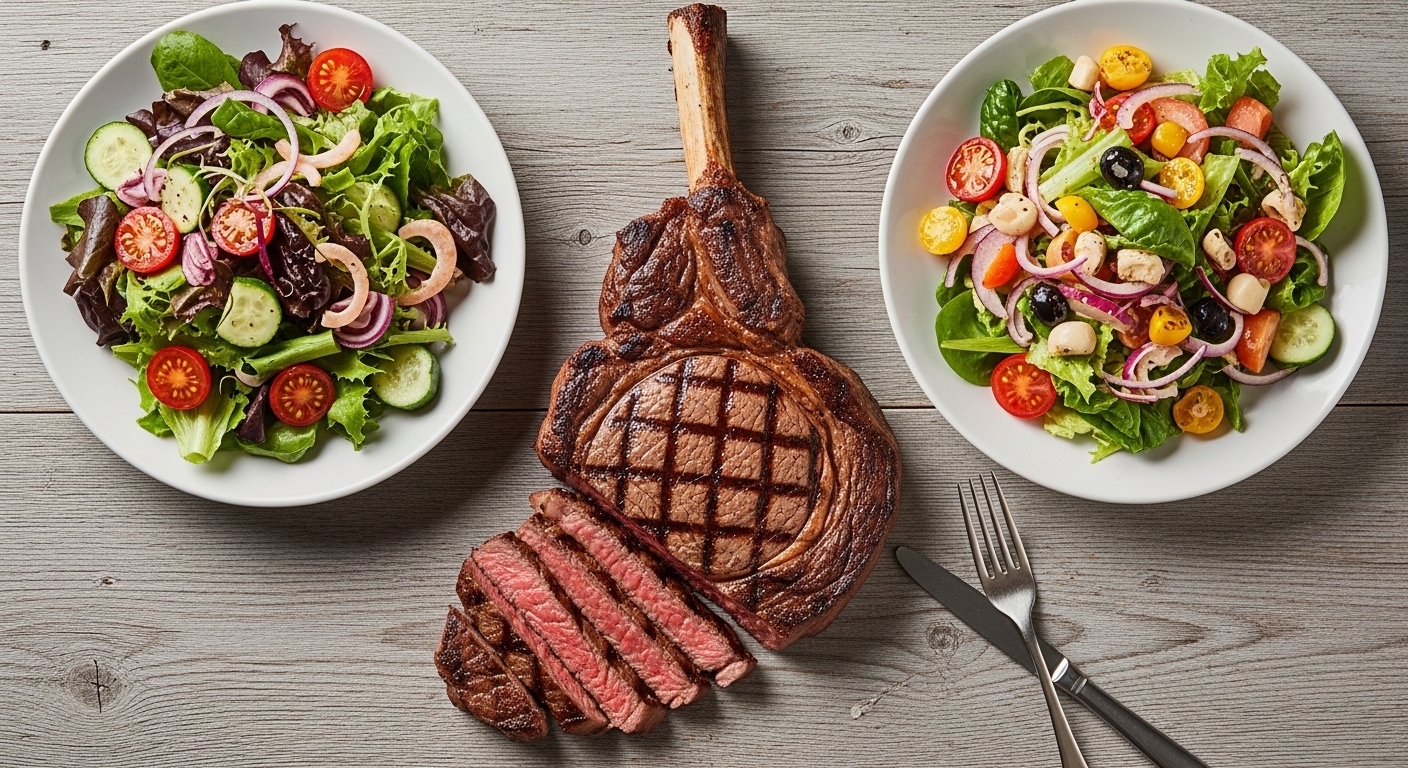
Few things compare to the satisfaction of cutting into a perfectly cooked steak, especially when it is accompanied by a salad that balances the meal. What salad goes with steak is a question that comes up often in our kitchen, whether we are planning a casual weeknight dinner or an evening of entertaining friends. The right salad does more than fill space on the plate; it offers a crisp, refreshing counterpoint to the richness of the meat.
I have learned through years of hosting that the best steak salads share a few key traits. They feature acidic dressings that cut through the fat, peppery greens that wake up the palate, and simple preparations that come together in under ten minutes. In 2026, home cooks are looking for elegant solutions that do not require restaurant training or hard-to-find ingredients.
This guide covers the six salad styles that consistently earn a place alongside steak in our home. From the classic wedge to a simple tomato and onion combination that reminds me of summers in Italy, these are the pairings that work every time. We will also explore how to build a proper vinaigrette and which wines bring out the best in both components of your plate.
Table of Contents
Quick Answer: Top 5 Salads to Serve with Steak
If you are short on time, here are the five salads that pair most successfully with steak. Each one brings a different strength to the table, from peppery bite to cooling crunch.
- Arugula with lemon and parmesan: Peppery greens with bright citrus and salty cheese
- Classic wedge salad: Iceberg lettuce with blue cheese dressing and bacon
- Simple green salad with red wine vinaigrette: Mixed greens in a French bistro style
- Tomato and onion salad: Beefsteak tomatoes with red onion and olive oil
- Caesar salad: Romaine with creamy dressing and parmesan
These options represent the spectrum of what works: acidic, crisp, and cooling elements that refresh the palate between bites of rich meat. Choose based on your mood and what you have on hand.
1. Arugula Salad with Lemon and Parmesan
Why It Works with Steak
Arugula brings a natural peppery bite that stands up to the bold flavor of beef without competing with it. The leaves are tender enough to eat whole yet sturdy enough to hold a light dressing without wilting immediately. This combination makes arugula one of the most reliable choices when you want something that feels special but requires minimal effort.
The addition of lemon provides the acidity needed to cut through the fat of a well-marbled steak. Parmesan contributes salt and umami that echo the savory depth of the meat. Together, these three ingredients create a salad that feels complete without needing twenty additional components.
How to Build It
Start with fresh baby arugula, which offers a milder pepper flavor than mature leaves. Wash and dry the greens thoroughly; wet arugula will dilute your dressing and create a pool at the bottom of the bowl. For the dressing, whisk together fresh lemon juice, extra virgin olive oil, a pinch of salt, and a small amount of dijon mustard to help emulsify the mixture.
Shave parmesan thinly using a vegetable peeler so the cheese melts slightly against the dressed greens. Toss everything gently just before serving, as arugula wilts quickly once dressed. If you want to add more substance, sliced avocado pairs beautifully with this combination and adds a creamy element that complements both the steak and the greens.
This salad works particularly well with ribeye or New York strip steaks, where the fat content benefits from the acidity of the lemon. The entire preparation takes five minutes, making it ideal for weeknight dinners.
2. Classic Wedge Salad
The Steakhouse Classic
The wedge salad has earned its place in steakhouse culture for good reason. A crisp head of iceberg lettuce, quartered and left intact, provides the cooling crunch that contrasts perfectly with a hot steak. The presentation is dramatic, the preparation is nearly foolproof, and the result satisfies every time.
What makes the wedge work is its structural integrity. Unlike loose greens that can become soggy, iceberg holds up to creamy blue cheese dressing and warm steak juices without losing its character. The combination of cool lettuce, tangy dressing, and salty bacon creates a trifecta of flavors that enhances rather than competes with the meat.
Assembly Tips
Remove the outer leaves of a fresh iceberg lettuce head and cut it into quarters through the core, leaving the core intact so the wedge stays together. Place each wedge on a chilled plate. Drizzle generously with homemade or quality store-bought blue cheese dressing, ensuring some dressing settles between the layers of lettuce.
Top with crumbled bacon, diced tomatoes, and thinly sliced red onion. Some prefer to add chopped chives or fresh cracked black pepper as a final touch. Serve immediately while the lettuce remains cold and crisp.
For a variation, try substituting gorgonzola for traditional blue cheese, or add toasted walnuts for extra crunch. The wedge salad pairs beautifully with filet mignon or porterhouse steaks, offering a nostalgic steakhouse experience at home.
3. Simple Green Salad with Red Wine Vinaigrette
French Bistro Style at Home
This is the salad I make most often in our home because it delivers sophistication with minimal effort. Mixed greens or a spring mix blend provide variety in texture and flavor, while a proper red wine vinaigrette ties everything together. The French bistro approach treats the salad as a palate cleanser, something to refresh between bites of rich food rather than a heavy course on its own.
The key to this style is restraint. Too many ingredients muddy the experience. Good greens, a well-balanced dressing, and perhaps a light sprinkling of something salty is all you need. This simplicity is what makes it the perfect companion for steak, similar to our guide to salads that pair with lasagna in its straightforward approach to balancing hearty main dishes.
Vinaigrette Basics
A classic red wine vinaigrette follows a simple ratio: three parts oil to one part acid. For a single salad serving, combine one tablespoon of red wine vinegar with three tablespoons of extra virgin olive oil. Add a teaspoon of dijon mustard to emulsify the mixture, a minced shallot for depth, and salt and pepper to taste.
Whisk vigorously until the dressing appears slightly creamy and holds together. Taste and adjust the acid level based on your preference and the richness of your steak. Fattier cuts like ribeye can handle a more acidic dressing, while leaner cuts pair better with a milder balance.
Dress the greens just before serving, using only enough vinaigrette to lightly coat the leaves without pooling at the bottom of the bowl. Finish with shaved parmesan or a few crumbles of feta cheese if desired.
4. Tomato and Onion Salad
The Simplest Elegant Option
Sometimes the best salads are the ones with the fewest ingredients. A tomato and onion salad, dressed simply with olive oil and lemon juice, offers bright acidity and fresh flavor that works beautifully alongside grilled or pan-seared steak. This combination appears across Mediterranean cooking traditions for good reason: it works.
Choose beefsteak tomatoes when they are in season for the best flavor and juiciness. Slice them thickly and arrange them on a platter with thinly sliced red onion rings scattered over the top. Drizzle with quality extra virgin olive oil, a squeeze of fresh lemon juice, and a generous sprinkle of coarse salt and cracked black pepper.
Some variations include fresh basil leaves or a light dusting of dried oregano. A sprinkle of feta cheese adds a salty counterpoint that complements both the tomatoes and the steak. This salad is particularly suited to outdoor grilling situations and summer dining, when heavy cream-based dressings feel out of place.
The acidity of the tomatoes and lemon helps cut through the fattiness of the meat, while the cool temperature of the salad provides contrast to the hot steak. Preparation takes three minutes, making this the fastest option in our collection.
5. Caesar Salad
A Timeless Pairing
Caesar salad and steak have been sharing plates for decades, and the combination remains popular because it works on multiple levels. The creamy, garlicky dressing echoes the savory qualities of beef, while the crisp romaine provides textural contrast. Parmesan and croutons add salt and crunch that complete the experience.
The success of this pairing depends on the quality of the dressing. A proper Caesar dressing contains egg yolk, lemon juice, olive oil, garlic, anchovy, and parmesan. The result should be creamy and intensely flavored, capable of standing up to a bold steak without being overwhelmed.
For the best results, tear romaine leaves rather than cutting them; torn edges hold dressing better than knife-cut surfaces. Toss thoroughly with the dressing just before serving, ensuring each leaf carries enough flavor. Add homemade or quality store-bought croutons for crunch, and finish with additional shaved parmesan and fresh cracked black pepper.
This salad pairs well with any cut of steak, from flank to tenderloin. The richness of the dressing complements leaner cuts, while the acid in the lemon helps balance fattier options. For a lighter version, reduce the dressing amount and add extra lemon.
6. Seasonal Variations for Year-Round Enjoyment
Summer Salads
When tomatoes are at their peak and the kitchen feels too hot for complex cooking, lighter salads make the most sense. A cucumber and herb salad with dill and mint offers cooling refreshment alongside a grilled steak. Watercress with lemon and olive oil provides peppery bite without heaviness.
Consider adding fresh corn kernels cut from the cob, or thinly sliced peaches for a sweet-savory combination that works beautifully with grilled flank steak. These salads should be dressed more lightly than their winter counterparts, letting the fresh ingredients speak for themselves.
Winter Salads
Colder months call for heartier greens that can stand up to richer dressings and warming steak preparations. Radicchio and endive, with their bitter complexity, pair beautifully with a balsamic vinaigrette and a pan-seared ribeye. Shaved Brussels sprout salads with apples and walnuts offer substance and seasonal flavor.
Roasted vegetables can also become salad components in winter. Try roasted beets with goat cheese and arugula, or roasted squash with spinach and toasted pecans. These combinations provide the comfort food satisfaction that winter dining demands while still offering the balance that makes steak dinners successful.
The Perfect Vinaigrette Formula
Understanding how to build a proper vinaigrette transforms your ability to pair salads with steak. The basic formula is simple: three parts oil to one part acid, plus seasoning. This ratio provides enough fat to carry flavor while maintaining the acidity needed to balance rich meat.
For the oil component, extra virgin olive oil is the standard choice, though you might experiment with neutral oils like avocado or grapeseed for milder dressings. The acid component offers more variation possibilities: red wine vinegar, balsamic vinegar, fresh lemon juice, or even a combination of these.
An emulsifier helps the oil and acid combine smoothly. Dijon mustard is the most reliable option, adding both binding properties and flavor. Alternatively, a small amount of honey or maple syrup can help stabilize the emulsion while adding subtle sweetness.
To build your dressing, combine the acid, emulsifier, salt, and pepper in a bowl. Whisk while slowly drizzling in the oil until the mixture appears slightly thickened and uniform. Taste and adjust, remembering that the dressing should be more intensely flavored than you might expect, as it will be distributed across a full plate of greens.
For steak pairings specifically, I tend toward more acidic dressings than I might use for other meals. The extra bite helps cut through the fat of the meat and refreshes the palate between bites.
Wine Pairing Suggestions
The right wine can elevate both your steak and salad from good to memorable. The key is matching the intensity of your wine to your steak cut while considering how the salad’s acidity will interact with both.
For rich, fatty cuts like ribeye, choose a bold Cabernet Sauvignon or Malbec. The tannins in these wines stand up to the fat, while the salad’s acidic dressing prevents the combination from feeling heavy. With leaner cuts like filet mignon, a medium-bodied Merlot or Pinot Noir works beautifully, especially alongside an arugula or green salad with lighter dressing.
The acidity in your salad dressing actually helps the wine pairing by cleansing the palate between sips. A sharp vinaigrette can make an otherwise tannic wine feel smoother and more approachable. This is why the classic steakhouse combination of Cabernet, Caesar salad, and ribeye has remained popular for generations.
For white wine drinkers, a full-bodied Chardonnay with buttery notes can work with leaner steaks and creamy salads like the classic wedge. However, most steak and salad combinations benefit more from red wine pairings that echo the savory depth of the meat.
Frequently Asked Questions
Is salad a good side for steak?
Yes, salad is an excellent side for steak. The crisp texture and acidic dressing provide a refreshing contrast to rich, fatty meat. Salad also adds nutritional balance and visual appeal to the plate while preventing the meal from feeling too heavy.
What is the 3-3-3 steak rule?
The 3-3-3 rule is a cooking method for pan-seared steak: sear for 3 minutes on one side, 3 minutes on the other side, then rest for 3 minutes. This technique works well for steaks about one inch thick and produces a medium-rare result with a nice crust.
What side dishes go well with steak?
Beyond salad, excellent steak sides include roasted potatoes, grilled asparagus, sautéed mushrooms, creamed spinach, garlic bread, and roasted vegetables. For a complete steakhouse experience at home, choose one starchy side and one vegetable alongside your salad.
Should salad be room temperature or cold with steak?
Salad is best served cool but not ice-cold when paired with steak. Greens straight from the refrigerator can be too cold and mute the flavors of the dressing. Remove salad ingredients from the fridge about 10 minutes before serving for optimal taste and texture contrast with hot steak.
Conclusion
Finding the right answer to what salad goes with steak comes down to balancing richness with refreshment. The best options, arugula with lemon, the classic wedge, simple greens with vinaigrette, tomato and onion salad, and Caesar salad, all share common traits: acidity to cut through fat, crisp texture for contrast, and simple preparation methods.
In 2026, home cooking continues to trend toward approachable elegance, and these salad pairings deliver exactly that. Whether you are grilling outdoors in July or searing steaks in a cast iron pan in February, the right salad transforms a good steak dinner into a memorable one. Start with the basics, master your vinaigrette technique, and soon you will develop your own signature combinations that guests request by name.