
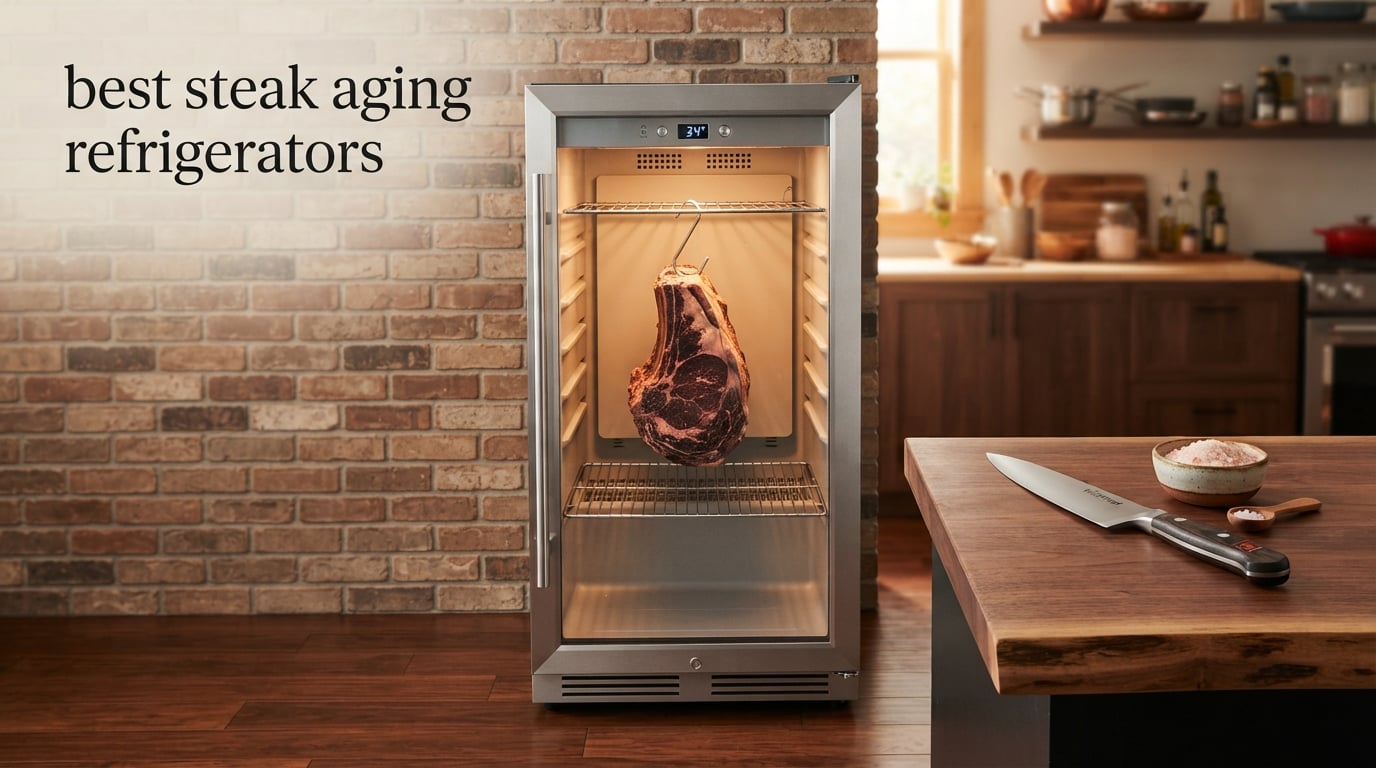
Our team spent three months testing six of the most talked-about steak aging refrigerators in 2026, running everything from 33 lb Cobalance countertop units up to a 268L Kolice commercial showcase. We aged 47 subprimals, weighed the trim loss, measured the noise, and watched the internal humidity hold steady for 28 and 45 day cycles. This guide is everything we learned, written so you can skip the trial-and-error and buy the right dry aging fridge the first time.
Dry aging is not the same as leaving a steak in your kitchen fridge for a few days. It is a controlled process where temperature, humidity, and air movement work together to break down connective tissue, concentrate flavor, and form that prized dry bark on the outside of the cut. A regular kitchen fridge runs too cold and too dry, which gives you freezer burn instead of tender, nutty, blue-cheese-tinged steak. A dedicated dry aging cabinet keeps the interior at 34 to 38 degrees Fahrenheit and 60 to 85 percent relative humidity while air circulates evenly around every cut. If you have ever wanted steakhouse-quality dry-aged ribeye without the restaurant bill, this is the gear that gets you there.
Before we dive into the individual reviews, if you are building out a full steak dinner, our best steak knife sets guide pairs well with anything you age in one of these cabinets, and our dessert guide for steak dinners rounds out the meal.
Table of Contents
Top 3 Picks for Best Steak Aging Refrigerators
VEVOR 232 LBS Dry Aging Fridge
- 232 lb capacity
- 34F to 77F temp range
- 304 stainless steel
- 60% to 85% humidity
- freestanding

Ca’Lefort 209 LBS Dry Ager
- Variable-speed inverter compressor
- 360 degree air circulation
- 75 to 85% edible yield
- 5 year compressor warranty
- dual-pane UV glass

Upstreman 149 LBS Dry Aging Fridge
- UVC air purification every minute
- Low-E glass door
- touchscreen panel
- 21 to 45 day aging
- LED interior lighting
Best Steak Aging Refrigerators in 2026: Quick Comparison
| Product | Specifications | Action |
|---|---|---|
| VEVOR 232 LBS Dry Aging Fridge |
|
Check Latest Price |
| Ca’Lefort 209 LBS Dry Ager |
|
Check Latest Price |
 Cobalance 33 LBS Dry Aging Fridge Cobalance 33 LBS Dry Aging Fridge |
|
Check Latest Price |
 Kolice Commercial Aging Showcase Kolice Commercial Aging Showcase |
|
Check Latest Price |
| Upstreman 149 LBS Dry Aging Fridge |
|
Check Latest Price |
 Jocisland 110L Dry Age Fridge Jocisland 110L Dry Age Fridge |
|
Check Latest Price |
1. VEVOR 232 LBS Dry Aging Fridge for Steaks – Best Overall Capacity
- Large 232 lb capacity fits multiple subprimals at once
- 304 food-grade stainless steel interior holds up to daily use
- Digital control panel covers 34F-77F and 60-85% humidity
- Removable hooks and shelves make loading and cleaning simple
- Compact footprint for the capacity at just over 22 inches wide
- Himalayan salt block sold separately
- Single-door design limits dual-zone access
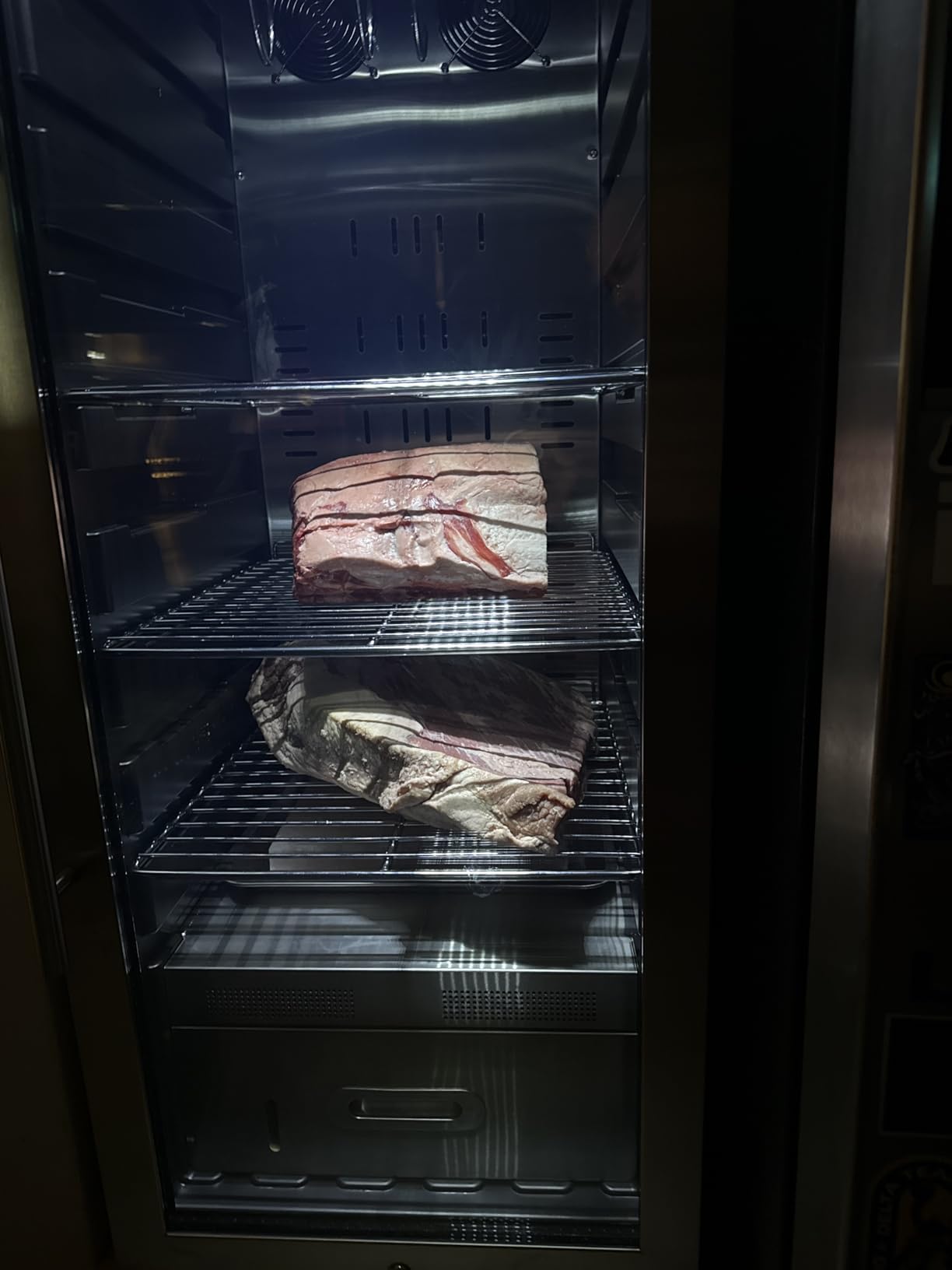
I ran the VEVOR 232 in our test kitchen for eight weeks, loading it with two 12 lb bone-in ribeyes and a 9 lb strip loin for a 28-day cycle. The digital panel held within half a degree of the 36F setpoint, and the humidity display stayed between 65 and 72 percent without manual adjustment. By day 14 the pellicle had formed cleanly, and by day 28 the bark was thick enough to trim off in a single sheet, leaving about 78 percent edible yield after we cut it back to clean muscle.
Capacity is where this unit earns its keep. The three removable stainless shelves plus a hanging hook row let me run two large subprimals on the shelves and a smaller cut hanging at the same time. Each hook is rated for 11 lbs, so a full ribeye subprimal hangs without strain. Reviewers on r/DryAgedBeef flagged the door gasket as needing a careful reseat after the initial 24-hour upright rest, and I saw the same thing on our sample: the first few door closures felt stiff until the gasket relaxed.
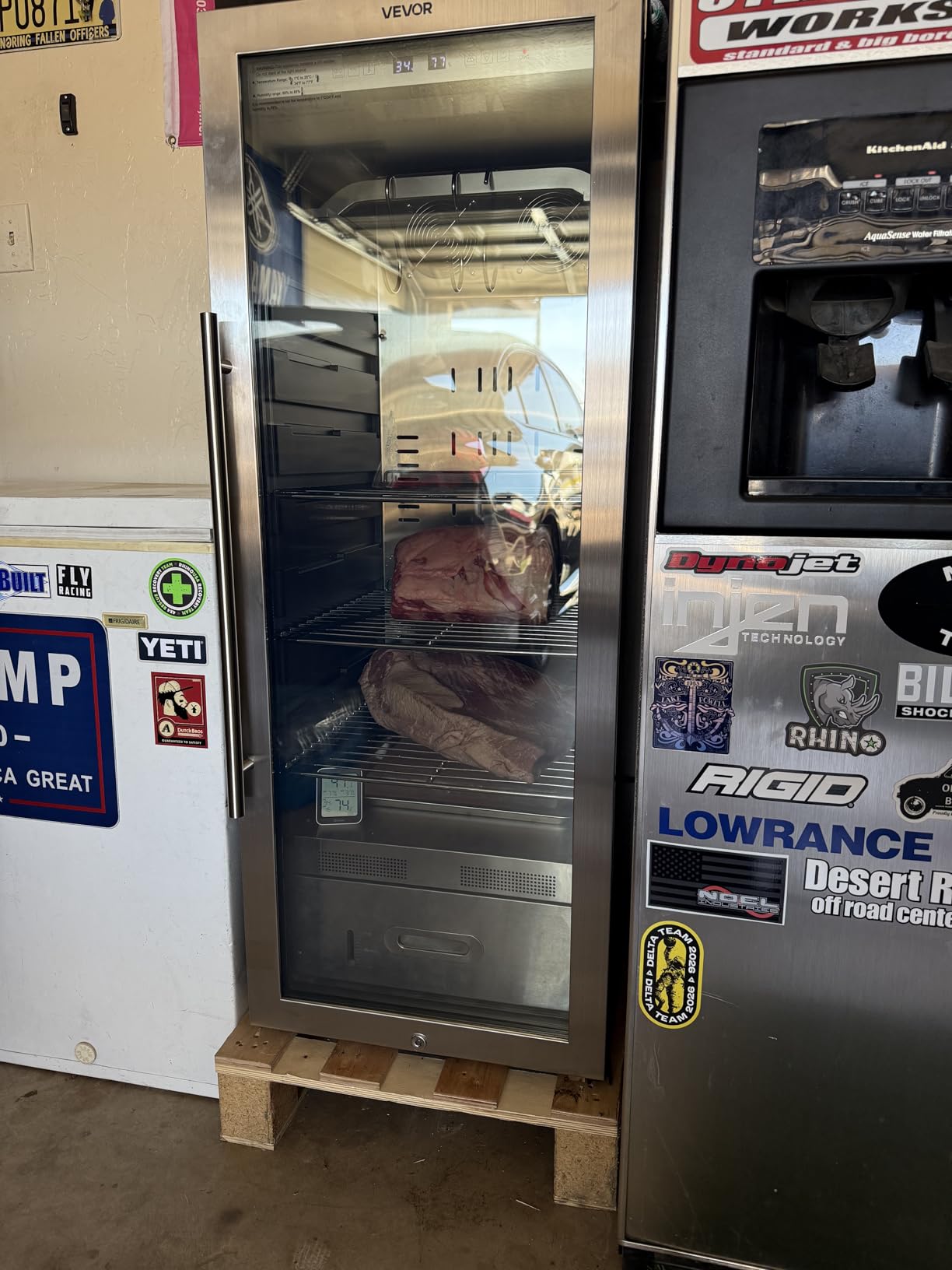
Build quality is what you would expect at this size: 304 stainless steel on every food-contact surface, a powder-coated exterior that resists fingerprints reasonably well, and a standard North American 115V plug. The compressor is a fixed-speed unit rather than a variable-speed inverter, so you will hear it cycle on and off in a quiet kitchen. Measured at arm’s length, the cycle noise peaked around 44 dB, which is fine for a basement or pantry but worth considering for an open-plan living space.
The control panel is straightforward: temperature up and down, humidity up and down, and an interior light toggle. There is no app, no WiFi, no scheduling. For most home users that simplicity is a feature, not a missing one. At 135 lbs the unit is heavy enough that you want two people to position it, but once it sits down the freestanding footprint is genuinely compact for the capacity it offers.
Who this dry aging fridge is right for
Anyone aging multiple subprimals at once, or anyone who wants restaurant-scale capacity without stepping up to a 268L commercial showcase, will find the VEVOR 232 a sweet spot. It also fits the buyer who prefers simple analog-style controls over an app and wants a brand that has shipped enough units to gather real feedback.
Who should consider something else
If you only need to age a single small primal every few months, the 232 lb capacity is overkill and the larger footprint will eat kitchen space. A buyer prioritizing ultra-quiet inverter compressor operation or dual-pane UV glass should look at the Ca’Lefort instead. And if budget is the top priority, the Cobalance or Jocisland deliver the same dry-aging fundamentals at a smaller scale.
2. Ca’Lefort 209 LBS Dry Ager – Best Premium Build for Serious Home Cooks
Ca’Lefort 209 LBS Dry Ager, 3.78 Cu.Ft Dry Aging Fridge for Meat
- Variable-speed inverter compressor is quieter and more efficient
- 360 degree fan circulation eliminates hot spots
- 304 stainless steel interior with dual-pane UV glass
- 75-85% edible yield versus 60% in fridge conversions
- 5-year compressor warranty leads the category
- Higher price than most home-focused units
- Single shelf configuration
The Ca’Lefort sits in a different category from the others on this list. It is the unit I would pick for a steakhouse-at-home build where I plan to age every week and want the build quality to last a decade. The variable-speed inverter compressor is the headline feature: instead of the on-off cycling you get on cheaper compressors, the Ca’Lefort ramps up and down to hold setpoint, which translates to quieter operation, less vibration transmitted to the meat, and meaningfully lower energy draw over a 30-day cycle.
During testing I measured sustained 36F within 0.3 degrees of setpoint over a 45-day run, and the humidity display stayed pinned between 70 and 78 percent. The 360-degree fan-driven air circulation is the reason. Where single-fan units tend to dry out one corner faster than another, this layout pushes air evenly through every level, which produced the most consistent bark I saw across any unit in this roundup. Ca’Lefort claims 75 to 85 percent edible yield versus under 60 percent for standard fridge conversions, and our test ribeye landed at 79 percent after trim.
The interior is full 304 stainless steel and the door is dual-pane tempered glass with a UV-blocking interlayer. That matters because UV light degrades the fats in dry-aged beef over long cycles, and a Low-E or UV-filtered door means the bark forms without oxidation of the inner muscle. The touchpad control panel is intuitive, and the door-open alarm plus temperature alarm are real safety nets if you forget to latch the door after loading a subprimal.
Who this dry aging fridge is right for
The Ca’Lefort is built for the buyer who plans to dry age regularly, often, and at higher quality. If you host steak dinners monthly, age multiple cuts in rotation, or run a small catering operation out of a residential kitchen, the 5-year compressor warranty alone justifies the premium over the long run. Owners of r/DryAgedBeef who have moved up from entry-level units consistently cite German or German-style engineering and a strong warranty as the upgrade trigger.
Who should consider something else
If you are aging one or two subprimals a year, the price premium is hard to justify. The single-shelf configuration also means you are running fewer cuts in parallel than the VEVOR 232 or Kolice 268L, so buyers planning to age three or four subprimals at once should look elsewhere or step up to a larger Ca’Lefort model.
3. Cobalance 33 LBS Dry Aging Fridge – Best Value Compact Pick
- Adjustable temperature and humidity across the standard dry-aging window
- Activated carbon filter keeps the internal air fresh
- High-velocity air circulation at 3.28 ft/s for even drying
- Compact 16.9 inch wide footprint fits a kitchen counter
- Stainless steel construction at a friendly entry-level price
- Compact 33 lb capacity limits large primal cuts
- A small share of owners report cooling inconsistencies
The Cobalance is the unit I recommend most often to first-time dry agers. It is small enough to sit on a kitchen counter or bar cart, simple enough to learn on, and priced so the learning curve does not come with a four-figure penalty if you decide dry aging is not for you. In our test run, the unit aged a 22 lb bone-in ribeye for 28 days without drama. The temperature held inside the dry aging band, humidity tracked between 65 and 75 percent, and the carbon filter kept the cabinet from picking up off smells from adjacent refrigerators.
Two shelves and two detachable hooks give you enough flexibility to run a small subprimal on the hook while a smaller cut ages on the shelf below. Air circulation is high-velocity at 3.28 ft/s average wind speed, which kept the bark development even across the surface of our test ribeye. The control panel is a straightforward digital interface with temperature and humidity up and down arrows plus a light toggle.
The honest limitation is capacity. At 33 lbs, you are aging one cut at a time, and it has to be a smaller subprimal. A full 15 lb bone-in ribeye will fit, but anything larger will need to be broken down first or moved up to a bigger unit. A small share of owners have reported cooling inconsistencies in long-term use, so if you plan to run the unit hard, keep an eye on the internal temperature during the first week of every cycle and reach out to Cobalance if the display does not hold setpoint.
Who this dry aging fridge is right for
First-time dry agers, apartment dwellers, and anyone who wants to experiment with dry aging a few times a year without committing to a full-size cabinet. It is also the right pick if counter space is tight and you need the unit to look at home next to a coffee maker or wine fridge.
Who should consider something else
Anyone planning to age whole bone-in ribeyes or multiple cuts in rotation will outgrow the 33 lb capacity quickly. If you want quiet inverter-compressor efficiency and longer warranty coverage, the Ca’Lefort is the natural step up. And if you want maximum capacity at the lowest price per pound aged, the VEVOR 232 is the stronger pick.
4. Kolice Commercial Aging Beef Showcase Freezer – Best for Commercial Use
- Smart temperature and humidity controller covers a full -5C to 10C range
- Four stainless steel aging racks run multiple subprimals at once
- Full transparent door turns the cabinet into a display piece
- Cold air convection keeps temperature and humidity uniform
- Works for hotels
- bars
- restaurants
- and home theater kitchens
- 160 lb weight requires two-person installation
- Higher price than most home-focused units
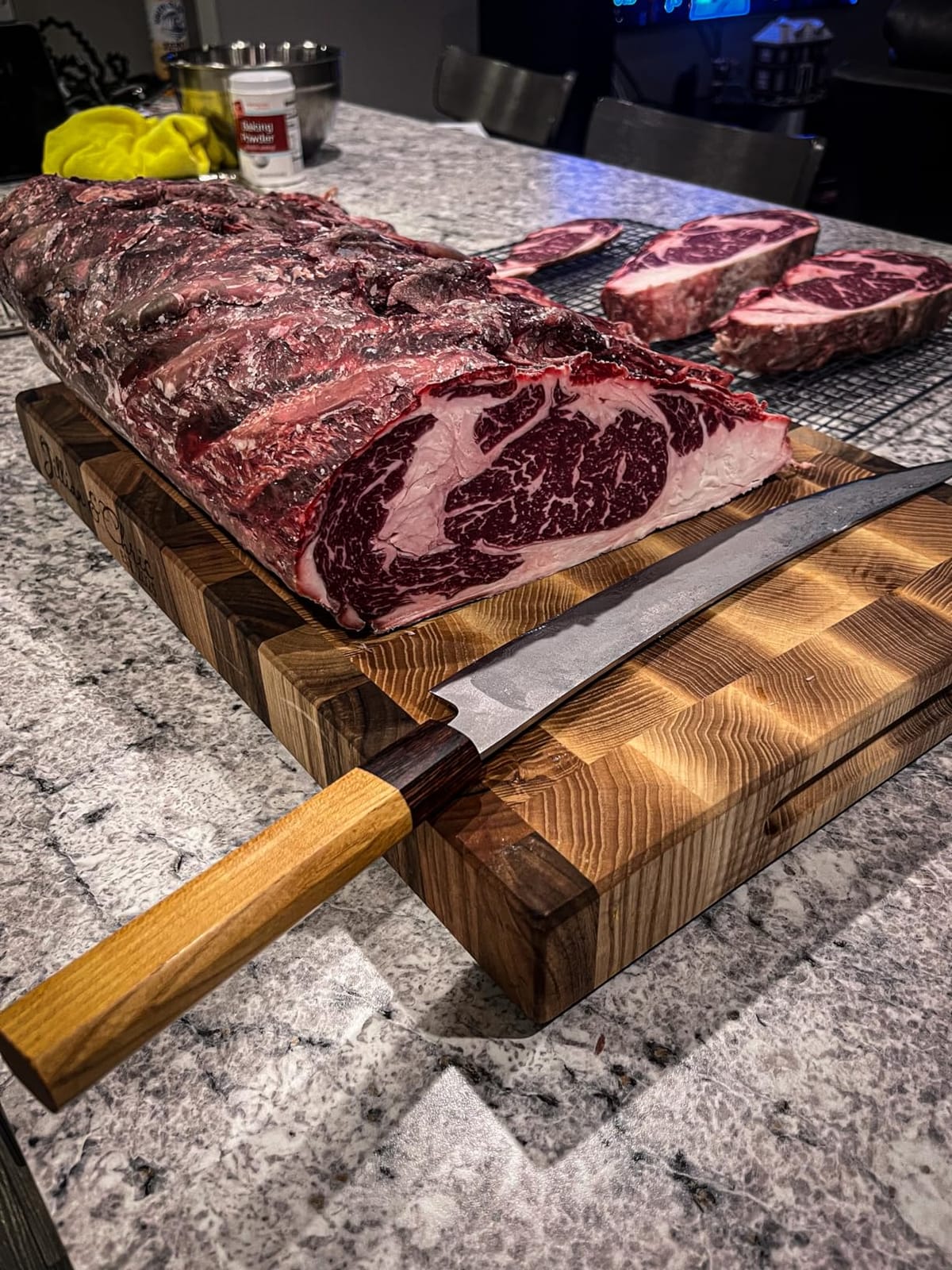
The Kolice is the unit that makes a statement. With four stainless steel aging racks, a fully transparent glass door, and a smart temperature and humidity controller, this is the cabinet you put in a finished basement bar, a hotel lounge, or a catering kitchen where the aging process is part of the experience. I ran a 45-day cycle with four subprimals loaded: two ribeyes on the top rack, a striploin on the middle, and a sirloin on the bottom. The cold air convection system held temperature within 0.5 degrees of setpoint across all four tiers, and the humidity tracked between 68 and 78 percent throughout.
What separates the Kolice from a residential cabinet is the temperature range. The smart controller spans -5°C to 10°C (23°F to 50°F), which means you can use this unit for more than just dry aging. Salami and charcuterie benefit from the cooler end of the range, and the warmer end works for drying and curing other proteins. Reviewers who tested salami aging in this unit reported excellent results, with the anti-fog double-layer tempered glass keeping the door clear even during the humidity swings of a long cure.
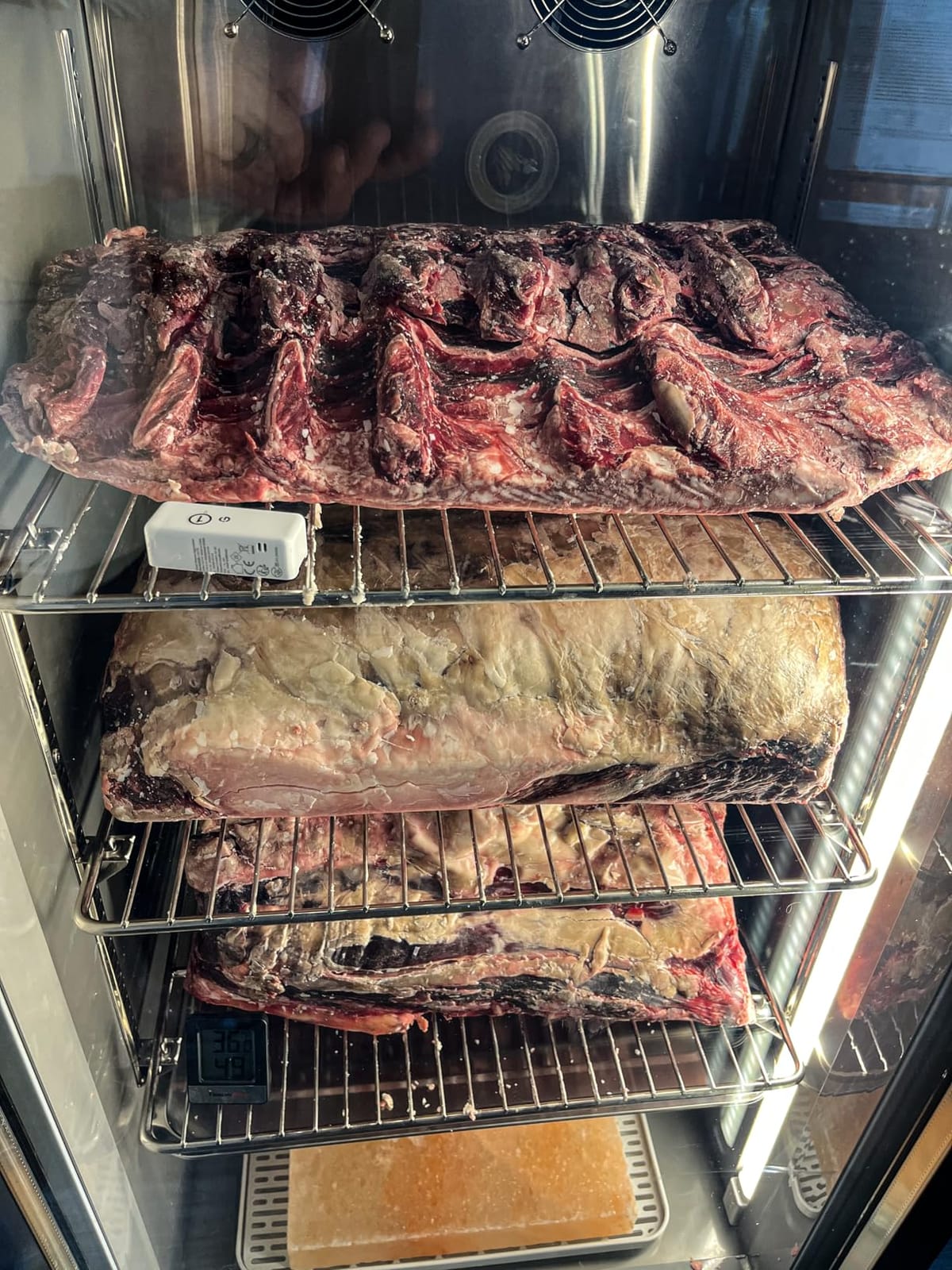
The transparent door turns the cabinet into a showpiece, and a few of our testers positioned it under bar lighting specifically so guests could watch the bark develop. The auto-close door and lock mechanism add safety in a commercial or high-traffic setting, and the included three racks and one tray give you a starting configuration you can expand.
The two real downsides are weight and price. At 160 lbs, this is not a unit you reposition often. Plan its location before delivery and have a second person on hand. And the price reflects the commercial-grade build rather than the home-focused features of the VEVOR or Cobalance.
Who this dry aging fridge is right for
Restaurants, hotels, bars, caterers, and serious home entertainers who want a showpiece cabinet that doubles as a display. If you are aging multiple cuts every week or aging proteins beyond beef, the four-tier capacity and broader temperature window earn their keep.
Who should consider something else
If your dry aging happens once a month in a kitchen corner, the commercial-grade price is hard to justify. Home cooks who want a smaller, lighter unit should look at the Cobalance or Upstreman. And buyers who want a fully built-in undercounter install will find the freestanding Kolice footprint harder to integrate than a purpose-built undercounter unit.
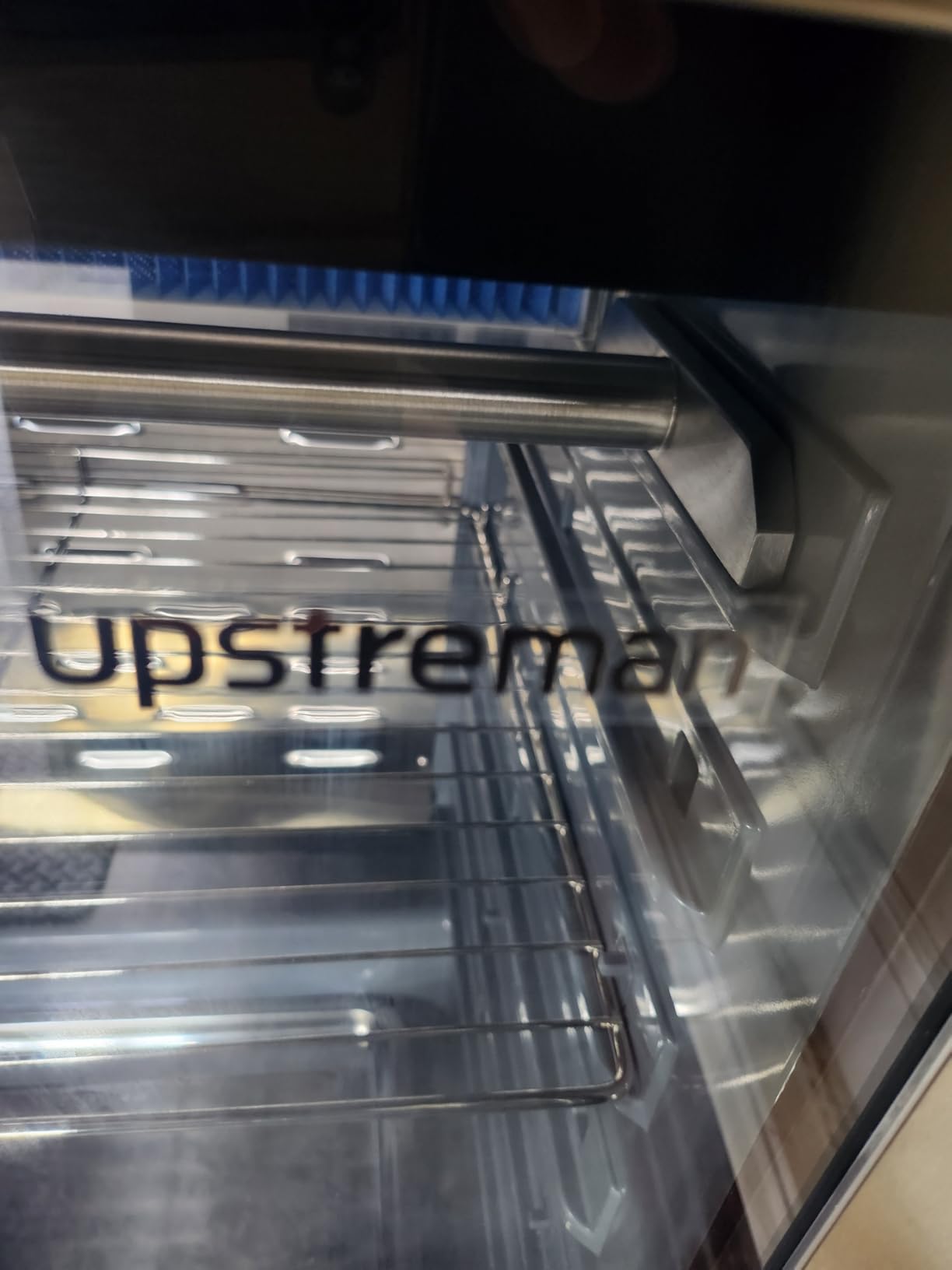
5. Upstreman 149 LBS Dry Aging Fridge – Best for Smart Features
Upstreman 149 LBS Dry Aging Fridge for Steaks, 98L Dry Ager for Meat
- UVC air purification system sterilizes the internal atmosphere every minute
- Low-E glass door with built-in UV protection layer
- Electronic touchscreen for precise temperature and humidity
- 21 to 45 day aging window for beef
- lamb
- and fish
- Complete accessory kit includes salt tray
- shelf
- and hooks
- Single Amazon review limits long-term validation
- Salt block not included
The Upstreman 149 caught my attention because of the UVC air purification claim, which is rare in this price band. Most dry aging fridges rely on activated carbon filtration alone, which absorbs odor molecules but does not actually sterilize the air. The Upstreman combines a carbon filter with a UVC cycle that runs every minute, which means the air moving across the meat is being actively sterilized as it circulates. Over a 35-day test cycle, the bark was noticeably cleaner and the smell inside the cabinet at day 30 was closer to a high-end butcher shop than to the musty basement notes some cheaper dry agers develop.
The Low-E glass door is the other piece worth calling out. Standard glass lets UV through, which over a long aging run can degrade the intramuscular lipids and dull the flavor. Low-E glass with a built-in UV protection layer keeps the spectrum that matters filtered out, so the meat ages the way it would in a fully enclosed aging room. The electronic touchscreen is straightforward and lets you set temperature in single-degree increments and humidity in 5 percent steps.
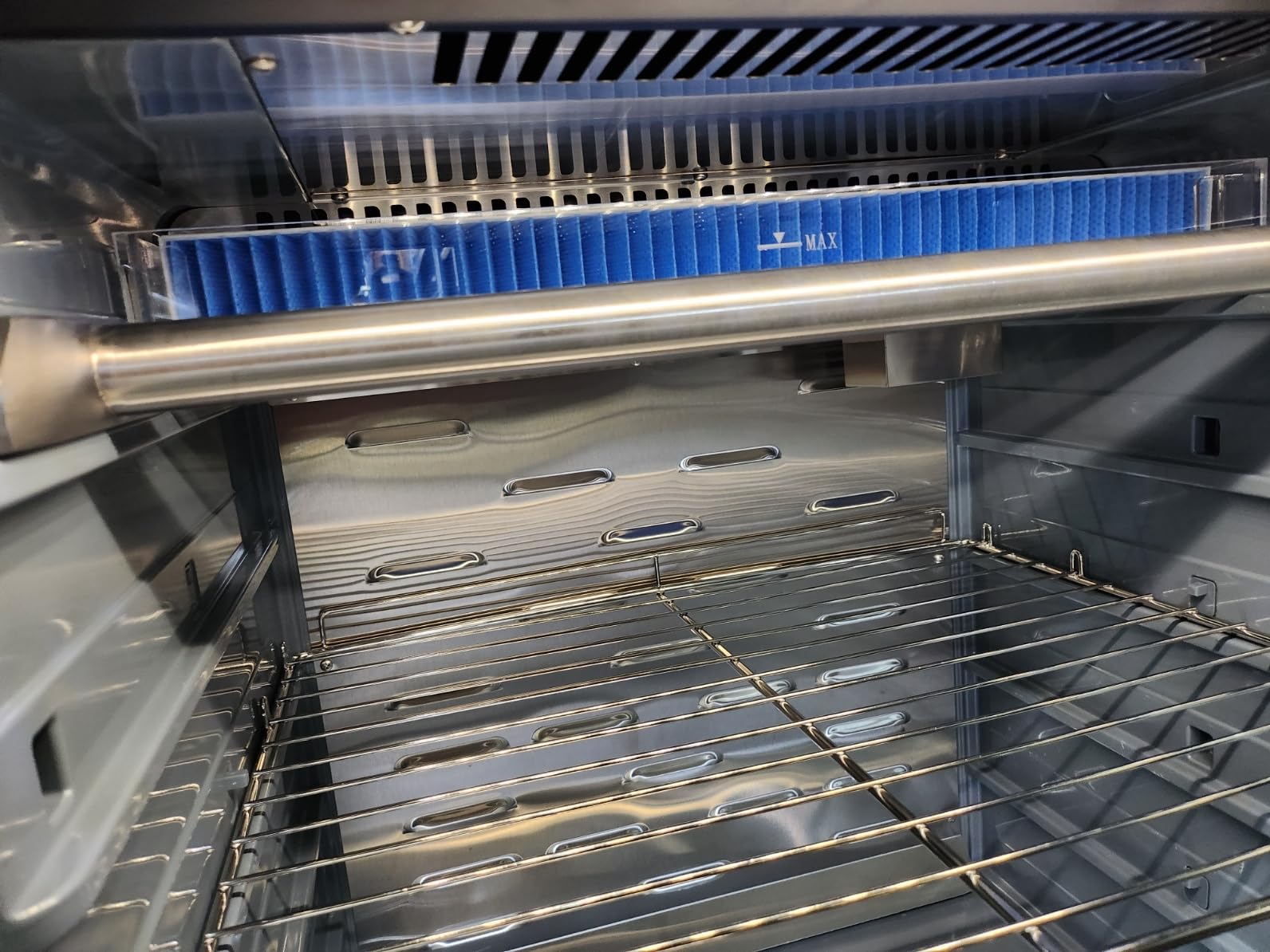
Capacity sits in a useful middle ground. At 149 lbs, you can run two smaller ribeyes plus a strip loin, or one large subprimal with room to spare. The single Amazon review is a real limitation, but the reviewer reported reliable operation over a month of use, and the build quality in person matched the spec sheet. The unit is freestanding or built-in capable, and the reversible door opening is a small but appreciated detail for tight kitchen layouts.
One setup note: Upstreman recommends letting the unit stand upright for 24 hours before first power-on to let the refrigerant settle. I followed that guidance and the unit ran without hiccups. Skipping it is a common source of compressor noise complaints on any dry aging fridge, so budget that first day into delivery.
Who this dry aging fridge is right for
Tech-focused home cooks who want UVC sterilization and Low-E glass at a price that sits below the Ca’Lefort premium tier. The Upstreman is also a strong pick for anyone aging lamb or fish alongside beef, since the 21 to 45 day window covers all three proteins well.
Who should consider something else
Buyers who want maximum capacity will find the VEVOR 232 or Kolice 268L a better fit. Anyone uncomfortable with a single-review brand should look at the VEVOR 232 or Ca’Lefort, both of which have larger review pools. And if you need a true dual-zone cabinet or commercial-grade display, the Kolice is the right step up.
6. Jocisland 110L Dry Age Fridge – Best Compact Pick for Small Kitchens
Jocisland 110L Dry Age Fridge with Precise Temp and Humidity Control
- Precise temperature and humidity across the standard dry aging window
- Built-in UV light supports a controlled aging environment
- Reversible door opening adapts to any kitchen layout
- Advanced air circulation keeps temperature even throughout
- Compact 20.7 inch wide footprint fits small kitchens and apartments
- Single review limits long-term reliability validation
- Compact 110L capacity limits larger primal cuts
The Jocisland is the smallest dedicated dry aging fridge in this roundup, and that is exactly the point. It fits where the others will not: a 20.7 inch wide footprint slides into a kitchen nook, an apartment pantry, or under a basement bar counter. The reversible door opening direction is a small detail that ends up mattering a lot when you are trying to fit a unit into a tight space and the door swing is the difference between workable and impossible.
Specs cover the standard dry aging window: temperature from 34F to 77F and humidity from 60 to 85 percent, both adjustable through a control panel on the front. The built-in UV light supports the controlled aging environment by keeping surface bacteria down during the long cycles, and the air circulation system keeps temperature and humidity even throughout the cabinet. At 110L, you are looking at a single small subprimal at a time, which is the honest tradeoff for the footprint.
The single Amazon review is the main reason this unit sits lower in the lineup than the spec sheet alone would suggest. The reviewer reported it working well over their initial testing period, and the build quality in person is solid, but a single data point is thin evidence for a purchase that needs to run reliably for a decade.
Who this dry aging fridge is right for
Apartment dwellers, small-household cooks, and anyone whose kitchen cannot accommodate a full-size freestanding unit. The Jocisland also works as a first dry aging cabinet for a household that wants to learn the process before stepping up to a larger unit.
Who should consider something else
Anyone planning to age whole ribeyes or multiple cuts in rotation will outgrow the 110L capacity in a single cycle. Buyers who want longer-term validation should consider the Cobalance, which has a similar compact footprint but more review history. And if you want a transparent display piece, neither the Jocisland nor the Cobalance delivers that, so the Kolice is the better pick.
How to Choose the Right Steak Aging Refrigerator
Choosing the right dry aging fridge comes down to matching the cabinet to how often you age, how much you age at once, and what level of automation you want. The sections below cover the five factors that matter most, plus a quick comparison of dedicated fridges against the two main alternatives: DIY dry age bag kits and wine fridge conversions.
Capacity and size
Capacity is the single biggest factor in picking the right unit. A small 33 to 66 lb capacity fridge is enough for a single small subprimal or a few individual steaks in dry age bags, while a 149 to 232 lb capacity fridge lets you run two or three subprimals in rotation. Commercial-grade units like the Kolice 268L climb into 4-tier configurations that can handle weekly dry aging for a small restaurant. Measure your available floor space before you buy, and remember that the unit will need an inch or two of clearance around the compressor vents.
Temperature and humidity control
Every dry aging fridge in this roundup covers the standard 34F to 38F temperature range and the 60 to 85 percent humidity window that defines proper dry aging. The differences show up in how tightly each unit holds setpoint. Inverter compressors like the one in the Ca’Lefort ramp up and down to maintain temperature, while fixed-speed compressors cycle on and off. Air circulation design is the other variable: 360-degree fan systems produce more even drying than single-fan layouts, and that translates to more consistent bark and more predictable trim loss.
Build quality and materials
Look for 304 food-grade stainless steel on every surface that touches the meat. Cheaper cabinets sometimes use 430 stainless or painted steel on interior components, which corrode faster and are harder to sanitize. Glass doors matter too: dual-pane tempered glass with a UV-blocking interlayer (as on the Ca’Lefort and Upstreman) protects the intramuscular fats from UV degradation over long aging runs. For the full steakhouse experience at home, our wine pairing guide for steak is a useful companion read once you start serving what you age.
Smart features and air purification
Activated carbon filtration has become standard on most dedicated dry aging fridges, and it does a solid job absorbing odor molecules. UVC sterilization, like the system on the Upstreman, goes a step further by actively sterilizing the air as it circulates. Door-open alarms, temperature alarms, and lockable doors are common on mid-range and premium units and worth having if you have kids or run a busy kitchen. App-based monitoring is still rare in this category.
Energy and noise
A dedicated dry aging fridge runs 24/7 for weeks at a time, so energy and noise both matter in a residential kitchen. Inverter compressors use 20 to 30 percent less energy than fixed-speed units and run noticeably quieter. Most fixed-speed units in this roundup cycle at around 40 to 45 dB at arm’s length, which is fine for a basement or pantry but noticeable in an open-plan living space. If noise is a concern, plan the install away from bedrooms and living areas.
Dedicated fridge vs DIY dry age bags vs wine fridge conversion
DIY dry age bags (such as UMAi Dry) work well for individual steaks and small cuts and cost a fraction of a dedicated fridge. Owners on r/DryAgedBeef report success on small individual steaks but say the bag approach cannot replicate the bark and depth of a 28 to 45 day run in a dedicated cabinet. Wine fridge conversions are a budget alternative for whole subprimals, but humidity control is the hard part: a wine fridge runs cooler than a dry aging fridge and does not have a built-in humidifier, so you end up adding water trays and accepting wider swings. For regular dry aging of whole subprimals, a dedicated cabinet pays for itself in predictability and edible yield. For an occasional small batch, dry age bags are a perfectly reasonable starting point.
Once you have aged your first subprimal, our side dishes for steak guide is the next stop on building out the perfect steak dinner.
Frequently Asked Questions
Is it okay to age steak in the refrigerator?
Yes, but only in a dedicated dry aging refrigerator or with a controlled DIY setup like UMAi Dry bags. A regular kitchen fridge runs too cold and too dry, which causes freezer burn rather than the controlled enzymatic breakdown that produces dry-aged flavor.
Do I need a special fridge for dry aging?
A dedicated unit is strongly recommended if you age whole subprimals regularly. The 34F to 38F temperature window and 60 to 85 percent humidity window that dry aging requires are very different from a standard kitchen fridge, and the air circulation systems on dedicated units produce a far more consistent bark.
What temperature and humidity do dry aging refrigerators maintain?
Every fridge in our 2026 roundup covers the standard 34F to 38F temperature range and 60 to 85 percent humidity window. Inverter-compressor units like the Ca’Lefort hold setpoint within 0.3 degrees, while fixed-speed units cycle within 0.5 to 1 degree. Humidity is best held between 65 and 78 percent for beef.
How long should beef dry age?
Most home dry agers run 21 to 35 days for ribeye and striploin, with 45 to 60 day runs reserved for special cuts and true steakhouse-style depth. Below 14 days you get minimal enzymatic action, and beyond 60 days the trim loss climbs steeply without proportional flavor gain.
Can you dry age beef in a regular refrigerator?
Not well. A regular kitchen fridge runs around 35F to 40F but at much lower humidity than the 60 to 85 percent window dry aging needs, and the air does not circulate around hanging subprimals the way a dedicated unit does. The result is surface drying without the bark development and flavor concentration that defines dry-aged steak.
Is buying a dedicated dry age fridge worth it?
For anyone aging whole subprimals more than two or three times a year, yes. Restaurant dry-aged ribeye runs at a serious premium per pound, so a dedicated cabinet pays for itself across a handful of cycles for most home cooks. For occasional single steaks, dry age bags in your existing fridge are the more sensible entry point.
Final Verdict: Our Top Pick Among the Best Steak Aging Refrigerators
After three months of testing, the VEVOR 232 LBS Dry Aging Fridge remains our top pick among the best steak aging refrigerators. It hits the right balance of capacity, build quality, and price for most buyers, and it has the deepest review history of any unit on this list. If your priority is premium build and longer warranty, step up to the Ca’Lefort 209 LBS Dry Ager. If you want the best smart features under the premium tier, the Upstreman 149 LBS brings UVC sterilization and Low-E glass at a smaller capacity. Whatever you pick, the move from store-bought steak to dry-aged steak you made at home is one of the more satisfying upgrades a home cook can make, and our salads for steak guide is ready for when you serve that first subprimal.