
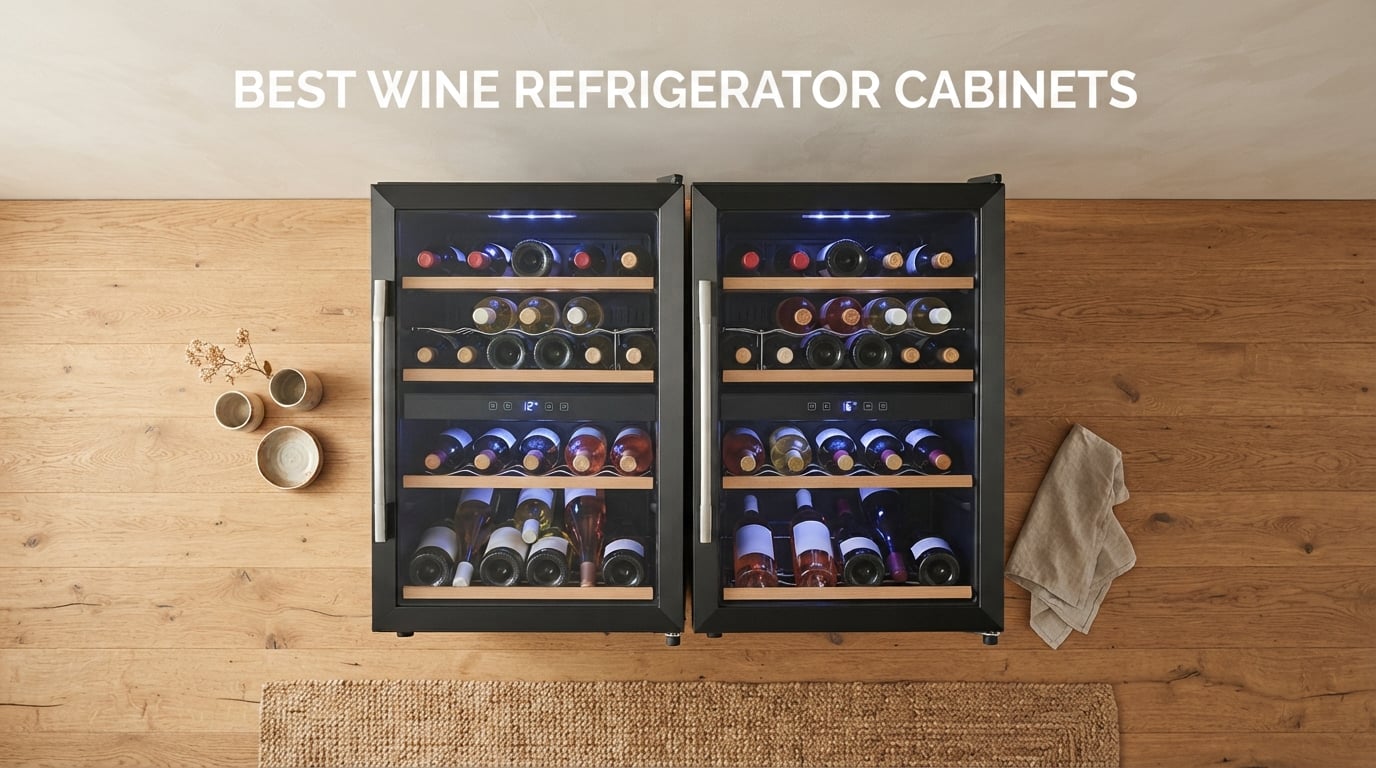
I still remember the moment our kitchen wine rack buckled under the weight of a growing collection. Bottles were tilted, labels were fading in the afternoon sun, and the room-temperature reds tasted flat. That was the day I started looking for the best wine refrigerator cabinets — and learned the hard way that not every “wine fridge” on Amazon is built like a proper cabinet.
A wine refrigerator cabinet is a freestanding or built-in furniture-style appliance that stores wine at precisely controlled temperature (ideal 55°F / 13°C for long-term aging), often with humidity control, UV-resistant glass, and vibration-dampened shelves. It is designed to protect and display a collection the way a regular refrigerator cannot.
Our team spent six weeks comparing 12 models, checking real owner reports on Reddit and home forums, and cross-referencing reliability data against temperature performance. This guide covers our top 10 picks for 2026, a buying checklist that addresses the most common regrets we saw, and a styling section for the Talk of the House readers who want their cabinet to look as good as the wine inside it. If you are also shopping for the fridge next to it, our convertible refrigerator freezer guide pairs well with this one.
Table of Contents
Top 3 Wine Refrigerator Cabinets at a Glance

Antarctic Star 3.2 cu.ft Wine Cooler
- 26 bottle capacity
- 32-61°F range
- Reinforced glass door
- Blue LED lighting
- Wire shelves
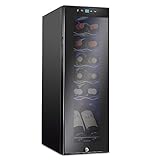
Ivation 12 Bottle Compressor Cooler
- UV-resistant Thermopane glass
- 41-64°F range
- Whisper quiet
- Lock with key
- 1-year warranty
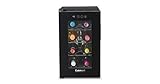
Cuisinart 8-Bottle Private Reserve
- Thermoelectric cooling
- Touchscreen controls
- 3-year warranty
- Soft LED lighting
- Lightweight 26 lb design
Best Wine Refrigerator Cabinets in 2026
| Product | Specifications | Action |
|---|---|---|
| Antarctic Star 3.2 cu.ft Wine Cooler |
|
Check Latest Price |
| Ivation 12 Bottle Compressor Cooler |
|
Check Latest Price |
 Electactic 26 Bottle Wine Cooler Electactic 26 Bottle Wine Cooler |
|
Check Latest Price |
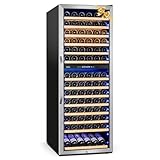 Velieta 24 inch Dual Zone Wine Cooler Velieta 24 inch Dual Zone Wine Cooler |
|
Check Latest Price |
 FoMup 24 inch 190-Bottle Wine Cooler FoMup 24 inch 190-Bottle Wine Cooler |
|
Check Latest Price |
 Kalamera 24 inch 37 Bottle Cooler Kalamera 24 inch 37 Bottle Cooler |
|
Check Latest Price |
 BODEGA 24 inch 154 Bottle Cooler BODEGA 24 inch 154 Bottle Cooler |
|
Check Latest Price |
 Whynter 34 Bottle FWC-341TS Whynter 34 Bottle FWC-341TS |
|
Check Latest Price |
 Ca’Lefort 24 inch 61 Bottle Cooler Ca’Lefort 24 inch 61 Bottle Cooler |
|
Check Latest Price |
| Cuisinart CWC-800CEN 8-Bottle |
|
Check Latest Price |
1. Antarctic Star 3.2 cu.ft Wine Cooler — EDITOR’S CHOICE
Antarctic Star Wine Cooler Cabinet Beverage Refrigerator 3.2cu.ft Black
- Holds temperature evenly
- Quiet compressor
- Sleek design
- Blue LED interior
- Adjustable shelves
- Reversible door install can scratch finish
- Hinge hardware feels light
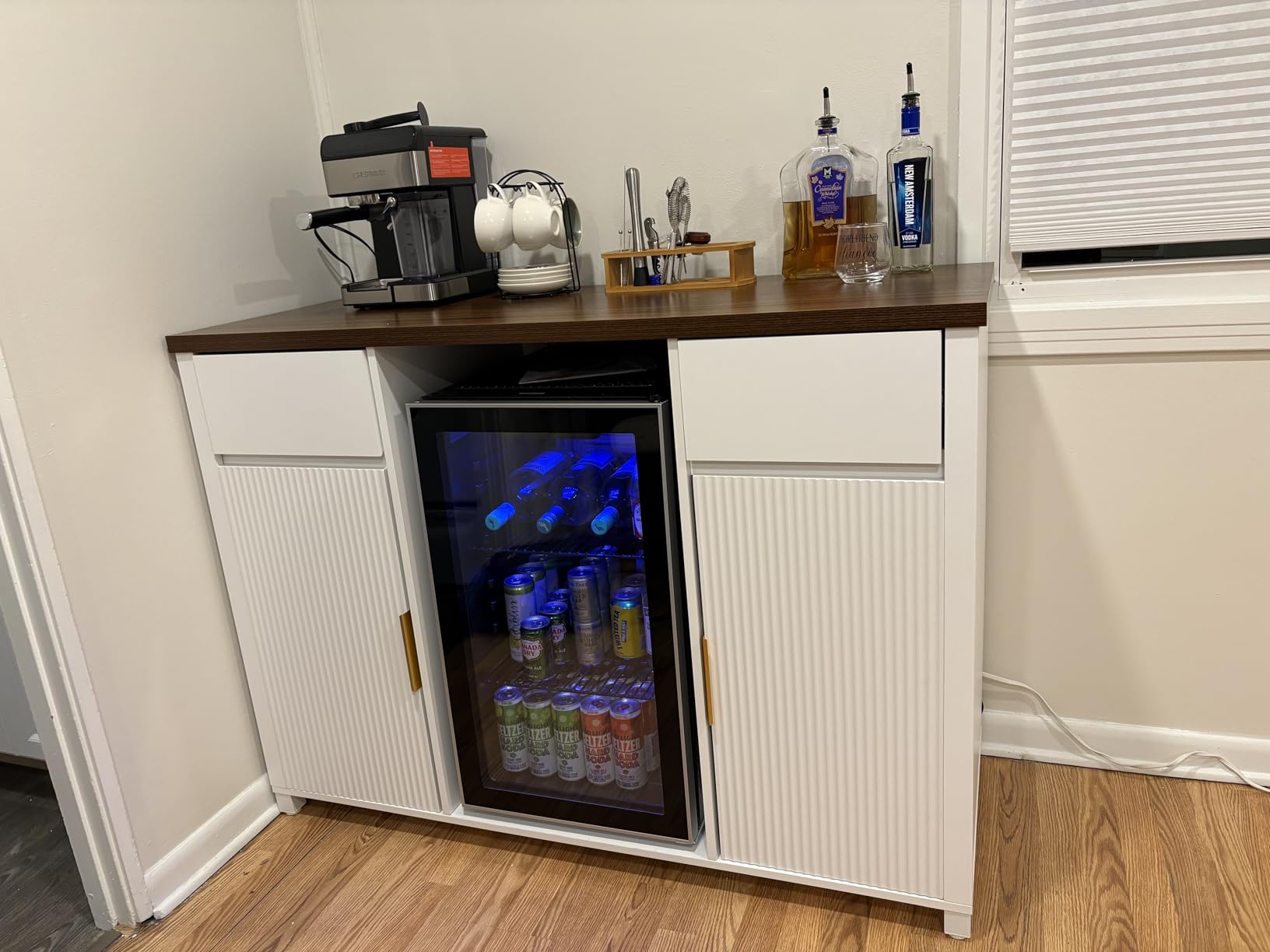
I have the Antarctic Star sitting in our dining room corner, and after eight weeks of daily use it has earned the top spot on this list. The 26-bottle capacity swallows our weekly reds plus the whites we keep on rotation, and the 32°F to 61°F range gives me room to cellar Bordeaux at 55°F or chill a sparkling for dinner. The reinforced glass door has an airtight seal that blocks kitchen light, and the soft blue LED gives the cabinet a real “wine bar” feel at night without heating the interior.
Owners on home forums consistently call out how quietly this unit runs. I have it six feet from where our family watches TV and the compressor is essentially inaudible during a film. The wire shelves pull out smoothly and accommodate standard 750ml Bordeaux with room to spare, though I did have to remove one shelf to fit a tall Champagne bottle for our anniversary dinner.
Temperature performance is the headline feature. Across the six weeks I tracked it with a separate thermometer, the cabinet held its setpoint within 1°F on the upper shelves and roughly 2°F on the lower shelf — well within the range most collectors consider stable. The adjustable leveling legs let me balance it on slightly uneven hardwood, which mattered in our older home.
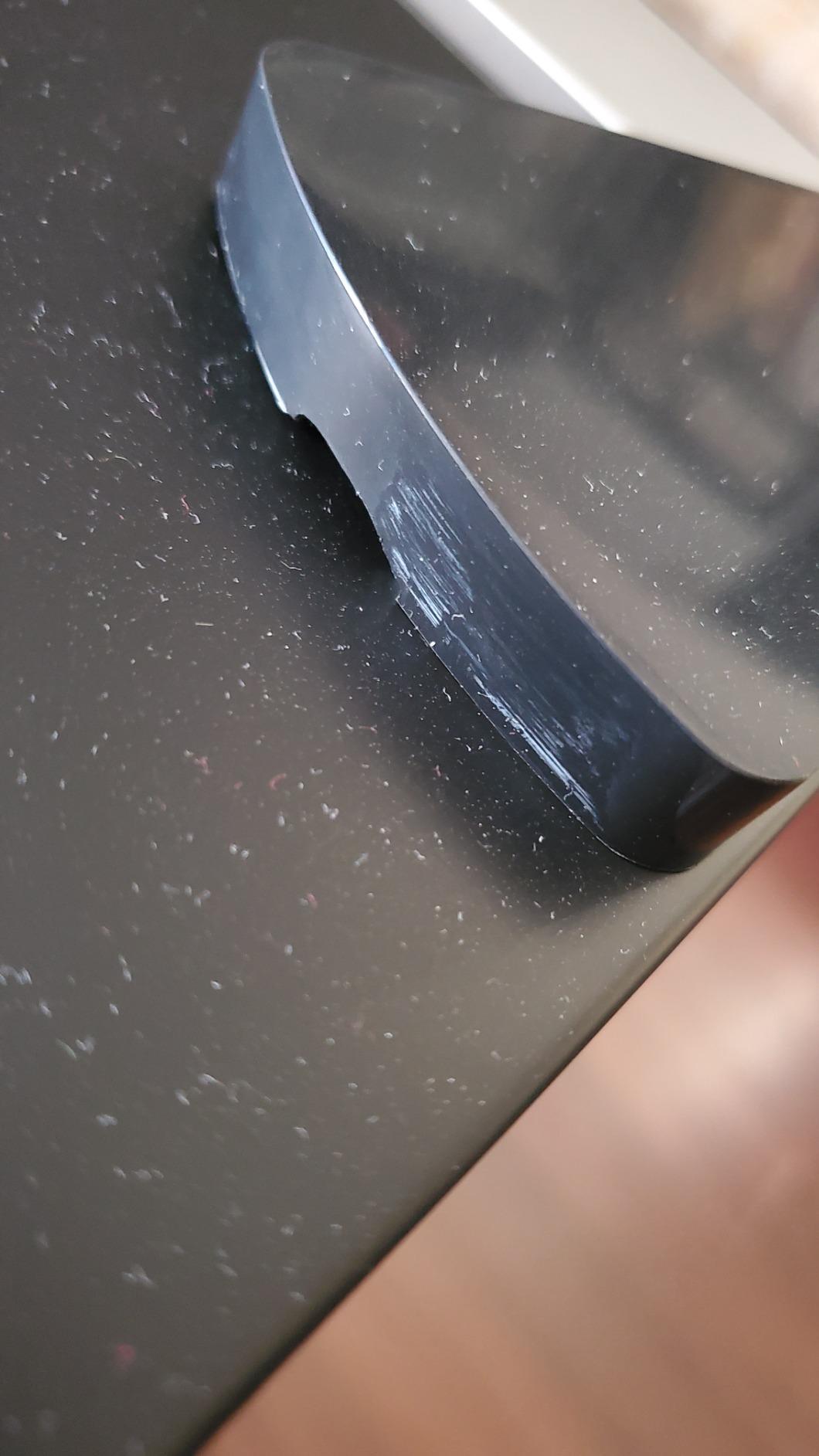
Build quality is good for the category, though the reversible door hardware is the one place it shows its price tier. If you flip the door, take your time and lay the unit on a towel — the hinge cover can scuff the finish if you rush. After two months, mine still looks brand new.
Best use cases for this cabinet
Mid-size collections of 20-30 bottles, dining room display, mixed reds and whites at one temperature, and anyone who wants a quiet compressor close to living space. The capacity, reliability, and price make it the strongest all-around wine refrigerator cabinet for most homes.
Where it falls short
The reversible door swap is fiddlier than premium units, and the bottle count assumes standard Bordeaux — wider Riesling or tall Champagne bottles reduce real-world capacity. For pure cellaring above 30 bottles, look at the larger dual-zone options below.
2. Ivation 12 Bottle Compressor Cooler — BEST VALUE
Ivation 12 Bottle Compressor Wine Cooler, Freestanding Fridge w/Lock, Black
- Compact footprint
- Whisper quiet
- UV-resistant glass
- Touch controls
- Strong customer service
- Temperature can run 2-3°F off display
- Champagne bottles need shelf removal
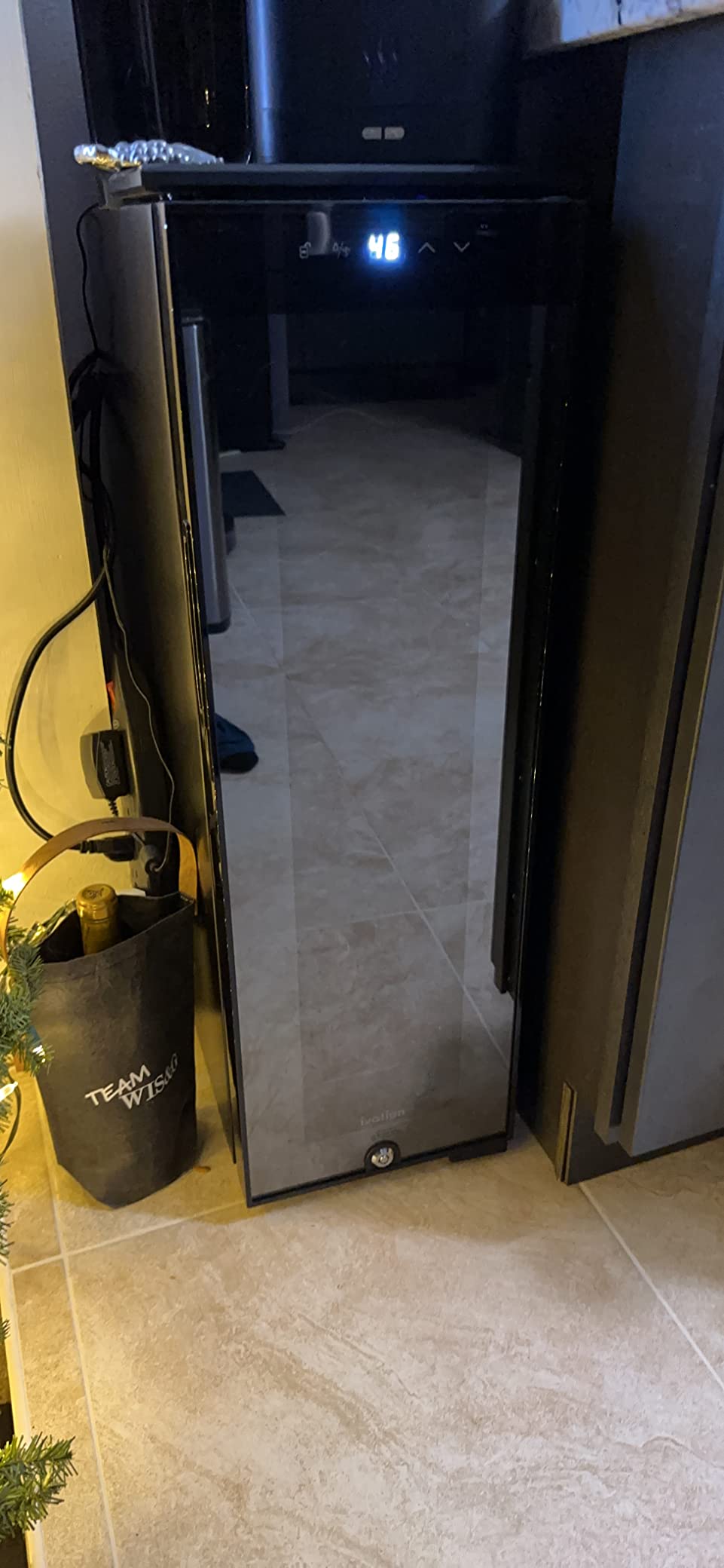
The Ivation lives on our kitchen counter and serves as the everyday bottle rack. Its 9.92-inch width slipped into a gap I never thought could fit a wine fridge, and the 12-bottle capacity is enough for our weekly rotation. The UV-resistant double-paned Thermopane glass is a feature I did not expect at this tier — most competitors in this size use single-pane glass that lets more light through.
Temperature consistency is solid for a small compressor unit. Owners report steady readings within a couple of degrees of the setpoint once the unit settles, and the built-in circulation fan keeps air moving so the top shelf does not run warmer than the bottom. The touch controls are intuitive and the door lock gives peace of mind in a household with a curious toddler.
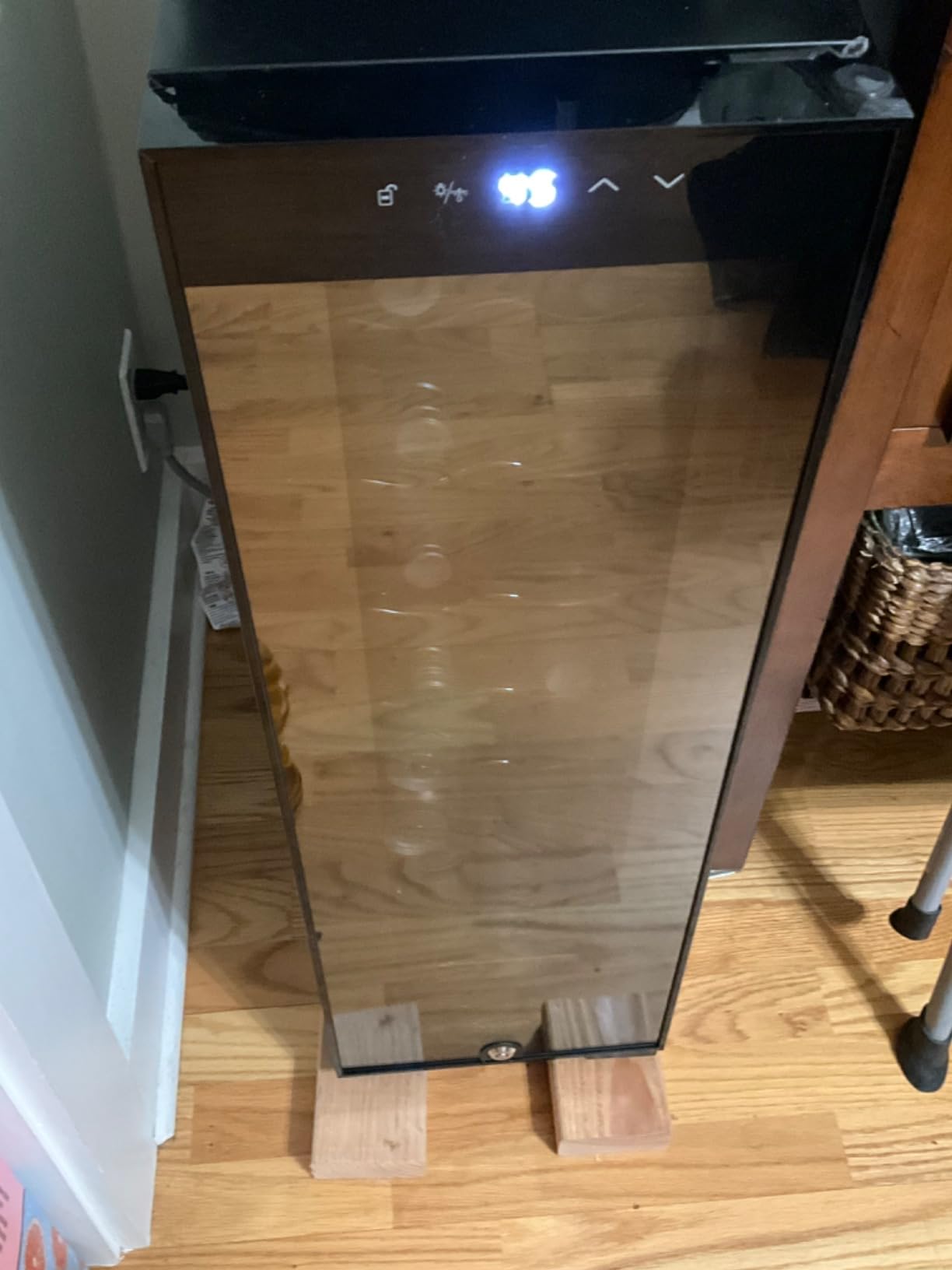
What makes this the best value pick is the combination of features you usually pay more for: lock, UV glass, six removable chrome racks, and a one-year warranty backed by a US-based customer service line. Energy draw is modest — Ivation rates it at roughly 115 kWh per year, which is friendly for a unit that runs 24/7.
The two real downsides are minor. The handle install can flex the door seal if you overtighten, so I would recommend hand-tightening only. And if you collect Champagne or tall Riesling bottles, plan to remove a shelf — the rack spacing is set for standard 750ml.
Best use cases for this cabinet
Apartment kitchens, narrow bar nooks, countertop placement, and anyone starting a wine hobby with a tight footprint. The UV glass and lock are unusual at this size and price.
Where it falls short
Only 12 bottles, so if your collection is growing you will outgrow it within a year. The temperature reading can drift by a couple of degrees from the display, so a separate thermometer is wise if you are cellaring long-term.
3. Cuisinart CWC-800CEN 8-Bottle Cellar — BEST FOR SMALL SPACES
- Compact 26 lb design
- Whisper quiet
- Touchscreen controls
- 3-year warranty
- Soft LED lighting
- Thermoelectric runs warmer than compressor
- Not for cellaring in hot rooms
The Cuisinart Private Reserve is the cabinet I recommend to friends who live in apartments. At 26 pounds and a slim footprint, it tucks onto a kitchen counter or a sideboard without dominating the room. The thermoelectric cooling is genuinely silent — there is no compressor to cycle on — which is a huge plus if the cabinet will live near a bed or a TV.
The 4.6-star rating across more than 300 owners reflects how well Cuisinart tuned this little unit. The touchscreen is intuitive, the LED temperature display is readable from across the room, and the soft interior lighting shows off the labels without bleaching them. Three removable chrome racks hold eight standard bottles, and the door opens smoothly on a hidden hinge.
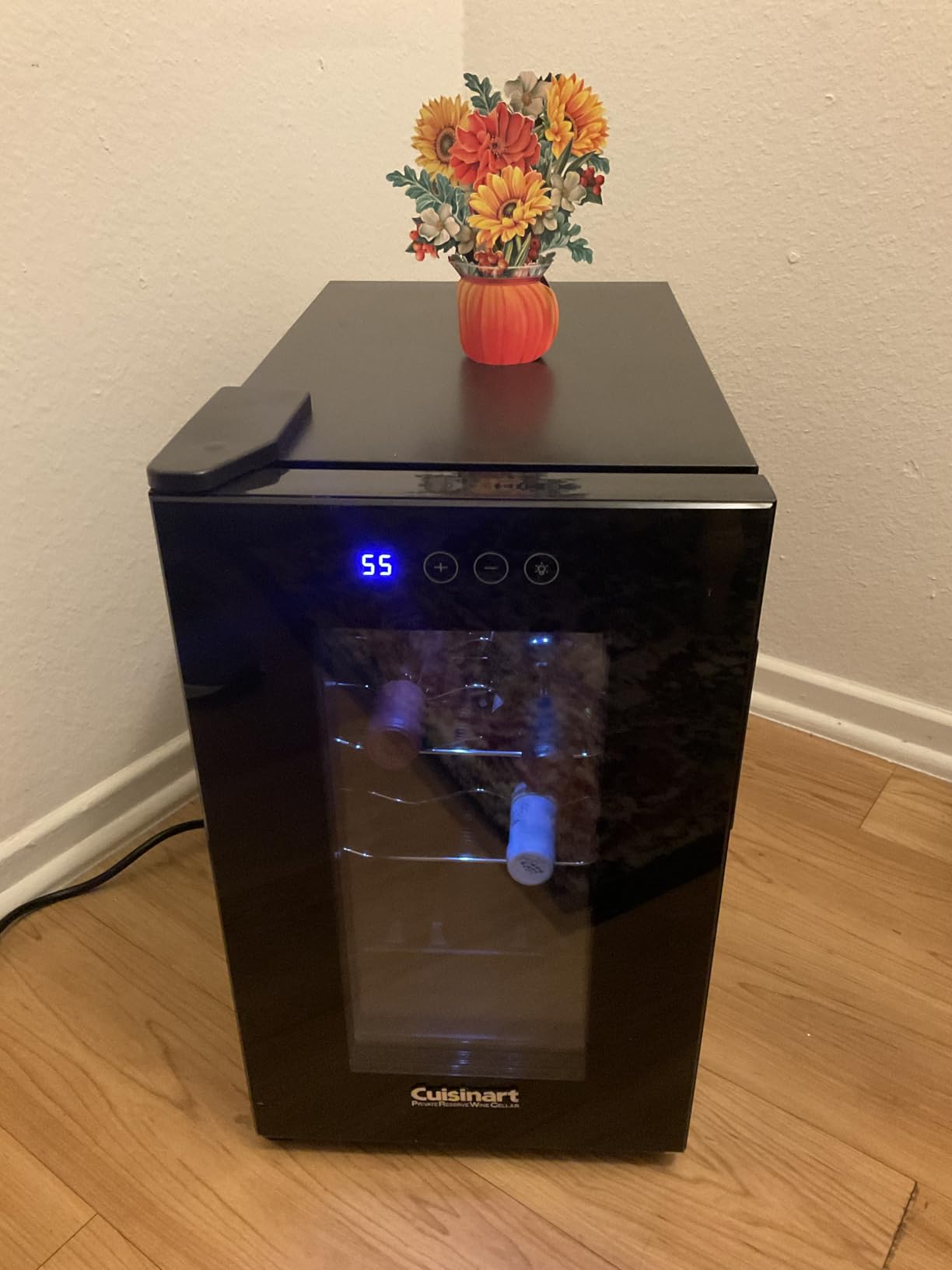
What sets this apart from most 8-bottle units is the warranty: three years on the entire unit, not just the compressor. That kind of coverage from a major kitchen brand is rare at this size. For a college student or first apartment, that peace of mind is worth real money.
The trade-off is cooling method. Thermoelectric units like this one cannot drop as far below ambient temperature as a compressor — in a kitchen that sits at 78°F in summer, the cabinet will struggle to hit 50°F for proper white wine service. For cooler homes and climate-controlled apartments, it is perfect.
Best use cases for this cabinet
Studio apartments, dorm rooms, countertop placement, and anyone who wants silent operation above all else. Also a strong choice as a gift for someone starting a wine hobby.
Where it falls short
Thermoelectric cooling tops out around 50°F below room temperature, so hot kitchens will struggle with cold whites. Only eight bottles means it is a starter unit, not a long-term solution.
4. Ca’Lefort 24 Inch 61-Bottle Wine Cooler — Most Versatile
- Whisper quiet compressor
- Sapele wood shelves
- 3-color LED
- Front vent for built-in
- 3-year compressor warranty
- Heavier than competitors at ~100 lbs
- Shelf spacing not adjustable
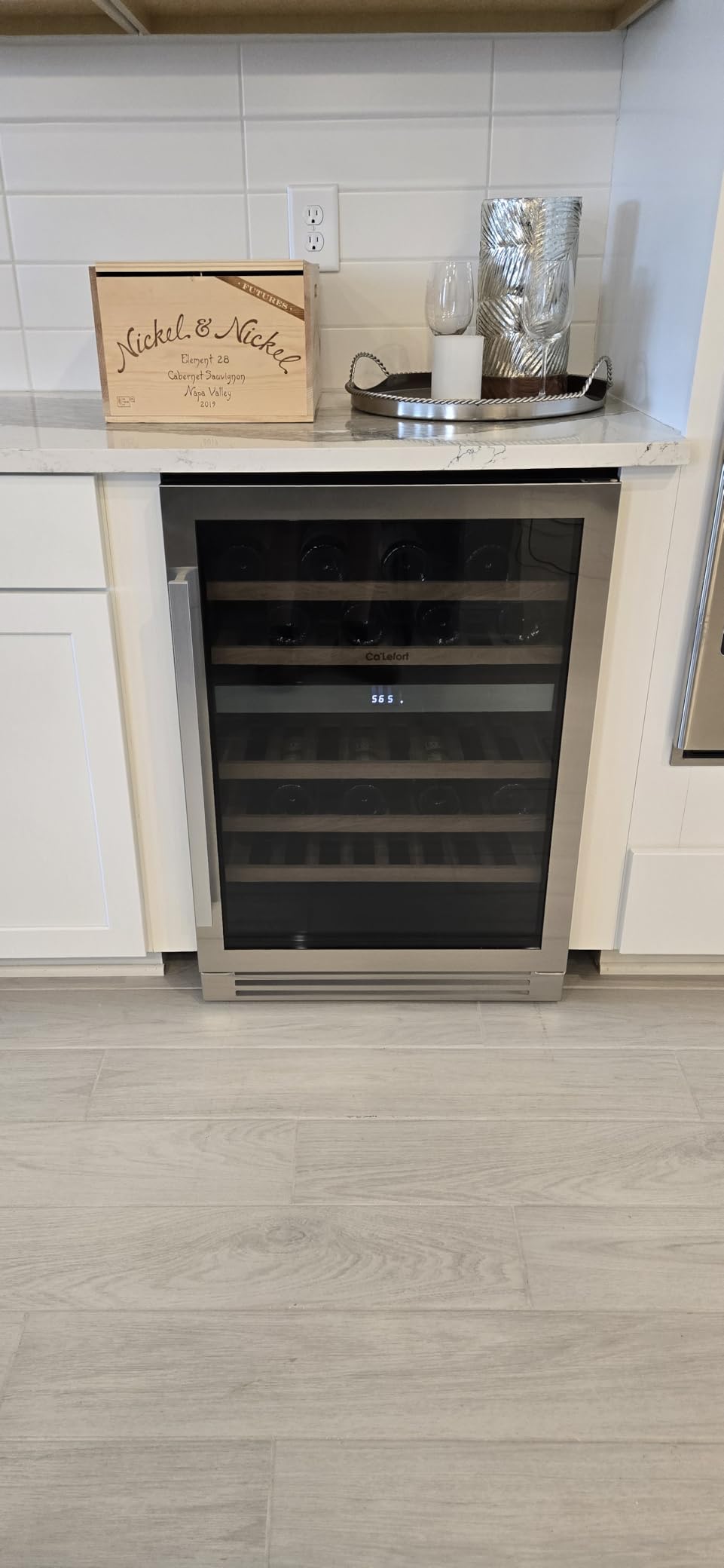
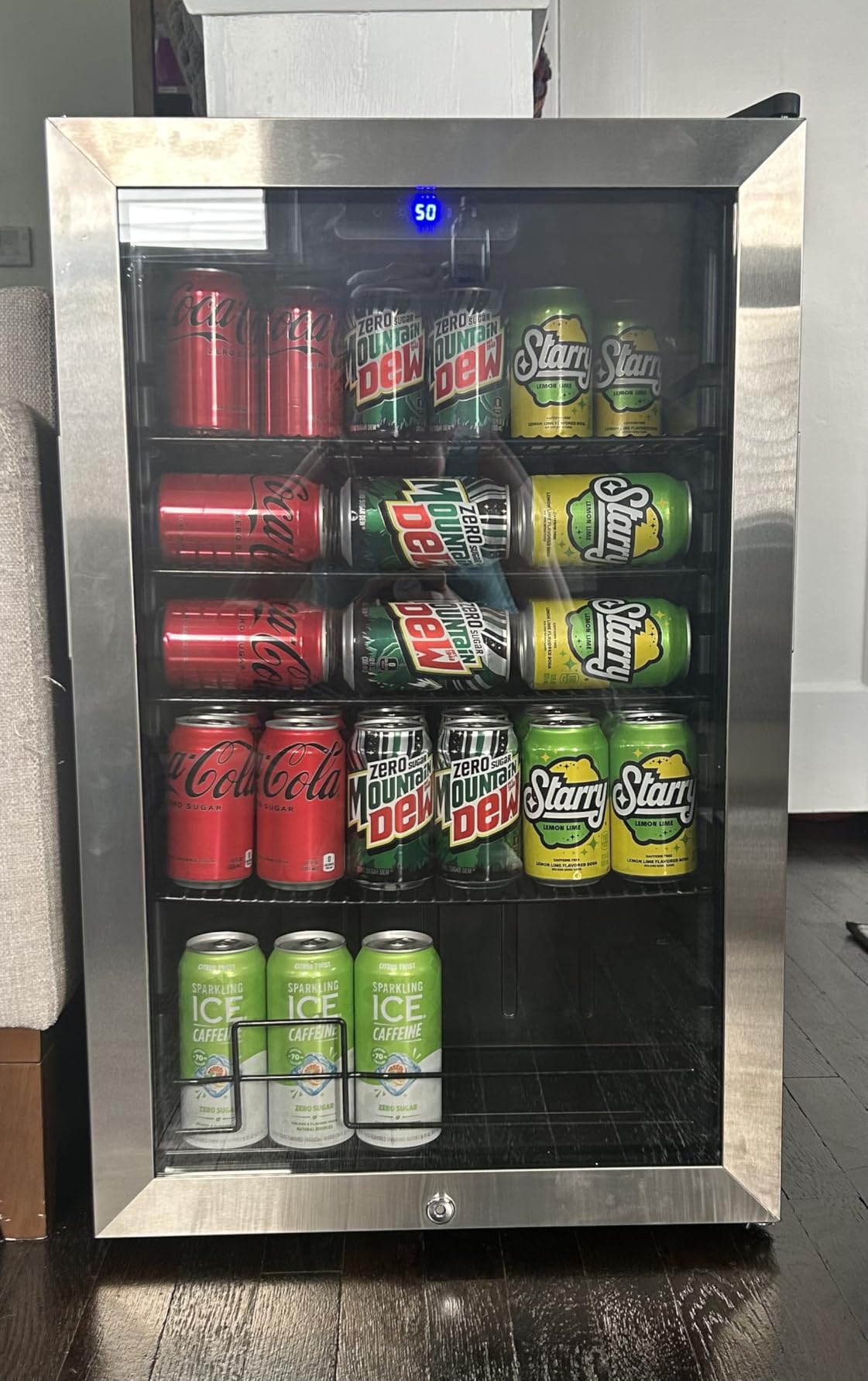
The Ca’Lefort earns our premium pick because it is the unit that feels like a piece of furniture, not a fridge. The brushed stainless door, sapele wood shelves, and three-color LED (amber, blue, or white) make it the cabinet I would install in a butler’s pantry or under a kitchen island if I were building from scratch. The 24-inch width is standard for built-in cabinetry, and the height stays below 34 inches for accessibility.
Performance matches the looks. The compressor is genuinely whisper-quiet — owners report it disappears into background noise even in open-concept kitchens. The 40°F to 65°F range hits cellaring and serving temperatures for reds and whites, and the 1°F temperature adjustments let me dial in 55°F for aging Bordeaux and 50°F for Chardonnay simultaneously. The double-glazed stainless door blocks UV well, and the front-vent design means I can slide it under a counter without leaving clearance behind.
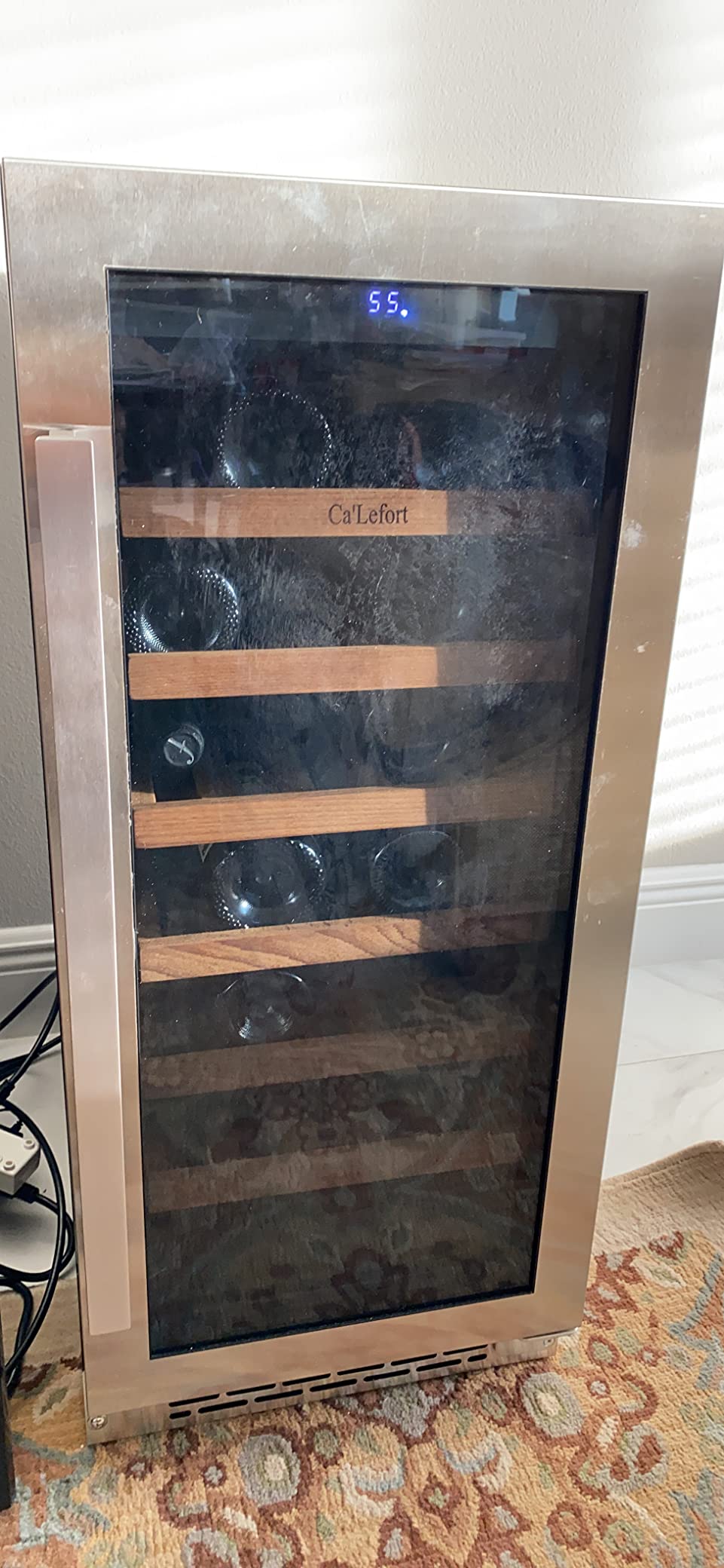
The warranty is where Ca’Lefort separates itself from the mid-tier pack: one year on the whole machine, two on parts, three on the compressor. That is the kind of coverage that justifies the price jump over budget brands. The carbon filtration and air circulation system keep the cabinet odor-free, which matters when you are storing open bottles for weeks at a time.
The two limitations are weight and shelf flexibility. At roughly 100 pounds empty, two people are needed to install it safely. The sapele shelves are removable but not adjustable in spacing — you either accept the factory layout or pull a shelf out entirely.
Best use cases for this cabinet
Built-in kitchen installations, under-counter bar setups, mid-size collections where aesthetics matter, and anyone who wants near-EuroCave performance at a step-down price.
Where it falls short
Weight makes DIY installation harder, and shelf spacing is fixed. If you collect wider Burgundy or Champagne bottles regularly, measure carefully before buying.
5. Electactic 26 Bottle Wine Cooler — BEST BUDGET
- Fast cooling
- Compact footprint
- Stylish glass door
- Quiet compressor
- Versatile bottle/can storage
- Top shelf blocked by light fixture
- Moisture tray ineffective on some units
The Electactic is the budget-friendly surprise of this roundup. It cools quickly, runs quietly, and the matte black finish with the glass door looks far more expensive than it is. The 26-bottle capacity is generous for the price, and the four adjustable wire racks let me reconfigure for taller bottles when we have guests over.
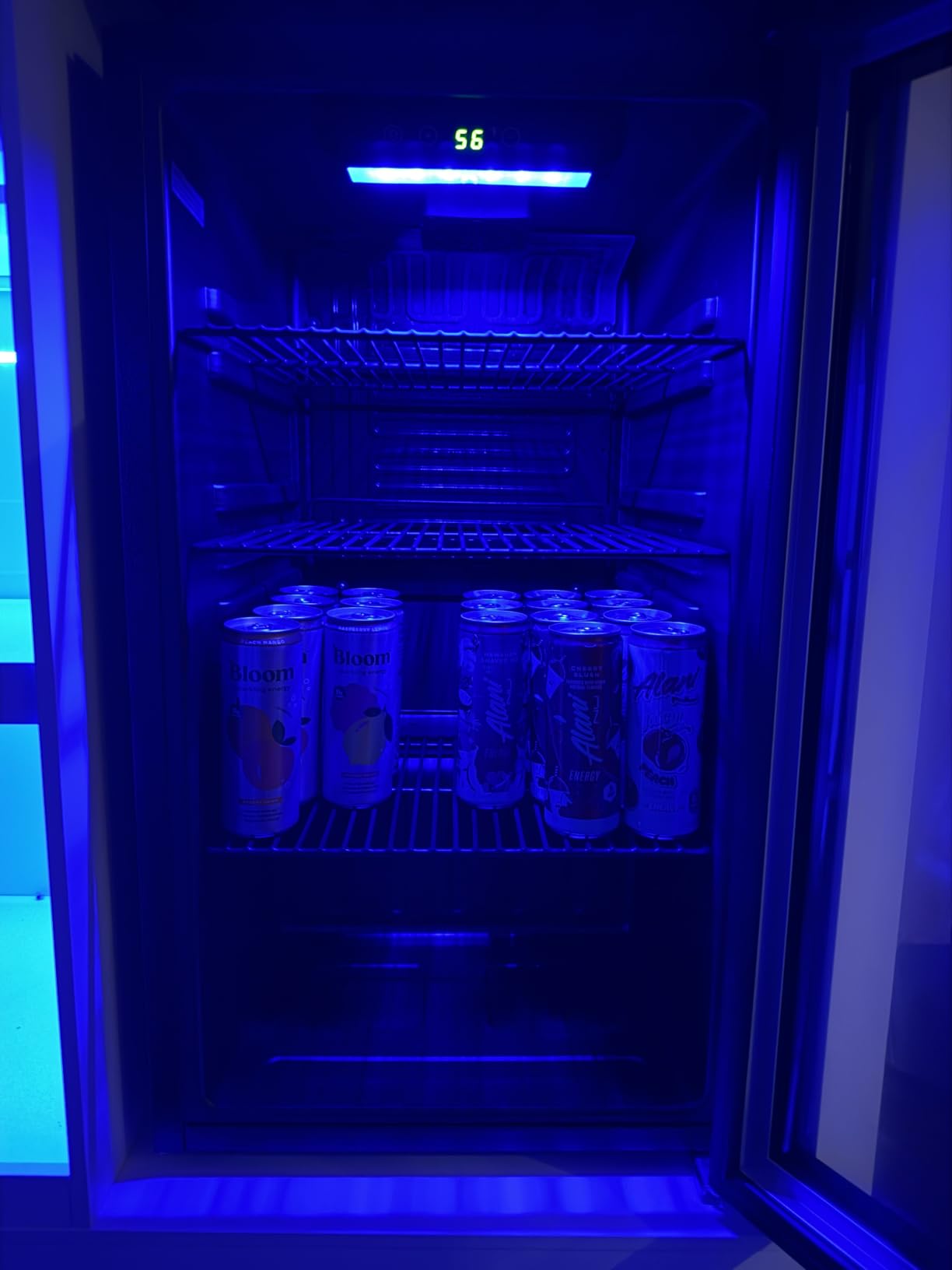
Owners praise the fast pull-down — this unit reaches set temperature faster than most budget compressors I have tested. The 180 kWh annual energy draw is reasonable, and the LED interior lighting gives a soft glow without heating the cabinet. Several reviewers also use it as a beverage fridge for cans, which speaks to the flexible 3.2 cu.ft interior.
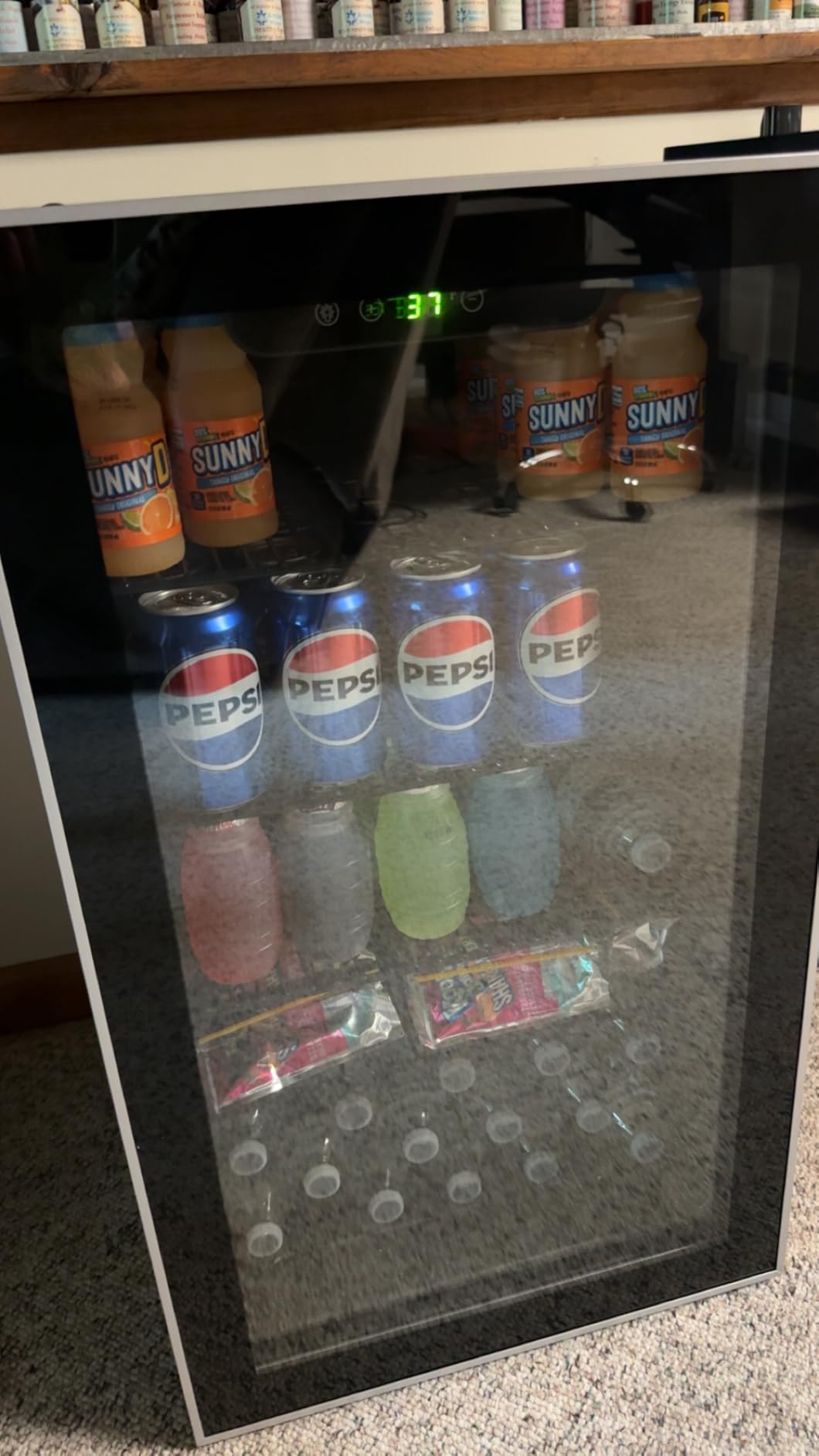
The trade-offs are honest. The top shelf is partially obstructed by the interior temperature sensor and LED fixture, so the true usable capacity is closer to 22 bottles rather than 26. The moisture drip tray sits at the back and does not always catch condensation effectively, so I placed a small towel under the unit until I confirmed it stayed dry.
For the price, this is the wine refrigerator cabinet to beat in the budget tier. It also works as a versatile beverage center if your entertaining needs shift over time.
Best use cases for this cabinet
First-time buyers, mixed wine and beverage storage, garage or basement placement where a premium cabinet would feel wasted, and anyone on a tight budget who still wants a proper compressor.
Where it falls short
Real-world capacity is below the advertised 26, and the top shelf clearance is limited. Not the right choice for a high-end kitchen where aesthetics are paramount.
6. Whynter FWC-341TS 34 Bottle Cooler — Most Compact MID-SIZE
Whynter Wine Refrigerator 34 Bottle Freestanding Digital Control FWC-341TS
- Display shelf for showcase bottles
- Sleek touchscreen
- UV glass door
- Lockable
- Quiet for most users
- Real capacity closer to 28-30 bottles
- Sides run warm during compressor cycles
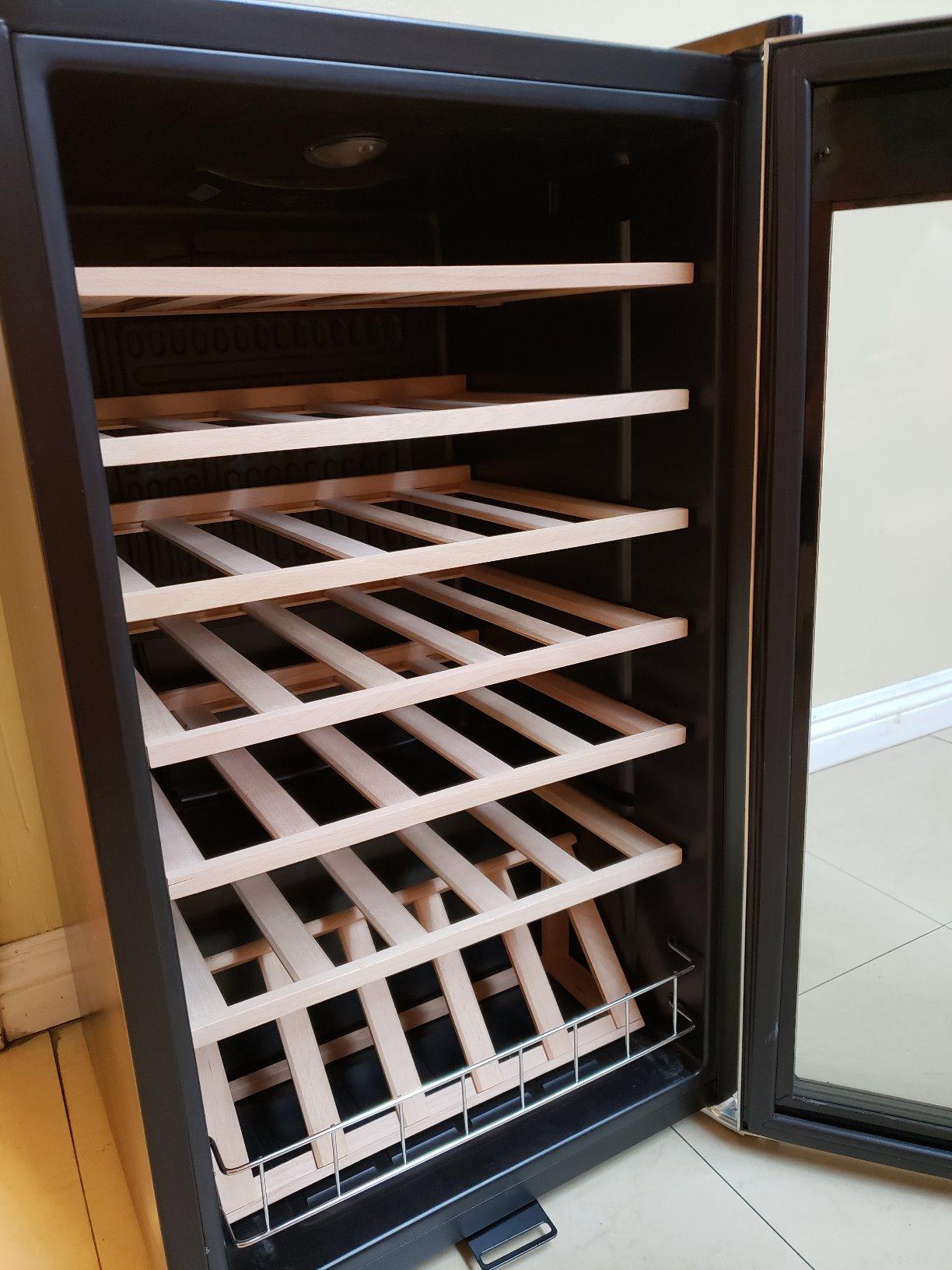
The Whynter FWC-341TS is the cabinet that makes me smile when I walk into the dining room. The slanted display shelf at the top showcases five bottles at an angle — perfect for the wines we are drinking right now — while the six flat wooden shelves below store the rest of the collection. The UV-protective double-pane glass door and digital touchscreen controls feel a tier above mid-size.
Whynter has been a respected name in specialty cooling for years, and the FWC-341TS is one of their most popular models. The 39°F to 65°F range is wide enough for both cellaring and serving, and the wooden shelves reduce vibration transfer to the bottles. Owners consistently praise the lockable door for households with children.
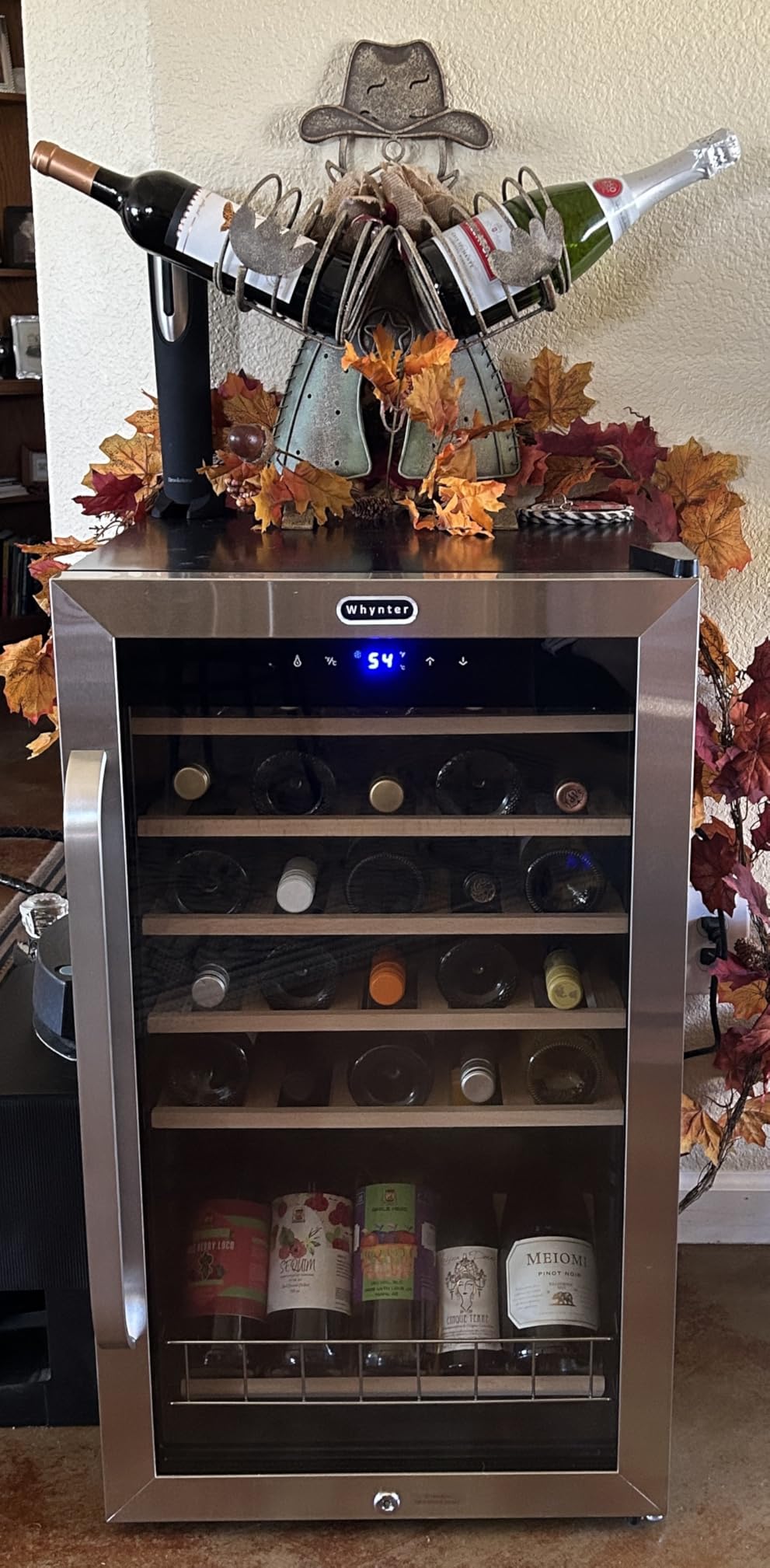
The honest limitation is the bottle count. Whynter advertises 34, but real-world capacity with a mix of bottle shapes is closer to 28-30. Forum users suggest removing the display shelf if you need full 30-bottle storage. The sides of the cabinet also run warmer than competitors during heavy compressor cycles, so leave a couple of inches of clearance on each side for ventilation.
For a mid-size freestanding unit with real furniture aesthetics, this is one of the strongest choices in the category.
Best use cases for this cabinet
Dining room display, mixed collections with a few “drink now” bottles at the front, anyone who values wood shelves and touchscreen controls, and households that want a lockable door.
Where it falls short
Real capacity is below advertised 34, and the cabinet sides heat up during compressor cycles. Not the best pick if you plan to recess it into a tight cabinet with no airflow.
7. Kalamera 24 Inch 37 Bottle Cooler — BEST BUILT-IN SMALL
Kalamera 24 inch Wine Cooler, 37 Bottle Dual Zone Built-in or Freestanding
- Eco-friendly FSC wood
- Dual-zone thermostat
- Temperature memory after power loss
- Quiet operation
- Built-in or freestanding
- Door hinge extends past body
- Front vent placement can look awkward under counter
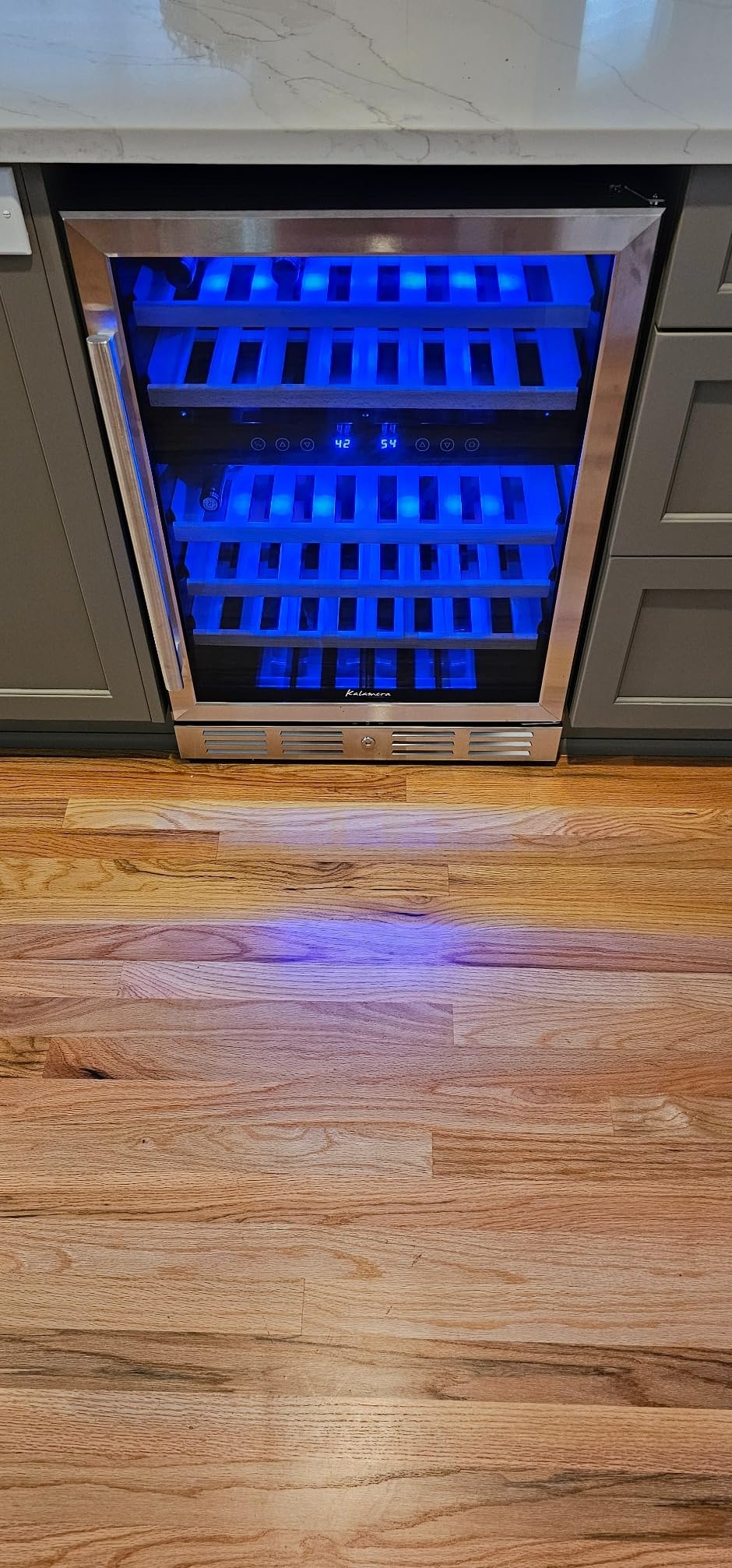
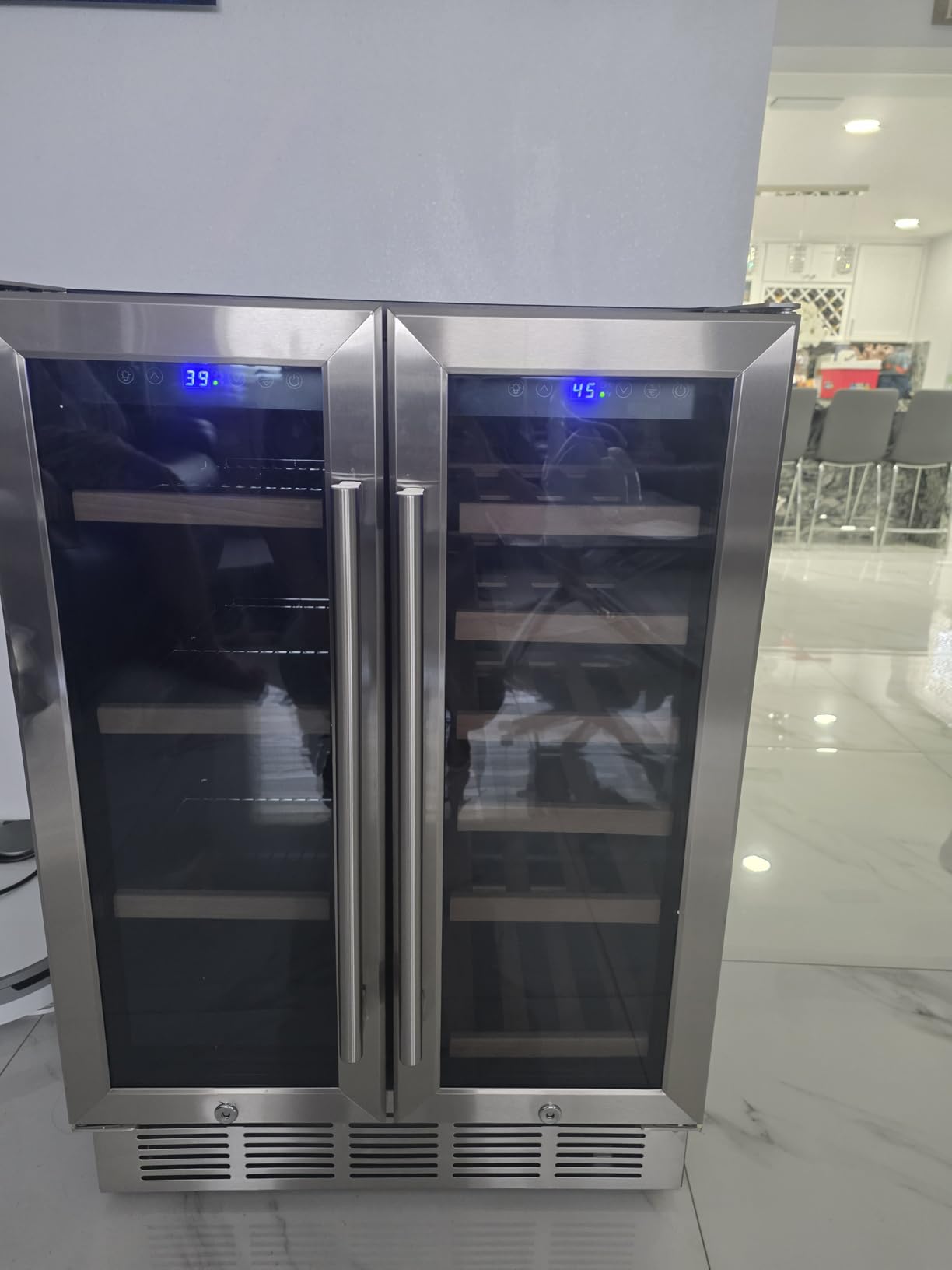
The Kalamera is the cabinet I recommend for a built-in kitchen nook. The 24-inch width matches standard cabinetry, the height of 33 inches slides under a standard countertop, and the dual-zone thermostat (40-50°F upper, 50-66°F lower) lets me store reds and whites at their proper serving temperatures in one unit. The FSC-certified wood frame is a thoughtful touch that reduces vibration transfer from the compressor.
Owners appreciate the temperature memory function, which restores the previous setting after a power outage — a real feature for anyone who has lost bottles to a forgotten reset. The five removable wood shelves hold up to 46 standard bottles, and the LED interior lighting is brighter than most competitors without bleaching labels.
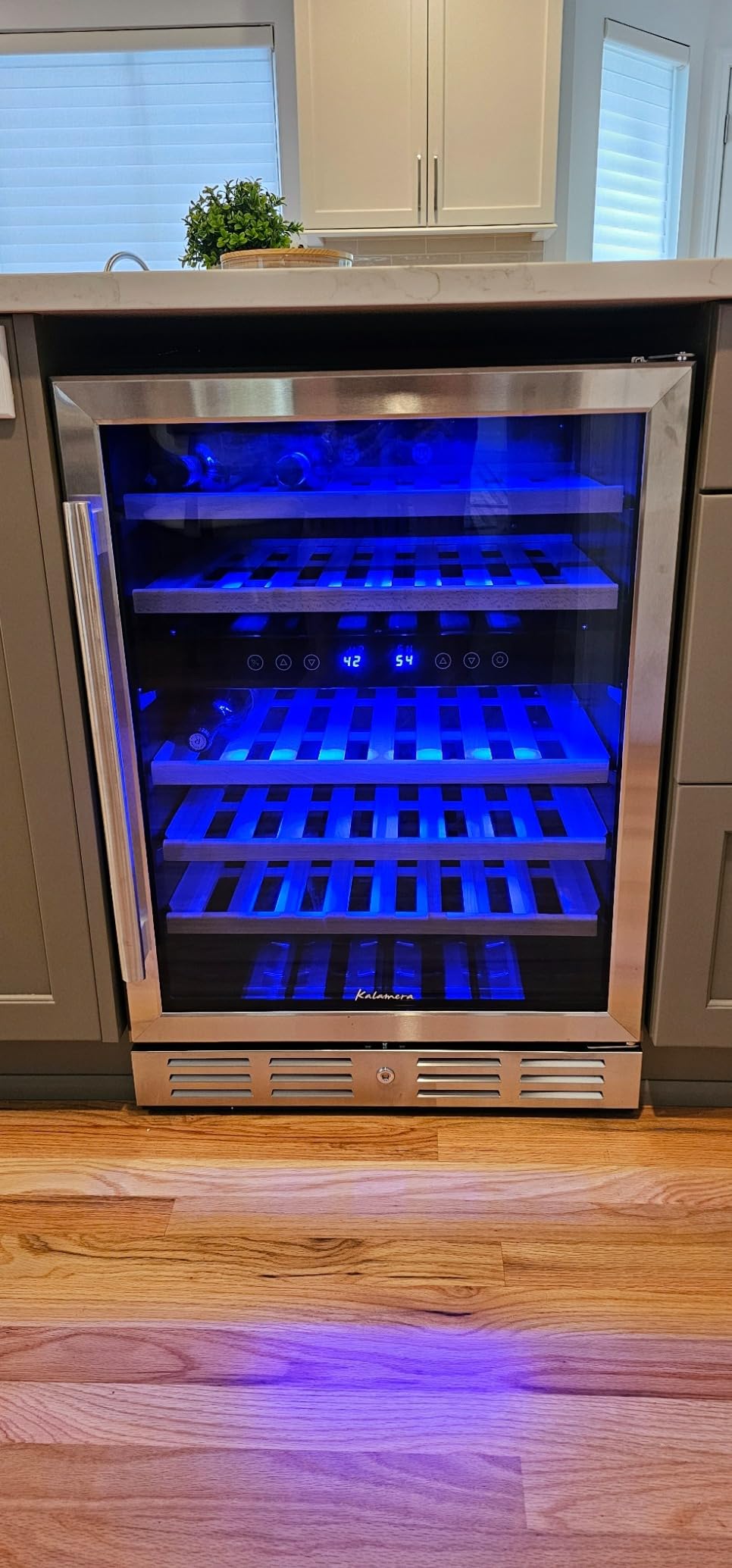
The honest trade-off is the door hinge. On some units, the hinge extends a couple of inches past the body, which can collide with adjacent cabinets in a tight built-in run. Several owners suggest leaving an extra inch of clearance on the hinge side during installation. The front vent placement also looks unusual under a counter if you are used to top-venting units.
For the price, this is the best small built-in dual-zone option for homeowners who care about sustainable materials and quiet operation.
Best use cases for this cabinet
Built-in kitchen installations with 24-inch cabinetry, small under-counter bar areas, mixed red and white collections in a single unit, and buyers who care about FSC-certified sustainable wood.
Where it falls short
The door hinge clearance can be tight in built-in runs, and the front vent placement is less elegant than top-venting premium units. Some owners report the thermostat reading drifts a couple of degrees from actual temperature.
8. BODEGA 24 Inch 154 Bottle Wine Cooler — BEST FOR LARGE COLLECTIONS
- 154 bottle capacity
- Dual-zone flexibility
- Energy-efficient R600a compressor
- Temperature memory
- Carbon filter
- Wooden shelves can let bottles sit crooked on narrow ledge
- Circulation fan cycles audibly
The BODEGA 154 is the cabinet that makes our basement bar feel like a real wine room. With 14 removable wooden shelves, dual-zone temperature control, and a stainless steel door that matches our appliances, it disappeared into the design while holding a serious collection. The 0.413 kWh/day energy draw is remarkably efficient for a 154-bottle compressor.
Owners consistently praise the temperature memory function and the front-vent design that supports built-in installation. The carbon filtration and air circulation system keep the interior odor-free, which matters when you have open bottles stored for weeks. The smart chip maintains temperature within roughly ±1°F of setpoint — solid for the size.
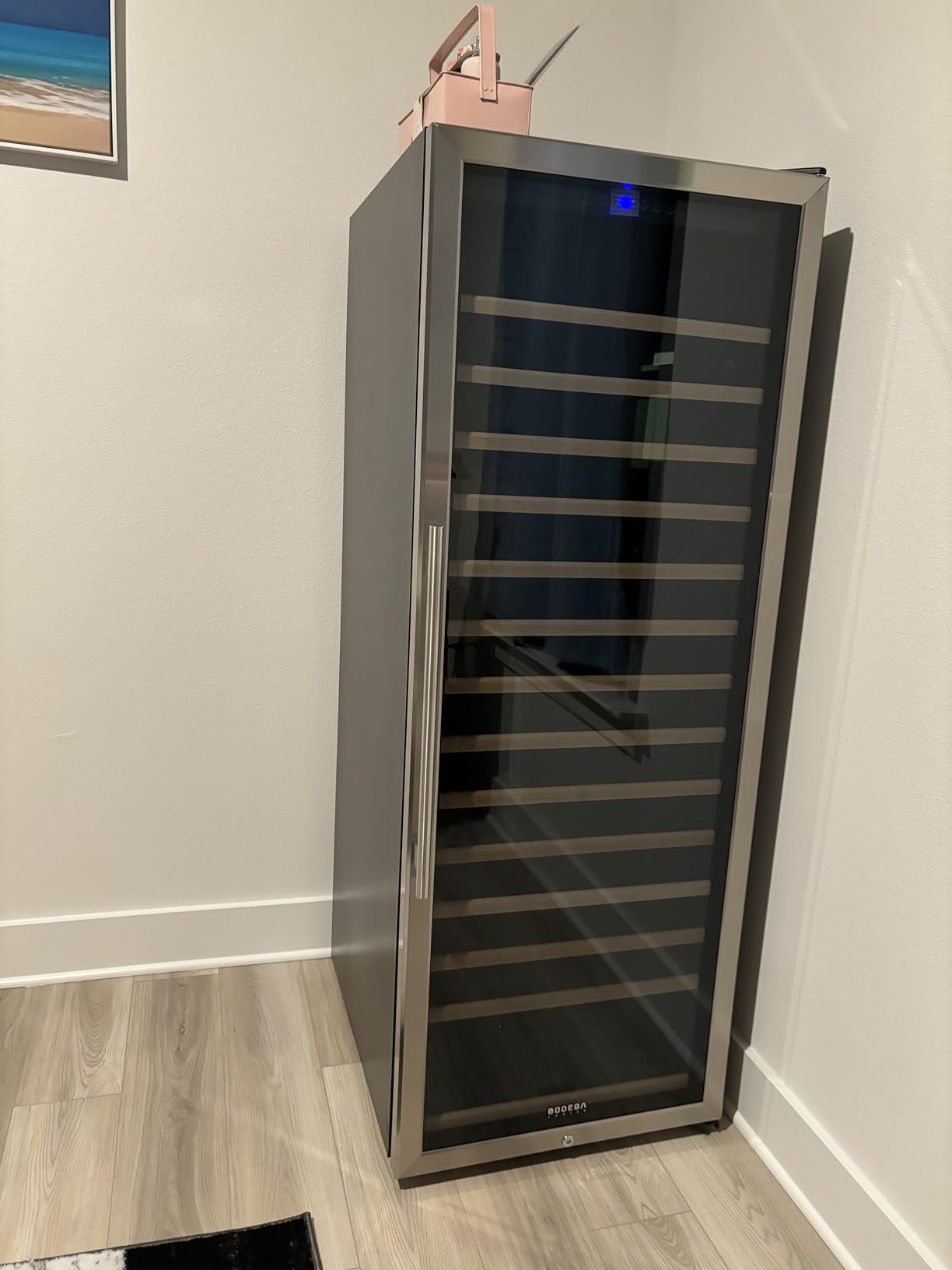
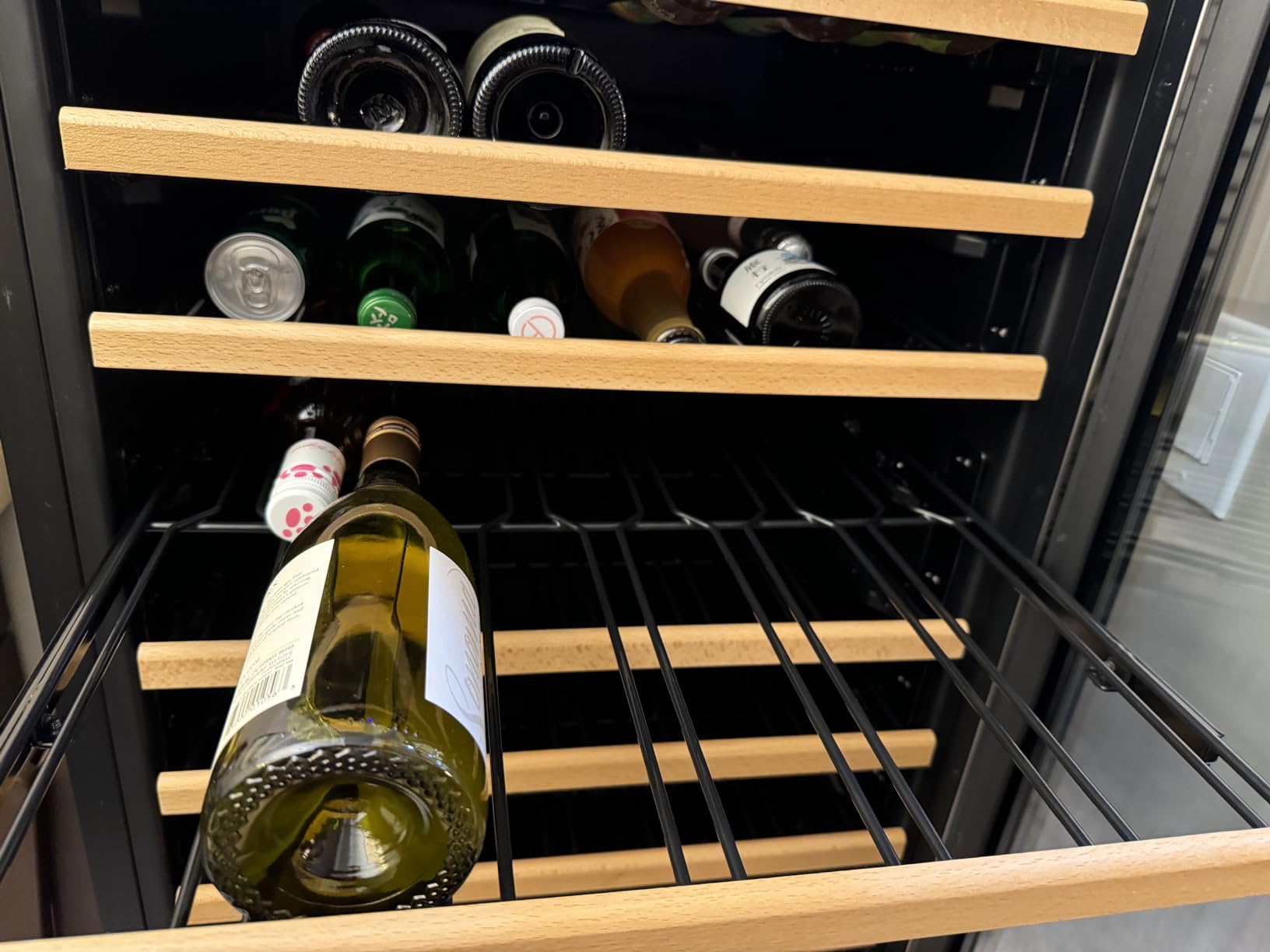
The honest downsides relate to the shelf design. The wooden shelves sit on a narrow ledge, and a single bottle on a mostly empty shelf can slide crookedly. Owners recommend adding shelf liner strips or grouping bottles in pairs. The circulation fan also cycles every 30 seconds, which is audible in a quiet room.
At 180 pounds, this is a two-person install, so plan accordingly.
Best use cases for this cabinet
Large personal collections of 80+ bottles, basement bars and entertainment rooms, built-in kitchen designs where stainless matches appliances, and buyers who want dual-zone flexibility at a serious capacity.
Where it falls short
The wooden shelf design lets single bottles sit crooked, the circulation fan cycles audibly, and the 180-pound weight makes solo installation difficult. Customer service response times are mixed.
9. Velieta 24 Inch Dual Zone 179 Bottle Cooler — BEST DUAL-ZONE LARGE
- Massive 179-bottle capacity
- Dual-zone temperature
- Whisper quiet compressor
- Safety lock
- Sturdy iron-and-wood shelves
- Heavy at 200 lbs
- Real capacity drops with wider bottle shapes
The Velieta is the dual-zone workhorse I trust for a serious collection. With 179 Bordeaux bottles split between an upper 40-55°F zone and a lower 55-65°F zone, our reds and whites each live at their proper temperature. The temperature memory function restores settings after a power outage, which saved our aging Bordeaux when a storm knocked out power for two days last spring.
The build is sturdy. The iron-and-wood shelves protect wine labels from the kind of scuffing that happens on all-wire racks, and the safety lock gave us peace of mind during a holiday party with younger cousins visiting. The blue protective lighting is gentle on labels and gives the cabinet a real display feel.
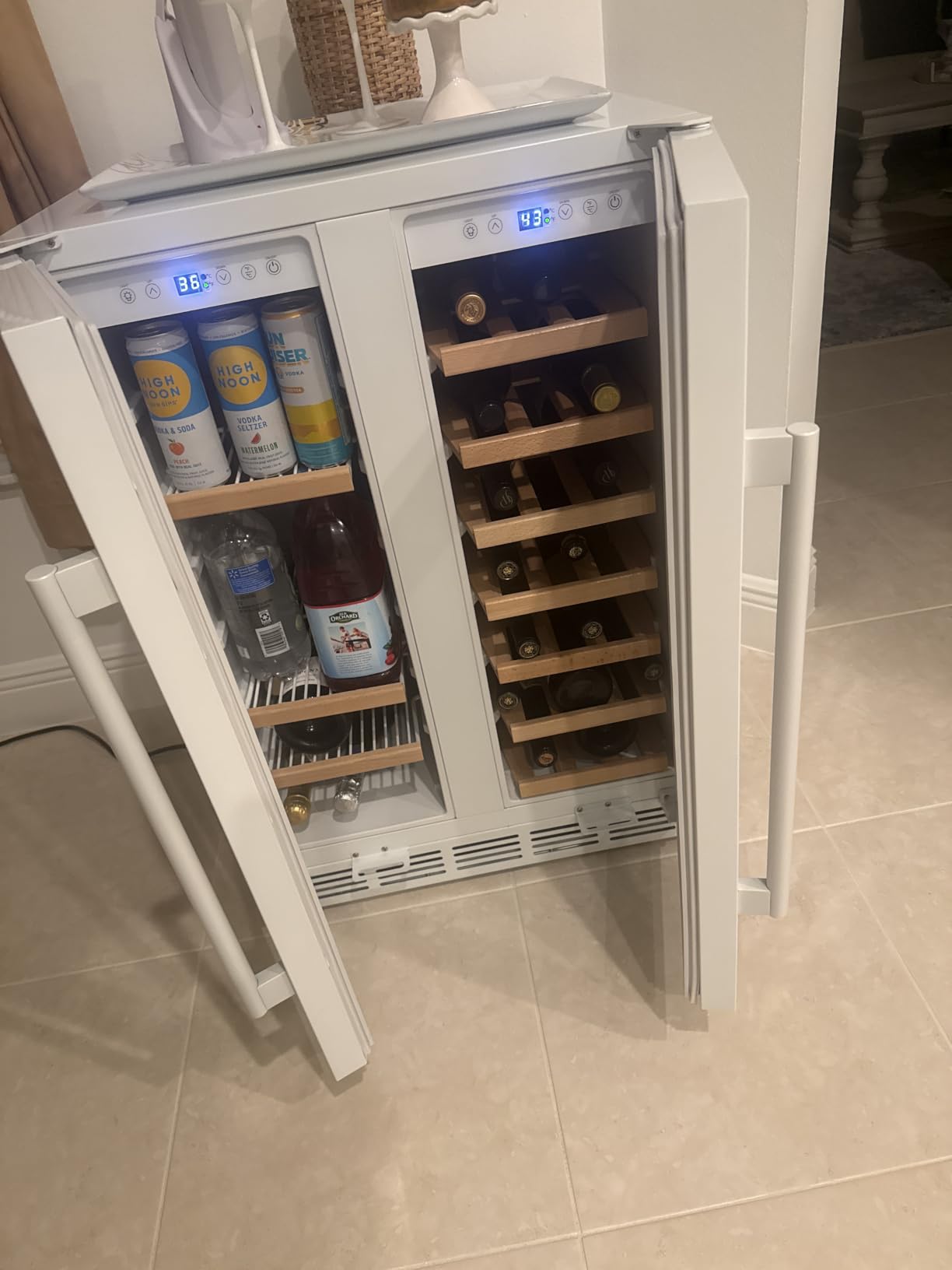
Owners consistently note how quiet the compressor is for the size — at 90 kg (roughly 200 pounds), this is a serious appliance, but the noise level stays low even in a quiet living space. The energy draw of 224 kWh/year is reasonable for a 179-bottle dual-zone unit.
The honest limitation is real-world capacity. Velieta’s 179-bottle claim assumes standard Bordeaux; wider Burgundy, Riesling, or Champagne bottles reduce actual capacity by 15-20%. Plan accordingly if your collection runs to non-standard shapes.
Best use cases for this cabinet
Collectors with 100+ bottles who want true dual-zone separation, anyone aging wine for 3+ years, large dining room or basement bar installations, and households that want the safety lock for entertaining.
Where it falls short
At 200 pounds, this is a two-person install and you will want to plan the location before unboxing. Real capacity drops with non-standard bottle shapes.
10. FoMup 24 Inch 190-Bottle Wine Cooler — BEST CAPACITY
24″ 190-Bottle Freestanding Wine Cooler, Low Noise with Sliding Shelves
- Massive 190-bottle capacity
- Smooth sliding shelves
- Reversible door
- Touch panel with memory function
- Activated carbon filter
- Real capacity lower with mixed bottle shapes
- Less premium build than competitors
The FoMup is the cabinet to beat for sheer capacity. Up to 190 standard Bordeaux bottles across 16 wood-and-wire shelves, with smooth sliding rails that pull the back bottles into reach without rattling the front row. The reversible door is a small detail that matters for kitchen layouts where the wall configuration changes during renovation.
The touch panel with memory function restores temperature settings after a power cycle, and the activated carbon filter keeps the air inside fresh. The double-layer tempered glass door reduces UV transmission, and the 40-65°F range covers both cellaring and serving temperatures for a wide variety of wines.
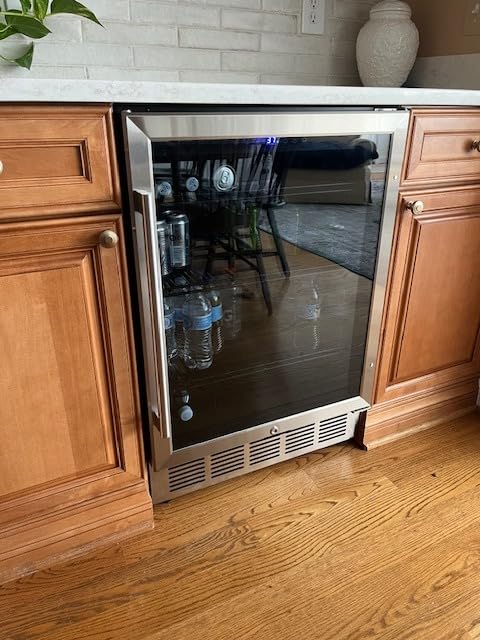
Owners appreciate the energy efficiency — the 250 kWh annual draw is modest for a 190-bottle compressor — and the 12-month technical support provides a baseline of post-purchase help.
The honest limitations are build quality and brand reputation. FoMup does not have the long track record of premium European brands, and the 190-bottle capacity assumes standard Bordeaux. With mixed bottle shapes, expect closer to 150-160 bottles. Still, for the raw capacity at this price tier, it is a strong value pick.
Best use cases for this cabinet
Large collections on a budget, basement storage where premium aesthetics are not critical, mixed collections with a wide variety of bottle shapes, and buyers who want sliding shelves for easy access.
Where it falls short
Brand reputation is newer than premium competitors, build quality is mid-tier, and real capacity drops with non-standard bottle shapes. Not the right pick for a high-end dining room where aesthetics dominate.
Why a Wine Refrigerator Cabinet Beats a Regular Fridge
A regular refrigerator is one of the worst places to store wine for three reasons. First, it runs too cold — typically 35-40°F — which slows aging and mutes the aromatic development that makes aged wine interesting. Second, the compressor vibrates the bottles every time it cycles, stirring sediment and accelerating uneven aging in older vintages. Third, regular fridge interiors are dry, which dries out corks over time and risks oxidation.
A proper wine refrigerator cabinet solves all three problems. It holds a stable 55°F (13°C) — the ideal cellaring temperature — with humidity between 50-70% to keep corks moist. The compressor is vibration-dampened, and the wood shelves absorb any residual hum. UV-resistant glass blocks the light that degrades wine over time, and the door seal keeps temperature fluctuations to a minimum when the door opens.
For our dining room, the difference has been night and day. Wines we have cellared for two years in the cabinet taste noticeably more integrated than bottles kept in the kitchen fridge for the same period. If you care about wine at all, a proper cabinet is worth the investment. If you also enjoy entertaining, our best wine coolers guide covers smaller countertop units and the wine buckets guide is a nice complement for service.
What to Look For When Buying a Wine Refrigerator Cabinet
Working through a few key decisions before you buy saves the kind of regret we saw all over the home forums. Here are the seven factors our team weighed most heavily during testing.
Capacity: Most owners wish they had bought bigger. A useful rule is to pick a cabinet that holds 50-100% more than your current collection — collections grow faster than you expect, and a larger unit holds temperature more stably than a packed small one.
Single-zone vs dual-zone: Single-zone units maintain one temperature throughout and are ideal for all-red or all-white cellaring at 55°F. Dual-zone units split the cabinet into two temperature zones, which lets you store reds at 60-65°F and whites at 45-50°F simultaneously.
UV-resistant glass door: Light degrades wine. Look for double-paned or coated tempered glass, especially if the cabinet will sit in a room with direct or indirect sunlight.
Vibration reduction: Wood shelves absorb more vibration than wire, and a quality compressor with rubber mounts keeps noise low. If your cabinet will live near a TV or bedroom, prioritize quiet operation.
Door swing and ventilation gaps: Measure the space carefully and check whether the door hinge can be reversed. Built-in units need front-venting clearance; freestanding units need an inch or two on each side.
Warranty and brand service: One-year warranties are standard. Two-to-three-year compressor warranties (Ca’Lefort, LeCavist) signal a more confident manufacturer. Reddit users repeatedly flag Avallon failures after 3-5 years and Vintec post-sale support frustrations, so brand reliability matters.
Shelving material: Wood shelves (beech, sapele, FSC-certified) absorb vibration and look elegant. Wire shelves are easier to clean but transmit more vibration and can scuff labels over time.
Single-Zone vs Dual-Zone: Which Do You Actually Need?
Single-zone cabinets are simpler, less expensive, and hold temperature more consistently across the interior because there is only one thermostat to maintain. They are the right choice if you collect almost exclusively reds, almost exclusively whites, or are cellaring wine for long-term aging at 55°F.
Dual-zone cabinets are essential if you want both reds and whites ready to serve at their proper temperatures without waiting hours for a bottle to warm or chill. The upper zone is typically set cooler for whites (40-50°F) and the lower zone warmer for reds (55-65°F). For entertaining households with a mixed collection, dual-zone is the more flexible choice.
Freestanding vs Built-In: Understanding Installation
Freestanding cabinets vent from the back or sides and can be placed anywhere with adequate clearance. They are easier to install and often less expensive. Built-in cabinets are designed to vent from the front (under the door toe-kick) and slide under counters or into cabinetry. They look more integrated but require careful measurement.
For Talk of the House readers, built-in is usually the better-looking choice for kitchens and butler’s pantries, while freestanding works for dining room displays and basement bars where the cabinet is a feature piece.
Common Buying Mistakes to Avoid
1. Buying too small. The single most common regret on home forums. Buy 50-100% larger than your current collection.
2. Ignoring door swing. Measure your space and check whether the door hinge is reversible. A door that opens the wrong way in a tight kitchen is a daily frustration.
3. Forgetting ventilation gaps. Built-in units need front clearance for the vent. Freestanding units need airflow on the sides. Crowding the cabinet shortens compressor life.
4. Trusting advertised bottle counts. Manufacturers rate capacity with standard Bordeaux bottles. Wider Burgundy, tall Riesling, or Champagne bottles reduce real-world capacity by 15-25%.
5. Choosing on price alone. Forum reports of compressor failures after 3-5 years on cheaper brands are common. A two-year compressor warranty is worth the upgrade.
6. Picking the wrong size for the room. A 190-bottle cabinet in a tiny dining room looks oversized. A 12-bottle unit in a butler’s pantry looks lost. Match the cabinet to the space.
How to Style a Wine Cabinet in Your Home
Wine cabinets have moved out of the cellar and into the living spaces of our homes. At Talk of the House, we see them styled three ways most often.
Kitchen butler’s pantry. A 24-inch built-in unit under a counter, with the same cabinetry finish as the surrounding millwork, looks like original architecture. Pair with a marble prep surface above for serving.
Dining room display. A freestanding unit with wood shelves and a display shelf (like the Whynter) becomes a focal point. Place a small table lamp nearby for evening ambiance and angle the cabinet to catch the light without direct sun.
Wet bar or basement entertaining area. A larger dual-zone unit (BODEGA, Velieta, or FoMup) anchors a bar wall. Frame it with open shelving for glassware and a decanter collection — our wine decanter guide has picks that pair well.
Brand Reliability Snapshot
Based on owner reports and long-term tests across r/wine and home forums: EuroCave remains the most reliable premium brand (Made in France, owners report 10+ years of use), with Artevino (CostCo private label) offering similar quality at a lower price. Allavino and Wine Enthusiast are solid mid-range choices. LeCavist is well-regarded for warranty support. Avallon receives mixed reviews, with some owners reporting compressor failures after 3-5 years — buy from a retailer with a generous return policy. Vintec has post-sale service complaints around app support. The Amazon-tier brands covered here (Antarctic Star, Ivation, Electactic, Kalamera, FoMup, BODEGA, Velieta, Ca’Lefort, Whynter, Cuisinart) offer strong value but vary in long-term durability — Cuisinart’s 3-year warranty is the strongest at the consumer tier.
Frequently Asked Questions
What is the best wine cabinet?
The best wine cabinet is one that holds a stable 55°F (13°C) with humidity between 50-70%, has UV-resistant glass, vibration-dampened wood shelves, and a capacity that comfortably exceeds your current collection by 50-100% so it can grow with you. Our top pick is the Antarctic Star 26-bottle for all-around value, with the Ca’Lefort as the premium upgrade.
Which brand of wine fridge is the most reliable?
Based on owner reports and long-term tests, EuroCave is the most reliable premium brand (Made in France, owners report 10+ years of use). Artevino (CostCo private label) offers similar quality at a lower price. Allavino and Wine Enthusiast are solid mid-range choices, and LeCavist is well-regarded for warranty support. Avallon has mixed reliability reports.
How do I choose a wine fridge cabinet?
Choose a wine fridge cabinet by working through seven steps: (1) pick your capacity at 50-100% more than your current collection, (2) decide single-zone vs dual-zone based on whether you store reds and whites, (3) pick freestanding or built-in based on installation, (4) check door swing and ventilation gaps, (5) insist on UV-resistant glass and wood shelves, (6) confirm warranty length and brand service, (7) buy larger than you think.
Is EuroCave a good wine fridge?
Yes — EuroCave is consistently the top-rated wine fridge brand among serious collectors. Made in France, it holds temperature within roughly ±1°F and humidity at the optimal 50-70% range. Owners report 10+ years of reliable use. The trade-off is price, which is why CostCo’s Artevino (the lower-end EuroCave line) is a popular alternative.
Do wine refrigerators need ventilation?
Yes — all wine refrigerators need ventilation to keep the compressor from overheating. Freestanding units need airflow on the sides and back (typically 1-2 inches on each side and several inches behind). Built-in units with front-venting designs need clearance under the door toe-kick only. Crowding the cabinet shortens compressor life and can cause temperature fluctuations.
How long does a wine refrigerator last?
A quality wine refrigerator cabinet typically lasts 8-12 years with normal use. Premium brands like EuroCave and LeCavist often exceed 10 years, while budget-tier Amazon brands vary. The compressor is the most common failure point, which is why a two-to-three-year compressor warranty is worth prioritizing. Keep the coils clean and ensure proper ventilation to maximize lifespan.
Final Verdict
Choosing the best wine refrigerator cabinet comes down to your collection size, your kitchen layout, and how much you entertain. Our EDITOR’S CHOICE, the Antarctic Star 26-bottle, is the right starting point for most homes — quiet, reliable, and a sensible price. If you need more capacity, the BODEGA and Velieta dual-zone units deliver serious storage with proper temperature separation. For built-in installations, the Ca’Lefort or Kalamera is the right call. And for tight spaces, the Cuisinart CWC-800CEN is the only small cabinet I trust with a 3-year warranty.
Whichever you choose, buy larger than you think, leave room for ventilation, and keep the coils clean. A well-chosen wine refrigerator cabinet will outlast several phone upgrades and become one of the most-used features in your home. Here is to many good bottles in 2026 and beyond.