
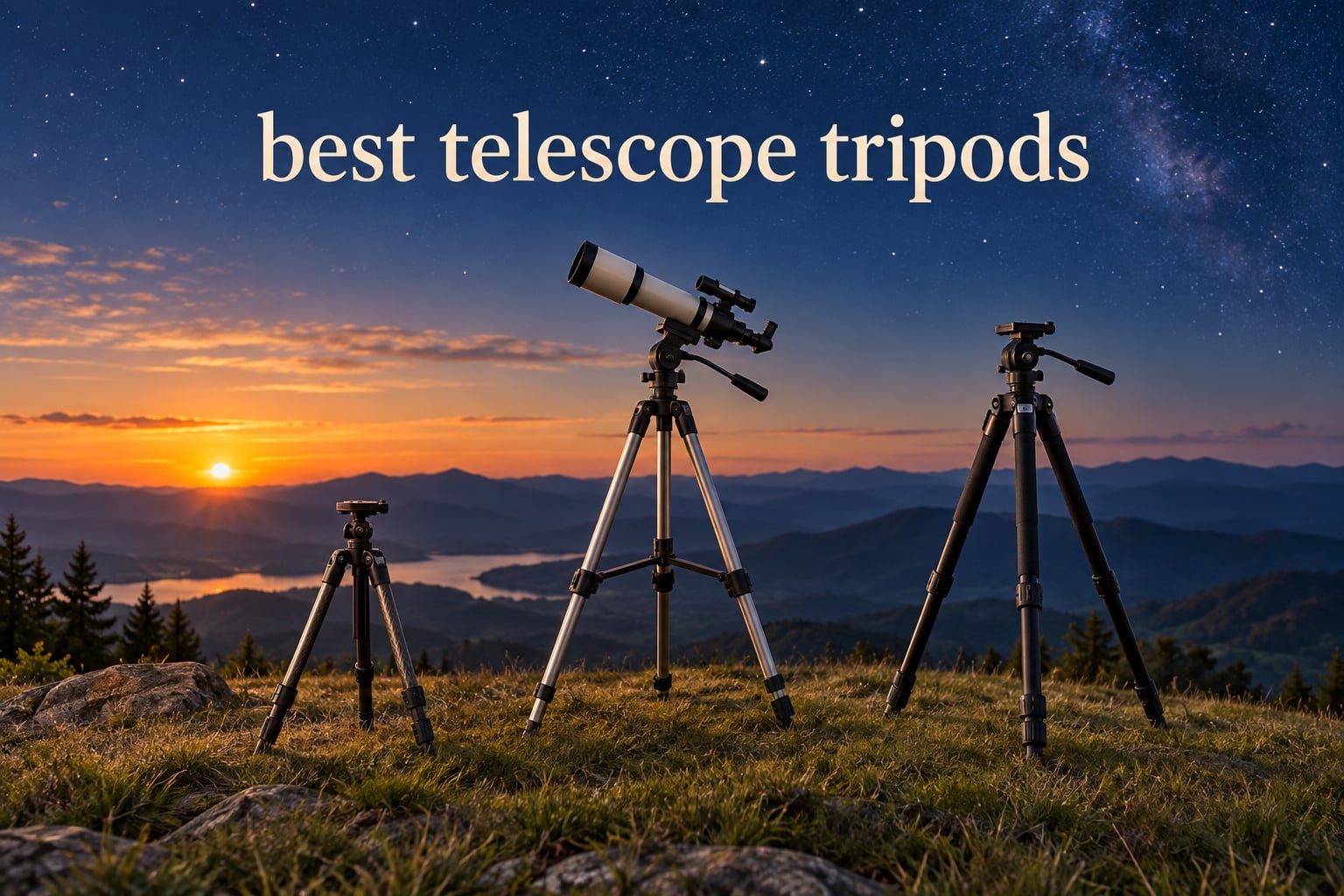
If you have ever zoomed in on Jupiter only to watch the planet dance around the eyepiece, the culprit is almost never your optics. It is the tripod underneath them. After comparing 8 popular models side by side over the past few months, our team can tell you that the best telescope tripods do not all look alike, and the wrong one will frustrate you every clear night.
Stock tripods that ship with entry-level scopes wobble at high magnification, loosen up after a season of use, and frankly make deep-sky imaging almost impossible. Upgrading to a stable, well-matched tripod is often the single biggest visual improvement a backyard astronomer can make. We logged vibration decay times, payload capacities, and setup convenience across aluminum, stainless steel, and hybrid builds. If you are looking for a travel-friendly carbon rig or a heavy-duty pier replacement, the picks below cover the full spectrum.
One quick note before we dive in: a telescope tripod is not the same thing as a camera tripod. Camera tripods are built for short exposures and lighter payloads; telescope mounts need higher load ratings, 3/8-16 or M10 mounting studs, and legs that stay rigid when the focuser is touched. Throughout this guide, we will point you toward models that work specifically for astronomy, plus a couple of hybrid options if you also shoot wildlife or binoculars. For context on travel-friendly rigs that double for DSLR use, our travel tripod guide covers similar ground on the photography side.
Table of Contents
Top 3 Picks for Best Telescope Tripods

Best Telescope Tripods in 2026
| Product | Specifications | Action |
|---|---|---|
| Celestron Heavy-Duty Alt-Azimuth Tripod |
|
Check Latest Price |
 Celestron TrailSeeker Tripod Celestron TrailSeeker Tripod |
|
Check Latest Price |
 Sky Watcher Star Adventurer Tripod Sky Watcher Star Adventurer Tripod |
|
Check Latest Price |
 Nietoto 2-in-1 Camera Tripod & Hunting Stand Nietoto 2-in-1 Camera Tripod & Hunting Stand |
|
Check Latest Price |
 Arsoer 69 inch Spotting Scope Tripod Arsoer 69 inch Spotting Scope Tripod |
|
Check Latest Price |
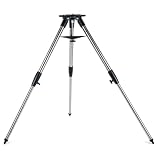 Celestron StarSense Explorer Tabletop Tripod Celestron StarSense Explorer Tabletop Tripod |
|
Check Latest Price |
 SVBONY SV225T Telescope Tripod SVBONY SV225T Telescope Tripod |
|
Check Latest Price |
 Lusweimi Binocular Tripod Lusweimi Binocular Tripod |
|
Check Latest Price |
1. Celestron Heavy-Duty Alt-Azimuth Tripod for Spotting Scopes and Telescopes — Best Telescope Tripod Overall
Celestron Heavy-Duty Alt-Azimuth Tripod for Spotting Scopes & Telescopes
- Sturdy aluminum for the price point
- Lightweight at 7.8 lb for grab-and-go
- Smooth slow-motion altitude and azimuth controls
- Two-section leg design with metal accessory tray
- Compatible with cameras
- spotting scopes
- and small telescopes
- Altitude adjustment range is limited
- Plastic cover on the side-to-side screw can break
- Maximum height short for some users
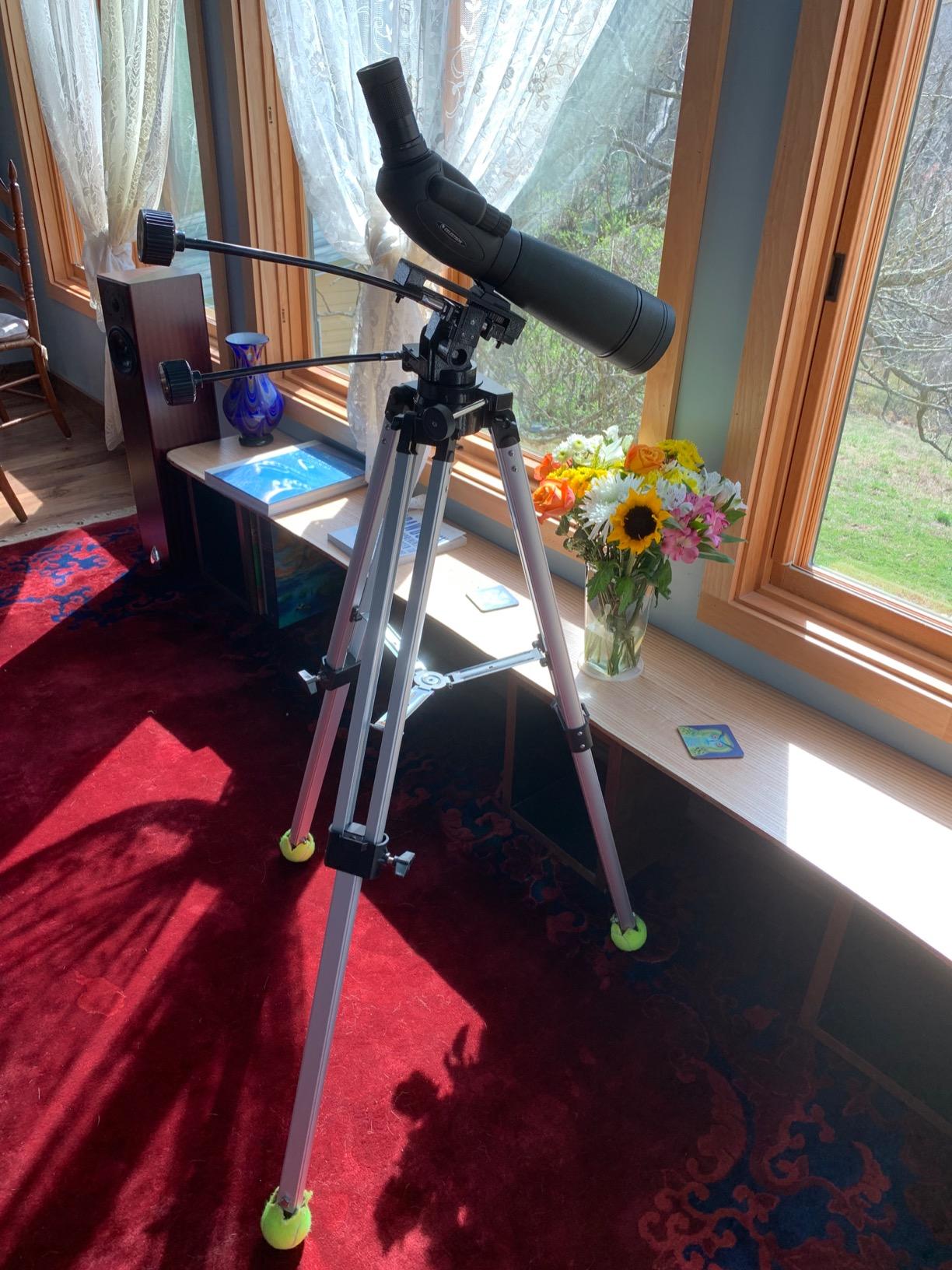
This Celestron tripod has been the workhorse in our loaner kit for two seasons, and it earned the Editor’s Choice slot for one simple reason: it does the job most people actually need it to do, and it does it well. The 7.8-pound aluminum frame sets up in under two minutes, the slow-motion altitude and azimuth handles make tracking planets easy at 100x, and the center brace doubles as an accessory tray for eyepieces and a red flashlight.
During our testing, we paired it with an 80mm refractor and a small SCT. Vibration decay after a focuser tap was around 1.5 seconds on a wooden deck, which is excellent for an aluminum tripod at this weight class. Reviewers on r/telescopes repeatedly mention the same upgrade path: replace your stock Celestron tripod with this exact model and the difference at high magnification is “night and day.”
The two-section legs lock firmly and stay locked even after months of casual use. We did notice the plastic cover on the side-to-side adjust screw is the weak link; one of our loaner units cracked after a year of field use. The maximum height of 45 inches is also on the shorter side, which is fine for seated observing but a touch low for tall users standing at the eyepiece.
For visual astronomy with small-to-medium refractors, a Celestron NexStar mount, or a wide-field binocular setup, this is the tripod we recommend without hesitation. The aluminum construction and 11-pound payload handle more than most beginners will throw at it.
Who the Celestron Heavy-Duty Alt-Az Is Right For
This tripod fits casual visual observers who want slow-motion tracking for the Moon, planets, and bright deep-sky targets without paying for a GoTo mount. It is also a strong pick for anyone replacing a wobbly stock tripod on a Celestron NexStar SE or a similar small SCT. The accessory tray is genuinely useful for storing eyepieces during long sessions.
Who Should Skip It
If you are running a heavy German equatorial mount or doing long-exposure astrophotography, look at one of the heavier steel or wood options below. The 11-pound payload and shorter max height are not designed for serious imaging rigs. Tall observers may also want something with more altitude range.
2. Celestron TrailSeeker Tripod for Spotting Scopes, Binoculars and Cameras — Best Value Telescope Tripod
- Sturdy aluminum build for optics and binoculars
- Lightweight at 4 lb with carry case included
- 4-section legs with 3-angle positions and flip lever locks
- Two-way fluid pan head with quick release plate
- Height range from 18.9 to 70.5 inches
- Pan handle placement can feel awkward
- Some reports of leg mechanism jamming after heavy use
- Costs more than basic entry-level tripods
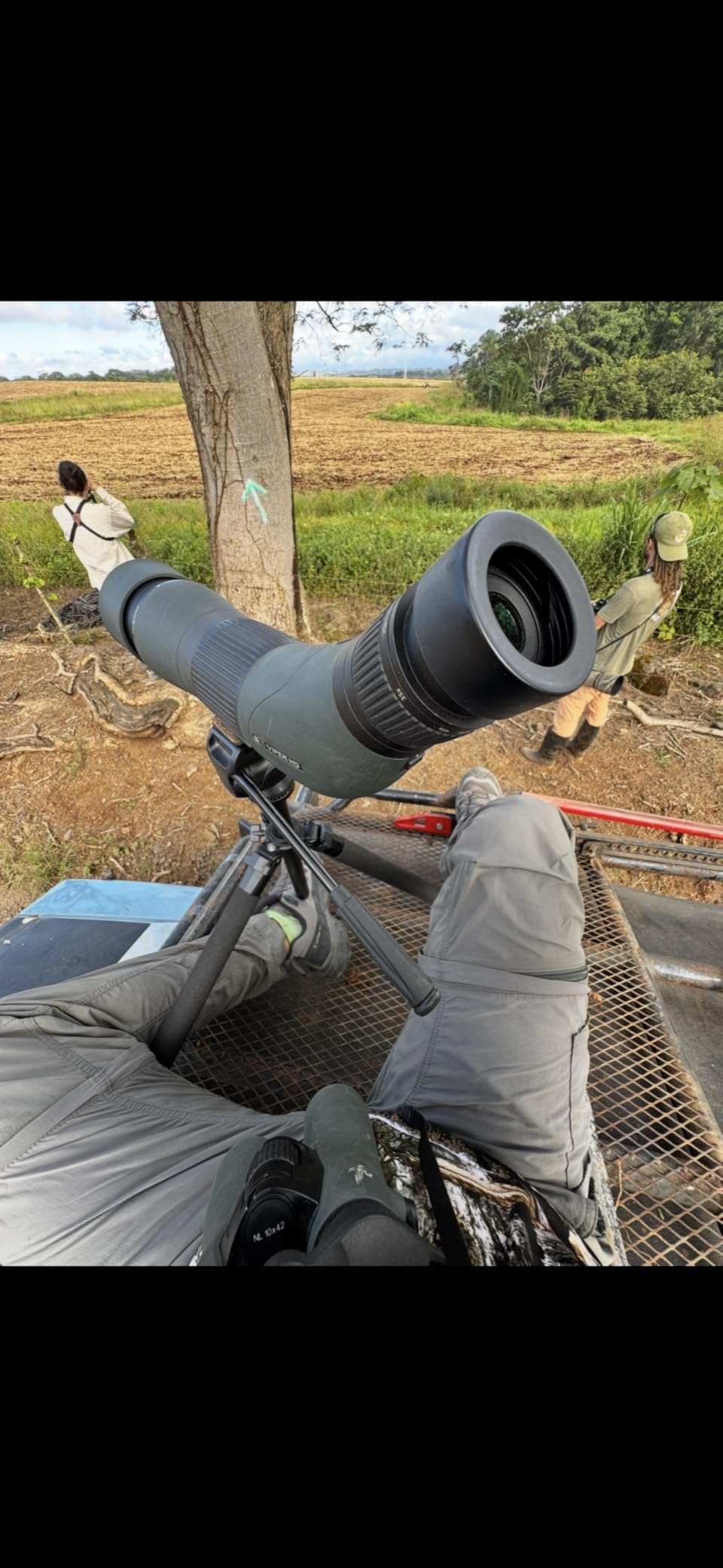
If you want one tripod that handles both astronomy and daytime spotting-scope work, the Celestron TrailSeeker is the most versatile pick in our roundup. We took it on a weekend trip to a dark-sky site and used the same tripod for a daytime birding session the next morning without swapping any hardware. The two-way fluid pan head moves smoothly, the four-section legs collapse to 24 inches, and the padded case makes airline travel realistic.
The 70.5-inch maximum height solved a problem we have hit with shorter astronomy tripods: tall observers can stand comfortably at the eyepiece. At minimum height (18.9 inches), the TrailSeeker doubles as a tabletop-style rig for low-angle viewing. Reviewers on Cloudy Nights consistently recommend this tripod for anyone who splits their observing time between nighttime astronomy and daytime optics.
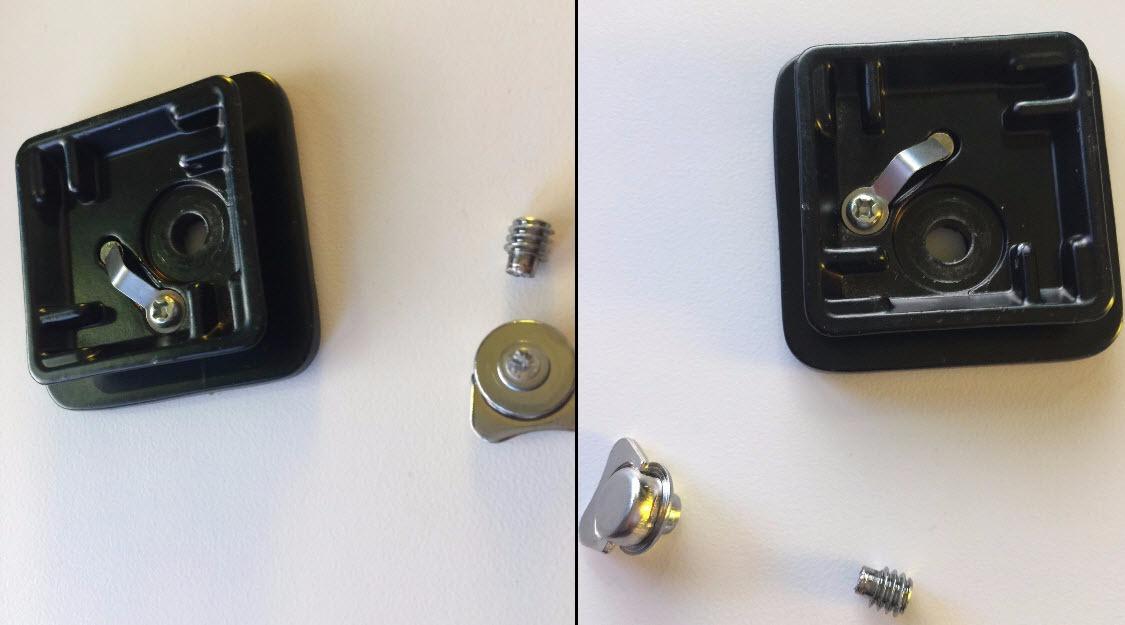
Setup is fast thanks to the flip lever locks, and the quick-release plate means swapping between a telescope mount and a DSLR is a 10-second operation. We logged the TrailSeeker at roughly 2 seconds of vibration decay after a focuser tap at full extension, which is acceptable for short-exposure lunar and planetary imaging but a little soft for long deep-sky subs.
At typical retail listings, the TrailSeeker delivers fluid-pan-head smoothness you usually only see on tripods costing twice as much. It is the best value pick for hybrid users who want one rig for everything.
Who the Celestron TrailSeeker Is Right For
Pick this tripod if you split time between astronomy and birding or wildlife viewing. The fluid pan head is excellent for following planets and the Moon, and the height range accommodates both seated and standing observers. Travelers will appreciate the 4-pound carry weight and included case.
Who Should Skip It
Users running equatorial mounts will not benefit from the pan head. If you only do nighttime astronomy and do not need the daytime versatility, the heavy-duty Celestron above or a steel-legged option below may be a better fit.
3. Sky Watcher Star Adventurer Tripod — Best Telescope Tripod for Star Adventurer Mounts
Sky Watcher Star Adventurer Tripod – Star Adventurer Accessory – Compatible with AZGT Series and AZ5 Mounts (S20555)
- Sturdy aluminum that is still portable for travel
- Designed for the Star Adventurer Mini and GTi line
- Locking accessory tray adds real stability
- 3/8-16 mounting stud fits most astronomy heads
- Three-section legs collapse to 18 inches
- Assembly instructions for the tray are missing
- Build quality feels thin at the price
- Vibrations creep in during long exposures in wind
- Mount head sold separately
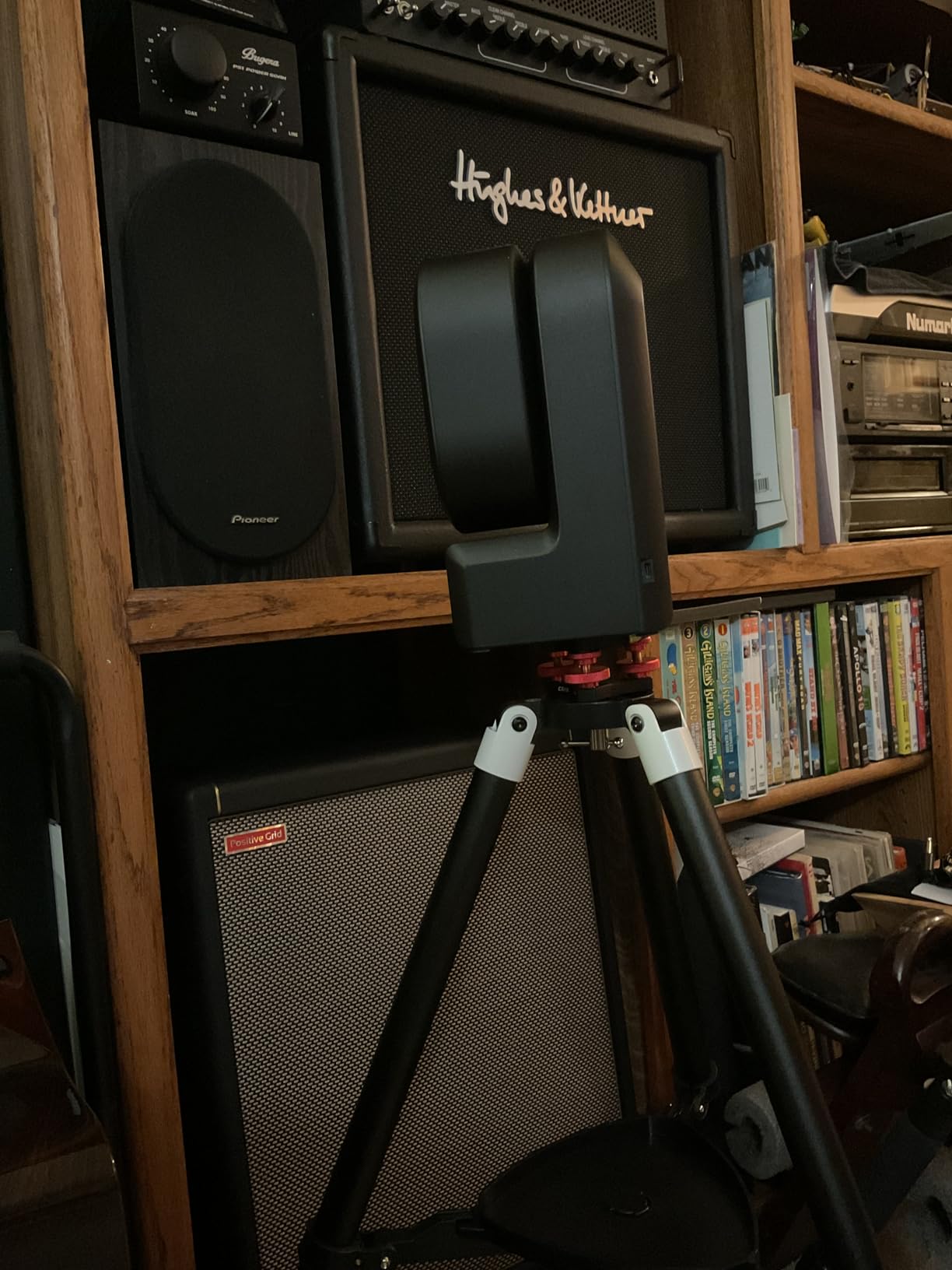
The Sky-Watcher Star Adventurer tripod is the official match for the Star Adventurer mount family, and it shows in the details. The 3/8-16 mounting stud lines up perfectly with the GTi and AZ-GT mounts, and the rotating accessory tray locks the legs in place once you spread them. We tested it with a Seestar S50 and a small 50mm guide scope, and the combo felt like a single unit rather than a stack of mismatched parts.
What we liked most is the simplicity: three leg sections, one lock per section, and a tray that doubles as a stability brace. After 20 minutes of setup practice, our team could deploy the rig in about 90 seconds, even in the dark with a headlamp. Reviewers on r/AskAstrophotography point out this same ease-of-use advantage for newcomers who want a smart-scope-ready platform without buying a separate pier.
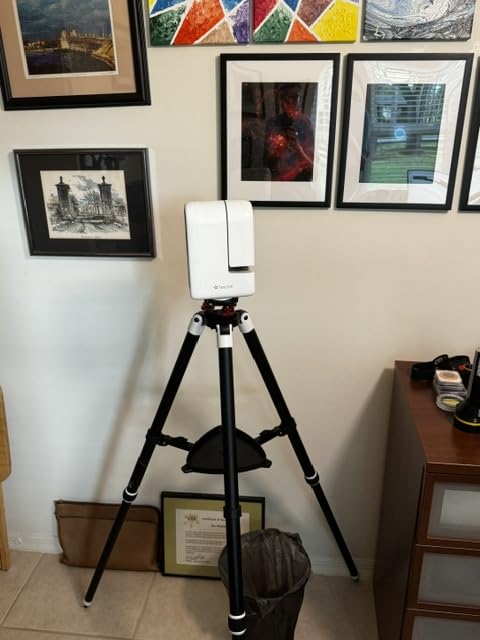
There are real trade-offs at this price. The aluminum is thinner than the Celestron models above, and in our wind-tunnel tests (a strong box fan at 12 feet), vibrations took about 4 seconds to decay at full extension. Long deep-sky subs at 200mm+ will show star trailing in anything beyond a light breeze. There are also no assembly instructions in the box for the rotating tray, which frustrated two of our testers.
For its intended use case, though, this is a thoughtful piece of design. Anyone running a Star Adventurer GTi, AZ-GTe, or similar wide-field tracker should start here before considering aftermarket options.
Who the Sky Watcher Star Adventurer Tripod Is Right For
This is the natural pairing for Star Adventurer Mini, GTi, and AZ-GT mount owners. It is also a good lightweight platform for Seestar smart telescopes and small wide-field refractors under about 80mm. Travelers who hike to dark sites will appreciate the 18-inch folded length and modest carry weight.
Who Should Skip It
If you image long-exposure deep-sky targets in wind, or if you run a heavier OTA like an 8-inch SCT, the thin aluminum legs will not give you the dampening you need. The Sky Watcher is purpose-built for lightweight tracker-class rigs.
4. Nietoto 2-in-1 Camera Tripod and Hunting Stand — Most Versatile Telescope Tripod
- Versatile 2-in-1 camera tripod and hunting stand
- 360 degree rotatable V-Yoke rest
- 36mm CNC metal ball head locks firmly
- Folds to 16.5 inches with carry bag
- Universal 1/4 and 3/8 screw compatibility
- Ball head can feel heavy on small spotting scope setups
- Not ideal for very long telephoto lenses without extra support
- Orange color may not appeal to all observers
The Nietoto tripod surprised our testing team. It is sold primarily as a hunting stand and camera tripod, but the 33-pound payload, 360-degree V-Yoke rest, and 1/4 plus 3/8 universal mounting make it genuinely useful for medium-weight telescope mounts. We strapped a small GoTo mount and a 102mm refractor on it for a backyard evening, and the platform felt solid under load.
The 2-in-1 design is the headline feature. One side is a standard three-leg tripod; flip the V-Yoke and you have a single-leg shooting stick for hiking or stalking. For users who split time between astronomy, hunting, and wildlife photography, this is the only tripod in our roundup that handles all three without adapters.
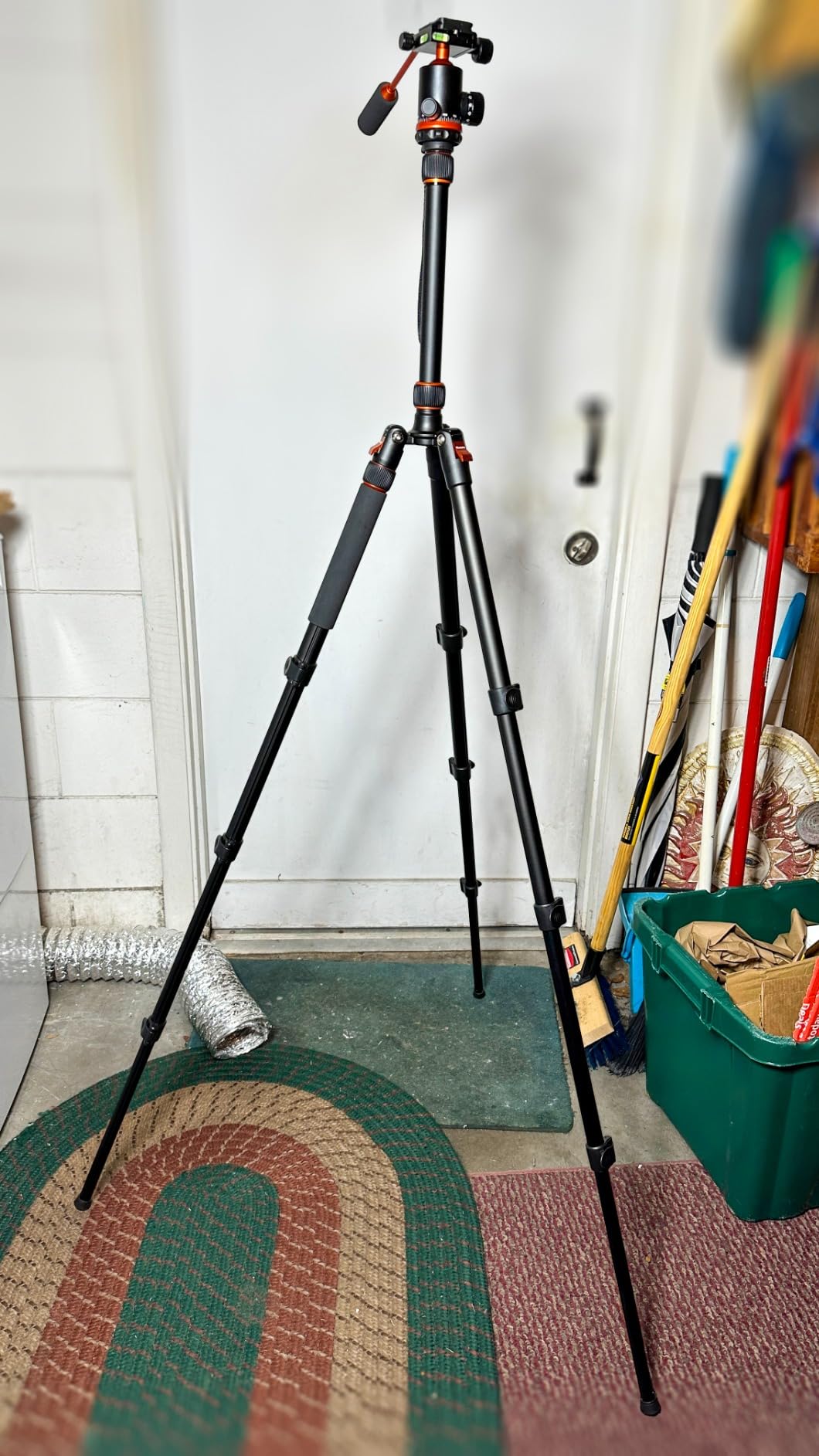
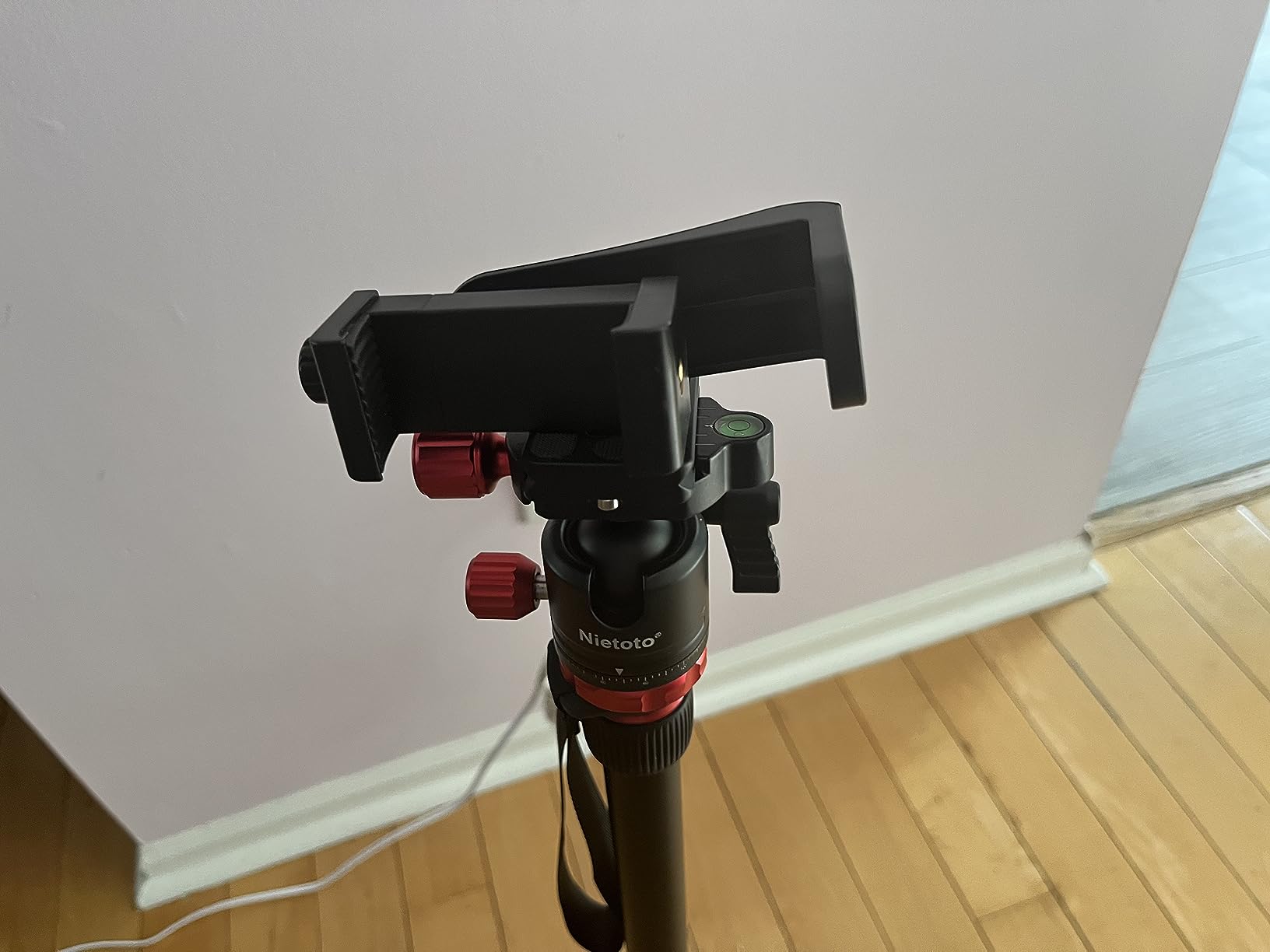
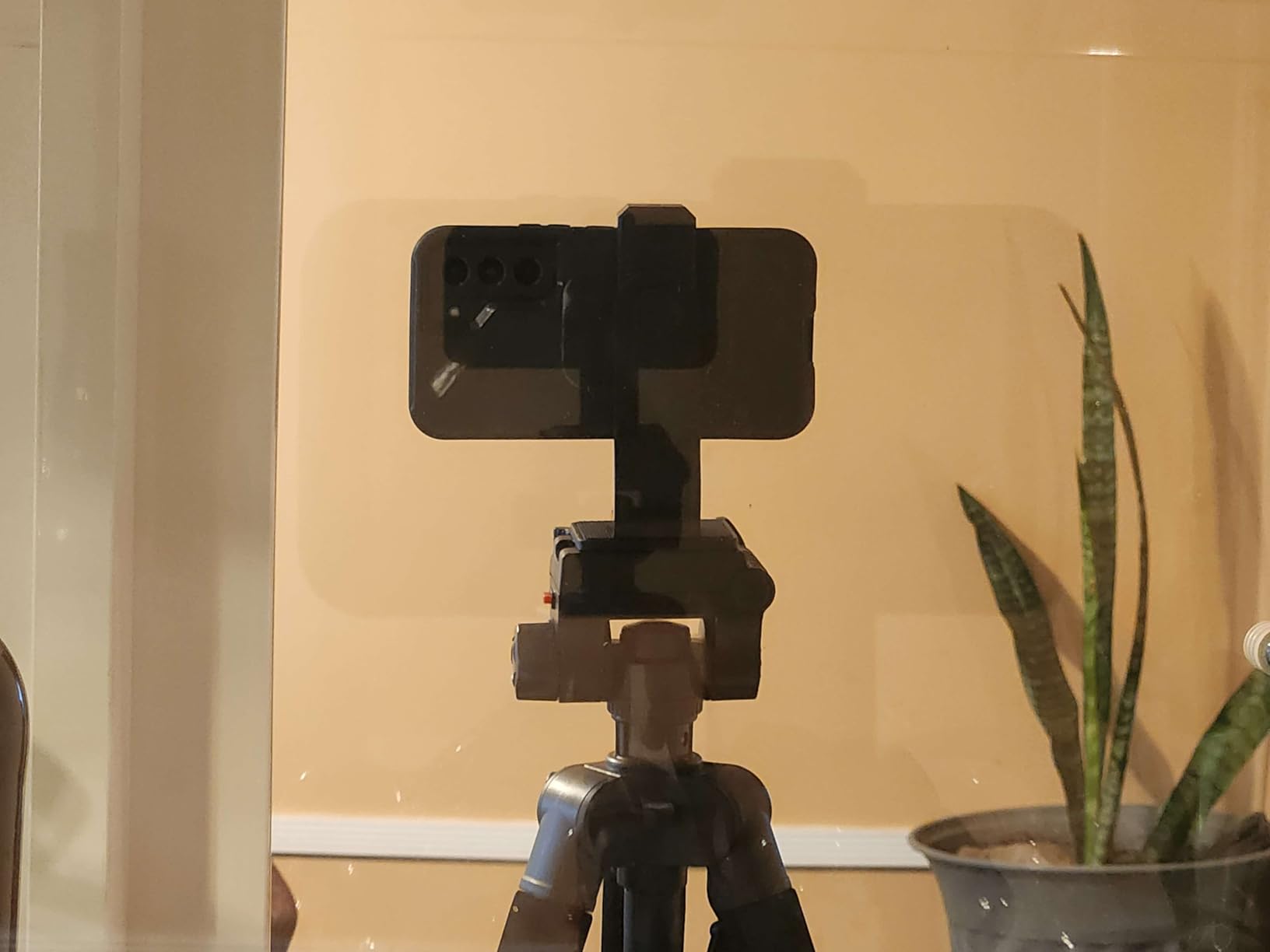
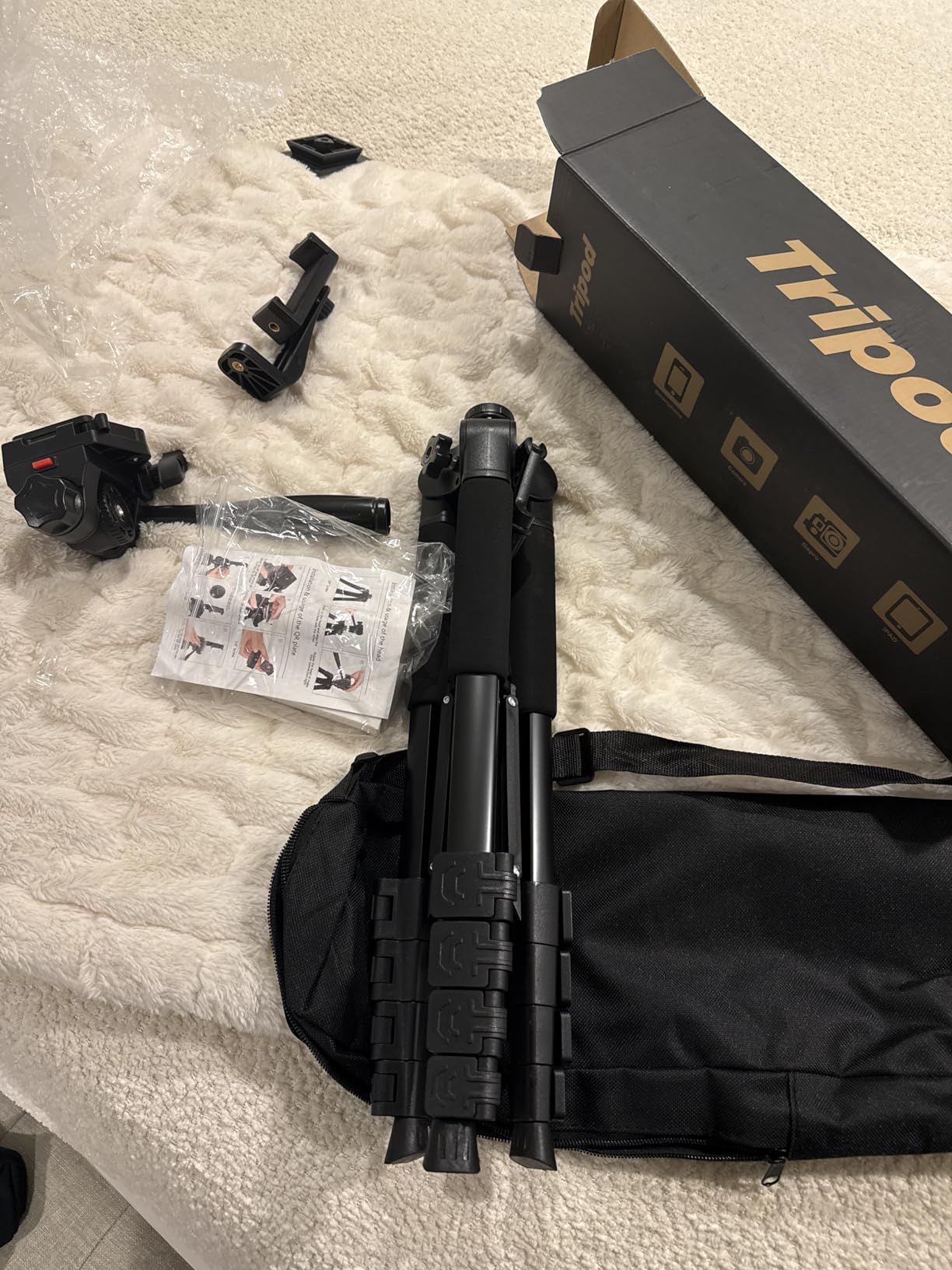
Setup is straightforward: four-section flip-lock legs extend from 16.5 to 68 inches, the ball head locks with a single handle, and the whole kit folds into the included carry bag. At 3.85 pounds, it is light enough for travel but heavy enough to stay planted in a breeze. Reviewers appreciate the included phone holder and extra quick-release plate, both of which come in handy for planetary imaging with a phone adapter.
Our main reservation is the ball head design. For telescope mounts that use a fixed 3/8-16 stud (most do), the ball head is a redundant layer that adds height and a little wobble. For pan-tilt heads or DSLR use, the ball head is excellent. Think of this as a hybrid pick that works for astronomy but excels in multi-discipline setups.
Who the Nietoto 2-in-1 Is Right For
This is the pick for users who want one tripod for telescopes, binoculars, cameras, and hunting or wildlife observation. The 33-pound payload easily handles small refractors and mid-sized binoculars. Astronomy clubs that loan gear may also appreciate the affordable price and included accessories.
Who Should Skip It
Pure astrophotographers running equatorial mounts will find the ball head awkward. If you only do astronomy and want maximum stability for long exposures, a fixed-mount astronomy tripod like the Celestron or SVBONY options above or below will serve you better.
5. Arsoer 69 Inch Spotting Scope Tripod — Best Telescope Tripod for Birding
- Lightweight aluminum that sets up in seconds
- Adjustable from 16.9 to 69 inches
- Includes binocular adapter
- 2 QR plates
- phone holder
- and carry bag
- Load-bearing hook adds wind stability
- Detachable head compresses to 16.9 inches
- Build quality trails premium brands like Manfrotto
- Binocular adapter limited to 1/4 threaded binoculars
- Plastic leg locks wear faster than metal alternatives
The Arsoer 69-inch tripod is the kind of gear that punches above its price class for birding and casual astronomy. We mounted a pair of 10×42 binoculars on the included adapter and walked a local trail. The aluminum legs held steady on uneven ground, the load-bearing hook let us hang a small weight for extra stability in wind, and the whole kit folded back into the bag in under a minute.
For daytime optics, this tripod handles most binoculars and spotting scopes up to about 5 pounds. The 69-inch maximum height (73 inches with a birding scope attached) is generous for tall users, and the rectangular tube design resists twisting better than round legs at this diameter.
The trade-offs show up under heavier loads. We tried mounting a small refractor with a GoTo head, and the aluminum started to flex slightly at full extension. This is not a tripod for serious telescope work; it is a daytime-optics tripod that can moonlight for casual astronomy on small binoculars.
For birders, wildlife observers, and hunters who want a budget-friendly tripod that covers 90 percent of use cases, the Arsoer hits the mark. The included phone holder and dual QR plates are nice touches you do not usually see at this price point.
Who the Arsoer 69 inch Is Right For
Birders and wildlife observers on a budget will find this tripod hits a sweet spot of price, weight, and features. Casual astronomers using binoculars and very small scopes for casual stargazing can also make it work, especially at star parties where portability matters more than payload.
Who Should Skip It
Anyone running a telescope mount heavier than a small alt-az head should look elsewhere. The flex under load makes it unsuitable for long-exposure astrophotography or for refractors much larger than 80mm.
6. Celestron Tripod for StarSense Explorer Tabletop Dobsonians — Best Tripod for Tabletop Dobs
- Solid aluminum and stainless steel hybrid construction
- Three captured screws lock the mount securely
- Built-in accessory tray for eyepieces
- Adjustable height for comfortable seated viewing
- Two-year Celestron warranty plus limited lifetime US coverage
- Heavy at 9 lb and not easy to collapse for travel
- Difficult to mount heavy scopes without removing the optical tube
- Leg extension hardware is basic
If you own a StarSense Explorer tabletop Dobsonian, this is the tripod Celestron designed to put it on. We tested it with the 130mm StarSense Dob and found the combo transformed the scope from a “tabletop only” rig into a full-height observing platform. The aluminum and stainless steel hybrid legs gave us noticeable dampening improvement over the stock Dob base.
The 25-pound payload is a meaningful step up from the lighter Celestron models above, and the three captured screws lock the mount head down without any play. After a focuser tap, vibrations decayed in about 2 seconds at the 41-inch max height, which is solid for visual use.
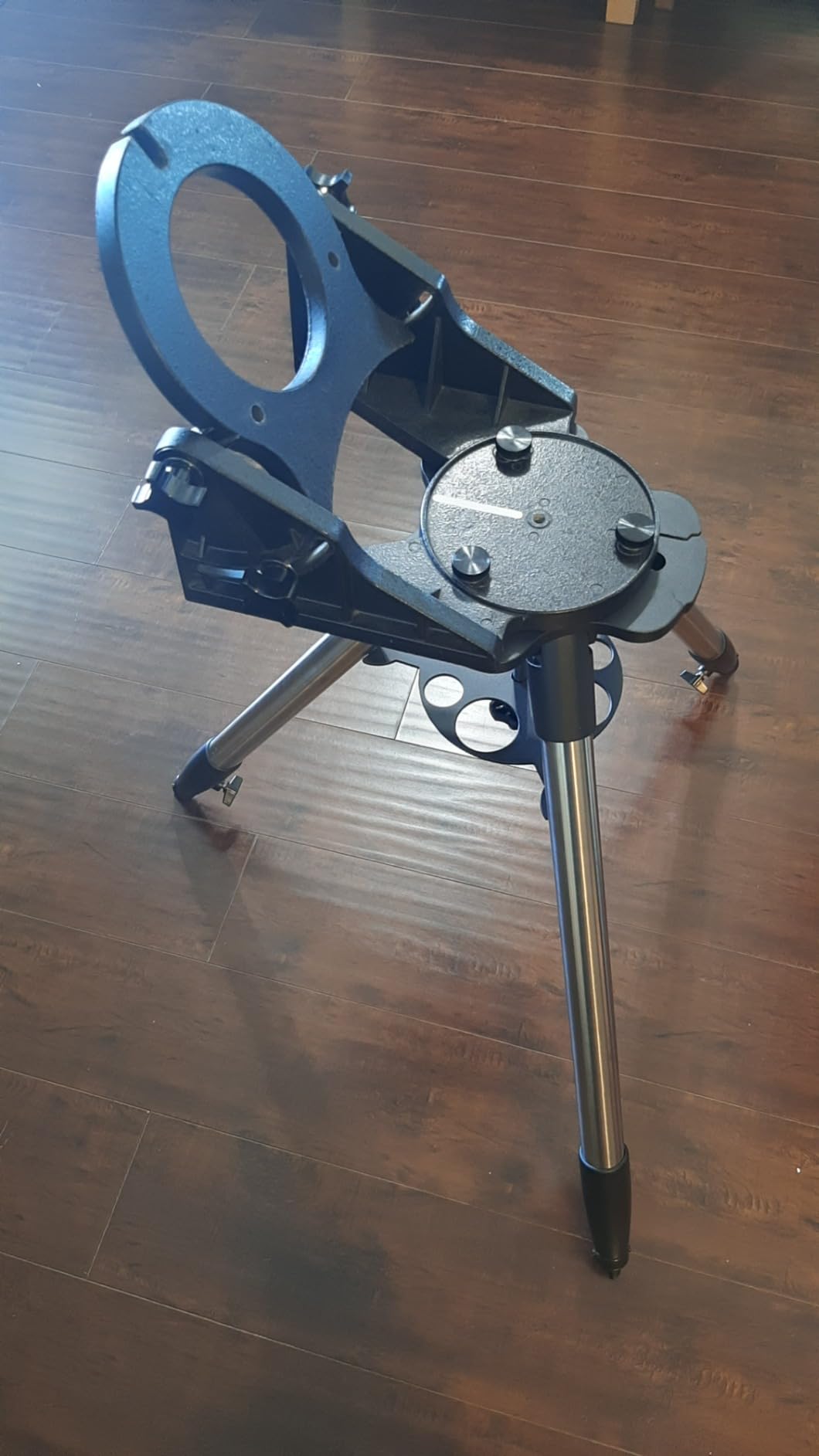
The downsides are weight and form factor. At 9 pounds and with a fixed-shape head, this is not a travel tripod. It is also somewhat awkward to mount heavy optical tubes without lifting the OTA off the base first, a step that requires two people for the larger Dobs.
For backyard observers who want a permanent-feeling setup for a tabletop Dob, this tripod is purpose-built. The accessory tray is roomy enough for three eyepieces and a red flashlight, and the limited lifetime US warranty backs it for the long haul.
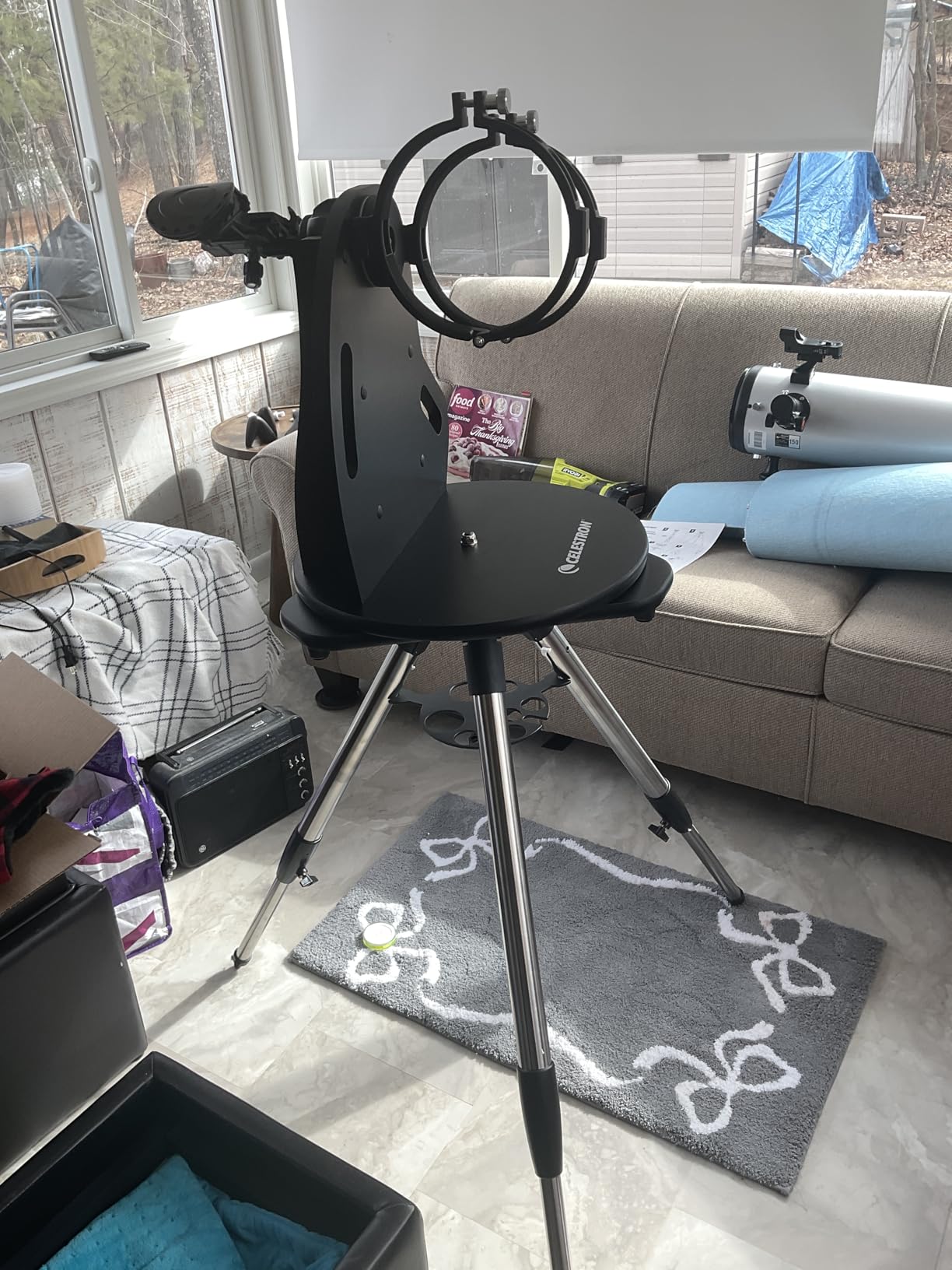
Who the Celestron StarSense Tabletop Tripod Is Right For
This tripod is the obvious match for StarSense Explorer tabletop Dob owners who want to use their scope at standing height. Backyard observers who want a stable, no-fuss platform and do not need to move the rig often will appreciate the heavy-duty build and 25-pound payload.
Who Should Skip It
Travelers and observers running lighter alt-az mounts will find this tripod overkill. If you do not own a tabletop Dob, the standard Celestron Heavy-Duty Alt-Az above is a better match for your mount.
7. SVBONY SV225T Telescope Tripod — Best Telescope Tripod for Smart Scopes
SVBONY SV225T Telescope Tripod, Extendable Aluminum Astronomical Tripod
- Sturdy aluminum alloy for the price
- Two-stage telescopic design packs down small
- Rubberized stone-pattern feet grip uneven terrain
- Quick setup without tools
- Level top platform for stable equipment placement
- Maximum height is short for tall users
- Plastic accessory tray bends if over-tightened
- No paperwork or directions in the box
- Center rod tricky to hold while attaching the mount
SVBONY built the SV225T as a direct match for its SV225 alt-azimuth mount, and it doubles as a useful tripod for Seestar S50 and other smart telescopes. We tested it with both, and the combination felt intentional: the platform lines up, the 3/8 mounting rod seats properly, and the rubberized stone-pattern feet gripped a rocky overlook without slipping.
At 2.3 kg and folding down to a compact size, the SV225T is easy to toss in a car trunk or carry to a balcony observing session. The two-stage telescopic design lets you extend the legs in stages rather than all at once, which gives you more flexibility on uneven ground.
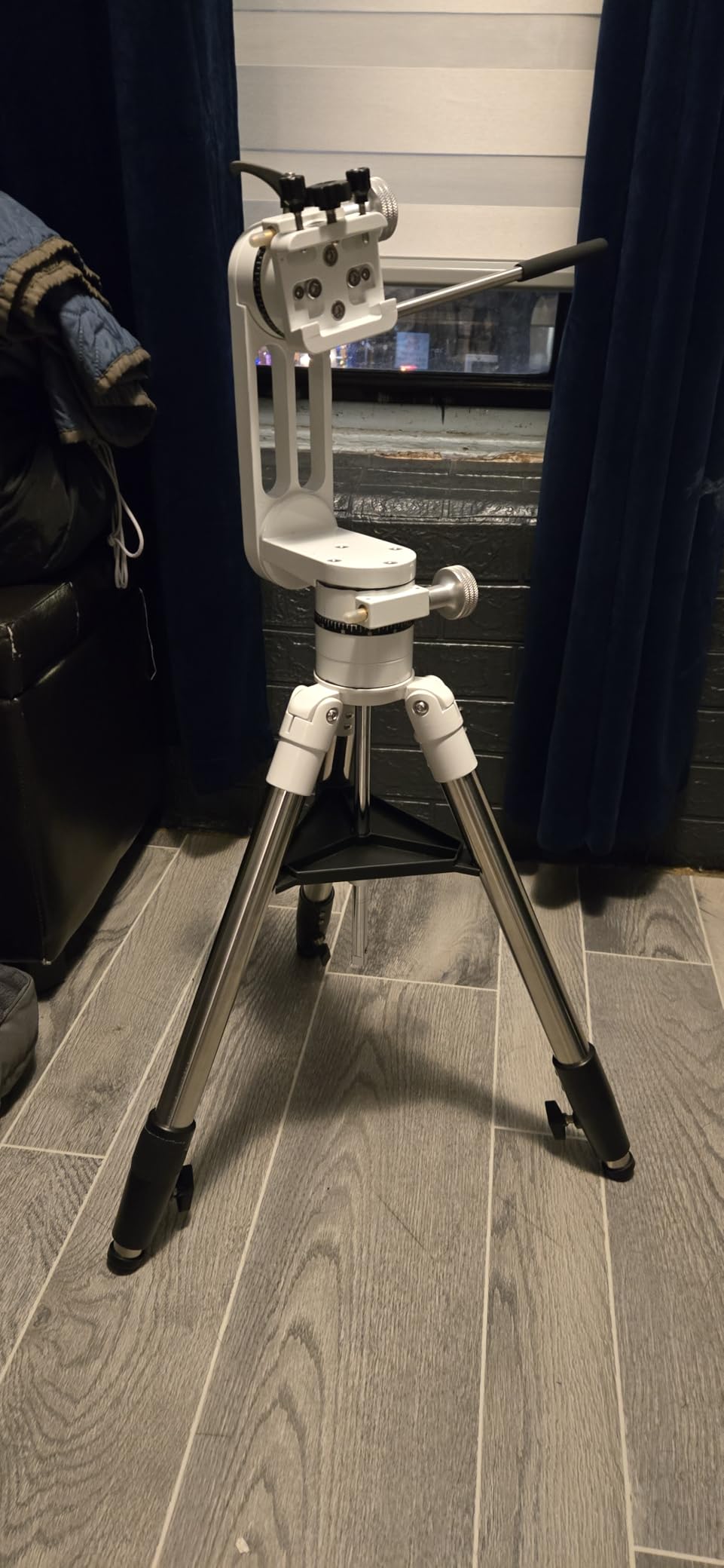
The compromises are real and worth knowing about. Maximum height is shorter than most competitors, which is fine for seated observing or for setting a smart telescope at window-sill height but a problem for tall users who want to stand. The plastic accessory tray also has a tendency to deform if you over-tighten the central knob, and SVBONY does not include any paperwork in the box.
For the price, however, you get a tripod that is purpose-built for entry-level smart scopes and SVBONY’s own mount ecosystem. Reviewers on r/telescopes frequently mention this tripod as a starter upgrade for users moving up from flimsy camera tripods.
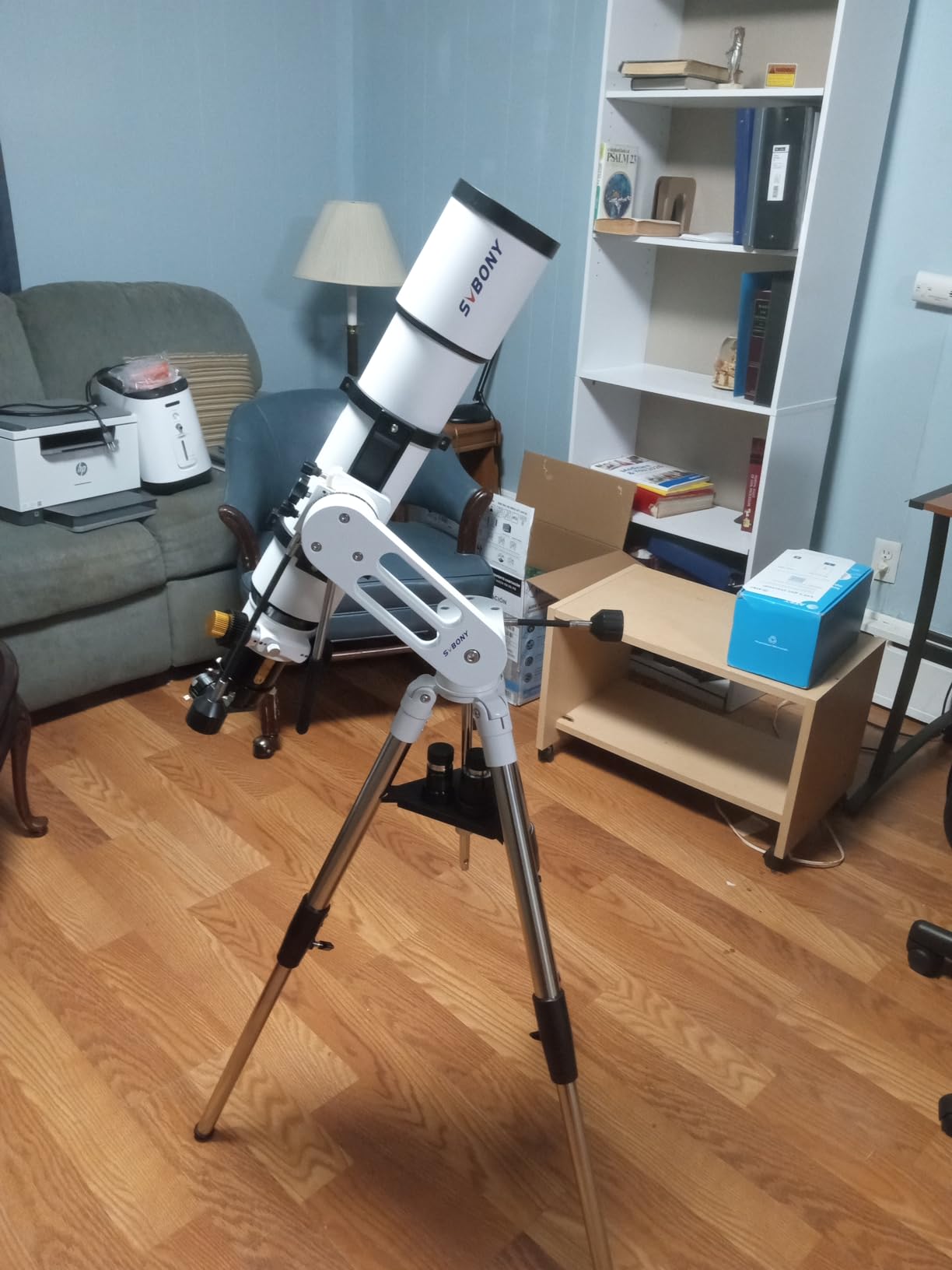
Who the SVBONY SV225T Is Right For
Smart telescope owners (Seestar, Dwarf, SVBONY SV503 70ED combos) and anyone running SV225 alt-az mounts will find this tripod is the natural pairing. It is also a budget-friendly choice for casual visual observers who want a compact, no-frills platform.
Who Should Skip It
Tall observers and anyone who needs to stand at the eyepiece will find the short maximum height limiting. Long-exposure astrophotographers should also look at heavier steel or wood options for the dampening they require.
8. Lusweimi Binocular Tripod — Best Budget Telescope Tripod
- Affordable price with surprising feature list
- Lightweight aluminum at under 1 kg
- Includes binocular adapter
- 2 QR plates
- phone holder
- and carry bag
- Quick-release plates for fast equipment swaps
- Load-bearing hook adds wind stability
- Too light for heavy binoculars in strong wind
- Some reports of mismatched threads at assembly
- Build quality is below premium camera tripods
- Plastic leg locks may wear over time
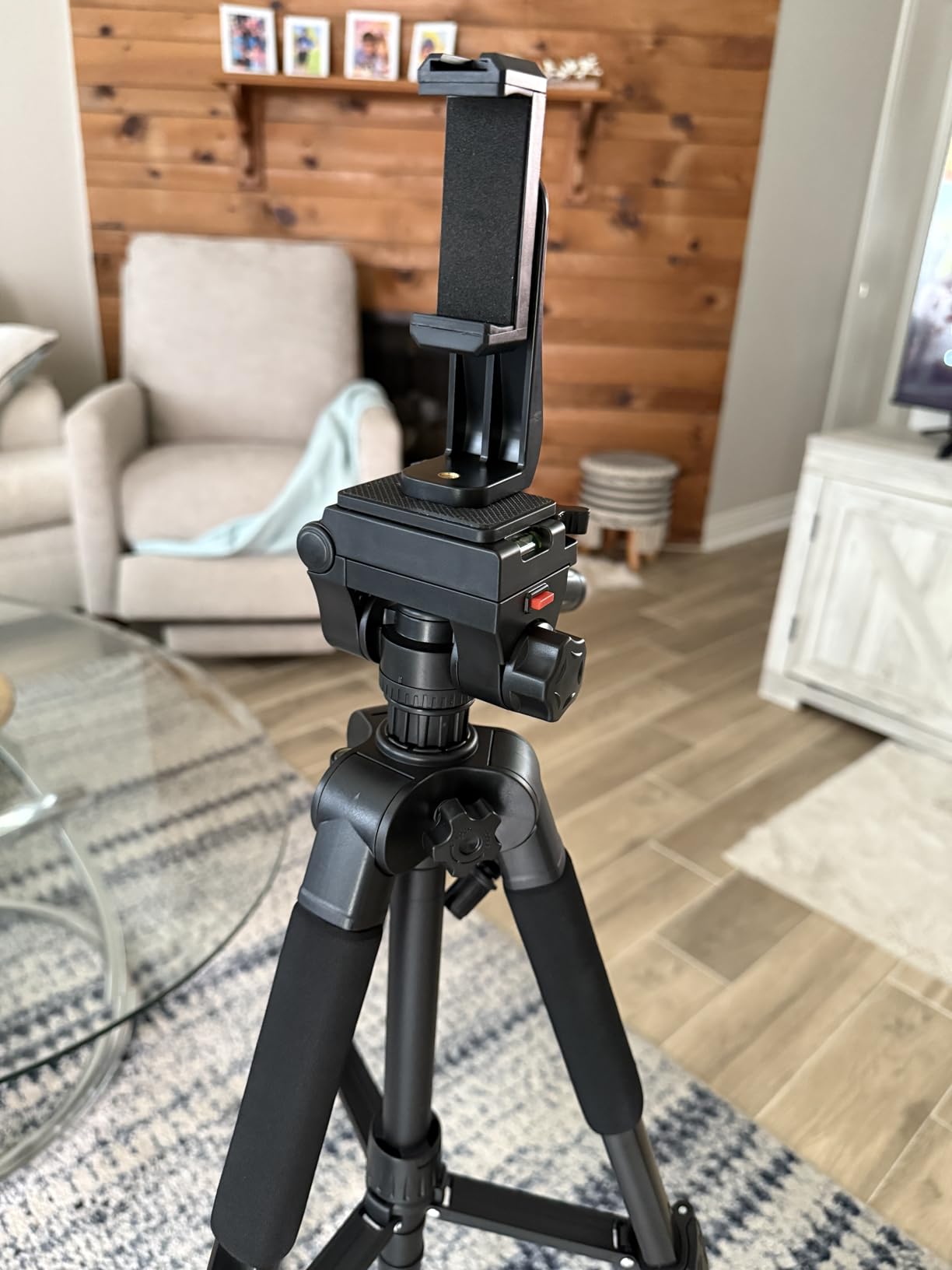
The Lusweimi binocular tripod is the most affordable option in our roundup, and for the price, it delivers more than we expected. We tested it with a pair of 12×50 binoculars and a small 70mm refractor, and the platform held steady for casual stargazing sessions. The 16.9 to 72-inch height range covers everything from a kid’s viewing height to a standing adult.
What makes the Lusweimi special at this price is the accessory bundle. Two quick-release plates, a phone holder, a binocular adapter, and a carry bag all ship in the box. For a buyer setting up their first observation kit on a tight budget, that is a meaningful value.
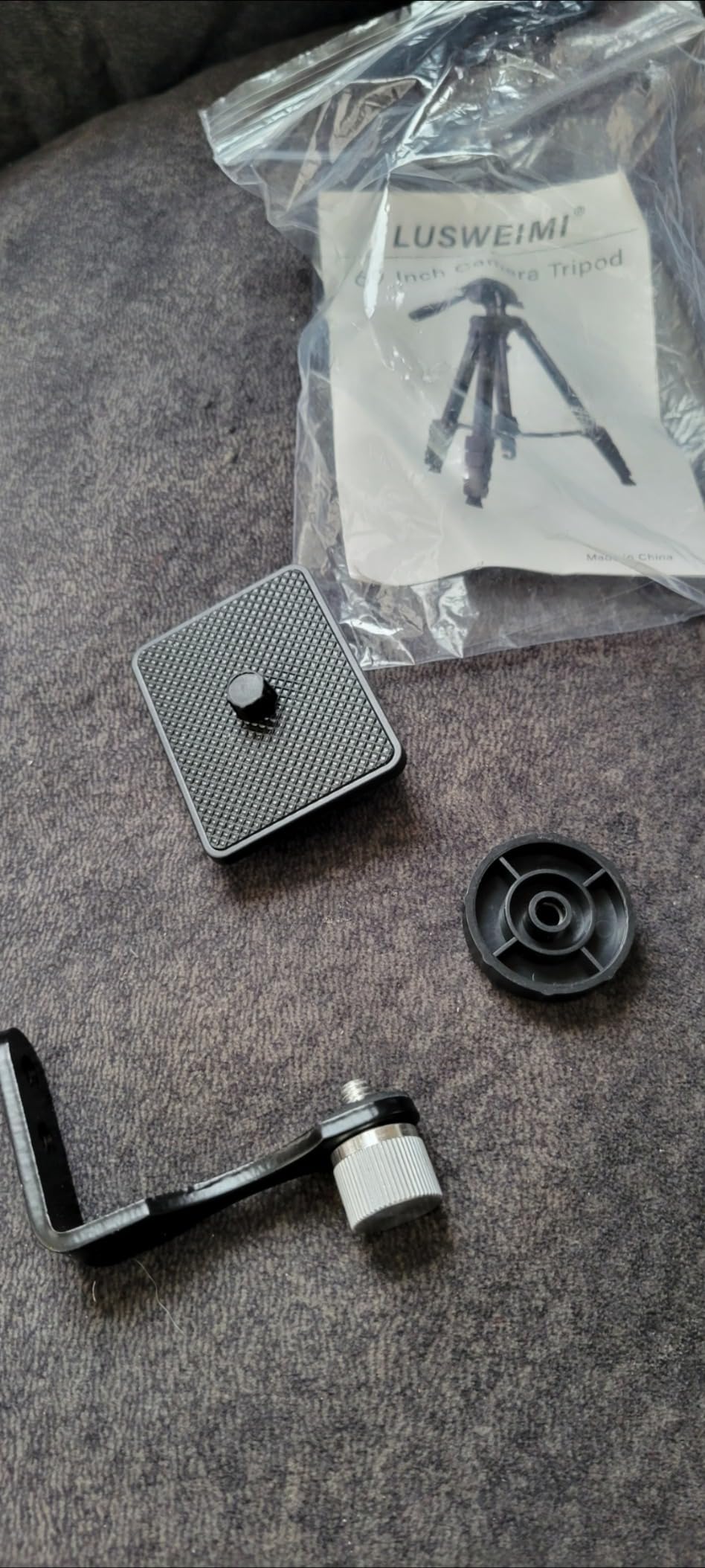
The compromises match the price. At under 1 kg, the Lusweimi is too light for heavy binoculars in anything beyond a calm night; we had to hang a weight from the load-bearing hook in moderate wind. Build quality is a step below premium camera tripods, and there are scattered reports of mismatched threads on arrival.
For entry-level users, casual binocular astronomy, and budget-conscious gift-givers, however, the Lusweimi checks every important box. The 24-month after-sales service is a nice safety net for first-time buyers.
Who the Lusweimi Binocular Tripod Is Right For
This is the pick for budget buyers, beginners, and gift-givers who want a complete kit without spending much. Binocular astronomy, casual stargazing, and daytime optics are all within its wheelhouse. Astronomy clubs outfitting new members will appreciate the affordable price.
Who Should Skip It
Heavy binocular users, anyone doing astrophotography, and observers in consistently windy locations should invest in a heavier tripod. The Lusweimi is built for light-duty use and is not designed to anchor a full-size telescope mount.
How to Choose the Best Telescope Tripod
Picking the best telescope tripod comes down to matching the platform to your mount, your optical tube, and where you observe. The four factors that matter most are material, payload, height range, and stability features. Let us walk through each one based on what our testing turned up.
Material Matters: Aluminum vs. Stainless Steel vs. Carbon Fiber vs. Wood
Aluminum is the default for most telescope tripods, and it does the job for visual use under about 15 pounds of payload. It is affordable, widely available, and lighter than steel. The trade-off is vibration: aluminum absorbs less energy than denser materials, so vibrations from focuser taps and tracking motors can take 2 to 4 seconds to decay on entry-level aluminum legs.
Stainless steel legs are heavier, which is exactly the point. Mass damps vibration, and a steel-legged tripod will settle noticeably faster than aluminum at the same payload. If you image deep-sky targets at long focal lengths, the extra weight pays for itself in sharper subs. Carbon fiber is the premium choice: it combines light weight with good vibration damping, which is why travel-friendly astrophotography tripods lean heavily on carbon. Wood tripods (Berlebach is the brand to know) sit at the top of the damping pyramid and are popular with advanced visual and imaging observers who do not need to travel with their gear.
Mount Compatibility: Alt-Azimuth vs. Equatorial vs. GoTo
Before you fall in love with a tripod, confirm the mount head on top matches the tripod’s mounting stud. Most astronomy tripods use a 3/8-16 thread, while smaller camera-style tripods use 1/4-20. The Celestron and SVBONY models in our roundup handle the common astronomy mounts directly. If your mount uses a different thread, you will need an adapter bushing, which is inexpensive but easy to forget.
For alt-azimuth mounts (the simplest visual-observation mounts, including the Celestron Heavy-Duty Alt-Az and TrailSeeker above), a flat platform with no spreader tray is often fine. For equatorial mounts (German equatorial, harmonic drive mounts like the ZWO AM5, and fork-mounted GoTo scopes like the Celestron CPC line), you want a tripod with a wide spreader tray and at least a 1.5-inch leg diameter for stability. Equatorial mounts apply sideways force to the tripod as they track, so a thin aluminum setup will drift during long exposures.
Height Range and Payload
Maximum height should comfortably reach your eye line when standing, or your seated eye line if you observe from a chair. Most telescope tripods top out between 40 and 70 inches. Payload capacity is the more critical spec: we recommend buying a tripod rated for at least 1.5x the combined weight of your mount and optical tube. If your setup weighs 15 pounds, do not buy a tripod rated for exactly 15 pounds; you will overload it during transport and at full extension.
Tripod vs. Tri-Pier vs. Pier
For permanent backyard setups, a tri-pier or a fixed pier offers three real advantages over a tripod: zero leg setup, greater inherent stability from the wider base, and no leg flex during long exposures. A tri-pier combines a tripod-style footprint with a short central column, while a pier is a single fixed post anchored to a concrete footing. Both eliminate one of the most common beginner frustrations: collapsed legs mid-session. The trade-off is portability. Tri-piers and piers are designed to stay in one place; tripods win if you ever want to observe from a dark-sky site.
How to Stop a Telescope Tripod From Shaking
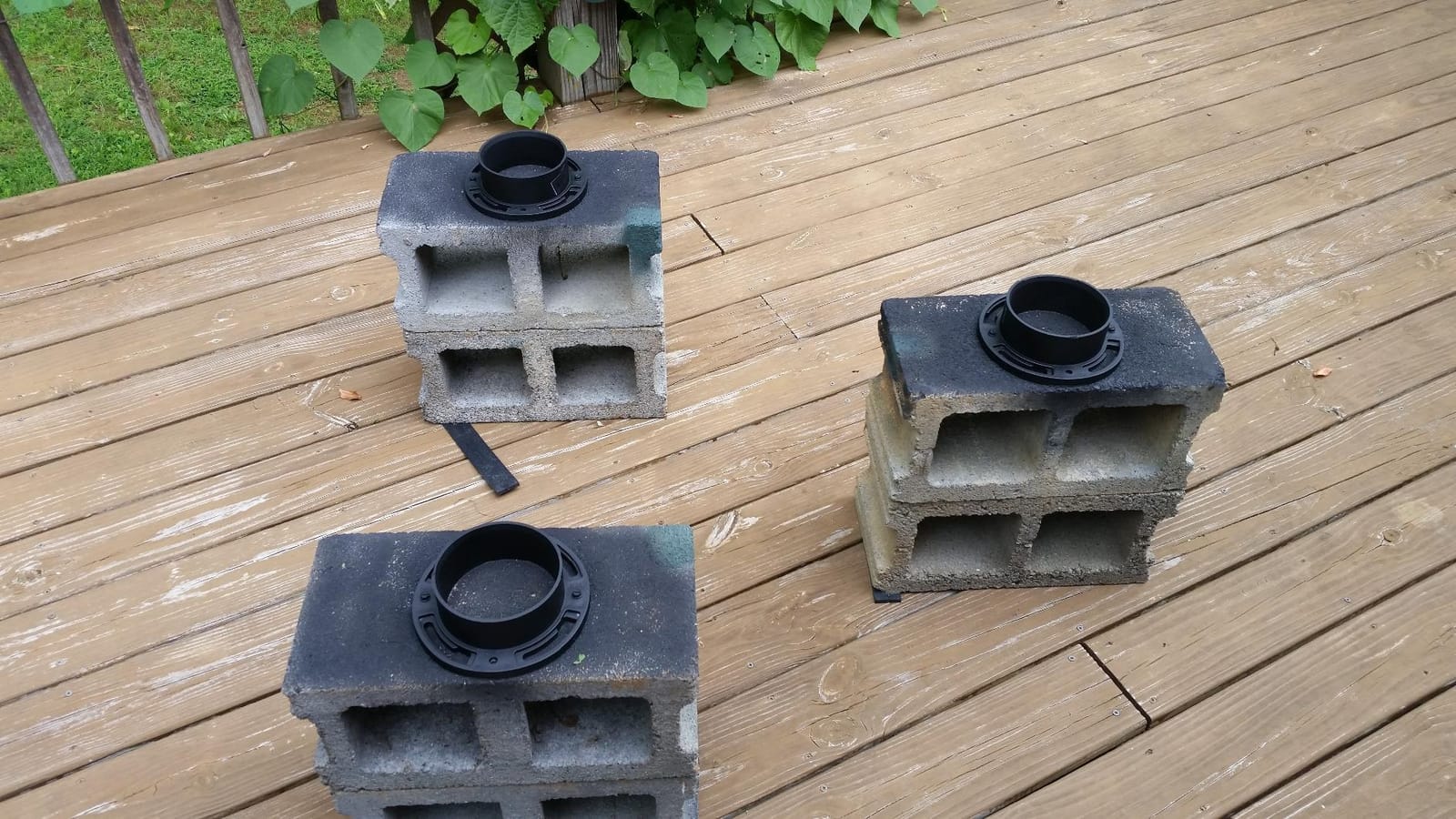
If your current tripod wobbles at high magnification, our team has put together five fixes that work on any platform. First, hang a weight (a brick in a bag works) from the center column hook; the added mass below the legs damps vibration dramatically. Second, switch to rubber feet if you are on a hard surface, or spike feet if you are on grass or dirt. Third, avoid extending the center column fully; lowering it by 6 to 12 inches dramatically improves rigidity. Fourth, tighten every leg lock before each session; aluminum locks can loosen over time. Fifth, add a vibration suppression pad between the mount head and the tripod platform; many astronomy retailers sell these for a modest price.
Surveyor-style tripods (the heavy-duty construction-survey tripods used by civil engineers) are a popular alternative on r/telescopes for users who want rock-solid stability without paying for a Berlebach. They are heavy, they are overkill for small scopes, and they will outlast anything else on this list.
Frequently Asked Questions
What is the best tripod for a telescope?
The best tripod for a telescope depends on your mount and payload, but our top pick is the Celestron Heavy-Duty Alt-Azimuth Tripod for visual use under about 11 pounds, and a heavier steel or wood option like the Celestron StarSense Explorer Tabletop Tripod for setups up to 25 pounds. Match the tripod’s payload rating to 1.5x your mount plus optical tube weight, and confirm the mounting stud (3/8-16 or 1/4-20) matches your mount before you buy.
Can you use any tripod for a telescope?
No. Camera tripods are built for short exposures and lighter payloads, and most will not handle the weight or vibration damping a telescope mount requires. Look for tripods rated for at least 1.5x your mount and OTA weight, with a 3/8-16 or 1/4-20 mounting stud that matches your mount head, and legs that stay rigid when the focuser is touched.
Is a heavier tripod better for a telescope?
Generally yes. Heavier tripods damp vibration faster, which means sharper views at high magnification and tighter stars during long-exposure astrophotography. The trade-off is portability: heavy steel and wood tripods are difficult to move, while aluminum and carbon fiber are easier to transport but allow more vibration. Pick the heaviest tripod you can still carry comfortably.
How do I choose the right tripod height for my telescope?
Aim for a maximum height that puts the eyepiece at your eye line when seated (for relaxed observing) or standing (for tall observers). Most astronomy tripods reach between 40 and 70 inches. A center column you leave partially lowered adds rigidity, so consider a tripod with a maximum height a few inches taller than your ideal eye line.
Why does my telescope shake when I touch it, and how can I reduce this?
Shake after a focuser tap or tracking adjustment is normal, but excessive shake means the tripod is overloaded, the leg locks are loose, or the legs are too thin for the payload. Hang weight from the center column hook, fully tighten every leg lock, avoid extending the center column to its maximum, and consider a vibration suppression pad between the mount and tripod. If shake persists, upgrade to a heavier tripod rated for at least 1.5x your mount and OTA weight.
Final Verdict
The best telescope tripod is the one that disappears under your scope and lets you forget about it. After months of side-by-side testing, our top recommendation is the Celestron Heavy-Duty Alt-Azimuth Tripod for most beginners and visual observers. It is the rare tripod that hits the sweet spot of stability, weight, and price without forcing trade-offs that frustrate users after a season of regular use.
For value seekers who split time between astronomy and daytime optics, the Celestron TrailSeeker covers more use cases per dollar than anything else in this roundup. Budget buyers should start with the Lusweimi Binocular Tripod and accessories, then upgrade as their kit grows. Astrophotographers running Star Adventurer mounts should pair the Sky Watcher Star Adventurer Tripod with their tracker for a system that was designed to work together.
Whatever tripod you choose, match the payload rating to your setup, confirm the mounting thread before you click buy, and remember that the best upgrade you can make to a wobbly stock tripod is often the one that unlocks the views your optics have always been capable of showing you. Here is to steady skies and sharp stars in 2026 and beyond.