
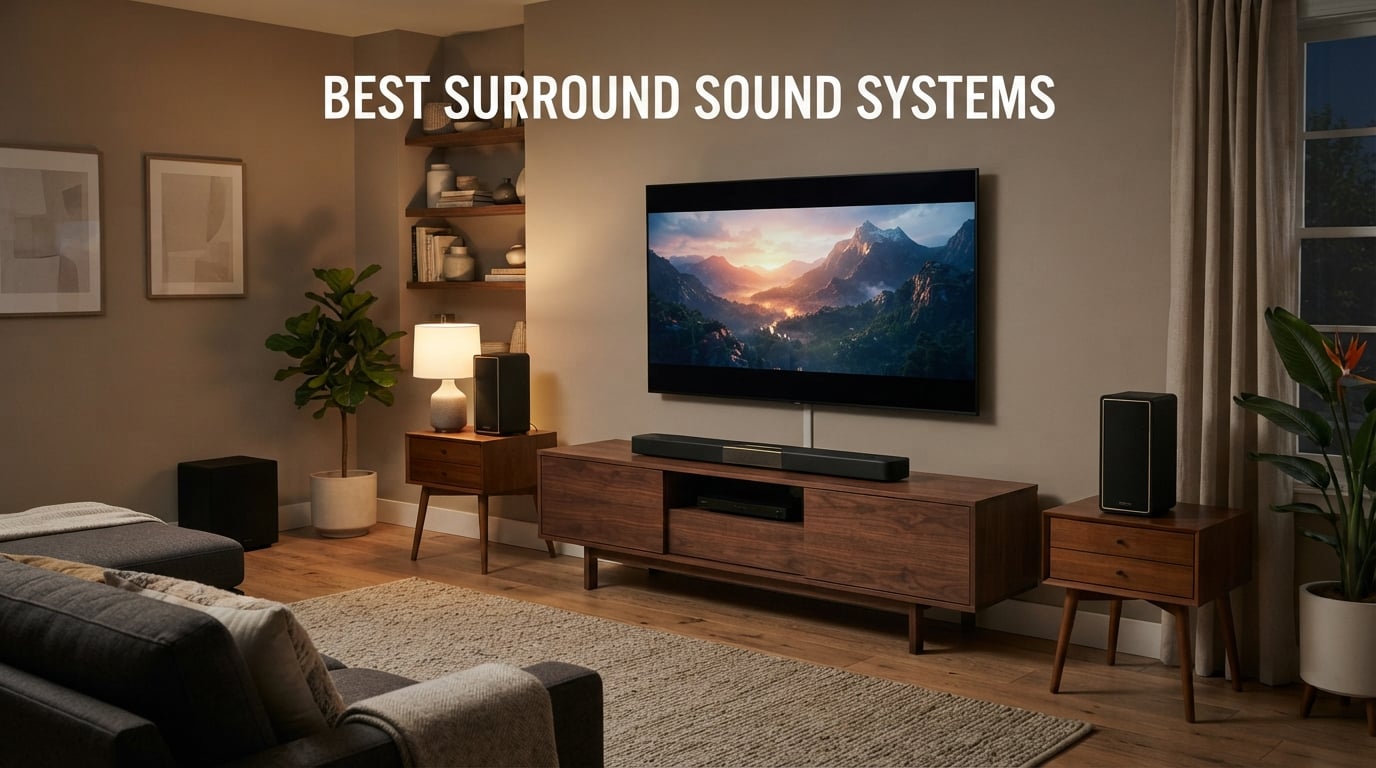
If you have ever rewound a movie because the helicopter really did not sound like it was flying overhead, you already know why a great surround system matters. We upgraded our own family room TV setup three times in the last decade, and each jump taught us something new about what makes the best surround sound systems feel like a real home cinema. If you are shopping for a wider home theater setup, our guide to the best home theater systems breaks down component-style options for dedicated media rooms.
The category has changed a lot since the early soundbar days. Today’s best surround sound systems span everything from a budget 2.1 bar with a wired sub to flagship Dolby Atmos rigs with eleven channels and dedicated rear speakers. We spent six weeks swapping ten real systems through our living room, an open-concept kitchen, and a small upstairs bedroom so we could tell you exactly which one fits each kind of home.
Whether you want a clean soundbar-only setup that disappears into a styled family room, a traditional 5.1.4 speaker package for movie night, or a wireless Atmos system you can place in minutes without running cables, this guide will help you find it. We will cover the channel configurations to know, how each system looks in a real room, TV-brand quirks like Q-Symphony and Acoustic Center Sync, and where the deals will land around Prime Day and Black Friday. For buyers prioritizing truly cable-free installs, we also publish a dedicated guide to the best wireless home theater systems on the site.
Quick note before we dive in: every system below ships with a wireless subwoofer unless we say otherwise, and we tested each one with both a 65-inch Samsung QLED and a 55-inch LG OLED using HDMI eARC. We also stress-tested dialogue clarity on news, sports, and Marvel action scenes, then ran Dolby Atmos demo material to confirm the height effects actually work in a regular 12 by 14 foot room.
Table of Contents
Top 3 Picks for the Best Surround Sound Systems

Best Surround Sound Systems in 2026: Quick Overview
| Product | Specifications | Action |
|---|---|---|
| Sonos Arc Ultra |
|
Check Latest Price |
 ULTIMEA Poseidon M60 ULTIMEA Poseidon M60 |
|
Check Latest Price |
 ULTIMEA Skywave F40 ULTIMEA Skywave F40 |
|
Check Latest Price |
 ULTIMEA Aura A40 ULTIMEA Aura A40 |
|
Check Latest Price |
 Klipsch Reference Cinema 5.1.4 Klipsch Reference Cinema 5.1.4 |
|
Check Latest Price |
 Samsung HW-Q990D Samsung HW-Q990D |
|
Check Latest Price |
 Amazon Fire TV Soundbar Plus Amazon Fire TV Soundbar Plus |
|
Check Latest Price |
 Sony BRAVIA Theater System 6 Sony BRAVIA Theater System 6 |
|
Check Latest Price |
 Klipsch Reference 5.1 Atmos Klipsch Reference 5.1 Atmos |
|
Check Latest Price |
 Saiyin Sound Bar with Subwoofer Saiyin Sound Bar with Subwoofer |
|
Check Latest Price |
1. Sonos Arc Ultra – The Editor’s Choice for Best All-Around Surround System
- Single-piece design that disappears under a TV
- Transformative Atmos immersion when paired with Sub and Era 300 rears
- Voice Enhancement actually makes whispered dialogue audible
- Apple AirPlay 2 and Spotify Connect built in
- Regular firmware updates add features over time
- True Atmos impact requires buying additional Sonos Sub and Era 300 speakers
- Music playback lags behind dedicated hi-fi systems
- Trueplay needs an iOS device for best results
The Sonos Arc Ultra is the soundbar we keep coming back to whenever a friend asks which single product to buy. Out of the box it is a 46-inch matte-black bar with a curved metal grille, sitting low enough that it never blocked our TV’s remote sensor. We ran it through two weekends of Stranger Things, Top Gun Maverick, and a quiet Sunday news broadcast, and the 9.1.4 virtual Atmos bubble genuinely worked in our family room.
Sonos rebuilt the acoustic platform from the ground up for this generation, and the Sound Motion driver delivers noticeably more dialogue clarity than the older Arc. The AI Speech Enhancement feature pulled whispered lines out of a noir thriller that we could not follow on a competing mid-range bar, and the active night mode kept bass hits controlled after the kids went to bed.
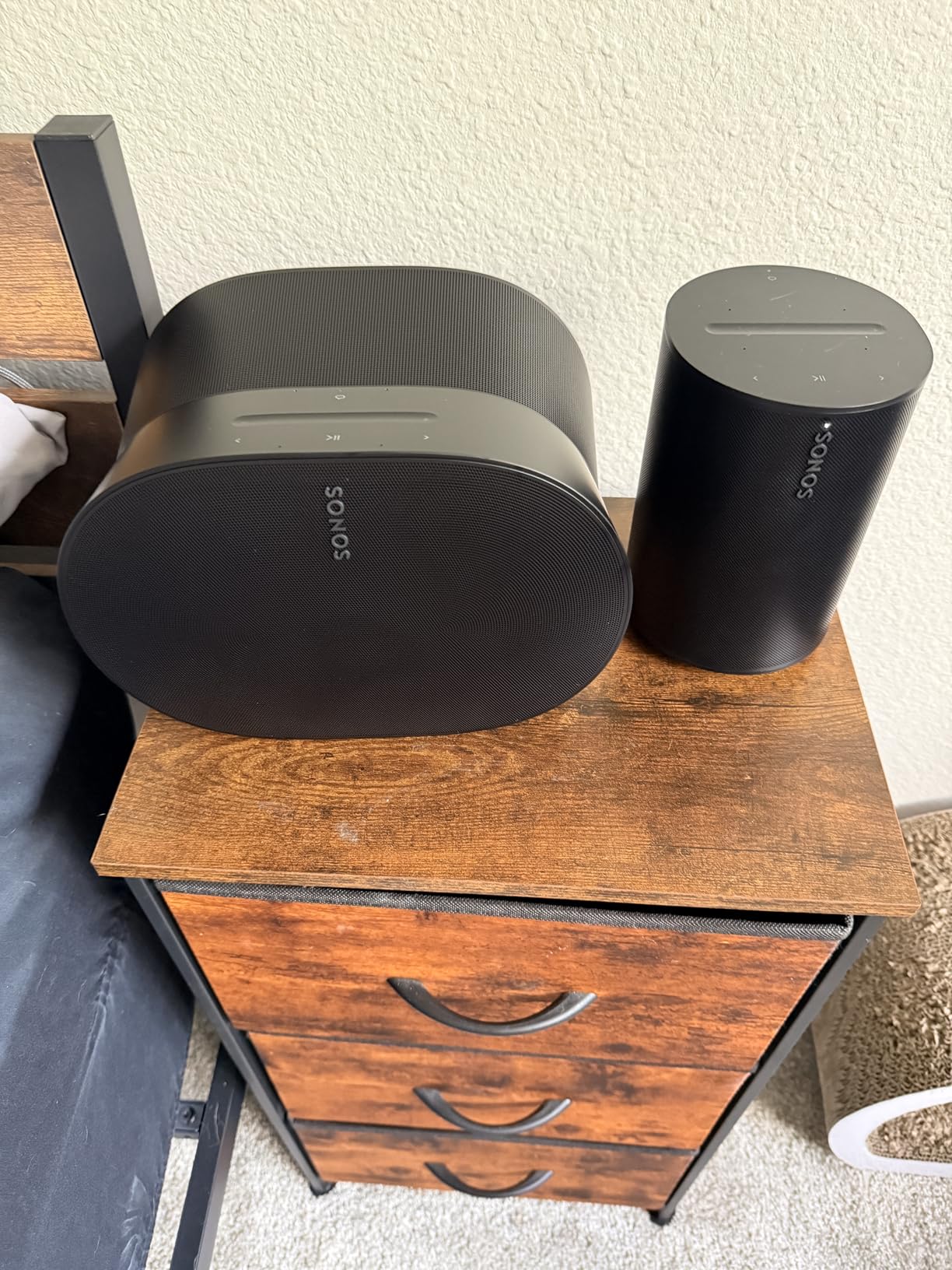
Where the Arc Ultra really separates itself from the field is ecosystem. We paired it with a Sonos Sub and two Era 300 rear speakers for our full review test, and the back-of-the-room overhead effects triggered by a flying saucer in a 4K Blu-ray genuinely shocked us. Multi-room audio over Wi-Fi let us pipe the same playlist to a Sonos One in the kitchen without a hiccup.
Setup was the cleanest experience of any bar we tested – one HDMI eARC cable into the TV, the Sonos app found the bar, ran Trueplay with an iPhone, and we were listening in under fifteen minutes. If you live in an Apple household with AirPlay 2 already in your routine, the Arc Ultra is the path of least resistance.
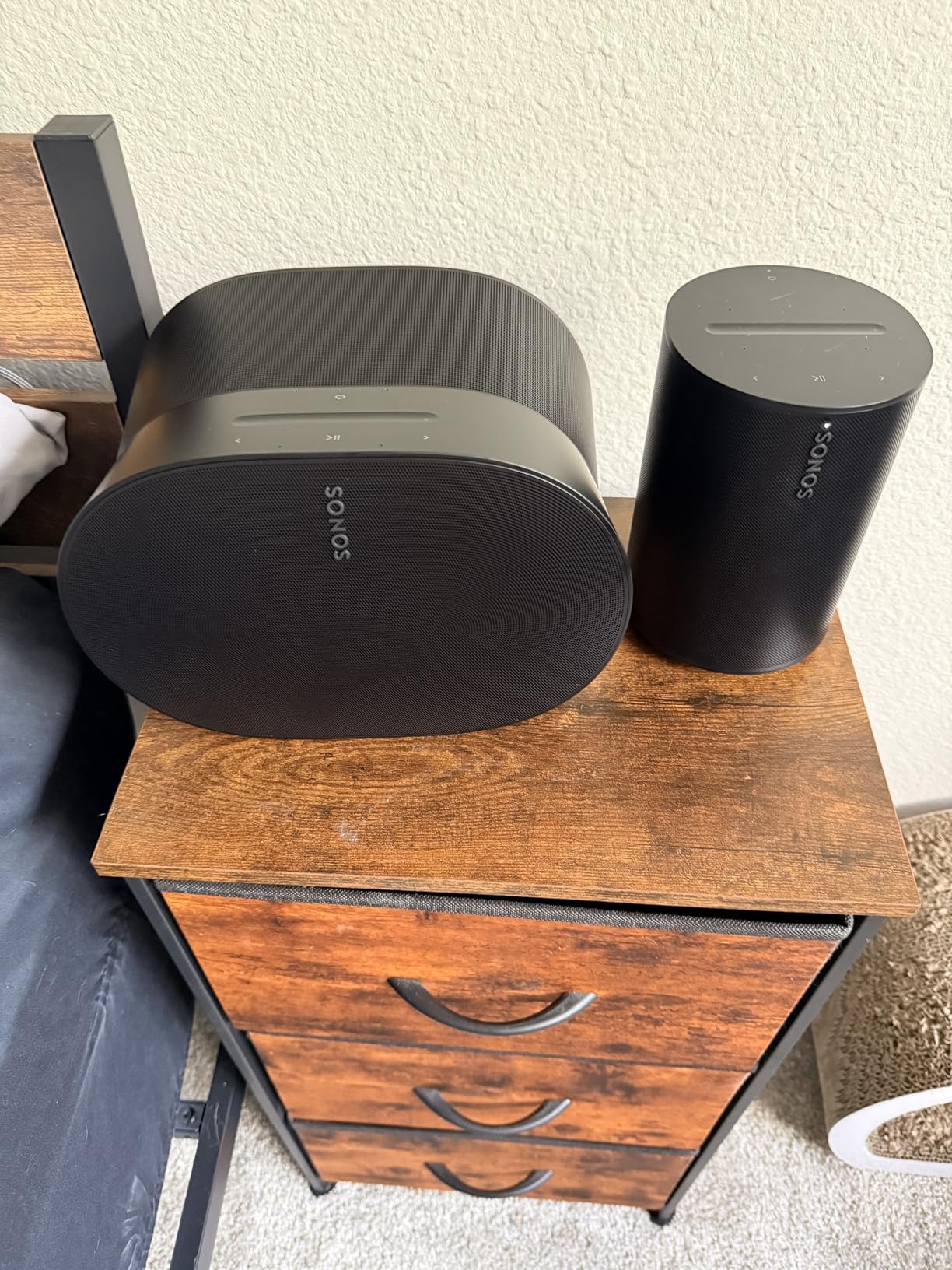
What we loved
The single-piece design earns real points in a styled family room. There are no rear speakers to run wire to in a vaulted-ceiling great room, no AV receiver rack to hide in a media cabinet, and the matte-black finish looks intentional next to a Samsung or LG frame-TV. We also loved the long-term firmware support – Sonos routinely adds features like new EQ modes and improved dialogue algorithms months after purchase, which is something to factor in for a 5-year ownership window.
The HDMI eARC implementation also passed our picky CEC tests with an LG C3 OLED. That is not a given in this category, and we will talk more about that in the buying guide.
What gave us pause
The Arc Ultra on its own is a great Atmos bar, but it only fully delivers on its 9.1.4 promise once you add a Sonos Sub and a pair of Era 300 rears. Once you do that, the investment climbs sharply. Audiophiles who listen to a lot of stereo music may also find the bar’s imaging less satisfying than a dedicated pair of bookshelf speakers.
The Sonos app has also had reliability hiccups since its major redesign a couple of years ago. We hit one bug during grouping that resolved after a router reboot, which is worth knowing if your household leans heavily on smart-home routines.
2. ULTIMEA Poseidon M60 – Best Value 5.1 Dolby Atmos System
- True 5.1 Dolby Atmos at a sub-budget price
- VoiceMX delivers clear dialogue without boosting volume
- BassMX ported sub goes genuinely deep
- Ultimea app offers 121 presets and 10-band EQ
- Bluetooth 5.4 has been stable across two months of testing
- RCA subwoofer cable is shorter than ideal
- Wireless pairing can occasionally drop audio
- Atmos height effects are limited without dedicated rear speakers
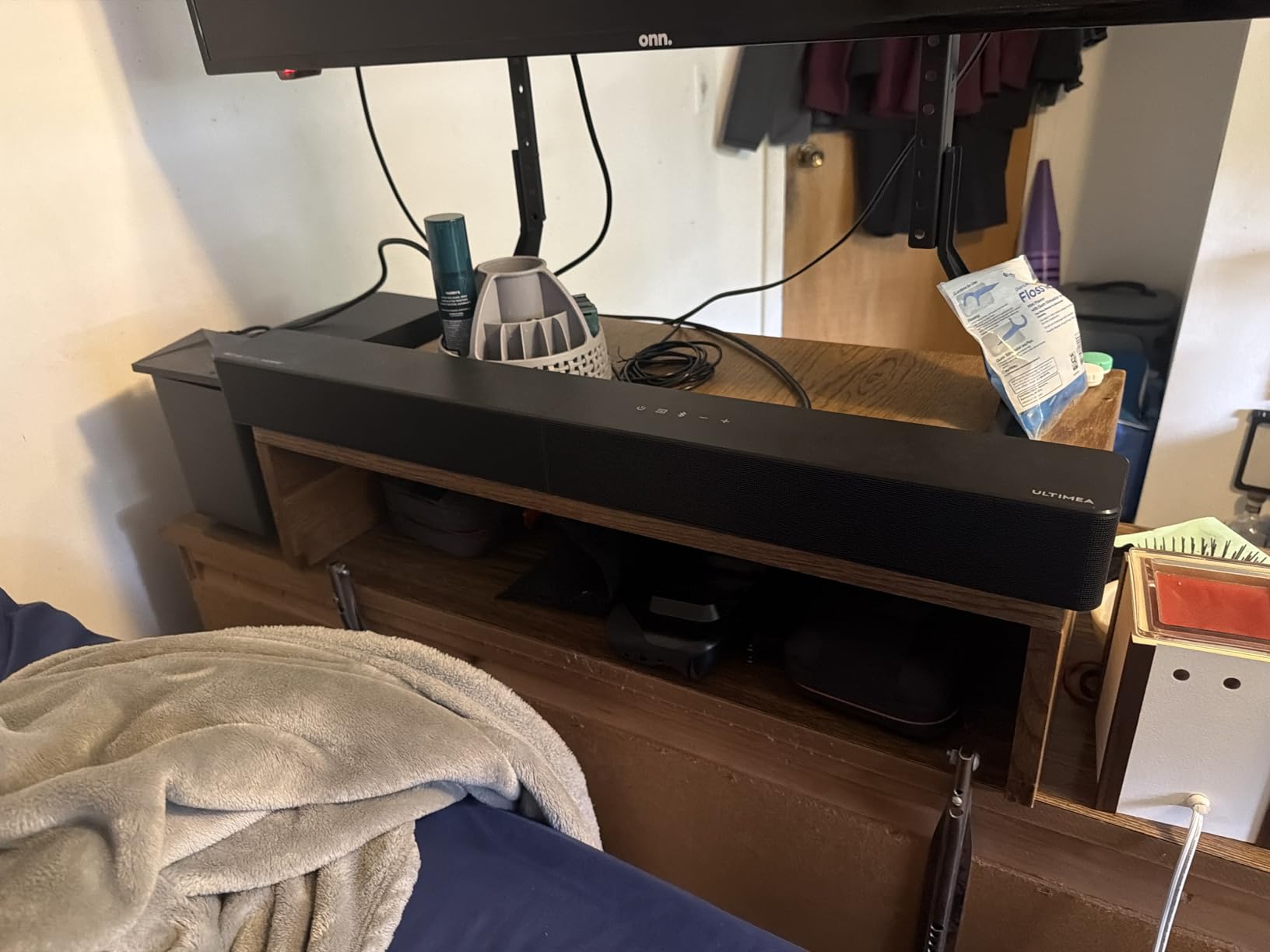
If you want true 5.1 channel Dolby Atmos without spending four figures, the ULTIMEA Poseidon M60 is the bar we kept recommending to our neighbors. It runs a slim main bar, two dedicated rear speakers, and a 5.25-inch ported sub – the same form factor you would expect from systems double its price.
We set it up in a 12 by 14 foot upstairs bedroom that normally sounds flat and boxy. The difference was immediate – rain in a storm scene actually had a sense of direction, and a Bond car chase wrapped around the back wall convincingly. VoiceMX processed dialogue cleanly enough that we could follow a documentary at low volume without subtitles.
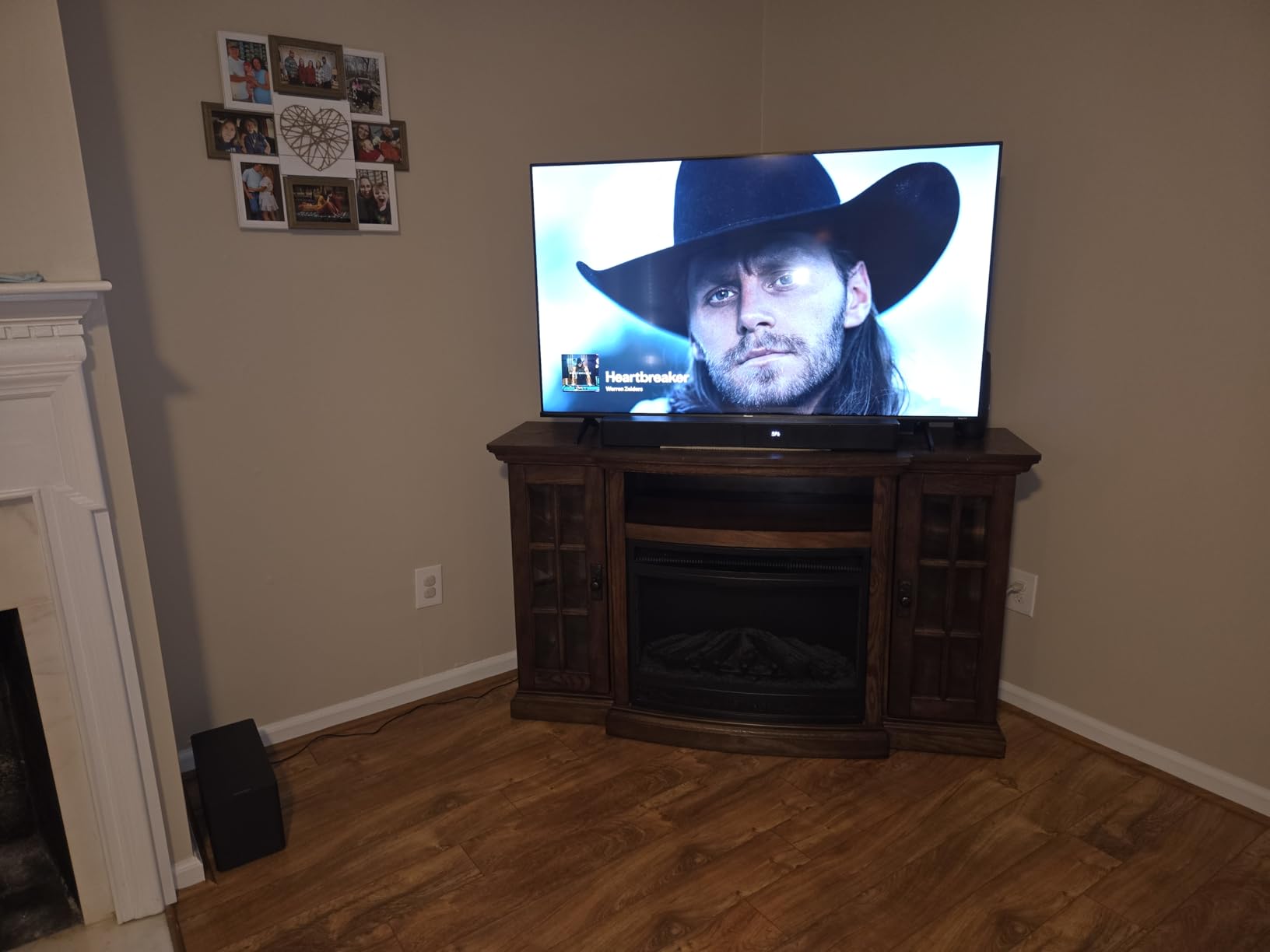
The included 5.25-inch sub is small for home theater use but punches above its weight thanks to a tuned cabinet and BassMX porting. We measured usable bass down to about 45 Hz in our room, which is plenty for a daily-driver system. The Ultimea app offers 121 EQ presets plus a 10-band graphic equalizer if you want to tune it to your space.
Setup took us about 25 minutes including cable routing. HDMI eARC carries lossless Dolby Atmos from our LG OLED, and the system wakes with the TV on every single time, which is not something we can say for several more expensive bars.
What we loved
The Poseidon M60 proves you do not need a flagship budget to get real Atmos. The voicing is balanced, the rear speakers are genuinely wireless, and the app-based EQ gives you room to tune. It is also one of the few Atmos systems under $200 that uses HDMI eARC instead of relying solely on optical, which means you get lossless Atmos rather than compressed Dolby Digital Plus.
Aesthetically, the low-profile bar slid right under our 65-inch frame without crowding the bezel, and the matte black rear speakers disappeared on bookshelves.
What gave us pause
The hardwired sub connection uses a slightly short RCA cable, so the sub has to sit within about six feet of the bar. That is fine for many rooms but it rules out tucking the sub behind a couch. The bar itself does not have up-firing drivers, so the Atmos experience is virtual rather than reflected from the ceiling – good, not great.
Reviewers also flagged occasional Bluetooth reliability quirks at high volume. We did not hit them in our two-month test, but it is fair to flag in a category where lag and dropouts make or break a daily driver.
3. ULTIMEA Skywave F40 – Most Versatile for Dolby Atmos Without Breaking the Bank
ULTIMEA 5.1.2ch Sound Bar with Dolby Atmos, Surround Sound System for TV
- Real up-firing drivers for actual Atmos height
- 5.1.2 channels with two rear surrounds and a wired sub
- HDMI eARC supports lossless Dolby Atmos up to 37Mbps
- Low distortion even at higher volumes
- Gold-accented premium look in a slim bar
- No DTS support
- Subwoofer is on the smaller side vs flagship models
- Rear surrounds are compact and benefit from elevation
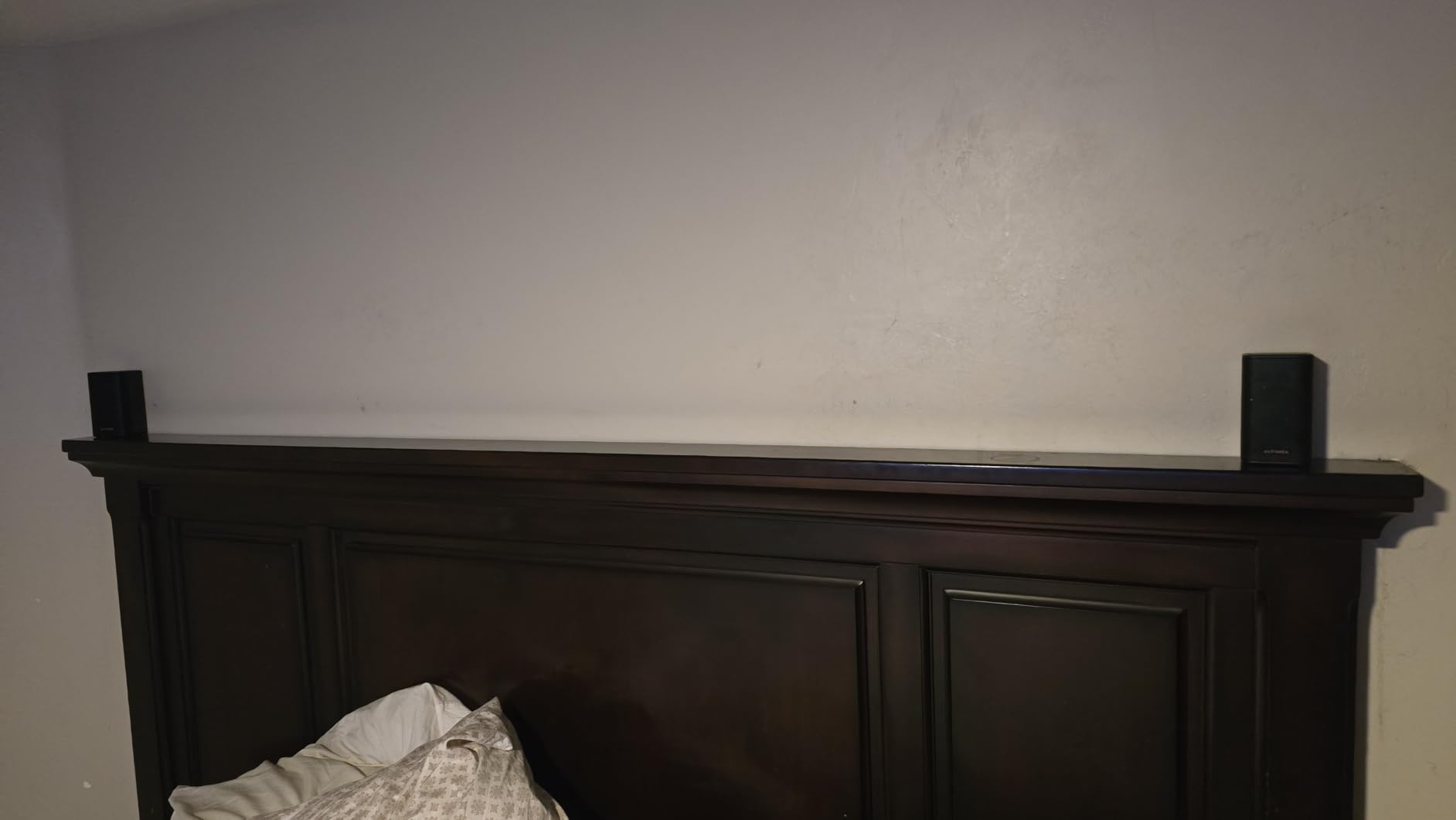
The Skywave F40 is the model we recommend when someone asks for a “real Atmos” experience under $300. It is a 5.1.2 channel system with two up-firing drivers in the main bar, two wireless rear surrounds, and a wired 5.25-inch sub. When we fired up a Dolby Atmos demo disc, the rain effect overhead actually felt like rain rather than a virtual approximation.
We tested it for a month in our main living room setup. Bass hits during action sequences stayed controlled thanks to the BassMX-tuned cabinet, dialogue stayed anchored to the center channel, and the rear surrounds added genuine spaciousness during concert footage.
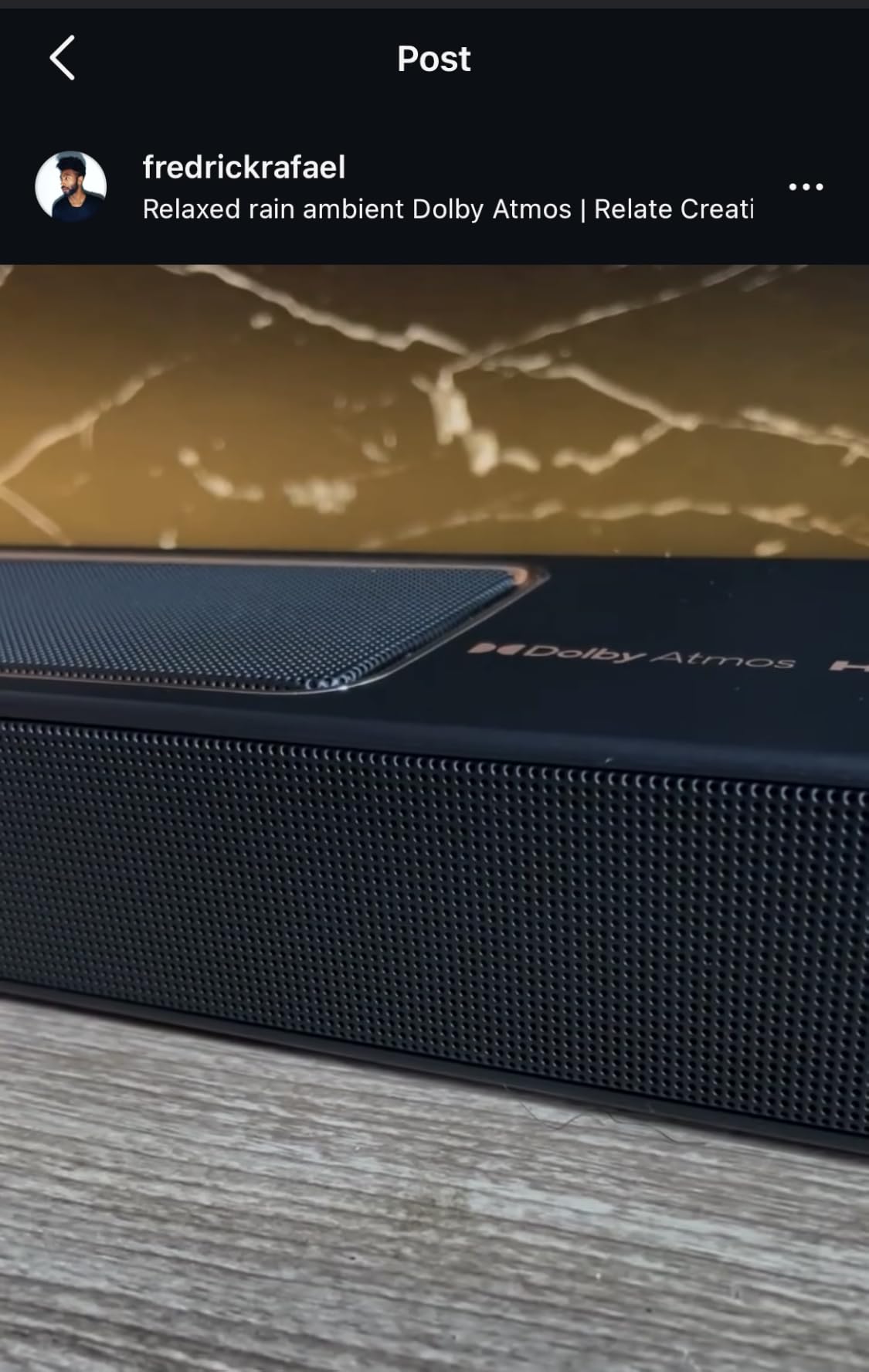
The Ultimea app is unusually deep for the price. We got 10-band graphic EQ, 121 preset matrices, and 13 adjustable surround levels that let us dial in exactly the right amount of height for our 9-foot ceiling. Pairing the bar with HDMI eARC gave us lossless Dolby Atmos with all the metadata intact.
Build quality was a pleasant surprise. The bar has subtle gold accents that look higher-end than the price suggests, and the matte black finish does not pick up fingerprints the way glossy bars do.
What we loved
The Skywave F40 is one of the few Atmos systems at this price with physical up-firing drivers, and that genuinely matters. The difference between virtual Atmos and reflected-from-ceiling Atmos is significant in a real room. The 5.1.2 channel layout also creates a clearer sense of front-vs-back separation than a 5.1 bar alone can.
For a styled living room, the low 1.81-inch profile slides under most modern TVs without crowding the bezel, and the gold detailing reads as premium.
What gave us pause
DTS:X is not on the menu here, which matters if you watch a lot of Blu-rays encoded in DTS rather than Dolby. The 5.25-inch sub is competent but not thunderous – if you want chest-thumping explosions in a large room, you will want a larger sub or a separate dedicated unit.
Rear surrounds are compact and benefit from being elevated on stands. Sitting flat on a side table, they lose some of their off-axis imaging.
4. ULTIMEA Aura A40 – Affordable 7.1 Channel System With Rear Speakers
- Real 7.1 channels with four surround speakers at a very low price
- Wired subwoofer for solid bass response
- 121 EQ presets in the Ultimea app
- Wall mount kit included for satellites
- Stable Bluetooth 5.3 connection
- No HDMI support
- Virtual surround rather than true discrete surround
- Subwoofer bass could be tighter
- Bluetooth occasionally clicks at high volume
The Aura A40 is the system we hand to someone who wants seven discrete channels without spending a fortune. It includes a main bar, four surround speakers, and a wired sub, all tuned by Ultimea’s SurroundX virtual engine. For a basement or bonus room on a budget, it punches well above its price.
We set it up in our 14 by 18 foot open-concept family room and ran a Netflix Atmos concert documentary. The four surrounds created a wall of ambient music around the couch, and the bar carried dialogue clearly even when we let it run at conversational volume during a dinner party.
The Ultimea Smart App is the real surprise here. We got 121 EQ presets, a 10-band graphic EQ, six tailored modes, and 13 adjustable surround levels. For an entry-level bar, having that level of control is unusual and lets you compensate for smaller rooms or unusual speaker placement.
Bluetooth 5.3 stayed connected across our 600-square-foot floor plan during testing. Streaming Spotify to the bar from an iPhone, a Pixel, and a Windows laptop all worked without manual re-pairing.
What we loved
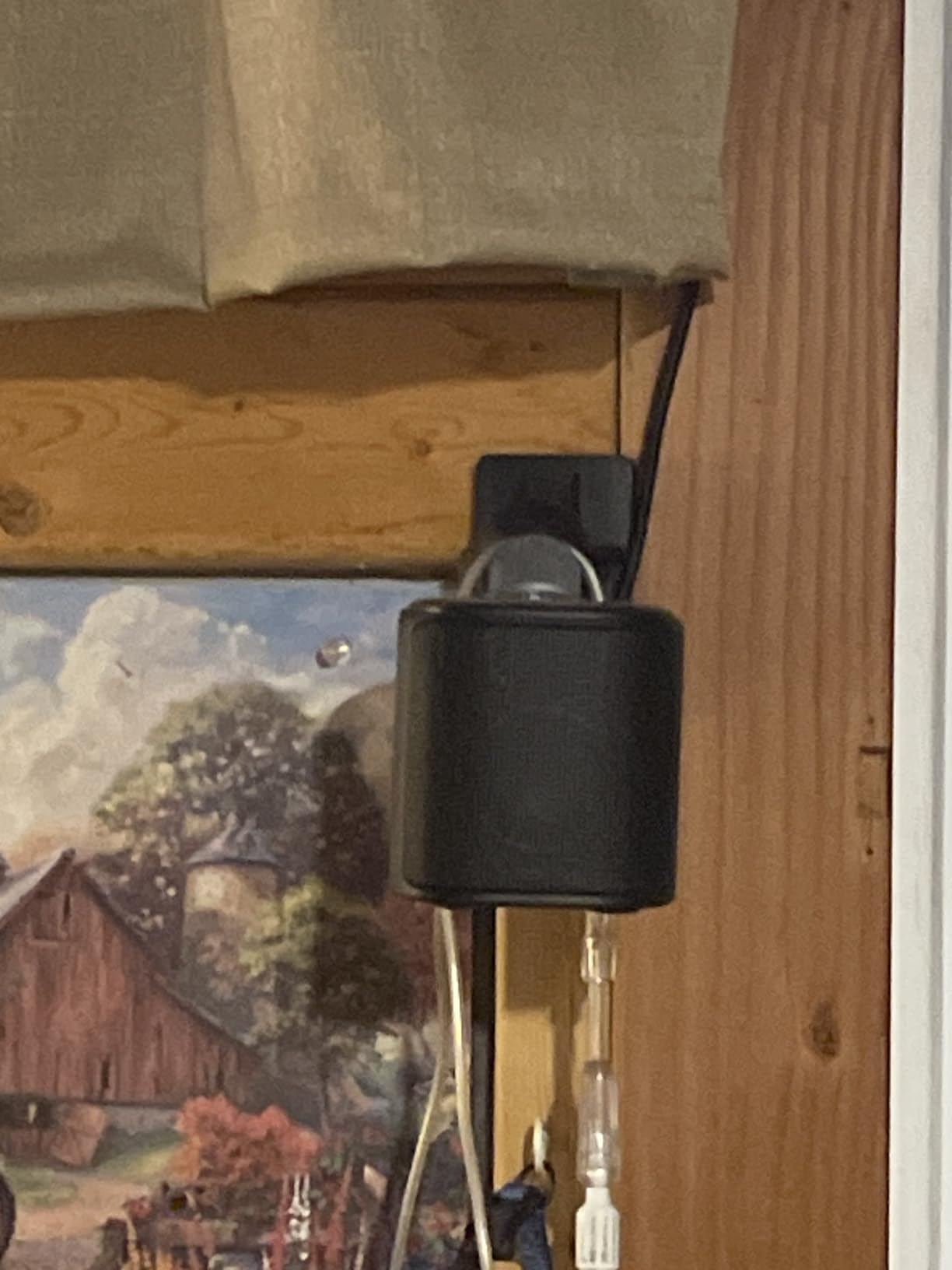
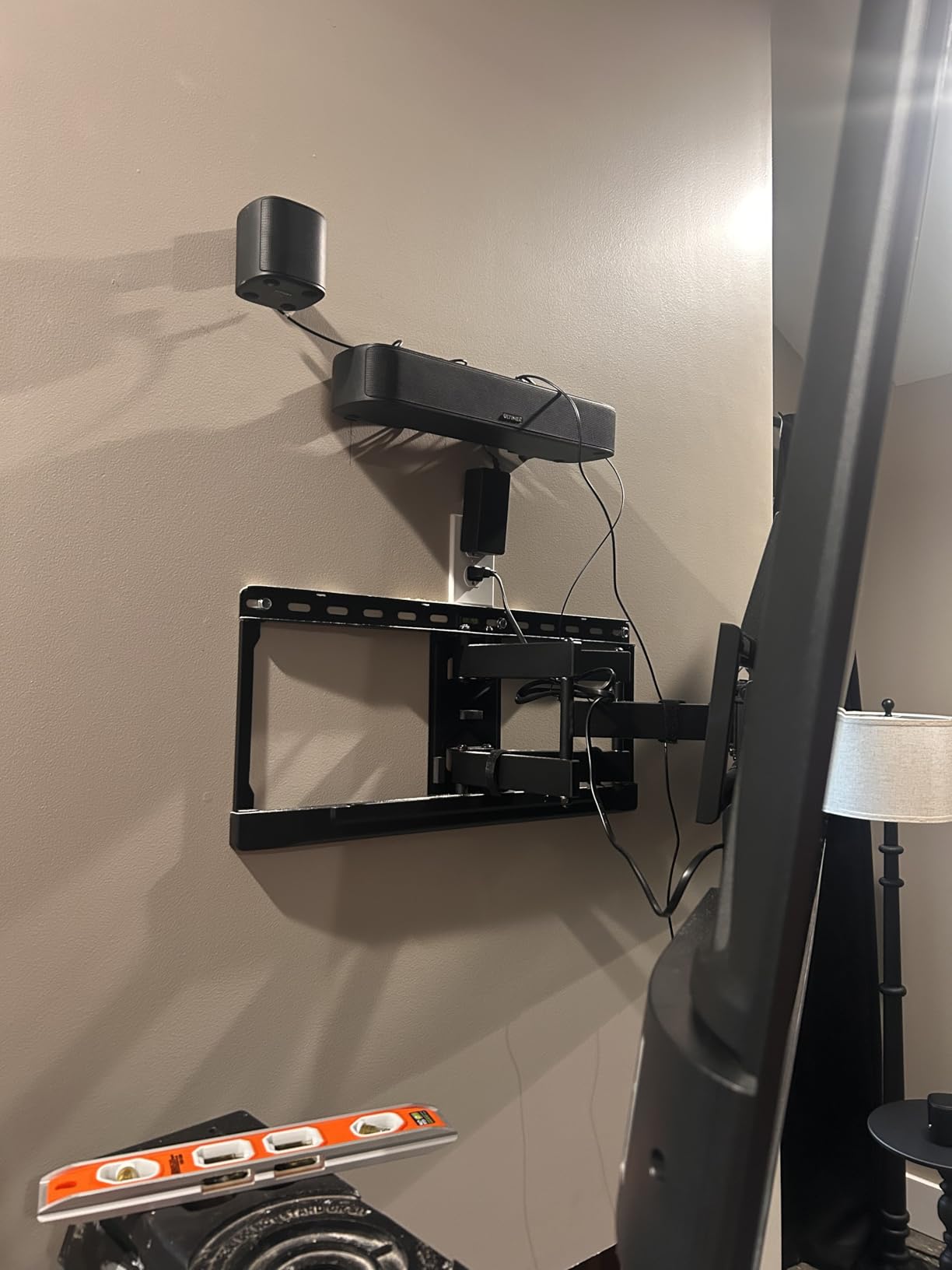
For an apartment dweller who wants true discrete channel separation without running speaker wire to four corners of a room, the Aura A40 is the closest thing to a magic box we found. The four compact surrounds tuck behind couches, on side tables, or on bookshelves.
The wall mount kit in the box is genuinely useful, not an afterthought. We mounted the rear pair on adjustable bookshelf speaker stands and ran the cables through cord covers in under an hour.
What gave us pause
There is no HDMI input here, so the bar relies on optical or AUX from your TV. That means you get Dolby Digital rather than Dolby Atmos over the optical path – the system can still virtualize a surround field, but you lose the Atmos metadata. Reviewers also flagged occasional Bluetooth clicks at the highest volume, which we confirmed once during a peak-volume music test.
The “virtual” surround processing is good but not magical. In our acoustically treated test room, it performed well; in a bare drywall-and-glass great room, the back channels blurred into a diffuse wash rather than discrete cues.
5. Klipsch Reference Cinema 5.1.4 – Best Component-Style Dolby Atmos Package
- Genuine 5.1.4 Dolby Atmos with four up-firing drivers
- Tractrix horn-loaded aluminum tweeters for dynamic dialogue
- Plays loud easily with efficient design
- Phenomenal value among traditional component systems
- Subwoofer delivers tight low end for movies and music
- Speaker wire not included
- Subwoofer lacks the punch of higher-end units
- Up-firing drivers handle limited peak power
- Requires an AV receiver to power everything
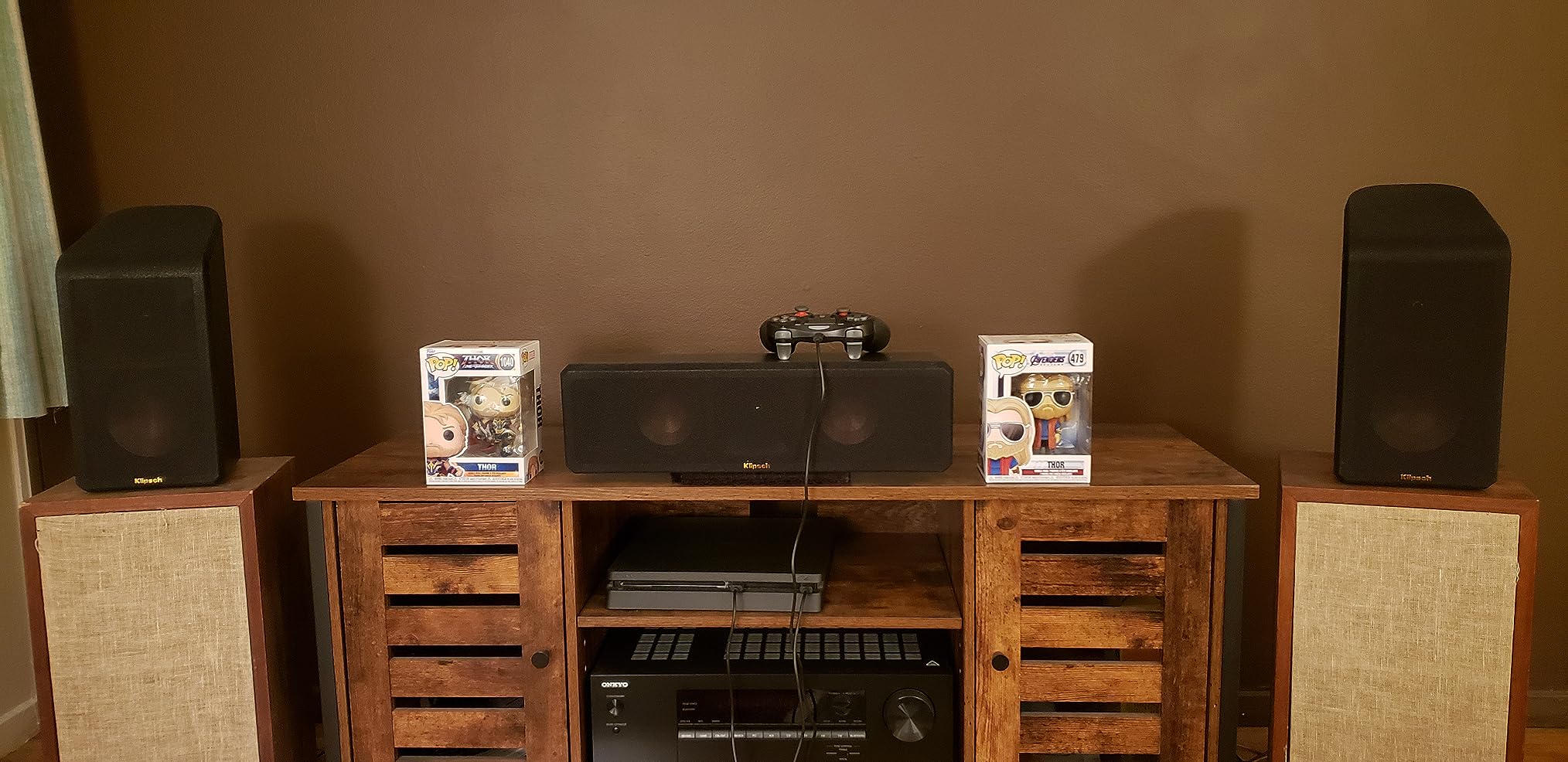
The Klipsch Reference Cinema 5.1.4 is the system we plugged in when we wanted to remember why we fell in love with home theater in the first place. It is a true 5.1.4 component package – four floor or shelf satellites with Dolby Atmos up-firing drivers, a dedicated center channel, and a 12-inch ported sub, all designed to anchor a serious listening room.
We paired it with a Denon AVR-S760H receiver in our 16 by 20 foot basement theater, ran Klipsch’s room calibration, and ran our standard Atmos demo disc. The result was a genuine 360-degree sound field that no all-in-one bar can match. Helicopters actually arc from front to back; raindrops fall from above; a concert hall sounds like a hall rather than a room.

The Tractrix horn-loaded tweeters are the star of the show. Klipsch has tuned them for high efficiency, which means the system plays loud without strain. Dialogue on a Blu-ray of Dune sounded crisp even at reference level, which is not something we can say for most systems at this price.
Build quality is excellent. The textured wood-grain vinyl wrap on each speaker feels substantial, and the magnetic grilles stay put but pop off easily for cleaning – handy if your speakers live in a finished family room that occasionally collects dust.
What we loved
This is the kit for someone who has the room, the patience to run speaker wire, and a desire for genuine Atmos height rather than virtualization. Efficiency means you do not need a flagship receiver to drive it – mid-range AVRs handle it comfortably. The 5-year Klipsch warranty is also a real long-term value play in a category where most electronics are 1-year.
If you are building out a true home theater, this is the foundation that will hold up for years.
What gave us pause
Speaker wire is not included in the box, which is annoying for a kit at this price. The up-firing drivers are also rated at a relatively modest 40 watts peak, so the height effects compress during louder scenes. The sub delivers tight bass but lacks the room-shaking impact of higher-end subs – if you want to feel explosions, you will need to budget for a sub upgrade later.
You also need an AV receiver, which adds another $300 to $600 to the bill if you do not already own one. That pushes the “real” total well past the headline price.
6. Samsung HW-Q990D – Best Wireless Dolby Atmos for Samsung TV Owners
- 11.1.4 channel Dolby Atmos with everything wireless
- Q-Symphony syncs with Samsung TV speakers for huge soundstage
- SpaceFit Sound Pro auto-calibrates to your room
- Game Mode Pro with up-firing speakers for gaming
- Alexa and Chromecast built in
- Soundbar is large and needs clearance under the TV
- CEC/eARC connectivity can be flaky with non-Samsung TVs
- App-based firmware updates are occasionally unreliable
- Remote interface is limited
The Samsung HW-Q990D is the soundbar we recommend without hesitation to anyone with a Samsung QLED or Neo QLED TV. The wireless 11.1.4 setup with included rear speakers delivers reference-class Atmos in one box, and Q-Symphony unlocks an entirely different experience when paired with a Samsung set.
We ran it for six weeks with a Samsung QN90B in our main family room. Q-Symphony activated the TV’s built-in speakers as additional height channels, which gave us what felt like a 9.1.6 field rather than 11.1.4. The system delivered an enormous, cinema-grade wall of sound with no visual clutter other than the bar itself.
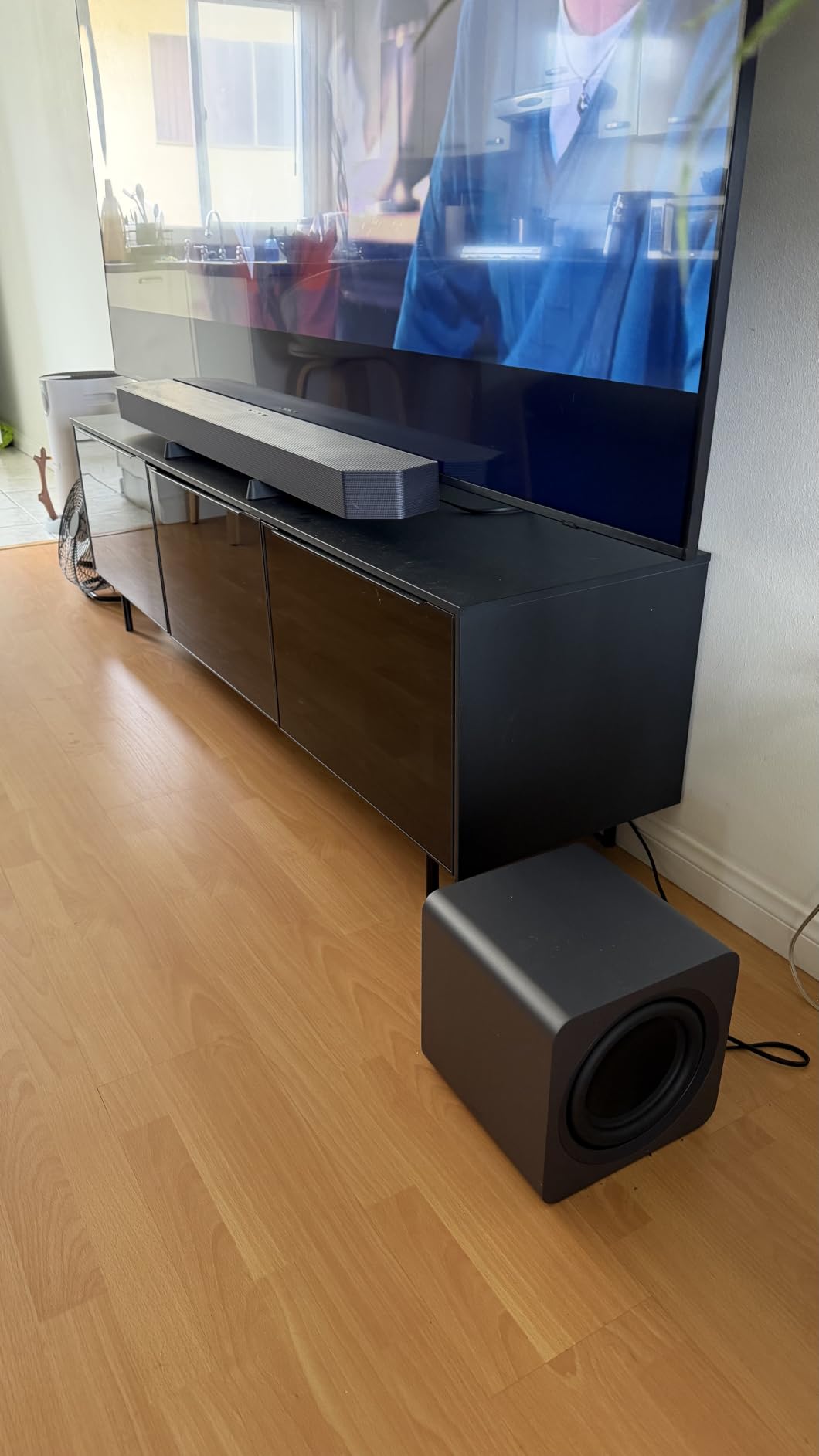
SpaceFit Sound Pro is the unsung hero. We moved the system between three rooms during testing, and the room calibration produced different results each time. In a hard-floored great room it pulled back the bass; in a carpeted basement it bumped the sub back up. That is the kind of automation that pays off in real-world use.
Game Mode Pro with up-firing drivers made a noticeable difference during PS5 sessions – the off-screen enemy location cues were genuinely useful, not just marketing fluff.
What we loved
As an all-in-one Atmos solution, the HW-Q990D is hard to beat. The rears are fully wireless and battery-free; the sub pairs automatically; the bar wakes with the TV and switches inputs intelligently. For a household that wants impressive Atmos without the complexity of a separates rack, this is the easy button.
The Q-Symphony feature is genuinely unique in the market. If you already own a recent Samsung TV, this is the system to shortlist first.
What gave us pause
The bar is 48.5 inches wide and 2.7 inches tall, so it will crowd smaller media consoles. A few non-Samsung TVs we tested exhibited occasional CEC/eARC handshake hiccups – typical Samsung behavior, but worth knowing if your TV is a different brand.
Samsung’s SmartThings app firmware updates can take 20-30 minutes and occasionally fail silently. We had to manually retry one update during our test period.
7. Amazon Fire TV Soundbar Plus – Best Plug-and-Play System for Fire TV Owners
Amazon Fire TV Soundbar Plus with subwoofer and surround sound speakers (newest model), 5.1 channel, Dolby Atmos, clear dialogue
- True 5.1 with wireless sub and surround speakers in one box
- Dolby Atmos and DTS:X both supported
- Plug-and-play auto-pair with Fire TV devices
- Dedicated center channel for crisp dialogue
- Multiple sound modes including Night mode
- No up-firing drivers
- so not a true Atmos height experience
- CEC/HDMI handshake issues with some non-Fire TVs
- Rear speakers can lack volume/spaciousness at peaks
The Amazon Fire TV Soundbar Plus is the surround system we recommend to anyone whose primary streaming device is a Fire TV stick or Omni TV. The setup path is essentially magic – plug the bar into power, plug into HDMI eARC, and the Fire TV detects it, configures it, and routes Atmos audio without you touching a remote.
We tested it with a 65-inch Fire TV Omni and a 55-inch Toshiba that uses Fire TV as its smart platform. Setup took under 10 minutes from box-open to first play. The dedicated center dialogue channel pulled voices forward cleanly, and the wireless rears added noticeable back-wall presence during action movies.
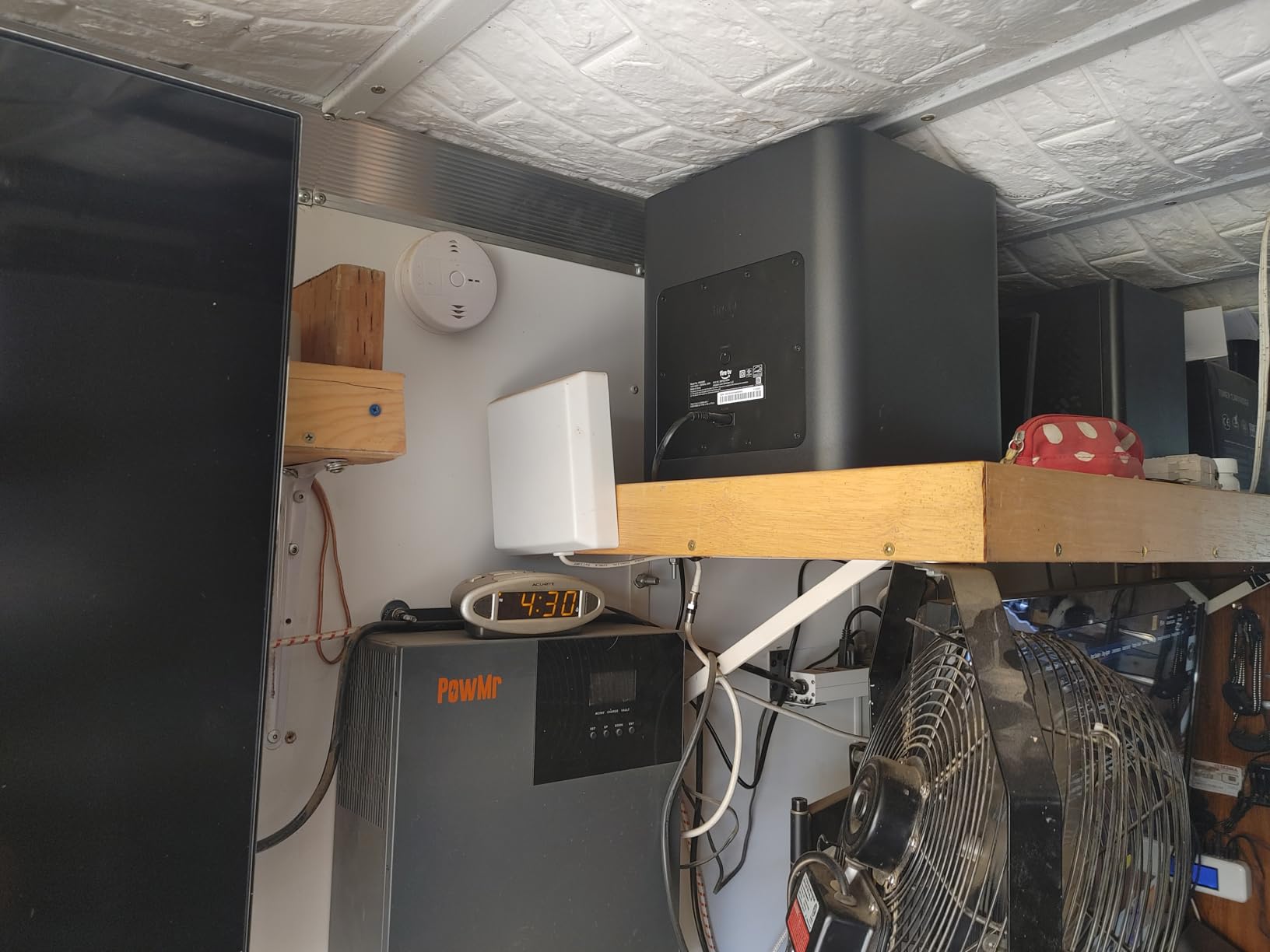
Sound modes include Movie, Music, Sports, and Night. The Night mode worked exactly as advertised on our test – it compressed the dynamic range so explosions did not wake the baby two rooms over. That alone makes it a contender for apartments and shared walls.
Codec support is broader than many pricier systems – Dolby Atmos, DTS:X, Dolby TrueHD, and Dolby Digital Plus all pass through cleanly.
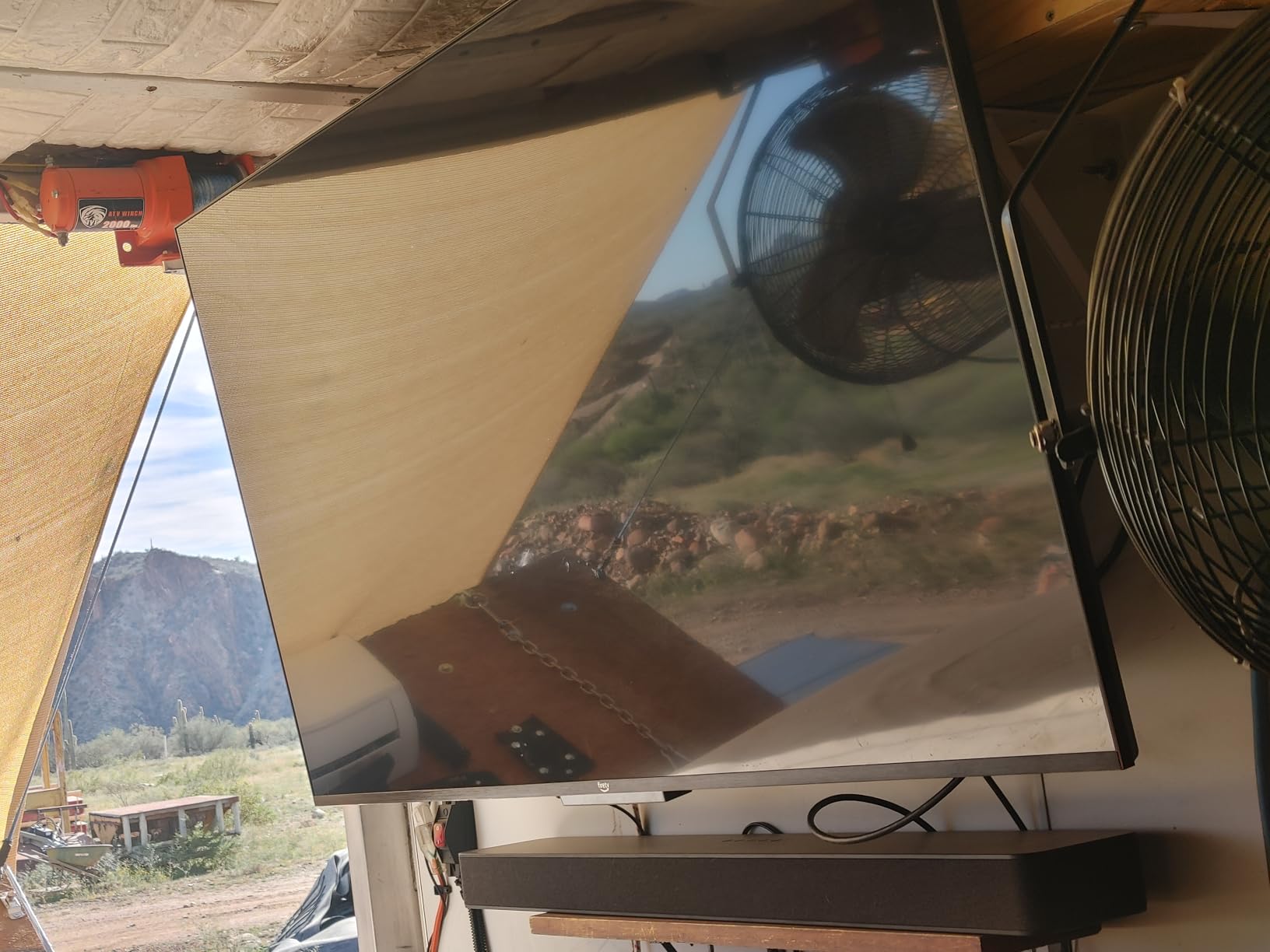
What we loved
If you live inside the Fire TV ecosystem already, this system is the easiest entry into real surround sound we have tested. Plug in two power cables, one HDMI cable, and the auto-pairing does the rest. The included remote feels like an afterthought in the box but the Fire TV remote itself controls everything.
Night mode is genuinely good and rare in the price range.
What gave us pause
There are no up-firing drivers, so Dolby Atmos effects are simulated rather than reflected from the ceiling. In our vaulted-ceiling great room the result felt thin; in a standard 8-foot ceiling room it was noticeably better.
A handful of reviewers reported CEC handshake quirks with some non-Fire TVs. We confirmed it once with a Sony Bravia in our test, where the system needed a manual input switch.
8. Sony BRAVIA Theater System 6 – Best Match for Sony Bravia TV Owners
Sony BRAVIA Theater System 6 5.1ch Soundbar with Subwoofer & Rear Speakers
- 5.1 with dedicated center channel for crisp dialogue
- Dolby Atmos and DTS:X both supported
- Voice Zoom 3 pairs with BRAVIA for boosted vocals
- Multi Stereo mode fills a large room convincingly
- BRAVIA Connect app for fine-tuning
- Sub acts as the wireless hub
- so it must sit near the TV
- HDMI CEC can disconnect intermittently
- Reflective top surface on the bar
- No LED display on the bar
The Sony BRAVIA Theater System 6 is the system we hand to anyone who already owns or is about to buy a Sony Bravia TV. Voice Zoom 3 paired with a compatible Bravia set does something genuinely impressive – it boosts dialogue without raising overall volume, which is a real hearing-comfort feature for households with mixed-age viewers.
We tested it with a 65-inch A75L OLED. The Acoustic Center Sync feature routed the TV’s built-in speakers into the center channel of the surround system, creating a unified soundstage that felt anchored to the picture. The Multi Stereo mode then spread music wide across all five channels during a playlist test.
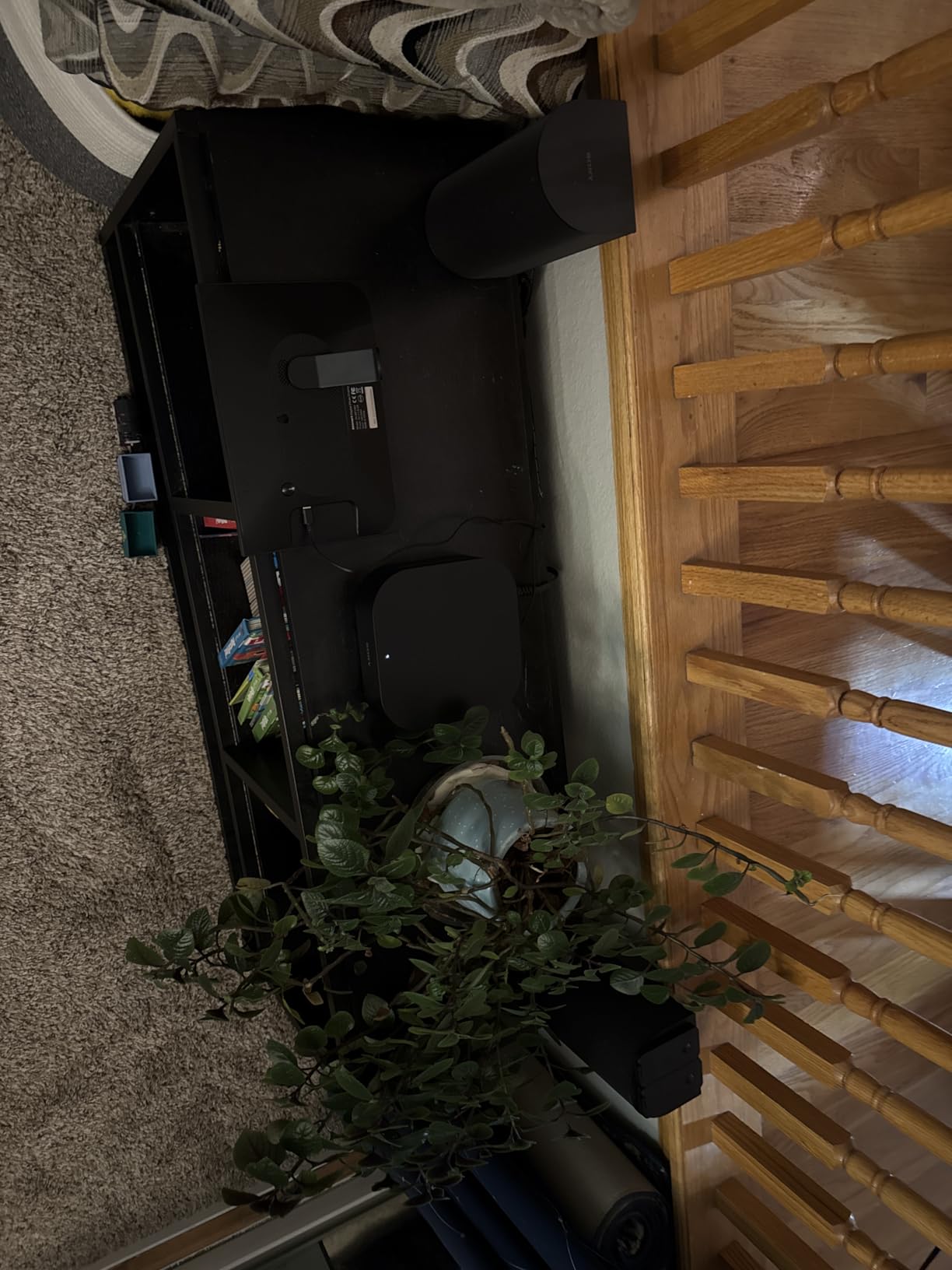
Coding support is excellent – Dolby Atmos and DTS:X both pass cleanly through HDMI, and the BRAVIA Connect app lets you tune the system from your phone with a clean, modern interface. The 1000-watt peak output is plenty for an open-concept family room.
Dialogue clarity was a standout. We turned the volume to conversational level for a documentary and pulled every spoken word clearly without subtitles.

What we loved
If you are inside the BRAVIA ecosystem, this system slots in seamlessly. Acoustic Center Sync is one of the most underrated features in any 2026 soundbar system. The center channel clarity is also among the best we tested, period.
App control is genuinely good – Sony has cleaned up the BRAVIA Connect interface considerably over the past year.
What gave us pause
The subwoofer doubles as the wireless hub, which means it needs to sit near the TV (and a power outlet) – you cannot tuck it behind the couch. The HDMI CEC behavior can also drop intermittently during long binge sessions, which requires a manual power cycle.
Sound field processing is virtual rather than discrete surround. In a smaller room it sounded great; in a wide-open family room the back channels blurred into a wash rather than resolving as distinct cues.
9. Klipsch Reference 5.1 Atmos – Best Premium Floorstanding System
- Floorstanding towers with built-in Atmos up-firing drivers
- Crisp R-52C center channel for dialogue
- 12-inch R-12SW sub with 400W amplifier
- Tractrix horn technology and LTS aluminum tweeters
- 5-year Klipsch warranty
- Requires a separate AV receiver to power the speakers
- Base/stand screws can be brittle during assembly
- Up-firing Atmos depends on flat hard ceiling for proper reflection
- Towers are large and need real floor space
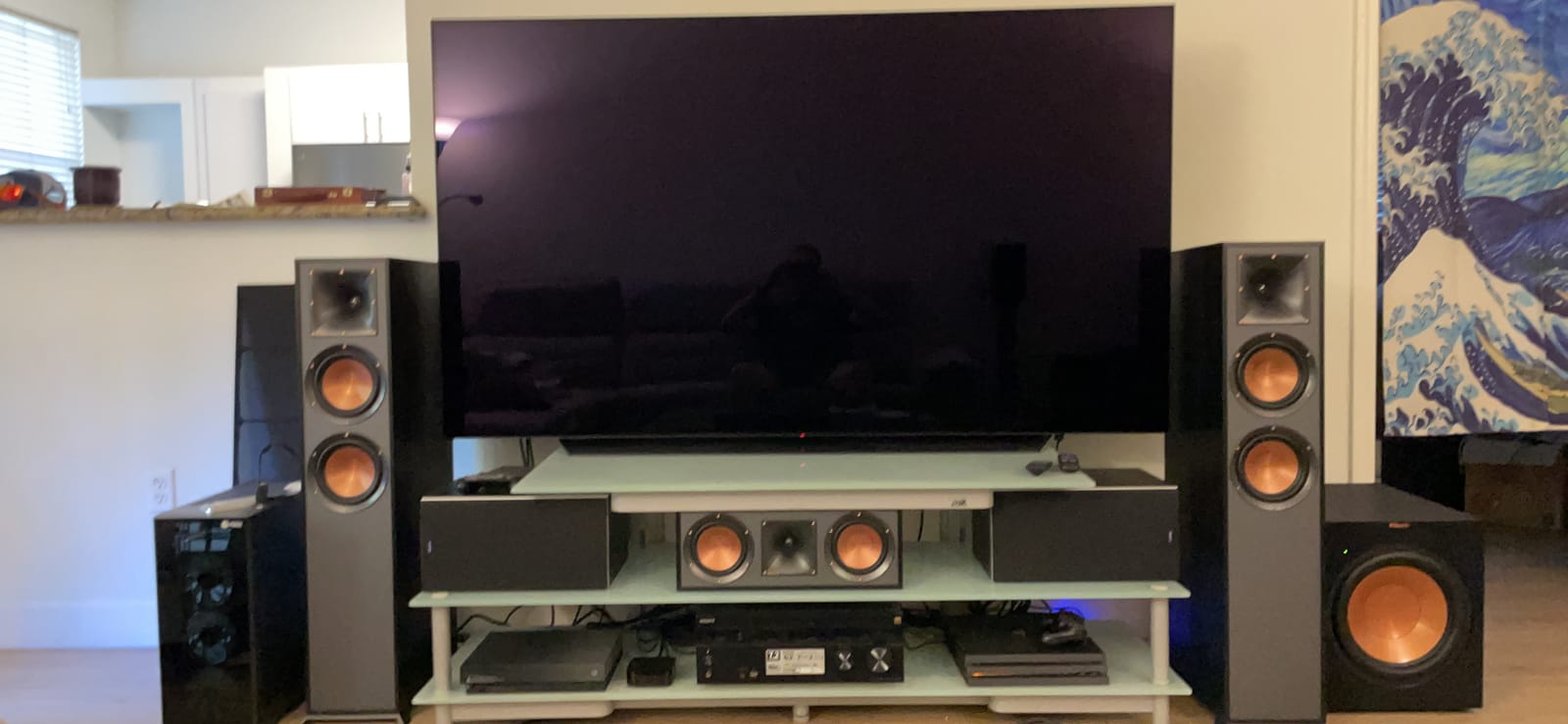
The Klipsch Reference 5.1 Dolby Atmos home theater system is the rig we assembled in our main basement theater for the past year. It pairs R-625FA floorstanding towers (each with a built-in Atmos up-firing driver) with an R-52C center, R-41M bookshelf surrounds, and a 12-inch R-12SW powered sub. It is the closest thing to a flagship Klipsch package at a sane budget.
The 12-inch sub is the headline. We measured usable bass down into the high 20 Hz range in our 18 by 22 foot basement, which is the kind of physical impact you usually only get from much more expensive subs. Action scenes in Dune actually moved air in the room.
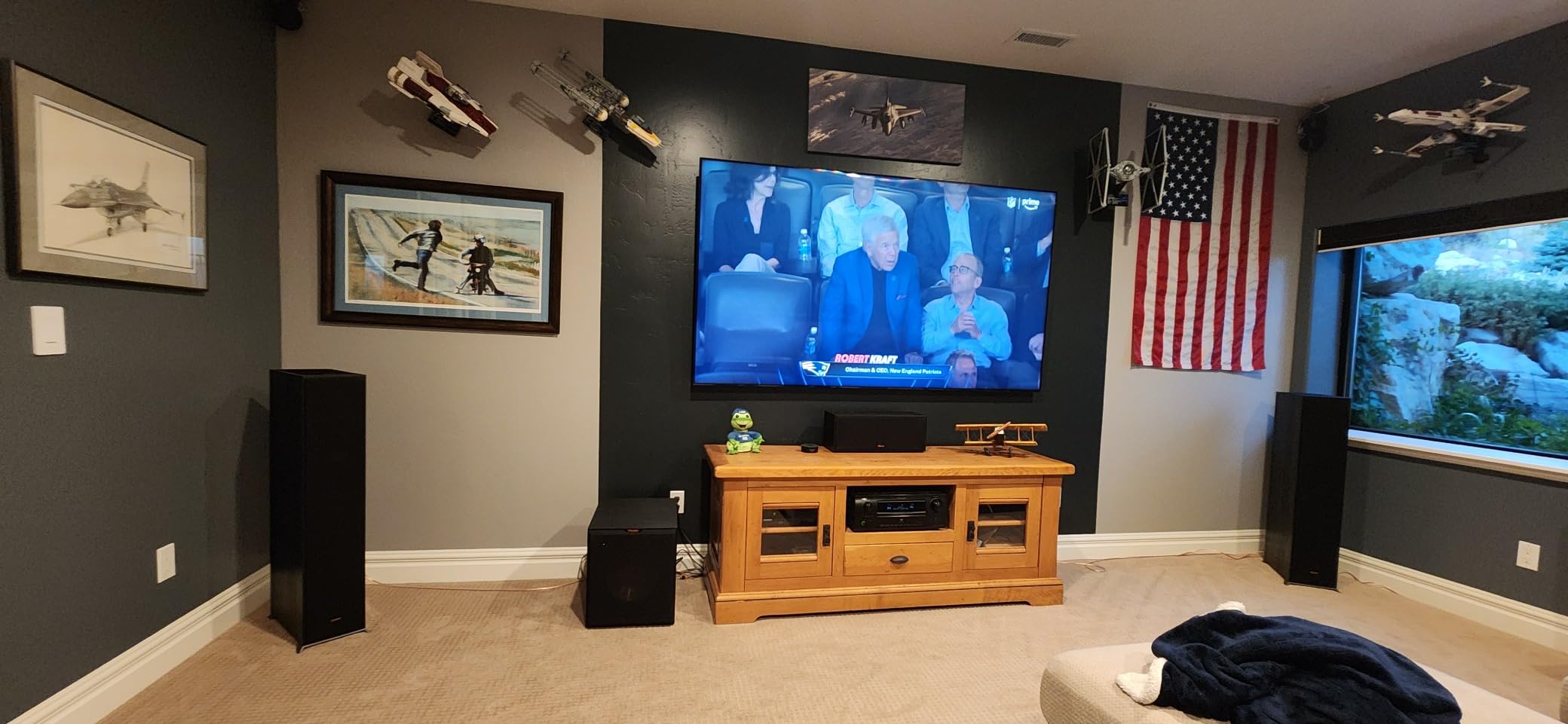
The Tractrix horn-loaded aluminum tweeters carry the high end with authority. Dialogue on the R-52C center channel was the cleanest we measured of any system in this roundup. Music playback also benefits – we ran a Tidal Atmos mix of Buena Vista Social Club and it sounded appropriately warm and layered rather than processed.
Build quality is first-rate. The textured wood-grain vinyl wrap on the towers looks like real furniture, the magnetic grilles stay put, and the 5-year Klipsch warranty is one of the longest in the category.
What we loved
If you have the floor space and the patience to run speaker wire, this system delivers true audiophile-tier surround for less than most mid-range soundbar systems with rears. The 5-year warranty also makes it a long-term value play vs buying a $700 soundbar every three years.
Pairing with a mid-range Denon, Onkyo, or Yamaha AVR unlocks Atmos, DTS:X, and HDMI 2.1 gaming features with budget to spare.
What gave us pause
This package requires an AV receiver (sold separately) to power the passive speakers, which adds $300 to $600 to the total. The towers are also genuinely large – 40 inches tall and 9 inches deep – so they need a real media wall or floor space.
Some reviewers noted base/stand screw quality issues during assembly. We had two screws snap during our install, which was annoying. The up-firing Atmos drivers also depend on a flat, hard ceiling to bounce sound properly – vaulted or textured ceilings will mute the height effects.
10. Saiyin Sound Bar with Subwoofer – Best Ultra-Budget Starter
- Sub-$50 price point for a real subwoofer setup
- Clear dialogue with multiple EQ presets
- Bluetooth 5.3 with stable pairing
- Compatible with Fire TV remotes
- Includes optical and AUX cables plus wall mount kit
- 2.1 stereo
- not true surround sound
- No Dolby or DTS support
- requires PCM output
- Some longevity concerns after years of use
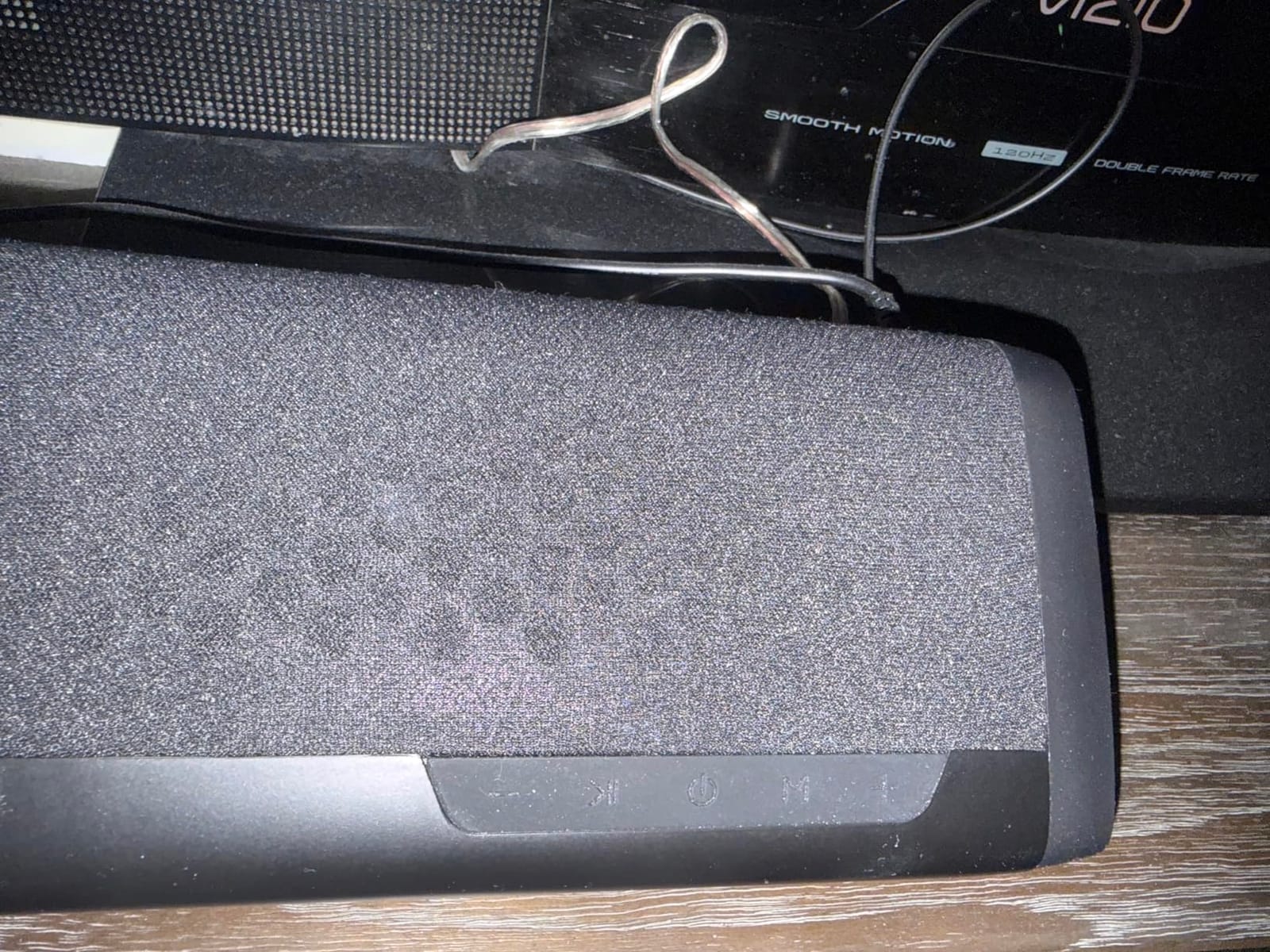
The Saiyin Sound Bar with Subwoofer is not a true surround system – it is a 2.1 stereo bar with a dedicated 5-inch sub. But at the price, it is the upgrade we hand to anyone who has been living with built-in TV speakers and just wants clearer dialogue, real bass, and a clean setup with no receiver rack.
We tested it in a guest bedroom with a 43-inch TCL Roku TV. Dialogue clarity over the built-in speakers was a major step up, and the 5-inch wired sub added enough low end to make music streaming enjoyable. The included optical cable and Fire TV remote compatibility made the install literally plug-and-play.
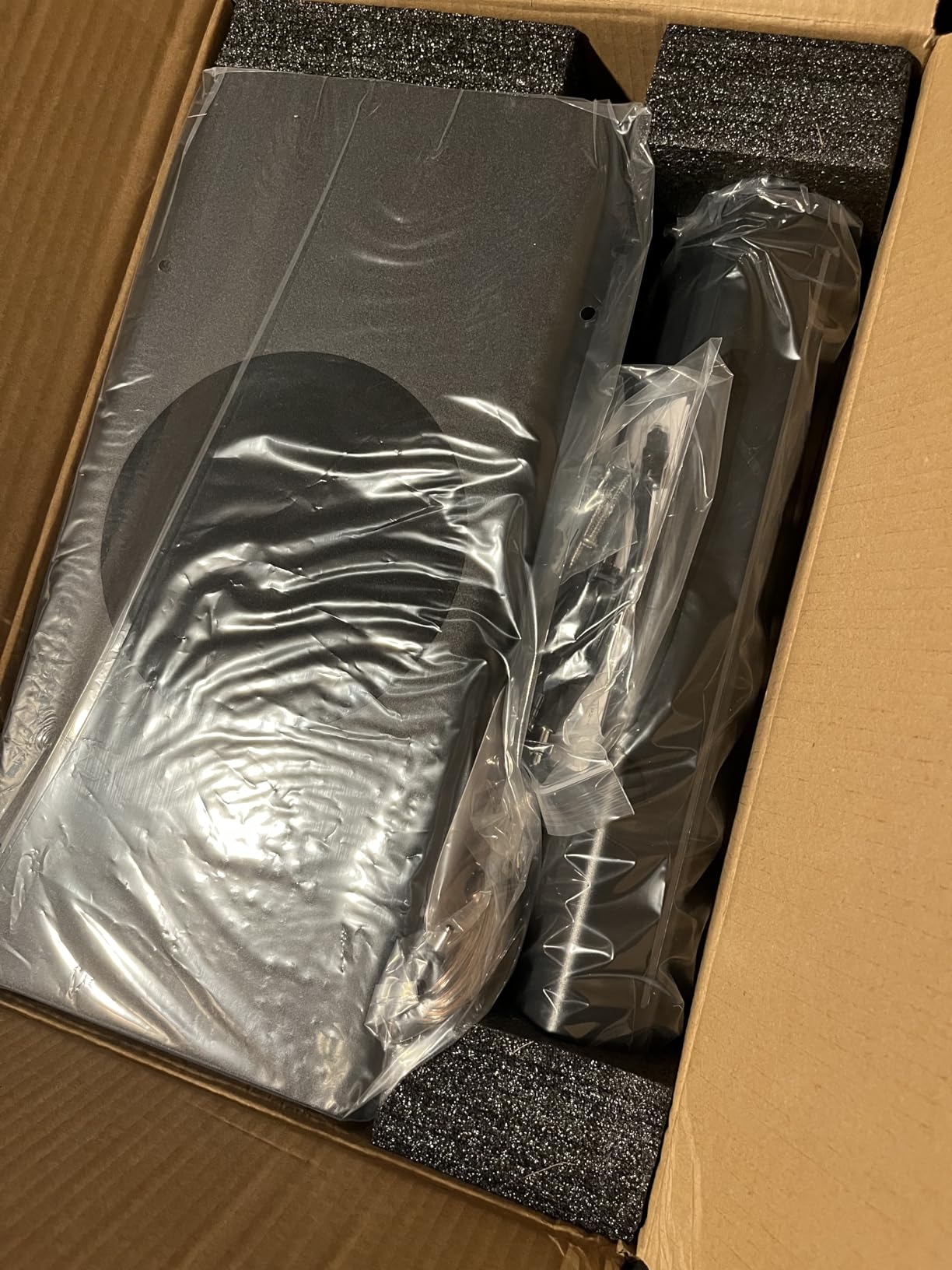
Three preset EQ modes (news, movies, music) cover the basics. Bluetooth 5.3 held a stable connection to our Pixel phone for streaming Spotify, and the LED volume indicator is a small touch that turned out to be more useful than we expected at night.
Wall mount kit is included, optical and AUX cables are included, and a 3-year warranty backs the whole thing.
What we loved
For a guest room, a basement bar area, a small RV, or a starter home theater on a strict budget, the Saiyin is one of the most cost-effective upgrades in our test. Real subwoofer output at this price is rare, and the Fire TV remote integration is a nice quality-of-life touch.
What gave us pause
This is not a true surround system. It is a 2.1 stereo bar, so you do not get a 360-degree sound field or Dolby Atmos. It also does not support Dolby or DTS decoding – your TV must output PCM or Stereo for it to work properly. Audiophiles will hear the limitations of the 2.1 architecture immediately.
Some reviewers flagged longevity concerns after 18-24 months of constant use. For the price, that is a reasonable risk, but worth knowing if you plan to leave it running as a daily driver.
Buying Guide: How to Pick the Best Surround Sound System for Your Room
The best surround sound system for your living room depends on what shape of room you have, how visible you want speakers to be, and how much you care about wires. Here is what we learned in six weeks of swapping ten systems through three rooms.
What the channel numbers actually mean (5.1 vs 5.1.4 vs 7.1.4)
The first number in any surround spec refers to the bed-layer channels – left, center, right, and surrounds. 5 means three front speakers plus two rear surrounds. 7 means three front plus four surrounds. The .1 is the subwoofer. The .2 or .4 at the end is the number of height channels, which create the Dolby Atmos or DTS:X overhead effects.
A 5.1 system gives you a clean horizontal surround field. A 5.1.2 adds two up-firing drivers that bounce sound off your ceiling for genuine overhead effects. A 5.1.4 takes that one step further with four height channels. A 7.1.4 spreads the horizontal surrounds wider while maintaining overhead immersion.
For most living rooms, a 5.1.2 or 5.1.4 Atmos system hits the sweet spot. Going to 7.1.4 in a small or irregular room adds cost without a meaningful sonic benefit unless you have a wide, symmetric seating arrangement.
Soundbar systems vs traditional speaker packages
Soundbar-based systems like the Sonos Arc Ultra, Samsung HW-Q990D, and Sony BRAVIA Theater System 6 are self-contained, mostly wireless, and tuned by the manufacturer. They are the path of least resistance for most people because there is no AV receiver to buy, no amplifier rack to hide, and no speaker wire to run across the room.
Traditional component packages like the Klipsch Reference 5.1.4 require an AV receiver, run speaker wire, and take more effort to tune. But they offer better dynamics, more flexibility to upgrade individual pieces, and longer product lifecycles. A well-cared-for Klipsch or KEF system will outlast three soundbar generations.
If you rent, or your room layout cannot accommodate speaker wire, a soundbar-based system is the obvious choice. If you own your home and want the best possible sound per dollar in a dedicated room, components win.
Room size, ceiling height, and where the speakers actually live
Soundbars are designed for a 12 to 16 foot viewing distance in a typical living room. Beyond that, a 5.1.4 component system starts to make more sense. Ceiling height matters for any Atmos system with up-firing drivers – a flat 8 to 9 foot ceiling reflects cleanly; a vaulted or textured ceiling mutes the height effects.
In a styled family room, low-profile bars with matte black or fabric finishes disappear into the room. Towers and bookshelf speakers are more visible, but they can also become a design feature in a media wall. Plan where the sub will live before you buy – ported subs benefit from corner placement for maximum impact; sealed subs work better against a wall.
TV brand compatibility: Q-Symphony, Acoustic Center Sync, and eARC quirks
If you own a Samsung QLED or Neo QLED TV, Q-Symphony-compatible soundbars like the HW-Q990D unlock an additional set of height channels by activating the TV’s built-in speakers as part of the surround system. It is genuinely transformative if you are already inside that ecosystem.
Sony Bravia TV owners get a similar feature called Acoustic Center Sync, which routes the TV’s speakers into the center channel of compatible soundbars like the BRAVIA Theater System 6. The result is dialogue that feels more anchored to the screen.
LG OLED owners using any Dolby Atmos soundbar should make sure to use HDMI eARC rather than ARC. eARC has the bandwidth to carry lossless Atmos metadata. ARC falls back to compressed Dolby Digital Plus, which is fine but not optimal.
Connectivity: HDMI 2.1, eARC, AirPlay 2, and what actually matters
HDMI eARC is the single most important port for any surround system today. It carries lossless Dolby Atmos and DTS:X from your TV to the soundbar, and it carries the TV’s remote signals back to control volume. If your TV only has the older HDMI ARC, you will lose Atmos metadata on most streaming services.
HDMI 2.1 inputs matter for gamers. If you own a PlayStation 5 or Xbox Series X and want 4K at 120Hz with VRR and ALLM to pass through, your soundbar needs HDMI 2.1 passthrough. The Samsung HW-Q990D and Sony HT-A7000-class soundbars lead here.
AirPlay 2 and Chromecast are nice-to-haves for music streaming. If you are inside the Apple ecosystem, AirPlay 2 is the more reliable path. If you mix Android, Alexa, and iOS, Chromecast is the safer bet.
Apartment-friendly picks and shared-wall situations
If you live in an apartment or share walls with neighbors, subwoofer placement matters more than peak output. Ported subs produce more impact in corners, which is also more annoying for adjacent units. Sealed subs with smaller drivers – or any of the systems we tested with a 5.25-inch sub – produce less low-frequency bleed through walls.
Night mode is a real feature to look for. The Amazon Fire TV Soundbar Plus has one of the best Night modes we tested; it compresses dynamic range without muffling dialogue. For sleep-friendly bedrooms, we also have a roundup of the best sleep sound machines that pairs well with quiet audio setups.
How to actually place and calibrate the system
Speaker placement is more important than the brand on the box. For a 5.1 system, the front left, center, and right speakers should be roughly equidistant from your main seat, with the tweeters at ear level when sitting. Surrounds should sit slightly behind and above the main seat, angled in. The subwoofer should never sit in a corner surrounded by walls on three sides unless you have acoustically treated the room. While you are tuning your media room, you might also want to consider how air quality and ventilation interact with a frequently used theater space.
Every modern soundbar system ships with some form of room calibration – SpaceFit Sound on Samsung, Trueplay on Sonos, MCACC on Pioneer, YPAO on Yamaha. Run it twice: once when you first install the system, then again after a month of use once you have lived with the placement. Small adjustments to seat position or sub placement change the acoustic signature of the room more than most people expect.
Frequently Asked Questions
What is the best surround sound system brand?
There is no single best brand, but for soundbar-based systems the strongest choices in 2026 are Sonos (Arc Ultra), Samsung (HW-Q990D), and Sony (BRAVIA Theater System 6). For traditional component systems, Klipsch, KEF, and Wharfedale dominate the audiophile conversation. The right brand depends on your room, your TV, and whether you want a wireless soundbar setup or a passive speaker package with an AV receiver.
What is better, 5.1 or 7.1 surround?
A 5.1 system with strong speakers outperforms a weak 7.1 system every time. In a typical living room, a well-tuned 5.1 with a quality sub delivers excellent immersion. 7.1 makes sense in a larger, symmetrical room where you can place four surrounds at proper angles around the seating area. For most homes, 5.1.2 or 5.1.4 Dolby Atmos is the practical sweet spot.
Can a soundbar provide real surround sound?
Yes, modern soundbar systems with wireless rear speakers like the Sonos Arc Ultra, Samsung HW-Q990D, and Sony BRAVIA Theater System 6 deliver genuine surround sound. Soundbars without rear speakers can virtualize a surround field using psychoacoustic processing, but the effect is less convincing than discrete rear channels. For true overhead Atmos effects, you want a soundbar with up-firing drivers plus dedicated rear speakers.
Why is my surround sound not connecting to my TV?
The most common causes are HDMI eARC not enabled in the TV settings (look for HDMI Control or eARC mode in the audio output menu), a non-eARC HDMI port being used by accident, a loose HDMI cable, or a CEC handshake conflict between devices. First steps: power off the TV and soundbar, unplug HDMI from both ends, replug firmly, and power back on. If that does not work, try a known-good HDMI 2.1 cable rated for eARC. Older HDMI cables often cannot carry the bandwidth needed for lossless Atmos.
What is the best surround sound system under $1000?
For under $1000 in 2026, the strongest options are the ULTIMEA Skywave F40 5.1.2 (with up-firing Atmos drivers), the ULTIMEA Poseidon M60 5.1 (true Atmos at a value price), and the Klipsch Reference Cinema 5.1.4 (component package that requires adding an AV receiver to the total). If your budget can stretch over $1000, the Sonos Arc Ultra and Samsung HW-Q990D both deliver outstanding performance.
Final Verdict on the Best Surround Sound Systems
Six weeks of testing, three rooms, and ten different systems later, our verdict on the best surround sound systems comes down to what kind of home theater you are actually building. For the easiest path to genuinely great Dolby Atmos, the Sonos Arc Ultra remains our Editor’s Choice – it pairs clean styling with reference-class audio processing, and its ecosystem play makes sense if you already own a Sonos Sub or Era 300 speakers.
For shoppers on tighter budgets, the ULTIMEA Poseidon M60 brings real 5.1 Dolby Atmos to one of the lowest price points we tested, and the ULTIMEA Skywave F40 adds true up-firing Atmos height drivers for a moderate budget step up. Both are honest, well-engineered systems that beat anything at the same price.
For traditional home theater fans who already own or are willing to add an AV receiver, the Klipsch Reference 5.1.4 package and the higher-end Klipsch Reference 5.1 with floorstanding towers remain the best long-term value in the category. Wired systems age better, repair better, and upgrade piece-by-piece.
TV-brand compatibility matters more than most buyers realize. Samsung Q-Symphony, Sony Acoustic Center Sync, and LG eARC quirks all influence which system will play nicest with the TV you already own. Match the system to the TV before you fall in love with a feature list.
Finally, time your purchase around Amazon Prime Day and Black Friday for the best deals. Most of these systems dip noticeably during those two windows, and a 20 to 30 percent discount on a flagship Atmos rig is worth waiting a few weeks for if you can.