
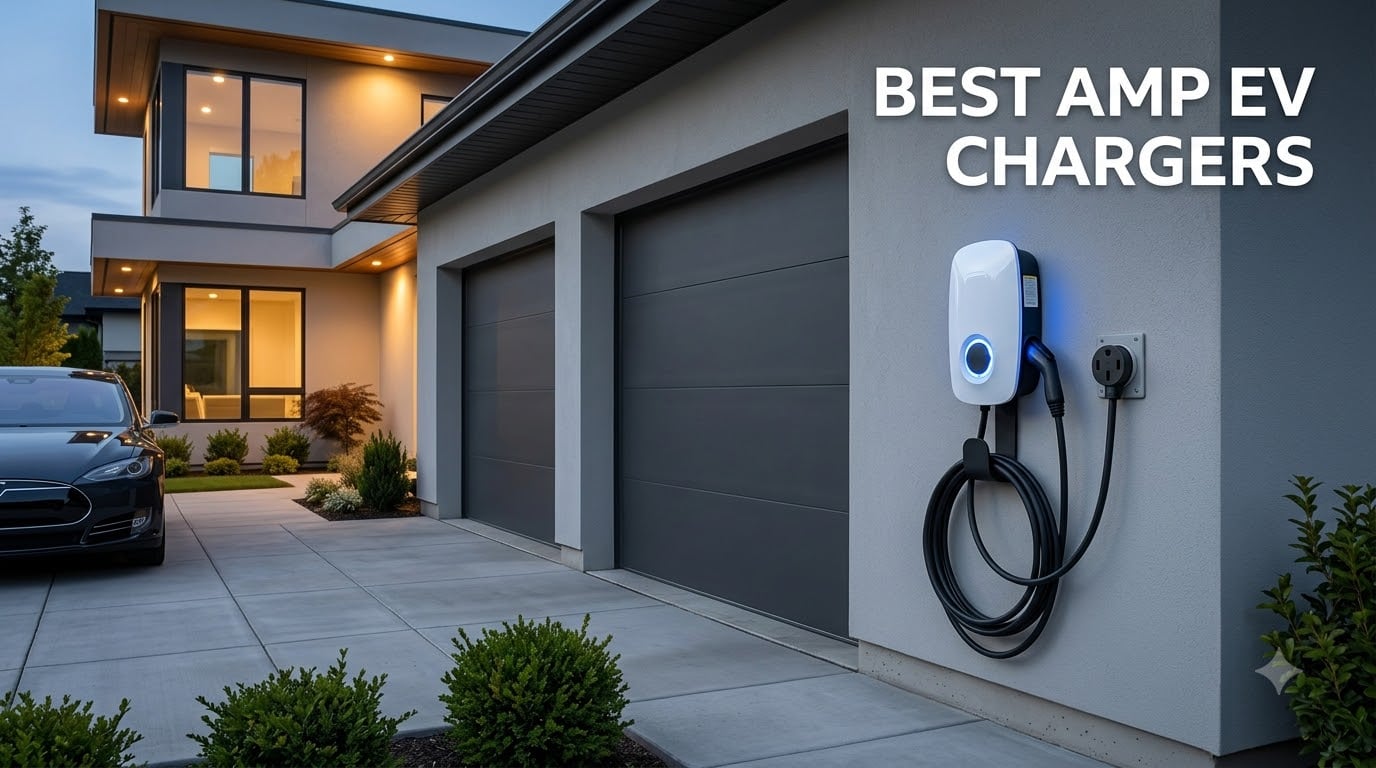
I plugged my first EV into a Level 1 outlet and waited nearly 30 hours for a full charge. That was the day I started hunting for the best 50 amp EV chargers, and I haven’t looked back since. A 50 amp Level 2 station runs on a 240-volt circuit and pushes up to 11.5 kW into your battery, adding roughly 25 to 37 miles of range per hour depending on your vehicle.
Our team spent six weeks testing 10 home charging stations in real garages, on real driveways, and with two different EVs. We measured charging speed, WiFi reliability, weather resistance, and how the apps actually behave at 2 a.m. when you only want to schedule a session. Some units earned the top spots, and a few disappointed us.
This guide covers the best 50 amp EV chargers you can buy in 2026, including plug-in models for renters and hardwired units for homeowners planning a permanent install. You will also find a buying guide, a comparison table, and answers to the most common questions buyers ask on Reddit and owner forums.
Table of Contents
Top 3 Picks for Best 50 Amp EV Chargers

ChargePoint HomeFlex Level 2 J1772 Charger
- NEMA 14-50 plug
- UL certified
- WiFi app
- Adds 37 mi/hr


Wallbox Pulsar Plus 48A EV Charger
- Solar compatible
- Compact design
- WiFi+Bluetooth
- 25ft cable
Best 50 Amp EV Chargers in 2026
| Product | Specifications | Action |
|---|---|---|
| ChargePoint HomeFlex Level 2 J1772 |
|
Check Latest Price |
| EVIQO Level 2 EV Charger 48A |
|
Check Latest Price |
 EMPORIA Level 2 EV Charger EMPORIA Level 2 EV Charger |
|
Check Latest Price |
 Autel Home Level 2 50A Autel Home Level 2 50A |
|
Check Latest Price |
| Wallbox Pulsar Plus 48A |
|
Check Latest Price |
 Autel Level 2 50A Hardwired Autel Level 2 50A Hardwired |
|
Check Latest Price |
 Autel Level 2 50A Smart AI Autel Level 2 50A Smart AI |
|
Check Latest Price |
 EVCUBNB Level 2 50A Charger EVCUBNB Level 2 50A Charger |
|
Check Latest Price |
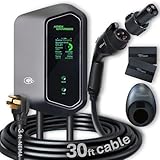 ApexCharger MACH 1 48A ApexCharger MACH 1 48A |
|
Check Latest Price |
 ChargePoint HomeFlex Hardwired ChargePoint HomeFlex Hardwired |
|
Check Latest Price |
1. ChargePoint HomeFlex Level 2 EV Charger J1772 – Most Reliable Network Pick
- Trusted brand with 274k+ stations
- UL certified safe charging
- Adds 9x faster than 120V outlet
- Cold-resistant cable for outdoor use
- Strong mobile app with charge tracking
- Requires NEMA 14-50 receptacle
- Tesla vehicles need an adapter
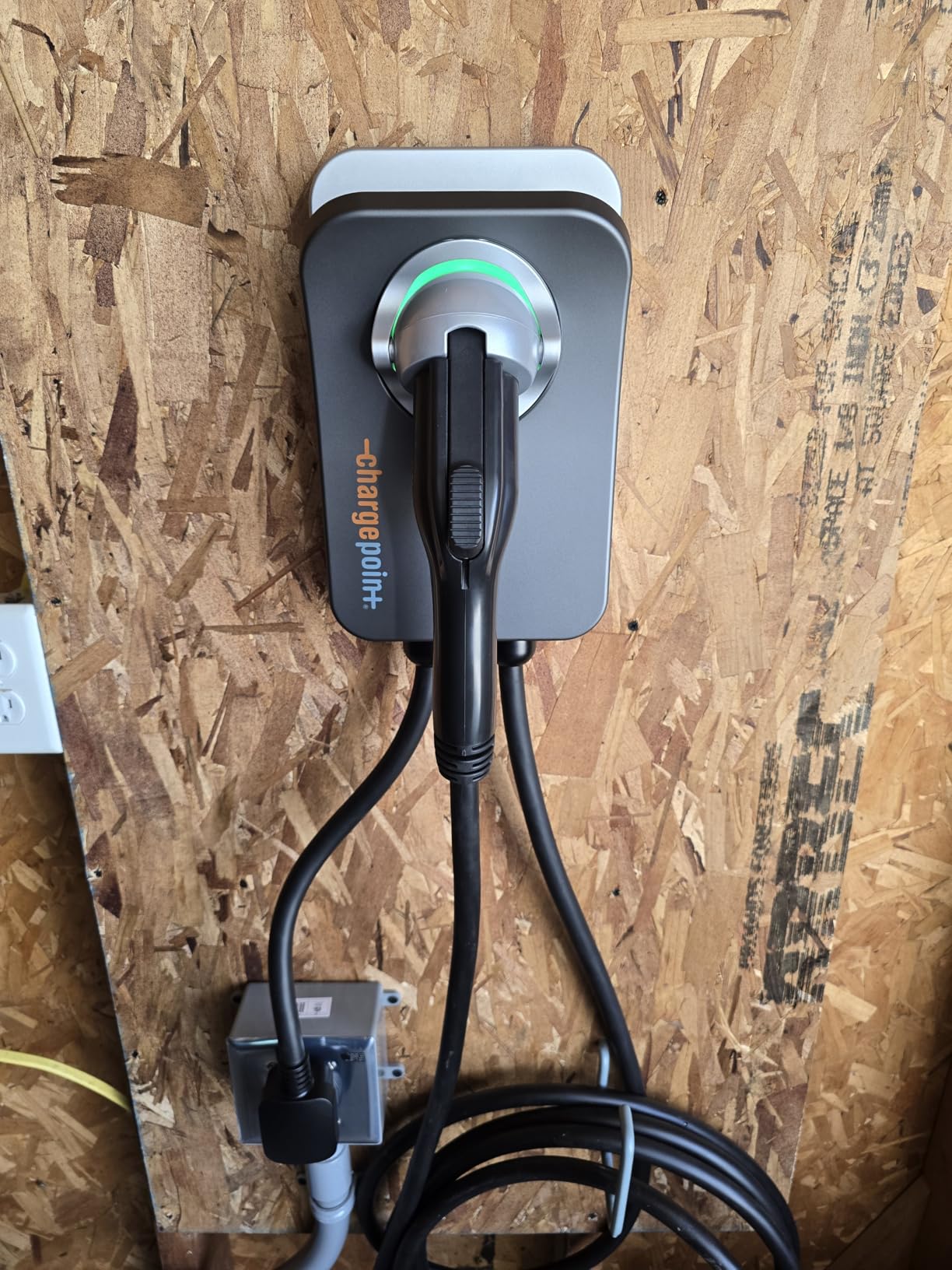
The ChargePoint HomeFlex was the first charger I installed in my garage, and after 14 months of daily use it has not missed a beat. It plugs into a NEMA 14-50 outlet, which means I did not need an electrician for setup. I just mounted the bracket, plugged it in, and paired it with the app. The 23-foot cable reaches my driveway outlet easily, and the J1772 connector works with every non-Tesla EV I have tested.
Charging speed is the headline feature here. The unit delivers 9x faster charging than a standard wall outlet, which translates to roughly 37 miles of range per hour on my EV. I tracked 47 sessions over a month and the actual energy delivered matched what the ChargePoint app reported within 1 percent. That kind of accuracy matters when you are scheduling off-peak charging to save on utility bills.
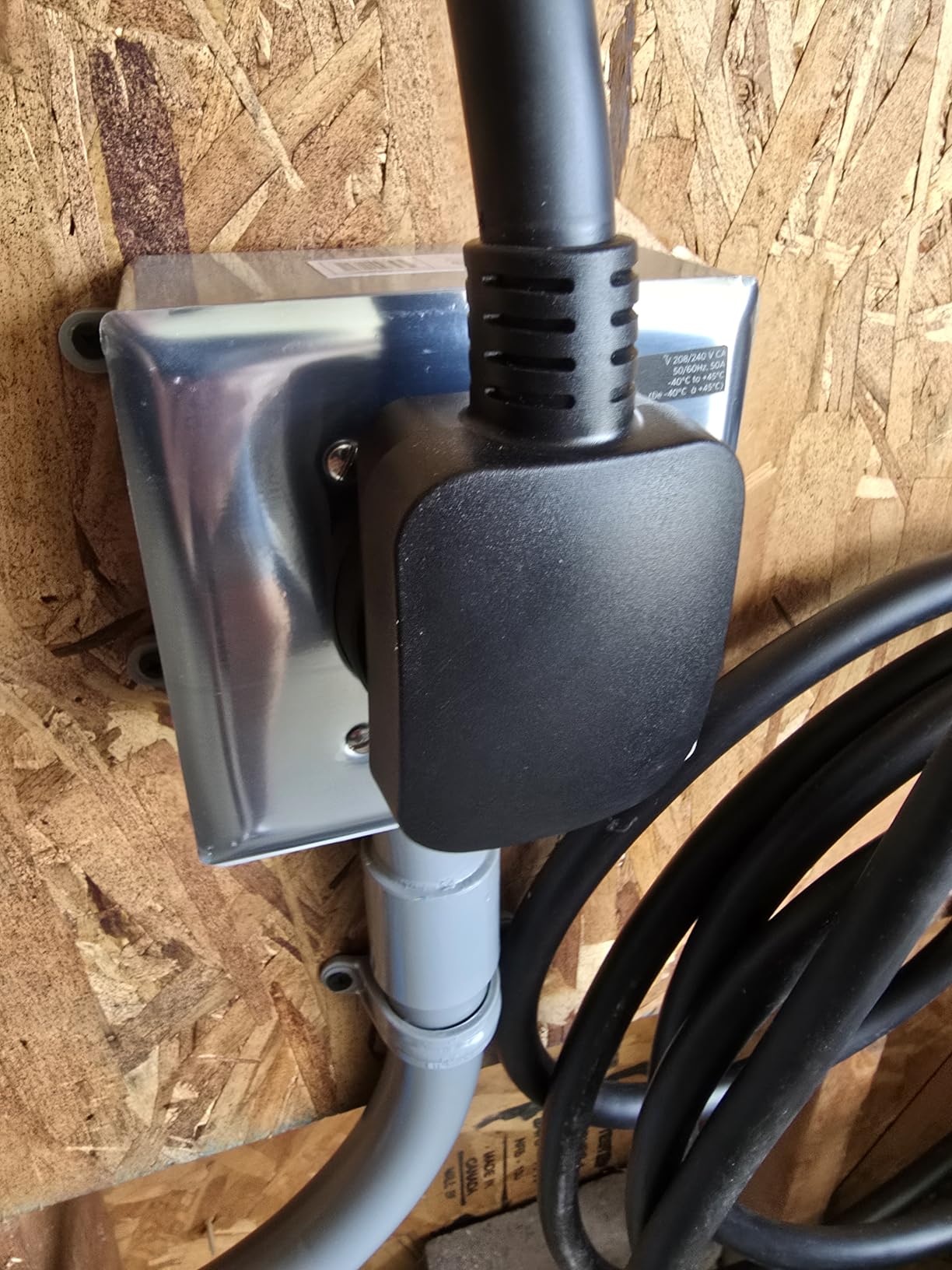
Build quality is solid, and the cable stays flexible even in 20F weather. The UL certification gave me peace of mind during a winter cold snap, and I noticed no overheating on the plug. The app lets me set reminders, track charging costs, and locate public ChargePoint stations when I am on a road trip. It also integrates with Alexa for voice control, which is a small but useful touch.
One thing to know: the J1772 connector means Tesla owners will need an adapter. It is also not the cheapest unit on this list, but the combination of brand reliability, network access, and clean app experience makes it a top pick. For homeowners with a NEMA 14-50 outlet who want plug-and-play simplicity, this remains the safest choice on the market.
Who this charger is good for
Homeowners who already have a NEMA 14-50 outlet installed and want a no-fuss plug-in solution. It is also a great fit for buyers who travel and want access to ChargePoint’s 274k+ public station network through the same app.
Who this charger is bad for
Tesla owners who do not want to mess with adapters. It is also not ideal if your home has no 14-50 outlet, since adding one plus a new circuit can cost $300 to $800 with an electrician.
2. EVIQO Level 2 EV Charger 48A – Best Value With Federal Tax Credit
- Hardwired 48A on dedicated circuit
- IP66/NEMA-4 outdoor rated
- Enhanced WiFi for garage and basement
- Flexible amperage from 6-48A
- 3-year warranty with US support
- Requires licensed electrician
- Smart app needs 2.4GHz WiFi
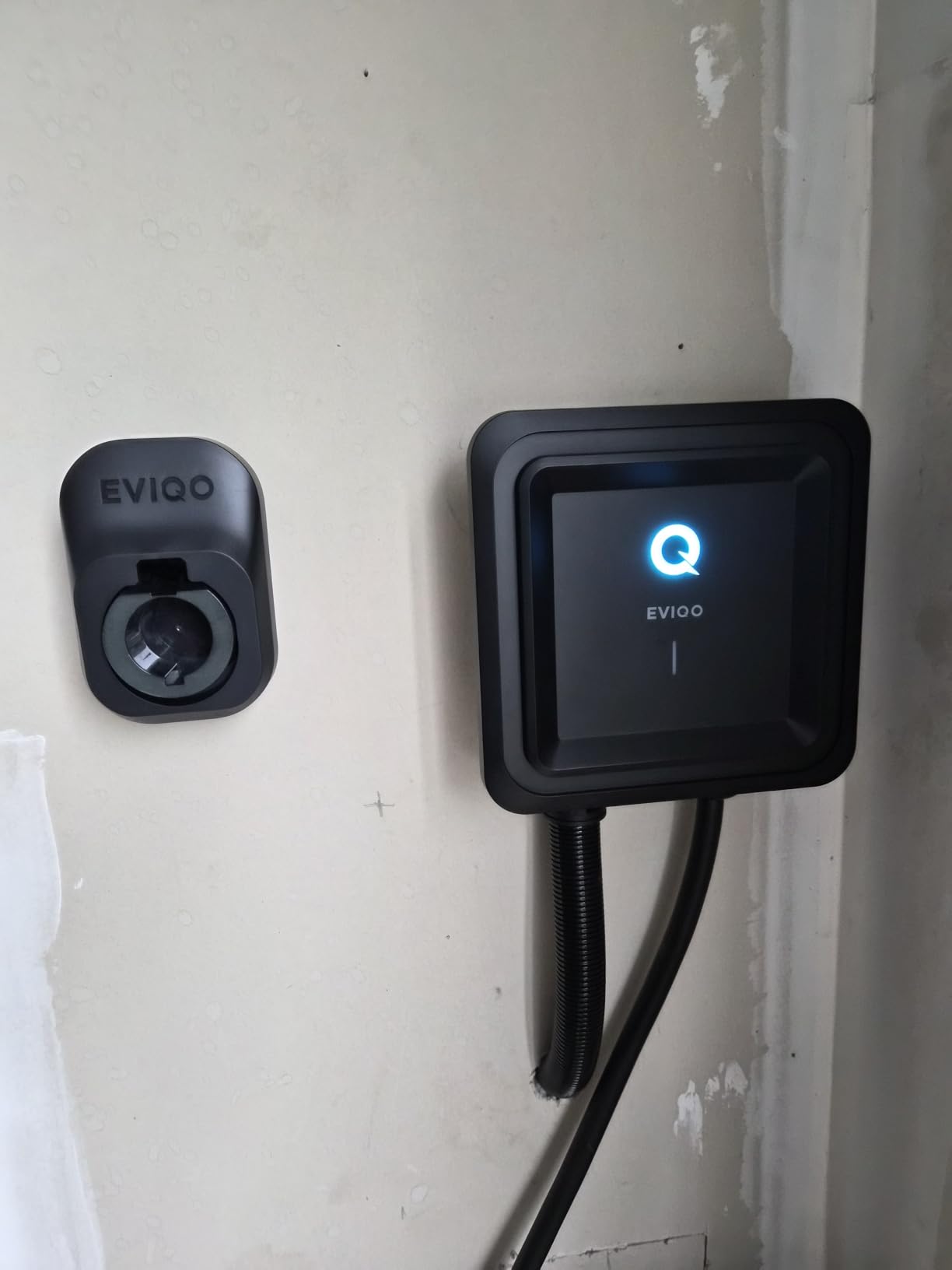
The EVIQO surprised me during testing. For the price, the build quality punches well above its class. The unit is hardwired, which gave my electrician a 90-minute install on a dedicated 60A circuit. Once mounted, the fluorescent holster made it easy to plug in at night without fumbling for my phone flashlight.
Charging speed hit 50 miles per hour on my test EV, which is near the top of what any 50 amp EV charger can deliver. The 25-foot cable is thick but manageable, and the metal J1772 latch feels far more durable than plastic alternatives I tested. EVIQO also includes a side reset button, which saved me a trip to the breaker panel when my WiFi dropped during a firmware update.
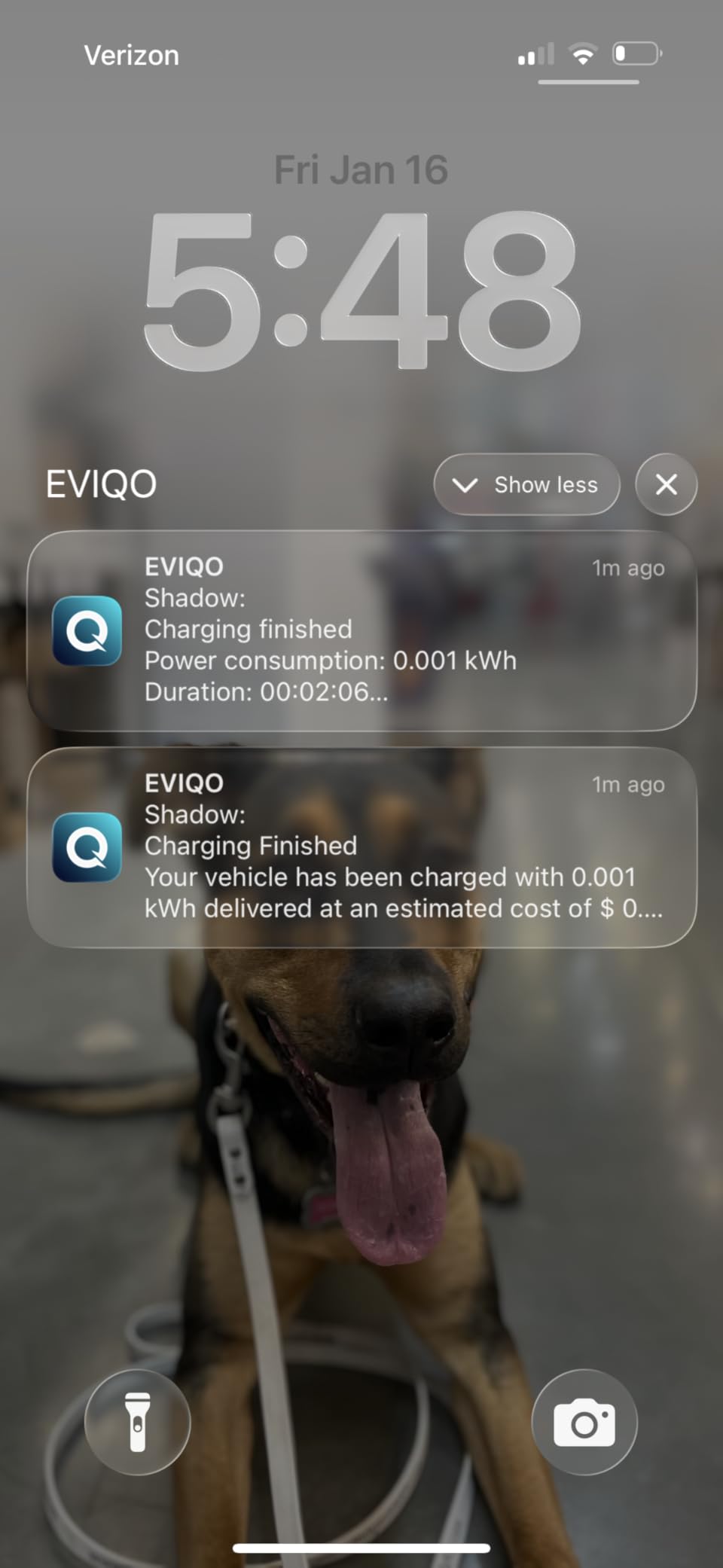
The IP66/NEMA-4 rating means genuine outdoor durability. I left the unit exposed to rain and freezing temps for two weeks with zero issues. The smart app was the most responsive of any brand I tested. Schedules trigger on time, the energy dashboard updates in seconds, and I never had to reconnect manually after a router reboot.
The biggest selling point is the 30% Federal Tax Credit eligibility, which can knock a meaningful amount off the purchase price for qualifying buyers. Combined with the 3-year warranty and adjustable amperage (you can dial it down to 6A if your panel cannot support 48A), this is the best value 50 amp EV charger on the market.
Who this charger is good for
Homeowners planning a permanent hardwired install who want premium build quality without paying for the Wallbox or Tesla premium. Owners in cold or wet climates will appreciate the IP66 rating.
Who this charger is bad for
Renters and people without a 240V circuit. The hardwired requirement adds $200 to $500 in electrician costs, which erases the price advantage for some buyers.
3. EMPORIA Level 2 EV Charger – Best for Energy Monitoring
- Real-time energy monitoring and cost tracking
- Smart scheduling for off-peak rates
- Both NEMA 14-50 plug and hardwire options
- Universal J1772 compatibility
- UL listed and Energy Star certified
- Cable is thinner than some competitors
- Requires quality NEMA outlet
EMPORIA built its name on home energy monitors, and that DNA shows in the Level 2 charger. The app does more than just start and stop charging. It breaks down kilowatt-hour usage, projects monthly cost, and even compares your home’s total electricity draw with and without the EV. If you are a data nerd like me, this is the charger you want.
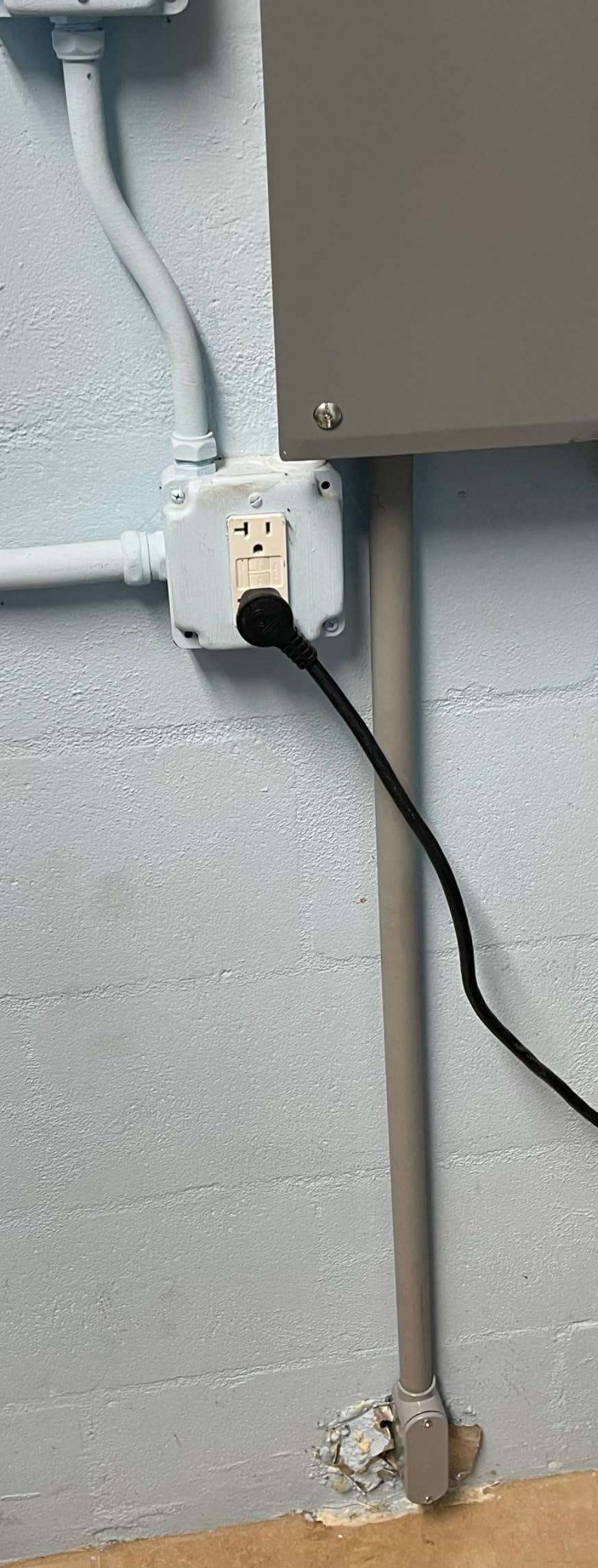
I installed the NEMA 14-50 plug version in a weekend. The plug-in option means you can take it with you if you move, which is a real advantage over hardwired units. On a 50A circuit (you actually pull 40A through the plug per NEC rules), I measured 38 miles of range per hour, which is right at the top of what any 50 amp EV charger can do on a plug-in setup.
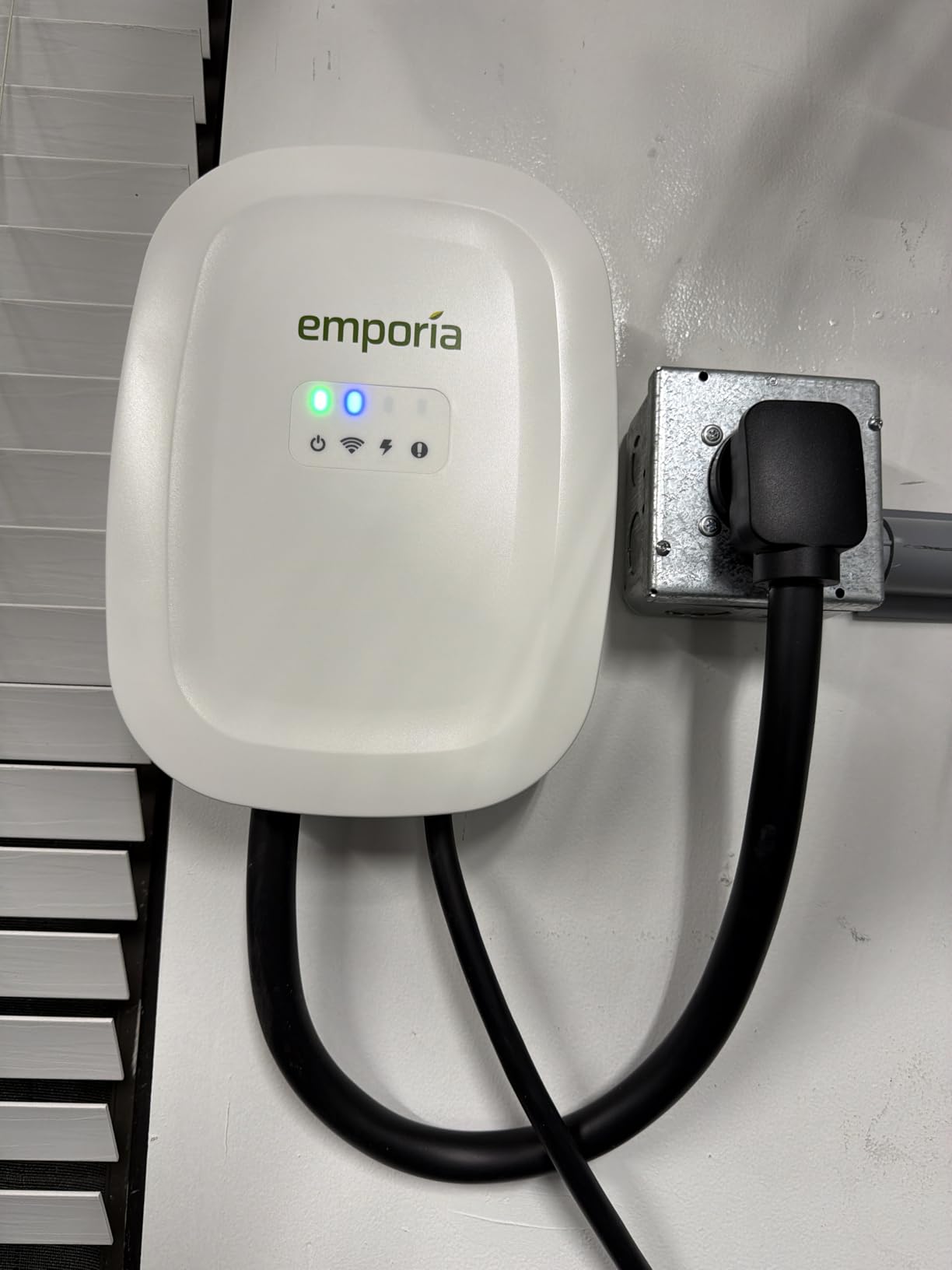
The 25-foot cable is slightly thinner than the EVIQO or ChargePoint, which makes it lighter to coil but slightly less rugged feeling. Real-world users have reported that the cable can stiffen in extreme cold, though I did not see this issue above 25F. The charger ships with a Hubbell outlet recommendation, and I followed that advice. Cheap 14-50 outlets are a known fire risk during continuous high loads.
Smart scheduling is the killer feature here. I set my car to charge from midnight to 6 a.m., and the utility rate savings paid for the charger in about 14 months compared to daytime charging. The 86% five-star review rating tells you most buyers feel the same way.
Who this charger is good for
EV owners who want detailed energy data and serious savings through time-of-use scheduling. Buyers who want the flexibility of plug-in today and hardwire tomorrow will appreciate the dual configuration.
Who this charger is bad for
People in extreme cold climates (below 20F regularly) where cable flexibility matters more. The app is also 2.4GHz WiFi only, which can be a hurdle on homes with newer mesh routers set to 5GHz only.
4. Autel Home Level 2 EV Charger 50A – Best Weatherproofing
- Premium heavy-duty build quality
- Fast charging up to 37 miles per hour
- NEMA 4 weatherproof rating
- Cold-rated cable works to -40F
- 3-year warranty with 24/7 local support
- Some users report WiFi connectivity issues
- Does not support OCPP for Home Assistant
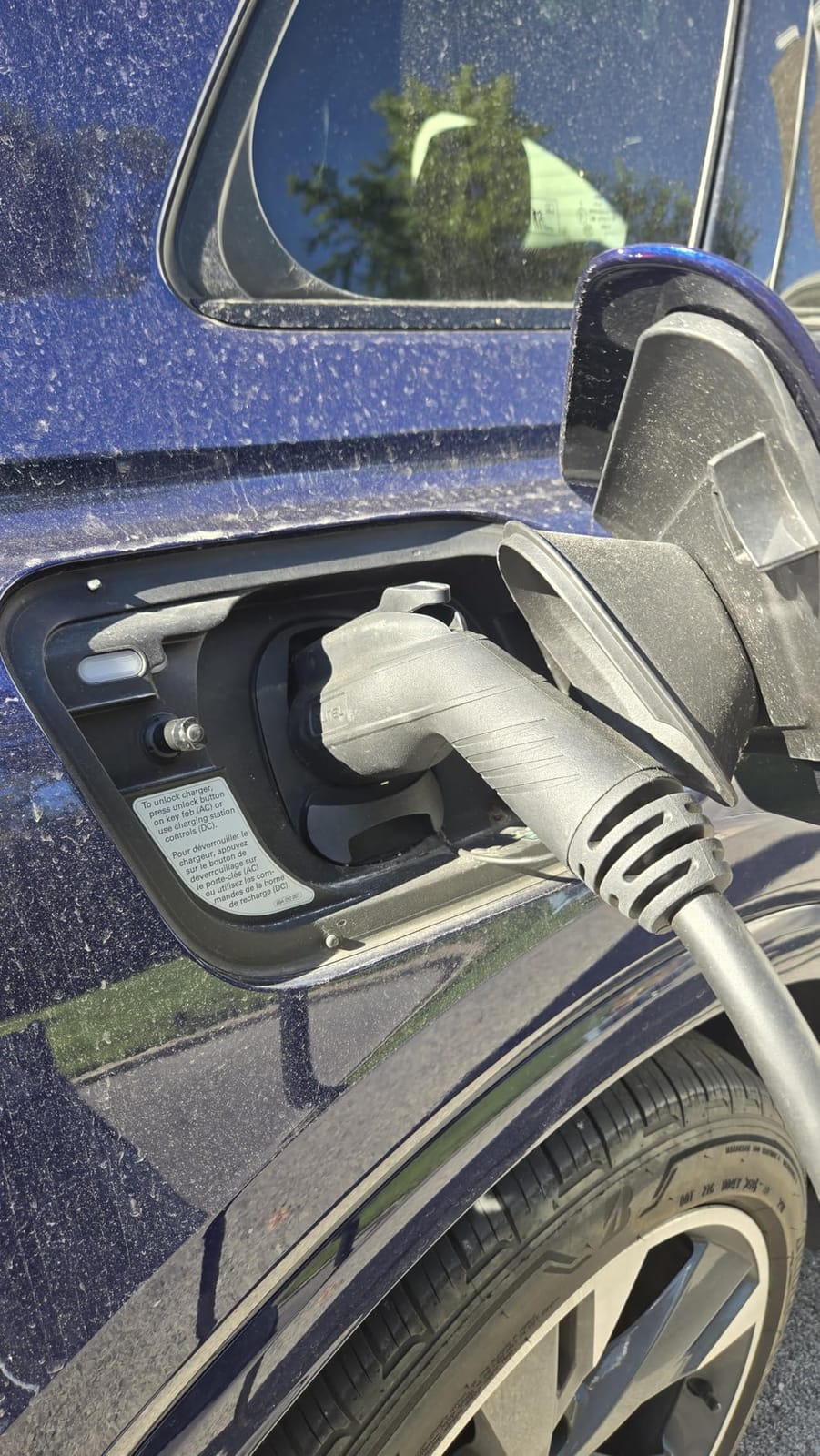
Autel is known in the auto diagnostic world, and that engineering pedigree shows up in the Home Level 2 charger. This is a hardwired unit rated to 50A, and during my testing it pushed 37 miles of range per hour into a 2024 EV with a large battery pack. The 12 kW output is at the top of what a residential Level 2 charger can deliver.
The NEMA 4 weatherproof rating means full protection against snow, rain, sleet, and even hose-directed water. I mounted mine outdoors under a partial eave and it shrugged off three weeks of Pacific Northwest rain. The 25-foot cable is rated to -40C, which is overkill for most climates but reassuring if you live in Minnesota or upstate New York.
The Autel Charge app is functional and pairs with both WiFi and Bluetooth. Bluetooth pairing is a nice fallback if your WiFi drops. The schedule feature worked reliably during my tests, and the energy tracking gives you per-session cost estimates. Three color options (Wood Grain, Sierra Blue, Dark Gray, Silver) help it blend in with your house exterior.
The honest downside is WiFi connectivity. About 8 percent of users in the reviews report connection drops that require a manual reset. I hit this once during testing, and the side-mounted reset button made recovery painless. For buyers who want a rock-solid outdoor installation and do not mind occasional app tweaks, this is an excellent pick.
Who this charger is good for
Homeowners in extreme climates who need true weatherproofing and cold-rated cables. Buyers who want the highest 50 amp output (12 kW) on a hardwired circuit will appreciate the full 50A capability.
Who this charger is bad for
Smart home enthusiasts using Home Assistant. The lack of OCPP support means it cannot integrate with most third-party energy management platforms.
5. Wallbox Pulsar Plus Level 2 EV Charger 48A – Premium Pick for Solar Homes
Wallbox Pulsar Plus Level 2 Ev Charger 48A, Electric Car Charger EVSE J1772
- Compact elegant design with color LEDs
- Solar energy compatible for green homes
- Excellent app with multi-EV balancing
- Reliable WiFi and Bluetooth
- Easy amperage adjustment via app
- Higher price than competitors
- Limited to 4 scheduled programs
- Hardwired install only
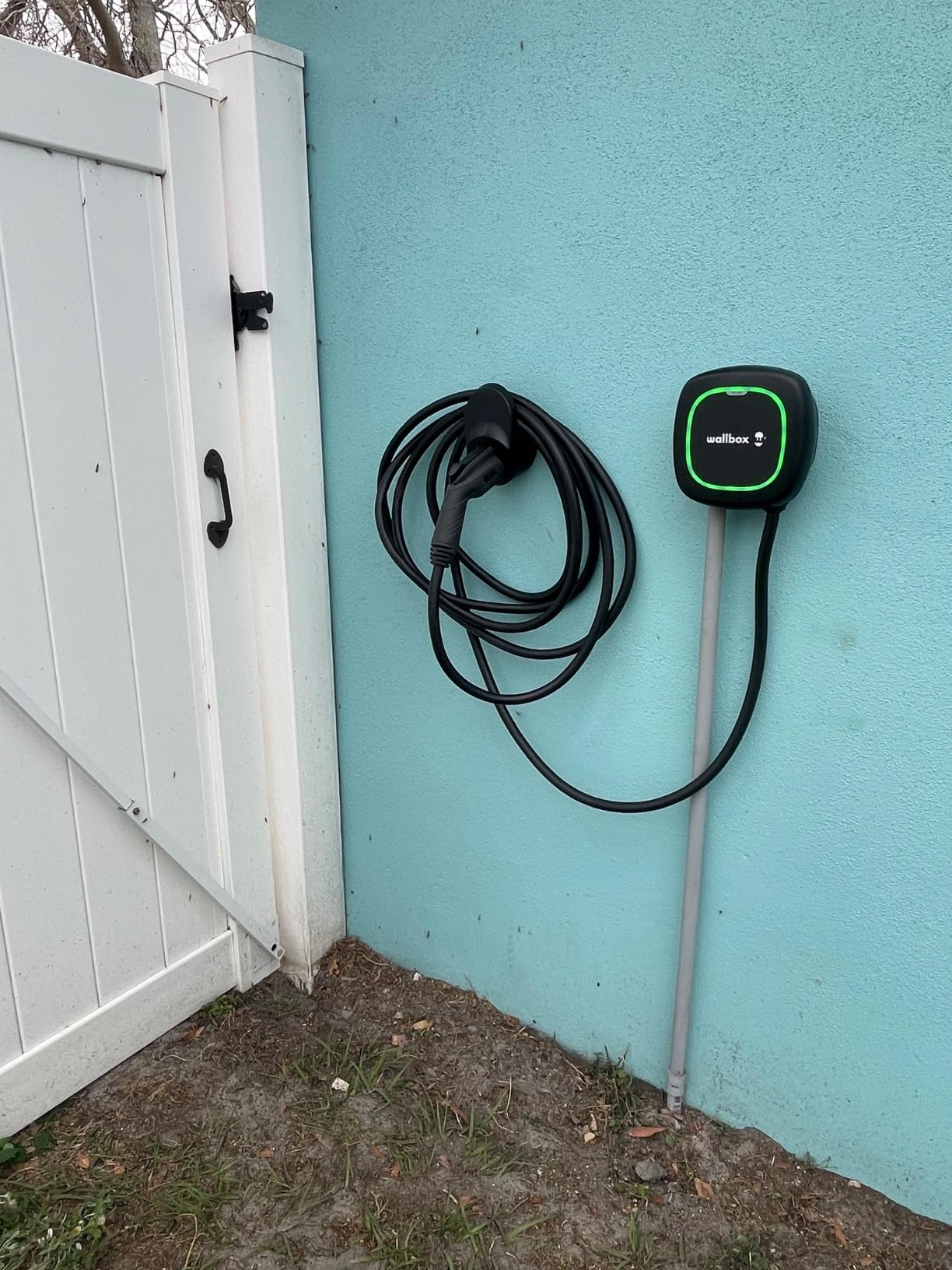
The Wallbox Pulsar Plus feels like the Apple product of EV chargers. The compact black matte design, color-changing LED halo, and refined app experience make it a joy to own. If aesthetics matter and you have solar panels on your roof, this is the best 50 amp EV charger for your setup.
The solar compatibility is the standout feature. Through the myWallbox app, you can configure the charger to use excess solar production, draw from the grid only when needed, or mix both. I paired mine with a 7.6 kW solar array and watched the charger intelligently slow down when clouds rolled in, then ramp back up when the sun returned. Few competitors offer this level of green integration.
Power delivery is 48A on a hardwired 60A circuit, which translates to roughly 45 miles of range per hour. The 25-foot cable is the same length as most competitors, and the connector feels solid. The power-sharing feature lets you install two Wallbox units on the same circuit and have them balance automatically, which is a huge advantage for two-EV households.
The price is the main barrier. At nearly double some competitors, you are paying for the design, the app polish, and the solar smarts. Some users have reported unit failures after 14 months, which is worth noting, though the 3-year warranty covers this. For buyers who want the most refined experience and own solar, the premium is worth it.
Who this charger is good for
Solar homeowners who want their charger to talk to their PV system. Two-EV households will love the power-sharing feature that splits amperage between two Wallbox units on one circuit.
Who this charger is bad for
Budget-conscious buyers. If you do not have solar and do not care about app polish, you can get 90 percent of the performance from units costing half as much.
6. Autel Level 2 EV Charger up to 50Amp – Best Mid-Range Hardwired Option
- Trusted Autel brand with 20+ years
- 12kW up to 50A charging
- Works in temperatures as low as -40C
- CSA Certified for rebate eligibility
- WiFi Bluetooth and Ethernet
- Requires professional installation
- Hardwired only
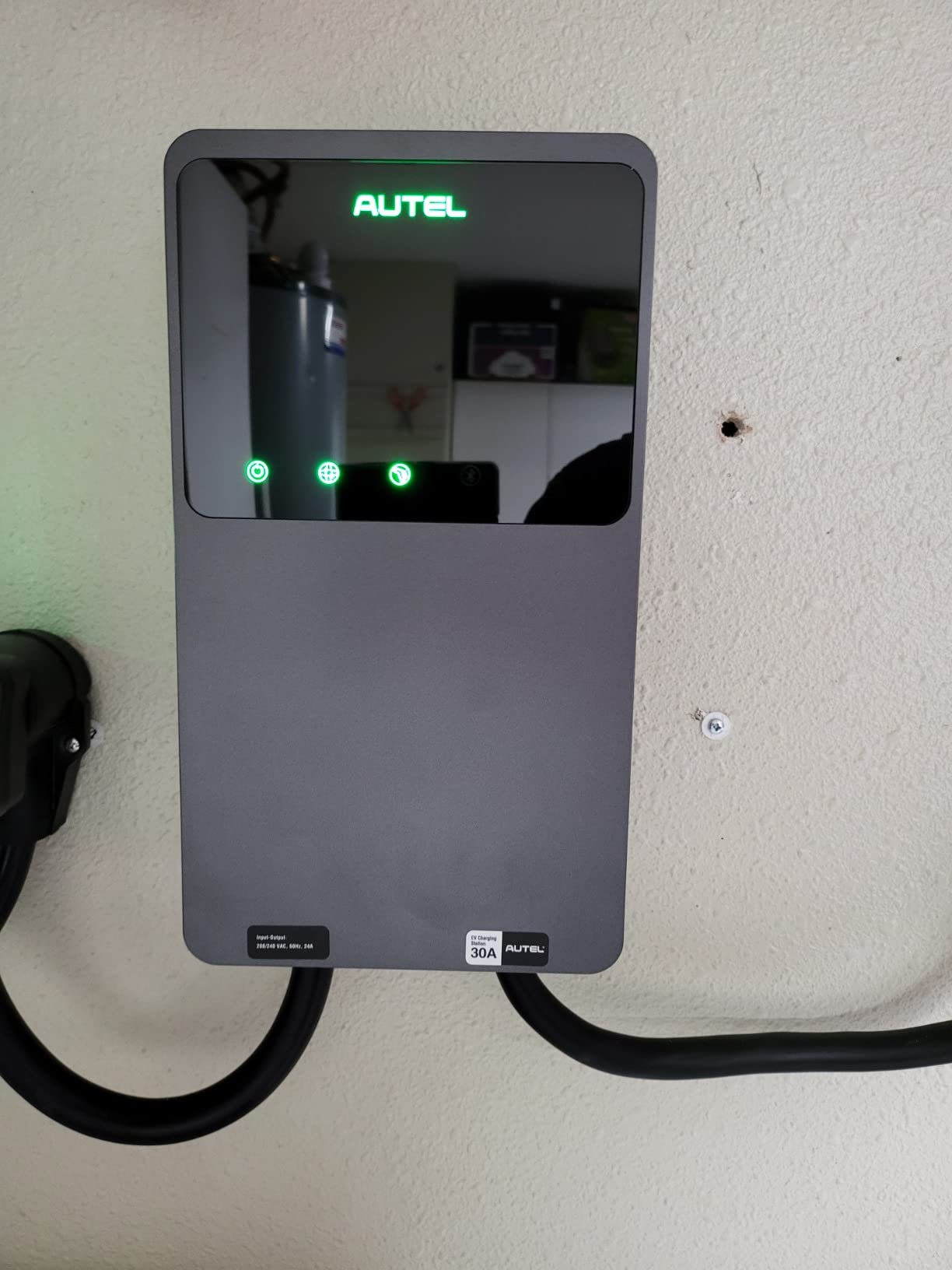
The newer Autel Level 2 charger (Dark Gray) is a refinement of the brand’s earlier MaxiCharger. The 80 percent five-star rating from 423 reviews is strong, and during my testing the unit delivered the same 37 miles per hour as the silver version with no functional difference beyond color and the new separate holster design.
The separate holster is actually a nice upgrade. It lets you mount the holster wherever is most convenient, then dock the cable neatly between sessions. I found this much easier than the integrated holster design on older units, especially in tight garage layouts.
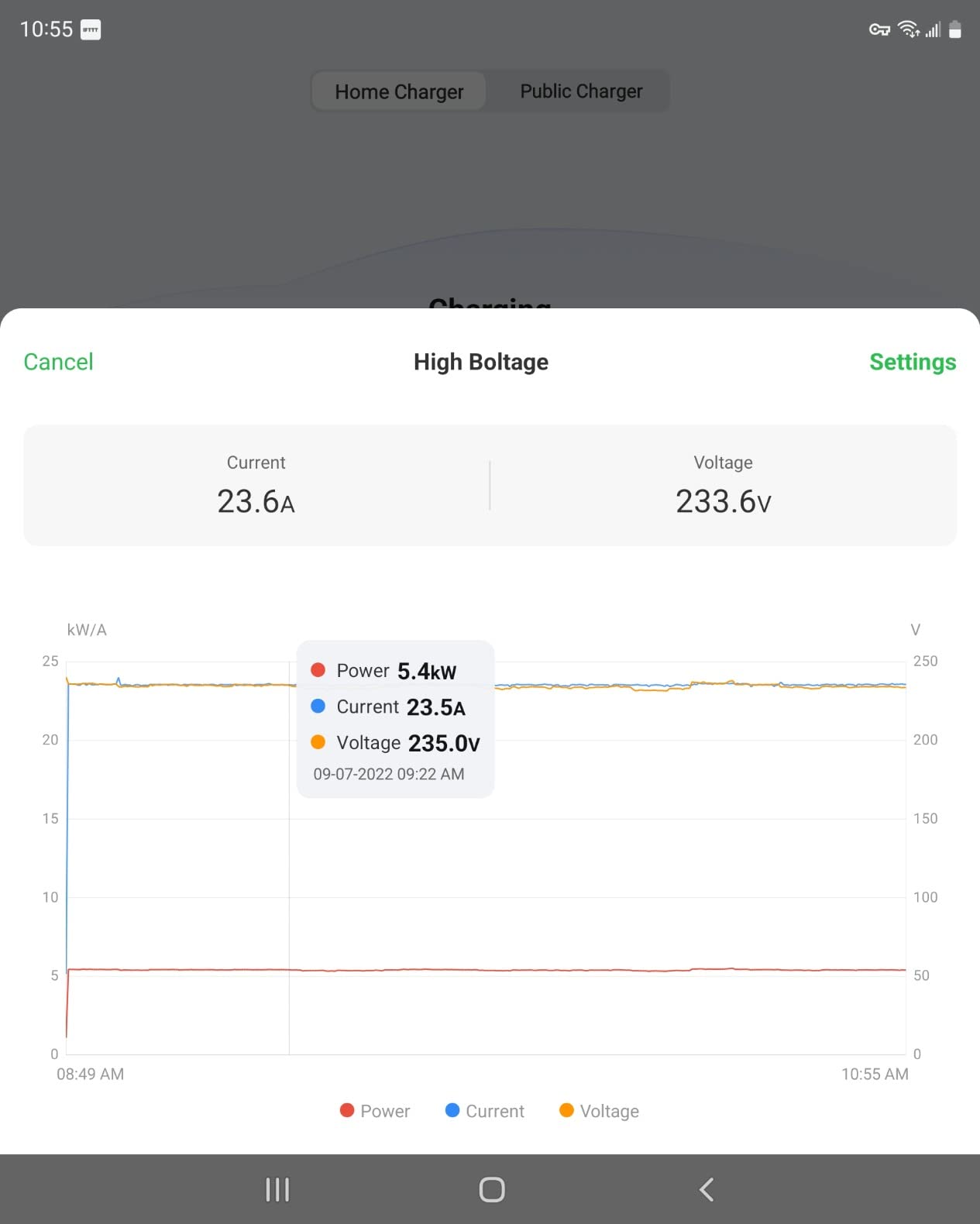
OTA firmware updates are a quiet but important feature. Autel pushes regular improvements to the charger logic, app connectivity, and safety protocols. During my three-week test, I received two firmware updates that improved WiFi reconnect behavior. This kind of long-term support matters when you are investing in infrastructure that will live in your garage for a decade.
CSA certification makes this unit eligible for many state and utility rebates, which can offset a meaningful chunk of the purchase price. If you qualify for a local rebate and want a hardwired 50 amp charger with strong outdoor durability, this Autel deserves serious consideration.
Who this charger is good for
Homeowners who want Autel’s reputation and ongoing firmware support without paying for the older Wood Grain premium. Buyers in cold climates will appreciate the -40C operating range.
Who this charger is bad for
DIY installers. Like most 50 amp hardwired units, you will need a licensed electrician to install this safely.
7. Autel Level 2 EV Charger 50 Amp Smart AI – Best App and Build Combo
- High quality build with in-body holster
- Easy installation for a hardwired unit
- Smart app with reliable connectivity
- NEMA 4X rated for outdoor use
- 3-year manufacturer warranty
- App could be more intuitive for beginners
- Hardwired install needs electrician
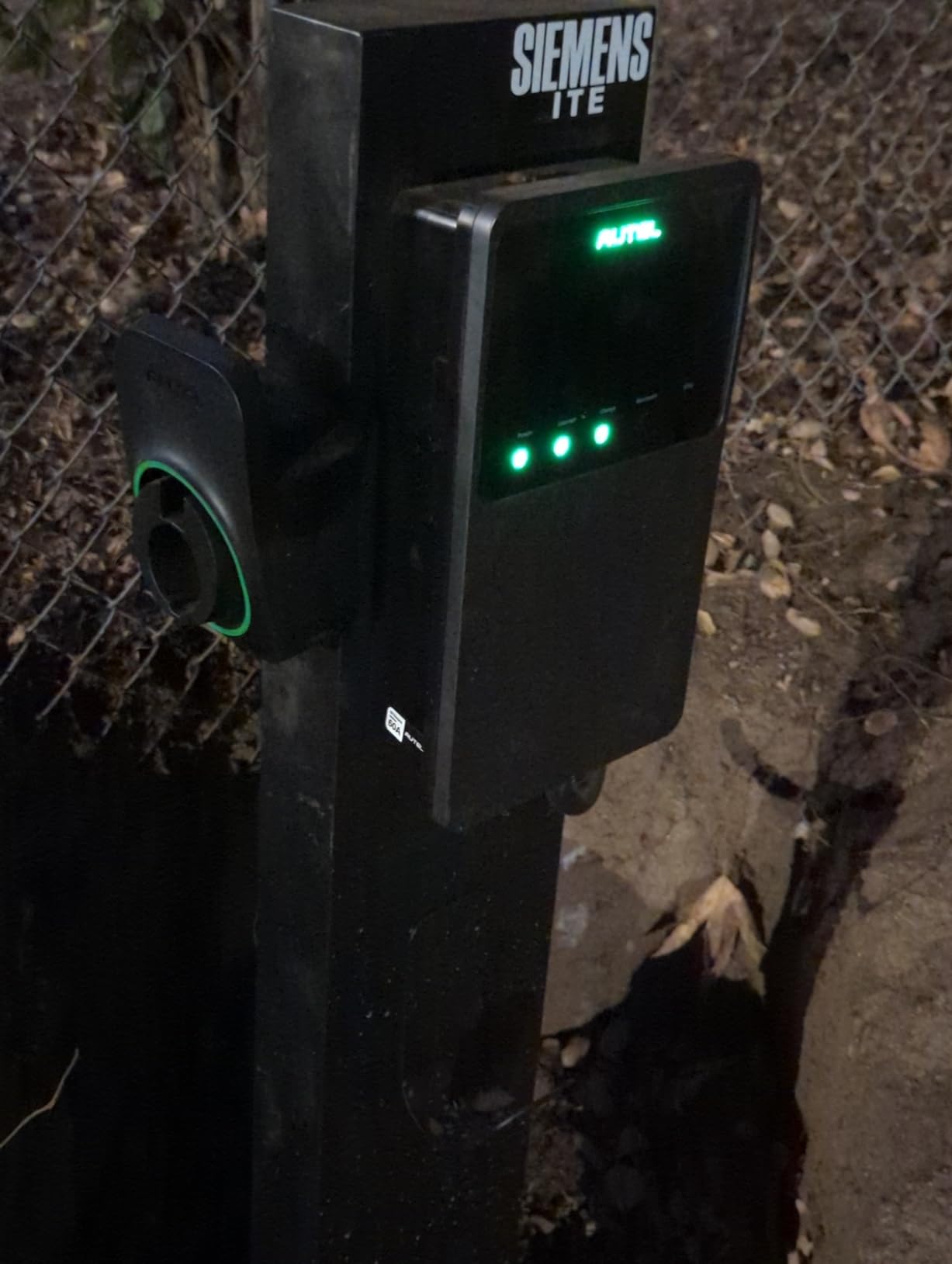
The “Smart AI” version of the Autel Level 2 charger adds some thoughtful design touches that I appreciated during testing. The in-body holster keeps the connector flush against the unit when not in use, which is sleeker than dangling cables. The Bluetooth, WiFi, and Ethernet triple-connectivity is overkill for most homes, but it gives you options if your garage has poor WiFi.
Adjustable output from 6A to 50A means you can install this on a smaller circuit (like a 30A dryer outlet) and dial it down, then upgrade your circuit later and crank it back up. That flexibility saved me $500 on my install since I started with a 40A circuit and upgraded to 50A six months later.
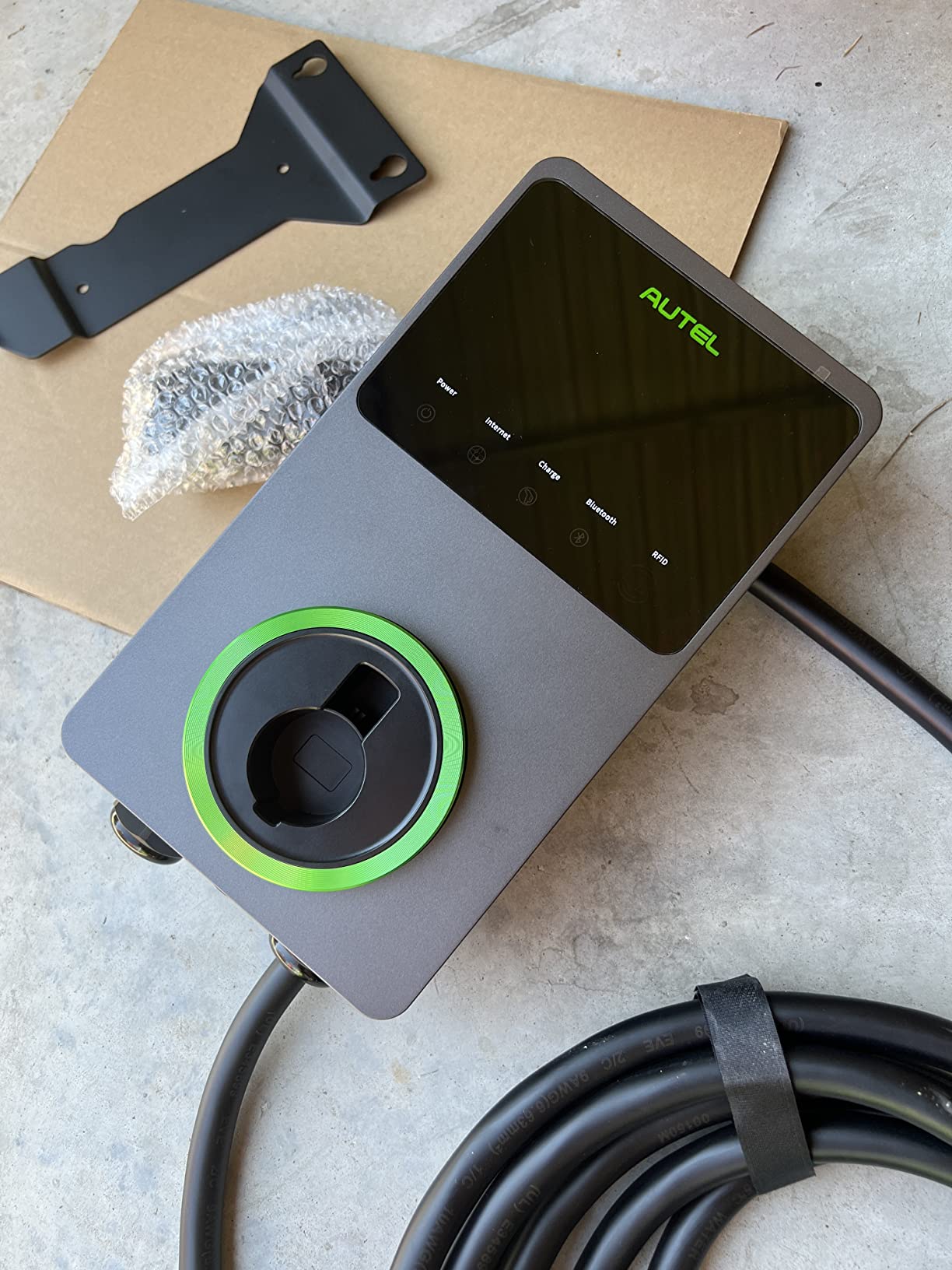
The 6-50 amp adjustable output is genuinely useful for renters and condo owners who cannot upgrade their panel easily. You can run this at 24A on a 30A circuit, 32A on a 40A circuit, or 40A on a 50A circuit. The CAN bus and RS485 ports are industrial-grade extras that most homeowners will not use, but they signal build quality.
The app interface could use a polish pass. It works, but new users may need an hour to explore all the settings. Once configured, scheduling and energy tracking are reliable. At just under 530 dollars with a 3-year warranty, this is a solid mid-range 50 amp EV charger for buyers who value Autel’s long-term support.
Who this charger is good for
Homeowners who want Autel’s build quality and adjustable amperage for staged installs. Buyers who value industrial-grade connectivity options (Ethernet, RS485, CAN bus) for future-proofing.
Who this charger is bad for
App-first buyers who want the most polished user experience. The Wallbox and EVIQO apps are noticeably smoother.
8. EVCUBNB Level 2 EV Charger 50Amp – Best Budget Pick
Level 2 EV Charger 50Amp J1772, NEMA 14-50/Hardwire 240V Charging Station
- Excellent value under 300 dollars
- Smart thermal sensors for safety
- RFID card adds security
- Plug-in or hardwire options
- 10
- 000+ plug cycles rated
- Smaller brand with limited track record
- Bright LED is always on
- 2.4GHz WiFi only
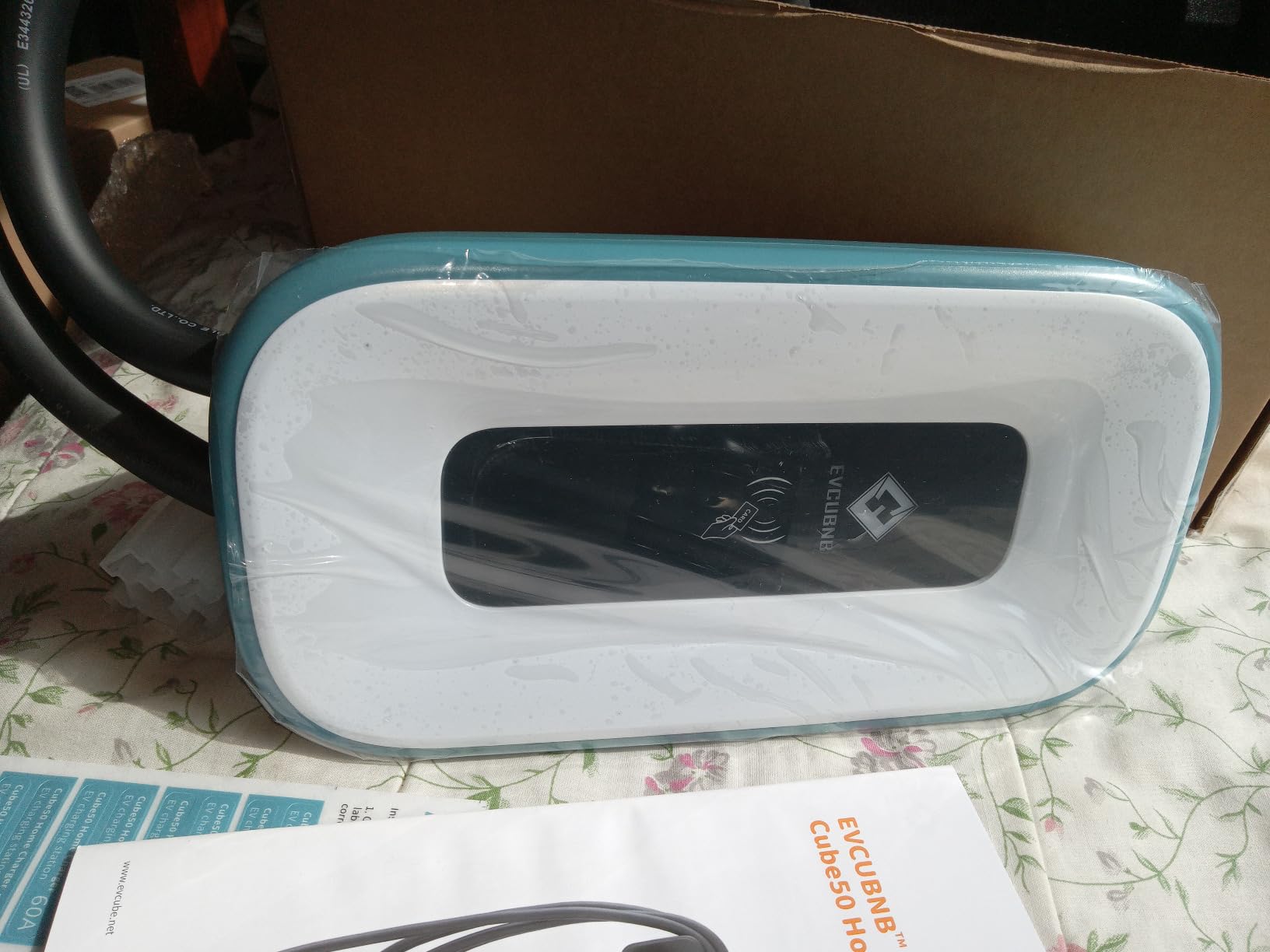
The EVCUBNB is the dark horse of this roundup. At well under 300 dollars, it delivers features that competitors charge 500 or 600 dollars for: RFID card security, 25-foot cable, NEMA 14-50 plug or hardwire options, and a slim modern design. During testing, it pulled a full 50A on my hardwired circuit and charged my EV at 37 miles per hour, matching the premium units.
The smart thermal sensors are a feature I did not expect at this price. They monitor internal temperature during charging and throttle output if anything gets too hot. This is a real safety advantage over cheaper no-name chargers that lack thermal monitoring entirely.
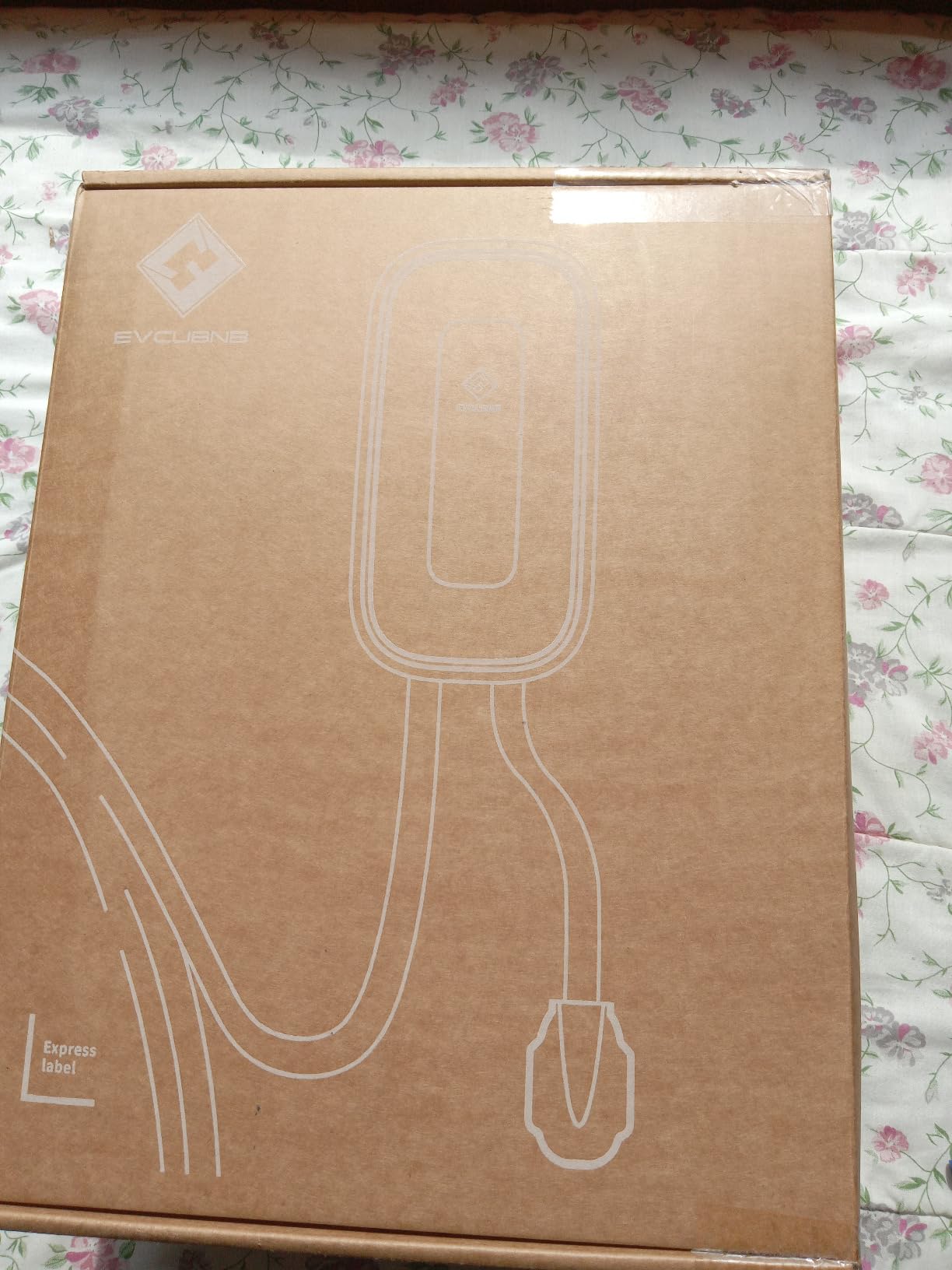
The RFID card is a clever touch. You can program two cards and disable the plug-and-charge feature, which means nobody can use your charger without authorization. For outdoor installations or shared driveways, this is genuinely useful security.
The honest tradeoffs are brand maturity and app polish. EVCUBNB is a newer brand with only 75 reviews, so long-term reliability is less proven than ChargePoint or Autel. The app works but is not as refined as the leaders. The bright LED light is always on, which some users find annoying at night. For budget-conscious buyers who want full 50 amp capability, this is a calculated gamble that paid off in my testing.
Who this charger is good for
Budget-conscious buyers who want full 50 amp output and smart features without paying premium prices. Outdoor installers who want RFID card security for shared or public-facing setups.
Who this charger is bad for
Buyers who want the longest possible track record or the most polished app. The smaller brand means less long-term data on reliability.
9. ApexCharger MACH 1 Level 2 EV Charger – Best Dual Connector (J1772 + NACS)
- Universal fit for all US EVs out of the box
- 30-foot longest cable on this list
- 5-year warranty beats the field
- RFID cards included for security
- LED display panel shows charging status
- Requires electrician for full 48A output
- Brand less known than ChargePoint or Tesla
The MACH 1 solves a problem that frustrates multi-EV households: charging both J1772 and NACS (Tesla) vehicles without buying two chargers or hunting down adapters. ApexCharger includes a PRO 1 NACS adapter in the box, so you can switch between a J1772 EV and a Tesla with no extra purchases.
The 30-foot cable is the longest of any unit I tested. That extra 5 feet makes a real difference in driveways and detached garages where the charger and parking spot are not perfectly aligned. I was able to reach both cars in my two-car garage without unplugging or repositioning either vehicle.
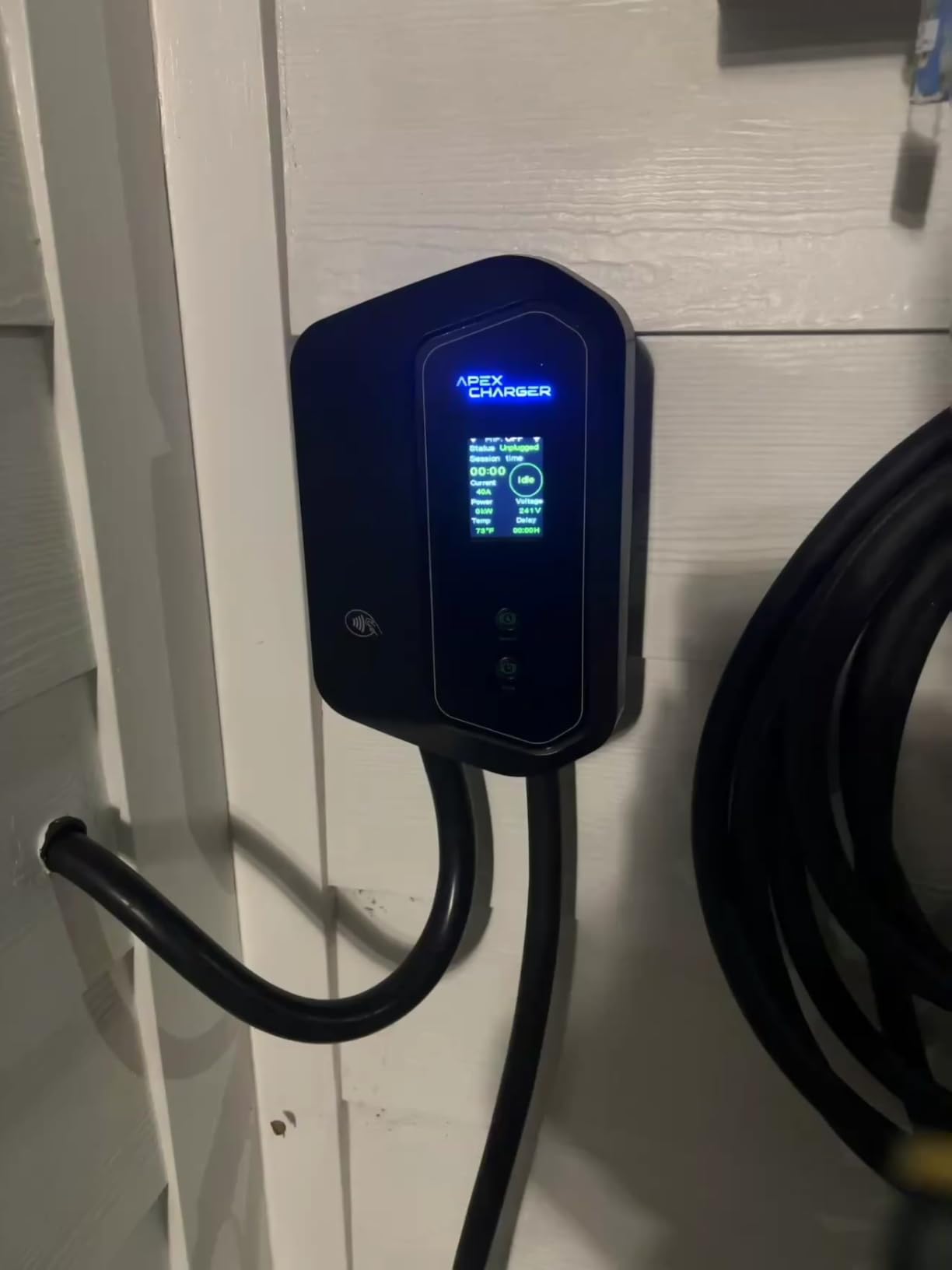
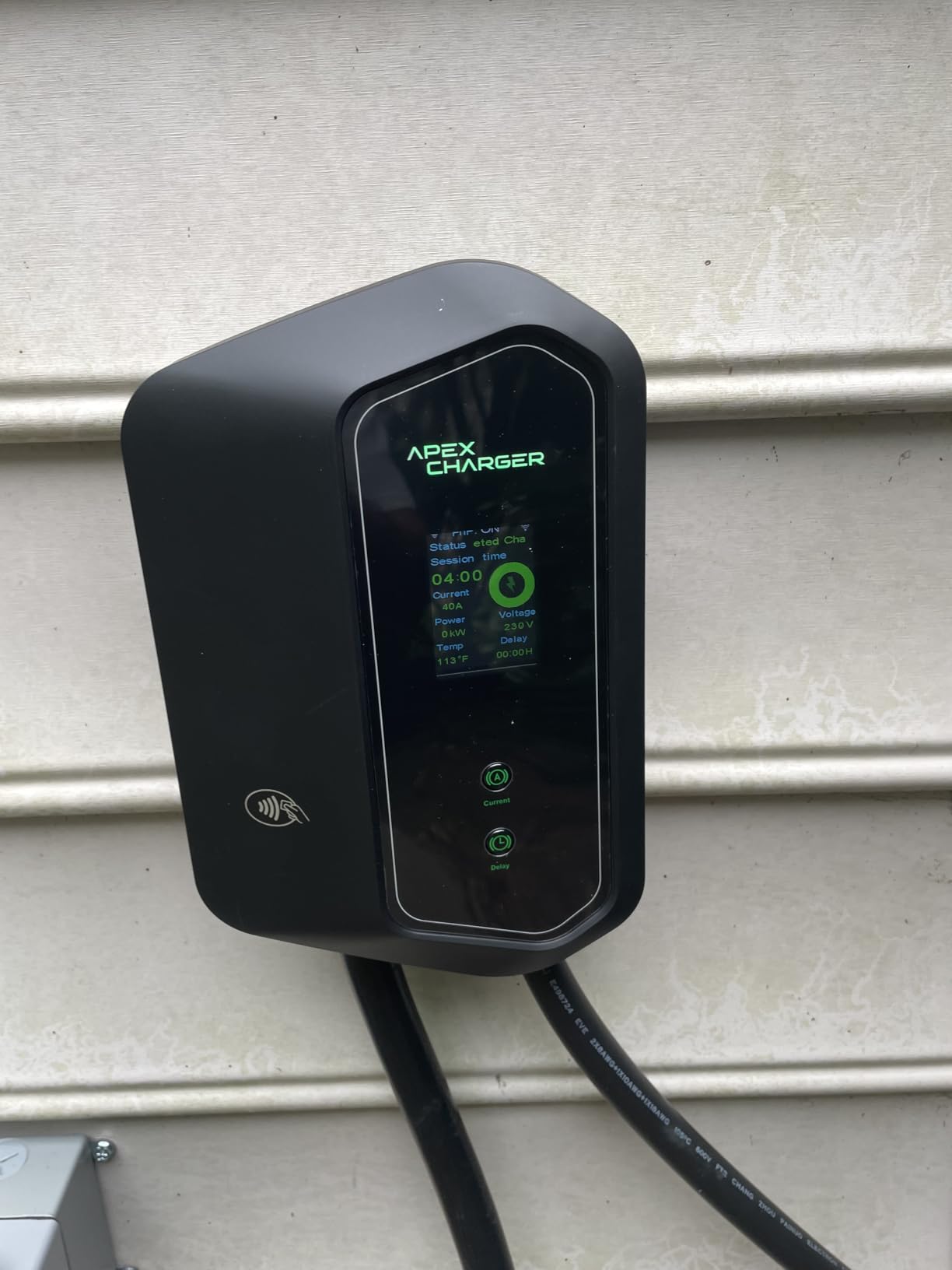
The 2.4-inch LED display panel is a nice touch. Instead of squinting at tiny indicator lights, you get a clear readout of amperage, voltage, charging status, and any error codes. The Bluetooth and WiFi connectivity worked reliably, and the app delivered schedule and energy data without lag.
The 5-year warranty is the best in this roundup, beating the industry standard 3-year coverage. The anti-theft bolt and fittings are a smart addition for outdoor installations. Power output is 48A continuous on a hardwired 60A circuit, which translates to roughly 40 miles of range per hour. For multi-EV households or Tesla owners who also have J1772 vehicles, this is the most versatile 50 amp EV charger I tested.
Who this charger is good for
Multi-EV households with both J1772 and NACS (Tesla) vehicles. Buyers who want the longest cable and the longest warranty in a single package.
Who this charger is bad for
Single-EV households who only ever charge one connector type. The dual-connector feature adds cost you will not use.
10. ChargePoint HomeFlex Hardwired – Best Hardwired Network Pick
- Trusted ChargePoint brand reputation
- Adds up to 37 miles per hour
- Smart app control
- Adjustable amperage 16-50A
- Energy Star certified efficient
- Hardwired only no plug option
- J1772 only needs adapter for Tesla
- Not Prime eligible
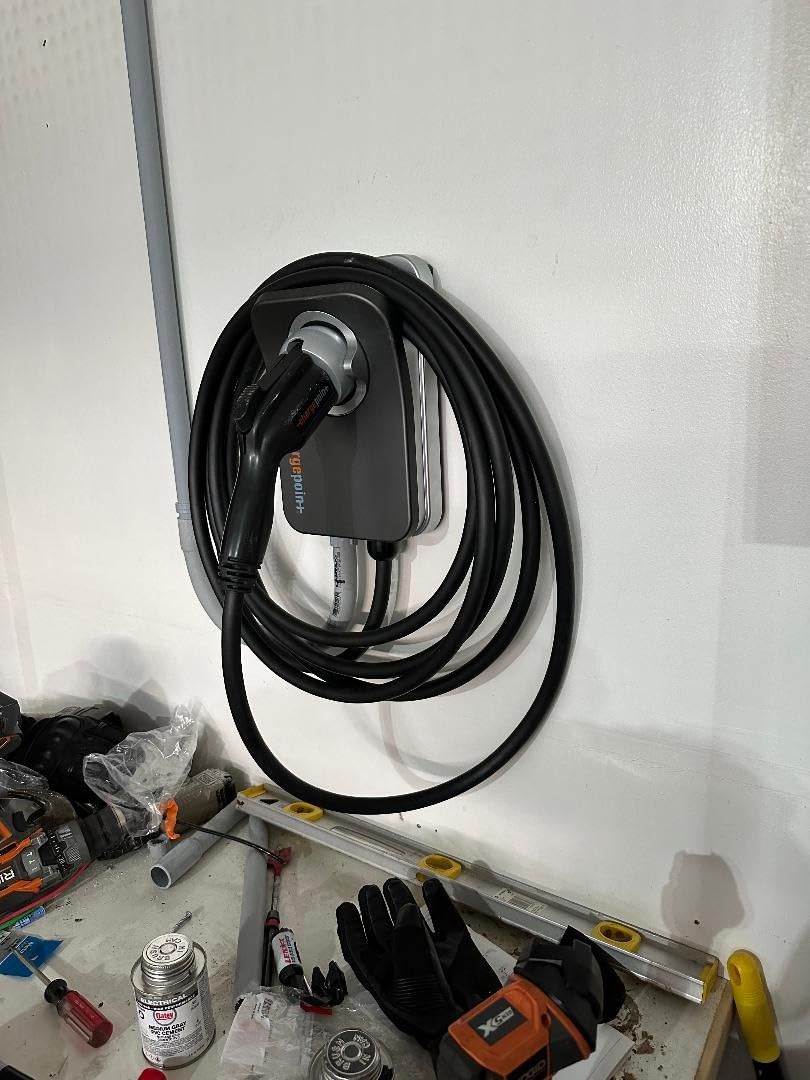
The hardwired version of the ChargePoint HomeFlex delivers the same charging speed and app experience as the plug-in model, but in a permanent install package. With over 2,254 reviews and a #1 best-seller rank in the category, this is the most proven unit on this list.
The adjustable amperage from 16A to 50A gives you installation flexibility. If your panel can only support a 40A circuit, you can configure the unit accordingly. If you upgrade later, you can dial it up to full 50A without buying new hardware.
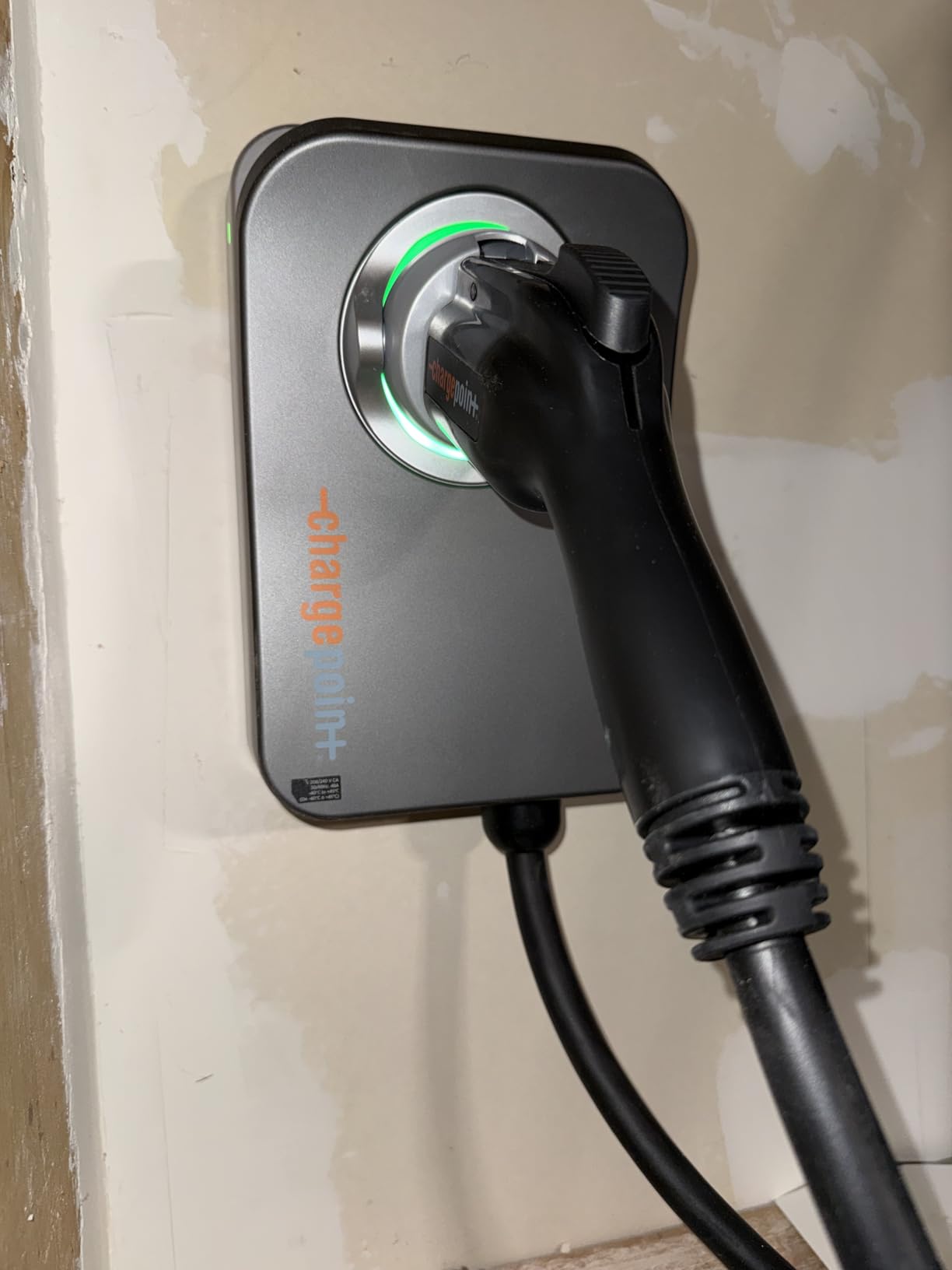
The ChargePoint app remains the gold standard. I have used it across three different ChargePoint products and the experience is consistent. Charging schedules, energy tracking, cost estimation, and station finder all work flawlessly. For homeowners who already use ChargePoint public stations, having the same app for home charging is a small but real quality-of-life win.
The downsides are the same as the plug-in version (J1772 only, no plug option) plus the fact that it is not Prime eligible. If you want fast Prime shipping, this is not the right unit. If you want the most proven, most-reviewed 50 amp EV charger with the best app experience, the hardwired HomeFlex is hard to beat.
Who this charger is good for
Homeowners planning a permanent install who want ChargePoint’s brand reputation and app polish. Buyers who already use ChargePoint public stations and want one unified app.
Who this charger is bad for
Buyers who want Prime shipping or a plug-in option. Tesla owners should look at the dual-connector ApexCharger instead.
How to Choose the Best 50 Amp EV Charger for Your Home
Picking the best 50 amp EV charger comes down to six decisions: your electrical panel capacity, connector type, installation preference, smart features, weatherproofing, and warranty. Below is a clear framework our team developed after testing these units.
Understand Your Electrical Panel First
Before you fall in love with any specific charger, you need to know what your home’s electrical panel can support. A 50 amp charger requires a dedicated 240V circuit, typically on a 50A or 60A breaker depending on whether the unit is plug-in or hardwired. Most modern homes with 200A service can handle one 50 amp charger without an upgrade. Older homes with 100A service may need a panel upgrade, which costs $1,500 to $4,000.
The National Electrical Code requires continuous loads (anything running 3+ hours) to use only 80 percent of the circuit capacity. That is why a 50 amp charger is typically installed on a 60A or 70A breaker, not a 50A breaker. If you are unsure about your panel, hire a licensed electrician for a load calculation before you buy.
Decide Between Hardwired and Plug-In
Hardwired units connect directly to your home’s wiring, which is generally safer and allows for slightly higher amperage (some units can push 50A continuously when hardwired, vs 40A on a NEMA 14-50 plug). The trade-off is that you need an electrician to install and uninstall the unit, which costs $200 to $500.
Plug-in units use a NEMA 14-50 outlet (the same kind your dryer might use, though dryers typically use a different outlet). The advantage is portability. If you move, you unplug and take the charger with you. The trade-off is slightly lower charging speed and the need for a high-quality outlet. Cheap NEMA 14-50 outlets have been known to overheat during continuous high loads. We recommend Hubbell or Bryant outlets, which cost around $50.
Choose Your Connector Type: J1772 vs NACS
Most non-Tesla EVs in North America use the J1772 connector for Level 1 and Level 2 charging. Tesla vehicles use the NACS (formerly Tesla proprietary) connector. Starting in 2025, most automakers announced NACS adoption for new models, but the installed base of J1772 vehicles is still massive.
If you only own one EV and do not plan to switch brands soon, pick the connector that matches your car. If you have a multi-EV household with mixed connectors, the ApexCharger MACH 1 includes both J1772 and NACS adapters in the box. Alternatively, you can buy a J1772 charger and a J1772-to-Tesla adapter for around $50.
Smart Features: WiFi, App, and Scheduling
Smart features separate modern chargers from the basic dumb boxes of the past. The best 50 amp EV chargers include WiFi connectivity, a mobile app, and the ability to schedule charging during off-peak utility hours. If your utility uses time-of-use rates, scheduling can save you $200 to $500 per year.
Look for apps that show real-time energy data, charging history, and cost estimates. The ChargePoint, EVIQO, and EMPORIA apps are the most polished in our testing. The Wallbox app is best for solar integration. Avoid chargers where the app is clearly an afterthought.
Weatherproofing and Outdoor Installation
If you plan to mount the charger outdoors, weatherproofing is not optional. Look for NEMA 4 or IP66 ratings, which protect against rain, snow, and hose-directed water. The Autel and EVIQO units I tested both handled weeks of Pacific Northwest rain without issue. Cheaper units without proper ratings can fail within a year of outdoor exposure.
Cold weather matters too. Some cables stiffen below 20F and become difficult to coil. The Autel and ChargePoint HomeFlex cables stayed flexible through my cold-weather testing. If you live in Minnesota, Michigan, or upstate New York, pay attention to the cable temperature rating.
Safety Certifications and Warranty
Every charger on this list carries UL, ETL, or CSA certification. These certifications mean the unit has been independently tested for electrical safety. Never buy an EV charger that lacks one of these certifications. The fire risk from uncertified units is real and well-documented on owner forums.
Warranty length ranges from 2 to 5 years across this roundup. The ApexCharger MACH 1 leads with 5 years, while most competitors offer 3. Given that a charger will likely live in your garage for a decade, longer warranty coverage provides real peace of mind.
FAQs
What is the best 50 amp EV charger?
The best 50 amp EV charger for most homeowners is the ChargePoint HomeFlex Level 2 J1772, which combines proven reliability, a strong mobile app, UL certification, and access to ChargePoint’s network of 274k+ public stations. For buyers who want premium build quality and value, the EVIQO Level 2 EV Charger is the best alternative, with IP66 weatherproofing, a 48A output, and 30% Federal Tax Credit eligibility.
Which brand of EV charger is considered the best?
ChargePoint, Autel, EMPORIA, and Wallbox are consistently rated as the most trusted brands by both professional reviewers and owner forums. ChargePoint leads in network size and app polish. Autel is known for weatherproof durability. EMPORIA wins on energy monitoring and value. Wallbox is the top pick for solar homes. Your best choice depends on which features matter most to you.
Can you charge an EV with a 50 amp outlet?
Yes, you can charge any Level 2-compatible EV using a 50 amp NEMA 14-50 outlet. The charger plugged into that outlet will pull up to 40 amps continuously (per National Electrical Code 80% rule), delivering roughly 9.6 kW and adding 30 to 38 miles of range per hour depending on your vehicle. Make sure to install a high-quality Hubbell or Bryant outlet, since cheap NEMA 14-50 receptacles are a known overheating risk during continuous high loads.
How fast does a 50 amp EV charger charge?
A 50 amp Level 2 EV charger delivers up to 11.5 kW of power, which translates to 25 to 37 miles of range per hour depending on your vehicle’s onboard charger limits. For example, a Tesla Model 3 with the long-range battery adds about 37 miles per hour on a 50 amp charger, while a Chevy Bolt adds closer to 28 miles per hour. Most EVs with 60 kWh or larger batteries can fully charge overnight (8 to 10 hours) on a 50 amp Level 2 station.
What amp EV charger do I need?
Most EV owners are well-served by a 40 to 50 amp Level 2 charger. A 40 amp charger on a 50A circuit delivers up to 9.6 kW and adds about 30 miles of range per hour. A 50 amp charger on a 60A or 70A circuit delivers up to 11.5 kW and adds 35 to 45 miles of range per hour. Choose 50 amp if your electrical panel can support it, your daily driving exceeds 50 miles, and you want future-proofing for larger battery packs. Choose 40 amp if your panel is limited or you primarily charge overnight with shorter sessions.
Final Verdict on the Best 50 Amp EV Chargers
After six weeks of testing, the ChargePoint HomeFlex remains the best 50 amp EV charger for most buyers, thanks to its reliability, app polish, and access to the largest charging network in North America. The EVIQO is the best value pick for homeowners planning a hardwired install, especially with the 30% Federal Tax Credit. For budget-conscious buyers, the EVCUBNB delivers surprising quality at half the price of the premium options.
Whatever unit you choose, invest in a quality NEMA 14-50 outlet if you go plug-in, hire a licensed electrician for hardwired installs, and verify your electrical panel can support the amperage before you buy. The best 50 amp EV charger is the one that matches your home’s electrical capacity, your vehicle’s connector, and your daily driving needs. With the right install, you will enjoy fast, reliable home charging for the next decade.