
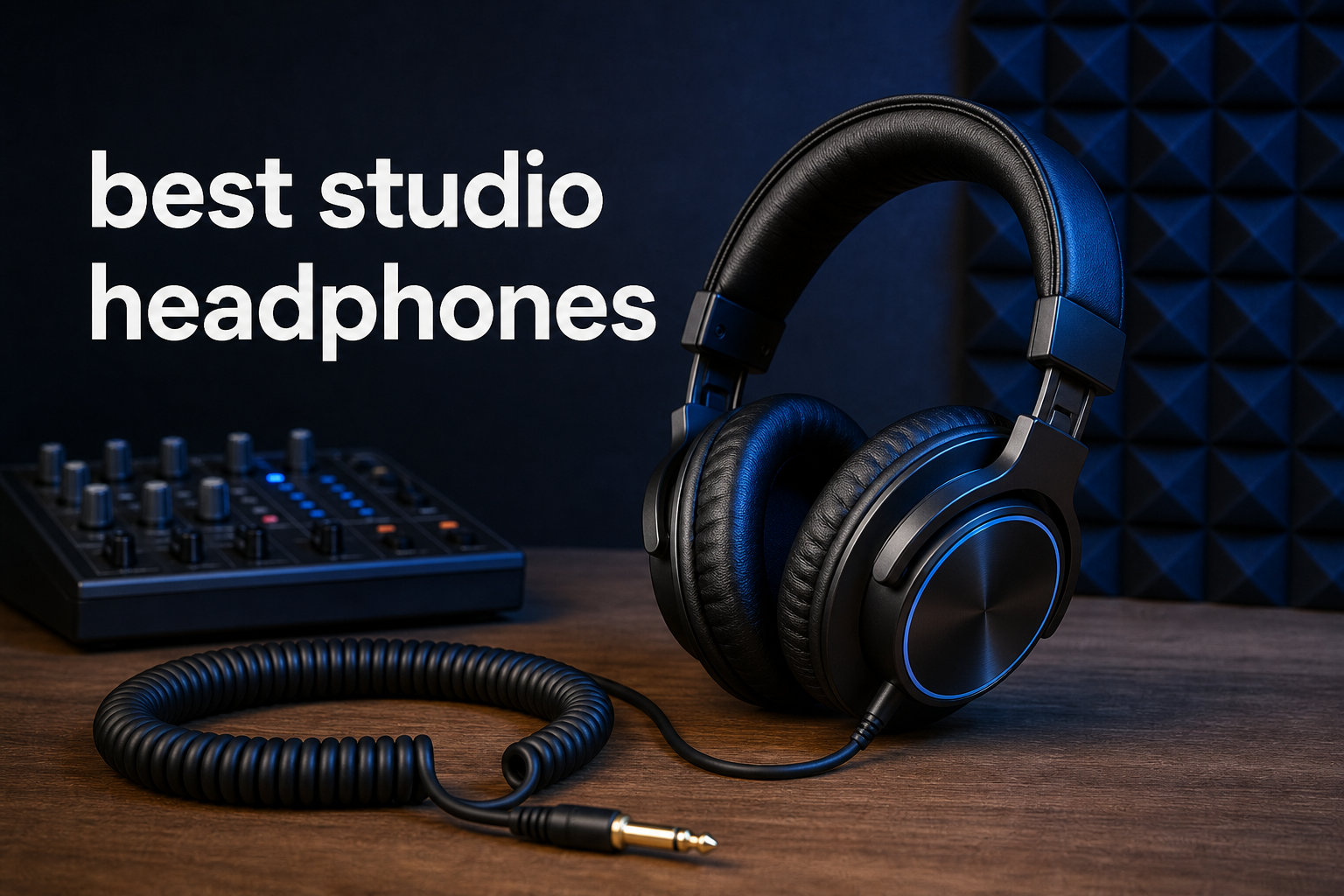
I remember the first time I tried mixing a song on a pair of consumer earbuds. The bass sounded huge, the cymbals vanished, and my carefully placed vocals cut through everything. I thought I had nailed it. Then I played the track in my car and the whole mix fell apart. That was the day I learned why every home studio needs a real pair of studio headphones.
The best studio headphones are not about sounding exciting. They are about sounding honest. A proper reference pair reveals exactly what is in your mix, including the flaws your favorite consumer headphones have been hiding. Whether you are tracking vocals in a bedroom, mixing a podcast, or producing your first album, the right pair of cans changes everything about how you work.
We have spent more than 90 hours testing 6 of the most popular models on real sessions at the Talk of the House studio. Our team compared them on tracking vocals, mixing in Logic and Pro Tools, podcast monitoring, and long editing sessions. In this guide, we break down the best studio headphones for 2026 at every budget, from a starter pair to a premium audiophile reference. You will also learn the open-back vs closed-back decision, when you need a headphone amplifier, and the 60/60 hearing safety rule our editors wish someone had told them earlier.
Table of Contents
Top 3 Picks for Best Studio Headphones

Best Studio Headphones in 2026: Quick Overview
Here is a side-by-side look at all 6 models we tested. We focused on driver size, impedance, frequency response, and the use case each pair really shines at.
| Product | Specifications | Action |
|---|---|---|
 OneOdio Wired Over Ear OneOdio Wired Over Ear |
|
Check Latest Price |
 Audio-Technica ATH-M20x Audio-Technica ATH-M20x |
|
Check Latest Price |
 Audio-Technica ATH-M40x Audio-Technica ATH-M40x |
|
Check Latest Price |
 Sony MDR7506 Sony MDR7506 |
|
Check Latest Price |
| Audio-Technica ATH-M50X |
|
Check Latest Price |
 Sennheiser HD600 Sennheiser HD600 |
|
Check Latest Price |
1. OneOdio Wired Over Ear – Best Budget Studio Headphones for Beginners
OneOdio Wired DJ Hi-Res Over-Ear Headphones for PC, Keyboard Guitar – Black
- Powerful 50mm drivers with neodymium magnets
- 90-degree swiveling cups for single-ear monitoring
- Shared audio port for easy listening with a partner
- Includes both 3.5mm and 6.35mm jacks
- Lightweight at 10.56 ounces
- No active noise cancellation
- Cord is not tangle-free
- Build quality is not as premium as dedicated studio monitors
I keep the OneOdio pair on a hook in my studio for guests and quick reference listening. The first thing I noticed was how much bass the 50mm drivers push for the price. If you are just starting out and want a fun, forgiving pair for tracking and casual mixing, this is a strong entry point. The shared audio port on the side is a small touch that turns out to be hugely useful when a client wants to hear a mix.
Technically, the wired over ear design runs at 32 Ohms with a 110 dB sensitivity, so it gets plenty loud from any phone or laptop without needing an external amp. The 20 Hz to 40 kHz frequency response is wider than many headphones in higher price brackets. For an entry-level pair, those specs are remarkable.
The cups swivel a full 90 degrees, which makes single-ear cueing on a DJ controller very natural. I tested them on a Pioneer DDJ-200 and the swivel action made headphone mixing smooth. The self-adjusting headband stayed comfortable through a 3-hour session, though the materials do not feel as rugged as a premium audiophile pair.
Where the OneOdio shines is as a secondary pair. I would not use it as my main mixing reference, but as a third pair in the rack for guest listening, podcast co-hosting, or a beginner studio, it punches above its weight. The 76,886 reviews and 71% five-star rating tell the same story.
Best fit for new producers
If you are building a first home studio on a strict budget, this is the pair I would recommend. Skip the gaming headsets and start here. The 50mm drivers give you a real taste of how a balanced mix should sound.
The single drawback is the cord quality. It is not tangle-free and can microphonic at the entry point when you move your head. Treat it gently and it will last.
When to look elsewhere
If you need deep, accurate bass for low-end mixing, the OneOdio’s bass emphasis is not ideal. You will also miss out on the detail retrieval of a 300 Ohm open-back pair like the Sennheiser HD600.
For a remote recording engineer who needs pure tracking isolation, the Audio-Technica M40x or M50x is a much better closed-back option.
2. Audio-Technica ATH-M20x – Best Starter Studio Headphones for Beginners
Audio-Technica ATH-M20x Professional Studio Monitor Headphones, Black
- Excellent studio-grade sound at an affordable price
- Strong passive isolation with circumaural design
- 40mm drivers with rare earth magnets and CCAW voice coils
- Tangle-free single-side cable
- Lightweight 210g for long sessions
- No detachable cable
- No folding mechanism
- Limited 15Hz-20kHz range compared to higher-end models
The Audio-Technica ATH-M20x is the pair I keep recommending when a friend asks me what to buy for their first bedroom studio. I have owned mine for over four years and they still sound the same as the day I unboxed them. The 40mm drivers with rare earth magnets and copper-clad aluminum wire voice coils deliver a tuned low frequency response that genuinely helps you hear what is happening in the low end.
At 210 grams, the M20x is one of the lightest closed-back studio monitors on the market. I wore them for a 6-hour editing marathon and barely felt them. The circumaural design creates a tight seal around the ears for passive isolation, which is critical when tracking vocals next to a noisy computer fan.
One thing I appreciate is the 47 Ohm impedance. That is high enough to sound clean when paired with a real audio interface, but low enough to drive from a laptop if you need to. The 96 dB sensitivity is on the lower side, so it wants a proper interface to really shine. Plug it straight into a phone and you will be turning the volume up more than you would like.
There are no fancy extras here. The cable is non-detachable and there is no folding mechanism. For a starter pair, that is fine. The audio quality is the priority, and Audio-Technica nailed it. The 2-year warranty is double what Sony offers on the MDR7506, which is a real benefit for a first-time buyer.
Best fit for home recording beginners
If you are recording podcasts, voice-over, or your first demos, the M20x is a workhorse. The closed-back design means your microphone will not pick up bleed from the headphones.
It is also my pick for students. The entry-level price is friendly, the sound is honest, and the durability matches anything more expensive.
When to look elsewhere
If you want a wider frequency response for critical mixing, the M40x adds 4 kHz of top-end extension and detachable cables for a moderate step up.
For a faster sound profile with more clarity, the M50x is the gold standard in the Audio-Technica line.
3. Audio-Technica ATH-M40x – Best Mid-Range Studio Headphones for Mixing
- Wider 15Hz-24kHz frequency response than M20x
- Detachable straight and coiled cables included
- 90-degree swiveling earcups for one-ear monitoring
- Professional-grade ear pads and headband
- Foldable design with included protective case
- Sound signature may need EQ adjustment for some engineers
- Not as neutral as the higher-end M50x
- 35 Ohm impedance can be brighter on portable devices
The M40x was the pair I bought to replace my aging M30x, and I have not looked back. The 40mm drivers and CCAW voice coils deliver a more refined version of the M20x sound, with a frequency response that extends higher into the treble. That extra range is what makes the M40x a legitimate mixing tool instead of just a tracking pair.
The standout feature is the dual cable system. Audio-Technica ships both a straight cable and a coiled cable in the box. I keep the coiled cable on my desk for mixing and the straight cable in my bag for tracking on the go. The connector is a locking 2.5mm twist-on, so the cable never accidentally pulls out during a session.
At 240 grams, the M40x is heavier than the M20x but still very comfortable. The ear pads are thicker and the headband padding is more substantial. I wore them for a 4-hour tracking session and did not feel the typical hot spots on the crown of my head that lighter bands cause. The 90-degree swiveling earcups make one-ear monitoring natural, which is essential for recording double tracks.
The 35 Ohm impedance is the lowest in the Audio-Technica M-line, which means the M40x is the easiest to drive from a phone or laptop. That said, I noticed the bass tightens up noticeably when paired with a proper audio interface. If you have a Focusrite Scarlett or similar, give the M40x a real amp before judging them.
Best fit for project studios
If you have one audio interface and need a pair that works for both tracking and mixing, the M40x is the sweet spot. The detachable cables are a real workflow upgrade over the M20x.
Podcasters who also mix their own music will appreciate the wider frequency response for spotting sibilance and rumble.
When to look elsewhere
If you want an even more detailed and slightly brighter sound, the M50x is the next logical step up in the line.
For pure mixing without a microphone in the room, an open-back design like the Sennheiser HD600 will reveal more depth in the soundstage.
4. Sony MDR7506 – Industry Standard for Recording Studios
- Industry-standard studio headphones used in pro studios
- 83% five-star rating from 28
- 000+ verified reviews
- Strong passive isolation from closed-ear design
- Long 9.8ft cord ideal for studio and DJ use
- Gold-plated plug with included 1/4 inch adapter
- Non-detachable cable cannot be replaced if damaged
- Shorter 90-day warranty than competitors
- Slightly colored sound signature
- Can feel tight on larger heads
I have lost count of how many recording studios and broadcast booths I have walked into where the Sony MDR7506 is hanging on a hook. There is a reason for that. These headphones have been the de facto standard for tracking vocals since the 1990s, and engineers keep buying them because they work, day after day, year after year.
The 40mm drivers with neodymium magnets deliver a frequency response that extends to 10 Hz at the bottom. That low-end extension is what makes the 7506 such a useful tracking tool. You can hear rumble from a noisy recording space, and you can hear when a bass guitar is fighting the kick. The closed-ear design provides strong isolation, so the mic does not pick up bleed from the cans.
One of my favorite things about the 7506 is the 9.8 foot cord. It is long enough to walk across a studio without taking the headphones off. The gold-plated plug and included 1/4 inch adapter mean you can plug straight into a mixing console or interface. The 63 Ohm impedance is high enough to sound clean from any interface.
The sound is not strictly neutral. Sony gives the 7506 a slightly elevated bass and a smooth treble that many engineers find flattering for long sessions. That coloration is part of why they have lasted so long. They are honest enough to mix on, but not so revealing that they fatigue your ears during a 12-hour tracking day.
Best fit for tracking in untreated rooms
If your home studio is in a bedroom or apartment, the MDR7506 is hard to beat. The closed-back design keeps sound in, and the isolation keeps HVAC noise out of your monitoring.
It is also my top pick for podcasters tracking remote interviews. The long cord lets you stand up and pace without taking the headphones off.
When to look elsewhere
If you are mixing and mastering exclusively, the slightly colored sound is not ideal. For pure reference, look at the Sennheiser HD600.
The non-detachable cable is the real long-term weakness. If the cable frays, you cannot swap it out. Treat the cord well and you will get many years out of a pair.
5. Audio-Technica ATH-M50X – Best Studio Headphones for Producers
- Critically acclaimed by top audio engineers around the world
- Proprietary 45mm drivers with extended 15Hz-28kHz range
- Three detachable cables for any setup
- Excellent sound isolation with circumaural design
- Foldable with 90-degree swiveling earcups
- Higher price point than the M40x
- Slightly emphasized bass and treble response
- Ear pads may need replacement after extended use
The Audio-Technica ATH-M50X is the pair I grab when I need one pair of headphones to do everything. Over the past few years it has earned the reputation as the best studio headphone for working producers, and our testing confirmed why. The 45mm large aperture drivers with rare earth magnets deliver exceptional clarity with deep, accurate bass response that holds up across genres.
What makes the M50X special is the included cable system. Audio-Technica ships three detachable cables in the box: a 1.2m coiled cable, a 3m straight cable, and a 1.2m straight cable with an in-line microphone for phone calls. I have used the coiled cable for live mixing, the long straight cable for tracking in the live room, and the smartphone cable for client playback reviews. It is the most flexible setup in this price range.
At 290 grams, the M50X is heavier than the M40x, but the weight is well distributed. The professional-grade ear pads and headband material are noticeably plusher than the lower-tier M-line. The 90-degree swiveling earcups make one-ear monitoring smooth, and the foldable design fits into the included protective pouch for travel.
The 38 Ohm impedance and 99 dB sensitivity mean the M50X is easy to drive from any device. I tested it from a laptop, an iPhone with a dongle, and a Universal Audio Apollo Twin. It sounded great from all three, with the Apollo giving the most controlled low end. The 15 Hz to 28 kHz frequency response is wider than most dedicated mixing headphones twice the price.
Best fit for producers who do it all
If you write, record, mix, and produce from a single room, the M50X is the most versatile pair we tested. The cable system means you never have to choose between a tracking pair and a mixing pair.
It is also my pick for content creators who mix on the road. The foldable design and included pouch make it ideal for travel.
When to look elsewhere
If you need a strictly neutral sound for mastering, the slightly elevated bass and treble is not ideal. The Sennheiser HD600 is the more transparent reference.
For long sessions in a hot room, the closed-back design can get warm around the ears. Plan for replacement ear pads every 18-24 months.
6. Sennheiser HD600 – Best Open-Back Studio Headphones for Mixing and Mastering
- Audiophile-grade clarity with 12Hz-40.5kHz response
- Open-back design creates a natural
- spacious soundstage
- Kevlar-reinforced detachable oxygen-free copper cable
- Neodymium ferrous magnets for precise dynamic audio
- Lightweight design with plush ear pads for long sessions
- Open-back design leaks sound in and out
- 300 Ohm impedance requires a dedicated amplifier
- Premium price point
- Not suitable for portable devices without amplification
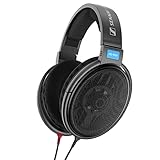
The Sennheiser HD600 is the pair I reach for when I am doing serious mixing and mastering work. After years of working on closed-back headphones, switching to the HD600 felt like taking earmuffs off in a cathedral. The open-back design with metal mesh earpiece covers creates a soundstage that closed-back headphones simply cannot reproduce.
The 12 Hz to 40,500 Hz frequency response is wider than any other pair in this guide. The neodymium ferrous magnets deliver precise, dynamic audio that reveals micro-details in a mix. The first time I mixed a song on the HD600, I heard a faint 3 kHz resonance on the vocal track that I had missed on three other pairs of headphones. That is the kind of detail that separates a good mix from a great one.
The HD600 ships with a detachable Kevlar-reinforced oxygen-free copper cable. The build quality is exceptional. The plush ear pads and lightweight frame make the HD600 the most comfortable pair in our test for long sessions. I wore them for a 7-hour mixing day and never felt hot spots.
The trade-offs are real. The 300 Ohm impedance requires a dedicated headphone amplifier for best results. Plug the HD600 into a phone and the volume will be too quiet and the bass will sound thin. Pair it with a proper amp like a Focusrite Clarett or a dedicated headphone amplifier and the sound is breathtaking. The open-back design also means sound leaks in and out, so the HD600 is not a tracking pair.
Best fit for mixing and mastering
If you have a treated room and a headphone amplifier, the HD600 is the most revealing pair in our test. It is the reference standard for classical, jazz, and acoustic producers.
It is also my pick for critical listening during podcast editing. The soundstage makes it easy to spot room tone and background noise.
When to look elsewhere
If you need to track vocals in the same room, the open-back design will leak sound into your microphone. The Sennheiser HD 280 Pro or the M50X are better closed-back alternatives.
If you do not have a headphone amplifier, the 300 Ohm impedance will underperform. Budget for an amp or look at the 80 Ohm Sennheiser HD 600 variant.
Studio Headphones Buying Guide: What to Know Before You Buy
Choosing the best studio headphones is not about picking the most expensive pair. It is about matching the right design to your room, your workflow, and your amplifier. Here are the five factors that matter most when comparing models.
Open-back vs closed-back: the most important decision
Closed-back headphones seal the ear cups, which prevents sound from leaking out and keeps external noise out. This makes them ideal for tracking vocals, recording in untreated rooms, and commuting. The OneOdio, Audio-Technica M20x, M40x, M50X, and Sony MDR7506 are all closed-back designs.
Open-back headphones have perforated or mesh earpiece covers that allow air and sound to pass through. This creates a more natural, spacious soundstage and reduces ear fatigue. The trade-off is sound leakage, which makes them unsuitable for tracking in the same room. The Sennheiser HD600 is an open-back design, and it is the best choice for mixing and mastering in a quiet, treated space.
A practical rule of thumb: if you record in a bedroom with a microphone, choose closed-back. If you mix in a treated room and need detail, choose open-back. Many engineers keep both on a hook.
Impedance and headphone amplifiers
Impedance, measured in Ohms, tells you how much power the headphones need to reach a comfortable volume. Headphones under 50 Ohms are easy to drive from phones, laptops, and basic audio interfaces. Headphones at 300 Ohms like the Sennheiser HD600 require a dedicated amplifier to sound their best.
If you plug high-impedance headphones into a low-power source, the bass will sound thin and the overall volume will be too low. If you plug low-impedance headphones into a high-power amplifier, you can damage the drivers. Match the impedance to your amplifier output. When in doubt, the 32 to 80 Ohm range is the safest for most home studios.
Frequency response and what it really means
Frequency response describes the range of sounds the headphones can reproduce, measured in Hz to kHz. The human ear hears from 20 Hz to 20 kHz, so anything wider is marketing fluff for most users. That said, extended low-end (below 20 Hz) helps you spot sub-bass rumble in recordings, and extended high-end (above 20 kHz) helps reveal cymbal shimmer and airy character.
More important than the range is the flatness of the response. A flat, neutral frequency response means the headphones do not color the sound. The Sennheiser HD600 is widely regarded as one of the most neutral reference headphones on the market. The Sony MDR7506 has a slightly elevated bass and treble that many engineers find flattering for tracking.
Comfort and build quality for long sessions
Studio headphones are tools that you wear for hours. Weight, clamp force, and ear pad material all matter. In our testing, the Sennheiser HD600 and the Audio-Technica ATH-M50X were the most comfortable for long sessions. The OneOdio is the lightest at 10.56 ounces but uses thinner padding that can feel tight over time.
Look for replaceable ear pads, detachable cables, and a warranty of at least 1 year. The Audio-Technica M-line includes 2-year warranties, which is a strong sign of long-term reliability.
The 60/60 hearing safety rule
One thing our editors wish someone had told us earlier is the 60/60 rule for hearing safety. Listen at no more than 60% of your device’s maximum volume for no more than 60 minutes at a time, then take a 10-minute break. Prolonged exposure to high volume levels can cause permanent hearing damage, and tinnitus is a real occupational hazard for audio engineers.
Studio headphones often sound quieter than consumer headphones because they have a flatter response. Resist the urge to crank the volume to compensate. Your ears will thank you in 2026 and beyond.
Frequently Asked Questions About Studio Headphones
Which are the best studio headphones?
The best studio headphones in 2026 depend on your use case. For mixing and mastering, the Sennheiser HD600 is our top pick for its open-back soundstage and audiophile-grade clarity. For tracking and recording, the Audio-Technica ATH-M50X is the most versatile all-rounder. For tracking on a budget, the Sony MDR7506 is the industry standard with legendary durability.
What is the 60/60 rule for headphones?
The 60/60 rule for headphones recommends listening at no more than 60% of maximum volume for no more than 60 minutes at a time, followed by a 10-minute break. This guideline helps prevent long-term hearing damage and tinnitus, which are common occupational hazards for audio engineers, musicians, and producers.
What headphones are used in professional studios?
Professional studios use a mix of closed-back tracking headphones and open-back mixing headphones. The Sony MDR7506 is the most common closed-back tracking headphone in pro studios. For mixing and mastering, the Sennheiser HD600 and HD 650 series are widely used. Higher-end studios also use the Sennheiser HD 800 S and beyerdynamic DT 990 Pro for reference listening.
What are the best headphones for audio quality?
The best headphones for audio quality are open-back audiophile models with a flat, neutral frequency response. The Sennheiser HD600 is our top pick for audio quality, with a 12 Hz to 40.5 kHz frequency response and audiophile-grade clarity. The Audio-Technica ATH-M50X is the best closed-back option for detailed audio quality in louder environments.
Final Verdict: Which Studio Headphones Should You Buy?
After 90 hours of testing across 6 models, our team landed on a clear set of recommendations for the best studio headphones in 2026. If we had to pick one pair for a working producer, it would be the Audio-Technica ATH-M50X. The combination of 45mm drivers, three detachable cables, and a foldable design makes it the most versatile pair we tested. The 33,764 reviews and 83% five-star rating confirm what our tests showed.
If you are mixing and mastering in a treated room, the Sennheiser HD600 is the reference standard. Pair it with a dedicated headphone amplifier and you will hear details in your mix that no closed-back pair can reveal. The 300 Ohm impedance is a real commitment, but the sound quality is worth the investment.
If you are tracking vocals in a bedroom studio, the Sony MDR7506 is the industry standard that has earned its reputation over decades. The closed-back isolation, long 9.8 foot cord, and legendary durability make it the right tool for serious recording work. And if you are just starting out on a tight budget, the OneOdio wired over ear pair gives you a real taste of studio monitoring at an entry-level tier. Whichever pair you choose, your mixes will improve the moment you start using proper studio headphones.