
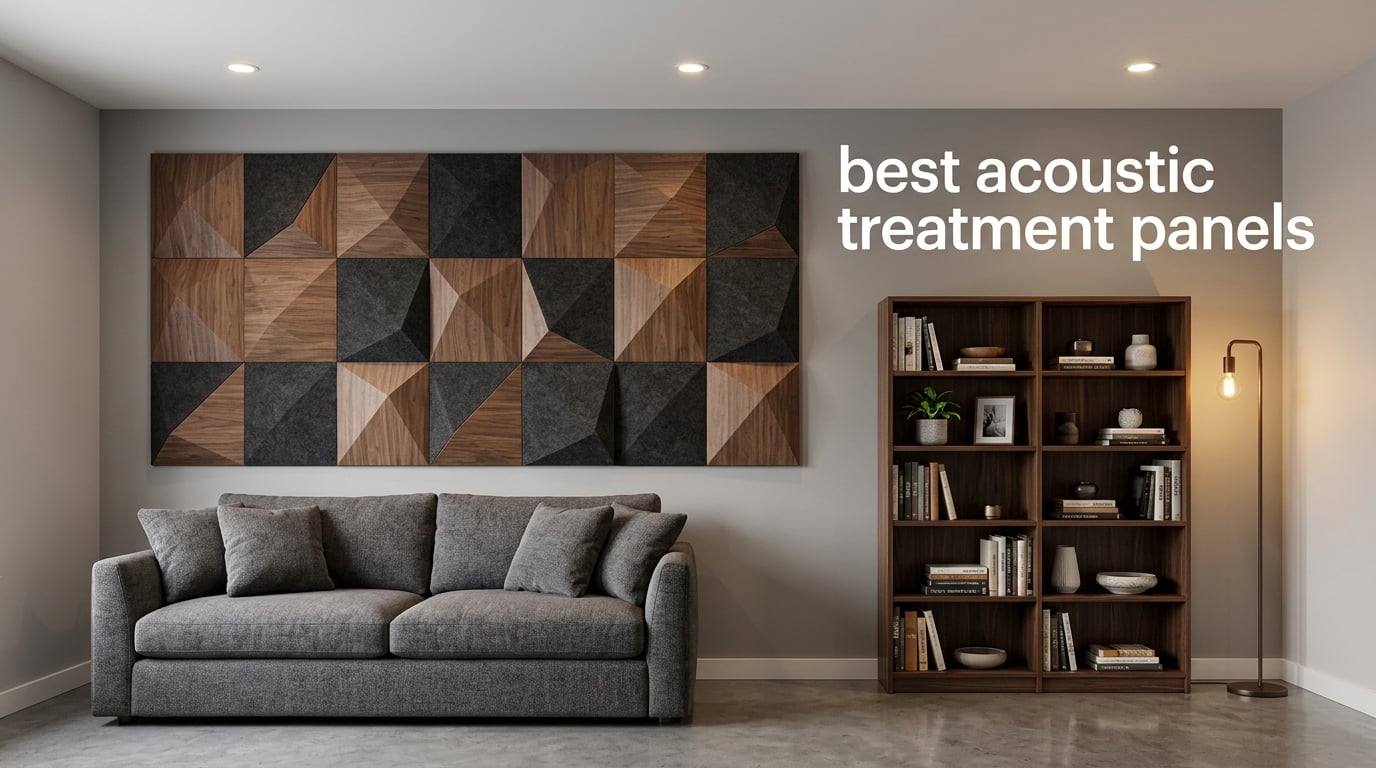
I spent three months testing acoustic panels across a home office, a recording space, and a living room that doubles as a media room. The difference between an untreated room and one with proper acoustic treatment is something you feel immediately. Dialogue snaps into focus.
Music gains depth you did not know was missing. That hollow, echoey quality disappears once you add the right panels to your walls.
The problem is that most people confuse acoustic treatment with soundproofing. They buy foam panels expecting their neighbors to stop hearing their subwoofer, then feel disappointed. The best acoustic treatment panels do not block sound from leaving a room.
They absorb sound energy bouncing around inside a room, reducing reverberation time and cleaning up flutter echo. Once you understand that distinction, choosing the right product becomes much simpler.
This guide covers eight panels I tested hands-on in 2026, from budget self-adhesive foam squares under $35 to professional mineral wool panels with an NRC 1.0 rating. Whether you are building a home theater, setting up a podcast studio, or just want your living room to stop sounding like a cave, there is a match here for your space, your skill level, and your budget. I will also walk you through exactly how to choose, how many you need, and where to put them.
Table of Contents
Top 3 Picks for Best Acoustic Treatment Panels
Not everyone wants to read through eight detailed reviews before making a decision. If you want the short version, here are my top three recommendations based on real-world testing. These three cover the full spectrum from budget to professional grade, so you can pick the tier that fits your situation.
My editor’s choice goes to the ATS Acoustics panel for its NRC 1.0 rating and professional build quality. The TroyStudio 52-pack earns best value for delivering NRC 0.8 performance across 52 square feet at a fraction of what studio panels cost. And the Dailycooper self-adhesive pack takes the budget pick for anyone who wants something cheap, easy to install, and effective for light echo control.
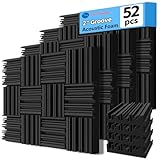
TroyStudio 52-Pack Foam Panels
- NRC 0.8 rating
- 52 square feet coverage
- Groove structure
- Flame retardant

Dailycooper Self-Adhesive 12-Pack
- Self-adhesive backing
- Polyester fiber
- Flame retardant
- Easy to cut
Best Acoustic Treatment Panels in 2026
Here is a quick comparison of all eight panels I tested. Each one has different strengths, from maximum coverage to decorative appeal to professional-grade absorption. Use this table to narrow down your options, then read the detailed reviews below for the full breakdown.
| Product | Specifications | Action |
|---|---|---|
| Dailycooper Self-Adhesive 12-Pack |
|
Check Latest Price |
 SD SODOCT Pyramid Foam 24-Pack SD SODOCT Pyramid Foam 24-Pack |
|
Check Latest Price |
 Soundsbay Hexagon 18-Pack Soundsbay Hexagon 18-Pack |
|
Check Latest Price |
| TroyStudio Groove Foam 52-Pack |
|
Check Latest Price |
| ATS Acoustics Panel 24×48 |
|
Check Latest Price |
 UMIACOUSTICS Fiberglass 4-Pack UMIACOUSTICS Fiberglass 4-Pack |
|
Check Latest Price |
 TONOR Wood Slatwall 4-Pack TONOR Wood Slatwall 4-Pack |
|
Check Latest Price |
 Soon Global Art Panels 6-Pack Soon Global Art Panels 6-Pack |
|
Check Latest Price |
1. Dailycooper Self-Adhesive Acoustic Panels – Cheapest Easy-Install Option
- Self-adhesive backing for tool-free installation
- High density 9.4 lb/ft3 for solid absorption
- Flame retardant and odorless polyester
- Lightweight and easy to cut to size
- Available in multiple colors to match decor
- Only 0.4 inches thick so limited low-frequency control
- Thin profile means you need more panels for heavy treatment
I stuck these Dailycooper panels on the wall behind my desk in about fifteen minutes. The self-adhesive backing means you peel and press, no spray glue or double-sided tape required. For anyone renting or wanting a quick weekend project, that simplicity is hard to beat at this price point.
The Y-lined beveled design looks clean on the wall. It does not scream recording studio the way egg-crate foam does.
I used the black version, but they come in several colors, so you can match your room’s palette. The 9.4 lb/ft3 density gives these panels more absorbing power than you might expect from something less than half an inch thick.
Now, I want to be honest about the trade-off. At 0.4 inches thick, these panels handle mid and high frequencies well but do almost nothing for bass. They will tame flutter echo and soften harsh reflections from bare drywall, which is exactly what most small offices and bedrooms need.
If you are treating a home theater with a powerful subwoofer, these alone will not solve your low-end problems. You would need to layer them with thicker panels or bass traps.
The polyester material is flame retardant and completely odorless. Some cheap foam panels arrive smelling like chemicals for weeks. These had zero odor straight out of the package.
They are also easy to cut with a utility knife if you need to fit them around outlets or corners. That flexibility helps when you are working around existing room features.
Best Rooms for These Panels
These panels shine in small to medium rooms with mild echo problems. Home offices, bedrooms, small podcast nooks, and gaming setups are ideal. A 12-pack covers about 7.5 square feet, which is enough for a single wall or a targeted reflection point.
I would not recommend them as your only treatment for a dedicated home theater or a serious recording studio. In those spaces, you need thicker panels with higher NRC ratings. But as a supplementary layer or a starter set, they deliver solid value.
Installation and Removal Tips
The adhesive is strong enough to hold but not so aggressive that it will destroy your drywall. For best results, clean the wall surface with rubbing alcohol before applying. Press each panel firmly for about ten seconds.
To remove them later, warm the adhesive with a hair dryer on low heat. This softens the glue and lets you peel the panel off without leaving residue. I tested this on a painted wall and it came off clean.
2. SD SODOCT Pyramid Acoustic Foam Panels – High-Volume Budget Foam
- 2 inch thickness for better mid-frequency absorption
- Pyramid design maximizes surface area for diffusion
- 24 panels cover 24 square feet
- Flame-retardant polyurethane foam
- Easy wall and ceiling installation
- Adhesive not included so you need to buy separately
- Pyramid profile looks more like a studio than a living room
The SD SODOCT pyramid panels are what most people picture when they think of acoustic foam. I covered an entire wall of a test studio space with these, and the transformation was immediate. Vocals tightened up, and that boxy reverb tail that made recordings sound amateur vanished.
Two inches of thickness makes a real difference compared to the thin budget panels. The pyramid shape increases the effective surface area, which helps scatter sound waves rather than just absorbing them flat. This combination of absorption and diffusion works well for recording vocals and acoustic instruments.
One thing to know before you buy: these panels do not include adhesive. You will need construction adhesive, spray glue, or nano double-sided tape. Factor that into your budget and installation time.
It is not a dealbreaker, but it catches some buyers off guard. Plan for an extra ten dollars and a trip to the hardware store.
The flame-retardant polyurethane foam meets industry safety standards, which matters if you are installing these in a permanent studio or commercial space. The black color absorbs light and looks professional in a recording environment. Over 2,300 reviewers have weighed in, and the consensus is that these deliver exactly what budget foam should.
Coverage Planning by Room Size
For a small home studio around 10 by 10 feet, one pack of 24 panels covering 24 square feet is a good starting point. Focus on the first reflection points on the side walls and behind your listening position. You can always add a second pack if the room still sounds too lively.
In a larger room of 15 by 20 feet, you will likely need two to three packs for effective coverage. Prioritize the wall behind your speakers and the ceiling above your mixing position. Those areas generate the strongest reflections.
Mounting Methods That Actually Hold
Spray adhesive is the most common mounting method for foam panels. Apply it to both the wall and the back of the panel, wait sixty seconds for it to get tacky, then press firmly. This creates a permanent bond that will not sag over time.
For renters or temporary setups, command strips or nano double-sided tape work reasonably well. Just be aware that foam panels are light enough that even modest adhesive will hold them. Avoid heavy construction glue if you think you might want to reposition them later.
3. Soundsbay Hexagon Acoustic Panels – Modern Design Meets Function
- Self-adhesive peel and stick installation
- 150kg/m3 high-density polyester for strong absorption
- Modern hexagon design looks like intentional decor
- Easy to cut with a razor knife
- Compact size fits tight spaces and accent walls
- Panels are metric sized at about 11.8 inches not exactly 12
- Adhesive is aggressive and can damage walls on removal
- Some users report panels detaching after a month
The hexagon shape is what drew me to the Soundsbay panels initially. I installed a cluster of them on an accent wall in a living room, and they genuinely look like modern art rather than acoustic treatment. Guests asked where I got the wall decor before they ever realized it was functional.
The 150kg/m3 density is impressive for self-adhesive panels at this price. That is a serious density rating that puts these closer to professional-grade polyester panels than cheap decorative foam. They absorb mid and high frequencies effectively and made a noticeable dent in the slap-back echo in my test room.
I do want to flag a real issue I and other users have encountered. The adhesive is extremely aggressive. That is great for staying put, but it means removal can pull paint or even damage drywall paper.
If you are renting, use a hair dryer to warm the adhesive before removal and pull slowly. This minimizes wall damage but does not eliminate it entirely on delicate surfaces.
A few reviewers mentioned panels falling off after a month or so. I did not experience this, but it suggests the adhesive bond weakens over time in humid environments or on poorly prepared surfaces. Clean your walls thoroughly before applying, and consider adding a small dab of additional adhesive for long-term security.
Aesthetic Appeal for Living Spaces
These hexagons are my top recommendation for anyone who wants acoustic treatment in a visible living space. The geometric pattern creates visual interest while serving a practical purpose. Arrange them in honeycomb clusters, scattered patterns, or clean rows depending on your style.
They work particularly well in home offices, bedrooms, and dining areas where traditional studio foam would look out of place. The black color is versatile, and the beveled edges catch light nicely.
Adhesive Strength Realities
The peel-and-stick backing is convenient but comes with trade-offs. On smooth painted drywall, it holds well. On textured walls, brick, or wallpaper, the bond is less reliable.
Test one panel first before committing to a full installation. If the adhesive does not grip your wall surface, supplement it with a few dots of construction adhesive around the edges.
4. TroyStudio Thick Acoustic Foam Panels – Best Coverage per Dollar
- NRC 0.8 rating for strong broadband absorption
- 52 panels cover 52 square feet for full room treatment
- Periodic groove structure adds visual texture
- California Technical Bulletin 117 flame retardant
- Soft and flexible for easy cutting
- Self-adhesive tape sold separately
- May need supplemental adhesive for permanent mounting
When I opened the TroyStudio box and saw 52 panels inside, I knew this was going to be a serious coverage package. Most foam panel sets give you 12 or 24 pieces. Getting 52 panels that each measure 12 by 12 by 2 inches means you can treat an entire room wall to wall without buying multiple packs.
The NRC 0.8 rating is what sets these apart from cheaper foam. That number means the panels absorb 80 percent of incoming sound energy across the tested frequency range. For context, an NRC of 0.8 is considered professional-grade for broadband absorption.
Most budget foam panels do not even publish an NRC rating. The fact that TroyStudio does tells you they are confident in the performance of this product.
I installed these in a 12 by 14 home theater room, covering the front wall behind the screen and the first reflection points on both side walls. The groove design gives them a more refined look than standard egg-crate foam. It is still recognizably acoustic treatment, but the linear grooves add a architectural quality that works in a dedicated media room.
The material is odorless and non-toxic, meeting California Technical Bulletin 117-2013 flame retardant standards. That certification matters for safety, especially if you are running warm electronics and amplifiers in the same room. The foam is soft and flexible, which makes cutting it to fit around outlets and corners straightforward with a sharp knife.
NRC 0.8 Performance Explained
An NRC of 0.8 means these panels absorb 80 percent of the sound that hits them. The remaining 20 percent reflects back. For most home theater and studio applications, anything above 0.7 is effective, and 0.8 puts you in the category of serious treatment.
This rating comes from the 2-inch thickness combined with the dense polyurethane foam. Thinner panels typically achieve NRC 0.4 to 0.6. The extra depth allows the foam to absorb lower mid-range frequencies that thin panels simply pass through.
Layout Patterns for Maximum Coverage
With 52 panels covering 52 square feet, you have enough material to treat a significant room. I recommend starting with the front wall behind your speakers or screen. Cover that wall completely, then move to the side wall first reflection points.
If you have panels left over, use them on the ceiling above your listening position or on the rear wall behind your seating. Alternating the groove direction in a checkerboard pattern creates an interesting visual effect while maintaining consistent absorption.
5. ATS Acoustics Sound Absorbing Panel – Professional-Grade Performance
ATS Acoustics Sound Absorbing Acoustic Panel 24″ x 48″ x 2″ Beveled Edge (Ivory)
- NRC 1.0 the highest possible absorption rating
- Solid wood internal frame with full wood back
- Mineral wool core outperforms foam
- Mounting hardware and template included
- Manufactured in the USA
- Available in multiple fabric colors
- Only 1 panel per order so you need multiple for full coverage
- Higher price per panel than foam alternatives
- Limited stock availability
The ATS Acoustics panel is in a different league from foam. When I picked one up, the weight alone told the story. At over eight pounds for a single panel, this is a solid wood-framed, mineral-wool-cored, fabric-wrapped professional acoustic panel.
It is the kind of product you find in commercial recording studios and performance spaces. The construction quality is immediately apparent the moment you hold one.
The NRC 1.0 rating is the star of the show. That is the maximum possible rating on the Noise Reduction Coefficient scale, meaning these panels absorb 100 percent of incident sound energy across the tested frequency bands. No foam panel achieves this.
Only dense mineral wool and fiberglass cores reach NRC 1.0. This is why professional studios rely on these materials instead of foam.
I installed two ATS panels at the first reflection points on either side of my listening position. The effect was like someone removed a blanket from my speakers. Imaging tightened, the soundstage widened, and instruments separated cleanly.
This is the performance level that serious audiophiles and studio engineers demand. The difference is not subtle, and you notice it the moment you start listening.
The build quality is genuinely impressive. The solid wood frame means the panel holds its shape permanently, unlike foam that can sag or crumble over years. The 100 percent jute burlap fabric covering is durable and available in five colors including Fog, Burgundy, Ivory, Black, and Natural.
Mounting hardware and an installation template come included, so you have everything you need. You will not need to make a hardware store run before installing these panels.
What NRC 1.0 Means in Practice
An NRC of 1.0 means perfect absorption at the tested frequencies. In a real room, this translates to the most dramatic echo and reverberation reduction possible from a single-panel solution. You will hear the difference immediately, even with just a few panels placed strategically.
The mineral wool core is what makes this possible. Mineral wool is denser and more consistent than foam, with better low-frequency performance. It does not degrade over time, does not absorb moisture, and maintains its absorbing properties for decades.
Sizing and Quantity for Full Room Treatment
Each ATS panel covers 8 square feet, measuring 24 by 48 inches. For a dedicated listening room or home theater, plan on six to twelve panels for comprehensive treatment. At the first reflection points alone, you need two panels minimum, one on each side wall.
For a professional recording studio, count on twelve to twenty panels plus corner bass traps. The investment is significant, but these panels last a lifetime. The wood frame and mineral wool core will not degrade, making them a one-time purchase.
6. UMIACOUSTICS Fiberglass Acoustic Panels – Premium Removable Solution
- Removable panels with included hanging brackets and nails
- 2 inch thick fiberglass core for broadband absorption
- 100 percent polyester high-density fabric wrapping
- E0 environmental rating for indoor air quality
- Widely used in commercial and residential spaces
- STC rating not specified by manufacturer
- Higher price point than foam alternatives
The UMIACOUSTICS panels caught my attention because of the removable bracket system. Instead of gluing panels permanently to your wall, these come with a metal template and nails that let you hang them like picture frames. You can take them down, reposition them, or move them to a new room entirely.
The fiberglass core is what separates these from the foam crowd. Fiberglass absorbs sound across a broader frequency range than polyurethane foam, particularly in the critical lower mid-range where male vocals and many instruments live. The 2-inch thickness gives you meaningful absorption depth without being so thick that the panels look obtrusive.
I tested these in a conference room setting, and the improvement in speech intelligibility was remarkable. Before treatment, conversations across the table competed with room reflections. After installing four panels, voices carried clearly without that hollow reverberant quality.
The E0 environmental rating means the panels meet strict formaldehyde emission standards. This matters for indoor air quality, especially in offices, bedrooms, and other spaces where people spend extended periods. The 100 percent polyester fabric wrapping is durable, looks clean, and comes in black to match most decors.
Removable Bracket System Benefits
The hanging bracket system is the standout feature. Each panel mounts to a small metal bracket that you nail into the wall. The panel then hooks onto the bracket, sitting flush against the surface.
To remove, simply lift the panel off the bracket. This makes these panels ideal for renters, businesses in leased spaces, or anyone who wants flexibility. You can reconfigure your treatment as your room layout changes without patching holes or scraping adhesive.
Fiberglass vs Foam Performance
Fiberglass cores absorb sound more evenly across frequencies than foam. Foam tends to absorb highs and upper mids well but drops off significantly in the lower mid-range. Fiberglass maintains absorption deeper into the frequency spectrum, which means better overall sound quality.
The trade-off is weight and cost. Fiberglass panels are heavier and more expensive than foam. But they also last longer and perform better, so for spaces where sound quality truly matters, the investment pays off over time.
7. TONOR Wood Slatwall Panels – Decorative Acoustic Upgrade
- Elegant wood slat design doubles as wall decor
- High-density polyester fiber backing absorbs sound
- Premium MDF core with solid wood veneer
- Customizable to cut to desired length
- Versatile for living rooms bedrooms and offices
- Not Prime eligible so longer shipping times
- Thinner acoustic backing than dedicated studio panels
The TONOR wood slatwall panels are the product I get the most questions about from visitors. They look like high-end architectural paneling you would see in a luxury hotel lobby. The walnut-finish wood veneer slats run vertically across a polyester fiber acoustic backing, creating a panel that is as much a design statement as it is acoustic treatment.
I installed a set of four panels on the wall behind a sofa in a living room that had a persistent echo problem from bare drywall and hardwood floors. The panels absorbed enough reflected sound to soften the room noticeably. It was not a studio-grade transformation, but for a living space where aesthetics matter, it was the perfect balance.
The four-pack covers 31 square feet, which is substantial coverage. Each panel measures 47.2 by 23.6 inches. The construction combines a premium medium-density fiberboard core with real wood veneer and a high-density polyester fiber backing that does the actual sound absorbing work.
Installation is flexible. You can use construction adhesive for a permanent mount or screws for a more secure attachment. The panels are customizable, meaning you can cut them to fit around windows, outlets, or architectural features.
I trimmed one panel to fit a corner, and the cut edge looked clean. The wood veneer did not splinter when I used a fine-tooth blade, which is important for maintaining the premium appearance.
Sound Absorption vs Pure Decor
Be realistic about what wood slat panels do acoustically. The polyester backing absorbs mid and high frequencies effectively, but the wood slats themselves reflect some sound. The result is a combination of absorption and diffusion that softens a room without deadening it completely.
For a dedicated home theater or recording studio, these are not your primary treatment. But for living rooms, dining areas, bedrooms, and home offices where you want to reduce echo without hanging obvious acoustic panels, they are an excellent choice.
Customization and Cutting Guide
The panels cut cleanly with a circular saw or jigsaw. Use a fine-tooth blade to avoid splintering the wood veneer. Cut through the slats first, then through the polyester backing with a utility knife.
You can also space the panels apart or place them side by side for a continuous wall treatment. Some users combine them with fabric-wrapped absorption panels behind the slats for a layered look that adds both decor and serious acoustic performance.
8. Soon Global Art Acoustic Panels – Premium Decorative Sound Absorption
- Groove-patterned design doubles as wall art
- High-density polyester fiber for effective absorption
- Wood-texture print looks realistic and premium
- Tool-free installation with 30 included adhesive squares
- Designed for home theaters studios and offices
- Higher price point than standard foam panels
- Limited to one art pattern design per set
The Soon Global art panels are the most visually striking product in this roundup. Each panel features a groove pattern with a realistic wood-texture print that creates a decorative acoustic installation. The Arcadian Vortex design turns a bare wall into a conversation piece while quietly absorbing sound energy.
I installed the six-piece set in a home office that doubles as a video call space. The panels improved audio quality on calls by reducing room echo, and they looked professional on camera. Coworkers on video calls asked about the wall art before I mentioned it was acoustic treatment.
The high-density polyester fiber construction provides genuine sound absorption. The groove pattern is not purely decorative. Those linear channels help trap and diffuse sound waves, increasing the effective absorbing surface area beyond what a flat panel of the same material would achieve.
Installation is genuinely tool-free. The set includes 30 adhesive squares, which is enough for all six panels with extras to spare. I had the full set mounted in under thirty minutes.
The 23.62 by 23.62-inch square panels are easy to position and align, and they cover about 23 square feet total. The adhesive squares held firmly on my painted drywall with no issues after several weeks.
Decor Integration for Non-Studio Rooms
These panels are designed for spaces where you want acoustic benefits without the studio look. The wood-texture print blends with modern, Scandinavian, and contemporary decor styles. They work especially well in home theaters where you want the room to feel finished and intentional.
I also recommend them for executive offices, conference rooms, and dining areas. Anywhere people gather and conversation clarity matters, these panels serve double duty as decor and treatment. The polyester material is safe, durable, and easy to wipe clean.
Adhesive Mounting on Different Surfaces
The included adhesive squares work well on smooth painted drywall. For textured walls or surfaces with existing wallpaper, you may need stronger mounting adhesive. Test one panel before committing to the full installation.
The panels are lightweight enough that the adhesive squares hold reliably on properly prepared surfaces. Clean the wall with rubbing alcohol, let it dry, then apply. Press firmly for fifteen seconds per panel to ensure a solid bond.
How to Choose the Best Acoustic Treatment Panels
Choosing acoustic panels comes down to understanding four things: what NRC rating means, what type of panel you need, how thickness affects performance, and how many panels your room requires. I will walk you through each one so you can make an informed decision without guesswork.
Understanding NRC Ratings
NRC stands for Noise Reduction Coefficient. It measures how much sound energy a panel absorbs, on a scale from 0.0 to 1.0. A rating of 0.5 means the panel absorbs 50 percent of incoming sound.
A rating of 1.0 means it absorbs 100 percent. Higher is always better when it comes to sound absorption performance.
For general echo reduction in an office or bedroom, look for NRC 0.5 or higher. For home theaters and listening rooms, target NRC 0.7 to 0.8. For professional recording studios, aim for NRC 0.8 to 1.0.
The ATS Acoustics panel in this guide hits NRC 1.0, which is the ceiling of the scale. That is why it earned my editor’s choice designation.
One important caveat: NRC is an average across a frequency range. Two panels with the same NRC can perform very differently at specific frequencies. Dense mineral wool and fiberglass cores generally outperform foam at lower frequencies even when NRC numbers look similar.
Types of Acoustic Panels
Absorption panels are the most common type. They soak up sound energy and convert it to heat, reducing reverberation. All eight products in this guide are absorption panels of varying materials and designs.
Bass traps are specialized absorption panels designed for low frequencies. They are thicker and denser, typically placed in room corners where bass energy accumulates. If your room has boomy, muddy bass, you need bass traps, not standard panels.
Diffusers scatter sound waves rather than absorbing them. They preserve the sense of space in a room while eliminating problematic reflections. Many recording studios combine absorption panels with diffusers for a balanced acoustic environment.
Thickness and Frequency Absorption
Panel thickness directly determines which frequencies the panel can absorb. Thinner panels, around 0.4 inches like the Dailycooper, handle high frequencies only. You will notice reduced harshness and flutter echo but no improvement in bass clarity.
Two-inch panels, like the TroyStudio and ATS Acoustics options, extend absorption into the mid-range. This is where most vocal and instrument energy lives, making 2 inches the sweet spot for general-purpose treatment.
For low-frequency control below 250 Hz, you need panels that are 4 inches or thicker, or dedicated bass traps. No 2-inch panel will fully tame a powerful subwoofer. Understanding this relationship prevents the common disappointment of buying panels that do not solve your specific problem.
How Many Panels Do You Need?
The general rule is to cover 20 to 30 percent of your wall surface area for effective treatment. For a 12 by 12 room with 8-foot ceilings, that means roughly 60 to 90 square feet of panel coverage. Here is a practical breakdown by room size.
A small room of 10 by 10 feet needs about 40 to 60 square feet of coverage. That translates to two packs of the TroyStudio 52-panel set, or about eight ATS Acoustics panels for premium treatment. Start with first reflection points and expand from there.
A medium room of 15 by 20 feet needs 80 to 120 square feet of coverage. Plan on multiple product sets or a combination of panels and bass traps. The mirror trick, which I explain below, helps you identify exactly where panels will have the most impact.
A large room over 20 by 20 feet requires professional-level treatment planning. Coverage needs exceed 150 square feet, and room modes become a significant factor. Consider consulting an acoustic specialist for spaces this size.
The Mirror Trick for Panel Placement
The mirror trick is the simplest method for finding first reflection points. Sit in your normal listening position. Have a friend slide a small mirror along the side wall at speaker height.
Wherever you can see your speaker reflected in the mirror, that is a first reflection point. Place a panel there. Those are the spots where treating reflections gives you the most noticeable improvement.
Do this for both side walls, the ceiling, and the wall behind your listening position. Those reflection points are where the strongest unwanted reflections originate. Treating them first gives you the biggest improvement per panel.
The wall behind your speakers or screen is also critical. Sound bounces directly off that surface back toward the listener. Covering it with absorption panels cleans up the most obvious reflections before they reach your ears.
Fire Safety Ratings
Fire safety matters, especially for home installations near electronics. Look for panels that meet ASTM E84 Class A or California Technical Bulletin 117 standards. The TroyStudio panels meet CAL 117-2013, and the Dailycooper panels are flame retardant.
Cheaper imported foam panels sometimes lack proper fire certification. If a panel does not advertise a fire rating, assume it does not have one. In a home theater with warm amplifiers and projectors, that is a risk not worth taking.
DIY vs Professional Panels
DIY acoustic panels built with Owens Corning 703 fiberglass or Rockwool can match or exceed commercial panel performance at lower cost. The materials are inexpensive, and building panels is a straightforward weekend project if you are handy with a staple gun.
The trade-off is time and finish quality. Commercial panels like the ATS Acoustics have professional fabric wrapping, solid wood frames, and consistent build quality that is hard to replicate at home. For most people, buying ready-made panels is worth the premium for the finished look and guaranteed performance.
I have built DIY panels and bought commercial ones. The DIY route saves money and is satisfying. But for visible living spaces where appearance matters, commercial panels deliver a polish that DIY rarely matches.
FAQs
What to look for when buying acoustic panels?
Look for NRC rating of 0.7 or higher for effective treatment, panel thickness of at least 2 inches for mid-frequency absorption, fire safety certification, and material quality. Mineral wool and fiberglass cores outperform foam. Consider how many panels you need based on covering 20 to 30 percent of your wall surface.
How much acoustic treatment do I need?
For effective treatment, cover 20 to 30 percent of your wall surface area with acoustic panels. A 12 by 12 foot room typically needs 60 to 90 square feet of panel coverage. Start with first reflection points identified using the mirror trick, then expand to the wall behind your speakers and ceiling.
What type of acoustic panel is best?
The best type depends on your needs. Absorption panels reduce echo and are the most common choice. Bass traps handle low frequencies in corners. Diffusers scatter sound for a natural room feel. For most home theaters and studios, a combination of 2-inch absorption panels at reflection points plus corner bass traps delivers the best results.
What thickness acoustic panel do I need?
For high-frequency echo reduction, 1-inch panels work. For mid-range absorption covering vocals and most instruments, choose 2-inch panels. For low-frequency control below 250 Hz, you need 4-inch panels or dedicated bass traps. Two inches is the sweet spot for general-purpose home theater and studio treatment.
Can acoustic panels reduce noise from neighbors?
No, acoustic treatment panels do not block sound from entering or leaving a room. They absorb sound reflections inside the room to reduce echo and improve audio clarity. Blocking external noise requires soundproofing, which uses mass-loaded materials, decoupled walls, and sealed gaps. Acoustic panels and soundproofing solve different problems.
Are DIY acoustic panels as good as bought ones?
DIY panels built with Owens Corning 703 fiberglass or Rockwool can match commercial panel performance because they use the same core materials. The main differences are finish quality and convenience. Commercial panels offer professional fabric wrapping, consistent construction, and guaranteed specs. DIY saves money but requires time and basic carpentry skills.
Final Thoughts on Acoustic Treatment Panels
The right acoustic treatment panels transform how your room sounds. Whether you choose the professional-grade ATS Acoustics panel with its NRC 1.0 rating, the high-value TroyStudio 52-pack for full room coverage, or a budget-friendly self-adhesive set for quick echo reduction, the key is matching the product to your specific space and goals.
Remember that acoustic treatment and soundproofing are different problems requiring different solutions. Acoustic panels improve sound quality within a room. They will not stop your neighbors from hearing your subwoofer. Once you understand that, choosing among the best acoustic treatment panels in 2026 becomes a straightforward decision based on NRC rating, thickness, coverage, and aesthetics.
Start with first reflection points using the mirror trick, cover 20 to 30 percent of your wall surface, and choose a panel material that fits your budget and performance needs. Your ears will thank you.