
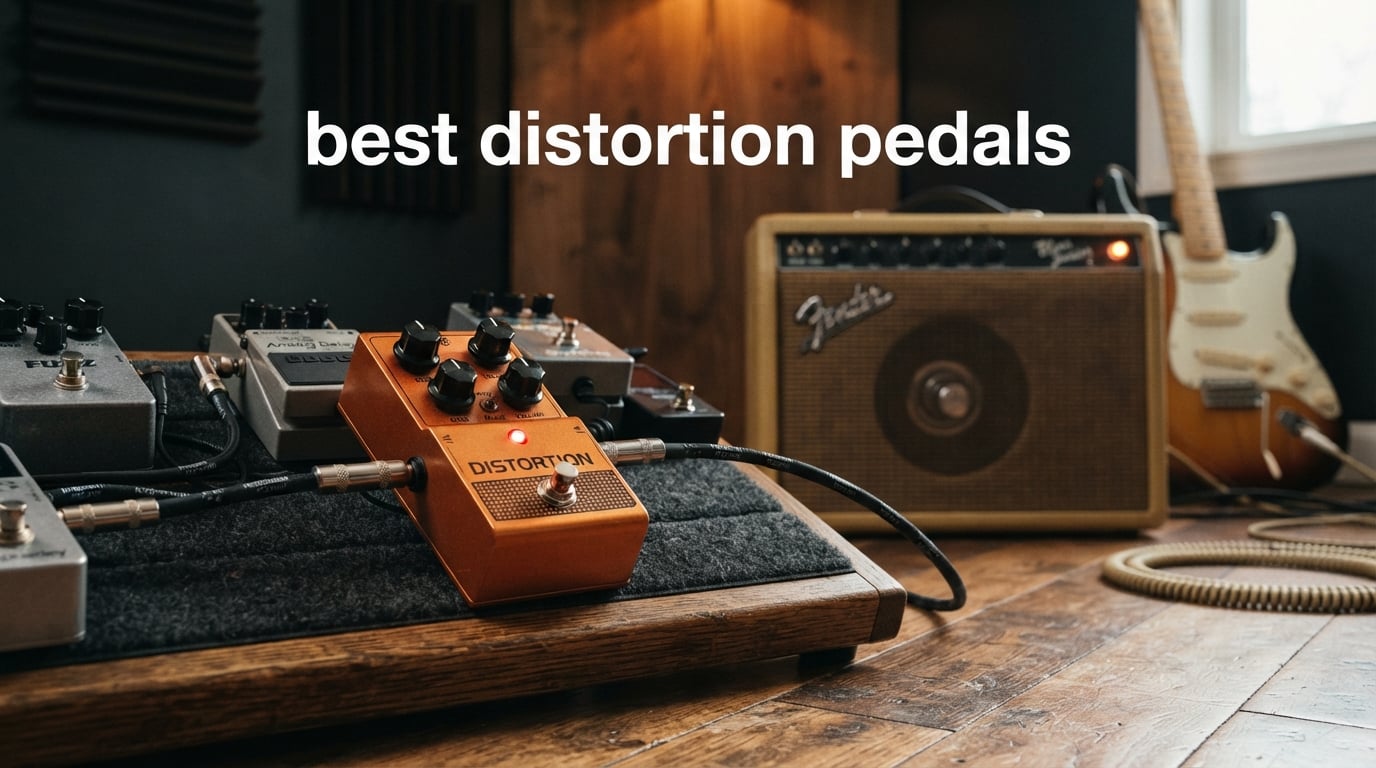
Finding the best distortion pedals for your rig can completely transform your guitar tone. Whether you play crushing metal riffs, punchy rock rhythms, or soaring lead solos, the right distortion pedal is the foundation of your sound. I have spent years testing, gigging, and recording with dozens of distortion stompboxes, and this guide covers the ten that stand above the rest in 2026.
Our team compared these pedals across tone quality, gain range, EQ flexibility, build construction, and overall value. We paid close attention to how each one responds to playing dynamics, how it pairs with different amplifiers, and whether it holds up under live performance conditions. Every pedal on this list earned its place through real-world testing, not spec sheet reading.
Distortion pedals work by clipping your guitar signal to create the gritty, aggressive tones that define rock and metal music. Some use soft clipping for warm, tube-like saturation, while others employ hard clipping for maximum aggression and sustain. The pedals in this roundup cover the full spectrum, from vintage 70s crunch to modern high-gain metal tones that shake the walls.
This guide breaks down each pedal with hands-on experience notes, technical analysis, and practical recommendations for who should buy what. We also cover the difference between distortion and overdrive, true bypass versus buffered switching, and how to position your pedal in the signal chain. If you are building your first pedalboard or upgrading your current setup, you will find your next distortion pedal right here.
Table of Contents
Top 3 Picks for Best Distortion Pedals
These three pedals represent the best of what the distortion pedal market has to offer in 2026. Each one earned its badge through extensive testing across multiple genres, amps, and playing scenarios.

Best Distortion Pedals in 2026
Here is a quick comparison of all ten pedals we tested. Use this table to compare features at a glance before diving into the individual reviews below.
| Product | Specifications | Action |
|---|---|---|
| Pro Co RAT2 Distortion |
|
Check Latest Price |
 Boss MT-2 Metal Zone Boss MT-2 Metal Zone |
|
Check Latest Price |
 Boss DS-1 Distortion Boss DS-1 Distortion |
|
Check Latest Price |
 MXR Super Badass MXR Super Badass |
|
Check Latest Price |
 Behringer UM300 Behringer UM300 |
|
Check Latest Price |
 Fender Pugilist Fender Pugilist |
|
Check Latest Price |
 MXR Distortion Plus MXR Distortion Plus |
|
Check Latest Price |
 EHX Metal Muff EHX Metal Muff |
|
Check Latest Price |
 JOYO High Gain JF-04 JOYO High Gain JF-04 |
|
Check Latest Price |
 Donner Morpher Mini Donner Morpher Mini |
|
Check Latest Price |
1. Pro Co RAT2 Distortion – The Versatile Workhorse
- Arena rock rhythm tones
- Excels at soaring lead tones
- Cleans up beautifully with volume roll-off
- Doubles as a solo boost
- Limited EQ options
- Analog distortion noise floor
I have used the Pro Co RAT2 on and off for years, and every time I plug it back in, I remember why it refuses to leave the conversation. This pedal earned its place as one of the best distortion pedals ever made because it does something rare. It sounds great through almost any amp you plug it into.
The RAT2 has a distinctive growl that sits somewhere between overdrive and full distortion. Roll the Distortion knob back and you get a warm, crunchy rhythm tone. Crank it up and the pedal screams with sustain that holds notes for days.
The control layout is beautifully simple. You get Distortion, Filter, and Volume knobs. The Filter control is actually a tone control that works in reverse compared to most pedals, which throws some people off at first. Once you understand it, though, it gives you more usable range than a standard tone knob ever could.
Build quality is rock-solid. The steel housing has taken drops, kicks, and years of stomping without complaint. At 1.5 pounds, it feels substantial without being heavy on your pedalboard. The analog circuit runs on a standard 9V supply and draws only 30mA, which is very easy on your power brick.
Where the RAT2 Shines Brightest
The RAT2 excels at that sweet spot between classic rock crunch and modern hard rock aggression. Think Foo Fighters rhythm tones, grunge-era alternative, and even some punk applications. It also works incredibly well as a boost for solos when you set the Distortion low and the Volume high, pushing your amp into natural breakup.
Amp Pairing and Signal Chain Tips
This pedal pairs beautifully with tube amps, especially Fender and Vox style clean platforms. It also works well into already-breaking-up amps for stacking gain stages. Place it after your wah and compressor but before any modulation effects for the most natural sound in your chain.
2. Boss MT-2 Metal Zone – High-Gain Sustain Machine
- Thick saturated metal tones
- Dual-stage gain circuit
- Parametric mid-range EQ
- Smooth singing sustain
- High power consumption at 110mA
- Can sound harsh at extreme settings
The Boss MT-2 Metal Zone has been the go-to high-gain stompbox since the early 90s, and there is a reason it still shows up on pedalboards everywhere. Its dual-stage gain circuit produces some of the thickest, most saturated distortion tones you can get from a compact pedal.
I have pushed this pedal through everything from bedroom practice amps to half stacks, and it delivers massive, satisfying sounds at any volume. The smooth, singing sustain it produces makes lead lines feel effortless and notes ring out with authority.
What sets the MT-2 apart is its EQ section. You get a full three-band EQ plus a parametric mid-range control with its own frequency selector. This gives you enormous control over your tone shape, which most distortion pedals simply do not offer at any price.
The trade-off is power consumption. At 110mA, the Metal Zone draws significantly more current than most pedals. Make sure your power supply can handle the load, because a weak supply will introduce unwanted noise and hum. The pedal also has a reputation for sounding harsh when all controls are dimed, so some restraint with the knobs goes a long way.
Taming the Metal Zone EQ
The parametric mid control is the secret weapon here. Scoop the mids for that classic metal chug, or boost them for a more modern, punchy tone that cuts through a dense mix. Spend quality time with the frequency selector knob, because small adjustments make a big difference in how your tone sits in the band.
Best Use Cases for the MT-2
This pedal was built for metal, and that is where it performs best. Think thrash, death metal, metalcore, and djent tones. It also works well for hard rock solos where you want thick, compressed sustain that lasts. It is less suited for blues or lighter rock styles where subtlety matters more than aggression.
3. Boss DS-1 Distortion – The Benchmark Since 1978
- Iconic since 1978
- Hard-edged attack stays clear
- Cleans up with guitar volume
- Wide tone-shaping range
- Not Prime eligible
- Basic three-knob layout
The Boss DS-1 is the best-selling distortion pedal of all time, and for good reason. Kurt Cobain used one. Steve Vai used one. It has shaped the sound of rock music since 1978, and it still costs less than a nice dinner out.
I have owned multiple DS-1s over the years, and each one delivers that same hard-edged attack with smooth sustain. What impresses me most is how the tone stays clear even at maximum distortion settings. Many pedals turn to mush when pushed hard, but the DS-1 maintains definition and character.
The three-knob layout is about as simple as it gets. Level, Tone, and Distortion knobs give you everything you need and nothing you do not. That simplicity is actually a strength for beginners who are just starting to explore gain tones. You can dial in a usable sound in seconds without getting lost in parameters.
One thing I love about the DS-1 is how it responds to your guitar’s volume knob. Roll the volume back and the tone cleans up naturally without introducing muddiness. This makes it incredibly expressive for dynamic playing. The pedal also does not mask the character of different guitars and pickups, which is rare at this price point.
Why the DS-1 Never Goes Out of Style
The DS-1 endures because it does one thing exceptionally well. It gives you a punchy, aggressive distortion that works for everything from alternative rock to metal rhythm tones. Its long-standing affordability means it is often the first distortion pedal a guitarist ever buys, and many never feel the need to replace it.
Modding and Customizing the DS-1
The DS-1 has one of the biggest modding communities of any pedal ever made. From Keeley to JHS, countless builders offer modification kits and services that swap components for different clipping characteristics and tonal flavors. Even completely stock, though, the DS-1 holds its own against pedals costing three times as much.
4. MXR Super Badass Distortion – Full-Spectrum Control
- Full-spectrum 3-band EQ
- True bypass switching
- 100% analog signal path
- Highly touch-responsive
- Battery powered primary
- No onboard noise gate
The MXR Super Badass Distortion is the pedal I recommend when someone wants tone-shaping control without stepping into multi-effect territory. The name is loud, but the sound is surprisingly refined and musical across the entire gain range.
What struck me immediately was how touch-responsive this pedal is. Dig into a chord and it barks back at you. Play lightly and it cleans up naturally. That dynamic response is something I usually associate with much more expensive boutique pedals.
The standout feature here is the full three-band EQ. Most distortion pedals give you a single tone knob, but the Super Badass lets you sculpt bass, mid, and treble independently. This means you can dial in everything from a scooped metal tone to a mid-forward classic crunch without reaching for a separate EQ pedal.
The 100% analog signal path keeps your tone warm and natural-sounding. True bypass switching means the pedal disappears from your signal chain when disengaged, preserving your clean tone completely. Build quality lives up to MXR’s long-standing reputation, with a rugged housing that handles gig abuse without blinking.
Dialing In Your Tone
Start with all EQ knobs at noon and the gain at about 60 percent. From there, boost the mids if you want to cut through a loud band mix, or scoop them for a heavier, darker character. The EQ is surprisingly powerful for a single pedal, so make small adjustments and let your ears guide you.
Build Quality and Road Readiness
MXR pedals are built like tanks, and the Super Badass is no exception to that rule. The compact housing fits on any pedalboard, and the switch mechanism is rated for years of heavy stomping. It draws only 9mA at 9V, which is efficient and friendly to virtually any power supply setup.
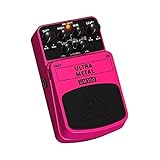
5. Behringer UM300 Ultra Metal – Maximum Gain on a Budget
Behringer ULTRA METAL UM300 Heavy Metal Distortion Instrument Effect Pedal, Pink
- Super-thick tube-like distortion
- Dedicated 3-band EQ
- Multi-gain circuitry
- Endless sustain
- Lower 3V voltage
- Battery powered only
I will be honest, I was skeptical when I first plugged in the Behringer UM300. At this price point, expectations are naturally low. But the UM300 surprised me with thick, aggressive distortion that holds its own against pedals costing four times as much.
The multi-gain circuitry produces a tube-like saturation that feels warm rather than fizzy or thin. For practice sessions and bedroom recording, this pedal delivers more than enough gain for metal and hard rock tones. The sustain is genuinely impressive, holding notes far longer than I expected at this tier.
You get dedicated Distortion, Level, and a three-band EQ with bass, mid, and treble controls. That is more tone-shaping capability than many budget pedals offer. The status LED lets you know when the effect is active and doubles as a battery life indicator.
The housing is plastic, which is the main trade-off at this price point. It is fine for home use and light gigging, but it will not survive the abuse that a metal-cased pedal can take on the road. The pedal also runs at 3V instead of the standard 9V and is battery powered only, which limits your power supply options.
Sound Quality vs Expectations
Set your expectations appropriately. The UM300 will not replace a premium boutique pedal on a professional stage. But for practice, home recording, and casual jamming, it produces genuinely usable high-gain tones that sound far more expensive than they actually are.
Who Should Consider the UM300
This pedal is perfect for beginners who want to explore metal and hard rock tones without a big upfront investment. It is also a solid backup pedal to keep in your gig bag for emergencies. If you are just starting your pedalboard journey, the UM300 gives you a serious amount of gain for very little money.
6. Fender Pugilist Distortion – Two Pedals in One
- Dual overdrive and distortion voices
- Series and parallel routing
- LED-backlit knobs
- Analog signal path
- Limited stock availability
- Larger footprint
The Fender Pugilist caught my attention because it offers something most distortion pedals do not. Two separate overdrive and distortion circuits in a single housing. You can run them independently or stack them together for massive layered tones.
I spent a full weekend exploring the routing options, and the series mode blew me away. Stacking voice one into voice two creates a gain sound so thick and complex that it replaced two pedals on my board. The LED-backlit knobs are also a genuine lifesaver on dark stages.
Each voice has its own gain and tone controls, plus a bass boost switch for added low-end weight. You can set one voice for rhythm crunch and the other for lead boost, then toggle between them with a single step. In parallel mode, both voices run simultaneously, blending their individual characters.
The analog signal path keeps everything warm and natural-sounding, with no digital harshness. The Pugilist draws 22mA at 9V, which is moderate and should not strain most power supplies. The housing is slightly larger than a standard compact pedal, so plan your board space accordingly before committing.
Using the Dual-Voice System
The real magic happens when you assign each voice a different purpose. Set voice one to a mild crunch for rhythm parts, then configure voice two as a high-gain lead tone. Switching between them gives you two distinct sounds without tap-dancing across multiple pedals during a gig.
Series vs Parallel Routing Explained
Series mode chains voice one into voice two, which stacks the gain for thicker, more saturated tones. Parallel mode runs both voices side by side, blending their individual characters without adding extra gain to the signal. Series is for maximum aggression, while parallel is for tonal complexity and layering.
7. MXR Distortion+ – Classic 70s Rock in a Box
- Germanium-powered clipping
- Classic 70s rock voice
- Warm smooth saturation
- Iconic yellow housing
- Minimal control set
- No true bypass
The MXR Distortion+ has been around since the 1970s, and plugging one in feels like opening a time capsule. This is the sound of classic rock, hard rock, and early heavy metal. Think Randy Rhoads, David Gilmour, and the early days of thrash metal tone.
I love how the germanium-powered clipping produces a softer, warmer distortion compared to modern hard-clipping designs. It sits beautifully in a mix without needing much EQ adjustment from your amp. The tone is musical and forgiving, even at higher gain settings where other pedals get harsh.
The control layout is intentionally minimal. You get Output and Distortion knobs, and that is the entire interface. Some players see this as a limitation, but I see it as a deliberate design choice that forces you to focus on playing rather than endlessly tweaking parameters.
The Distortion+ uses a 1/4-inch audio connection and runs on a 9V battery or adapter at just 9mA of current. The soft-clipped analog circuit produces that characteristic warmth that so many modern pedals try and fail to replicate. Note that this pedal does not feature true bypass switching, which some tone purists may want to consider.
The Vintage Tone Appeal
The Distortion+ captures a specific era of rock tone that is genuinely hard to find in modern pedals. The germanium components give it a compressive, singing quality that works beautifully for expressive lead lines. It pairs especially well with single-coil pickups, adding warmth and sustain that single coils sometimes lack.
Modern Relevance of the Distortion+
Even in 2026, the Distortion+ holds its own against newer designs. While it may not deliver the extreme gain that modern metal demands, it excels at classic rock, blues-rock, and hard rock applications. Many players also use it as a boost into an already overdriven amp for extra sustain and character.
8. Electro-Harmonix Metal Muff – Top Boost Power
- Footswitchable Top Boost
- 3-band EQ shaping
- Tough die-cast chassis
- 9V battery included
- Limited stock
- Can be noisy at max gain
The Electro-Harmonix Metal Muff brings something unique to the table with its footswitchable Top Boost feature. This lets you kick in an extra high-frequency push during solos, which helps your lead lines cut through a dense band mix instantly.
I tested the Metal Muff through both a clean solid-state amp and a tube combo, and it performed well in both contexts. The distortion is thick and aggressive, living up to its name without apology. It handles palm-muted riffs with authority and gives power chords plenty of weight and presence.
The EQ section includes a full three-band setup with bass, mid, and treble controls, plus the dedicated Top Boost knob. The Top Boost has its own footswitch, so you can toggle it on and off mid-song without touching any knobs with your hands. This is a feature I genuinely wish more distortion pedals included.
The die-cast chassis is compact and tough enough for regular gigging without worry. EHX even includes a 9V battery in the box, which is a nice touch that saves you an immediate trip to the store. The pedal draws 25mA, which is manageable for most power supply units on the market.
Top Boost Feature in Practice
The Top Boost is not just a simple treble increase. It adds presence and cut that helps your sound project through a loud band mix with clarity. I found it most useful for lead breaks and soaring solos where you need your guitar to jump above the rhythm section and be heard.
Metal Muff vs the Competition
Compared to the Boss MT-2, the Metal Muff offers a rawer, less compressed sound character. Some players prefer this because it feels more natural and dynamic under the fingers. The trade-off is less extreme gain on tap, but for most rock and metal applications, the Metal Muff delivers more than enough saturation.
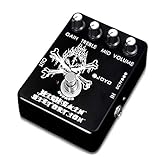
9. JOYO High Gain Distortion JF-04 – The People’s Choice
- Wide gain range rock to metal
- True bypass design
- Rugged aluminum housing
- Touch-sensitive analog circuit
- Entry-level brand perception
- Power supply not included
The JOYO JF-04 is the number one bestseller in its category on Amazon, and I wanted to find out why. After testing it for several weeks across different amps and guitars, I understand the appeal completely. It delivers a genuinely wide gain range from bluesy crunch to thick modern metal.
What surprised me most was the touch sensitivity of the analog circuit. It responds to your picking dynamics in a way that reminds me of pedals costing three times as much. The natural compression feels musical rather than squashed, which is rare at this price tier.
The Full Range EQ gives you Treble and Mid controls for precise tone sculpting. True bypass switching means zero tone coloration when the pedal is switched off. The all-metal aluminum alloy housing feels sturdy enough for gigging, which is not always the case with pedals in this category.
JOYO backs this pedal with a 1-year manufacturer warranty, which adds some peace of mind to the purchase. The pedal runs on 9V DC and has a compact footprint that fits easily on crowded pedalboards. The only real downside is that the power supply is not included in the box, so you will need to provide your own adapter.
How It Compares to Pricier Pedals
The JF-04 will not fool anyone into thinking it is a hand-built boutique pedal, but it gets surprisingly close in actual use. The gain structure is musical, the EQ is genuinely useful, and the build quality exceeds expectations. For players on a budget, this pedal punches well above its weight class.
Setup and Power Recommendations
Use a quality 9V DC power supply with center-negative polarity for the best results and quietest operation. Daisy-chaining from a cheap power brick may introduce noise into your signal, so an isolated output is preferable if you have one available. The pedal draws minimal current, so it plays nice with most power setups.
10. Donner Morpher Mini Distortion – Three Modes of Mayhem
- 3 switchable distortion modes
- True bypass operation
- Aluminum-alloy build
- Excellent value
- Requires external power supply
- Lower gain ceiling than boutique
The Donner Morpher Mini impressed me right away with its three-way mode switch, which offers Natural, Tight, and Classic Crunch settings. Each mode has a distinct character, effectively giving you three pedals in one compact housing for the price of a single stompbox.
I found the Tight mode especially useful for modern metal riffing, where palm-muted clarity really matters. The Classic Crunch mode nails that 80s hair metal tone perfectly, and the Natural setting works well for general rock applications. For a pedal at this price point, the versatility is remarkable.
The all-aluminum-alloy construction feels solid and road-ready, which is a pleasant surprise in this budget category. True bypass switching keeps your signal clean and uncolored when the pedal is disengaged. The wide dynamic range and high-definition output both exceeded my initial expectations.
The Morpher requires a 9V DC power adapter with center-negative polarity and a minimum of 500mA current. The power supply is not included with the pedal, so factor that into your total cost. This pedal has earned its position as the number one bestseller in Electric Guitar Effects on Amazon, and that ranking is well deserved.
Using the Three Mode Switch
The mode switch is the star of the show here. Natural gives you an open, full-range distortion that works across genres. Tight focuses the low end for modern metal chugging and djent-style playing. Classic Crunch delivers that scooped-mid 80s metal vibe that never goes out of style. I recommend spending quality time with each mode.
Best Applications for the Morpher
This pedal excels at rock, hard rock, and metal styles across the board. The Classic Crunch mode is perfect for 80s-influenced playing and glam metal tones, while the Tight mode handles modern djent and metalcore with confidence. It is less suited for blues or clean styles, but that is simply not its intended purpose.
How to Choose the Right Distortion Pedal
Finding the right distortion pedal comes down to understanding your sound, your amplifier, and your playing style. Here is what matters most when making your choice, based on our testing experience and the most common questions we hear from guitarists.
Distortion vs Overdrive vs Fuzz
These three terms get used interchangeably, but they produce very different sounds. Overdrive produces soft-clipped, tube-like breakup that responds to your playing dynamics. Distortion uses hard clipping for a more aggressive, compressed tone with longer sustain. Fuzz creates a square-wave signal that sounds buzzy, woolly, and chaotic.
Distortion pedals are the middle ground between overdrive and fuzz. They offer more gain and sustain than overdrive, but more clarity and definition than fuzz. If you play rock, metal, or hard rock, a distortion pedal is likely your best starting point on any pedalboard.
True Bypass vs Buffered Bypass
True bypass means the pedal’s circuit is completely disconnected when off, letting your guitar signal pass through untouched. This preserves your core tone but can cause signal loss over long cable runs. Buffered bypass keeps a buffer circuit active at all times, which maintains signal strength over long chains.
If you run a short chain of three or four pedals, true bypass works great and keeps things simple. If you have a large board with ten or more pedals, you may benefit from buffered bypass or a dedicated buffer pedal to maintain signal integrity across the entire chain.
Gain Structure and EQ Controls
Pay close attention to how many EQ controls a pedal offers. Single tone knobs give you basic shaping ability, but three-band EQ sections let you sculpt your sound with precision. Some pedals, like the Boss MT-2, even offer parametric mid-range controls for surgical tone adjustments that other pedals cannot match.
Also consider the gain range carefully. Some pedals are designed for light-to-medium crunch tones, while others deliver extreme high-gain metal sounds. Match the pedal’s gain capabilities to the genres you actually play most often, rather than buying more gain than you will ever realistically use.
Power Supply and Signal Chain Tips
Most distortion pedals run on 9V DC with center-negative polarity, but check the current draw before you buy. Pedals like the Boss MT-2 pull 110mA while others draw as little as 9mA. Make sure your power supply can handle the total current of your entire pedalboard without straining.
For signal chain order, place distortion pedals after your tuner and wah but before modulation effects like chorus and delay. This keeps your gain stage early in the chain, which produces the most natural-sounding results. Experiment with placement, because small changes can dramatically affect your overall tone.
Frequently Asked Questions
What is the best distortion pedal on the market?
The Pro Co RAT2 is widely considered the best overall distortion pedal for its versatility, legendary tone, and ability to work with almost any amplifier. For metal specifically, the Boss MT-2 Metal Zone remains an industry standard. The Boss DS-1 is the best-selling distortion pedal of all time and offers incredible value for both beginners and professionals alike.
What 5 pedals should every guitarist have?
The five essential pedals for most guitarists are a tuner pedal, an overdrive or distortion pedal, a delay pedal, a reverb pedal, and a wah or expression pedal. This core setup covers tuning, gain, time-based effects, and expression. For distortion specifically, starting with a versatile option like the Pro Co RAT2 or Boss DS-1 gives you the most flexibility across multiple genres.
Did Eddie Van Halen ever use distortion?
Eddie Van Halen primarily relied on his amplifier’s natural overdrive rather than distortion pedals. His iconic brown sound came from a heavily modified Marshall Super Lead amp pushed to its limits. However, he did occasionally use effects like flangers and phasers in his signal chain. His tone was achieved mainly through amp gain, hot pickups, and his unique playing technique rather than stompbox distortion.
What distortion does Dave Grohl use?
Dave Grohl has used the Pro Co RAT2 distortion pedal extensively throughout his career with the Foo Fighters. The RAT2 contributes to the thick, aggressive rhythm tones that define the Foo Fighters sound. He has also been seen using various overdrive pedals and relies heavily on the natural overdrive of his custom amplifiers for his signature tone.
Final Thoughts
After testing these 10 pedals extensively across multiple amps and playing scenarios, a few clear standouts emerged. The Pro Co RAT2 remains my top pick for its unmatched versatility and decades-proven tone that works in virtually any musical context.
The Boss DS-1 offers the best value of any pedal on this list, with a legacy that spans generations of guitarists and a sound that defined entire genres. For metal players, the Boss MT-2 Metal Zone delivers the saturated, high-gain tones the genre demands without compromise.
For budget-conscious players, the JOYO JF-04 and Donner Morpher prove that you do not need to spend a fortune to get genuinely great distortion tones. The best distortion pedals in 2026 are the ones that match your playing style, your amp, and your musical goals. Take the time to test a few options, and always trust your ears over specifications on paper.