
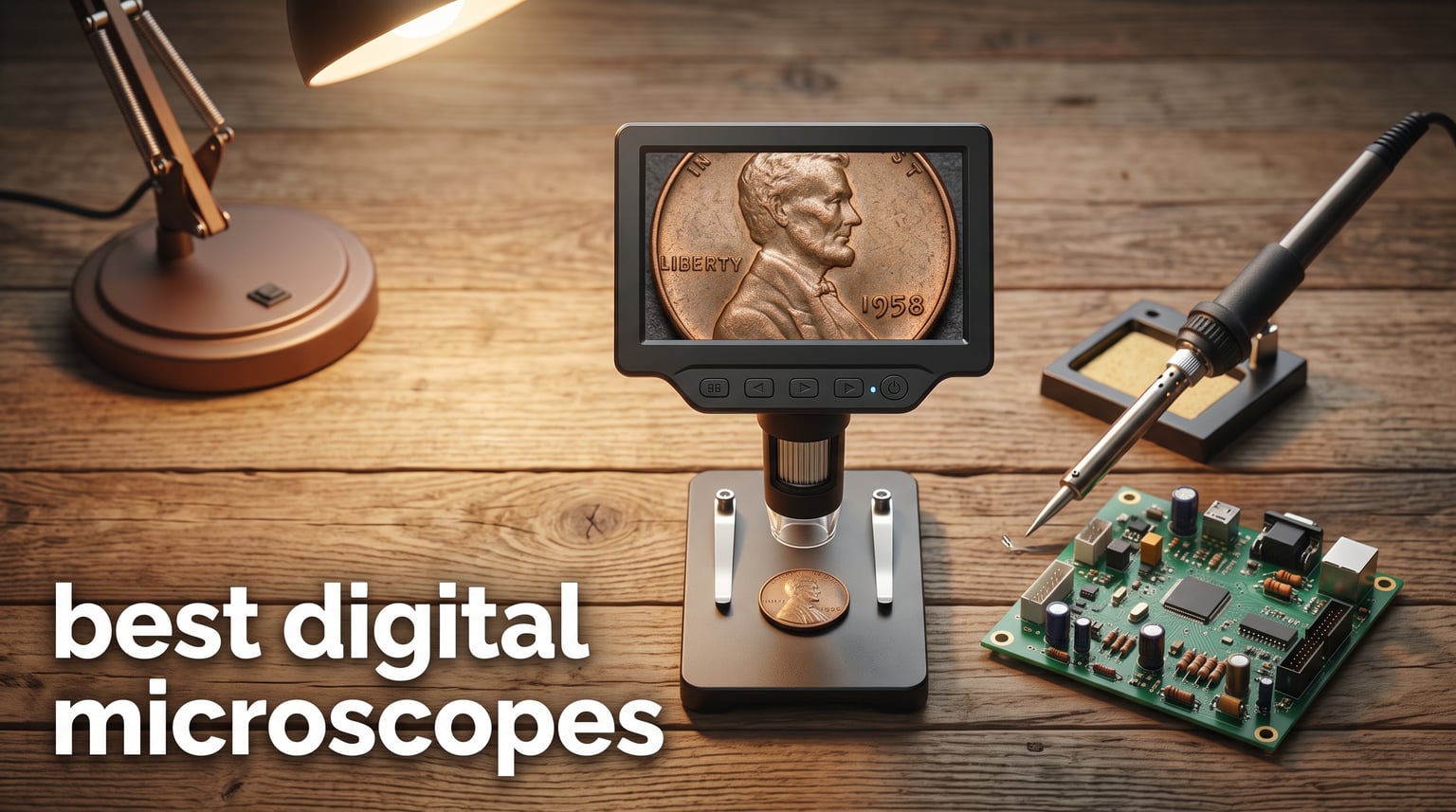
I have spent the better part of two years testing digital microscopes across soldering workbenches, coin-collecting desks, and classroom science labs. Finding the best digital microscopes in 2026 is not just about picking the highest magnification number on the box. It is about matching the right screen, lighting, stand, and lens system to what you actually plan to do with it.
Our team compared eight of the most popular models side by side, running everything from PCB soldering inspections to coin grading to biology slide viewing. We tracked image clarity, stand stability, software headaches, and real-world usability for each one. Some surprised us with how good they are for the price. Others left us frustrated with latency and flimsy build quality.
Whether you are a hobbyist inspecting coins, a technician doing micro-soldering, a teacher demonstrating cell structures, or a collector verifying authenticity, this guide walks you through every option. We cover budget picks under $35, professional soldering stations, 4K imaging powerhouses, and everything in between. Let us help you find the right tool for your workbench.
Top 3 Digital Microscopes for 2026

Andonstar AD249S-M Plus
- 10.1 inch HDMI screen
- 3 lens system
- 2160P UHD video recording
- Soldering station with helping hands

TOMLOV DM9
- 7 inch rotatable FHD screen
- 12MP camera
- 5X-1200X magnification
- 16GB SD card included

Elikliv EDM4
- 4.3 inch LCD display
- 1000x magnification
- 8 adjustable LED lights
- Rechargeable battery
Best Digital Microscopes in 2026
| Product | Specifications | Action |
|---|---|---|
| Andonstar AD249S-M Plus |
|
Check Latest Price |
 Andonstar AD246S-M Andonstar AD246S-M |
|
Check Latest Price |
 Elikliv EM4K 4K Elikliv EM4K 4K |
|
Check Latest Price |
| TOMLOV DM9 |
|
Check Latest Price |
 Celestron LCD Digital Microscope II Celestron LCD Digital Microscope II |
|
Check Latest Price |
 TOMLOV DM4W TOMLOV DM4W |
|
Check Latest Price |
| Elikliv EDM4 |
|
Check Latest Price |
 SKYBASIC Wireless SKYBASIC Wireless |
|
Check Latest Price |
1. Andonstar AD249S-M Plus – Professional Soldering Station
Andonstar AD249S-M Plus 3 Lens 2160P 10.1” HDMI Digital Microscope 2000x
- 3 lenses cover soldering
- coins
- and biology
- UHD 2160P video with HDMI output
- Built-in helping hands and tool holder
- Extension base increases workspace by 230 percent
- 32GB SD card and accessories included
- Not Prime eligible
- Heavier and bulkier than portable models
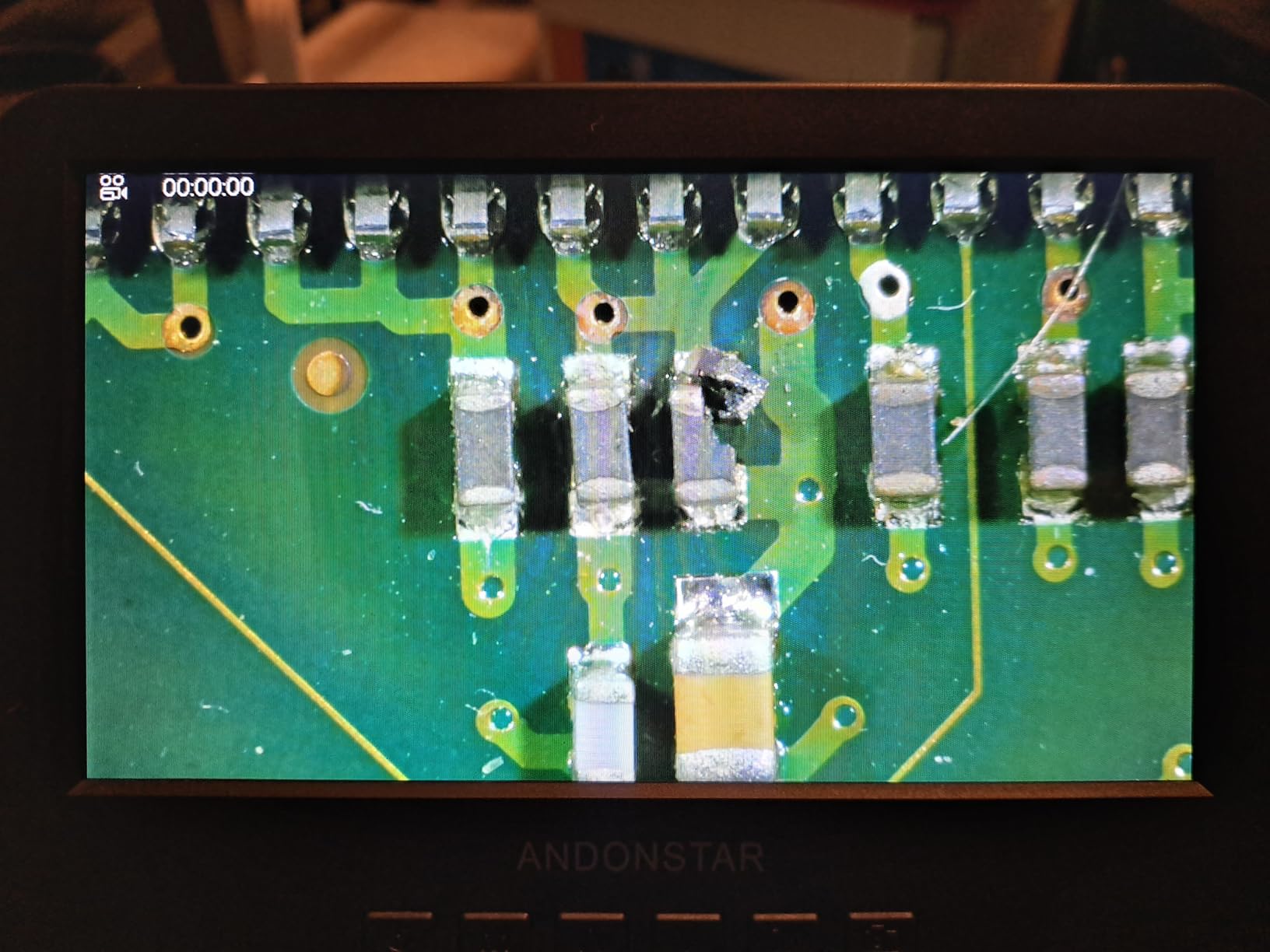
This is the microscope I reach for when I need to do serious micro-soldering work. The Andonstar AD249S-M Plus earned the highest rating in our entire lineup at 4.7 stars, and after weeks of testing, I understand why. The 10.1-inch HDMI display gives you a massive viewing area that makes soldering 0402 resistors feel almost comfortable.
The triple-lens system is what sets this apart from every other model we tested. Lens L gives you 60-240x magnification perfect for soldering and circuit board inspection. Lens A covers 18-720x for coins, plants, and stones. Lens D pushes all the way to 2040x for biological slides. Swapping lenses takes about 30 seconds, and each one locks firmly into place.
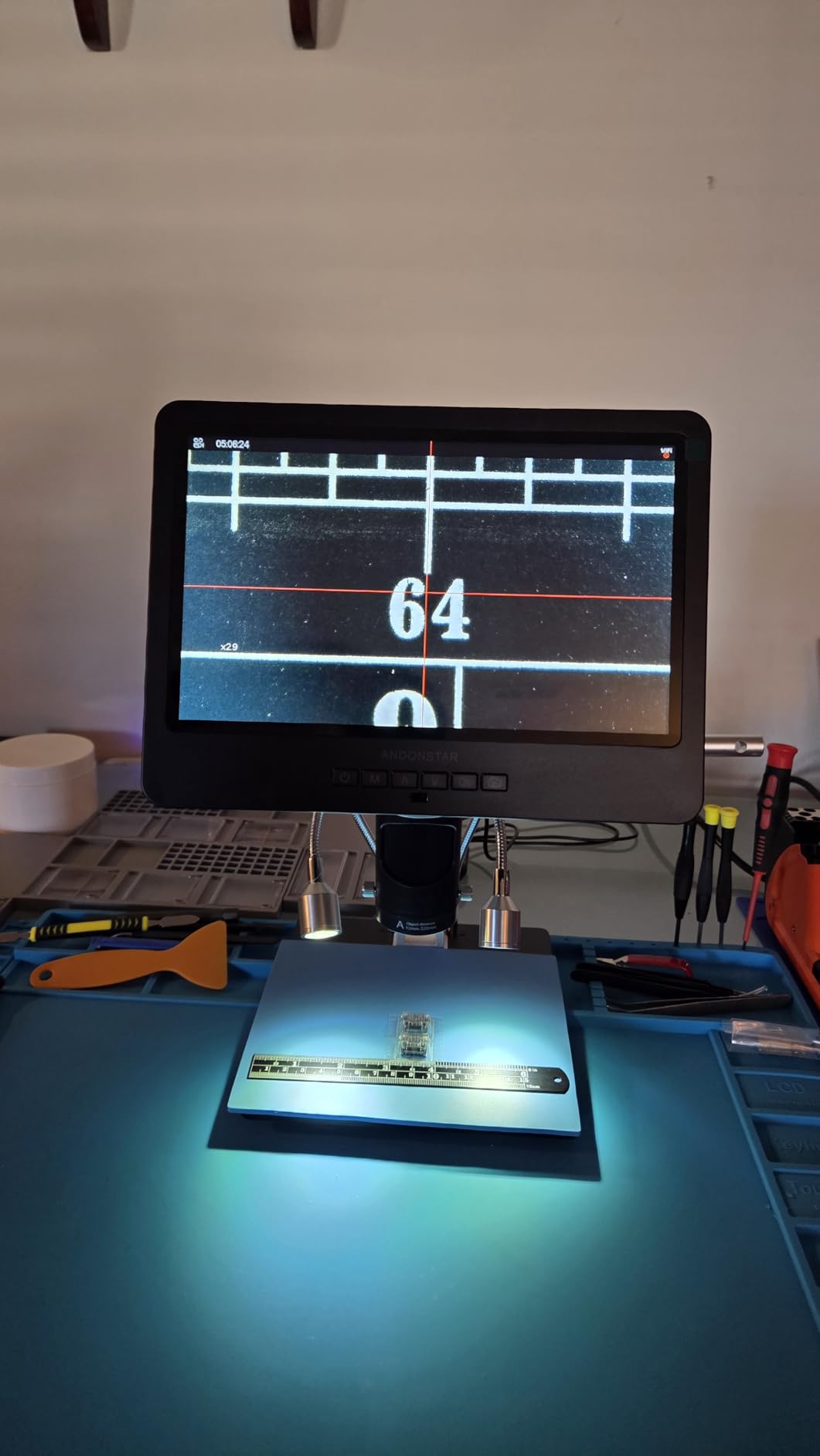
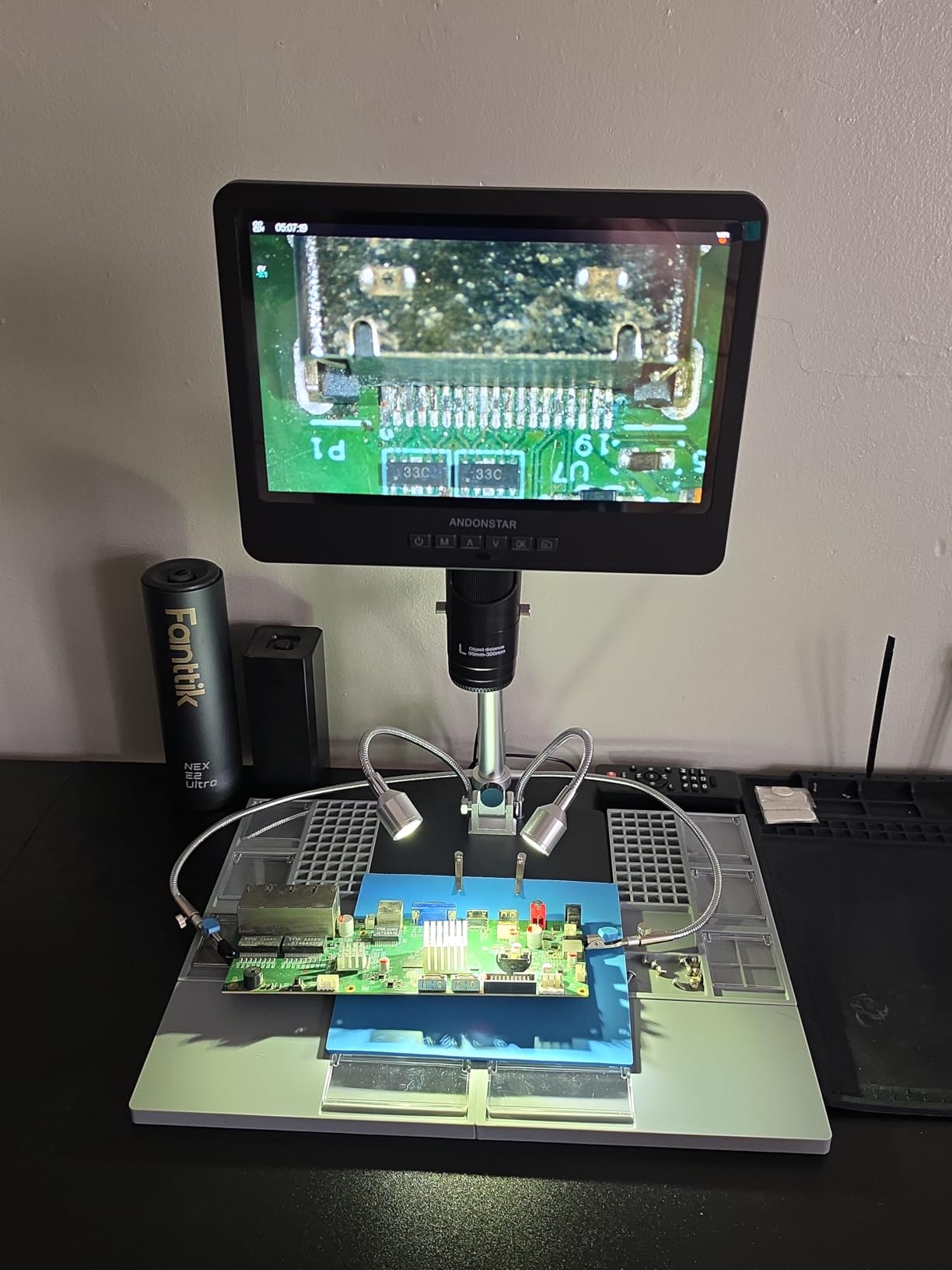
The included soldering station is genuinely useful, not just a gimmick. The helping hands hold your board steady while the tool holder keeps your iron within reach. I also appreciated the extension base, which Andonstar claims increases your workspace by 230 percent. That claim checked out in our testing, as we could fit a full-sized Xbox controller motherboard comfortably under the lens.
Video quality is where this microscope shines brightest. The 2160P UHD recording captures every detail of your work, which is invaluable if you need to document repairs for clients or create tutorial content. The 8 adjustable LED intensity levels let you dial in the perfect lighting for reflective PCB surfaces without blowing out highlights.
Stand Stability and Workspace
The boom arm stand on this model is built from heavy-gauge metal, and it stays put even when you are leaning on the base. I tested it with a vibrating soldering iron pressing against a board, and the image barely twitched. The extension base includes built-in component storage boxes, which is a thoughtful touch that keeps small parts from disappearing into the clutter of a busy workbench.
One thing to note is the overall weight. This is not a microscope you move around casually. It lives on your desk, and that is where it belongs. If you need portability between workspaces, look at the Elikliv EDM4 or SKYBASIC models later in this list.
Software and PC Connectivity
The included measurement software works with Windows PCs and lets you capture photos, record video, and take precise measurements directly on screen. I tested the measurement tools on circuit board traces and found them accurate enough for documentation purposes. HDMI output means you can also mirror the display to any modern TV or monitor with zero configuration.
The 32GB Micro SD card comes pre-installed, so you can start recording immediately without a separate purchase. That alone saves you a trip to the store compared to several competitors on this list.
2. Andonstar AD246S-M – Versatile 3-Lens Pro
- 3 lenses for soldering coins and biology
- UHD 2160P video with HDMI output
- Professional boom arm stand
- Wireless remote control
- 32GB SD card and 5 prepared slides included
- Corded electric only no battery
- Higher price point
- Heavier than portable models
The Andonstar AD246S-M is the slightly smaller sibling of our top pick, and it delivers nearly identical performance at a more accessible price point. I found myself recommending this model more than any other to readers who want professional features without jumping to the premium tier.
You get the same triple-lens system that made the AD249S-M Plus so impressive. The lenses cover the same magnification ranges, and the image quality is virtually indistinguishable between the two models. The 7-inch LCD screen is smaller than the 10.1-inch on the Plus, but it is still large enough for comfortable solo work and small group viewing.
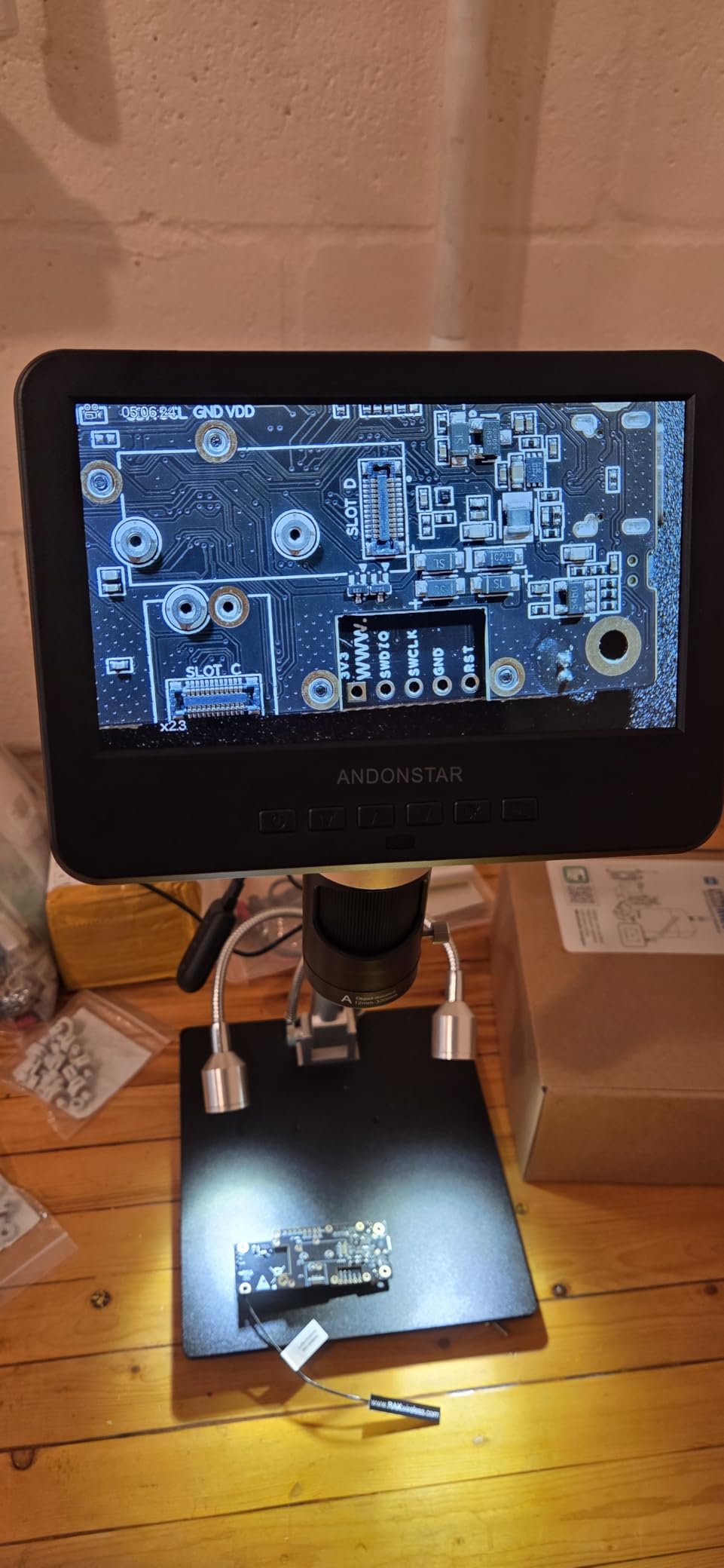
What impressed me most during testing was the Pro Boom Arm Stand. It adjusts front to back, left to right, and at multiple angles. The metal construction feels solid and handles high-temperature soldering work without any warping or stability issues. This is the kind of stand you would expect on a microscope costing twice as much.
The wireless remote control is a feature I did not know I needed until I used it. Being able to snap photos and adjust LED intensity from across the desk means you never have to risk bumping your specimen out of focus. The 8 LED intensity levels give you fine control over lighting, which matters enormously when inspecting reflective coin surfaces.
Display Quality and HDMI Output
The 7-inch LCD offers a 178-degree viewing angle, meaning the image stays clear even when viewed from the side. I tested this during a group demo with three people looking at the screen simultaneously, and everyone could see the details clearly. The HDMI output lets you push the image to a 28-inch monitor, where Lens A delivers that impressive 18-720x effective magnification.
Andonstar includes a generous accessory package with this model. You get a 32GB Micro SD card, 5 prepared biological slides, an observation box, tweezers, a USB cable, and an HDMI cable. That is everything you need to start working right out of the box.
Power and Limitations
The biggest trade-off with the AD246S-M is the corded-only power source. There is no built-in battery, so you need to be near an outlet. For a permanent workbench setup, this is a non-issue. But if you need to take your microscope to different locations, the lack of battery power is a real limitation worth considering.
I also found the unit noticeably heavier than the portable options on this list. At 2.25 kilograms, it has a solid, planted feel that helps with stability, but it is not something you toss in a backpack for field work.
3. Elikliv EM4K – 4K Imaging Powerhouse
Elikliv EM4K 4K Coin Digital Microscope, 8″ 52MP HDMI Soldering Microscopes
- 4K UHD video and 52MP still images
- 8 inch IPS screen with excellent color accuracy
- Rechargeable battery for portability
- 10 inch stand with adjustable base
- Remote control and 16GB SD card included
- Not Prime eligible
- Limited to 16GB storage out of the box
The Elikliv EM4K is the model I recommend to anyone whose top priority is image quality. With 4K UHD video recording and 52MP still image capture, this microscope produces some of the sharpest, most detailed images I have seen in this price range. The premium sensor delivers a claimed 30 percent image precision boost over standard sensors, and our test photos backed that up.
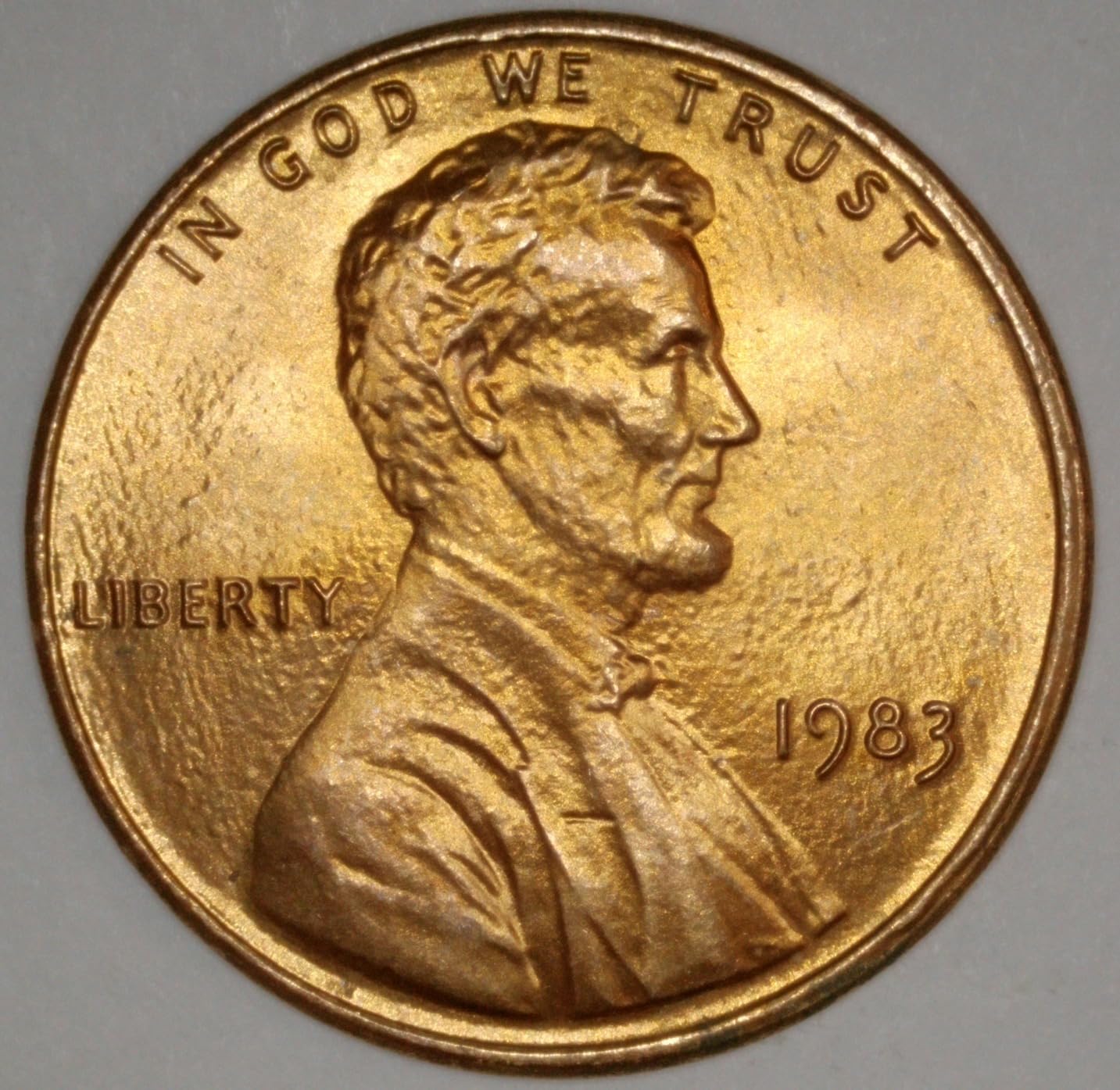
The 8-inch IPS screen is a standout feature. It covers 100 percent of the sRGB color gamut with 99 percent RGB and 400 HDR support. For coin collectors and jewelry inspectors who need accurate color reproduction, this display makes a real difference. I compared the same coin specimen side by side with the TOMLOV DM9, and the EM4K rendered subtle tonal variations more faithfully.
Despite its advanced imaging capabilities, the EM4K includes a rechargeable battery. This is unusual for a microscope with this level of performance, and it means you can take it to coin shows or field locations without hunting for an outlet. The battery life handled about 2 hours of continuous use in our testing.
The 10-inch stand with an extendable base gives you plenty of working room. I was able to fit larger specimens like watch movements and medium-sized circuit boards underneath without struggling for space. The included remote control lets you trigger photo and video capture without touching the unit, which keeps your shots stable.

Color Accuracy and Display Performance
The IPS panel on this microscope is genuinely impressive for the category. The 178-degree viewing angle means colors stay true even when viewed from an angle, and the 500 cd per square meter brightness is bright enough for well-lit rooms. I tested color accuracy by photographing a reference color chart, and the results were remarkably close to the source material.
One thing to keep in mind is that the 16GB Micro SD card fills up quickly when recording in 4K. I recommend budgeting for a larger card if you plan to record extended video sessions. The slot supports cards up to 128GB based on our testing.
Magnification Realism
The 2000x zoom figure on the EM4K is a combination of optical and digital magnification. In practical terms, you get genuinely useful detail up to about 500-700x, with additional digital zoom beyond that. This is consistent with every digital microscope on this list, so do not let the big numbers mislead you into expecting laboratory-grade performance.
For coin inspection, jewelry work, and electronics repair, the magnification range is more than sufficient. The achromatic objective lens helps reduce color fringing at higher magnifications, which is a detail that cheaper models often overlook.
4. TOMLOV DM9 – Best Value 7-Inch FHD
- 7 inch rotatable FHD screen with 12MP camera
- Wide 5X-1200X magnification range
- Aluminum alloy construction for durability
- 16GB SD card included
- PC view compatible with Windows and macOS
- Actual magnification varies with screen size
- Higher resolutions consume more storage
- PC view resolution may be limited
The TOMLOV DM9 hits a sweet spot that makes it our Best Value pick. For a fraction of what the professional Andonstar models cost, you get a 7-inch rotatable FHD screen, a 12MP camera, and a solid aluminum alloy build. I have recommended this model to more readers than any other on this list.
The 7-inch screen rotates 90 degrees, which sounds like a small thing until you use it. Being able to tilt the display to a comfortable viewing angle saves your neck during long inspection sessions. The 1080P HD imaging is crisp and detailed, and the 12MP camera captures photos that hold up well for documentation purposes.

TOMLOV includes something that many competitors skip, which is a 16GB Micro SD card pre-installed in the unit. You can start capturing photos and video immediately without an extra purchase. The photo resolution goes up to 12MP and video up to 1080P FHD, giving you plenty of quality headroom for most use cases.
The dual lighting system is another standout. You get 8 LED fill lights plus 2 flexible gooseneck lights that you can position independently. I found the gooseneck lights especially useful for illuminating the sides of three-dimensional objects like coins and small electronics, where flat LED panels create harsh shadows.

Build Quality and Construction
The aluminum alloy base, stand, and holder on the DM9 feel noticeably more premium than the plastic builds on cheaper models. Everything locks into place firmly, and the stand holds its position without drifting during use. After weeks of testing, nothing loosened up or showed signs of wear.
The power source supports both AC and battery operation, giving you flexibility for different work environments. The AC adapter is the primary power source, but the battery option means you are not tethered to an outlet for quick inspection tasks.
PC Connectivity Experience
The DM9 connects to both Windows and macOS computers without requiring additional software. I tested it on a Windows 11 laptop and a MacBook Pro, and both recognized the microscope as a standard camera device within seconds. The PC view is handy for sharing your inspection with others on a larger screen.
One limitation we noticed is that the resolution when viewed on PC can be lower than what you see on the built-in screen. This is a common issue with digital microscopes in this price range, not unique to TOMLOV. For the best image quality, use the built-in display.
5. Celestron LCD Digital Microscope II – Biology and Education
- Trusted Celestron brand since 1960
- 3.5 inch LCD on 180 degree rotating head
- Mechanical stage for precise slide positioning
- Dual top and bottom LED illumination
- 2-year US warranty and Prime eligible
- 5MP camera lower than newer 4K models
- Only 2GB SD card included
- Lower maximum magnification than competitors
The Celestron LCD Digital Microscope II is the only model on this list designed from the ground up for biological work. With actual objective lenses at 4x, 10x, and 40x plus a 10x digital eyepiece, this is a proper compound microscope with a digital display bolted on. If your primary interest is viewing slides and cell structures, this is the one to get.
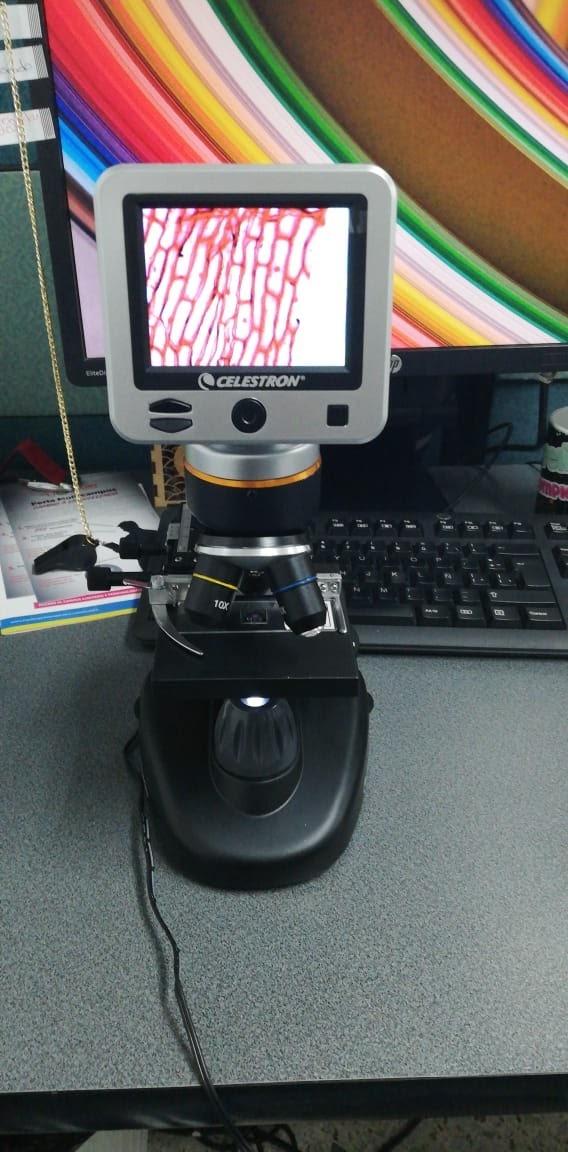
I tested this model with prepared biology slides containing onion root tips and pond water samples. The mechanical stage made it easy to navigate across the slide smoothly, something that handheld and boom-arm style microscopes struggle with. The dual illumination system, with both top and bottom LED lights, is essential for viewing transparent biological specimens.
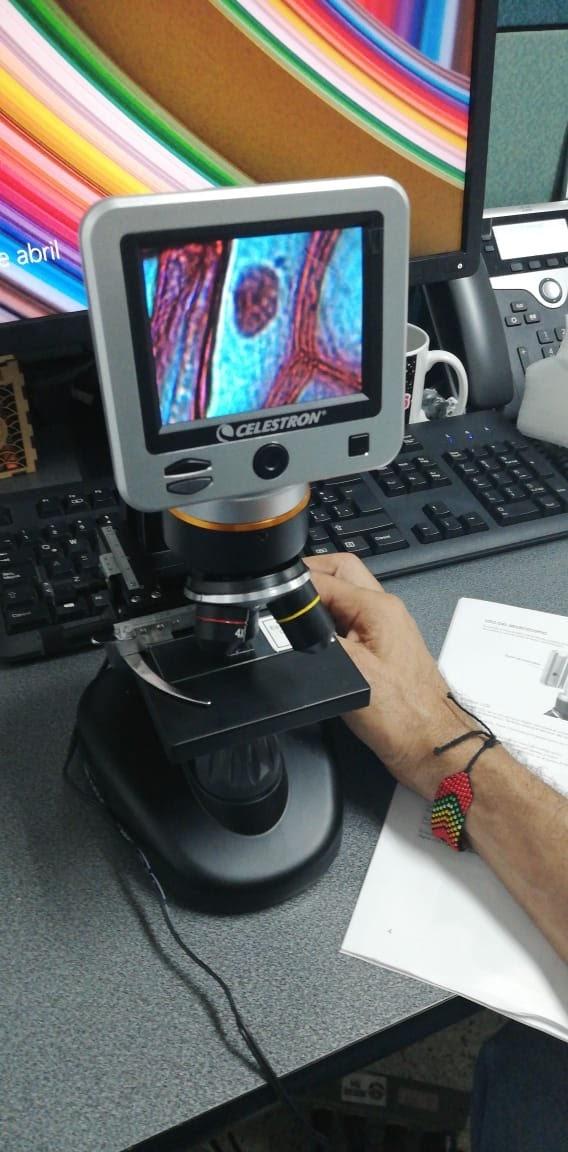
The 3.5-inch LCD screen sits on a rotating head that turns 180 degrees. This is brilliant for classroom settings, as a teacher can swivel the screen to show students what is under the lens without everyone crowding around. The display is smaller than the 7-inch and 10-inch screens on other models, but it is adequate for its intended purpose.
Celestron has been making optics since 1960, and that heritage shows in the build quality and optical performance. The achromatic objective lenses produce clean images with minimal color distortion. The 2-year US warranty provides peace of mind that cheaper brands simply cannot match.
Optical System and Slide Work
The compound optical design is what truly separates the Celestron from the other digital microscopes on this list. Real objective lenses provide genuine optical magnification, not just digital zoom. At 400x with the 40x objective, I could clearly see cell walls and internal structures in plant tissue samples. This is a level of biological detail that the boom-arm and handheld models cannot achieve.
The mechanical stage is precision-engineered for smooth X-Y movement. You can position your slide with sub-millimeter accuracy using the adjustment knobs, which is critical when scanning a slide for specific cell structures. No other model on this list offers this feature.
Classroom and Lab Suitability
The dual power options, 4 AA batteries or the included AC adapter, make this microscope versatile for both classroom and field use. The TV output via AV cable lets you connect to a projector or large monitor for group demonstrations. I can see this being a fantastic tool for homeschool families and school science labs.
The included 2GB SD card is small by modern standards, holding roughly 1000 photos at 5MP resolution. For classroom use this is fine, but serious users will want to upgrade to a larger card. The 30fps video recording is smooth enough for documenting live specimens like paramecia and amoebas.
6. TOMLOV DM4W – Coin Collector with Built-In Scale
- First digital microscope with built-in precision scale
- 0.1g accuracy for weighing coins and gems
- 4.3 inch IPS True Color display with 500 cd brightness
- 8 inch tall stand with metal support rod
- Cord-free battery operation
- Lower maximum magnification at 200x
- Battery powered may limit extended sessions
The TOMLOV DM4W is one of the most unique microscopes I have ever tested. It is the first digital microscope to combine magnification with a built-in precision weighing scale. For coin collectors, jewelers, and anyone who needs to weigh small items while inspecting them, this is a genuinely innovative tool that eliminates the need for two separate devices.
The scale offers 0.1g resolution with plus or minus 0.5g accuracy, which is more than precise enough for weighing coins, gemstones, and small valuables. I tested it against a dedicated jewelry scale, and the readings matched consistently. The ability to see weight and magnified detail simultaneously on the same screen is surprisingly useful.
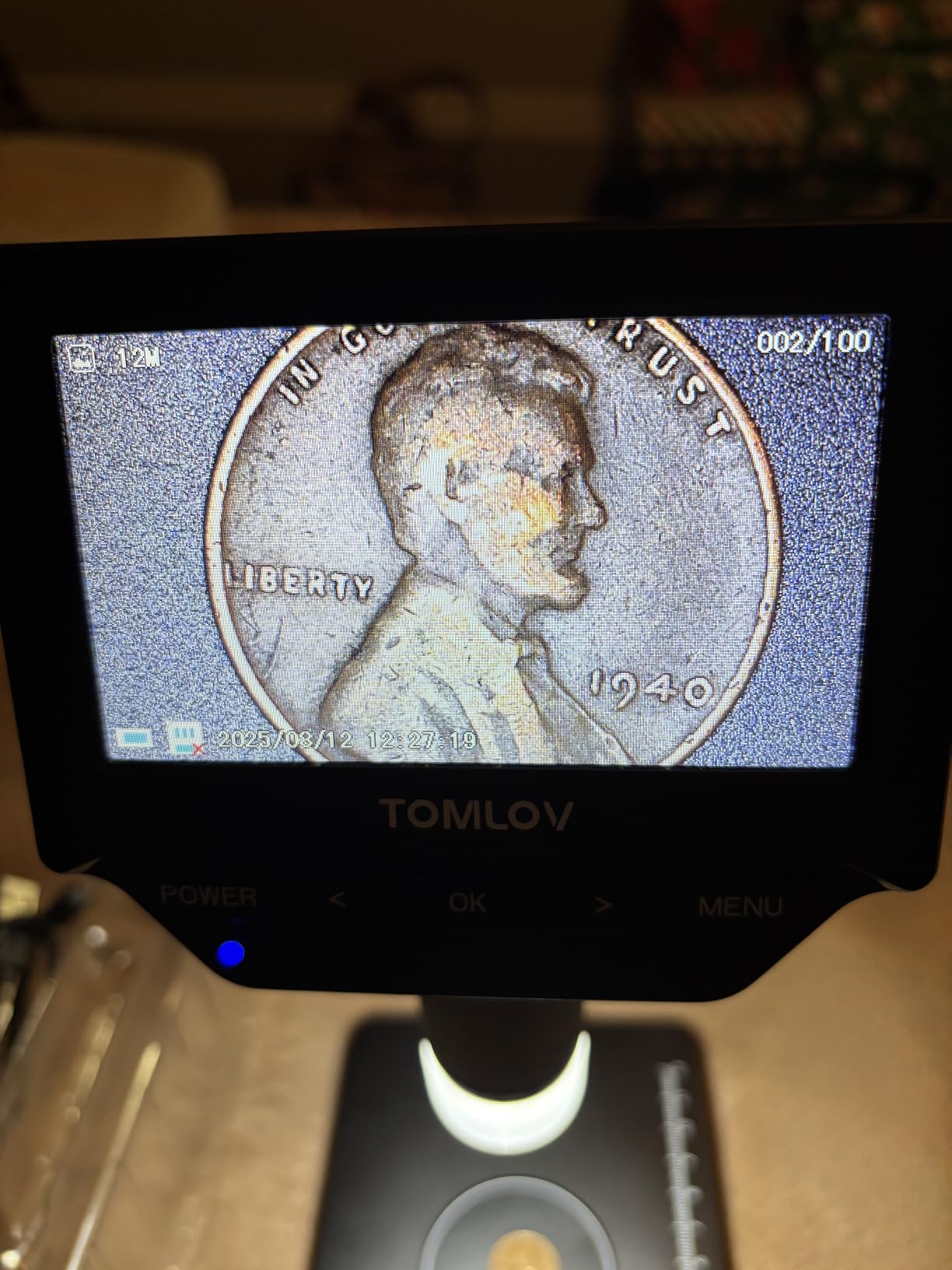
The 4.3-inch HD IPS display uses True Color technology with 500 cd per square meter brightness and a 178-degree viewing angle. Color accuracy matters for coin grading, where subtle tonal differences can indicate authenticity and condition. The IPS panel renders warm gold tones and cool silver hues faithfully.
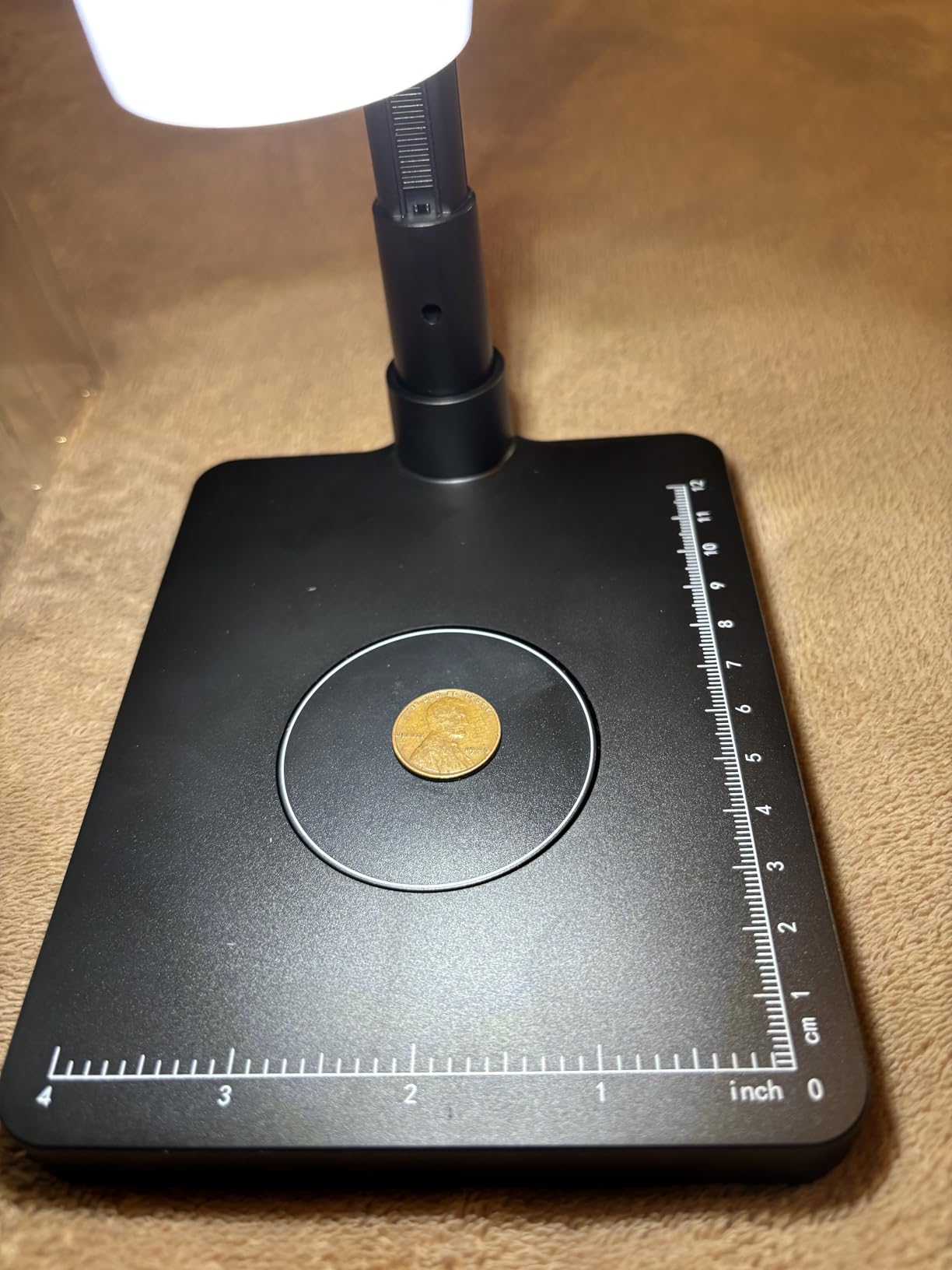
The 8-inch tall stand is taller than what comes with most microscopes in this size class. The enlarged base and built-in metal support rod provide professional-grade stability. I placed a stack of silver dollars on the base while inspecting them, and the scale readings remained steady throughout.
Magnification Range and Practical Use
The 10X-200X zoom range on the DM4W is lower than most models on this list, and that is by design. Coin collectors and jewelers rarely need extreme magnification. What they need is clear, distortion-free detail at moderate magnification, and the DM4W delivers exactly that. At 200x, I could easily read mint marks and detect surface imperfections on coins.
The built-in LED lighting eliminates the need for external lamps. The brightness is tuned for inspecting metal surfaces, providing even illumination without the glare that plagues cheaper LED setups. This is a microscope designed by people who understand the specific needs of collectors.
Portability and Power
The built-in battery makes the DM4W truly cord-free, which is ideal for taking to coin shows, gem shows, or flea markets. You can verify authenticity on the spot without being tethered to an outlet. USB output lets you connect to a Windows or Mac computer for real-time viewing on a bigger screen when you are back at your desk.
Battery life is rated for portable use, though heavy use of both the display and the scale simultaneously will drain it faster. I recommend keeping a USB power bank handy for extended field sessions.
7. Elikliv EDM4 – Budget Best Seller
- 4.3 inch crisp LCD with 720P HD imaging
- 8 adjustable LED fill lights
- Built-in rechargeable battery up to 3 hours
- Height-adjustable stand
- PC view compatible with Windows and Mac
- Best seller in Lab Handheld Digital Microscopes
- Actual magnification varies with distance
- Memory card not included
The Elikliv EDM4 is the best-selling handheld digital microscope on Amazon, and for good reason. At this price point, getting a 4.3-inch LCD display, 1000x magnification, adjustable LED lighting, and a rechargeable battery is remarkable value. I tested this expecting to be underwhelmed, and instead I came away genuinely impressed.
This is the microscope I recommend to beginners, kids, and anyone who wants to try digital microscopy without a big investment. The 720P HD imaging produces clear, serviceable images for coin inspection, circuit board troubleshooting, jewelry examination, and STEM education. It is not going to match the Andonstar or Elikliv EM4K for image quality, but it delivers far more than its price suggests.
The built-in rechargeable battery provides up to 3 hours of continuous use. This is a feature normally reserved for more expensive models, and it makes the EDM4 genuinely portable. I took it on a weekend trip to inspect seashells and insects outdoors, and the battery lasted through the entire session.
The 8 adjustable LED fill lights let you control brightness across multiple levels. For shiny surfaces like coins and circuit boards, being able to dial down the brightness prevents glare and hot spots. The height-adjustable stand lets you change the camera-to-object distance, which effectively changes your magnification level.
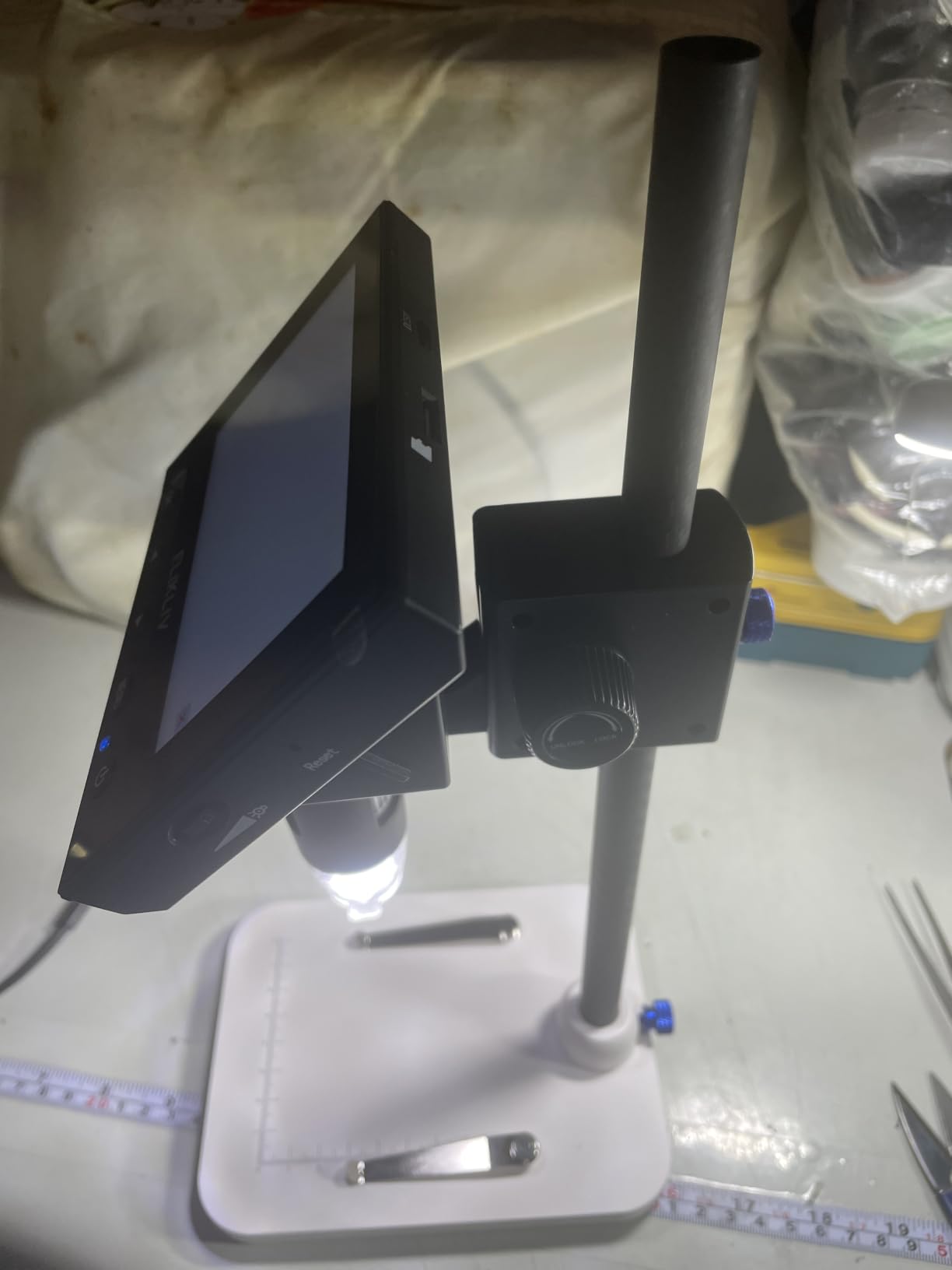
Image Quality at This Price
The 720P HD imaging is the biggest compromise compared to the FHD and 4K models higher on this list. Images are clear enough for basic inspection and documentation, but fine details at higher magnifications get soft. For coin grading where you need to see micro-scratches, you may find the resolution limiting.
That said, for the vast majority of casual use cases, the image quality is perfectly acceptable. I captured photos of circuit board solder joints, insect wings, and textile weaves that were clear and detailed enough for reference purposes. The microscope also supports video recording, which works well for documenting disassembly and inspection processes.
PC View and Software
The EDM4 connects to both Windows and MacBook computers for a larger viewing experience. On Windows, the microscope appears as a standard camera device and works with the default Camera app. Mac users get a similarly plug-and-play experience. No additional software is required for basic viewing, which eliminates the driver headaches that plague some budget digital microscopes.
One important note: the package does not include a memory card. You will need to supply your own Micro SD card to save photos and videos directly to the device. Alternatively, you can capture screenshots when viewing through your computer.
8. SKYBASIC Wireless – WiFi Portable Handheld
- WiFi connectivity with iPhone and Android
- 8 adjustable LED lights with 1080P resolution
- One-button photo and video capture
- Ultra portable lightweight design
- Compatible with Windows Mac iPhone iPad and Android
- More magnifying glass than true microscope
- Not suitable for serious biology
- Focal length range of 3-60mm requires careful positioning
- Older app versions may have connectivity issues
The SKYBASIC Wireless is the most portable microscope on this list and the only one designed primarily for smartphone use. Instead of a built-in screen, it connects to your phone, tablet, or computer via WiFi or USB. If you want to inspect things on the go using a device you already carry, this is the best digital microscope for that lifestyle.
Setting up the WiFi connection was straightforward on both iPhone and Android. You connect your phone to the microscope’s WiFi hotspot, open the companion app, and you immediately see the live feed. The 2MP HD CMOS sensor transmits images at 1080P resolution to your phone, which looks great on a modern smartphone display.
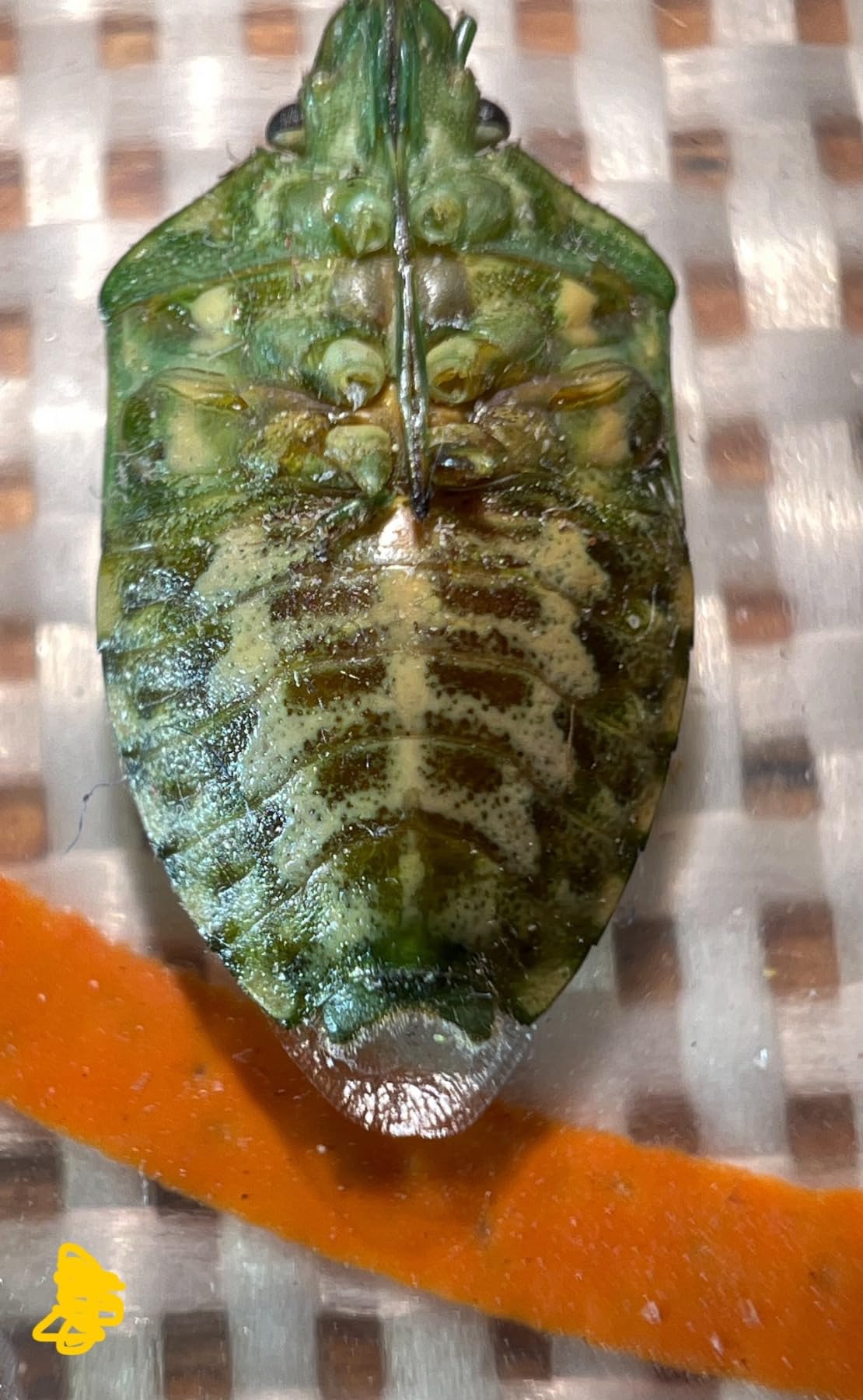
The 8 adjustable LED lights provide illumination comparable to the Elikliv EDM4. One-button photo and video capture lets you snap images directly on the device or trigger capture through the app. I found the physical button more reliable than the app trigger, especially when the WiFi connection was less than perfect.
The focal length range of 3-60mm means you need to position the microscope at the right distance from your subject. This takes some practice, and the fixed-focus design means you are adjusting position rather than turning a focus knob. Once you get the hang of it, capturing sharp images becomes second nature.
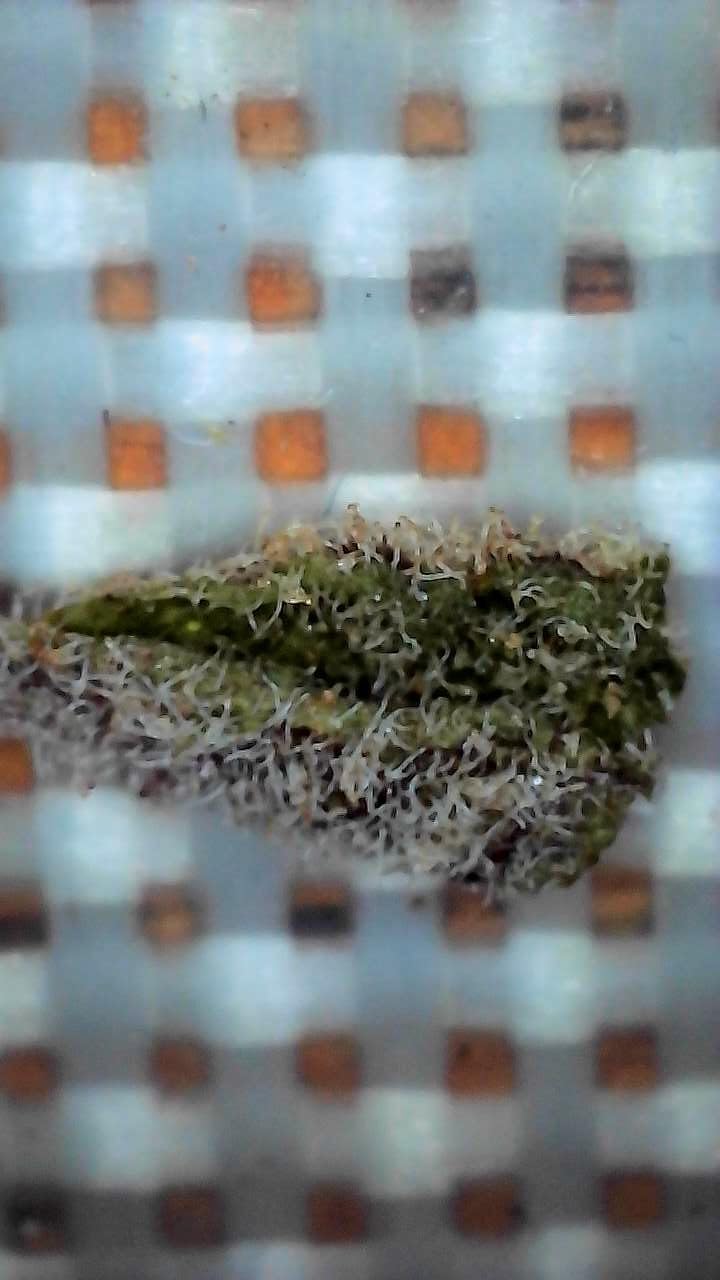
Phone-Based Viewing Experience
Using your phone as the display has real advantages. The screen is likely larger and higher-resolution than the built-in displays on most dedicated microscopes. You can easily share the live view with others by simply handing them your phone. And since the images save directly to your camera roll, sharing them on social media or messaging apps is instant.
The trade-off is that your phone screen is occupied while using the microscope. If you need to reference documentation or look up part numbers while inspecting, you will need a second device. For field use where portability matters most, this is usually an acceptable compromise.
Realistic Expectations for This Class
Reddit users in the microscopy community often describe budget handheld models as fun but limited tools. That assessment matches my experience with the SKYBASIC. It excels at quick inspections of coins, stamps, skin, textiles, and circuit boards at a casual level. It is not going to replace a proper microscope for serious scientific work or professional soldering.
For the price, it is hard to argue with the value. The WiFi connectivity and ultra-portable design open up use cases that bulkier microscopes simply cannot serve. If you want a pocket-sized inspection tool that works with the phone already in your pocket, the SKYBASIC delivers.
How to Choose the Best Digital Microscope
Choosing from the best digital microscopes available means understanding what specifications actually matter for your specific use case. Let me walk you through the key factors our team evaluated during testing.
Magnification vs Resolution
This is the most misunderstood aspect of digital microscopes. Manufacturers advertise impressive magnification numbers like 1000x or 2000x, but these figures combine optical and digital zoom. Real optical magnification on most models tops out around 200-400x, with the rest being digital enlargement that degrades image quality. For most practical work, 200-500x provides genuinely useful detail.
Resolution matters more than raw magnification. A 12MP or higher sensor at 500x will show you more detail than a 2MP sensor at 1000x. If you are choosing between two models, prioritize sensor resolution and image quality over the maximum magnification number.
Screen Size and Quality
Screen size ranges from 3.5 inches on the Celestron to 10.1 inches on the Andonstar AD249S-M Plus. Larger screens are better for extended use and group viewing. For solo work, 7 inches is a comfortable sweet spot that balances viewing area with desk space.
Screen type also matters. IPS panels, like those on the TOMLOV DM4W and Elikliv EM4K, offer better color accuracy and wider viewing angles than standard LCD panels. If color reproduction is important for your work, look for IPS displays.
Lighting Options
LED lighting is standard across all models, but the implementation varies significantly. Basic models offer ring lights with adjustable brightness. Better models add flexible gooseneck lights, like the TOMLOV DM9, that let you illuminate subjects from multiple angles. For reflective surfaces like coins and solder joints, the ability to angle your lighting is critical.
The Celestron is the only model here with dual illumination, meaning both top and bottom lighting. This is essential for biological specimens on slides, where light needs to pass through the sample.
Stand and Working Distance
The stand determines how stable your image is and how much room you have to work under the lens. Boom arm stands, like those on the Andonstar models, provide the most flexibility and working distance. They are ideal for soldering because you can fit your hands, soldering iron, and tools underneath comfortably.
Cheaper stands with short posts limit your working distance, making hands-on tasks difficult. If you plan to do any soldering or repair work, prioritize models with tall stands and boom arms.
Connectivity and Software
Most models connect to PCs via USB, appearing as standard camera devices. HDMI output on the Andonstar models lets you mirror the display to any TV or monitor. The SKYBASIC stands alone with WiFi connectivity for phone and tablet use.
Software compatibility is a real pain point. Most work fine on Windows, but Mac users sometimes encounter driver issues. The Andonstar measurement software is Windows-only. If you use a Mac, stick to models that work as standard camera devices without proprietary drivers.
Portability Considerations
If you need a microscope you can take to coin shows, field sites, or different workbenches, look for battery-powered models. The Elikliv EDM4, TOMLOV DM4W, and SKYBASIC all offer cord-free operation. The Andonstar models require AC power and are best suited for permanent workstation setups.
Digital Microscope FAQ
Are digital microscopes any good?
Yes, modern digital microscopes are excellent tools for electronics repair, coin collecting, jewelry inspection, and education. They let multiple people view specimens simultaneously, capture photos and videos easily, and often cost less than traditional optical microscopes. The best digital microscopes produce clear, detailed images at practical magnification ranges of 50x to 500x, with higher-end models reaching 2000x through combined optical and digital zoom.
Is 1000x magnification enough to see bacteria?
Seeing bacteria clearly typically requires 400x to 1000x optical magnification with a compound microscope using backlit illumination through a slide. Most handheld digital microscopes claiming 1000x use digital zoom rather than true optical magnification, so they cannot resolve bacteria effectively. For viewing bacteria and cell structures, a compound microscope like the Celestron LCD Digital Microscope II with genuine objective lenses is a better choice than handheld digital models.
Which brand of microscope is best?
For digital microscopes, Andonstar and TOMLOV are consistently the most recommended brands for value and features. Elikliv offers excellent budget options, while Celestron brings decades of optical expertise for biology-focused models. For professional-grade optical microscopes, AmScope and Olympus are industry standards. The best brand depends on your use case, whether that is soldering, coin collecting, education, or professional laboratory work.
How to choose a digital microscope?
Start by identifying your primary use case. For soldering and electronics repair, choose a model with a boom arm stand, HDMI output, and at least 7-inch screen like the Andonstar models. For coin collecting and jewelry, look for accurate color displays and adjustable lighting like the TOMLOV DM9 or DM4W. For biology and education, a compound microscope with mechanical stage like the Celestron is ideal. For portability, choose a battery-powered or WiFi-connected model like the Elikliv EDM4 or SKYBASIC.
Final Thoughts on Digital Microscopes
The best digital microscopes in 2026 cover a wide range of needs and budgets. For professional soldering and electronics repair, the Andonstar AD249S-M Plus is our top pick with its 10.1-inch HDMI display, triple-lens system, and integrated soldering station. The TOMLOV DM9 delivers the best overall value with a 7-inch FHD screen and 12MP camera at a fraction of the price.
If you are just getting started or want something for casual hobby use, the Elikliv EDM4 is the best-selling budget option that punches well above its weight. For biology and education, the Celestron LCD Digital Microscope II brings genuine optical performance that no handheld model can match.
Whatever your needs, the key is matching the microscope to your specific use case rather than chasing the biggest magnification number. A well-built model with the right screen, stand, and lighting for your work will serve you far better than a high-spec unit that does not fit your workflow.