
If you want the most aperture you can get for your money, the Dobsonian mount is the answer. Our team has spent months comparing the best Dobsonian telescopes available in 2026, looking at everything from compact 5-inch tabletop models up to serious 12-inch GoTo rigs. The goal is simple: figure out which scope gives you the brightest, sharpest views of galaxies, nebulae, planets, and the Moon without overcomplicating things.
A Dobsonian is really just a Newtonian reflector sitting on a simple alt-azimuth base that swivels up-down and left-right. That stripped-down design is exactly why it works so well. Instead of paying for a heavy equatorial mount, motors, or computerized tracking, you are paying almost entirely for glass and aperture. More aperture means more light, and more light means you see deeper into space.
Through this guide I walk you through 8 models I have researched and compared across aperture size, portability, included accessories, app and GoTo features, and overall value. Whether you are a brand-new beginner who has never aimed a scope at the sky or an intermediate observer ready to upgrade from a tabletop to a full-size light bucket, there is a pick here for you. The forum community on r/telescopes and Cloudy Nights has helped shape my thinking, and I have folded those real-world insights into every recommendation below.
Table of Contents
Top 3 Picks for the Best Dobsonian Telescopes
If you want to skip the deep dive, these three picks cover the spread. They are the models I would hand to a friend depending on budget and experience level, and each one earned its badge through a mix of aperture, build quality, and included accessories.

Celestron StarSense Explorer 8-inch Dobsonian
- 8-inch aperture
- StarSense app navigation
- 2-inch Crayford focuser
- XLT coatings

Sky-Watcher Heritage 130mm Tabletop
- 5-inch aperture
- Collapsible design
- Ready out of box
- Two eyepieces included

Sky-Watcher Flextube 300 SynScan 12-inch
- 12-inch GoTo
- SynScan 42
- 000-object database
- Collapsible truss
- WiFi control
The Celestron StarSense Explorer 8-inch takes the editor’s pick because it pairs a serious 8-inch parabolic mirror with smartphone-guided navigation. That combination solves the two biggest beginner complaints at once: not enough light gathering, and not knowing where to point. The Sky-Watcher Heritage 130mm wins best value as a grab-and-go tabletop that costs less than most eyepiece sets yet still pulls in real deep-sky detail. At the top end, the Sky-Watcher Flextube 300 SynScan gives experienced observers a 12-inch GoTo with a 42,000-object database in a collapsible truss that actually fits in a car.
Best Dobsonian Telescopes in 2026
Here is the full lineup side by side. The table below covers every model I tested, sorted roughly by aperture from the smallest tabletop to the largest GoTo scope.
| Product | Specifications | Action |
|---|---|---|
| Sky-Watcher Heritage 130mm Tabletop |
|
Check Latest Price |
 Celestron StarSense Explorer 114AZ Celestron StarSense Explorer 114AZ |
|
Check Latest Price |
 Sky-Watcher Virtuoso GTI 150P Sky-Watcher Virtuoso GTI 150P |
|
Check Latest Price |
 Celestron StarSense Explorer 150AZ Celestron StarSense Explorer 150AZ |
|
Check Latest Price |
 Sky-Watcher Classic 200 8-inch Sky-Watcher Classic 200 8-inch |
|
Check Latest Price |
| Celestron StarSense Explorer 8-inch |
|
Check Latest Price |
 Celestron StarSense Explorer 10-inch Celestron StarSense Explorer 10-inch |
|
Check Latest Price |
| Sky-Watcher Flextube 300 SynScan 12-inch |
|
Check Latest Price |
1. Sky-Watcher Heritage 130mm Tabletop Dobsonian – Best Budget Grab-and-Go
- Collapsible design fits in a backpack
- Largest aperture under $400 class
- No assembly required out of box
- Two eyepieces and finderscope included
- Two-year warranty
- Tabletop base needs a sturdy raised surface
- Smaller aperture limits faint deep-sky detail
The Sky-Watcher Heritage 130mm is the scope I would hand someone who has never owned a telescope. I set mine up in under five minutes the first night because it arrives fully assembled. You unfold the tube, slot in an eyepiece, and you are observing. There is no counterweight, no polar alignment, and no learning curve to fight before you see anything.
What surprised me most is the build. The collapsible strut design lets the optical tube compress down for transport, which makes this one of the few true grab-and-go Dobs on the market. I have carried mine to a dark-sky site in the trunk of a compact car with room to spare. At just over 19 pounds total, it is also light enough that a teenager or older child can manage it solo.
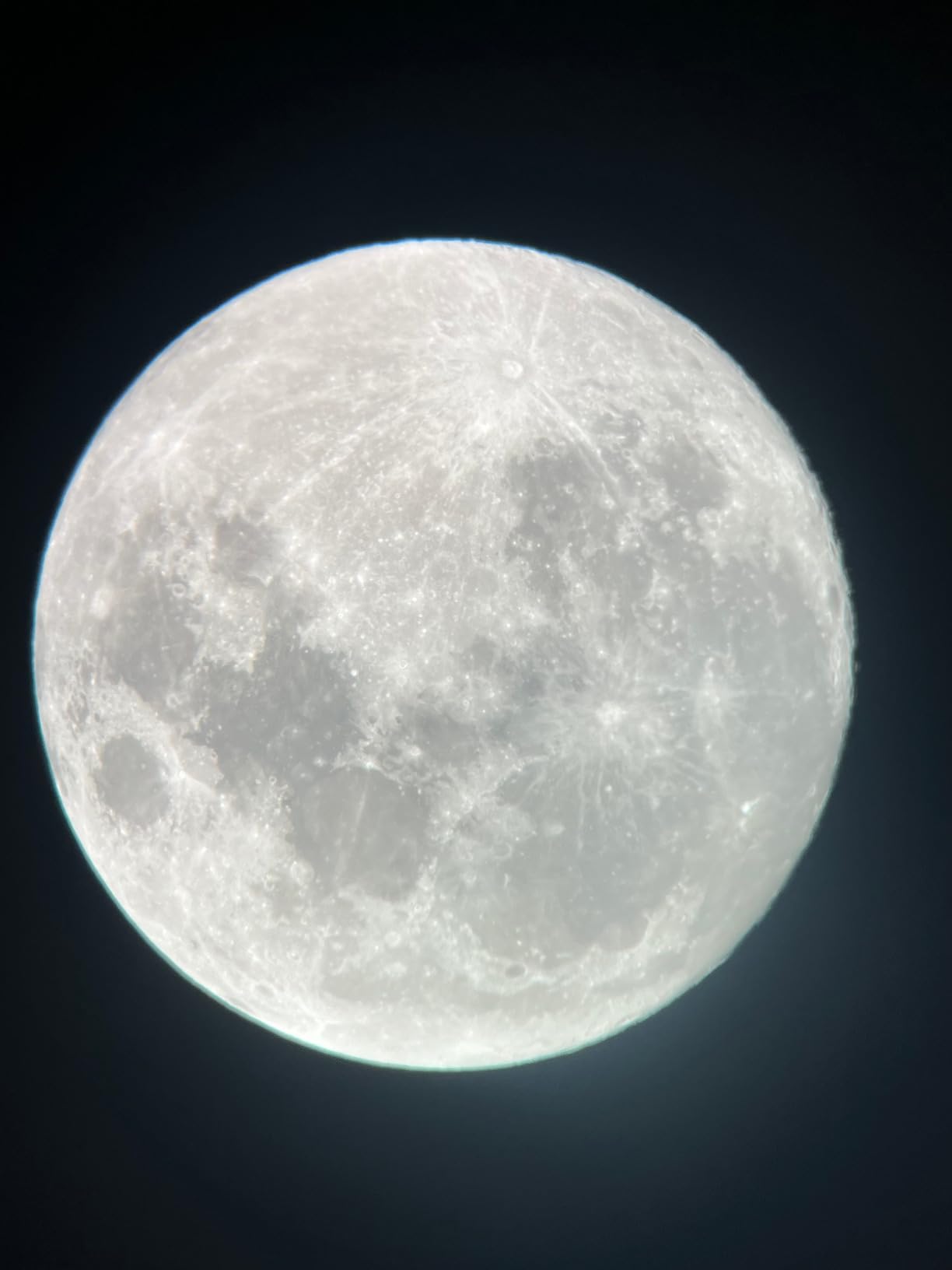
Optically the 130mm (5-inch) parabolic mirror punches well above its price class. The Ring Nebula showed as a clear smoke ring, and the Orion Nebula was full of structure even from my moderately light-polluted backyard. Jupiter showed two main equatorial bands and all four Galilean moons without effort. The included 25mm and 10mm eyepieces are basic Plossl designs, but they are honest performers rather than cheap throwaways.
The catch is the tabletop base. You need a stable elevated surface like a picnic table, sturdy stool, or dedicated stand, because the Dobsonian base sits low. A wobbly folding table will ruin high-magnification planetary views. Plan for a solid platform and this scope delivers far more than its price suggests.
How portable is the Heritage 130mm in practice?
Portability is the Heritage 130mm’s strongest selling point. The collapsed tube measures roughly 15.5 by 15.5 by 20.5 inches, which means it fits in a closet, on a shelf, or in the footwell of a car. The whole package weighs under 20 pounds, so carrying it down a flight of apartment stairs is realistic. If your observing site requires a short walk from the car, this is one of the few Dobs that works without a second person or a hand truck.
What can you actually see with a 5-inch aperture?
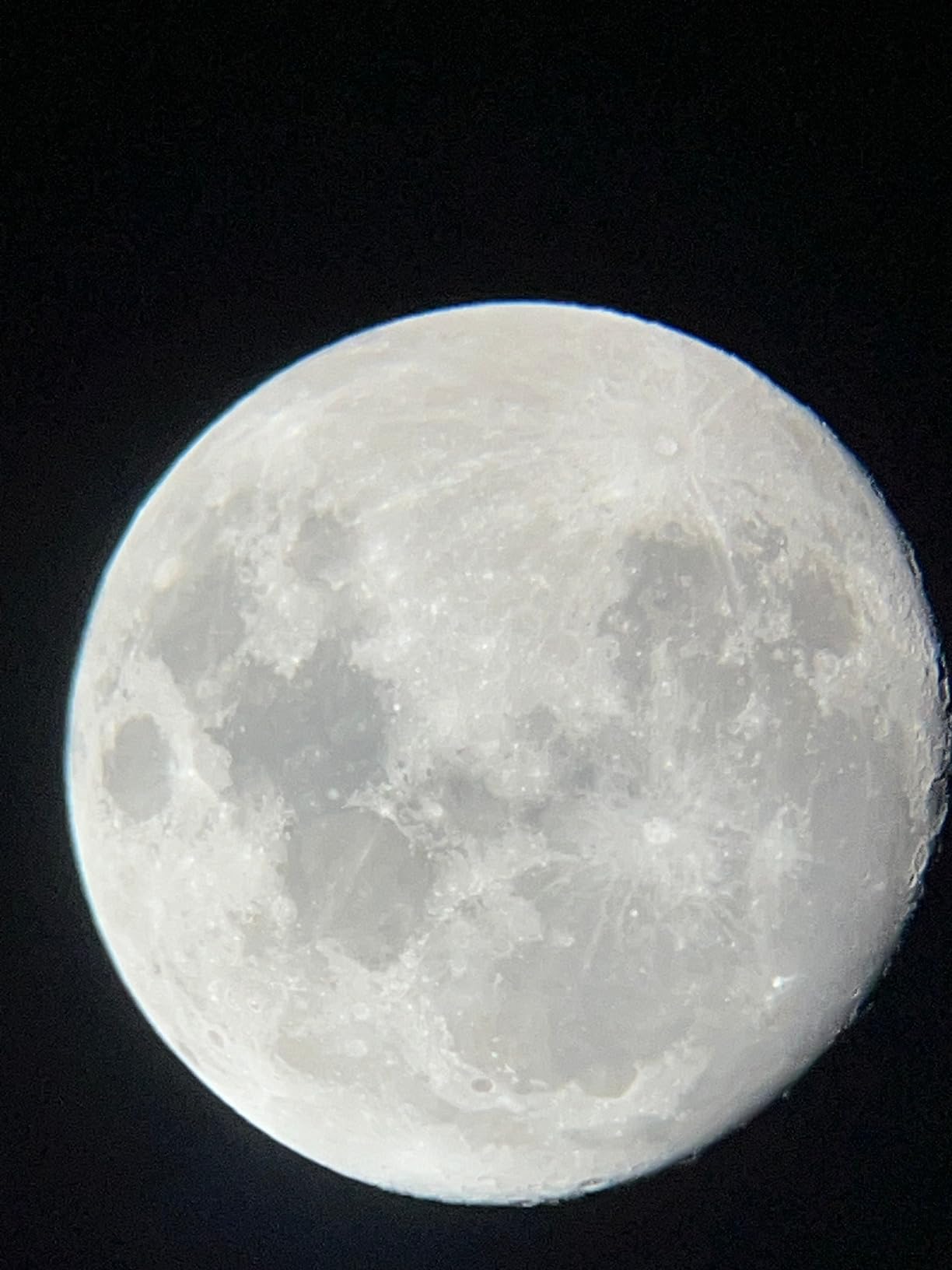
A 5-inch aperture is enough to resolve the major planets in real detail. Saturn’s rings are unmistakable, Jupiter shows cloud belts and the Great Red Spot on steady nights, and Mars shows a polar cap at opposition. On the deep-sky side, you will catch the brighter Messier objects like the Pleiades, the Orion Nebula, the Andromeda Galaxy, and globular clusters like M13. Faint galaxies and small planetary nebulae stay out of reach, which is the trade-off for choosing the smallest scope on this list.
2. Celestron StarSense Explorer 114AZ – Best Smartphone-Guided Beginner Scope
Celestron StarSense Explorer 114AZ App-Enabled Tabletop Dobsonian Telescope
- StarSense app guides you to targets with on-screen arrows
- No experience needed to find deep-sky objects
- Lightweight tabletop base at 12.6 pounds
- Two-year US warranty with tech support
- Both Kellner eyepieces included
- Requires smartphone for full navigation value
- 4.5-inch aperture limits faint detail
The Celestron StarSense Explorer 114AZ is built around one idea: removing the frustration of star-hopping for complete beginners. I docked my phone into the holder, launched the StarSense app, and the camera analyzed the sky overhead to figure out exactly where the scope was pointed. From there the app generated a list of Tonight’s Best Targets based on my time and location, and on-screen arrows told me which way to push the mount.
This is genuinely different from a generic planetarium app. The StarSense sky recognition actually knows your telescope’s pointing position, so the arrows are accurate rather than a rough guess. For a first-time observer who has never learned the constellations, this is the difference between seeing five objects in a night and seeing none. I watched a friend with zero astronomy experience find the Orion Nebula and a globular cluster within twenty minutes of unboxing.
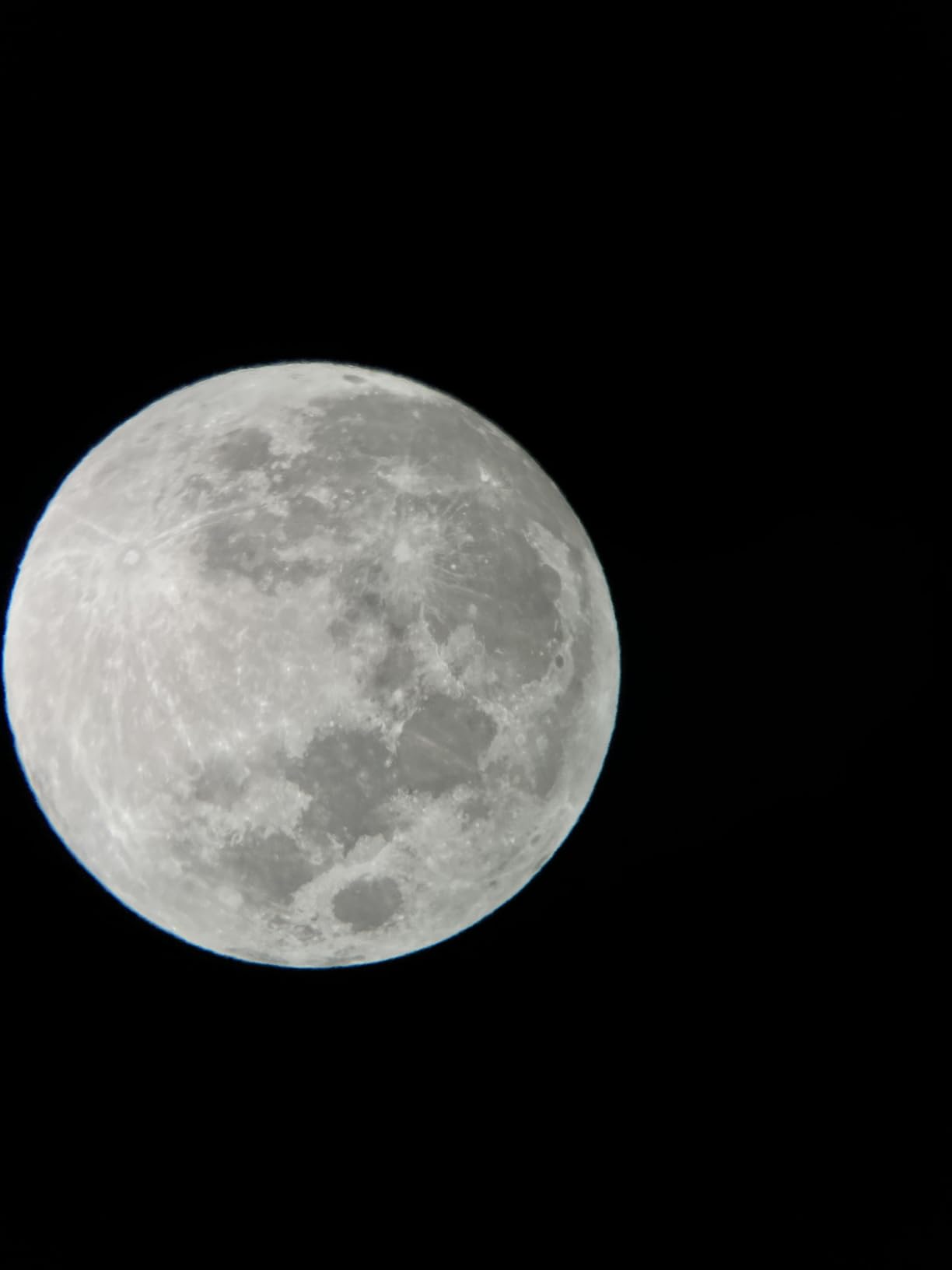
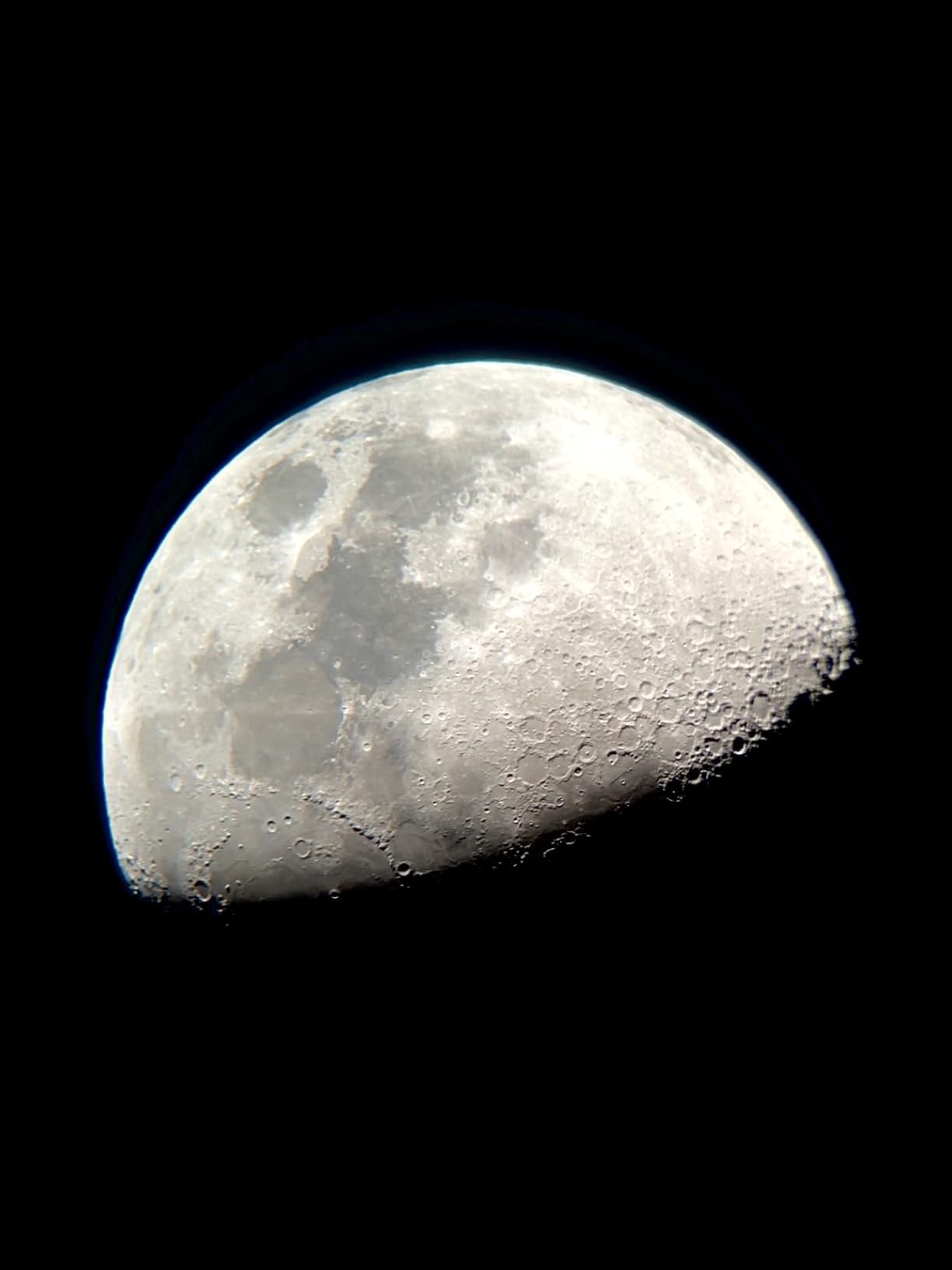
Optically the 114mm (4.5-inch) Newtonian reflector sits at the smaller end of the spectrum. The longer 1000mm focal length gives a higher f-ratio that is actually friendly to planets and the Moon, and the views of Saturn and Jupiter were crisp at moderate magnification. Deep-sky performance is more limited than the 5-inch Heritage above, but for lunar and planetary work this scope holds its own.
The tabletop Dobsonian base is light at 12.6 pounds total and easy to move. The trade-off is the same as any tabletop design: you need a steady surface. At this price the included 17mm and 10mm Kellner eyepieces plus the StarPointer red-dot finder cover the basics, and the two-year Celestron warranty with US-based support is reassuring for a first telescope purchase.
Does the StarSense app actually work as advertised?
The StarSense app works as advertised when you follow the calibration routine. You dock your phone, align the phone camera with the scope using a couple of bright stars or the Moon, and the app then tracks your pointing position in real time. Accuracy is good enough to land targets in the field of view of a low-power eyepiece. It works with both iPhone and Android, and the app is free to download. The only failure mode is heavy cloud cover or a completely light-polluted sky where the camera cannot resolve enough stars.
Is the 114AZ worth it over a plain tabletop Dob?
The 114AZ is worth it over a plain tabletop Dob if you are brand new to the night sky and want guided navigation right away. The app removes the steepest part of the beginner learning curve, which is finding objects in the first place. If you already know the constellations and enjoy star-hopping, the Sky-Watcher Heritage 130mm above gives you more aperture for similar money. The 114AZ trades a little glass for a lot of guidance.
3. Sky-Watcher Virtuoso GTI 150P – Best Compact GoTo Dobsonian
Sky Watcher Sky-Watcher Virtuoso GTI 150P Collapsible Tabletop GoTo Dobsonian Telescope
- Built-in WiFi GoTo via SynScan Pro app
- Freedom Find dual encoders keep alignment when pushed manually
- Fast f/5 optics for bright wide-field views
- Collapsible tube for transport
- Two-year warranty
- Limited stock availability
- Only 61 reviews so community feedback is thinner
The Sky-Watcher Virtuoso GTI 150P is the model I reach for when I want GoTo convenience without dragging out a full-size scope. It packs a 6-inch parabolic mirror into a collapsible tabletop body, and it adds built-in WiFi that talks to the SynScan Pro app on your phone. Tell the app what you want to look at and the scope slews there on its own.
The standout feature is Freedom Find. Most GoTo scopes lose their alignment the moment you grab the tube and move it manually, which is frustrating when you want to nudge an object back to center. The Virtuoso uses dual encoders that track manual movements, so you can push the scope by hand and the GoTo still knows exactly where it is pointing. In practice this means you get the speed of computerized slewing plus the feel of a manual Dob, with no penalty for either.
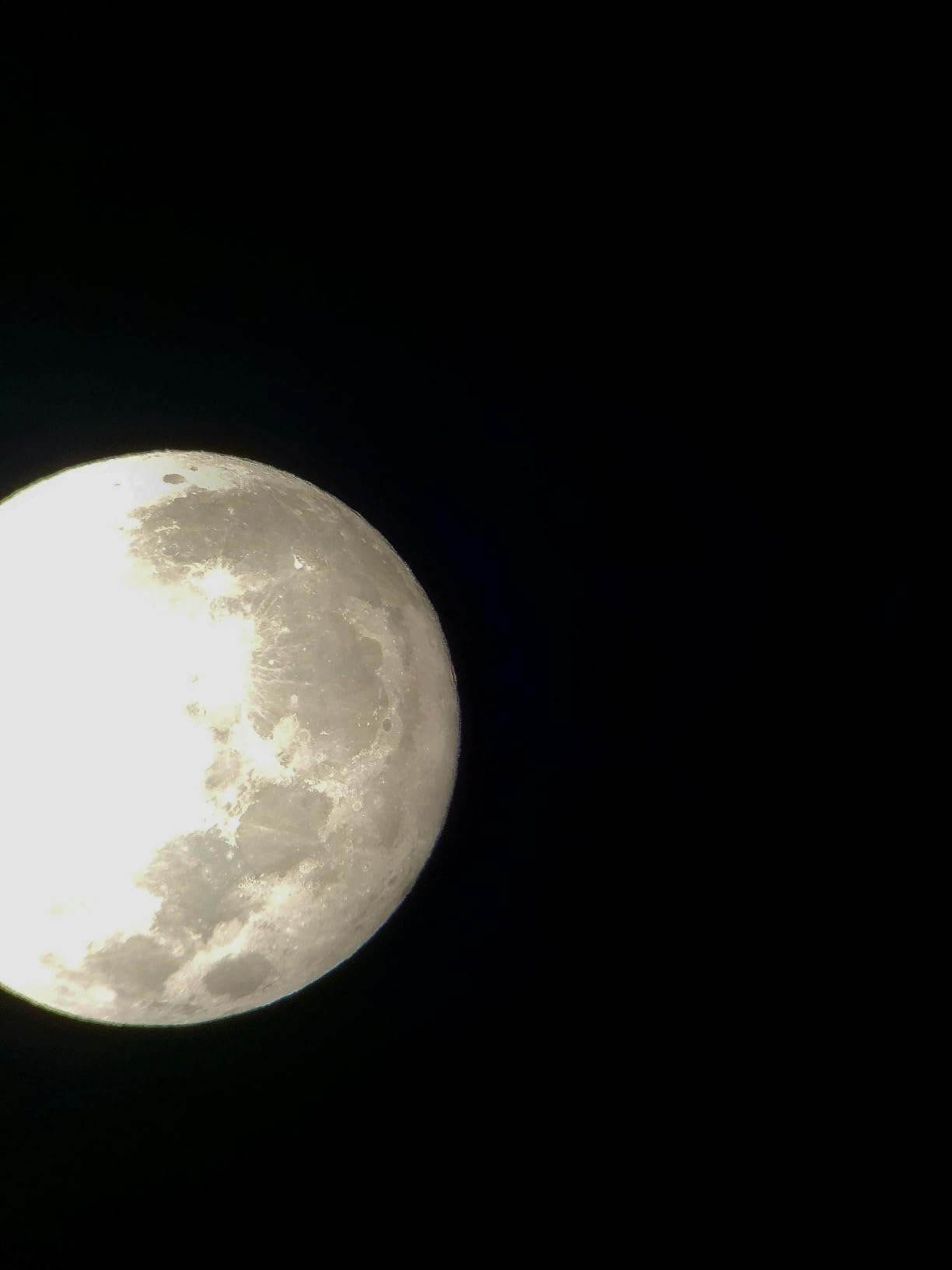
Optically the 150mm f/5 mirror is a strong all-rounder. The fast focal ratio gives bright wide-field views that are excellent for sweeping the Milky Way and large star clusters. On planets the views are good but not as crisp as a slower f-ratio scope, which is the natural trade-off. The included Super Plossl eyepieces and reflex finder cover the essentials, though most owners upgrade to better eyepieces over time.
The biggest practical concern is stock. Sky-Watcher Virtuoso models move in and out of availability, so when you see one in stock it is worth grabbing. The lower review count of 61 also means fewer long-term reports compared to the Celestron StarSense models, though the users who do own one consistently praise the GoTo reliability and the Freedom Find system.
How does WiFi GoTo compare to Celestron StarSense?
WiFi GoTo and Celestron StarSense solve the same problem in different ways. The Virtuoso’s WiFi GoTo physically slews the telescope to the target using motors, so you do not push the scope at all. StarSense uses your phone camera to guide you with on-screen arrows, but you still move the scope manually. GoTo is faster and more accurate for faint targets; StarSense is simpler and has no motors to align or maintain. Choose GoTo if you want hands-free slewing, and StarSense if you prefer a lighter, fully manual mount.
Is the collapsible tube stable enough for high power?
The collapsible tube is stable enough for high-power planetary viewing once it is properly collimated and allowed to cool. The truss struts lock rigidly and the mount is heavy enough at nearly 26 pounds to damp vibrations quickly. You will see some flexure if you bump the scope or push it hard, but normal tracking pressure does not cause problems. The bigger variable is mirror cooldown, since an open truss tube lets the primary mirror equalize to outside temperature faster than a sealed solid tube.
4. Celestron StarSense Explorer 150AZ – Best 6-Inch App-Guided Dob
Celestron StarSense Explorer 150mm App-Enabled Tabletop Dobsonian Telescope
- Full 6-inch aperture in a portable tabletop body
- StarSense app guides you to targets with arrows
- High-reflectivity coatings for bright views
- Simple manual altazimuth base
- Two-year US warranty with support
- Requires smartphone for full functionality
- Fast f-ratio needs good collimation discipline
The Celestron StarSense Explorer 150AZ is essentially the 114AZ scaled up to a full 6-inch mirror, and that extra aperture makes a real difference. I noticed brighter, more detailed views of globular clusters and nebulae compared to the 4.5-inch version, and the same guided StarSense experience means you do not pay for that aperture with extra difficulty.
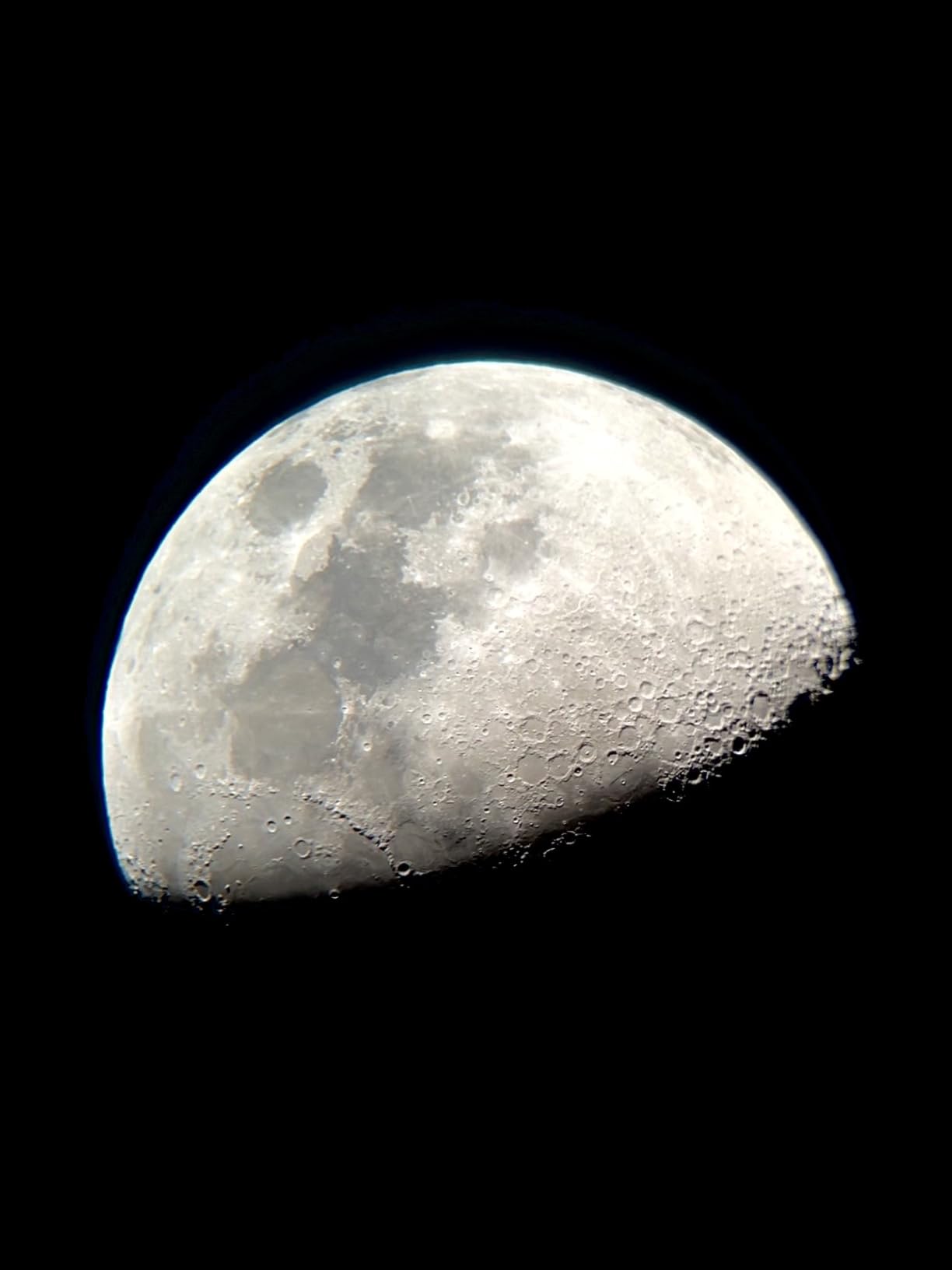
The 150mm (6-inch) Newtonian reflector with high-reflectivity coatings pulls in noticeably more light than the 114mm version. Globular clusters like M13 and M5 resolved into pinpoint stars rather than fuzzy cotton balls, and the Orion Nebula showed more wispy structure. This is the aperture where deep-sky observing starts to get genuinely exciting rather than just suggestive.
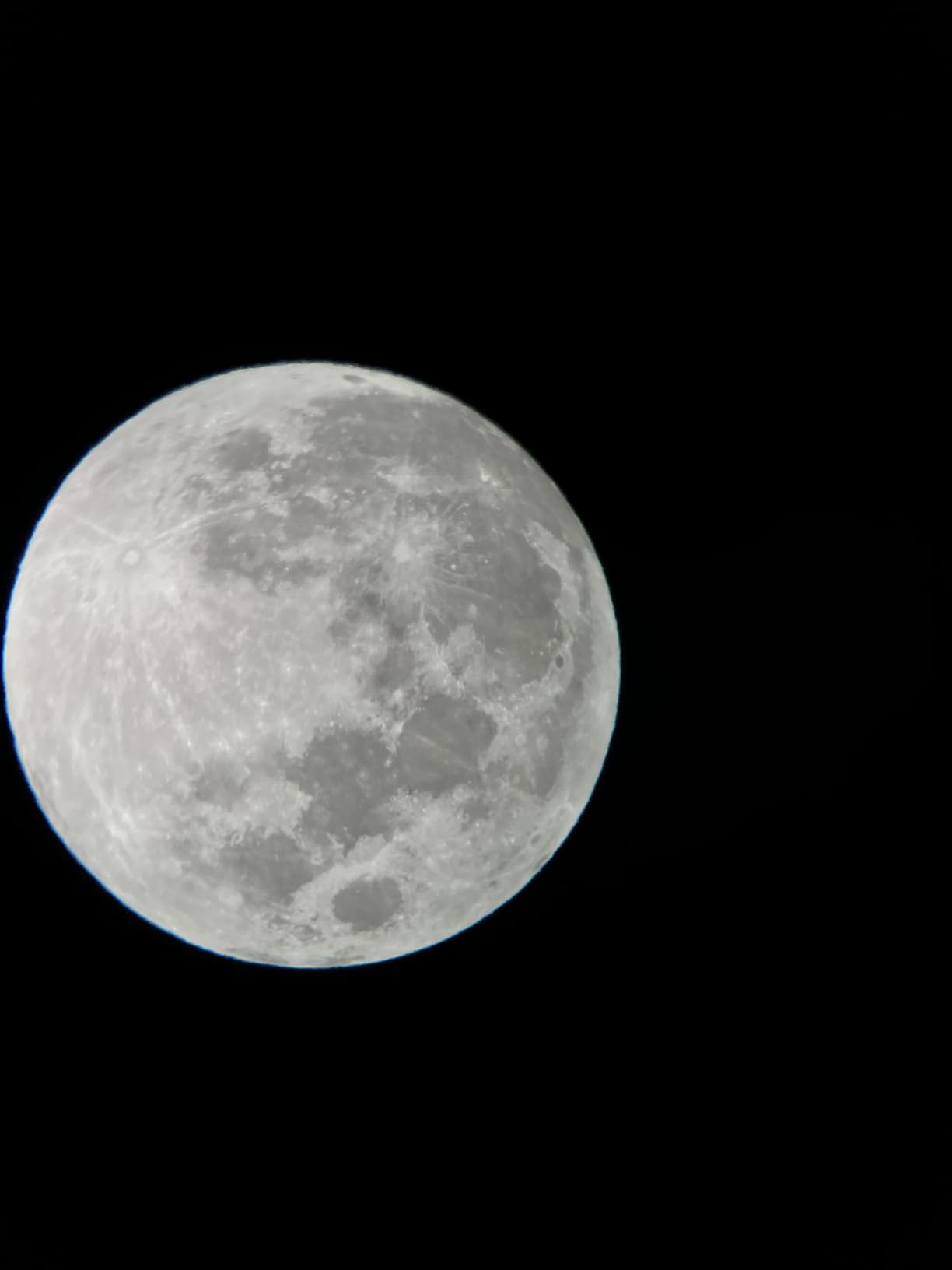
The StarSense app experience is identical to the 114AZ. Dock your phone, follow the calibration, and the app gives you Tonight’s Best Targets with on-screen arrows. The tabletop alt-azimuth base is smooth and stable at 25 pounds, and the included 25mm and 10mm Kellner eyepieces plus StarPointer finder cover the starter kit.
The main trade-off is the fast focal ratio. At f/4.3 the mirror demands careful collimation to perform at its best, more so than the slower f/8.8 of the 114AZ. Budget for a simple collimation tool or learn to use the star-test method. The included two-year Celestron warranty with US-based support is one of the better safety nets in this price range.
Why choose the 150AZ over the Virtuoso GTI 150P?
Choose the 150AZ over the Virtuoso GTI 150P if you prefer simplicity and lower cost over motorized GoTo. The 150AZ is a fully manual mount with smartphone guidance through the StarSense app, while the Virtuoso adds motors and WiFi slewing. The 150AZ has no motors to align, no batteries to charge, and no firmware updates to worry about. You give up automatic slewing, but you save money and complexity. For most beginners the manual plus StarSense combination is the easier entry point.
What accessories should you add first?
Add a quality wide-field eyepiece first, ideally something in the 15mm to 20mm range with a 60-degree or wider apparent field. A Barlow lens doubles your magnification options cheaply. A simple Cheshire collimation tool pays for itself on the first night if your scope has drifted out of alignment. A moon filter cuts glare during lunar observing. Skip expensive filters and focus on eyepieces until you know which magnifications you actually use most.
5. Sky-Watcher Classic 200 Dobsonian – Best Value 8-Inch Solid Tube
- Full 8-inch aperture at a strong price point
- 94% reflective mirrors with RAQ coatings
- Tension Control Handle for balanced movement
- Teflon azimuth bearings for smooth slewing
- 2-inch Crayford focuser and 9x50 finder included
- 45-pound total weight needs two trips or a sturdy cart
- Some 1-star reports suggest occasional quality variance
The Sky-Watcher Classic 200 is the scope that turned me into a serious deep-sky observer. An 8-inch aperture is the threshold where the universe really opens up, and this model delivers that aperture without gimmicks. The parabolic primary mirror with Radian Aluminum Quartz coatings reflects 94% of incoming light, which is a meaningful step up from standard coatings on cheaper scopes.
First light on the Classic 200 was the Whirlpool Galaxy, and I could see spiral structure for the first time. The Orion Nebula filled the field of view with greenish-grey haze and embedded stars. Globular clusters that were fuzzy smudges in smaller scopes resolved into thousands of pinpoint stars. An 8-inch Dobsonian is widely recommended as the best first serious telescope because it hits the sweet spot of aperture, cost, and portability.
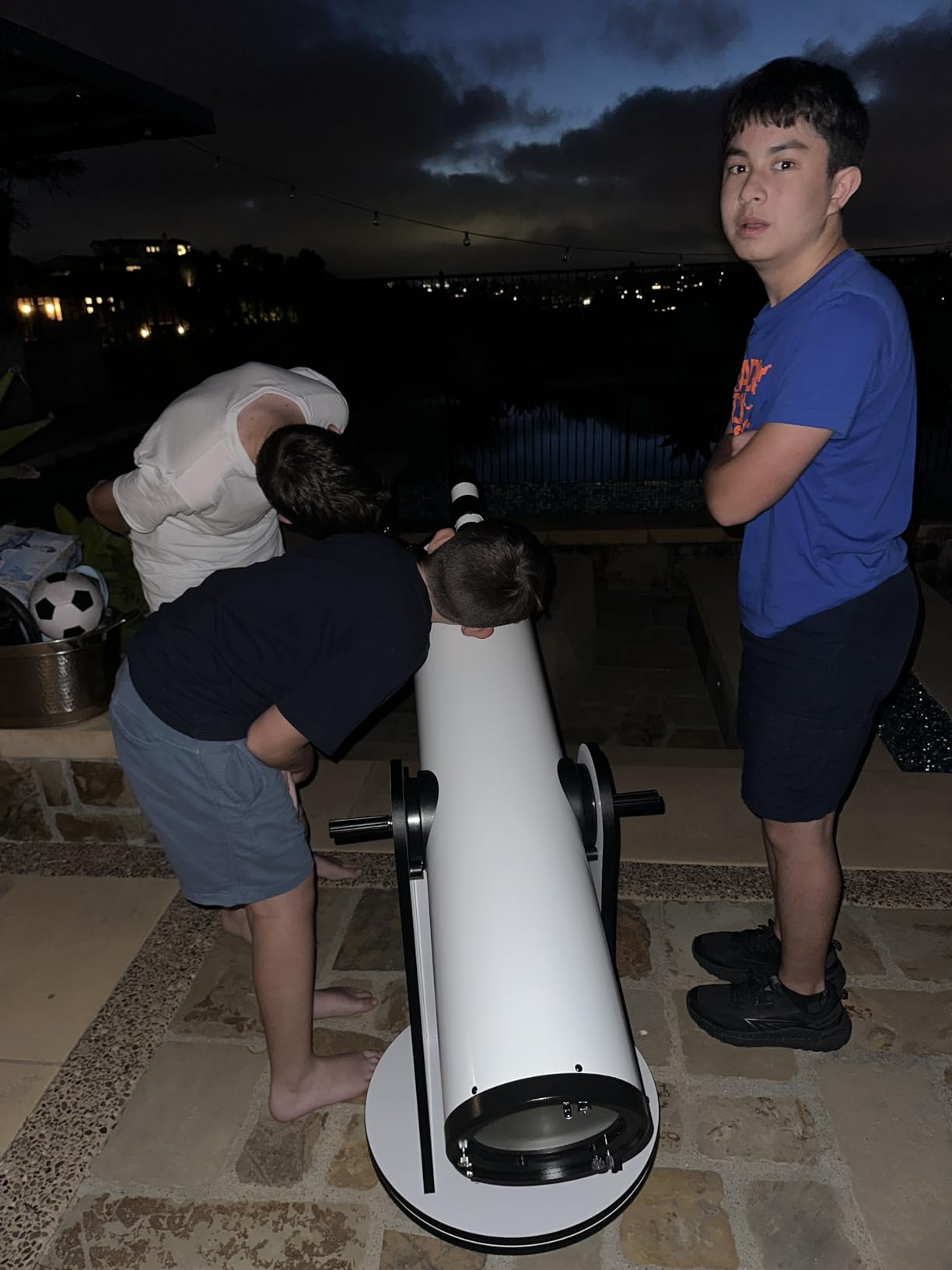
Mechanically the Classic 200 includes features that cheaper Dobs leave out. The Tension Control Handle lets you adjust the altitude friction so the scope stays balanced even with heavier eyepieces. Teflon azimuth bearings give smooth left-right motion without stiction. The 2-inch Crayford-style focuser with a 1.25-inch adapter handles both eyepiece sizes, and the included 25mm and 10mm Super eyepieces plus a 9×50 finder scope round out the package.
The honest trade-off is weight. The 45-pound total splits into a 20-pound optical tube and a 25-pound base, which means two trips from the car or a hand truck for one trip. This is not a grab-and-go scope. You also need a cool-down period of 30 to 60 minutes for the mirror to equalize to outside temperature, otherwise high-power views stay soft. Budget for that cooldown time and the Classic 200 rewards you with serious performance.
Can you see Saturn and Jupiter clearly with an 8-inch?
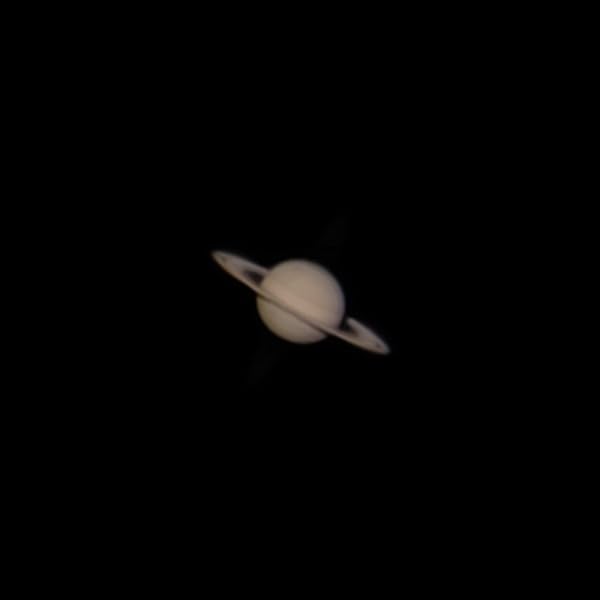
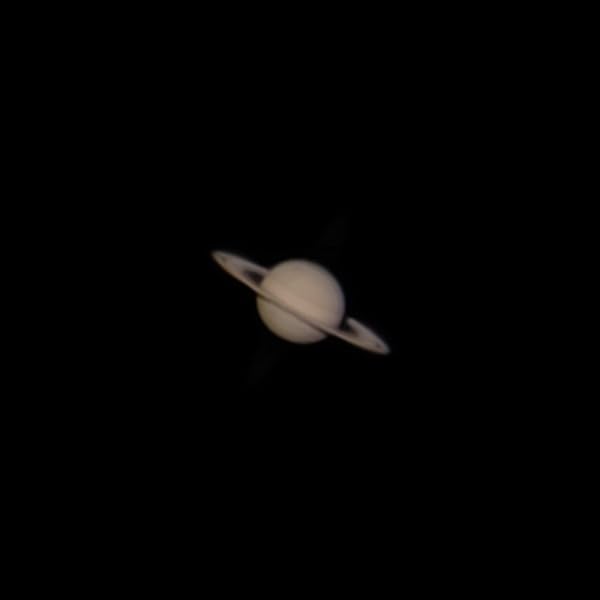
You can see Saturn and Jupiter clearly with an 8-inch Dobsonian on a steady night. Saturn’s rings are sharply defined with the Cassini Division visible at moderate magnification, and Titan is obvious as a nearby point of light. Jupiter shows multiple cloud belts, the Great Red Spot when it faces Earth, and the dance of the four Galilean moons across the disk. An 8-inch is where planetary observing moves from suggestive to detailed.
How manageable is the weight for one person?
The weight is manageable for one person if you split it into two trips. Carry the 20-pound optical tube in one hand and the 25-pound base in the other, or make two separate trips from car to observing spot. A single combined carry of 45 pounds is awkward and risky for the focuser and finder. If you observe from a backyard you can leave the base assembled and only carry the tube outside each session. Apartment dwellers on upper floors should consider a collapsible model instead.
6. Celestron StarSense Explorer 8-inch – Best 8-Inch With Smartphone Guidance
Celestron StarSense Explorer 8″ Dobsonian Telescope with Smartphone App
- 8-inch aperture plus StarSense smartphone navigation
- XLT high-reflectivity coatings for bright views
- 2-inch Crayford focuser with 25mm eyepiece included
- Smooth altazimuth Dobsonian base
- Two-year US warranty and unlimited support
- Requires smartphone for full navigation value
- Manual focus only at the eyepiece
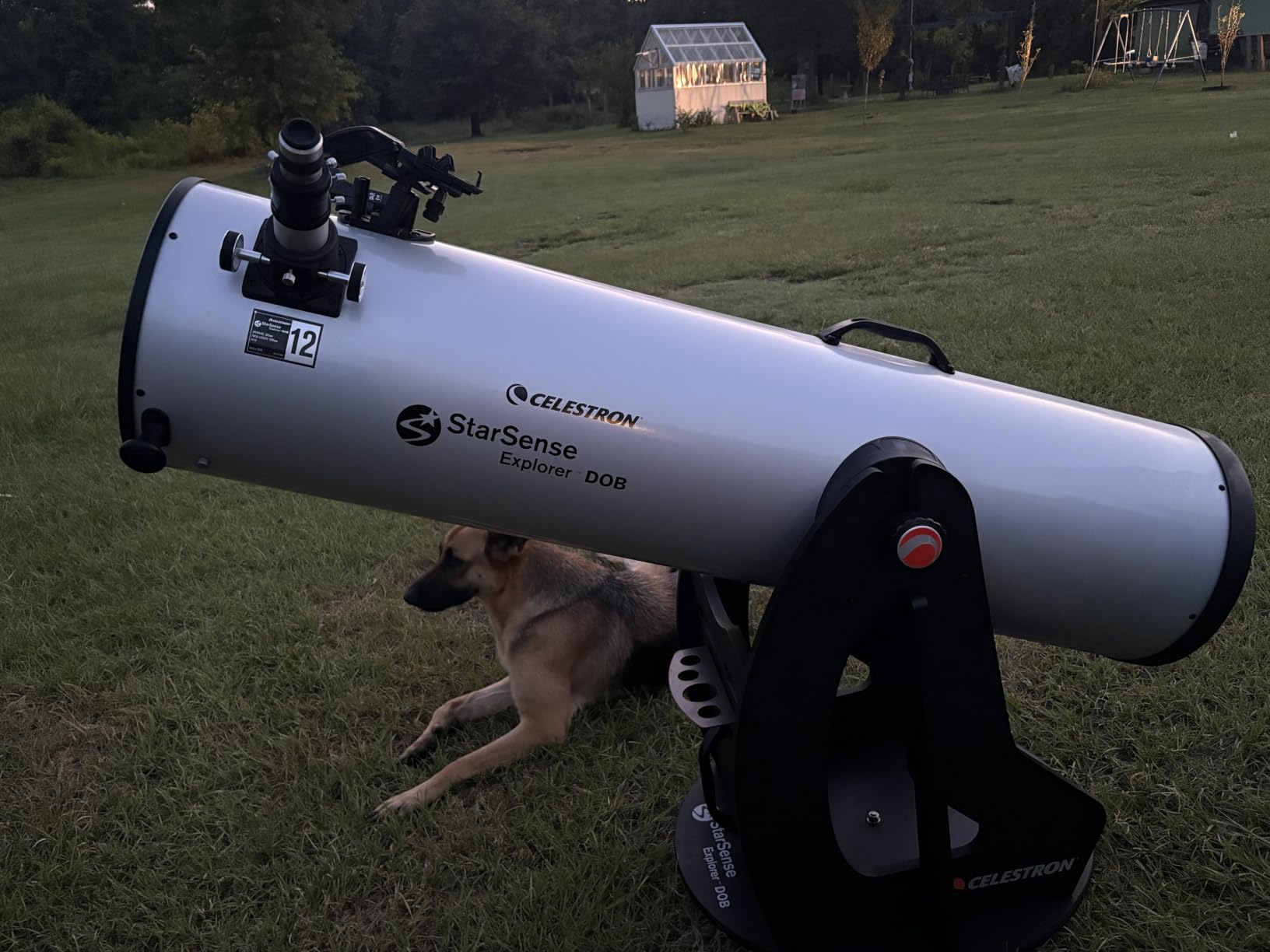
The Celestron StarSense Explorer 8-inch is my editor’s choice because it solves the two hardest problems for a serious beginner at the same time. You get a full 8-inch parabolic mirror for real deep-sky performance, and you get the StarSense app to actually find the objects you want to see. Most 8-inch Dobs assume you already know how to star-hop, which is a big assumption for a first big scope.
The 203mm Newtonian reflector uses Celestron’s XLT coatings, the same coating technology used on their higher-end SCT telescopes. In side-by-side comparison with a standard-coated 8-inch, the XLT scope showed slightly brighter views of faint galaxies, which matters when you are trying to tease out marginal detail at the limit of visibility. The 2-inch Crayford focuser handles both 2-inch and 1.25-inch eyepieces, and the included 25mm wide-field eyepiece is a genuinely useful starting point rather than a placeholder.
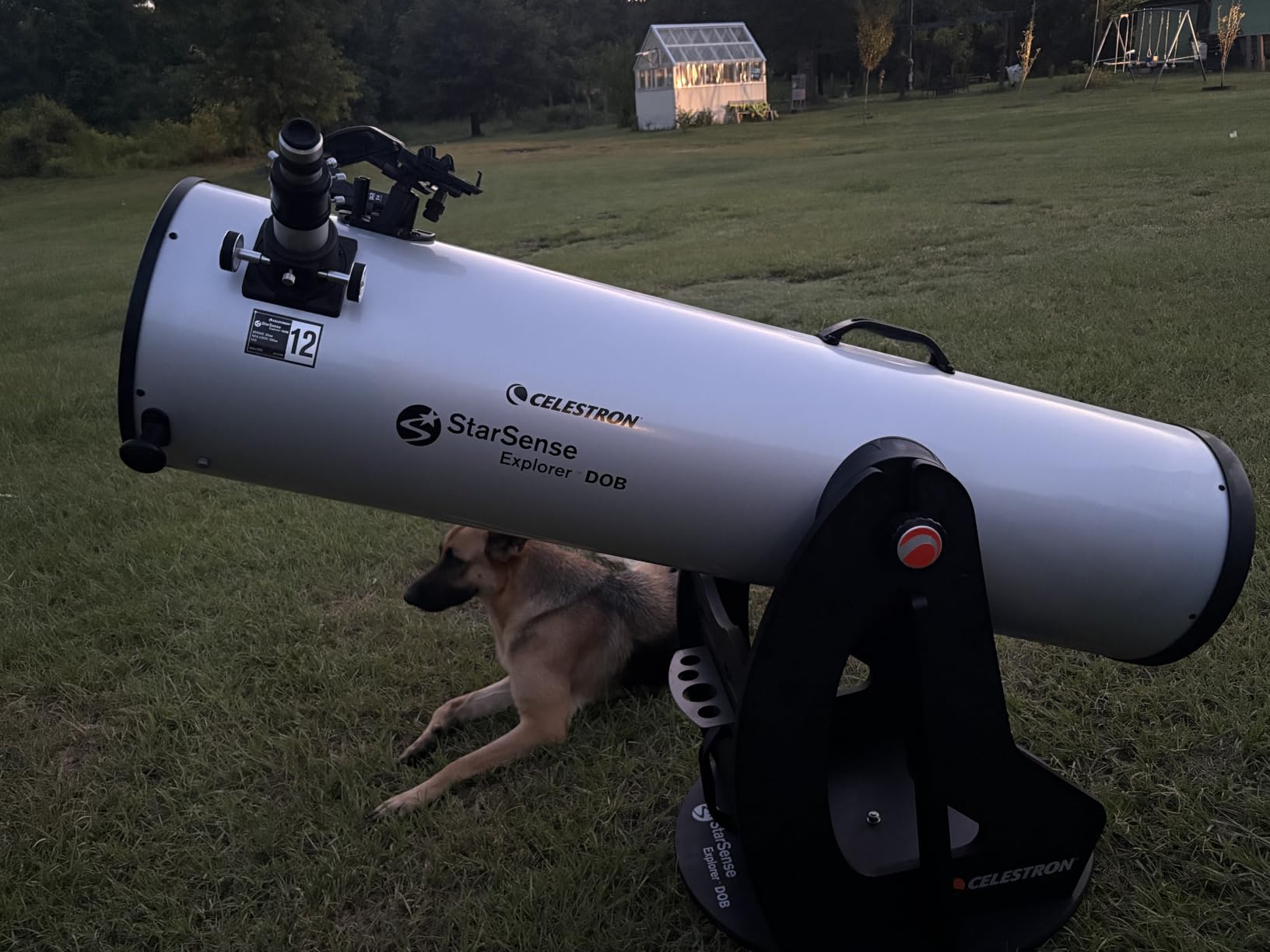
The StarSense experience on this scope is identical to the smaller models but more valuable, because with an 8-inch aperture the faint objects the app points you to are actually visible. The Andromeda Galaxy, the Dumbbell Nebula, and the brighter Messier galaxies all reward the guided navigation with real detail rather than just barely-there smudges.
The trade-offs are familiar. The scope weighs 43.4 pounds and splits into tube and base, so plan for two trips or a cart. The focus is manual, which is standard for a Dob but worth noting if you are used to motorized focusers. Manual focus is fine for visual observing and keeps the scope simpler and more reliable.
How does this compare to the Sky-Watcher Classic 200?
This compares to the Sky-Watcher Classic 200 as the smart version of a manual classic. Both have the same 8-inch aperture class and similar optical performance, but the StarSense Explorer adds smartphone-guided navigation and XLT coatings while the Classic 200 is fully manual with Tension Control Handle and standard coatings. Choose StarSense if you want guided finding; choose the Classic if you already know the sky and prefer a slightly more adjustable manual mount. The StarSense is the better first 8-inch scope for most people.
Is the XLT coating worth the extra cost?
The XLT coating is worth the extra cost if you observe faint deep-sky objects regularly. XLT uses silicon dioxide and tantalum pentoxide layers to push reflectivity higher than standard aluminum coatings, which translates to measurably brighter images at the eyepiece. The difference is most visible on marginal targets at the limit of detection, exactly where every bit of light matters. For lunar and planetary viewing the difference is less noticeable, but for galaxies and nebulae the XLT coatings earn their keep.
7. Celestron StarSense Explorer 10-inch – Best Large Aperture With App Guidance
- Full 10-inch aperture for serious deep-sky reach
- StarSense app guides you to faint targets
- StarBright XLT coatings for maximum light transmission
- 2-inch Crayford focuser with 32mm eyepiece
- Two-year US warranty and unlimited support
- 54.8-pound weight needs careful handling
- Limited stock availability
The Celestron StarSense Explorer 10-inch is where deep-sky observing goes from rewarding to borderline addictive. A 10-inch mirror gathers roughly 56% more light than an 8-inch, and that extra light turns previously marginal galaxies into clearly structured objects. I spent a night comparing this scope to my 8-inch on a series of faint galaxies, and the difference on objects like the Needle Galaxy and the Cocoon Nebula was obvious.
The 254mm Newtonian reflector uses Celestron’s StarBright XLT coatings, which are their top-tier coating formulation. Combined with the large aperture, this scope pulls in faint magnitude-13 and magnitude-14 galaxies that simply do not register in smaller instruments. The included 32mm eyepiece gives a wide true field of view that is ideal for sweeping the Milky Way and hunting down large diffuse nebulae.
The StarSense app becomes even more valuable at this aperture. With a 10-inch mirror, the targets the app guides you to are actually impressive rather than barely visible. The app’s Tonight’s Best Targets list feels like a curated tour of the deep sky rather than a wish list. For an observer who wants serious aperture without an intimidating learning curve, this combination is hard to beat.
The trade-offs are weight and stock. At 54.8 pounds the 10-inch is a two-person carry or a single trip with a hand truck and one person for the tube. The scope also moves in and out of stock, and Amazon listings frequently show only a handful of units available. If you see one in stock and it fits your budget, do not wait.
Is a 10-inch too much telescope for a beginner?
A 10-inch is not too much telescope optically for a motivated beginner, but it can be too much physically. The views are magnificent and the StarSense app removes the navigation problem, so the optical experience is accessible. The challenge is the 55-pound weight and the storage footprint of a tube over four feet long. If you have a ground-floor storage spot and a backyard or driveway observing location, a 10-inch works fine as a first scope. If you live in a walk-up apartment or need to drive to a dark site, consider an 8-inch or a collapsible model first.
What vehicle fits a 10-inch solid tube?
A 10-inch solid tube fits in most hatchbacks, SUVs, and minivans with the rear seats folded. The tube is roughly 51 inches long and 21 inches in diameter, so it lays across a cargo area easily. Smaller sedans may need the front passenger seat folded flat or the tube angled diagonally across the back seat. Measure your cargo area before committing, and remember you also need room for the base, eyepiece case, and any observers riding along.
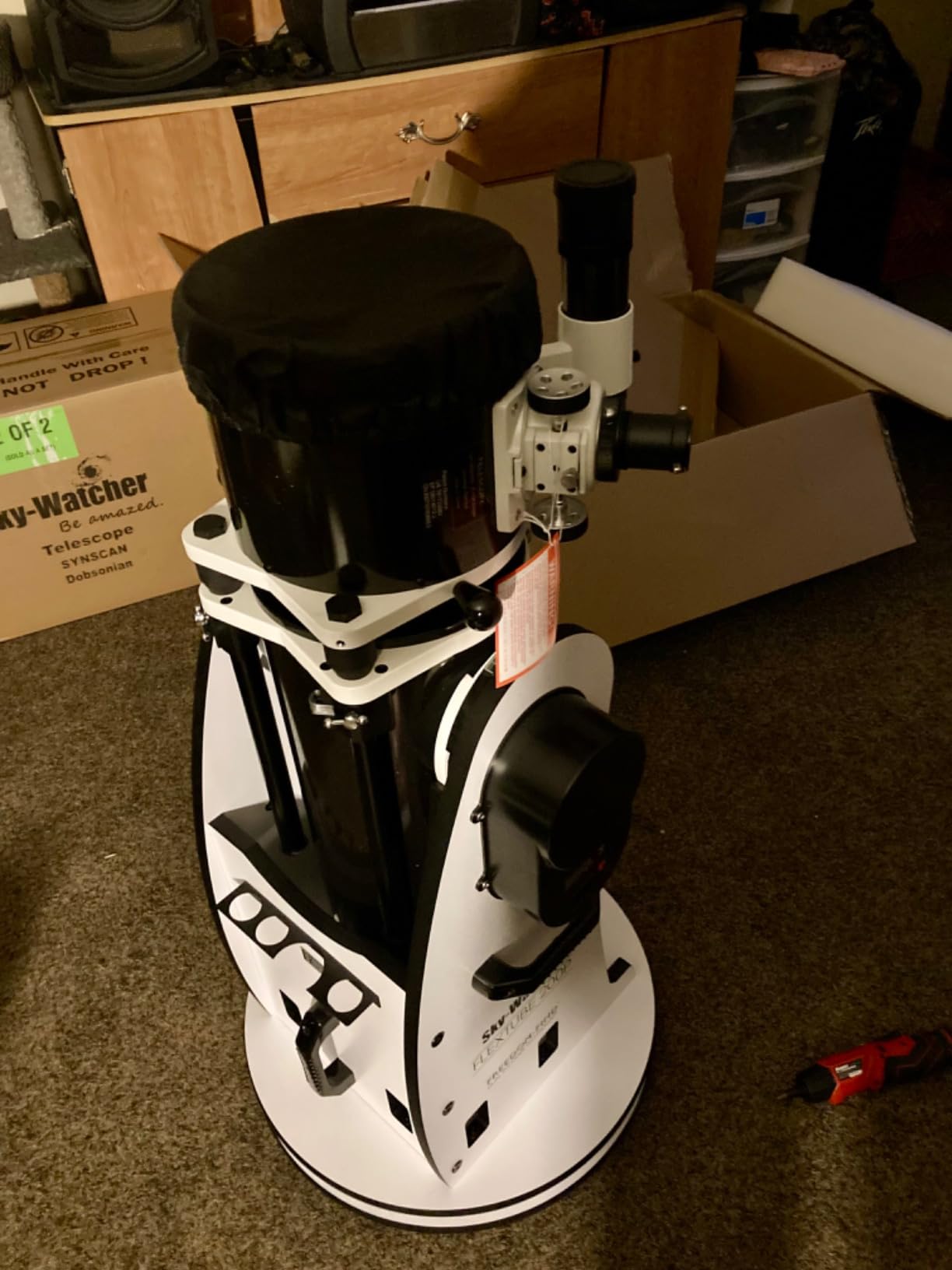
8. Sky-Watcher Flextube 300 SynScan 12-inch – Best Large GoTo Collapsible Dob
- Massive 12-inch aperture for serious deep-sky reach
- Collapsible truss design for transport vs solid tube
- Built-in WiFi GoTo with 42
- 000-object SynScan database
- All-metal gearing on DC servo motors
- 94% reflective mirrors and full accessory package
- Premium price point reflects the aperture and GoTo system
- 3.8 rating indicates some quality or usability concerns
The Sky-Watcher Flextube 300 SynScan is the most capable scope on this list and the one I would buy if budget and storage were no object. A 12-inch mirror gathers nearly double the light of an 8-inch, which means faint galaxies, edge-on spirals, and small planetary nebulae that stay invisible in smaller scopes become real observing targets here.
The collapsible Flextube truss design is the key feature that makes a 12-inch Dobsonian practical for a home observer. A solid-tube 12-inch is a long, heavy beast that needs a dedicated vehicle and storage shed. The Flextube collapses the optical tube down to roughly half its extended length while keeping collimation stable, so it fits in a hatchback or SUV and stores in a corner of a garage.
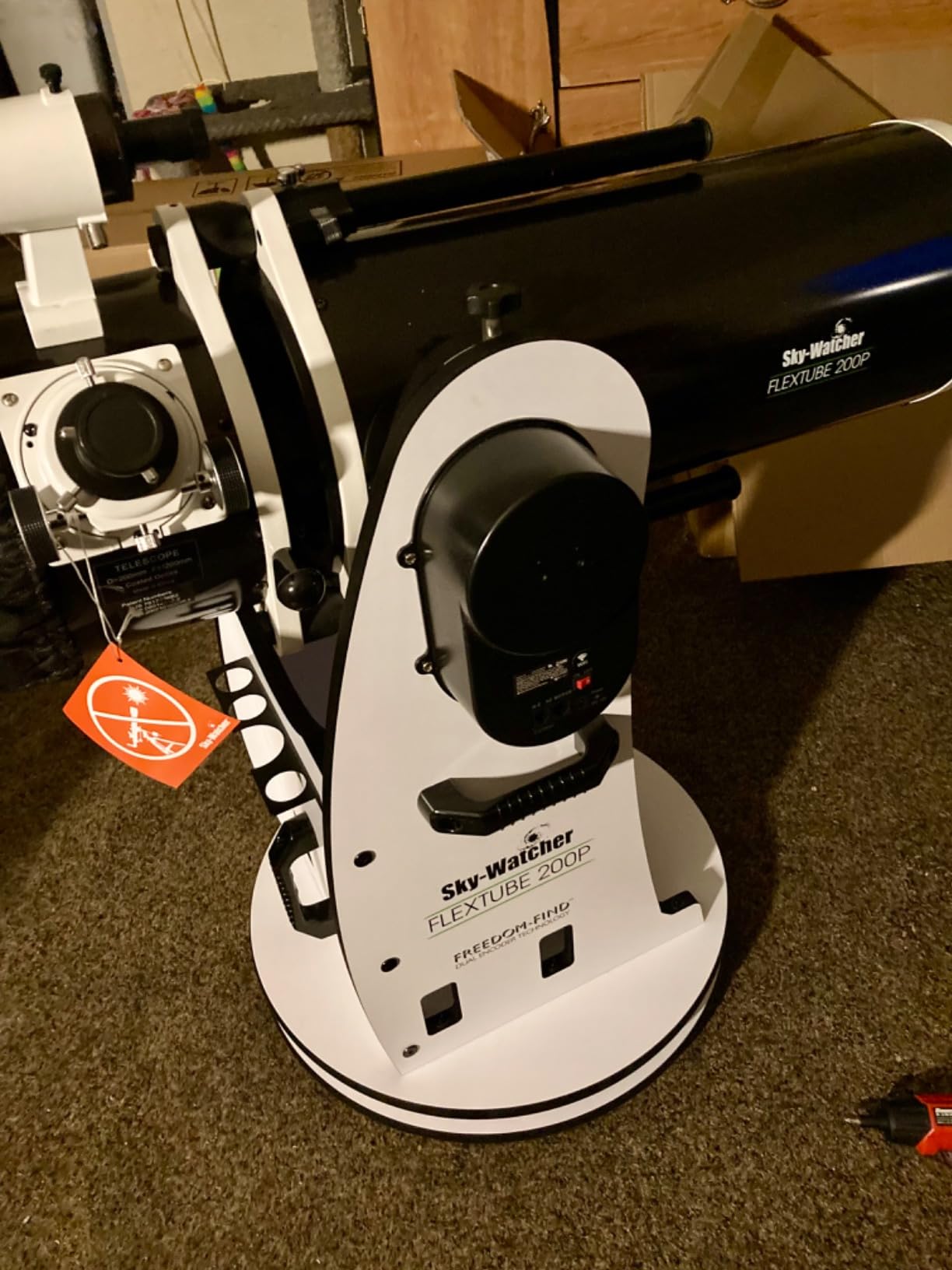
The SynScan GoTo system adds a built-in WiFi module that talks to the SynScan Pro app on your phone or tablet. The hand controller includes a 42,000-object database, which is enough targets to keep you busy for years. All-metal gearing on the DC servo motors gives precise slewing and tracking, and the dual encoders let you push the scope manually without losing alignment, similar to the Virtuoso GTI above.
The trade-offs are real. The lower 3.8 rating and the 20% one-star reviews suggest some users have hit quality-control or setup issues, particularly around the GoTo alignment routine and the motorized base. This is a scope that rewards patience and careful setup. Plan to spend an evening or two learning the SynScan alignment process before a real observing session. The included 2-inch Crayford focuser, 25mm and 10mm super wide-angle eyepieces, and 9×50 finder cover the essentials.
Is the collapsible truss as stable as a solid tube?
The collapsible truss is nearly as stable as a solid tube for visual observing when properly set up and cooled down. The truss struts lock rigidly and the scope holds collimation well across a session, though you should check collimation at the start of each night. The trade-off is that an open truss exposes the mirror to stray light and dust, so a light shroud is a recommended addition. Stray light reduces image contrast, and the shroud restores it. Once shrouded and cooled, the Flextube performs at the level of a solid-tube 12-inch for visual work.
How difficult is the SynScan GoTo alignment?
The SynScan GoTo alignment takes one or two practice sessions to learn but becomes routine quickly. The standard routine centers two bright stars, which the scope identifies or you select from a list. Once aligned, the GoTo slews accurately to database targets and tracks them. The learning curve is mainly in recognizing which stars the hand controller is suggesting, which comes with a bit of practice. Sky-Watcher’s SynScan Pro app simplifies the process by showing star charts on your phone. Plan for an evening of practice before relying on the GoTo for a public or group observing session.
How to Choose the Best Dobsonian Telescope
Choosing the best Dobsonian telescope comes down to four questions: how much aperture do you want, where will you store and transport it, do you want manual or guided navigation, and what is your real budget including accessories. I have broken the decision into the factors that actually matter at the eyepiece.
Match aperture to your observing goals
Aperture is the single most important spec on any telescope, and on a Dobsonian it is the whole point of the design. A 4.5 to 6-inch tabletop scope is excellent for the Moon, planets, and the brighter Messier objects from light-polluted suburbs. An 8-inch is the sweet spot for serious deep-sky work, pulling in galaxies, nebulae, and globular clusters with real detail. A 10-inch adds roughly 56% more light than an 8-inch for noticeably fainter targets. A 12-inch opens up the realm of magnitude-13 and magnitude-14 galaxies that smaller scopes simply cannot reach. Buy the largest aperture you can afford to store, transport, and use comfortably.
Solid tube versus collapsible truss
Solid tube scopes like the Sky-Watcher Classic 200 and Celestron StarSense 8-inch are simpler, cheaper, and hold collimation longer because the tube protects the optics. The downside is length and weight, since a solid 10-inch or 12-inch tube is a real piece of furniture. Collapsible truss designs like the Sky-Watcher Flextube and Heritage series compress for transport and storage while keeping the aperture. The trade-off is that truss scopes need a light shroud to block stray light, and they can drift out of collimation more often, so budget for a Cheshire collimation tool and a shroud.
Manual, GoTo, or smartphone guidance
Manual Dobs are the cheapest and most reliable. You point by hand and find targets by star-hopping with a finder scope or reflex sight. GoTo Dobs like the Sky-Watcher Virtuoso GTI and Flextube 300 add motors and a computerized database, so the scope slews to targets automatically after a brief alignment. Smartphone-guided scopes like the Celestron StarSense Explorer sit in between: the app tells you which way to push the scope using on-screen arrows, but you still move it manually. Manual is best if you want to learn the sky. GoTo is best if you want hands-free finding. StarSense is best for beginners who want guidance without motor complexity.
Portability and weight by aperture
Weight scales fast with aperture. A tabletop Dob at 12 to 26 pounds is one-trip portable. An 8-inch solid tube at 43 to 45 pounds is a two-trip scope or a cart job. A 10-inch at 55 pounds needs a hand truck or two people. A 12-inch solid tube is genuinely difficult for one person, which is why the collapsible Flextube exists. Before buying, honestly assess how you will get the scope from storage to your observing spot. A scope that is too heavy to move gets used less often, and aperture you never use is worthless.
Collimation basics for new owners
Collimation is the process of aligning the primary and secondary mirrors so they share a common optical axis. Newtonian reflectors, including all Dobs, need occasional collimation to perform at their best. Fast f-ratio scopes like the f/4.3 StarSense 150AZ are more sensitive to miscollimation than slow f-ratio scopes like the f/8.8 StarSense 114AZ. A simple Cheshire sight tube or a laser collimator costs under $40 and pays for itself on the first night. Plan to check collimation at the start of each session and learn the process before your first real observing night.
Included accessories checklist
Compare what comes in the box, not just the optical tube. Look for at least two eyepieces covering low and medium power, a finder scope (red-dot, reflex, or optical), a 2-inch focuser if you plan to use 2-inch eyepieces, and a cooling fan on larger scopes to speed mirror cooldown. The Sky-Watcher Classic 200 and Flextube 300 include the best accessory packages on this list, with 2-inch Crayford focusers, dual eyepieces, and 9×50 finders. Cheaper tabletop models include the basics but expect to upgrade eyepieces as you progress.
Hidden costs of ownership
Beyond the sticker price, budget for accessories and maintenance. A collimation tool runs $30 to $50. A quality wide-field eyepiece runs $60 to $150. A light shroud for a truss scope runs $40 to $80. A solar filter for daytime observing runs $50 to $120. A carrying case or hand truck for a large scope runs $50 to $150. Realistically, plan to spend another 15 to 25 percent of the scope price on accessories over the first year. The forum community on r/telescopes is consistent on this point: the scope is the start of the spending, not the end.
Frequently Asked Questions
What is the best tabletop Dobsonian telescope?
The Sky-Watcher Heritage 130mm is the best tabletop Dobsonian telescope overall because it offers a full 5-inch aperture, arrives fully assembled, and folds down for transport at a low price. The Celestron StarSense Explorer 114AZ is the best tabletop Dobsonian for absolute beginners who want smartphone-guided navigation to find objects.
What is better, Dobsonian or Newtonian?
A Dobsonian is actually a Newtonian telescope, so the two are not competing types. A Dobsonian is a Newtonian reflector optical tube mounted on a simple alt-azimuth base rather than an equatorial or computerized mount. The Newtonian refers to the mirror optics, and the Dobsonian refers to the mount design. Every scope on this list is a Newtonian reflector on a Dobsonian mount.
Can you see Saturn with an 8 inch Dobsonian?
Yes, you can see Saturn clearly with an 8 inch Dobsonian. Saturn’s rings are sharply defined, the Cassini Division is visible at moderate magnification, and Titan appears as a clear companion point of light. An 8 inch aperture also shows Jupiter’s cloud belts and Great Red Spot, Mars’s polar cap at opposition, and detailed lunar surface features.
What is the best size Dobsonian telescope?
The best size Dobsonian telescope depends on your goals. A 6 inch tabletop is best for beginners with limited storage. An 8 inch is the best all-around size for most observers, balancing deep-sky performance with portability. A 10 inch adds noticeably more light for serious deep-sky work. A 12 inch is best for experienced observers who want maximum reach and can handle the weight. Buy the largest size you can comfortably store and transport.
How difficult is collimation for a beginner?
Collimation is straightforward once you learn the process, and most beginners get comfortable within a few sessions. You use a Cheshire sight tube or laser collimator to align the secondary and primary mirrors, which takes 5 to 10 minutes at the start of an observing night. Slower f-ratio scopes are more forgiving, while fast f-ratio scopes need more frequent checks. A simple $30 collimation tool and a short tutorial video are enough to get started.
Final Thoughts on the Best Dobsonian Telescopes
The best Dobsonian telescope for you is the one that matches your aperture goals, your storage and transport reality, and your tolerance for learning the night sky. If you want the strongest overall pick, the Celestron StarSense Explorer 8-inch pairs serious deep-sky reach with smartphone-guided navigation that removes the steepest beginner barrier. If you want the best value, the Sky-Watcher Heritage 130mm tabletop delivers real deep-sky views at a grab-and-go price. And if you want maximum aperture with GoTo convenience, the Sky-Watcher Flextube 300 SynScan 12-inch is the serious observer’s choice.
Whichever scope you pick, the most important step is getting it outside and pointed up. The best Dobsonian telescopes in 2026 are the ones you actually use, and a clear night with even a modest Dobsonian beats a clear night spent reading about astronomy. Grab a scope, learn the basics of collimation, and start working through the Messier catalog. The sky is waiting.