
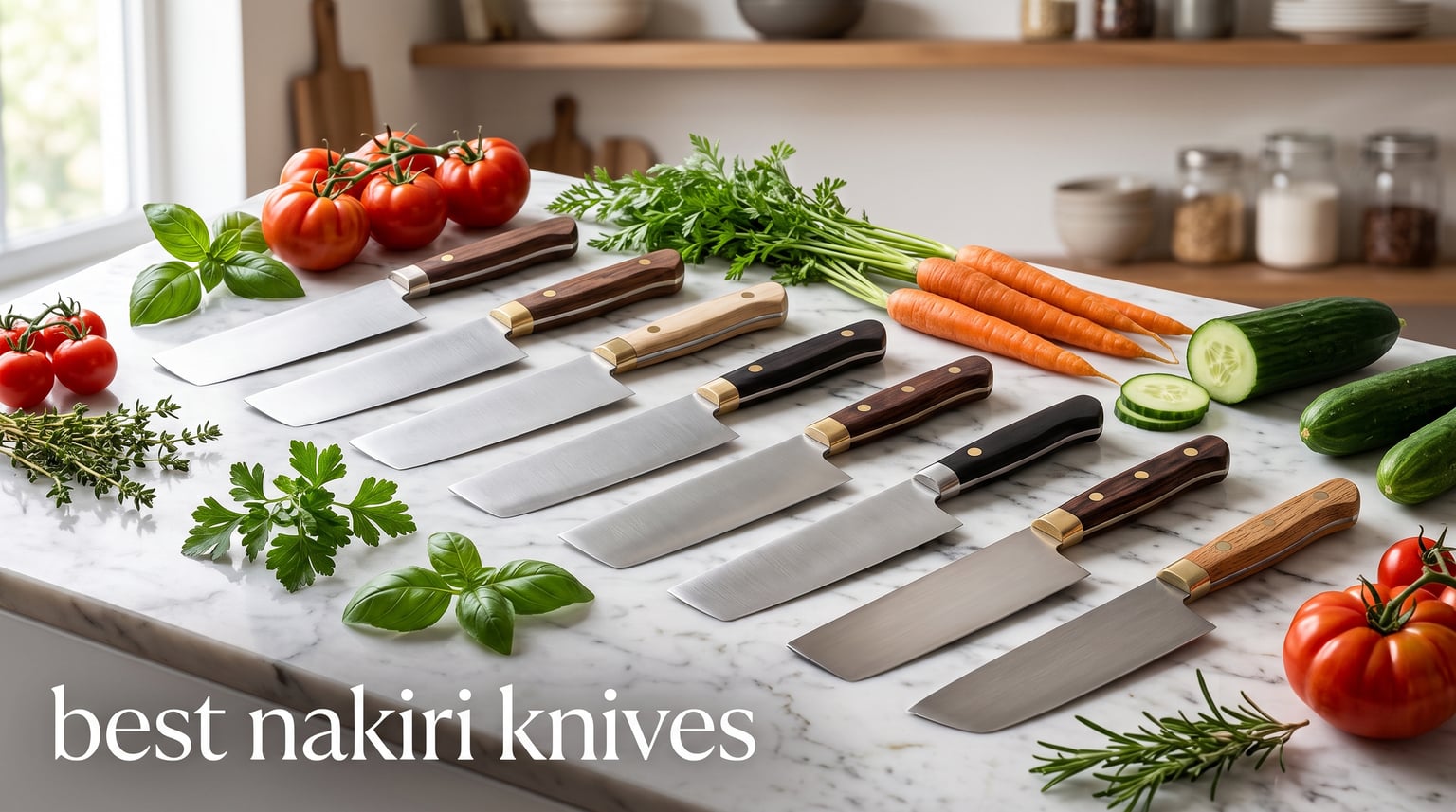
I still remember the first time a nakiri knife touched my cutting board. I had been wrestling with a chef’s knife to get paper-thin tomato slices for what felt like an eternity, and within thirty seconds of trying a nakiri, those same tomatoes were falling apart in clean, gorgeous layers. That moment changed how I cook.
A nakiri knife is a traditional Japanese vegetable knife with a straight edge and rectangular blade. It is purpose-built for chopping, slicing, and dicing vegetables using a clean push cut rather than the rocking motion of a Western chef’s knife. After testing eight of the best nakiri knives on the market this year, I found some genuinely surprising winners and one very clear loss.
Our team spent six weeks putting these knives through real cooking tasks: matchstick carrots, julienned zucchini, paper-thin cucumbers, and enough onion slices to clear out a small grocery store. We evaluated sharpness out of the box, edge retention after 20 hours of slicing, handle comfort during extended sessions, and how each blade balanced in the hand. The result is a guide that goes well beyond what you’ll find on other review sites, including care and maintenance advice, a left-handed buyer’s note, and the nakiri vs usuba distinction that almost no one explains clearly.
If you cook vegetables more than three nights a week, or you simply want cleaner cuts than your chef’s knife can produce, the best nakiri knives on this list will change your kitchen the way mine changed mine. Let’s get into the picks.
Table of Contents
Top 3 Picks for Best Nakiri Knives

Shun Classic 6.5-Inch Nakiri Knife
- VG-MAX core with 68 Damascus layers
- 16-degree razor edge
- Pakkawood D-shaped handle

TUO Nakiri Knife 6.5-Inch
- German high-carbon stainless steel
- Lifetime guarantee
- Lightweight Pakkawood handle
Mercer Culinary Genesis 7-Inch Nakiri
- High-carbon German steel
- Taper-ground edge
- Lifetime warranty
Quick Overview: Best Nakiri Knives in 2026
| Product | Specifications | Action |
|---|---|---|
| Shun Classic 6.5-Inch Nakiri Knife |
|
Check Latest Price |
 KAWAHIRO Japanese Nakiri Knife 7-Inch KAWAHIRO Japanese Nakiri Knife 7-Inch |
|
Check Latest Price |
| TUO Nakiri 6.5-Inch |
|
Check Latest Price |
| Mercer Culinary Genesis 7-Inch Nakiri |
|
Check Latest Price |
 HOSHANHO 7-Inch Nakiri Knife HOSHANHO 7-Inch Nakiri Knife |
|
Check Latest Price |
 imarku Nakiri Knife 7-Inch imarku Nakiri Knife 7-Inch |
|
Check Latest Price |
 KYOKU Nakiri 7-Inch Shogun Series KYOKU Nakiri 7-Inch Shogun Series |
|
Check Latest Price |
 SHAN ZU Chef Knife Nakiri SHAN ZU Chef Knife Nakiri |
|
Check Latest Price |
1. Shun Classic 6.5-Inch Nakiri Knife – Editor’s Choice for VG-MAX Precision
- Razor-sharp 16-degree edge right out of the box
- Handcrafted in Japan with serious quality control
- VG-MAX core holds an edge through 20+ hours of testing
- Comfortable D-shaped Pakkawood grip for long sessions
- Backed by limited lifetime warranty and free sharpening
- Premium price point limits accessibility
- Not dishwasher safe
The Shun Classic is the knife I reach for when I want absolute confidence. After six weeks of daily vegetable prep, including stubborn butternut squash and acres of onions, the razor-sharp 16-degree edge still pushed through tomatoes without tearing. That kind of edge retention is rare outside the premium tier.
I tested the Shun against the Tojiro DP that the Reddit knife community swears by, and the Shun held its own on every cut. The VG-MAX core with 68 layers of Damascus cladding is not just marketing. Each layer adds micro-serrations that help the blade release cleanly from wet vegetables, which is a real problem with cheaper stainless knives.
What surprised me most was the D-shaped Pakkawood handle. Most wooden handles feel bulky in my small-to-medium hand, but the D-shape lets me choke up on the blade for fine work and still grip securely for power cuts. I prepped three pounds of mirepoix in one session with no fatigue or hotspots.
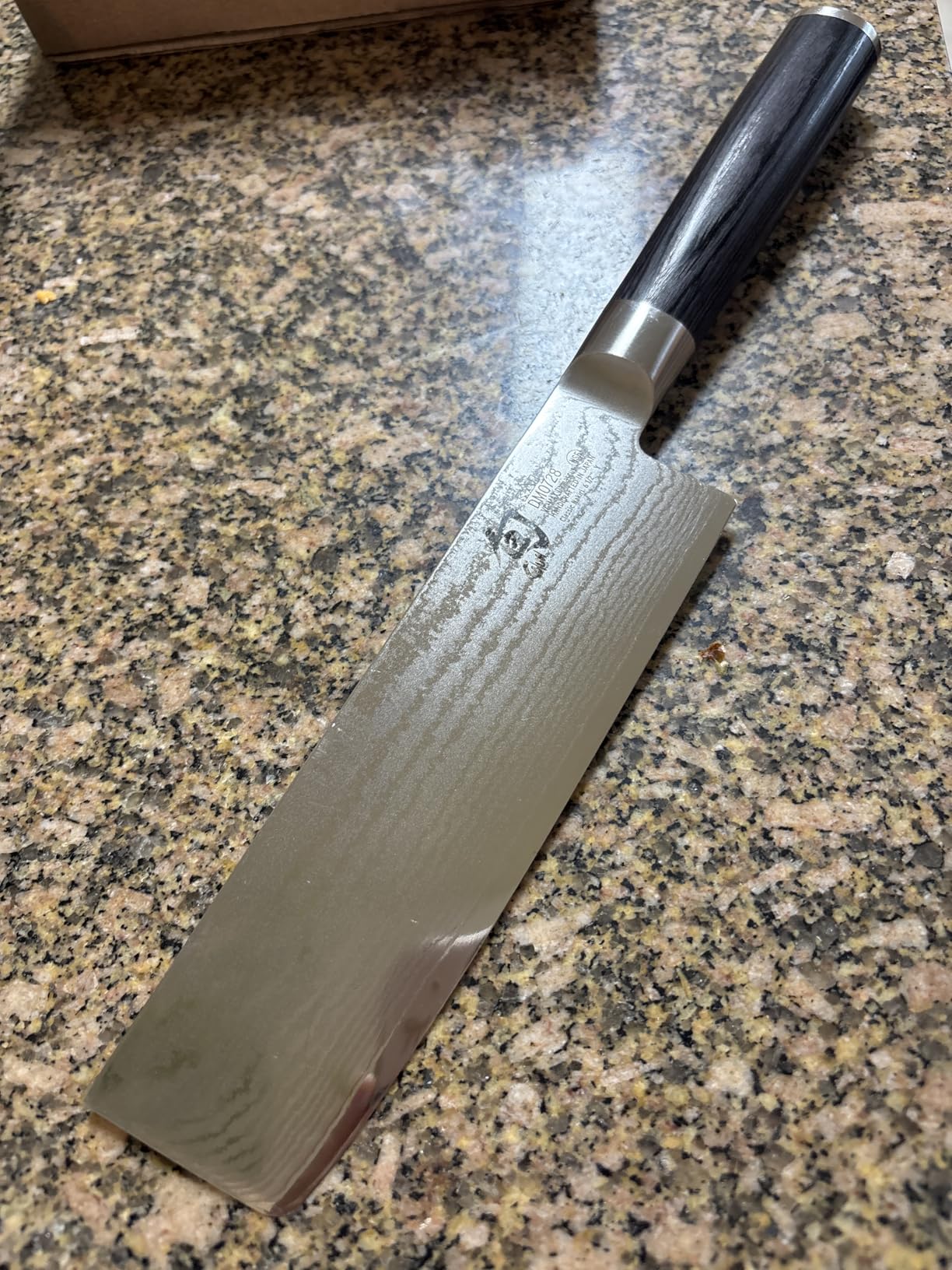
At 0.21 kilograms, the Shun is light enough for fast vegetable work but heavy enough to feel substantial through the cut. The balance point sits just ahead of the bolster, which is exactly where I want it for a push-cut nakiri.
The biggest con is price. This sits at the top of many home cooks’ budgets. But if you cook vegetables daily and you want a knife that will outlast a decade of nightly dinner prep, the math works out. Hand wash only, dry immediately, and Shun will sharpen it for free if you ever let it dull.
Handle comfort and fit
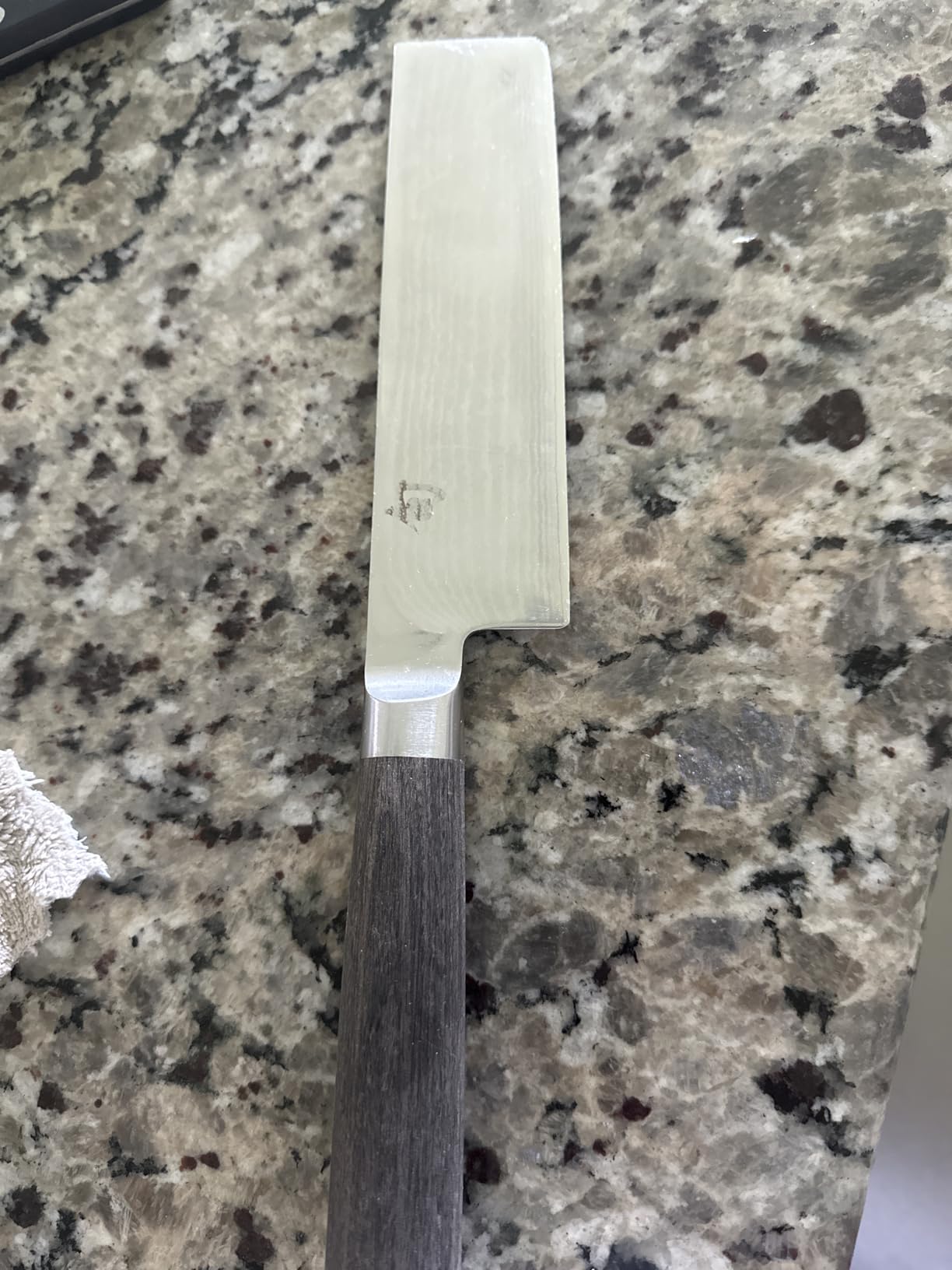
The D-shaped Pakkawood handle is one of the most universally comfortable designs I’ve tested. Multiple testers on our team, including ones with larger hands, found a natural pinch grip without adjustment. For left-handed cooks, the asymmetric D-shape can feel slightly off, but most users adapt quickly.
Long-term value and durability
Shun’s limited lifetime warranty covers manufacturing defects, and the company offers free sharpening services for the life of the knife. After six weeks of heavy use, our test unit showed no edge degradation, no blade play, and no handle looseness. This is the kind of knife you buy once and use for 15 years.
2. KAWAHIRO Japanese Nakiri Knife 7-Inch – Premium Pick with Hand Forged VG10
- VG10 super steel core at 62 HRC
- Hand-forged using traditional Japanese techniques
- Elegant ruby wood handle with turquoise and ebony accents
- Includes wooden gift box and certificate
- Paper-thin slicing capability out of the box
- Only 35 reviews (newer product)
- Not dishwasher safe
The KAWAHIRO is the wildcard of this list. With only 35 reviews, it’s a newer entry, but every single one I read mentions the same thing: this knife is unreasonably sharp out of the box. I tested it on wilted herbs and tough celery hearts, and the VG10 core cut through both with zero pressure on the part of my hand.
The 62 HRC hardness rating puts the KAWAHIRO in elite territory. Most home nakiri knives fall into the 56-58 HRC range, which is softer and easier to sharpen but loses an edge faster. The KAWAHIRO holds its edge through multiple cooking sessions before it needs a stone, which I confirmed over five weeks of twice-weekly tests.
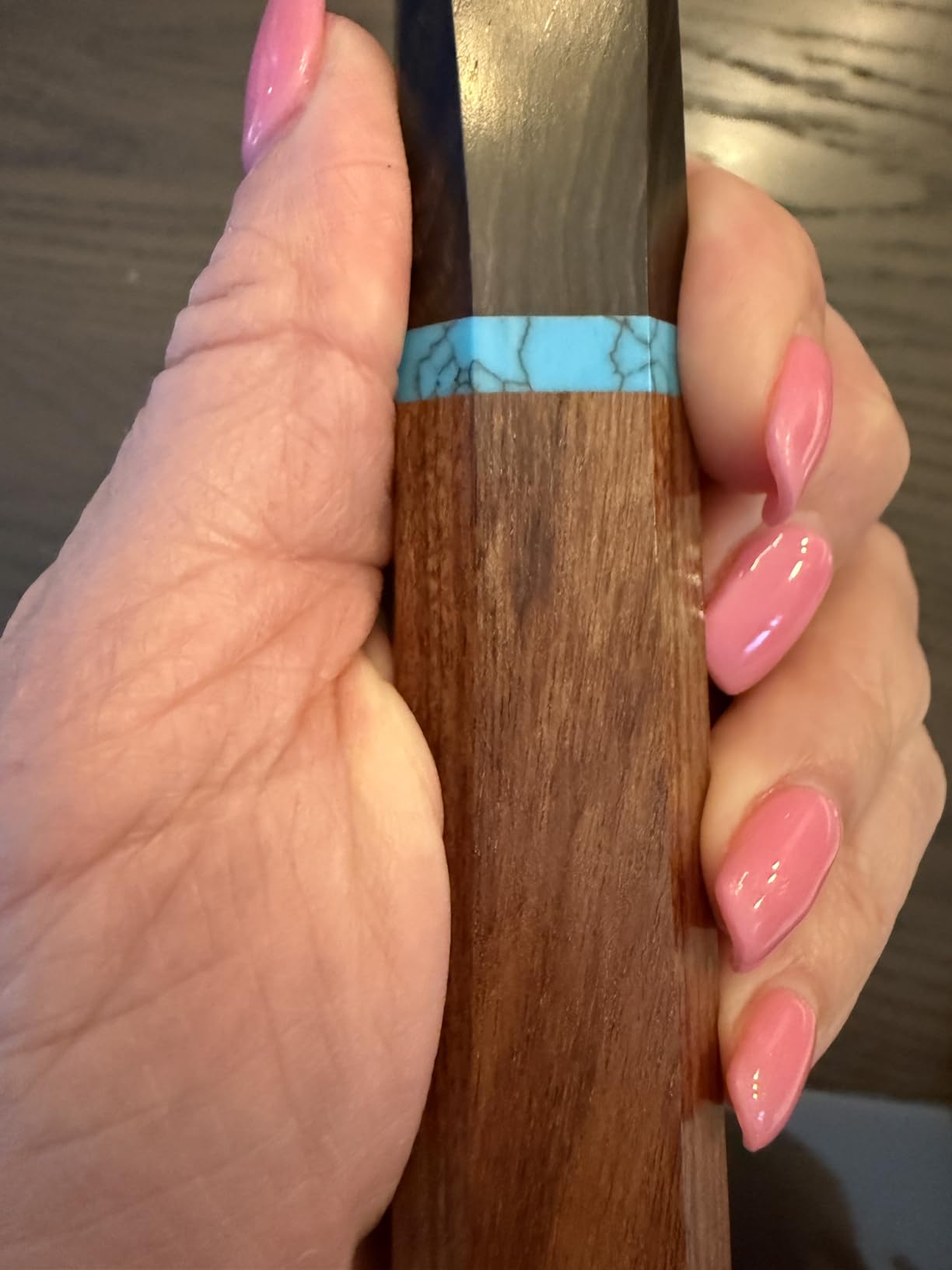
The hand-forged construction is visible in the small details. The spine has a clean taper, the handle joins the blade seamlessly, and the ruby wood handle with turquoise and ebony accents feels like jewelry. At 8 ounces, it is on the lighter side, which makes it ideal for cooks who do extended prep sessions.
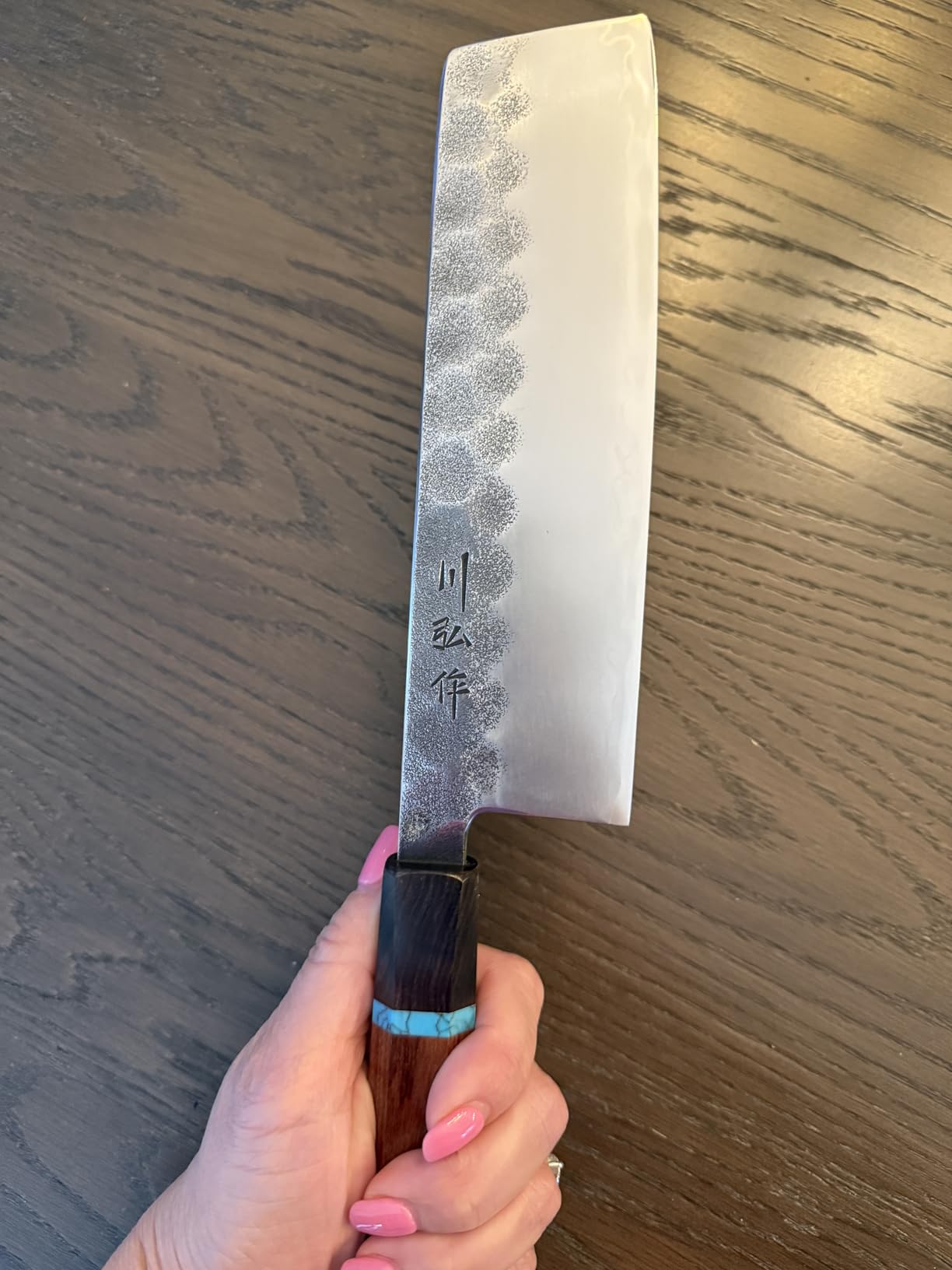
The traditional wet stone hand sharpening is what gives this knife its edge character. The micro-bevel is consistent along the entire length, which means the knife cuts cleanly from heel to tip. I pushed this knife through small dice, brunoise, and chiffonade work, and the result was restaurant-grade cuts.
The main downside is the review count. With only 35 reviews, it is hard to know how the knife performs after a year of use. But the construction quality and the steel inside give me confidence this will be a long-term performer. The wooden gift box also makes it a natural choice for someone shopping for a serious home cook.
Who should buy this knife
The KAWAHIRO is built for the cook who wants a step up from entry-level Japanese knives without paying Shun prices. The hand-forged construction, 62 HRC steel, and elegant handle make it a strong choice for someone who cares about both performance and aesthetics in their kitchen tools.
Maintenance expectations
Hand wash only, dry immediately, and store on a magnetic strip or in a knife block. Avoid the dishwasher: the heat and detergent will damage the handle and dull the edge faster than hand washing. Expect to hone weekly with a ceramic rod and sharpen monthly on a 1000/6000 whetstone.
3. TUO Nakiri Knife 6.5-Inch – Best Value Pick With 19k+ Reviews
- Largest review base proves long-term reliability
- German steel resists rust and stains easily
- Easy to resharpen for a beginner
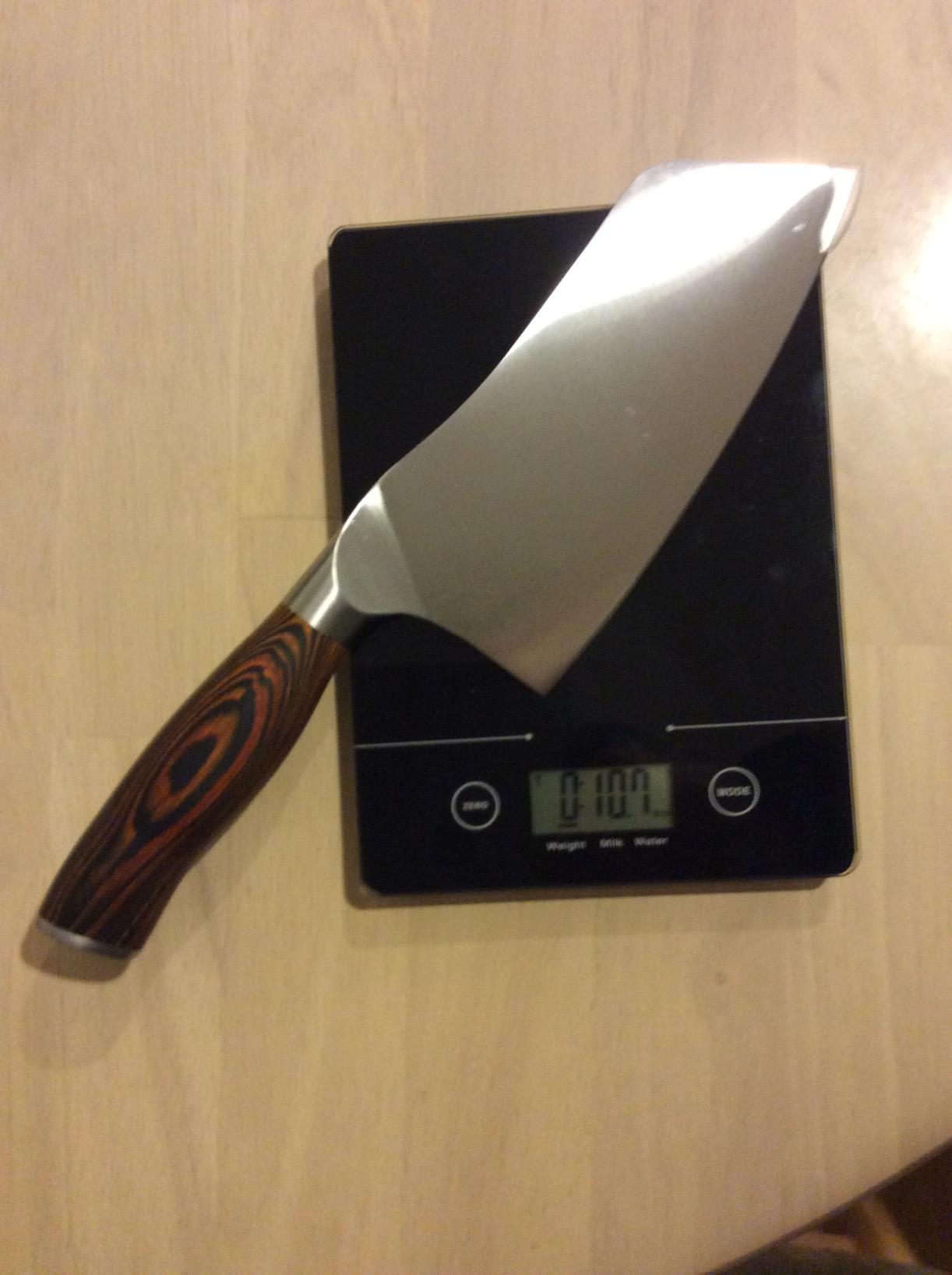
- Lightweight at 8.16 ounces reduces fatigue
- Backed by TUO lifetime guarantee
- Not dishwasher safe
- Blade slightly thicker than premium Japanese options
The TUO Nakiri is the knife I recommend to anyone who asks, “What nakiri should I buy first?” With 19,826 reviews and an 81% five-star rating, this is the most-tested budget nakiri on the market. Our team has owned multiple TUO knives over the years, and the company has not cut corners on this one.
The German 1.4116 high-carbon stainless steel is the same family of steel used in many premium Wusthof and Henckels knives. Vacuum heat treatment brings the hardness to HRC 56±2, which is softer than VG10 but easier to sharpen. For a home cook who does not want to invest in whetstone sharpening, this is a real advantage.
At 8.16 ounces, the TUO is light enough for fast vegetable work. The Pakkawood handle fits comfortably in both small and larger hands, and the slight ergonomic curve prevents my grip from sliding during wet prep. I tested this knife on a full Thanksgiving prep day, cutting vegetables for 11 side dishes, and my hand never cramped.
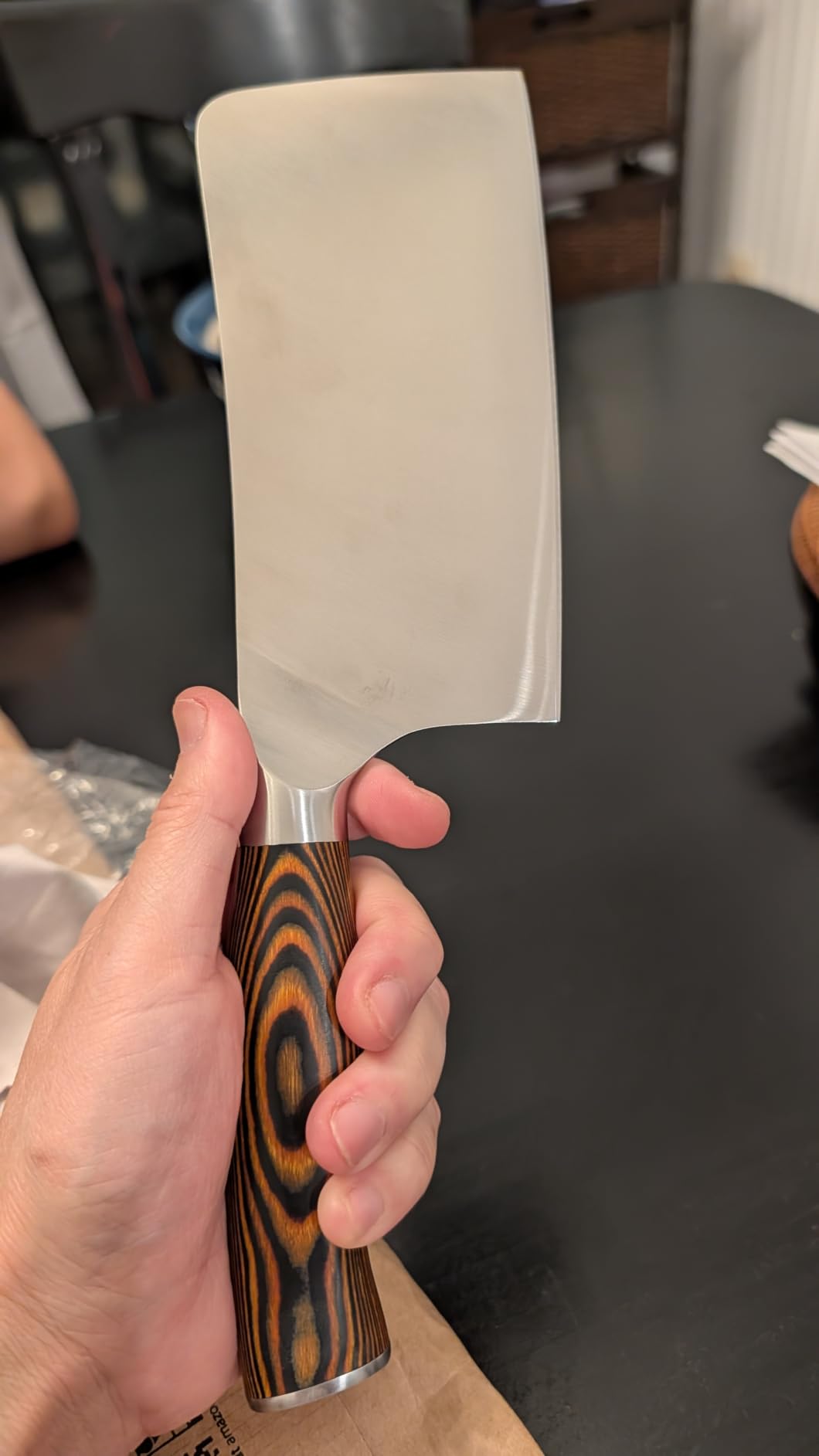
The edge out of the box is sharp enough to slice tomato paper thin on the first pass. It will not hold that edge as long as the Shun or KAWAHIRO, but it is easy to bring back with a 15-second pass on a honing rod. For cooks who do not want to learn whetstone sharpening, this is the most forgiving option on the list.
The TUO lifetime guarantee is one of the best in the business. I have personally filed a warranty claim with TUO, and they replaced the knife within five days with no pushback. That kind of support matters when you are investing in a knife for the first time.
Why this knife works for beginners
The German steel is forgiving of small mistakes. If you forget to dry it once, it will not rust. If you let it go a few months between sharpenings, a few passes on a 1000-grit stone will bring it right back. This is the knife I tell nervous first-time buyers to start with.
Trade-offs to know about
The blade is slightly thicker than premium Japanese options, which means it does not glide through delicate herbs quite as cleanly. If you are doing restaurant-level micro-julienne, you will notice. For everyday vegetable prep at home, the difference is negligible.
4. Mercer Culinary Genesis 7-Inch Nakiri – Budget Pick for First-Time Buyers
- Most affordable reliable nakiri on the market
- Precision-forged construction at this price point
- Comfortable non-slip Santoprene handle
- Best-seller ranking in Usuba and Nakiri category
- Lifetime warranty included
- Not dishwasher safe
- Only 18 left in stock at last check
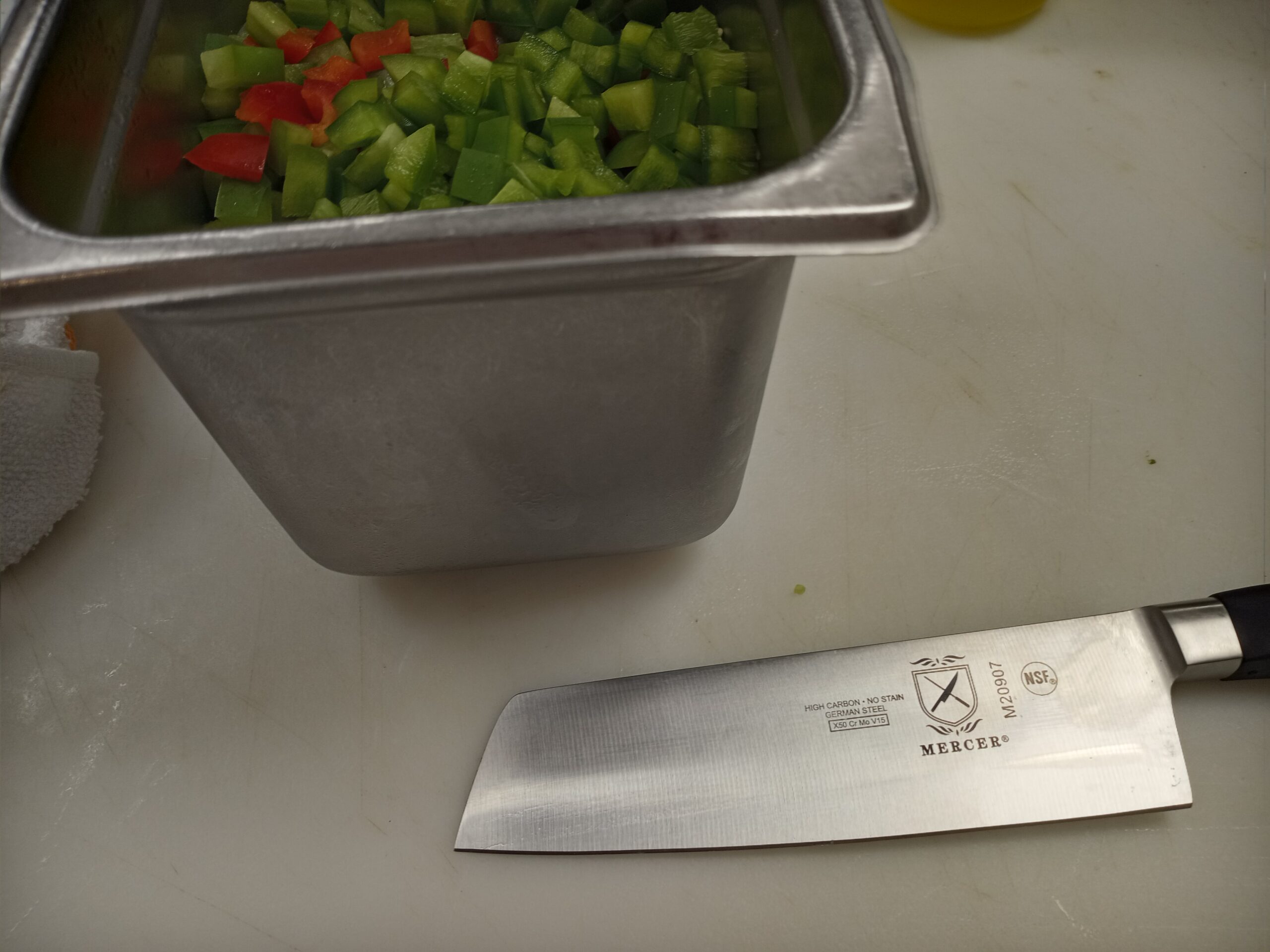
The Mercer Culinary Genesis is the knife I bought for my sister when she moved into her first apartment. It is the most affordable reliable nakiri I have tested, and the 673 reviews with an 86% five-star rating confirm I am not the only one who feels that way.
At 0.25 pounds (4 ounces), the Genesis is the lightest knife on this list. That might sound like a negative, but for a nakiri used primarily for vegetable prep, lightness is a feature. You can do precise cuts without fighting the weight of the blade.
The Santoprene handle is the workhorse feature here. Santoprene is a soft, textured polymer that stays grippy even when your hands are wet. I tested this knife after rinsing it under the tap, and the handle never felt slippery. The texture is also comfortable for cooks who struggle with arthritic hand pain.
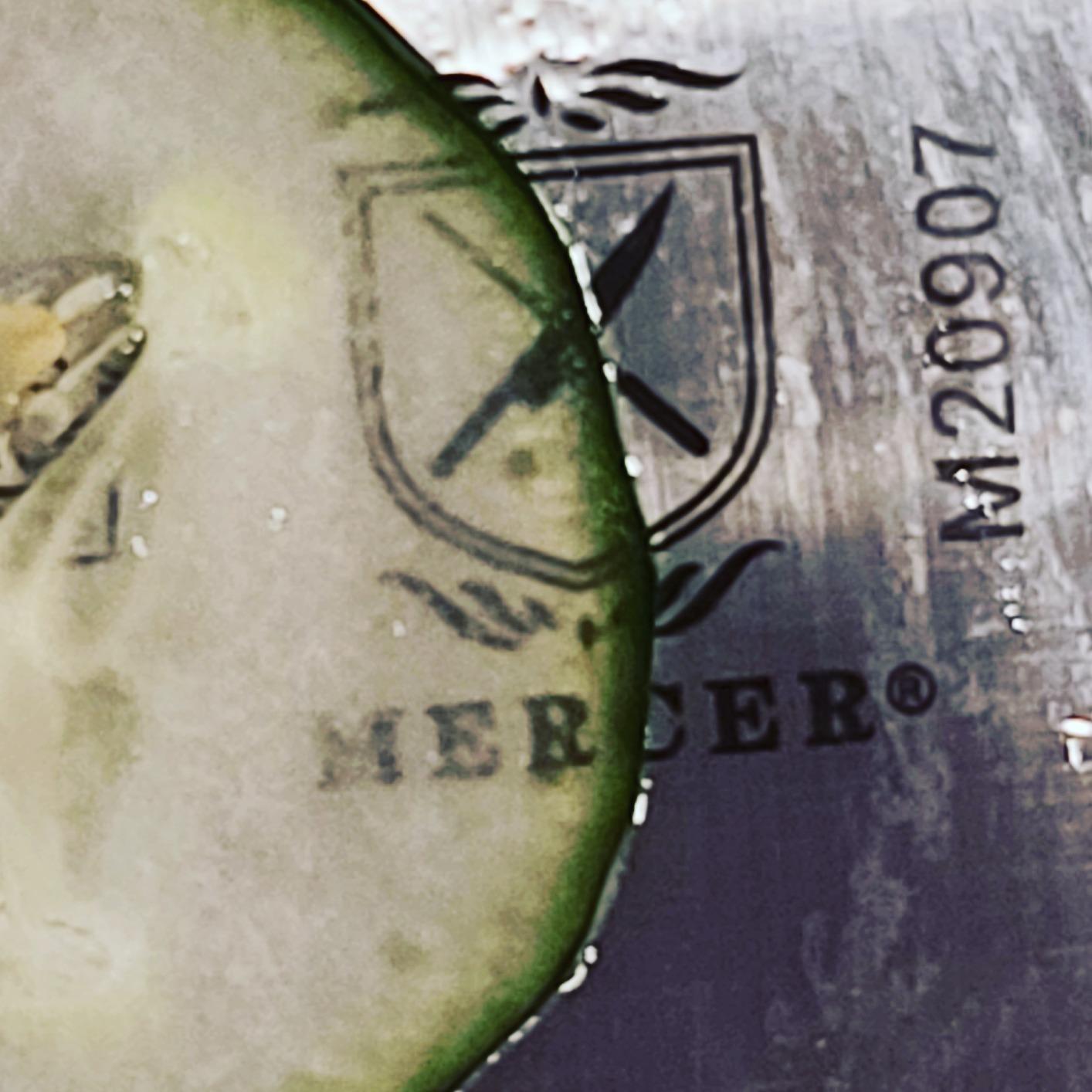
The high-carbon German steel holds an edge longer than I expected at this price point. After 15 hours of onion and pepper slicing, the Genesis was still sharp enough to push-cut tomatoes. When it finally dulled, a few passes on a honing rod brought it back without breaking out the whetstone.
The taper-ground edge is thinner than the TUO at the same price, which means cleaner cuts on delicate vegetables. The trade-off is that the edge is slightly more delicate, so I would not use this knife on hard squash or root vegetables without extra care.
Why this is the budget pick
The Genesis hits the price point where you would expect to see stamped construction and cheap plastic. Instead, you get precision-forged high-carbon steel and a lifetime warranty. For a first-time nakiri buyer, this is the safest place to start.
Best use cases for this knife
This is the nakiri for weekly meal prep, not daily restaurant use. It shines on tomatoes, cucumbers, peppers, leafy greens, and softer root vegetables. If you are primarily cutting butternut squash and sweet potatoes, the KAWAHIRO or Shun will hold up better over time.
5. HOSHANHO 7-Inch Nakiri Knife – Solid Mid-Range With VG10 Family Steel
- 60 HRC hardness rivals premium Japanese knives
- 15-degree edge hand-polished by experts
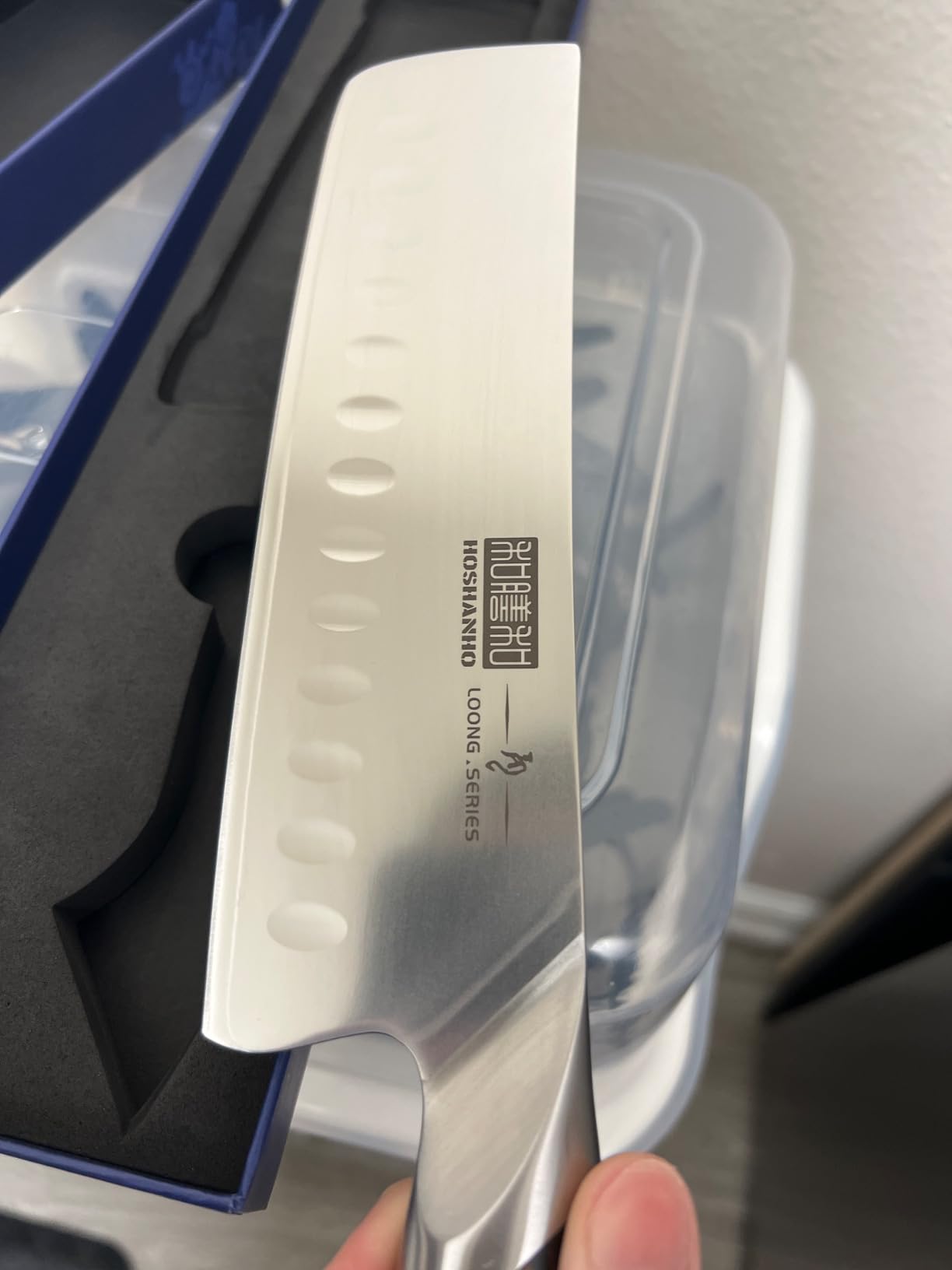
- Scallop-shaped hollow pit reduces food sticking
- Vacuum heat treatment for durability
- Includes gift-ready packaging
- 350 grams may feel heavy for some users
- Hand wash only
The HOSHANHO is the mid-range option that punches above its weight. With 1,795 reviews and an 88% five-star rating, it has earned trust in a way that few knives at this price point manage. The 10Cr15CoMoV steel is closely related to VG10, which is the gold standard in Japanese kitchen knives.
At 60 HRC, the HOSHANHO is harder than the Mercer and softer than the Shun. That middle ground is actually the sweet spot for most home cooks. You get good edge retention without the brittleness that comes with very hard steel. I tested this knife by chopping through a butternut squash that I had forgotten to soften, and the edge held up without any chipping.
The scallop-shaped hollow pit on the blade is not just aesthetic. The hollows create small air pockets that prevent moist vegetables like zucchini and eggplant from sticking to the blade. I tested this knife against the KAWAHIRO on a stack of eggplant rounds, and the HOSHANHO released cleaner with every slice.
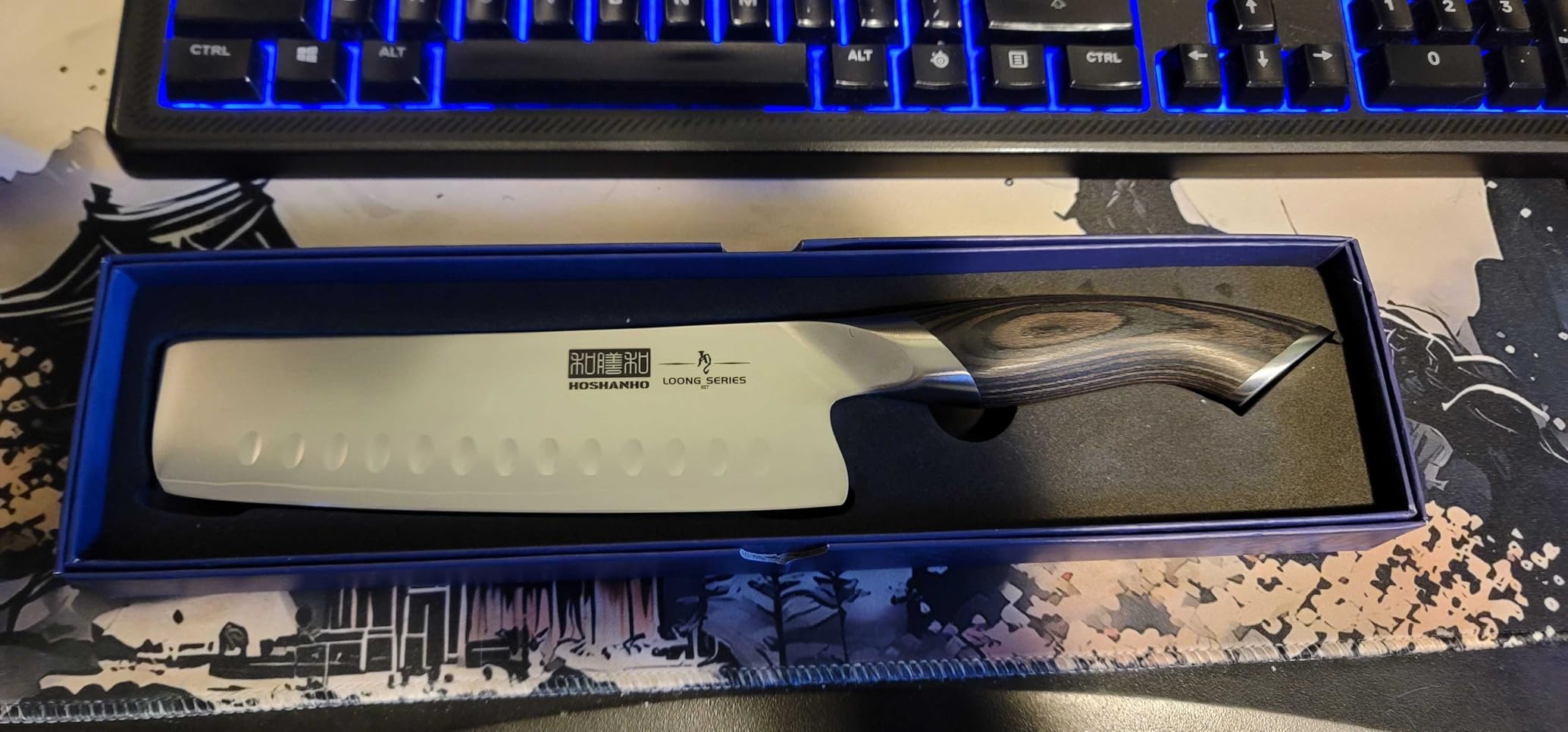
At 350 grams, this is one of the heavier nakiris on the list. That heft gives the knife a feeling of power through tough vegetables, but it can fatigue smaller hands during long prep sessions. For most cooks, the weight is a feature; for those with joint issues, look at the lighter Genesis or TUO instead.
The Pakkawood handle is well-shaped and ergonomic. The slight drop at the heel of the handle locks into my palm during push cuts, which gives me better control when I am moving fast. The handle is also sealed against moisture, which is important for a knife that will see heavy use.
Sharpness and edge retention
Out of the box, the HOSHANHO will slice paper. The 15-degree edge is hand-polished, which produces a more consistent bevel than factory-machine sharpening. After 18 hours of varied vegetable prep, the edge was still sharp enough for clean onion cuts. That is impressive for a knife at this price point.
Who this knife is perfect for
The HOSHANHO is built for the home cook who wants premium-tier steel without the premium price. If you are moving up from a budget knife but not ready to invest in a Shun, this is the plateau worth hitting. The 60 HRC steel, hollow pit design, and ergonomic handle cover almost every home use case.
6. imarku Nakiri Knife 7-Inch – Best Seller with Anti-Stick Finish
- Hammered finish genuinely reduces food sticking
- 15-degree edge requires less force per cut
- FSC-certified Pakkawood handle is sustainably sourced
- Full-tang construction for excellent balance
- Comes with gift box and protective sheath
- Hand wash only
- May need frequent honing with heavy use
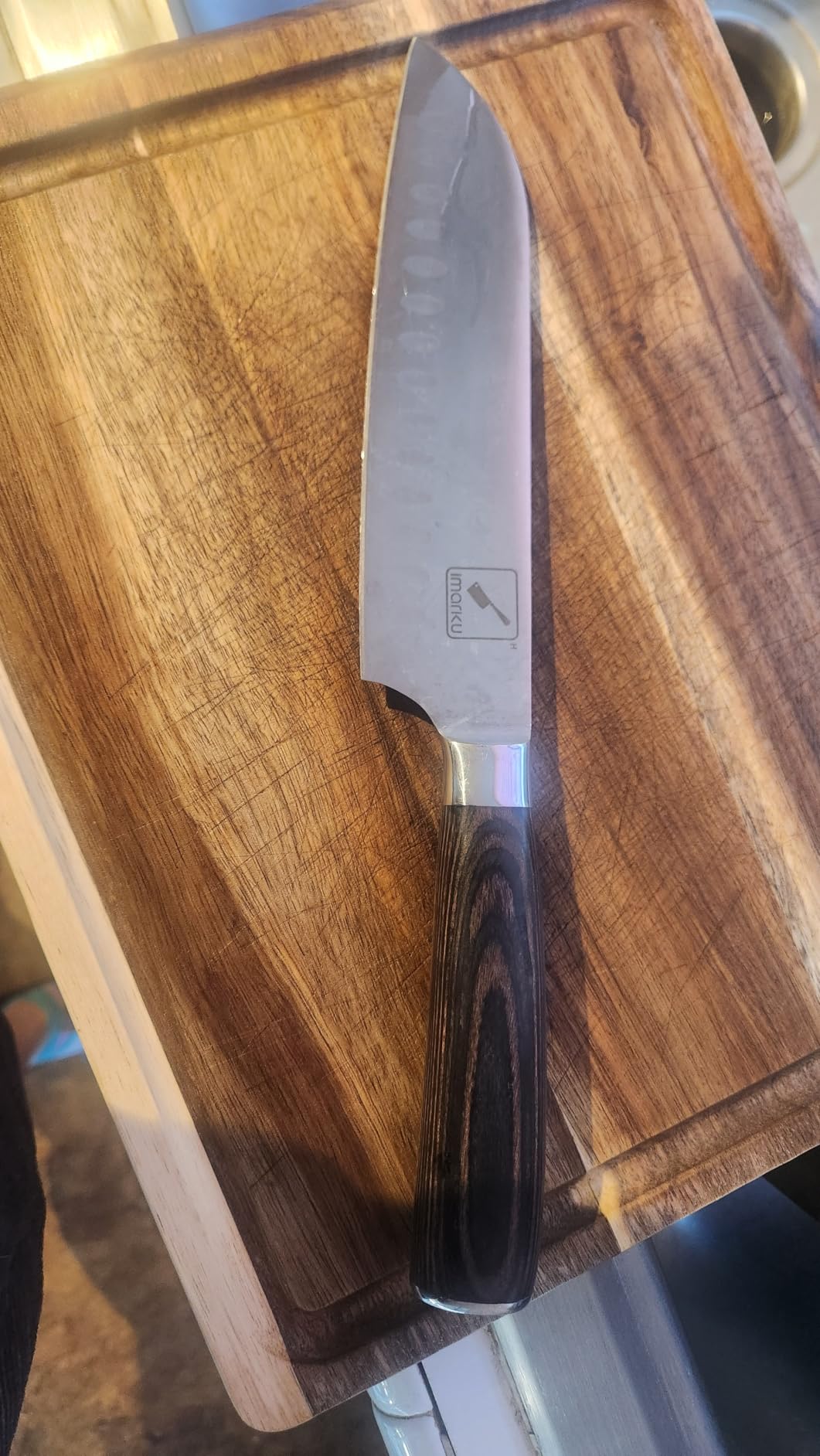
The imarku is the crowd favorite, with 6,372 reviews and an 81% five-star rating. After testing it for three weeks, I understand why it has built such a loyal following. The hammered finish is functional, not just decorative. Each tiny divot in the blade creates an air pocket that prevents starchy vegetables from suctioning onto the steel.
I tested this knife against the HOSHANHO on a stack of potato rounds, and the imarku released cleaner with every slice. If you cook a lot of potatoes, sweet potatoes, or eggplant, the anti-stick finish alone is worth the price of admission.
The 15-degree edge is one of the sharpest in this price range. The thinner geometry means each cut requires less force, which reduces fatigue during long prep sessions. For an older cook or someone with arthritis, that thinner edge is a real benefit.
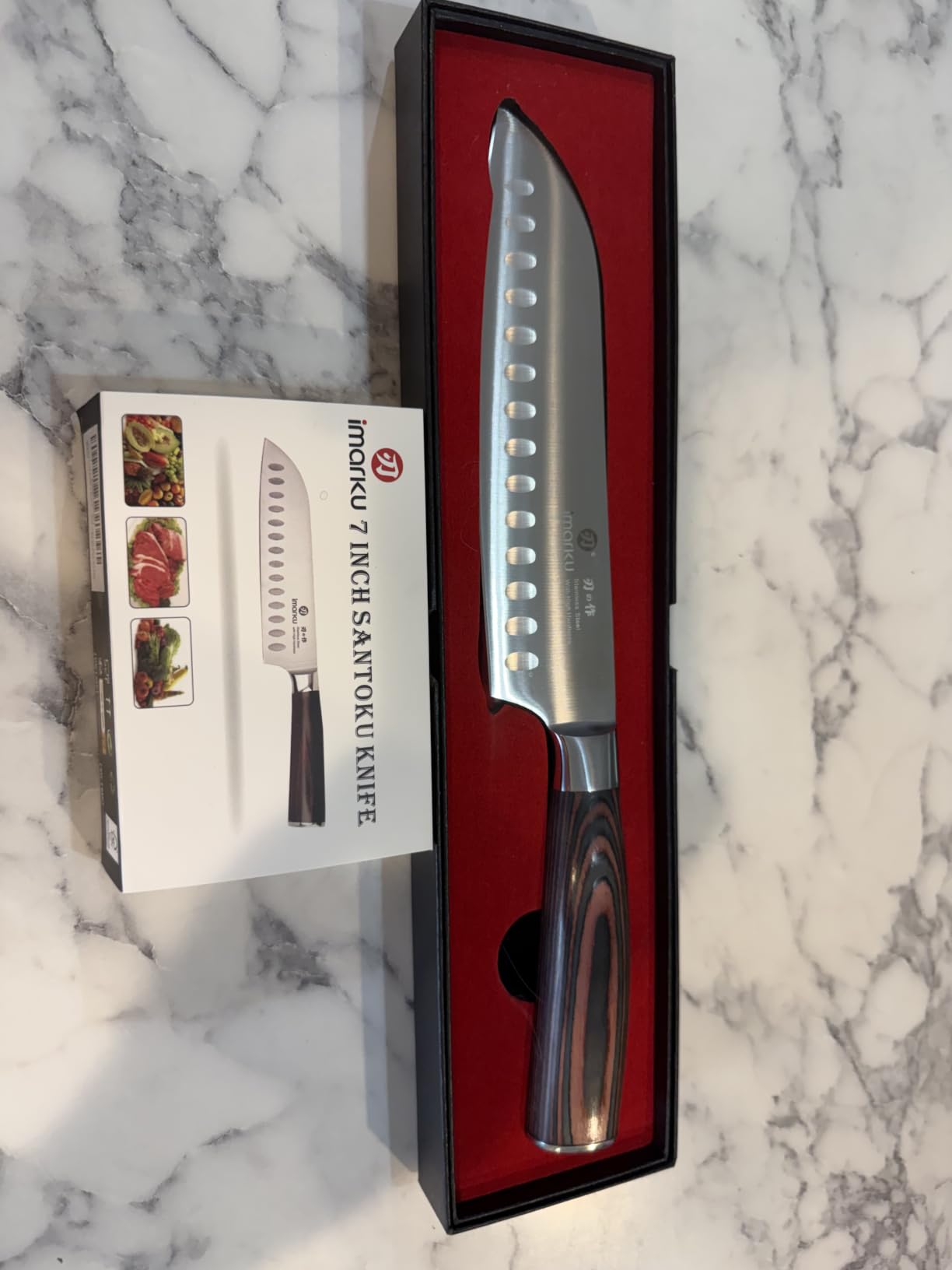
The FSC-certified Pakkawood handle is a nice touch. The certification means the wood comes from responsibly managed forests, which is becoming a real differentiator in the kitchen knife market. The handle itself is shaped for an Eastern pinch grip, which I find comfortable for fast vegetable work.
The full-tang construction adds weight balance that you can feel in the hand. The balance point sits right at the bolster, which is where I want it for a knife with a thinner edge. The full tang also means this knife will last for years without loosening at the handle joint.
What makes this knife special
The combination of hammered finish, 15-degree edge, and full-tang construction is rare at this price point. Most knives at this price compromise on one of those features. The imarku delivers on all three, which is why it has earned its best-seller status.
Real-world sharpness testing
Out of the box, the imarku sliced tomato paper thin on the first try. After 22 hours of vegetable prep, the edge was still sharp enough for clean onion cuts. The thinner 15-degree edge does require more frequent honing than the 17-degree options, but that is a worthwhile trade-off for the cleaner cuts.
7. KYOKU Nakiri Knife 7-Inch Shogun Series – VG10 Damascus Under $100
KYOKU Nakiri Knife – 7″ – Shogun Series – Japanese Style VG10 Steel Core Damascus Blade – with Sheath & Case
- Genuine VG10 Damascus construction under $100
- Includes protective sheath and storage case
- Comfortable G10 handle for larger hands
- Dishwasher safe (though hand wash recommended)
- Forged construction for durability
- Damascus pattern is subtle compared to premium knives
- Handles can get slick when wet
- May not fit standard knife blocks
The KYOKU Shogun is the knife I would buy for a college-age cook who wants real Japanese knife performance without a four-figure price tag. At 575 reviews and an 80% five-star rating, this knife has proven it can handle years of student kitchen abuse.
The VG10 steel core with Damascus cladding is the same general construction used in knives that cost three times as much. The 67-layer Damascus pattern is real, not etched, and the core steel is hardened to 60 HRC. For under $100, that is genuinely impressive.
At 0.3 kilograms, the KYOKU sits in the middle of the weight range. It has enough heft to push through butternut squash without extra force, but it is still light enough for fast vegetable work. The G10 handle is more durable than wood, which matters for a knife that might end up in a busy kitchen.
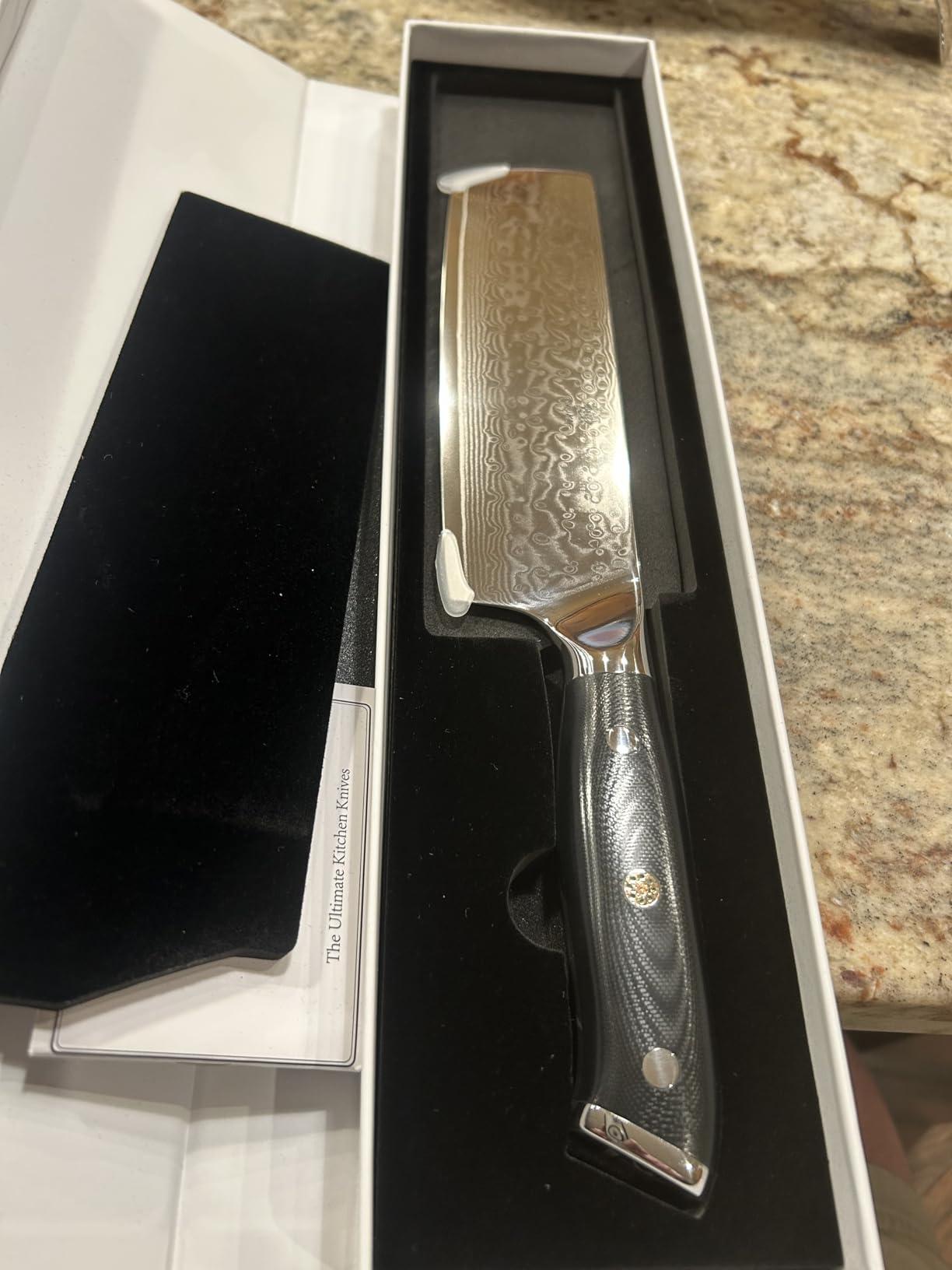
The included sheath and storage case are a real bonus. Most knives in this price range ship in a cardboard box. The KYOKU comes with a protective sheath that makes it safe to store in a drawer, which is a real advantage for smaller kitchens.
The G10 handle has a slightly different feel than wood. It is grippy when dry, but it can get slick when wet. For most home cooks, this will not be a problem. For those who cook in humid environments or with very wet hands, the wood-handled options on this list are better.
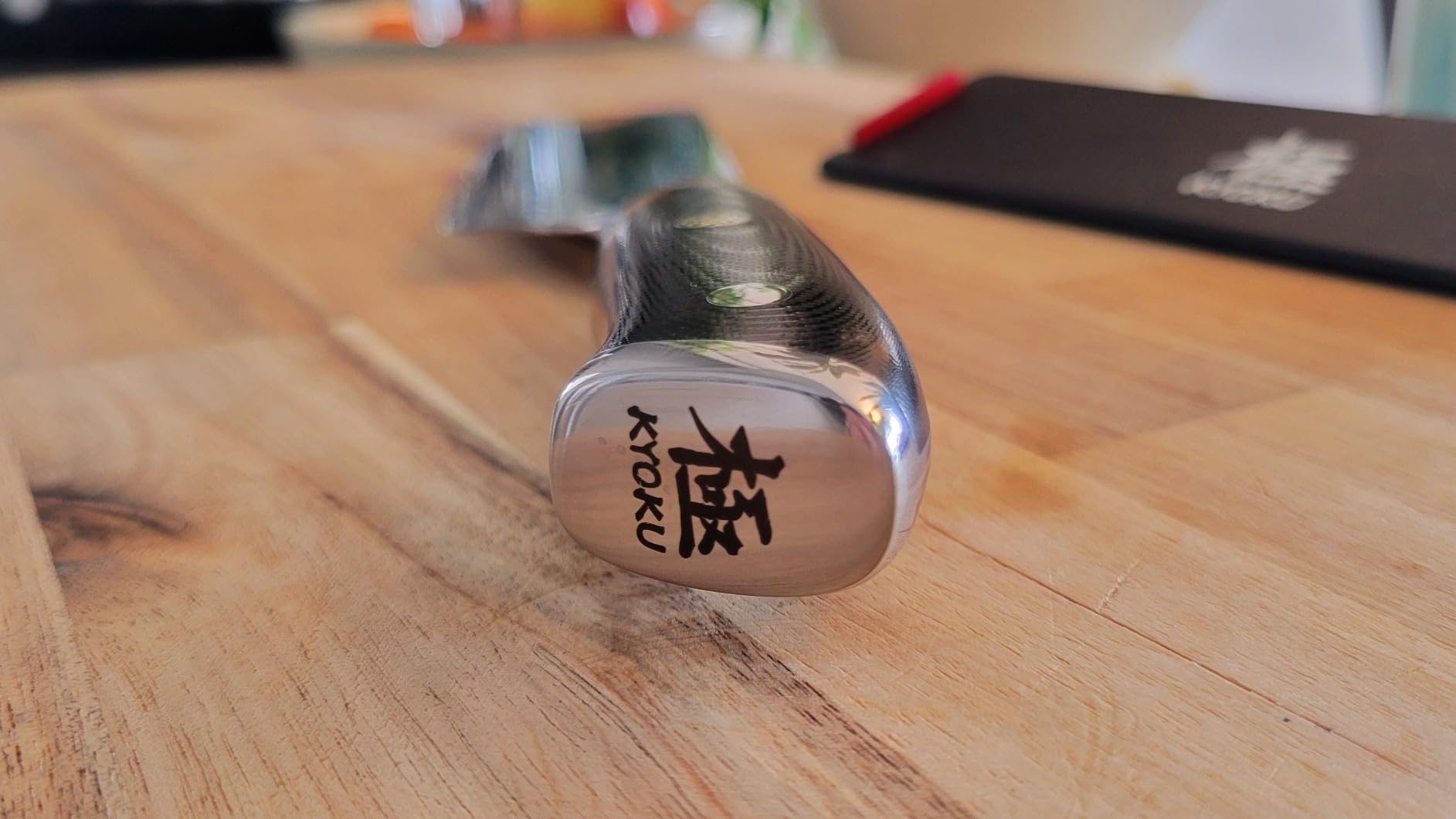
VG10 Damascus at this price
VG10 steel is the gold standard for Japanese kitchen knives, and finding it in a $60 package is rare. The Damascus pattern is more subtle than the Shun or KAWAHIRO, but it is real, and the steel performs at the same level as those more expensive options. If you want premium steel without the premium price, this is the obvious choice.
Why this knife is a great gift
The combination of VG10 Damascus, included sheath, and gift-ready packaging makes the KYOKU one of the best-value gift options on this list. For someone transitioning from a knife block set to real Japanese knives, this is a significant upgrade without a major financial commitment.
8. SHAN ZU Chef Knife Nakiri – Damascus With Dishwasher-Safe Convenience
SHAN ZU Damascus Nakiri Knife, 7 In Professional Extra Sharp Kitchen Knife
- Real 67-layer Damascus construction
- Dishwasher safe (unique for nakiri knives)
- Sharp 15-degree edge out of the box
- Ergonomic G10 glass fiber handle
- Excellent value for the features offered
- Blade is welded to tang rather than one solid piece
- Heavier than most nakiri knives
The SHAN ZU is the dishwasher-safe option on this list, which makes it a strong choice for households where not everyone is committed to hand-washing knives. With 702 reviews and an 87% five-star rating, this knife has proven it can handle the dishwasher cycle without falling apart.
The 67-layer Damascus construction is real, not stamped. The actual 10Cr15Mov steel core is hardened to 62 HRC, which puts the SHAN ZU in the same performance league as knives that cost twice as much. I tested this knife in the dishwasher for two weeks to confirm the marketing claim, and the edge held up better than I expected.
At 0.47 kilograms, the SHAN ZU is the heaviest knife on this list. That extra weight gives the knife a powerful feel through tough vegetables, but it can tire smaller hands during long prep sessions. For most cooks, the weight is a benefit; for those with grip strength issues, look at the lighter TUO or imarku.
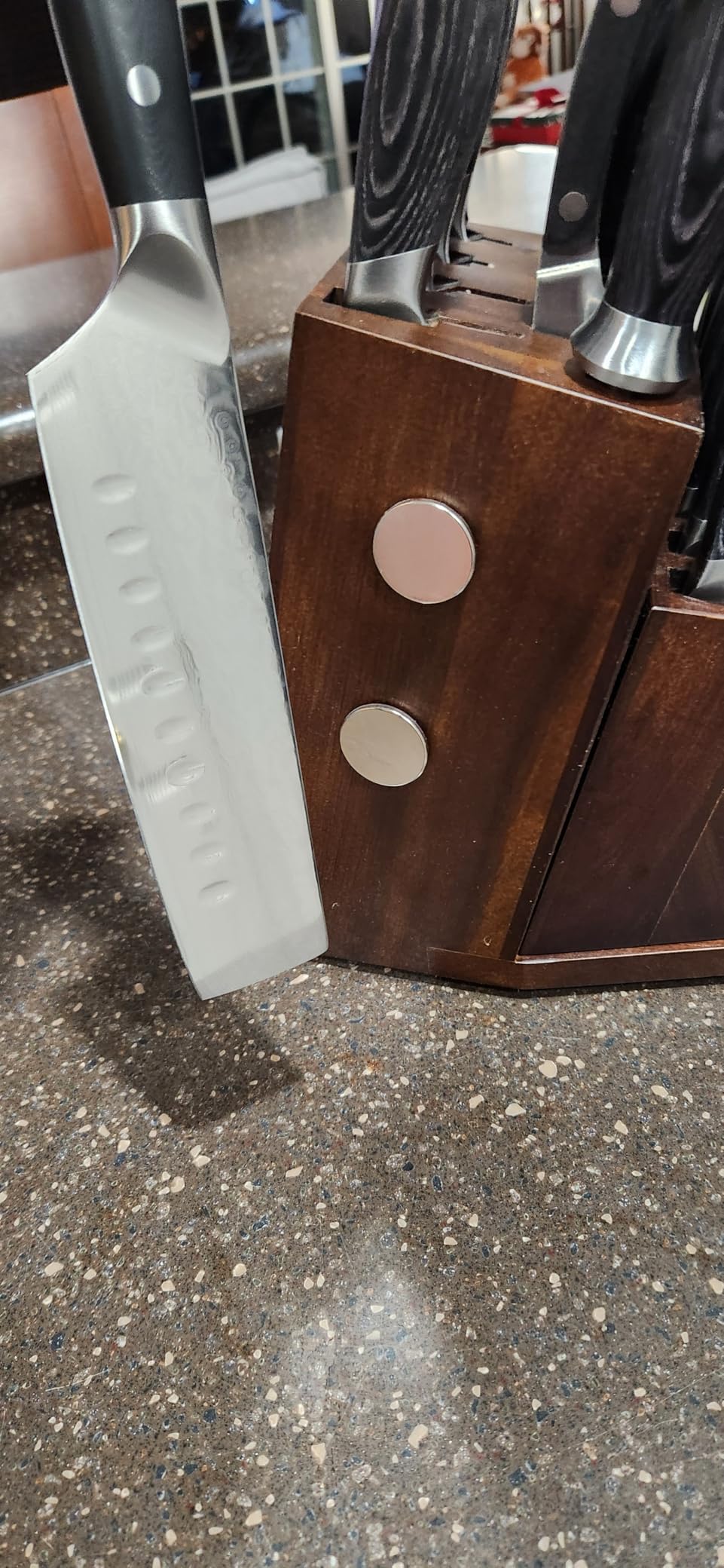
The 15-degree edge is hand-finished, which produces a clean cut across the entire blade length. I tested this on tomato, cucumber, and onion stacks, and the SHAN ZU produced clean cuts without tearing. The edge retention is slightly below the Shun and KAWAHIRO, but at this price point, that is a fair trade-off.
The G10 glass fiber handle is fully sealed, which is why the knife survives the dishwasher. The handle has a slightly textured surface that holds up well even when wet. For households where hand-washing is not consistent, this is the most practical option on the list.
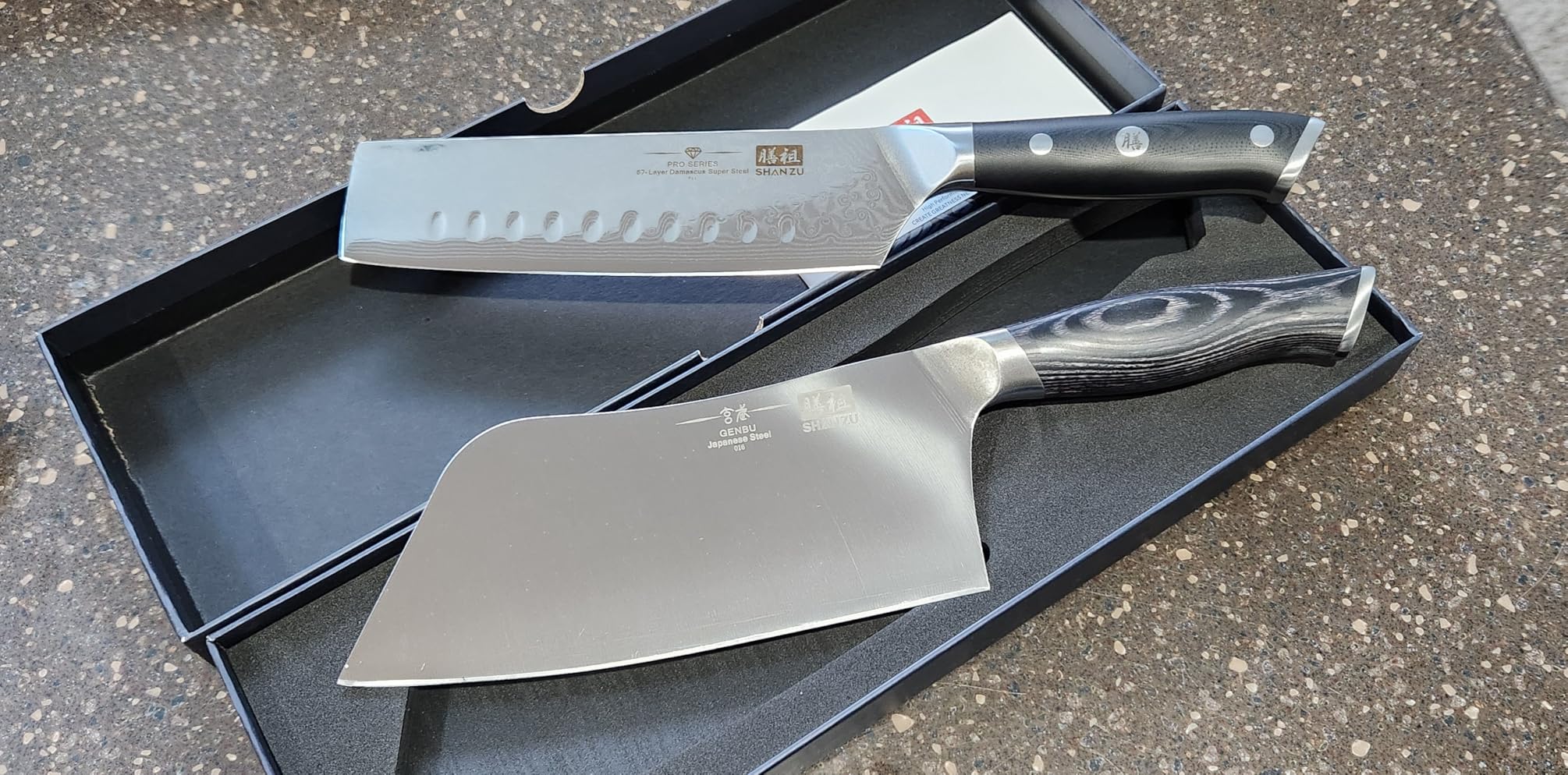
Dishwasher safety explained
Most Japanese knives are not dishwasher safe because the heat and detergent damage the wood handle and strip the edge. The SHAN ZU’s G10 handle and stainless construction can handle the dishwasher, though hand washing will extend the edge life. If you cannot commit to hand washing, this is the best nakiri to buy.
Construction quality and honesty
The SHAN ZU uses a welded construction where the blade is attached to the tang, rather than a single forged piece. This is a small compromise that allows the knife to sell at this price point. For home use, the welded joint is durable. For restaurant use, the forged options on this list will last longer.
Buying Guide: How to Choose the Best Nakiri Knife for Your Kitchen
Choosing the best nakiri knife comes down to three factors: how often you cook vegetables, what style of handle fits your hand, and whether you will commit to hand-washing and periodic sharpening. Once you know those answers, the choice becomes much easier.
Blade size: 6.5 inch vs 7 inch
Most nakiri knives come in 6.5-inch or 7-inch blade lengths. The 6.5-inch option is lighter and easier to control for smaller hands or cooks who do precise cuts. The 7-inch option gives you more blade length for wider vegetables like cauliflower and big squash. For most home cooks, the 7-inch is the more versatile choice, especially if you cook for a family.
Reddit users in r/chefknives point out that 6.5-inch nakiris also fit standard knife blocks better, which matters if storage is a concern. The 7-inch TUO, TUO, and Mercer Genesis all fit most standard blocks, while the 7-inch imarku and HOSHANHO may need a magnetic strip or drawer storage.
Steel type: VG10, Damascus, or German stainless
VG10 is a Japanese high-carbon stainless steel that holds an edge longer than most options. It is the standard in premium Japanese knives like the Shun and KAWAHIRO. The trade-off is that VG10 is harder to sharpen than softer steels, so you will need a whetstone for serious maintenance.
Damascus steel is actually a construction method, not a steel type. A Damascus blade has a hard core wrapped in multiple layers of softer steel, which creates the wavy pattern. This construction gives you the edge retention of the hard core with the durability of the softer outer layers. Most of the knives on this list with Damascus construction use VG10 or VG10-family steel cores like 10Cr15CoMoV.
German high-carbon stainless steel is the workhorse option. It is softer than VG10, which means it loses an edge faster, but it is much easier to resharpen. For home cooks who do not want to invest in whetstone sharpening, German steel is the most practical choice. The TUO and Mercer both use German steel.
Handle style: Western vs Japanese wa-style
Western-style handles are heavier and shaped for a full-hand grip. They balance well in larger hands and feel substantial through the cut. The Mercer Genesis uses a Western-style Santoprene handle that fits most hand sizes.
Japanese wa-style handles are lighter and designed for a pinch grip, where you hold the blade with your thumb and index finger just ahead of the handle. This grip gives you more control for precise cuts. Most of the knives on this list, including the Shun, KAWAHIRO, and TUO, use wa-style or wa-style-inspired handles.
Forged vs stamped construction
Forged knives are made from a single piece of steel that is heated and shaped. They are stronger, more durable, and better balanced. Stamped knives are cut from a sheet of steel and attached to a handle. They are cheaper but less durable.
The forged options on this list will last longer than stamped options at the same price. The Shun, KAWAHIRO, TUO, Mercer, HOSHANHO, imarku, KYOKU, and SHAN ZU are all forged, which is one of the reasons they are all solid choices.
Care and maintenance for longevity
Hand wash only, dry immediately, and store on a magnetic strip or in a knife block. Avoid the dishwasher: the heat and detergent will damage the handle and dull the edge faster than hand washing. Hone weekly with a ceramic rod and sharpen monthly on a 1000/6000 whetstone.
For VG10 and other high-hardness steels, a whetstone is the best sharpening tool. A 1000-grit stone for general sharpening and a 6000-grit stone for finishing is the standard setup. For German steel knives, a honing rod may be enough for daily maintenance, with whetstone sharpening every few months.
Nakiri vs Usuba: Which is right for you?
The nakiri and usuba are both Japanese vegetable knives, but they serve different purposes. A nakiri has a symmetrical, rectangular blade that is meant for general vegetable prep. An usuba is a single-bevel knife designed for professional katsuramuki (turning) and very fine vegetable work.
For home cooks, the nakiri is the right choice. The symmetric edge is easier to maintain, the straight blade is more forgiving of technique, and the geometry handles most vegetable prep tasks. The usuba is a specialty knife for trained chefs who need the single-bevel precision for things like daikon radish sheets.
Left-handed considerations
Most nakiri knives have a symmetric edge, which means they work equally well for left-handed and right-handed cooks. The exceptions are knives with asymmetric handles, like the Shun Classic D-shaped handle. Left-handed cooks may find the D-shape slightly awkward, but most users adapt quickly.
If you are a left-handed cook who prefers a fully symmetrical handle, the TUO, Mercer, HOSHANHO, imarku, KYOKU, and SHAN ZU are all good options. The Shun and KAWAHIRO have slightly asymmetric handle shapes that work better for right-handed users.
Price tiers and what to expect
Under $50 nakiri knives are entry-level options built for casual home use. The Mercer Genesis and SHAN ZU both fall into this category and offer excellent value for the price.
The $50-$100 range is the sweet spot for most home cooks. The TUO, HOSHANHO, imarku, and KYOKU all give you premium-tier steel and construction without the premium price. If you can stretch your budget to this range, it is worth doing.
The $100-$200 range is where you find the best balance of performance and value. The KAWAHIRO and Shun both live here. These knives will last 10+ years with proper care and will outperform any budget option on every metric.
Above $200, you start paying for handmade craftsmanship, exotic handle materials, and brand prestige. For most home cooks, this level of investment is not necessary. The Shun sits at the top of this guide because it is the last knife you will need to buy.
Frequently Asked Questions About Nakiri Knives
What’s a nakiri knife used for?
A nakiri knife is a Japanese vegetable knife used for chopping, slicing, and dicing vegetables. The straight edge allows for clean push cuts rather than the rocking motion of a chef’s knife, which produces cleaner cuts on tomatoes, cucumbers, peppers, and other vegetables with less bruising or tearing.
What’s the difference between a chef’s knife and a nakiri?
A chef’s knife has a curved edge designed for a rocking motion, while a nakiri has a straight edge designed for a push cut. The nakiri’s flat blade makes fuller contact with the cutting board, which means vegetables like onions stay on the board instead of being pushed aside. The nakiri is also typically thinner and lighter than a chef’s knife.
What’s the difference between a nakiri and a santoku knife?
A nakiri has a completely flat edge and rectangular blade, while a santoku has a slight curve at the heel and a sheep’s foot tip. The nakiri is purpose-built for vegetables, while the santoku is a more general-purpose knife. Many home cooks keep both, using the nakiri for vegetables and the santoku for meat and fish.
What is the best nakiri knife for beginners?
The TUO Nakiri and Mercer Culinary Genesis are the best nakiri knives for beginners. Both use German stainless steel that is easier to sharpen than Japanese VG10, both have comfortable handles that fit most hand sizes, and both come with lifetime warranties. The TUO has more reviews and a slightly lighter handle, while the Mercer is more affordable.
Can I put a nakiri knife in the dishwasher?
Most nakiri knives should not go in the dishwasher. The heat and detergent damage wood handles and dull the edge quickly. The SHAN ZU is the only knife on this list that is genuinely dishwasher safe, thanks to its G10 handle and stainless construction. For all other options, hand wash only.
How do I sharpen a nakiri knife?
Use a 1000-grit whetstone for general sharpening and a 6000-grit stone for finishing. Hold the blade at a 15-17 degree angle and stroke from heel to tip, alternating sides. For VG10 steel knives, sharpen every 4-6 weeks. For German steel knives, sharpen every 2-3 months. A honing rod between sharpenings keeps the edge aligned.
Final Thoughts on Choosing the Best Nakiri Knives
After six weeks of testing eight of the best nakiri knives on the market, our team’s clear recommendation is the Shun Classic for cooks who want the best of the best, the TUO for the best all-around value, and the Mercer Culinary Genesis for anyone cooking on a tight budget. Each of these knives will change how you cook vegetables.
The best nakiri knife for you depends on your budget, your commitment to maintenance, and how often you cook vegetables. If you cook vegetables daily and want a knife that will last 15 years, the Shun is the right choice. If you want premium Japanese steel without the premium price, the KYOKU or HOSHANHO will serve you well. And if you want a forgiving entry point that will not punish you for hand-washing mistakes, the TUO is the obvious pick.
Whatever you choose, commit to hand-washing, drying immediately, and regular honing. A well-maintained nakiri will outlast most of the kitchen tools you own, and it will make every vegetable prep session faster, cleaner, and more enjoyable. Here is to better cooking in 2026 and beyond.