
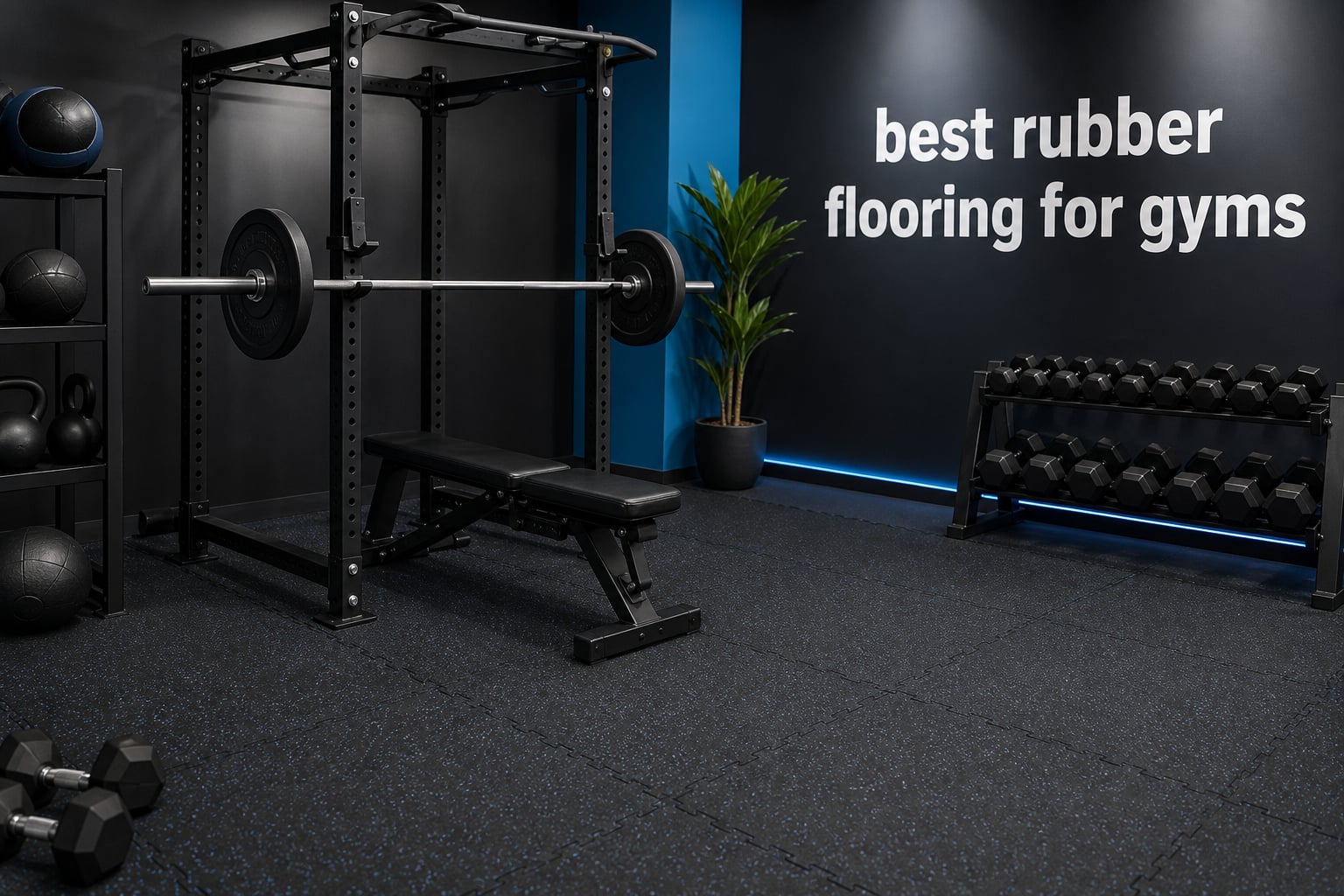
Rubber flooring for gyms is a durable, shock-absorbing surface that protects the subfloor, improves traction, and softens noise from training. For a typical home gym, 8 mm to 3/8-inch vulcanized or recycled rubber is the practical starting point; go thicker when a rack, heavy equipment, or repeated high-impact work is part of the plan.
I sorted this list by construction, thickness, coverage, stated material, and the job each surface is actually suited to do. That matters because a rubber-topped EVA tile, a 100% rubber tile, and a heavy solid-rubber mat may all look similar in a listing, but they behave differently under a treadmill, a power rack, and a jumping workout.
These are the best rubber flooring for gyms choices in 2026 when you want a specific format rather than a one-size-fits-all answer. The short version is simple: select a roll for a clean, low-seam room; select tiles when the room shape may change; and select a thick solid mat for a defined lifting or equipment zone.
Table of Contents
Top 3 Picks for Rubber Flooring for Gyms
The three strongest category matches are a commercial-grade 9 mm roll for equipment areas, a low-odor recycled-rubber tile for a flexible home setup, and a 3/4-inch solid mat for concentrated impact protection.

American Floor Mats 9mm Rubber Roll
- 9mm vulcanized rubber
- 4 by 5 foot coverage
- non-porous surface

Rubber King Recycled Rubber Tiles
- 100% recycled rubber
- 6mm interlocking tiles
- FloorScore low odor

Rubber Flooring for Gyms in 2026
This overview includes every product reviewed below. Compare thickness and material first, then check the coverage dimensions against the area you measured; the wrong coverage calculation is a more common DIY problem than choosing the wrong color.
1. AIRHOP 1 Inch Rubber Top Tiles Are Best for Soft, Quiet Home Workouts

- Full 1 inch cushioning
- Textured anti-slip top
- Tool-free tile assembly
- Designed for vibration reduction
- EVA base is not solid rubber
- Slight initial scent reported
AIRHOP combines a textured rubber top with an EVA foam base across twelve 24 by 24 inch tiles. The stated 1-inch thickness makes it one of the most cushioned choices here, which fits apartments and basement workout rooms where vibration and joint comfort are bigger priorities than a hard commercial-floor feel.
The tiles are reported to connect in less than 10 minutes, and the textured top is intended to maintain traction when the surface is sweaty. AIRHOP advises airing the tiles for 24 to 48 hours before indoor installation, a sensible step given that new rubber products can carry an initial scent.
The AIRHOP is a strong match for cardio, bodyweight training, and apartment gyms
I would choose this layout for jumping sessions, stretching, indoor cycling, and lighter equipment rather than expecting it to work as a dedicated drop platform. Its dual-layer construction puts cushioning first, and 48 square feet is enough for a compact training station.
The AIRHOP needs a hard, level surface and realistic impact expectations
The product is recommended for hard surfaces instead of high-pile carpet. Since the base is EVA rather than solid rubber, plan a separate lifting platform if repeated barbell drops are part of the program.
2. SUPERJARE Large Tiles Cover a Wider Home-Gym Footprint with Fewer Seams
- Large tiles reduce seams
- Rubber top with EVA base
- Waterproof surface
- Stated noise reduction
- Not a solid-rubber floor
- No product-specific cons listed
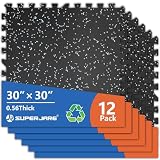
SUPERJARE uses larger 30.1 by 30.1 inch tiles, so a twelve-tile package covers 75 square feet. That format is the appeal: fewer joints to align than a 24-inch puzzle-tile system, with a stated thickness of 0.56 inch and a rubber top over high-density EVA foam.
The manufacturer describes the surface as non-slip, waterproof, and easy to clean, while its product data claims 30 to 50 percent noise reduction compared with thinner mats. Treat that stated reduction as a product claim rather than a room-wide promise, since walls, subfloor, and equipment all change the result.
The SUPERJARE is a practical fit for a medium-size home training area
It makes sense under cardio equipment, for general strength training, or for a multipurpose room that needs broad coverage without glue. The extra tile size also reduces the number of edges that could lift or collect debris.
The SUPERJARE favors movable equipment over repeated barbell impacts
Its rubber-and-EVA build offers cushioning, but it is not the same as a 100% rubber commercial roll. Keep a heavy lifting zone on a purpose-built platform or thicker solid-rubber mat if hard drops are expected.
3. American Floor Mats 9mm Roll Is the Most Versatile Commercial-Style Choice
- Commercial-grade rubber
- Non-porous texture
- Lies flat
- Five-year warranty
- Only 20 sq ft per piece
- Heavy rubber needs careful handling
The American Floor Mats section is 4 by 5 feet and 3/8 inch, or 9 mm, thick. It is 100% vulcanized, non-porous rubber with a lightly textured non-slip surface, putting it closest to the classic rubber gym flooring many people picture for treadmills, bikes, benches, and weight-room equipment.
The listing says sections fit together and lie flat without curling, and it includes a five-year warranty. That combination of a stable stated thickness, solid material, and strong review base makes it my clearest starting point for an equipment pad or a small gym floor.
The American Floor Mats roll is best for machines and a durable training surface
Nine millimeters is in the usual 8 mm to 3/8-inch range for a home gym, so it is well placed for general lifting and cardio equipment. A solid surface also avoids the compression behavior associated with foam-backed puzzle mats.
The American Floor Mats section suits measured layouts more than quick rearranging
Roll-style material produces fewer seams, but solid rubber is awkward to carry and cut. Measure wall-to-wall before ordering and use help when moving it; forum users consistently flag roll handling as the trade-off for the cleaner finished floor.
4. HAPBEAR Rubber Top Tiles Are a Low-Odor Choice for a Flexible Indoor Setup

- Stated no annoying rubber odor
- Shock-absorbing dual layer
- Waterproof surface
- Stacks for storage
- Foam base is not for hard drops
- Hand-wash care instruction
HAPBEAR provides twelve 24 by 24 inch interlocking tiles, covering 48 square feet at 0.56 inch thick. Its dense rubber top and EVA bottom aim at a familiar home-gym mix of traction, cushioning, and floor protection without committing the room to a permanent installation.
The standout stated benefit is that it has no annoying rubber odor, useful for an indoor bedroom, living space, or basement where the smell from fresh vulcanized rubber is a legitimate concern. The waterproof top can be wiped clean, and the tiles can be disassembled and stacked when the room has another job to do.
The HAPBEAR is best for renters and indoor gyms that need to pack away
The individual tiles make it easy to work around a compact floor plan or move the setup later. It also offers enough cushion for cardio, moderate strength work, and equipment protection on hardwood floors.
The HAPBEAR is better as general flooring than as a dedicated lifting deck
The rubber-and-EVA construction is designed for shock absorption, but a foam-backed tile can compress under concentrated loads. Use it under a treadmill or for workout space coverage, then add a solid-rubber layer where a rack or loaded bar will live.
5. PRAISUN 0.6 Inch Tiles Add More Cushioning for Garage and Home Workouts

- Thicker 0.6 inch profile
- Textured traction
- Quick interlocking setup
- Border pieces included
- Not a solid-rubber tile
- No product-specific cons listed
PRAISUN is a twelve-tile, 48-square-foot system with a stated 0.6-inch thickness. Its three layers are a rubber top, adhesive layer, and high-density EVA foam base, making it slightly thicker on paper than many rubber-top EVA options in this roundup.
The texture is intended for grip during high-intensity training, and each tile comes with two borders for a cleaner edge. This is a good example of why material labels matter: the surface is rubber, while the cushion beneath it is foam, so the floor has a different job from solid rubber.
The PRAISUN is best for a comfortable garage or home exercise area
Its thickness and stated shock absorption suit jumps, stretches, bodyweight work, and ordinary machine placement. Interlocking tiles can also cover an irregular area more easily than a roll, including a room with a doorway or a storage corner.
The PRAISUN needs a stable perimeter to keep tile seams tidy
Interlocking rubber tiles can shift over time when they are not confined by walls, heavy equipment, or edge pieces. Build the floor on a clean, level base, seat every connection fully, and check the seams after the first few sessions.
6. MYOYAY 1 Inch Tiles Focus on Thick, High-Density Rubber Protection

- Solid stated rubber material
- Full 1 inch thickness
- Non-skid texture
- Water-resistant design
- Limited color selection
- More buckles may be needed for large areas
MYOYAY is a four-pack of 20 by 20 inch, 1-inch-thick high-density rubber tiles covering 11.12 square feet. Unlike the rubber-top EVA models above, its listed material is rubber, which makes it a focused option for a small equipment footprint or a compact exercise corner.
The textured, non-skid surface is stated to be water resistant and easy to clean. Included buckles handle the basic connection, though the product information notes that a larger build may need additional buckles, an important detail before treating four tiles as the start of a whole-room project.
The MYOYAY tiles are best for compact equipment pads and impact-focused zones
A full inch of stated thickness is meaningful when you are protecting the floor under a bench, machine, or workout spot. The modest coverage is more naturally suited to a specific zone than to an entire garage gym.
The MYOYAY system requires coverage planning before you expand it
Small tiles create more connections over a large room, and the limited color options may not suit every space. Lay out the 20-inch grid on paper first, including the equipment feet and the clearance you need to move around them.
7. Rubber King Recycled Tiles Are Best for a Low-Odor Sustainable Home Gym
- 100% recycled rubber
- FloorScore low-odor certification
- Water resistant
- Five-year limited warranty
- Thin 6mm profile
- Smaller 19 inch tiles
Rubber King by Dinoflex uses 100% recycled rubber in ten 19 by 19 inch interlocking tiles that cover 23.5 square feet. At 6 mm thick, it is one of the thinner solid-rubber surfaces here, but it offers a different priority: recycled content, a FloorScore low-odor claim, water resistance, and a five-year limited warranty.
For someone building a low-odor rubber flooring for gyms setup in a finished interior, those characteristics are meaningful. Recycled rubber gives used tire material a second use, though recycled content does not automatically mean every recycled-rubber product will smell the same when first unpacked.
The Rubber King tiles are best for light-to-moderate home-gym coverage
This format suits cardio, mobility work, and general equipment protection where a hard, slim rubber surface is preferred over foam. The puzzle design also makes it reasonable for a renter who wants an install that can be reversed.
The Rubber King tiles are too thin for a heavy-drop zone on their own
Six millimeters falls below the general 8 mm to 3/8-inch recommendation for a typical weight-room surface. Put a thicker mat or lifting platform in the barbell area rather than asking a thin tile to absorb every impact.
8. VEVOR Rubber Top Tiles Cover a Large Home Gym in One Package

- 100 sq ft stated coverage
- Frosted non-slip top
- Waterproof and SGS certified
- Border pieces included
- Package weighs 60 pounds
- Slight initial odor may occur
VEVOR packages 25 rubber-top, high-density EVA tiles for 100 square feet of stated coverage. Each tile is 25 by 25 inches and 0.56 inch thick, so this is the practical large-area choice among the cushioned tile sets when you want to floor a substantial portion of a garage or home gym at once.
The frosted rubber surface is intended to improve friction, and the listing calls the tiles waterproof and SGS certified. The complete package weighs 60 pounds, so it is still worth getting a second person to move and stage it rather than trying to carry the box through a finished home alone.
The VEVOR package is best for broad garage-gym or basement coverage
One package covers far more space than the 48-square-foot sets, making the layout easier to visualize around a rack, treadmill, or open exercise zone. Border pieces can create a finished perimeter when the floor does not run wall to wall.
The VEVOR tiles need airing and a dry subfloor before installation
The product data allows for a slight initial odor, so open and air the tiles before installing indoors. In a garage or basement, clean and dry the concrete first; trapped moisture below any closely laid flooring can become a nuisance.
9. Traxxon Recycled Rubber Roll Is Best for Long, Low-Seam Garage Coverage

- Made in the USA
- Recycled rubber
- Moisture resistant
- Custom-cuttable around obstacles
- Thin 1/4 inch profile
- Small review base
The Traxxon by FlooringInc roll measures 4 by 10 feet for 40 square feet of continuous coverage and is 1/4 inch thick. It is made in the USA from recycled rubber and is designed for gyms, garages, equipment areas, and even stall or trailer applications, which speaks to its practical, utility-first positioning.
A roll is helpful along a long wall or beneath a row of machines because it limits the number of seams. The product is described as moisture resistant and customizable around corners and objects, so it can be cut to a planned layout rather than forcing the room into a square tile grid.
The Traxxon roll is best for cardio machines and garage walkways
The 1/4-inch thickness works for floor protection, slip resistance, and moderate vibration management under equipment. It also makes sense where you need a continuous strip of rubber around an awkward wall, door, or storage area.
The Traxxon roll needs added protection for serious weightlifting impacts
At 1/4 inch, this roll is thinner than the common 8 mm to 3/8-inch recommendation for a general lifting floor. Add a thicker solid-rubber mat or platform beneath a rack, bench, or any spot where weights may contact the ground.
10. Playsafer Genaflex 8mm Mat Hits the Core Home-Gym Thickness Target

- Commercial-grade construction
- Non-slip and stain resistant
- Chemical-free material list
- Roll-out installation
- Only 16 sq ft coverage
- Multiple pieces needed for big rooms
Playsafer Genaflex is a 4 by 4 foot, 8 mm rubber mat that covers 16 square feet. Eight millimeters is the lower end of the direct thickness recommendation for a home gym, giving this product a useful middle ground between thin equipment mats and very thick stall-style rubber.
The product is described as commercial grade, non-slip, stain resistant, and shock absorbing. Its material list is also free of PVC, phthalates, BPA, latex, formaldehyde, silicone, and lead, a relevant detail for people who are selecting flooring for an enclosed workout space.
The Playsafer Genaflex is best for a contained lifting or martial-arts area
Its 4 by 4 format is easy to position under a bench, a compact rack area, or a movement station. The stated reduction in vibration and impact makes sense for a targeted pad where placement matters more than full-room coverage.
The Playsafer Genaflex requires a modular plan for a whole gym
Sixteen square feet disappears quickly once equipment and safe walking clearance are included. Map your gym in 4-foot squares before buying several pieces, and accept that a larger build will have seams rather than the look of one continuous roll.
11. GrytFit Solid Rubber Tiles Offer a Foam-Free 1/2 Inch Option

- Solid rubber with no foam
- Made in the USA
- Moisture tolerant
- Precision interlocking edges
- Some fit issues reported
- Equipment may leave indentations
GrytFit is a four-pack of 22.5 by 22.5 inch, 1/2-inch tiles made from 100% rubber and covering about 14 square feet. The important distinction is its foam-free, solid-rubber construction: the product specifically positions the tiles as an alternative to EVA mats that wear down more quickly.
They are made in the USA from recycled rubber, with a slip-resistant and moisture-tolerant surface for home gyms, garages, basements, and outdoor training zones. The listing includes edge pieces, though the review data also records some reports of interlocking-fit issues, which is worth taking seriously before a large order.
The GrytFit tiles are best for a durable solid-rubber equipment zone
A half-inch of solid rubber is a substantial surface for a rack, cardio machine, or free-weight station. It offers more hard-wearing material under the load than a rubber-skin tile with a foam core.
The GrytFit tiles need a test fit before a room-scale installation
Because some customers reported fit problems, assemble and inspect the first pack on the final subfloor before opening a large batch. Heavy equipment can also leave indentations over time, so distribute load under narrow feet when possible.
12. PAR-MSI 3/4 Inch Mat Is the Strongest Pick for Heavy Equipment Zones
- 19mm solid rubber
- Anti-vibration feature
- Non-slip surface
- Easy wipe or brush cleaning
- Weighs 69.3 pounds
- Single mat coverage only
The PAR-MSI by Ackland is a solid black rubber mat measuring 3.5 by 6 feet and 3/4 inch thick, or 19 mm. This is the heaviest and thickest fixed-format option in the group, with a listed weight of 69.3 pounds and an anti-vibration focus for gym equipment and high-intensity workouts.
Its stated material profile is free of PVC, lead, silicone, BPA, phthalates, and latex. The product can be wiped or brushed clean, and its non-slip rubber surface is intended to stay stable during exercise, but the weight means delivery day and final placement deserve some planning.
The PAR-MSI is best for a rack, heavy machine, or concentrated lifting station
Nineteen millimeters provides a much thicker protective layer than standard gym rolls or tiles. If the goal is to build one serious equipment bay rather than cover an entire studio, this is the most direct match in the list.
The PAR-MSI needs two-person positioning and a permanent layout
A 69.3-pound mat is not something most people will enjoy shifting repeatedly. Clear the route, measure the 3.5 by 6 foot footprint, and place it exactly where the equipment will stay before setting a rack or machine on top.
Choosing Rubber Flooring for Gyms Starts with the Workout and Subfloor
Start with the activities that create the most force, not the exercise you do most often. A yoga-and-bike room can prioritize easy assembly and cushioning, while a weight room needs a firm surface and enough thickness to protect concrete, hardwood, or finished basement flooring.
Rolls are best when a clean, low-seam floor matters most
Rubber floor rolls create long, continuous runs that look more like a permanent gym floor and give dirt fewer joints to settle into. They are a strong option for cardio zones, machine rows, and square or rectangular rooms.
The compromise is handling. Forum users repeatedly describe rolls as higher quality but difficult to maneuver, so measure twice, unroll on a clean surface, and recruit help for heavy material.
Interlocking tiles are best when the room shape or plan may change
Interlocking rubber tiles are easy to transport, expand, remove, and fit around corners. They work well in rentals, multiuse rooms, and small home gyms where you may move equipment later.
The compromise is the seams. A level, clean subfloor and fully seated joints reduce shifting, but tiles can separate over time if the perimeter is loose or a heavy machine repeatedly twists on one area.
Solid mats are best when one high-impact zone needs protection
Thick rubber mats are the direct answer for a rack, bench, treadmill, or focused lifting area. They are also useful as an added protective layer over a broader roll or tile floor.
The compromise is weight and coverage. Thick rubber is hard to move, and several smaller mats can leave seams, so plan the equipment footprint and the walking space around it before committing.
Eight millimeters to 3/8 inch is best for a general home-gym floor
For ordinary home gym flooring, 8 mm to 3/8 inch is the sensible all-around target because it supplies a firm, protective rubber surface for machines, strength work, and everyday training. The 8 mm Playsafer and 9 mm American Floor Mats options sit in that range.
Choose around 1/4 inch for lighter equipment protection and general coverage, then use a thicker mat or platform beneath a heavy lifting zone. Choose 1/2 inch to 3/4 inch or more when the product is a dedicated equipment or impact pad and the floor needs greater separation from vibration.
A dry, level subfloor is the best starting point for any installation
Concrete garage and basement floors are common bases for rubber gym flooring, but they must be clean and dry before installation. Where condensation is a recurring issue, forum users often favor mats with ribbed undersides so moisture has a path rather than sitting trapped beneath a broad, flat surface.
Heated floors need special caution. Rubber can expand or buckle with heat and temperature swings, so follow the flooring maker’s directions for radiant-heat compatibility and do not assume that every roll or interlocking tile is suitable.
Airing new rubber is the best first response to initial odor
Rubber odor is a common complaint, especially with new vulcanized products. Open the package in a ventilated area, give it the manufacturer’s recommended airing time where provided, and clean the surface according to the care directions before bringing it into a small interior room.
If indoor air sensitivity is your leading concern, look for a stated low-odor feature or certification instead of assuming thick rubber will smell less. HAPBEAR states that it avoids an annoying rubber odor, while Rubber King states FloorScore certification for indoor air quality.
Simple cleaning is best for keeping a non-slip gym floor useful
Most products in this list call for a damp cloth, mild soap, or basic wiping. Sweep grit first because small particles can act like sandpaper under shoes and equipment feet, then clean sweat or spills before they dry.
Avoid using harsh chemicals that conflict with the manufacturer’s care instructions. Rubber flooring is valued because it is durable and easy to maintain, but matching the cleaner to the product still matters, especially on recycled-rubber surfaces.
Frequently Asked Questions About Rubber Flooring for Gyms
Is rubber flooring good for a gym?
Yes. Rubber flooring is a good gym surface because it is durable, non-slip, and shock absorbing. It helps protect a subfloor and equipment while reducing vibration and noise. Choose solid rubber or a purpose-built lifting platform for high-impact barbell zones, and use rubber-top EVA tiles primarily for cushioned general exercise areas.
What is the best thickness for rubber flooring for a home gym?
For a general home gym, 8 mm to 3/8 inch rubber is a practical starting range for cardio equipment, strength training, and floor protection. Use about 1/4 inch for lighter equipment coverage, and add a thicker mat or lifting platform for a rack, heavy machine, or regular dropped-weight impacts.
What is the disadvantage of rubber flooring?
The main disadvantages are initial odor with some rubber products, substantial weight, and difficult handling for rolls or thick mats. Interlocking tiles may shift or separate if the base is uneven or the perimeter is not secured. Rubber can also trap moisture on damp concrete and may not be appropriate over every heated floor.
How long do rubber gym floors last?
Rubber gym floors can last for years when their thickness and construction match the workload and they are kept clean. Solid commercial-grade rubber is generally the better choice for heavy equipment and busy areas, while foam-backed tiles are better treated as cushioned home-workout flooring rather than a dedicated heavy-drop surface.
The Best Rubber Flooring for Gyms Depends on Where You Need Protection
For a versatile, commercial-style surface, the 9 mm American Floor Mats roll is my top general recommendation. Rubber King is the better fit when recycled content and a stated low-odor certification lead the decision, while the PAR-MSI’s 3/4-inch solid rubber is the clear heavy-equipment choice.
Measure the space, identify the heaviest activity, and match the floor to that use before ordering. The best rubber flooring for gyms in 2026 is the one with enough solid material, thickness, and coverage for the workouts you will actually perform.