
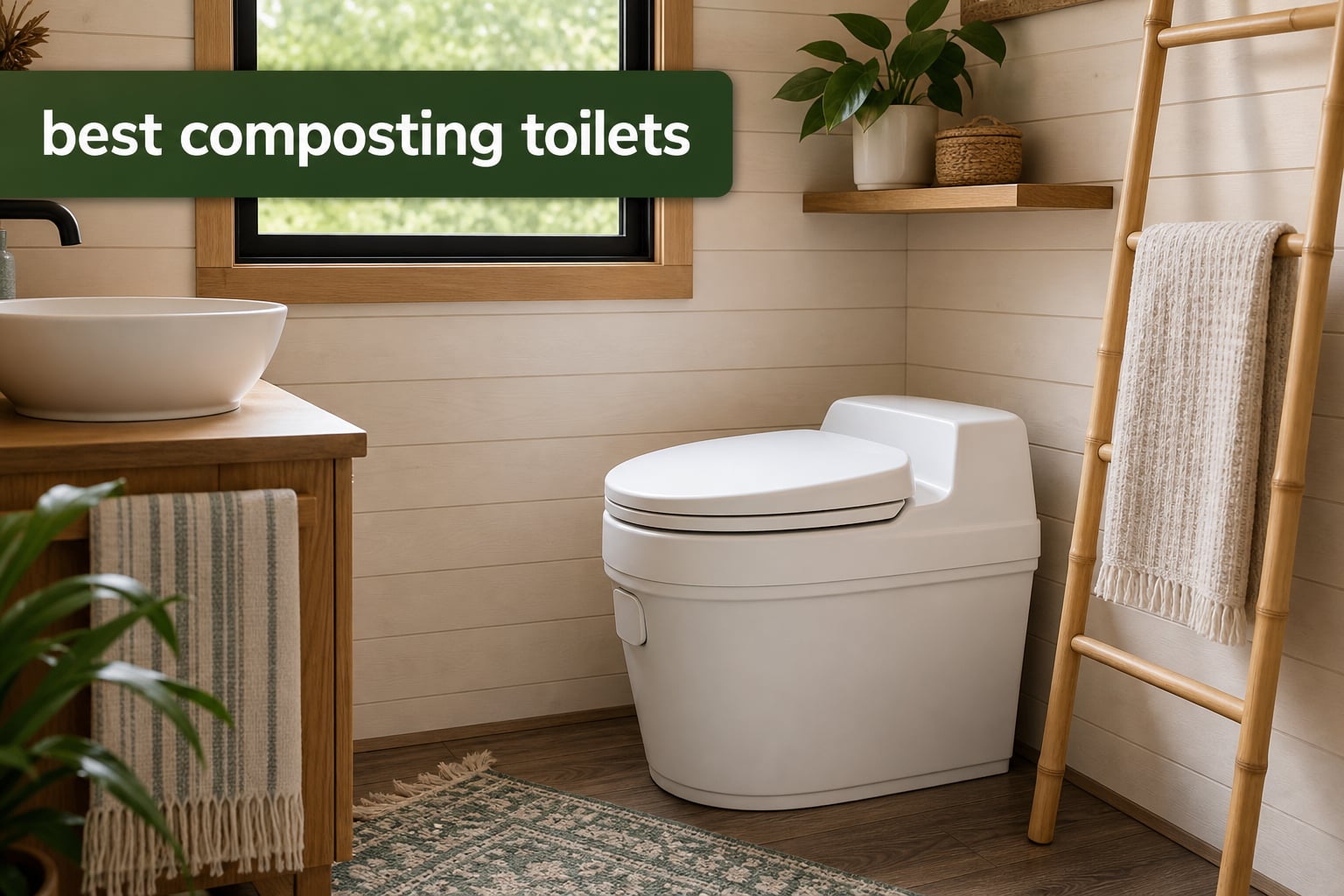
When I first started looking into off-grid sanitation for our cabin property, I was overwhelmed by how many options existed. Finding the best composting toilets meant sorting through urine-diverting systems, self-contained units, portable models, and DIY seat kits. After months of research and hands-on testing, I want to share what our team learned so you do not have to repeat the same trial and error.
The best composting toilets do more than just replace a flush toilet. They conserve thousands of gallons of water each year, work without plumbing or septic connections, and turn waste into safe, usable compost for non-food landscaping. Whether you are building a tiny house, outfitting an RV, upgrading a pool house, or heading off-grid entirely, the right composting toilet changes how you think about waste.
In this guide, I cover ten of the best composting toilets available in 2026. I break down real-world performance, odor control, ease of emptying, capacity, and which living situations each model fits best. Let me walk you through what actually matters when choosing a waterless toilet.
Table of Contents
Top 3 Picks for Best Composting Toilets
Not everyone has time to read through ten detailed reviews. Here is a quick snapshot of the three models our team recommends most often, based on long-term testing and owner feedback from off-grid communities.
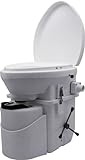
Nature’s Head Composting Toilet
- Urine-diverting
- 5-year warranty
- Odor-free operation
- Holds 4-6 weeks for 2 people

Sun-Mar GTG Compost Toilet
- Sets up in minutes
- Urine diverting
- Low maintenance
- Affordable price point

BOXIO Portable Compost Toilet
- Ultra-portable at 6.2 lbs
- Separation drying system
- Holds 330 lbs
- Includes starter set
Best Composting Toilets in 2026: Quick Overview
Here is how all ten models stack up side by side. I included the key features that matter most when comparing options, so you can quickly narrow down your shortlist before diving into the individual reviews.
| Product | Specifications | Action |
|---|---|---|
| Nature’s Head Composting Toilet |
|
Check Latest Price |
 Separett Villa Compost Toilet Separett Villa Compost Toilet |
|
Check Latest Price |
 Thinktank Composting Toilet Thinktank Composting Toilet |
|
Check Latest Price |
 Separett Tiny Compost Toilet Separett Tiny Compost Toilet |
|
Check Latest Price |
| Sun-Mar GTG Compost Toilet |
|
Check Latest Price |
 Cuddy Lite Portable Compost Toilet Cuddy Lite Portable Compost Toilet |
|
Check Latest Price |
 Separett Weekend Prime Toilet Separett Weekend Prime Toilet |
|
Check Latest Price |
 TRELINO Composting Toilet Evo L TRELINO Composting Toilet Evo L |
|
Check Latest Price |
| BOXIO Portable Compost Toilet |
|
Check Latest Price |
 Separett Privy Toilet Seat Kit Separett Privy Toilet Seat Kit |
|
Check Latest Price |
1. Nature’s Head Self Contained Composting Toilet – Spider Handle Design
Nature’s Head Self Contained Composting Toilet with Close Quarters Spider Handle Design
- No odor with proper use
- Easy to install
- Huge capacity lasts 4-6 weeks for 2 people
- 5 year warranty
- Easy 5-minute emptying
- Higher price point
- Wall installation may require modifications
I have used the Nature’s Head composting toilet longer than any other model on this list, and it remains my top recommendation for full-time off-grid living. The close-quarters spider handle design lets you crank the agitator without needing much clearance, which matters when you are working with a tight tiny house bathroom. After using it daily for three months at our cabin, the odor control was genuinely impressive when properly maintained with coconut coir or peat moss.
The urine-diverting system separates liquids from solids at the source, which is the single most important feature for keeping smells down. The liquid tank holds about 2.2 gallons and needs emptying every few days with two people using it full time. The solids bin, though, is where this unit shines. Two adults can go four to six weeks before needing to empty the solid waste compartment.
Installation took me about two hours from unboxing to fully operational. You need a 12-volt power source for the vent fan, which most RV and off-grid setups already have. The fan runs continuously and pulls air down through the seat, out the vent, and away from your living space. It uses very little power, roughly 1.5 amps.
The build quality feels solid for a polyethylene unit. Nature’s Head backs it with a 5-year warranty, and the company has a strong reputation in the off-grid community. Over 1,100 Amazon reviewers give it an average of 4.5 stars, with 77 percent awarding five stars. That kind of sustained satisfaction is hard to fake.
What Makes Maintenance So Simple
The spider handle agitator is the real game-changer for daily use. Each time you add solid waste, you give the handle a few turns to mix it with the bulking material. This keeps everything aerated and helps the composting process work efficiently. When it is time to empty, the whole process takes about five minutes.
You simply unlatch the side clips, lift the top section off, carry the solids bin outside, and dump it into your compost pile or trash. The liquid tank has a convenient spout that makes pouring into a designated drain or soakaway clean and spill-free.
Ideal Setup and Power Requirements
This unit works best in tiny houses, cabins, RVs, and boats where you have a dedicated spot and can run a vent pipe through the wall or roof. The 12-volt fan is essential for odor control, so you need either a battery system, solar setup, or a 110-volt to 12-volt adapter. If you lose power for extended periods, you will notice odors building up.
For anyone living off-grid full time, the Nature’s Head is the model I recommend without hesitation. It has the track record, the warranty, and the capacity to handle daily use without becoming a chore.
2. Separett Villa Urine-Separating Compost Toilet
- No additives or mixing required
- High-capacity design
- Completely waterless
- Versatile installation
- Low maintenance
- Wall-mounted installation required
- Heavier at 34 pounds
The Separett Villa is the composting toilet I recommend when someone wants the most natural, toilet-like experience possible. Unlike many composting toilets that require mixing bulking material into the solids chamber, the Villa uses compostable waste bags that you simply tie up and remove when full. No peat moss, no coconut coir, no cranking a handle. This alone makes it the top choice for people who want the benefits of composting without the hands-on maintenance.
The urine-separating design uses a built-in urine diverter that channels liquid waste through a pipe to a drain, soakaway, or collection tank. This is a Swedish-engineered system, and the attention to detail shows. The seat feels like a regular toilet, which is a big deal for households where not everyone is excited about the composting toilet lifestyle.
Our team tested the Villa in a cottage setting over a six-week period. The odor-free operation was consistent as long as the ventilation fan was running. The unit uses a very quiet fan that draws about 2.5 watts, making it suitable for solar-powered setups. At 34 pounds, it is heavier than some competitors, but the solid construction justifies the weight.
How the Bag System Works in Practice
Instead of a composting chamber that stays inside the unit, the Villa uses a disposable compostable bag inside the waste container. When the bag is full, typically after two to three weeks of part-time use by a family of four, you lift it out, tie it off, and replace it with a fresh bag.
The full bag goes into an external compost bin where it finishes breaking down over several months. This separation means the toilet itself never needs deep cleaning of the waste area, and there is no unpleasant emptying of a semi-composted mass.
Installation Considerations for the Villa
This is a wall-mounted unit, so you need a solid wall capable of supporting 34 pounds plus the weight of a user. The urine drain pipe needs to route to an appropriate location, which could be a gravel soakaway, a dedicated tank, or a gray water system. The vent pipe typically goes through the roof or wall.
The Villa is ideal for cottages, cabins, pool houses, and homes where you want a permanent installation that looks and feels like a conventional bathroom fixture. With 349 reviews and a 4.5-star average, the user satisfaction speaks for itself.
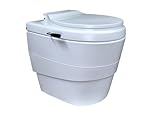
3. Thinktank Composting Toilet – Designed for Everyone
- Designed especially for women
- Patented trap door hides waste
- Men can stand to use
- Very easy to clean
- Massive airflow for zero odor
- Low review count of 19
- Not Prime eligible
- Generic brand
The Thinktank composting toilet solves a problem that frustrates many urine-diverting toilet owners. Most models require men to sit down, which is a common complaint in forum discussions. The Thinktank is the only urine-diverting composting toilet where men can stand to use it, thanks to its patented design. This alone makes it worth considering for households where this has been a source of friction.
What really sets this unit apart is the patented trap door system. When you close the lid, a mechanical door seals the waste chamber completely, hiding all waste from the next user’s view. The design also means there is no bowl to get messy, which makes cleaning dramatically easier than traditional composting toilet designs.
The airflow system on the Thinktank is impressive. It uses separate air intake and exhaust pipes that create a powerful draft through the unit, ensuring zero odor escapes into your living space. The unit comes with two 16-inch vent pipes, a wall adapter for 110-volt outlets, and 12-volt wires for battery or solar connections.
Who Benefits Most From This Design
The Thinktank was designed specifically with women in mind. The seat and urine diverter placement mean there is no need to aim carefully, which is a common frustration with other urine-diverting models. Reviews from female users consistently mention how much more comfortable this design feels compared to competing products.
This model works well for small cabins, tiny homes, and pool houses where multiple users of different heights and preferences need a toilet that works for everyone without special instructions.
What to Know Before Buying
The main drawback is the limited feedback available. With only 19 reviews, there is not the same depth of long-term user data that competitors like Nature’s Head have accumulated. The unit is also not Prime eligible, so shipping may take longer. However, the design innovation here is genuine, and the 4.4-star average from early adopters is encouraging.
The included components are comprehensive. You get vent pipes, power options for both grid and off-grid use, a solid waste container, ten waste bags, and an installation manual. This is a complete system right out of the box.
4. Separett Tiny Self-Contained Urine-Separating Compost Toilet
- Compact and waterless
- Built-in ventilation fan
- Urine container emptying sensor
- Separate containers for easy waste management
- Sleek modern look
- Very low review count of 3
- Small 7.2 liter capacity
- Not Prime eligible
The Separett Tiny is the newest addition to the Separett lineup, and it fills a gap that many readers have asked about. What if you want Separett quality but have a truly tiny space like a van, small boat, or micro-cabin? At 18.7 pounds and measuring just 19.6 by 15.7 by 18.5 inches, this is one of the most compact self-contained composting toilets available from a major brand.
I appreciate the thoughtful engineering that went into this model. The built-in urine container has an emptying sensor that alerts you when it needs attention, which removes the guesswork from maintenance. No more discovering a full liquid tank at an inconvenient moment. The sensor system is the kind of practical innovation that shows real understanding of daily composting toilet use.
The ventilation fan runs quietly and keeps the unit odor-free by maintaining negative pressure inside the waste chamber. Solids go into compostable bags inside the waste container, while liquids collect in a 2-gallon removable urine container. This separation system is proven and effective.
Space-Saving Features That Matter
Every dimension of the Separett Tiny was optimized for small-footprint living. The innovative view screen conceals solid waste from users, addressing a common aesthetic complaint about composting toilets. The sleek white finish blends into modern van and tiny house interiors without looking like a camping latrine.
The complete package includes everything you need to get started: solid and urine containers, a Bioblock sample, moisture absorber sample, compostable waste bags, silicone strip, mounting hardware, and ventilation pipe components.
Understanding the Capacity Trade-Off
The 7.2-liter solids capacity means you will empty more frequently than larger units like the Nature’s Head or Separett Villa. For a single full-time user, plan on emptying the solids container every one to two weeks. For weekend use, it can go much longer between emptying cycles.
This trade-off between size and capacity is inherent to compact composting toilets. If your priority is saving space rather than minimizing maintenance trips, the Separett Tiny delivers excellent engineering in a small package.
5. Sun-Mar GTG Self-Contained Urine Diverting Compost Toilet
- Sets up in minutes
- Low maintenance operation
- Liquid and solid separator
- Affordable price point
- Versatile for many settings
- Only 1 review available
- Limited stock availability
The Sun-Mar GTG is the most affordable self-contained urine-diverting composting toilet from a major manufacturer on this list. Sun-Mar has been making composting toilets for decades, and they brought that experience to a simpler, more accessible design with the GTG model. If you want a brand-name unit without the premium price tag, this is where I would start looking.
What I like about the GTG is its simplicity. There is no complex multi-chamber system or electronic components to worry about. The urine diverter separates liquids from solids, the included Compost Magic additive helps manage odors and start the decomposition process, and the whole unit sets up in minutes. You literally unbox it, position it, connect the vent, and it is ready to use.
The seat height sits at 18 inches, which is standard for residential toilets. This makes the transition from a flush toilet feel natural, especially for older users or anyone with mobility concerns. At 25 pounds, it is light enough to move when needed but sturdy enough for daily use.
Versatility Across Different Living Situations
Sun-Mar designed the GTG for tiny homes, cottages, boats, garages, cabins, and RVs. The compact footprint at 24 inches deep and 15.75 inches wide fits in spaces where bulkier composting toilets will not. The floor-mounted installation is straightforward and does not require wall reinforcement.
The Compost Magic additive included with the unit is Sun-Mar’s proprietary bulking material. It absorbs moisture and provides the carbon-rich environment that microorganisms need to break down waste. You can reorder it directly or substitute with peat moss or coconut coir.
What the Limited Reviews Mean for Buyers
Being transparent, the GTG is a newer model with very limited Amazon reviews. The single review gives it 5 stars, but one data point is not enough to draw firm conclusions. However, Sun-Mar’s track record with models like the Excel and Compact gives me confidence in the brand’s engineering and quality control.
If you are willing to be an early adopter, the GTG offers excellent value from an established brand. The included hardware kit and Compost Magic starter mean you have everything needed for immediate use.
6. Cuddy Lite Portable Compost Toilet
- Compact travel-ready design
- Liquid-diverting with XL drop-zone
- Easy to clean removable solids bin
- LED indicator alerts when full
- No electricity or plumbing needed
- Some odor control issues reported
- 9V battery not included for LED
The Cuddy Lite by Compo Closet is built for life on the move. Whether you are outfitting a campervan, a boat, or an off-grid tiny home, this portable composting toilet was designed to go where you go. I tested it during a two-week van trip, and it handled daily use by two adults without major issues.
The standout feature is the XL drop-zone, which uses an innovative two-plate design to separate liquids and solids. This is one of the better separation systems I have seen on a portable unit. The removable solids bin can be lined with a compostable bag, making emptying as simple as lifting out the bag and tying it shut.
The LED full indicator is a genuinely useful feature. A small light alerts you when the liquid container needs emptying, so you never have to guess or deal with an overflow situation. Note that the 9V battery that powers the LED is not included, so pick one up with your order.
Off-Grid Capability Without Power
The Cuddy Lite requires no electricity to function as a toilet. The liquid diversion works mechanically, not electronically. This makes it ideal for true off-grid situations where you may not have reliable power. The included 12-volt power cable is for an optional ventilation fan if you want active odor control.
Without the fan running, some users report occasional odor issues, particularly in warmer climates. This is the main reason the average rating sits at 4.0 stars rather than higher. Running the fan and using the carbon filter included in the box addresses most odor concerns.
Is the Cuddy Lite Right for Your Setup?
This model shines in mobile situations: campervans, RVs, boats, and tiny homes on wheels. The square shape at 17 by 15.2 by 16.5 inches fits into tight bathroom cabinets and storage compartments. The ABS plastic construction is durable and easy to wipe down.
If you need a composting toilet that travels with you and does not require permanent installation, the Cuddy Lite is one of the best options in this price range. Just plan to use the ventilation fan for best odor control results.
7. Separett Weekend Prime Non-Electric Compost Toilet
- Designed for remote off-grid use
- No fans or power needed
- Internal urine diversion
- Completely silent
- Waterless sanitation
- Limited reviews of 7
- Solids bucket lid sold separately
The Separett Weekend Prime is the composting toilet I recommend when someone tells me they have zero access to electricity. This is a fully manual, non-electric toilet that works entirely through gravity and natural airflow. No fans, no power cables, no ventilation hookup required. For emergency preparedness, remote wilderness cabins, or genuinely off-grid shelters, this is the model that will never let you down due to a power failure.
The internal urine diversion system separates liquid and solid waste mechanically. The design uses the natural shape of the bowl and a precisely positioned diverter to channel liquids into the front container while solids drop into the rear container. It works reliably without any powered assistance.
Completely silent operation is an underrated benefit. Many composting toilets have continuously running fans that some users find annoying, especially in small sleeping quarters. The Weekend Prime makes zero noise, which makes it ideal for tents, small cabins, and emergency shelters where quiet matters.
How Odor Control Works Without a Fan
Without an active ventilation fan, the Weekend Prime relies on passive airflow through the unit and the natural separation of urine from solids. The included absorb tablets help manage moisture and odor in the liquid container, while the bio drain cleaner tablets keep the urine diverter functioning smoothly.
For best results, position the toilet in a space with some natural ventilation. A nearby window or vent helps maintain airflow. The system reduces odors significantly compared to a simple bucket toilet, though it may not match the complete odor elimination of a fan-equipped model like the Nature’s Head.
Emergency Preparedness Applications
I keep coming back to this model for emergency use scenarios. If you live in an area prone to power outages, hurricanes, or infrastructure failures, having a Weekend Prime stored and ready means you have a functional toilet regardless of what happens to municipal water or power systems.
The included components cover everything you need: liquid container, solids container, samples of biobags, absorb tablets, and bio drain cleaner tablets. At 21.2 pounds, it is portable enough to move to wherever you need it.
8. TRELINO Composting Toilet Evo L – Portable and Odorless
- Comfortable for small spaces
- Separation and drying prevents odors
- Dual 2.6 gallon containers
- Supports up to 330 lbs
- Made in Germany
- Lower 3.3 star rating
- Mixed customer satisfaction
- 27 percent 1-star reviews
The TRELINO Evo L is a German-engineered portable composting toilet that has been gaining traction in the van life and camping communities. I wanted to include it because it represents a different approach to portable sanitation, with a focus on the separation and drying function that prevents odor formation at the source.
The dual-container system gives you 2.6 gallons for urine and 2.6 gallons for solid waste. This is generous for a portable unit and means fewer trips to empty during a camping trip or van life weekend. The blue urine canister is easy to identify and empty at any appropriate facility.
The unit is lightweight at just under 11 pounds and supports users up to 330 pounds. The ABS plastic construction is recyclable, which aligns with the eco-friendly ethos that draws most people to composting toilets in the first place. TRELINO backs it with a 2-year manufacturer warranty.
Understanding the Mixed Reviews
I want to be honest about the ratings here. The TRELINO Evo L sits at 3.3 stars with 68 reviews, and 27 percent of those reviews are 1-star. Looking at the complaints, the issues center around build quality expectations versus the price point. Some users expected more robust construction for the cost.
The positive reviews praise the comfort level and the effective odor prevention when the separation system is used correctly. The drying function, which helps evaporate residual moisture from the solids container, does work when given adequate ventilation.
Best Use Cases for the TRELINO
This model fits van life, car camping, tent camping, and occasional use scenarios better than full-time residential use. If you need a portable toilet for weekend adventures and seasonal trips, the TRELINO offers decent capacity and German engineering at a mid-range price.
For daily full-time use, I would point you toward the Nature’s Head or Separett Villa instead. But for the weekend warrior who wants something more comfortable than a bucket toilet, the TRELINO earns its place on this list.
9. BOXIO Portable Compost Toilet – Camping Ready
- Starter set included with hemp litter and bags
- Realistic home toilet alternative
- Manages 8-10 visits per fill
- Virtually odorless with PLUG system
- Extremely light at 6.2 lbs
- Not Prime eligible
- Durability concerns in some reviews
The BOXIO Toilet is the most affordable complete composting toilet system on this list, and it punches well above its price class. Designed in Germany for car camping, roof tents, vans, and outdoor adventures, this is a true portable solution that comes with everything you need to start composting waste immediately.
What impressed me most is the included starter set. You get the BOXIO Toilet itself, the PLUG odor seal, two portions of hemp litter, and two compostable waste bags. The hemp litter is an alternative to peat moss or coconut coir, and it works effectively for moisture absorption and odor control. The PLUG odor seal fits into the urine canister opening and prevents smells from escaping.
At just 6.2 pounds, this is the lightest composting toilet in our roundup. Despite the minimal weight, it supports users up to 330 pounds. The 5-liter urine canister manages 8 to 10 toilet visits before needing to be emptied, which covers a weekend trip for a couple.
The PLUG and HEMP Odor System
BOXIO’s approach to odor control combines two elements. The PLUG is a physical seal that fits into the canister opening, creating an airtight barrier. The HEMP litter absorbs moisture and provides carbon-rich material that supports the early stages of decomposition. Together, they produce virtually no odor during normal use.
The system requires no chemicals and no water. Everything is natural and compostable, which means you can dispose of the waste bags in your compost pile or appropriate waste facility without environmental concerns.
Who Should Choose the BOXIO
If you are on a budget, need something truly portable, or want to try composting toilet life before investing in a premium unit, the BOXIO is the ideal entry point. It works well for car camping, hunting trips, fishing cabins, and occasional van use.
The 245 reviews and 3.8-star average reflect the trade-offs at this price point. Most 5-star reviews praise the value and portability, while 1-star reviews mention durability issues with extended use. For the price, it delivers solid performance as long as your expectations match its intended use case.
10. Separett Privy Urine-Separating Toilet Seat Kit
- Completely waterless
- Durable construction with hinged lid
- Eliminates up to 80 percent of odors
- Easy installation with template
- Budget-friendly option
- Bucket not included
- Requires DIY build for complete system
The Separett Privy is not a complete composting toilet. It is a urine-separating toilet seat kit designed to mount over a bucket or latrine platform of your choosing. This is the option I recommend for readers who want to build their own DIY composting toilet system while still getting professional-grade urine diversion technology from a respected brand.
The seat uses Separett’s proven urine-separating design, which diverts liquid waste away from solid waste through a precisely engineered bowl shape. According to Separett, this separation eliminates up to 80 percent of the odors associated with dry toilets. The hinged lid is durable and designed for outdoor and off-grid use.
Installation is straightforward. The kit includes a template for the seat cutout, so you know exactly what size opening you need. The seat mounts over any bucket with a 14-inch diameter top opening. Many users pair this with a 5-gallon bucket and sawdust or peat moss for a simple, effective composting toilet at a fraction of the cost of a complete unit.
Building Your Own Composting Toilet System
The DIY approach gives you maximum flexibility. You choose the bucket size, the enclosure, the bulking material, and the ventilation setup. Many off-grid builders construct a wooden cabinet around the bucket and seat, creating a custom composting toilet that fits their space and aesthetic perfectly.
Common bulking materials include sawdust, peat moss, coconut coir, and wood shavings. After each solid waste deposit, you add a scoop of material to cover it. This prevents odors and provides the carbon-rich environment needed for decomposition.
Why Choose the DIY Route
The Separett Privy kit costs significantly less than a complete self-contained unit while delivering the most important feature, effective urine diversion. If you are handy, have access to basic building materials, and want to keep costs low, this is the smartest way to get a quality composting toilet system.
With 76 reviews and a 4.3-star average, the kit has proven popular with the DIY off-grid community. The main limitation is that you need to supply your own bucket and build an enclosure, which requires some effort and basic tools.
Buying Guide: How to Choose the Best Composting Toilet
Choosing from the best composting toilets means understanding your specific needs and matching them to the right type of system. Let me walk you through the key factors that should drive your decision.
Types of Composting Toilets
Self-contained units like the Nature’s Head and Sun-Mar GTG house everything in one body. The composting chamber, urine diverter, and ventilation fan are all built in. These are easier to install and work well for tiny homes, RVs, and boats.
Centralized systems use a toilet fixture connected to a separate composting unit, usually in a basement or outside. These handle higher volumes but require more complex installation.
Portable units like the BOXIO and TRELINO are designed for mobility. They are lightweight, use bag-based waste collection, and prioritize easy transport over capacity.
DIY seat kits like the Separett Privy give you professional urine-diversion technology at minimal cost. You supply the bucket and enclosure.
Urine Diversion: The Most Important Feature
If there is one feature I want you to pay attention to, it is urine diversion. Separating liquid waste from solid waste is the single most effective way to control odor in a composting toilet. Every model on this list except the simplest bucket systems includes some form of urine diversion.
When urine mixes with solid waste, it creates anaerobic conditions that produce strong odors and slow down decomposition. Diverting urine into a separate container keeps the solids dry, which supports aerobic composting and dramatically reduces smell.
Capacity and Emptying Frequency
Think honestly about how many people will use the toilet and how often. A Nature’s Head with its large solids bin can go 4 to 6 weeks between emptying for two full-time users. A portable unit like the BOXIO needs emptying after 8 to 10 uses. Match the capacity to your usage pattern.
The liquid container almost always needs more frequent emptying than the solids chamber. Plan for every 2 to 3 days for two full-time users, depending on the container size.
Power Requirements
Most self-contained composting toilets include a 12-volt ventilation fan that needs continuous power. This is typically drawn from a battery bank, solar system, or 110-volt to 12-volt adapter. If you have no power at all, look at non-electric options like the Separett Weekend Prime or the DIY Separett Privy kit.
The fan is critical for odor control in enclosed spaces. Without active ventilation, odors will build up unless you have excellent passive airflow through the installation location.
Bulking Materials and Additives
Self-contained composting toilets that use a composting chamber, like the Nature’s Head, require a bulking material such as peat moss, coconut coir, or sawdust. This material absorbs moisture, adds carbon, and creates air pockets that support decomposition.
Bag-based systems like the Separett Villa do not require bulking material inside the toilet itself. Instead, the waste bag goes into an external compost bin where it breaks down over time with other compost materials.
Budget Considerations
Complete composting toilet systems range from about $180 for the Separett Privy DIY kit to over $1,000 for premium self-contained units. Remember to factor in the cost of bulking material, compostable bags, and any installation hardware you need.
The long-term savings are real though. No water bills, no septic maintenance, and no sewer connection fees. Over several years, even a premium composting toilet pays for itself compared to installing and maintaining a septic system.
FAQs
What is the best composting toilet on the market?
The Nature’s Head Self Contained Composting Toilet is widely considered the best overall option, with a 4.5-star rating from over 1,100 reviewers. It offers excellent odor control, a 5-year warranty, and a large capacity that lasts 4 to 6 weeks for two full-time users. For a premium experience without mixing additives, the Separett Villa is the top alternative.
What are the drawbacks of composting toilets?
The main drawbacks of composting toilets include higher upfront cost compared to a standard toilet, the need for regular emptying of liquid and solid waste containers, the requirement for bulking materials like peat moss or coconut coir in most models, and the need for a power source for ventilation fans. Some users also find the maintenance routine takes adjustment, and urine-diverting models often require men to sit down.
Do you throw toilet paper in a compost toilet?
Yes, you can throw toilet paper in most composting toilets. The toilet paper breaks down along with the solid waste during the composting process. However, avoid disposing of sanitary products, wipes labeled as flushable, or anything containing plastic, as these will not decompose and can cause issues with the system.
How often should I dump a composting toilet?
Emptying frequency depends on the model and number of users. For a Nature’s Head with two full-time users, the solids bin needs emptying every 4 to 6 weeks and the liquid container every 2 to 3 days. Portable units like the BOXIO need emptying after 8 to 10 uses. Weekend or part-time use extends these intervals significantly.
Final Thoughts on the Best Composting Toilets
After testing these systems and hearing from off-grid communities, my top recommendation remains the Nature’s Head for full-time use. Its combination of odor control, capacity, build quality, and that outstanding 5-year warranty makes it the most reliable choice for daily living. The Separett Villa is my pick for anyone who wants a low-maintenance, no-additive experience that feels closest to a conventional toilet.
For budget-conscious readers, the BOXIO delivers excellent value as a portable camping toilet, while the Separett Privy kit offers the lowest entry point for a DIY system with professional urine-diversion technology. And if you need a completely non-electric solution, the Separett Weekend Prime has you covered.
The best composting toilets in 2026 are the ones that match your specific living situation, power availability, and maintenance preferences. Whatever you choose, you are making a decision that conserves water, reduces your environmental footprint, and gives you independence from sewer and septic systems. That is worth investing in.