
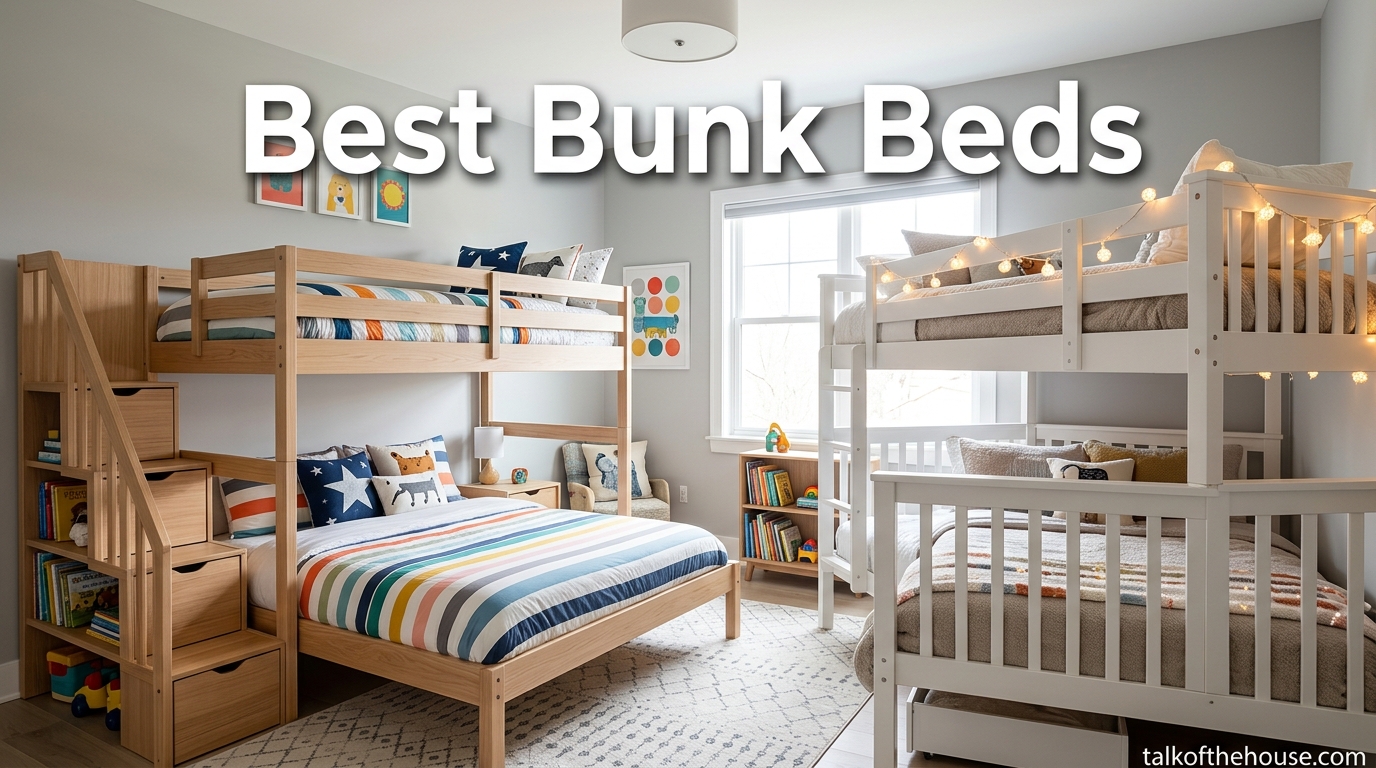
Finding the right bunk bed for your kids is one of those decisions that feels simple until you start shopping. Suddenly you are comparing weight capacities, measuring ceiling heights, and trying to figure out whether a ladder or stairs make more sense for your space. I have been there, and after researching dozens of models, reading thousands of parent reviews, and comparing the top brands side by side, our team narrowed down the options to the ones that actually deliver on safety, durability, and value.
This guide covers the best bunk beds available in 2026, ranging from low-profile designs perfect for younger children to convertible models that grow with your family. Every pick on this list earned its spot based on real-world performance, not just marketing claims. We looked at construction quality, assembly difficulty, safety certifications, and long-term durability from parent feedback.
Whether you are outfitting a shared bedroom for siblings, setting up a guest room, or just trying to reclaim some floor space in a smaller room, these five bunk beds represent the strongest options on the market right now. Let us walk through what makes each one stand out.
Top 3 Picks for Best Bunk Beds (September 2026)


Best Bunk Beds in 2026
| Product | Specifications | Action |
|---|---|---|
| Storkcraft Caribou Twin Bunk Bed |
|
Check Latest Price |
| Max & Lily Fundamental Low Bunk Bed |
|
Check Latest Price |
| Walker Edison Alexander Stackable Bunk |
|
Check Latest Price |
 Max & Lily Twin over Twin Bunk Bed Max & Lily Twin over Twin Bunk Bed |
|
Check Latest Price |
1. Storkcraft Caribou Bunk Bed – Best Overall Pick
- Over 6100 reviews with 4.6 rating
- GREENGUARD Gold certified for low emissions
- Converts to two individual beds
- Extra hardware included for backup
- Slats can be weak over time
- Ships in two boxes that may arrive separately
After reading through thousands of parent reviews, the Storkcraft Caribou kept showing up as the bed people actually recommended to friends. With over 6,100 reviews and a 4.6-star rating, it has the kind of track record that speaks for itself. Our team looked closely at what makes this the top-rated bunk bed on Amazon, and the answer comes down to a combination of solid construction, thoughtful safety features, and a price that makes sense for most families.
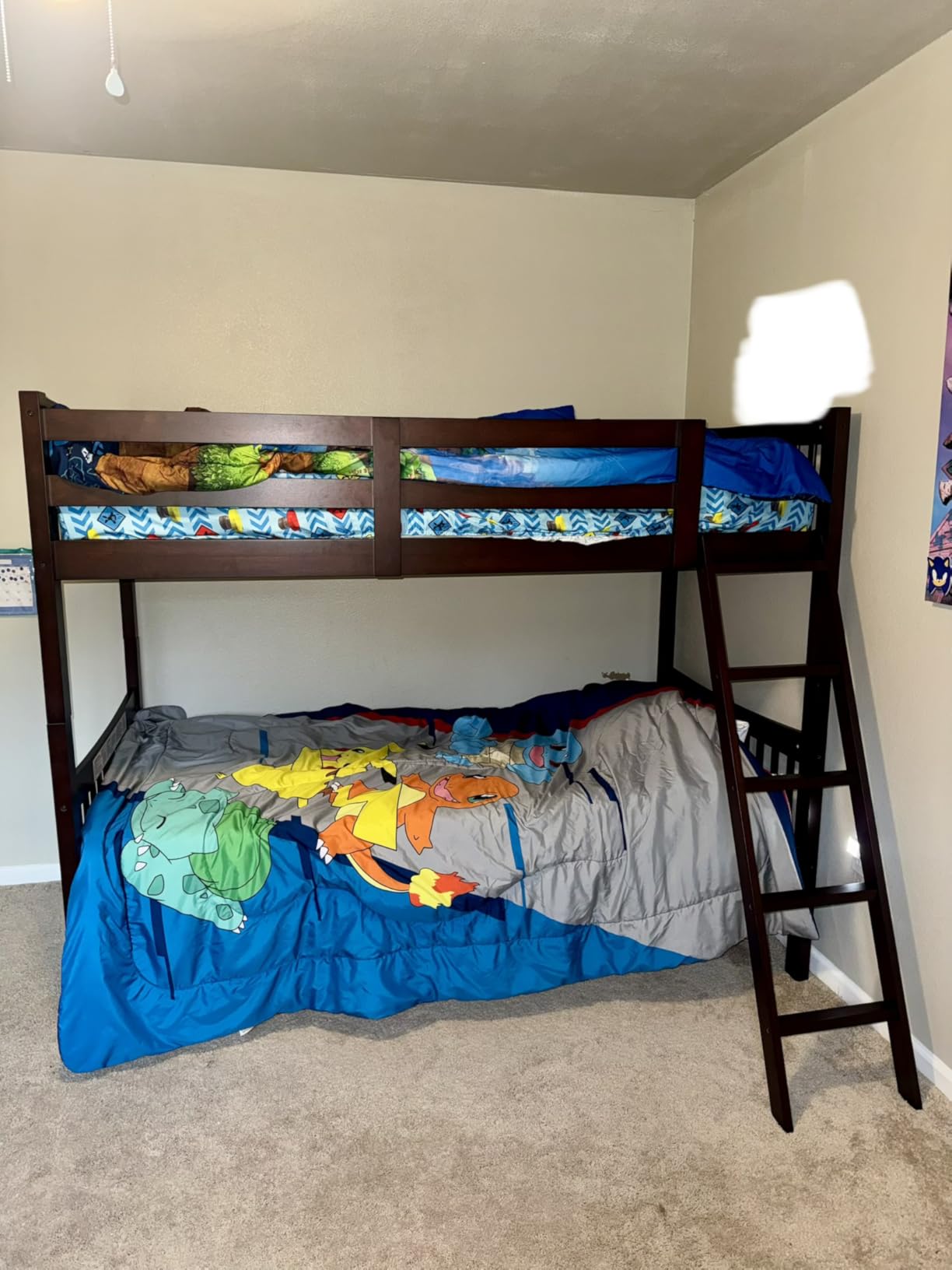
The rubberwood construction gives this bed a weight and stability that feels substantial from the moment you put it together. At 142 pounds, it is heavier than many competitors, and that translates directly into less wobble and a sturdier feel when kids are climbing up and down. The fixed five-step ladder is integrated into the frame, so there are no loose pieces to worry about. Full-length guardrails run the entire top bunk, which gave me real peace of mind.
One detail that parents consistently praise is the extra hardware Storkcraft includes. They send backup screws and bolts, which is a small thing that saves a lot of frustration if something rolls under the couch during assembly. Speaking of assembly, most reviewers report getting this done in about two to three hours with two people. The instructions are clear and the parts are well-labeled.
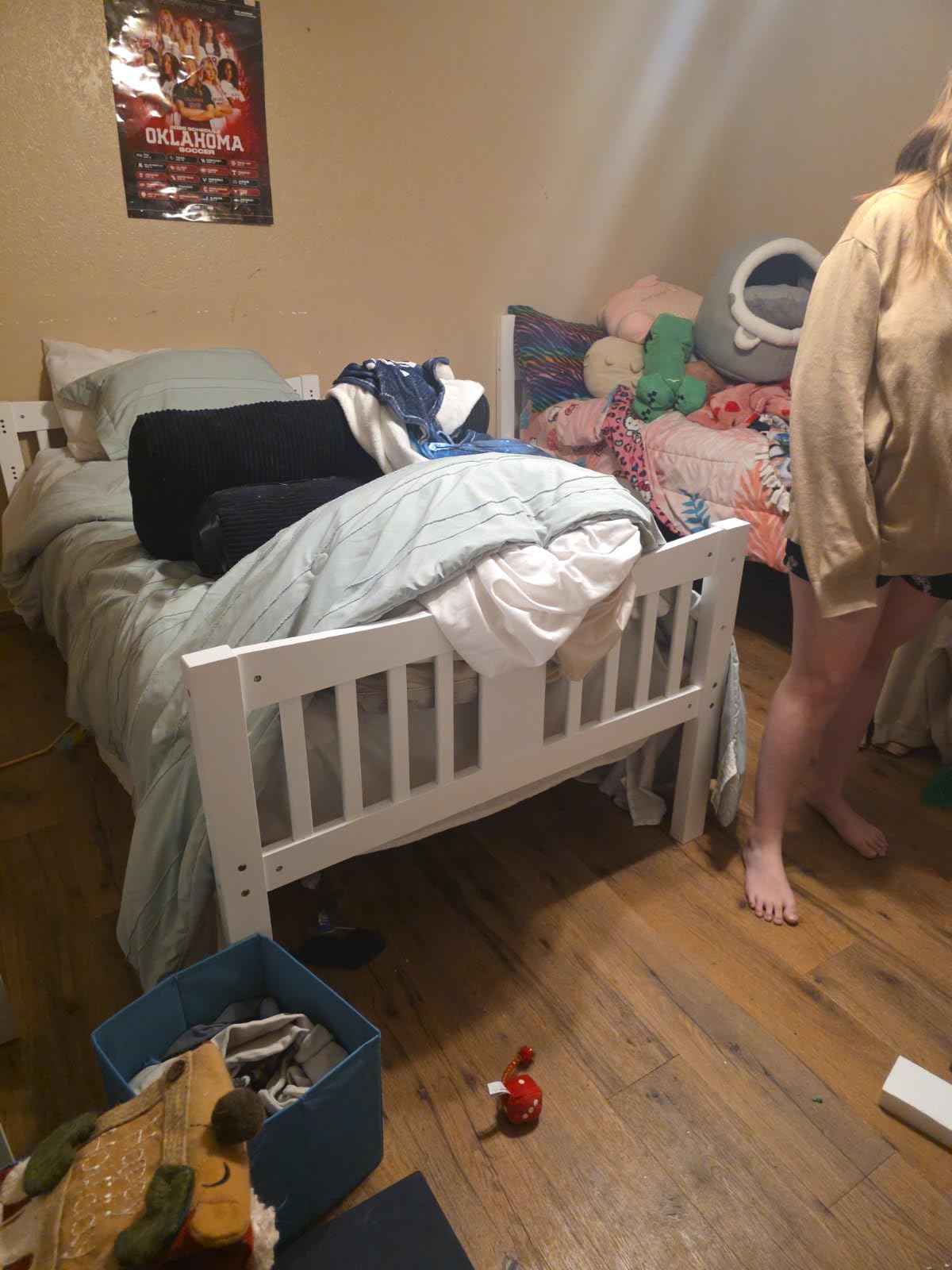
The GREENGUARD Gold certification is a meaningful safety feature that sets this bed apart from many competitors. It means the materials have been screened for over 10,000 chemicals and VOCs, which matters a lot when your child is sleeping inches from the frame every night. Storkcraft has been making children’s furniture for decades, and that experience shows in the little details like rounded edges and a smooth finish that resists chipping.
The convertible design is another reason this bed earns our top recommendation. When your kids eventually want their own rooms, or you need to separate the beds for any reason, the Caribou breaks down into two individual twin beds. That extends the useful life of this purchase by years compared to a fixed bunk bed design. The tradeoff is that the weight capacity per bunk is 225 pounds, which is fine for children but something to keep in mind if adults will be sleeping on it regularly.
Who Should Buy This Bed
Families looking for the best overall value in a bunk bed will find the Storkcraft Caribou hard to beat. It works especially well for households with two children sharing a room, where safety certifications and long-term durability matter most. The convertible feature makes it a smart choice if you expect your kids will eventually get their own rooms.
Parents who prioritize indoor air quality and low chemical emissions will appreciate the GREENGUARD Gold certification. This is also a strong pick if you want a bed from an established brand with award-winning customer service and a one-year warranty backing the product.
Who Should Look Elsewhere
If you need a bunk bed that supports heavier adults, the 225-pound per bunk limit may not be enough. The Max and Lily options on this list offer 400-pound capacities that handle adult weight more comfortably. The fixed ladder also means you cannot swap it to the other side, so measure your room layout carefully before ordering.
Anyone hoping for storage drawers or a trundle underneath should look at other models, since the Caribou is a straightforward bunk bed without extra storage features. Also note that it ships in two separate boxes that sometimes arrive on different days, which can be confusing.
2. Max & Lily Fundamental Twin Low Bunk Bed – Best Low Profile Design
- Low 49 inch height for safety and lower ceilings
- 400 lb weight capacity per bunk
- Non-toxic low-VOC finishes
- Solid pine wood construction
- Slat spacing may be too wide for some mattresses
- Assembly instructions could be clearer
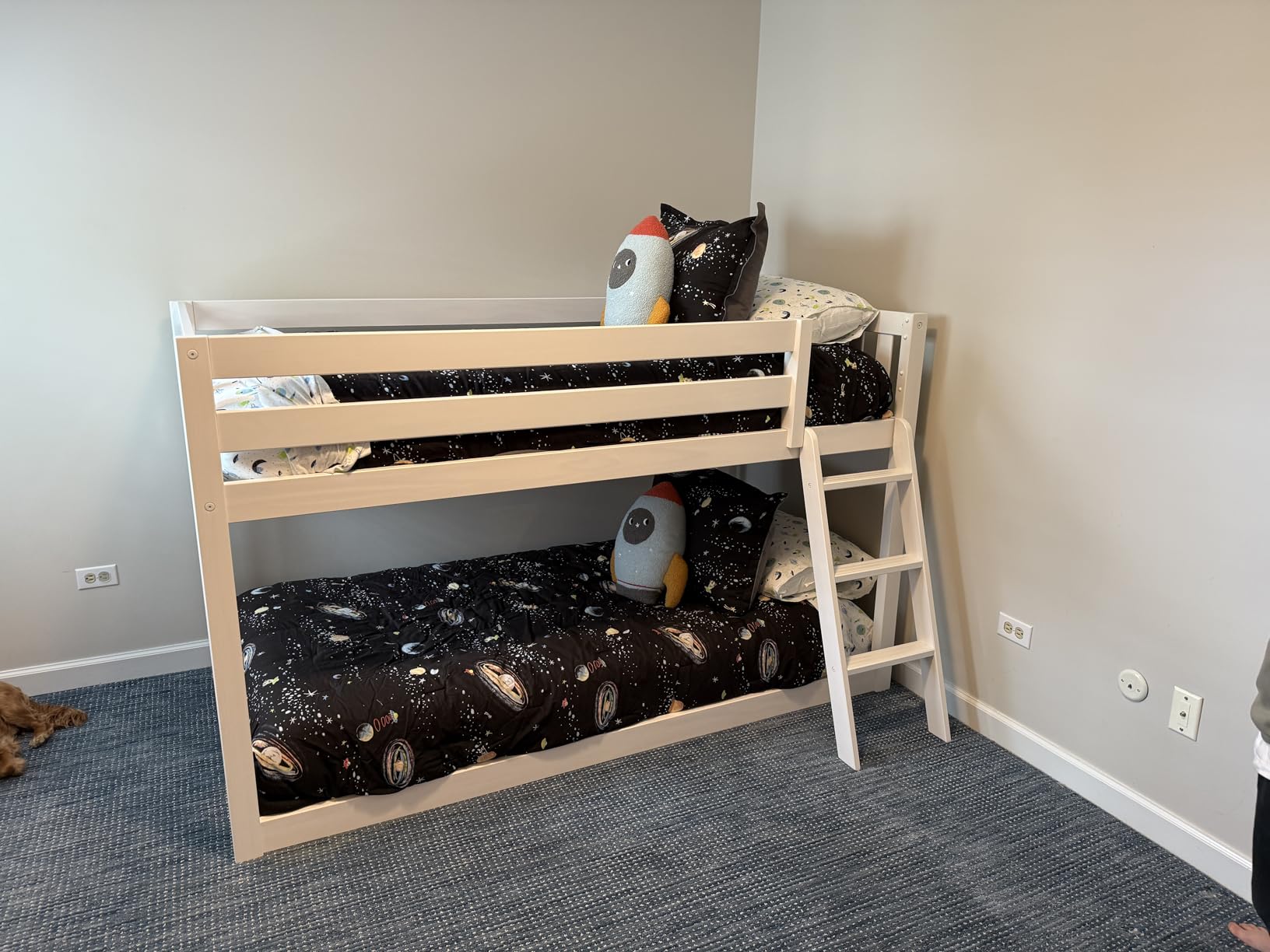
The Max and Lily Fundamental Low Bunk Bed solves one of the biggest problems with traditional bunk beds: height. At just 49.25 inches tall, this bed sits low enough that the top bunk is easy to reach and the ceiling clearance is rarely an issue, even in rooms with standard eight-foot ceilings. I found this especially appealing for younger kids who might feel nervous climbing up a taller bunk bed.
Despite the lower profile, this bed does not compromise on strength. The 400-pound weight capacity per sleeping surface is one of the highest in this price range and significantly higher than the Storkcraft models. Solid pine wood construction with metal-on-metal bolt connections gives the frame a rigid feel that holds up to kids jumping, climbing, and general roughhousing. The 14-inch guardrails wrap around the top bunk with enough height to keep restless sleepers safe.
What surprised me about this bed is the quality of the finish. Max and Lily uses non-toxic, low-VOC paint that feels smooth and looks clean in a bright white color. After months of use, parents report the finish holds up well without yellowing or chipping, which is not always the case with white furniture at this price level.
Assembly takes most people between two and three hours with a second person helping. The hardware and parts are well-organized, though some parents mentioned the instructions could be clearer at certain steps. A few reviewers noted that the rubber caps on the metal stabilizing bar can block screw holes, which adds a few minutes of head-scratching during the build. Overall, the process is manageable and the result is a bed that feels solid and secure.
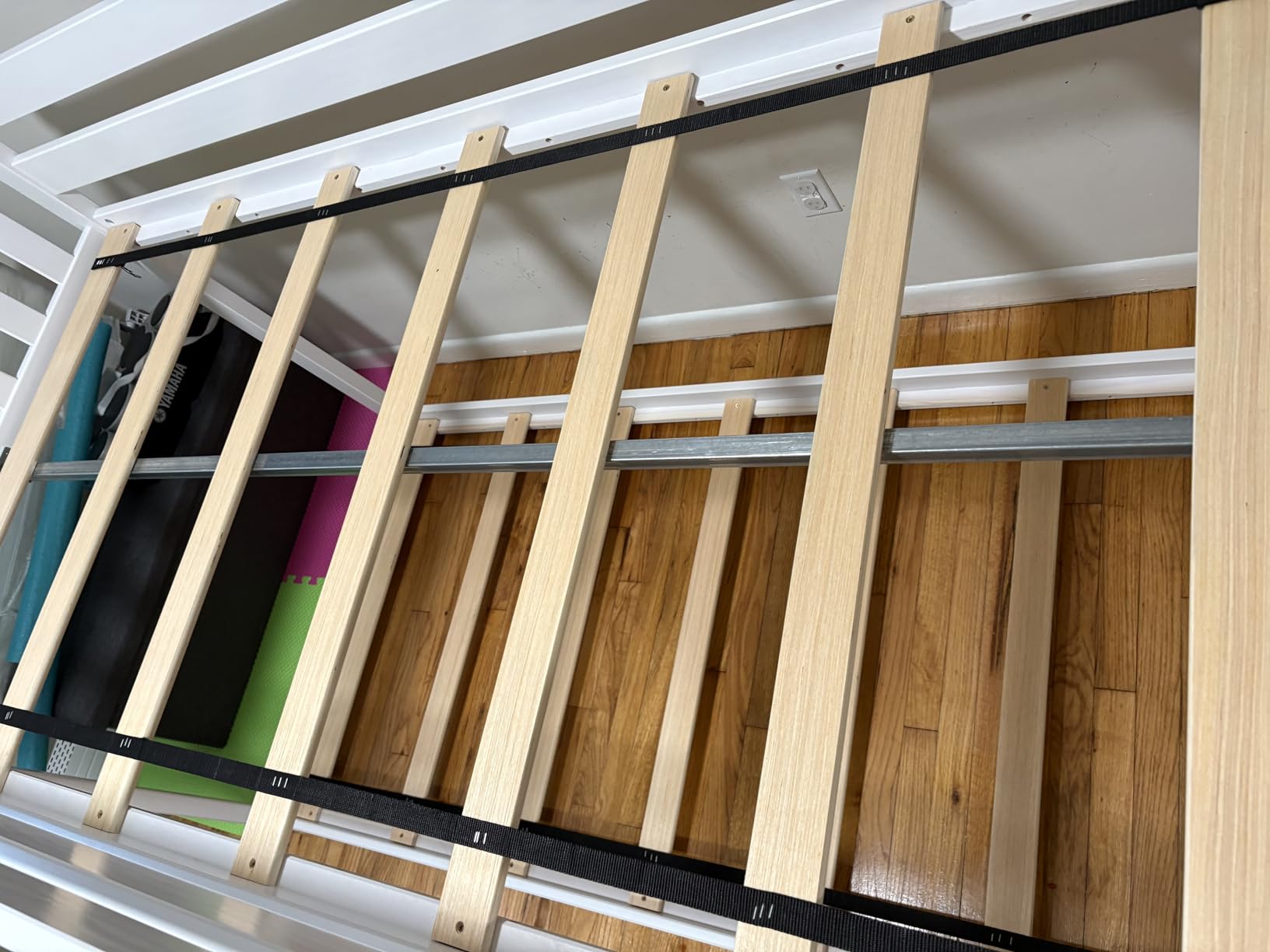
The slat system uses strong wooden slats with a metal support bar running down the center, so there is no need for a box spring or bunkie board. Max and Lily recommends a mattress between 5 and 8 inches thick for the best fit. Some parents mentioned the slats are spaced a bit wider than they expected, so if you have a thinner mattress, you might want to add a bunkie board for extra support.
Who Should Buy This Bed
Parents with younger children or rooms with lower ceilings will love this low-profile design. The reduced height makes it easier for little ones to climb into the top bunk and reduces the worry about falls. The 400-pound capacity also makes this a great option if teenagers or occasional adult guests will be using the bed.
If indoor air quality is a priority, the non-toxic low-VOC finish gives you confidence that your kids are not breathing harmful chemicals. This is also a strong pick for families who want a clean, modern white bed that fits with almost any room decor.
Who Should Look Elsewhere
This is a fixed low bunk design, meaning it does not convert into two separate beds later. If you want that flexibility, the Max and Lily Twin over Twin model further down this list offers the same brand quality with a convertible feature. The low height also means there is limited space underneath for storage or a trundle.
If you want a wider bed format like a twin over full, this model only comes in twin over twin. And while the slats are generally fine, parents with very thin mattresses might need to invest in a bunkie board to prevent sagging between the slats.
3. Walker Edison Alexander Classic Stackable Bunk Bed – Best Stackable Design
- Stackable for triple bunk conversion
- Beautiful walnut finish
- Responsibly sourced wood
- Low 48 inch height fits most ceilings
- Lower 250 lb weight capacity
- Wood can chip or dent with rough handling
The Walker Edison Alexander stands out because of its stackable design, which is something you rarely see in this price range. You can actually pair this bed with the Alexander Twin over Low Loft to create a triple bunk configuration. For families with three kids sharing a room, that is a game-changer that very few competitors offer. I was genuinely impressed that this modular approach exists without requiring custom furniture.
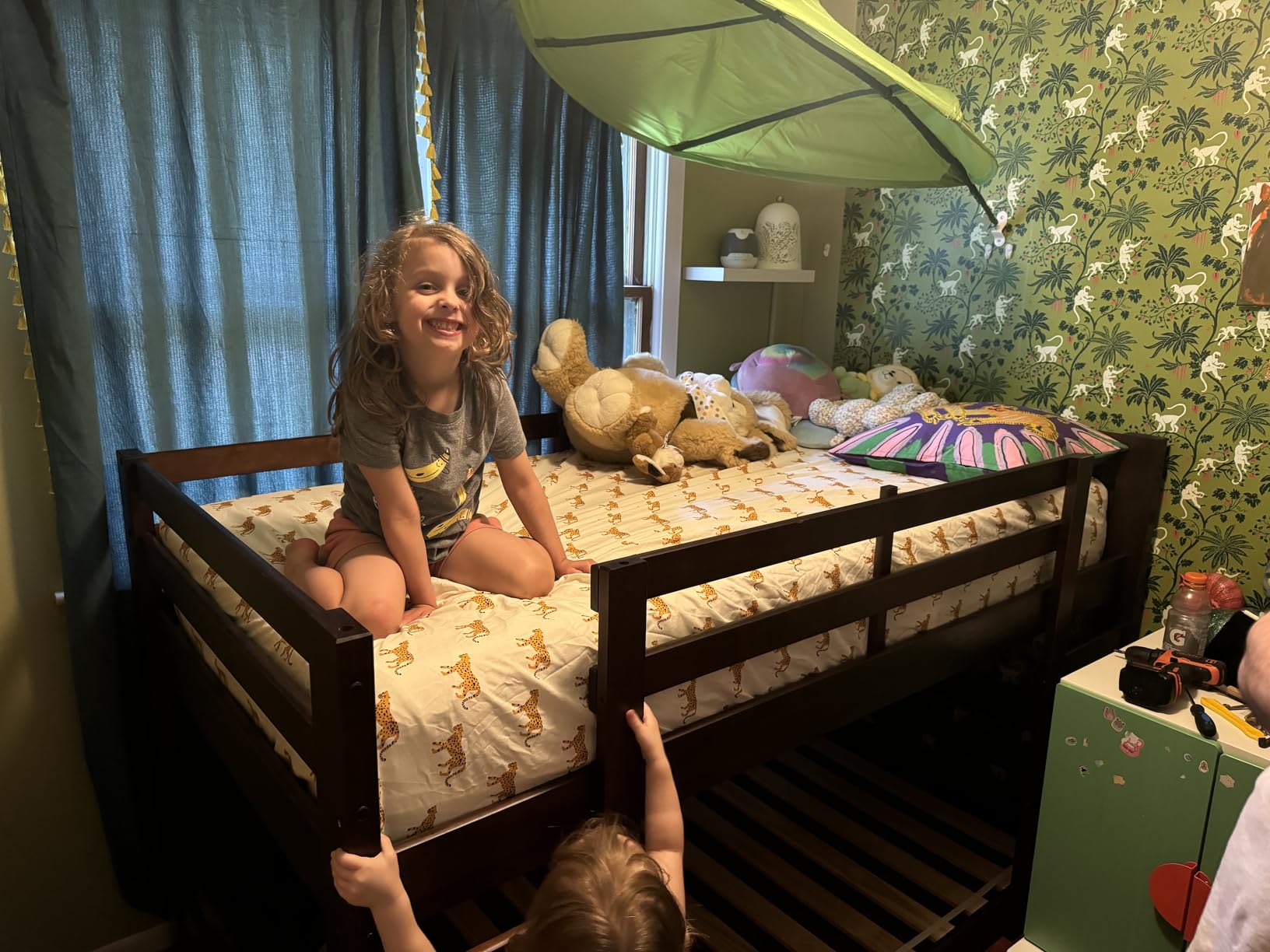
The walnut finish on this bed is genuinely beautiful. In person, it has a warm, rich tone that looks more expensive than it is and works well with both modern and traditional room decor. Responsibly sourced solid pine wood gives the frame a natural grain pattern that makes each bed slightly unique. At 110 pounds, it is lighter than the Storkcraft Caribou, which makes assembly easier but does sacrifice a bit of that heavy-duty feel.
The low profile is another strength. At 48 inches tall, this is actually the shortest bed on our list, making it a natural fit for rooms with lower ceilings or attic conversions where every inch matters. The integrated guardrails and ladder are built into the frame, so you do not have to make any decisions about ladder placement during assembly.
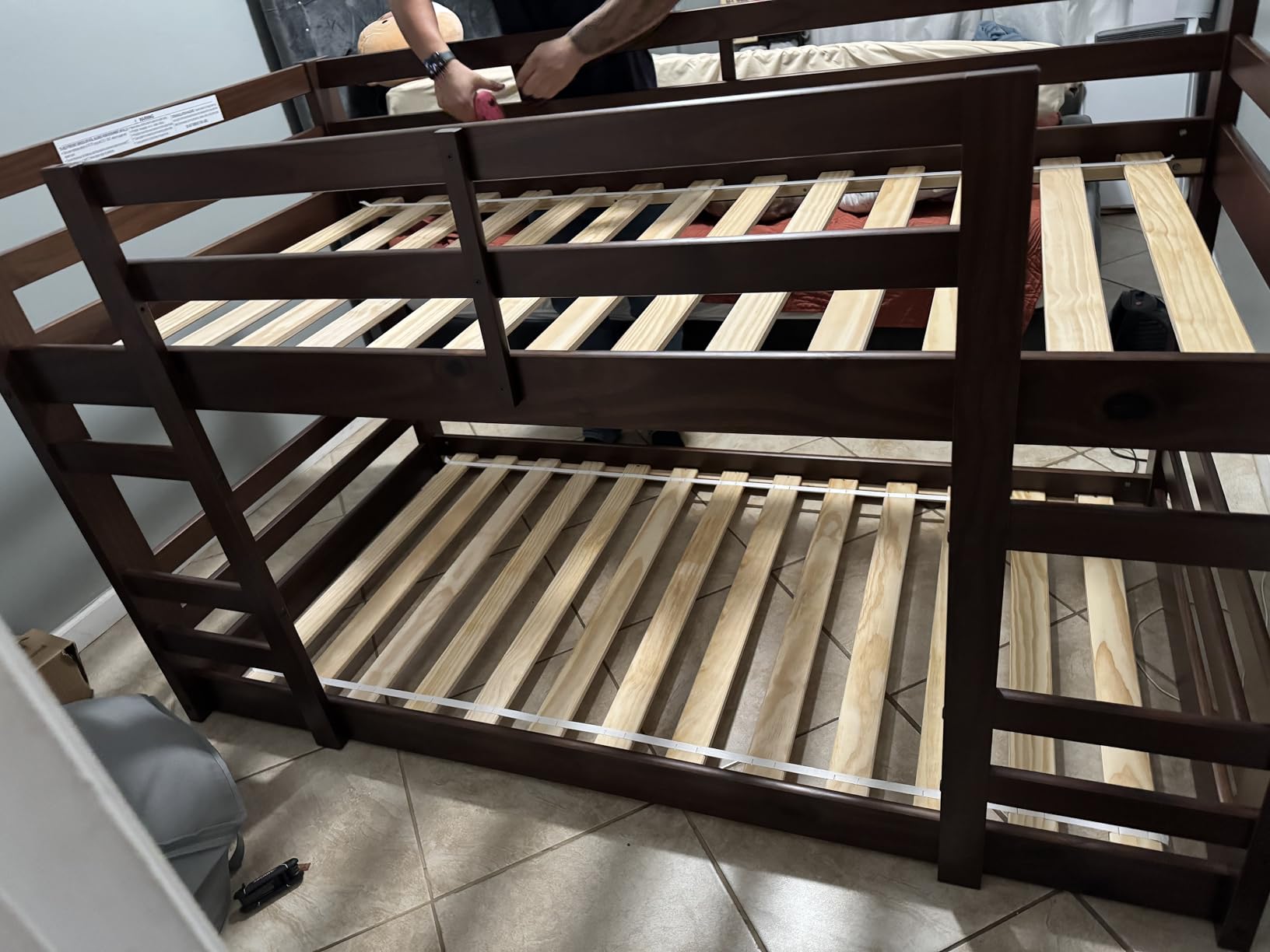
Assembly is straightforward according to most reviewers, with many reporting they finished in about two to three hours. Walker Edison provides digital instructions rather than paper ones, which some people found less convenient when they were in the middle of building. A few parents mentioned that some screw holes were drilled too deep, requiring extra effort to get the bolts to catch properly. These are minor issues but worth knowing about before you start.
The tradeoff with this bed is the weight capacity. At 250 pounds per bunk, it is lower than the Max and Lily models by a significant margin. For children, this is more than sufficient, but if adults or heavier teens will be regular users, it is worth considering. The wood finish also requires a bit more care. A few reviewers noted that the pine can chip or dent if kids are especially rough with it, so it may not be the best choice for the most active households.
Who Should Buy This Bed
Families with three or more children who need to maximize sleeping space in one room should seriously consider the Walker Edison Alexander. The stackable design gives you a growth path that other beds simply do not offer. It is also an excellent pick for rooms with lower ceilings where a standard 65-inch bunk bed would feel cramped.
If you want a bunk bed that looks like real furniture rather than something from a dorm room, the walnut finish elevates the entire room. This bed works well in guest rooms where you want the sleeping capacity without the institutional look of many bunk beds.
Who Should Look Elsewhere
The 250-pound weight capacity rules this out for households where adults will regularly sleep on the bed. If you need a higher weight rating, the Max and Lily models both support 400 pounds. Parents who prefer paper instructions over digital ones might also find the assembly process slightly more frustrating.
This bed does not convert into two separate beds, so you are locked into the bunk configuration. If versatility is important, the Storkcraft models or the Max and Lily Twin over Twin are better choices. Stock is also limited at times, so if you need a bed quickly, availability might be an issue.
4. Max & Lily Twin over Twin Bunk Bed – Best Convertible Option
- Converts to two free-standing beds
- 400 lb weight capacity per bunk
- Ladder installs on left or right side
- Knot-free solid wood construction
- Paint finish can be slightly streaky
- Bottom bunk has limited headroom
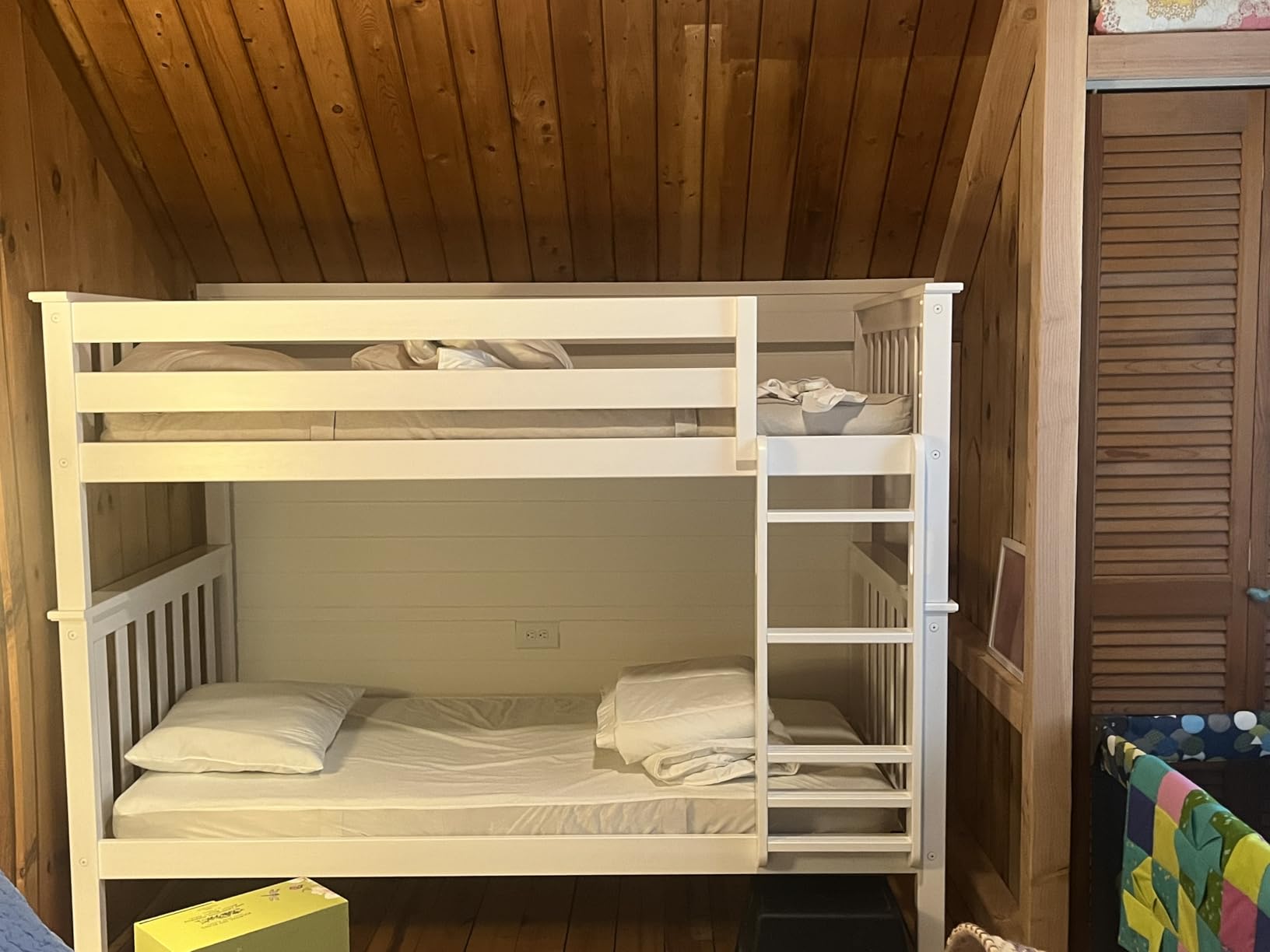
The Max and Lily Twin over Twin Bunk Bed is the convertible sibling in the Max and Lily lineup, and it brings a different set of strengths compared to the Fundamental Low model we reviewed earlier. This is a full-height bunk bed at 65 inches tall, but it adds the ability to separate into two free-standing twin beds. That versatility makes it one of the most practical options on our list for families whose living situations might change.
The knot-free solid wood construction sets this apart from beds that use engineered wood or composites. Every piece of pine is selected for quality, resulting in a cleaner look and fewer weak points in the grain. Metal-on-metal bolt connections create rigid joints that resist loosening over time, which is important when kids are climbing and bouncing on the frame daily. The 400-pound capacity per sleeping surface means this bed handles adults just as well as children.
One feature I really appreciate is the versatile ladder placement. You can install it on either the left or right side depending on your room layout. This seems like a small thing, but when you are trying to fit a bunk bed into a room with a window, door, or closet on one side, having that flexibility saves you from a major headache. The 14-inch safety guardrails wrap the top bunk completely.
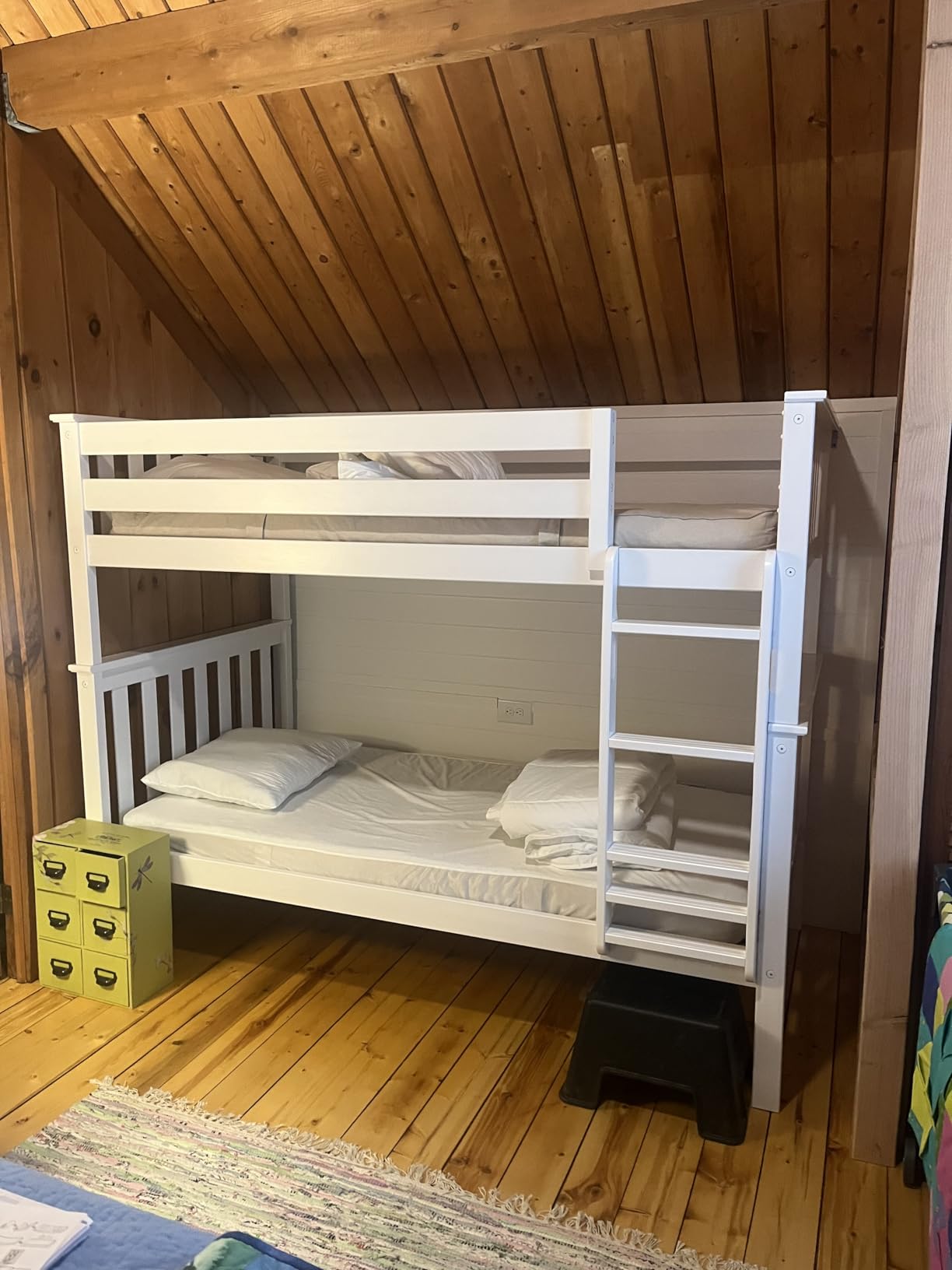
Assembly takes between two and five hours depending on your experience level and whether you have help. Parents generally report that the process is manageable with the included instructions, though some found the stickers on the hardware difficult to remove. The hardware is organized by step, though a few reviewers mentioned it could be better sorted. Once together, the bed feels remarkably stable for its weight class.
The low-VOC, non-toxic finish is consistent with the Max and Lily brand standard. The blue color option is a popular choice for kids’ rooms, giving a playful touch without being locked into a theme that might feel babyish in a few years. The tradeoff is that the paint application can be slightly streaky in certain lighting, which is a minor cosmetic issue that most parents do not notice once the bed is in a room with normal lighting.
Who Should Buy This Bed
Families who want maximum flexibility should put the Max and Lily Twin over Twin at the top of their list. The ability to convert into two separate beds combined with the 400-pound weight capacity means this bed can serve your family from the toddler years through the teenage years and beyond. It is genuinely a buy-once solution.
The versatile ladder placement makes this an excellent choice for rooms with tricky layouts where you need to control which side the ladder is on. Parents who value eco-friendly materials will appreciate the non-toxic low-VOC finish on knot-free solid wood.
Who Should Look Elsewhere
The 65-inch height means you need at least an eight-foot ceiling for comfortable use, and even then the bottom bunk has limited headroom. If your ceilings are lower or your kids are taller, the low-profile Max and Lily Fundamental or the Walker Edison Alexander at 48 inches would work better.
If you want a natural wood or white finish, this particular model is only available in blue. The Storkcraft Caribou or Long Horn offer similar functionality with different color options. Assembly can also run longer than expected if you are building solo, so plan for a full afternoon project.
What to Look for When Buying a Bunk Bed
Choosing a bunk bed involves more than picking the nicest-looking option. Safety, dimensions, materials, and long-term usability all play a role in making the right decision. Here is what our team learned matters most after comparing these beds side by side and reading through thousands of parent experiences.
Safety Features That Matter
The American Academy of Pediatrics recommends that children under six years old should not sleep in the top bunk. This is a non-negotiable guideline that every parent should follow regardless of how sturdy the bed feels. Guardrails are the most critical safety feature on any bunk bed. Look for full-length guardrails that run the entire perimeter of the top bunk with at least five inches of clearance above the mattress surface. All five beds on our list include proper guardrails, but the depth and coverage varies.
Weight capacity is another safety metric that deserves close attention. The Storkcraft models support 225 pounds per bunk, while the Max and Lily beds handle 400 pounds. If teenagers or adults will use the bed, the higher capacity is essential. The Walker Edison falls in the middle at 250 pounds, which works for most kids and lighter adults.
GREENGUARD Gold certification, found on both Storkcraft models, means the materials have been independently tested for chemical emissions. This certification is especially important for children with allergies or respiratory sensitivities. The Max and Lily beds use non-toxic low-VOC finishes, which is a similar but less formal standard.
Wood vs Metal Construction
All five beds on our list use wood construction, and that is generally the right choice for home use. Solid wood beds from Max and Lily and Walker Edison offer the best long-term durability, with the knot-free pine used by Max and Lily being particularly resistant to splitting and warping. Rubberwood, used by Storkcraft, is a sustainable hardwood that offers good strength at a lower cost.
Engineered wood and composites, which Storkcraft mixes with their rubberwood, can be durable but tend to show wear faster than solid wood. Metal bunk beds are an option worth considering if you want maximum weight capacity and an industrial look, but they tend to be louder when kids move around and feel colder to the touch in winter months.
Ceiling Height and Room Dimensions
Standard ceiling height in most homes is eight feet, or 96 inches. A typical full-height bunk bed like the Max and Lily Twin over Twin at 65 inches leaves about 31 inches between the top mattress and the ceiling. That is workable but tight, especially if your child sits up quickly in the middle of the night. For rooms with eight-foot ceilings, a low-profile bed like the Max and Lily Fundamental at 49 inches or the Walker Edison Alexander at 48 inches provides much more comfortable clearance.
Measure your room’s length and width carefully before ordering. A standard twin bunk bed needs about 80 to 82 inches of wall length and 42 to 54 inches of width. Do not forget to account for the ladder, which adds about 12 to 18 inches of depth on whichever side it is installed. If you are tight on floor space, a fixed integrated ladder takes up less room than an angled one.
Ladder vs Stairs
Ladders are the standard access method on most bunk beds, and they work well for children with good mobility. The fixed ladders on the Storkcraft models are integrated into the frame, which saves floor space but limits placement flexibility. The Max and Lily Twin over Twin lets you choose which side the ladder goes on, which is a significant advantage for room layout planning.
Stairs are generally considered safer than ladders, especially for younger children, because they offer wider steps and a handrail. However, stairs take up significantly more floor space and are usually only available on premium models. Forum discussions consistently show that parents with children under eight prefer stairs when space allows, while parents with older kids find ladders perfectly adequate.
Mattress Requirements
Most bunk beds require a mattress between 5 and 8 inches thick to maintain proper guardrail effectiveness. A mattress that is too thick raises the sleeping surface above the guardrail line, creating a fall hazard. All five beds on our list are designed for standard twin mattresses, so you will have plenty of options at any price point.
None of these beds require a box spring, which saves money and keeps the overall height manageable. The slat systems provide adequate support for most mattresses, though parents using very thin foam mattresses might want to add a bunkie board for extra support. This came up specifically with the Max and Lily Fundamental, where some parents felt the slat spacing was too wide for mattresses under 6 inches.
Assembly Considerations
Every bunk bed on this list requires assembly, and you should plan for two to five hours depending on the model and your experience level. Having a second person is strongly recommended for all of these beds. The Storkcraft models tend to take longer if you are building solo, with some parents reporting five or more hours. The Walker Edison and Max and Lily beds are generally closer to the two to three hour range with help.
One common frustration across all brands is that instructions sometimes skip steps or show unclear diagrams. Our best advice is to read through the entire instruction booklet before starting, lay out all parts and hardware, and use the included Allen wrench rather than power tools that might overtighten and strip the connections. Parents on Reddit consistently mention that having a socket wrench set on hand makes the process significantly faster.
Frequently Asked Questions About Bunk Beds
What is the best bunk bed brand?
Based on our research, Max and Lily and Storkcraft are the two best bunk bed brands available. Storkcraft offers GREENGUARD Gold certified beds with over 6,000 reviews and award-winning customer service. Max and Lily stands out for 400-pound weight capacities, knot-free solid wood construction, and convertible designs. Both brands consistently receive high praise from parents for build quality and safety features.
What is the sturdiest bunk bed?
The Max and Lily Fundamental Low Bunk Bed and the Max and Lily Twin over Twin are the sturdiest options on our list, both supporting 400 pounds per sleeping surface with metal-on-metal bolt connections and solid pine wood construction. For a budget-friendly sturdy option, the Storkcraft Caribou at 142 pounds of rubberwood construction provides excellent rigidity and stability at a lower price point.
What age can a child sleep in the top bunk?
The American Academy of Pediatrics recommends that children under six years old should not sleep in the top bunk of a bunk bed. This guideline exists because younger children lack the coordination and judgment to use ladders safely and are at higher risk for falls. Even after age six, parents should ensure the bed has proper guardrails and teach children safe climbing habits.
What ceiling height do you need for a bunk bed?
You need a minimum of eight-foot (96-inch) ceilings for a standard full-height bunk bed, which leaves about 30 inches of clearance above the top mattress. For low-profile bunk beds like the Max and Lily Fundamental at 49 inches or the Walker Edison Alexander at 48 inches, rooms with ceilings as low as seven feet can work comfortably. Always measure your ceiling height before purchasing.
How thick should a bunk bed mattress be?
Most bunk bed manufacturers recommend a mattress between 5 and 8 inches thick. A thicker mattress reduces the effectiveness of the guardrails and can create a safety hazard on the top bunk. Thinner mattresses under 5 inches may sag between slats. Foam mattresses in the 6-inch range are the most popular choice for bunk beds because they are lightweight, affordable, and provide good support without exceeding guardrail height.
Our Final Thoughts on the Best Bunk Beds
After comparing these five bunk beds across safety, durability, value, and real-world parent experiences, the Storkcraft Caribou earns our top recommendation for most families. Its combination of GREENGUARD Gold certification, convertible design, and over 6,100 positive reviews makes it the safest and most reliable choice for the price.
The Max and Lily Fundamental Low Bunk Bed is our pick for families with younger kids or lower ceilings, offering an impressive 400-pound capacity in a compact 49-inch profile. For maximum versatility, the Max and Lily Twin over Twin delivers convertible functionality with the same heavy-duty construction. And if you need to sleep three kids in one room, the Walker Edison Alexander stackable design is a clever solution worth considering.
Any of these best bunk beds will serve your family well for years. The key is matching the bed to your specific room dimensions, the ages of your children, and whether you need features like convertibility or a specific weight capacity. Measure your space, check your ceiling height, and pick the bed that fits your family’s needs today and tomorrow.