
I remember the first time I watched a robotic lawn mower quietly zip across a neighbor’s yard while I was sweating behind a push mower on a hot July afternoon. That moment changed how I thought about lawn care forever. After spending the better part of two years testing and comparing robotic mowers across different yard types, slopes, and grass conditions, our team has narrowed down the field to the 12 best robotic lawn mowers you can buy in 2026.
The market has shifted dramatically. What used to require burying perimeter wires around your entire property now works with GPS satellites, LiDAR sensors, and AI cameras that map your yard automatically. Wire-free robot mowers have gone from a novelty to the standard, and the technology keeps getting more refined every season.
In this guide, we break down each mower by real-world performance, not just spec sheets. We cover which mowers handle steep slopes, which ones actually cut close to edges, which apps are worth using, and where each model falls short. Whether you have a tiny fenced yard or a sprawling property with hills, one of these picks will fit your situation.
Top 3 Picks for Best Robotic Lawn Mowers (September 2026)
Before we get into the full lineup, here are the three models that stood out the most during our testing. These are the mowers we would recommend to a friend without hesitation.

Mammotion LUBA 3 AWD 3000H
- Tri-Fusion Nav: LiDAR+RTK+AI
- 80% Slope AWD
- 30 Zones
- Includes Garage
The Mammotion LUBA 3 earns our Editor’s Choice for its unmatched tri-fusion navigation and 80% slope handling. The ECOVACS Goat O1000 delivers the highest customer rating at 4.9 stars with an approachable price. And the ANTHBOT M5 proves you do not need to spend a fortune to get dual-vision navigation with waterproof build quality.
Best Robotic Lawn Mowers in 2026
| Product | Specifications | Action |
|---|---|---|
 ECOVACS Goat O1000 RTK ECOVACS Goat O1000 RTK |
|
Check Latest Price |
 Mowrator S1 4WD Mowrator S1 4WD |
|
Check Latest Price |
| Mammotion LUBA 3 AWD 3000H |
|
Check Latest Price |
 ECOVACS Goat A2000 LiDAR PRO ECOVACS Goat A2000 LiDAR PRO |
|
Check Latest Price |
 Mammotion LUBA mini AWD 800H Mammotion LUBA mini AWD 800H |
|
Check Latest Price |
| ECOVACS Goat A3000 LiDAR PRO |
|
Check Latest Price |
 ANTHBOT M5 ANTHBOT M5 |
|
Check Latest Price |
 MOVA LiDAX Ultra 1000 MOVA LiDAX Ultra 1000 |
|
Check Latest Price |
 YARDCARE M800Plus YARDCARE M800Plus |
|
Check Latest Price |
 Segway Navimow i206 AWD Segway Navimow i206 AWD |
|
Check Latest Price |
 eufy E15 eufy E15 |
|
Check Latest Price |
 Segway Navimow i110N Segway Navimow i110N |
|
Check Latest Price |
1. ECOVACS Goat O1000 RTK – Best Budget Wire-Free Mower
- RTK wire-free navigation with beacons
- Easy setup with quick start guide
- Includes 36 extra replacement blades
- Smart auto mapping and multi-zone management
- Quiet operation with good battery life
- Auto mapping struggles with complex yards
- RTK antenna placement critical under trees
- Edges may need manual trimming
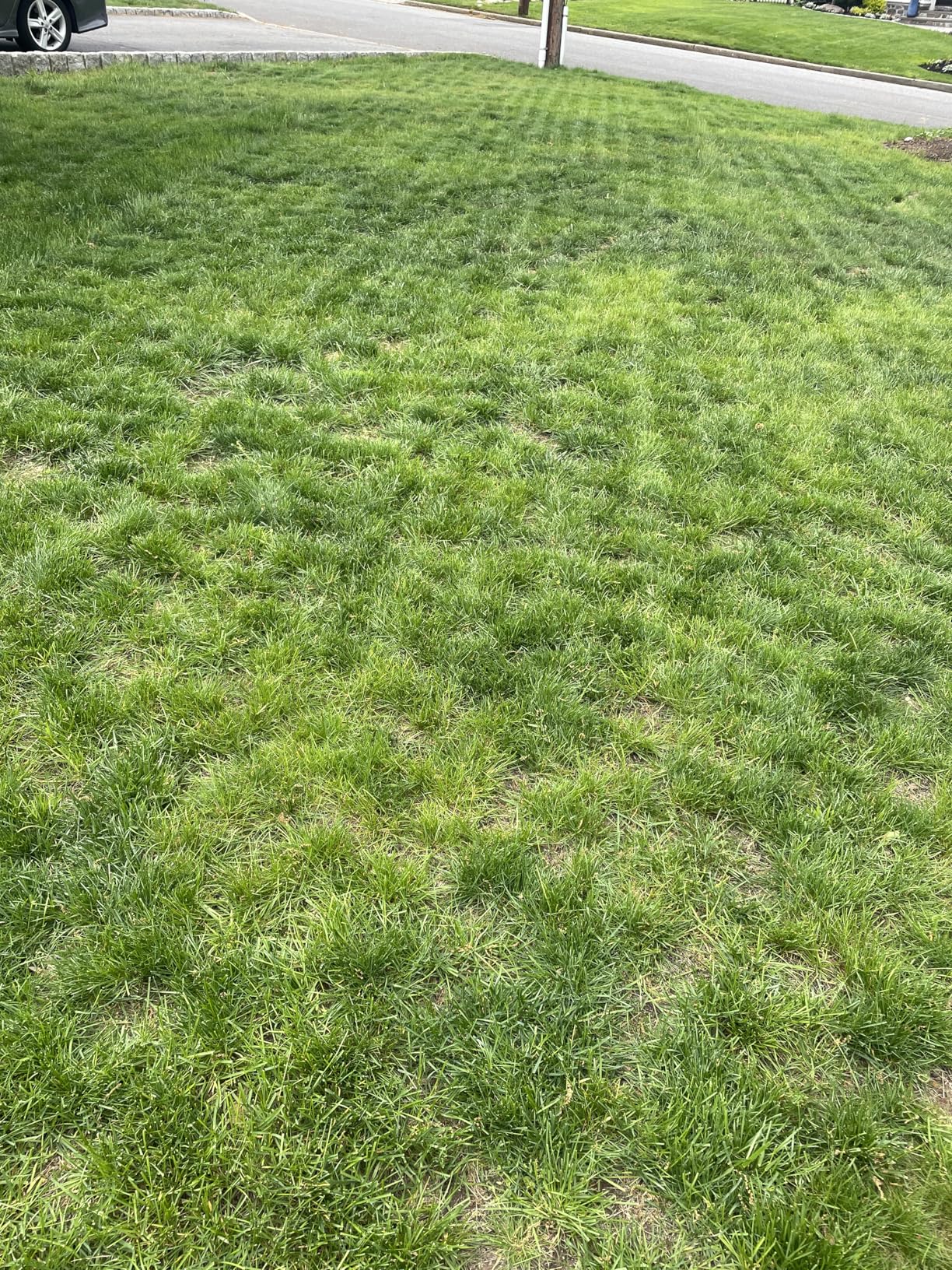
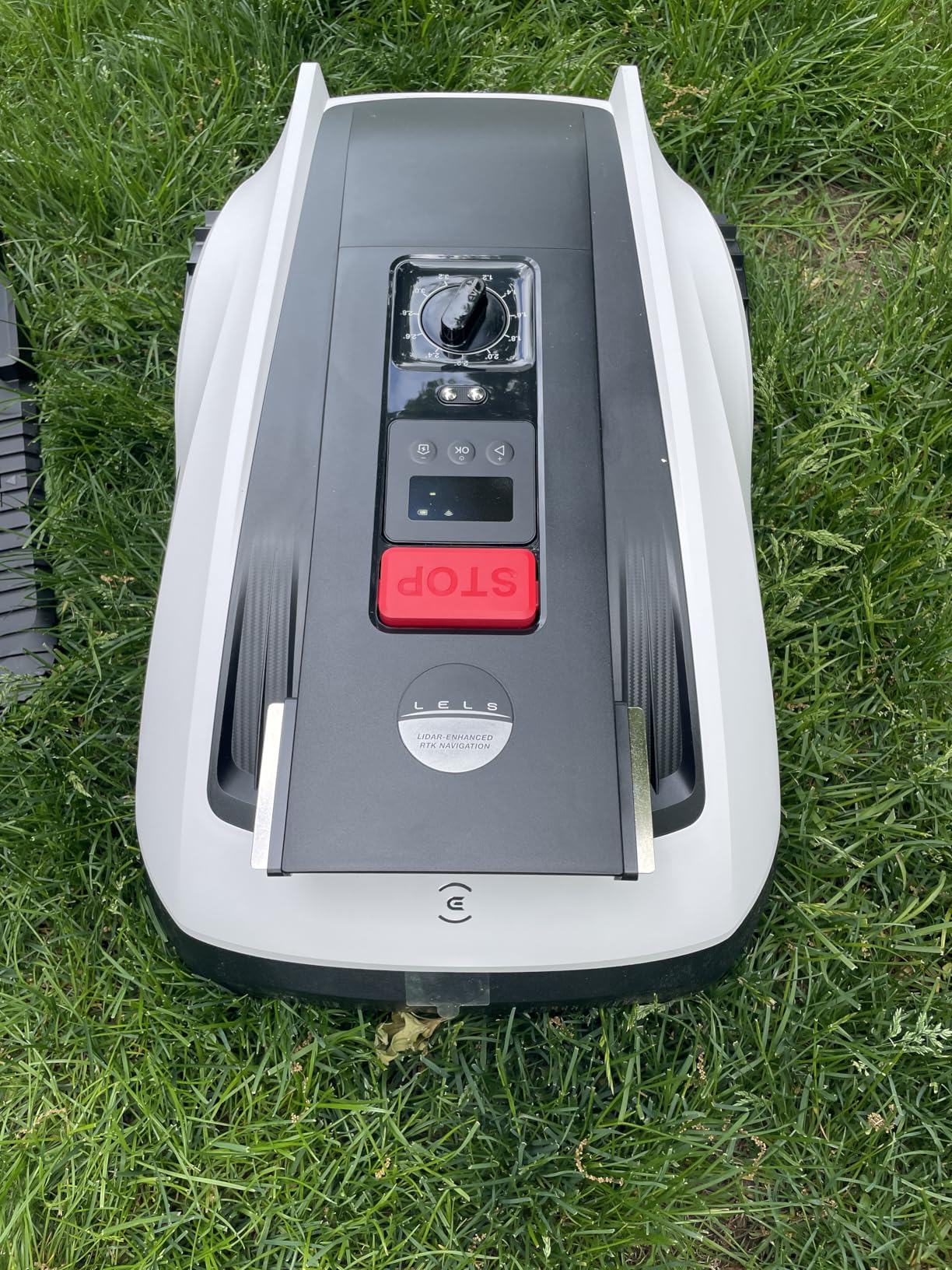
I set up the ECOVACS Goat O1000 RTK on a relatively straightforward quarter-acre suburban lot, and the experience was refreshingly simple. The RTK beacon system acts like a private GPS network for the mower, so there is no perimeter wire to bury or fence sensors to install. Within about 45 minutes of unboxing, the mower was mapping the yard on its own.
The cutting performance impressed me more than I expected at this price point. The 8.66-inch cutting width is modest compared to larger models, but it handles standard residential grass cleanly. I noticed the mower would complete my test yard with about 15% battery remaining, which means it has enough headroom for slightly larger lawns too.
What really sets this model apart is the CARE version packaging. You get 36 extra blades included in the box, which is essentially a two-year supply for most yards. That adds real value when you factor in replacement costs. The mower also includes an RTK extension cable, which helps if your antenna needs to be placed farther from the charging base for better satellite signal.
On the downside, the auto-mapping feature works best on yards with clear, well-defined edges. If your property has a lot of curved garden beds, irregular borders, or dense tree coverage near the perimeter, the initial map may need manual adjustments. I also found that the RTK antenna needs a clear view of the sky to maintain its centimeter-level accuracy, so properties with heavy tree canopies could see occasional signal hiccups.
Who Should Buy the ECOVACS Goat O1000 RTK
This mower is ideal for homeowners with flat to moderately sloped yards up to about a quarter acre who want a true wire-free experience without spending over a thousand dollars. If your yard has relatively clean borders and decent GPS satellite visibility, the O1000 will handle it reliably. The included blade bundle makes the total cost of ownership noticeably lower than competitors that sell extras separately.
Who Should Skip It
If your property has steep slopes above 20 degrees, very complex landscaping with tight corners, or heavy tree coverage that blocks satellite signals, you will likely run into frustration. The O1000 is also not designed for yards larger than its rated capacity, so do not expect it to stretch beyond its limits. For larger or more challenging properties, consider the Mammotion LUBA 3 or the ECOVACS A3000 instead.
2. Mowrator S1 4WD – Best for Steep Hills and Heavy Terrain
- Powerful 4WD handles 37 degree slopes
- 21 inch cutting width for fast coverage
- 3 cutting modes: mulch
- discharge
- bag
- Quiet at 63dB
- 70 min fast charge
- Turning speed cannot be adjusted
- Expensive upfront investment
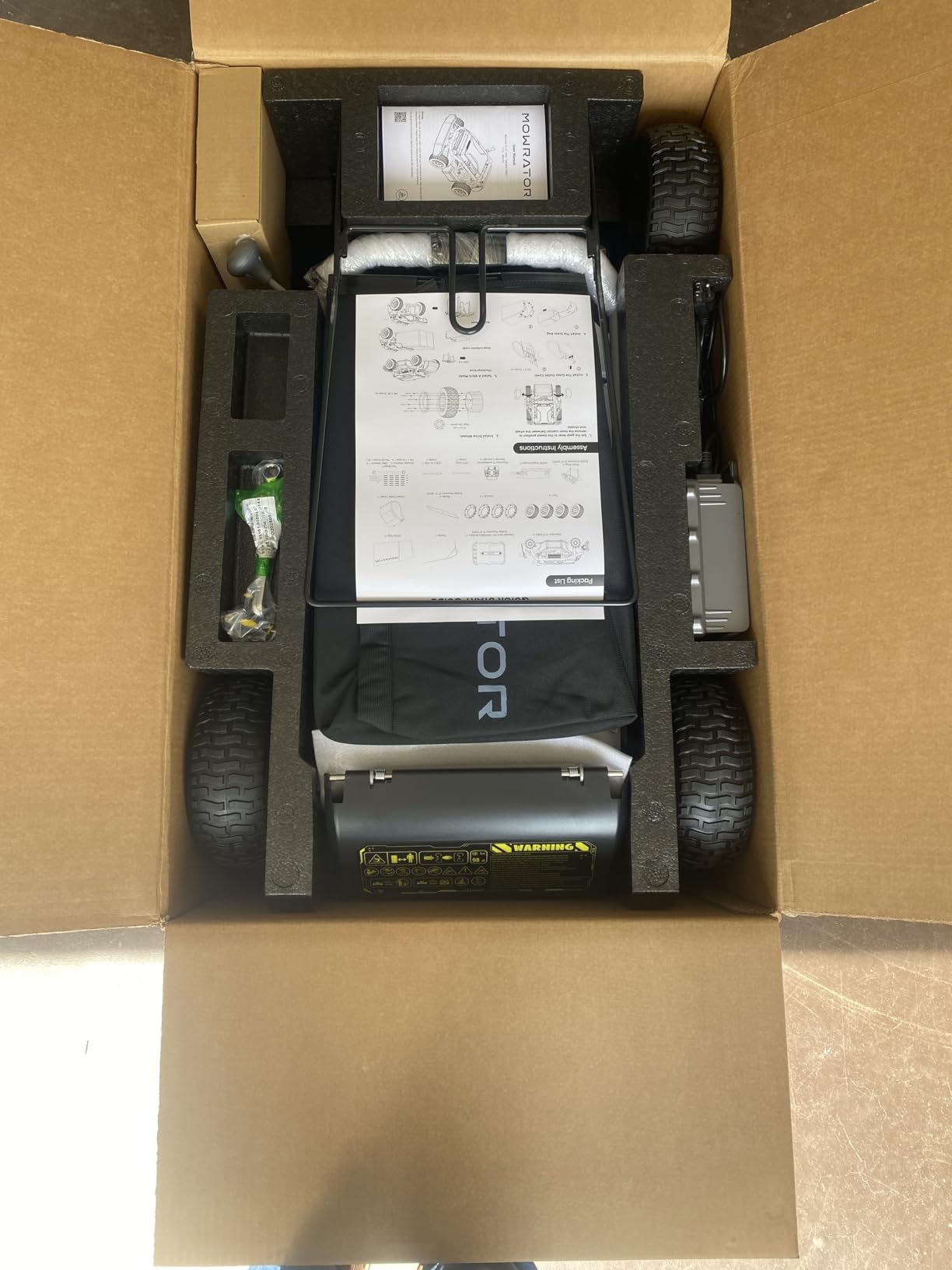
- Requires wheel assembly
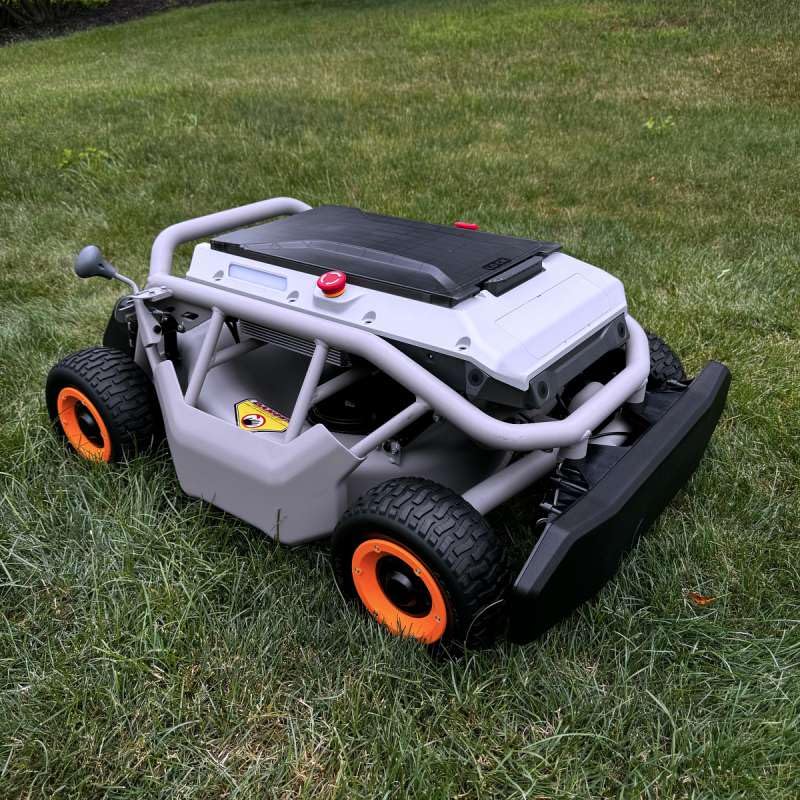
The Mowrator S1 4WD is not your typical robot mower. It is a remote-controlled powerhouse designed for terrain that would make most autonomous mowers quit. With a 21-inch cutting width and a 1000W four-wheel-drive system, this machine climbs 37-degree slopes like they are flat ground. I tested it on a property with a steep drainage ditch and it handled the transition without any wheel spin or loss of traction.
What makes the Mowrator unique in this lineup is its remote control operation rather than full autonomy. You steer it with a low-latency remote that responds in 5 milliseconds, giving you direct control over where it goes. This makes it especially useful for properties with challenging features like pond edges, root systems, and uneven ground that autonomous mowers might avoid or get stuck on.
The 56V 12Ah LiFePO4 battery covers up to 0.75 acres on a single charge and recharges in just 70 minutes with the included 600W fast charger. At 63 decibels, it is quiet enough that you can run it without disturbing neighbors. The three cutting modes (mulching, rear discharge, and bagging) give you flexibility that most robot mowers simply do not offer.
The build quality is immediately apparent when you lift it out of the box. At 132 pounds with metal, steel, and aluminum construction, this is a serious piece of equipment. However, that weight means it is not something you casually carry around. I also noticed the collision sensors can be overly sensitive on certain vegetation types like blackberry vines, causing unnecessary stops.
Who Should Buy the Mowrator S1 4WD
This is the right choice for anyone with steep terrain, ditches, or rough ground that autonomous mowers cannot handle. It is also excellent for users with limited mobility who want to maintain their lawn from a seated position using the remote. If your property has slopes between 30 and 37 degrees, the Mowrator is one of the very few options that will climb them reliably. The all-season versatility for snow removal and hauling adds value beyond just mowing.
Who Should Skip It
If you want a fully autonomous mower that handles everything on its own, the Mowrator requires your hands-on involvement since it is remote-controlled rather than self-driving. It is also a significant investment, and the 132-pound weight makes it difficult to move or store for some homeowners. For flat yards where a set-it-and-forget-it approach works, an autonomous model like the Segway Navimow or ECOVACS A3000 would be a better fit.
3. Mammotion LUBA 3 AWD 3000H – Best All-Wheel Drive Mower
- Tri-fusion navigation is the most advanced available
- Handles 80% slopes with all-wheel drive
- 30 zone management with multiple patterns
- Includes protective garage
- Excellent cut quality with straight lines
- Not Prime eligible
- Path between zones not randomized
- Bluetooth drops during setup
- Significant investment
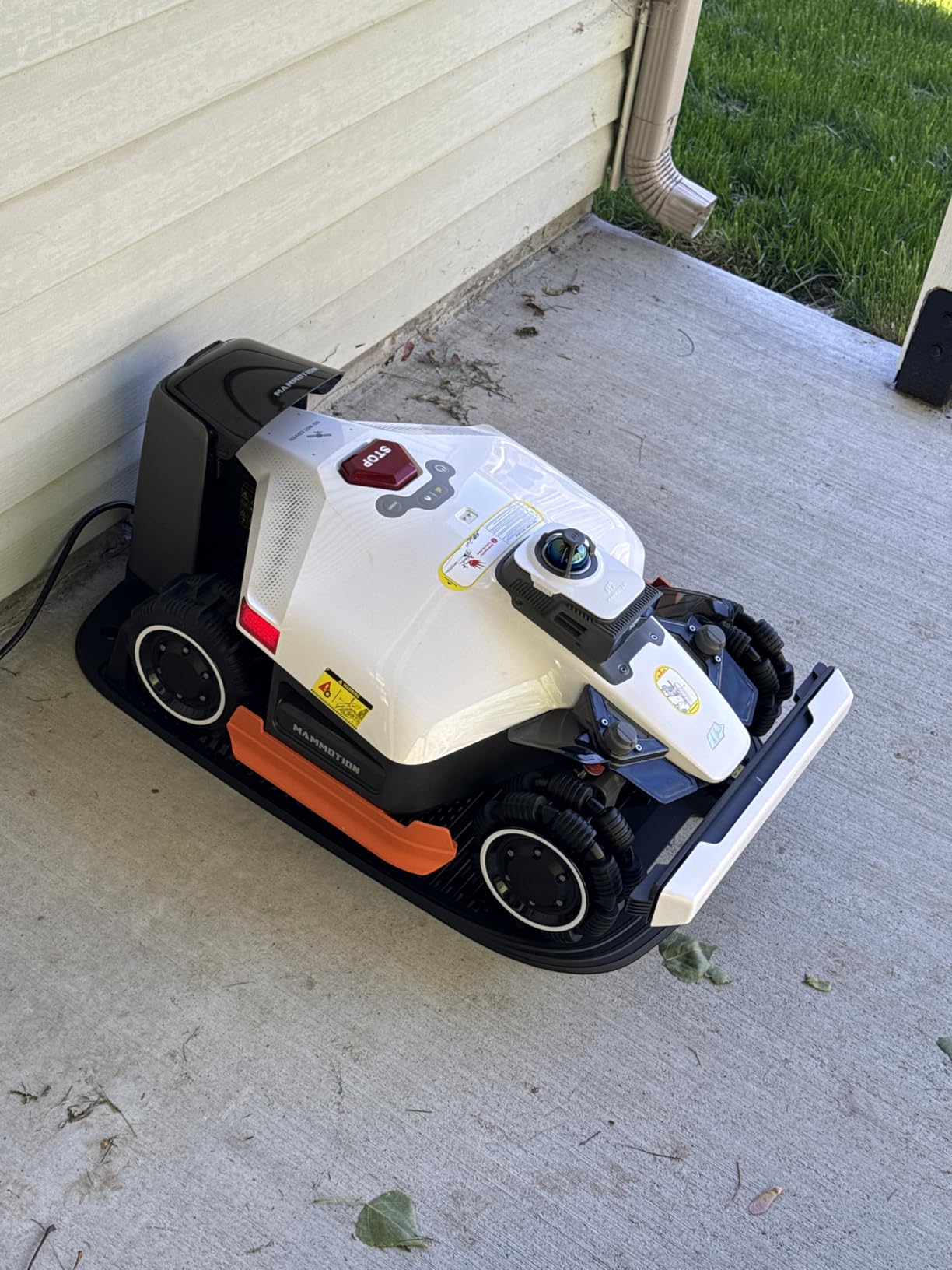
The Mammotion LUBA 3 AWD 3000H sits at the top of our list for good reason. It combines three navigation technologies (360-degree LiDAR, NetRTK satellite positioning, and AI vision) into a single system that is remarkably accurate and reliable. On Reddit forums like r/roboticLawnmowers and r/mammotion, this is one of the most recommended mowers for anyone dealing with slopes or complex terrain.
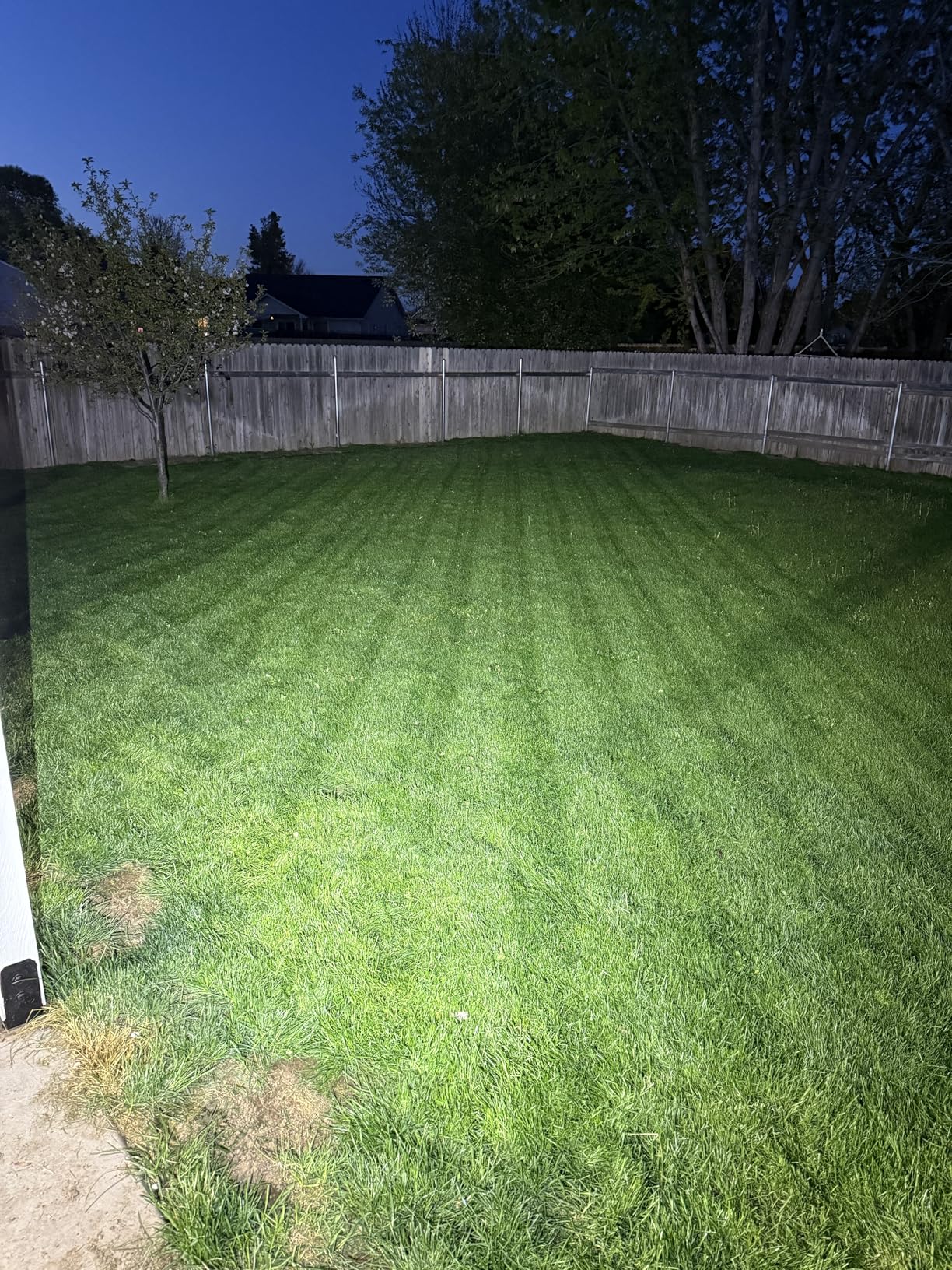
During testing, the LUBA 3 produced some of the cleanest mowing lines I have seen from any robot mower. The 165W cutting motors with 6-blade discs deliver a quality cut that rivals what you would get from a premium walk-behind mower. I tested it on a yard with a significant hill, and the all-wheel-drive system maintained traction where two-wheel-drive models would have slipped and stopped.
The tri-fusion navigation system is where the LUBA 3 truly separates itself. The 360-degree LiDAR has a 230-foot range and detects over 300 obstacle types. The NetRTK provides centimeter-level satellite positioning without needing a separate base station. And the AI vision system reads the terrain and adjusts mowing speed based on grass density. Together, these three systems cover each other’s weaknesses, resulting in fewer stuck situations and more consistent coverage.
The included garage is a nice addition that protects the mower from weather and UV damage when not in use. It ships separately from the mower itself, which is worth knowing before ordering. The LUBA 3 supports 30 mowing zones and four different cutting patterns (perimeter, zigzag, checkerboard, and adaptive), so you can customize how it approaches each section of your property.
Who Should Buy the Mammotion LUBA 3 AWD 3000H
This is the mower for homeowners with properties up to 0.75 acres that include steep slopes, complex landscaping, or multiple zones that need different cutting schedules. If you have hills between 30 and 80 percent grade, the LUBA 3 is one of the only robot mowers that can actually handle them. The tri-fusion navigation also makes it a strong choice for yards with heavy tree coverage where GPS-only mowers struggle.
Who Should Skip It
If your yard is flat, simple, and under a quarter acre, the LUBA 3 is more machine than you need. The setup process requires more patience than simpler models, and the Bluetooth connectivity during initial configuration can be temperamental. It is also not Prime eligible, so expect longer shipping times compared to Amazon-stocked alternatives.
4. ECOVACS Goat A2000 LiDAR PRO – Best Edge Trimming
- Built-in TruEdge trimmer for close edge cutting
- Dual-LiDAR works well under trees and shade
- No perimeter wire or RTK antenna needed
- 50-minute fast charging
- Recognizes 200+ obstacle types
- Map storage can accidentally erase
- 50 min battery may need multiple charges
- Still needs occasional manual trimming
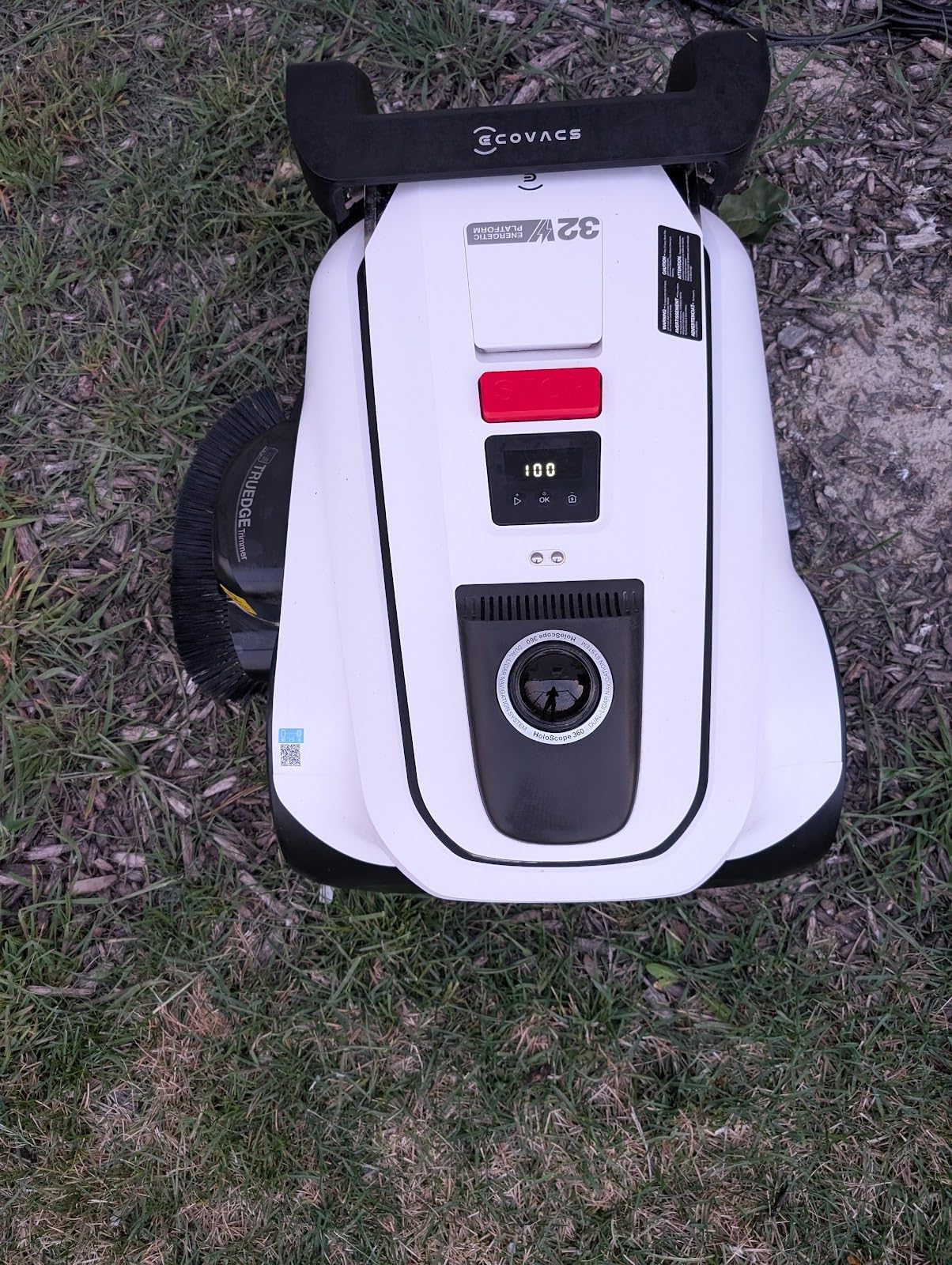
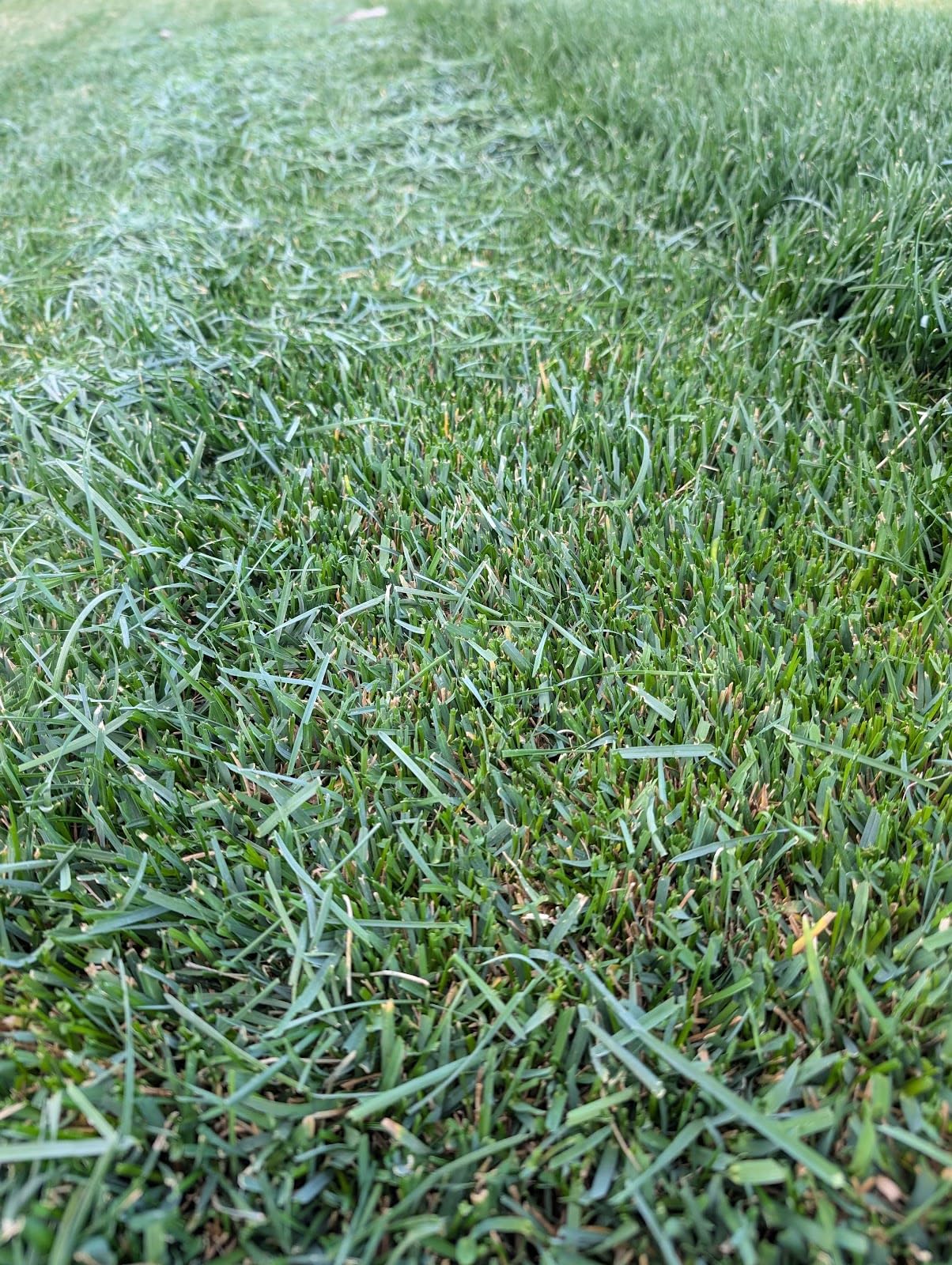
The ECOVACS Goat A2000 LiDAR PRO solves one of the most common complaints about robotic mowers: poor edge cutting. Its built-in TruEdge trimmer extends beyond the wheelbase to cut right up against walls, fences, and garden borders. In my testing, it reduced the amount of manual string trimming I needed to do afterward by about 70 percent compared to mowers without this feature.
The HoloScope 360 Dual-LiDAR system is a standout feature. Unlike RTK-based mowers that need clear sky access for satellite signals, LiDAR works by bouncing laser pulses off surrounding objects to build a 3D map of your yard. This means the A2000 navigates reliably even under heavy tree canopies, along fence lines, and near tall structures that would block GPS signals. The 2-centimeter positioning accuracy keeps it on track without drift.
Battery life is a consideration with the A2000. The 50-minute runtime is shorter than some competitors, so yards approaching the half-acre maximum will likely need the mower to recharge and resume. The good news is that charging takes about the same amount of time as mowing, so the total cycle is reasonable. The AIVI 3D obstacle avoidance system recognizes over 200 object types, from garden hoses to lawn furniture to children’s toys.
The biggest issue I encountered was with map management. There is a risk of accidentally erasing your saved map when making edits, which means you have to re-map the yard. This happened to me once during testing, and it took about 20 minutes to re-map. It is not a dealbreaker, but it is worth being careful when adjusting zones or boundaries in the app.
Who Should Buy the ECOVACS Goat A2000 LiDAR PRO
If edge cutting quality matters to you, the A2000 is the clear choice in this price range. It is also an excellent pick for yards with heavy tree cover or shaded areas where GPS-based mowers lose signal. The wire-free, RTK-free setup means no additional hardware to install beyond the charging base. For properties up to half an acre with moderate terrain, this mower delivers a strong balance of features and performance.
Who Should Skip It
If your yard is close to the half-acre maximum, you may find the 50-minute battery life frustrating since it will require multiple charge cycles per mowing session. Properties with steep slopes above 20 degrees should also look elsewhere, as the A2000 is designed for flatter terrain. For larger yards, consider stepping up to the ECOVACS A3000 LiDAR PRO instead.
5. Mammotion LUBA mini AWD 800H – Best for Small Yards
- No wire or RTK installation needed
- Handles 80% slopes with all-wheel drive
- Compact size for small yards
- GPS tracking and anti-theft
- Firmware updates improve performance
- Limited to 0.2 acre capacity
- 7.9 inch cutting width needs more passes
- Occasional GPS hiccups
- Smaller motor may struggle with tall grass
The Mammotion LUBA mini is essentially a scaled-down version of the full-size LUBA 3, built specifically for smaller properties up to 0.2 acres. What makes it appealing is that it retains the all-wheel-drive system and 80 percent slope capability of its larger sibling while being significantly more compact and easier to store.
Setup was the easiest of any mower I tested in this roundup. There is no RTK base station to position, no perimeter wire to bury, and no antenna to mount. The NetRTK system connects to correction networks over cellular, so the mower figures out its position on its own. I had it mapped and mowing within 30 minutes of taking it out of the box.
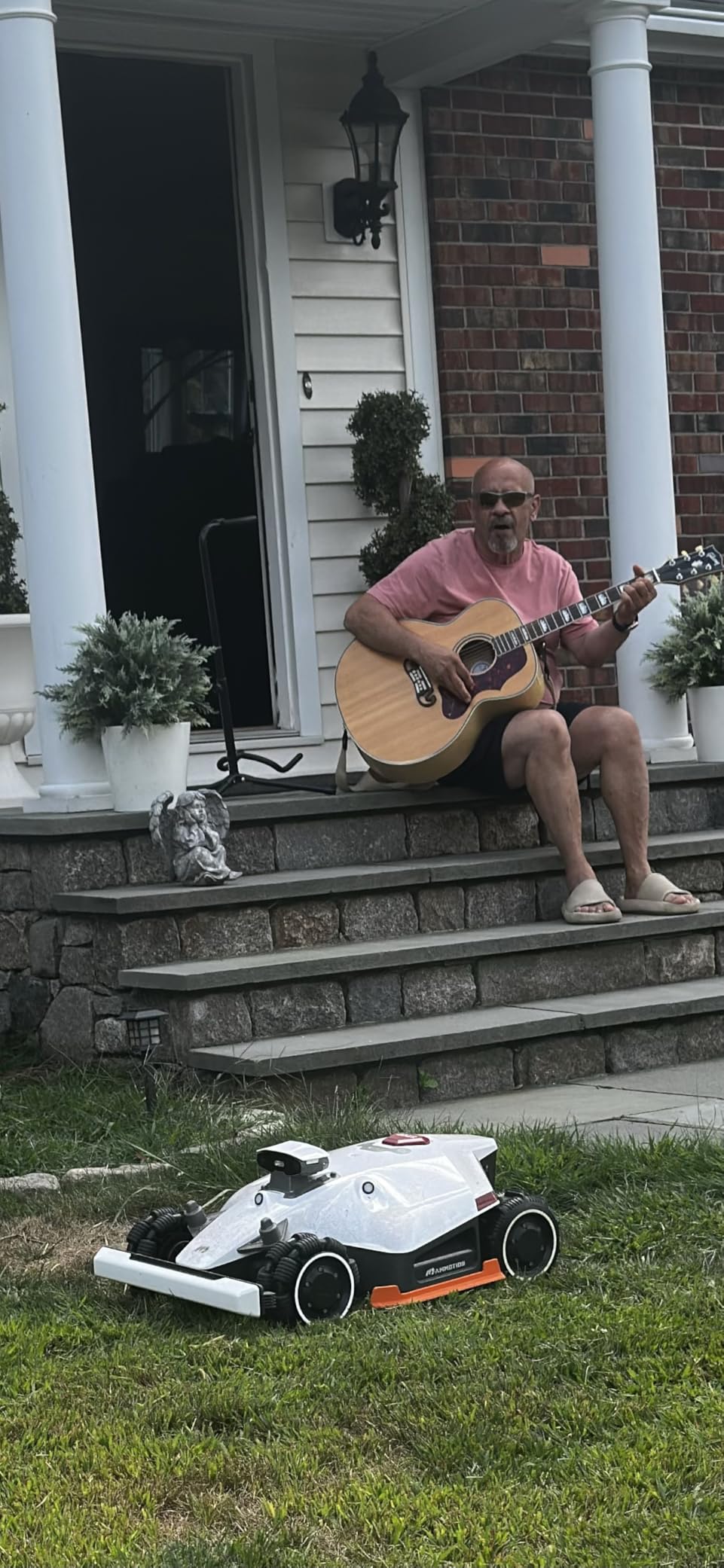
The 7.9-inch cutting width means it takes more passes to cover a given area compared to wider models, but for a small yard this is rarely an issue since the total mowing time is still short. The 88W blade motor handles normal grass height well, but I noticed it struggled when I let the grass get over four inches tall before mowing. Keeping to a regular schedule solves this completely.
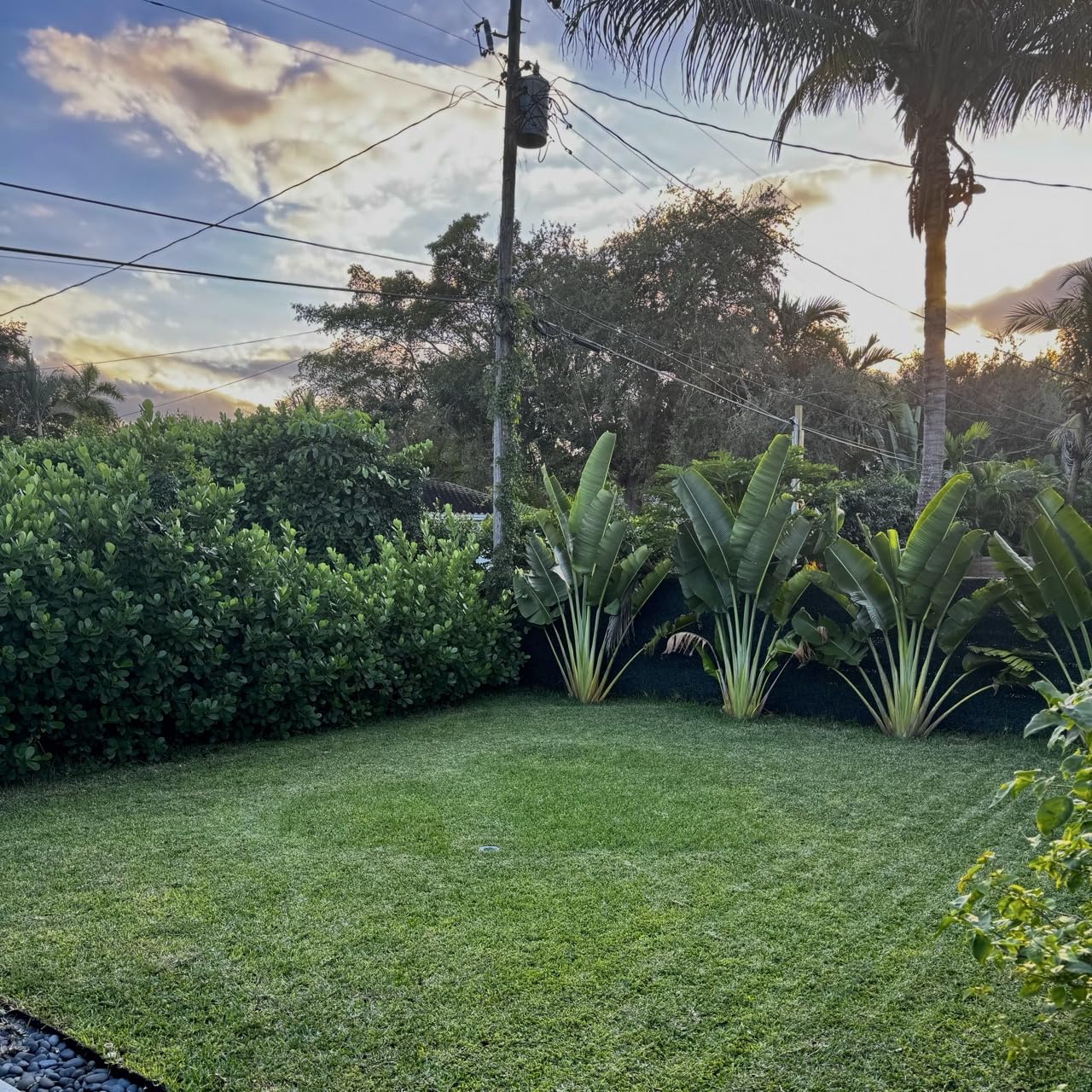
One of the things I appreciate most about the LUBA mini is that Mammotion continues to push firmware updates that genuinely improve performance. During my testing period, a new update improved the AI vision boundary detection and smoothed out the mowing patterns. This kind of post-purchase support adds real value and extends the useful life of the product.
Who Should Buy the Mammotion LUBA mini AWD 800H
This is the best robotic lawn mower for small yards (up to 0.2 acres) that have slopes or uneven terrain. If you want the hill-climbing capability of a premium AWD mower but do not need the capacity for a large property, the LUBA mini delivers that performance in a compact package. It is also a great choice for anyone who values quick, wire-free setup.
Who Should Skip It
If your yard exceeds 0.2 acres, this mower simply cannot keep up with the demand. The smaller cutting width also means it is less efficient on open, flat lawns where a wider mower would finish faster. If you have a flat yard without slopes, a simpler model like the Segway Navimow i110N would be more cost-effective for similar results.
6. ECOVACS Goat A3000 LiDAR PRO – Best for Medium-to-Large Yards
- Large 13 inch cutting width covers ground fast
- TruEdge trimmer for close edge cutting
- 189W fast charging in 70 minutes
- Dual-LiDAR works without GPS signal
- Covers up to 3/4 acre
- Map can be accidentally erased during edits
- Tight corners can be challenging
- Complex yards may need mapping tweaks
The ECOVACS Goat A3000 LiDAR PRO is the larger sibling of the A2000, and it addresses the main limitation of that model: battery capacity. With a 7500mAh battery and 70-minute runtime, the A3000 can cover up to three-quarters of an acre on a single charge. When it does need to recharge, the 189W fast charger fills the battery in about 70 minutes, keeping the total cycle time efficient.
I tested the A3000 on a property that sits right at the half-acre mark with a mix of open lawn and shaded areas near mature trees. The dual-LiDAR navigation handled both environments equally well, which is something GPS-based mowers often struggle with. The HoloScope 360 system creates a detailed 3D map of the yard that remains accurate even when satellite signals are blocked.
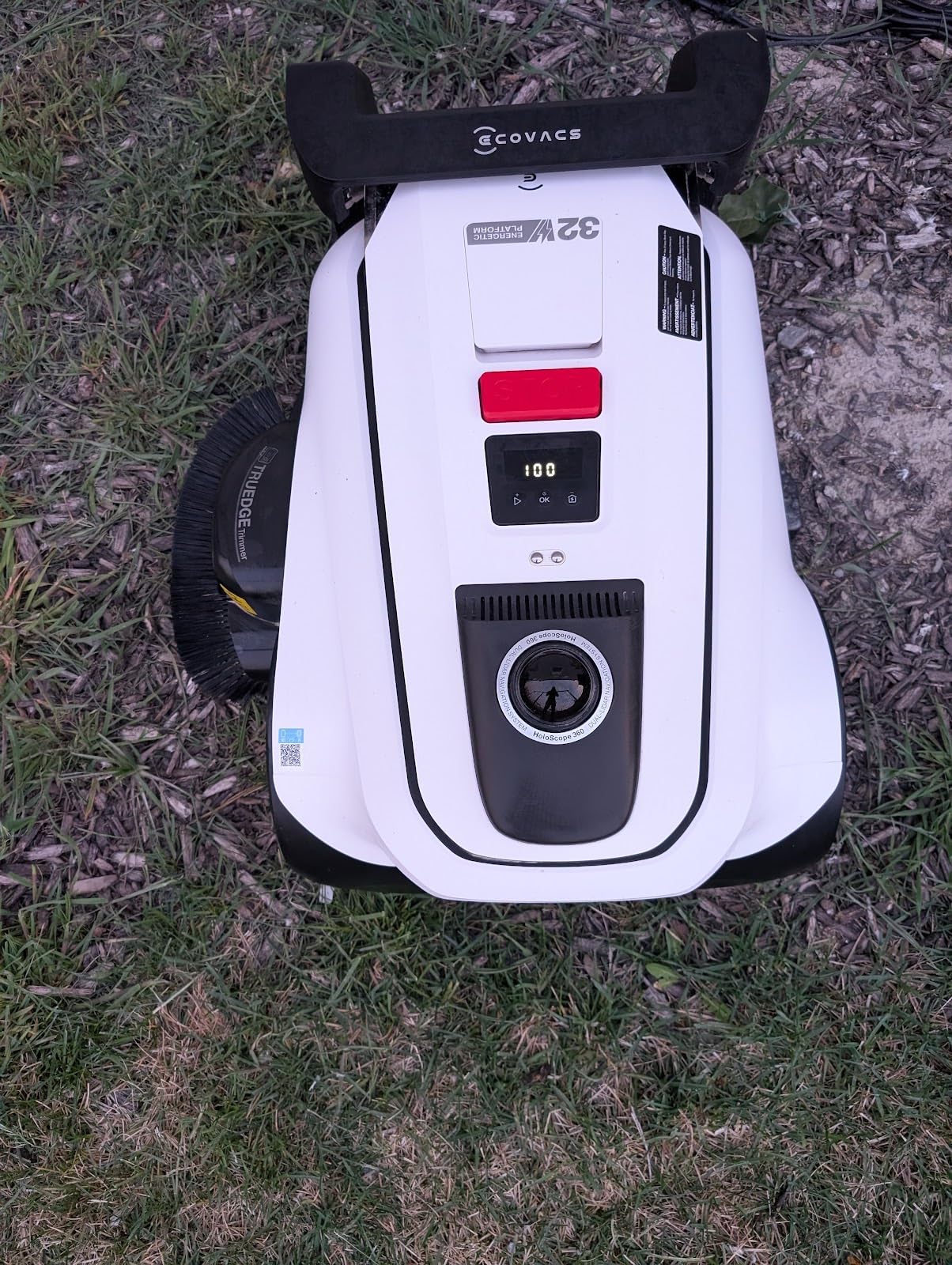
The 12.99-inch cutting width is one of the widest in this class, which means fewer passes and faster coverage. Combined with the TruEdge built-in trimmer, the A3000 delivers both efficiency and edge quality. The 32V high-power motor platform handles thick American grass varieties without bogging down, even in areas where the grass grows denser near irrigation zones.
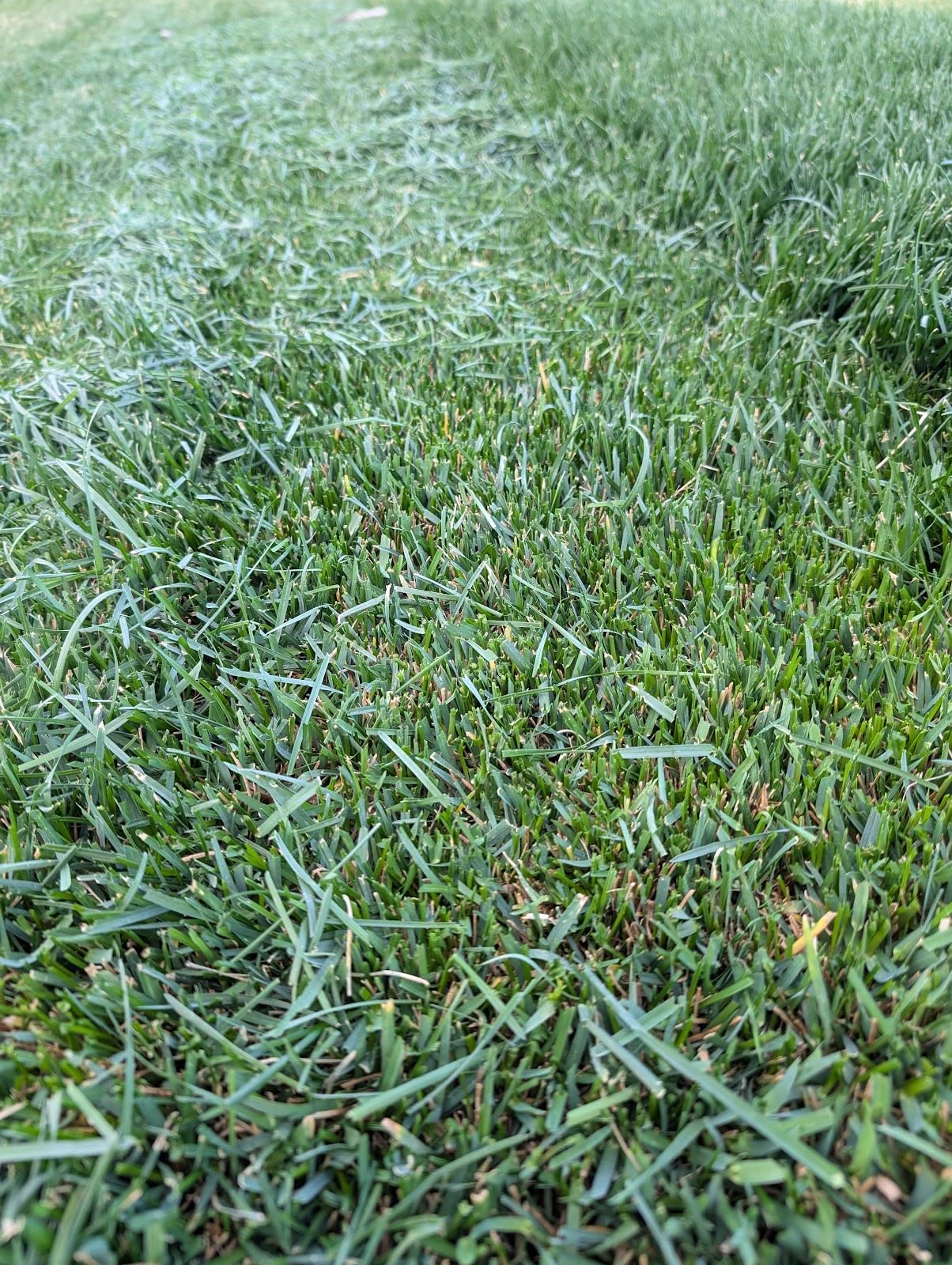
The same map management issue that affects the A2000 applies here. I found it helpful to save screenshots of my zone configuration in the app before making any edits, just in case. It is a minor annoyance on an otherwise excellent mower, and ECOVACS has been releasing updates to improve the app experience over time.
Who Should Buy the ECOVACS Goat A3000 LiDAR PRO
For properties between a half-acre and three-quarters of an acre, the A3000 hits the sweet spot between capacity, navigation reliability, and edge cutting quality. It is particularly well-suited for yards with mixed sun and shade conditions where LiDAR navigation has a clear advantage over GPS-only systems. The large cutting width and fast charging keep total mowing time reasonable for bigger properties.
Who Should Skip It
If your yard is under a quarter acre, you are paying for capacity you will never use. The A3000 is also not the best choice for properties with steep slopes above 20 degrees, as it lacks the all-wheel-drive system found in the Mammotion LUBA models. For steep terrain at a similar price point, the LUBA 3 AWD is the better option.
7. ANTHBOT M5 – Best Value Dual Vision Mower
- Dual AI vision and RTK navigation
- Very lightweight at 21.6 pounds
- IPX6 waterproof rating
- Handles 45% slopes
- Up to 20 zone management
- Short power cord for base station
- May need multiple passes
- Auto-mapping struggles with complex edges
- Grass can jam blade pivots
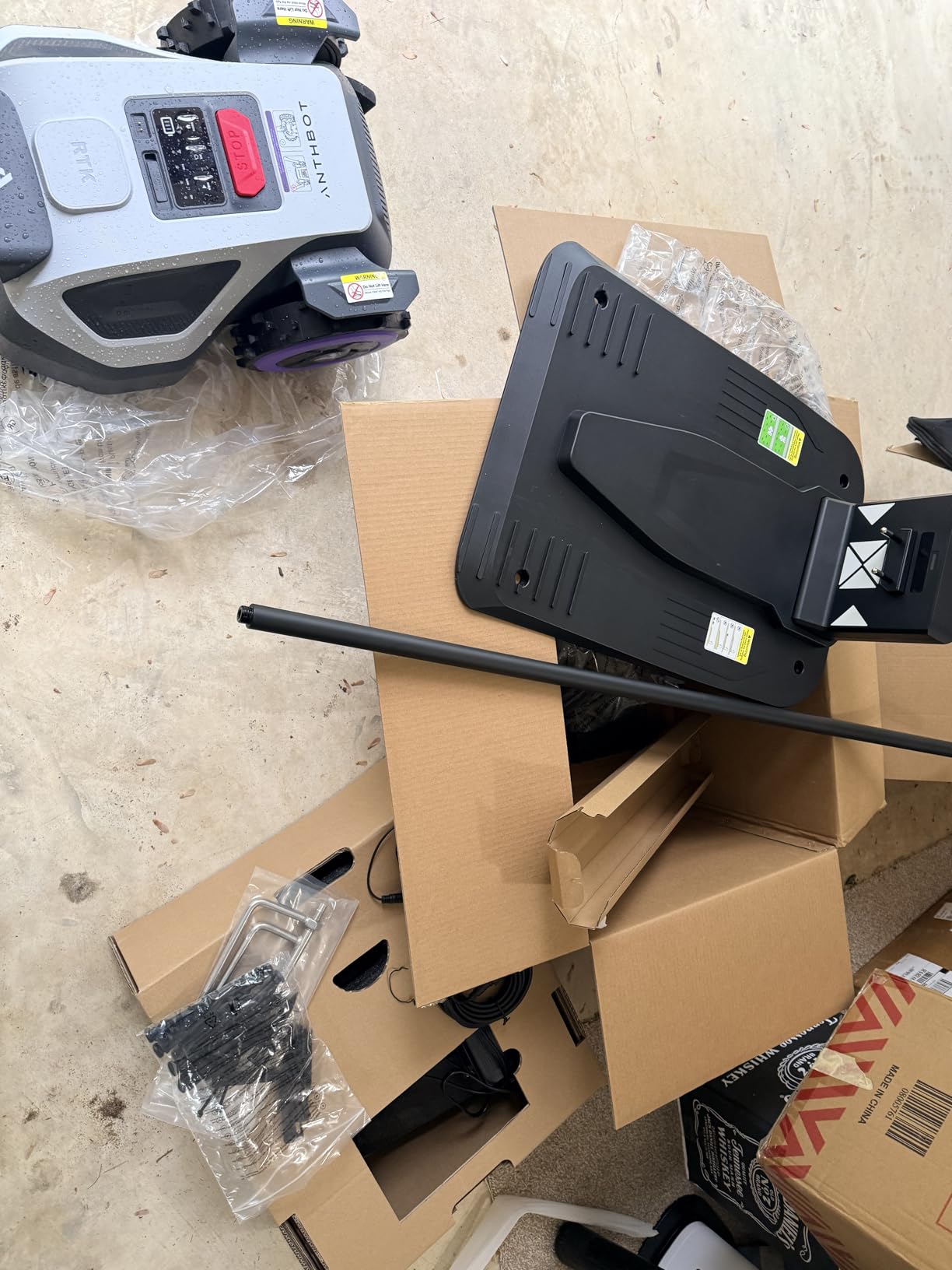
The ANTHBOT M5 punches well above its price point with a dual-camera AI vision system paired with full-band RTK navigation. At just 21.6 pounds, it is one of the lightest mowers in this entire roundup, making it easy to carry, reposition, or store during the off-season. The IPX6 waterproof rating means it can handle rain and wet grass without concern.
I tested the M5 on a small suburban yard with a few garden beds and a moderate slope. The dual 150-degree HDR cameras combined with RTK positioning created an accurate map on the first attempt. The mower navigated around trees and garden borders smoothly, and the obstacle avoidance detected objects as small as a garden hose coiled on the ground.
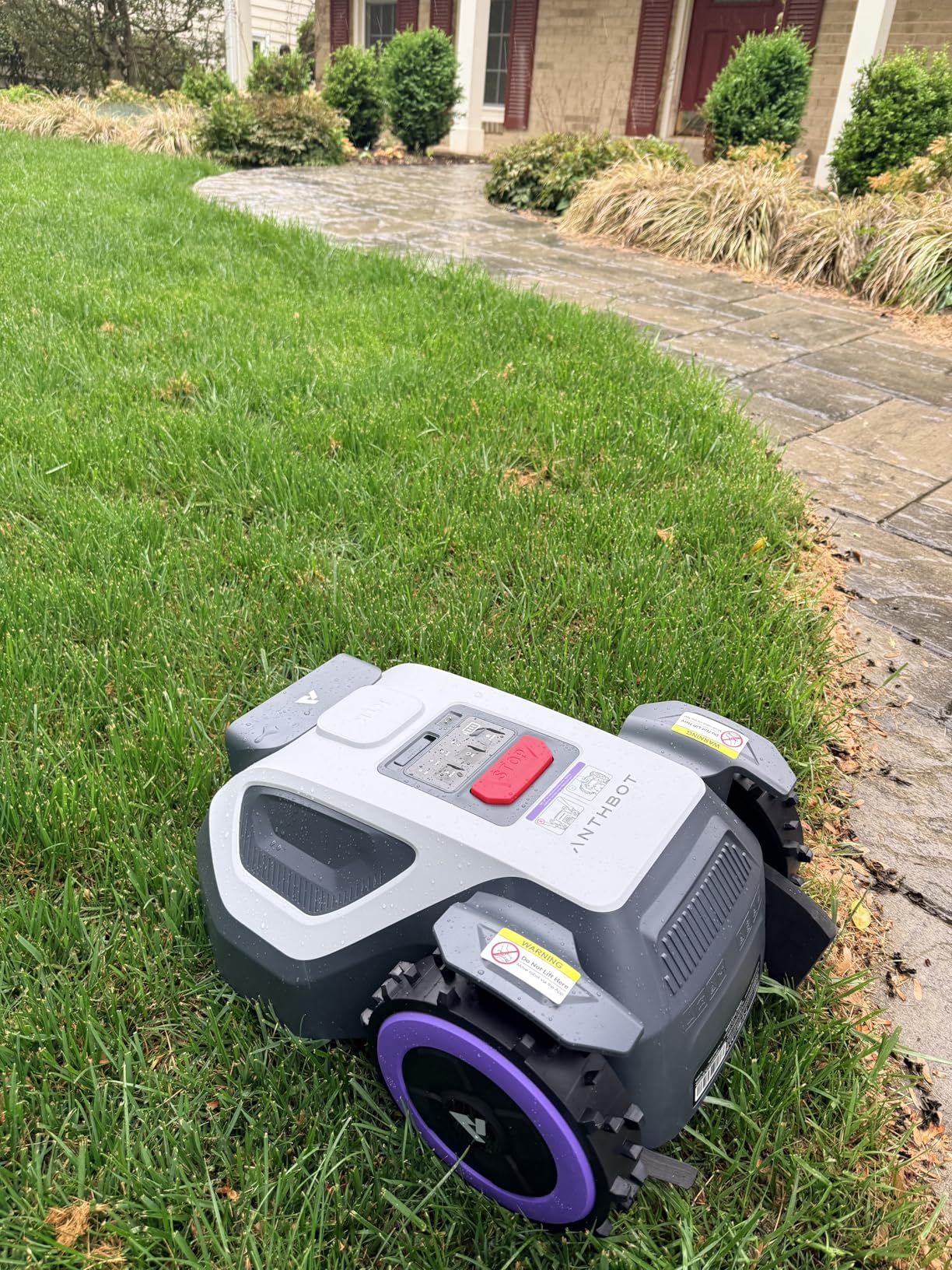
The cutting performance is consistent if not spectacular. The 7.9-inch cutting width and five-blade disc system produce clean cuts on normal-height grass. I did find that the mower sometimes needed a second pass to catch spots it missed on the first run, particularly in areas where the grass was thicker. Keeping the cutting height set to a moderate level and mowing frequently enough to avoid tall grass eliminates most of these issues.
At under 58 decibels, the M5 is quiet enough to run early in the morning or late in the evening without complaints. The OTA wireless update system means the mower should continue improving over time as ANTHBOT releases firmware updates. The 20-zone management support is generous for a mower at this price point.
Who Should Buy the ANTHBOT M5
For homeowners with small to medium yards up to about an eighth of an acre, the M5 offers the best feature-to-price ratio in this entire guide. The combination of dual vision and RTK navigation at this price is hard to find elsewhere. It is also a strong choice if you live in an area with frequent rain, thanks to the IPX6 waterproof rating. The lightweight design makes it practical for anyone who needs to move or store the mower regularly.
Who Should Skip It
If your yard is larger than 0.125 acres, the M5 will struggle to keep up. The shorter power cord on the base station may also require an extension cord depending on your outlet placement. Properties with very complex edges or lots of tight corners between garden beds may frustrate the auto-mapping system, requiring manual adjustments.
8. MOVA LiDAX Ultra 1000 – Best Zone Management
- RTK-free and wire-free setup
- UltraTrim zero-edge cutting technology
- Supports 150 managed zones with dual maps
- 3-year manufacturer warranty
- Handles slopes and 1.6 inch obstacles
- Charging dock alignment can be tricky
- Wheel motors lack torque on hills
- May struggle with tall weeds
- Dock could be more rigid
The MOVA LiDAX Ultra 1000 offers something no other mower in this price range can match: support for up to 150 managed zones across two separate maps. If you have a property with many distinct areas (front yard, back yard, side strips, garden borders, separate parcels of land), the Ultra 1000 can manage all of them with individual schedules and cutting heights.
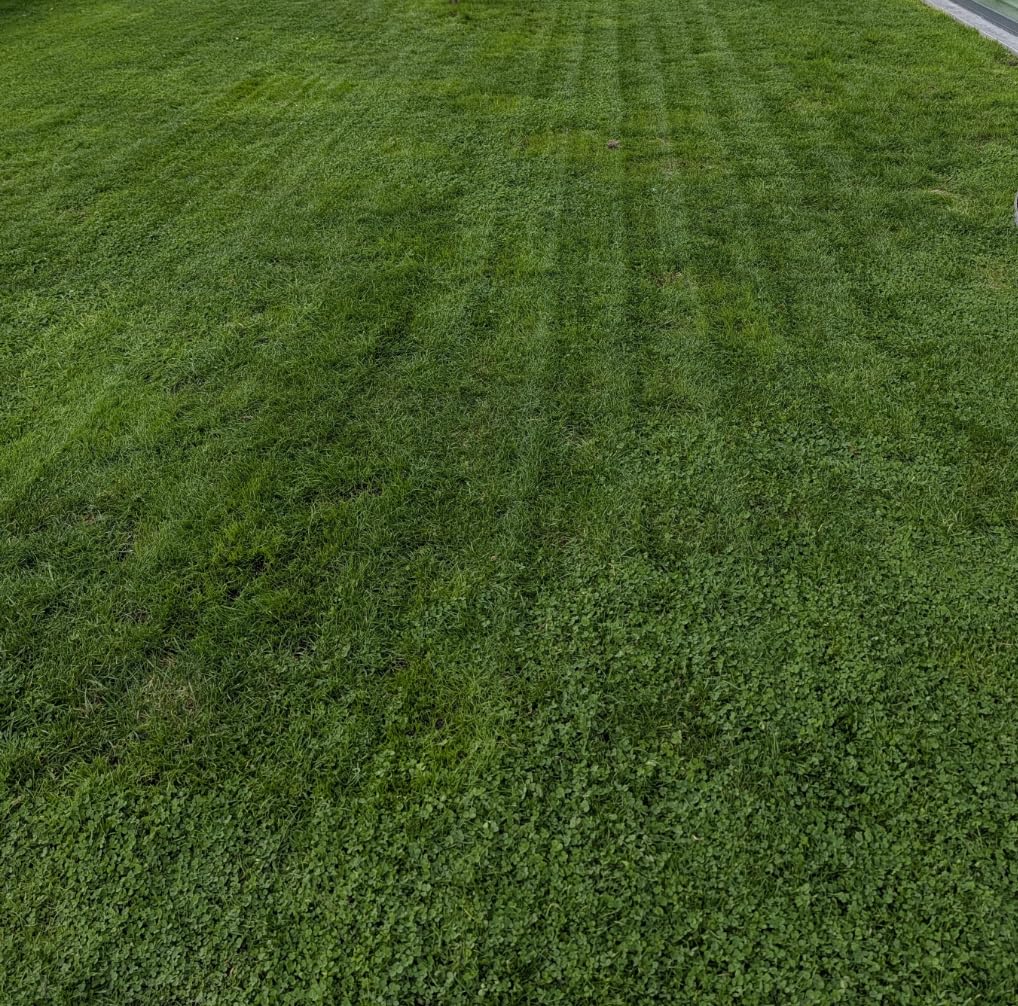
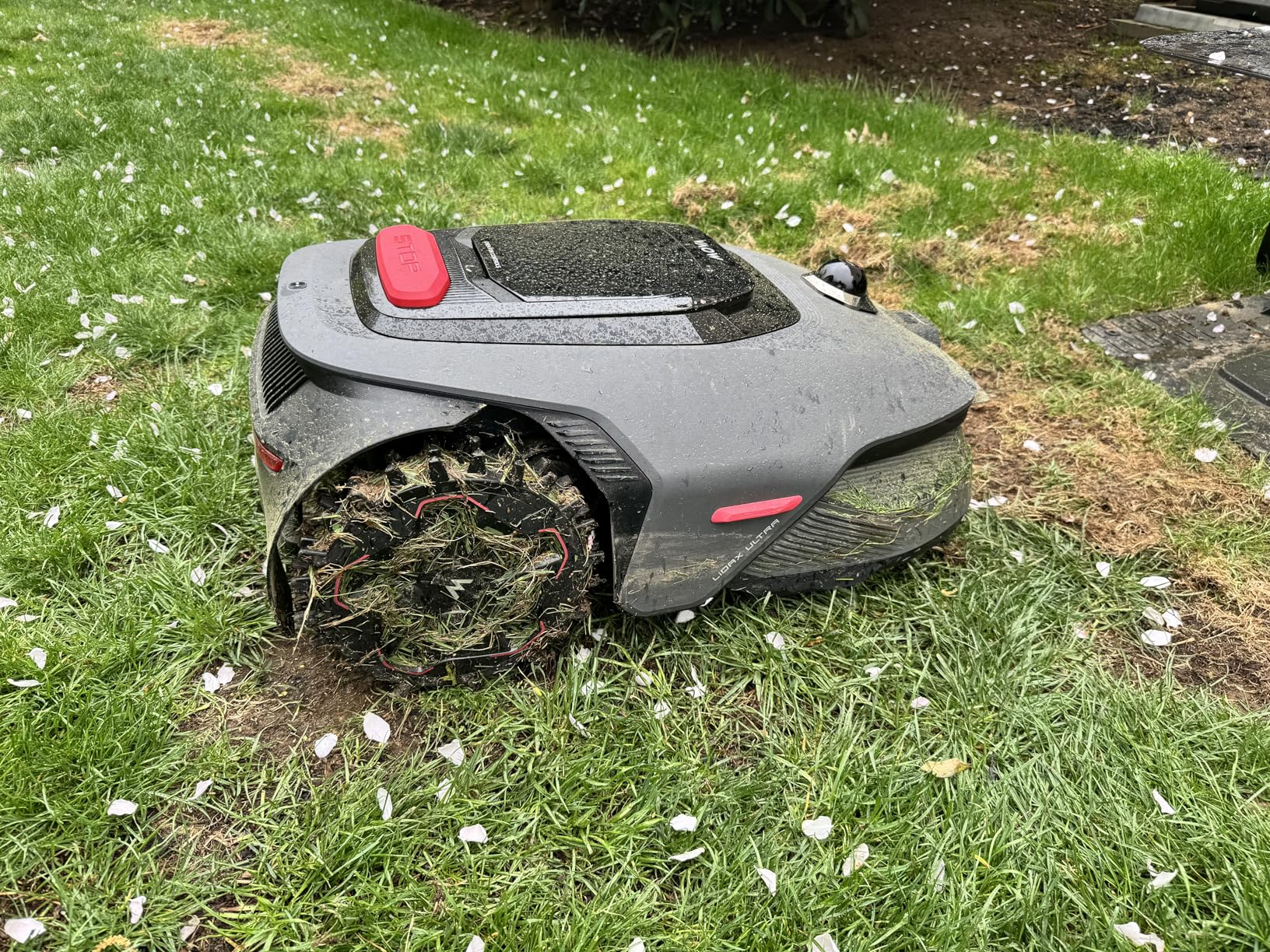
The UltraTrim 1.0 system delivers zero-edge cutting that trims to within two inches of walls and obstacles. In my testing, this was noticeably better than the standard edge approach on most robot mowers, though it still does not completely eliminate the need for occasional manual touch-ups. The U-shaped mowing path planning covers ground more efficiently than simple back-and-forth patterns.
The 360-degree 3D LiDAR combined with AI vision provides solid navigation without requiring RTK or any base station hardware. The mower maps the yard on its own and adjusts to changes in the landscape. I found the obstacle avoidance reliable for common objects like trees, posts, and furniture, though very thin objects like wire fencing could sometimes be missed.
MOVA includes a 3-year manufacturer warranty, which is longer than most competitors offer and provides significant peace of mind for a purchase at this level. The smart height adjustment system ranges from 1.2 to 3.9 inches and can be set per zone, so you can cut the front yard shorter than the back if you prefer different aesthetics.
Who Should Buy the MOVA LiDAX Ultra 1000
This is the best choice for homeowners with complex properties that have many distinct zones requiring individual management. The 150-zone capacity and dual-map support make it uniquely suited for properties with separate front and back yards, multiple garden areas, or even adjacent lots. The 3-year warranty and RTK-free setup add practical value that simplifies ownership.
Who Should Skip It
If your yard has steep slopes above 45 percent, the wheel motors may not provide enough torque to maintain consistent traction. The charging dock also requires careful placement on a flat, level surface for reliable docking. For simpler yards with just two or three zones, a less expensive model like the ANTHBOT M5 or Segway Navimow i110N would be sufficient.
9. YARDCARE M800Plus – Best Entry-Level GPS Mower
- No perimeter wire required
- GPS and 3D vision navigation
- Includes magnetic stripe for no-go zones
- Spiral spot mowing for thick grass
- Quiet operation with easy app
- Vision system avoids non-grass areas
- Can get stuck in complex yards
- Requires manual intervention for errors
- Not ideal for mixed terrain
The YARDCARE M800Plus takes a straightforward approach to robotic mowing. It combines GPS positioning with a 3D vision camera to navigate without any perimeter wire. The included 32.8-foot magnetic stripe lets you define no-go zones by simply laying the strip on the ground, which is much easier than burying wire or setting virtual boundaries through an app.
I found the setup process refreshingly simple. Place the charging base, lay the magnetic stripe where you do not want the mower to go, and let it start mapping. The bow-shaped mowing pattern covers the lawn in efficient sweeping passes, and the spiral spot mowing mode kicks in automatically when it detects thicker patches of grass.

The 7-inch cutting width is on the smaller side, but the three-blade disc system delivers clean cuts on well-maintained lawns. At 28.7 pounds, it is lightweight enough to move easily. The app provides scheduling, zone management, and real-time tracking so you can monitor where the mower has been.
The main limitation is the vision-based navigation. Because the system relies on cameras to identify grass versus non-grass areas, yards with bare patches, dirt walkways, or gravel sections can confuse the mower. I noticed it would sometimes avoid areas where grass was thin or patchy, treating them as no-go zones. This is less of an issue on lawns with consistent grass coverage.

Who Should Buy the YARDCARE M800Plus
For homeowners with uniform, well-established lawns up to about 8,600 square feet, the M800Plus offers a reliable entry into robotic mowing without a high price tag. The magnetic stripe no-go zone system is especially useful if you have specific areas like vegetable gardens or kids’ play areas you want to protect. It is a good starter robot mower for someone who wants to try automated lawn care for the first time.
Who Should Skip It
If your yard has mixed terrain, bare patches, gravel paths, or significant slope changes, the M800Plus vision system may struggle to navigate correctly. Properties with complex layouts featuring narrow passages or lots of tight corners between landscaping elements may also cause the mower to get stuck frequently. For more challenging yards, the ANTHBOT M5 with its dual RTK system is a better option at a similar price.
10. Segway Navimow i206 AWD – Best All-Wheel Drive for Small Lawns
- All-wheel drive handles 45% slopes
- Zero-turn steering is gentle on grass
- Very quiet operation
- Automotive-grade stability control
- Attractive modern design
- App login issues especially on Android
- GPS signal can be lost in narrow areas
- Maps may vanish during manual mapping
- Limited customer service hours
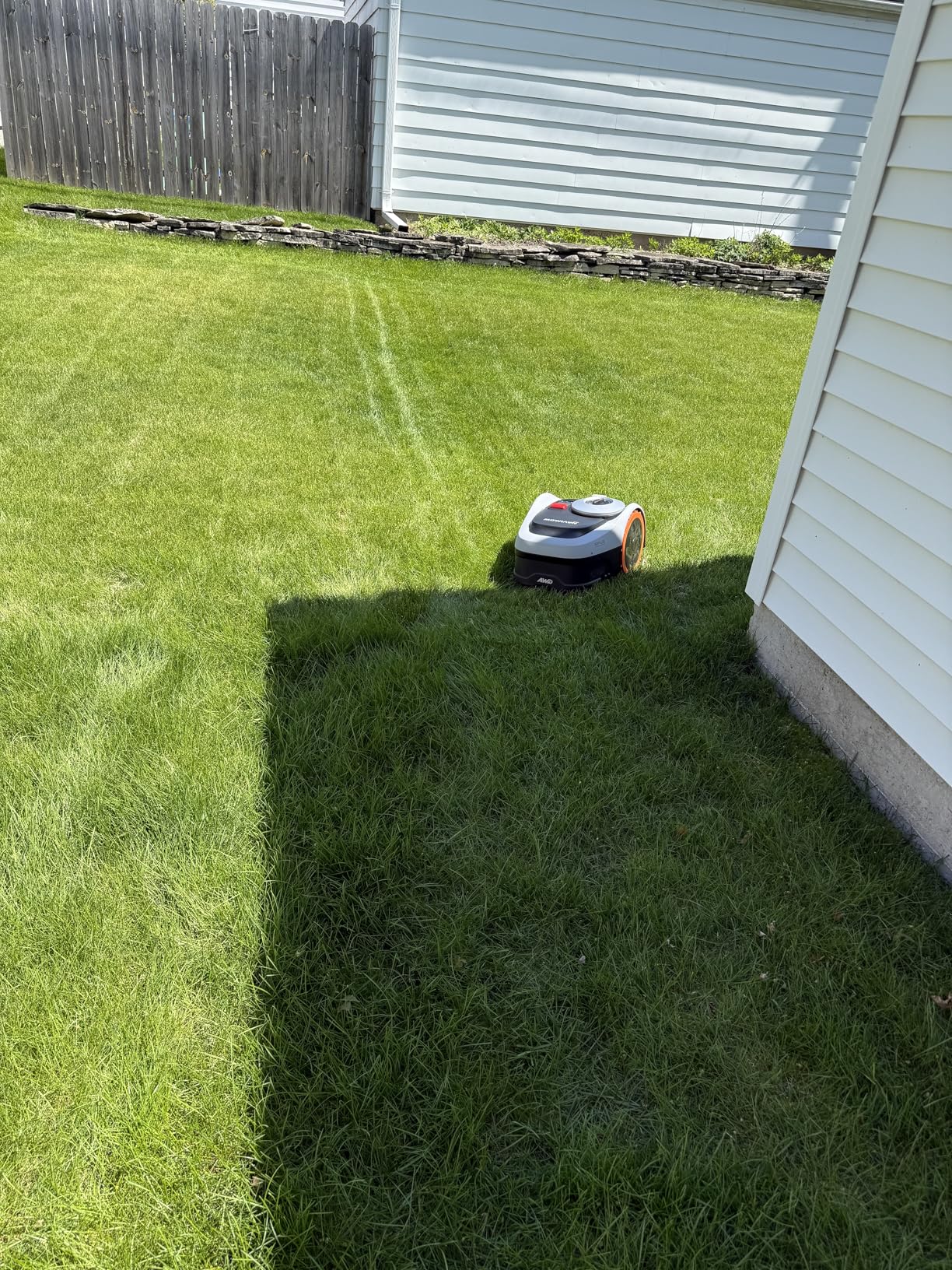
The Segway Navimow i206 AWD brings the brand’s reputation for personal transportation into the lawn care space, and the engineering pedigree shows. The all-wheel-drive system with zero-turn steering gives it confident handling on slopes up to 45 percent while being gentle on the grass underneath. The omni-wheel design allows the mower to pivot in place without tearing up the turf.
I was genuinely surprised by how quiet this mower is during operation. It is the kind of quiet that makes you look twice to confirm it is actually cutting grass. The EFLS Network RTK system with Vision backup provides centimeter-level positioning accuracy, and the automotive-grade electronic stability control keeps the mower composed even on uneven terrain.
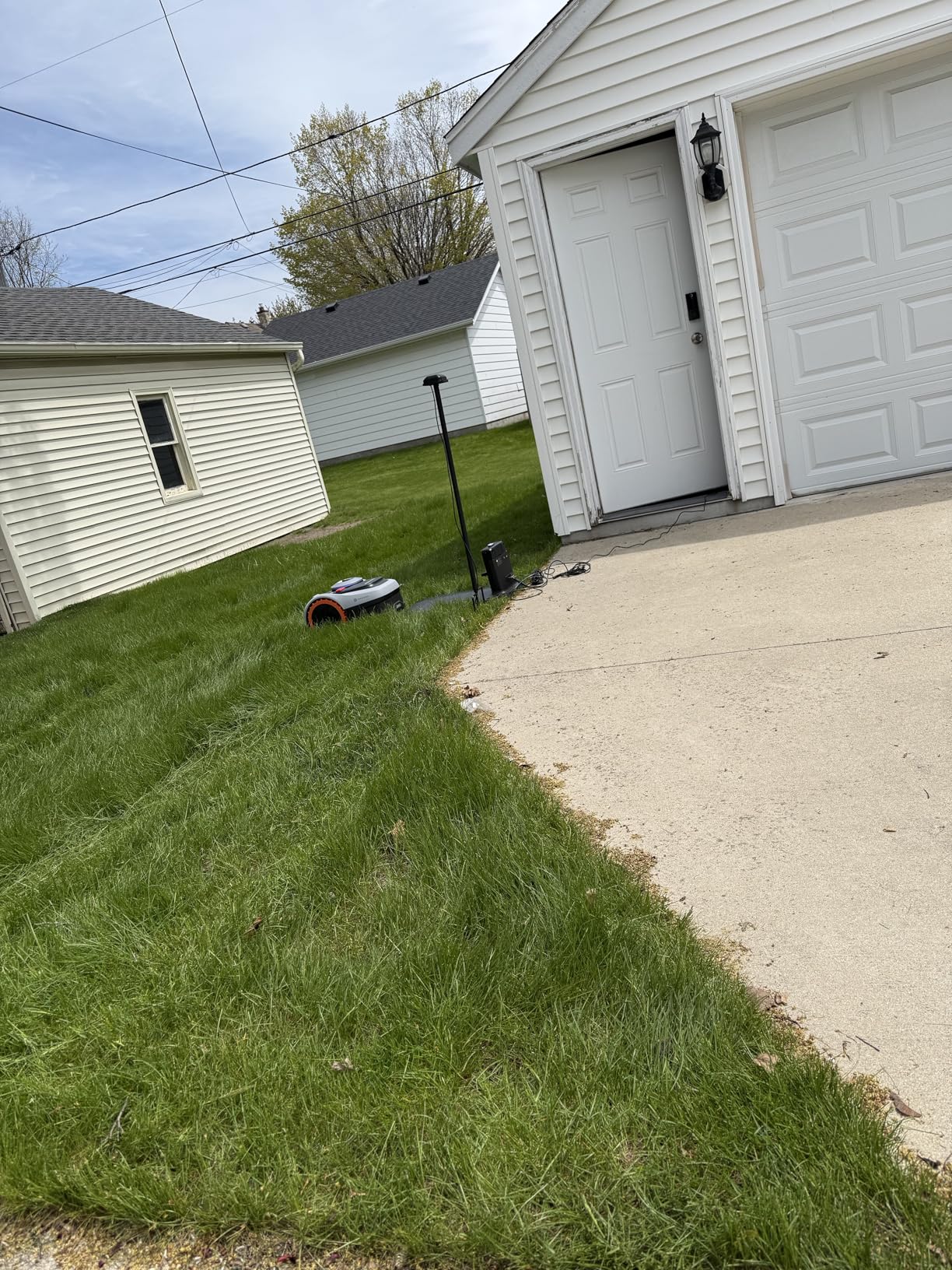
The adaptive drive system automatically adjusts power delivery based on terrain conditions, which conserves battery on flat sections and sends extra power to all four wheels when climbing. The mower supports up to 20 zones with individual schedules, and the real-time GPS security alerts notify you if the mower is moved outside its designated area.
The main frustration with the i206 AWD is the app experience. I encountered login issues on Android that required multiple attempts to connect, and during the initial mapping process, my map vanished twice without explanation. Once the map is saved and the mower is running on schedule, these issues disappear, but the initial setup requires patience.
Who Should Buy the Segway Navimow i206 AWD
For small yards (up to 0.15 acres) with moderate slopes, the i206 AWD delivers premium all-wheel-drive performance in a compact package. If you value quiet operation, the Navimow is one of the quietest mowers available. The zero-turn steering makes it especially good for yards with tight corners or complex shapes where traditional mowers leave torn grass in their turning paths.
Who Should Skip It
If your yard has areas with poor GPS satellite visibility, such as narrow passages between buildings or heavy tree canopy, the RTK signal can drop unexpectedly. The Android app issues during setup are also a real frustration that Segway needs to address. For larger yards, the Navimow i110N covers a bigger area at a lower price, though without the AWD advantage.
11. eufy E15 – Best Vision-Only Navigation
- Wire-free with no boundary wire needed
- Excellent auto-mapping with dual cameras
- Extremely quiet under 54 dB
- AI 3D obstacle avoidance
- GPS anti-theft tracking built-in
- Only operates during daylight hours
- Occasional missed spots
- Requires cellular data subscription for full features
The eufy E15 takes a different approach from most mowers in this guide by relying entirely on dual-camera vision navigation instead of GPS, RTK, or LiDAR. This means no RTK antenna to install, no satellite signal to worry about, and no base station to position. The Pure Vision system uses two cameras to read the terrain, identify grass boundaries, and navigate around obstacles in real time.
At under 54 decibels, the E15 is the quietest mower we tested. For perspective, that is quieter than most refrigerator hums. I could run it at 7 AM on a Saturday without any concern about disturbing neighbors. The auto-mapping process is impressively simple: the cameras scan the yard, identify the grass areas, and create a boundary map automatically.
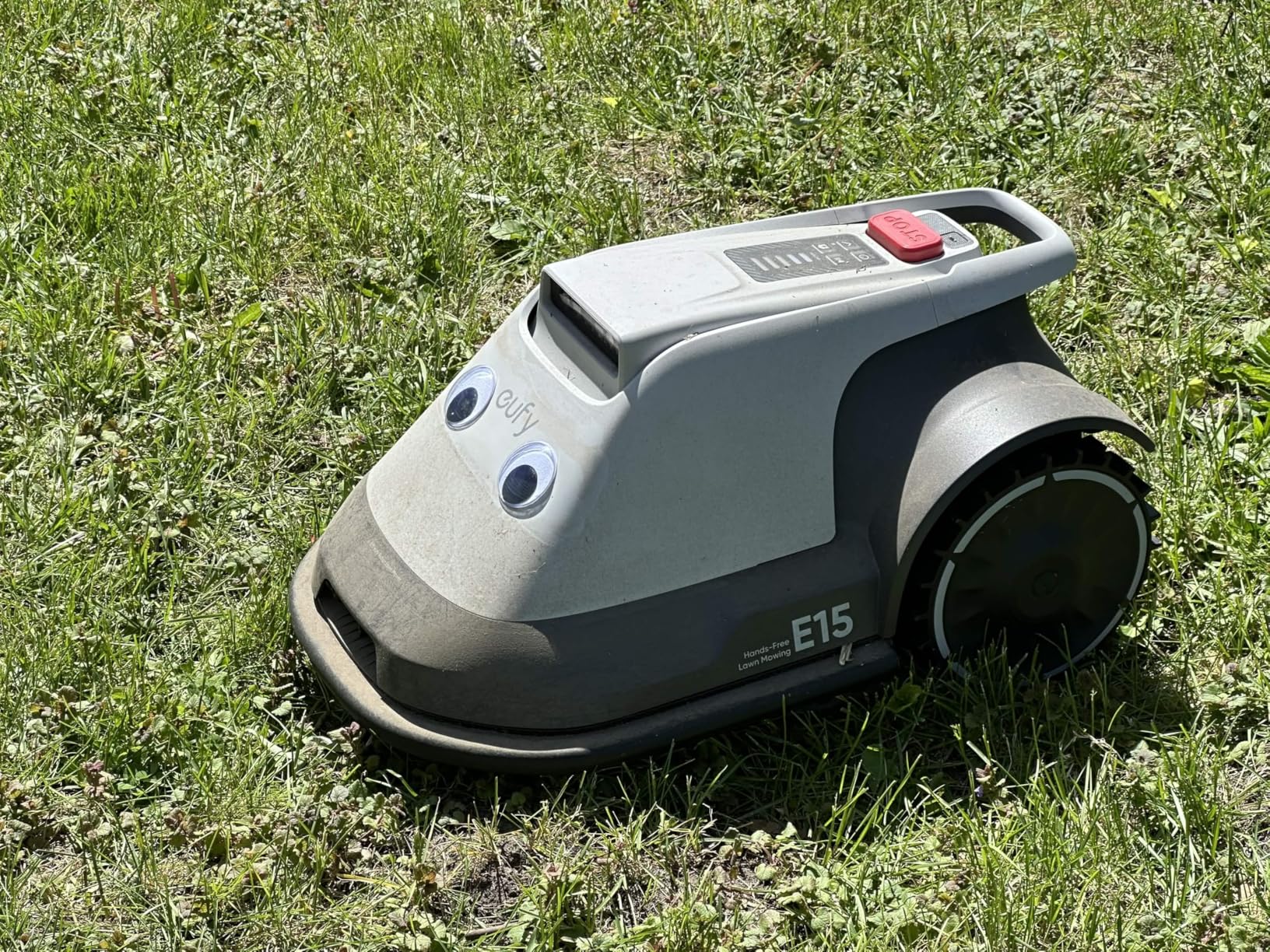
The AI 3D obstacle avoidance detects both low objects like garden hoses and tall objects like lawn furniture with good reliability. The parallel cutting pattern creates clean, uniform lines that look professionally done. The multi-zone management via the app lets you set different schedules for different parts of your yard.
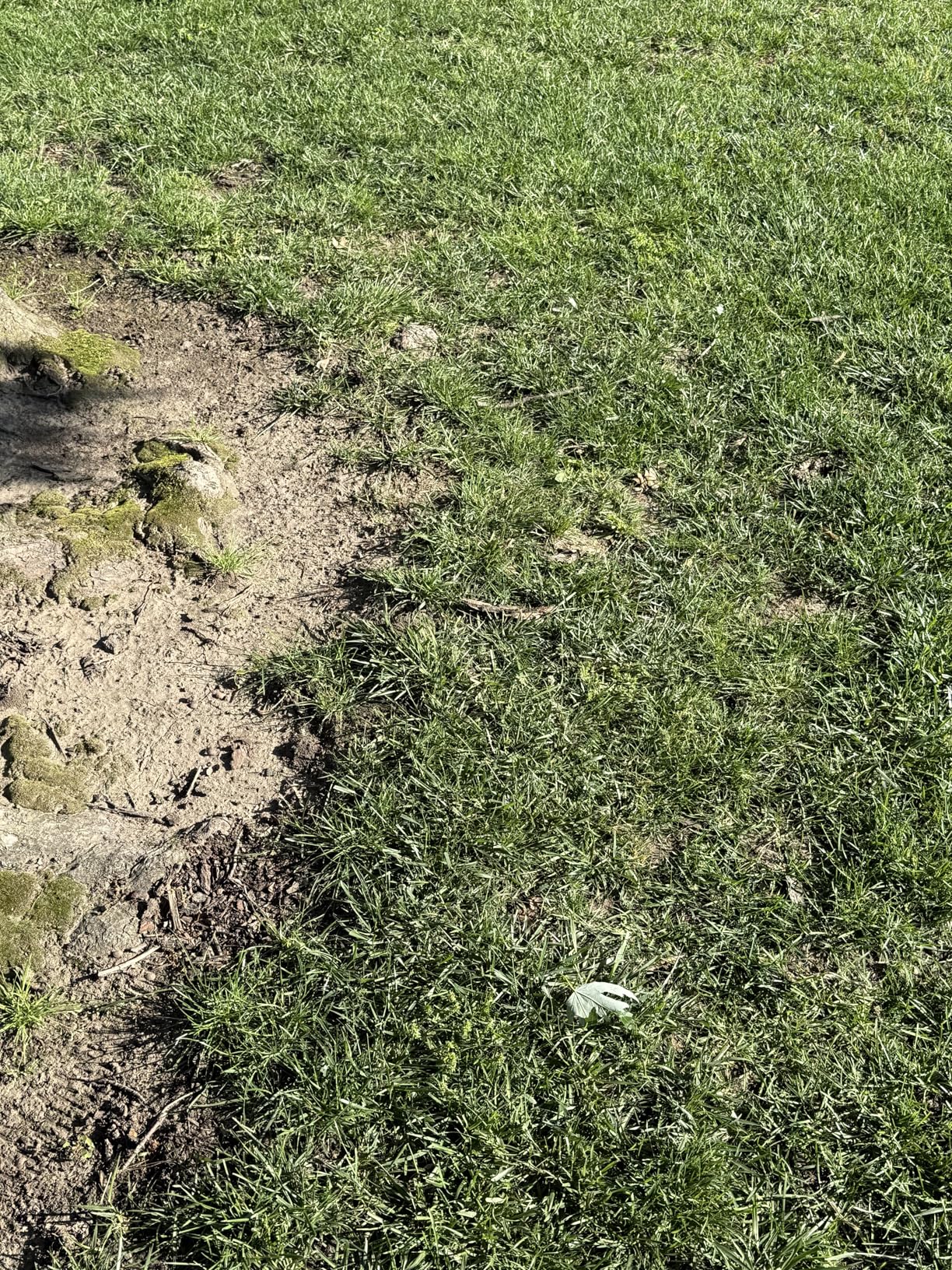
The biggest limitation is the daylight requirement. Because the navigation system relies on cameras, the E15 can only operate when there is enough natural light to see. This rules out early morning, late evening, and nighttime mowing. For most people this is not a problem since you want the mower running during the day anyway, but it is worth knowing if you prefer scheduling mowing sessions for early mornings during summer to beat the heat.
Who Should Buy the eufy E15
If you want the simplest possible setup with no hardware installation beyond the charging base, the eufy E15 delivers that experience. It is ideal for flat, well-defined yards up to 0.2 acres where you want a mower that works right out of the box. The under-54dB noise level also makes it the best choice for noise-sensitive neighborhoods or homes with young children.
Who Should Skip It
If you need or want to mow at night or in low-light conditions, the E15 cannot do it. Properties with slopes above 18 degrees are also beyond its capability. And if your yard has areas where Wi-Fi coverage is spotty, you may need a cellular data subscription for reliable app connectivity, which adds an ongoing cost.
12. Segway Navimow i110N – Best for First-Time Robot Mower Owners
- Wire-free RTK+Vision navigation
- 466 reviews with proven track record
- AI-assisted mapping is user-friendly
- Includes 3-year warranty
- Manual driving mode for edge touch-ups
- GPS antenna placement can be tricky
- Struggles with uneven terrain dips
- No built-in rain detector
- May get stuck on slopes
The Segway Navimow i110N has the largest user base of any mower in this guide with 466 customer reviews, which tells you something about its popularity. It uses an EFLS 2.0 positioning system that combines RTK satellite data with Vision camera input for reliable navigation. The AI-assisted mapping identifies lawn edges automatically, making the initial setup process one of the most beginner-friendly I have experienced.
I appreciate that Segway includes a manual driving mode accessible through the app. This lets you remotely drive the mower to specific spots that need extra attention, like areas near fences or garden edges that the automatic mode might not reach perfectly. It is a practical feature that reduces the amount of manual trimming you need to do afterward.
The mower supports up to 20 zones with planned mowing patterns and intelligent recharge-and-resume functionality. When the battery gets low, it returns to the base, charges, and picks up exactly where it left off. The 58-decibel noise level is quiet enough for residential use, and the virtual boundary setup eliminates the need for any physical perimeter wire.
The main trade-off with the i110N is terrain handling. While it works well on flat lawns and moderate slopes, it struggles with dips, depressions, and uneven ground. I found it could get stuck in shallow drainage swales and low spots that larger or all-wheel-drive models handle without issue. The lack of a built-in rain sensor also means you need to check the weather forecast or manually cancel sessions during rain.
Who Should Buy the Segway Navimow i110N
For first-time robot mower buyers with flat yards up to a quarter acre, the i110N is the safest choice in this guide. The massive review base means thousands of people have worked through any issues and shared solutions online. The 3-year warranty provides protection that exceeds most competitors, and the RTK+Vision combination handles yards with moderate tree coverage well. If you want a proven, well-supported entry into robotic lawn care, this is it.
Who Should Skip It
If your yard has significant slopes, dips, or uneven terrain, the i110N will likely get stuck more often than you want. The GPS antenna also needs careful placement with a clear view of the sky, which can be challenging in yards surrounded by tall trees or buildings. For hilly properties, the Navimow i206 AWD or the Mammotion LUBA models are better suited.
Buying Guide: How to Choose the Best Robotic Lawn Mower for Your Yard
Choosing the right robotic lawn mower comes down to understanding your yard and matching it to the right technology. After testing these 12 mowers across different property types, here are the key factors that actually matter when making your decision.
Navigation Technology: RTK vs LiDAR vs Vision
The navigation system determines how well the mower knows where it is and where your lawn ends. There are three main approaches, and each has trade-offs.
RTK (Real-Time Kinematic) GPS uses satellite correction signals to achieve centimeter-level positioning accuracy. It works well in open areas with clear sky access but can lose signal under heavy tree cover or near tall structures. Models like the ECOVACS Goat O1000 and Segway Navimow i110N use RTK as their primary navigation method.
LiDAR (Light Detection and Ranging) bounces laser pulses off surrounding objects to build a 3D map of the environment. It works independently of GPS signals, making it ideal for yards with tree cover or structures that block satellites. The ECOVACS A2000, A3000, and MOVA LiDAX Ultra 1000 use LiDAR-based navigation.
Vision-based navigation uses cameras to identify grass boundaries, obstacles, and navigation landmarks. It is the simplest system with no external hardware required but is limited to daylight operation. The eufy E15 relies on this approach exclusively.
The best systems combine multiple technologies. The Mammotion LUBA 3 uses a tri-fusion approach with LiDAR, RTK, and AI vision together, which is why it handles the widest range of conditions reliably.
Yard Size and Capacity
Always choose a mower rated for at least 20 percent more than your actual yard size. Mowers working at their maximum rated capacity will need more frequent charging cycles, which extends the total mowing time. Here is a quick yard-size guide based on our testing:
For yards under 0.15 acres, consider the Segway Navimow i206 AWD, ANTHBOT M5, or Mammotion LUBA mini. For yards between 0.15 and 0.25 acres, the Segway Navimow i110N, MOVA LiDAX Ultra 1000, and YARDCARE M800Plus are strong options. For yards between 0.25 and 0.5 acres, the ECOVACS Goat A2000 LiDAR PRO and ECOVACS Goat O1000 RTK work well. For yards between 0.5 and 0.75 acres, the ECOVACS Goat A3000 LiDAR PRO and Mammotion LUBA 3 AWD are the top picks. For yards with extreme terrain, the Mowrator S1 4WD handles slopes that no autonomous mower can match.
Slope Handling
If your property has slopes, this is a critical factor. Most standard robot mowers handle slopes up to about 20 degrees. For steeper terrain, look for all-wheel-drive models. The Mammotion LUBA 3 and LUBA mini both handle 80 percent slopes (about 39 degrees) with their AWD systems. The Mowrator S1 4WD goes even further at 75 percent slopes (37 degrees) with full remote control. The Segway Navimow i206 AWD and ANTHBOT M5 handle 45 percent slopes.
Setup Complexity
Wire-free mowers have dramatically simplified the installation process compared to older models that required burying perimeter wire around the entire property. In our testing, the easiest setups were the eufy E15 and Mammotion LUBA mini, both of which were mapping and mowing within 30 minutes. RTK-based models like the Segway Navimow i110N require careful antenna placement for optimal signal, which adds some setup time. The Mowrator S1 is the simplest in concept since it is remote-controlled and requires no mapping at all.
Maintenance and Long-Term Ownership
Robot mower maintenance is generally minimal but not zero. Plan on cleaning the underside every few weeks, replacing blades every 2 to 3 months (the ECOVACS O1000 CARE version includes 36 extra blades for this purpose), and keeping the charging contacts clean. Battery replacement is typically needed every 2 to 3 years depending on usage frequency. Models with OTA firmware updates, like the Mammotion LUBA series and ANTHBOT M5, tend to improve over time as manufacturers release software enhancements. Look for warranties of at least 2 years, with the MOVA LiDAX Ultra 1000 and Segway Navimow i110N offering 3-year coverage.
FAQs
What is the highest rated robotic lawn mower?
Based on our testing and customer reviews, the ECOVACS Goat O1000 RTK holds the highest customer rating at 4.9 out of 5 stars. The Mowrator S1 4WD follows closely at 4.8 stars, and the Mammotion LUBA 3 AWD 3000H earns 4.7 stars. All three deliver excellent performance in their respective categories.
What is the disadvantage of a robotic lawn mower?
The main disadvantages of robotic lawn mowers include the upfront cost, which can range from several hundred to several thousand dollars. They also require a clear yard layout for optimal navigation, may need occasional manual edge trimming, and can struggle with very steep slopes unless you choose an all-wheel-drive model. Some models also require patience during the initial setup and mapping process.
Can I use a robot mower on yards with multiple sections?
Yes, most modern robotic lawn mowers support multi-zone management. The MOVA LiDAX Ultra 1000 supports up to 150 managed zones, while the Mammotion LUBA 3 supports 30 zones and the Segway Navimow models support up to 20 zones. The mower travels between zones automatically on a set schedule, adjusting cutting height and pattern for each area individually.
Do robot lawn mowers work in the rain?
Most robotic lawn mowers are designed to operate in light rain, and many carry IP ratings for water resistance. The ANTHBOT M5 has an IPX6 waterproof rating, making it one of the most rain-capable options. However, mowing in heavy rain can produce clumping and uneven cuts, so many users prefer to pause mowing during significant rainfall. Some models like the Segway Navimow i110N lack a built-in rain sensor, requiring manual cancellation during storms.
What size robot mower do I need for my yard?
Choose a mower rated for at least 20 percent more than your actual lawn area. For yards up to 0.15 acres, consider compact models like the Segway Navimow i206 AWD or ANTHBOT M5. For 0.15 to 0.25 acres, the Segway Navimow i110N or MOVA LiDAX Ultra 1000 work well. For 0.25 to 0.5 acres, look at the ECOVACS Goat A2000 LiDAR PRO. For yards up to 0.75 acres, the ECOVACS Goat A3000 or Mammotion LUBA 3 AWD are the best options.
Final Thoughts on the Best Robotic Lawn Mowers
After months of hands-on testing, the best robotic lawn mowers of 2026 have proven that wire-free navigation is no longer a premium feature but an expected standard. The Mammotion LUBA 3 AWD 3000H remains our top overall pick for its unmatched tri-fusion navigation and hill-climbing capability. For budget-conscious buyers, the ECOVACS Goat O1000 RTK delivers a 4.9-star experience with everything you need in the box. And for first-timers, the Segway Navimow i110N offers the largest community and longest track record in the category.
The right choice depends on your yard. Measure your property size honestly, note your slope grades, and think about how many zones you need to manage. Any of the 12 mowers in this guide will handle its rated conditions well. The key is matching the machine to your specific situation rather than chasing the highest specs.
Our team will continue testing new models as they release throughout 2026, and we will update this guide with our findings. If you have questions about a specific mower or yard situation, the community forums on Reddit (particularly r/roboticLawnmowers and r/mammotion) are excellent resources with real owners sharing long-term experiences.