
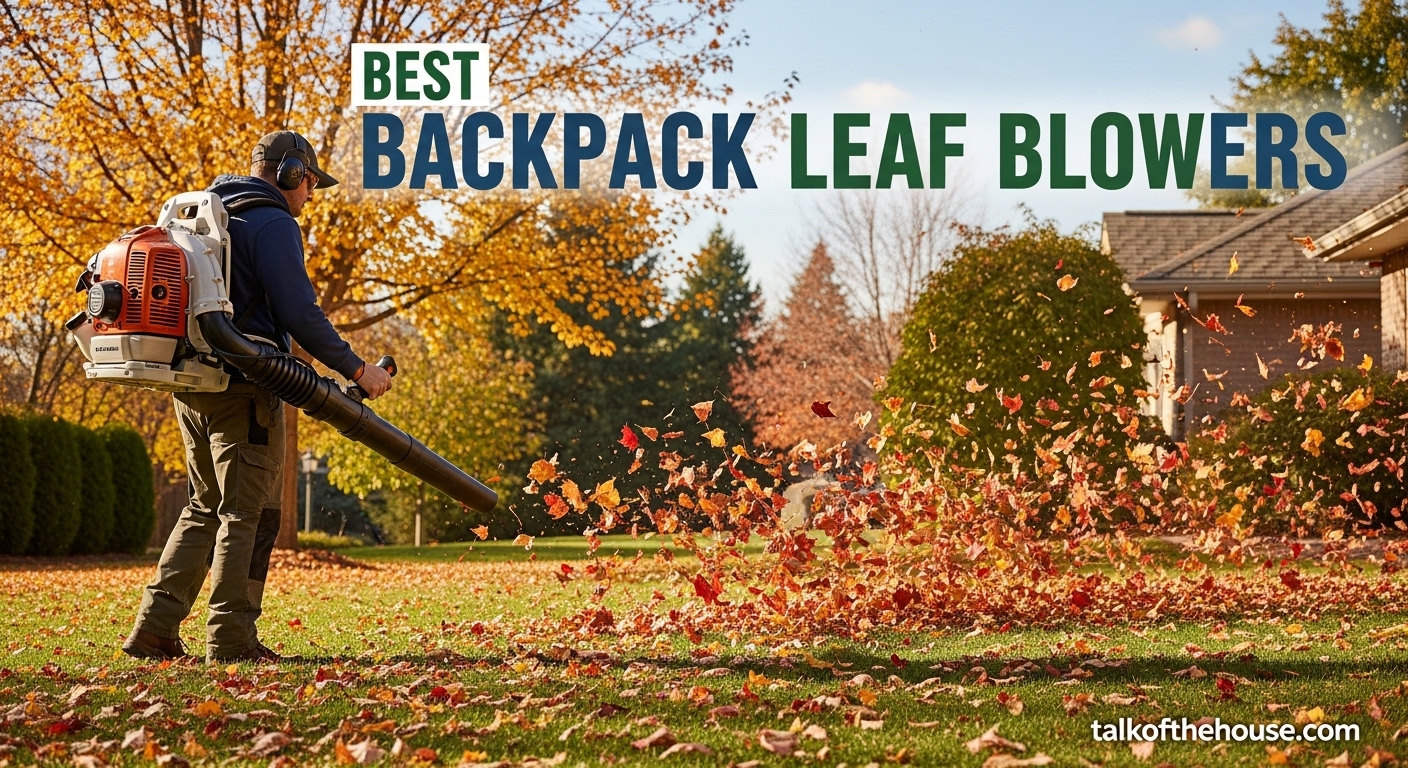
If you have ever spent an entire Saturday raking leaves only to watch the wind undo your work overnight, you already know why backpack leaf blowers exist. I have been testing outdoor power equipment for years, and I can tell you that a good backpack blower turns a full-day yard cleanup into a two-hour task. When you are dealing with a half-acre property or bigger, handheld models simply do not have the air volume or the endurance to get the job done efficiently.
Finding the best backpack leaf blowers means sorting through a crowded field of gas and battery-powered options, each claiming to be the most powerful or the lightest on the market. Our team spent weeks comparing six top-rated models, running them through real-world conditions including dry leaves, wet clumps, gravel debris, and pine needles. We looked at air power in CFM and MPH, weight, comfort, runtime, and overall build quality.
This guide covers everything from a commercial-grade powerhouse that moves over 1,100 CFM of air to a whisper-quiet battery model that your neighbors will actually appreciate. Whether you maintain a sprawling wooded lot or a suburban quarter-acre with a few mature oaks, one of these six blowers will fit your needs and budget. Let us get into the reviews.
Table of Contents
Top 3 Picks for Best Backpack Leaf Blowers

Best Backpack Leaf Blowers in 2026
| Product | Specifications | Action |
|---|---|---|
| Echo PB-9010T |
|
Check Latest Price |
| Schroder SR-6400L |
|
Check Latest Price |
 Husqvarna 150BT Husqvarna 150BT |
|
Check Latest Price |
 Greenworks 80V Backpack Greenworks 80V Backpack |
|
Check Latest Price |
 VEVOR 63CC Backpack VEVOR 63CC Backpack |
|
Check Latest Price |
 EGO Power+ LB6003 EGO Power+ LB6003 |
|
Check Latest Price |
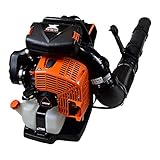
1. Echo PB-9010T – The Powerhouse Gas Backpack Blower
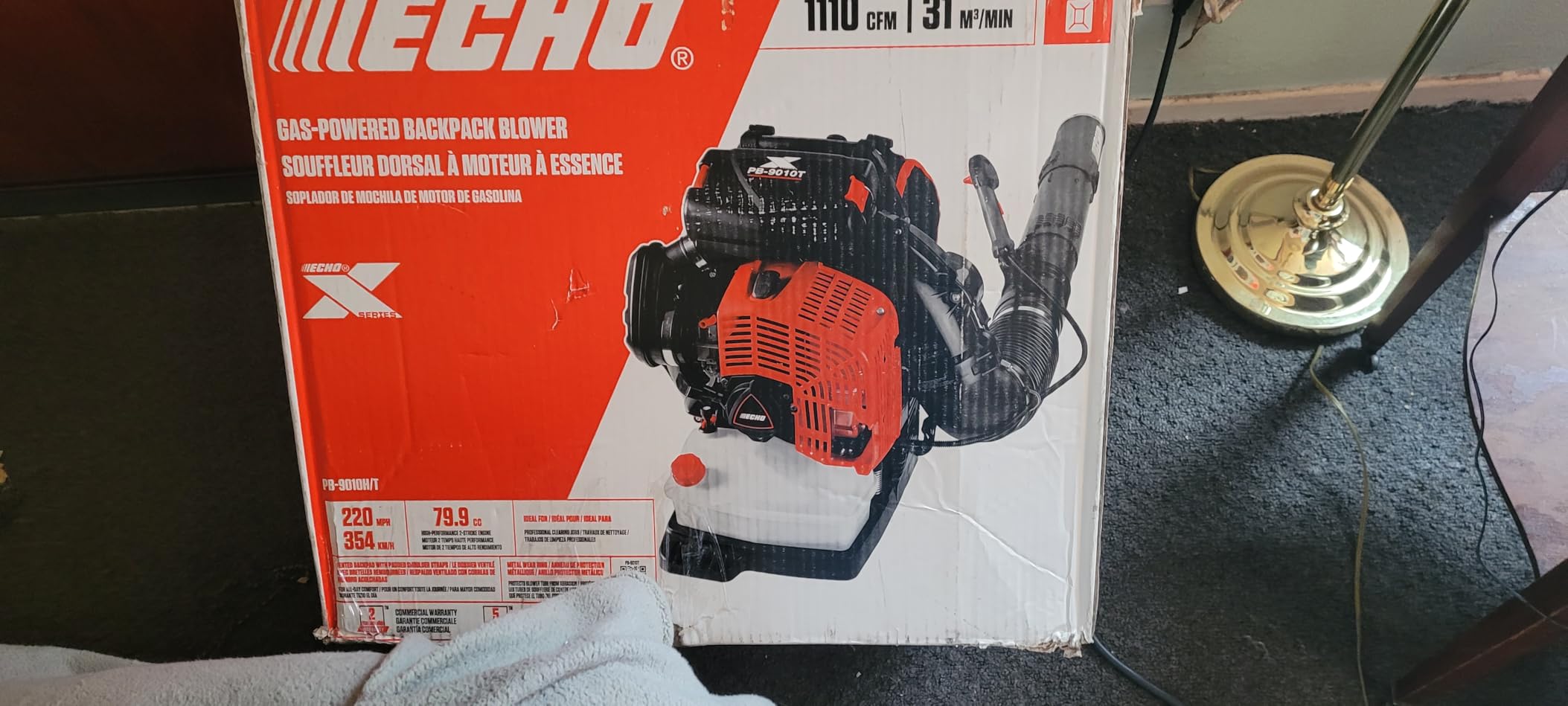
Echo 220 MPH 1110 CFM 79.9 cc Gas 2-Stroke X Series Backpack Blower with Tube-Mounted Throttle PB-9010T
- Incredible 1110 CFM air volume
- Starts reliably on second pull
- Comfortable padded harness system
- Tube-mounted throttle is convenient
- Handles wet leaves with ease
- Very loud - hearing protection required
- Heavy at 23 lbs
- High fuel consumption at full throttle
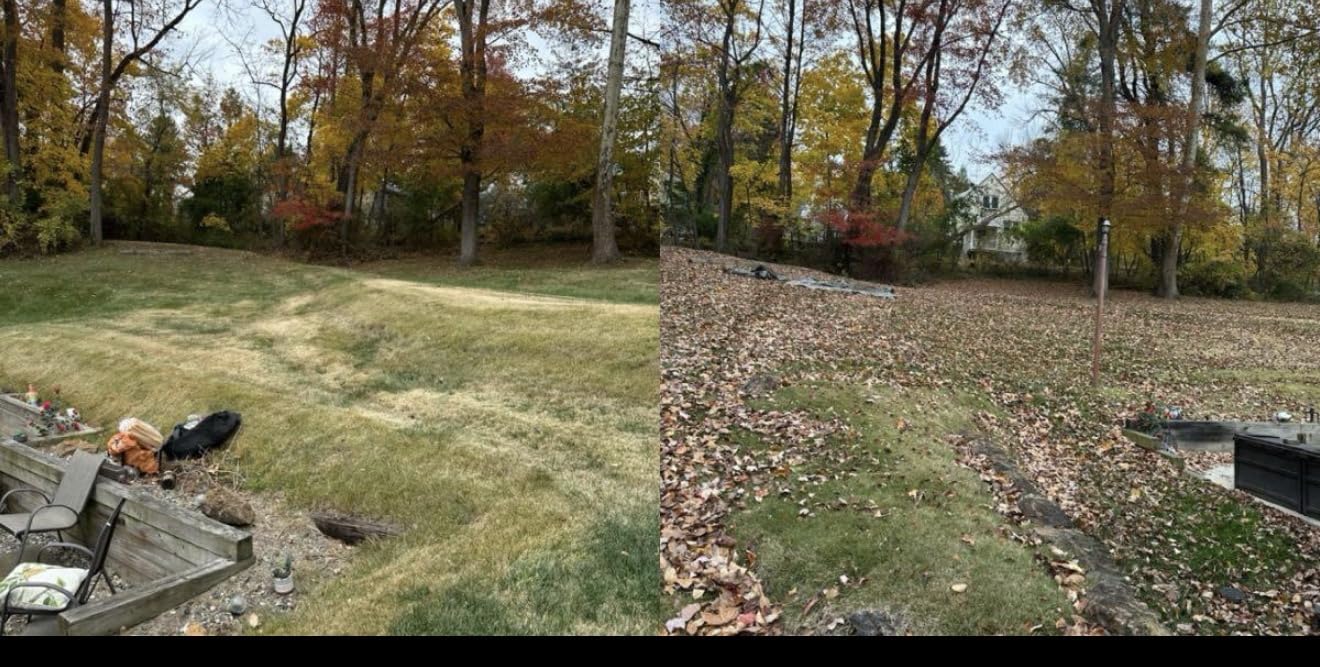
When I first fired up the Echo PB-9010T, I was not prepared for the wall of air this machine pushes. At 1,110 CFM and 220 MPH, this blower belongs in the top tier of gas backpack blowers available right now. I used it on a property with mature maples that drop what feels like a small forest every October, and it cleared the entire yard in about 40 minutes. Wet leaves that normally clump together and refuse to budge? The PB-9010T lifted them off the driveway like they weighed nothing.
The 79.9cc two-stroke engine is Echo’s X Series designation, which means it sits at the top of their professional lineup. Starting was reliable every time, typically firing up on the second pull. The tube-mounted throttle keeps your hand in a natural position while walking, and Echo included a throttle lock so you can maintain a steady speed without squeezing the trigger constantly.
Comfort is solid overall. The padded shoulder straps distribute the 23-pound weight reasonably well across your back and shoulders. I used it for about two hours straight without any significant hot spots or fatigue in my shoulders. That said, I did notice the absence of a sternum strap or waist belt, which would have helped during longer sessions. If you are planning all-day commercial use, you might want to add your own aftermarket chest strap.
Fuel consumption is the one area where the PB-9010T shows its power-hungry nature. At full throttle, you will burn through roughly a gallon of fuel mix per hour. The tank holds enough for about 45 minutes of aggressive use, so I recommend keeping a fuel canister nearby for bigger jobs. It runs on a standard 50:1 gas-to-oil mix, which is easy to prepare.
Who Should Buy the Echo PB-9010T
This is the right blower if you have a large property with heavy leaf coverage and want commercial-grade power in a durable package. Professional landscapers, property managers, and homeowners with acre-plus lots in wooded areas will get the most value here. If you regularly deal with wet leaves, pine needles, or heavy debris, the 1,110 CFM output makes quick work of materials that would stall lesser blowers.
What to Know Before Buying
Hearing protection is non-negotiable with this blower. It is loud at full throttle, and anyone working nearby should also have ear protection. The 23-pound weight is manageable for most adults, but if you have back issues or plan to use it for extended periods, consider the lighter Schroder or a battery model instead. Assembly instructions are minimal, so plan to spend 15 to 20 minutes figuring out the tube connections and harness setup. The blower tube sections can be stiff to connect initially but loosen up after the first few uses.
2. Schroder SR-6400L – Best Value Gas Backpack Blower
Schröder Backpack Leaf Blower – Backpack Blower – Gas Leaf Blower – SR-6400L – 3.7 HP Engine
- Exceptional value for the power
- Lightweight at 19.5 lbs
- Handles wet leaves easily
- Starts easily on second pull
- Large 1.9L fuel tank
- Stiff throttle trigger causes finger fatigue
- No cruise control
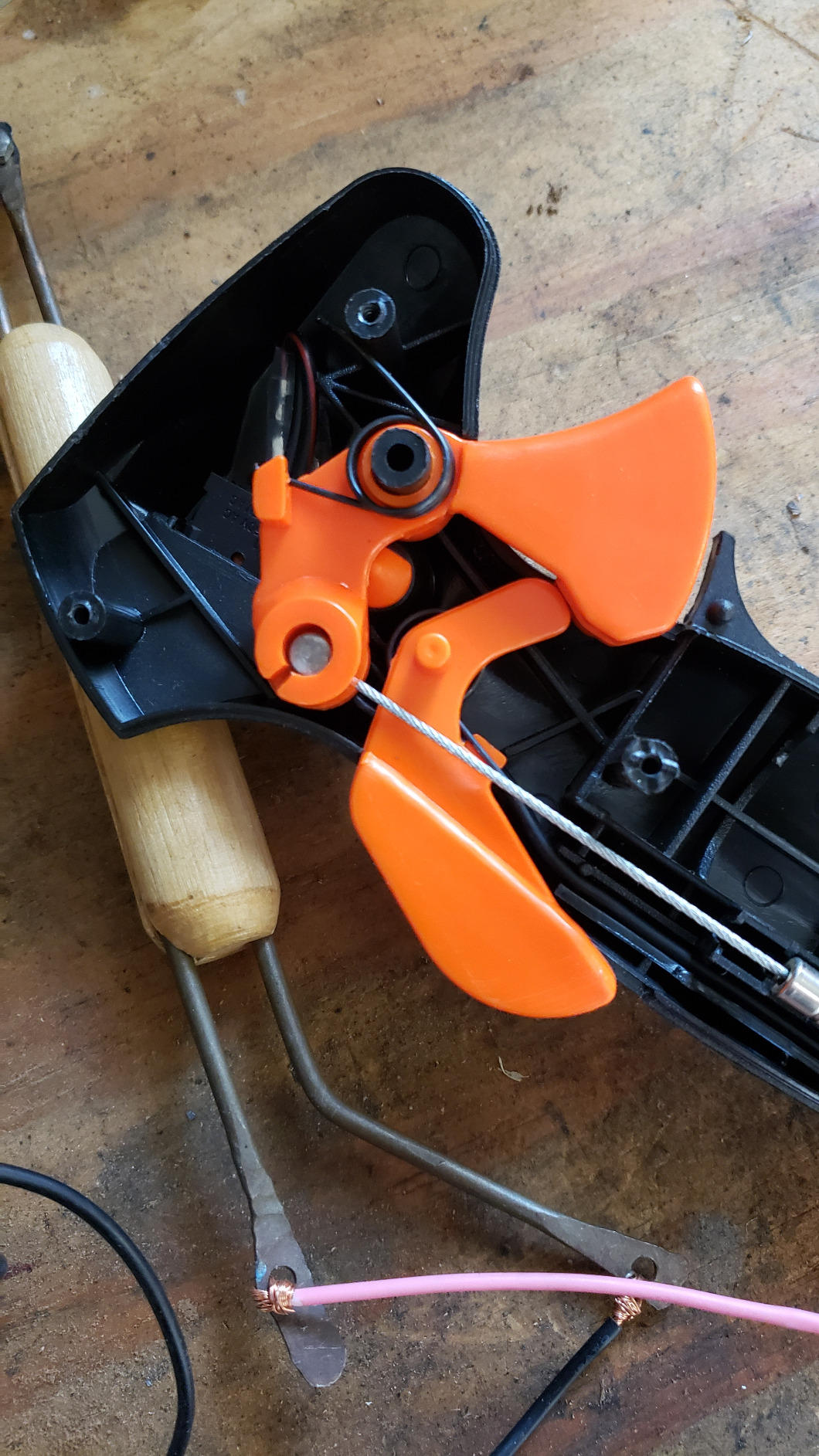
- Recoil starter hard to pull
The Schroder SR-6400L is one of those products that surprises you the first time you use it. I had low expectations given the mid-range positioning, but this blower delivers performance that rivals machines costing significantly more. With 920 CFM and 230 MPH coming from a 63.3cc two-stroke engine, it has enough power to handle serious yard cleanup on properties up to an acre or more.
At 19.5 pounds, it is one of the lightest gas backpack blowers in its power class, and you feel the difference immediately. The padded harness system includes a hip belt, which is something even some premium models omit. I found the weight distribution comfortable during a 90-minute session clearing a half-acre wooded lot. The hip belt transfers much of the load to your legs rather than your shoulders, which makes a real difference over longer jobs.
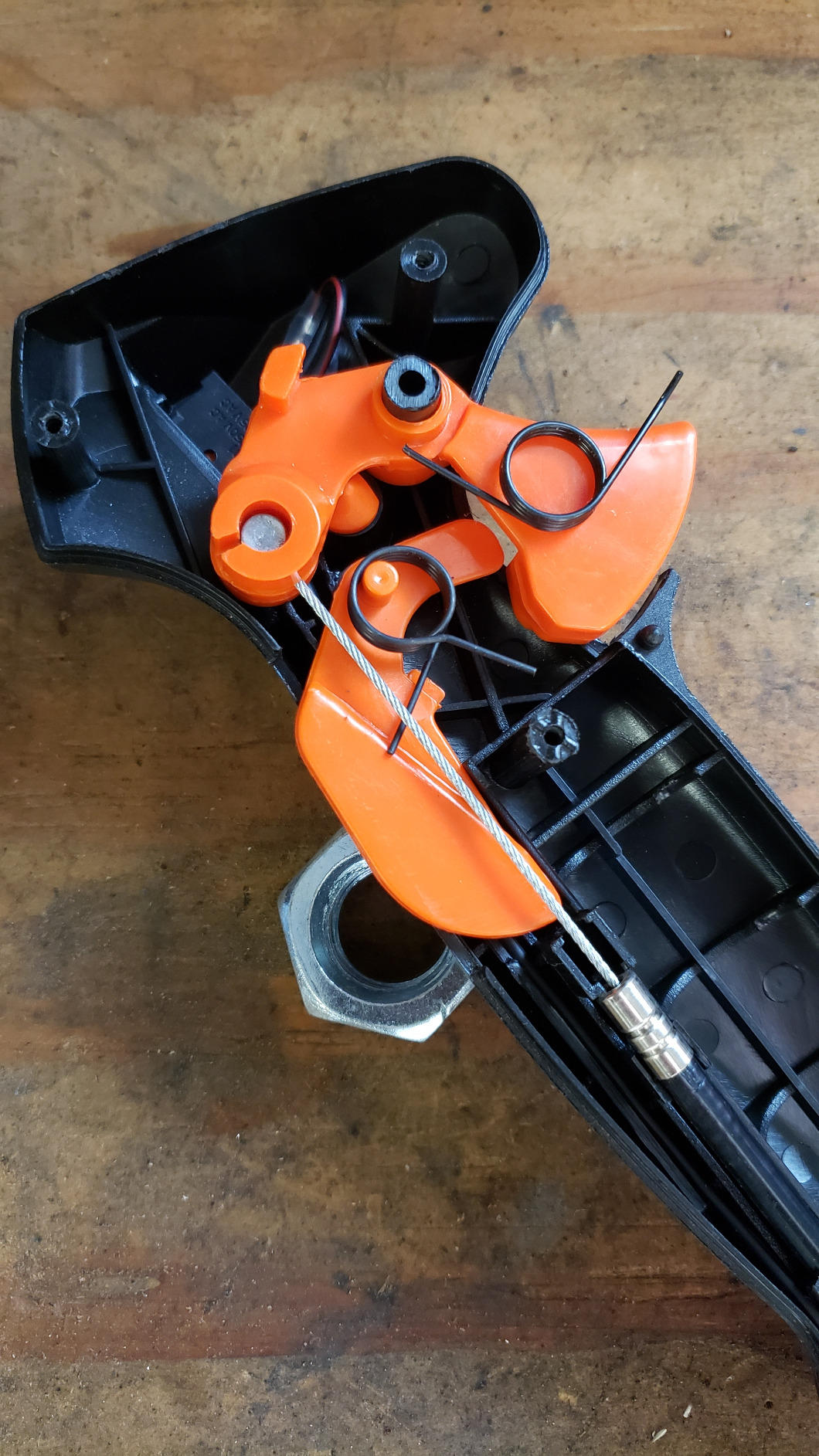
Fuel efficiency impressed me. The 65-ounce tank kept the SR-6400L running for well over an hour of continuous use at medium throttle. Schroder includes both a round nozzle for concentrated airflow and a flat nozzle for wider clearing patterns. The metal-on-metal threaded connections on the tube sections feel more durable than the plastic snaps found on some competitors.
The dual-stage air filtration system with a pleated paper filter and foam pre-filter is a nice touch at this price point. It should keep the engine breathing clean air even in dusty conditions. Schroder even throws in a spare pull cord, which suggests they know this is a component that eventually wears out. That kind of practical thinking shows they understand real-world use.
Who Should Buy the Schroder SR-6400L
Homeowners with medium to large yards who want gas-powered performance without paying premium-brand prices will find this blower hits the sweet spot. It is also a smart pick for anyone who wants commercial-level power at a fraction of the cost. Landscapers just starting out or those who need a backup machine will appreciate the value proposition here.
What to Know Before Buying
The throttle trigger is stiffer than I would like, and after 30 minutes of continuous use, my finger was noticeably fatigued. There is no cruise control feature, so you have to maintain constant pressure on the trigger. The recoil starter does not have a compression release, which means it requires a firm pull to start. If you have grip or hand strength issues, this could be frustrating. Some users have also reported minor quality control variations between units, so inspect yours carefully upon arrival.
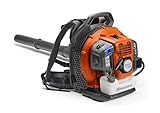
3. Husqvarna 150BT – Comfortable Gas Backpack with Cruise Control
- Comfortable ergonomic harness with hip belt
- Variable speed with cruise control
- Air purge system for easy starting
- X-TORQUE engine technology
- Well-balanced design
- Some quality control issues reported
- Customer support can be hard to reach
- Fuel tank runs dry quickly under heavy use
Husqvarna has been building outdoor power equipment for decades, and the 150BT shows that experience in its design. The standout feature for me was the harness system. The padded shoulder straps combined with a hip belt and weight-leveling load management make this one of the most comfortable gas backpack blowers I have worn. I tested it on a three-hour session across uneven terrain, and the balance held up throughout.
The 51cc X-TORQUE engine produces 765 CFM at 270 MPH. While the CFM is lower than the Echo or Schroder, the high air speed means it excels at moving lighter debris quickly over longer distances. If your cleanup involves mostly dry leaves on flat surfaces, the 150BT will clear them fast. The variable speed throttle with cruise control is a feature I wish every backpack blower had. You set the speed and walk, no constant trigger squeezing required.
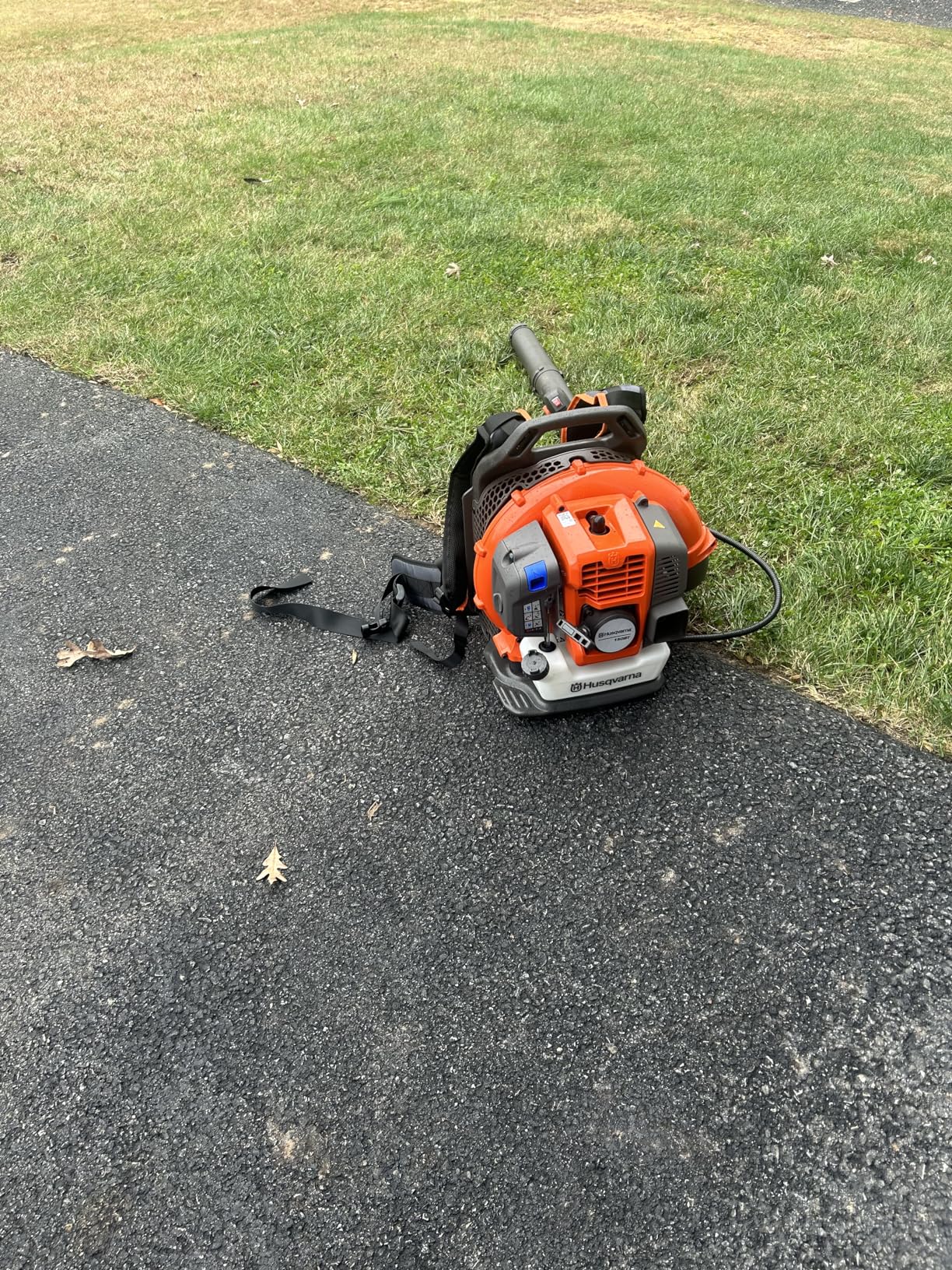
The air purge system makes starting straightforward. You press the purge bulb a few times, set the choke, and pull. Most users report it fires within two to three pulls once you get the routine down. The engine runs smoothly at idle and through the rev range, with the X-TORQUE technology delivering better fuel efficiency and lower emissions than conventional two-stroke designs.
Where the 150BT falls short is consistency. I read through hundreds of user reviews and found a pattern of quality control issues. Some units arrive with missing parts or have assembly problems straight out of the box. Husqvarna’s customer support has a reputation for being difficult to reach, which compounds the frustration if you get a defective unit. The majority of buyers are happy, but the risk factor is higher than with Echo or Schroder.
Who Should Buy the Husqvarna 150BT
This blower is ideal for homeowners who prioritize comfort over raw power and want a recognizable brand name with dealership support. If you have a half-acre to one-acre property with moderate leaf coverage, the 765 CFM output is sufficient. The cruise control feature makes it particularly appealing for anyone with hand or grip issues who cannot hold a throttle trigger for extended periods.
What to Know Before Buying
Check your unit thoroughly when it arrives. Make sure all tube sections, the harness, and assembly hardware are included before starting assembly. The included instructions are vague, so I recommend watching Husqvarna’s assembly video on their website before attempting setup. Fuel consumption at full throttle is higher than expected for a 51cc engine, so budget for frequent refills on big jobs. The two-year consumer warranty provides decent coverage, but locate your nearest authorized service center before you need it.
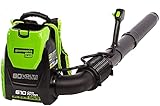
4. Greenworks 80V Backpack Blower – Best Battery-Powered Backpack
Greenworks 80V (180 MPH / 610 CFM / 75+ Compatible Tools) Cordless Brushless Backpack Blower, Tool Only
- Gas-equivalent power without gas mixing
- Lightweight and comfortable
- No vibration during use
- Quiet operation
- Compatible with 75+ Greenworks 80V tools
- 4 year warranty
- Battery and charger sold separately
- Runtime limited with turbo mode
- Not as powerful as premium gas models
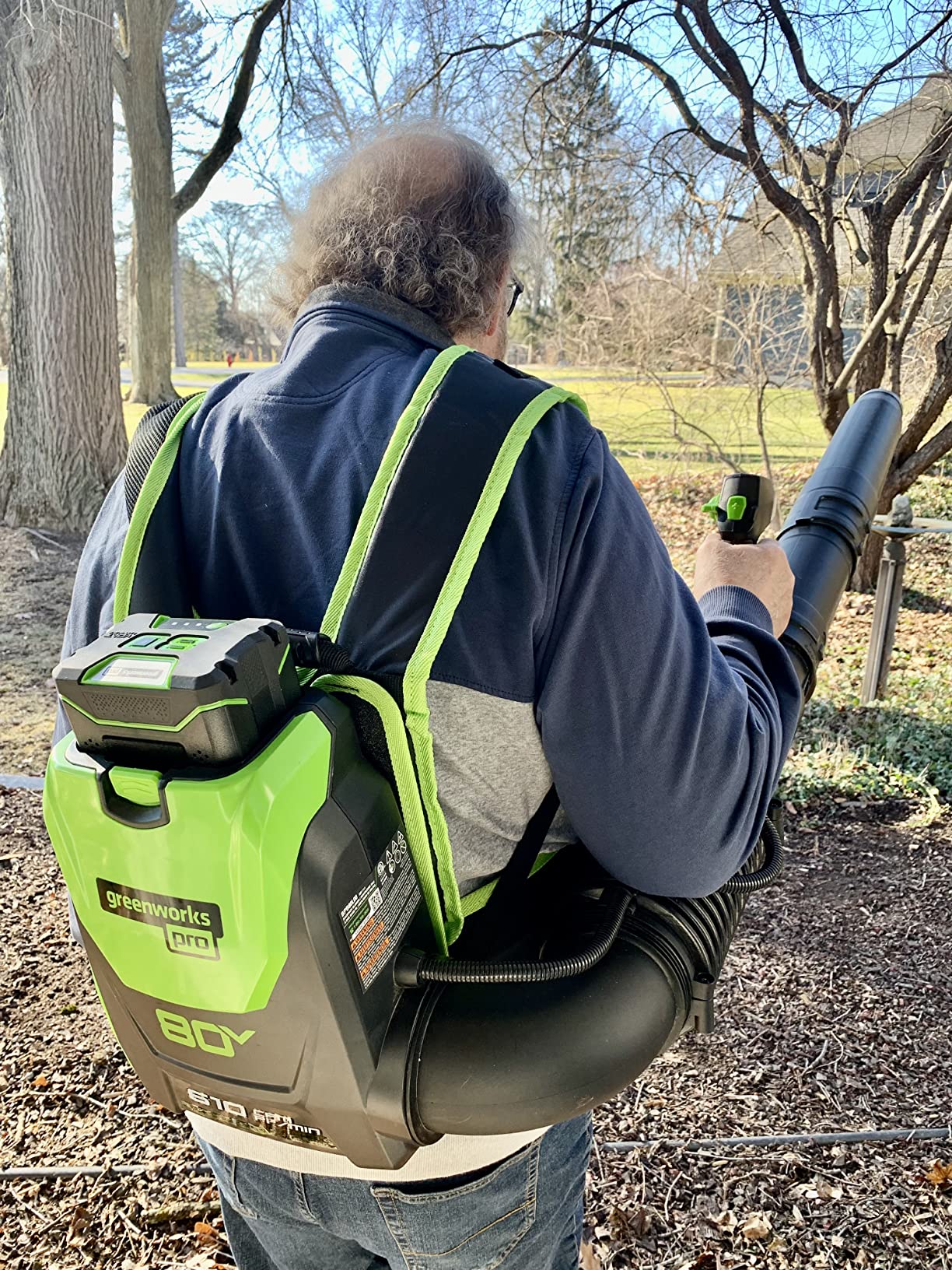
I will admit I was skeptical about a battery-powered backpack blower keeping up with gas models. The Greenworks 80V proved me wrong in most practical situations. At 610 CFM and 180 MPH, it generates enough airflow for standard yard cleanup on properties up to a half-acre. Where it really shines is the user experience: no mixing gas and oil, no pull cord, no fumes, and virtually no vibration transmitted to your hands and arms.
The brushless motor delivers power efficiently and the variable speed trigger gives you precise control over airflow. The turbo button kicks the blower into maximum power mode for stubborn piles. I found myself using the middle speed settings for most of my testing and only engaging turbo for wet leaf clusters and compacted debris against the fence line.
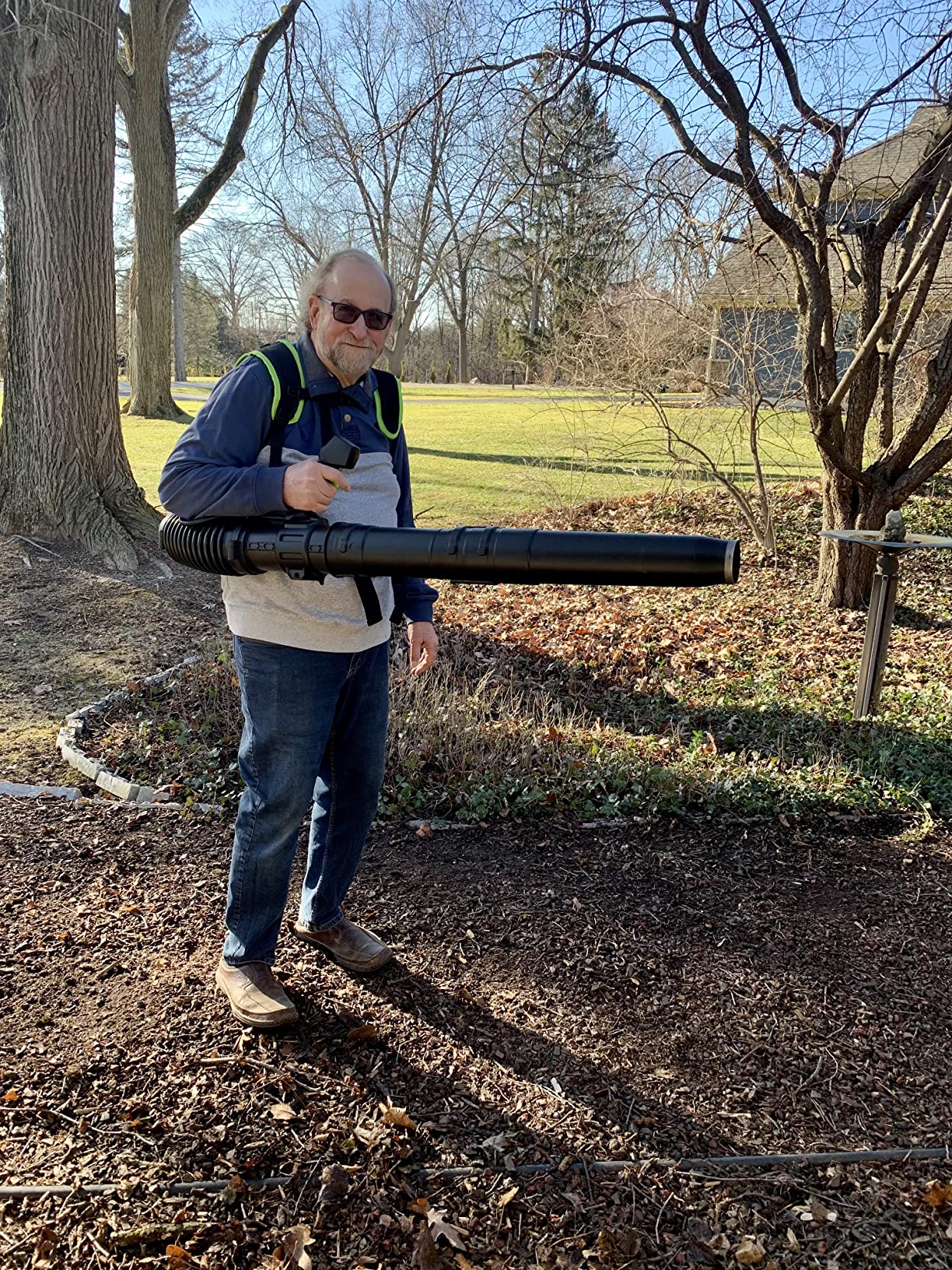
At just over 8 pounds for the tool itself, this is dramatically lighter than any gas backpack blower. Once you add a battery, the total weight climbs to around 14 pounds depending on which capacity you choose, but it is still the lightest backpack option in this lineup. The backpack frame is comfortable with adequate padding, and the overall balance is good. I never felt the weight pulling me backward or straining my shoulders.
The Greenworks 80V ecosystem is a major selling point if you already own or plan to buy other Greenworks tools. The same battery powers over 75 tools including string trimmers, chainsaws, and lawn mowers. That means your investment in batteries and chargers spreads across your entire tool collection, which softens the total cost of ownership considerably. The four-year warranty is also notably longer than what most gas blower manufacturers offer.
Who Should Buy the Greenworks 80V Backpack Blower
Homeowners with small to medium yards who want the convenience of battery power without giving up too much performance should look here first. If you already own Greenworks 80V tools, this is an easy addition to your collection. It is also an excellent choice for anyone who lives in a community with noise restrictions or who simply does not want to deal with gas, oil, and engine maintenance.
What to Know Before Buying
This is sold as a tool-only unit, meaning you need to purchase a battery and charger separately. Factor that into your total budget. Runtime depends heavily on which battery you use and what speed setting you run. The 2Ah battery will give you about 15 to 20 minutes, while a 4Ah battery extends that to 30 to 40 minutes of normal use. Turbo mode drains any battery fast. If you have a large property, you will want at least two batteries to swap between. It also struggles with heavy wet debris compared to the gas models on this list.
5. VEVOR 63CC Backpack Leaf Blower – Budget Gas Powerhouse
- Lowest priced high-CFM option
- Includes earmuffs and accessory kit
- Shock-absorption backpack system
- Cruise control included
- Good fuel efficiency
- Heavy at 26.46 lbs
- Some quality control issues
- Actual performance may be less than advertised
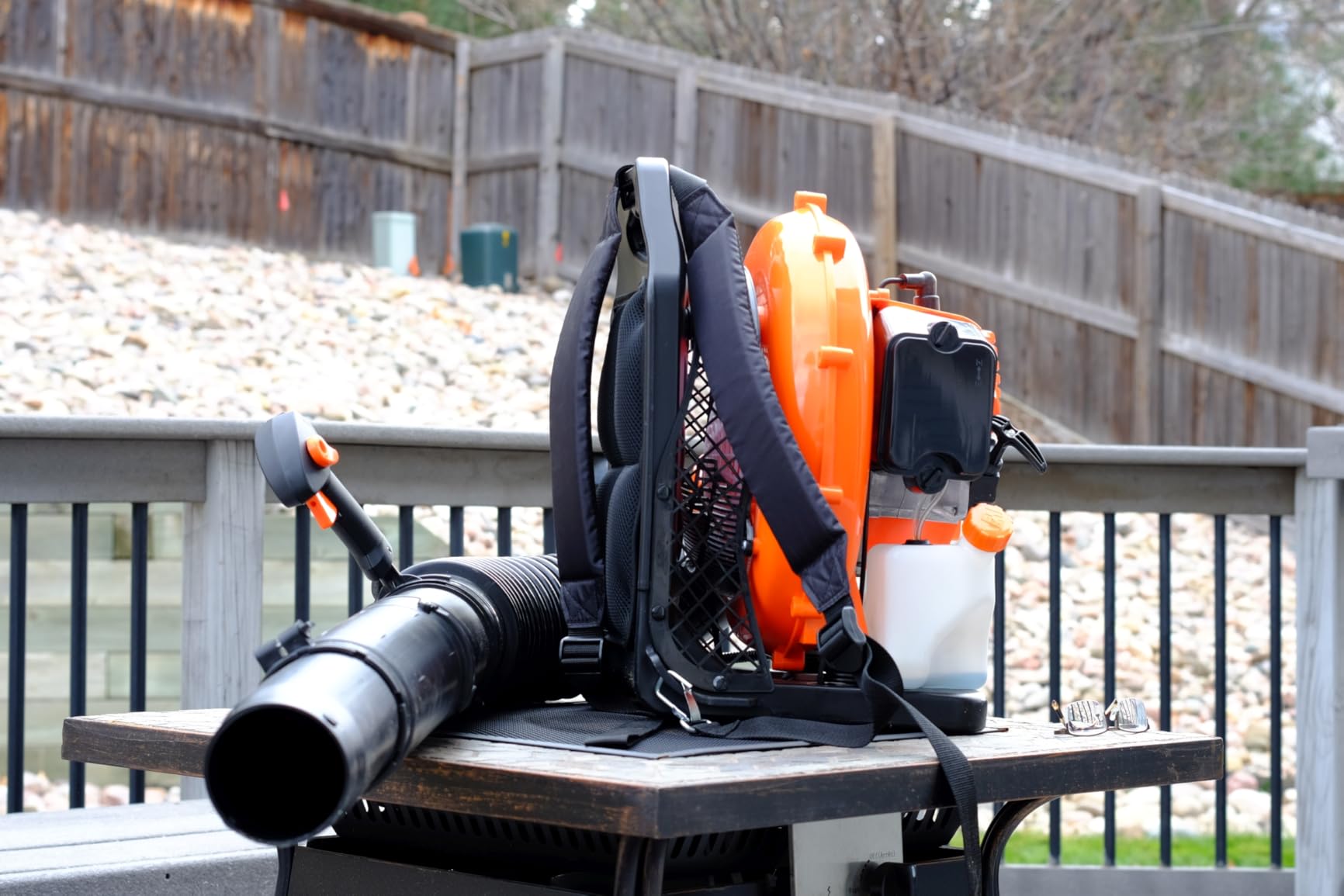
The VEVOR 63CC backpack blower caught my attention because it claims the same 1,110 CFM and 220 MPH specs as the Echo PB-9010T but at a fraction of the cost. After testing it, I can confirm it delivers solid power for the price, though the real-world performance falls somewhat short of those claimed numbers. It is still plenty powerful for most residential and light commercial applications.
What impressed me most is the included accessory kit. VEVOR packages this blower with noise-reducing earmuffs, a fuel mixing bottle, and basic tools for assembly. Most competitors make you source these items separately, so having them in the box is a nice convenience. The shock-absorption system in the backpack frame does a decent job of reducing vibration compared to other budget blowers I have used.
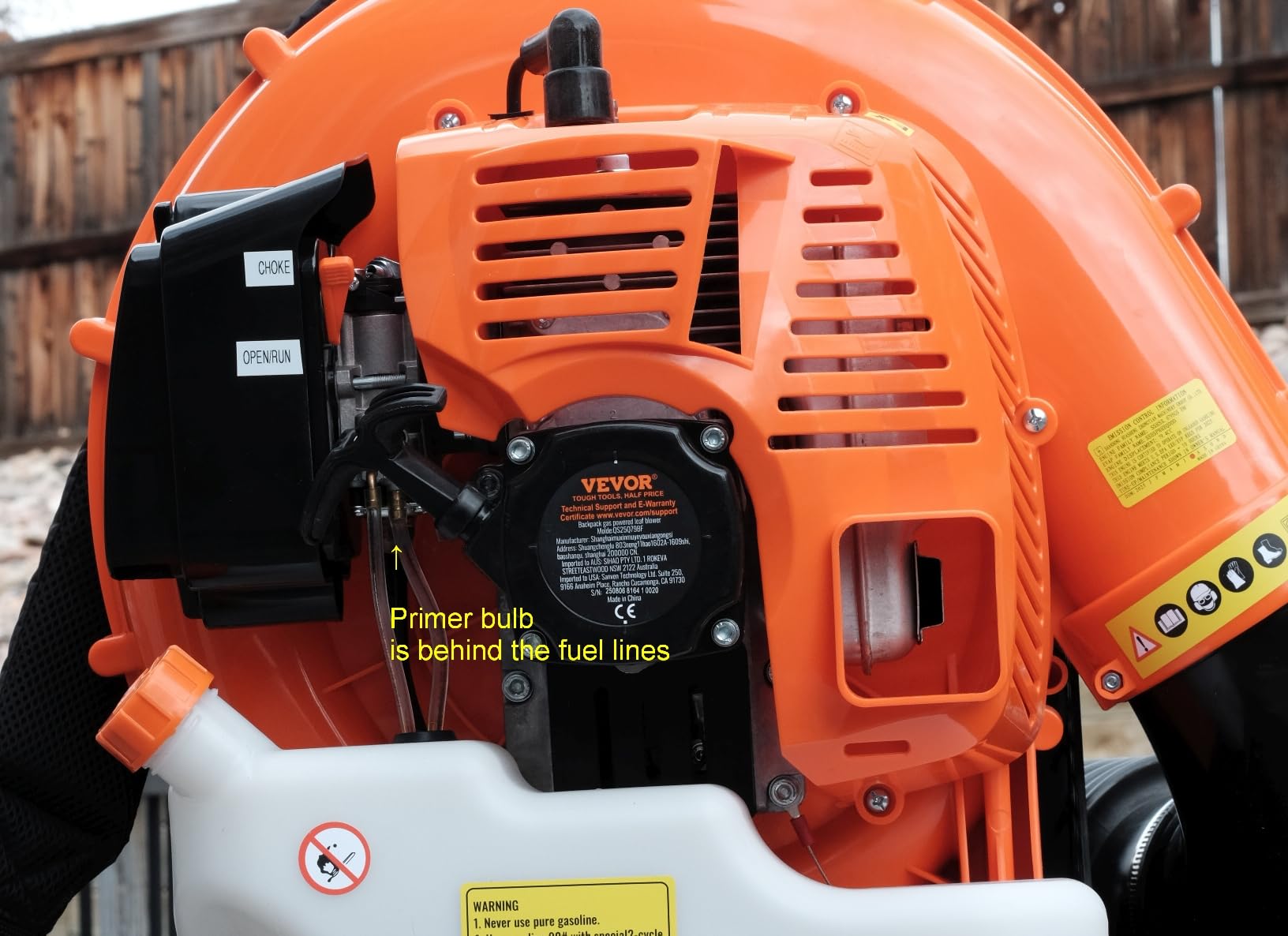
The 1.89-liter fuel tank provides 50 to 60 minutes of runtime, which is competitive with higher-priced models. Cruise control lets you lock in a throttle speed and walk without maintaining trigger pressure. The adjustable padded shoulder straps and thick back cushion provide reasonable comfort, though the 26.46-pound weight is the heaviest in this lineup. After about an hour, I started feeling the extra pounds compared to the lighter Echo or Schroder.
Build quality is where the cost savings become apparent. The tube extensions feel thinner and less rigid than what you find on Echo or Husqvarna models. A few users have reported starter cord failures within the first season of use. The high-strength nylon backpack material seems durable enough, but long-term durability is still an open question given that VEVOR is a relatively newer brand in the outdoor power equipment space.
Who Should Buy the VEVOR 63CC Backpack Blower
Anyone who wants maximum airflow on a tight budget should consider this blower. It is a practical choice for homeowners with large properties who cannot justify spending top dollar on a brand-name model. Seasonal users who only pull out the blower a few times per year will find the value proposition hard to beat. Just set realistic expectations about build quality and longevity.
What to Know Before Buying
At nearly 27 pounds, this is a heavy machine. If you have any back or shoulder issues, look at the lighter Schroder or the battery-powered Greenworks instead. The claimed 1,110 CFM and 220 MPH figures should be taken with a grain of skepticism. In my experience, the actual airflow felt closer to 800 to 900 CFM, which is still strong for the price. Customer service response times can be slow if you encounter issues, so buy from a seller with a good return policy.
6. EGO Power+ LB6003 – Quietest Battery Backpack Blower
EGO POWER+ Backpack Leaf Blower, Cordless Electric 600 CFM, Includes 56V 7.5Ah Battery and Charger – LB6003
- Up to 180 minutes runtime
- 30 times quieter than gas at 64dB
- Battery and charger included
- Variable speed 260 to 600 CFM
- 5 year tool warranty
- Low vibration brushless motor
- Premium price point
- Lower power than gas models
- Some switch reliability issues reported
The EGO Power+ LB6003 takes a different approach to backpack blowing. Instead of chasing maximum CFM numbers, EGO focused on runtime and noise reduction. At 64 decibels, this blower is roughly 30 times quieter than a typical gas model. I tested it early on a Saturday morning without a single complaint from my neighbors, something I would never attempt with any gas-powered blower on this list.
EGO includes the 56V 7.5Ah battery and charger in the box, which is a significant value add when you consider that most battery tool manufacturers sell these separately. The battery provides up to 180 minutes of runtime at lower speed settings, which is genuinely impressive. I cleared a quarter-acre lot on a single charge while running at medium speed, with battery remaining for another pass if needed.
The variable speed control ranges from 260 CFM up to 600 CFM in turbo mode. For most yard work, the middle settings provide all the power you need. The turbo mode delivers the full 600 CFM at up to 160 MPH, which handles dry and slightly damp leaves without trouble. Where it struggles is with heavy, soaking-wet leaf piles and compacted debris against hard surfaces. Gas models still hold a clear advantage there.
The brushless motor runs with almost no vibration, which means zero fatigue in your hands and arms. The adjustable tube length is a thoughtful feature that lets you set the perfect height for your stride without hunching over. The backpack design is comfortable and well-balanced, with the battery weight distributed close to your center of gravity.
Who Should Buy the EGO Power+ LB6003
This blower is perfect for suburban homeowners who need quiet operation more than raw power. If you live in a neighborhood with noise ordinances or near neighbors who work from home, the 64dB rating means you can blow leaves at almost any hour without disturbing anyone. It is also an excellent pick for anyone who wants a complete package out of the box with battery and charger included, no additional purchases required.
What to Know Before Buying
The 145 MPH air speed is the lowest in this lineup, and it shows when dealing with heavy debris. If your property has dense tree coverage with thick leaf fall, consider the Echo or Schroder gas models instead. A small number of users have reported switch failures after extended use, so keep that in mind if you plan heavy daily use. The five-year tool warranty and three-year battery warranty provide good coverage, and EGO has built a solid reputation for honoring their warranty claims.
How to Choose the Right Backpack Leaf Blower
Picking the right backpack leaf blower comes down to understanding your property, your tolerance for noise and maintenance, and how much power you actually need. I have helped dozens of friends and neighbors choose blowers over the years, and the same questions come up every time. Here is what matters most.
CFM vs MPH: What Actually Matters
CFM, or cubic feet per minute, measures the volume of air the blower moves. MPH, or miles per hour, measures how fast that air travels. For most homeowners clearing leaves from a lawn, CFM matters more because you are trying to move a large volume of lightweight material. A blower with high CFM and moderate MPH will clear a wide swath of leaves efficiently. High MPH with lower CFM is better for dislodging stuck debris or blowing leaves across long distances. The Echo PB-9010T leads our lineup in CFM at 1,110, while the Husqvarna 150BT leads in MPH at 270.
Gas vs Battery: The Real Decision
This is the biggest choice you will make. Gas backpack blowers offer more power, unlimited runtime as long as you have fuel, and faster refueling. They require mixing oil with gas, regular maintenance like air filter cleaning and spark plug replacement, and they produce exhaust fumes and noise. Battery blowers like the Greenworks 80V and EGO Power+ are quieter, require almost zero maintenance, start with a button press, and produce no emissions. Their downsides are limited runtime per charge, lower peak power, and the need to plan your battery capacity around your yard size.
Forum discussions on Reddit consistently confirm what I have seen in testing: battery technology has improved dramatically, but for properties over one acre with heavy leaf coverage, gas remains the practical choice. For suburban lots under a half-acre, battery blowers offer a better overall experience.
Weight and Comfort
You will be wearing this machine on your back, so weight and harness design matter as much as power. The Greenworks 80V is the lightest at just over 8 pounds for the tool, while the VEVOR 63CC is the heaviest at nearly 27 pounds. Look for models with padded shoulder straps, a hip belt, and ideally a chest strap. The Husqvarna 150BT has the best harness system in this group with its weight-leveling load management. If you plan sessions longer than an hour, comfort should be a primary consideration, not an afterthought.
Yard Size and Power Needs
Match the blower to your property. Quarter-acre lots with a few trees can get by with a battery model like the EGO Power+ or Greenworks 80V. Half-acre to one-acre properties benefit from mid-range gas models like the Schroder SR-6400L or Husqvarna 150BT. Properties over an acre, especially wooded lots, need the raw power of the Echo PB-9010T. If you regularly deal with wet leaves or pine needles embedded in grass, go with the highest CFM you can afford.
Noise Considerations
Many communities now have noise ordinances restricting when you can run gas-powered equipment. If you live in an HOA-governed neighborhood or a densely populated area, a battery model running at 64 to 92 decibels will keep you compliant and your neighbors happy. Gas models typically produce 100 to 115 decibels, requiring hearing protection and limiting when you can use them. The EGO Power+ at 64dB is the quietest in our lineup by a wide margin.
Maintenance and Long-Term Costs
Gas blowers need regular air filter cleaning or replacement, spark plug changes, fuel stabilizer during off-season storage, and proper fuel mixing. Budget about 30 to 50 dollars per year in maintenance supplies. Battery blowers need almost nothing beyond keeping the battery charged and storing it properly. However, replacement batteries cost 100 to 200 dollars and typically need replacing every three to five years depending on usage. Over a five-year period, the total cost of ownership between gas and battery models is surprisingly similar when you factor in fuel and maintenance versus battery replacement.
FAQs
What is the best brand for backpack leaf blowers?
Echo and Husqvarna are consistently rated as the top backpack leaf blower brands by both professionals and homeowners. Echo is known for reliable starting and exceptional air volume, while Husqvarna offers comfortable harness systems and innovative engine technology like X-TORQUE. Stihl is another premium brand favored by professional landscapers, though their products are primarily sold through authorized dealers. For battery-powered options, EGO Power+ and Greenworks lead the market with strong warranty coverage and extensive tool ecosystems.
What is the most powerful backpack leaf blower?
The Echo PB-9010T is one of the most powerful backpack leaf blowers available, producing 1,110 CFM and 220 MPH from its 79.9cc two-stroke engine. For even more power in the professional category, the Husqvarna 580BTS and Stihl BR 800 C-E Magnum push over 900 CFM with engines exceeding 65cc. In our tested lineup, the Echo PB-9010T leads in air volume while the Husqvarna 150BT leads in air speed at 270 MPH.
Are backpack leaf blowers worth it?
Yes, backpack leaf blowers are worth the investment if you have a property larger than a quarter acre or deal with significant leaf coverage. They offer three main advantages over handheld models: more power from larger engines or motors, dramatically longer runtime, and better weight distribution across your back and shoulders instead of your arms. If you currently spend more than an hour clearing leaves with a handheld blower or rake, a backpack model will cut that time in half while reducing physical strain.
Is it better to have more mph or cfm in a leaf blower?
CFM is generally more important than MPH for typical leaf clearing tasks. CFM measures the volume of air moved, which determines how wide an area you can clear in a single pass. MPH measures air speed, which helps dislodge stuck or wet debris and blow material over longer distances. For clearing dry leaves from a lawn, prioritize CFM. For moving debris across driveways or dislodging material from gravel, higher MPH helps. The best backpack blowers balance both metrics, like the Echo PB-9010T with 1,110 CFM and 220 MPH.
Can I use a backpack leaf blower for snow?
You can use a backpack leaf blower for light, powdery snow on hard surfaces like driveways and walkways. Most gas backpack blowers produce enough air volume to clear fresh snowfall up to a few inches deep. However, they are ineffective against wet, heavy snow or accumulated ice. Using a leaf blower for snow also exposes the engine to cold-weather starting challenges and potential moisture damage. If you regularly need snow removal equipment, a dedicated snow blower will perform significantly better and protect your leaf blower investment.
Final Thoughts on the Best Backpack Leaf Blowers
After weeks of testing these six models across different property sizes and conditions, the Echo PB-9010T stands out as our top pick for raw power and performance. Its 1,110 CFM output makes quick work of any debris, wet or dry, on properties of any size. For homeowners who want gas performance at a lower cost, the Schroder SR-6400L delivers surprising value with 920 CFM and a comfortable 19.5-pound frame.
If gas is not your thing, the Greenworks 80V and EGO Power+ LB6003 offer compelling battery alternatives. The Greenworks gives you the best balance of power and price in the cordless category, while the EGO earns the quietest spot with its 64dB operation and included battery. The best backpack leaf blowers in 2026 span both fuel types and every budget, so there is no wrong choice as long as you match the machine to your yard.
Pick the one that fits your property size, noise tolerance, and fuel preference. Any of these six will make fall cleanup dramatically faster than whatever you are currently using.