
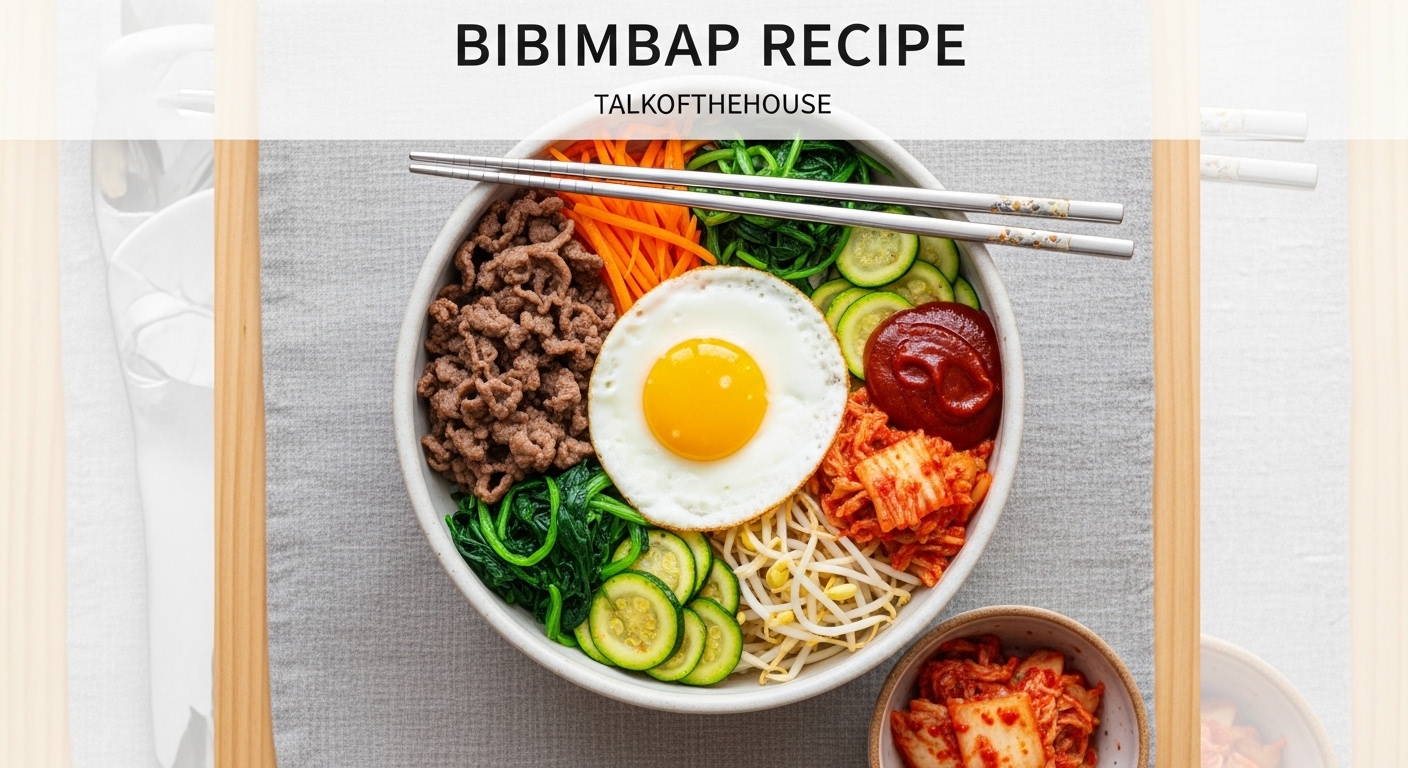
When I want to impress dinner guests without spending hours in the kitchen, I turn to this bibimbap recipe. This Korean mixed rice bowl transforms simple ingredients into a stunning centerpiece that looks like it came from a restaurant kitchen. The vibrant colors, varied textures, and bold flavors create an unforgettable dining experience that gets everyone talking around the table.
Bibimbap has become my signature dish for casual entertaining. Guests love the interactive nature of mixing their own bowls, and I love that most components can be prepared ahead of time. Whether you are hosting a dinner party or simply want to elevate your weeknight dinner, this bibimbap recipe delivers restaurant-quality results at home.
Table of Contents
What Is Bibimbap?
Bibimbap (pronounced BEE-bim-bap) is a traditional Korean mixed rice bowl that combines steamed short-grain rice with an assortment of seasoned vegetables, marinated meat, and a fried egg. The word literally translates to “mixed rice” – “bibim” meaning mixed and “bap” meaning rice.
This dish embodies the Korean philosophy of balance and harmony. Each ingredient contributes a different color, texture, and flavor profile. The five colors represented – green, red, yellow, white, and black – correspond to the five elements in Korean tradition and ensure nutritional balance.
I first encountered bibimbap at a small Korean restaurant in Los Angeles, and I was immediately drawn to its visual appeal. The ingredients were arranged like a colorful mandala around the rice, each component glistening with sesame oil and perfectly seasoned. One mix of the chopsticks transformed this beautiful arrangement into a cohesive, flavor-packed meal that I could not stop eating.
Bibimbap Ingredients
The beauty of bibimbap lies in its flexibility. While traditional versions include specific vegetables, you can adapt this bibimbap recipe based on what you have available. I organize my ingredients into categories to streamline the preparation process.
For the Rice
- 4 cups cooked short-grain rice (sushi rice works perfectly)
- 4 cups water for cooking
- Pinch of salt
For the Marinated Beef
- 8 ounces beef sirloin or ribeye, thinly sliced
- 2 tablespoons soy sauce
- 1 tablespoon sesame oil
- 1 tablespoon brown sugar
- 2 cloves garlic, minced
- 1 tablespoon grated Asian pear or apple (natural tenderizer)
- 1/4 teaspoon black pepper
For the Vegetables (Namul)
These are the essential vegetables that appear in most authentic versions:
- 8 ounces fresh spinach
- 8 ounces soybean sprouts (or mung bean sprouts)
- 2 medium carrots, julienned
- 1 medium zucchini, julienned
- 4 ounces shiitake mushrooms, sliced
Optional additions for more variety:
- Cucumber, julienned and lightly salted
- Red bell pepper, thinly sliced
- Bean sprout variety (radish sprouts work beautifully)
- Korean radish (mu), julienned
For the Bibimbap Sauce
- 3 tablespoons gochujang (Korean red pepper paste)
- 1 tablespoon sesame oil
- 1 tablespoon rice vinegar
- 1 tablespoon honey or brown sugar
- 1 tablespoon water
- 1 teaspoon toasted sesame seeds
- 1 clove garlic, minced (optional)
For Assembly
- 4 large eggs
- Toasted sesame seeds for garnish
- Vegetable oil for cooking
How to Make Bibimbap Sauce
The sauce makes or breaks your bibimbap recipe. This gochujang-based sauce provides the signature heat, sweetness, and umami that ties all the components together. I always make extra because guests inevitably want more.
In a small bowl, whisk together the gochujang, sesame oil, rice vinegar, honey, and water until smooth. The consistency should be pourable but not watery – think thick salad dressing. Stir in the toasted sesame seeds and minced garlic if using. Taste and adjust the balance: add more honey if you want it sweeter, more vinegar for tang, or more gochujang for heat.
You can prepare this sauce up to a week in advance and store it in the refrigerator. The flavors actually improve as they meld together. Bring it to room temperature before serving, or gently warm it if you prefer.
How to Make Bibimbap
Making bibimbap involves preparing each component separately, then assembling everything at the end. This method allows each ingredient to shine with its own seasoning while creating a beautiful presentation. I typically start the rice first, then prepare the vegetables and meat while it cooks.
Step 1: Prepare the Rice
Rinse 2 cups of short-grain rice under cold water until the water runs clear – this removes excess starch and prevents mushy rice. Combine the rinsed rice with 2 cups water in a heavy-bottomed pot or rice cooker. Let it soak for 30 minutes if you have time; this helps the grains cook evenly.
Bring to a boil over high heat, then immediately reduce to low and cover tightly. Cook for 18-20 minutes without lifting the lid. Remove from heat and let it steam, covered, for another 10 minutes. Fluff with a rice paddle and keep warm until assembly.
Step 2: Marinate and Cook the Beef
While the rice soaks, prepare the beef marinade. Combine soy sauce, sesame oil, brown sugar, minced garlic, grated pear, and black pepper in a bowl. The grated pear contains enzymes that tenderize the meat while adding subtle sweetness – a classic Korean technique I learned from a friend in Seoul.
Add the thinly sliced beef and massage the marinade into the meat. Let it marinate for at least 20 minutes, or up to 2 hours in the refrigerator. When ready to cook, heat a skillet over high heat with a splash of oil. Cook the beef in a single layer for 1-2 minutes per side until nicely browned but still tender. The high heat creates that characteristic caramelization without overcooking. Set aside.
Step 3: Prepare the Vegetables (Namul)
Each vegetable gets individual attention in a proper bibimbap recipe. This process, called namul, involves briefly cooking the vegetables and seasoning them separately. It takes a bit of time but creates layers of flavor that make bibimbap special.
Spinach Namul
Bring a pot of salted water to a boil. Add the spinach and blanch for 30 seconds until just wilted. Immediately transfer to an ice bath to stop cooking and preserve the bright green color. Squeeze out excess water thoroughly – this step is crucial to prevent watery bibimbap. Chop roughly and toss with 1 teaspoon sesame oil, 1/2 teaspoon soy sauce, and a pinch of toasted sesame seeds.
Bean Sprout Namul
Rinse the bean sprouts and trim any brown roots. Blanch in boiling salted water for 3-4 minutes until just tender but still crisp. Drain well and toss with 1 teaspoon sesame oil, 1/2 teaspoon salt, and a pinch of garlic powder if desired. The slight crunch of properly cooked bean sprouts adds wonderful texture contrast.
Carrots
Julienne the carrots into thin matchsticks. Heat a teaspoon of oil in a pan over medium heat and sauté the carrots for 2-3 minutes until just tender but still crisp. Season with a pinch of salt. I like to keep carrots slightly undercooked for that fresh crunch in the final bowl.
Zucchini
Julienne the zucchini similar to the carrots. Sauté in a lightly oiled pan for 2 minutes until just softened. Season with a pinch of salt and white pepper. Be careful not to overcook – mushy zucchini will make your bibimbap watery.
Shiitake Mushrooms
If using dried shiitake mushrooms, rehydrate them in warm water for 30 minutes first, then slice. Fresh shiitake can be sliced and sautéed directly. Cook in a lightly oiled pan for 3-4 minutes until golden and fragrant. Season with 1 teaspoon soy sauce and 1/2 teaspoon sesame oil. The earthy mushrooms add depth that rounds out the vegetable medley.
Step 4: Cook the Eggs
The traditional bibimbap recipe calls for a sunny-side-up egg with a slightly runny yolk that creates a rich sauce when mixed. Heat a non-stick skillet over medium heat with a thin layer of oil. Crack in the eggs one at a time and cook until the whites are set but yolks are still runny, about 3 minutes. For crispy edges (my personal preference), increase heat slightly and let the edges bubble and brown.
If you prefer fully cooked eggs, cook for an additional minute or flip them briefly. For an authentic variation, some Korean cooks use a raw egg yolk placed directly on top of the hot rice, letting the residual heat cook it slightly when mixed.
Step 5: Assemble and Serve
Assembly is where your bibimbap recipe transforms into a showstopper. Choose wide, shallow bowls that allow for beautiful arrangement. Start with a generous base of warm rice, pressing it down slightly to create a flat surface.
Arrange the prepared vegetables in sections around the rice, grouping by color for visual impact. I typically place spinach at 12 o’clock, bean sprouts at 3, carrots at 6, and zucchini at 9, with mushrooms in the center. Top the rice with the cooked beef, then crown everything with the fried egg in the center.
Drizzle a small amount of sesame oil over the top and sprinkle with toasted sesame seeds. Serve the gochujang sauce on the side in small bowls, allowing guests to add heat to their taste. Present the assembled bowls immediately while everything is warm.
For entertaining, I love setting up a bibimbap bar where guests assemble their own bowls. Arrange all the components in separate dishes and let everyone customize their perfect combination. This interactive approach always sparks conversation and makes the meal memorable.
How to Eat Bibimbap
Yes, you absolutely mix everything together – that is the whole point of bibimbap. Before eating, add gochujang sauce to taste, then use your spoon to thoroughly combine all the ingredients. The mixing process should break the egg yolk and distribute the sauce throughout the rice and vegetables.
Koreans traditionally eat bibimbap with a spoon rather than chopsticks. The spoon allows you to scoop up the perfect bite with rice, vegetables, meat, and sauce all together. Hold the bowl close to your mouth and take generous spoonfuls, working from the bottom to get the sauce-coated rice.
The first bite should deliver a harmony of flavors: the nutty sesame oil, spicy gochujang, savory beef, and the various vegetable textures. Each subsequent bite might taste slightly different depending on what you scoop up – that variety is what makes bibimbap so addictive.
Tips, Variations, and Shortcuts
Weeknight Shortcut Version
When time is short, I simplify this bibimbap recipe while keeping the essence intact. Use pre-cooked rice or microwaveable rice packets. Substitute the marinated beef with store-bought bulgogi or even thinly sliced deli roast beef quickly sautéed with soy sauce and sesame oil. Buy pre-washed spinach and baby carrots to skip prep work. You can have a respectable weeknight bibimbap on the table in 30 minutes.
Vegetarian and Vegan Bibimbap
Omit the beef and egg for a satisfying vegetarian version. Add extra mushrooms for umami depth, or include pan-fried tofu cubes seasoned with soy sauce and sesame oil. For vegan bibimbap, substitute the egg with a sprinkle of crumbled seasoned tofu or additional vegetables. The key is ensuring you have enough protein sources to make it a complete meal.
Dolsot Bibimbap (Hot Stone Bowl Version)
For an impressive restaurant-style presentation, invest in a dolsot – a Korean stone bowl that retains intense heat. Heat the empty bowl until screaming hot, add a little sesame oil, then pack in the rice and toppings. The rice touching the bowl develops a crispy, golden crust called nurungji that adds incredible texture. Serve immediately while sizzling – the dramatic presentation always wows guests.
Meal Prep and Storage
Bibimbap is surprisingly meal-prep friendly. All the vegetable components can be prepared up to 4 days ahead and stored separately in the refrigerator. The sauce keeps for a week. Cook fresh rice and eggs when ready to serve. I often prepare a large batch of vegetables on Sunday, then assemble quick bibimbap bowls throughout the week.
Frequently Asked Questions
What are the ingredients of bibimbap?
Bibimbap consists of steamed short-grain rice topped with seasoned vegetables (typically spinach, bean sprouts, carrots, zucchini, and mushrooms), marinated beef, a fried egg, and gochujang sauce. The five key components are rice, meat, vegetables, egg, and the spicy red pepper sauce.
Is bibimbap actually healthy?
Yes, bibimbap is generally healthy. It provides a balanced meal with complex carbohydrates from rice, protein from beef and egg, and abundant vitamins and fiber from multiple vegetables. The dish is naturally gluten-free and can be adapted for various dietary needs. The main considerations are the sodium content from soy sauce and sugar in the marinade, which can be adjusted to taste.
Is sesame oil necessary for bibimbap?
Sesame oil is essential for authentic bibimbap flavor. It provides the distinctive nutty aroma that defines the dish. While you could technically substitute with another neutral oil, the result would lack the characteristic taste. Toasted sesame oil is preferred over regular sesame oil for its stronger, more complex flavor. Store it in the refrigerator to prevent rancidity.
Do Koreans use chopsticks or a spoon for bibimbap?
Koreans traditionally eat bibimbap with a spoon, not chopsticks. The spoon allows you to scoop up the perfect combination of rice, vegetables, meat, and sauce in each bite. After thoroughly mixing all ingredients together with your spoon, you eat by scooping from the bowl. Some people use chopsticks to arrange toppings before mixing, but the spoon is the primary utensil.
Are you supposed to mix bibimbap together?
Yes, mixing is essential to the bibimbap experience. The word ‘bibimbap’ literally means ‘mixed rice.’ Before eating, add gochujang sauce to your taste, then use your spoon to thoroughly combine all ingredients. This distributes the flavors evenly and breaks the egg yolk to create a rich, cohesive sauce that coats everything. The dish is designed to be eaten as a harmonious mixture rather than separate components.
What rice should I use for bibimbap?
Short-grain rice is traditional and preferred for bibimbap. Look for Korean short-grain rice or Japanese sushi rice, which have a sticky, slightly chewy texture that holds together well when mixed. Medium-grain rice works as a substitute, but avoid long-grain rice which does not have the right clingy texture. Always rinse the rice until water runs clear before cooking.
Can I make bibimbap ahead of time?
Yes, bibimbap is excellent for meal prep. Prepare all vegetable components and the sauce up to 4 days ahead and refrigerate separately. Marinate the beef a day in advance. When ready to serve, cook fresh rice and eggs, then warm the other components slightly before assembling. This make-ahead approach makes bibimbap perfect for entertaining, as you can do most work in advance.
How do I prevent my bibimbap from being watery?
The key to preventing watery bibimbap is removing excess moisture from vegetables. After blanching spinach and bean sprouts, squeeze them firmly to extract as much water as possible. Do not overcook zucchini, which releases water when mushy. Sauté mushrooms until their released moisture evaporates. Using day-old slightly dried-out rice also helps absorb any remaining moisture.
This bibimbap recipe has become my go-to for entertaining because it offers something for everyone. The interactive assembly, beautiful presentation, and customizable heat level make it a conversation starter at any dinner gathering. Once you master the basic technique, you will find yourself returning to this dish again and again.
I encourage you to try this bibimbap recipe for your next dinner party or family gathering. The combination of flavors and textures creates a memorable dining experience that looks far more complicated than it actually is. With practice, you will develop your own rhythm for preparing the components and may even discover your own favorite vegetable combinations.