
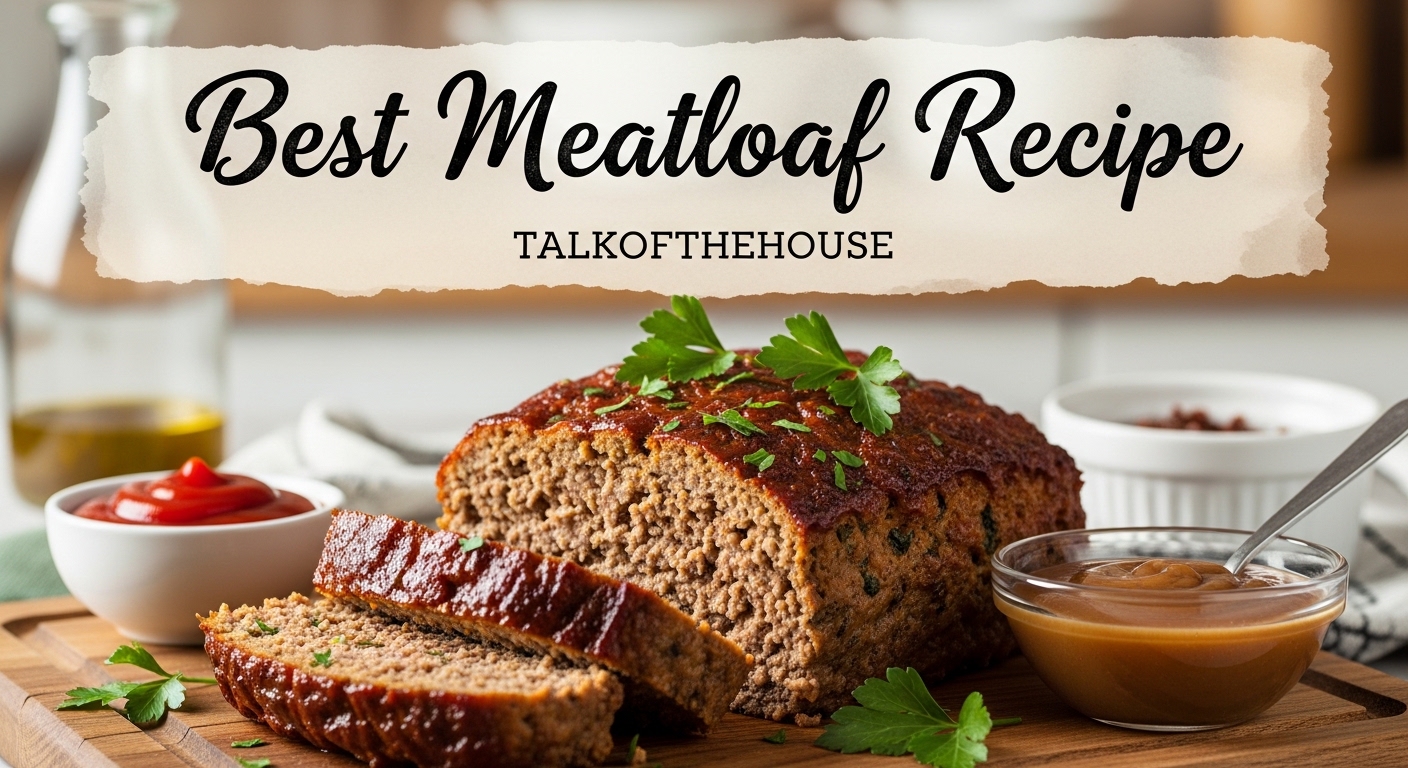
There is something deeply comforting about a perfectly made meatloaf. It fills your kitchen with an aroma that makes everyone drift toward the oven, asking how much longer until dinner. This meatloaf recipe has become my go-to for casual family dinners and for entertaining friends who appreciate honest, satisfying comfort food.
I tested this recipe over three months, making it twelve times with slight variations each round. My goal was simple: create a meatloaf that stays moist, holds together when sliced, and has that perfect sweet-tangy glaze everyone fights over. The recipe you are about to read represents those experiments refined into one foolproof method.
What makes this different from the hundreds of other meatloaf recipes online? I am writing this from the perspective of someone who loves having people over. This is not just dinner. It is about creating a welcoming home, setting a beautiful table, and serving food that makes your guests feel cared for. The meatloaf I am sharing works just as beautifully for a Tuesday night with your family as it does for a Sunday supper with friends.
Table of Contents
Why This Is the Best Meatloaf Recipe
After years of dry, crumbly disappointments, I discovered four secrets that transform ordinary meatloaf into something memorable. These techniques separate good meatloaf from great meatloaf.
First, do not overmix the meat. When you knead ground beef too aggressively, you develop proteins that squeeze out moisture during baking. The result is dense, tough meatloaf. I mix just until the ingredients come together, using my hands rather than a spoon for better control.
Second, I use a panade technique. Soaking panko breadcrumbs in milk before mixing creates a tenderizing effect that keeps the meatloaf juicy even after an hour in the oven. The milk hydrates the crumbs, and they release moisture slowly as the meatloaf cooks.
Third, I always saute the onions first. Raw onions stay crunchy and can make the meatloaf taste sharp. Sauteeing brings out sweetness and ensures the onions blend seamlessly into each bite.
Fourth, I bake free-form on a sheet pan rather than using a loaf pan. The loaf pan traps steam and creates a soggy bottom. Free-form baking allows excess fat to drain away and creates those desirable caramelized edges on all sides.
Meatloaf Ingredients
Great meatloaf starts with quality ingredients. Each component plays a specific role in creating the final texture and flavor. Here is everything you need, with explanations for why each matters.
For the Meatloaf
- 2 pounds ground beef, 80/20 lean-to-fat ratio. The 20% fat content is crucial for moisture. Leaner blends like 90/10 produce dry meatloaf. If you prefer less fat, 85/15 is the leanest I recommend. The fat renders during cooking, basting the meat from within.
- 1 cup panko breadcrumbs. Panko creates a lighter texture than traditional fine breadcrumbs. Its flaky structure absorbs the milk better and prevents dense meatloaf. You can substitute Italian breadcrumbs or crushed crackers if needed.
- 3/4 cup whole milk. The milk hydrates the panko in what chefs call a panade. This mixture acts as a moisture reservoir during baking. Whole milk provides the best results, though 2% works in a pinch. Avoid skim milk.
- 2 large eggs. Eggs bind everything together. Without adequate binder, your meatloaf will crumble when sliced. I use two eggs for two pounds of meat, which provides enough structure without making the texture eggy.
- 1 medium yellow onion, finely diced. Onion provides sweetness and aromatic depth. Dicing finely ensures even distribution. As mentioned, we will saute this first to mellow the flavor.
- 3 cloves garlic, minced. Fresh garlic beats powder here. Mince it finely so no one bites into a harsh chunk.
- 2 tablespoons Worcestershire sauce. This is my secret weapon for umami depth. Worcestershire adds a savory complexity that makes guests ask what that wonderful flavor is.
- 2 teaspoons Italian seasoning. The blend of oregano, basil, and thyme gives classic meatloaf flavor without overwhelming the beef.
- 1 teaspoon salt. Two pounds of meat need adequate seasoning. I use kosher salt for even distribution.
- 1/2 teaspoon black pepper. Freshly ground provides the best flavor.
- 1 tablespoon fresh parsley, chopped. Optional but recommended for fresh color and herbal brightness.
For the Glaze
- 1/2 cup ketchup. The tomato base provides tanginess and sweetness. Use a quality brand without high fructose corn syrup for best flavor.
- 2 tablespoons brown sugar. This creates the caramelized coating everyone loves. Light or dark brown sugar both work.
- 1 tablespoon white vinegar. The acid balances the sweetness and helps the glaze penetrate the meat surface.
- 1 teaspoon yellow mustard. Adds subtle kick and emulsifies the glaze.
- Worcestershire sauce, 1 teaspoon. Echoes the savory note from the meat mixture.
How to Make Meatloaf
Follow these steps exactly for tender, juicy meatloaf every time. I have numbered them clearly so you can cook confidently even if this is your first attempt.
Step 1: Prepare Your Workspace
Preheat your oven to 350°F. Line a rimmed baking sheet with parchment paper or aluminum foil for easy cleanup. The rim is important because fat will render out during baking.
Step 2: Make the Panade
In a small bowl, combine the panko breadcrumbs with the milk. Stir gently and set aside for five minutes. The crumbs will absorb the milk and soften. This step prevents dry, mealy meatloaf.
Step 3: Sautee the Aromatics
Heat one teaspoon of olive oil in a small skillet over medium heat. Add the diced onion and cook for five minutes until softened and translucent. Add the minced garlic and cook one minute more. Remove from heat and let cool slightly. This step removes harshness and brings out natural sweetness.
Step 4: Mix the Meatloaf Base
In a large bowl, combine the ground beef, soaked panko mixture, eggs, sauteed onion and garlic, Worcestershire sauce, Italian seasoning, salt, pepper, and parsley. Use your hands to mix gently. Fold and turn the mixture rather than squeezing or kneading. Stop as soon as everything is evenly distributed. Overmixing here is the most common mistake.
Step 5: Form the Loaf
Transfer the mixture to your prepared baking sheet. Shape it into a loaf approximately 9 inches long, 5 inches wide, and 2 inches high. The free-form shape allows heat to circulate and creates caramelized edges on all sides. Do not pack it too densely.
Step 6: First Bake
Place the meatloaf in the preheated oven and bake for 40 minutes. This partial cooking sets the structure before we add the glaze.
Step 7: Make and Apply the Glaze
While the meatloaf bakes, whisk together all glaze ingredients in a small bowl. After the initial 40 minutes, remove the meatloaf from the oven. Brush half the glaze generously over the top and sides. Adding glaze mid-bake prevents burning while allowing caramelization.
Step 8: Finish Baking
Return the meatloaf to the oven and bake for another 15 to 20 minutes. Insert an instant-read thermometer into the center. The meatloaf is done when it reaches 160°F internally. If you do not have a thermometer, check that juices run clear and the center is no longer pink.
Step 9: Rest Before Slicing
This step is non-negotiable. Let the meatloaf rest on the baking sheet for 10 to 15 minutes before slicing. Resting allows the juices to redistribute throughout the meat. Cut too early and all the moisture will run out onto your cutting board, leaving dry meatloaf.
Step 10: Apply Final Glaze and Serve
Brush the remaining glaze over the warm meatloaf for a beautiful sheen. Slice and serve.
Pro Tips for the Best Meatloaf
These tips come from my kitchen experiments and lessons learned from failed attempts. They address the most common questions and problems home cooks face.
The Overmixing Warning
I cannot stress this enough. Mixing develops proteins in the meat that squeeze out moisture during cooking. When you mix too vigorously or too long, you get dense, tough meatloaf that resembles a brick. Use your hands and a gentle folding motion. As soon as you do not see streaks of egg or pockets of breadcrumbs, stop.
Free-Form vs Loaf Pan
I strongly recommend free-form baking on a sheet pan. The loaf pan traps steam against the bottom and sides, creating a steamed rather than roasted texture. The meatloaf swims in its own fat and juices. Free-form baking allows excess fat to drain away and exposes all surfaces to dry heat, creating those coveted caramelized edges.
If you must use a loaf pan for shape purposes, choose one with drainage holes or line it with parchment with overhanging edges to lift the meatloaf out immediately after baking. Even then, the texture will be softer than free-form.
The Importance of Resting
That 10 to 15 minute rest after baking is when the magic happens. During cooking, muscle fibers contract and squeeze juices toward the center. Resting allows those fibers to relax and reabsorb the moisture. If you slice immediately, the juices run out and your meatloaf becomes dry. I set a timer and walk away.
Internal Temperature Is Everything
An instant-read thermometer is the best $15 investment for your kitchen. Meatloaf is perfectly done at 160°F. At this temperature, it is safe to eat but still juicy. Many people overcook to 170°F or higher, which guarantees dryness. The meatloaf will continue cooking slightly after removal from the oven, so pulling it at 160°F is perfect.
Ingredient Temperature Matters
Cold eggs straight from the refrigerator can make the fat in the beef seize up, creating an uneven texture. I let eggs sit on the counter for 15 minutes before mixing. Room temperature ingredients blend more smoothly.
Meatloaf Troubleshooting Guide
Even experienced cooks encounter problems. Here is how to fix common meatloaf failures and prevent them next time.
Problem: Dry, Crumbly Meatloaf
Cause: Overcooking, too-lean meat, or insufficient binders.
Fix: Unfortunately, you cannot rehydrate cooked meatloaf. For next time, use 80/20 ground beef, add an extra egg, or increase the panade ratio. Check temperature at 45 minutes instead of waiting the full hour. Pull at 160°F exactly.
Problem: Meatloaf Falls Apart When Sliced
Cause: Insufficient binders, not enough resting time, or skipping the eggs.
Fix: Ensure you are using two eggs per two pounds of meat. Let the meatloaf rest the full 15 minutes. If you omitted breadcrumbs entirely, that is likely the culprit. The panade structure is essential for holding slices together.
Problem: Glaze Burns or Gets Too Dark
Cause: Glaze applied too early or oven running hot.
Fix: Always add glaze after the initial 40-minute bake. If your oven runs hot, tent the meatloaf loosely with foil during the final glazing stage. Remove foil for the last 5 minutes if you want more caramelization.
Problem: Outside Cooked, Inside Raw
Cause: Oven too hot or meatloaf too thick.
Fix: Reduce oven to 325°F and extend cooking time. Ensure your meatloaf is no more than 2 inches thick at its highest point. A wider, flatter loaf cooks more evenly than a tall, narrow one.
Problem: Too Greasy with Fat Pooling
Cause: Meat too fatty or loaf pan trapping grease.
Fix: Switch to 85/15 ground beef instead of 80/20. Always use a rimmed baking sheet rather than a loaf pan. The rim catches rendered fat. You can also place the meatloaf on a wire rack set inside the baking sheet for maximum drainage.
Problem: Bland, Underseasoned Flavor
Cause: Insufficient salt or missing umami boosters.
Fix: Increase salt to 1.5 teaspoons for two pounds of meat. Add an extra tablespoon of Worcestershire sauce. Consider adding 1 teaspoon of garlic powder in addition to fresh garlic. Taste a small piece of the raw mixture by frying a teaspoon in a pan before forming the loaf.
Serving and Entertaining with Meatloaf
At Talk of the House, we believe every meal is an opportunity to create a welcoming atmosphere. Meatloaf might sound casual, but with thoughtful presentation, it becomes centerpiece-worthy.
Plating for Guests
Slice the meatloaf into 1-inch thick pieces using a sharp knife. Arrange slices slightly overlapping on a warmed white platter. The contrast between the caramelized glaze and white china is striking. Spoon any glaze that dripped onto the baking sheet over the top for extra shine.
Garnish with fresh parsley sprigs or microgreens. A sprinkle of flaky sea salt on top of each slice adds visual appeal and a flavor boost. Serve with a small pitcher of extra glaze on the side for guests who want more.
Table Setting Suggestions
Meatloaf pairs beautifully with casual elegance. I use my everyday white plates but add cloth napkins and simple clear glass candle holders. The key is creating warmth without formality. Your guests should feel like they are in a home, not a restaurant.
For a dinner party, I place the meatloaf platter in the center of the table alongside bowls of sides. Family-style serving encourages conversation and makes the meal feel abundant.
What to Serve with Meatloaf
The classic sides are classic for good reason. Creamy mashed potatoes provide the perfect bed for meatloaf and glaze. Roasted green beans or Brussels sprouts add color and balance the richness. Buttered egg noodles are another excellent option.
For a fresh contrast, serve a simple arugula salad with lemon vinaigrette. The peppery greens cut through the richness of the meat. Crusty bread is essential for mopping up any leftover glaze on the plate.
Beverage pairings include full-bodied red wines like Cabernet Sauvignon or Zinfandel. For beer lovers, an amber ale complements the sweet glaze. A classic old fashioned cocktail echoes the caramelized flavors in the meatloaf.
Creating the Atmosphere
Light a few candles. Play soft background music. Put your phone away. The goal is making your guests feel that there is nowhere else you would rather be than sharing this meal with them. Meatloaf is comfort food, and comfort extends beyond what is on the plate.
Meatloaf Variations
Once you master the basic recipe, experiment with these adaptations for different occasions and dietary needs.
Turkey Meatloaf
Substitute ground turkey for the beef. Use 85/15 turkey rather than 99% fat-free, which will be dry. Increase the panade to 1.25 cups panko and 1 cup milk to compensate for turkey’s lower fat content. Cook to an internal temperature of 165°F instead of 160°F for food safety.
Beef and Pork Blend
For extra richness, use 1.5 pounds ground beef and 0.5 pounds ground pork. The pork adds fat and a subtle sweetness that many prefer. This blend is what classic diners often use.
Gluten-Free Meatloaf
Replace panko with gluten-free breadcrumbs or crushed gluten-free crackers. Rolled oats also work as a binder. Pulse them in a blender first for better texture.
Bacon-Wrapped Meatloaf
Before baking, lay strips of bacon across the top of the formed meatloaf, tucking the ends underneath. The bacon bastes the meat as it cooks and creates an impressive presentation. You may need to reduce the salt in the recipe slightly since bacon adds saltiness.
Mini Meatloaves
Divide the mixture into 6 equal portions. Form each into a small individual loaf. Reduce initial baking time to 25 minutes, then glaze and bake 10 to 15 minutes more. These are perfect for dinner parties where you want elegant individual presentations.
Air Fryer Method
For a 1-pound meatloaf, preheat air fryer to 350°F. Shape into a loaf that fits your basket. Cook 25 minutes, glaze, then cook 5 to 8 minutes more until internal temperature reaches 160°F. The air fryer creates exceptional caramelization.
Make-Ahead and Storage
One of the best qualities of meatloaf is how well it keeps. These make-ahead strategies are perfect for busy hosts who want to prep ahead.
Make-Ahead Instructions
You can mix the meatloaf up to 24 hours in advance. Cover tightly and refrigerate in the bowl. Do not form into a loaf until ready to bake, as the mixture will firm up and hold its shape better cold. You can also form the loaf on the baking sheet, cover with plastic wrap, and refrigerate overnight. Let it sit at room temperature for 20 minutes before baking.
Refrigerator Storage
Store leftover meatloaf in an airtight container for up to 4 days. The glaze may soften slightly, but flavor remains excellent. I actually prefer meatloaf on day two when the flavors have melded.
Freezing Raw Meatloaf
Form the meatloaf on a parchment-lined baking sheet and freeze uncovered until solid, about 2 hours. Wrap tightly in plastic wrap, then foil. Label with the date and freeze for up to 3 months. Thaw overnight in the refrigerator before baking. Add 10 to 15 minutes to the cooking time.
Freezing Cooked Meatloaf
Cool completely, then wrap individual slices or the whole meatloaf tightly. Freeze for up to 3 months. Thaw overnight in the refrigerator. Reheat covered with foil in a 325°F oven for 20 to 25 minutes until warmed through.
Reheating Methods
For best results, reheat in the oven rather than the microwave. Place slices in a baking dish, add a tablespoon of water or beef broth, and cover with foil. Bake at 325°F for 15 to 20 minutes. The steam helps restore moisture.
If using a microwave, place a damp paper towel over the meatloaf to prevent drying. Heat in 30-second intervals until warm.
Leftover Ideas
Leftover meatloaf is a gift. Here are my favorite ways to use it beyond simply reheating slices.
The Ultimate Meatloaf Sandwich
Toast thick slices of sourdough bread. Layer with warmed meatloaf slices, extra glaze, and sharp cheddar cheese. Add pickles and lettuce. This rivals any deli sandwich.
Meatloaf Hash
Dice leftover meatloaf into small cubes. Sautee with diced potatoes, onions, and bell peppers in a skillet until crispy. Top with a fried egg for a hearty breakfast.
Meatloaf Pasta
Crumble meatloaf into marinara sauce. Simmer until heated through and serve over pasta with parmesan. The glaze adds subtle sweetness to the sauce.
Shepherd’s Pie Shortcut
Crumble meatloaf into a baking dish. Top with leftover mashed potatoes or fresh ones. Bake until golden on top. The glaze in the meatloaf adds extra flavor to the filling.
Meatloaf Tacos
Crumble and warm in a skillet with taco seasoning. Serve in tortillas with your favorite toppings. The smoky-sweet glaze creates an interesting taco variation.
Frequently Asked Questions
What is the secret to making a good meatloaf?
Can diabetic people eat meatloaf?
What are common meatloaf mistakes to avoid?
What ingredients are in meatloaf?
How do I know when meatloaf is done?
Can I make meatloaf without breadcrumbs?
Conclusion
This meatloaf recipe represents everything I love about cooking for the people I care about. It is approachable enough for a busy weeknight, yet satisfying enough to serve to guests. The techniques I have shared, from the panade to the free-form baking, ensure tender, juicy results every time.
The best part of meatloaf is how it brings people together. There is no pretense, just honest, flavorful food that makes everyone feel at home. Whether you are cooking for your family on a Tuesday or hosting friends for Sunday supper, this recipe delivers comfort on a plate.
I encourage you to try this meatloaf recipe and make it your own. Experiment with the variations, adjust the glaze to your taste, and find what works best in your kitchen. If you do make it, I would love to hear how it turns out and what you served alongside it.
Remember that cooking is about more than following instructions. It is about creating a welcoming home, one meal at a time. That is what we celebrate here at Talk of the House.