
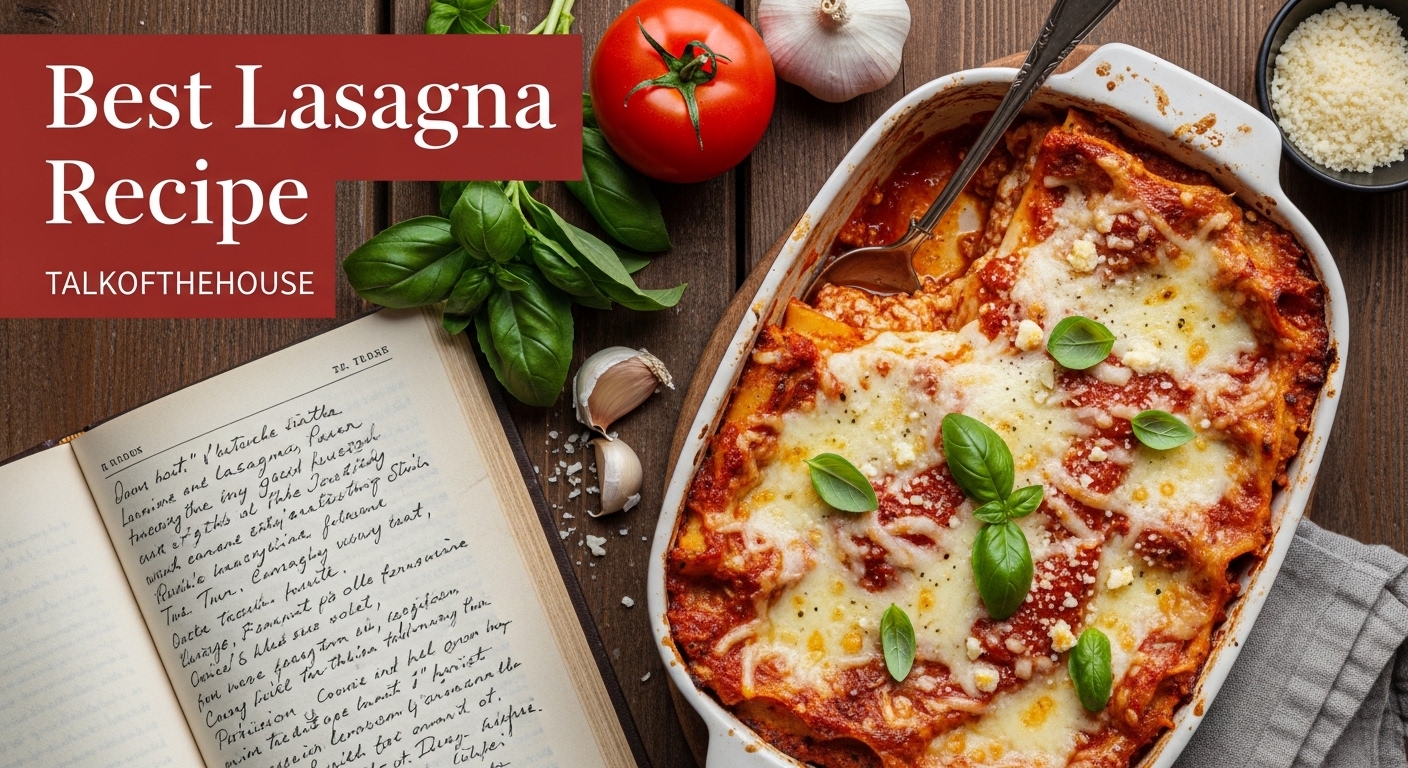
I have been making this lasagna recipe for over 15 years. It has fed my family through countless Sunday dinners, holiday gatherings, and potlucks where people always ask for the recipe.
This is the best lasagna recipe because it strikes the perfect balance. The meat sauce is rich and deeply flavored without taking hours to prepare. The cheese mixture is creamy and tangy. The layers hold together when you cut a slice.
Whether you are cooking for a weeknight family dinner or hosting a crowd for a special occasion, this homemade lasagna delivers every time. I have tested every component, from the type of noodles to the cheese ratios, to create a version that works for real home cooks with real schedules.
Table of Contents
Why This is the Best Lasagna Recipe
The secret to the best lasagna lies in three key elements that work together. First, a meat sauce that tastes like it simmered all day but comes together in under an hour. Second, a cheese mixture that uses both ricotta and parmesan for depth. Third, a layering technique that ensures every bite has the right ratio of pasta, sauce, and cheese.
What makes this recipe stand out from other classic lasagna recipes is its reliability. The noodles cook perfectly without getting mushy. The sauce has enough body to hold the layers together without making the dish watery. The cheese gets that bubbly, golden top that makes everyone reach for their phones to take a picture.
I have served this to picky children, Italian grandmothers, and dinner guests who claimed they did not like lasagna. Every single person has cleaned their plate and asked for seconds.
Lasagna Ingredients
Great lasagna starts with quality ingredients. Each component plays a specific role in creating the final dish. Here is what you need and why each ingredient matters.
For the Meat Sauce
You need one pound of ground beef and one pound of sweet Italian sausage. The combination gives the sauce richness and depth. Use 80/20 ground beef for the best flavor. Remove the sausage from its casings before cooking.
Add one diced yellow onion and four cloves of minced garlic. These aromatics form the flavor base. Two tablespoons of tomato paste add umami and help thicken the sauce.
For the tomato base, use one 28-ounce can of crushed tomatoes and one 15-ounce can of tomato sauce. The crushed tomatoes give texture while the sauce provides smoothness. Add one teaspoon of dried basil, one teaspoon of Italian seasoning, half a teaspoon of fennel seeds, and salt and pepper to taste. The fennel seeds are the secret ingredient that makes people wonder why your sauce tastes so good.
For the Cheese Mixture
The cheese layer needs 15 ounces of ricotta cheese, one large egg, one cup of grated parmesan cheese, two tablespoons of fresh chopped parsley, and a pinch of salt and pepper. The egg binds everything together so the layer does not ooze out when you cut the lasagna.
You will also need three cups of shredded mozzarella cheese. Buy a block and grate it yourself. Pre-shredded cheese contains anti-caking agents that prevent it from melting as smoothly.
For Assembly
Use 12 regular lasagna noodles. You will need a 9×13 inch baking dish and non-stick cooking spray. Have extra parmesan ready for sprinkling on top before baking.
Cheese Comparison: Ricotta vs Cottage Cheese vs Bechamel
One of the most common questions I see in cooking forums is whether to use ricotta, cottage cheese, or bechamel in lasagna. Here is the breakdown from my testing.
Ricotta cheese is the traditional choice for Italian-American lasagna. It has a mild, slightly sweet flavor and creamy texture. When mixed with egg and parmesan, it creates a layer that holds its shape while staying soft. This is what I use in my recipe and recommend for most home cooks.
Cottage cheese is a popular substitute, especially in Midwestern recipes. It has a tangier flavor and curdled texture. Some people prefer it because it is lighter and lower in fat. If you use cottage cheese, choose small curd and drain it well first.
Bechamel sauce is the traditional choice for authentic Italian lasagna, particularly from the Emilia-Romagna region. It creates a silky, luxurious layer but requires extra work to make the sauce. If you want the most authentic experience and have time, bechamel is worth the effort. For weeknight cooking, ricotta is more practical.
Noodle Guide: Fresh vs Dried vs No-Boil
The type of noodle you choose affects both texture and preparation time. Here is what you need to know about each option.
Fresh pasta sheets deliver the most delicate, tender result. You can find these in the refrigerated section of many grocery stores. They do not require boiling before assembly, which saves time. The downside is cost and availability. Fresh pasta also creates a softer overall texture that some people love and others find too mushy.
Dried lasagna noodles are the standard choice. They cost less, store indefinitely, and give you control over the final texture. Boil them until al dente, which means they still have a slight firmness when bitten. This prevents them from turning to mush during baking. You will need to boil 12 noodles for this recipe, and I always cook a few extra in case any tear.
No-boil noodles have become popular for convenience. They absorb liquid from the sauce during baking. If you use no-boil noodles, increase your sauce by about 25 percent and make sure every noodle edge is covered with sauce. Some home cooks swear by them. Others find the texture inferior to boiled noodles. I prefer dried noodles for the best texture, but no-boil works when you are short on time.
How to Make the Best Lasagna
Making lasagna involves three main phases. Prepare the meat sauce. Mix the cheese layer. Assemble and bake. Each step builds toward the final dish.
Step 1: Prepare the Meat Sauce
Heat a large skillet or Dutch oven over medium-high heat. Add the ground beef and Italian sausage. Break up the meat with a wooden spoon as it cooks. Continue cooking until browned, about 8 to 10 minutes.
Drain excess fat if there is more than a tablespoon left in the pan. Leaving some fat adds flavor, but too much makes the sauce greasy. Add the diced onion to the meat and cook for 3 minutes until softened. Add the minced garlic and cook for 30 seconds until fragrant.
Stir in the tomato paste and cook for 2 minutes. This step caramelizes the paste and removes the raw taste. Add the crushed tomatoes, tomato sauce, dried basil, Italian seasoning, fennel seeds, salt, and pepper. Stir everything together.
Reduce heat to low and simmer uncovered for 30 minutes. Stir occasionally. The sauce should thicken enough to coat the back of a spoon. Taste and adjust seasoning. Set aside to cool slightly while you prepare the other components.
Step 2: Prepare the Cheese Mixture
In a medium mixing bowl, combine the ricotta cheese, egg, one cup of grated parmesan, chopped parsley, salt, and pepper. Mix until well combined. The mixture should be spreadable but not runny.
Grate your mozzarella if you have not already done so. Set aside in a separate bowl. You want everything ready before you start assembling.
Step 3: Prepare the Noodles
Bring a large pot of salted water to a boil. The water should taste like the sea. Add the lasagna noodles and cook until al dente according to package directions, usually 8 to 10 minutes.
Drain the noodles and lay them flat on a sheet of parchment paper or clean kitchen towels. This prevents them from sticking together. Drizzle a tiny amount of olive oil on each noodle if they seem like they might stick.
Step 4: Assemble the Lasagna
Preheat your oven to 375 degrees Fahrenheit. Spray your 9×13 inch baking dish with non-stick cooking spray.
Spread one cup of meat sauce on the bottom of the dish. This prevents the noodles from sticking and provides moisture. Arrange four noodles over the sauce, overlapping slightly if needed to cover the bottom completely.
Spread half of the ricotta mixture over the noodles. Use an offset spatula or the back of a spoon to spread evenly. Sprinkle one cup of mozzarella cheese over the ricotta layer.
Spread two cups of meat sauce over the mozzarella. Add another layer of four noodles. Press down gently to compress the layers.
Spread the remaining ricotta mixture over these noodles. Sprinkle another cup of mozzarella. Spread two more cups of meat sauce.
Add the final layer of four noodles. Spread the remaining meat sauce over the top. Sprinkle the remaining mozzarella and an additional quarter cup of parmesan cheese over everything.
Spray a sheet of aluminum foil with cooking spray. Cover the baking dish tightly with the foil, spray side down. This prevents the cheese from sticking to the foil during baking.
Step 5: Bake the Lasagna
Place the covered lasagna in the preheated oven. Bake for 25 minutes. Remove the foil and continue baking for another 25 minutes until the cheese is bubbly and starting to brown in spots.
For extra browning, switch the oven to broil for 2 to 3 minutes at the end. Watch carefully to prevent burning. The top should be golden and irresistible.
Remove from oven and let rest for at least 15 minutes before cutting. This resting period is non-negotiable. It allows the layers to set so you can cut clean squares.
Tips for the Best Lasagna
After making this recipe hundreds of times, I have learned a few secrets that make a real difference.
Let your meat sauce cool slightly before assembly. Hot sauce can start cooking the noodles and make them mushy. Room temperature or slightly warm sauce works best.
Do not skip the resting time after baking. I know it is tempting to cut into that bubbling cheese immediately. Waiting 15 to 30 minutes gives you much cleaner slices that hold together on the plate.
Grate your own cheese from blocks. Pre-shredded cheese contains cellulose to prevent clumping. This same ingredient prevents the cheese from melting into that perfect stretchy layer we all want.
Cover the dish tightly with foil for the first half of baking. This traps steam that cooks the noodles through. Uncovering for the second half creates the golden brown top.
Use a sharp knife to cut slices. Wipe the blade between cuts for the cleanest presentation. A bench scraper also works well for portioning.
Common Mistakes to Avoid
Even experienced cooks make these errors. Here is what to watch out for based on my testing and forum research.
Not prepping the noodles properly leads to gummy or undercooked pasta. Boil regular noodles until al dente. If using no-boil noodles, ensure every edge is covered with sauce.
Overcooking the noodles before assembly makes them turn to mush during baking. Remember they will continue cooking in the oven. Aim for slightly firmer than you would want for regular pasta.
Using too much sauce creates watery lasagna that slides apart when served. The sauce should coat the layers, not pool at the bottom of the dish.
Uneven layering means some bites are all pasta and others are all cheese. Take time to spread each component evenly across every layer.
Not using enough cheese leaves you with dry lasagna. Follow the measurements in this recipe. They are calibrated for the perfect ratio.
Overcrowding the layers makes the lasagna too tall to cook evenly. If your dish is overflowing, save some ingredients for a second small pan.
Skipping the resting period results in lasagna that falls apart when you cut it. Those 15 minutes allow the cheese to set and the layers to bind together.
Underseasoning the meat sauce makes the whole dish bland. Taste your sauce before assembly. It should be slightly saltier than you think is right, as the noodles will absorb some seasoning.
Troubleshooting Guide
Sometimes things do not go as planned. Here is how to fix common problems.
If your lasagna is watery, you likely used too much sauce or did not drain the meat properly. Next time, drain fat after browning and measure your sauce. For a watery finished dish, bake uncovered for an extra 10 minutes to evaporate excess moisture.
Dry lasagna means not enough sauce or cheese, or overbaking. Check your oven temperature with a thermometer. Cover with foil if the top is browning too quickly before the center is hot.
Bland lasagna needs more salt in the meat sauce and cheese mixture. Season each component individually. The noodles absorb flavor, so each layer needs to taste slightly overseasoned on its own.
Burned cheese on top happens when the broil step goes too long or the oven runs hot. Watch carefully during the final minutes. If the cheese browns too early, cover loosely with foil.
Lasagna that falls apart when cut needs more resting time. Wait the full 15 to 30 minutes. Using a serrated knife also helps cut through layers without squishing them.
Lasagna Variations
Once you master the basic recipe, try these delicious variations.
Vegetarian lasagna replaces the meat with layers of roasted vegetables. Use zucchini, eggplant, mushrooms, and spinach. Roast the vegetables first to remove excess moisture. Increase the ricotta mixture slightly to compensate for lost protein.
Spinach lasagna adds nutrition without changing the flavor much. Mix one cup of cooked, drained, chopped spinach into the ricotta mixture. Squeeze the spinach dry before adding or it will make the dish watery.
White lasagna omits the tomato sauce entirely. Use bechamel sauce instead of ricotta. Add cooked chicken or turkey and spinach. Season with nutmeg and white pepper.
Gluten-free lasagna works with gluten-free lasagna noodles available at most stores. Follow the same procedure, but check the noodles 5 minutes early as gluten-free pasta can get mushy quickly.
Low-carb lasagna uses thin slices of zucchini or eggplant instead of noodles. Salt the vegetable slices and let them drain for 30 minutes before using. Pat dry with paper towels to remove moisture.
Make Ahead and Storage Instructions
One of the best things about lasagna is that it gets better with time. The flavors meld and deepen when made ahead.
Make Ahead Timeline
You can prepare components separately up to 2 days in advance. Make the meat sauce and refrigerate it in an airtight container. Mix the cheese mixture and store separately. Grate the mozzarella and keep it in a bag.
Assemble the lasagna up to 24 hours before baking. Cover tightly with plastic wrap, then foil. Refrigerate until ready to bake. Add 10 minutes to the covered baking time since you are starting from cold.
For same-day prep, you can make the sauce and cheese mixture in the morning. Assemble 1 to 2 hours before baking and leave at room temperature.
Freezing Instructions
Lasagna freezes beautifully either before or after baking.
To freeze before baking, assemble the lasagna in a disposable aluminum pan. Cover with two layers of heavy-duty foil. Label with the date and baking instructions. Freeze for up to 3 months. Bake from frozen, adding 20 to 25 minutes to the covered baking time.
To freeze after baking, let the lasagna cool completely. Cut into individual portions for easier reheating. Wrap each piece tightly in plastic wrap, then foil. Freeze for up to 3 months.
Reheating Instructions
Refrigerated lasagna reheats best in the oven. Cover with foil and bake at 350 degrees for 20 to 25 minutes until heated through. Individual portions can be microwaved for 2 to 3 minutes, though the texture is softer.
Frozen baked lasagna thaws overnight in the refrigerator before reheating. Frozen unbaked lasagna goes straight from freezer to oven.
What to Serve With Lasagna
A complete lasagna dinner needs a few simple sides. A crisp green salad with Italian dressing cuts through the richness of the cheese. Garlic bread or breadsticks are essential for sauce-mopping.
For wine pairings, choose a medium-bodied red like Chianti or Sangiovese. The acidity balances the tomato sauce. A sparkling water with lemon works for non-drinkers.
Dessert should be light after such a hearty meal. Fresh fruit, lemon sorbet, or a small piece of tiramisu complete the experience.
Frequently Asked Questions
What is the secret to the best lasagna?
The secret to the best lasagna is threefold: a deeply flavored meat sauce simmered long enough to develop richness, the right cheese ratio using fresh-grated mozzarella for the best melt, and letting the lasagna rest 15 to 30 minutes after baking before cutting. Quality ingredients matter more than complicated technique.
What are common lasagna mistakes?
The most common mistakes are not prepping noodles properly, overcooking them before assembly, using too much sauce, uneven layering, not using enough cheese, overcrowding the layers, skipping the resting period, and underseasoning the meat sauce. Each of these affects the final texture and flavor.
Should I use ricotta or cottage cheese in lasagna?
Ricotta is the traditional choice for Italian-American lasagna with a creamy, mild flavor. Cottage cheese is tangier and lighter, popular in some regional variations. Both work well, but ricotta creates a more classic texture. For authentic Italian lasagna, use bechamel sauce instead.
Can you make lasagna ahead of time?
Yes, lasagna is an excellent make-ahead dish. You can prepare components 2 days ahead or assemble the entire dish up to 24 hours before baking. Refrigerate covered until ready to bake, then add 10 minutes to the covered baking time. Lasagna also freezes well for up to 3 months.
How long should lasagna rest before cutting?
Lasagna should rest for at least 15 minutes, and up to 30 minutes, before cutting. This resting period allows the cheese to set and the layers to bind together. Cutting too early results in messy slices that fall apart on the plate. The wait is worth it for clean, picture-perfect portions.
Can a diabetic have lasagna?
Yes, with modifications. Use lean ground beef or turkey sausage, low-fat ricotta and mozzarella, and whole wheat lasagna noodles to increase fiber. Watch portion sizes and balance the meal with a large side salad. Consult your healthcare provider about how lasagna fits into your specific meal plan.
Is lasagna good for heart patients?
Traditional lasagna can be modified for heart health. Use lean ground turkey instead of beef and sausage, low-fat cottage cheese instead of ricotta, reduced-fat mozzarella, and low-sodium tomato products. Increase vegetables by adding spinach between layers. These changes reduce saturated fat and sodium while keeping the comforting qualities.
Do I need to boil no-boil lasagna noodles?
No, that defeats the purpose. No-boil noodles are designed to absorb moisture from the sauce during baking. If using them, increase your sauce by about 25 percent and ensure every edge of noodle is covered with sauce. Some cooks prefer traditional boiled noodles for better texture control.
Conclusion
This best lasagna recipe has earned its place as my most requested dish for good reason. It combines authentic Italian-American flavors with practical techniques that work in real home kitchens.
The layers of tender pasta, rich meat sauce, and three cheeses create something greater than the sum of its parts. Whether you serve it for a casual Tuesday dinner or a holiday celebration, this homemade lasagna brings people together around the table.
Remember that lasagna is forgiving. Even imperfect layers taste delicious. Make it your own with the variations and substitutions that work for your family. The most important ingredient is the care you put into feeding people you love.
If you make this recipe, I hope it becomes a tradition in your home like it has in mine. Share it with friends, bring it to potlucks, and pass it down to the next generation of cooks in your family.