
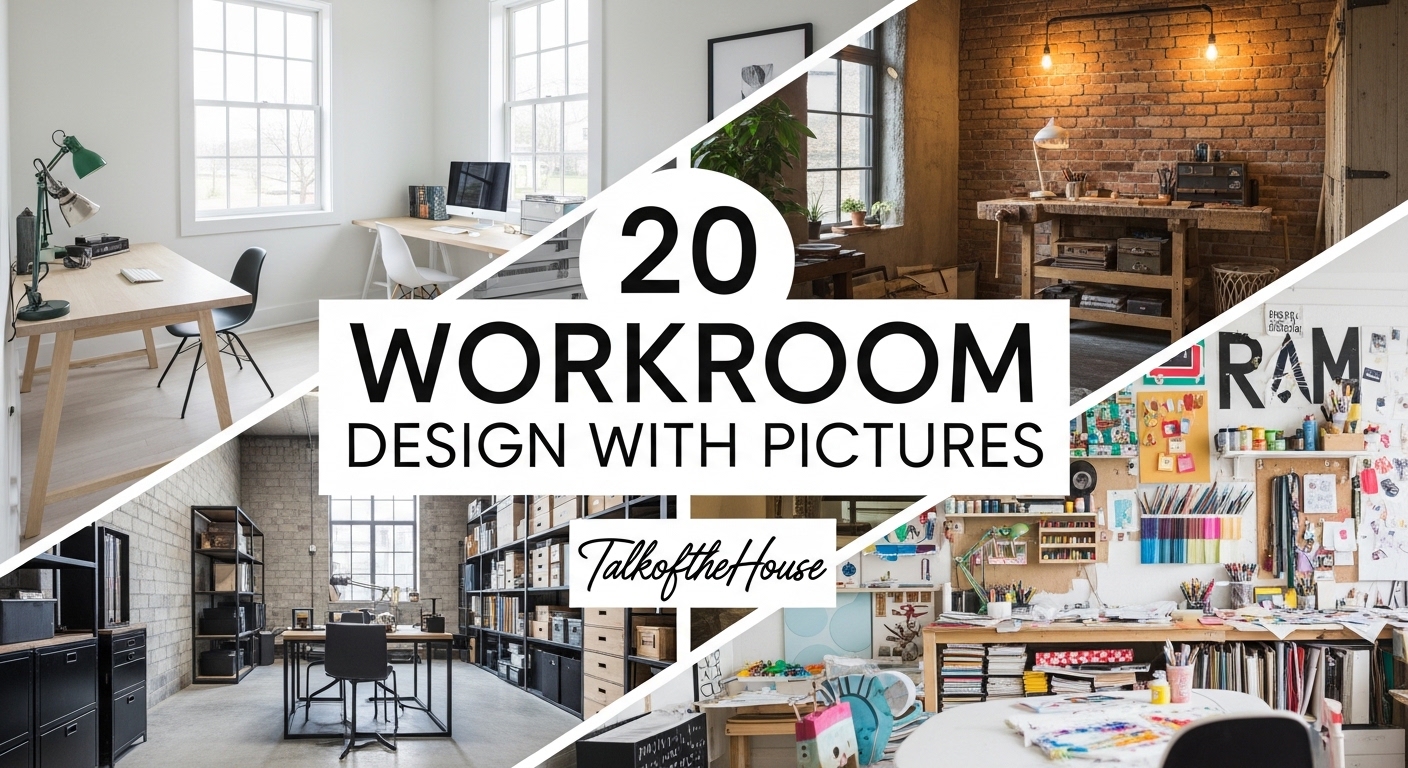
When I first converted our spare bedroom into a workroom three years ago, it was a jumbled mess of mismatched furniture and overflowing storage bins. I spent more time searching for supplies than actually creating. That transformation journey taught me that great workroom design ideas are not about expensive furniture or massive spaces. They are about understanding how you work and building a space that supports your creative flow.
A well-designed workroom serves as the command center for your projects, whether you are sewing quilts, building model airplanes, or running a remote business. It should energize you when you walk in and help you maintain focus during long sessions. The best designs blend functionality with personality, creating a space that feels uniquely yours while maximizing every square foot.
This guide shares twenty proven workroom design ideas gathered from professional organizers, interior designers, and fellow craft enthusiasts. You will find solutions for tiny closets, budget-friendly hacks, and storage systems tailored to specific hobbies. Every idea can be adapted to your space, style, and budget.
Table of Contents
20 Creative Workroom Design Ideas for April 2026
These twenty design concepts range from quick weekend projects to more involved renovations. Each idea solves a common workroom challenge while adding visual interest and functionality to your space.
1. Embrace Biophilic Design with Living Walls
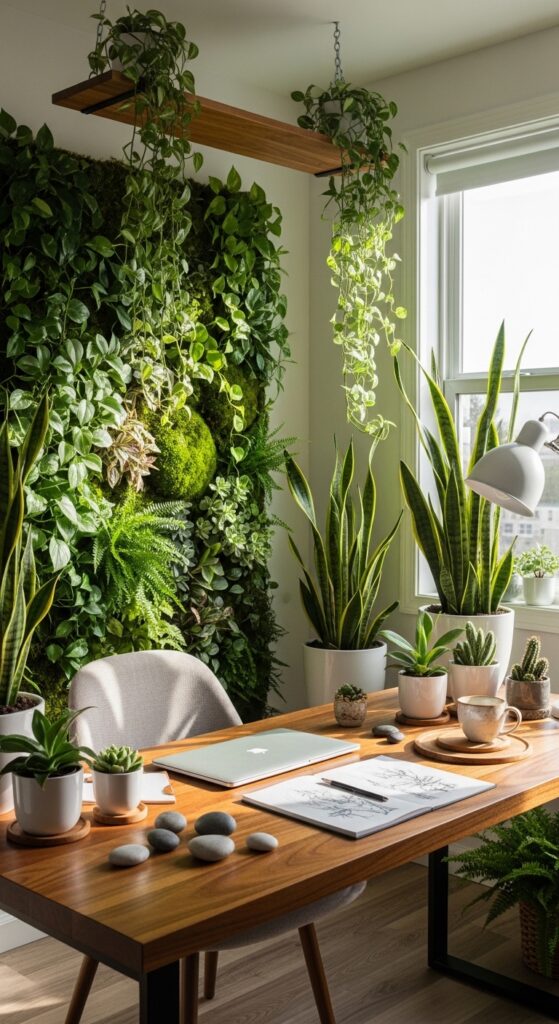
Adding plants to your workroom does more than improve aesthetics. Studies show that biophilic design reduces stress and boosts creativity by connecting us to nature. Start with low-maintenance options like pothos, snake plants, or ZZ plants that thrive in various light conditions.
Mount floating shelves near your window to create a living wall display. Hang trailing plants from ceiling hooks to add vertical interest without consuming desk space. If natural light is limited, consider grow lights or high-quality faux plants that require zero maintenance.
2. Install a Pegboard Wall System
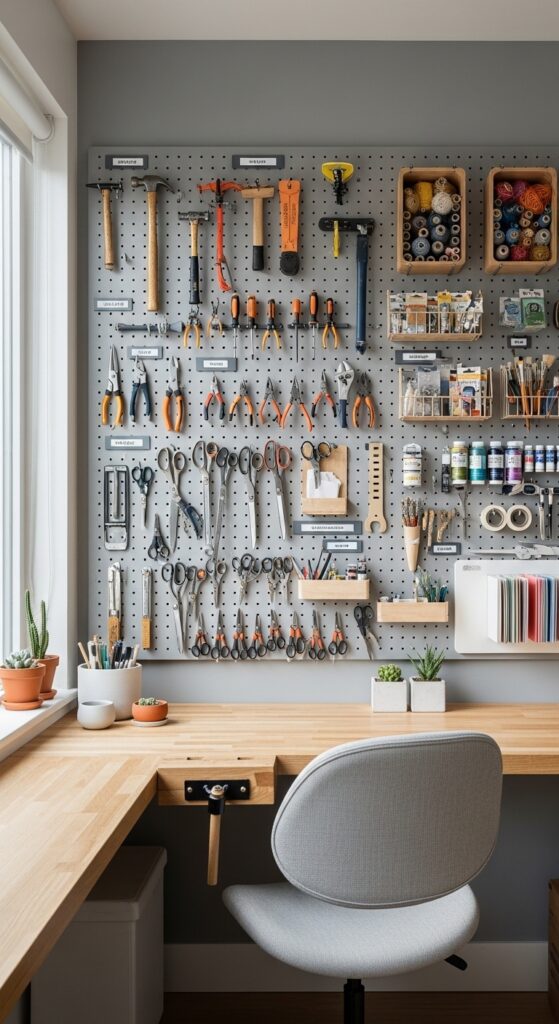
Pegboard remains one of the most versatile storage solutions for any workroom. A standard 4×8 foot sheet covers an entire wall and costs under $50 at most hardware stores. Paint it to match your decor or leave it natural for an industrial workshop vibe.
The real magic happens with the accessories. Hooks hold scissors, tape measures, and tools. Baskets corral small supplies like thread spools, paint tubes, or beads. Shelves display works in progress or frequently used materials. Rearrange everything as your needs change without drilling new holes.
3. Create a Sit-Stand Workstation
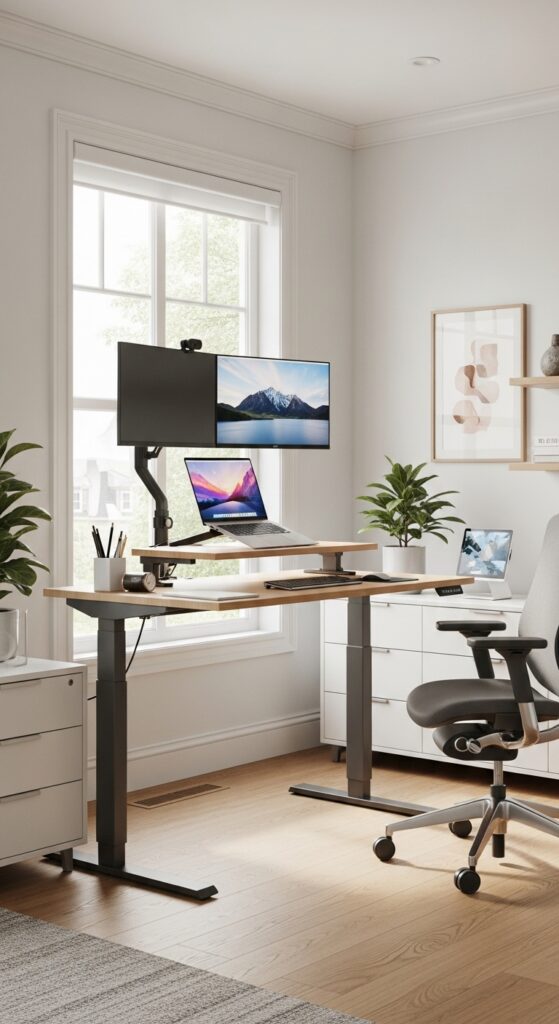
Your body was not designed to sit for eight hours straight. A height-adjustable desk or converter allows you to alternate between sitting and standing throughout the day. This simple change reduces back pain, increases energy levels, and improves circulation.
If a motorized desk is outside your budget, consider a desktop converter that sits on your existing surface. Wall-mounted fold-down desks offer another affordable option for small spaces. Add an anti-fatigue mat for comfort during standing sessions.
4. Add a Cozy Reading Nook
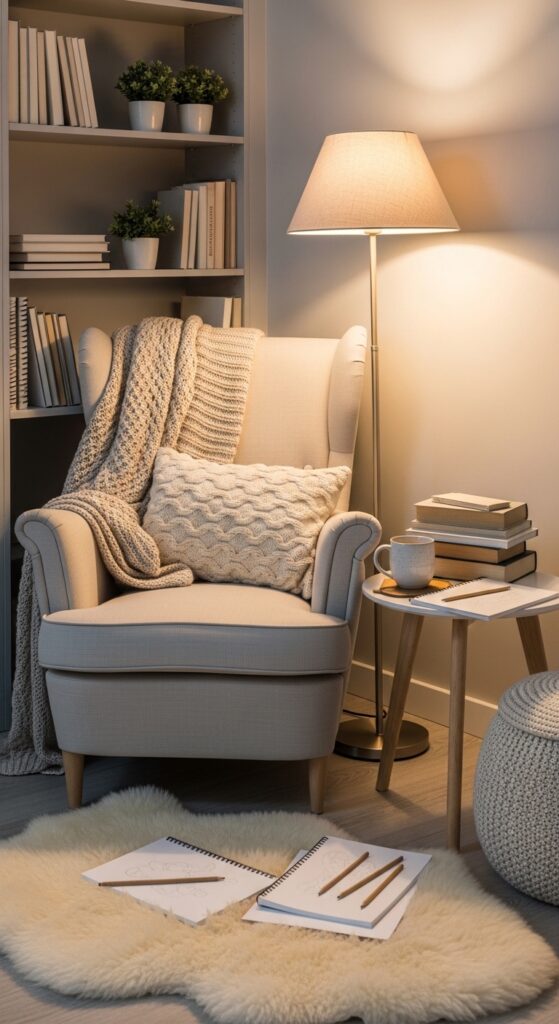
Every creative process involves thinking time, not just doing time. A comfortable chair with good lighting gives you a place to review patterns, sketch ideas, or simply rest between projects. Position it away from your main work area to create mental separation.
Look for a compact armchair or small loveseat that fits your scale. Add a side table for beverages and a floor lamp for task lighting. A small ottoman provides foot support and hidden storage for blankets or supplies.
5. Maximize Natural Light with Mirrors
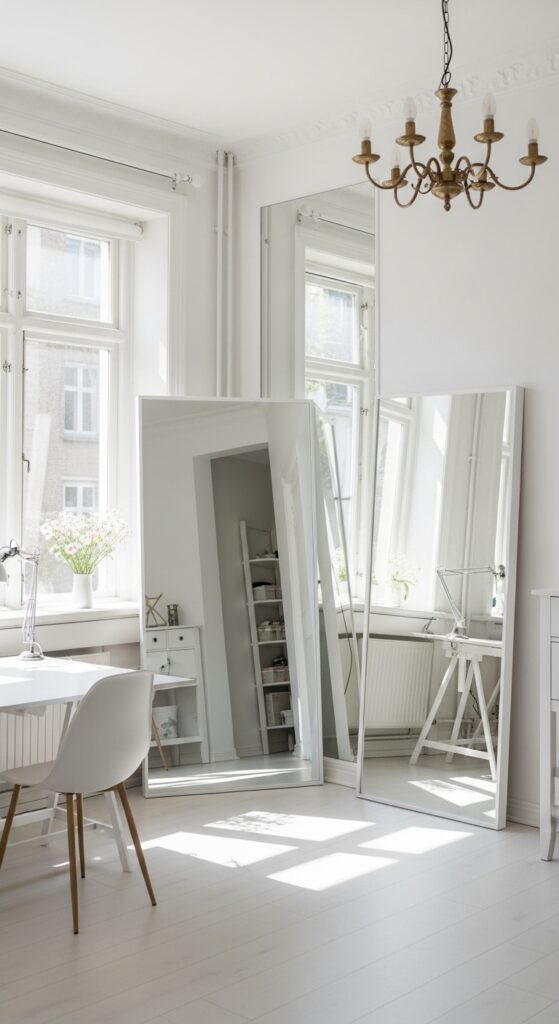
North-facing rooms and interior spaces often suffer from limited daylight. Strategically placed mirrors bounce available light deeper into your workroom. Position a large mirror opposite or adjacent to your window for maximum brightness.
Consider mirrored furniture pieces like a console table or cabinet doors. Reflective surfaces on shelves and backsplashes also help distribute light. Keep windows unobstructed by using sheer curtains or top-down blinds that provide privacy without blocking daylight.
6. Design a Multi-Purpose Island
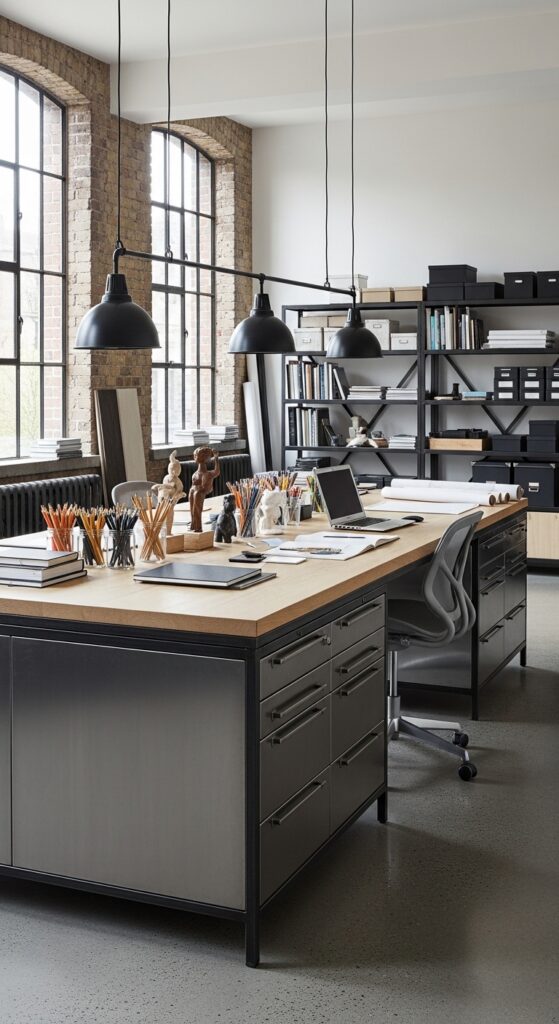
A central work island serves as the heart of any productive workroom. It provides generous surface area for spreading out projects while keeping tools and supplies within arm’s reach. The perimeter creates natural circulation space around your primary work zone.
Choose an island with built-in storage like drawers, shelves, or cabinets underneath. Kitchen islands, old dressers, and rolling carts all work beautifully with minor modifications. Add locking casters if you need flexibility to reconfigure your layout.
7. Use Color Psychology for Productivity
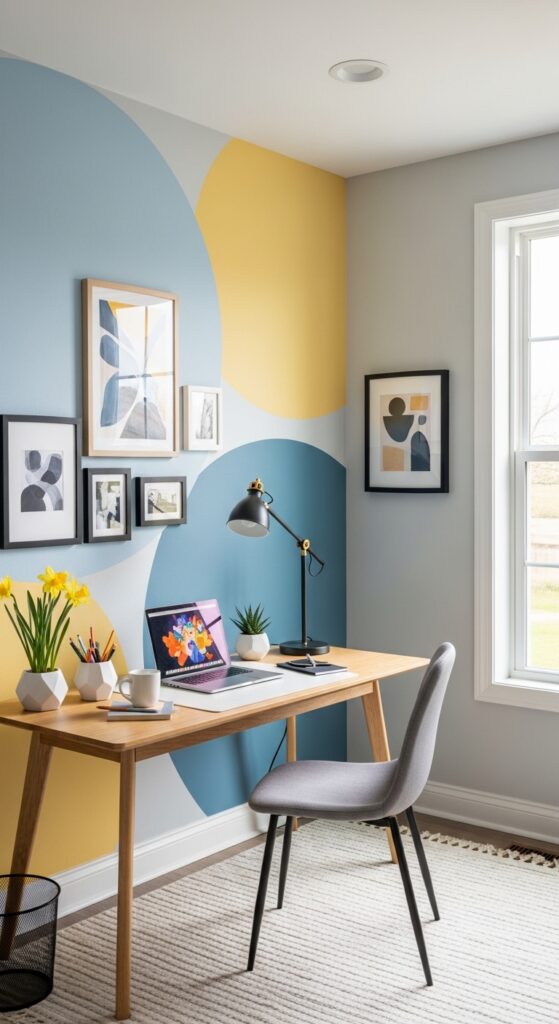
Colors affect our mood and energy levels more than most people realize. Blues and greens promote calm focus perfect for detailed work. Yellows spark creativity and optimism ideal for brainstorming spaces. Neutrals like gray and beige provide a sophisticated backdrop that reduces visual clutter.
Paint an accent wall rather than the entire room to test color impact without overwhelming the space. Consider the 60-30-10 rule: 60% dominant neutral, 30% secondary color, 10% accent pops. Your supplies and projects will add plenty of additional color naturally.
8. Install Floating Shelves for Display
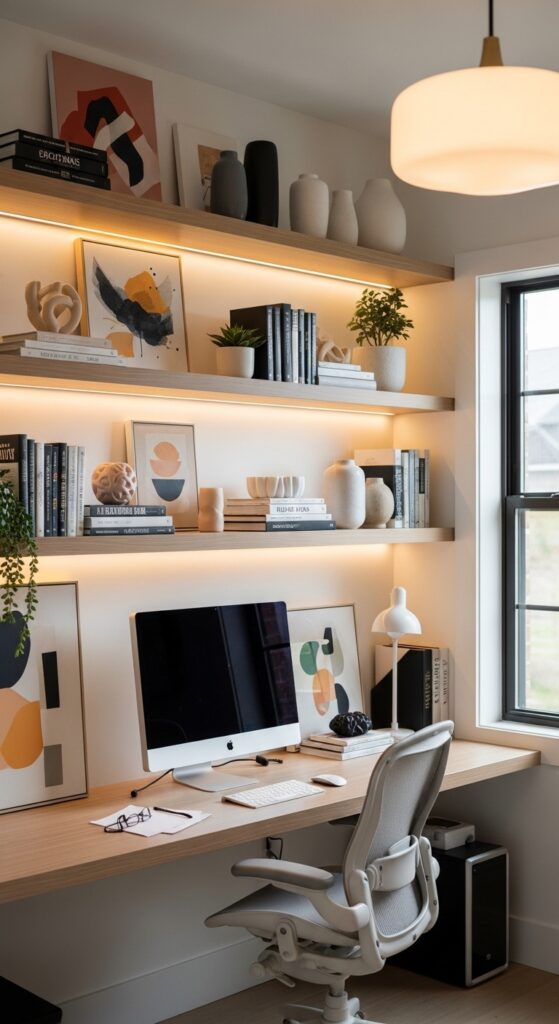
Floating shelves add storage without the heavy visual weight of traditional bookcases. They keep frequently used items visible and accessible while freeing valuable desk space. Stagger shelf heights to create visual rhythm and accommodate items of various sizes.
Use sturdy brackets and anchor shelves into wall studs for safety. Style shelves with a mix of functional supplies and decorative objects like vases, framed photos, or small sculptures. Leave breathing room between items to prevent a cluttered appearance.
9. Create a Photo Wall or Inspiration Board
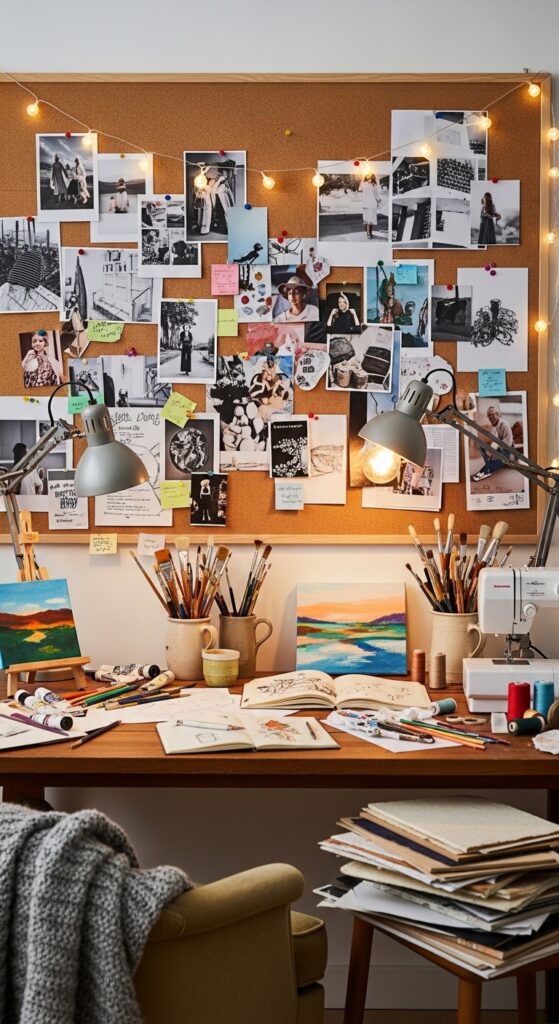
Visual inspiration keeps creativity flowing during challenging projects. Dedicate a wall section to mood boards, fabric swatches, color palettes, or reference images. Cork boards, magnetic panels, or even painted chalkboard walls work beautifully for this purpose.
Update your board seasonally or per project to keep the energy fresh. Include a mix of aspirational images and practical references like technique guides or measurement charts. The visual reminder of your goals helps maintain motivation during long projects.
10. Add Under-Cabinet Task Lighting
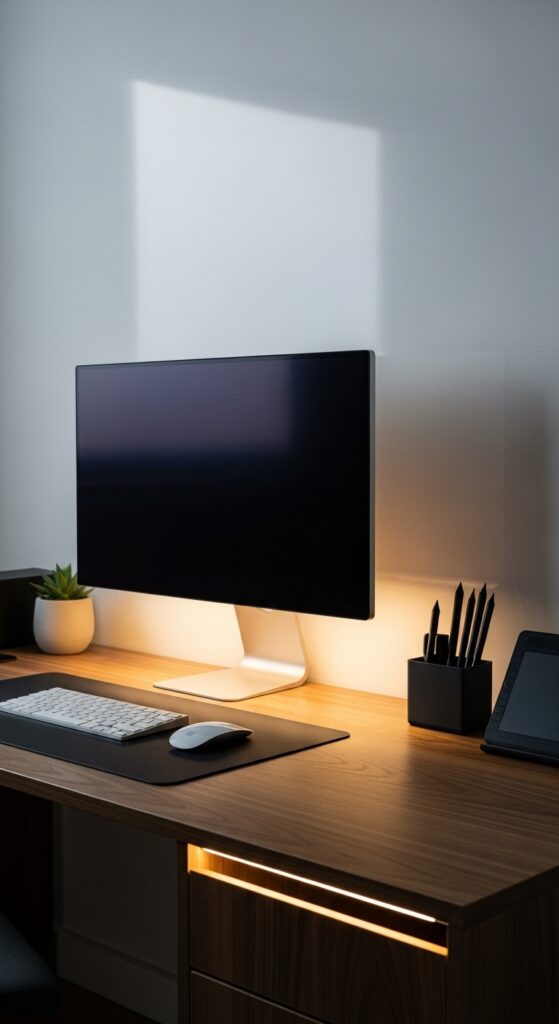
Overhead lighting creates shadows that strain your eyes during detailed work. LED strip lights mounted underneath cabinets illuminate your work surface directly without taking up space. They consume minimal electricity and emit almost no heat.
Choose 4000K-5000K color temperature lights for accurate color rendering. Install dimmer switches to adjust brightness throughout the day. Battery-powered options eliminate the need for electrical work if you are renting or uncomfortable with wiring.
11. Build a Custom Storage Wall
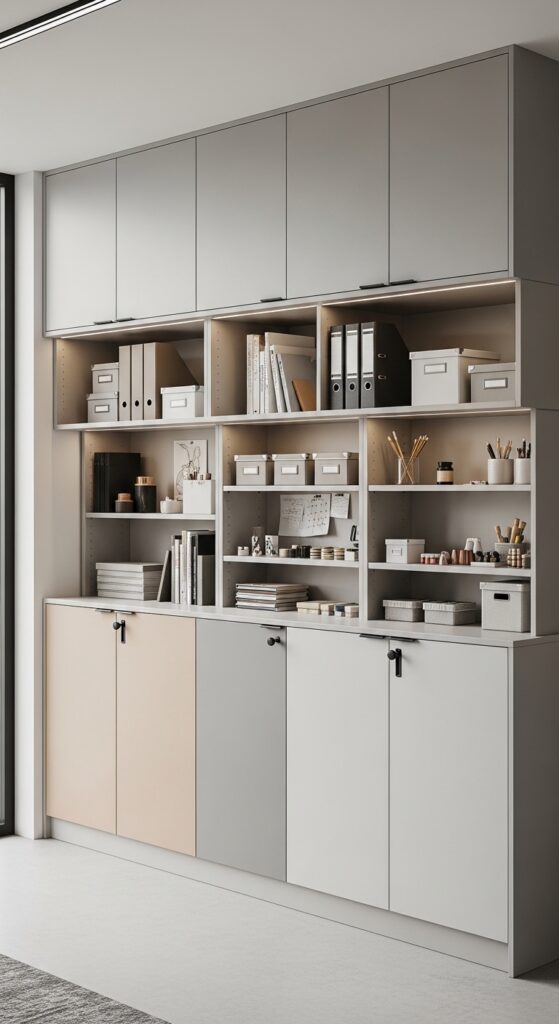
Floor-to-ceiling storage transforms an entire wall into an organizational powerhouse. Combine closed cabinets for concealing clutter with open shelving for displaying beautiful supplies and finished pieces. Add a desk surface at counter height for standing work.
Mix unit depths to create architectural interest: deeper cabinets below for large items, shallow shelves above for books and display. Use consistent hardware and finishes to maintain a cohesive look. Label everything clearly so family members can help maintain organization.
12. Incorporate Vintage Furniture Finds
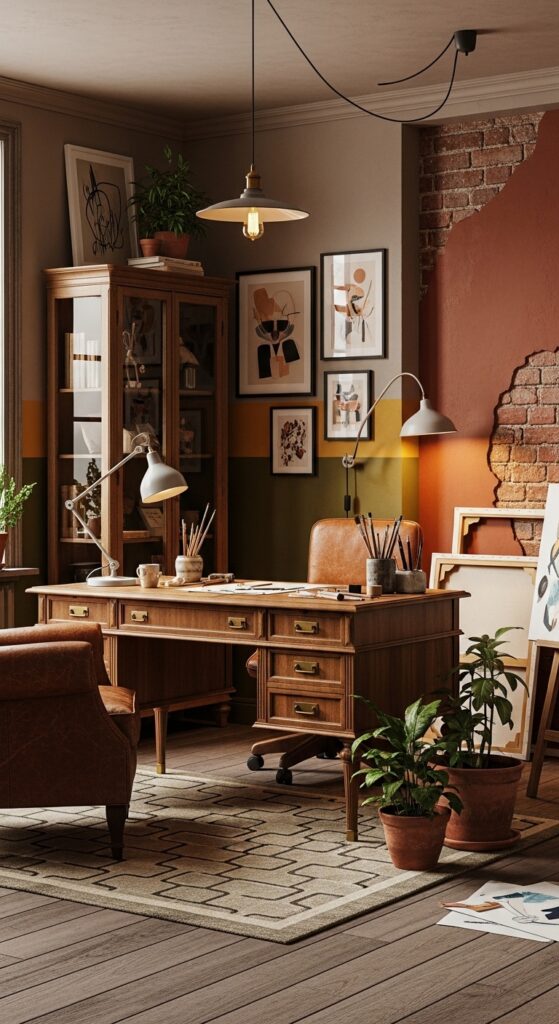
Old furniture brings character and solid construction to modern workrooms. Vintage desks often feature dovetail joints, hardwood surfaces, and built-in storage missing from contemporary particleboard pieces. Thrift stores, estate sales, and online marketplaces offer endless hunting opportunities.
Look for sturdy pieces with good bones that need only cosmetic updates. A fresh coat of paint, new hardware, and contact paper in drawers can transform a tired piece. Repurpose an old card catalog for small parts storage or convert a sideboard into a craft station.
13. Design a Video Call Backdrop Zone
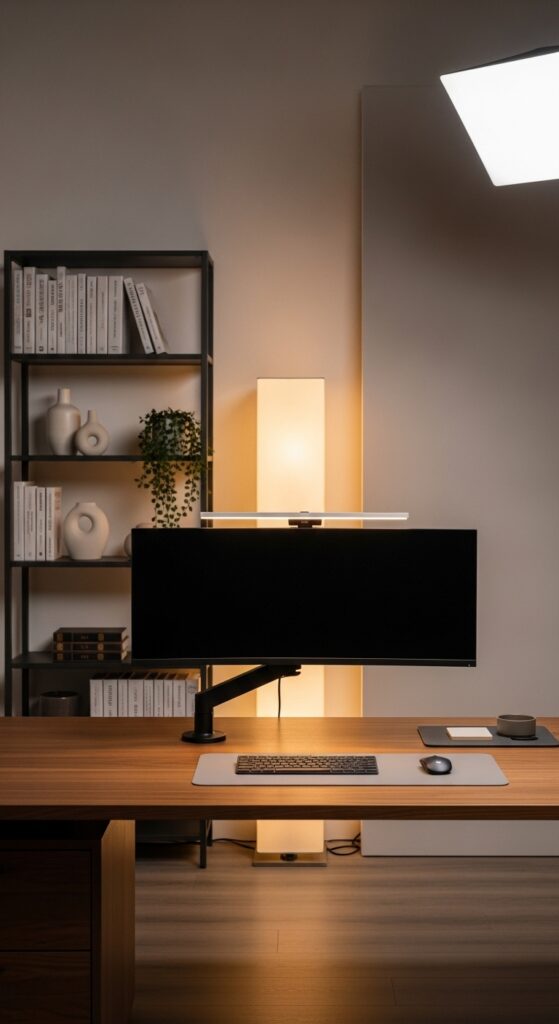
Remote work and online teaching require professional-looking video backgrounds. Dedicate a wall section or corner for video calls with controlled lighting and an uncluttered background. A simple bookshelf, artwork arrangement, or decorative screen provides visual interest without distraction.
Position a ring light or natural light source facing you for flattering illumination. Keep a few professional props nearby: a notebook, coffee mug, or relevant supplies that reinforce your expertise. Test your setup regularly to ensure colors appear true on camera.
14. Add a Mini Fridge or Beverage Station
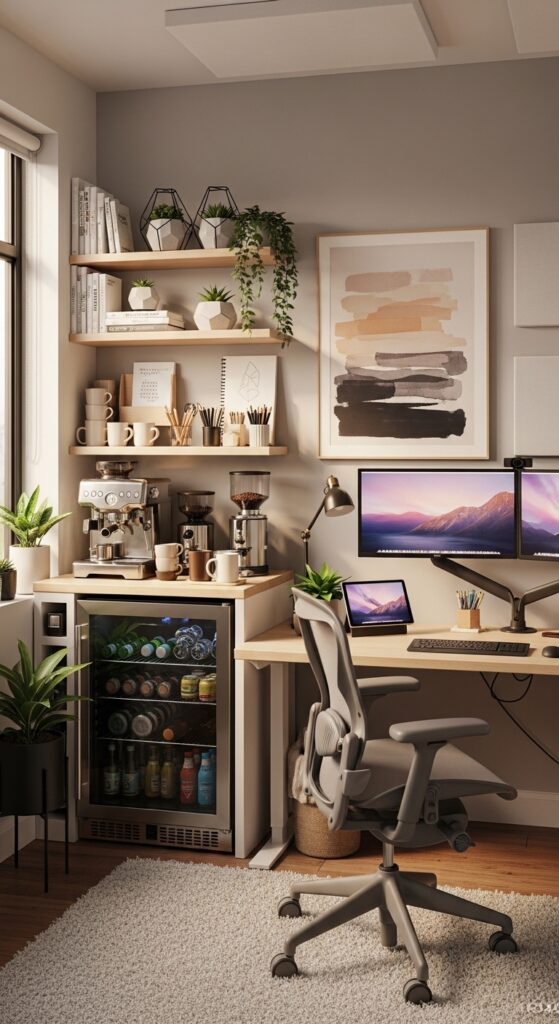
Staying hydrated and caffeinated maintains energy during long creative sessions. A compact mini fridge eliminates trips to the kitchen that break your flow state. Alternatively, create a beverage station with an electric kettle, coffee maker, and supply cabinet.
Include a small trash can and recycling bin to keep wrappers and cups contained. Stock healthy snacks like nuts or granola bars to avoid vending machine runs. Having refreshments nearby respects your creative momentum while supporting physical wellbeing.
15. Use Clear Containers for Supply Organization
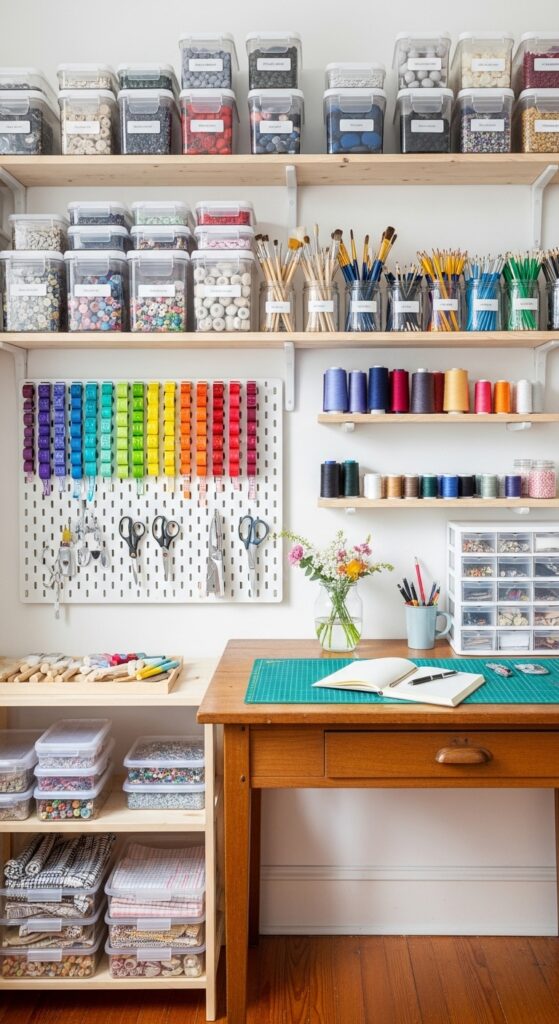
Out of sight often means out of mind when it comes to craft supplies. Clear acrylic bins, glass jars, and stackable containers let you see exactly what you have without rummaging through drawers. This visibility prevents duplicate purchases and forgotten treasures.
Decant supplies from original packaging into uniform containers for a cohesive look. Add labels to the front of each container for instant identification. Stackable designs maximize vertical space while keeping everything accessible.
16. Create a Mobile Supply Cart
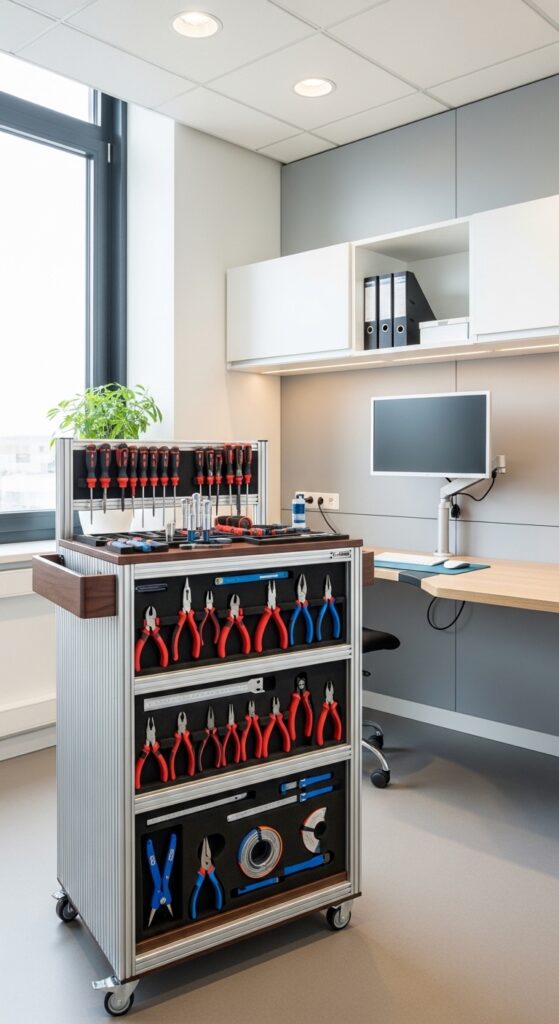
Not every project happens at your desk. A rolling cart transports supplies to the dining table, living room, or even outdoors when weather permits. Look for carts with multiple tiers and a small footprint that tucks away when not in use.
Assign each shelf a category: tools on top, consumables in the middle, and backup supplies below. Add small bins or dividers to prevent items from rolling around during transport. Lock the wheels when stationary for safety.
17. Install a Large Format Calendar or Planner
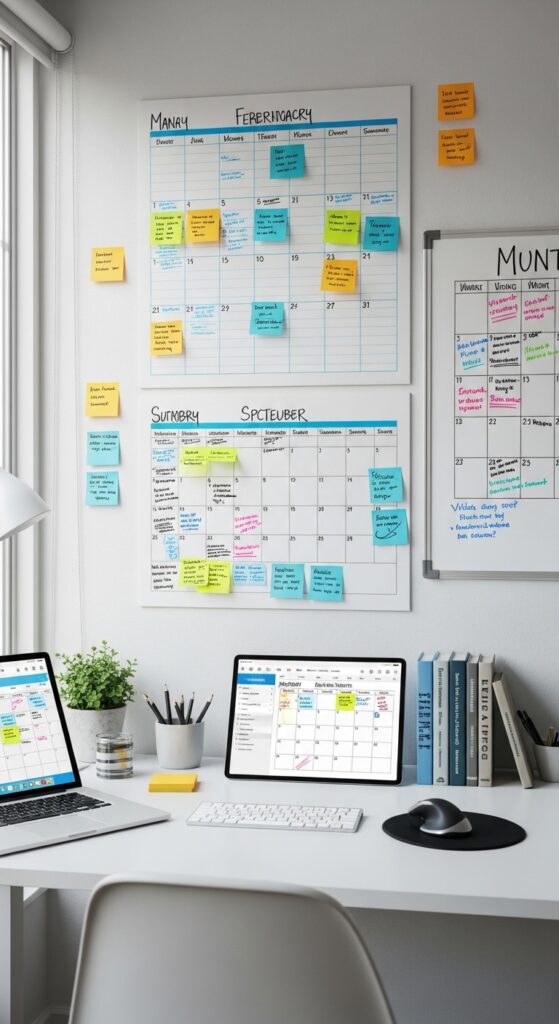
Visual planners help manage project deadlines, shipping dates, and creative goals. A large wall calendar or whiteboard planner keeps your schedule visible without cluttering your digital devices. Color-coding different project types creates instant pattern recognition.
Position your calendar where you will see it daily, ideally near your workspace entrance. Include both professional deadlines and personal creative goals. The visual reminder keeps long-term projects progressing alongside urgent tasks.
18. Add Acoustic Panels for Sound Control
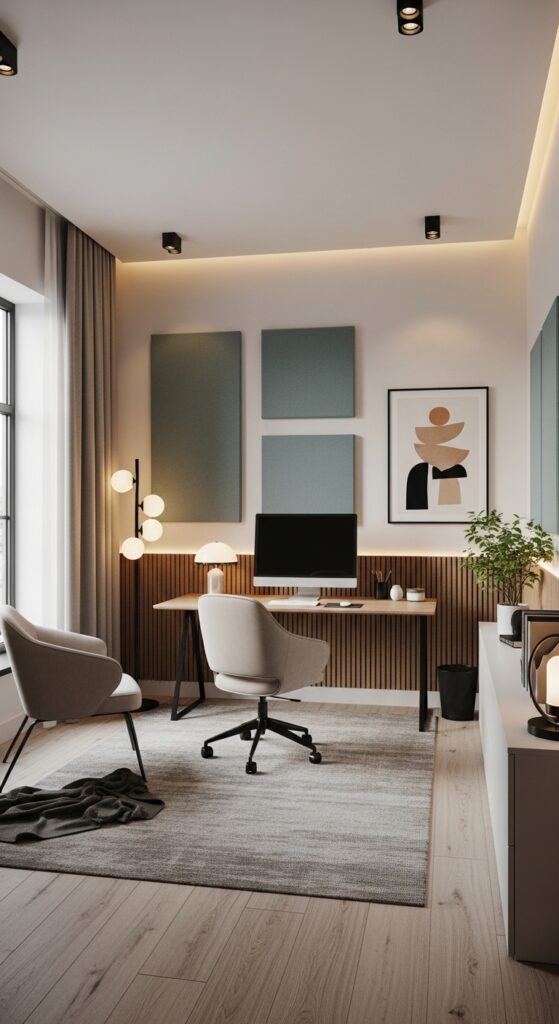
Hard surfaces in workrooms create echoes that disturb concentration and video calls. Fabric-wrapped acoustic panels absorb sound while adding decorative texture to walls. They come in various colors and patterns to complement your design scheme.
Strategic placement matters more than total coverage. Focus on walls opposite your primary noise sources and corners where sound reflects. DIY options using insulation board and fabric offer budget-friendly alternatives to commercial panels.
19. Design a Gift Wrap and Packaging Station
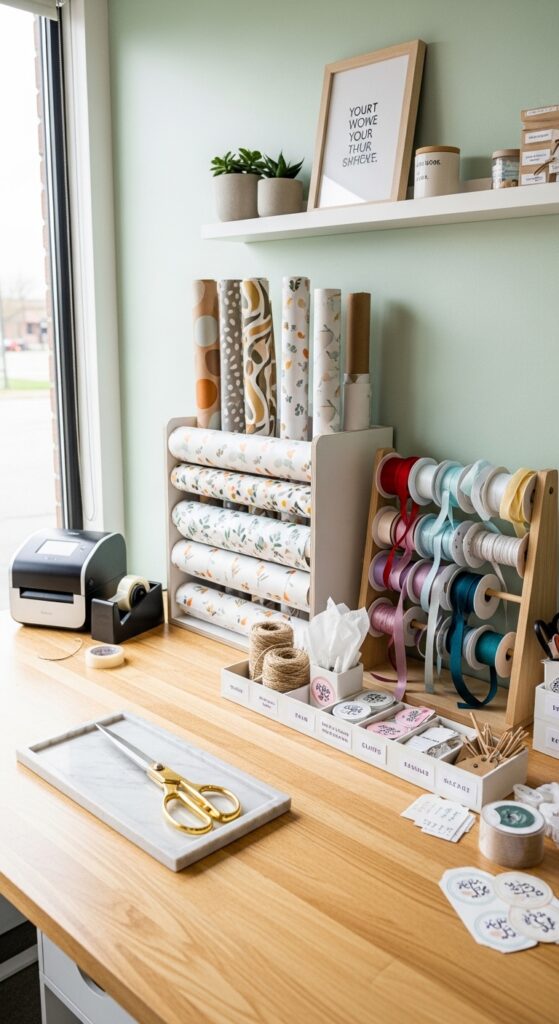
If your workroom involves selling handmade items or sending care packages, a dedicated wrapping station saves time and frustration. Include a flat surface for wrapping, vertical storage for paper rolls, and compartments for ribbons, tags, and tape.
Mount a paper cutter and tape dispenser to the wall for one-handed operation. Use clear shoe organizers on the back of a door for ribbon and small accessory storage. Having everything in one place transforms packaging from a chore into a quick task.
20. Create a Photo Documentation Area
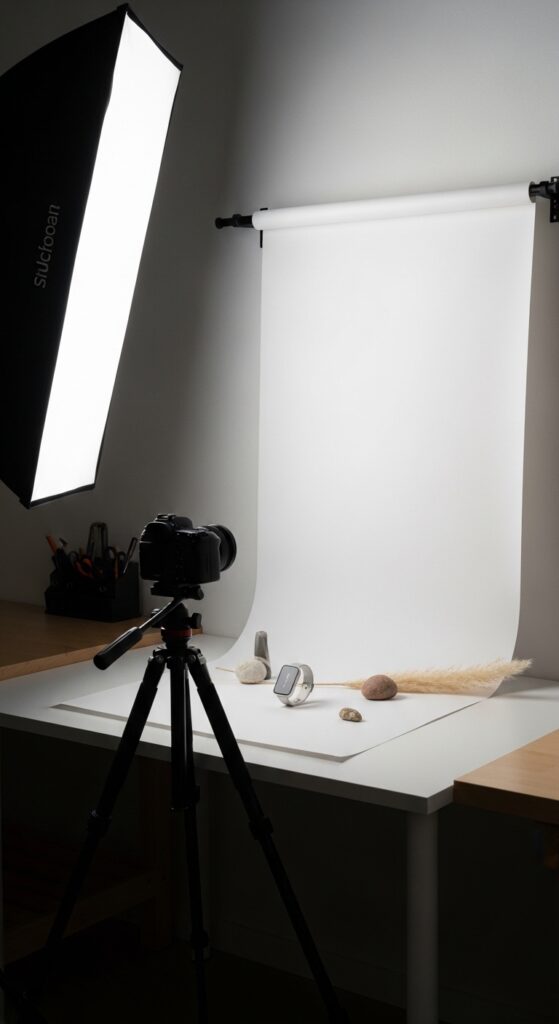
Documenting your work is essential for makers who sell online or maintain portfolios. A dedicated photo station with consistent lighting and a neutral backdrop produces professional images quickly. A white foam board creates an instant seamless background for small items.
Position your station near natural light or invest in affordable LED panel lights. Include a tripod for steady shots and a few styling props like linen napkins or wooden boards. Consistent photography elevates your brand and attracts more customers or followers.
Small Workroom Design Ideas
Not everyone has a spare room to dedicate to their creative pursuits. Many of us work with closets, corners, or tiny nooks under 100 square feet. These constraints actually force better design decisions that larger spaces sometimes allow us to ignore.
Vertical Storage Solutions
When floor space is limited, look up. Walls offer acres of untapped storage potential from floor to ceiling. Tall shelving units, wall-mounted cabinets, and hanging organizers multiply your usable space without expanding your footprint.
Install shelves above doorways for seasonal items used infrequently. Use the backs of doors for supply organizers and tool racks. Ceiling-mounted storage platforms hold bulky items like sewing machines in their cases or seasonal decorations.
Multi-Functional Furniture
Every piece in a small workroom should serve at least two purposes. A desk with deep drawers stores supplies while supporting your work surface. An ottoman with internal storage provides seating and hidden organization. A fold-down table doubles as a cutting mat and dining surface.
Consider a Murphy bed if your workroom shares space with a guest room. The bed folds away completely, reclaiming the floor area during working hours. Similarly, nesting tables tuck together when not in use and separate for additional surface area during big projects.
Wall-Mounted Desks
Floating desks attach directly to walls, eliminating the space consumed by legs and supports. They fold up completely when not in use or stay permanently mounted with a minimal profile. These designs work beautifully in hallways, alcoves, or closet conversions.
Add a fold-down front that doubles your workspace when open and conceals clutter when closed. Include a bulletin board or whiteboard on the interior for additional functionality. Pair with a wall-mounted monitor arm to reclaim even more desk surface.
Closet Conversions
Reach-in and walk-in closets transform into surprisingly functional workrooms with proper planning. Remove the door entirely or replace it with a curtain for easier access. Install a desktop surface at elbow height along the back wall.
Use the side walls for vertical storage: shallow shelves, pegboard, or magnetic panels. The closet rod becomes a hanging storage area for works in progress or ribbon spools. Add task lighting under the top shelf to illuminate your work surface.
Storage Solutions for Every Craft Type
Different creative pursuits require specific storage solutions. A jewelry maker has different needs than a watercolor artist or a quilter. Tailoring your organization system to your actual supplies prevents the frustration of ill-fitting generic solutions.
Sewing Room Organization
Thread storage presents a unique challenge: you need to see colors while protecting spools from dust and tangling. Wall-mounted thread racks display your collection like a rainbow spectrum. For larger collections, drawer dividers with individual slots prevent rolling and mixing.
Fabric storage requires both visibility and protection from light damage. Clear bins work for smaller pieces while comic book boards help fold and organize yardage. Label each bin by fabric type, color family, or project assignment.
Art Supply Storage
Paint tubes and brushes need different storage approaches. Upright brush holders protect bristles from damage while keeping tools accessible. Paint tube organizers with angled slots allow you to read labels at a glance.
Canvases and paper require flat storage to prevent warping. Portfolio cases, flat files, or even under-bed storage containers protect larger formats. Store paper vertically in magazine holders organized by weight and color.
Paper Crafting Solutions
Scrapbook paper and cardstock multiply quickly in enthusiastic crafters. Vertical paper racks or cube organizers with 12×12 inch slots keep sheets pristine and visible. Sort by color, pattern type, or manufacturer depending on your organizational style.
Stamps and dies require storage that prevents bending and allows quick browsing. Clear pockets in binders or photo album pages work beautifully for cling stamps. Magnetic sheets mounted in binders organize thin metal dies by theme or shape.
Jewelry Making Stations
Small parts storage is the eternal challenge for jewelry makers. Bead organizers with individual compartments prevent mixing while keeping colors separated. Stackable designs with locking lids protect against spills during transport.
Tools require dedicated spots to prevent damage and loss. Tool rolls, pegboard hooks, or desktop organizers with specific slots keep pliers, cutters, and files in order. A magnetic strip mounted above your work surface holds metal tools within easy reach.
Lighting Design for Productivity
Poor lighting ruins even the most beautiful workroom design. Eye strain, headaches, and color distortion all result from inadequate illumination. A layered approach combining ambient, task, and accent lighting creates flexibility for different activities and times of day.
Layered Lighting Approach
Ambient lighting provides general illumination for the entire space. Ceiling fixtures, recessed lights, or track lighting create this base layer. Aim for even distribution without harsh shadows or glare spots.
Task lighting focuses intense light exactly where you need it for detailed work. Desk lamps, under-cabinet strips, and adjustable floor lamps serve this purpose. Position task lights to eliminate shadows cast by your hands or tools.
Task Lighting for Detail Work
Color matching and fine detail work require high Color Rendering Index (CRI) lights. Look for bulbs rated 90 CRI or higher for accurate color representation. LED lights in the 5000K-6500K range mimic daylight and reduce eye strain.
Magnifying lamps combine illumination with magnification for intricate tasks like jewelry making or miniature painting. Swing-arm designs allow you to reposition light precisely without moving your whole setup. Dimmable options let you adjust intensity for different activities.
Natural Light Optimization
North-facing windows provide the most consistent natural light without harsh direct sun. East-facing windows offer bright morning light perfect for early birds. South and west exposures require management of intense afternoon heat and glare.
Sheer curtains diffuse harsh sunlight while maintaining brightness. Adjustable blinds allow you to control light throughout the day as the sun moves. UV-filtering window film protects supplies and finished work from fading damage.
Color Temperature Guide
Light color temperature dramatically affects how you feel and work. Warm light (2700K-3000K) creates cozy, relaxing environments suitable for evening wind-down projects. Cool light (5000K-6500K) energizes and supports focus during detailed daytime work.
Match your lighting to your circadian rhythm: warm in evenings, cool during peak productivity hours. Some LED fixtures offer tunable white settings that adjust throughout the day. Smart bulbs allow programming these changes automatically.
Color Schemes and Decor
Your workroom should reflect your personal style while supporting your creative goals. The colors and decor you choose influence your mood, energy, and even the quality of your work. Balance inspiration with functionality to create a space that feels both exciting and practical.
Calming Neutrals
White, gray, beige, and soft greige create a serene backdrop that never competes with your projects. These colors visually expand small spaces and provide excellent light reflection. They also photograph beautifully for social media or portfolio documentation.
Add warmth to prevent a sterile laboratory feeling. Wood tones, leather accents, and natural fiber rugs soften neutral palettes. Plants introduce living color that changes and grows alongside your creative practice.
Energizing Brights
Bold colors like coral, teal, mustard, and emerald inject energy into your workday. An accent wall in a saturated hue stimulates creativity and defines your workspace within an open floor plan. Use these colors on furniture pieces or accessories for less commitment.
Balance bright colors with plenty of white space to prevent visual overwhelm. The 60-30-10 rule applies here: 60% neutral, 30% secondary color, 10% bright accent. Your supplies and materials will add additional color pops naturally.
Monochromatic Modern
Working within a single color family creates sophisticated cohesion. A black-and-white scheme feels graphic and contemporary. Blue-on-blue or green-on-green schemes feel organic and calming.
Vary textures to add interest within a limited palette. Matte and glossy finishes, rough and smooth surfaces, woven and solid materials all create depth. Metallic accents in silver, gold, or copper add warmth without introducing new colors.
Nature-Inspired Palettes
Colors drawn from the natural world promote wellbeing and creativity. Sage green, terracotta, warm sand, and soft sky blue evoke outdoor environments. These palettes pair beautifully with natural wood furniture and plenty of plants.
Consider your specific outdoor environment when choosing nature palettes. Coastal settings inspire blues and whites. Desert locations suggest warm terracottas and ochres. Forest settings call for deep greens and warm browns.
Budget-Friendly Workroom Makeover Tips (2026)
Beautiful workrooms do not require unlimited budgets. Some of the most inspiring spaces I have seen were built gradually using thrifted finds, DIY projects, and smart shopping. Focus your spending on items that directly impact your comfort and productivity.
Start with a thorough decluttering before buying any storage. Removing unused items often reveals space you did not know you had. Sell discarded supplies to fund organizational purchases.
IKEA offers affordable basics that adapt to many workroom needs. The KALLAX shelving series works as room dividers, storage walls, or desk bases. Their kitchen organization accessories often suit craft supplies perfectly at lower prices than specialized craft stores.
Thrift stores and estate sales yield unique storage furniture at fraction of retail prices. Look beyond the current finish to see structural potential. A $20 dresser with good bones becomes a stunning workroom centerpiece with paint and new hardware.
DIY pegboard systems cost under $50 for an entire wall of storage. Standard pegboard from hardware stores paints easily to match your decor. Hooks and accessories from tool departments work just as well as craft store versions at lower prices.
Repurpose household items before buying specialized organizers. Muffin tins sort small beads and findings. Egg cartons organize thread or paint tubes. Glass jars from food products become beautiful storage with labels removed.
Common Workroom Design Mistakes to Avoid
Learning from others’ mistakes saves time, money, and frustration. These common pitfalls appear repeatedly in forum discussions and design consultations. Avoiding them puts you ahead of most workroom creators.
Poor lighting placement tops the list of regrets. Do not rely solely on overhead fixtures that create shadows on your work surface. Layer multiple light sources at different heights and angles for even illumination.
Insufficient storage leads to cluttered surfaces that limit your actual working space. Plan for at least 30% more storage than you think you need. Creative supplies have a way of multiplying once you have a dedicated space.
Ignoring ergonomics causes physical pain that drains creative energy. Your chair, desk height, and monitor position all affect your body over long sessions. Invest in adjustable furniture that supports healthy posture.
Cluttered surfaces prevent you from starting new projects because clearing the desk feels overwhelming. Establish a quick-reset routine: five minutes at day’s end to restore order. A clear workspace invites creativity.
Copying Pinterest photos without considering your actual workflow creates beautiful but dysfunctional spaces. A minimalist desk looks gorgeous but fails if you use twenty different tools daily. Design for your real habits, not aspirational ones.
Before You Start: Planning Checklist
Proper planning prevents costly mid-project changes. Spend time on these preparatory steps before purchasing furniture or materials. The upfront investment pays dividends in a smoother creation process.
Measure your space carefully including windows, doors, outlets, and HVAC locations. Create a simple floor plan to scale using graph paper or free online tools. Testing furniture arrangements on paper prevents buying pieces that do not fit.
Set a realistic budget including furniture, storage, lighting, decor, and a 15% contingency for unexpected expenses. Prioritize spending on items you will touch daily: your chair, desk surface, and primary lighting.
List your primary activities and the tools each requires. A sewing room needs different surfaces than a painting studio or a writing office. Understanding your workflow reveals the layout that will serve you best.
Inventory your current supplies to understand your storage needs. Sort everything into categories and measure the volume each requires. This data guides your storage shopping list.
Consider future growth when planning permanent elements. Leave room for your practice to expand and evolve. Removable storage solutions adapt more easily than built-ins as needs change.
Frequently Asked Questions
What makes a good workroom design?
A good workroom design balances functionality with inspiration. The four essential elements are: adequate lighting that reduces eye strain, organized storage that keeps supplies accessible but not cluttered, ergonomic furniture that supports long creative sessions, and personal decor that motivates you to spend time in the space. The best designs also account for your specific creative workflow, providing dedicated zones for different activities like cutting, assembling, and computer work.
How do I organize a small workroom?
Organizing a small workroom requires maximizing vertical space and choosing multi-functional furniture. Start by installing floor-to-ceiling shelving to use wall space efficiently. Select furniture that serves multiple purposes, such as an ottoman with internal storage or a desk with deep drawers. Use clear containers for supplies so you can see contents without rummaging. Finally, establish a regular decluttering routine to prevent the space from becoming overwhelmed with unused materials.
What is the best lighting for a craft room?
The best lighting for a craft room combines natural light with layered artificial sources. Position your primary work surface near a window for daylight benefits while using sheer curtains to control glare. Add task lighting with 5000K-6500K LED bulbs directly above detailed work areas for accurate color rendering and reduced eye strain. Include dimmable ambient lighting to adjust for different times of day and activities. Avoid relying solely on overhead fixtures that create shadows on your work surface.
How do I maximize storage in a workroom?
Maximize workroom storage by thinking vertically and using flexible systems. Install pegboard walls for tools and supplies that need frequent access. Use the backs of doors for additional organization with over-door racks or hanging shoe organizers. Choose clear containers so you can see contents at a glance and prevent duplicate purchases. Label everything clearly and store items near their point of use. Consider mobile storage carts that can move between workstations as projects evolve.
What color is best for a workroom?
The best workroom color depends on your creative goals and personal preferences. Blues and greens promote calm focus ideal for detailed technical work. Yellows and oranges spark creativity and optimism perfect for brainstorming spaces. Neutral grays and beiges provide a sophisticated backdrop that reduces visual clutter and photographs well. Consider using the 60-30-10 rule: 60% dominant neutral color, 30% secondary color, and 10% accent pops for visual interest.
Conclusion
Creating your ideal workroom is a journey, not a destination. The twenty design ideas in this guide offer starting points for spaces of any size and budget. You do not need to implement everything at once. Choose one or two concepts that solve your most pressing frustrations and build from there.
Remember that the best workroom design ideas serve your specific creative practice. A painter has different needs than a programmer or a jewelry maker. Trust your instincts about what will help you work more comfortably and productively.
Start small, experiment freely, and enjoy the process of creating a space that supports your best work. Your future self will thank you every time you enter a room designed specifically for your creative flow. We would love to hear about your workroom transformation in the comments below.