
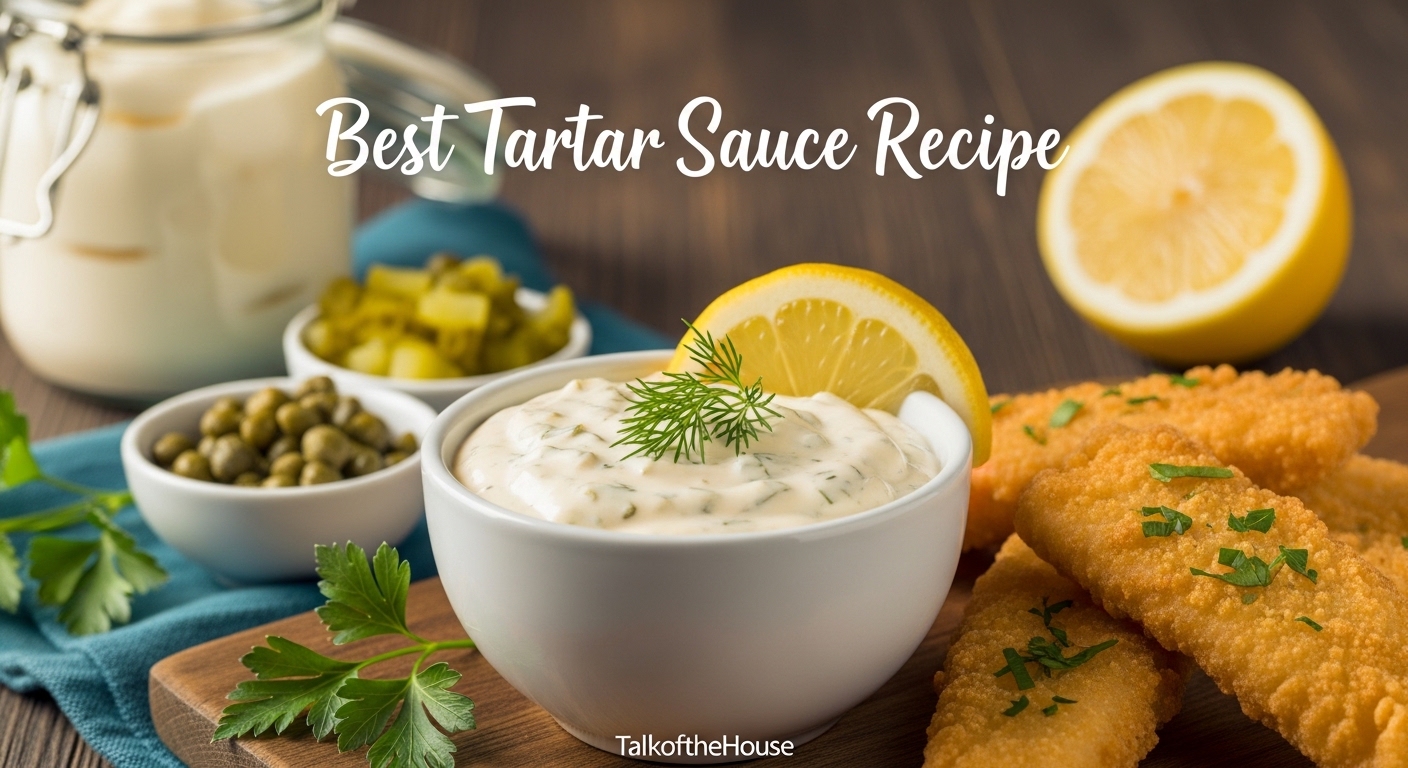
I still remember the first time I tasted truly exceptional tartar sauce. It was at a small seafood shack on the coast, and that creamy, tangy condiment completely transformed my fish and chips experience. After that day, I knew I had to master the perfect tartar sauce recipe at home.
Store-bought versions never quite hit the mark. They’re often too sweet, lacking that fresh zing that makes homemade tartar sauce so special. Our team spent months testing different combinations to create what we believe is the best homemade tartar sauce you’ll ever make.
This easy recipe takes just 10 minutes to prepare and uses simple ingredients you probably already have. The result is a creamy, tangy, perfectly balanced sauce that will elevate everything from fish sticks to crab cakes. Let me show you exactly how to make it.
Table of Contents
What Is Tartar Sauce?
Tartar sauce is a creamy, tangy condiment traditionally served with fried fish and seafood dishes. The base is always mayonnaise, but the magic comes from the blend of chopped pickles, lemon juice, fresh herbs, and savory seasonings that create its distinctive flavor profile.
Many people wonder if tartar sauce is simply mayonnaise mixed with relish. While that’s the foundation, a truly great tartar sauce includes additional elements like capers, fresh herbs, and sometimes a touch of mustard or Worcestershire sauce. These extras transform a basic sauce into something restaurant-worthy.
The sauce has European origins, with its name likely derived from the Tartars of Central Asia. French cuisine popularized the modern version we know today, which became a staple accompaniment for fish and chips in England and eventually spread worldwide. Understanding this history helps explain why certain ingredients like capers and cornichons feature in traditional recipes.
Tartar Sauce Ingredients
Quality ingredients make all the difference in homemade tartar sauce. Each component contributes specific flavors and textures that work together harmoniously. Here’s everything you need for the best results.
Core Ingredients
- Mayonnaise (1 cup): Use real, full-fat mayonnaise for the creamiest texture. While light mayo works, the flavor won’t be as rich. Some enthusiasts swear by homemade mayonnaise as the base.
- Dill pickles or cornichons (1/4 cup, finely chopped): These provide the signature tang and crunch. I prefer cornichons for their sharper bite, but dill pickles are more readily available and work beautifully.
- Fresh lemon juice (1 tablespoon): Always use freshly squeezed lemon juice. Bottled juice lacks the bright acidity that makes tartar sauce pop. This is one tip our testing confirmed repeatedly.
- Capers (1 tablespoon, drained and chopped): These tiny flavor bombs add briny depth. Don’t skip them, even if you’re not a caper fan in other dishes. They blend in seamlessly.
- Fresh dill or parsley (1 tablespoon, minced): Fresh herbs are non-negotiable. Dried herbs simply don’t provide the same vibrant flavor. Dill is traditional, but parsley works well too.
- Dijon mustard (1 teaspoon): Adds subtle complexity and helps emulsify the sauce. Yellow mustard is too harsh for this application.
- Worcestershire sauce (1/2 teaspoon): Just a dash adds umami depth that takes your sauce from good to exceptional.
- Salt and black pepper: Season to taste after mixing, as pickles and capers already contribute saltiness.
Optional Additions
- Minced shallot or onion (1 tablespoon): Adds a pleasant sharpness. Soak in cold water for 10 minutes first to mellow the bite.
- Minced garlic (1 small clove): A touch of fresh garlic elevates the sauce for garlic lovers.
- Sweet pickle relish (2 tablespoons): Replace some dill pickles with sweet relish for a different flavor profile.
- Hot sauce (few dashes): Adds gentle heat without overwhelming the other flavors.
- Lemon zest (1/2 teaspoon): Intensifies the citrus brightness.
- Sugar (1/4 teaspoon): Balances acidity if your pickles are particularly tart.
Ingredient Substitutions
Need to make adjustments? Here are reliable swaps that maintain the sauce’s character. Plain Greek yogurt can replace up to half the mayonnaise for a lighter version. Pickle juice works in place of lemon juice in a pinch, though fresh lemon is always preferred.
If you don’t have capers, try chopped green olives for a similar briny effect. Red wine vinegar can substitute for lemon juice, but use less as it’s more acidic. For those avoiding eggs, see our vegan variation below.
How to Make Tartar Sauce
Making tartar sauce from scratch is remarkably simple. The key is proper preparation of your solid ingredients before mixing. Follow these steps for perfect results every time.
Step 1: Prep Your Ingredients
Finely chop your pickles or cornichons into small, uniform pieces. The same goes for capers and any herbs. Consistent sizing ensures even distribution throughout the sauce. Mince your shallot or onion if using, and set aside.
Step 2: Combine the Base
In a medium bowl, whisk together the mayonnaise, Dijon mustard, Worcestershire sauce, and lemon juice until smooth. This creates your creamy foundation. The mixture should be uniform with no streaks of mustard visible.
Step 3: Fold in the Solids
Add your chopped pickles, capers, herbs, and any optional ingredients to the bowl. Gently fold everything together using a spatula. Avoid over-mixing, which can make the sauce too thin. You want to maintain some texture from the chunky ingredients.
Step 4: Season and Taste
Add salt and pepper gradually, tasting as you go. Remember that pickles and capers are already salty. Start with a small pinch of each, then adjust. This is your chance to balance the flavors perfectly.
Step 5: Chill Before Serving
Cover the bowl and refrigerate for at least 30 minutes before serving. This chilling period allows the flavors to meld and intensify. The sauce will taste significantly better after resting. If you have time, overnight chilling produces even better results.
Pro Tips for the Best Homemade Tartar Sauce
After testing dozens of variations, our team discovered several secrets that separate good tartar sauce from truly exceptional versions. These tips come from both professional experience and insights gathered from home cooks who’ve perfected their recipes.
Why Homemade Beats Store-Bought
Commercial tartar sauce often sits on shelves for months, losing freshness. Manufacturers also tend to add extra sugar and stabilizers that dull the flavor. When you make it yourself, you control every ingredient and can adjust to your exact preferences.
Fresh ingredients make an enormous difference. The bright pop of just-squeezed lemon juice simply cannot be replicated with bottled alternatives. Similarly, fresh herbs provide aromatics that dried versions lack entirely.
The Chilling Factor
Never skip the chilling step. This isn’t just about temperature. The rest period allows the acidic ingredients to mellow slightly while the herbs infuse their flavors into the mayonnaise base. Thirty minutes is the minimum, but two hours is ideal.
Chopping Technique Matters
Uniform, fine chopping ensures you get all flavors in every bite without overwhelming chunks. Take your time with this step. A sharp knife and patient cutting makes a noticeable difference in the final texture.
Balance Is Everything
The best tartar sauce balances creaminess with acidity, richness with brightness. Taste as you go and adjust. Too tart? Add a pinch of sugar. Too rich? A few more drops of lemon juice will help. Trust your palate.
What to Serve With Tartar Sauce
While tartar sauce is synonymous with fried fish, its versatility extends far beyond the classic pairing. This creamy condiment enhances numerous dishes and can become your secret weapon for quick meals and entertaining.
Classic Seafood Pairings
Fish and chips remain the ultimate pairing. The sauce cuts through the richness of fried batter beautifully. Fish sticks, frozen or homemade, are elevated from simple to special with a dollop of fresh tartar sauce.
Crab cakes and salmon patties absolutely require tartar sauce. The combination is classic for good reason. Shrimp cakes, fish tacos, and seafood sandwiches all benefit from this creamy accompaniment. Even simple grilled fish becomes more exciting with tartar on the side.
Unexpected Uses
Try tartar sauce with onion rings for a change from ketchup. It’s surprisingly good with french fries too. The tanginess provides welcome contrast to fried foods in general.
Use it as a sandwich spread for deli meats or as a dip for raw vegetables. It makes an excellent base for dressings when thinned with a little milk. For more food pairing ideas and pairing recipes, explore our other entertaining guides.
Delicious Tartar Sauce Variations
Once you master the basic recipe, experimenting with variations keeps things interesting. These versions address common dietary preferences and recreate popular restaurant styles.
3-Ingredient Quick Version
For those truly short on time, combine one cup of mayonnaise with three tablespoons of sweet pickle relish and one tablespoon of lemon juice. Season with salt and pepper. This simplified version takes just two minutes and still beats anything from a jar.
McDonald’s Copycat Recipe
Recreate that familiar fast-food flavor by using half mayonnaise and half plain Greek yogurt. Add sweet pickle relish instead of dill pickles, a touch of onion powder, and a pinch of sugar. The tanginess comes from white vinegar rather than lemon juice.
No-Pickle Alternative
For pickle-haters, substitute chopped capers and green olives for that briny flavor without the pickle texture. Increase the lemon juice slightly and add a pinch of celery seed for complexity. This version surprises people who claim they don’t like tartar sauce.
Vegan Egg-Free Version
Replace regular mayonnaise with vegan mayo made from aquafaba or soy. The rest of the recipe remains identical. Many vegan mayonnaise brands now taste remarkably close to the traditional versions, making this substitution seamless.
How to Store Homemade Tartar Sauce
Proper storage keeps your tartar sauce fresh and safe to eat. Homemade versions lack the preservatives found in commercial products, so handling requires a bit more attention.
Refrigeration Guidelines
Store tartar sauce in an airtight container in the refrigerator. It stays fresh for up to one week. The flavor actually improves for the first few days as ingredients continue to meld. Always use a clean spoon when serving to prevent contamination.
Freezing Considerations
Freezing is not recommended for tartar sauce. Mayonnaise-based sauces tend to separate and become watery when thawed. The texture changes significantly, becoming grainy rather than creamy. It’s best to make smaller batches more frequently.
Make-Ahead Strategy
Tartar sauce is perfect for preparing ahead of dinner parties or gatherings. Make it up to three days in advance and store properly. The flavors actually improve with time, making this an ideal hostess shortcut. Just give it a gentle stir before serving.
Frequently Asked Questions
What are the ingredients for tartar sauce?
The core ingredients for tartar sauce are mayonnaise, chopped dill pickles or relish, lemon juice, capers, fresh herbs like dill or parsley, Dijon mustard, Worcestershire sauce, and seasonings. Optional additions include minced shallot, garlic, sweet pickle relish, hot sauce, and lemon zest.
Is tartar sauce just mayo and relish?
While mayonnaise and relish form the base, authentic tartar sauce includes additional ingredients that create its distinctive flavor. Capers, fresh lemon juice, herbs, mustard, and Worcestershire sauce transform the basic combination into a complex, restaurant-quality condiment.
What’s the secret to the best tartar sauce?
The secrets to exceptional tartar sauce include using real full-fat mayonnaise, always choosing fresh lemon juice over bottled, finely chopping ingredients for consistent texture, and allowing the sauce to chill for at least 30 minutes so flavors can meld. Quality ingredients make the biggest difference.
How to make tartar sauce for fish and chips?
To make tartar sauce for fish and chips, combine 1 cup mayonnaise with 1/4 cup finely chopped dill pickles, 1 tablespoon each of lemon juice and chopped capers, 1 tablespoon fresh minced dill, 1 teaspoon Dijon mustard, and 1/2 teaspoon Worcestershire sauce. Season with salt and pepper, then chill for 30 minutes before serving with your fried fish.
How long does homemade tartar sauce last?
Homemade tartar sauce lasts up to 7 days when stored properly in an airtight container in the refrigerator. Because it contains no preservatives like commercial versions, use a clean spoon each time to prevent bacterial contamination. The flavor often improves after the first day as ingredients meld.
Can you freeze tartar sauce?
Freezing tartar sauce is not recommended. Mayonnaise-based sauces separate and become watery when thawed, resulting in a grainy texture. It’s better to make smaller fresh batches that you can use within a week. If you need longer storage, consider making just the chopped vegetable base and adding fresh mayo when ready to serve.
What can I use instead of pickles in tartar sauce?
Instead of pickles, try chopped capers and green olives for briny flavor, cornichons for a sharper bite, or pickled onions for a different twist. You can also use pickled vegetables like cauliflower or carrots for unique variations. Increasing lemon juice and adding celery seed helps compensate for missing pickle tang.
Is tartar sauce gluten free?
Most homemade tartar sauce recipes are naturally gluten free, as the core ingredients (mayonnaise, pickles, lemon juice, capers, herbs, mustard) typically contain no gluten. However, always check labels on commercial mayonnaise and Worcestershire sauce, as some brands may contain trace gluten. Use certified gluten-free products if you have celiac disease.
Conclusion
Mastering a homemade tartar sauce recipe is one of those small kitchen victories that pays dividends every time you serve fried fish or seafood. This simple 10-minute condiment transforms ordinary meals into something memorable.
The difference between store-bought and homemade is night and day. Once you taste the fresh, vibrant flavor of your own creation, you’ll never go back to jars. Plus, you control every ingredient, adapting the recipe to your family’s preferences.
I encourage you to try this recipe for your next fish dinner. Start with the classic version, then experiment with the variations we’ve shared. For more homemade recipes and entertaining ideas, explore our complete collection. Happy cooking!