
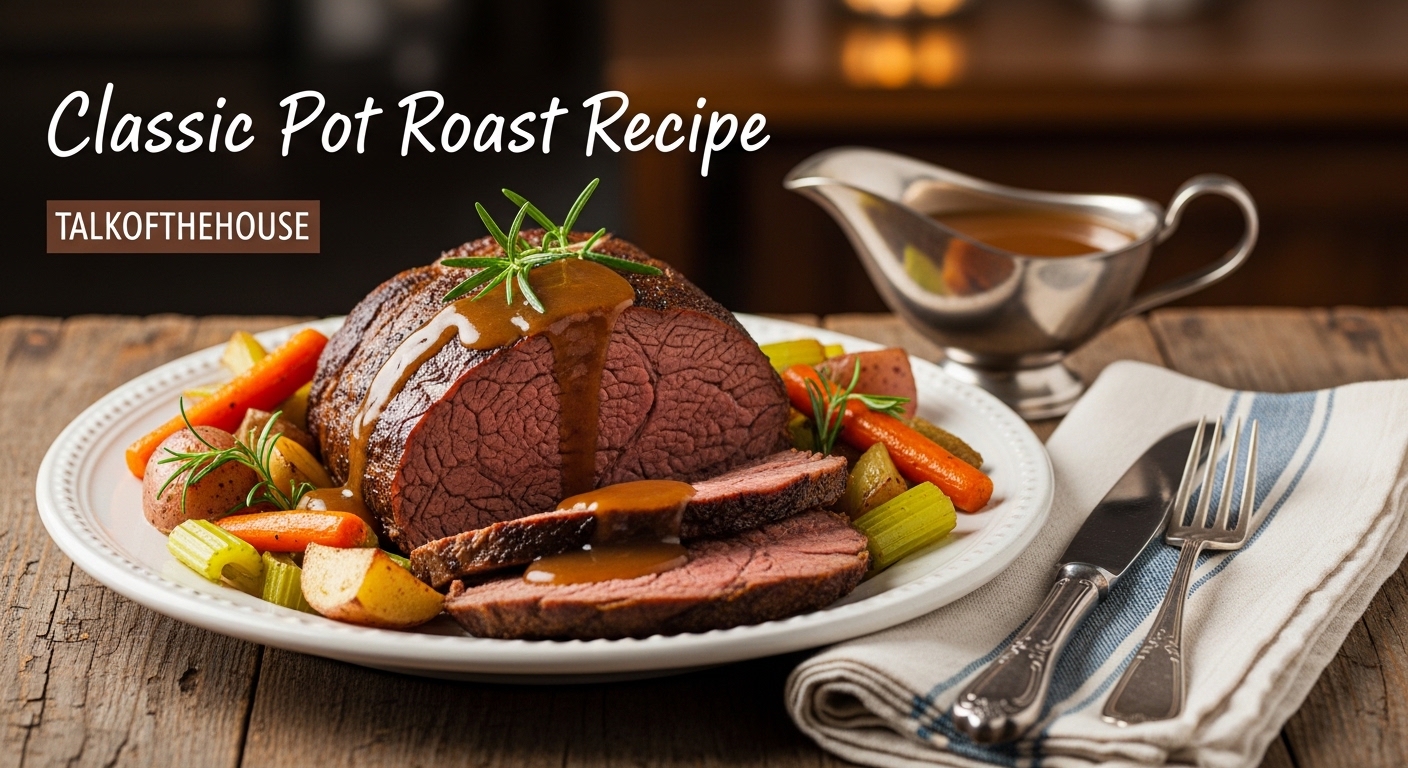
There is nothing quite like walking into your kitchen on a Sunday afternoon to the aroma of beef braising slowly in the oven. This pot roast recipe has been my family’s go-to comfort meal for gatherings, cold weather weekends, and whenever we need a dinner that practically cooks itself. After years of testing different methods, cuts, and techniques, I have developed a foolproof approach that produces fall-apart tender beef with rich, flavorful gravy every single time.
In this guide, I will walk you through everything you need to know to make the perfect pot roast. From selecting the right cut of beef to mastering the sear and creating silky smooth gravy, you will learn techniques that transform an inexpensive piece of meat into a restaurant-worthy meal. Whether you are a beginner or looking to refine your skills, this recipe will become your new favorite for Sunday dinners and family gatherings in 2026.
Table of Contents
What is Pot Roast?
Pot roast is a classic braised beef dish where a tough cut of meat is cooked slowly in liquid at low temperature until it becomes fork-tender. The magic happens through a combination of dry heat at the start and moist heat throughout the cooking process. This technique breaks down the tough connective tissues in the beef, converting collagen into gelatin that creates that signature velvety texture.
The method has deep roots in American cooking, particularly as a Sunday dinner tradition. Families would put a roast in the oven before heading to church, returning home to a house filled with inviting smells and a meal ready to serve. This tradition continues today because the results are consistently delicious and the hands-on cooking time is minimal.
What makes pot roast special is that it transforms an inexpensive, tough cut of beef into something extraordinary. Through the science of braising, collagen-rich chuck roast becomes meltingly tender while absorbing flavors from aromatic vegetables, herbs, and the cooking liquid. The result is more than just cooked beef—it is a complete one-pot dinner with meat, vegetables, and gravy all prepared together.
Why This Recipe Works
This recipe works because it follows sound food science principles that maximize flavor development. The first key is proper searing, which triggers the Maillard reaction. This chemical process occurs when amino acids and sugars in the meat react under high heat, creating hundreds of flavor compounds that cannot be achieved any other way.
Without a good sear, your pot roast will taste flat no matter how long you cook it. The second principle is low-and-slow braising. By maintaining an oven temperature around 275 to 300 degrees Fahrenheit, you give collagen in the meat time to break down into gelatin without tightening the muscle fibers.
High heat causes proteins to contract and squeeze out moisture, resulting in tough meat. Low heat allows gentle conversion of connective tissue while keeping the beef juicy. I have eliminated the need for packet mixes or pre-made seasonings. Fresh herbs, real garlic, and quality beef broth create layers of authentic flavor that taste homemade rather than processed.
Pot Roast Ingredients
The ingredient list for this classic pot roast is straightforward, but quality matters. Each component plays a specific role in building the final flavor profile. Here is exactly what you will need to serve six to eight people.
The Beef
Select a three to four pound chuck roast for the best results. This cut comes from the shoulder area and contains generous amounts of connective tissue and marbling. The fat and collagen break down during braising, keeping the meat moist and creating rich flavor.
Look for a roast with even marbling throughout and avoid pieces that look overly lean. Other acceptable cuts include bottom round or rump roast, though these are leaner and may not become quite as tender. Brisket works beautifully but has a different grain structure.
Aromatics and Vegetables
You will need two medium onions, four carrots, and one and a half pounds of Yukon Gold or red potatoes. Cut the onions into thick wedges, the carrots into two-inch chunks, and halve or quarter the potatoes depending on size. These vegetables serve dual purposes: they flavor the cooking liquid and become tender side dishes by the end.
For the aromatic base, gather four cloves of garlic, two stalks of celery, one bay leaf, and fresh thyme. The garlic and celery add depth, while the bay leaf and thyme provide subtle herbal notes that perfume the entire dish. If you have fresh rosemary, a small sprig adds wonderful piney aroma.
The Cooking Liquid
The liquid braising mixture requires one cup of dry red wine and two cups of beef broth. The wine adds acidity and complexity, helping to tenderize the meat while contributing flavor compounds that water cannot provide. Choose a wine you would actually drink—cooking wine from the grocery store contains salt and additives that affect the final taste.
If you prefer not to use wine, substitute with an additional cup of beef broth mixed with one tablespoon of red wine vinegar or balsamic vinegar. This provides the necessary acidity without alcohol. You can also use unsalted beef stock combined with a splash of Worcestershire sauce for umami depth.
Seasoning
Season the beef generously with two teaspoons of kosher salt and one teaspoon of black pepper before searing. You will also need two tablespoons of olive oil or vegetable oil for browning, plus two tablespoons of tomato paste. The tomato paste adds umami and helps thicken the gravy naturally.
Step-by-Step Pot Roast Instructions
Now we get to the actual cooking process. Follow these steps carefully, and you will achieve tender, flavorful pot roast every time. Preheat your oven to 275 degrees Fahrenheit before you begin.
Step 1: Prepare the Beef
Remove your chuck roast from the refrigerator about thirty minutes before cooking. Pat the meat completely dry with paper towels—moisture is the enemy of a good sear. Season all sides generously with salt and pepper, pressing the seasoning into the surface so it adheres.
Step 2: Sear the Meat
Heat two tablespoons of oil in a heavy Dutch oven over medium-high heat until it shimmers. Carefully place the seasoned roast in the pot and do not move it for three to four minutes. You want deep brown color on each surface.
Turn and repeat on all sides, including the edges. This process takes about ten minutes total but creates the foundation of flavor. Once seared, transfer the roast to a plate and set aside. Do not clean the pot—that browned residue stuck to the bottom is pure flavor gold called fond, and we are about to use it.
Step 3: Build the Aromatic Base
Add the onion wedges to the hot pot and cook for three minutes, stirring occasionally. Add the celery, garlic, and tomato paste. Cook for another two minutes until the garlic is fragrant and the tomato paste has darkened slightly.
The paste loses its raw edge and develops sweetness as it cooks. This step builds another layer of flavor before we add the liquid.
Step 4: Deglaze the Pot
Pour in the red wine and use a wooden spoon to scrape up all those browned bits from the bottom. This process, called deglazing, releases the fond into the liquid. Let the wine bubble and reduce by about half, which takes three to four minutes.
The alcohol cooks off, leaving concentrated flavor. You will immediately notice the liquid darkening and smelling rich.
Step 5: Add Liquids and Seasonings
Add the beef broth, bay leaf, and thyme. Stir to combine everything. Return the seared roast to the pot, nestling it into the liquid.
The liquid should come about one-third to halfway up the sides of the meat—not enough to submerge it completely. This partial coverage is ideal for braising.
Step 6: Initial Covered Cooking
Cover the pot with a tight-fitting lid and transfer to the preheated oven. Cook for three hours without disturbing it. During this time, the meat is slowly breaking down and the flavors are developing.
Step 7: Add the Vegetables
After three hours, carefully remove the pot from the oven. Add the carrots and potatoes around the roast, pushing them into the liquid. The vegetables will cook in the flavorful braising liquid, absorbing all those savory notes.
Return the covered pot to the oven and continue cooking for another hour to hour and a half. The total cooking time will be four to four and a half hours depending on your specific roast size.
Step 8: Check for Doneness
Your pot roast is done when a fork slides into the meat with almost no resistance. The beef should easily pull apart into tender strands. If you feel any toughness, return to the oven for another thirty minutes and test again.
Tough meat simply needs more time—this is not a dish you can overcook easily. The vegetables should be fork-tender but still holding their shape. If they are falling apart, you added them too early next time. If they are still firm, give them another fifteen to twenty minutes.
Step 9: Rest the Meat
Transfer the cooked roast to a cutting board and tent loosely with foil. Let it rest for ten to fifteen minutes. This allows the juices to redistribute throughout the meat rather than running out when you slice.
Remove the vegetables with a slotted spoon and keep them warm while you prepare the gravy.
How to Make Pot Roast Gravy
While the meat rests, transform those cooking juices into silky gravy. This is where your patience with the searing and deglazing pays off completely. You should have two to three cups of deeply flavored liquid remaining in the pot.
Strain the liquid through a fine mesh sieve into a large measuring cup or fat separator. Let it settle for five minutes, then pour off or skim the fat layer from the top. You want the defatted liquid for smooth gravy.
Return about two cups of this liquid to your Dutch oven or a saucepan. Make a slurry by whisking two tablespoons of cornstarch with three tablespoons of cold water in a small bowl until smooth. Bring the strained cooking liquid to a gentle simmer over medium heat.
Slowly whisk in the cornstarch slurry and continue stirring as the gravy thickens. Let it bubble for two to three minutes to cook out the starchy taste and reach your desired consistency. If too thick, thin with a splash of beef broth.
If too thin, mix another teaspoon of cornstarch with water and add gradually. Taste and adjust seasoning with salt and pepper as needed.
Cooking Tips for the Best Results
After making this recipe dozens of times, I have learned some techniques that make a noticeable difference. These tips address the common problems people report: tough meat, bland flavor, and thin gravy.
The Searing Secret
Do not rush the browning step. A proper sear requires the meat surface to be dry and the pan to be hot enough that the meat sizzles immediately upon contact. If the pan is too cool, the meat will steam in its own juices instead of browning.
If you crowd the pan or move the meat too soon, you will not develop that crust. Give each side three to four minutes undisturbed. When it is ready to turn, the meat will release naturally from the pan. If it sticks, it is not ready yet.
Be patient here—this one step separates good pot roast from great pot roast.
Why Low Heat Matters
The gentle heat of a 275-degree oven might seem too low, but this temperature is ideal for collagen breakdown. At higher temperatures, the outer layers of meat overcook and dry out before the center becomes tender. The low, steady heat keeps moisture in the meat while slowly converting collagen to gelatin.
Think of it this way: you cannot rush tenderness. The conversion happens at a cellular level and requires time. A three-pound chuck roast needs four hours minimum. Trust the process and resist the urge to raise the temperature to speed things along.
Choosing the Right Wine
For the braising liquid, choose a dry red wine with moderate tannins. Cabernet Sauvignon, Merlot, Pinot Noir, or Cotes du Rhone all work beautifully. Avoid sweet wines like Moscato or dessert wines, which will make the dish cloying.
The wine should taste pleasant in the glass—if you would not drink it, do not cook with it. The acidity in wine helps tenderize meat by breaking down proteins on the surface. It also adds fruit notes and complexity that plain broth cannot match.
During the long cooking, most alcohol evaporates, leaving only flavor behind.
The Overnight Rest Technique
Here is a professional secret: pot roast is often better the next day. If you have time, refrigerate the cooked roast in its liquid overnight. The flavors meld and deepen as the meat cools in the braising liquid.
The fat also solidifies on top, making it easy to remove for a leaner final dish. To serve the next day, slice the cold roast against the grain and return the slices to the liquid in a covered pot. Reheat gently on the stovetop over low heat or in a 300-degree oven until warmed through.
The texture becomes even more velvety, and the flavor improves significantly.
Slow Cooker and Instant Pot Variations
Is it better to cook a pot roast in the oven or crockpot? Both methods work, but they produce slightly different results. Let me break down each approach so you can choose what works for your schedule.
Dutch Oven Method (Oven)
The traditional oven method in a heavy Dutch oven provides the best browning and most concentrated flavors. The dry oven heat helps create a crust on the meat and vegetables that slow cookers cannot achieve. I recommend this method when you want the absolute best results and have four to five hours available.
Slow Cooker Method
For busy weekdays, the slow cooker offers convenience. You still must sear the meat in a separate pan first—do not skip this step. After searing, transfer everything to your slow cooker and cook on low for eight to ten hours or high for five to six hours.
Add vegetables during the last two hours to prevent them from becoming mushy. The trade-off is that slow cooker pot roast has slightly less depth of flavor. The moisture environment prevents further browning during cooking, and the liquid does not reduce and concentrate.
However, the convenience factor makes this worthwhile for many home cooks.
Instant Pot Method
Pressure cooking produces tender pot roast in about ninety minutes total. Use the saute function to sear the meat directly in the pot liner, then pressure cook on high for sixty minutes with a natural pressure release of fifteen minutes. Add vegetables and pressure cook for an additional five minutes.
The Instant Pot excels at speed but the texture differs from slow braising. The meat becomes tender quickly but the sauce requires reduction afterward to achieve proper consistency. Use this method when time is your primary constraint.
What to Serve with Pot Roast
A classic pot roast is a complete meal on its own, with meat, potatoes, and carrots all cooked together. However, a few simple sides can round out the plate beautifully.
Crusty bread is essential for mopping up every drop of that rich gravy. A simple green salad with vinaigrette provides freshness to balance the richness of the beef. For vegetable sides, buttered green beans, roasted Brussels sprouts, or creamed spinach complement the meal without competing for attention.
For special occasions, consider serving with Yorkshire pudding or buttered egg noodles. The noodles create a bed for slices of beef and a generous ladle of gravy—pure comfort on a plate. Horseradish sauce on the side adds a sharp, pungent contrast that cuts through the richness.
Storage and Reheating Instructions
One of the best things about pot roast is how well it keeps. The flavor actually improves after a day in the refrigerator as the meat continues to absorb the braising liquid.
Refrigerating Leftovers
Store leftover pot roast in an airtight container with some of the cooking liquid to keep the meat moist. It will keep in the refrigerator for up to four days. If possible, store the meat and vegetables separately from the gravy to maintain the best texture.
Freezing Pot Roast
Pot roast freezes excellently for up to three months. Slice the meat and portion it with vegetables and gravy into freezer-safe containers. Thaw overnight in the refrigerator before reheating.
The potatoes may change texture slightly after freezing, becoming softer, but the flavor remains excellent.
Reheating Methods
For best results, reheat pot roast gently in a covered saucepan with a splash of beef broth over low heat. Stir occasionally until warmed through, about ten minutes. Microwaving works in a pinch but can make the meat rubbery if overheated.
Use fifty percent power in one-minute increments, stirring between each interval. When reheating sliced meat in gravy, do not let it boil. High heat tightens the proteins and makes the beef tough again.
Low and slow reheating preserves that tender texture you worked so hard to achieve.
Common Questions About Pot Roast
What is the secret to a good pot roast?
The secret to a good pot roast is proper searing and low, slow cooking. Searing the meat before braising triggers the Maillard reaction, creating deep flavor compounds that cannot be achieved otherwise. Cooking at a low temperature (around 275°F) for several hours allows collagen in tough cuts to break down into gelatin, making the meat fork-tender while keeping it juicy.
Can a diabetic have roast?
Yes, diabetics can enjoy pot roast as part of a balanced meal plan. The beef itself contains no carbohydrates and will not spike blood sugar. However, diabetics should watch portion sizes of starchy vegetables like potatoes and carrots. Consider serving with extra non-starchy vegetables and limiting gravy if monitoring sodium intake.
Is it better to cook a pot roast in the oven or crockpot?
Both methods work well, but the oven method in a Dutch oven produces the most flavorful results with better browning. The dry heat of an oven helps concentrate flavors as the liquid reduces slightly. A slow cooker offers more convenience for busy days but creates a wetter environment that produces slightly less depth of flavor. For best results, sear the meat first regardless of which method you choose.
What is the best liquid for pot roast?
The best liquid for pot roast is a combination of dry red wine and beef broth. The wine adds acidity that helps tenderize the meat while contributing complex flavor compounds. Beef broth provides savory depth. If you prefer not to use wine, substitute with additional beef broth mixed with a tablespoon of vinegar or Worcestershire sauce for acidity and umami.
What is the best cut of beef for pot roast?
Chuck roast is the best cut for pot roast due to its high collagen content and marbling. This tough cut from the shoulder breaks down beautifully during slow braising, becoming tender and flavorful while staying moist. Other acceptable cuts include bottom round and brisket, but chuck consistently delivers the most reliable results for home cooks.
How do I know when pot roast is done?
Pot roast is done when a fork slides into the meat with almost no resistance and the beef easily pulls apart into tender strands. The internal temperature should reach around 200°F, which is higher than a steak because you want the collagen fully broken down. If the meat still feels tough, it simply needs more time. This is a dish you cannot easily overcook.
Conclusion: Make This Pot Roast Recipe Tonight
This pot roast recipe represents everything I love about home cooking. It transforms humble ingredients into something genuinely special through patience and technique. The reward is a Sunday dinner that brings people together around the table, fills your home with incredible aromas, and creates leftovers that somehow taste even better the next day.
Remember the key principles: dry your meat before searing, do not rush the browning, keep the oven temperature low, and give the collagen time to work its magic. Trust the fork-tender test rather than the clock. If you follow these steps, you will never serve a tough or flavorless pot roast again.
I encourage you to try this recipe for your next family gathering or cozy weekend meal. The technique might seem involved at first, but after one successful pot roast, the process becomes second nature. This is the kind of recipe that builds cooking confidence and creates lasting food memories. Enjoy every bite of your perfectly braised pot roast in 2026.