
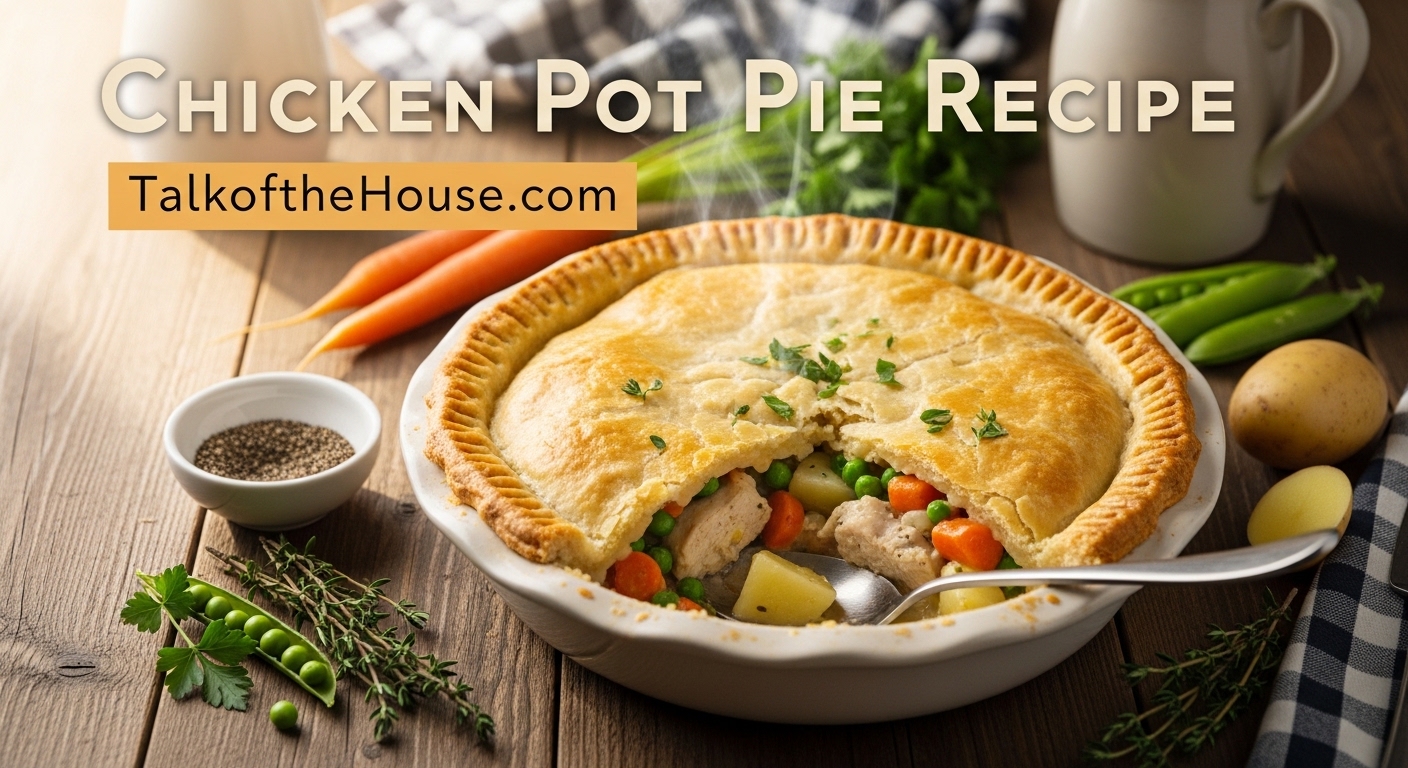
There is something magical about pulling a golden-brown chicken pot pie from the oven. The buttery aroma fills the kitchen, promising a meal that wraps you in warmth from the first bite. This homemade pot pie recipe has been my go-to comfort food for Sunday dinners, cozy weeknights, and even holiday gatherings when I want to serve something that feels like a hug on a plate.
Chicken pot pie is the ultimate comfort food dinner because it combines everything you crave into one dish. Tender chunks of chicken, vibrant vegetables, and a creamy gravy filling are tucked between layers of flaky pie crust. The sauce in chicken pot pie is a roux-based mixture of butter, flour, chicken broth, and cream that coats every ingredient in velvety richness.
I spent years tweaking this recipe after too many soggy bottoms and runny fillings. The result is a foolproof method that delivers restaurant-quality results every single time. Whether you are a beginner baker or a seasoned home cook, this double crust pot pie will become a recipe you reach for again and again.
Table of Contents
Why You’ll Love This Chicken Pot Pie Recipe
This from scratch recipe delivers everything you want in a classic pot pie without unnecessary complications. I have streamlined the process so you can have dinner on the table in under two hours, including prep time. The filling is rich and flavorful, the crust is shatteringly crisp, and the whole dish reheats beautifully for leftovers.
- Make-ahead friendly: Prepare the entire pie up to 24 hours in advance, or freeze it unbaked for a future dinner
- Flexible ingredients: Use rotisserie chicken, leftover turkey, or cook raw chicken specifically for this recipe
- Freezer friendly meal: Perfect for meal prep or delivering to friends who need a comforting dinner
- Customizable vegetables: Swap the classic peas and carrots for whatever you have on hand
- Guaranteed flaky crust: My tested techniques ensure the bottom stays crisp, not soggy
What You’ll Need
Gathering your ingredients before you start cooking makes the process smooth and stress-free. I recommend reading through the entire recipe first, then measuring everything out into small bowls. This French technique called mise en place transforms cooking from chaotic to calm.
For the Creamy Chicken Filling
- 3 cups cooked chicken, diced or shredded (about 1.5 pounds raw)
- 1/2 cup unsalted butter (1 stick)
- 1 medium yellow onion, diced (about 1 cup)
- 2 carrots, peeled and diced (about 1 cup)
- 2 celery stalks, diced (about 1/2 cup)
- 3 cloves garlic, minced
- 1/2 cup all-purpose flour
- 2 cups chicken broth, warmed
- 1 cup half-and-half (or heavy cream for extra richness)
- 1 teaspoon salt, plus more to taste
- 1/2 teaspoon black pepper
- 1 teaspoon dried thyme
- 1/2 teaspoon celery seed
- 1 cup frozen peas
- 1 tablespoon fresh parsley, chopped (optional)
For the Double Crust
- 2 homemade pie crusts or store-bought refrigerated pie dough (14-16 oz total)
- 1 egg, beaten (for egg wash)
- 1 tablespoon water
Cream Options: Which Should You Choose?
The dairy you select affects the final richness of your filling. Whole milk creates a lighter sauce with about 8 grams of fat per cup. Half-and-half delivers medium richness with roughly 12 grams of fat per cup and is my preferred choice for balance. Heavy cream produces the most decadent, velvety filling with approximately 36 grams of fat per cup.
For family dinners, I use half-and-half because it offers creamy satisfaction without heaviness. When I am entertaining or making this for a special occasion, I splurge on heavy cream. The choice is yours, and the method remains exactly the same regardless.
How to Make Chicken Pot Pie
Follow these eight steps for a perfect chicken pot pie every time. I have broken down each stage with the tips and timing that ensure success. Read through once before starting, then work through methodically without rushing.
Step 1: Prepare Your Chicken
If you are starting with raw chicken, poach it gently in simmering water or broth for 15-20 minutes until cooked through. Let it cool slightly, then dice or shred into bite-sized pieces. Rotisserie chicken shortcut tip: remove the skin, then pull the meat from bones for about 3 cups of pre-cooked chicken.
Season your chicken lightly with salt and pepper before adding it to the filling. This extra step prevents the bland flavor that many home cooks complain about in forums. I learned this from a chef friend, and it makes a noticeable difference in the final dish.
Step 2: Sauté the Vegetables
Melt the butter in a large skillet or Dutch oven over medium heat. Add the diced onion, carrots, and celery. Sauté for 8-10 minutes until the vegetables soften and the onion becomes translucent. Add the minced garlic and cook for one more minute until fragrant.
Do not rush this step. The vegetables need time to release their sweetness and develop flavor. Undercooked carrots will remain crunchy in the final pie, while properly softened vegetables blend seamlessly into the creamy filling. Stir occasionally to prevent burning.
Step 3: Make the Roux
Sprinkle the flour evenly over the sautéed vegetables. Whisk constantly for 2-3 minutes to cook out the raw flour taste. The mixture will look like a thick paste coating the vegetables. This is your roux, the foundation of your creamy gravy filling.
Keep the heat at medium and do not stop whisking. A properly cooked roux should bubble gently and turn slightly golden. This step is crucial for thickening your filling correctly. If you skip this or rush it, your pot pie filling will be runny and pool on the plate instead of holding its shape when sliced.
Step 4: Add Liquids and Thicken
Gradually pour in the warmed chicken broth while whisking continuously. The warmth prevents lumps from forming. Once smooth, add the half-and-half or cream. Continue whisking until the mixture is silky and uniform.
Bring the mixture to a gentle simmer. Cook for 5-7 minutes until thickened enough to coat the back of a spoon. The filling should be thick but still pourable. It will continue to thicken as it cools and during baking.
Stir in the thyme, celery seed, salt, and pepper. Taste and adjust seasoning. Remember that the flavors will mellow slightly during baking, so season boldly now. A splash of Worcestershire sauce or a teaspoon of Dijon mustard adds depth that elevates this from good to exceptional.
Step 5: Combine Filling Ingredients
Remove the skillet from heat. Fold in the cooked chicken and frozen peas. The peas will thaw and cook perfectly during baking, so no need to precook them. Stir in fresh parsley if using. Your filling should be thick, creamy, and loaded with chicken and vegetables.
Transfer the filling to a bowl and let it cool for 15-20 minutes. This is not optional if you want to prevent soggy crust. Hot filling steams the bottom crust during assembly, creating that dreaded gummy texture. Lukewarm filling is your friend here.
Step 6: Prepare the Crust and Assemble
Preheat your oven to 425°F (220°C). Roll out one pie crust on a lightly floured surface to about 12 inches in diameter. Transfer it to a 9-inch deep-dish pie plate, pressing gently into the bottom and up the sides without stretching the dough.
Pour the cooled filling into the bottom crust, spreading evenly. The filling should mound slightly in the center but not overflow. Roll out the second crust and place it over the filling. Trim the overhang to about 1/2 inch beyond the plate edge.
Tuck the top crust under the bottom crust edge and crimp together using your fingers or a fork. Crimping seals the pie and creates that classic pot pie look. Cut 4-5 vent holes in the top crust to allow steam to escape during baking.
Step 7: Apply Egg Wash
Beat the egg with one tablespoon of water to create an egg wash. Brush this mixture evenly over the top crust using a pastry brush. The egg wash creates that gorgeous golden brown crust that signals a perfect pot pie.
For extra sparkle and a professional finish, sprinkle coarse salt or everything bagel seasoning over the egg wash. This adds texture and visual appeal. Place the assembled pie on a baking sheet to catch any drips during baking.
Step 8: Bake to Golden Perfection
Bake for 35-40 minutes until the crust is deeply golden and the filling bubbles through the vent holes. If the crust browns too quickly before the filling is hot, tent the edges with aluminum foil after 20 minutes of baking.
The internal temperature should reach 165°F (74°C) when measured in the center. Let the pie rest for 10-15 minutes before slicing. This resting period allows the filling to set so it does not run when you cut into it.
How to Prevent a Soggy Bottom Crust
The most common complaint about homemade chicken pot pie is a soggy bottom crust. After years of testing and reading countless forum discussions, I have identified the foolproof methods that guarantee a crisp base every time.
1. Cool the Filling Completely
Hot filling creates steam when it hits the raw dough, turning your bottom crust into a gummy mess. Let your filling cool to lukewarm or even room temperature before assembling. I often make my filling in the morning, refrigerate it, and assemble the pie in the evening.
2. Use a Metal Pie Plate
Metal conducts heat better than ceramic or glass, helping the bottom crust cook faster and crisper. A dark metal pan works even better than shiny aluminum. If you only have glass or ceramic, place the pie on the lowest oven rack to maximize bottom heat exposure.
3. Blind Bake for Extra Insurance
For the crispiest possible bottom, blind bake the crust for 10 minutes before adding filling. Line the crust with parchment, fill with pie weights or dried beans, and bake at 400°F until just set. Remove weights, cool slightly, then fill and top with the second crust.
4. Thicken the Filling Properly
A runny filling soaks into the crust. Make sure your roux cooks long enough and your filling simmers until thick before assembling. The filling should coat the back of a spoon and hold a line when you run your finger through it.
5. Bake on the Bottom Rack
Position your oven rack in the lower third of the oven. This directs maximum heat to the bottom crust, ensuring it cooks through before the top over-browns. The baking sheet underneath also helps conduct heat evenly to the bottom.
Smart Substitutions and Shortcuts
This recipe is forgiving and welcomes modifications based on what you have available. Here are my tested substitutions that do not sacrifice quality.
Protein Options
- Rotisserie chicken: The ultimate shortcut. Remove skin, shred meat, and you are ready to go
- Leftover turkey: Perfect after Thanksgiving. Use dark and white meat combined
- Cooked chicken thighs: More flavorful and juicier than breast meat
- Poached raw chicken: Simmer 1.5 pounds chicken breast in broth for 15 minutes
Crust Variations
- Store-bought crust: Refrigerated pie dough works beautifully. Let it sit at room temperature for 10 minutes before unrolling
- Puff pastry top: Skip the bottom crust entirely and use puff pastry for the lid only
- Biscuit topping: Drop spoonfuls of biscuit dough on top instead of pie crust for a cobbler-style pot pie
Vegetable Swaps
- Frozen mixed vegetables save chopping time
- Sliced mushrooms add earthiness
- Diced potatoes create extra heartiness
- Leeks substitute beautifully for onions
- Green beans work instead of peas
Dairy Alternatives
For dairy-free pot pie, substitute the butter with olive oil or dairy-free margarine. Use full-fat coconut milk or cashew cream in place of half-and-half. The flavor will be slightly different but still delicious and creamy.
Make-Ahead and Freezing Instructions
One of the best features of this chicken pot pie recipe is how well it works for advance preparation. I regularly make two at a time and freeze one for a busy weeknight when cooking feels impossible.
Refrigerating Before Baking
Assemble the pie completely, wrap tightly in plastic wrap, and refrigerate for up to 24 hours. When ready to bake, remove from refrigerator while preheating the oven. You may need to add 10-15 minutes to the baking time since you are starting with cold ingredients.
Freezing Unbaked Pot Pie
Assemble the pie in a freezer-safe dish. Wrap tightly in three layers: plastic wrap, then aluminum foil, then place in a large freezer bag. Freeze for up to three months. Label with the date and baking instructions.
To bake from frozen, remove wrapping and place directly in a cold oven. Turn the oven to 425°F and bake for 75-90 minutes until golden and bubbling. Starting in a cold oven prevents thermal shock to the ceramic or glass dish.
Freezing Baked Pot Pie
Let the baked pie cool completely. Wrap in plastic wrap and foil, then freeze for up to two months. Reheat in a 350°F oven for 30-40 minutes until warmed through. The crust will not be quite as crisp as freshly baked, but the flavor remains excellent.
Reheating Leftovers
For best results, reheat slices in a 350°F oven for 15-20 minutes. The oven maintains the crust texture far better than a microwave. If you must use a microwave, expect a softer crust. Cover loosely with a damp paper towel to prevent the filling from drying out.
What to Serve with Chicken Pot Pie
This all-in-one meal needs little accompaniment, but a few simple sides round out the dinner beautifully. I typically choose one light side to balance the richness of the pie.
- Simple green salad: Mixed greens with lemon vinaigrette cuts through the richness
- Roasted asparagus: Trimmed and roasted with olive oil and sea salt for 12 minutes
- Buttered egg noodles: Extra comfort food for hungry teenagers or athletes
- Cranberry sauce: A dollop adds bright acidity that lifts the entire meal
- Crusty bread: For soaking up any extra creamy sauce on the plate
For entertaining, I serve individual pot pies in small ramekins with a simple arugula salad on the side. The personal presentation feels special and eliminates the messy slicing step when guests are hungry.
Frequently Asked Questions
What are some common mistakes to avoid when making chicken pot pie?
The most common mistakes include adding hot filling to the raw crust, which creates steam and soggy bottoms. Undercooking the roux leaves a floury taste in the sauce. Overfilling the pie causes bubbling over during baking. Not venting the top crust traps steam and creates a soggy lid. Finally, cutting into the pie immediately after baking causes the filling to run because it has not set.
What is the sauce in chicken pot pie?
The sauce in chicken pot pie is a roux-based gravy made by combining equal parts butter and flour, then whisking in warm chicken broth and cream. This creates a velvety, creamy filling that coats the chicken and vegetables. The sauce is seasoned with thyme, celery seed, salt, and pepper for a savory flavor profile.
What is the secret to a flavorful pot pie?
The secret to a flavorful pot pie lies in seasoning at every stage. Season the chicken before cooking, season the vegetables while sautéing, and taste the sauce before assembling. Adding a splash of Worcestershire sauce or a teaspoon of Dijon mustard creates depth. Using well-seasoned chicken broth rather than water makes a significant difference. Fresh herbs added at the end brighten the entire dish.
Is heavy cream or milk better for chicken pot pie?
Heavy cream creates the richest, most decadent filling with a luxurious mouthfeel, while half-and-half offers a balanced option that is creamy without being too heavy. Whole milk produces a lighter sauce that is still satisfying. The choice depends on your preference and occasion. For everyday family dinners, I recommend half-and-half. For special occasions, heavy cream elevates the dish to restaurant quality.
How to keep the bottom of chicken pot pie from getting soggy?
To prevent a soggy bottom crust, cool the filling completely before assembling to eliminate steam. Use a metal pie plate which conducts heat better than glass or ceramic. Consider blind baking the bottom crust for 10 minutes before adding filling. Ensure your filling is thick enough to coat the back of a spoon. Bake on the lowest oven rack to direct maximum heat to the bottom crust. Finally, avoid overfilling which creates excess moisture.
How do you elevate chicken pot pie?
Elevate chicken pot pie by using homemade or high-quality store-bought butter crust for flakiness. Add fresh herbs like tarragon or chives for brightness. Include sauteed mushrooms for earthy depth. Use a combination of white and dark meat chicken for better flavor and texture. Add a splash of white wine to the sauce for acidity. Top with everything bagel seasoning before baking for crunch and visual appeal. Serve with a side salad featuring a bright vinaigrette to balance the richness.
Conclusion
This chicken pot pie recipe has earned its place as one of my most requested dishes for family gatherings and potlucks. The combination of creamy filling, tender chicken, and flaky double crust satisfies in a way that few other meals can match. Once you master the techniques for preventing soggy crust and creating a perfectly thickened filling, you will find yourself making this recipe on repeat throughout the colder months.
I encourage you to make this recipe your own by experimenting with the vegetable combinations and protein options that work for your family. The basic method remains the same, but the variations are endless. If you are looking for more comforting recipes to round out your meal planning, browse our collection of homestyle favorites.
Let me know in the comments how your pot pie turned out. Did you try any of the substitutions? What sides did you serve alongside? I love hearing how these recipes work in your kitchen and seeing your delicious creations.