
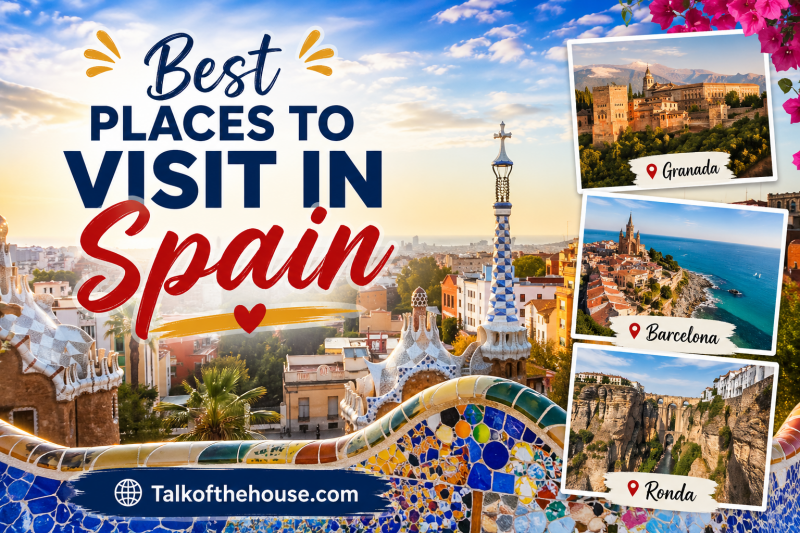
I will never forget my first glimpse of Spain. It was a hot afternoon in Barcelona, and I stood frozen on the sidewalk while a grandmother and her granddaughter danced in the street to a busker playing Spanish guitar. That moment captured everything I grew to love about this country – the passion, the spontaneity, the way life here is meant to be savored not rushed.
If you are planning a trip to Spain, you are in for an adventure that will shift something in you. This is not a country you simply visit. It is a place that wraps itself around your senses – the smell of garlic and paprika wafting from a tapas bar at midnight, the sight of golden stone glowing pink at sunset, the sound of flamenco heels striking a wooden stage.
Over the past decade, I have returned to Spain more than a dozen times. I have gotten lost in the whitewashed alleys of Andalusia, eaten my weight in pintxos in San Sebastian, and stood in awe before architecture that defies logic. In this guide, I am sharing the 15 best places to visit in Spain based on my own experiences and countless conversations with locals and fellow travelers.
Whether you have one week or one month, this list will help you build an itinerary that matches your travel style. I have organized these destinations from the essential classics to hidden gems that deserve more attention. Let us dive into the Spain that is waiting for you.
Table of Contents
Top 3 Must-Visit Cities for First-Timers
If your time is limited and you can only choose three destinations, these are the cities that deliver the most iconic Spanish experiences.
- Barcelona deserves your first stop. This is where Gaudi’s surreal architecture meets Mediterranean beaches and some of the best food markets in Europe. You get mountains, sea, and culture all in one walkable city.
- Madrid should be your second choice. As the capital, it houses world-class art museums, the magnificent Royal Palace, and nightlife that does not start until midnight. Madrid represents the sophisticated heart of Spain.
- Seville rounds out the essential trio. This is where flamenco was born, where the Alcazar Palace rivals anything in Europe, and where orange trees perfume the air in spring. Seville embodies the romantic Andalusian spirit that many travelers picture when they dream of Spain.
15 Best Places to Visit in Spain in 2026
Spain rewards exploration beyond the obvious. Each of these 15 destinations offers something distinct, and together they represent the full breadth of what this remarkable country has to offer.
1. Barcelona – Gaudi’s Masterpiece by the Sea
Barcelona does not look like any other city on Earth, and you can thank Antoni Gaudi for that. His surreal buildings rise from the streets like organic growths – the Sagrada Familia church with its forest-like columns and the candy-colored towers of Park Guell have to be seen to be believed.
Beyond the Gaudi sites, Barcelona offers one of Europe’s most perfect urban beach experiences. You can spend your morning exploring the Gothic Quarter’s medieval alleyways, your afternoon swimming at Barceloneta Beach, and your evening hopping between tapas bars in El Born. The city moves at a relaxed Mediterranean pace that invites you to linger.
What surprised me most about Barcelona was the food scene. La Boqueria market off Las Ramblas overflows with fresh produce, jamón ibérico, and seafood that goes straight into your lunch. For dinner, seek out the tapas bars in Poble-sec or Gracia where locals actually eat – prices drop and authenticity rises once you leave the tourist center.
Best for: Architecture lovers, beach seekers, food enthusiasts, art fans
2. Madrid – Spain’s Cultural Capital
Madrid sneaks up on you. At first glance, it can seem less immediately charming than Barcelona or Seville. But spend a few days here and you will understand why locals are so proud of their capital. This is where Spain’s greatest art collections live, where royal history unfolded, and where the energy of modern Spain is most palpable.
The Prado Museum alone justifies a trip to Madrid. Standing before Velazquez’s Las Meninas or Goya’s Black Paintings is a once-in-a-lifetime experience for art lovers. The nearby Reina Sofia museum houses Picasso’s Guernica, and the Thyssen-Bornemisza fills in the gaps with works from every major European movement.
What I love about Madrid is the neighborhood feel within a major capital. Each barrio has its own personality – the elegant Salamanca district for high-end shopping, the multicultural Lavapies for ethnic food, the hip Malasaña for vintage shops and nightlife. Madrid feels lived-in in the best way, a city that belongs to its residents rather than tourists.
Best for: Art lovers, history buffs, night owls, urban explorers
3. Seville – The Soul of Andalusia
If I had to pick one Spanish city that captures the country’s romantic essence, it would be Seville. This is where flamenco was born, where Bizet set Carmen, and where the scent of orange blossoms fills the air from February through April. Seville knows it is beautiful and carries itself with the confidence of a city that has been admired for centuries.
The Alcazar Palace deserves its reputation as one of Europe’s finest. This sprawling complex blends Moorish and Christian architecture in ways that leave you dizzy. The tile work alone – intricate geometric patterns in blue and white – will have you taking hundreds of photos. Come early or book skip-the-line tickets because this is Spain’s most popular attraction for good reason.
The Plaza de España might be the most photographed spot in Seville, and for good reason. This semi-circular plaza features tiled alcoves representing every Spanish province, ornate bridges crossing a canal, and the kind of golden light that photographers dream about. I spent an entire evening here once just watching the sunset paint the building in shades of amber and rose.
Best for: Romance seekers, history lovers, flamenco fans, photographers
4. Granada – The Alhambra and Beyond
Granada feels like a secret that Spain has been keeping. While Barcelona and Madrid get the headlines, this Andalusian city quietly offers one of the world’s most remarkable architectural achievements – the Alhambra palace complex perched above the city like a crown.
The Alhambra lives up to every bit of its hype. The Nasrid Palaces feature carving so delicate it looks like lace made of stone. Water flows everywhere – in fountains, along channels, in reflecting pools that mirror the Sierra Nevada mountains. Book your tickets months in advance because daily entries are strictly limited and demand is relentless.
What makes Granada special beyond the Alhambra is its free tapas culture. Order a drink at almost any bar and you will receive a free plate of food – anything from simple olives and cheese to elaborate mini-meals. This tradition, unique to Granada, means you can eat well for remarkably little money. The Albaicín neighborhood, with its narrow winding streets and white houses, offers the best views back toward the Alhambra.
Best for: Budget travelers, history enthusiasts, architecture lovers, foodies
5. Valencia – Where Tradition Meets Tomorrow
Valencia is the city that surprised me most in Spain. I expected a pleasant coastal town and found instead a futuristic metropolis that looks like it was dropped from another planet right next to a perfectly preserved historic center. This is Spain’s third-largest city, and it manages to feel both innovative and deeply traditional.
The City of Arts and Sciences complex defies description. Designed by Santiago Calatrava, these white organic buildings house an opera house, science museum, and aquarium connected by shallow pools that reflect the structures like mirrors. Walking through this complex at twilight, with the buildings glowing against the purple sky, is genuinely otherworldly.
But Valencia is also the birthplace of paella, and the traditional version here is unlike what most tourists have tasted. Real Valencian paella contains rabbit and snails, cooked over open wood fire in wide shallow pans. The historic center offers beautiful plazas, a stunning cathedral, and the kind of walkable charm that makes exploration effortless. Plus, the beaches are just minutes from the city center by tram.
Best for: Families, architecture fans, beach lovers, food enthusiasts
6. San Sebastian – Spain’s Culinary Capital
If you travel primarily to eat, San Sebastian belongs at the top of your list. This small city in Spain’s Basque Country boasts more Michelin stars per capita than almost anywhere on Earth. But the real magic happens at the pintxos bars – Basque tapas elevated to an art form.
Pintxos are not the simple tapas you find elsewhere in Spain. These are miniature culinary creations – perhaps a slice of crusty bread topped with txangurro (spider crab), or a perfect bite of tortilla de patatas, or local anchovies marinated in vinegar. The tradition is to bar-hop, ordering one or two pintxos and a drink at each stop, moving through the Old Town’s narrow streets as the evening unfolds.
Beyond the food, San Sebastian offers one of Europe’s most beautiful urban beaches. La Concha beach curves along a bay protected from waves, making it perfect for swimming. The views from Monte Igueldo, reached by a charming funicular railway, stretch across the bay to the surrounding hills. San Sebastian is expensive by Spanish standards, but food lovers consider it worth every euro.
Best for: Foodies, luxury travelers, beach enthusiasts, culinary adventurers
7. Bilbao – The Guggenheim Effect
Bilbao proves that a single building can transform a city. Before the Guggenheim Museum opened in [cy-minus-27], Bilbao was an industrial port city known for shipping and not much else. Today it is one of Spain’s most vibrant cultural destinations, with the Frank Gehry-designed titanium-clad museum at its heart.
The Guggenheim itself is worth the trip. The building’s curves reflect light differently throughout the day, turning silver, gold, and copper as the sun moves. Inside, rotating exhibitions of contemporary art fill cavernous spaces designed to showcase large-scale works. Even if modern art is not your passion, the building itself is a masterpiece.
But Bilbao offers more than its famous museum. The Old Town (Casco Viejo) packs excellent pintxos bars into a compact walkable area. The riverside promenade leads to Santiago Calatrava’s Zubizuri bridge. And the city’s industrial heritage is celebrated rather than hidden, with former factories converted into cultural spaces. Bilbao shows what happens when a city bets big on culture – and wins.
Best for: Art lovers, architecture enthusiasts, urban explorers, foodies
8. Cordoba – A Mosque-Cathedral Like No Other
Cordoba’s Mezquita is, in my opinion, the single most stunning religious building in Spain. This massive mosque-turned-cathedral represents centuries of history layered upon itself – Islamic arches giving way to a Renaissance cathedral inserted right into the center. The visual impact of hundreds of red-and-white striped columns creating a stone forest is unforgettable.
The city itself deserves more time than most travelers give it. The historic center, a UNESCO World Heritage site, features narrow whitewashed streets that burst into color each May during the Patio Festival when residents open their flower-filled courtyards to visitors. The Roman Bridge across the Guadalquivir River offers sunset views back toward the Mezquita’s bell tower.
Cordoba makes an excellent day trip from Seville, but I recommend staying overnight to experience the city once the tour buses leave. The evening atmosphere in the Jewish Quarter, with its tiny winding alleys and hidden plazas, feels like stepping back centuries. And the local salmorejo – a chilled tomato and bread soup thicker and richer than gazpacho – is the perfect refreshment on a hot afternoon.
Best for: History buffs, architecture lovers, photographers, culture seekers
9. Toledo – Spain’s Historic Soul
Toledo is the easiest day trip from Madrid, but this hilltop city deserves more than a rushed visit. For centuries, Toledo was the capital of Spain, and its skyline – dominated by the massive cathedral and Alcazar fortress – looks much as it did when El Greco painted it in the 16th century.
What makes Toledo special is its heritage as a place where three cultures coexisted. Christians, Muslims, and Jews lived here together for centuries, leaving a legacy of churches, mosques, and synagogues within the same city walls. The Santa Maria la Blanca synagogue, built by Muslim architects for Jewish use, exemplifies this unique cultural fusion.
The city is known for its steel – Toledo blades were famous across Europe for their quality. Today you can still buy handmade knives and swords from family workshops. The narrow streets and steep hills make for challenging walking, but the views from every vantage point reward the effort. Stay for sunset when the golden stone glows orange and the city looks suspended in time.
Best for: Day trippers from Madrid, history enthusiasts, art lovers, walkers
10. Ronda – Drama in the Andalusian Hills
Ronda will take your breath away – literally, when you first glimpse the El Tajo gorge that splits the city in two. This dramatic ravine, over 100 meters deep, is spanned by the Puente Nuevo bridge that took 42 years to build in the 18th century. Standing on that bridge watching the sunset paint the cliffs red is one of Spain’s most memorable experiences.
Once you recover from the views, Ronda reveals itself as one of Andalusia’s most pleasant small cities. This is the birthplace of modern bullfighting, and the Plaza de Toros is open for tours. The old town preserves its Moorish layout with narrow streets that lead to hidden gardens and viewpoints. Hemingway and Orwell both wrote about Ronda, and you will understand why when you see the light here.
Ronda works as a day trip from Seville or Malaga, but staying overnight lets you experience the city without crowds. In the morning, walk down into the gorge along the path to the old Arab baths for a different perspective looking up at the bridge. The surrounding countryside offers excellent hiking and some of Andalusia’s prettiest white villages within easy reach.
Best for: Scenery seekers, photographers, hikers, romantic getaways
11. Salamanca – The Golden City
Salamanca glows. The sandstone used to build this university city contains iron that oxidizes over time, giving the buildings a distinctive golden-orange hue that intensifies at sunset. Walking through the Plaza Mayor at dusk, surrounded by this warm light, is pure magic.
This is Spain’s quintessential university town – the University of Salamanca, founded in 1218, is one of Europe’s oldest. The students keep the city young and energetic, with affordable bars and a lively nightlife that spills into the streets. The university buildings themselves are worth exploring, especially the ornate Plateresque facade where students once searched for the carved frog that brings good luck.
Salamanca offers a more relaxed alternative to the busy tourist cities. The historic center is compact and completely pedestrianized. Two cathedrals – old and new – sit side by side and can be visited together. The Casa de las Conchas, covered in carved scallop shells, houses a public library where you can read surrounded by historic atmosphere. This is a city that invites slow exploration.
Best for: Budget travelers, students, architecture enthusiasts, slow travelers
12. Girona – Catalonia’s Hidden Gem
Girona was put on the map by Game of Thrones, which used the city’s medieval architecture as a filming location for King’s Landing and Braavos. But this small Catalan city offers much more than TV recognition. It is the perfect size for a day trip from Barcelona, with enough charm to make you want to stay longer.
The old town sits within ancient walls that you can walk along, offering views across the city to the Pyrenees mountains. The Cathedral’s grand staircase, featured in the show, dominates the skyline. The Jewish Quarter preserves one of Europe’s best-preserved medieval Jewish neighborhoods, with narrow alleys that twist unexpectedly and reveal hidden courtyards.
What surprised me about Girona was the food. This is the home of El Celler de Can Roca, often ranked among the world’s best restaurants. More accessible but equally excellent options fill the old town, including traditional spots serving xuixo – fried pastries filled with crema catalana. The colorful houses along the Onyar River create one of Spain’s most photographed views.
Best for: Day trippers from Barcelona, Game of Thrones fans, food lovers, photographers
13. Malaga – Beach, Art, and Tapas
Malaga has been undergoing a remarkable transformation. Once dismissed as just a gateway to the Costa del Sol beach resorts, Spain’s sixth-largest city has invested heavily in culture and now offers an appealing mix of beach access, world-class museums, and authentic Andalusian atmosphere.
This is Pablo Picasso’s birthplace, and the Picasso Museum houses an excellent collection of his works in a beautiful historic palace. But Malaga has also opened museums dedicated to Carmen Thyssen, Russian art, and even automobile history. The revitalized port area features the Pompidou Centre’s colorful glass cube and excellent seafood restaurants.
What I appreciate about Malaga is that it functions as a real Spanish city, not just a tourist destination. The historic center offers excellent tapas bars where locals outnumber visitors. The Alcazaba fortress provides hilltop views, and Roman ruins sit right in the city center. The beaches are right there – you can swim in the morning, explore museums in the afternoon, and eat tapas at midnight like a true malagueño.
Best for: Beach lovers, art enthusiasts, families, city-beach combinations
14. Pamplona – Beyond the Running of the Bulls
Pamplona is world-famous for one thing – the San Fermin festival in July when bulls run through the city streets and the non-stop partying inspired Hemingway’s The Sun Also Rises. But this Navarran city deserves attention beyond the festival that defines it internationally.
The old town preserves one of Spain’s most intact medieval centers, encircled by massive walls and bastions that you can walk along. The Gothic cathedral features a cloister that counts among Spain’s finest. The narrow streets open onto pretty plazas filled with cafes and pintxos bars serving the distinctive cuisine of Navarra – this is agricultural country, and the vegetables here are exceptional.
What surprised me about Pamplona was how pleasant it is outside festival time. The city has a relaxed, prosperous feel. The riverside parks offer green space for walking. The citadel, a pentagonal fortress, now houses cultural events in its open spaces. Visit during the San Fermin festival if you want the party, but come in September or October for lower prices and a more authentic local experience.
Best for: Festival-goers, history lovers, food enthusiasts, cultural travelers
15. Logrono – Wine Country’s Best-Kept Secret
Logrono surprised me more than any other city in Spain. As the capital of La Rioja wine region, I expected pleasant countryside and decent wine bars. What I found instead was one of Spain’s most enjoyable food scenes, a completely walkable historic center, and authentic local atmosphere untouched by mass tourism.
Calle Laurel is the famous tapas street where dozens of bars compete for your attention with increasingly creative small plates. Each bar specializes in one or two things – mushrooms grilled with garlic at one, spicy potatoes at another, grilled peppers at a third. The tradition is to hop between bars, ordering a glass of local Rioja and a tapa at each stop until you cannot eat another bite.
Beyond the food, Logrono serves as the perfect base for exploring the wine country. Bodegas throughout the region offer tours and tastings, from small family operations to famous names like Marques de Riscal and Lopez de Heredia. The landscape of rolling hills covered in vineyards changes dramatically with the seasons – green in spring, golden in summer, and spectacular autumn colors in October when the harvest festival brings the city to life.
Best for: Wine lovers, food enthusiasts, budget travelers, off-the-beaten-path explorers
Barcelona vs Madrid: Which Should You Visit?
This is the question that divides Spain travelers more than any other. After spending extensive time in both cities, my honest answer is that you should visit both if possible. But if you must choose, here is how to decide.
Choose Barcelona if you want immediate visual impact. Gaudi’s architecture delivers “wow” moments around every corner. The beach access adds a vacation feeling that Madrid cannot match. Barcelona feels more international and design-forward, with a creative energy that appeals to artistic types. Catalan culture – distinct from Spanish – adds another layer of interest.
Choose Madrid if you prioritize art and authenticity. The Prado and Reina Sofia rank among Europe’s greatest museums. Madrid feels more “Spanish” in the traditional sense – this is where you will find the most authentic tapas culture, the latest dinner times, and the most passionate flamenco. As the capital, Madrid offers better connections to other Spanish destinations and often cheaper flights.
Both cities are excellent starting points for exploring Spain. Barcelona connects easily to the Costa Brava, Montserrat, and Girona. Madrid offers the best train connections to Seville, Granada, Toledo, and Valencia via Spain’s excellent high-speed rail network.
Spain Travel Planning Tips
Best Time to Visit Spain
Spain is a year-round destination, but timing matters significantly depending on where you go. The shoulder seasons – April through June and September through October – offer the best balance of pleasant weather and manageable crowds.
Summer brings intense heat to the interior, with Madrid and Seville regularly topping 40 degrees Celsius (104°F) in July and August. Coastal cities stay more moderate, but beaches fill with vacationing Europeans. Winter offers low prices and empty museums, though southern Spain remains pleasant while the north gets rainy and cold. November is typically the rainiest month across most of the country.
How to Get Around
Spain’s AVE high-speed train network connects major cities efficiently and comfortably. The ride from Madrid to Barcelona takes under three hours, Madrid to Seville under two and a half. Book tickets in advance through RENFE for the best prices.
For smaller destinations not served by high-speed rail, regional trains and buses fill the gaps. Renting a car makes sense for exploring Andalusia’s white villages or La Rioja’s wine country, but is unnecessary and often frustrating in major cities where parking is expensive and scarce.
Suggested Itineraries
For a 7-day trip, focus on Barcelona, Madrid, and Seville with a day trip to Toledo from Madrid. This gives you urban variety without rushing.
For a 10-day trip, add Granada and either Valencia or Cordoba. The classic route runs Barcelona to Madrid to Toledo to Cordoba to Seville to Granada.
For a 14-day trip, you can include the Basque Country (San Sebastian and Bilbao) or add beach time on the Costa del Sol or in Mallorca. This allows for a more relaxed pace with time to simply wander and discover.
Frequently Asked Questions About Visiting Spain
What is the nicest part of Spain to visit?
This depends on your interests, but Andalusia in southern Spain consistently ranks as the most popular region for first-time visitors. Seville, Granada, and Cordoba offer Moorish architecture, flamenco culture, and free tapas traditions. For food lovers, the Basque Country delivers culinary excellence. Beach seekers prefer the Mediterranean coast or Balearic Islands. Each region offers distinct culture, cuisine, and landscape.
What are the top 5 cities to visit in Spain?
The five essential cities are: 1) Barcelona for Gaudi architecture and Mediterranean beaches, 2) Madrid for world-class art museums and nightlife, 3) Seville for flamenco and romantic atmosphere, 4) Granada for the Alhambra palace, and 5) Valencia for futuristic architecture and authentic paella. These cities offer the most iconic Spanish experiences and excellent transportation connections.
What is the #1 attraction in Spain?
The Alhambra in Granada is widely considered Spain’s top attraction. This UNESCO World Heritage palace complex represents the pinnacle of Moorish architecture with intricate stone carving, peaceful gardens, and mountain views. The Nasrid Palaces require advance booking and consistently rank as the most visited site in Spain. The Sagrada Familia in Barcelona and Prado Museum in Madrid are close runners-up.
What is the 97 rule in Spain?
The 97 rule refers to Spain’s digital nomad visa introduced in 2023. Applicants must demonstrate monthly income of at least 200% of Spain’s minimum wage (approximately €2,400 or $2,600 in 2026), which equals roughly 97 times the daily minimum wage. This visa allows remote workers to live in Spain for up to one year with possible extension. It is not a general travel rule but specific to this visa category.
What is the rainiest month in Spain?
November is typically the rainiest month across most of Spain, particularly in the north and central regions. The Mediterranean coast sees more rain in September and October. Southern Spain remains relatively dry year-round. Spring (April-May) offers pleasant weather with occasional showers. Summer is generally dry nationwide, though thunderstorms can occur. Winter rain varies significantly by region.
Start Planning Your Spain Adventure
Spain rewards the curious traveler. Whether you spend your days hunting Gaudi’s architectural whimsies in Barcelona, standing in awe before the Alhambra in Granada, or hopping between pintxos bars in San Sebastian, you will leave with memories that last a lifetime.
The best places to visit in Spain in 2026 are waiting for you. Start with the big three – Barcelona, Madrid, and Seville – if this is your first visit. Branch out to Granada, Valencia, and the Basque Country if you are returning. And do not overlook the smaller gems like Ronda, Logrono, and Girona that offer authentic experiences without the crowds.
Spain moves at its own rhythm. Embrace the late dinners, the afternoon siestas, the spontaneous conversations with strangers. This is a country that teaches you to slow down and savor life. Your Spain adventure starts with a single decision – where will you go first?