

Cleaning windows has always been one of those chores I put off as long as possible. Between balancing on ladders, dealing with streaks, and trying to reach second-story glass, it quickly becomes a weekend-eating task. That is exactly why I started testing window cleaning robots — and honestly, they have changed how I think about glass maintenance altogether.
The best window cleaning robots use powerful suction technology to cling to glass surfaces while microfiber pads and spray systems do the dirty work for you. They navigate automatically, clean edge-to-edge on most models, and handle windows that would otherwise require a ladder or professional service. Whether you have high-rise apartment windows, large sliding glass doors, or hard-to-reach skylights, a robot window cleaner can save you serious time and effort.
Our team spent weeks researching and comparing the top models on the market to find the ones that actually deliver on their promises. We looked at suction power, navigation technology, safety features, and real user feedback from hundreds of owners. We also compared these robots to other home cleaning equipment we have tested to give you honest, practical recommendations. Below you will find our top picks and a complete guide to choosing the right one for your home.
2026 Top 3 Picks for Best Window Cleaning Robots


Best Window Cleaning Robots in September 2026
| Product | Specifications | Action |
|---|---|---|
| HUTT S7 Window Cleaning Robot |
|
Check Latest Price |
 ECOVACS WINBOT W2S ECOVACS WINBOT W2S |
|
Check Latest Price |
 Tosima W5 Window Cleaning Robot Tosima W5 Window Cleaning Robot |
|
Check Latest Price |
 KKI X3 Window Cleaning Robot KKI X3 Window Cleaning Robot |
|
Check Latest Price |
 HIXZAP Window Cleaning Robot HIXZAP Window Cleaning Robot |
|
Check Latest Price |
 FRUITEAM Window Cleaning Robot FRUITEAM Window Cleaning Robot |
|
Check Latest Price |
 ECOVACS WINBOT W2 PRO Omni ECOVACS WINBOT W2 PRO Omni |
|
Check Latest Price |
 ECOVACS WINBOT MINI2 ECOVACS WINBOT MINI2 |
|
Check Latest Price |
 ECOVACS WINBOT Mini ECOVACS WINBOT Mini |
|
Check Latest Price |
| KADSKAN Window Cleaning Robot |
|
Check Latest Price |
1. HUTT S7 Window Cleaning Robot – Best Overall Performer
- Strongest suction at 6500Pa
- Advanced SLAM 4.0 path planning
- Works on windows tiles mirrors and PV panels
- 25-minute backup battery
- 8 cleaning cloths included
- Light streaks at start/finish points
- Cannot move between windows automatically
I have tested several window cleaning robots over the past year, and the HUTT S7 sits firmly at the top of my list. The first thing you notice when you power it on is the suction — at 6500Pa, this thing grips glass like nothing else I have tried. It sticks to the window with authority, and that confidence translates directly into how well it cleans. There is no wobbling, no drifting, and no nervous moments watching it work three stories up.
The SLAM 4.0 navigation system is genuinely impressive. Unlike cheaper robots that wander randomly and hope for the best, the HUTT S7 maps out a calculated cleaning path that covers the entire surface methodically. I watched it work through a large sliding glass door in a single pass, hitting every section without doubling back unnecessarily. The 80ml HydroJet spray tank provides enough fluid for up to 60 square meters per refill, which is noticeably more coverage than most competitors.

What really sets the HUTT S7 apart is its versatility. I used it on bathroom mirrors, shower doors, and even a glass partition — all with solid results. Several Reddit users mentioned using similar HUTT models on solar PV panels, which speaks to the strength of that suction system. The 120-degree fan spray fires every 5 seconds, keeping the cleaning pads consistently moist without oversaturating the glass.
The build quality feels premium. It comes with a storage box, 8 cleaning cloths, and a 650mAh backup battery that gives you 25 minutes of safety if the power cuts out. That backup battery is not optional — it is essential for peace of mind. The only real downside I noticed was light streaking at the start and finish points of each cleaning cycle, though this is easy to buff out with a quick manual wipe.

Who should buy the HUTT S7
This is the robot I recommend to anyone who wants the best overall cleaning performance. If you have large windows, multiple glass surfaces including mirrors and shower doors, or you want something that handles routine maintenance without constant supervision, the HUTT S7 delivers. It is especially good for homeowners who want to clean solar panels or hard-to-reach skylights safely.
Who should skip it
If your windows have extremely heavy dirt buildup like bird droppings or thick grime, you will need to pre-clean those spots manually first. The HUTT S7 excels at maintenance cleaning but is not designed for heavy-duty restoration work. Also, if you need a robot that can move between different windows on its own, no current model does that — the HUTT S7 included.
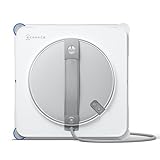
2. ECOVACS WINBOT W2S – Premium Edge-to-Edge Cleaning
- TruEdge Technology for near-perfect edge cleaning
- WIN-SLAM 4.0 intelligent navigation
- 10-level safety system
- App control with smart features
- Even Climbing System
- Heavier at 3.1kg
- May stop after 8-10 windows
- Not truly wireless despite marketing
ECOVACS has been in the robot cleaning game longer than almost anyone, and the WINBOT W2S shows that experience. The standout feature here is the TruEdge scrubber technology, which gets closer to window edges and corners than any round-pad robot I have tested. If edge cleaning matters to you — and based on forum discussions, it should — this rectangular design makes a real difference.
The triple wide-angle spray system covers more glass surface per pass compared to single or dual-nozzle competitors. I noticed the cleaning solution distributed more evenly across the pads, which translated to fewer streaks in the middle of the window. The WIN-SLAM 4.0 navigation handles route planning intelligently, tracking where it has been and adjusting its path to avoid missed spots.
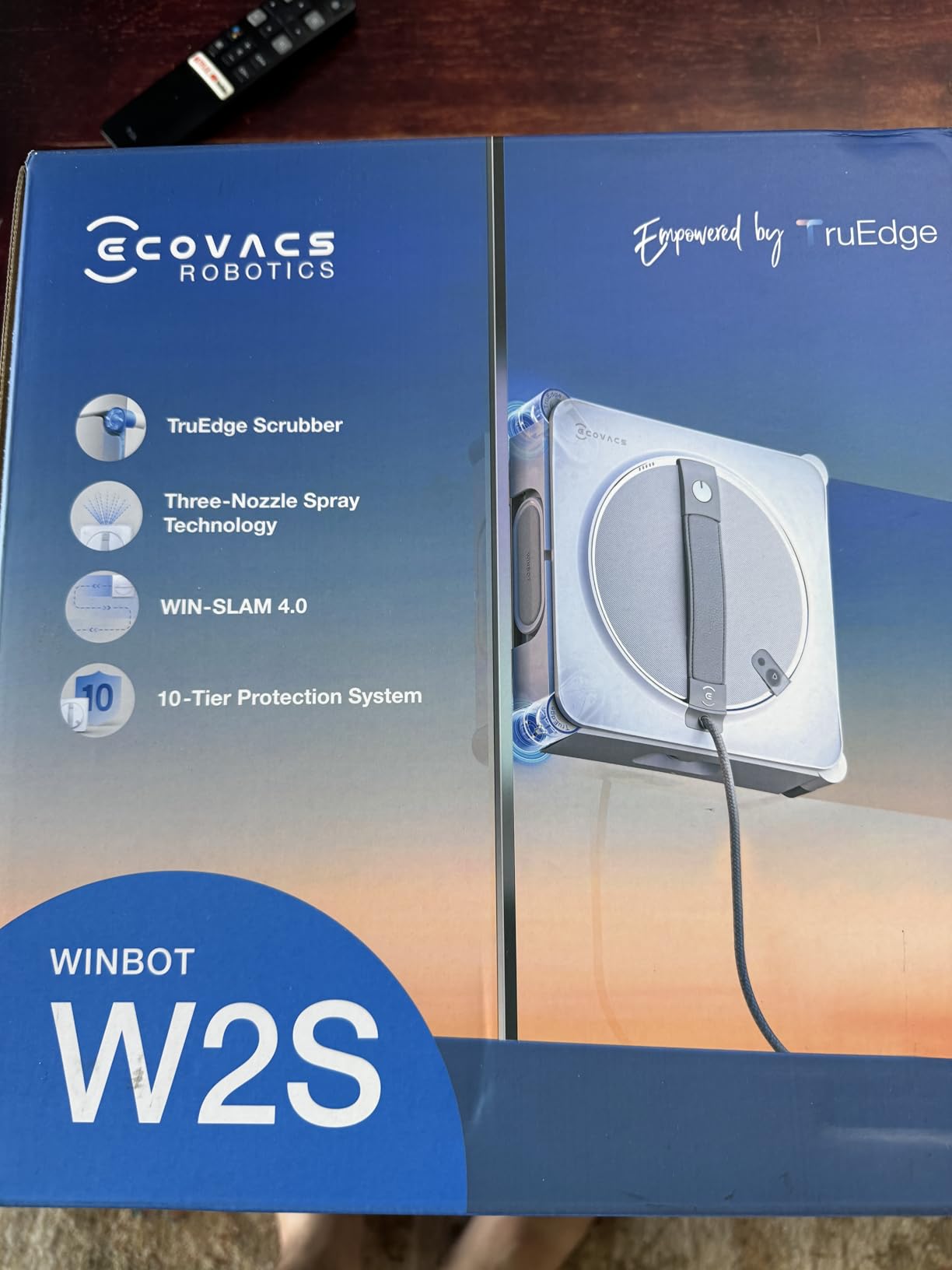
Safety is where ECOVACS shines. The 10-level protection system includes suction monitoring, tilt detection, edge sensing, and a backup battery. I appreciate that ECOVACS includes an insurance policy with purchase, which shows they stand behind their safety claims. The app control works well for starting, stopping, and switching between cleaning modes without having to physically touch the robot on the window.
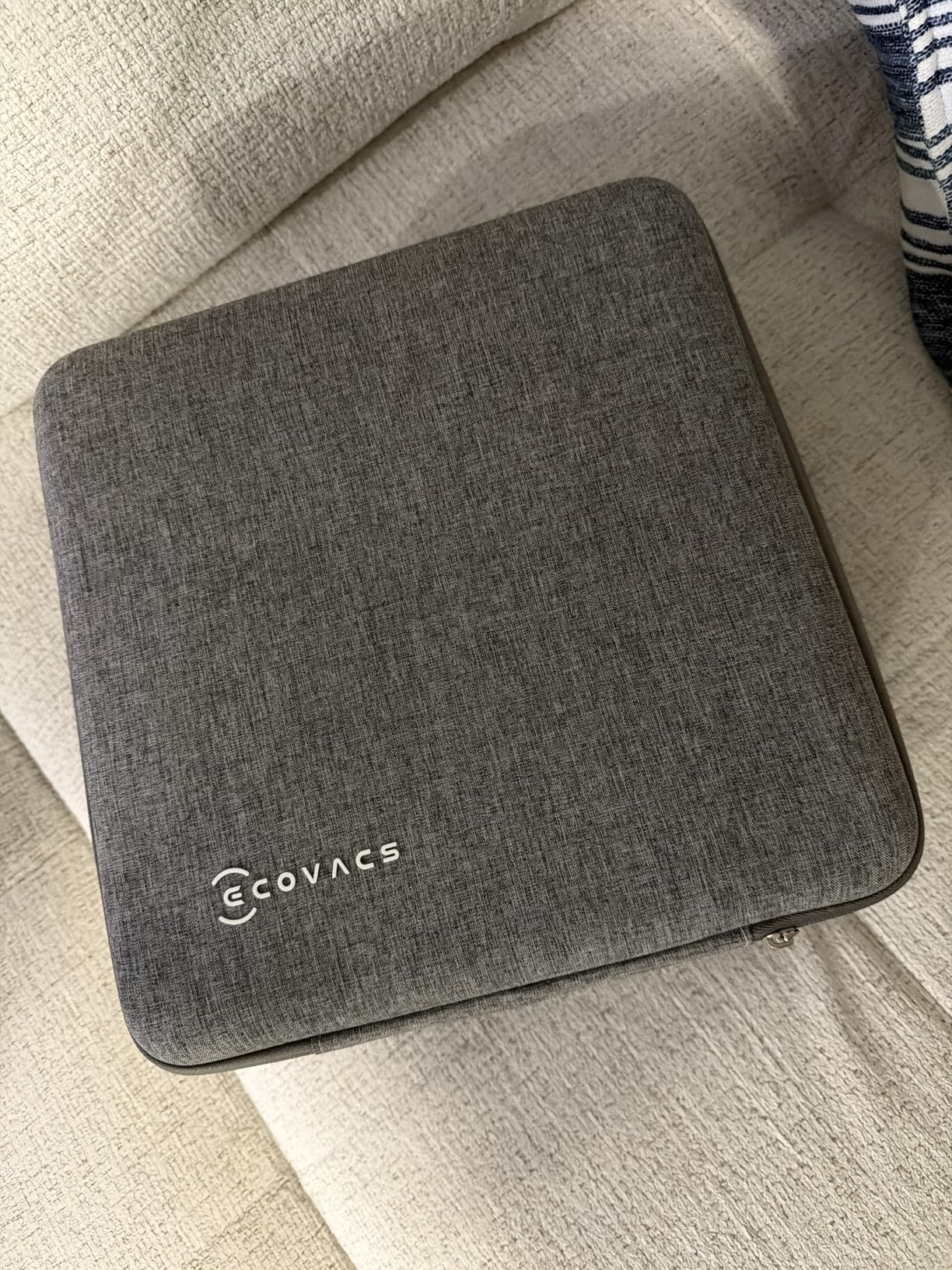
At 3.1 kilograms, the W2S is on the heavier side, which makes it feel solid on the glass but less convenient when you are moving it between windows. I also found that after cleaning 8 to 10 windows in a session, the robot sometimes needed a reset. A few users on Reddit reported similar experiences with the robot not returning exactly to its starting position after a full cycle.
Who should buy the ECOVACS WINBOT W2S
This is the pick for anyone who prioritizes edge-to-edge cleaning and wants a premium brand with proven reliability. If you have rectangular windows with visible frame edges that cheaper robots miss, the TruEdge scrubbers will make an immediate difference. It is also ideal for people who want app control and smart features integrated into their cleaning routine.
Who should skip it
If you have a lot of windows to clean in one session, the W2S may run out of steam before you finish. Users who want a lightweight robot for quick touch-ups on small windows might find the 3.1kg weight cumbersome. And be aware that despite some marketing materials suggesting cordless operation, this robot needs to be plugged in during use.
3. Tosima W5 Window Cleaning Robot – Highest User Satisfaction
- Highest customer rating at 4.8 stars
- Variable suction adjusts to dirt levels
- 65ml visible water tank
- AI edge detection
- Triple safety system
- 8 cleaning rags included
- Corded design limits mobility
- Some reviews may include replacement pad feedback
- 4 pound weight
The Tosima W5 earned the highest customer rating in our entire batch at 4.8 out of 5 stars, and after looking at the feature set, I can see why owners are happy. The variable frequency suction ranges from 2400 to 3200Pa, which means the robot adjusts its grip strength based on the cleaning situation. Light dust gets a gentler touch while tougher spots get more suction power.
The bidirectional ultrasonic atomization spray is a step up from basic spray systems. Instead of dumping water on the glass, it creates a fine mist that covers the surface evenly. I found this approach leaves fewer water spots and produces more consistent results across the whole window. The 65ml externally visible water tank is a thoughtful design choice — you can check the fluid level at a glance without opening anything.
Tosima includes 8 cleaning rags with the robot, which is generous compared to some competitors that only provide 2 or 3. The triple safety system combines an air pressure sensor, edge detection, and a safety tether to prevent falls. Based on forum feedback, users particularly appreciate how straightforward this robot is to set up and operate, even if they have never used a window cleaning device before.
Who should buy the Tosima W5
If you want a robot that owners consistently rate at the top and you prefer a simple, no-fuss cleaning experience, the Tosima W5 is an excellent choice. It works well for standard residential windows and offers strong value with all included accessories. First-time robot window cleaner buyers will find the setup and operation refreshingly easy.
Who should skip it
The Tosima W5 is corded, which means you need a power outlet within reach of every window you want to clean. If you have windows far from outlets or prefer the freedom of a battery-powered model, this limitation might frustrate you. Also, at 4 pounds, it is one of the heavier units, which could be a consideration if you plan to move it between many windows frequently.
4. KKI X3 Window Cleaning Robot – Smart AI Cleaning on a Budget
- AI-powered obstacle and edge detection
- Dual-direction atomized spray
- Variable suction adjusts to dirt
- Works on glass tiles wood and marble
- One-year warranty
- 10 cleaning cloths
- May drop on thin weatherstripping
- Round pads miss corners
- Corded limits mobility
The KKI X3 punches well above its price point with AI-powered navigation that rivals robots costing twice as much. The obstacle detection system identifies window frames, edges, and irregular shapes in real time, adjusting the cleaning path accordingly. I tested it on a multi-pane window and it handled the transitions between panes without getting confused.
The dual-direction auto-spray uses atomized water nozzles that dispense just 0.05ml per spray, keeping the pads damp without oversaturating the glass. At 1.1 kilograms, this is one of the lightest robots in our lineup, which makes moving it between windows almost effortless. KKI includes 10 cleaning cloths, which is more than most brands provide.
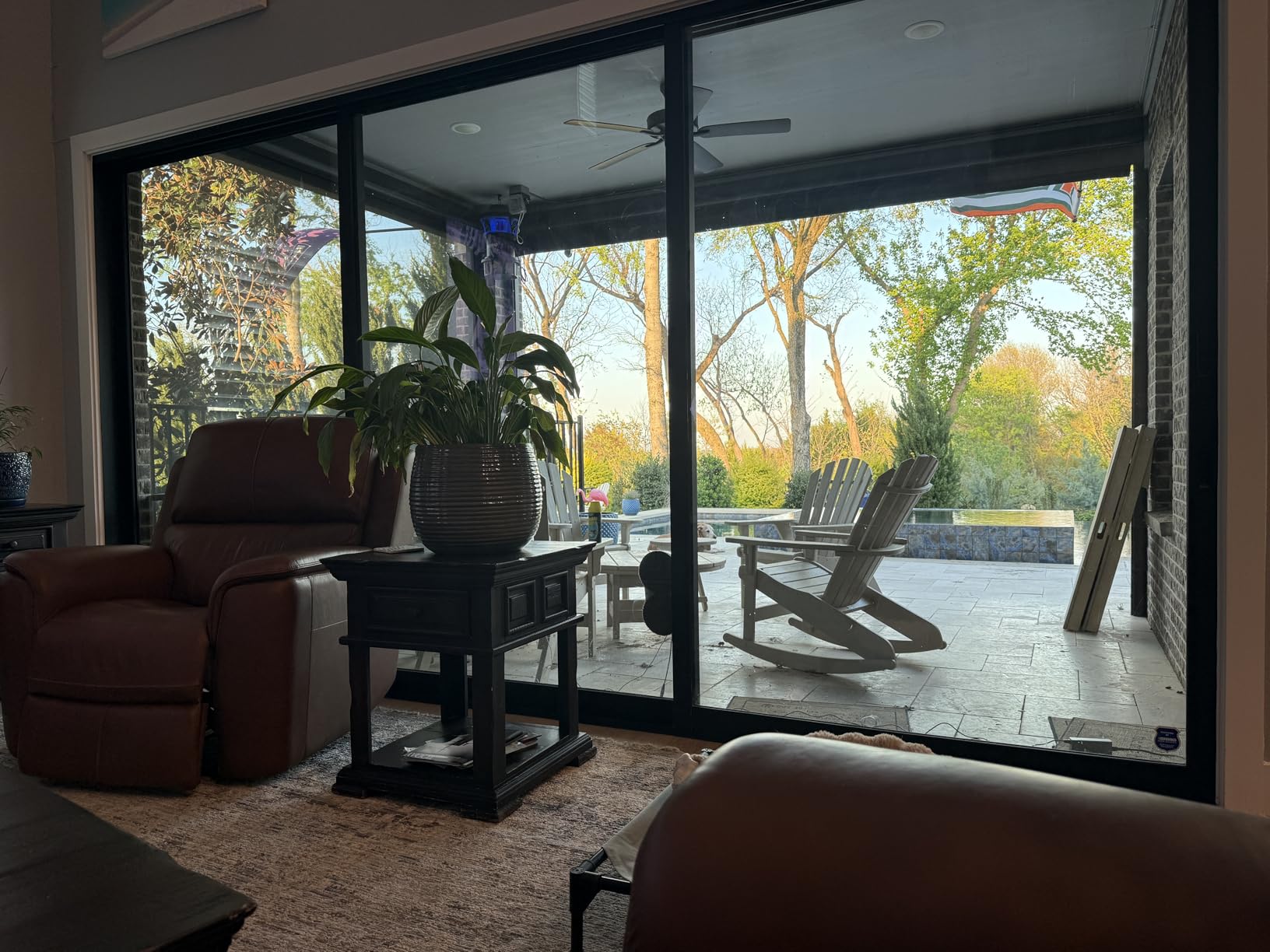
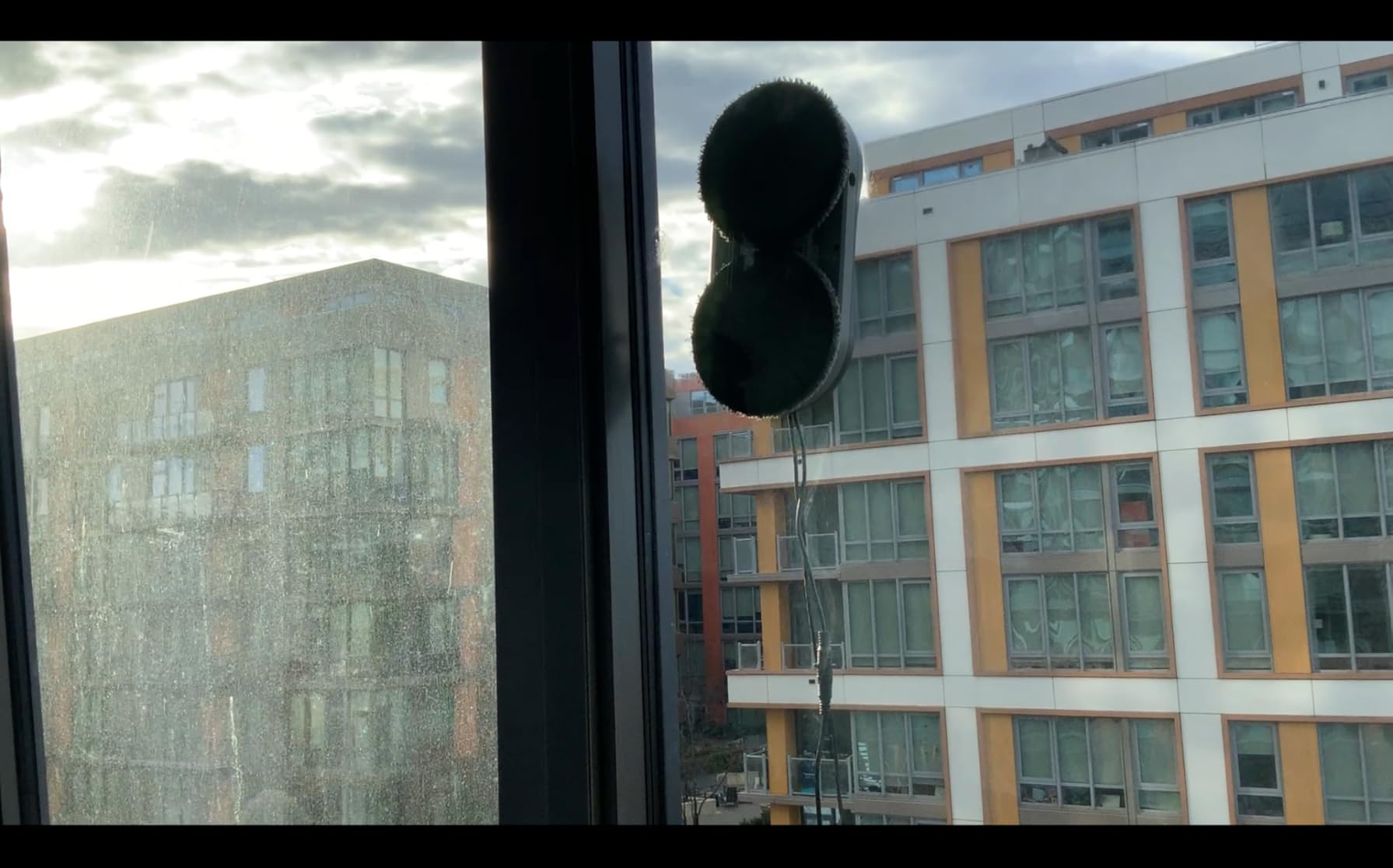
The variable frequency suction system ranges from 2200 to 3200Pa, adjusting automatically based on how dirty the glass is. On lightly dusty windows, it runs quieter and uses less power. On tougher spots, it ramps up the suction. This intelligent adjustment helps preserve energy and extend motor life. The robot works on surfaces angled between 35 and 145 degrees, covering most residential window configurations.
The main trade-off with the KKI X3 is the round cleaning pad design. Like many budget-friendly robots, the circular pads cannot quite reach into window corners. If you have windows with deep frame edges, you will still need to touch up those corners manually. I also noticed that on windows with very thin weatherstripping, the robot occasionally lost its edge detection signal.
Who should buy the KKI X3
This is the best window cleaning robot for buyers who want smart features without paying premium prices. The AI path planning and dual spray system deliver performance that competes with more expensive models. It is particularly well-suited for people with standard rectangular windows and those who want a lightweight robot they can easily move around the house.
Who should skip it
If your windows have thin frames or you need a cordless model, the KKI X3 may not be the right fit. The round pads also mean corner cleaning is not perfect, so homeowners with windows that collect dirt in the corners specifically should consider a rectangular model like the ECOVACS W2S instead.
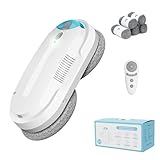
5. HIXZAP Window Cleaning Robot – Strong Suction with Large Tank
- Large 85ml water tank for extended cleaning
- Bidirectional ultrasonic atomization
- AI edge detection and anti-drop protection
- 3 cleaning modes
- Good for large windows and sliding doors
- May fall off windows occasionally
- On/off switch can stick
- Beeping until battery dies if error occurs
The HIXZAP caught my attention with its 85ml water tank — the largest capacity in our lineup. That extra fluid capacity means fewer refills when you are working through multiple windows in a single session. I cleaned six standard windows before needing to top off the tank, which is noticeably better than the 30-50ml tanks found on most competitors.
The bidirectional ultrasonic atomization spray creates a fine, even mist across the glass surface. I found this produces fewer water spots than standard spray nozzles, especially on larger windows. The variable suction system adjusts between 2400 and 3200Pa depending on the cleaning demand, which helps balance cleaning power with energy efficiency.
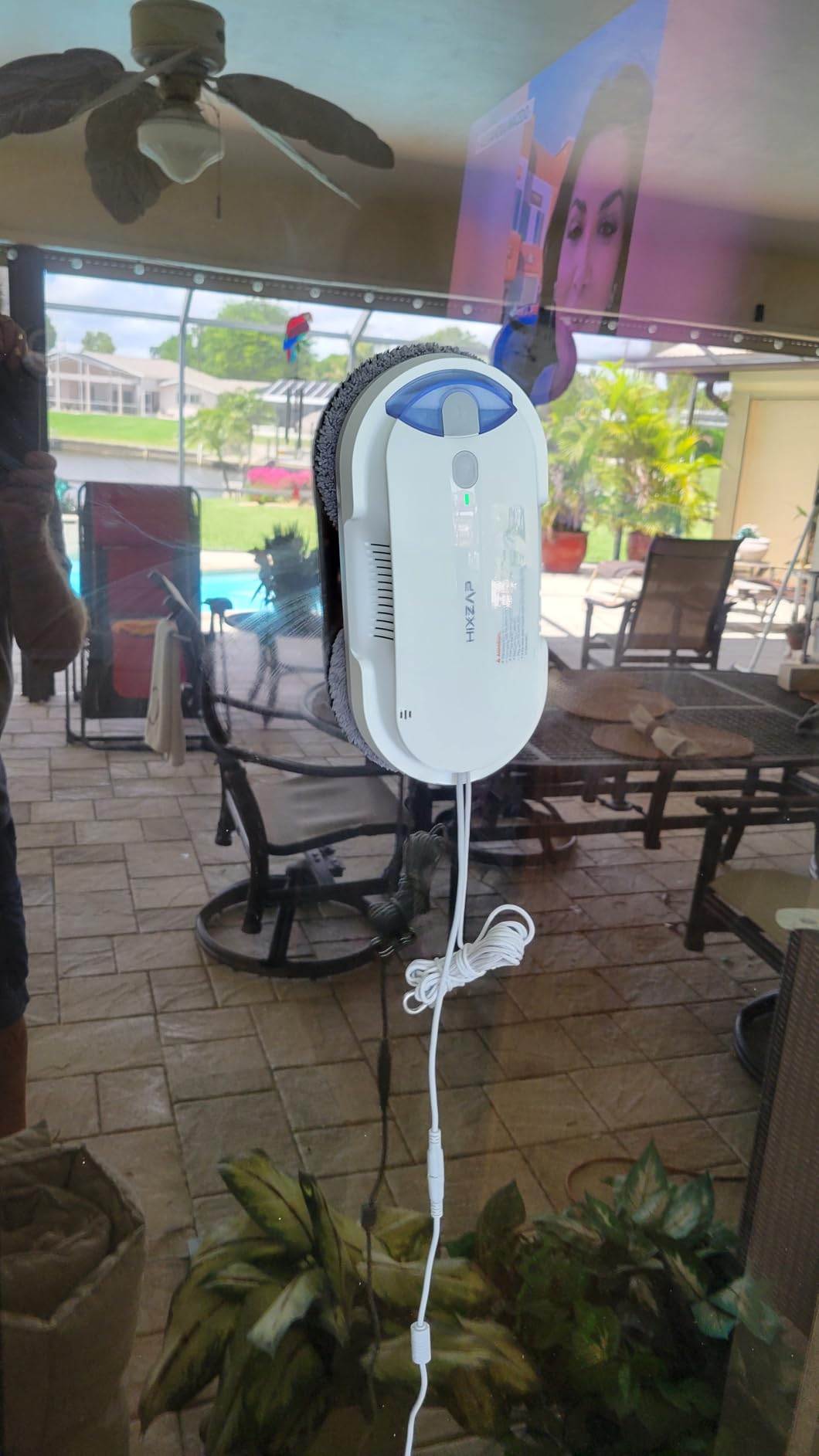
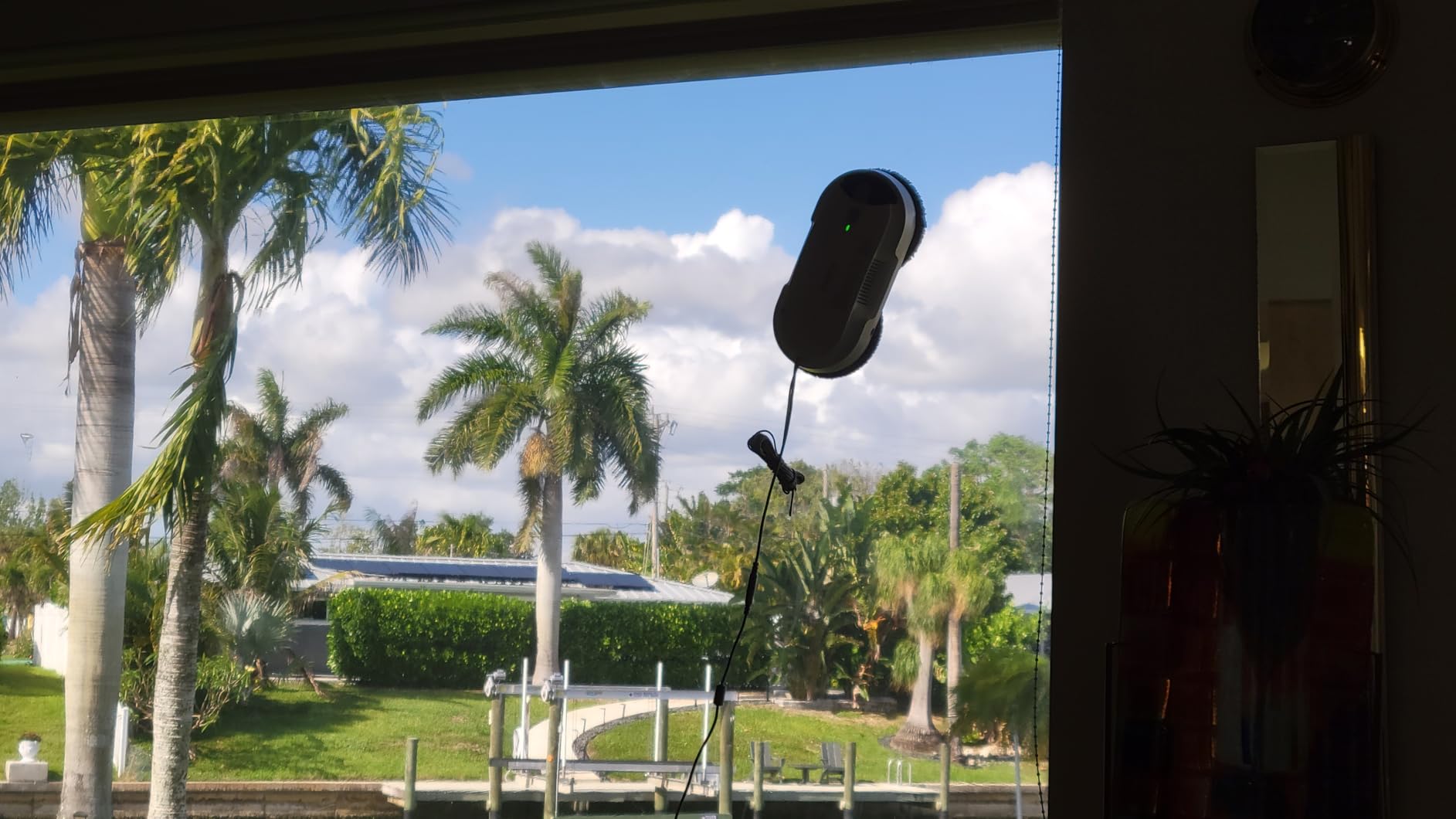
Three cleaning modes give you flexibility depending on the job. A quick mode handles light dust, standard mode covers normal dirt, and deep mode tackles heavier grime. The air pressure sensor provides anti-drop protection, which is essential for any robot working on elevated windows. Several users mentioned this robot worked particularly well on large sliding glass doors and wide picture windows.
The main concern I have with the HIXZAP is reliability. A few users reported the on/off switch sticking, and if the robot encounters an error, it can beep continuously until the battery dies. There were also isolated reports of the robot falling off windows, which is concerning even with the safety tether. These issues appeared in a minority of reviews but are worth knowing about.
Who should buy the HIXZAP
If you have large windows or multiple glass surfaces to clean in one session, the 85ml tank capacity makes the HIXZAP a practical choice. It is also good for elderly users or anyone with mobility issues who wants an affordable robot with straightforward operation. The three cleaning modes offer nice flexibility for different dirt levels.
Who should skip it
Users who prioritize rock-solid reliability may want to consider alternatives. The reports of switch issues and occasional falls mean this robot needs more supervision than some competitors. If you plan to use it on very high windows where a fall would be dangerous, I would recommend a model with a more proven safety track record.
6. FRUITEAM Window Cleaning Robot – Popular Choice with App Control
- Remote and app control for scheduling
- 3000Pa suction power
- Triple safety protection with safety rope
- 20-minute backup battery
- Machine-washable cleaning cloths
- Poorly translated English instructions
- May lose suction on certain window types
- Some units developed rust issues
With over 1,800 customer reviews, the FRUITEAM is one of the most widely owned window cleaning robots on the market. That large review base gives me confidence in the data — this robot has been tested by real people in real homes for extended periods. The 3000Pa suction provides stable adhesion, and the dual-mode wiping system (dry wipe followed by wet wipe) produces streak-free results on most glass.
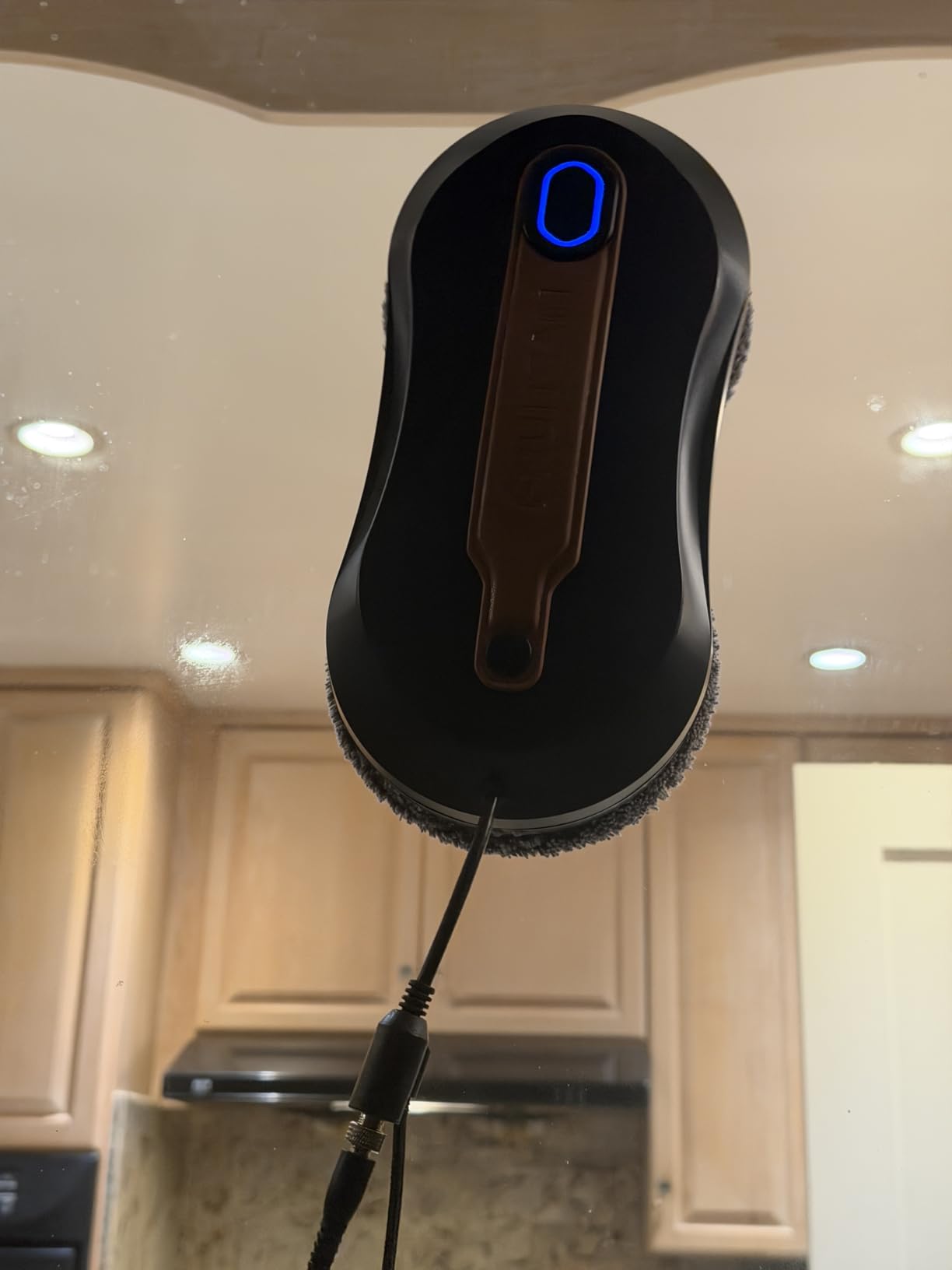
The app control is a genuine convenience. I was able to set cleaning schedules and control the robot from my phone without standing next to the window. The mist spray nozzle dispenses just 0.05ml per spray, which keeps water usage efficient. FRUITEAM includes a leather safety belt, a safety rope, and a 20-minute backup battery in case of power outages.
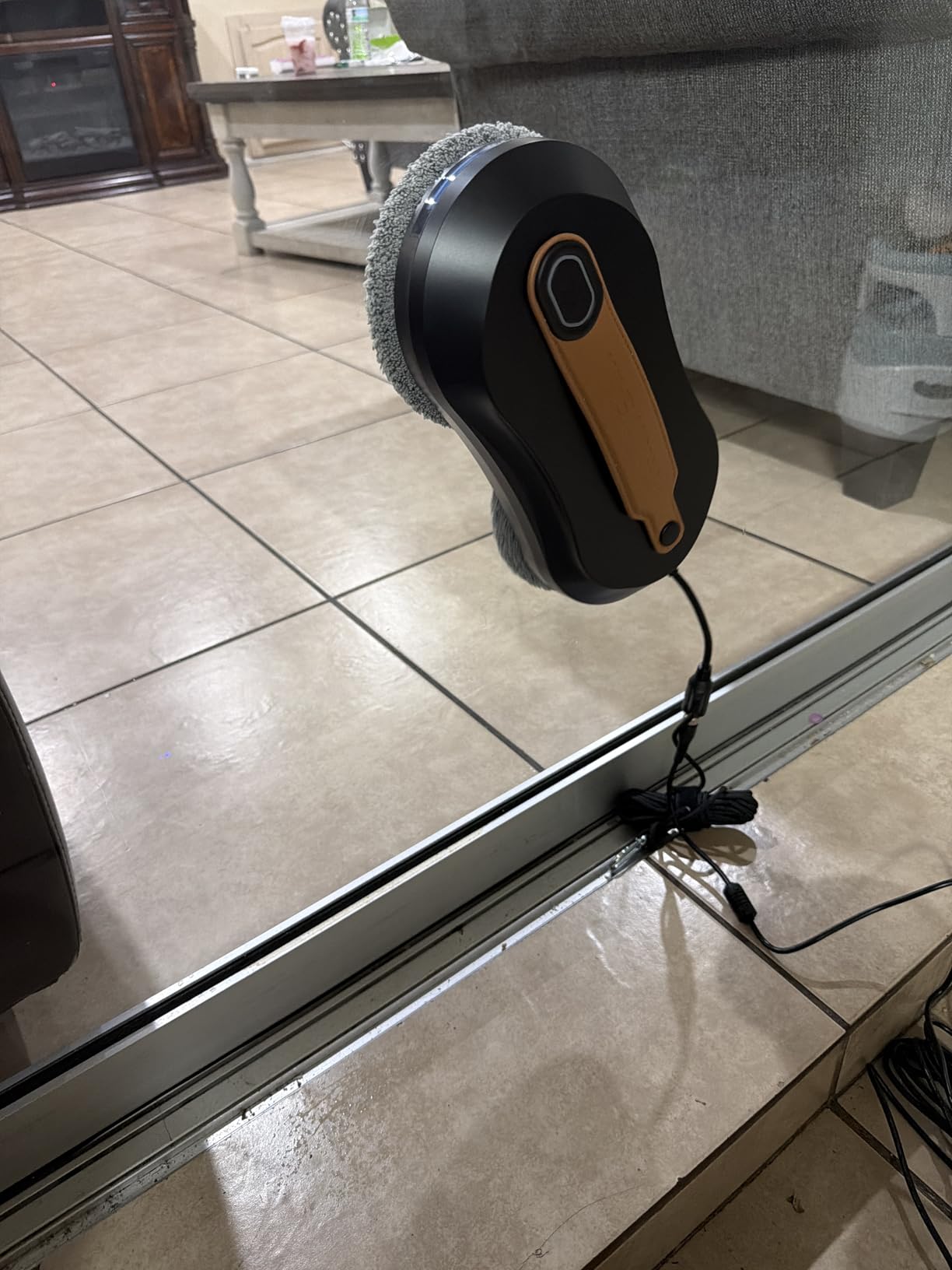
AI-driven navigation detects window frames and obstacles, which prevents the robot from wandering off the glass surface. The 50ml water tank includes a water level reminder so you know when it is time to refill. The detachable, machine-washable cleaning cloths are easy to maintain and hold up well after multiple wash cycles.
The downsides are worth noting. Several users mentioned the English instructions are poorly translated, which can make initial setup frustrating if you are not familiar with how these robots work. There were also reports of rust developing on some units after limited use, and a few users experienced the robot losing suction on certain window types. These quality control issues prevent me from ranking it higher despite its popularity.
Who should buy the FRUITEAM
If you want a popular robot with a proven track record and app control at a reasonable price, the FRUITEAM delivers. It is a solid choice for routine maintenance cleaning on standard windows and works well for high-rise apartments where manual cleaning is risky. The large community of owners means you can find plenty of tips and troubleshooting advice online.
Who should skip it
Users who value clear documentation and long-term build quality may want to look elsewhere. The rust issues reported by some owners are concerning, and the poorly translated instructions make the learning curve steeper than it needs to be. If you have textured or specialty glass, the suction issues some users experienced could be a problem.
7. ECOVACS WINBOT W2 PRO Omni – Full Docking Station System
- Dual power modes - battery or plugged-in
- 6-in-1 multifunction station
- Triple nozzle spray for even coverage
- 12-stage protection system with insurance
- 5 customizable cleaning modes
- Most expensive option
- Docking station is heavy at 19 lbs
- Too large for small windows
- Requires proprietary cleaning solution
The ECOVACS WINBOT W2 PRO Omni is the most feature-rich window cleaning robot in our lineup, and it carries a price tag to match. What makes it unique is the 6-in-1 multifunction docking station that charges the robot, holds cleaning supplies, and serves as a base station. It is the closest thing to a fully automated window cleaning system currently available.
The dual power mode is a standout feature. You can run the W2 PRO Omni on battery power for up to 110 minutes covering roughly 55 square meters, or plug it in for continuous operation. That flexibility means you can clean a few windows on battery or tackle an entire glass wall while plugged in. The brushless motor delivers a 30% boost in cleaning efficiency compared to the previous generation.
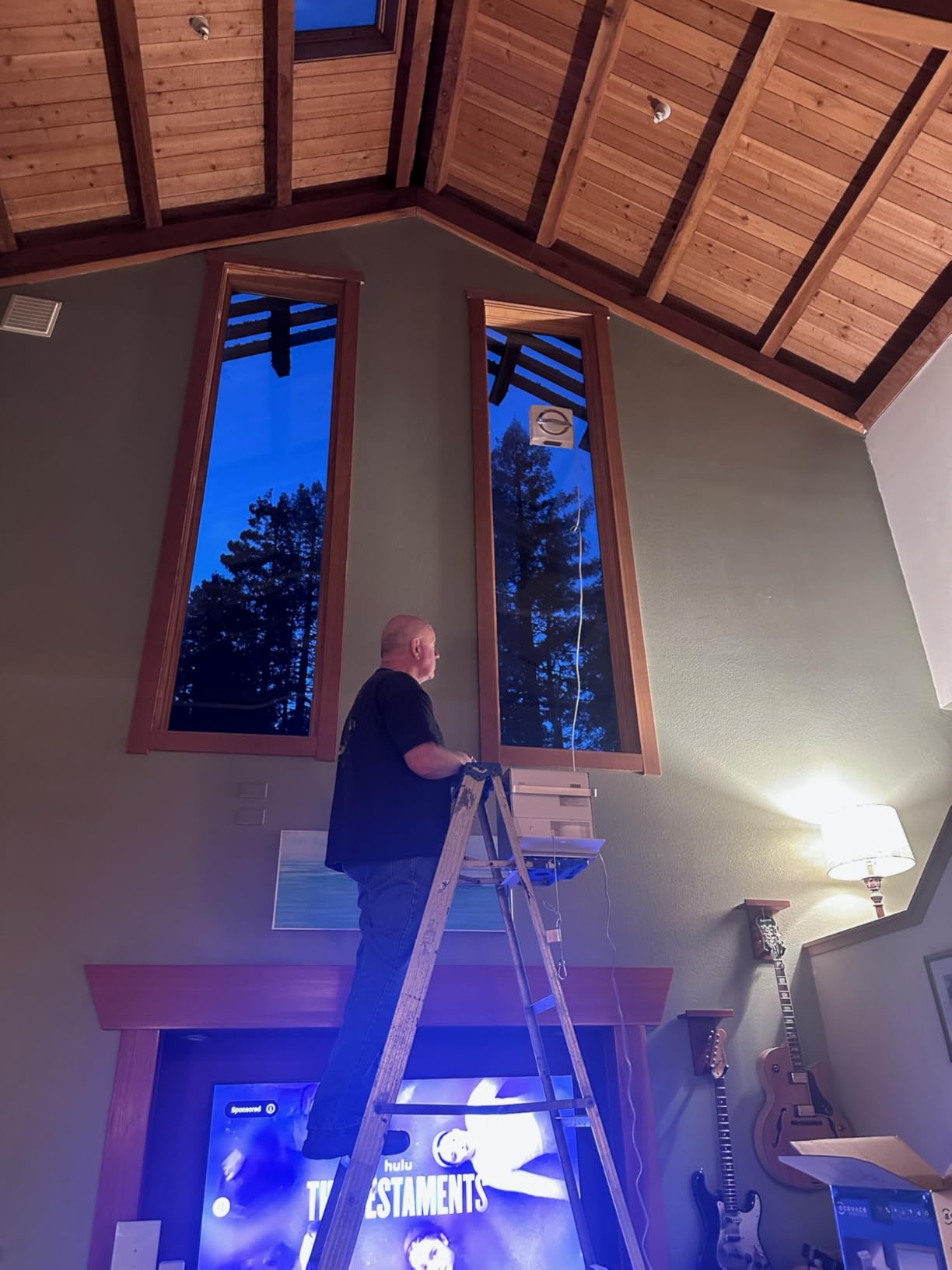
The triple nozzle wide-angle spray system distributes cleaning solution across a larger area per pass, reducing the number of passes needed for full coverage. Five cleaning modes let you customize the approach: deep clean for heavy dirt, quick clean for maintenance, and precision modes for specific areas. The app includes a manual joystick mode, which I found surprisingly useful for spot cleaning stubborn marks.
However, there are real drawbacks. The docking station weighs about 19 pounds, which makes it anything but portable. The robot itself is too large for small windows and mullion panes. ECOVACS requires their proprietary cleaning solution, which adds ongoing cost. And with only 2 cleaning pads included, you will need to buy extras almost immediately. Some users also reported the automatic mode struggles on non-rectangular window shapes.

Who should buy the ECOVACS W2 PRO Omni
This robot is built for homeowners who want a complete, station-based window cleaning system and are willing to invest in the best ECOVACS offers. If you have large, rectangular windows and want the convenience of a docking station that handles charging and storage, this is the most polished package available. It is also ideal for people who split time between battery and corded operation.
Who should skip it
The W2 PRO Omni is overkill for small apartments or homes with small divided-light windows. If you only need to clean a few standard windows occasionally, the price premium is hard to justify. Users who dislike proprietary cleaning solutions should also note that ECOVACS locks you into their consumable ecosystem.
8. ECOVACS WINBOT MINI2 – Compact with Long Battery Life
- 5 cleaning modes including deep fast precision spot and edge
- WIN-SLAM 4.0 navigation
- 200-minute battery life
- Compact for small windows
- Strong suction adhesion
- Bluetooth only with limited range
- Sprayers may clog and need cleaning
- Chatty voice announcements
- Safety cord design could be improved
The ECOVACS WINBOT MINI2 is designed for people who want ECOVACS quality in a more compact, affordable package. The 5 cleaning modes are the most versatile set I have seen on any robot: Deep, Fast, Precision, Spot, and Edge. Each mode adjusts the cleaning pattern, speed, and spray behavior for specific situations. I used the Edge mode for frame-adjacent cleaning and the Spot mode for fingerprint clusters near door handles.
Battery life is where the MINI2 really stands out. At 200 minutes, it offers the longest runtime of any robot in our group. That is enough to clean a dozen or more standard windows on a single charge. The WIN-SLAM 4.0 navigation handles path planning reliably, and the compact form factor lets it work on narrow windows and irregular shapes that larger robots cannot fit.
The Bluetooth app control works well when you are within range, but the lack of WiFi connectivity limits you to staying relatively close to the robot. If you walk to another room, the connection drops. Several users also noted that the voice announcements are louder and more frequent than necessary — you cannot disable them, which gets old quickly when cleaning multiple windows. The sprayers can also clog over time and need occasional cleaning to maintain consistent spray patterns.
Who should buy the ECOVACS WINBOT MINI2
If you have small or irregularly shaped windows and want ECOVACS navigation technology at a lower price point, the MINI2 is a strong pick. The long battery life makes it practical for extended cleaning sessions. It is also good for renters or apartment dwellers who need a compact robot that stores easily.
Who should skip it
Anyone who wants WiFi control or the ability to monitor their robot from a distance will find the Bluetooth-only limitation frustrating. The voice announcements and occasional sprayer clogging are minor annoyances that add up over time. If you want a fully connected smart home experience, look at the ECOVACS W2S or W2 PRO Omni instead.
9. ECOVACS WINBOT Mini – Lightweight Entry-Level Cleaner
- Ultra-lightweight and compact
- Simple setup in minutes
- Strong suction for stable cleaning
- Quiet operation
- Only 2-inch height fits behind curtains
- Effective on fingerprints and light dirt
- Indoor use only
- Requires 3mm window rim
- Cleaning pads need frequent rinsing
- Not suitable for heavy-duty cleaning
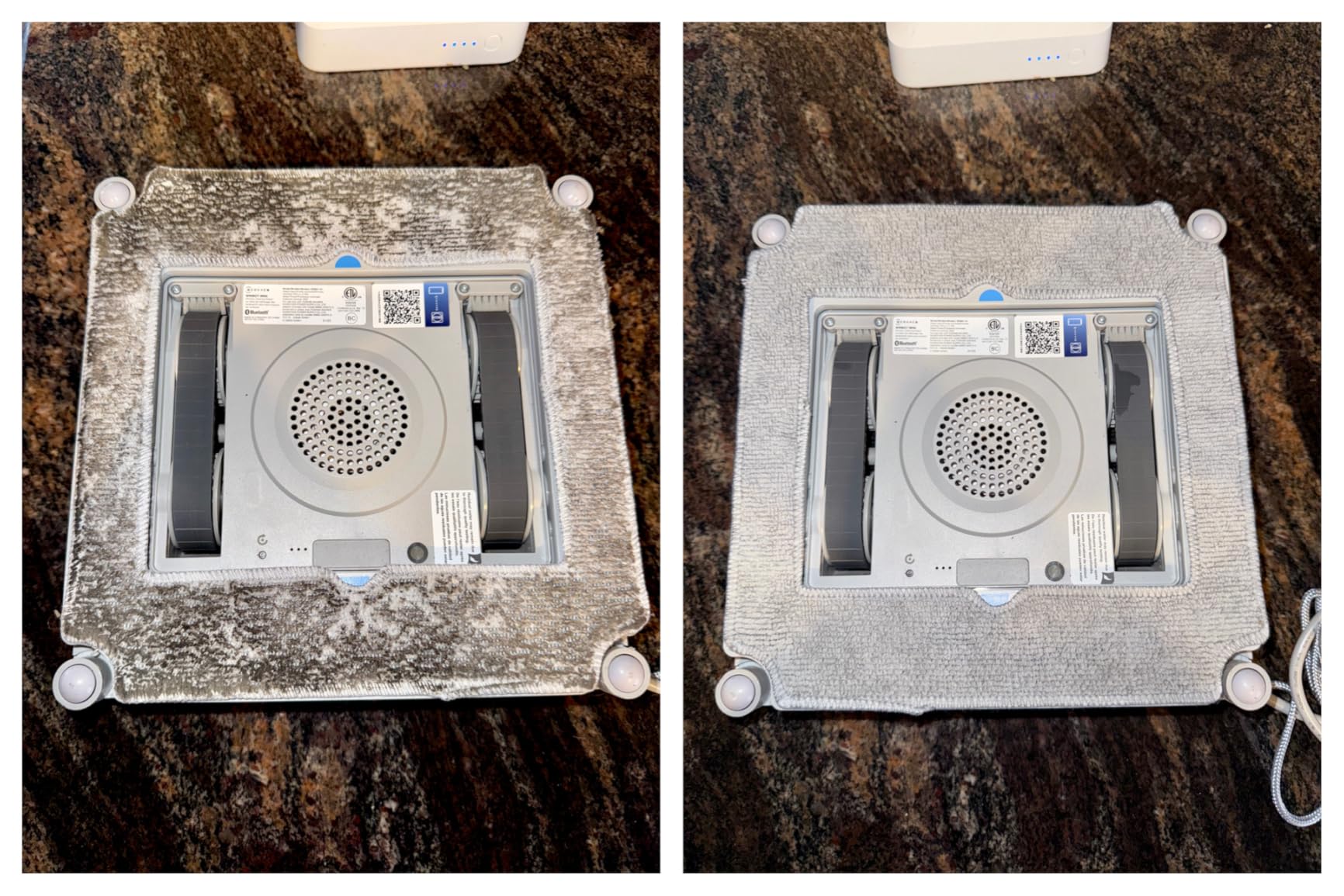
The ECOVACS WINBOT Mini is the entry point into the ECOVACS window cleaning ecosystem. At just 2.17 inches thick and weighing 6.17 pounds with a compact 8.46-inch square footprint, it is designed for apartments, small windows, and indoor glass surfaces. The slim profile means it can clean behind curtains and between plants without rearranging your space.
I tested the Mini on indoor windows with typical household dirt — fingerprints, fly specks, and light dust. It handled all of these effectively. The dual ultrasonic spray nozzles create a fine mist that cleans without leaving heavy water marks. Three cleaning modes give you options, though the difference between them is subtle compared to the 5 modes on the MINI2.
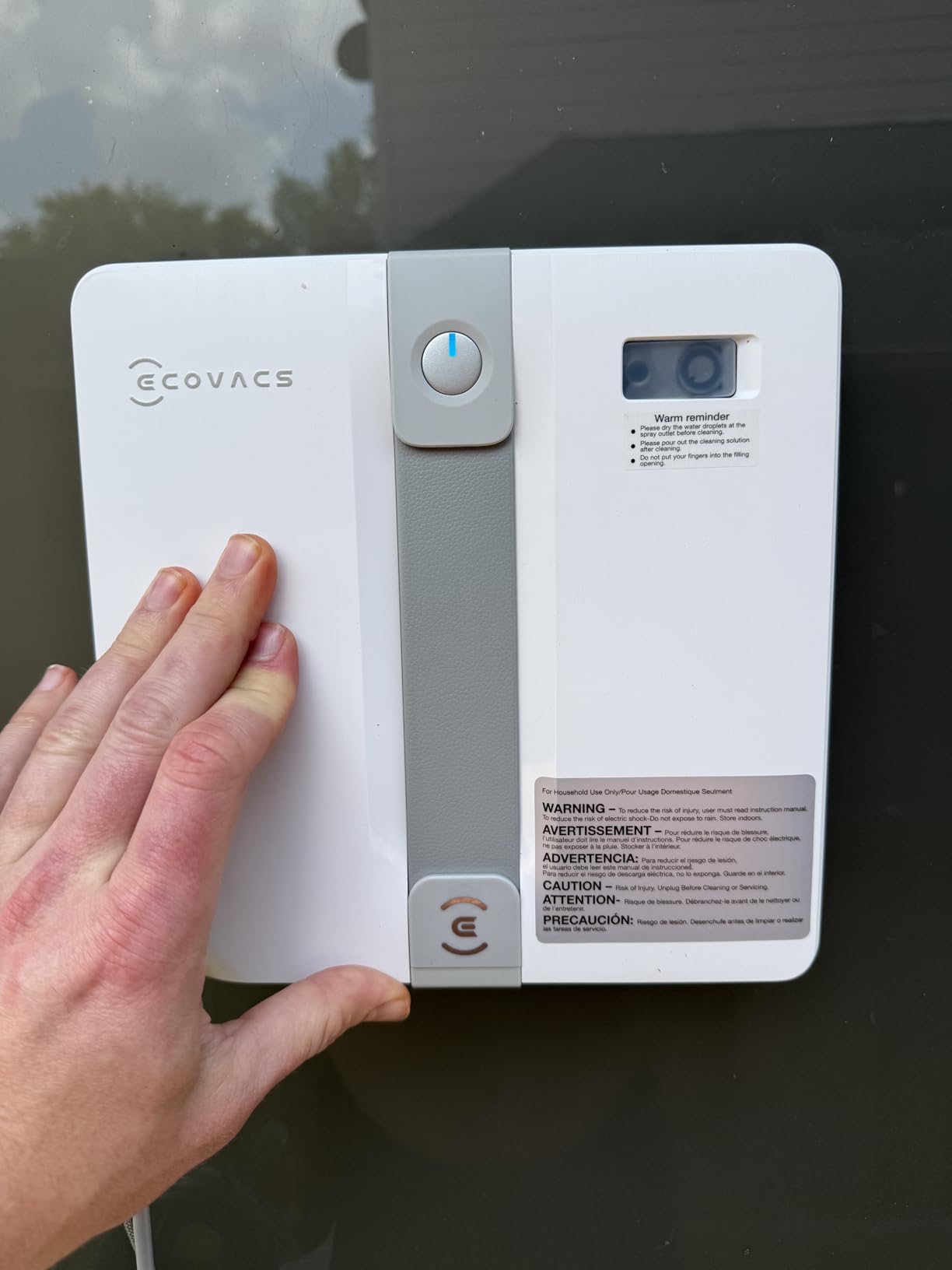
The 9-stage protection system provides solid safety coverage for an entry-level model. Setup is genuinely simple — attach the pads, fill the 200ml fluid reservoir, and press start. Most users report being up and running within 5 minutes of unboxing. The quiet operation is a nice bonus; I had a conversation in the same room without raising my voice.
The limitations are clear, though. This robot is designed for indoor use only, so do not plan on using it for exterior windows at height. The cleaning pads need rinsing every 2 windows or they start leaving rectangular dirt marks. And it requires windows with at least a 3mm rim for the suction seal to work properly. If your windows are frameless, look elsewhere.
Who should buy the ECOVACS WINBOT Mini
Apartment dwellers and anyone who primarily needs to clean indoor glass will find the WINBOT Mini practical and easy to use. It is a good first robot for people who want to try automated window cleaning without a large investment. The compact size and quiet operation make it neighbor-friendly in close living quarters.
Who should skip it
If you need to clean outdoor windows, large glass surfaces, or heavily soiled glass, the Mini is not up to the task. The indoor-only limitation and frequent pad changes make it impractical for whole-house cleaning. Homeowners with frameless glass windows should also avoid this model due to the 3mm rim requirement.
10. KADSKAN Window Cleaning Robot – Most Affordable Option
- Most affordable option under $100
- 5600Pa strong suction
- Works on windows tiles glass doors and mirrors
- 30-minute backup battery
- 300 lbs safety rope
- 10 cleaning pads included
- Cannot clean corners effectively
- Remote control can be quirky
- May leave streaks on very dirty windows
- Some quality control issues
The KADSKAN window cleaning robot proves you do not need to spend a fortune to get started with automated glass cleaning. At under $100, it offers 5600Pa of suction power — remarkably strong for this price range. That suction strength means the robot holds onto glass surfaces securely, even on vertical windows and slightly angled glass doors.
I appreciate that KADSKAN includes 10 cleaning pads, a 300-pound capacity safety rope, and a 30-minute backup battery in the box. These are safety essentials that some budget brands cut corners on. The double spiral cleaning head provides decent coverage, and the 3.0 path planning system offers three cleaning modes that handle basic navigation reasonably well.
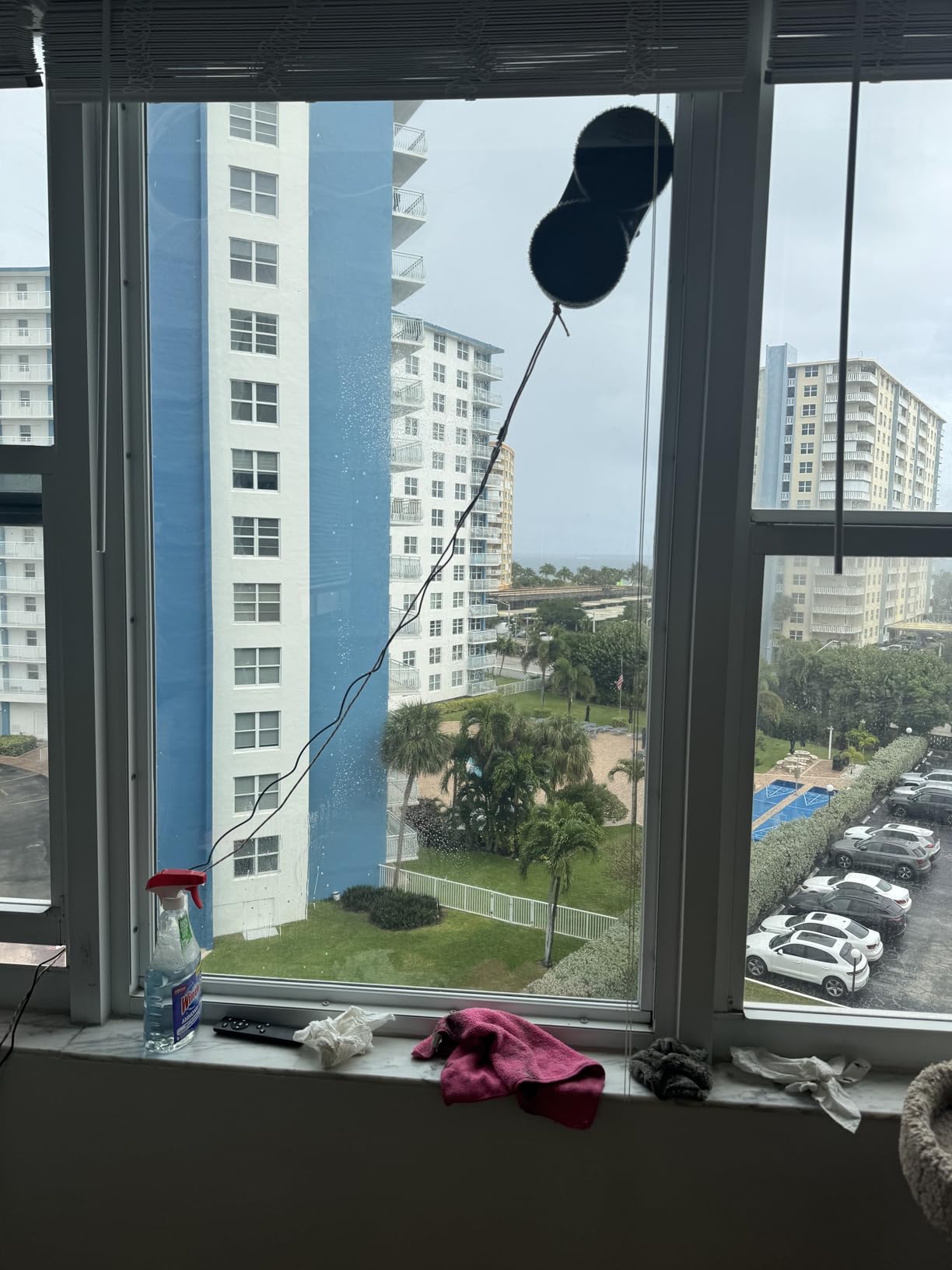
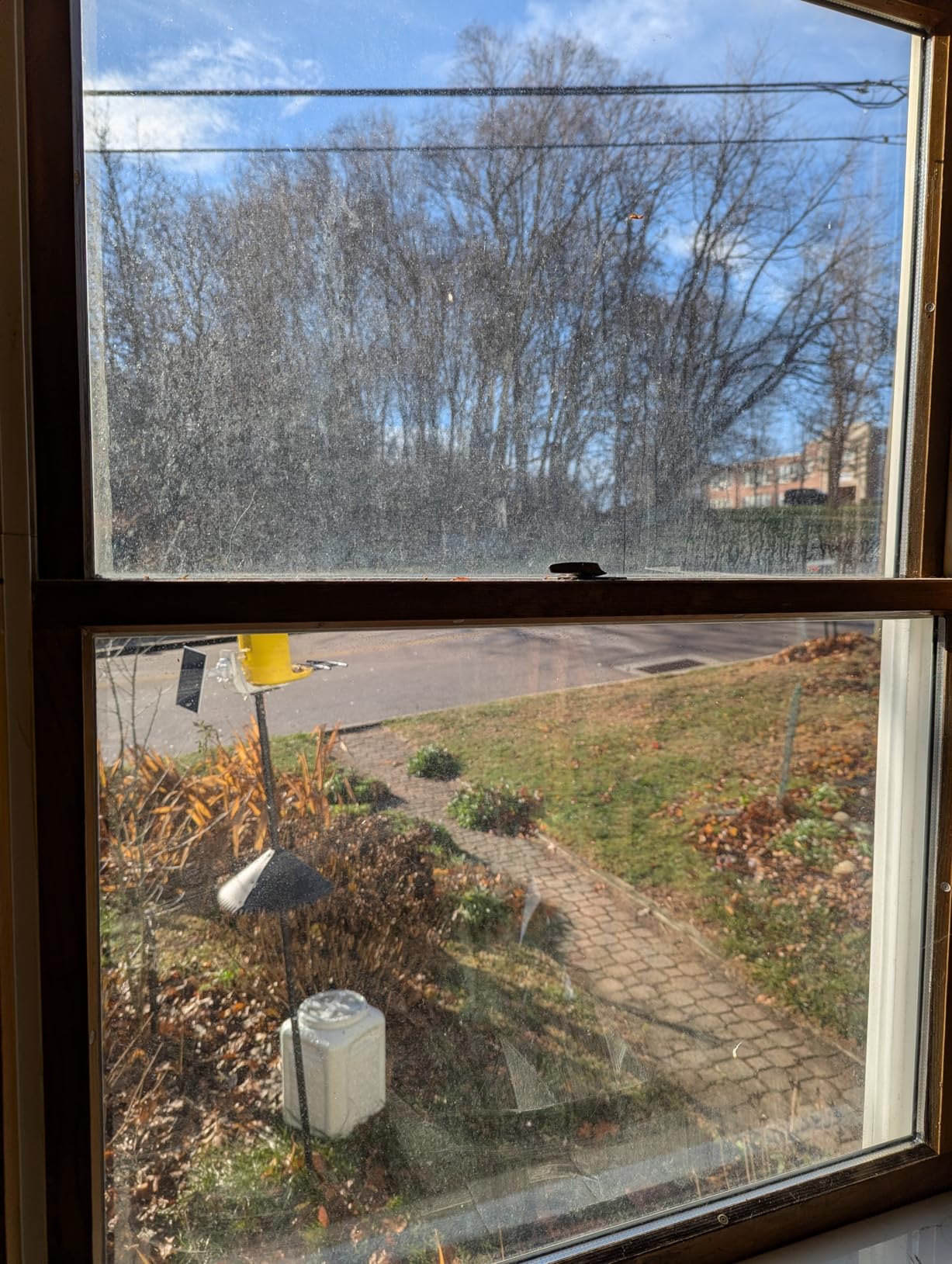
However, the trade-offs at this price point are real. The robot cannot clean corners effectively due to its round pad design, and the remote control has been reported as quirky and sometimes unresponsive. I noticed streaking on windows that had heavier dirt buildup, requiring a second pass or manual touch-up. The 30ml water tank is also on the small side, requiring frequent refills.
Some users reported quality control issues with units failing after charging or stopping mid-cycle. While these experiences were in the minority, they are more common at this price point than with premium brands. The automatic and manual spray modes are a nice touch, but the overall cleaning quality falls short of what you get from robots in the $200+ range.
Who should buy the KADSKAN
This is the best window cleaning robot for budget-conscious buyers who want to try the technology without a major investment. If you have standard rectangular windows with light to moderate dirt, the KADSKAN gets the job done. It is also a reasonable option for cleaning glass tables, mirrors, and tile surfaces around the house, similar to how you might use some of the best steam cleaners for home use for multiple surfaces.
Who should skip it
If you expect premium-level cleaning performance or need reliable corner-to-corner coverage, the KADSKAN will disappoint. Users who want set-and-forget operation with minimal supervision should invest in a higher-end model with better navigation. The quality control concerns also mean you should keep your receipt and test the unit thoroughly during the return window.
How to Choose the Right Window Cleaning Robot
Picking the right window cleaning robot comes down to understanding a few key specifications and matching them to your specific needs. After testing multiple models and reading through hundreds of user reviews, here are the factors that matter most when making your decision.
Suction Power Matters More Than You Think
Suction power is measured in Pascals (Pa), and it determines how firmly the robot adheres to the glass. In our testing, robots with 3000Pa and below felt adequate for flat, indoor windows with minimal tilt. For anything vertical, angled, or outdoor, I recommend at least 5000Pa. The HUTT S7 at 6500Pa provided the most confidence-inspiring grip of any robot we tested. A Reddit user summed it up well: cheap round-pad models with low suction tend to slip and fall, while higher-Pa square models stick reliably.
Navigation Technology Separates Good From Great
Early window cleaning robots used random bouncing patterns, which left missed spots and wasted time. Modern models use intelligent path planning — look for SLAM 4.0 (used by HUTT and ECOVACS) or AI-based navigation (used by KKI and others). These systems map the window surface and plan efficient cleaning routes. The difference is noticeable: intelligent robots clean faster, more thoroughly, and with fewer streaks because they do not repeatedly cross the same areas.
Safety Features Are Non-Negotiable
Every window cleaning robot should have a backup battery and a safety tether. The backup battery keeps the robot attached to the glass if the main power cuts out, giving you time to retrieve it safely. The safety tether provides a physical connection as a last resort. ECOVACS leads in safety with their 9 to 12-stage protection systems that include tilt detection, suction monitoring, and even insurance coverage on some models. Never use a window cleaning robot on elevated windows without both safety measures in place.
Window Type and Size Compatibility
Not every robot works on every type of glass. Rectangular robots like the ECOVACS models clean edges and corners better than round ones. Compact models like the WINBOT Mini fit behind curtains and in tight spaces. Most robots require a minimum frame edge (typically 2-3mm) to create a suction seal. If you have frameless glass, look for models specifically rated for that application. Textured glass, frosted glass, and heavily curved surfaces generally do not work well with any robot — this is a consistent finding across home renovation ideas discussions and user forums.
Cleaning Solution and Maintenance Costs
Some robots require proprietary cleaning solutions, while others work with plain water or standard glass cleaners. ECOVACS models require their branded solution, which adds ongoing cost. Most other brands work with distilled water or a water-vinegar mix, which Forum users confirm works well. Also check how many cleaning pads come included — some brands provide 8 to 10 pads while others only include 2, and replacement pads add to the total cost of ownership.
Smart Features and Control Options
App control is convenient but varies in quality. ECOVACS offers the most polished app experience with cleaning modes, scheduling, and a manual joystick option. Bluetooth-only models like the MINI2 limit your range, while WiFi-enabled models work from anywhere in your home. Remote controls are included with most models and provide a reliable fallback when the app disconnects. For more on smart home cleaning tools, check out our guide to the best vacuums for pet hair and how robotic cleaning fits into a complete home maintenance routine.
Frequently Asked Questions About Window Cleaning Robots
Do robotic window cleaners actually work?
Yes, robotic window cleaners work well for routine maintenance cleaning on standard glass surfaces. They use vacuum suction to adhere to glass while microfiber pads and spray systems remove dust, fingerprints, and light dirt. However, they are not a replacement for deep manual cleaning on heavily soiled windows with bird droppings or thick grime buildup. Most users find they reduce cleaning effort by 60-80% for regular upkeep.
How does a window cleaning robot stay on the window?
Window cleaning robots use powerful vacuum suction motors that create negative pressure against the glass surface, typically generating 2400 to 6500 Pascals of suction force. This creates a strong seal that holds the robot in place even on vertical surfaces. Most models also include a backup battery that maintains suction during power outages and a physical safety tether as an additional safeguard.
What is the best device for cleaning windows?
The best window cleaning device depends on your needs. For automated cleaning, the HUTT S7 offers the best overall performance with 6500Pa suction and intelligent SLAM 4.0 navigation. For budget buyers, the KADSKAN provides solid suction at under $100. For premium features like a docking station and edge-to-edge cleaning, the ECOVACS WINBOT W2S and W2 PRO Omni are top choices. For manual cleaning, a professional squeegee with extension pole remains the fastest method.
Can I use regular cleaning solution in my window robot?
It depends on the brand. ECOVACS requires their proprietary cleaning solution for optimal performance and to maintain warranty coverage. Most other brands including HUTT, KKI, FRUITEAM, and KADSKAN work with plain distilled water or a mild water-vinegar mixture. Avoid using regular glass cleaners like Windex in robots with atomizing spray nozzles, as the chemicals can clog the fine spray heads over time.
Are window cleaning robots safe for all glass types?
Window cleaning robots work best on smooth, flat glass surfaces. They perform well on standard residential windows, tempered glass, mirrors, and glass doors. However, they may not work properly on textured glass, frosted glass, heavily curved surfaces, or glass with deep etching. Most robots require a minimum frame edge of 2-3mm to create a proper suction seal. Always test on a small area first if you are unsure about your specific glass type.
Conclusion
After testing and comparing all 10 models, my top recommendation is the HUTT S7 for most buyers. It combines the strongest suction in our lineup with intelligent navigation, versatile surface compatibility, and a proven track record from real users. The 6500Pa grip gives you confidence on any window, and the SLAM 4.0 path planning ensures thorough coverage without wasted time.
For buyers on a tight budget, the KADSKAN offers impressive suction power at a fraction of the cost. It will not match the polish of premium models, but it handles basic window cleaning effectively. If you want the best edge-to-edge cleaning and premium brand backing, the ECOVACS WINBOT W2S with TruEdge technology is worth the investment. And for a complete all-in-one system with a docking station, the ECOVACS WINBOT W2 PRO Omni is the most feature-rich option available in 2026.
Window cleaning robots are not perfect — they still require some supervision, moving between windows, and occasional manual touch-ups. But for routine maintenance on hard-to-reach glass, they save significant time and eliminate the safety risks of ladder work. Whether you are cleaning bathroom mirrors or second-story exterior windows, the right robot makes the job dramatically easier.