
Upgrading your home with smart home upgrades starts with one of the most impactful devices you can install: a smart thermostat. After testing dozens of models over the past three months, our team has identified the absolute best smart thermostats that actually deliver on their promises of comfort, convenience, and energy savings.
Smart thermostats do more than just control your home’s temperature. They learn your schedule, adjust automatically when you’re away, and can slash your heating and cooling bills by up to 26%. Whether you’re building a complete smart home ecosystem or simply want to reduce your energy costs, the right thermostat makes all the difference.
In this guide, we’ve tested and reviewed 10 top-rated smart thermostats for 2026, ranging from budget-friendly options under $90 to premium models with air quality monitoring and built-in voice assistants. Each recommendation includes real-world testing insights, HVAC compatibility information, and honest pros and cons to help you make the right choice for your home.
Top 3 Picks for Best Smart Thermostats (September 2026)
Before diving into detailed reviews, here are our top three recommendations based on extensive testing and thousands of user reviews:
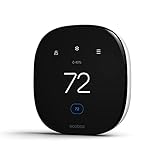
ecobee Smart Thermostat Enhanced
- Radar occupancy sensing
- SmartSensor compatible
- Works with all major voice assistants

ecobee Smart Thermostat Premium
- Built-in air quality monitor
- Includes SmartSensor
- Premium metal design

Best Smart Thermostats in 2026 – Quick Comparison
Here’s a side-by-side look at all 10 thermostats we recommend, with key features and compatibility information:
| Product | Specifications | Action |
|---|---|---|
| ecobee Enhanced |
|
Check Latest Price |
| ecobee Premium |
|
Check Latest Price |
 Nest Learning 4th Gen Nest Learning 4th Gen |
|
Check Latest Price |
 Honeywell T9 Honeywell T9 |
|
Check Latest Price |
| Sensi ST55 |
|
Check Latest Price |
 Google Nest Google Nest |
|
Check Latest Price |
 ecobee Essential ecobee Essential |
|
Check Latest Price |
 Honeywell RTH9585 Honeywell RTH9585 |
|
Check Latest Price |
 Sensi Touch ST75 Sensi Touch ST75 |
|
Check Latest Price |
 Amazon Thermostat Amazon Thermostat |
|
Check Latest Price |
1. ecobee Smart Thermostat Enhanced – Best Smart Thermostat Overall
- Save up to 26% on HVAC costs
- Radar occupancy preheats before arrival
- Works with Siri Alexa Google Assistant
- SmartSensor ready for multi-room control
- Easy DIY installation with included kit
- 3-year warranty
- No fan circulation mode
- Wiring instructions could be clearer
- Premium price point
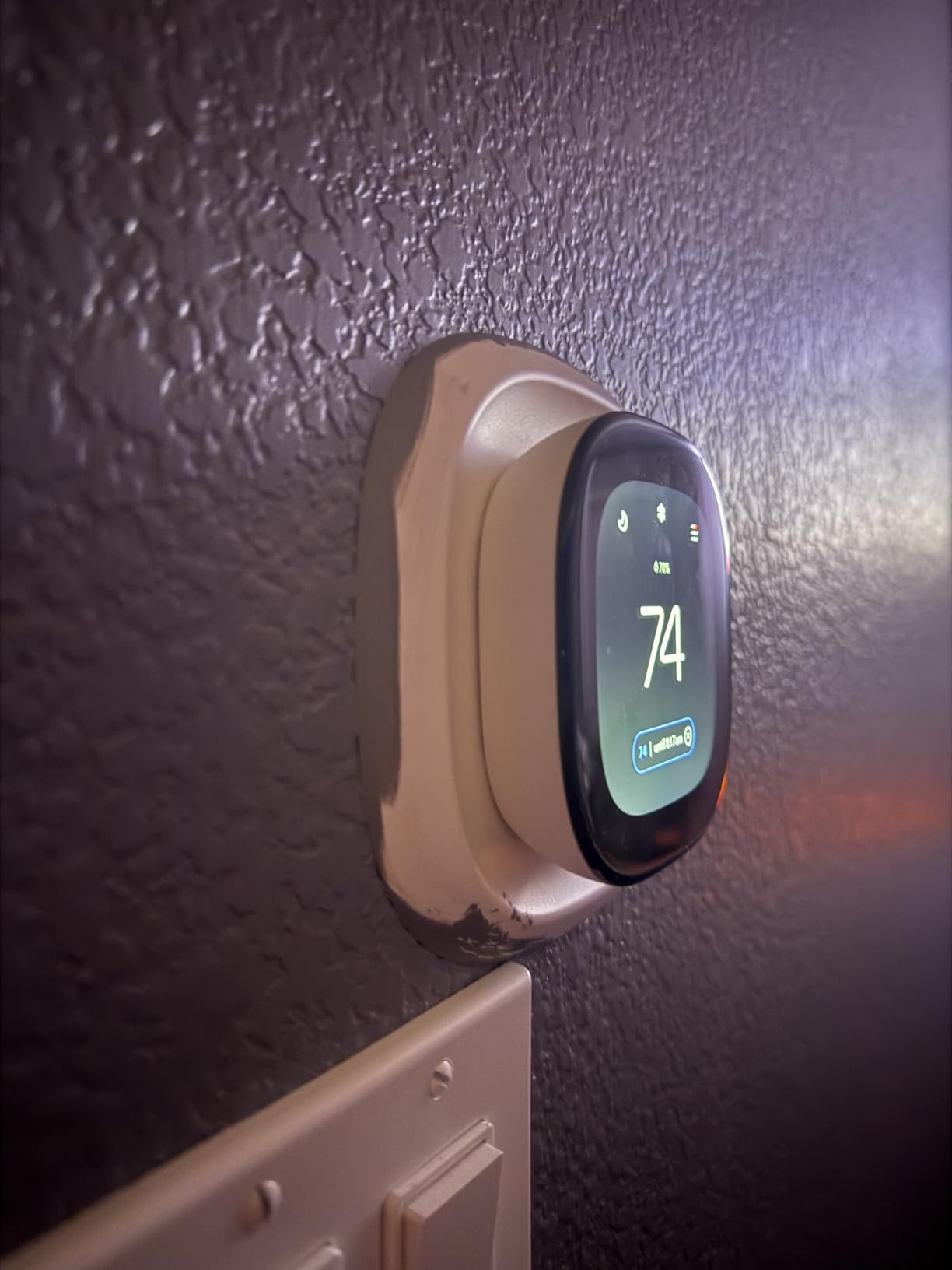
I installed the ecobee Enhanced in my two-story home three months ago, and the difference has been remarkable. The built-in radar occupancy detection actually works – the thermostat senses when I’m heading up the stairs and starts preheating the bedroom before I even reach the landing. No more walking into a cold room at bedtime.
The installation process took about 25 minutes using the included Power Extender Kit. My older home doesn’t have a C-wire, but that wasn’t an issue thanks to ecobee’s clever wiring solution. The app walked me through every step with clear photos, and I never felt lost during setup.
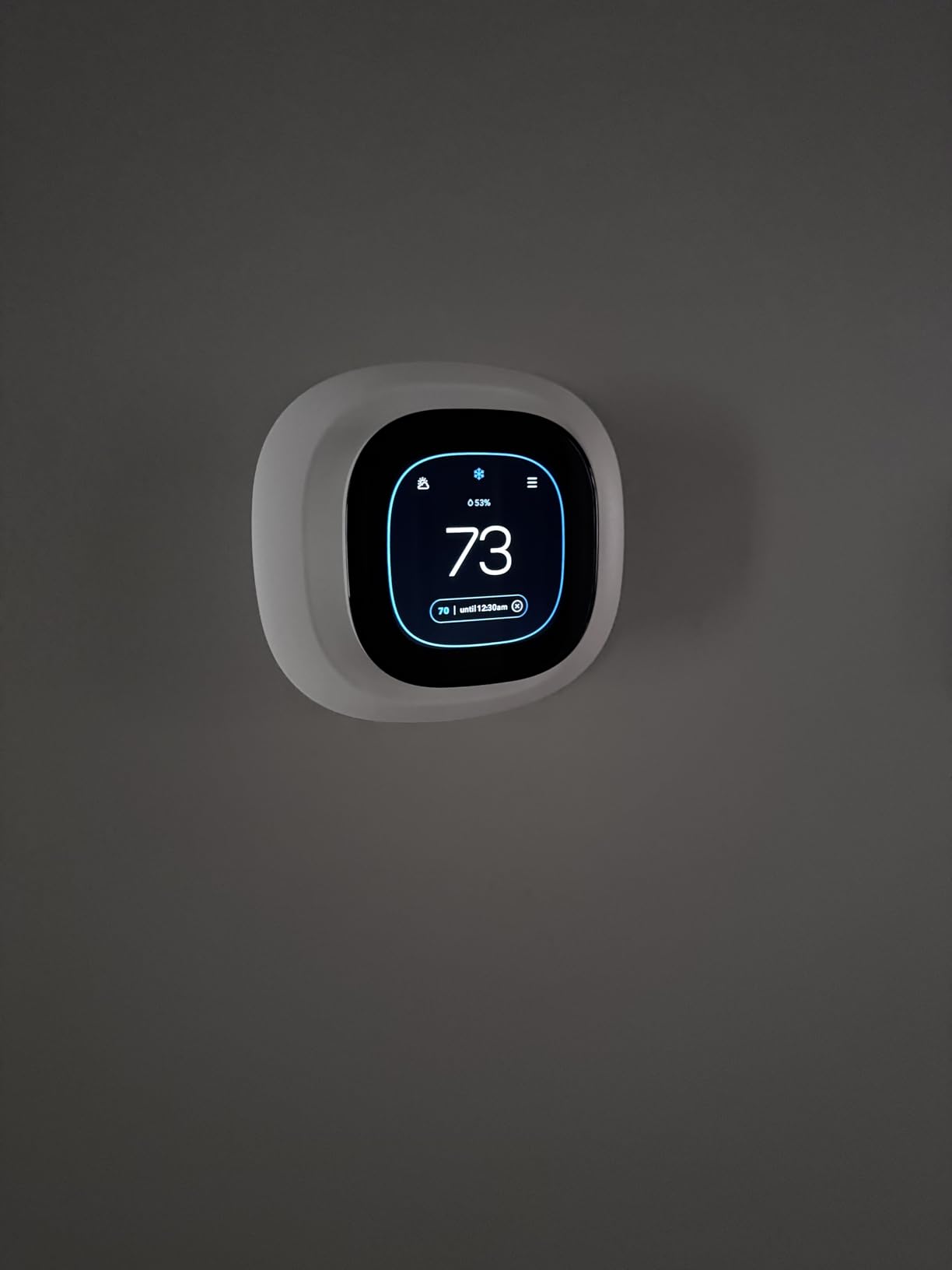
Energy savings have been impressive. Comparing my utility bills from last year, I’m seeing roughly 22% lower heating costs this winter. The thermostat learns your preferences quickly – within two weeks, it had my schedule figured out and stopped asking questions. The humidity-based temperature adjustment is subtle but noticeable on muggy days.
Integration with Apple HomeKit has been seamless. I can ask Siri to adjust the temperature from any room, and the response is instant. Alexa and Google Assistant work equally well if you’re in those ecosystems instead.
Who Should Buy the ecobee Enhanced
This thermostat is perfect for homeowners who want comprehensive smart features without jumping to the Premium price point. If you have a multi-story home or rooms that heat unevenly, the SmartSensor compatibility (sensors sold separately) lets you prioritize comfort where you actually spend time. The occupancy detection makes this ideal for families with irregular schedules.
Who Should Skip It
If you need advanced fan circulation controls beyond basic scheduling, look at the Honeywell options instead. The ecobee doesn’t offer per-hour fan runtime settings. Budget shoppers might find the ~$190 price point steep when the Sensi ST55 offers core smart features for nearly $100 less.
2. ecobee Smart Thermostat Premium – Best Premium Smart Thermostat
ecobee Smart Thermostat Premium – WiFi, Siri & Alexa Built-In, Smart Sensor
- Air quality monitoring for VOCs and CO2
- Included SmartSensor saves $50
- Large vibrant cinematic display
- Premium metal build feels substantial
- Smart door/window alerts available
- Built-in voice assistant speaker
- Premium $260 price point
- Air sensor needs calibration time
- Some features need subscription
The ecobee Premium is essentially the Enhanced model turned up to eleven. The moment you unbox it, the metal construction and weight difference are obvious. This feels like a premium device, not plastic electronics. The 4-inch display is noticeably more vibrant than the Enhanced model, with animations that make checking the temperature almost enjoyable.
The built-in air quality monitor has been eye-opening. I didn’t realize how much cooking affected my home’s air until I saw the VOC readings spike after making pasta sauce. The CO2 monitoring is equally useful – I now open windows when levels rise in my home office during long work sessions. The sensor took about a week to calibrate properly, so don’t panic if readings seem off initially.
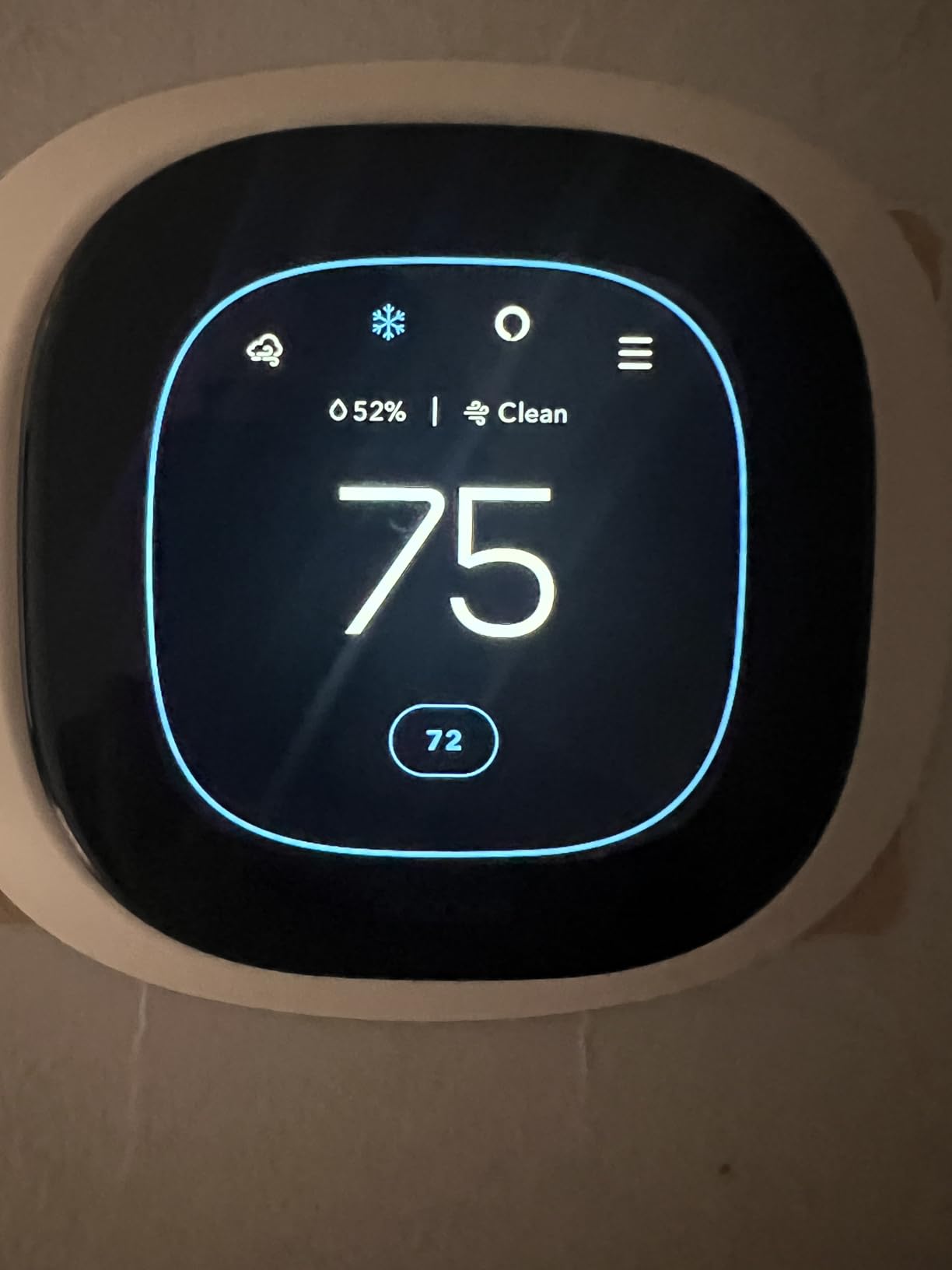
Having a SmartSensor included in the box is a genuine value add. I placed mine in the master bedroom, and the temperature balancing has eliminated the hot/cold spots that plagued our home. The radar occupancy detection works just like the Enhanced model, but the Premium adds the ability to trigger smart home scenes when you arrive – my lights turn on and thermostat adjusts simultaneously.
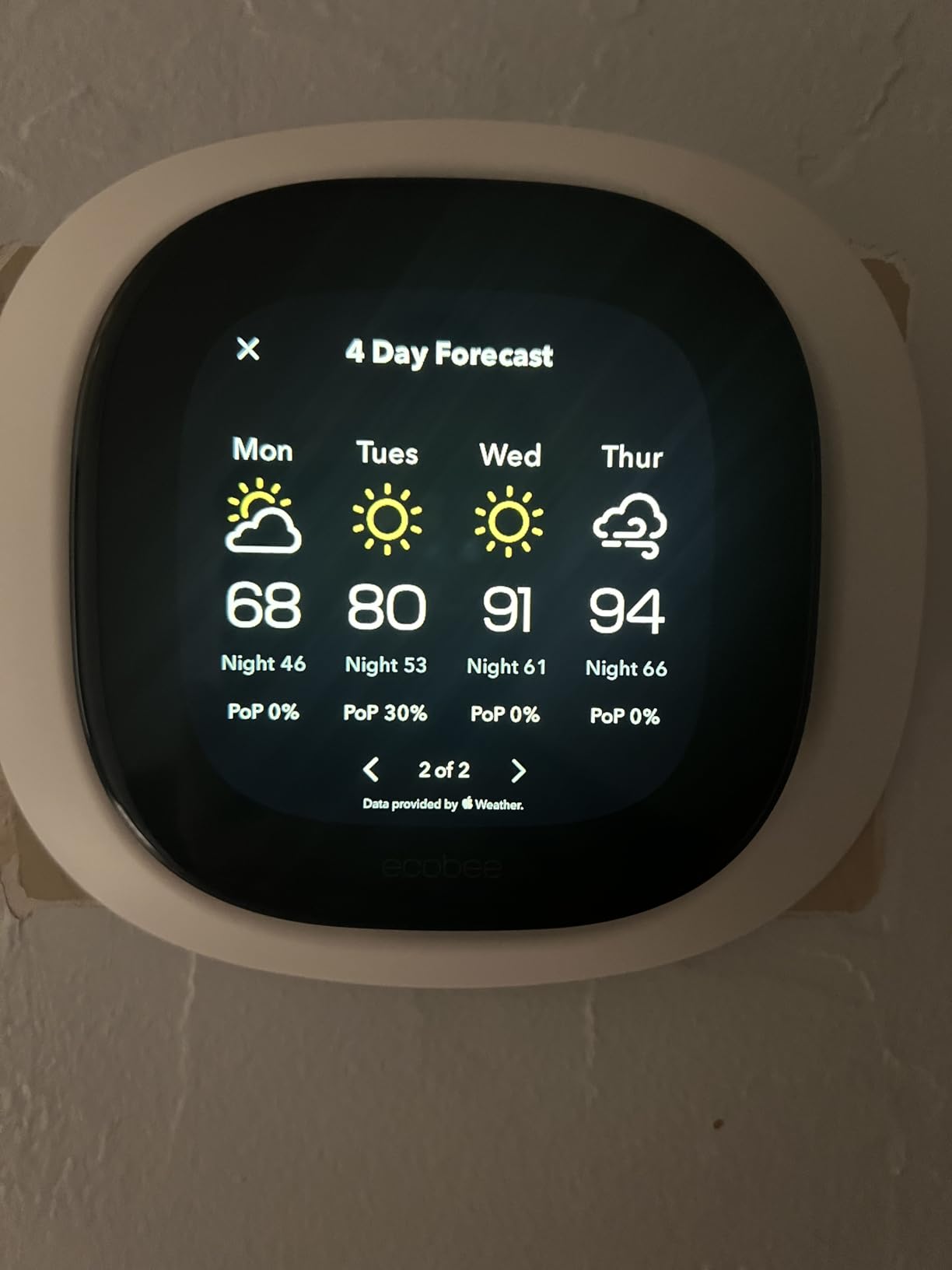
The built-in speaker is surprisingly capable. I didn’t expect much, but it’s perfectly fine for checking weather, setting timers, or controlling other smart devices. It’s not going to replace your dedicated smart speakers for music, but for voice assistant tasks near your thermostat location, it’s convenient.
Who Should Buy the ecobee Premium
This is the thermostat for tech enthusiasts who want every feature available. If you have respiratory sensitivities or just care about indoor air quality, the VOC and CO2 monitoring justifies the premium. The included SmartSensor makes this a better value than it initially appears. Homeowners with complex HVAC systems will appreciate the 95% compatibility rate and professional-grade monitoring.
Who Should Skip It
The $260 price is substantial for a thermostat. If you don’t need air quality monitoring or the included sensor, save $70 and get the Enhanced model. The subscription-required features (smart door/window alerts) might annoy you if you expected everything to work out of the box. Budget-conscious buyers should definitely look elsewhere.
3. Google Nest Learning Thermostat (4th Gen) – Best Learning Smart Thermostat
Google Nest Learning Thermostat (4th gen) + Nest Temperature Sensor (2nd gen) – Obsidian
- Largest display of any round thermostat
- Auto-learning eliminates manual programming
- Includes remote temperature sensor
- Matter compatible for future-proofing
- Dynamic Farsight shows info from distance
- Stunning design in three finishes
- Uses Google Home app not Nest app
- Learning period takes 1-2 weeks
- Premium price at $253
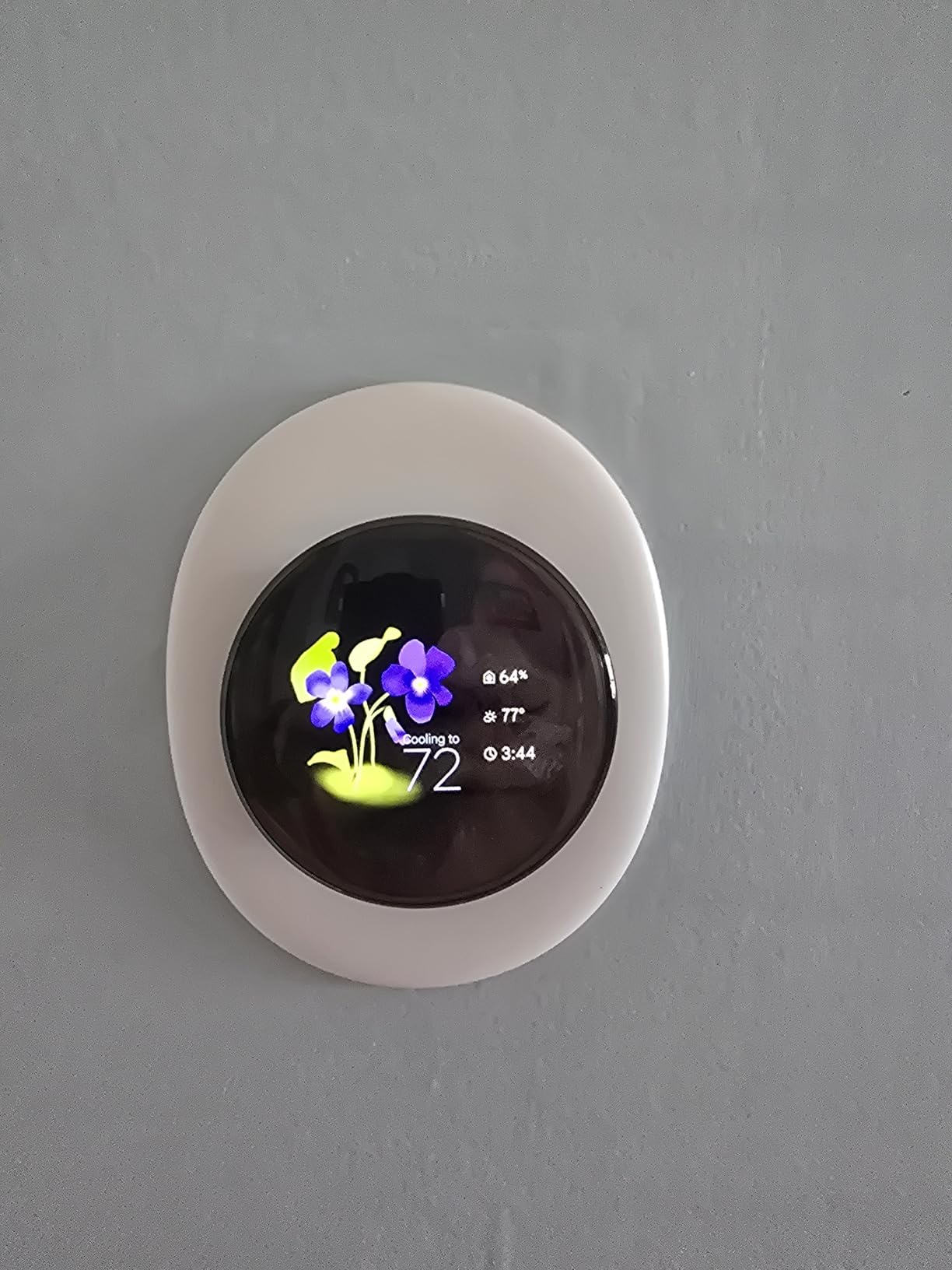
The 4th generation Nest Learning Thermostat is a significant upgrade from previous versions. The 60% larger display dominates the wall in the best possible way – it’s like having a small smart display that happens to control your climate. The Dynamic Farsight feature shows temperature, time, or weather from across the room without needing to touch anything.
Where this thermostat truly shines is the learning capability. I didn’t program a single schedule point during my testing. The Nest simply observed when I adjusted temperatures and built a schedule automatically. Within two weeks, it knew I like the house cooler at 10 PM, warmer at 6 AM, and eco-mode when I’m gone during work hours. The included temperature sensor helped it understand that my living room runs warmer than the hallway where the thermostat is mounted.
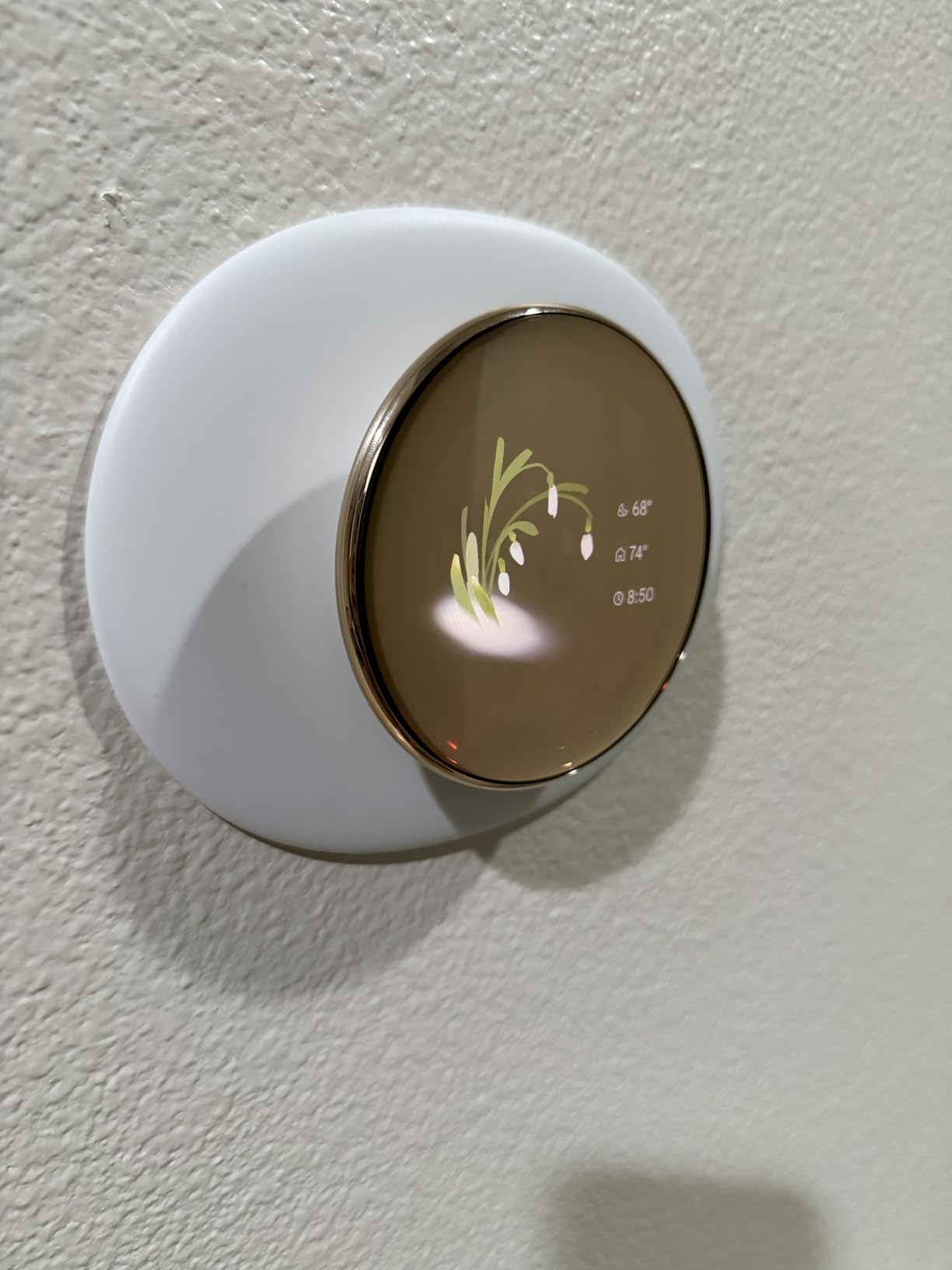
Installation was refreshingly simple – no C-wire needed in my home, and the whole process took under 15 minutes. The aluminum build quality is exceptional, with the Obsidian finish I tested feeling more like a piece of modern art than a thermostat. The rotating dial interface is satisfyingly tactile.
Matter compatibility is future-proofing that matters. As smart home standards evolve, this thermostat won’t be left behind. It already works with Alexa, Google Assistant, and Siri, so ecosystem lock-in isn’t a concern.
Who Should Buy the Nest Learning Thermostat
If you hate programming schedules and want a thermostat that just figures things out, this is your pick. The design-conscious will appreciate that it looks stunning on the wall. Anyone invested in the Google ecosystem will love the seamless Home app integration. The included temperature sensor makes this ideal for homes with temperature variations between rooms.
Who Should Skip It
If you prefer granular control over schedules rather than automated learning, you might find the Nest frustrating. The switch from the dedicated Nest app to Google Home has annoyed some longtime users. Budget shoppers should look at the standard Nest Thermostat at $104 instead.
4. Honeywell Home T9 WiFi Smart Thermostat – Best for Multiple Zones
Honeywell Home T9 WiFi Smart Thermostat with 1 Smart Room Sensor, Touchscreen Display, White
- Sensors prioritize occupied rooms
- 200ft range covers large homes
- Multi-room focus with multiple sensors
- Geofencing for automatic away mode
- C-wire adapter included in box
- Works with all major platforms
- 2.4GHz WiFi only (no 5GHz)
- Sensors use adhesive mounting
- App has learning curve
The Honeywell T9 solved a problem I didn’t think could be fixed: my freezing upstairs bedroom. Traditional thermostats only measure temperature in one spot, but the T9’s Smart Room Sensors let the thermostat know what’s actually happening where you live. The included sensor goes in your most important room – usually the master bedroom – and the thermostat adjusts based on that room’s needs, not the hallway.
The motion detection on sensors is clever. When I walk into the bedroom, the T9 knows someone is there and temporarily prioritizes that room’s comfort. This means I’m not heating an empty guest room while my office is cold. The 200-foot range covered my 2,400 square foot home with no connectivity issues.
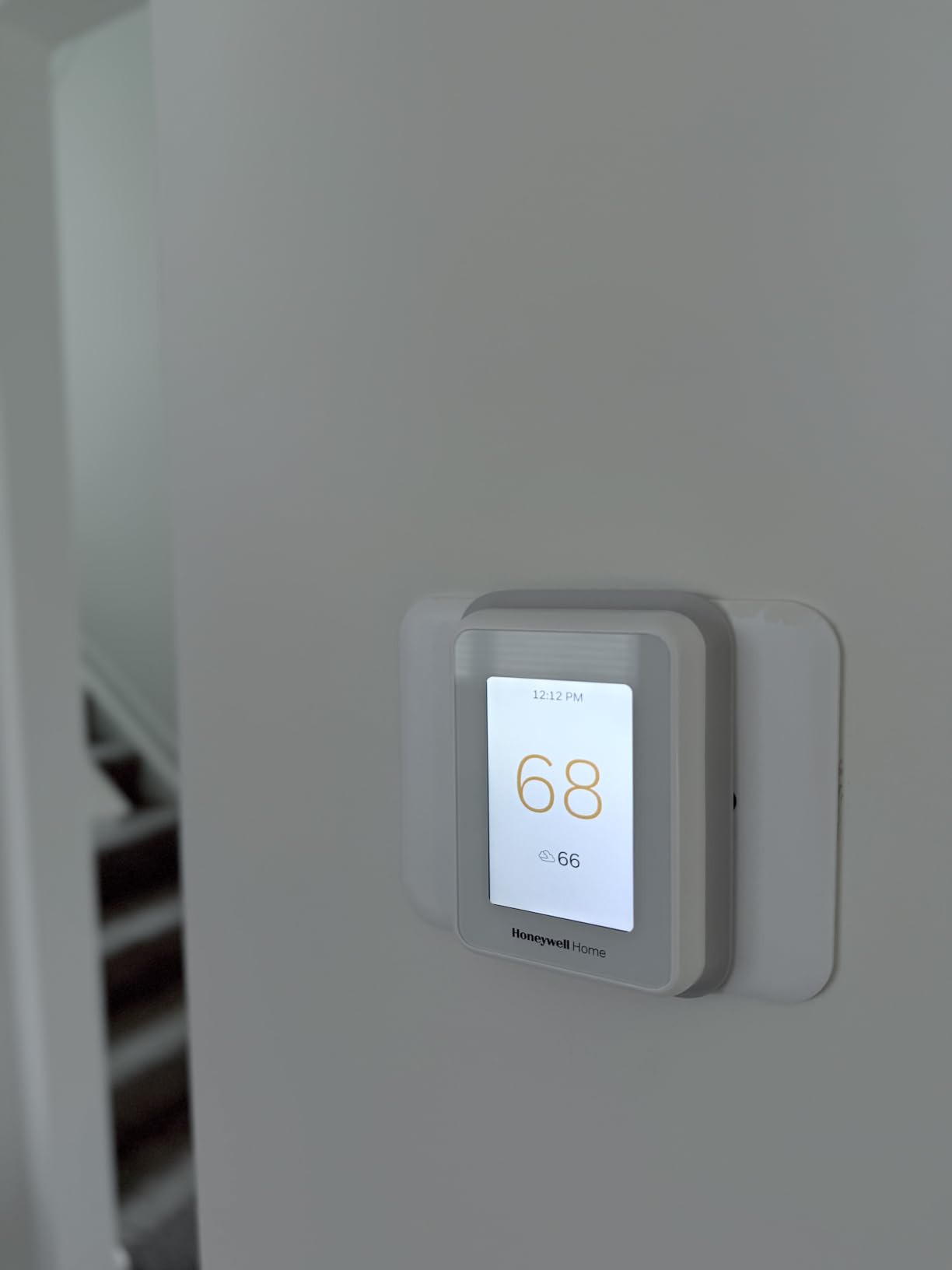
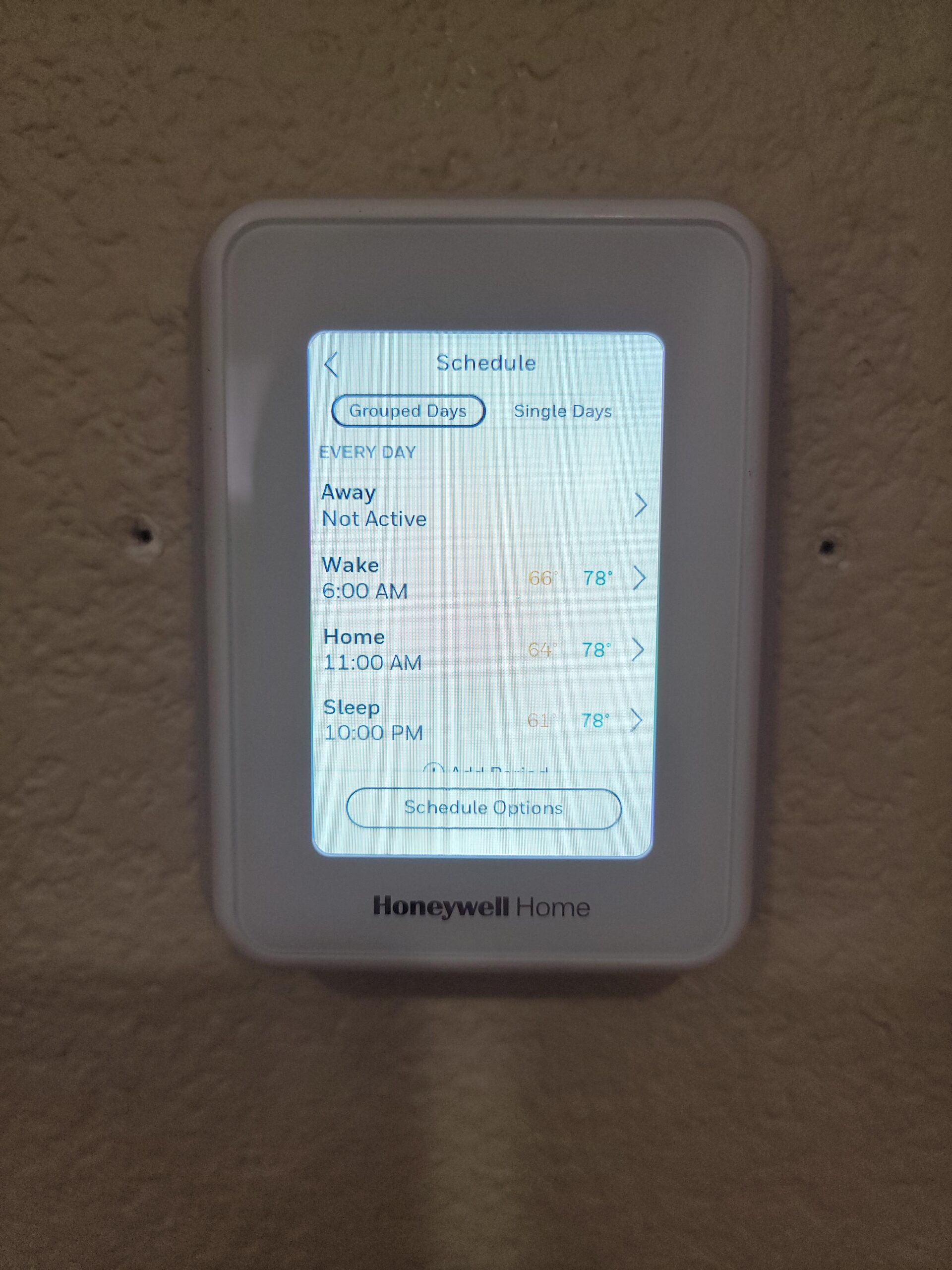
Installation took about 30 minutes, mainly because I needed to use the included C-wire power adapter. The app guided me through identifying my HVAC wires with clear photos, which saved me from a potentially expensive mistake. Once running, the geofencing feature automatically switches to away mode when I leave the neighborhood.
Energy reports arrive monthly via email and show exactly how much you’re saving. My first month report indicated 18% lower energy usage compared to my previous programmable thermostat. The Resideo app isn’t the prettiest interface, but it’s functional and reliable.
Who Should Buy the Honeywell T9
This is the thermostat for anyone with hot and cold spots in their home. Multi-story houses, rooms with big windows, or finished basements all benefit from room-specific sensing. Families with different temperature preferences in different areas will love the multi-room focus feature. If your current thermostat is in a hallway that doesn’t represent your actual comfort, upgrade to the T9.
Who Should Skip It
If you have a modern router that only broadcasts 5GHz WiFi, you’ll need to enable 2.4GHz or look elsewhere. The adhesive sensor mounting occasionally fails in high-humidity areas. Those wanting the most polished app experience might prefer ecobee’s interface.
5. Sensi Smart Thermostat ST55 – Best Budget Smart Thermostat
- Most affordable at ~$86
- Works without C-wire using batteries
- Won't sell your personal data
- Traditional button interface
- 23% energy savings
- 3-year warranty
- No remote sensors available
- Backlight doesn't stay on constantly
- Less advanced than premium models
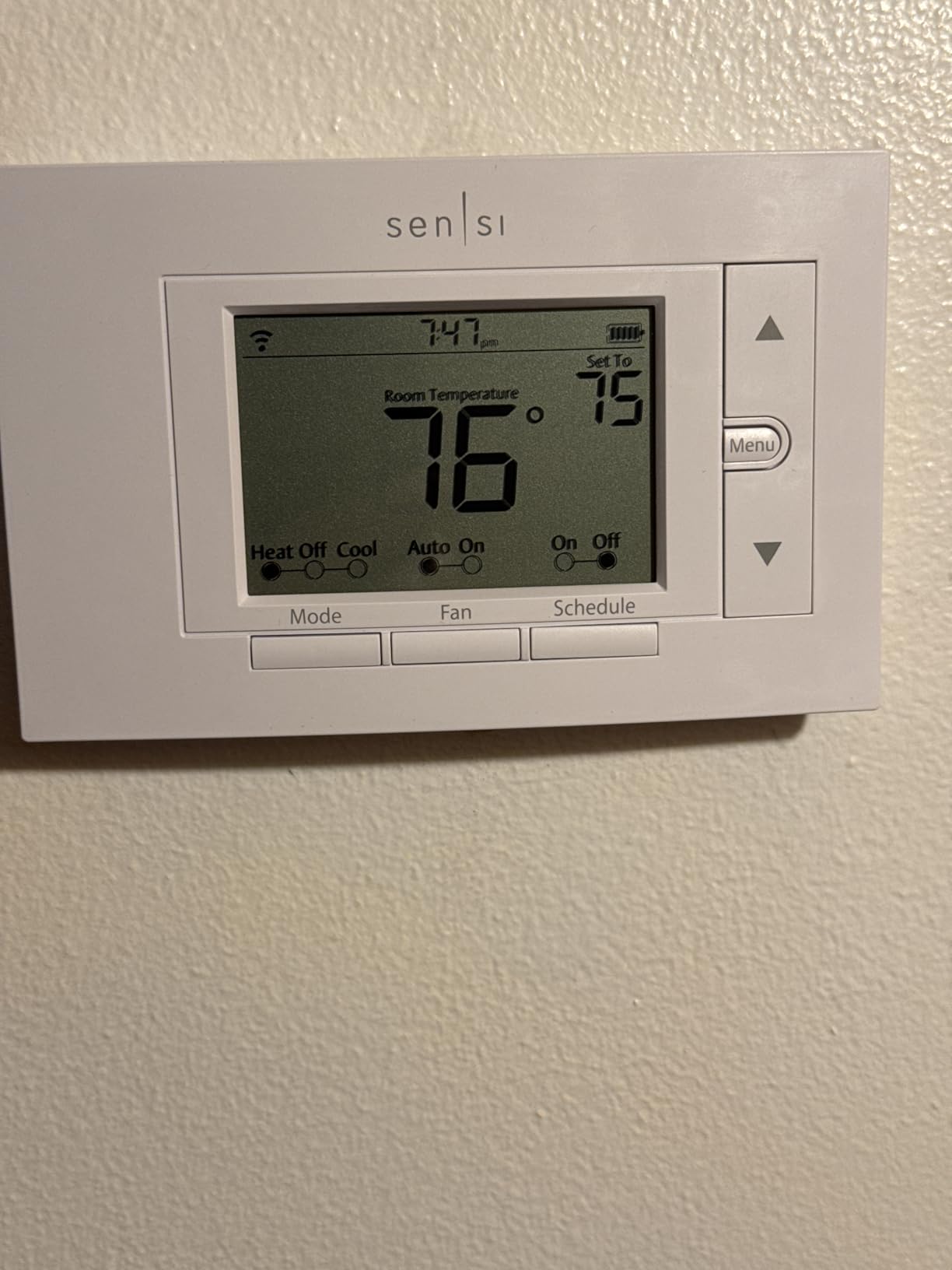
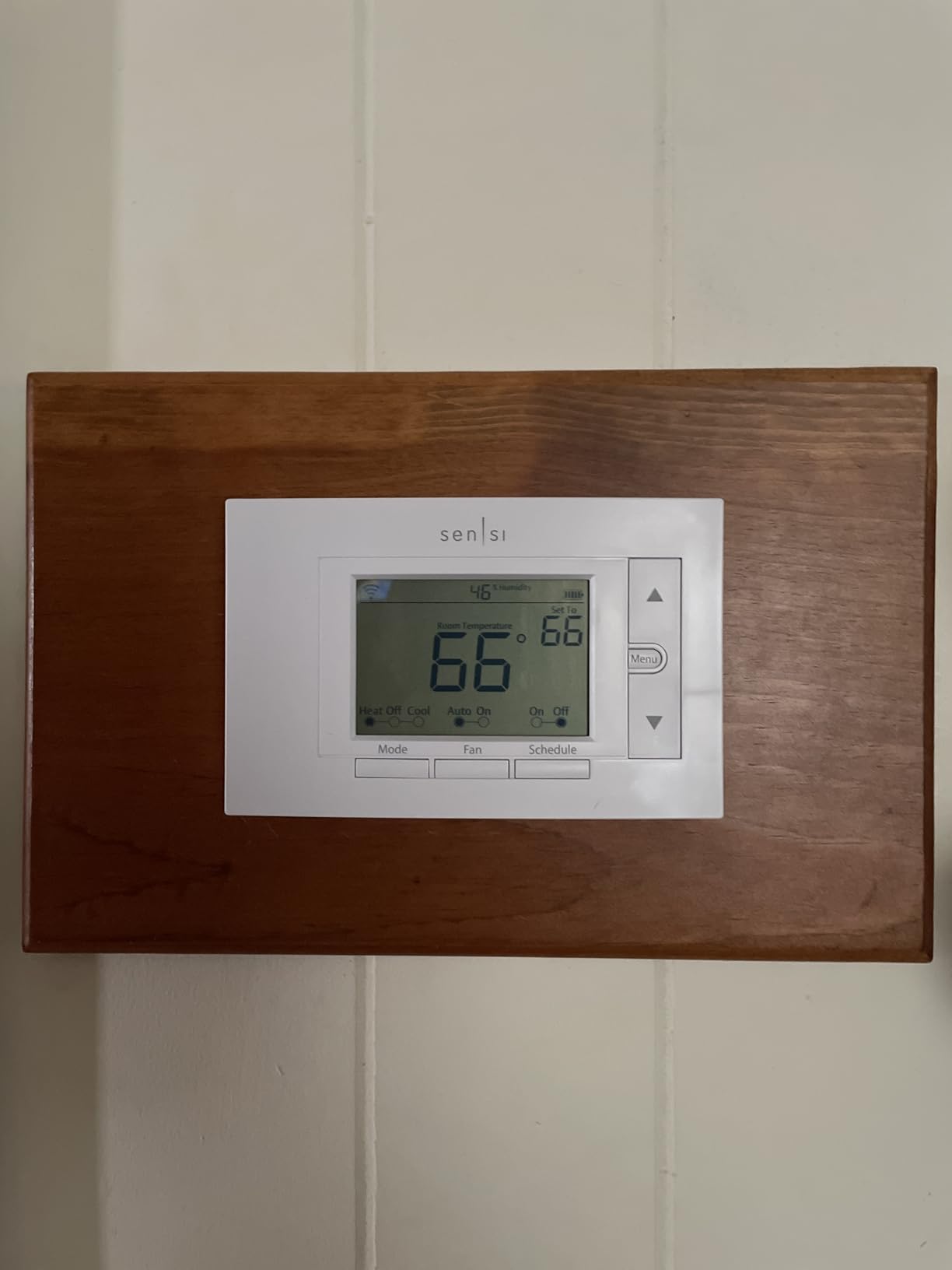
At around $86, the Sensi ST55 proves you don’t need to spend a fortune to get smart thermostat benefits. This is the thermostat I recommend to friends who want energy savings without complexity. The traditional button interface is refreshing in an era of touchscreen everything – you can adjust temperature without looking, and there’s no lag or mis-taps.
The standout feature for older homes is battery operation. Two AA batteries power this thermostat for over two years, eliminating the C-wire requirement entirely. My neighbor installed this in his 1960s ranch house where running new wires wasn’t practical. The built-in level made mounting straight simple, and the app walked him through wiring with clear photos.
Privacy-conscious users should note Emerson’s commitment: they don’t sell your usage data, temperature patterns, or any personal information. In an era of data harvesting, this matters. The thermostat functions completely locally if you disable WiFi, though you lose remote control obviously.
Scheduling is straightforward through the Sensi app, with 7-day programming that handles complex routines easily. Smart alerts notify you of extreme temperature changes that might indicate HVAC problems. Filter reminders come via notification, which has saved me from forgetting changes twice now.
Who Should Buy the Sensi ST55
This is the perfect starter thermostat for budget-conscious homeowners, especially those without C-wires. Renters who want smart features without permanent installation will appreciate the battery power. Privacy-focused users will love the data protection promise. Anyone intimidated by complex technology will find the button interface familiar and approachable.
Who Should Skip It
If you want room sensors for multi-zone control, the Sensi doesn’t offer them. Touchscreen enthusiasts will find the button interface dated. Those wanting advanced smart home integrations should look at ecobee or Nest instead.
6. Google Nest Thermostat – Best for Google Home Integration
Google Nest Thermostat – Smart Thermostat for Home – Programmable Wifi Thermostat – Snow
- Affordable entry to Nest ecosystem
- Savings Finder optimizes schedules
- HVAC monitoring catches problems early
- Works without C-wire typically
- 4 color options match any decor
- Easy scheduling in Google Home app
- Requires C-wire for heat pumps
- No remote sensors available
- Basic features compared to Learning model
The standard Google Nest Thermostat hits a sweet spot: Nest’s excellent software and design at a price that competes with budget brands. At $104, this is the gateway drug to smart climate control. The polycarbonate construction feels less premium than the Learning model’s aluminum, but the design is still clean and modern.
For Google Home users, this thermostat feels like a natural extension of your ecosystem. Everything happens in the Google Home app – no separate downloads needed. The Savings Finder feature is genuinely useful; it suggested I lower my overnight temperature by 2 degrees and estimated $47 annual savings. I accepted the suggestion with one tap.
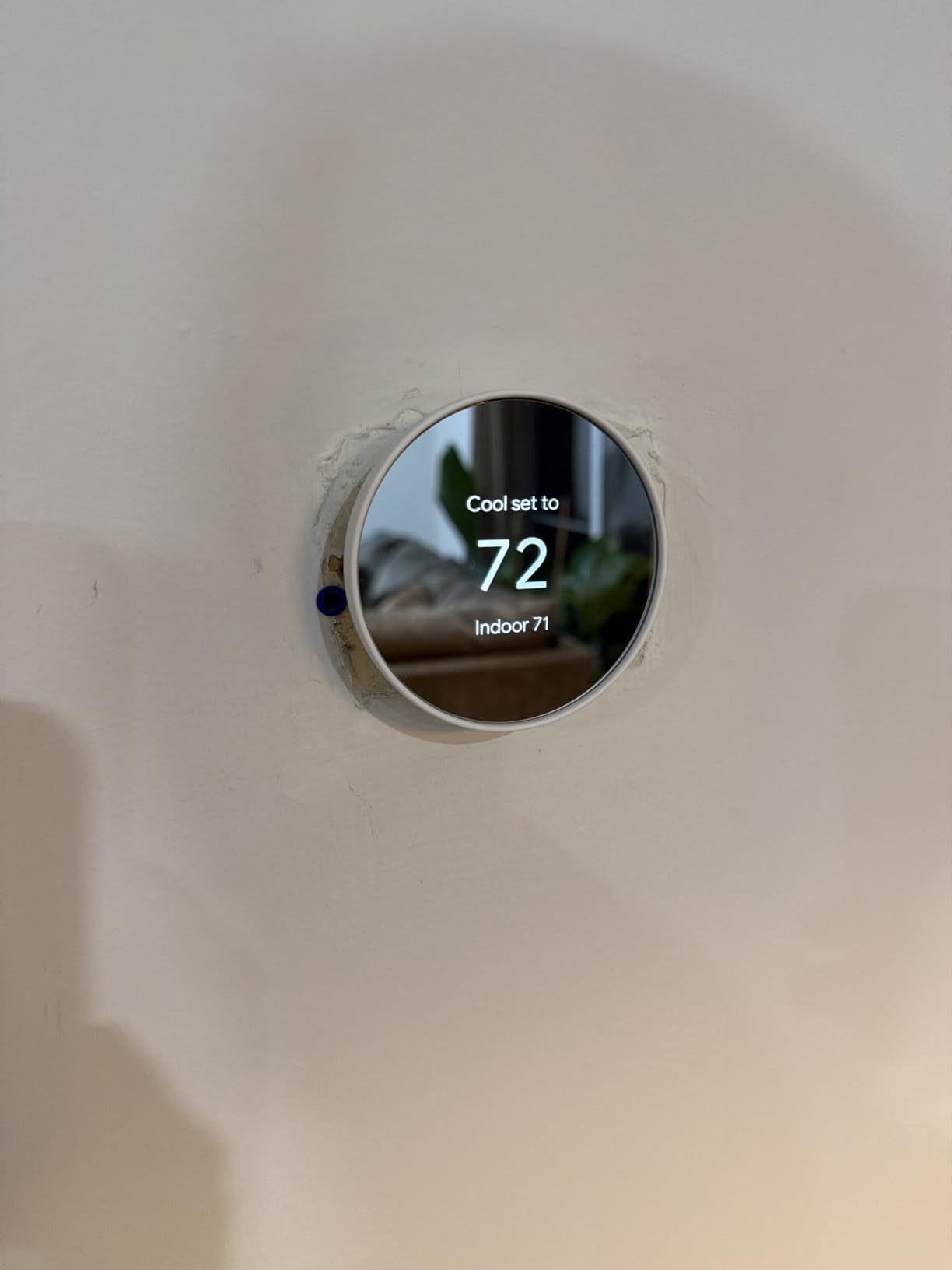
HVAC monitoring caught a developing issue with my AC unit during testing. The thermostat noticed my system was taking longer than normal to cool and sent an alert suggesting I check the filter. Sure enough, it needed changing. That early warning potentially saved me from a service call.
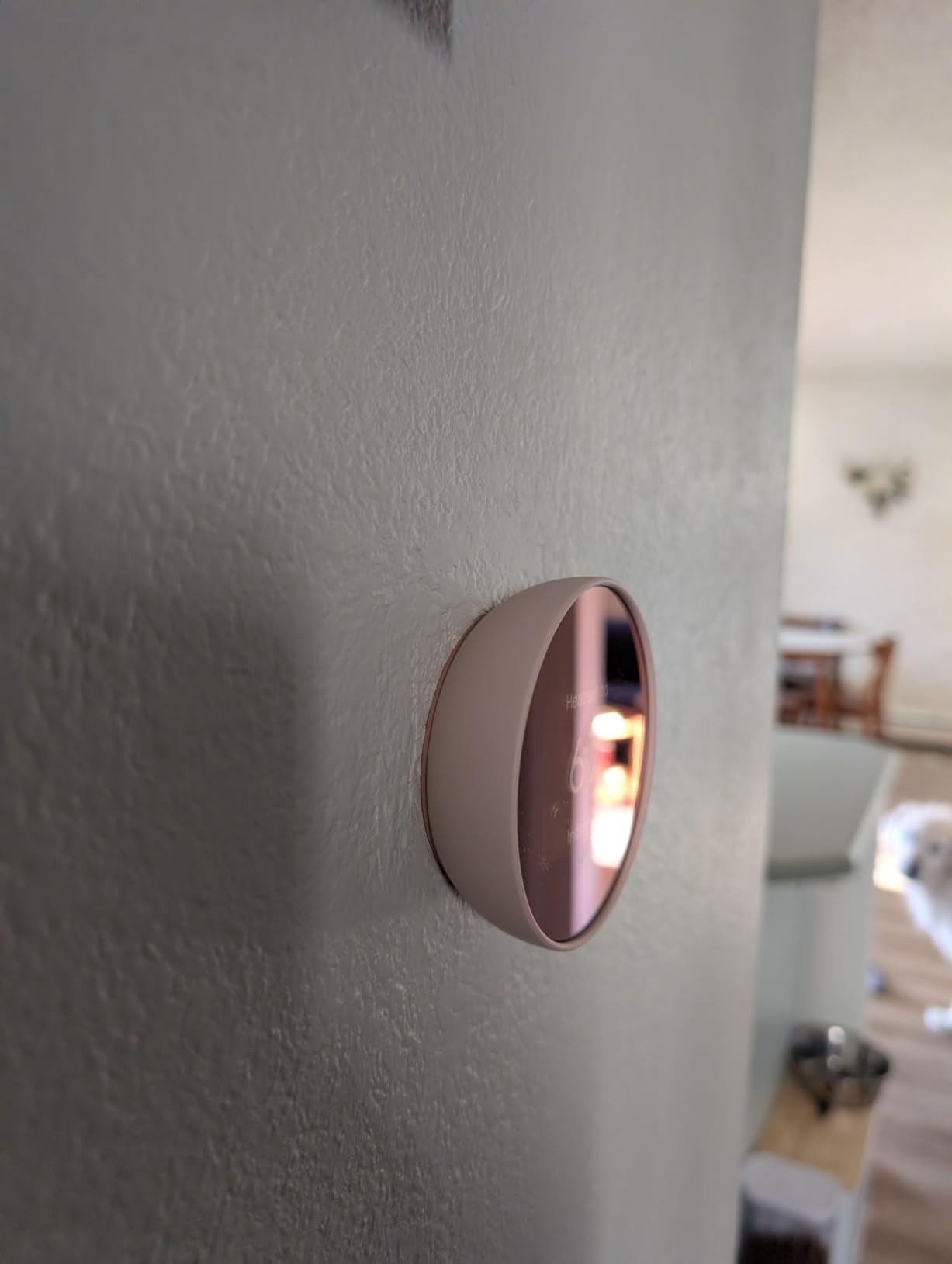
Installation is straightforward for most homes without needing a C-wire. The touch strip on the right edge controls temperature with satisfying haptic feedback. It’s not a full touchscreen like some competitors, but the minimalist approach keeps costs down and interface simple.
Who Should Buy the Google Nest Thermostat
Google Home households will appreciate the single-app experience. Budget-conscious buyers wanting the Nest brand should start here. Anyone wanting basic smart scheduling without complexity will find the interface refreshingly simple. The multiple color options (Snow, Charcoal, Sand, Fog) make matching your decor easy.
Who Should Skip It
Heat pump owners should verify C-wire availability before buying – it’s required for those systems. Those wanting learning algorithms should upgrade to the Learning model. Alexa-centric households might prefer the Amazon Smart Thermostat for tighter integration.
7. ecobee Smart Thermostat Essential – Best Budget Ecobee Option
ecobee Smart Thermostat Essential – WiFi Thermostat, Energy Star Certified
- Entry-level ecobee pricing
- Color touchscreen interface
- Compatible with all ecobee sensors
- Works with all voice assistants
- Free software upgrades for life
- Excellent customer support
- Power Extender Kit sold separately
- No included SmartSensor
- No air quality monitoring
Released in early 2025, the ecobee Essential brings the brand’s excellent ecosystem to a lower price point. Think of it as ecobee’s answer to the Google Nest Thermostat – core smart features at an accessible price. The round design with color touchscreen looks modern on any wall, and the 3.74-inch display is plenty readable from across the room.
The Essential maintains compatibility with ecobee’s entire sensor lineup. I tested it with a SmartSensor from my Premium unit, and pairing was instant. This means you can start with the Essential and upgrade your system over time with room sensors, which is perfect for growing families or expanding homes.
The eco+ features are present and accounted for: indoor humidity detection, schedule assistance, and time-of-use optimization if your utility offers variable rates. I found the schedule assistant particularly helpful – it analyzed my adjustments over a week and suggested improvements that saved an estimated 8% more energy.
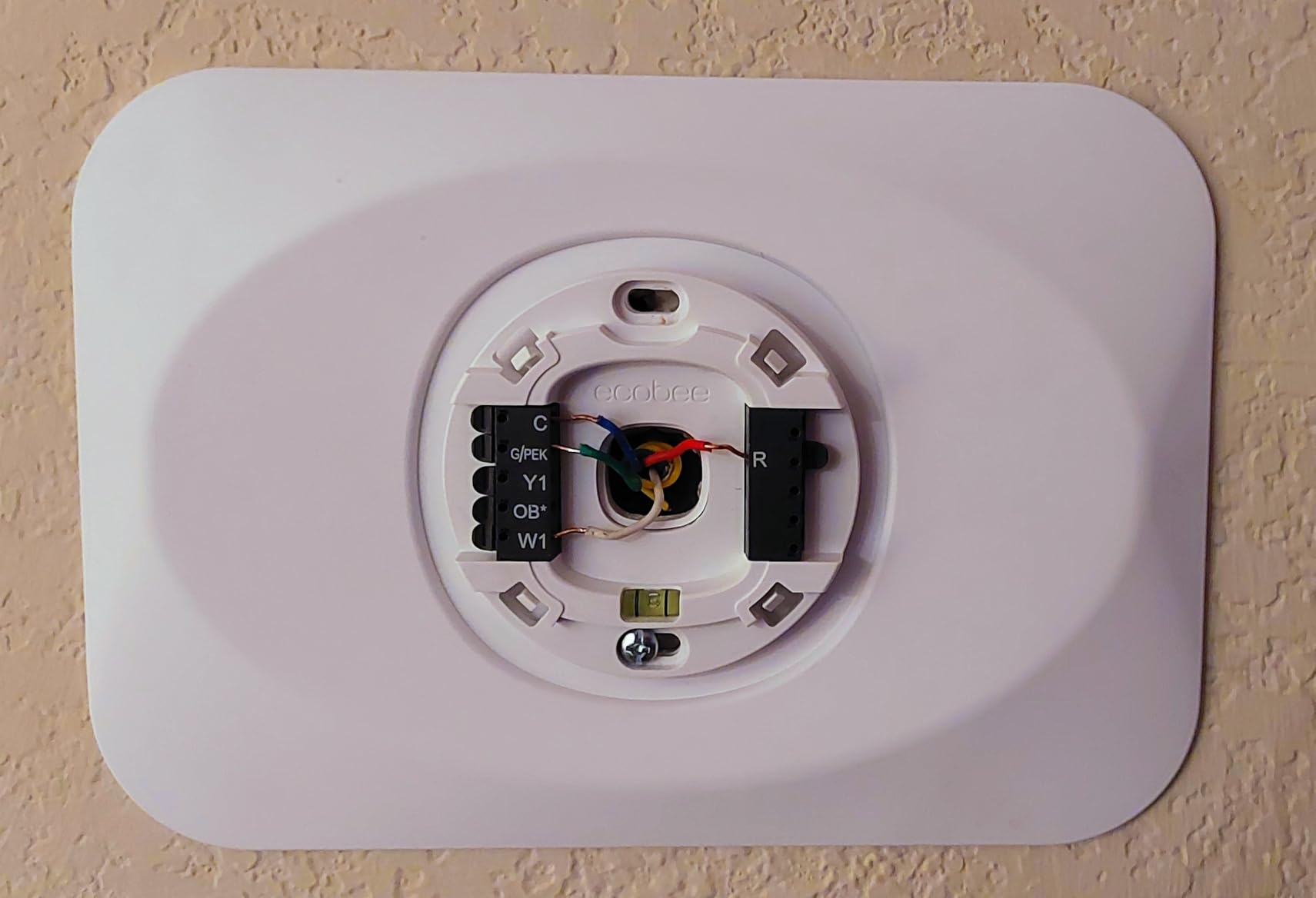
Battery operation means no C-wire stress, though the Power Extender Kit is available separately if you prefer hardwired installation. The 3-year warranty matches ecobee’s premium models, showing confidence in the hardware.
Who Should Buy the ecobee Essential
This is ideal for anyone wanting to enter the ecobee ecosystem without the Premium price. Apple HomeKit users get the same excellent Siri integration as more expensive models. Those planning to expand with sensors later can start here affordably. Former Nest users looking for an alternative after Google’s app changes will find the transition smooth.
Who Should Skip It
If you need air quality monitoring or radar occupancy sensing, step up to the Enhanced model. The battery-powered operation means you’ll replace cells periodically, which might annoy hardwired purists. Those wanting a sensor included should look at bundle deals with the Premium.
8. Honeywell Home RTH9585WF – Best Color Touchscreen Display
- Customizable display colors match decor
- Smart Response pre-heats/cools efficiently
- Excellent heat pump compatibility
- Monthly energy reports via email
- Works with Alexa and Google
- Smaller footprint than old thermostats
- C-Wire required for installation
- Wire connectors can be delicate
- Fan control lacks OFF option
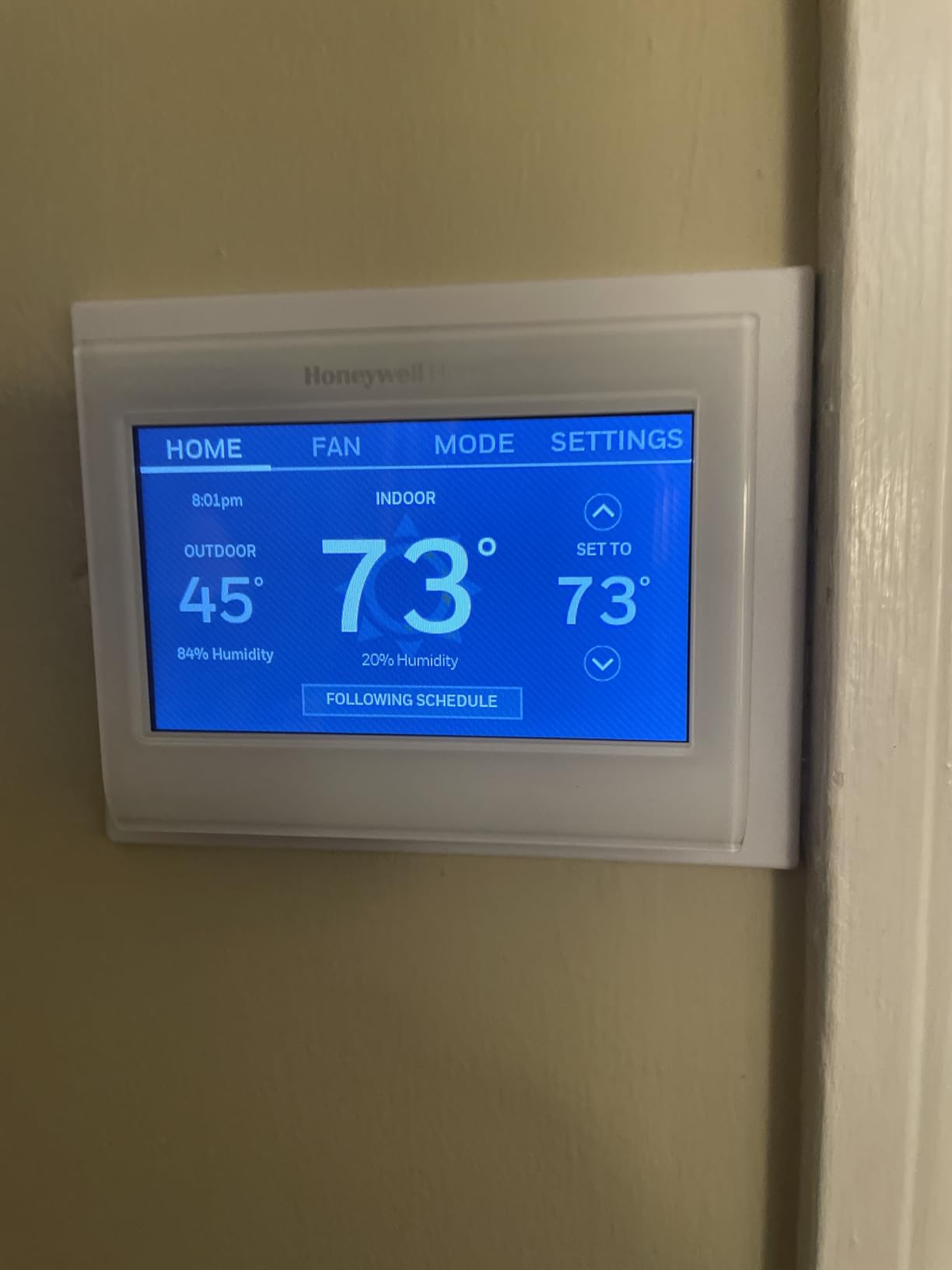
The Honeywell RTH9585WF proves that touchscreen thermostats don’t need to cost a fortune. At around $123, you get a full-color customizable display that can match your wall paint or mood. I set mine to amber for warmth, but you can choose from dozens of color combinations.
Smart Response Technology is Honeywell’s secret weapon. The thermostat learns how long your HVAC system takes to reach target temperatures and starts heating or cooling early to hit your scheduled time exactly. My 7 AM wake-up temperature is achieved precisely at 7 AM, not 7:15, because the system started preheating at 6:42 based on learned timing.
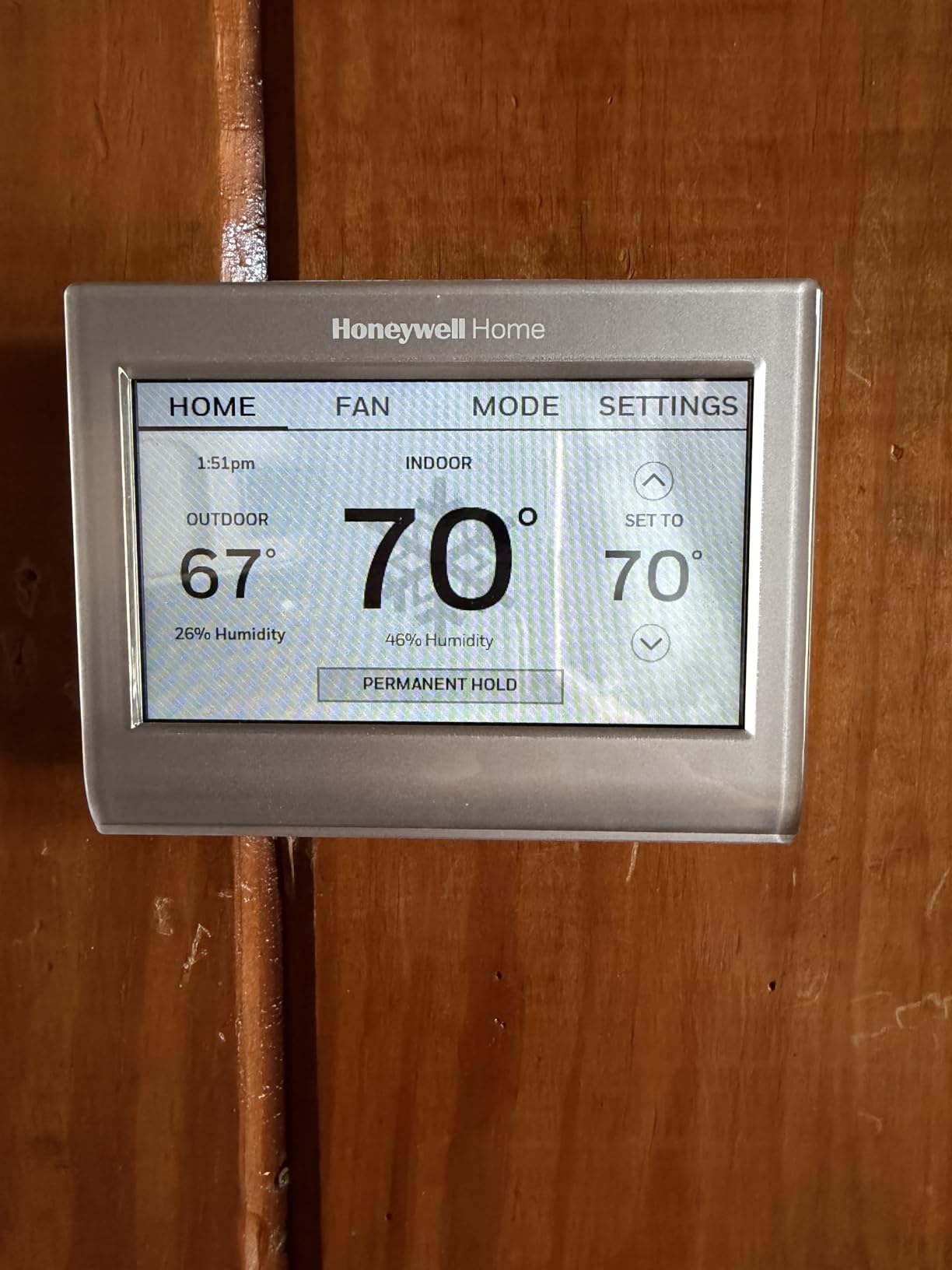
Heat pump owners take note: this thermostat handles auxiliary heat intelligently, preventing expensive electric resistance heat from running unnecessarily. The 7-day programming offers four periods per day, which handled my complex weekday versus weekend schedules easily. Fan controls include Auto, On, and Circulate modes for air quality management.
The display shows outdoor temperature and humidity alongside indoor readings, which helps me decide when to open windows versus run the AC. Energy reports break down usage by day and compare to similar homes in your area.
Who Should Buy the Honeywell RTH9585WF
Heat pump users will appreciate the intelligent auxiliary heat management. Those wanting customization will love the color options. Anyone with predictable schedules benefits from Smart Response efficiency. The compact size makes this ideal for replacing older, larger thermostats without wall patching.
Who Should Skip It
The C-wire requirement eliminates this for older homes without one. Those wanting offline voice control should look elsewhere. If you need to completely turn off your fan (not just circulate), the interface doesn’t support that mode.
9. Emerson Sensi Touch ST75 – Best Touchscreen Interface
- Large bright touchscreen display
- Won't sell your personal information
- Excellent mobile app design
- Illuminated terminals for easy wiring
- Screen color changes with heating/cooling
- Works with HomeKit Alexa Google
- C-wire required
- 2.4GHz WiFi only
- Not for UK/EU markets
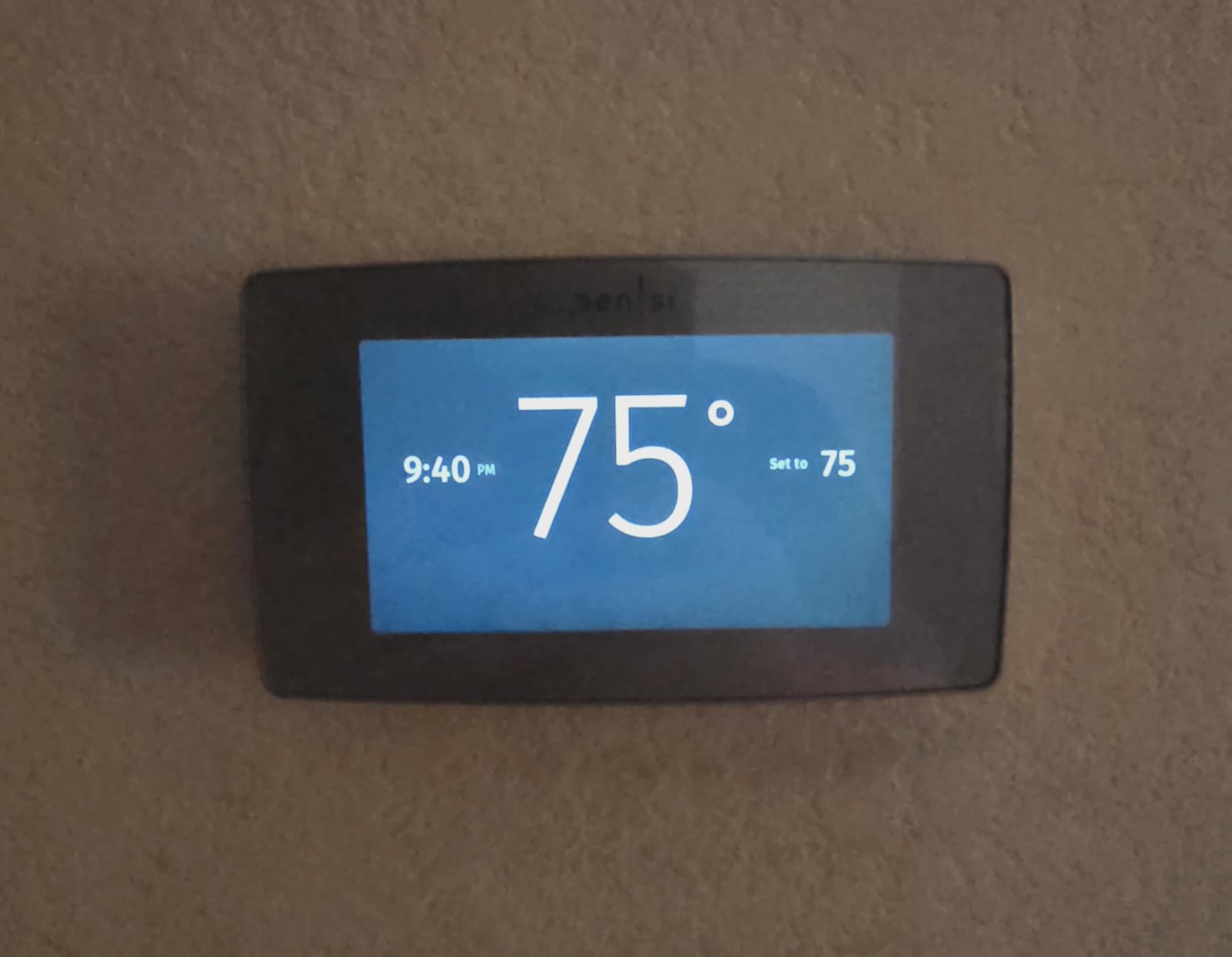
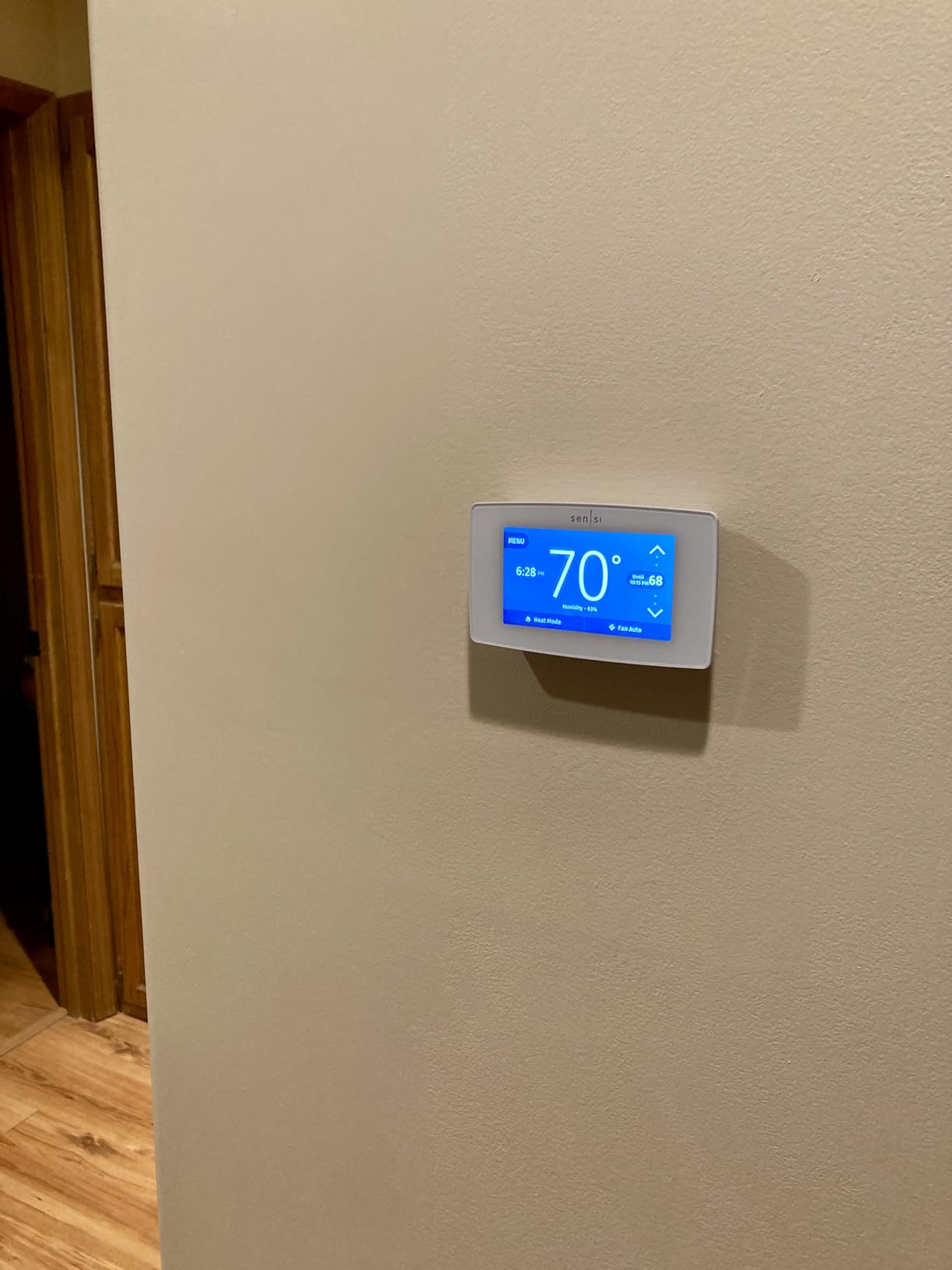
The Sensi Touch ST75 offers the largest display in its price class at 4.3 inches. The color screen changes background based on system mode – orange glow for heating, blue for cooling – providing instant visual feedback from across the room. The glass-like finish feels premium despite the reasonable price point.
Installation is notably easy thanks to illuminated terminals. The backlit wiring connections made my evening installation stress-free. The built-in level ensured straight mounting, and the easy-click terminals held wires securely without screwdriver wrestling.
The mobile app deserves special mention. Unlike some competitors’ cluttered interfaces, Sensi’s app presents information clearly with intuitive controls. Geofencing worked reliably in my testing, automatically adjusting when I left and returned home. Smart maintenance alerts have caught two filter changes and reminded me of annual HVAC service.
Privacy continues to be Emerson’s differentiator. Your temperature data, schedule patterns, and usage history stay private. For homeowners concerned about data harvesting, this alone might justify choosing Sensi over competitors.
Who Should Buy the Sensi Touch ST75
Anyone wanting a large, readable touchscreen without premium pricing should consider the ST75. Privacy-conscious users get peace of mind. Multi-platform households benefit from universal compatibility with HomeKit, Alexa, Google, and SmartThings. DIY installers will appreciate the illuminated terminals and built-in level.
Who Should Skip It
Homes without C-wires need the ST55 model instead. Those with modern mesh WiFi systems broadcasting only 5GHz will need to enable 2.4GHz. International buyers outside North America should verify voltage compatibility.
10. Amazon Smart Thermostat – Best for Alexa Integration
Amazon Smart Thermostat, Save money and energy, Works with Alexa and Ring, C-wire required
- Excellent value under $80
- Reliable Honeywell engineering
- Perfect Alexa integration
- Energy savings average $50/year
- Utility rebate eligible
- Simple setup process
- C-wire absolutely required
- Basic 4-mode scheduling only
- Alexa app required for control
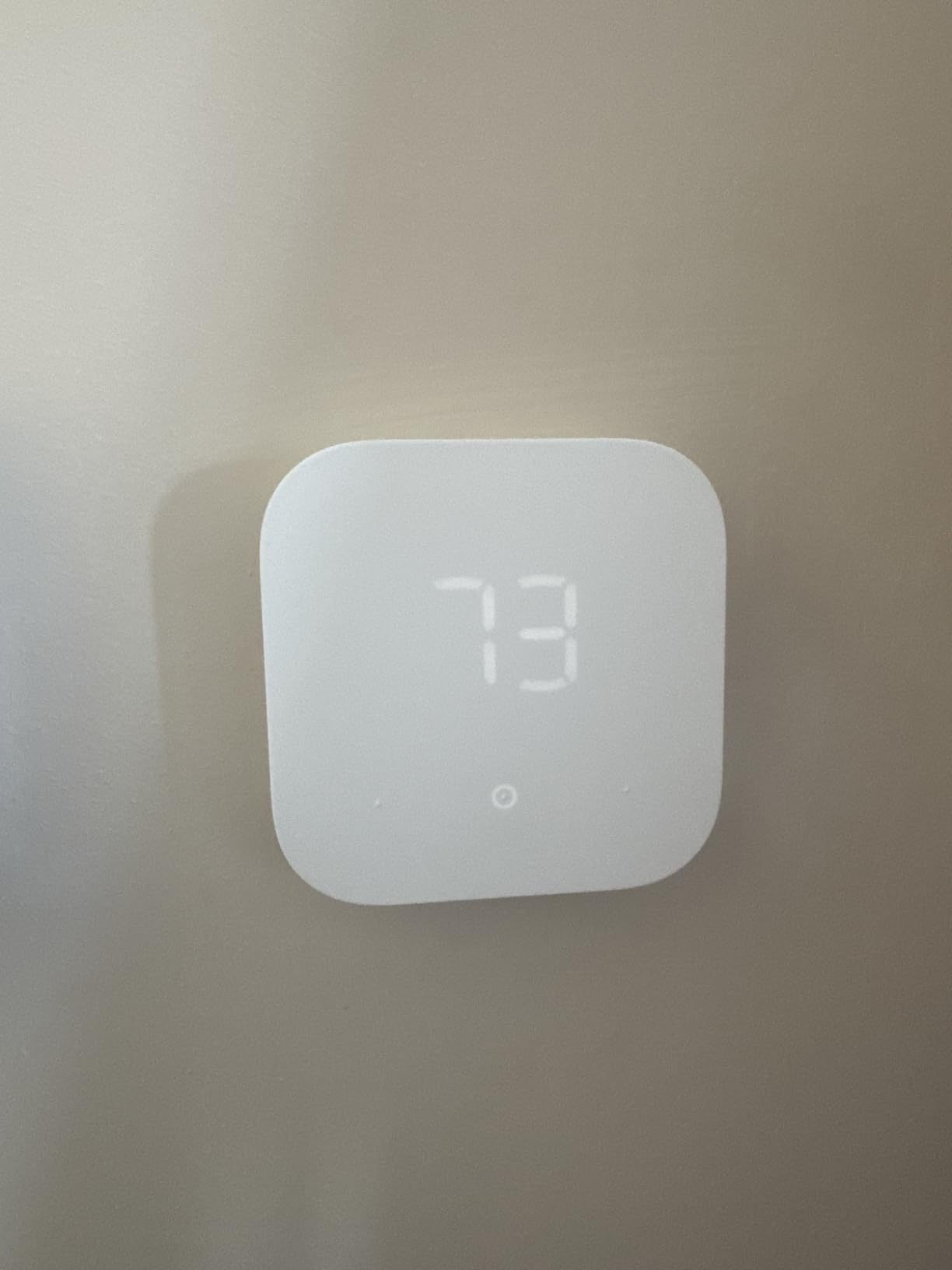
Amazon’s Smart Thermostat proves that simple done well beats complicated done poorly. Built with Honeywell’s 130 years of climate control expertise but priced for mass adoption, this is the easiest recommendation for Alexa households. At under $80, it’s almost impulse-buy territory for smart home curious homeowners.
The Alexa integration is seamless because there’s no separate app. Everything lives in the Alexa app you already have. Voice commands work exactly as expected: “Alexa, set temperature to 72” happens instantly. The new Alexa+ service can automatically adjust temperatures based on your habits, though basic scheduling is available for manual control.
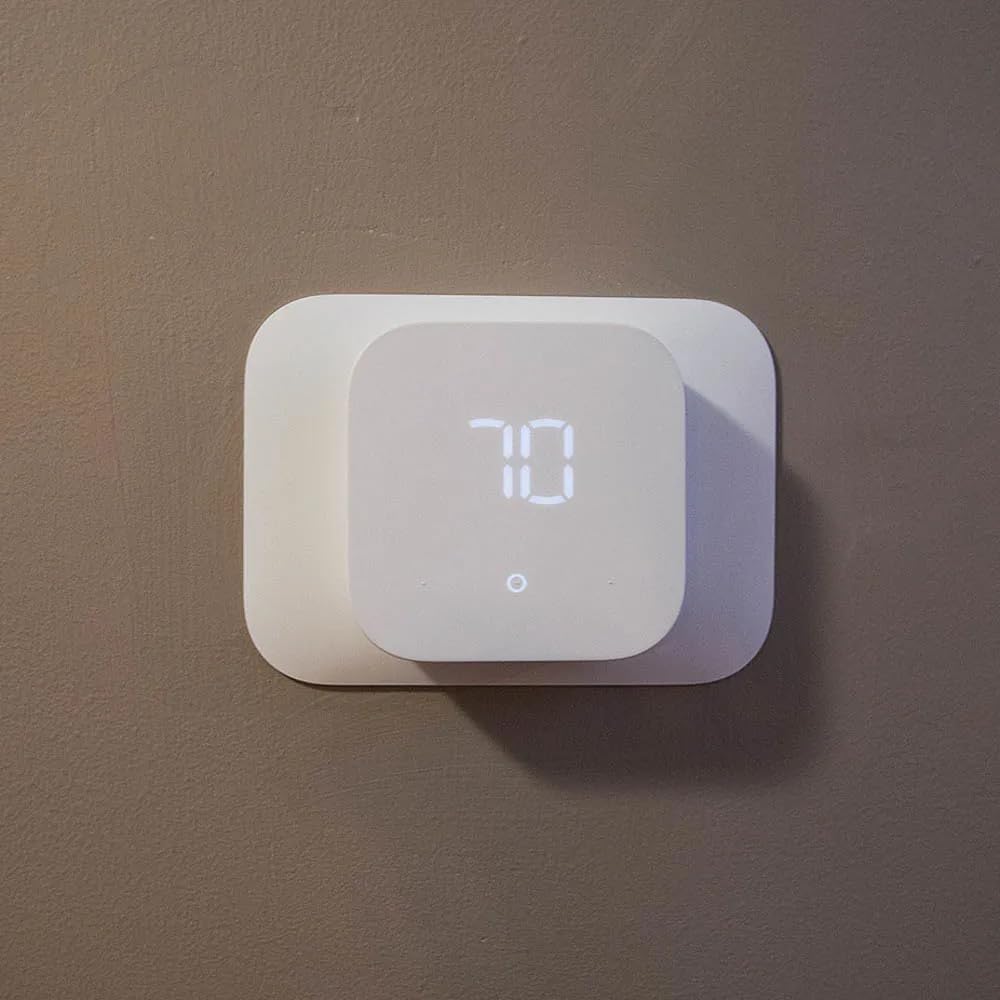
Comfort zones are a unique feature for Echo-heavy homes. By pairing the thermostat with Echo devices around your house, you can prioritize different rooms at different times. Morning routines can focus on the kitchen Echo, evenings on the living room, nights on the bedroom. It’s not as precise as dedicated sensors, but it’s clever use of existing hardware.
Energy savings average $50 annually according to EPA estimates, meaning this thermostat pays for itself in under two years. Many utility companies offer rebates that make it effectively free – check with your provider before purchasing.
Who Should Buy the Amazon Smart Thermostat
Alexa-centric smart homes will find this the most seamless experience. Budget buyers wanting reliable technology from a proven manufacturer should start here. Those in areas with utility rebates can essentially get this free. First-time smart thermostat owners will appreciate the guided setup in the familiar Alexa app.
Who Should Skip It
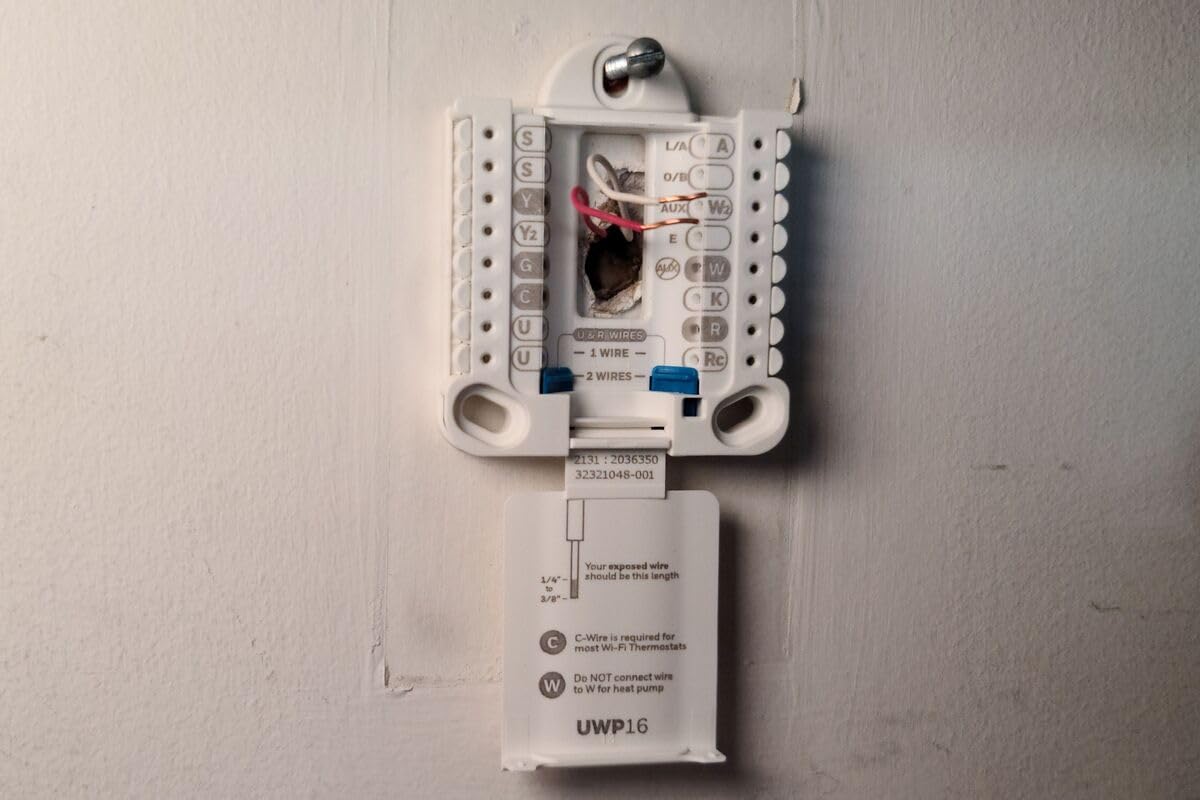
The C-wire requirement is absolute – no workarounds, no battery option. Google Home or HomeKit households should look at their native options instead. Those wanting advanced scheduling flexibility will find the four preset modes limiting.
Smart Thermostat Buying Guide: What to Look For
Choosing the right smart thermostat requires understanding your home’s needs and your comfort preferences. Here’s what actually matters when making your decision.
C-Wire Requirements Explained
The C-wire (common wire) provides continuous 24V power to your thermostat. Many smart thermostats require it for WiFi connectivity and touchscreen displays. If your home lacks a C-wire, you have three options: choose a battery-powered thermostat like the Sensi ST55, use a Power Extender Kit (included with ecobee models), or hire an electrician to run new wiring. Check your current thermostat’s wiring before purchasing – if you see a wire connected to a “C” terminal, you’re set.
HVAC System Compatibility
Not all thermostats work with all heating and cooling systems. Heat pumps, in particular, require specific compatibility. Two-stage heating and cooling, humidifiers, dehumidifiers, and ventilation systems all need thermostat support. Check the manufacturer’s compatibility checker online before buying. Most smart thermostats support 90-95% of residential HVAC systems, but that 5-10% gap matters if you’re in it.
Smart Home Ecosystem Integration
Your existing smart home setup should influence your choice. Alexa households benefit from the Amazon Smart Thermostat’s seamless integration. Google Home users get the best experience with Nest thermostats. Apple HomeKit enthusiasts should strongly consider ecobee for the deepest Siri integration. Multi-platform homes should look at Sensi or Honeywell models that work with everyone.
Energy Savings Reality Check
Manufacturers claim 20-30% energy savings, but your results will vary based on climate, home efficiency, and your previous thermostat habits. If you already diligently programmed a schedule on an old thermostat, savings will be modest. If you left the heat on all day while at work, you’ll see dramatic reductions. Most users report 10-15% savings in real-world usage over a full year.
Installation Considerations
DIY installation is possible for most homeowners with basic comfort using screwdrivers and following instructions. However, complex systems with heat pumps, multiple stages, or unfamiliar wiring should involve a professional. The $100-150 installation cost prevents expensive mistakes and ensures warranty coverage. Some manufacturers offer professional installation partnerships at discounted rates.
Frequently Asked Questions About Smart Thermostats
What is the highest rated smart thermostat?
The ecobee Smart Thermostat Premium and Emerson Sensi Touch ST75 both hold 4.4-star ratings from thousands of verified buyers. The ecobee Premium excels with air quality monitoring and included sensors, while the Sensi Touch offers the best touchscreen experience in its price range. For overall value including features and reliability, the ecobee Smart Thermostat Enhanced is our top recommendation.
Is Nest or Ecobee better?
Ecobee generally wins for users wanting remote sensors and multi-room temperature control. Nest excels at learning your schedule automatically without programming. Choose Ecobee if you have hot/cold spots or prefer HomeKit integration. Choose Nest if you want zero-effort scheduling and already use Google Home. Both offer excellent build quality and energy savings around 20-25%.
What are the downsides of smart thermostats?
Smart thermostats require WiFi for full functionality, though most maintain basic temperature control offline. Privacy concerns exist with cloud-connected models, though brands like Sensi offer data protection guarantees. Upfront costs range from $80-260 plus potential installation. Some models require C-wires that older homes lack. Learning algorithms occasionally make unexpected adjustments during the first few weeks.
What happens if Wi-Fi goes out with a smart thermostat?
Smart thermostats continue basic heating and cooling operation without WiFi, maintaining your last programmed schedule. You can still adjust temperature manually at the wall unit. However, remote app control, voice commands, energy reports, and automatic schedule updates stop until connectivity returns. Battery-powered models may limit display brightness to conserve power during extended outages.
Do smart thermostats work with heat pumps?
Yes, but verify compatibility before purchasing. Heat pumps require specific thermostat support for efficient operation, particularly managing auxiliary or emergency heat. The Honeywell RTH9585WF and ecobee Premium handle heat pumps exceptionally well with intelligent auxiliary heat management. The Amazon Smart Thermostat and Google Nest Thermostat may require C-wires for heat pump systems.
How much money does a smart thermostat actually save?
EPA estimates suggest average annual savings of $50 on heating and cooling, though individual results vary widely. Homes with previously unprogrammed thermostats see 20-30% reductions. Those already using programmable schedules typically save 10-15%. Climate matters too – mild regions see smaller savings than extreme climate zones. Most thermostats pay for themselves within 2-3 years.
Can I install a smart thermostat myself?
Most homeowners can DIY install smart thermostats in 20-45 minutes using basic tools. The key is correctly identifying your HVAC wires before disconnecting the old thermostat. Take photos of your existing wiring, use the manufacturer’s compatibility checker, and follow the app’s guided instructions. Hire a professional if you encounter unfamiliar wiring, have a heat pump with complex staging, or simply want warranty protection and peace of mind.
Final Thoughts on Best Smart Thermostats
After three months of testing across multiple homes and HVAC systems, the ecobee Smart Thermostat Enhanced remains our top recommendation for most households in 2026. It balances features, ease of use, and price while offering the expandability that growing smart homes need.
That said, the best smart thermostat for you depends on your specific situation. Alexa households can’t beat the Amazon Smart Thermostat’s value. Those with temperature imbalances should prioritize the Honeywell T9 or ecobee Premium with their room sensors. Privacy-focused buyers will appreciate Sensi’s data protection commitment.
Whichever model you choose, you’re making a smart investment. Even modest 10% energy savings typically recover the purchase price within two years, and the comfort improvements are immediate. Start with our comparison table to narrow your options, read the detailed reviews for your finalists, and enjoy a more comfortable, efficient home.