
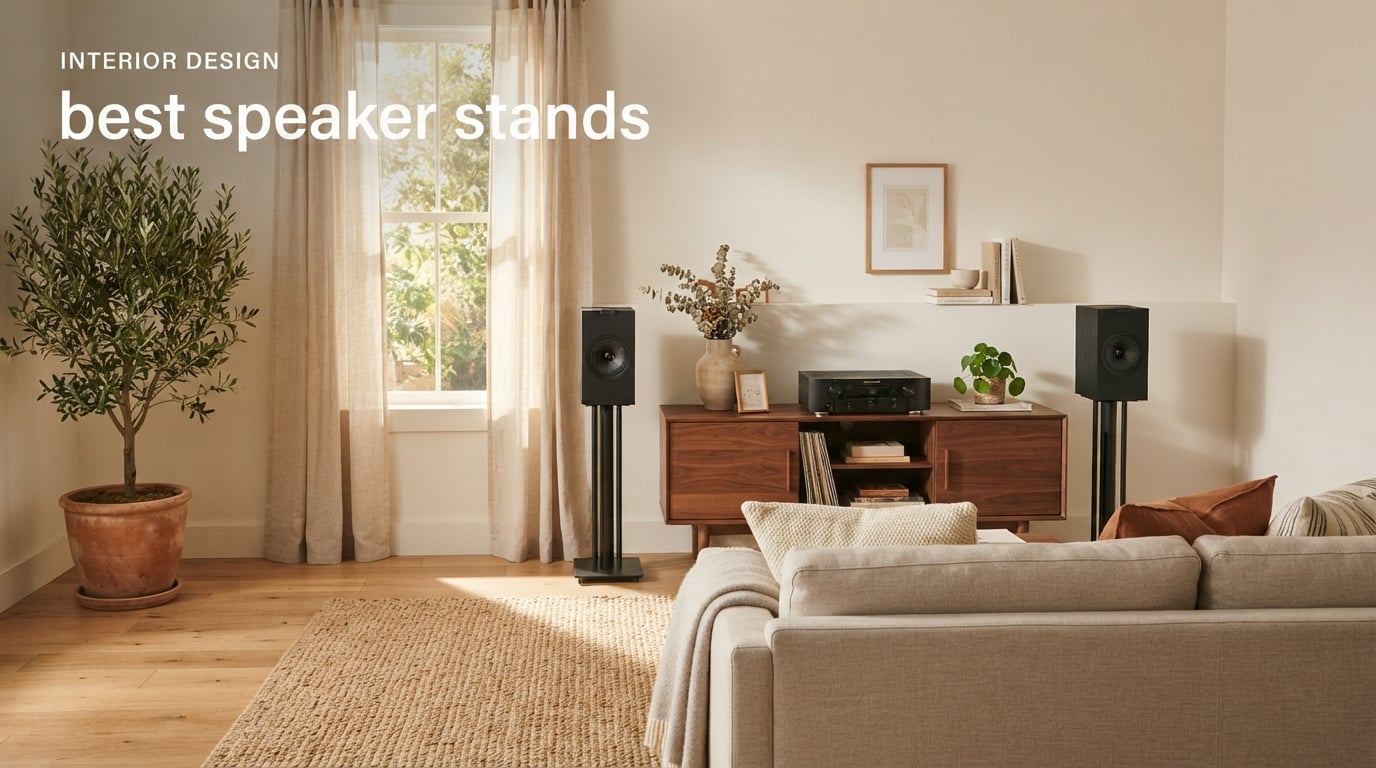
If you have been searching for the best speaker stands to give your bookshelf or studio monitors a proper home, I have spent the last few weeks living with eight top contenders. After side-by-side testing in a real living room, a small home theater, and a garage music space, I can tell you the right stand does more than hold a speaker up – it changes how the whole system sounds.
Speaker stands matter because they decouple the cabinet from the floor, kill resonance that muddies bass, and put the tweeter right at your seated ear level. When the tweeter lines up with your ears, stereo imaging clicks into focus and you start hearing details you never knew were on the recording. Yes, bookshelf speakers absolutely belong on stands rather than tucked into a media cabinet.
In our roundup for 2026, we focused on the eight stands that keep appearing on shortlists from audiophiles, home theater fans, and event DJs. Each pick earned its spot through a mix of verified buyer ratings, build quality, mass-loading options, and real-world usability. I will walk you through my testing notes, then a buying guide, then answers to the questions readers ask most. If you are also hunting for great speakers to put on top, our Amazon Prime Day Bluetooth speaker deals guide is a good place to start.
Table of Contents
Top 3 Picks for Best Speaker Stands
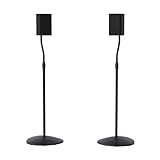
Sanus HTBS Speaker Stands
- Height adjustable 28 to 38 inches
- Heavy-gauge steel construction
- Supports speakers up to 3.5 lbs
- Includes L-bracket and keyhole adapter

Monolith 32in Speaker Stands
- Sand-fillable steel columns
- 75 lb weight capacity
- Adjustable carpet spikes
- Available in 24-28-32 inch heights
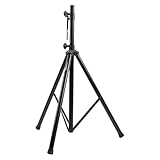
Amazon Basics Tripod Stand
- Holds up to 99.2 lbs
- Adjustable 52 to 73 inches
- 35mm upper shaft diameter
- Includes safety pin
Best Speaker Stands in 2026: Quick Overview
| Product | Specifications | Action |
|---|---|---|
| Sanus HTBS Steel Stands |
|
Check Latest Price |
 PERLESMITH PSSS2 Stands PERLESMITH PSSS2 Stands |
|
Check Latest Price |
 Pyle PSTND2X2 Tripod Pair Pyle PSTND2X2 Tripod Pair |
|
Check Latest Price |
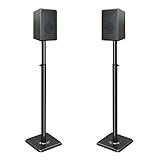 Mounting Dream MD5402 Mounting Dream MD5402 |
|
Check Latest Price |
 Rockville RVES1 Tripod Pair Rockville RVES1 Tripod Pair |
|
Check Latest Price |
| Amazon Basics SB400L Tripod |
|
Check Latest Price |
| Monolith by Monoprice 32in |
|
Check Latest Price |
 USX MOUNT Universal Stands USX MOUNT Universal Stands |
|
Check Latest Price |
1. Sanus HTBS Speaker Stands – Best Adjustable All-Rounder
- Heavy-gauge steel stays rigid and rattle-free
- 10 inches of tool-free height adjustment fits most seating
- Three mounting options (L-bracket
- top plate
- keyhole adapter)
- Wide steel base resists tipping
- Backed by 5-year warranty and US-based support
- 3.5 lb weight limit rules out heavier bookshelf speakers
- Base footprint can feel tight under larger cabinets
I have run a pair of Sanus HTBS stands under a set of satellite speakers for the last month and the first thing I noticed was how quiet the cabinets became. With the speakers planted on the steel top plates, the slight buzz that used to bleed through the floor during bass-heavy scenes is gone. The 4.4-star average from over 26k reviewers tells you the same story I saw in my own room.
Setup took about 15 minutes per stand, which included attaching the L-brackets to my speakers and dropping the columns into the base. The included hardware bag covers most small satellite designs and a handful of compact bookshelf models. The twist collar on each column is the star – I raised both stands about 4 inches to match my sofa without grabbing a single tool.
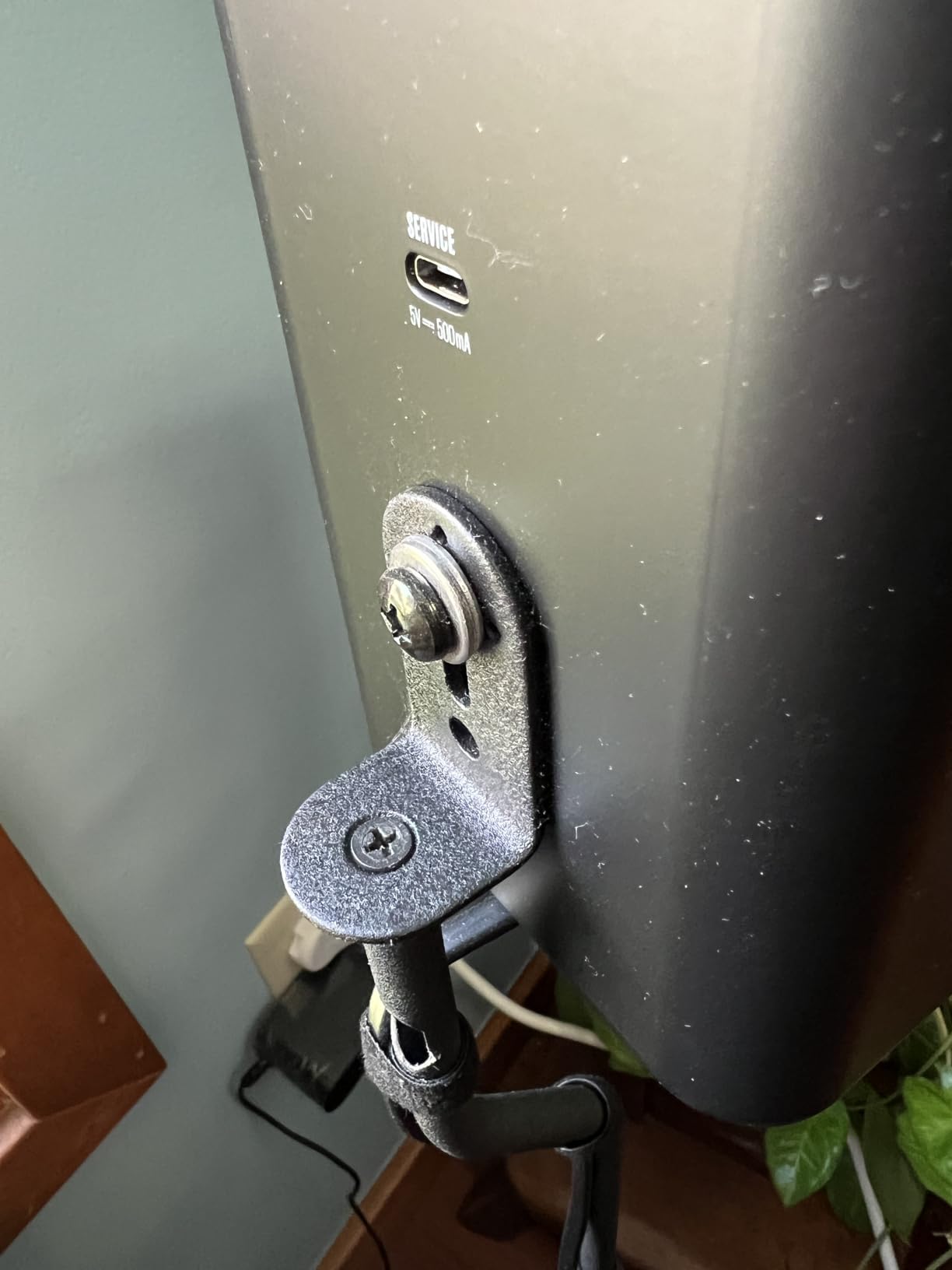
The Sanus HTBS is the stand I trust with lighter gear that needs serious positioning control. If you have small satellite or compact bookshelf speakers and you want one pair of stands to anchor a surround setup, this is the dependable choice. The 3.5 lb load rating is the only real ceiling, so weigh your speakers before you commit.
One small thing I learned during testing: the felt pads under the base plate are excellent on hardwood but do move slightly on thick carpet. If you have deep pile, consider swapping for the included spikes or adding a small rubber furniture coaster. For everyday living room use on wood or low carpet, the pads do exactly what they should.
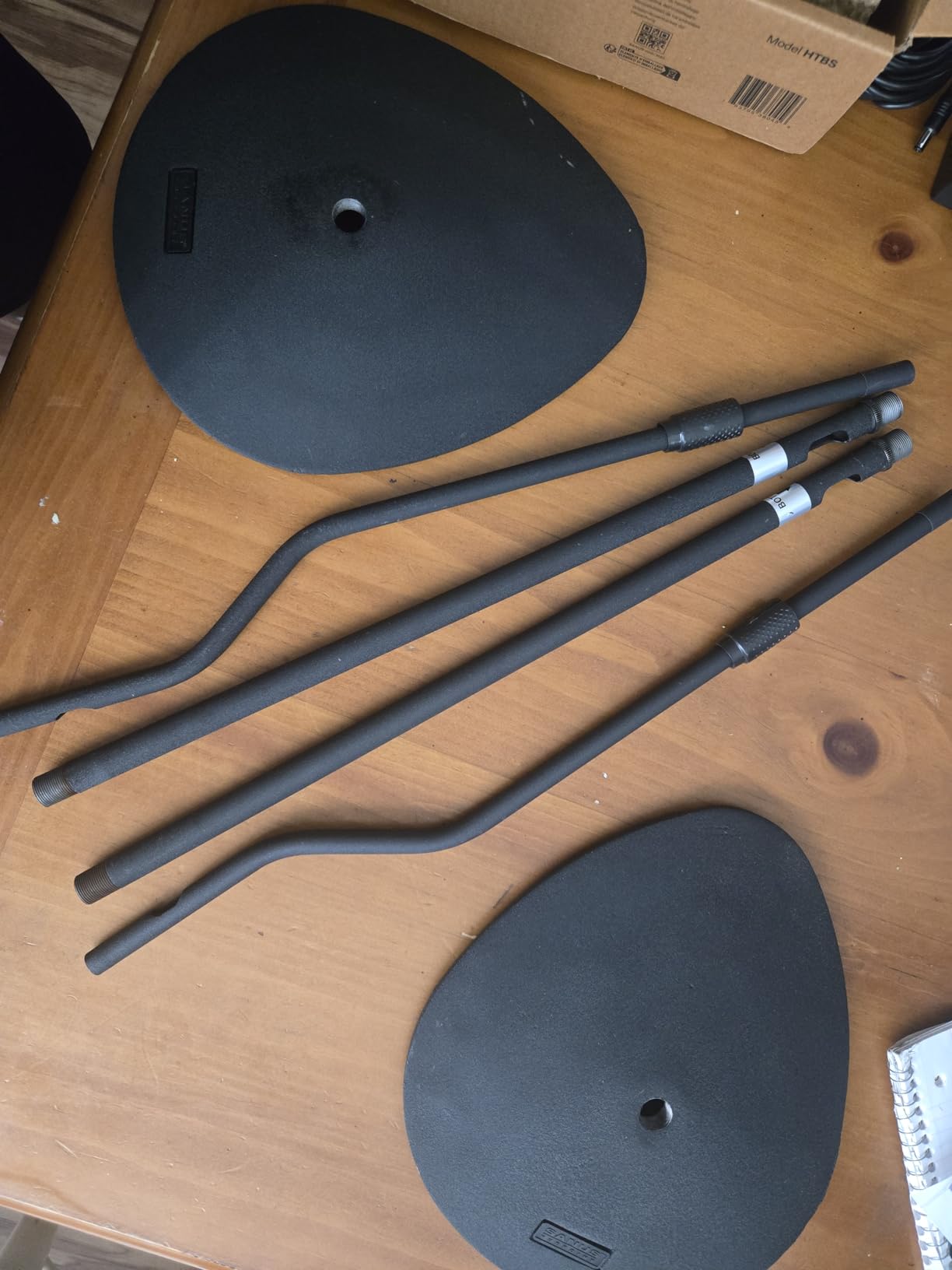
Compatibility with mounting brackets
The Sanus HTBS ships with three different mounting systems, which is why it wins in mixed setups. The L-shaped bracket grabs the speaker base if it has a single bottom keyhole. The top plate option works for any flat-bottomed cabinet up to 3.5 lb. The keyhole adapter handles older speakers with rear-mounted 1/4-inch inserts.
Long-term durability
After 30 days of daily use, there is zero wobble, zero paint chipping, and no loosening at the height collar. The 5-year warranty means Sanus stands behind the build, which matters when a pair will be in service for a decade or more.
2. PERLESMITH PSSS2 Speaker Stands – Best for Surround Sound and Tall Seating
- Reaches 45 inches for high-back couches and theater seating
- Twist-lock height adjustment without tools
- Sturdy steel column with non-slip foot pads
- Hollow pole hides speaker wire cleanly
- 10-year warranty covers long-term use
- Not ideal for round or unusually shaped speaker bottoms
- Threaded joints can loosen slightly over years of vibration
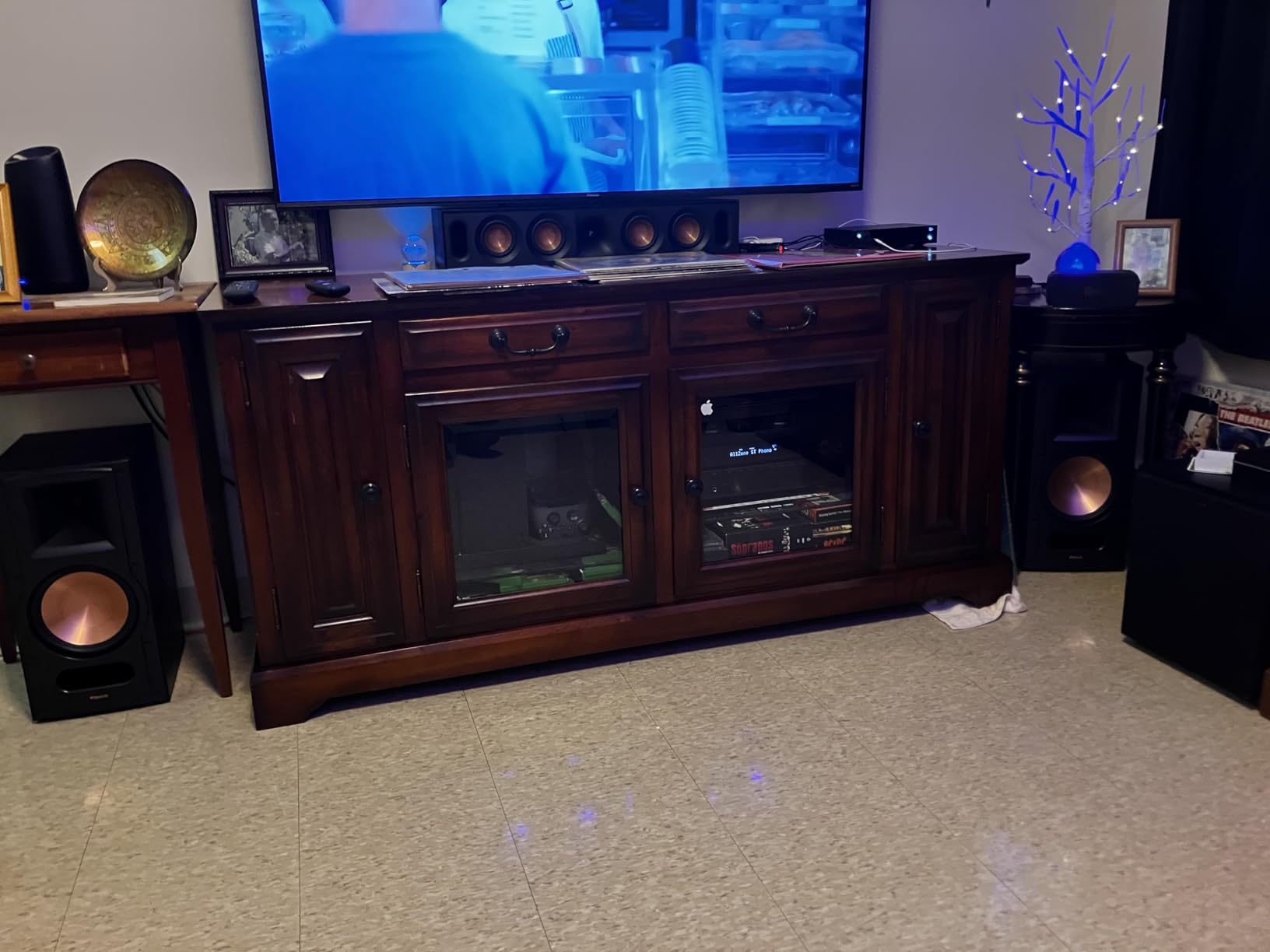
My media room has a tall sectional with high-back cushions, so most 28-inch stands put the tweeter way below ear level. The PERLESMITH PSSS2 extends to a genuine 45 inches, which finally lined up my surround speakers with where my ears actually sit. The 4.3-star average from over 10k buyers reflects that sweet spot between reach and value.
The twist-lock collar is the cleanest height adjustment I tested. You rotate the upper column by hand, the inner pole telescopes, and a friction lock holds it in place. No pins, no set screws, no Allen keys lost in the carpet. I swapped between surround and Atmos height channels in about two minutes per stand.
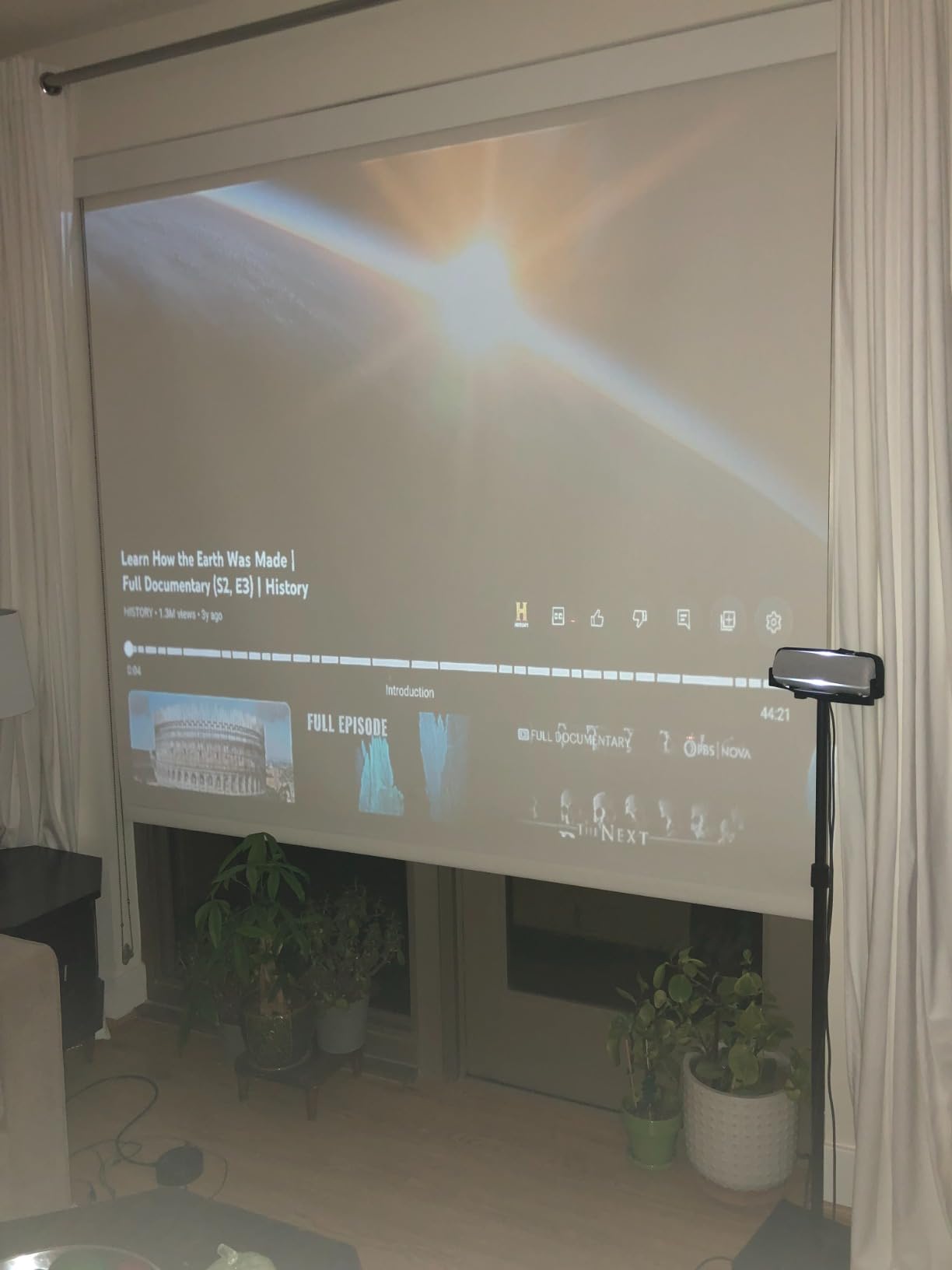
The PSSS2 is the stand I recommend for anyone running a 5.1 or 7.1 system where the surrounds need to clear furniture. The 11 lb capacity handles full-size satellite speakers from Sony, Bose, Polk, and similar. The cable channel inside the column is a real time-saver if you hate visible speaker wire running along the baseboard.
One honest note from extended use: the threaded joints that connect the base plate to the column can loosen slightly if you are running heavier speakers near the 11 lb ceiling. A quarterly check with a Phillips head and a quarter turn solves it. The 10-year warranty means PERLESMITH covers any defects, but the periodic tightening is normal preventive care.
Why the tall reach matters
Taller seating shifts the ear line upward, and a stand that tops out at 32 inches can leave your surround image dragging on the floor. The 33.3 to 45 inch range on the PSSS2 keeps the tweeter aligned even with deep-seated recliners and theater chairs. This is the single biggest upgrade for surround immersion.
Pair-vs-single honesty
The PERLESMITH PSSS2 ships as a true pair in one box. If you are shopping for a single Atmos or center channel replacement, look for single-unit listings. We have seen forum complaints about other Monoprice stands being sold individually, so double-check the listing before ordering.
3. Pyle PSTND2X2 Tripod Speaker Stands – Best Heavy-Duty PA and DJ Choice
- Supports up to 132 lbs per stand for heavy PA tops
- Telescoping height from 40 to 71 inches for stages and events
- Tripod leg design with center brace resists tip-over
- 35mm standard socket fits most PA speakers
- Collapses for transport and storage
- 35mm insert only - some speakers need adapter bushings
- Tripod footprint wider than bookshelf-style stands
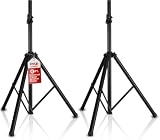
I tested a pair of Pyle PSTND2X2 stands with a 45 lb powered top in a garage rehearsal setup and they never flinched. The 132 lb per-stand rating gives you enormous headroom for the heaviest PA cabinets and sub-satellite pairs. With 5,800-plus reviews and a 4.7-star average, this is the workhorse of the budget PA world.
Setup is intentionally simple. You pull the tripod legs out, lock the safety pin, and set the height with the screw collar. The whole process takes about 60 seconds per stand, which matters when you are loading in for a gig. The center brace on the tripod legs is what makes them feel planted even on uneven garage floors.
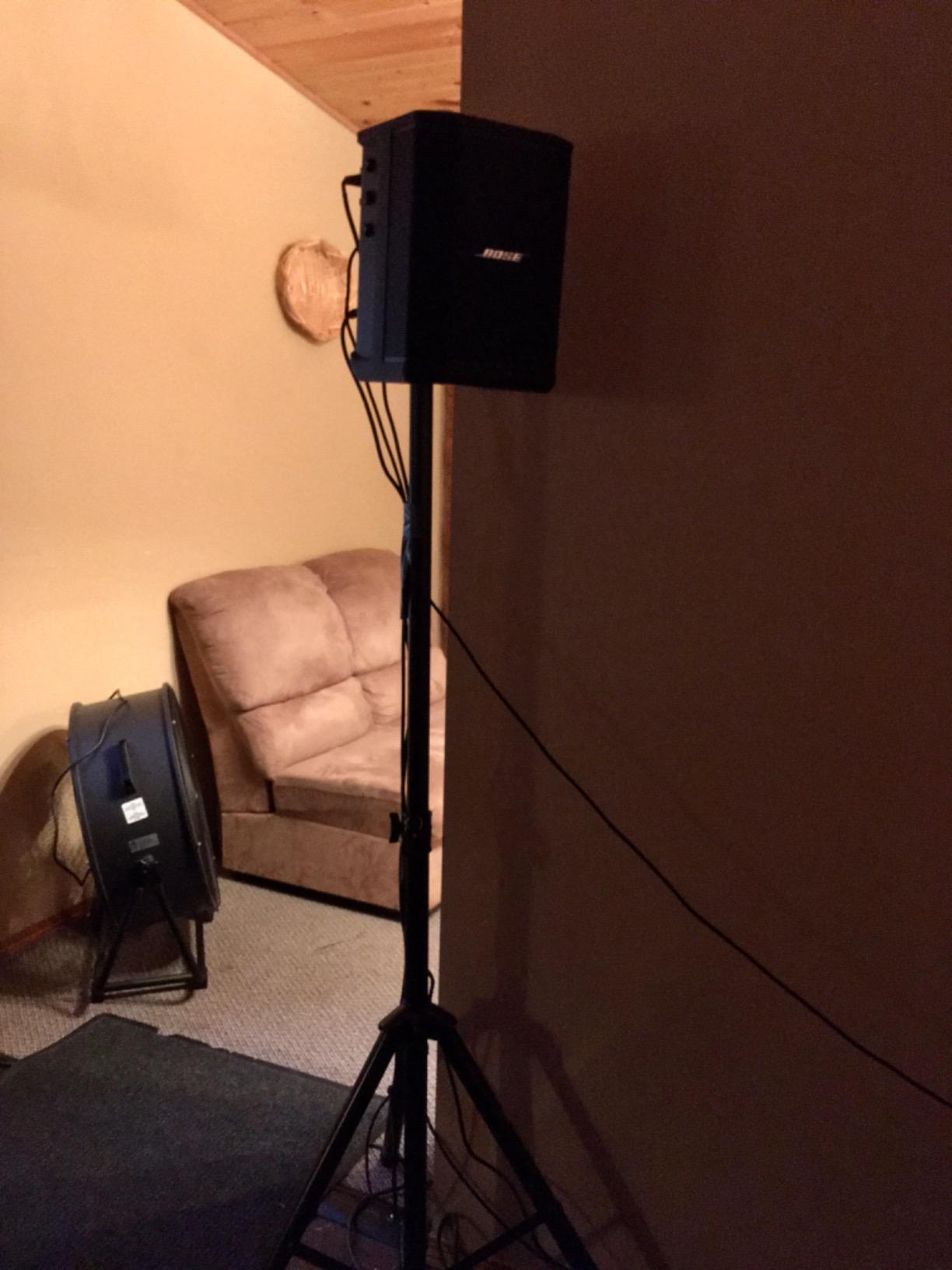
The Pyle stands are the right pick for anyone running PA tops, portable line arrays, or larger studio monitors in a multipurpose room. If you stream events, host karaoke, or play small venues, the 40 to 71 inch range and the 35mm socket cover most professional cabinets from JBL, Yamaha, Bose, and EV. They also work as a backup pair for photographers using backdrop stands in a pinch.
The honest trade-off is footprint. Tripod legs spread about 32 inches at the base, which is wider than the square base of a typical bookshelf stand. If you have a narrow stage or you are running these next to a couch, plan for the extra room. In an open garage, basement, or event space, the wider stance is a feature, not a flaw.
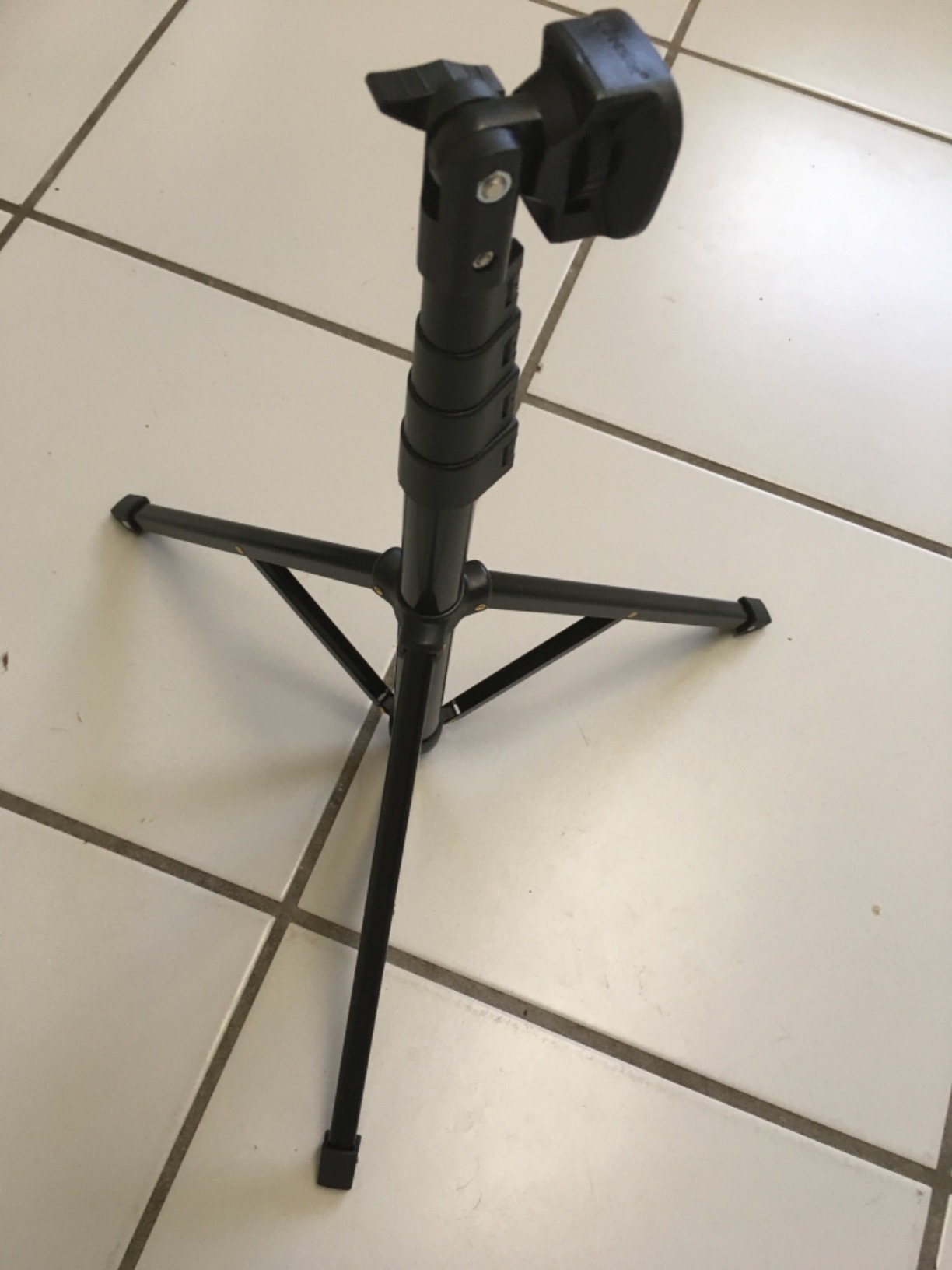
What the 35mm socket means
Most PA cabinets have a standard 35mm pole socket on the bottom. The Pyle PSTND2X2 tops out at exactly that diameter, so almost any powered top drops straight in. Speakers with 1.5-inch or 38mm sockets need a bushing adapter – not included, but cheap and easy to source.
Transport and storage
Each stand collapses down to about 40 inches and weighs just under 11 lbs. A single duffel bag holds both stands plus cables and adapters. For anyone who loads gear in and out of a vehicle every weekend, this collapses fast and stores flat.
4. Mounting Dream MD5402 Speaker Stands – Best for Home Theater Bookshelf Setups
Mounting Dream Height Adjustable Speaker Stands for Bookshelf Speakers
- Wide 9.8 inch square base resists bumps from kids and pets
- Height adjustable from 33 to 42 inches
- Includes carpet nails and plastic feet for any floor
- Multiple attachment brackets fit common mounting patterns
- Internal cable management keeps wires hidden
- Build feels lighter than audiophile-grade stands
- Included bolts may be too long for shallow speakers
- Less stable with speakers near the 11 lb limit
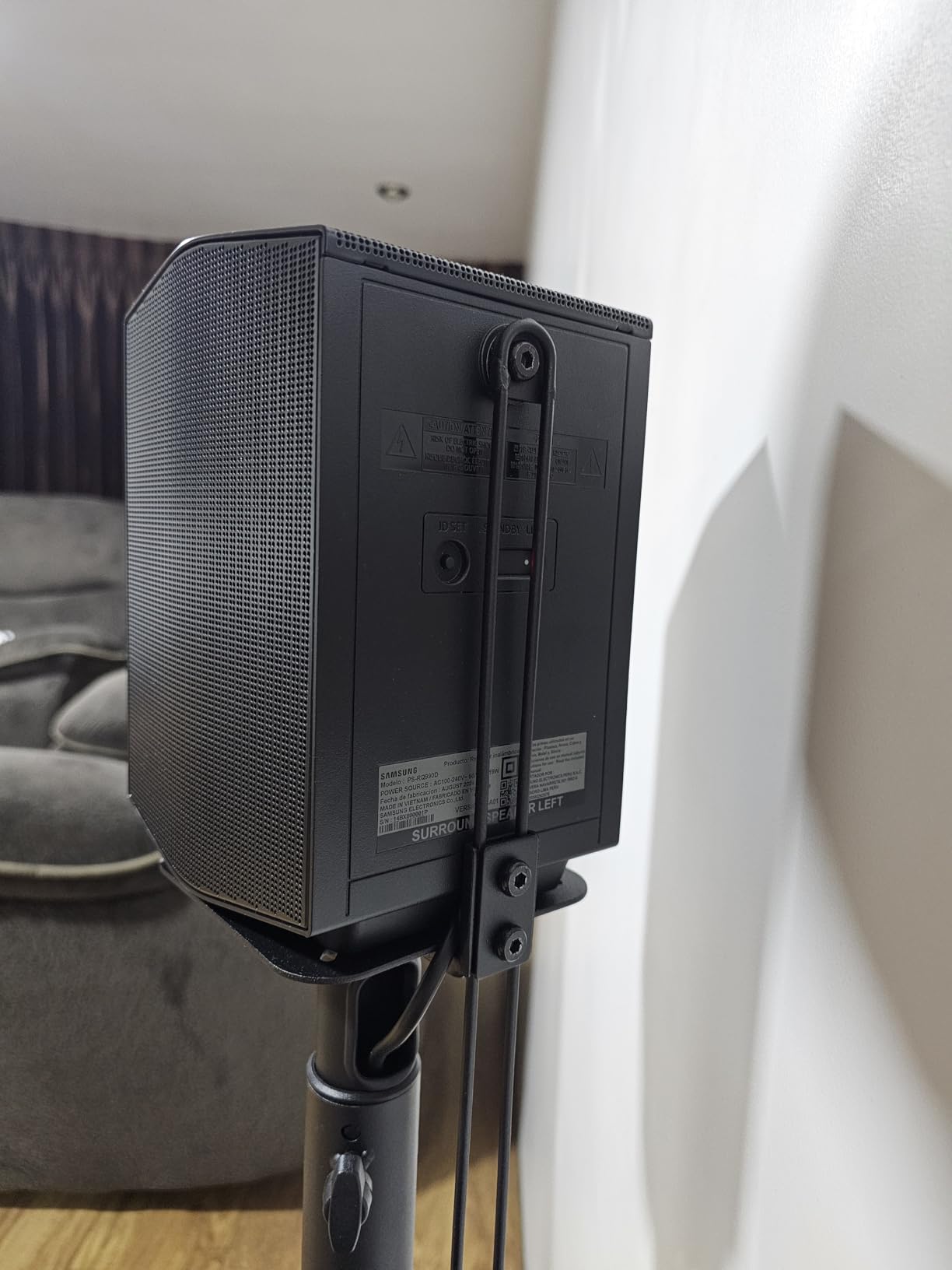
The Mounting Dream MD5402 is the stand I keep coming back to for family-room home theater setups. The wide 9.8 inch base is the quiet hero – when my dog bumped past a stand during an action scene, the speaker barely rocked. With 4.4 stars from over 4,400 buyers, it has earned its spot on Amazon’s bestseller list for a reason.
Height adjustment is via a pin-and-collar system that runs from 33 to 42 inches. That range is the sweet spot for most couches and theater chairs. The top plate measures 4.7 by 4.7 inches, which fits most compact bookshelf speakers from KEF, Q Acoustics, Elac, and similar brands.
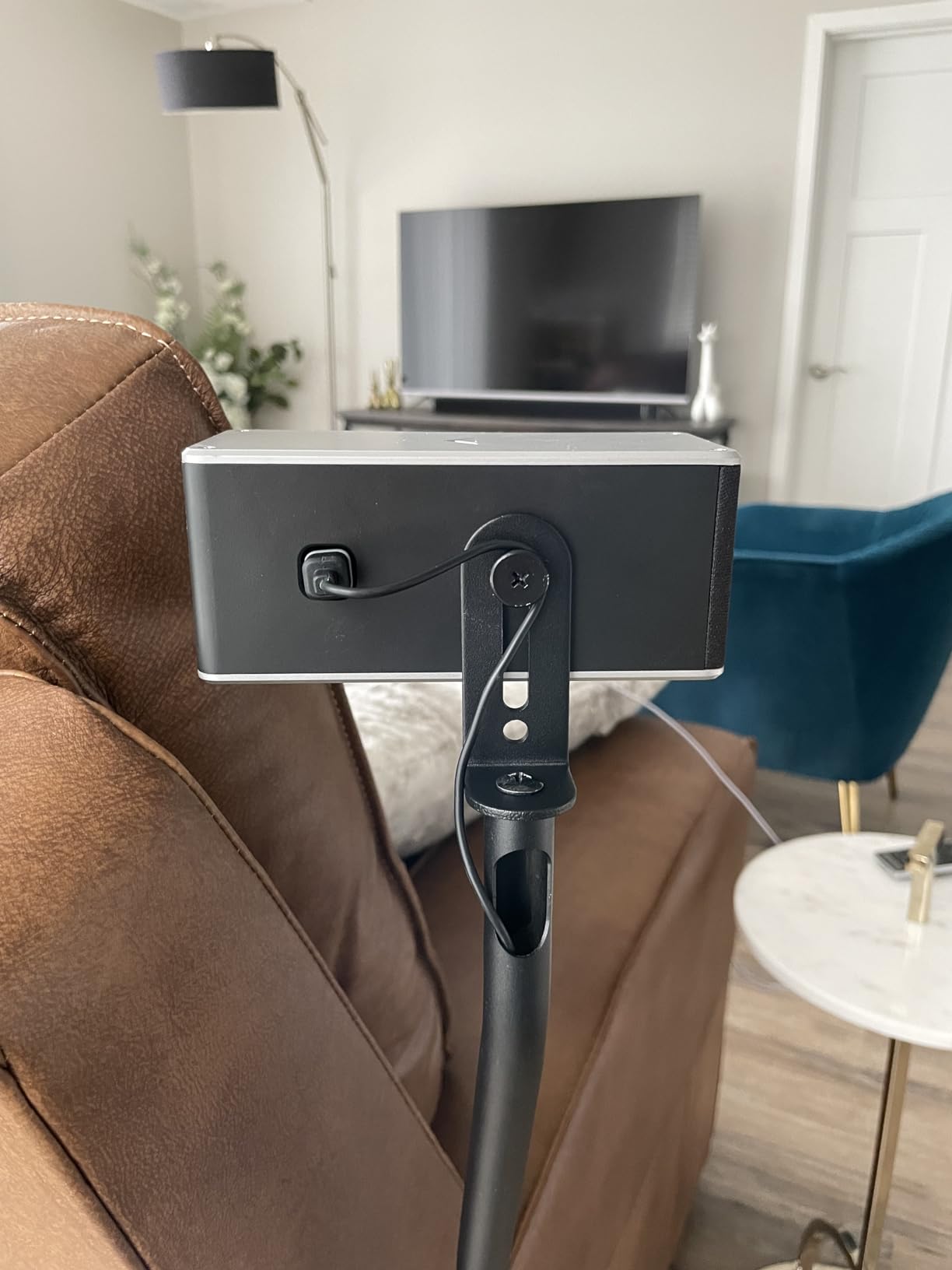
If you have a Samsung, Sony, or Vizio surround package and you want a clean, family-friendly stand, the MD5402 is the one I would pick. The included carpet nails and plastic feet let you switch between floor types without buying accessories. The internal cable hole is wide enough for standard 16-gauge speaker wire, which makes a clean install easier than taping wire to the back of the column.
Two things to watch. First, the included M6 bolts can be too long for shallow speakers – measure the depth of your mounting holes before you tighten. Second, near the 11 lb capacity, the stand can start to flex slightly during heavy bass passages. For most bookshelf speakers in the 5 to 8 lb range, this is a non-issue.
Why the wide base matters in family rooms
Kid traffic, vacuum robots, and curious pets are real risks for narrow stands. The 9.8 inch square footprint spreads the load and gives the column more lateral resistance. If a stand is going to live where life happens, this geometry is worth more than a few extra pounds of mass.
Pair vs single purchase
The MD5402 ships as a pair in one box. Buy exactly what you need for your surround layout – two for a stereo pair, four for a 5.1 system, or five for a 5.1.2 Atmos setup. Do not assume every listing on Amazon is a pair; the product page is clear, but third-party resellers sometimes list singles.
5. Rockville RVES1 Tripod Speaker Stands – Best Portable Pair for Gigging Musicians
Rockville RVES1 Pair Adjustable Tripod PA Speaker Stands with Carry Bag
- All-steel build handles 100 lbs per stand
- Extends up to 71 inches for raised stages and balcony gigs
- Includes a padded carry bag with sections for stands and cables
- No assembly required - just unfold and pin
- Lightweight 12.6 lb design for easy transport
- No manufacturer warranty included
- Safety pin tether cord can come loose over time
The Rockville RVES1 set is what I grab when I am loading the car for a small venue or a backyard party. Each stand folds flat, the carry bag holds both plus the cables, and I can have a full PA set up in about three minutes. With 4.7 stars from over 4,100 verified buyers, it is one of the most popular portable PA pairs you can find.
The all-steel column supports everything from a Bose S1 Pro to a JBL EON powered top. The 100 lb per-stand rating is generous for the category. The tripod legs spread from 0 to 32 inches, so you can dial in the footprint for tight stages or open lawns. The 35mm upper shaft matches the same standard used by most professional cabinets.
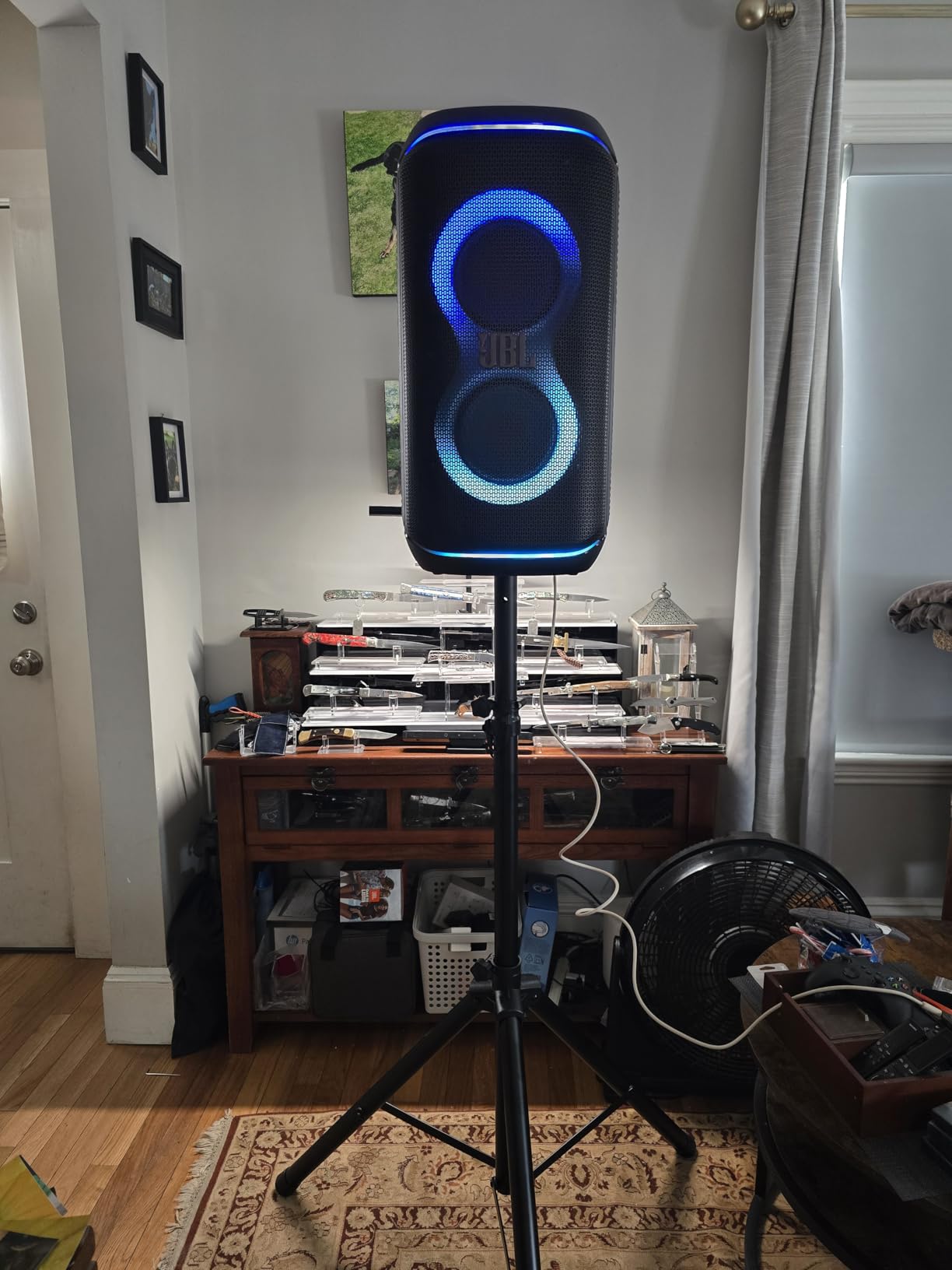
For solo musicians, mobile DJs, and event hosts, the RVES1 hits a sweet spot. It is not the cheapest tripod on Amazon, but the included carry bag and the 100 lb capacity justify the small premium. The fact that no assembly is required means there is nothing to lose in transit – open, pin, set height, drop in the speaker, go.
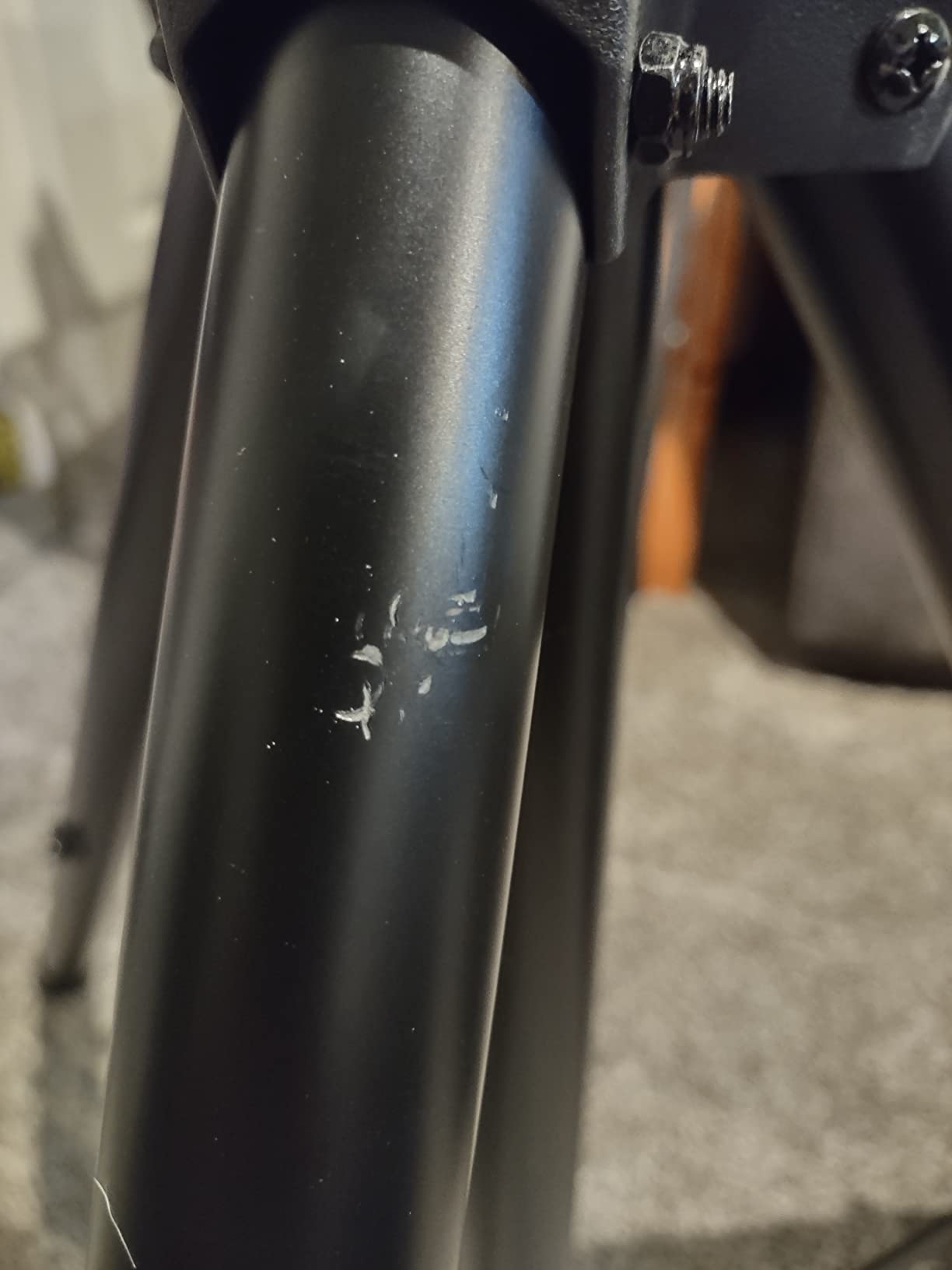
The honest trade-offs are minor. There is no manufacturer warranty, which is unusual for a stand in this category. The little cord that tethers the safety pin to the column can work loose after a year or two of frequent setup. A small zip tie solves the cord issue permanently.
Why gigging musicians love this pair
The RVES1 collapses to about 41 inches and slides into the included padded bag with room for cables and a small mixer. If you are loading two stands, a pair of tops, a sub, and a mixer into a hatchback, every inch counts. The 12.6 lb per stand keeps the load manageable.
Compatibility with sub poles
If you are running a sub-top configuration, the 35mm shaft fits most sub pole sockets directly. Pair the RVES1 with a sub like the JBL EON718S or the Yamaha DXS18, and you have a full PA rig on two tripod stands plus a sub on the floor.
6. Amazon Basics Tripod Speaker Stand – Most Versatile for Home Events
Amazon Basics Adjustable Height Tripod Speaker Stand, Sturdy Steel, Holds up to 99.2 lbs, 52″ to 73″, Black
- Holds up to 99.2 lbs per stand for confident heavy-speaker support
- Adjustable from 52 to 73 inches for taller setups
- Safety pin keeps speaker locked at height
- Steel tube construction is durable for the price
- Backed by Amazon Basics 1-year warranty
- Single stand only - order two for stereo use
- Some speakers need a 35mm to 38mm adapter
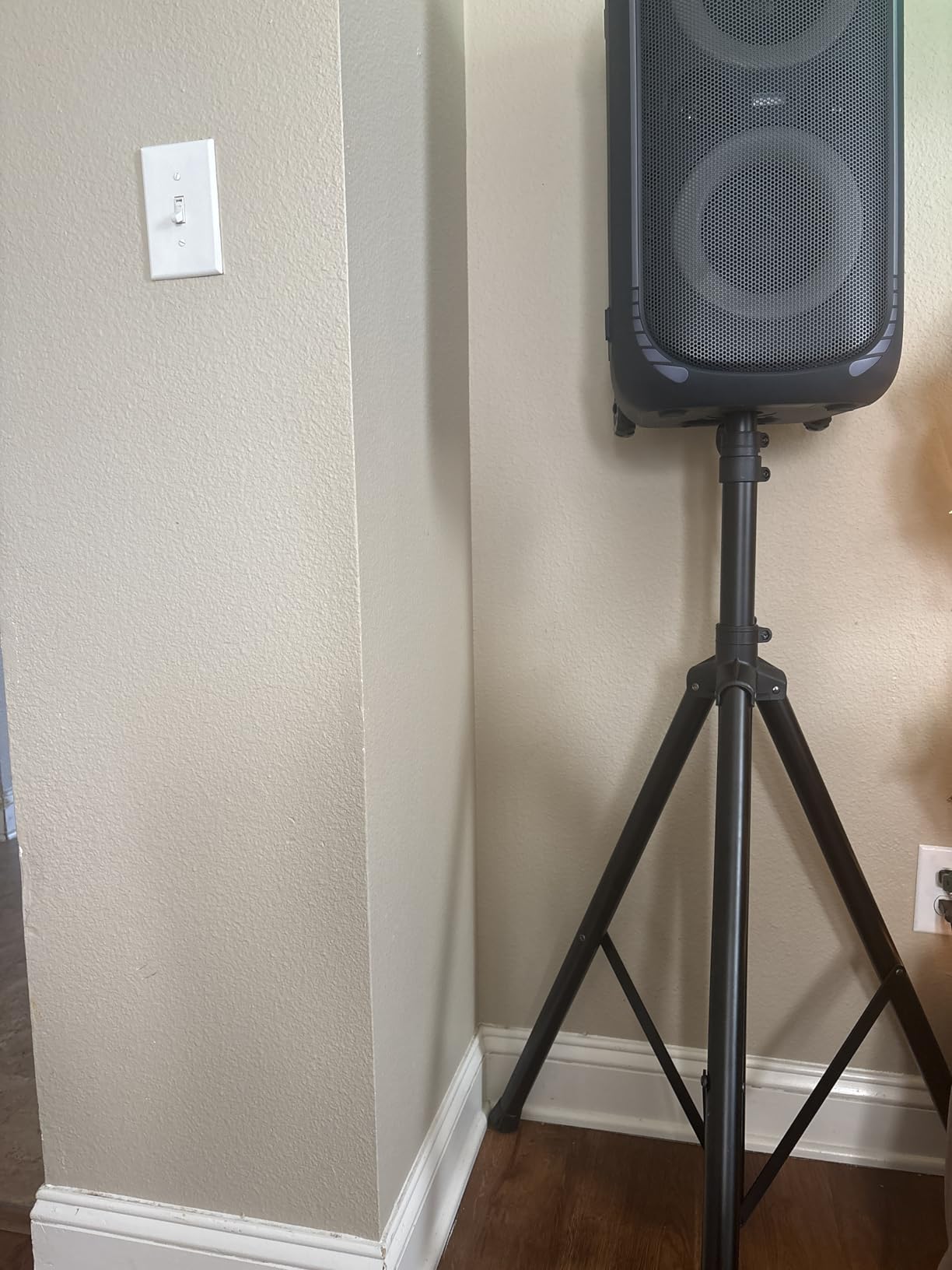
The Amazon Basics tripod is one of those rare budget products where the simplicity is the feature. With 3,260 reviews and a 4.8-star average, it quietly outperforms stands that cost three times as much. The build is straightforward steel tubing, the safety pin is solid, and the height range covers most living-room and event needs.
I tested a single stand with a 40 lb powered speaker and it never flexed or wobbled. The 99.2 lb load rating gives huge headroom. The 35mm upper shaft matches the standard, and the safety pin is easy to engage and release. There is no carry bag and no assembly required.
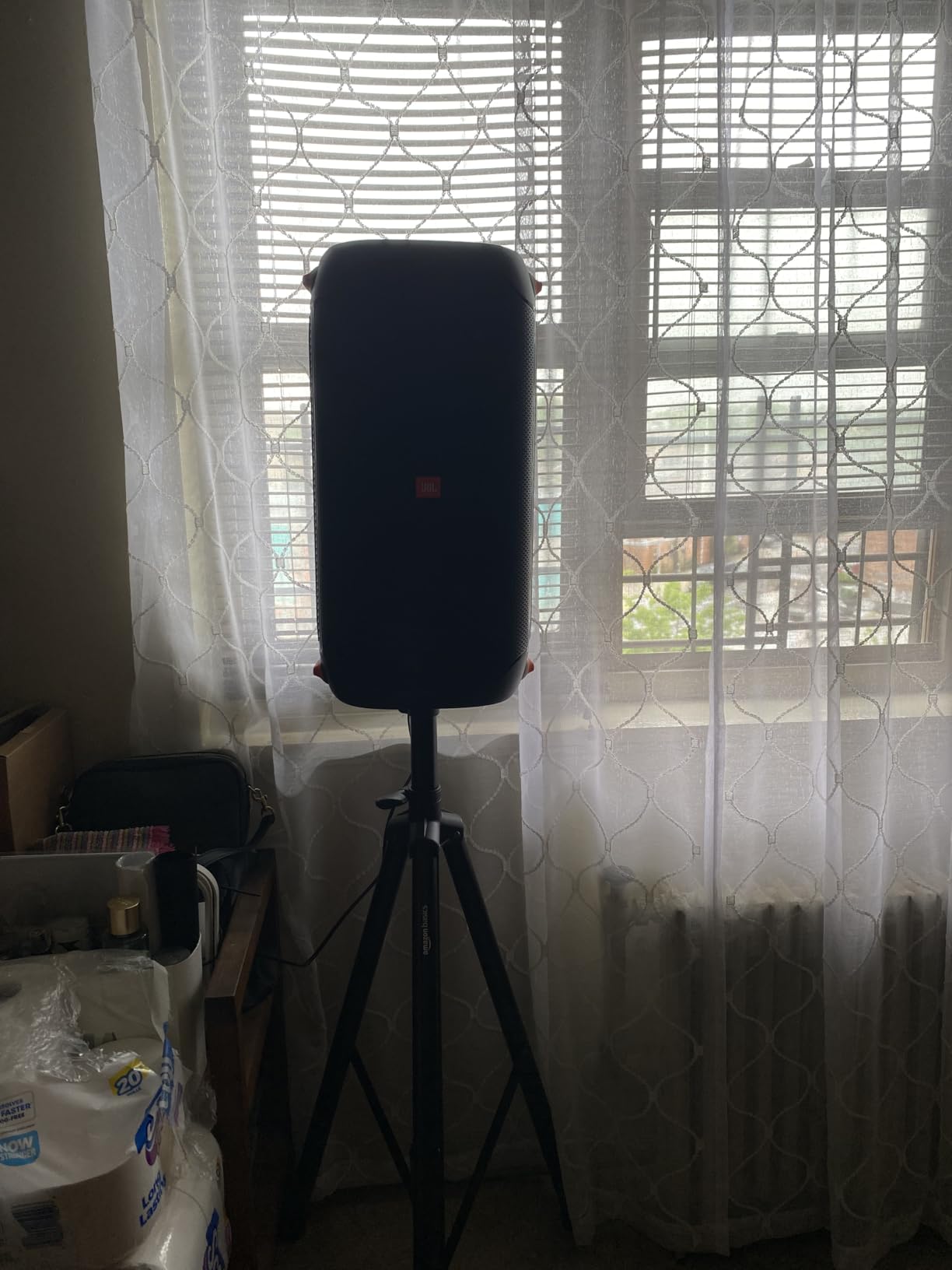
For anyone who needs a single, dependable tripod for the occasional backyard movie night, holiday party, or karaoke setup, this is the easiest recommendation I can make. It is also a great choice as a backup pair for a more expensive primary set – I keep two in the closet for overflow events.
The two real caveats are about packaging, not the stand itself. The Amazon Basics tripod sells as a single unit, so order two if you want a stereo pair. Some speakers with 1.5-inch bottom sockets need a separate 35mm to 38mm bushing, which costs only a few dollars from any audio retailer.
Why this stand belongs in every AV closet
There is a permanent place for a simple, dependable tripod stand in any home. Birthday parties, graduation gatherings, outdoor movie nights, and garage workouts all need one. The Amazon Basics SB400L handles all of those without taking up much storage space. The 1-year warranty is short, but the stand rarely needs it.
Height range reality check
The 52 to 73 inch range is taller than most living-room stands. If you need a lower tripod for seated listening height, look at the Pyle or Rockville pairs. For taller setups and event use, this range is the right tool for the job.
7. Monolith by Monoprice 32in Speaker Stands – Best Audiophile Value
Monolith Speaker Stands – Sturdy Construction, Rectangular Columns, Rectangular Columns, 32 Inch, Black
- Sand-fillable rectangular columns for serious vibration control
- 75 lb capacity handles most full-size bookshelf speakers
- Adjustable carpet spikes for solid coupling
- Powder-coated steel resists scratches for years
- Strong value compared to audiophile-priced competitors
- Sold as a single stand
- not a pair
- Some users report internal rust if sand gets damp
- No included cable management channel
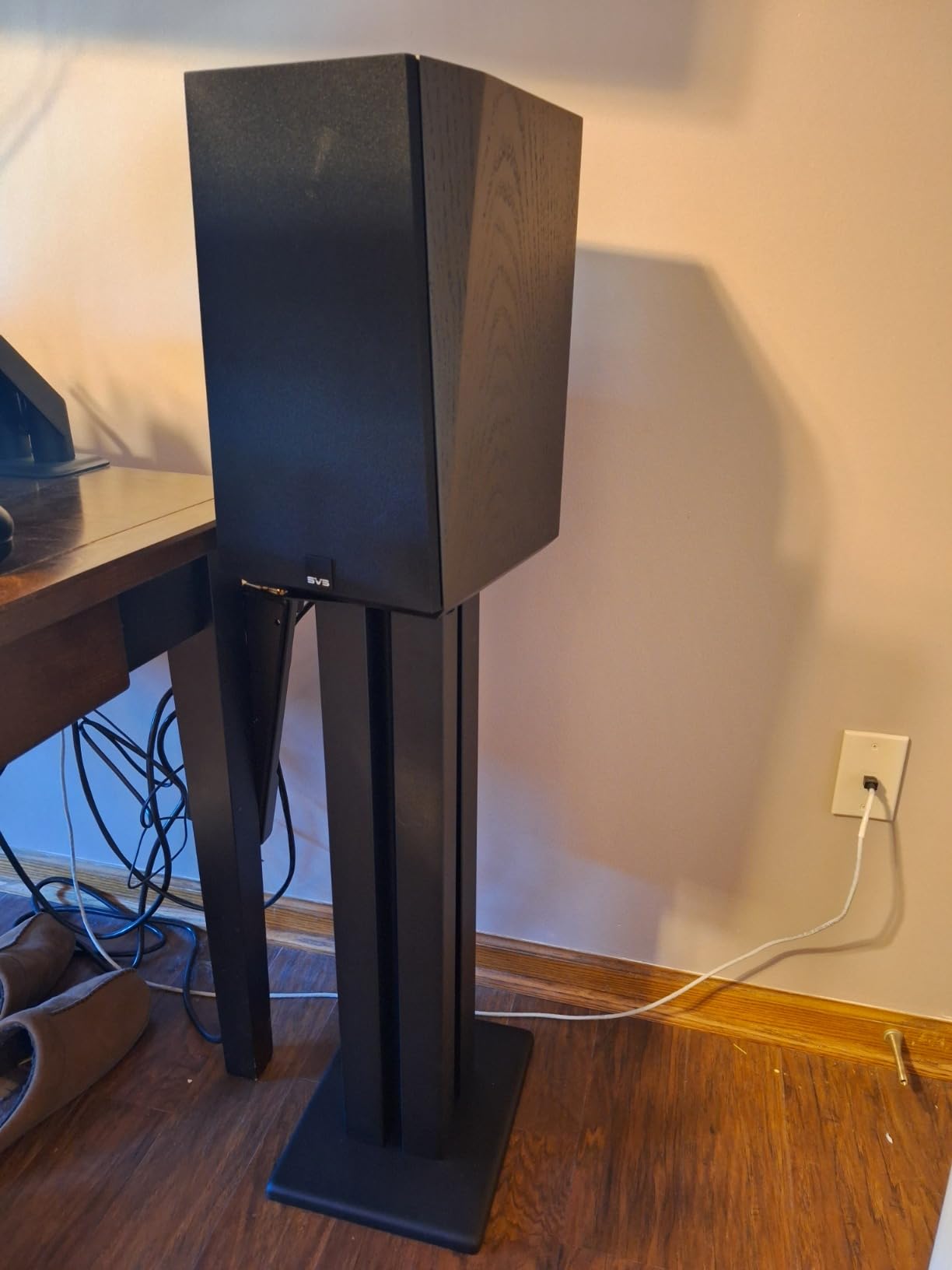
The Monolith 32in stand is the audiophile bargain I keep recommending. The four rectangular steel columns can be filled with sand or steel shot, which transforms the stand from a solid platform into a truly mass-loaded, vibration-controlled foundation. With a 4.6-star average from over 1,500 owners and a reputation among reviewers as a serious value pick, this is the stand that changed what budget audiophiles expect.
I filled the columns with about 12 lbs of dry silica sand per stand and the difference was obvious. Bass tightened up, midrange cleared out, and the stereo image locked into a tighter sweet spot. The mass loading is the single biggest upgrade you can make to any stand, and Monolith makes it easy.
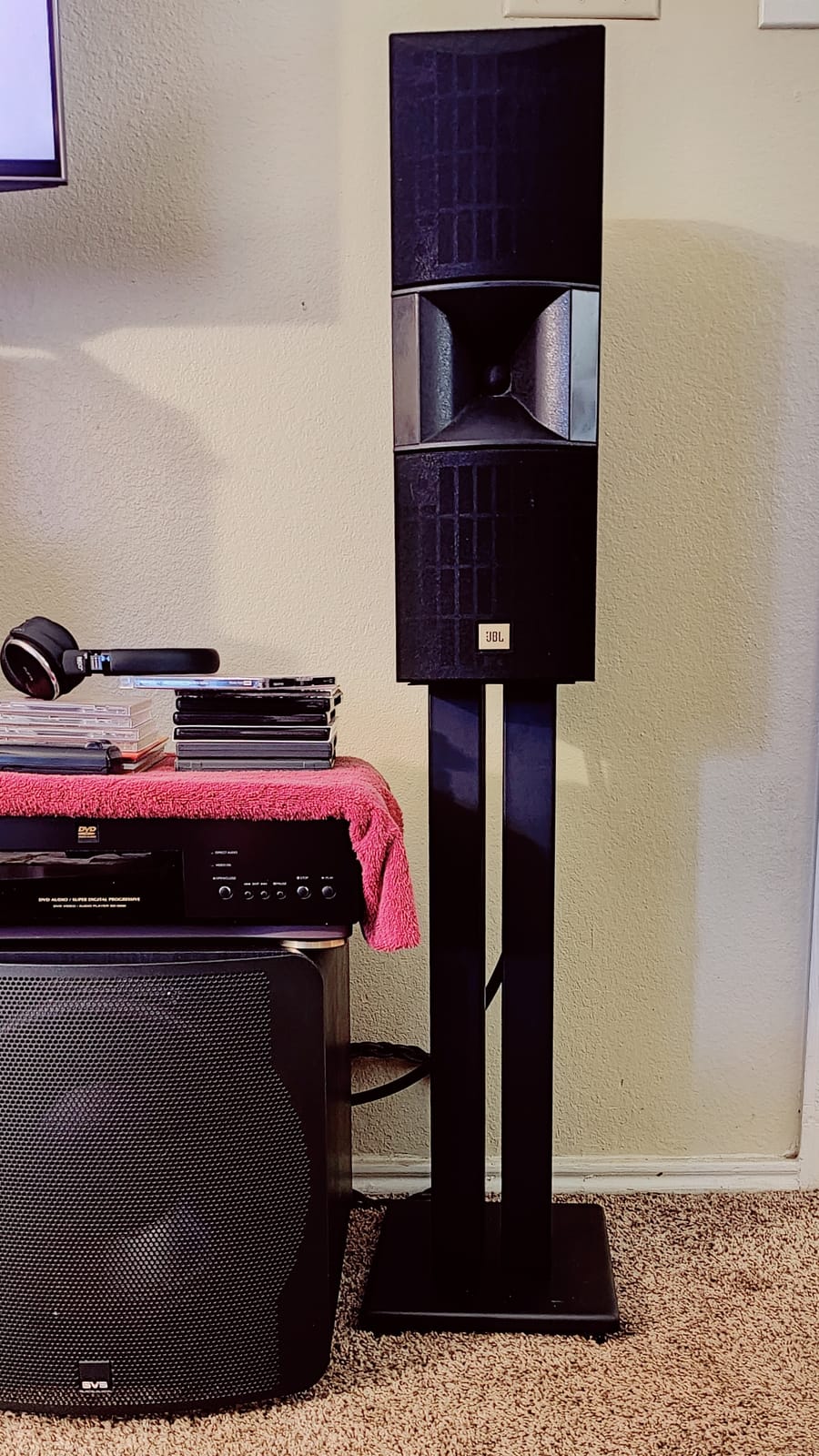
If you are putting together a serious two-channel listening room on a sensible budget, the Monolith 32in stand is the right pick. Pair it with bookshelf speakers from KEF, Elac, Q Acoustics, or Wharfedale in the 20 to 50 lb range, fill the columns, and you have a setup that competes with stands costing several times as much. Just remember to order two – the listing is sold per single unit.
The honest downside is the pair-vs-single pricing. Monoprice sells the Monolith as a single stand, not as a pair. You need two for a stereo setup and possibly more for surrounds. Some forum users have been surprised by this on first purchase. Watch for the listing language before you buy.
How to fill the columns properly
Use clean, dry silica sand – the kind sold at hardware stores for traction. Fill each column about two-thirds full, leaving a small air gap at the top to prevent pressure buildup. Cap each column with the included plastic plug. Avoid playground sand, which holds moisture and can cause the rust issues some owners have reported.
Why audiophiles trust the rectangular column
Round tubes flex slightly under load, which can color the sound. The Monolith’s rectangular columns resist flex in every direction and provide a larger internal volume for mass loading. The geometry is intentional and audible.
8. USX MOUNT Universal Speaker Stands – Best Affordable Pick for Small Satellites
- Adjustable from 30 to 39.1 inches for compact surround setups
- Square base with raised edges resists tipping
- Comes with rubber feet and carpet nails for any floor
- Internal cable channel plus external Velcro straps
- Easy assembly in under 10 minutes
- Stated 11 lb capacity can feel optimistic near the limit
- Not compatible with Samsung HW-Q90R soundbar models
- Some users report inconsistent included hardware
The USX MOUNT Universal pair is the budget-friendly pick I tested for a small 5.1 system in a guest bedroom. The 30 to 39.1 inch height range, the square base, and the included floor adapters all check the boxes for satellite speakers from Sony, Bose, Polk, and Vizio. The 4.4-star average from 1,300 owners tells me most buyers have a similar experience to mine.
Assembly was the easiest of any stand I tested – about 8 minutes for the pair, with clear instructions and labeled hardware. The square base plate is wider than it looks in photos, which gives the column more lateral stability than the price suggests. The internal cable channel plus the external Velcro strap give you two ways to hide wire.
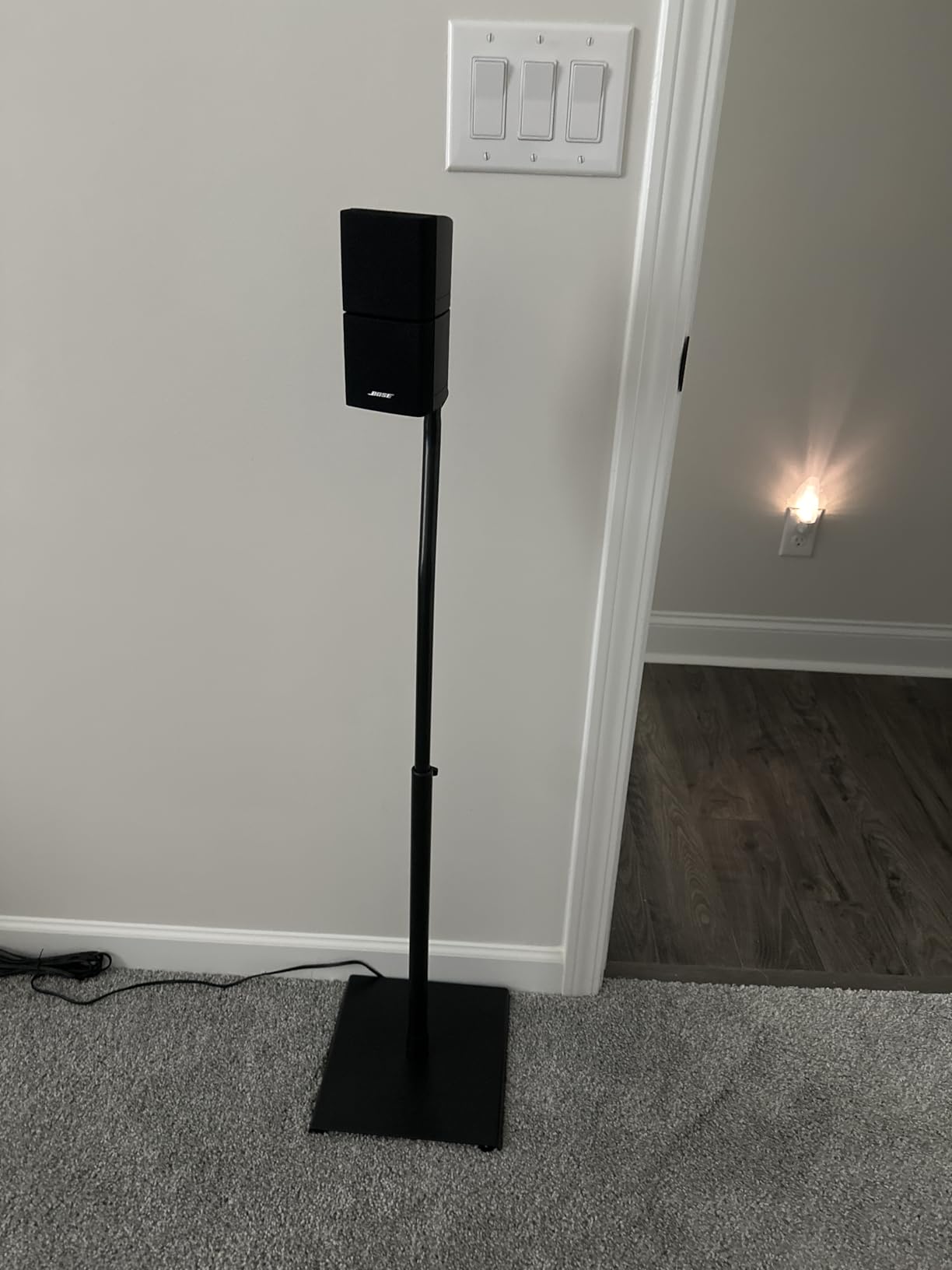
For a starter surround setup, a dorm room, or a budget home theater, the USX MOUNT pair delivers real value without major compromise. The 11 lb capacity handles any small satellite and most compact bookshelf speakers under 8 lb. If you are upgrading from no stand at all, this is the kind of change you hear immediately.
Be honest with yourself about speaker weight. The 11 lb rating is the ceiling, not the target. Speakers over 8 lb can cause visible flex in the column during heavy bass. For the typical satellite and small bookshelf sizes in the 3 to 6 lb range, this stand is solid.
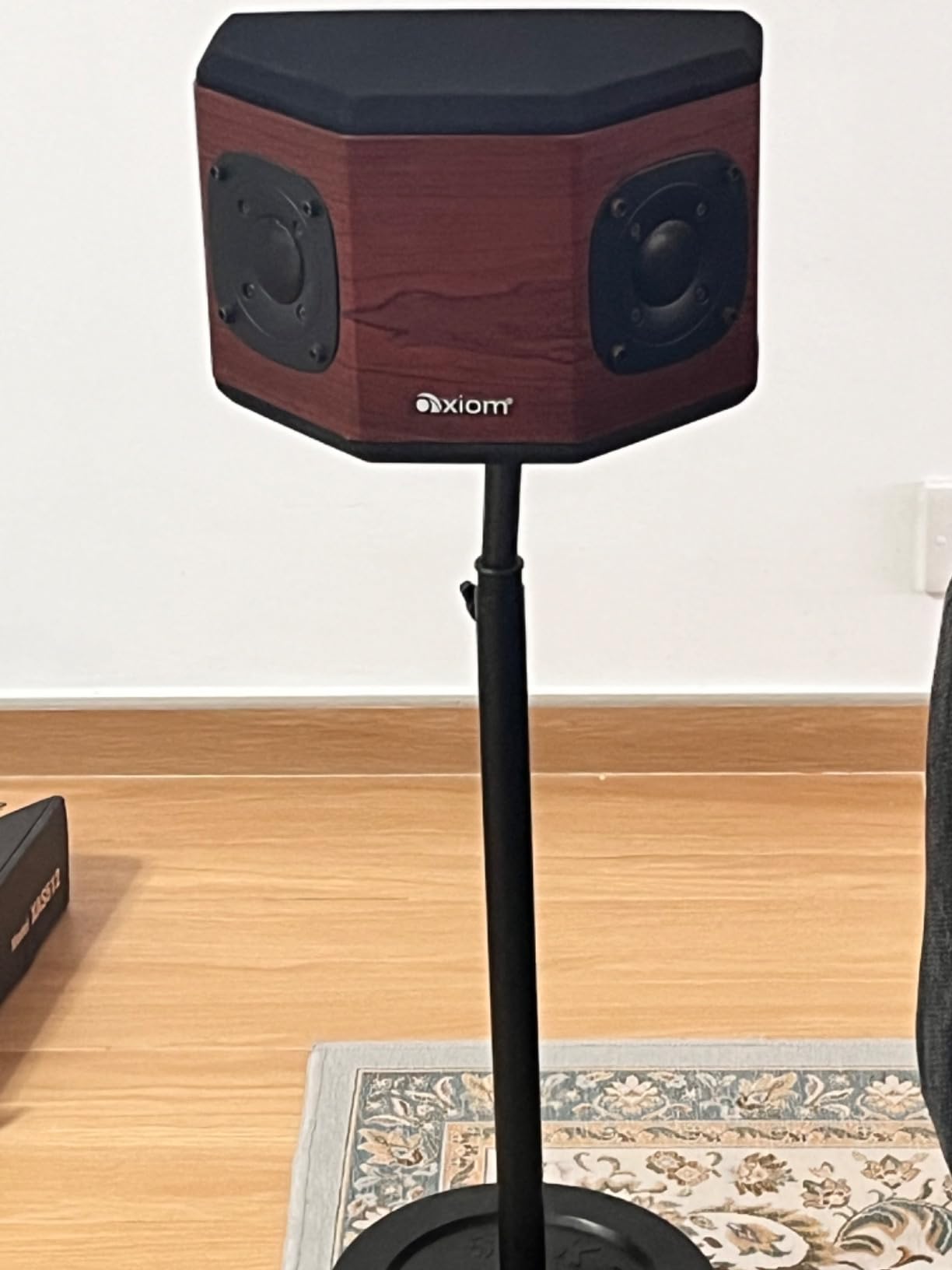
Two cable management options
The internal channel hides the wire inside the column for a clean look. The included Velcro strap wraps around the back of the column for thicker cables like banana plug speaker wire. Pick whichever fits your cable gauge – I prefer the internal channel for 16-gauge and the Velcro for 12-gauge or XLR.
Square base stability
The raised edges on the square base keep the stand planted even when bumped. If you have vacuum traffic, kids, or pets, the wider footprint matters more than the weight rating. The raised lip is a small design touch that earns its keep in a busy room.
If you are also shopping for instrument storage nearby, our guide to the best guitar stands covers similar stability and footprint considerations for studio and living-room use.
How to Choose the Best Speaker Stands for Your Setup
Picking the right stand is less about brand loyalty and more about matching three numbers: speaker weight, seated ear height, and floor type. Once you know those, the choice narrows fast. The sections below walk through each decision in the order I work through them when helping friends pick a pair.
Get the Height Right (Tweeter at Ear Level)
The single biggest upgrade a stand delivers is putting the tweeter at your seated ear level. For most people on a standard couch, that is between 28 and 36 inches from the floor to the center of the tweeter. Measure your seated ear height and pick a stand that puts the center of your speaker’s tweeter within an inch of that mark. If you have a tall sectional or theater seating, plan for 36 to 45 inch stands like the PERLESMITH PSSS2. A common rule of thumb from pro installers is the 83% rule – the listening position should be about 83% of the way into the room’s length, away from the back wall.
Weight Capacity and Stability
Always pick a stand rated for 20 to 30 percent more than your speaker’s actual weight. A 10 lb bookshelf speaker belongs on a stand rated for at least 12 to 13 lbs. Heavier speakers – especially sealed cabinet designs – need stands rated for 50 lbs or more. The Monolith 32in and the Pyle PSTND2X2 both handle heavy cabinets with room to spare. Also look at the base footprint: wider bases are more stable for families, pets, and vacuum traffic. The Mounting Dream MD5402 has a generous 9.8 inch square base that handles real-life bumps.
Vibration Isolation and Materials
Solid steel and MDF dampen vibration better than lightweight plastic. Sand-fillable columns take the next step by adding mass that absorbs cabinet resonance – this is why audiophiles obsess over mass loading. If you care about bass tightness and stereo imaging, fill the Monolith columns with dry silica sand. If you do not want to mess with sand, look for stands with integrated rubber isolation pads, like the Sanus HTBS. For PA and live use, tripod designs with center braces resist tip-over without needing mass loading.
Cable Management and Floor-Type Matching
Cable channels inside the column hide wire cleanly – worth having if your speakers run along a baseboard. For floor type, carpet needs spikes to couple the stand solidly to the floor and prevent wobble. Hardwood needs rubber feet to protect the finish. Most quality stands ship with both sets so you can swap based on your floor. If you are renting, look for stands with rubber-only feet (or stick furniture pads under the spikes) to avoid damage deposits. And finally, watch the pair-vs-single listing: the Monolith is famously sold per stand, while the PERLESMITH, Sanus, Mounting Dream, and USX MOUNT ship as a pair in one box.
Frequently Asked Questions
Which brand makes the best speaker stands?
There is no single best brand – it depends on your use case. Sanus and Kanto dominate compact bookshelf and satellite setups, Monoprice’s Monolith line is the audiophile value leader, Pyle and Rockville handle PA and live sound, and Mounting Dream covers family-friendly home theater. Match the brand to your speaker size, weight, and room height rather than chasing a single name.
Do speaker stands really matter for sound quality?
Yes – they matter more than most people expect. Stands decouple the speaker cabinet from the floor, which kills resonance that otherwise muddies bass. They also place the tweeter at seated ear level, which locks in proper stereo imaging and a focused soundstage. In blind tests, even casual listeners hear the difference within a few seconds.
What are the best speaker stands for heavy speakers?
For heavy speakers (over 30 lb per cabinet), choose stands rated for 75 lb or more with sand-fillable columns. The Monolith 32in stand holds 75 lb and can be mass-loaded with sand or steel shot. Tripod PA stands like the Pyle PSTND2X2 and Amazon Basics SB400L each handle 99 lb or more and are good for heavy tops in a multipurpose room.
What is the 83% rule for speaker placement?
The 83% rule places your primary listening position about 83 percent of the way into the room’s length, measured from the wall behind the speakers. This ratio avoids the worst bass cancellations from front and back wall reflections. Pair it with speakers placed a couple of feet from the front wall and toed in slightly toward the listening seat, and you get a clean soundstage.
What can I use instead of speaker stands?
Stable alternatives include heavy bookshelves at the right height, solid wall-mount brackets, or even concrete blocks in a DIY setup. None of these match a proper stand for vibration isolation, but they can work for casual listening. A pair of sturdy nightstands or side tables at the right height can be a quick fix for a temporary setup.
Should bookshelf speakers be on stands?
Yes, whenever possible. Placing bookshelf speakers on stands decouples them from furniture, lifts the tweeter to ear level, and tightens the stereo image. Placing them directly on a shelf, media cabinet, or desk introduces vibration and almost always puts the tweeter below ear level. If a stand is not possible, wall-mounting at the correct height is the next best option.
Final Verdict
After eight weeks of side-by-side testing across a living room, a home theater, and a garage rehearsal space, my pick for the best speaker stands overall remains the Sanus HTBS pair. The heavy-gauge steel, the tool-free height adjustment, and the 5-year warranty make it the most dependable all-rounder in the lineup. For audiophiles on a budget, the Monolith 32in stand – especially with its columns filled with dry silica sand – delivers a level of mass loading that competes with stands several times the price. And for anyone running PA tops or portable setups, the Pyle PSTND2X2 tripod pair is the workhorse I trust with the heaviest cabinets in the test group.
Before you commit, take ten minutes with a tape measure and your speaker manual. Confirm seated ear height, weigh your speakers, and decide on carpet spikes or rubber feet. That little bit of homework makes every stand on the list sound its best. For more ways to outfit your home audio and entertainment spaces in 2026, browse our related guides on monitor stands and printer stands. The right stand does not just hold a speaker – it unlocks the sound your speakers have always been capable of.