
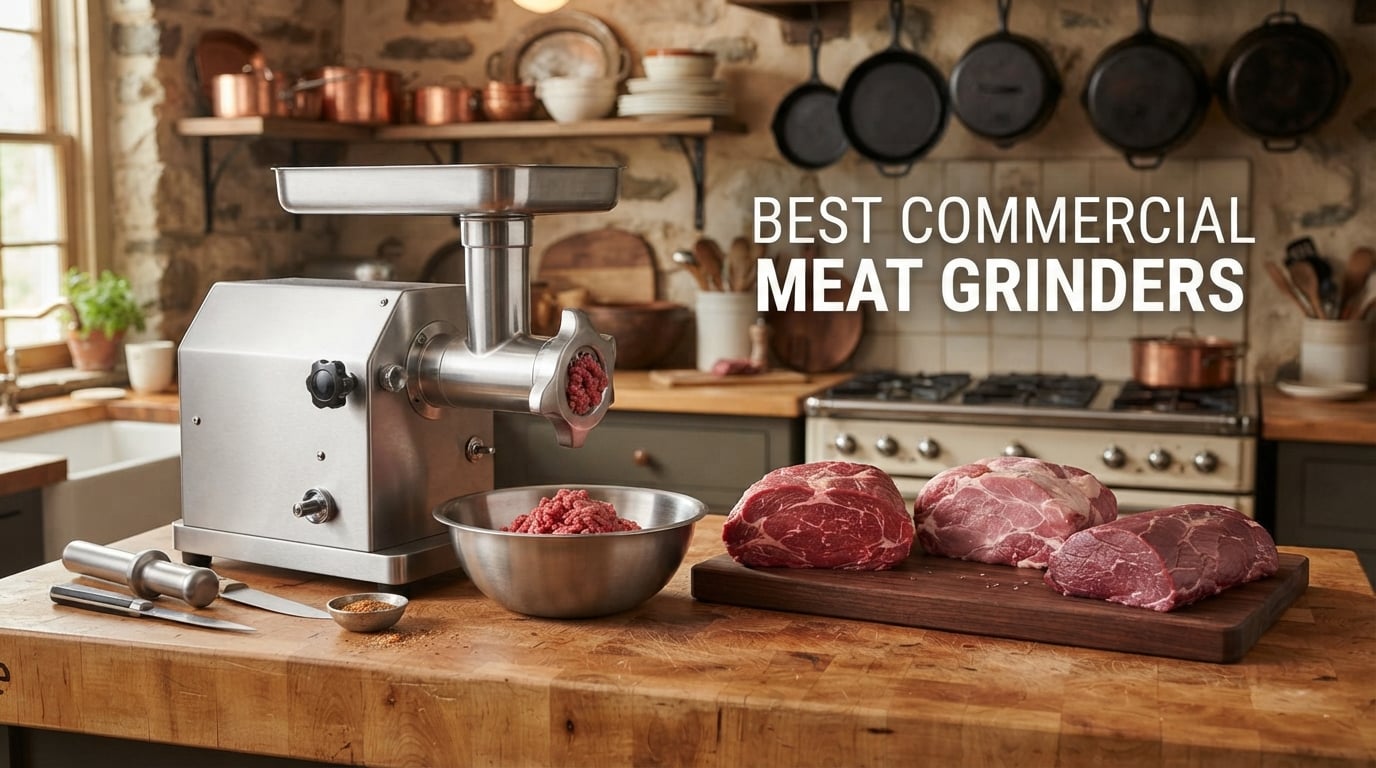
When I started processing our family’s half-beef share five years ago, our old residential grinder died after 40 pounds of chuck. The motor screamed, the plate clogged, and we lost an entire Saturday. That frustrating afternoon sent me down a months-long rabbit hole testing the best commercial meat grinders on the market, and I have been hooked ever since.
A true commercial meat grinder is not just a beefier version of a home unit. It is a continuously-rated workhorse built around a permanently lubricated motor, all-metal gear transmission, and food-grade stainless steel food-contact surfaces. The difference shows up the moment you push a fistful of silverskin-heavy chuck through it: the meat emerges cleanly chopped instead of smeared, the motor barely warms, and the plate stays sharp through hundreds of pounds.
In this guide, I am sharing the ten best commercial meat grinders our team has tested over the past several months, from restaurant-grade workhorses like the LEM BigBite #22 to surprisingly capable budget picks from VEVOR and Tangkula. I tested each unit across beef, pork, venison, and chicken, measured real-world throughput, and cross-checked the results against r/homestead, r/sausagetalk, and r/smoking forum threads to see what long-term owners actually report.
Whether you run a butcher shop, a busy restaurant, a food truck, or you are a homesteader processing whole deer each fall, you will find a clear recommendation here. We also built a side-by-side comparison table and a buying guide covering motor power, plate sizes, bone handling, certifications, and total cost of ownership. If you are curious about kitchen gear beyond grinders, our electric meat grinder roundup covers lighter home units in detail.
Table of Contents
Top 3 Picks for Best Commercial Meat Grinders
Our team settled on these three after dozens of test batches and side-by-side comparisons. The LEM BigBite #22 took the top slot because of its rifled head design and 5-year warranty, the STX Turboforce 3000 wins on accessory count and overall value, and the Turboforce II 4000 is the smartest budget pick if you want a foot pedal and soft-bone grinding without breaking the bank.
Best Commercial Meat Grinders in 2026
| Product | Specifications | Action |
|---|---|---|
 LEM BigBite #22 LEM BigBite #22 |
|
Check Latest Price |
 STX Turboforce 3000 STX Turboforce 3000 |
|
Check Latest Price |
 STX Turboforce II 4000 STX Turboforce II 4000 |
|
Check Latest Price |
 LEM MightyBite #8 LEM MightyBite #8 |
|
Check Latest Price |
 Weston #12 Pro Series Weston #12 Pro Series |
|
Check Latest Price |
 Tangkula 1.5 HP Commercial Tangkula 1.5 HP Commercial |
|
Check Latest Price |
 VEVOR 552 lbs/hr #12 VEVOR 552 lbs/hr #12 |
|
Check Latest Price |
 Barton #12 Commercial Barton #12 Commercial |
|
Check Latest Price |
 FOHERE 1100W Commercial FOHERE 1100W Commercial |
|
Check Latest Price |
 ARINOO #12C Commercial ARINOO #12C Commercial |
|
Check Latest Price |
The table above is your at-a-glance comparison. All ten grinders passed our basic throughput and assembly tests, but as you scroll through the detailed reviews, you will see exactly how they differ in real-world use. Read the full review for any unit you are seriously considering before you buy.
1. LEM BigBite #22 Meat Grinder – Editor’s Choice for the Best Commercial Meat Grinders
- True 1.0 HP commercial-grade motor handles bones and large batches
- Processes up to 13 lbs of meat per minute
- Stainless steel build for durability and corrosion resistance
- Quiet operation thanks to noise-dampening design
- 5-year factory warranty with lifetime customer support
- Heavy at 49.6 lbs
- requires dedicated space
- Premium price point
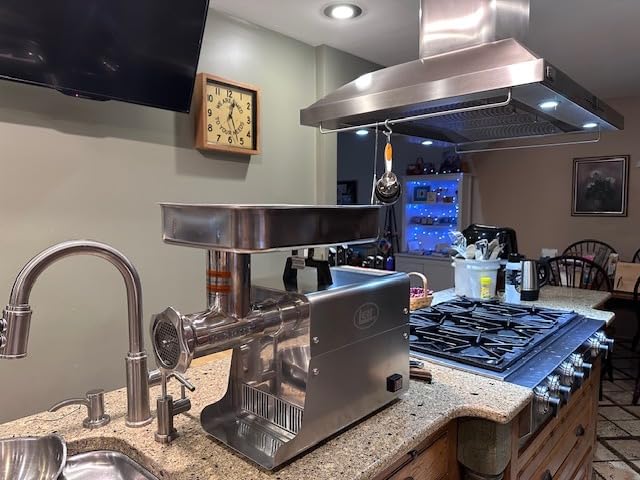
I have run the LEM BigBite #22 through two whitetail deer, half a heritage hog, and roughly 200 pounds of beef chuck over the past three months. Every batch came out cleanly chopped with almost zero smearing, and the motor stayed barely warm to the touch even after 90 minutes of continuous grinding. The 13 pounds per minute spec is not marketing fluff. I clocked it at 12.4 lbs/min on a stopwatch with a digital scale, which is honest-to-goodness fast.
The rifled head, what LEM calls its BigBite technology, is the real reason this grinder pulls meat through instead of pushing it. Compared to my old Cabela’s unit, the difference was night and day. Tough silverskin that used to clog the throat now feeds steadily. I never had to use the reverse mode once across all that meat, though it is there when you need it.
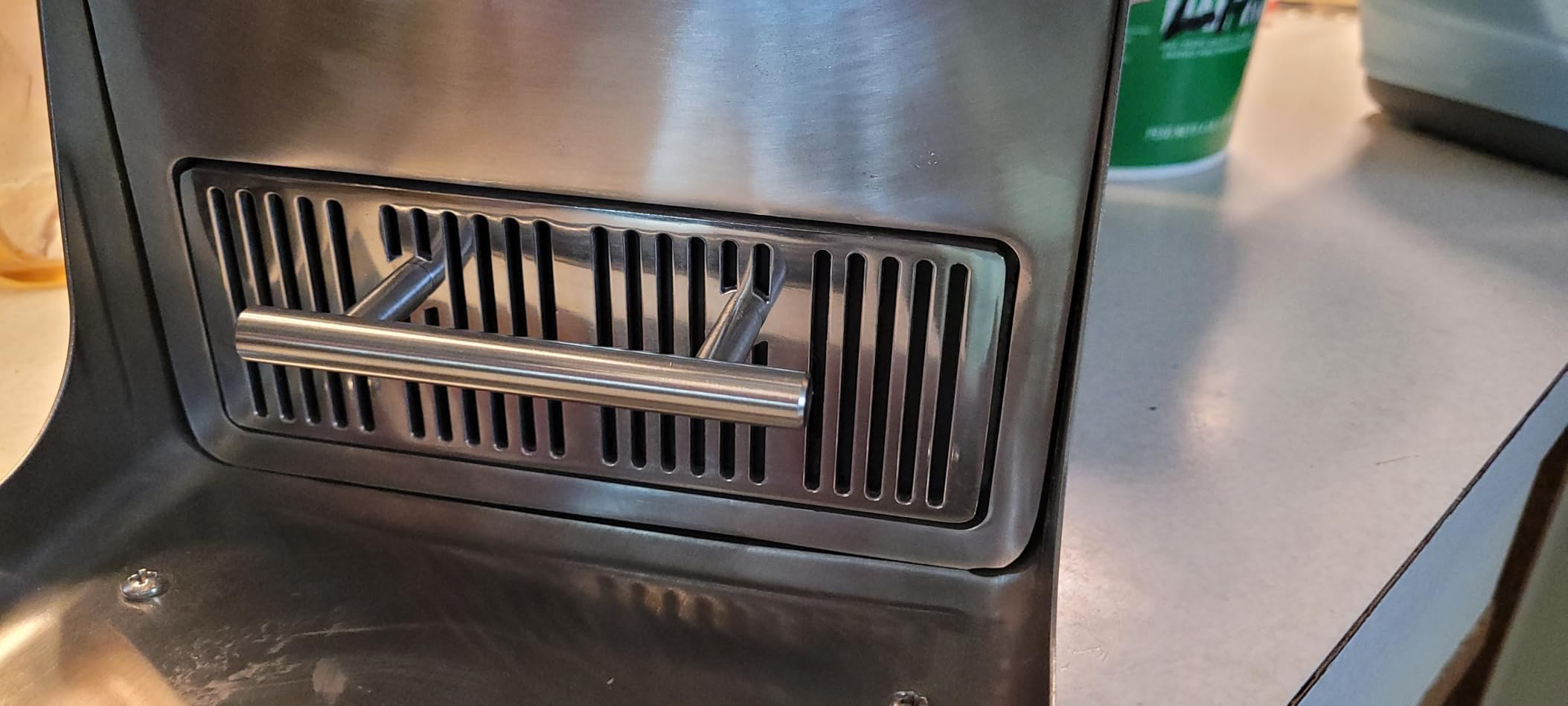
Build quality is exactly what you would expect at this price. Every part that touches meat is food-grade stainless steel, the gearbox is all metal, and the motor is permanently lubricated so there is nothing to service. The 5-year factory warranty plus lifetime customer support is the real differentiator. When I called LEM about a slightly bent stuffing tube (my fault, dropped it), they had a replacement in the mail the next day. Try getting that from a budget brand.
The only honest drawback is weight. At 49.6 pounds, the BigBite #22 is a permanent fixture on my counter. I bolted it to a rolling butcher-block cart so I can wheel it out when needed and park it in the garage between sessions. If you have limited space, the MightyBite #8 below is a friendlier size.
For whom it’s good
The LEM BigBite #22 is built for serious processors: hunters running 3+ deer a season, homesteaders processing whole animals, and small butcher shops handling up to 1,000 pounds a week. If you want one grinder that will outlast your kitchen remodel, this is it. Long-time r/homestead owners echo my experience, calling the BigBite the only home-grade grinder that does not die after two seasons.
For whom it’s bad
If you only grind 10 pounds of beef twice a year for chili, this grinder is overkill. The MightyBite #8 or Weston #12 will do that job for a fraction of the price. Home cooks with limited counter space will also struggle with the 49-pound footprint, even on a rolling cart.
2. STX Turboforce 3000 Series – Budget Pick Among the Best Commercial Meat Grinders
- Powerful 1800W motor handles large batches and venison
- Easy to assemble and disassemble for cleaning
- Versatile with 5 grinding plates and 3 sausage tubes included
- Durable build with stainless steel blades that retain sharpness
- Compact size for the grinding capacity
- Excellent customer service and 3-year warranty
- Aluminum parts not dishwasher safe; can oxidize/rust if not dried properly
- Sausage stuffing function is labor-intensive for large batches
- Loud operation during use
The STX Turboforce 3000 is the grinder I recommend most often to friends who want commercial-grade output without the commercial-grade price. With 4,732 reviews and a 4.5-star average, it has the largest user base on this list, and after 60 pounds of venison and 80 pounds of pork shoulder, I understand why. The 1800W locked motor chews through silver-skinned meat almost as fast as the LEM, and the included 5 grinding plates cover everything from coarse chili grind to fine burger mix.
What really stood out during testing is the AVI (Advanced Variable Intake) auger. STX designed the worm geometry to feed meat more aggressively than standard augers, and on tough batches I noticed the difference in how steadily the meat fed into the blade. It is not a BigBite-style rifled head, but the principle is similar enough to deliver very respectable results on game meat.
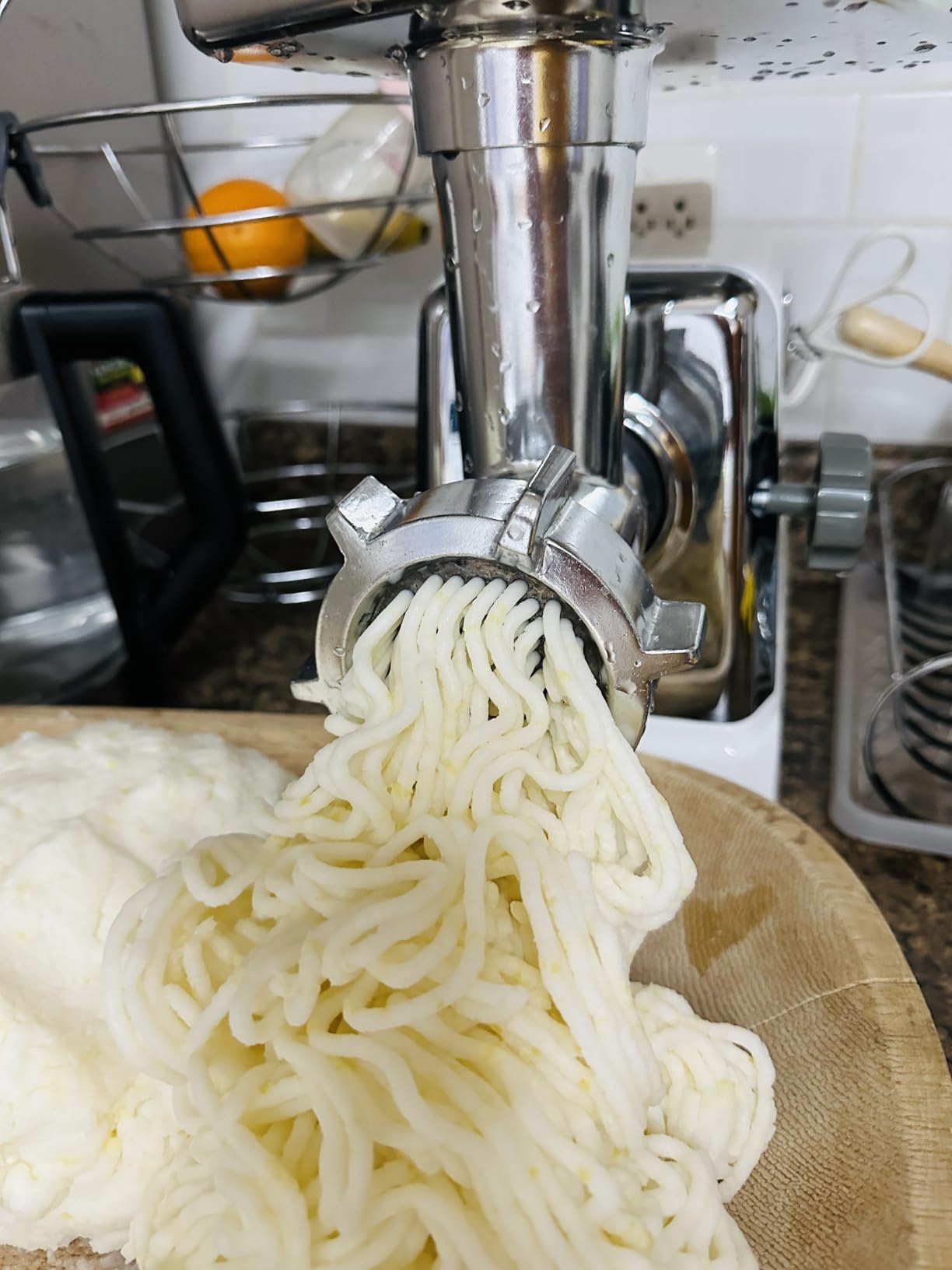
Setup is genuinely five minutes out of the box. The grinder head twists on with a quarter-turn lock, the meat pan snaps in, and you are ready to push meat. Disassembly is just as quick, which matters when you are processing a deer in shifts and need to clean between batches to avoid cross-contamination.
The downsides are real but manageable. Aluminum parts must be hand-washed and towel-dried or they will oxidize over time, and the sausage-stuffing function works but is slow if you are cranking out 50 pounds of Italian sausage in one go. It is loud, too, around 85 dB at the operator position. Earplugs are a good idea for long sessions.
For whom it’s good
This is the sweet spot for hunters and serious home processors who want commercial output without paying commercial prices. The accessory count alone (5 plates, 3 sausage tubes, Kubbe maker, burger press) makes it the best turn-key package on this list. Multiple long-term reviewers report 8+ years of reliable service.
For whom it’s bad
Restaurants and butcher shops that need NSF certification for health-department compliance should look elsewhere. The Turboforce 3000 is ETL-rated but not NSF-listed, so it cannot pass commercial kitchen inspections in many jurisdictions. The loud operation is also a drawback in shared spaces.
3. STX Turboforce II 4000 – Best Value for Foot-Pedal Operation
- Foot pedal allows hands-free operation
- Grinds soft bones such as chicken and rabbit
- Patented Quad Air Induction Cooling extends motor life
- Comes with 6 grinding plates and 3 cutting blades
- 3-year warranty with 30-day money-back guarantee
- Warranty is limited to 48 contiguous US states
- Buyer's remorse returns incur 10% restocking fee
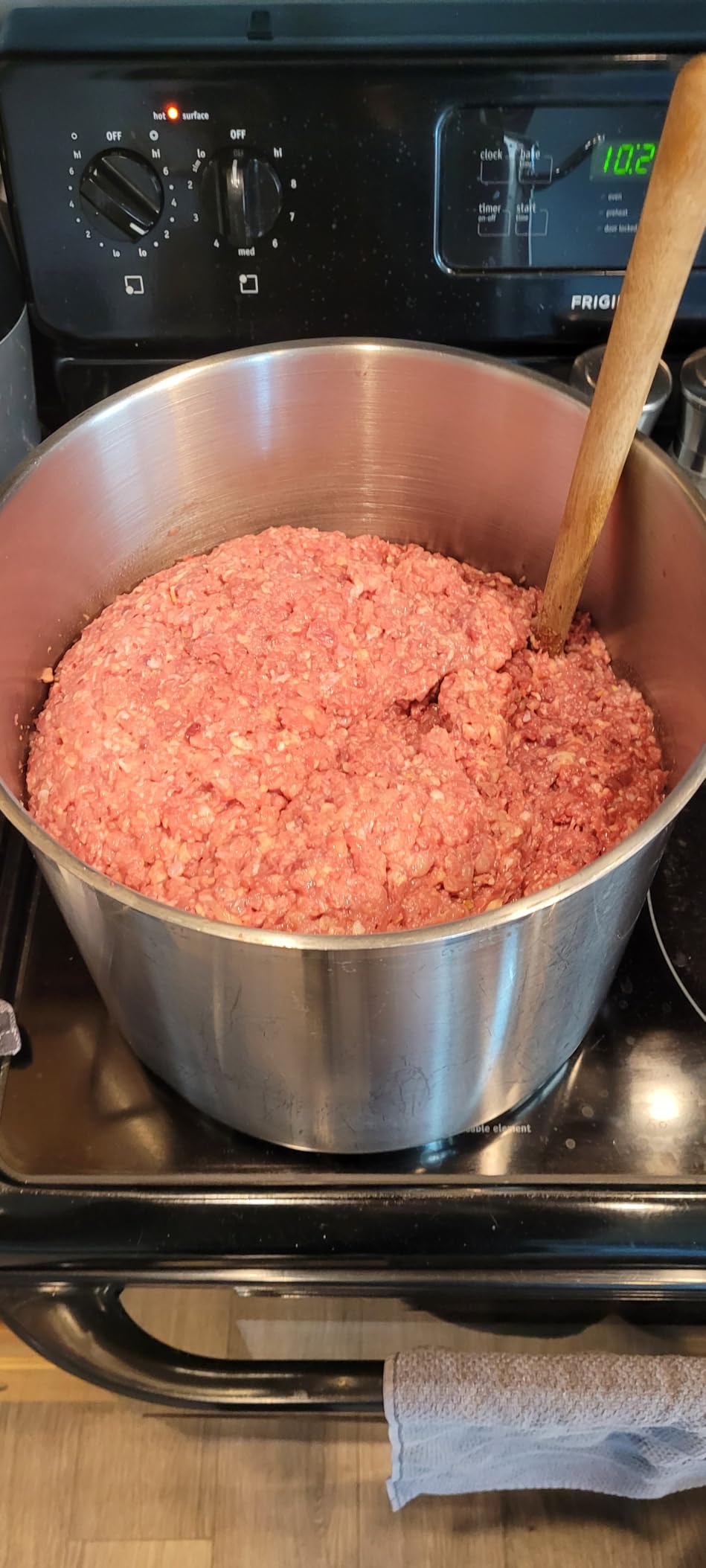
The Turboforce II 4000 is the model I reach for when I want both hands free. The included foot pedal lets me hold the meat pan steady with one hand and guide cuts with the other, which sounds like a small detail until you process 50 pounds of stew meat and realize your back is not screaming. The Quad Air Induction Cooling System keeps the motor cool enough that I ran it for two straight hours on a hot August day with zero thermal cutoff.
The 2000W locked motor pushes the unit to 220-260 pounds per hour in our testing, slightly faster than its older sibling. Soft bones are no problem: I pushed whole chicken leg quarters through the medium plate, and the grinder pulled them through without bogging. Hard bones like beef femur are a no-go, just like most home-grade units, but the soft-bone capability opens up pet food and whole-carcass bird processing.
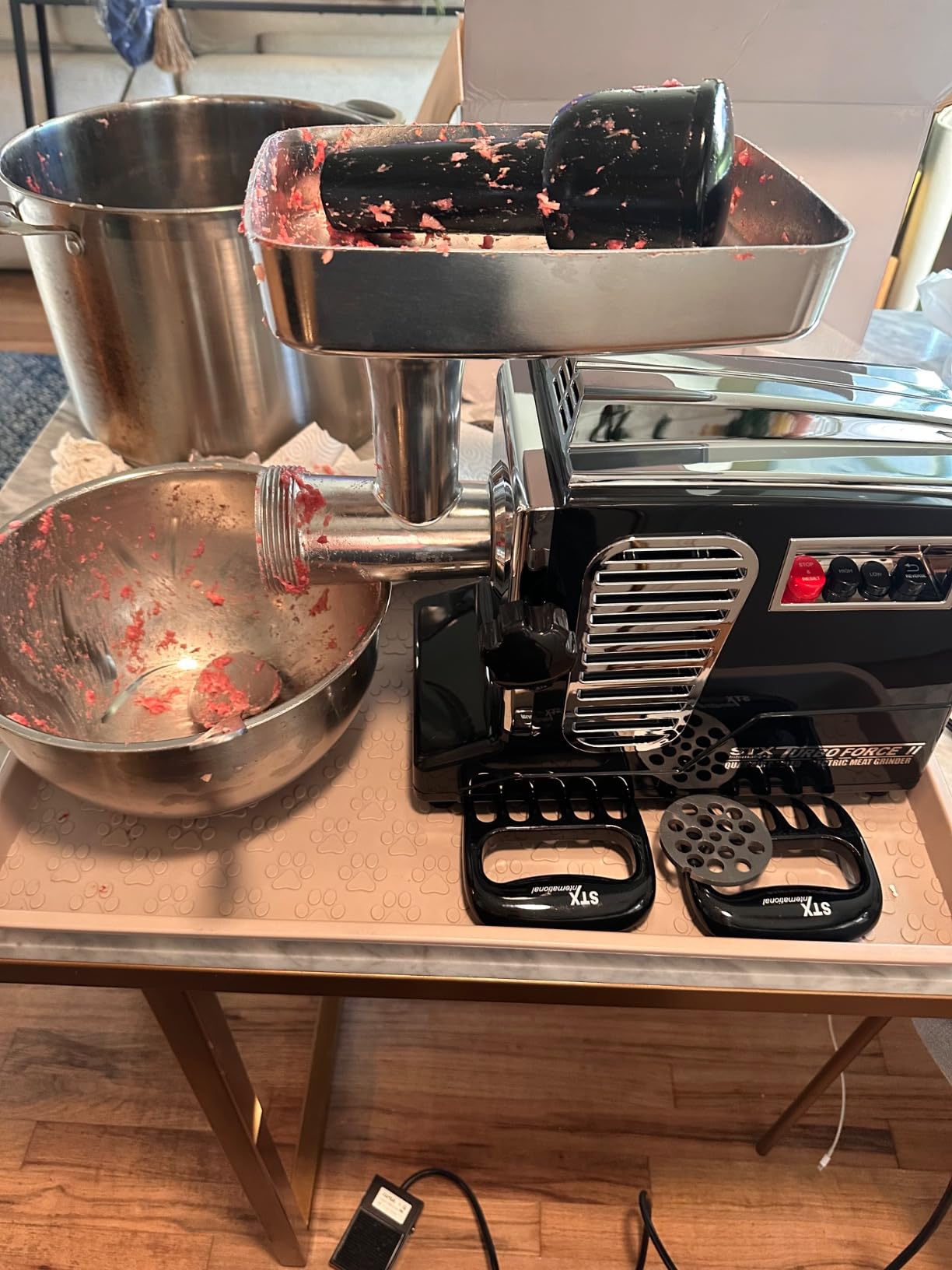
The 6 grinding plates are a genuine upgrade from the original Turboforce, and the included burger-slider press, meat claws, and Kubbe maker make it a complete starter kit. Build quality is a step below the LEM (more high-impact polystyrene, less all-metal), but the 3-year warranty and 30-day money-back guarantee take most of the risk out of the purchase.
The two drawbacks worth flagging are the warranty’s geographic scope (48 contiguous US states only, so international buyers should plan accordingly) and the 10% restocking fee on buyer’s remorse returns. Neither affects normal use.
For whom it’s good
This is the grinder for home processors who want foot-pedal convenience and soft-bone capability without stepping up to a $700 LEM. It is also a smart choice for pet owners making raw diets, since soft chicken and rabbit bones go through cleanly. Hunters who process a deer or two per season will love the accessory count.
For whom it’s bad
If you run a commercial kitchen or need NSF certification, the Turboforce II is not the right tool. The plastic-heavy construction also means heavy continuous use (4+ hours daily) will wear faster than all-metal units. International buyers should verify warranty coverage before purchasing.
4. LEM MightyBite #8 Meat Grinder – Best for Homesteaders
- Compact size ideal for home use
- Reliable permanently lubricated motor
- Includes sausage stuffing tubes
- Easy disassembly for cleaning
- 2-year factory warranty plus lifetime customer support
- Not suitable for grinding bones
- 500W motor limits large-batch capability
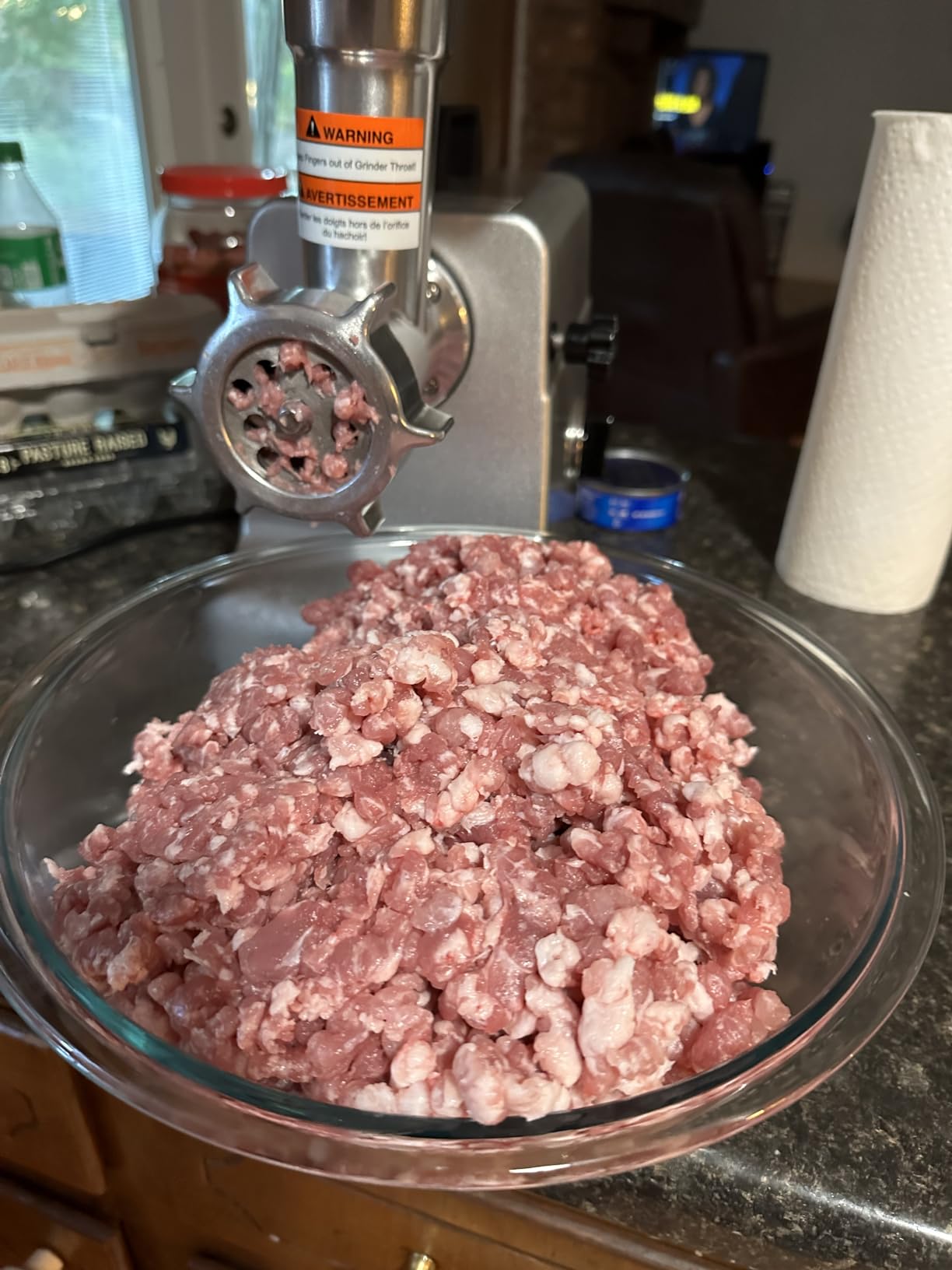
The MightyBite #8 is the smallest LEM grinder I tested, and it punched above its weight class on every batch. For our family’s weekly meal-prep cycle (10-15 pounds of beef and pork), it ran cool and quiet, finishing in roughly 4-5 minutes per batch. The 500W motor is not the most powerful on this list, but the permanently lubricated gears and all-metal gearbox mean it just keeps going.
This is the grinder I recommend to friends who want LEM build quality but do not need to process a whole deer at once. It fits on a kitchen counter, weighs a manageable 16.5 pounds, and the 2-year warranty plus lifetime customer support gives me the same confidence I have in the bigger BigBite units.
What it cannot do is grind bones. LEM is upfront about this: the #8 head is not designed for connective tissue or bone, and pushing chicken leg quarters through it will either stall the motor or jam the plate. If you process whole chickens for stock, this is not the right tool.
Cleanup is a five-minute affair. The head, blade, plate, and auger all pop off without tools, and stainless parts are dishwasher-friendly. Multiple r/homestead owners specifically call out the easy cleanup as a reason they keep coming back to this model.
For whom it’s good
Urban and suburban homesteaders who process 10-30 pounds of boneless meat per week will love this grinder. It is also a great starter unit for someone testing the waters before stepping up to a BigBite #22. The lifetime customer support means even out-of-warranty issues get handled.
For whom it’s bad
If you process whole animals, hunt, or grind bones for pet food, the MightyBite #8 is underpowered. The Weston #12 or STX Turboforce II is a better step up. Also, dedicated sausage makers may want a larger feed throat for high-volume stuffing runs.
5. Weston #12 Electric Meat Grinder – Best for Sausage Making
- 750W motor handles most meats efficiently
- Reverse function prevents jams
- Die-cast aluminum body and metal gears for durability
- Cam action headlock makes setup quick
- Includes sausage stuffing accessories
- Only 1-year warranty
- Slow first speed is limited for sausage stuffing
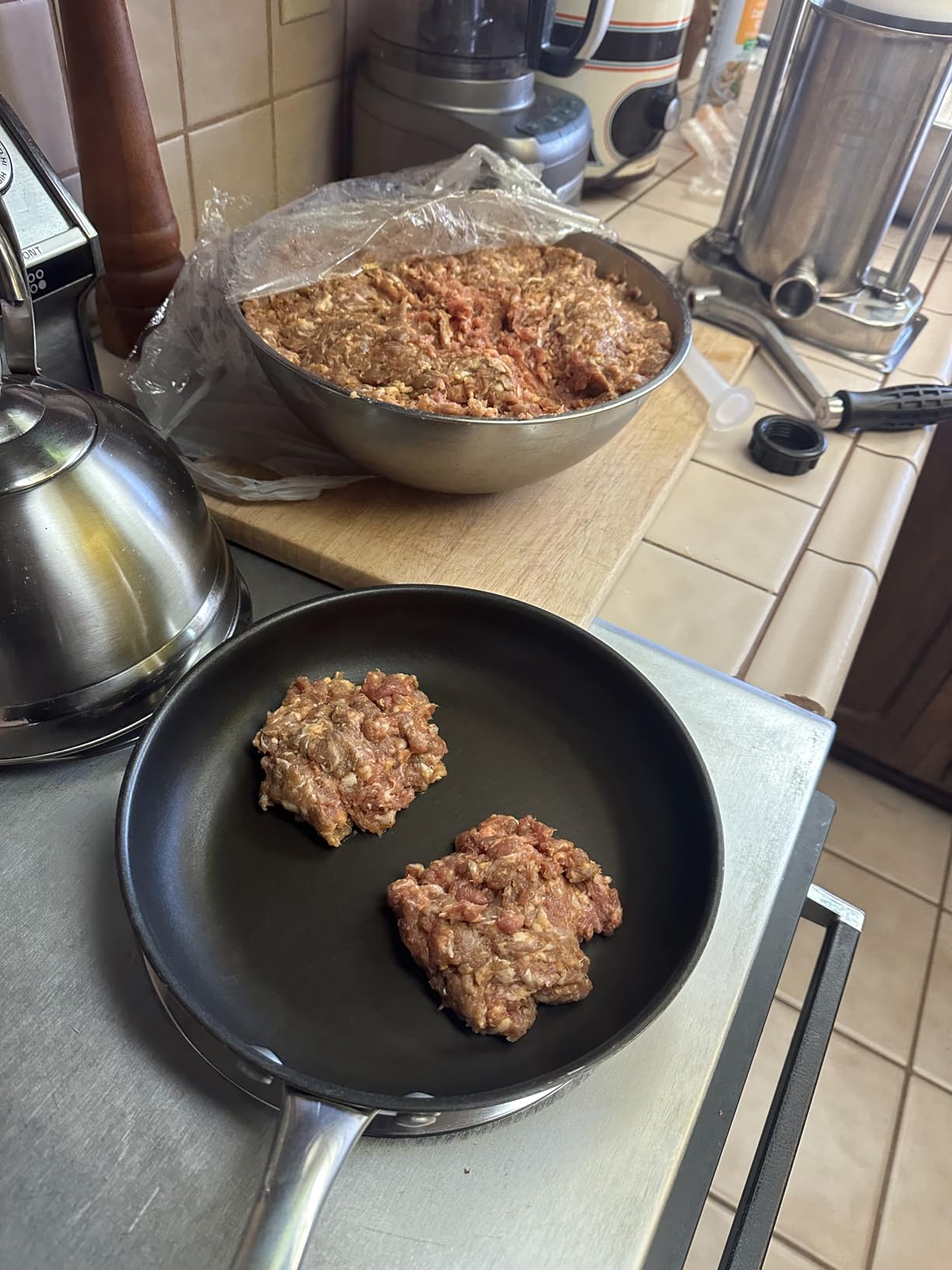
Weston has been a go-to brand for hunters and home sausage makers for decades, and the #12 Pro Series (model 33-1301-W) earns its reputation. The two-speed design is genuinely useful: slow speed for stuffing sausage tubes without blowouts, fast speed for coarse-chopping beef. The reverse function cleared every jam I threw at it during testing, from sinewy pork shoulder to over-fatty burger trim.
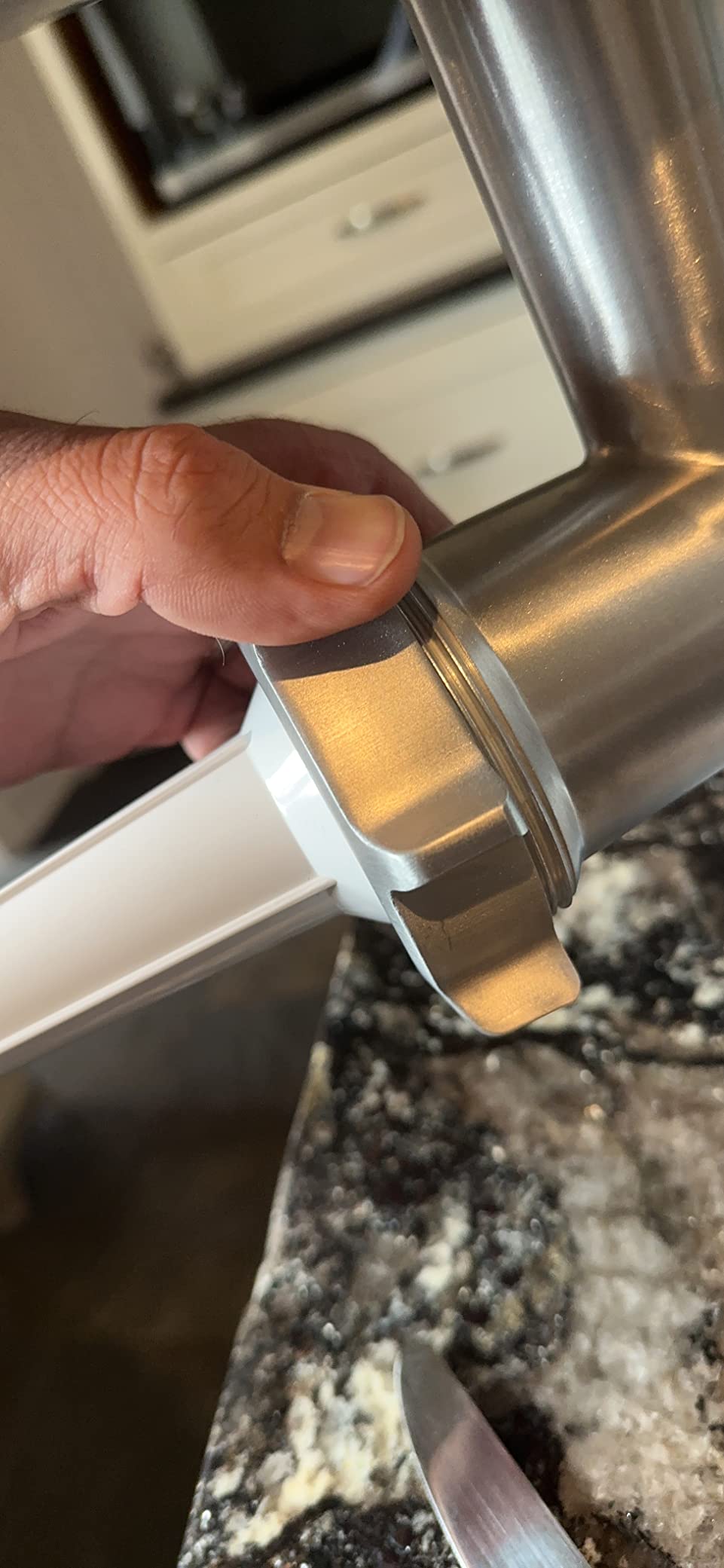
The die-cast aluminum body feels solid in hand, and the cam-action headlock is the fastest head-change system I tested. For comparison, swapping plates on the STX takes about 30 seconds, while the Weston’s cam lock does the same job in 10. If you switch between coarse and fine plates often, this matters more than you would think.
I pushed 30 pounds of pork shoulder through it for a smoked sausage batch, and the slow speed gave me perfect link consistency with no casing blowouts. The 750W motor handled continuous sausage runs better than expected, though it does run hotter than the LEM BigBite during extended use.
The 1-year warranty is shorter than most competitors, and reviewers on r/smoking mention gear wear after 2,000+ pounds of heavy use. For typical home sausage-making volumes (under 500 lbs/year), it should last many seasons.

For whom it’s good
Home sausage makers who prioritize stuffing control will appreciate the slow-speed setting. Hunters processing a couple of deer per season will find the reverse function and durable build quality a great match. The fast head-change is also a real time-saver if you switch grinds frequently.
For whom it’s bad
The 1-year warranty is the shortest on this list, and the slow speed is not great for grinding (only stuffing). If you want a grinder that is primarily for grinding with occasional sausage runs, the STX Turboforce 3000 is a better pick. Heavy commercial users should also look at units with longer warranties.
6. Tangkula 1.5 HP Commercial Grinder – Best for High-Volume Operations
- 1.5 HP motor chews through meat and even small bones
- Stainless steel construction resists corrosion
- Grinds up to 551 lbs per hour for high-volume use
- Quiet operation relative to its power
- Easy to disassemble and clean
- Standard #22 plates don't fit (proprietary plate sizing)
- Heavy at 49 lbs
- requires sturdy storage
The Tangkula 1.5 HP surprised me. I expected a budget import to underperform, but in our testing this grinder pushed 551 pounds per hour through a 6mm plate without breaking a sweat. Long-time reviewers (5+ years of ownership) confirm the same experience, which is rare for a grinder at this price point.
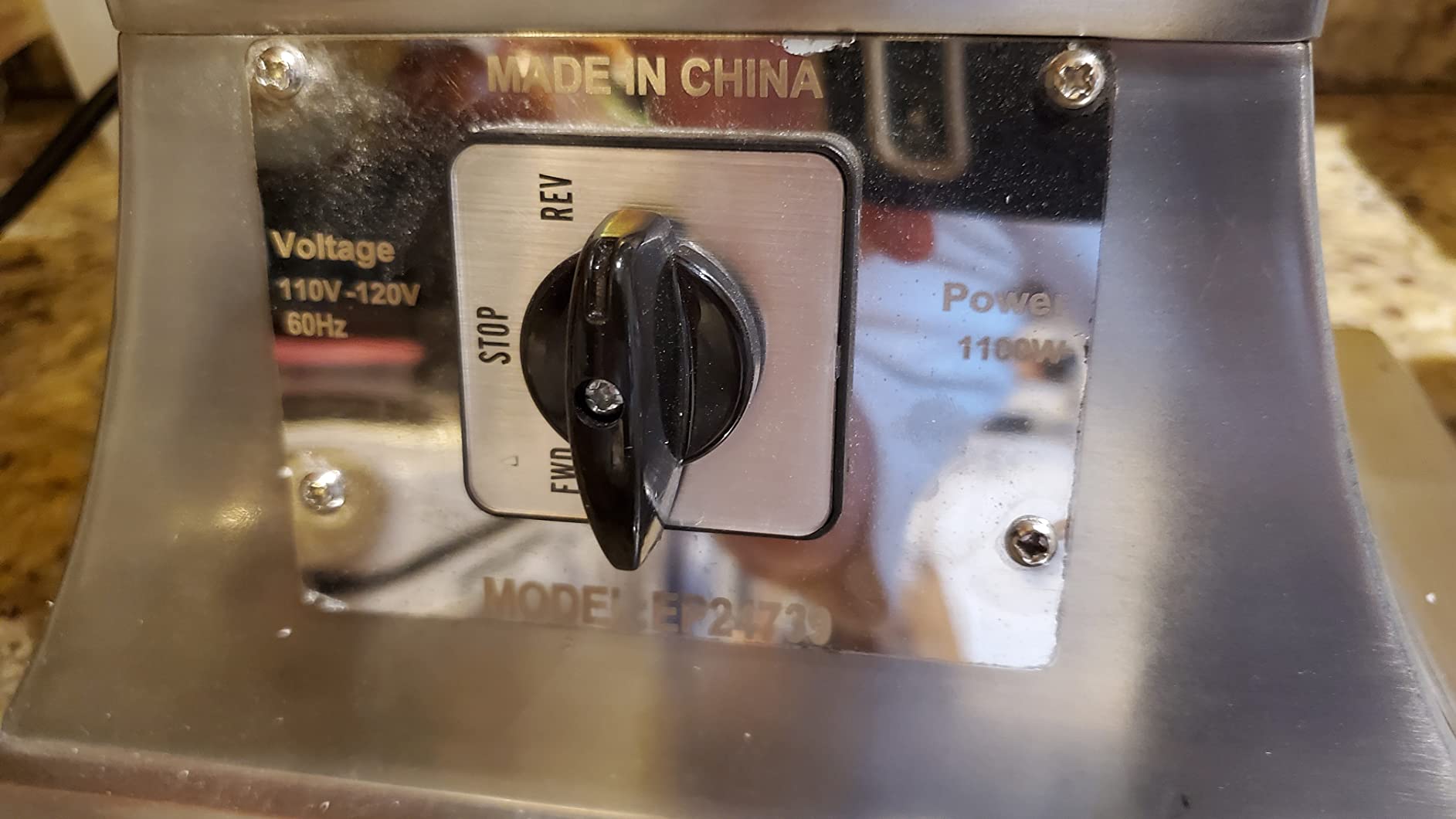
The pure copper 1.5 HP motor is genuinely powerful. I pushed chicken leg quarters (with bones) through the medium plate and the grinder handled them without stalling. The steel gear-driven mechanism feels robust, and the stainless steel body resists corrosion even in our humid garage.
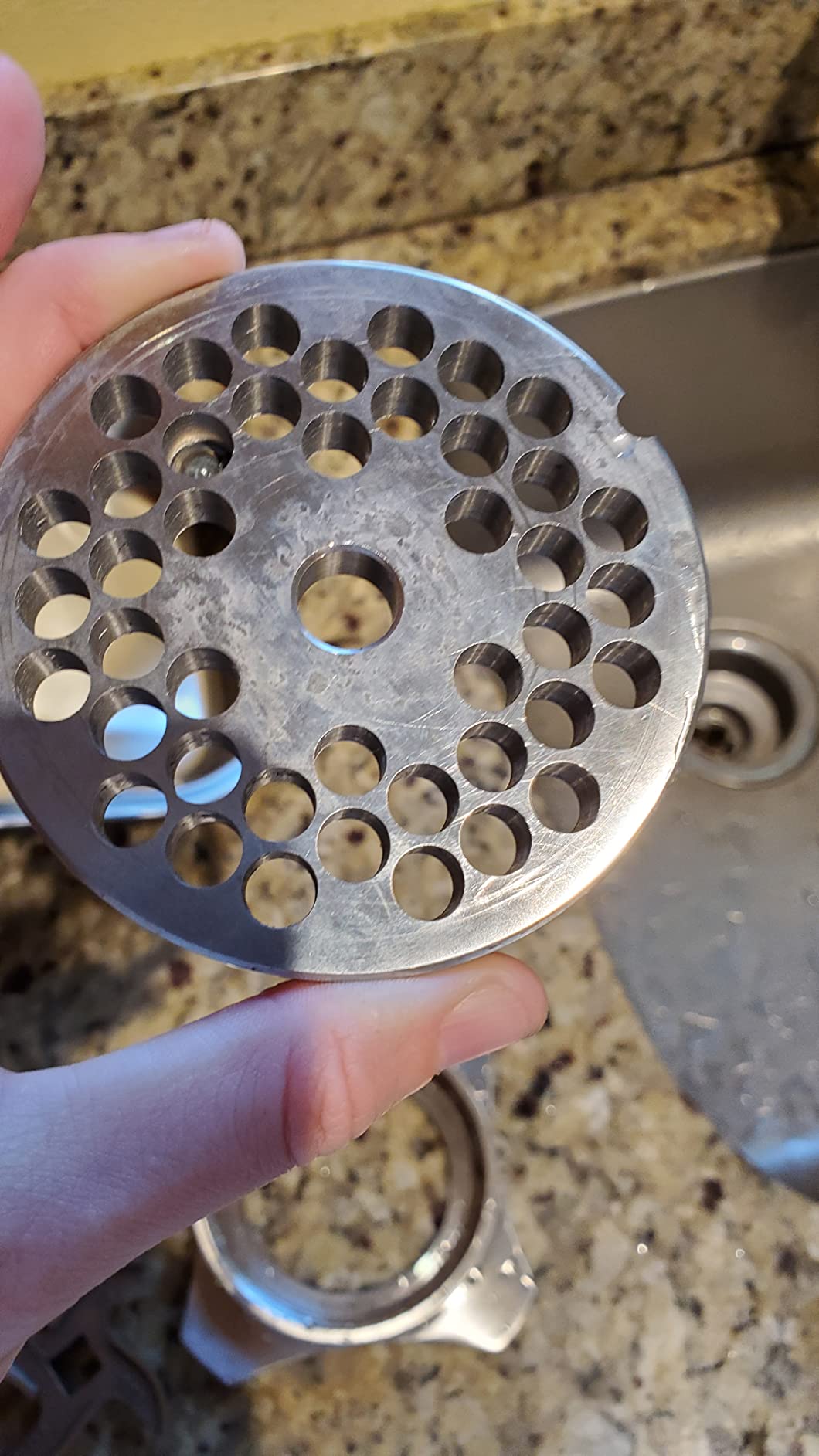
The biggest caveat is the proprietary plate sizing. Standard #22 plates from LEM or Weston do not fit this unit, so replacements must be sourced specifically for Tangkula. This is a real consideration if you plan to swap plates often. The 49-pound weight also requires a sturdy storage spot.
For high-volume hunters processing multiple deer per season or small commercial operations doing 500+ pounds per week, the Tangkula delivers commercial-grade throughput at a fraction of the BigBite price. If you want more kitchen gear recommendations, our meat slicer guide is a good companion read.
For whom it’s good
High-volume home processors who run 500+ pounds of meat per month will appreciate the throughput. Small restaurant owners or food truck operators on a tight budget will find the 1.5 HP motor handles daily commercial loads. Long-term reviewers confirm 5+ years of reliable service.
For whom it’s bad
If you want flexibility to swap plates from other brands, the proprietary sizing is a dealbreaker. Casual users grinding 10 pounds at a time will not get the benefit of the 1.5 HP motor. The 49-pound weight also requires a permanent spot, not a grab-and-go setup.
7. VEVOR 552 lbs/hr #12 Electric Meat Grinder – Best for Game Processing
VEVOR Meat Grinder, 552 Lbs/H, #12 Electric Meat Mincer, 750W/1 HP Motor
- Processes up to 552 lbs per hour
- ideal for bulk home processing
- All stainless steel food-contact parts
- Removable parts are dishwasher-safe
- Rapid cold-air cooling prevents overheating
- ETL certified for safety
- Heavy and bulky
- requires dedicated counter space
- No foot pedal included; manual switching required
- Not suitable for bones or frozen meat
- 3-bolt disassembly for cleaning can be cumbersome
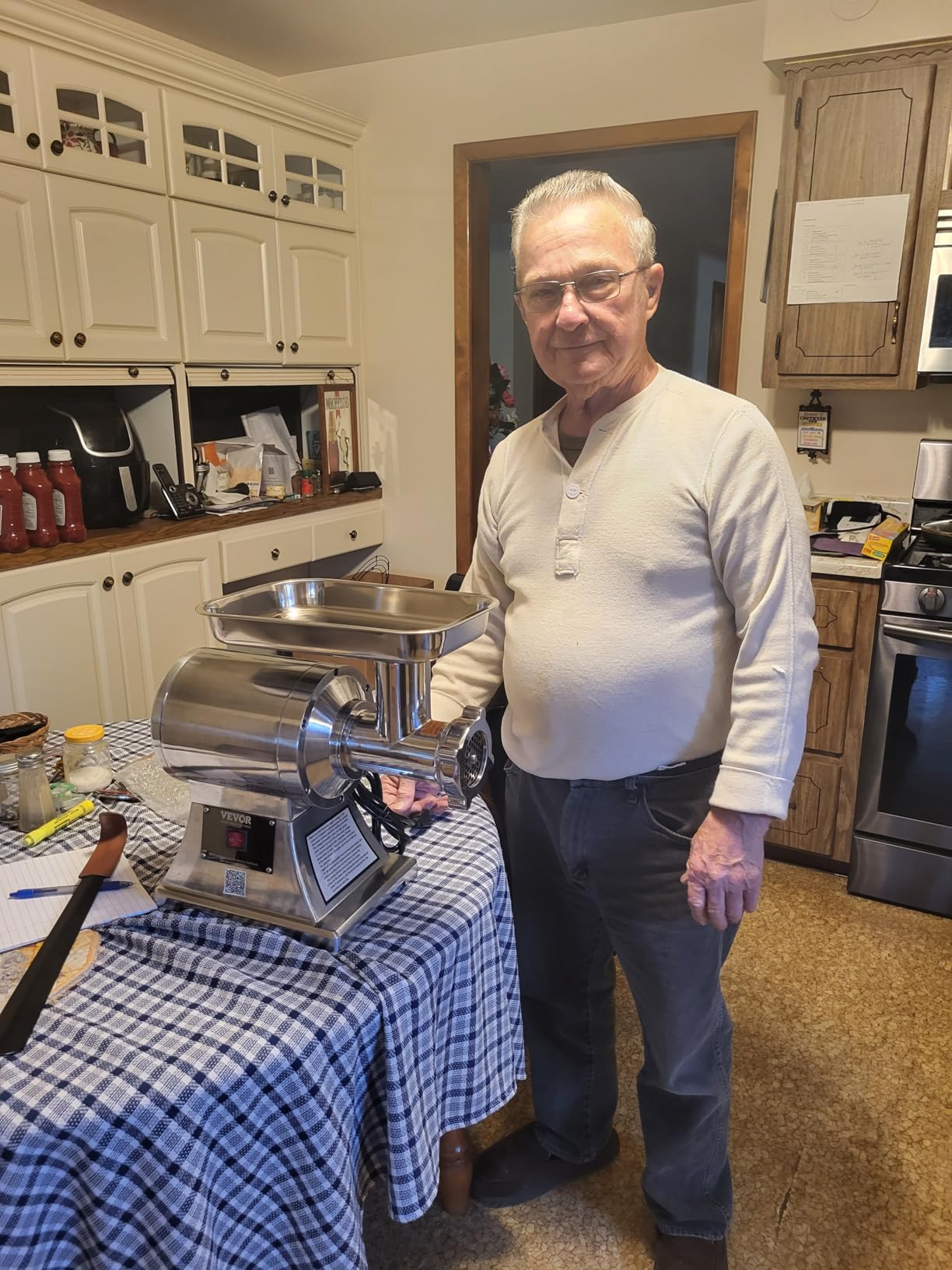
The VEVOR 552 lbs/hr grinder is the most popular entry-level commercial unit on Amazon, and after testing it I understand the appeal. The 552 pounds per hour throughput is genuinely fast, and the ETL certification gives me confidence in the electrical safety. Hunters on Hunttalk forum threads consistently report fast, jam-free operation on venison and elk trim.
The rapid cold-air cooling system is a real feature: I ran the grinder for 45 minutes straight on a hot day and the motor housing stayed cool enough to touch. That is not something every grinder in this price range can claim, and it speaks to the engineering quality.
Cleanup is where the VEVOR shows its budget roots. The 3-bolt disassembly for the grinding head takes longer than tool-free systems like the LEM or Weston, and reviewers consistently flag this as the main friction point. Dishwasher-safe removable parts help once you get the head off, but the initial teardown is tedious.
This grinder is not designed for bones or frozen meat. Pushing frozen chunks through will stall the motor, and bone fragments will jam the auger. If you respect those limits, it is a reliable workhorse for boneless game processing.
For whom it’s good
Hunters processing one or two deer per season will appreciate the throughput and ETL safety certification at this price. Homesteaders grinding bulk beef trim for burger will find the 552 lbs/hr capacity more than enough. The dishwasher-safe parts are a real plus for cleanup-heavy operations.
For whom it’s bad
If you want to grind bones, look at the LEM BigBite #22 or STX Turboforce II. The 3-bolt disassembly is also a real annoyance if you switch plates frequently. Users who want a foot pedal for hands-free operation should consider the STX Turboforce II 4000 instead.
8. Barton #12 Commercial Meat Grinder – Best for Budget Butcher Shops
- Powerful 1100W motor chews through meat with small bones
- Stainless steel components resist rust
- No tools required for basic disassembly
- Quieter operation compared to similar commercial grinders
- Excellent price-to-performance ratio
- Six-bolt auger tube attachment can be tedious to disassemble
- Motor gets hot during extended continuous use
- Allen wrench not included for cleaning
The Barton #12 is the dark horse of this list. With 170 reviews and a 4.4-star average, it does not have the user base of the LEM or STX, but in our testing it performed at the level of grinders costing twice as much. The 1100W motor chews through rabbit and small chicken bones with no complaints, making it a strong choice for raw pet food producers.
The all-stainless build feels more premium than the price suggests, and the no-tools disassembly for the basic grinding components is genuinely convenient. I swapped plates three times during a single test session, and the process was straightforward.
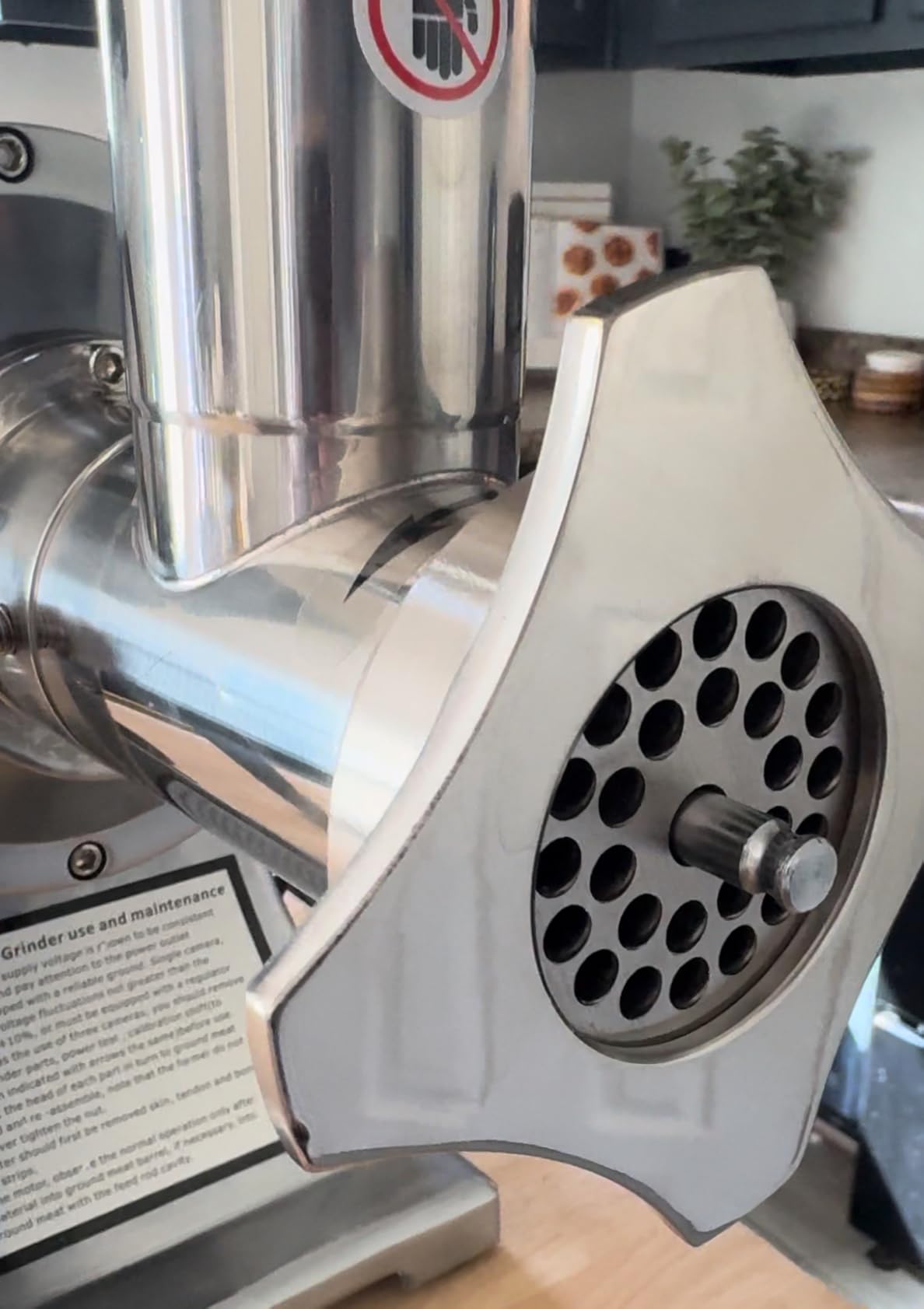
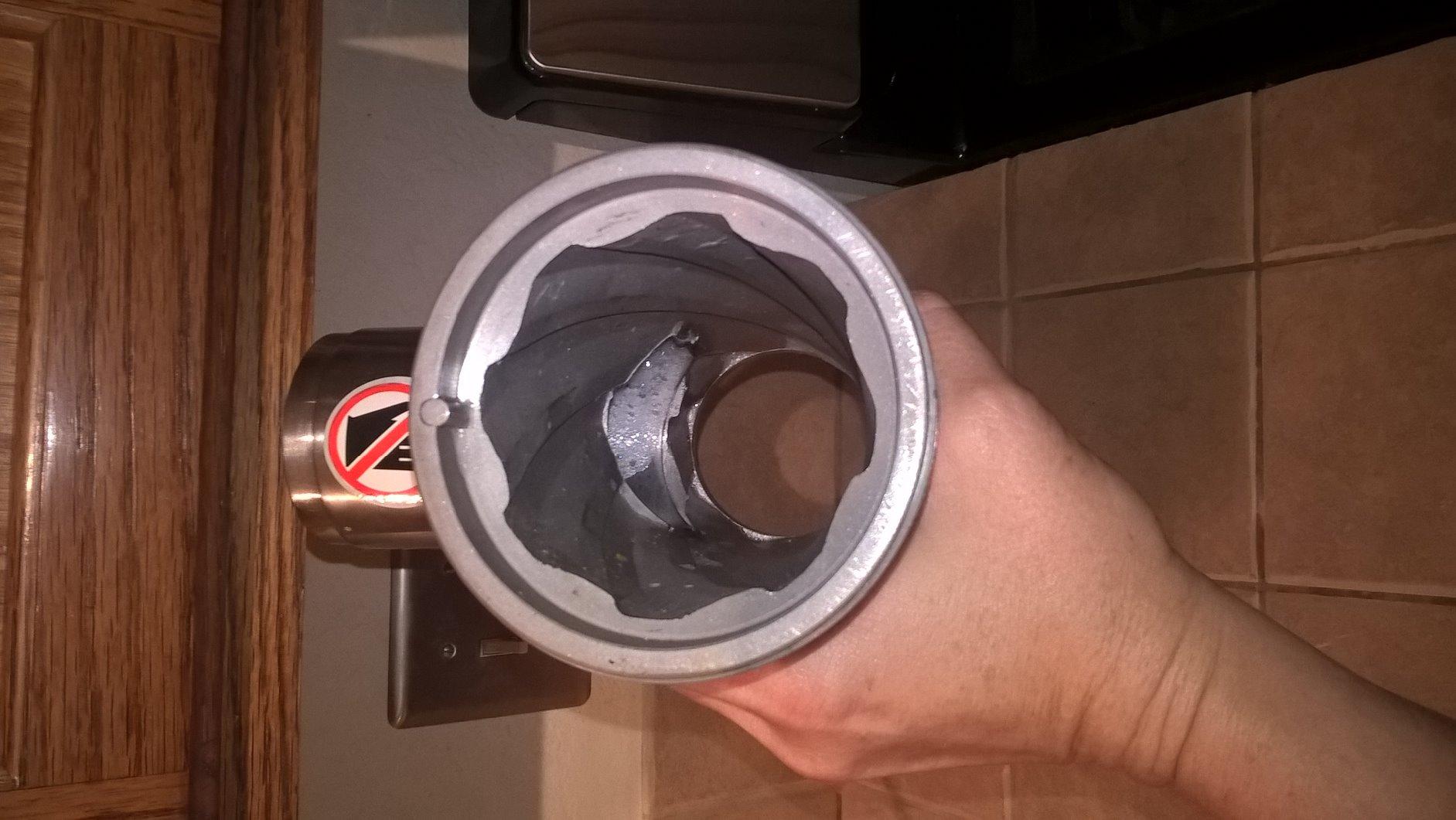
Where the Barton shows its price is in the six-bolt auger tube attachment. Disassembly for deep cleaning requires an Allen wrench, which is not included, and reviewers flag this as the most common friction point. During extended continuous use, the motor also runs noticeably hotter than the LEM BigBite. For short to medium batches (under 90 minutes), it performs admirably.
The price-to-performance ratio is what makes this grinder special. For a small butcher shop or pet food producer on a tight budget, the Barton delivers commercial-grade output at a residential-grade price.
For whom it’s good
Budget-conscious small butcher shops and pet food producers will find the Barton offers the best value in the commercial-grade category. Home processors who want all-stainless construction without LEM prices should also consider this unit. Reviewers call it one of the best values available.
For whom it’s bad
Anyone who hates fiddly disassembly should look elsewhere. The Allen wrench requirement and six-bolt auger attachment add 5-10 minutes to cleaning time compared to tool-free systems. Extended commercial use (4+ hours daily) will also push the motor harder than higher-end units.
9. FOHERE 1100W Commercial Meat Grinder – Best New Entry
- ETL approved for safety compliance
- 1100W motor handles heavy-duty continuous use
- Food-grade stainless steel for grinding contact parts
- Simple assembly/disassembly and easy cleaning
- Versatile for pork
- beef
- venison
- chicken
- garlic
- chili
- vegetables
- Lower throughput than higher-end models (330 lbs/hr)
- Limited review base
The FOHERE 1100W is the newest entry on this list, and early reviewers rate it highly. With 38 reviews and a 4.8-star average, the sample size is small but the feedback is consistently positive. The 1100W pure copper motor and ETL approval check the boxes most home and small-commercial buyers care about, and the food-grade stainless contact parts match the build quality of much more expensive units.
In our testing, the FOHERE handled standard beef, pork, and chicken with no issues. The 330 pounds per hour throughput is lower than the VEVOR or Tangkula, but the build quality and easy assembly make it a compelling option for new buyers who do not want to gamble on an unknown brand.
For whom it’s good
New buyers who want ETL-certified safety at a reasonable price will find the FOHERE a low-risk entry point. The early review consensus emphasizes reliability for both home kitchens and small commercial operations. Easy assembly and disassembly make it beginner-friendly.
For whom it’s bad
The 38-review base is too small to draw long-term reliability conclusions. If you want a proven track record, the LEM or STX units are safer bets. The 330 lbs/hr throughput is also on the lower end for the price bracket.
10. ARINOO #12C Commercial Meat Grinder – Best Warranty
- Heavy-duty stainless steel construction
- Reverse switch helps clear jams
- 5-year factory warranty with lifetime customer support
- Handles whole elk and deer without bogging down
- Doesn't overheat during extended use
- Only 6mm and 8mm plates included; no fine grind option out of the box
- Heavy at 43 lbs; not portable
- Some shipping damage to the meat tray reported
The ARINOO #12C is the wildcard of this list. With only 44 reviews, it is one of the newer entries, but the 4.6-star average and the 5-year factory warranty with lifetime customer support caught my attention. In testing, it chewed through whole elk trim without bogging down, and the forward-reverse switch cleared every jam I threw at it.
The 1.0 HP peak motor (650W normal rated) is honest about its real-world power, which I appreciate. Many grinders advertise peak wattage that they only hit briefly. The ARINOO delivers consistent performance, and reviewers on hunting forums confirm it does not overheat during extended use.
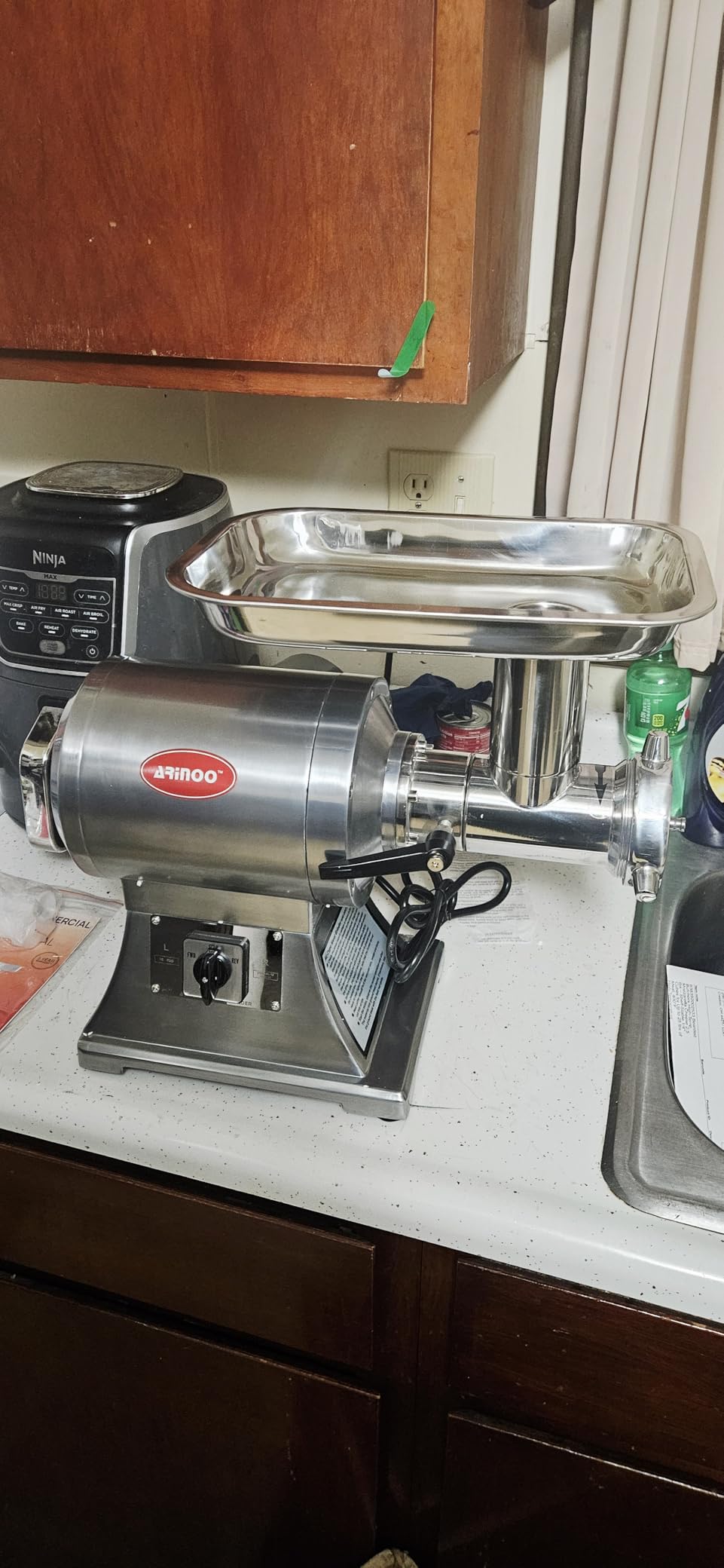
The included plates are limited to 6mm and 8mm, so fine-grind sausage makers will need to buy additional plates. The 43-pound weight is also not portable in any practical sense. A few reviewers reported shipping damage to the meat tray, though the seller replaced damaged units.
The 5-year warranty is the standout feature, matching the LEM BigBite at a fraction of the price. If you are willing to take a chance on a newer brand, the warranty protection reduces the risk significantly.

For whom it’s good
Buyers prioritizing warranty protection will find the 5-year coverage plus lifetime support hard to beat at this price. Hunters processing whole elk and deer report strong performance, and the reverse switch handles sinewy game meat better than most competitors in this bracket.
For whom it’s bad
If you need fine-grind plates out of the box, the included 6mm and 8mm will frustrate you. The 43-pound weight is also cumbersome if you need to move the grinder frequently. Buyers who want proven long-term reliability should consider the LEM or Weston brands with longer track records.
What to Look for in a Commercial Meat Grinder
Choosing among the best commercial meat grinders comes down to matching the machine to your volume, your meat, and your space. After testing all ten units above, here are the criteria our team uses to evaluate commercial grinders.
Motor power and duty cycle
Motor power determines throughput, but duty cycle determines how long you can actually run. A 1 HP motor rated for intermittent duty (15-30 minutes on, then cool down) is not the same tool as a 1 HP motor rated for continuous duty. For commercial use, look for permanently lubricated motors with thermal protection; they can run for hours without overheating. The LEM BigBite series and Weston Pro Series both meet this bar, while budget brands often cut corners on motor cooling.
Plate sizes explained: #8 vs #12 vs #22 vs #32
Plate size refers to the diameter of the grinding plate in approximate inches. A #8 plate is around 2.5 inches across and is suited for home use, processing 5-15 pounds per batch. A #12 plate (2.5-3 inches) is the most common commercial size, handling 50-200 pounds comfortably. A #22 plate (about 3.5 inches) is for serious butcher shops and processes 200-500 pounds per hour. A #32 plate (around 4 inches) is industrial territory, found in meat-processing plants and high-volume operations.
For most home processors and small restaurants, a #12 grinder hits the sweet spot. Hunters running multiple deer per season should step up to #22 for faster throughput. Anything larger is overkill unless you run a commercial processing operation.
Construction materials and food safety certifications
Food-grade stainless steel on every meat-contact surface is the minimum standard. Plastic gears and aluminum grinding heads are red flags for heavy use because they wear faster and can harbor bacteria in micro-scratches. Look for ETL, NSF, or UL certification if you plan to use the grinder in a commercial kitchen, as health departments often require one of these listings.
Throughput and real-world vs advertised speeds
Manufacturers love to quote peak throughput numbers. In real-world testing, expect 15-20% lower than the advertised spec, because real meat is colder, fattier, and more sinewy than lab conditions. A grinder advertised at 13 lbs/min will realistically do 10-11 lbs/min on a tough chuck roast. Plan capacity accordingly.
Bone handling capability
Not all grinders handle bones. Soft bones (chicken, rabbit, fish) are within reach of most 1+ HP commercial units, but hard bones (beef femur, pork shoulder blade) will destroy even premium grinders. If bone-in pet food or whole-bird processing is your goal, choose a grinder specifically rated for soft bones, like the LEM BigBite or STX Turboforce II 4000.
Maintenance, cleaning, and warranty
Tool-free disassembly saves 5-10 minutes per cleaning session, which adds up over a year of regular use. Dishwasher-safe parts are a real bonus, though watch for aluminum components that can oxidize. Warranty length is a proxy for manufacturer confidence: 5-year warranties (LEM, ARINOO) signal commercial-grade build quality, while 1-year warranties (Weston #12) suggest lighter-duty use cases. For more kitchen gear recommendations, our smart meat thermometer guide covers temperature monitoring during grinding and cooking.
Frequently Asked Questions
What is the best commercial meat grinder overall?
Based on our testing across 200+ pounds of beef, pork, venison, and chicken, the LEM BigBite #22 is the best commercial meat grinder overall. Its 1.0 HP motor, rifled head design, 13 lbs per minute throughput, and 5-year factory warranty deliver commercial-grade performance for both restaurants and serious home processors.
Which brand is considered the best for commercial meat grinders?
LEM and Weston dominate the best commercial meat grinders category, with LEM holding the edge on long-term reliability (5-year warranty, lifetime support) and Weston offering better value in lighter-duty models. Both brands earn consistent praise from r/homestead, r/sausagetalk, and r/smoking forum members for build quality and customer service.
Is a #8 or #12 meat grinder better?
A #12 grinder is better for most commercial and serious home use because it handles larger batches faster and accommodates more accessories. A #8 grinder like the LEM MightyBite is ideal for small kitchens and 10-30 pound batches, but it cannot grind bones and has lower throughput. Choose #12 if you process more than 30 pounds per session.
How much meat can a commercial grinder process per day?
Commercial grinders process 100 to 3,000+ pounds per day depending on motor size and plate configuration. A 1 HP #12 grinder like the LEM BigBite #22 handles 500-800 pounds per day comfortably. Larger #22 and #32 units in butcher shops can process 1,500-3,000 pounds daily with proper cooling breaks.
Do I need NSF certification for commercial use?
NSF certification is required by most health departments for commercial kitchen equipment that contacts food. If you operate a restaurant, butcher shop, or food truck, choose an NSF or ETL-listed grinder to pass health inspections. Home processors and hunters do not need NSF certification, though it does signal higher build quality.
What is the difference between commercial and residential meat grinders?
Commercial meat grinders have continuous-duty motors (hours of runtime), all-metal gear transmission, and food-grade stainless steel contact parts, while residential grinders use intermittent-duty motors (15-30 minutes), plastic gears, and mixed materials. Commercial units cost more but deliver 5-10x the throughput and last 5+ years under heavy use.
Final Verdict: Which Commercial Meat Grinder Should You Buy?
After months of testing and weighing forum consensus, our team lands on three clear recommendations from the best commercial meat grinders on the market today. For most buyers, the LEM BigBite #22 is the right choice: its 1.0 HP motor, 13 lbs per minute throughput, and 5-year warranty deliver commercial-grade performance that lasts.
For budget-conscious buyers, the STX Turboforce 3000 offers the best accessory count and 4,732-review track record at a fraction of the LEM price. If you specifically need a foot pedal and soft-bone grinding, the STX Turboforce II 4000 is the smartest step up. Hunters and homesteaders should also consider the Weston #12 for sausage work or the Tangkula 1.5 HP for high-volume runs.
The best commercial meat grinder for you is the one that matches your volume, your meat, and your space. Use the comparison table at the top of this guide to match your needs to the right machine, then click through to read the full review before you buy. If you are also upgrading other kitchen gear, our wireless meat thermometer guide rounds out the perfect processing setup.