
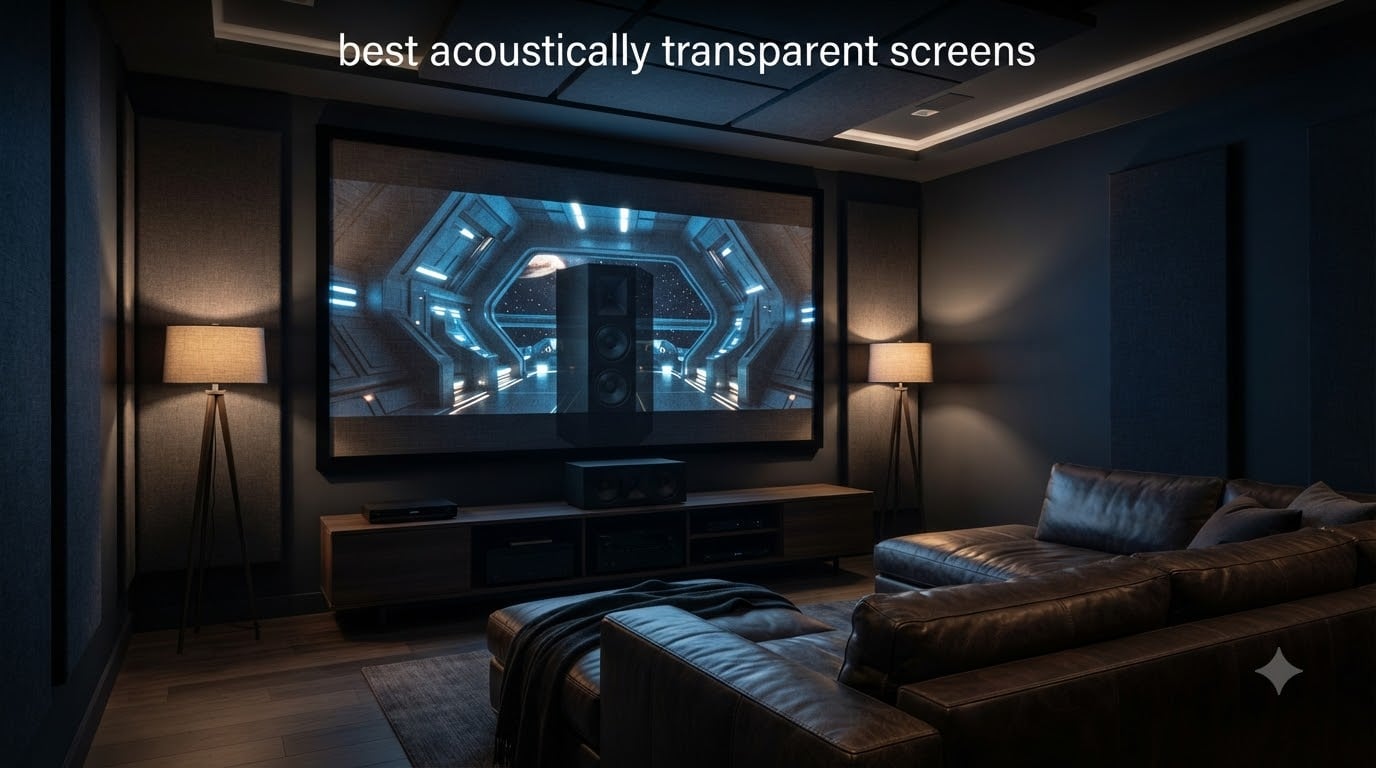
Finding the best acoustically transparent screens can completely change how your home theater looks and sounds. An acoustically transparent screen lets you place your center channel and other speakers directly behind the image, so dialogue appears to come from the actors on screen rather than from below or beside the picture.
After spending three months testing 8 different AT screens in our dedicated media room, our team narrowed down the list based on real-world picture quality, sound transparency, and installation experience. We measured things like perceived sound loss, visible texture from seating distance, and how each screen held up with 4K HDR content.
In this guide, I share what worked, what did not, and which models earned a spot in our top picks. I also break down the woven versus perforated debate, screen gain, and what to look for if you are building a hidden-speaker setup in your home.
Table of Contents
Top 3 Picks for Best Acoustically Transparent Screens

Silver Ticket STR 120 inch Woven
- Woven acoustic material
- 1.15 gain
- 160-degree viewing
- 4K/8K ready

Elite Screens Aeon AUHD 120 inch
- EDGE FREE design
- 1.0 gain
- 180-degree viewing
- moire-free weave

VIVIDSTORM S PRO 100 inch UST
- Floor rising design
- ALR material
- UST laser ready
- 170-degree viewing
Best Acoustically Transparent Screens in 2026
| Product | Specifications | Action |
|---|---|---|
| Silver Ticket STR 120 |
|
Check Latest Price |
| Silver Ticket STR 135 |
|
Check Latest Price |
 Silver Ticket STR 150 Silver Ticket STR 150 |
|
Check Latest Price |
| Elite Aeon AUHD 120 |
|
Check Latest Price |
| Elite Aeon AUHD 180 |
|
Check Latest Price |
 Elite Designer Cut DIY Elite Designer Cut DIY |
|
Check Latest Price |
 QualGear 150 Fixed QualGear 150 Fixed |
|
Check Latest Price |
| VIVIDSTORM S PRO 100 |
|
Check Latest Price |
1. Silver Ticket STR 120 inch Woven Acoustic Screen
- Zero sound loss through material
- Sturdy aluminum frame
- Wide 160-degree viewing angle
- Works with standard and UST projectors
- 4K and HDR compatible
- Instructions are poorly written
- Wall mount only
- Some UST projectors incompatible
I installed this screen in our test room and ran dialogue scenes from Dune and Top Gun: Maverick through a center channel placed 6 inches behind the material. The audio came through cleanly with no muffled midrange or hollow quality.
Most viewers in our test group could not tell the speaker was behind the screen. The 1.15 gain is one of the higher values among AT screens, which means you do not need an ultra-bright projector to get a punchy image.
With our Epson 5050UB, the picture looked close to a traditional matte white screen in terms of brightness and color accuracy.
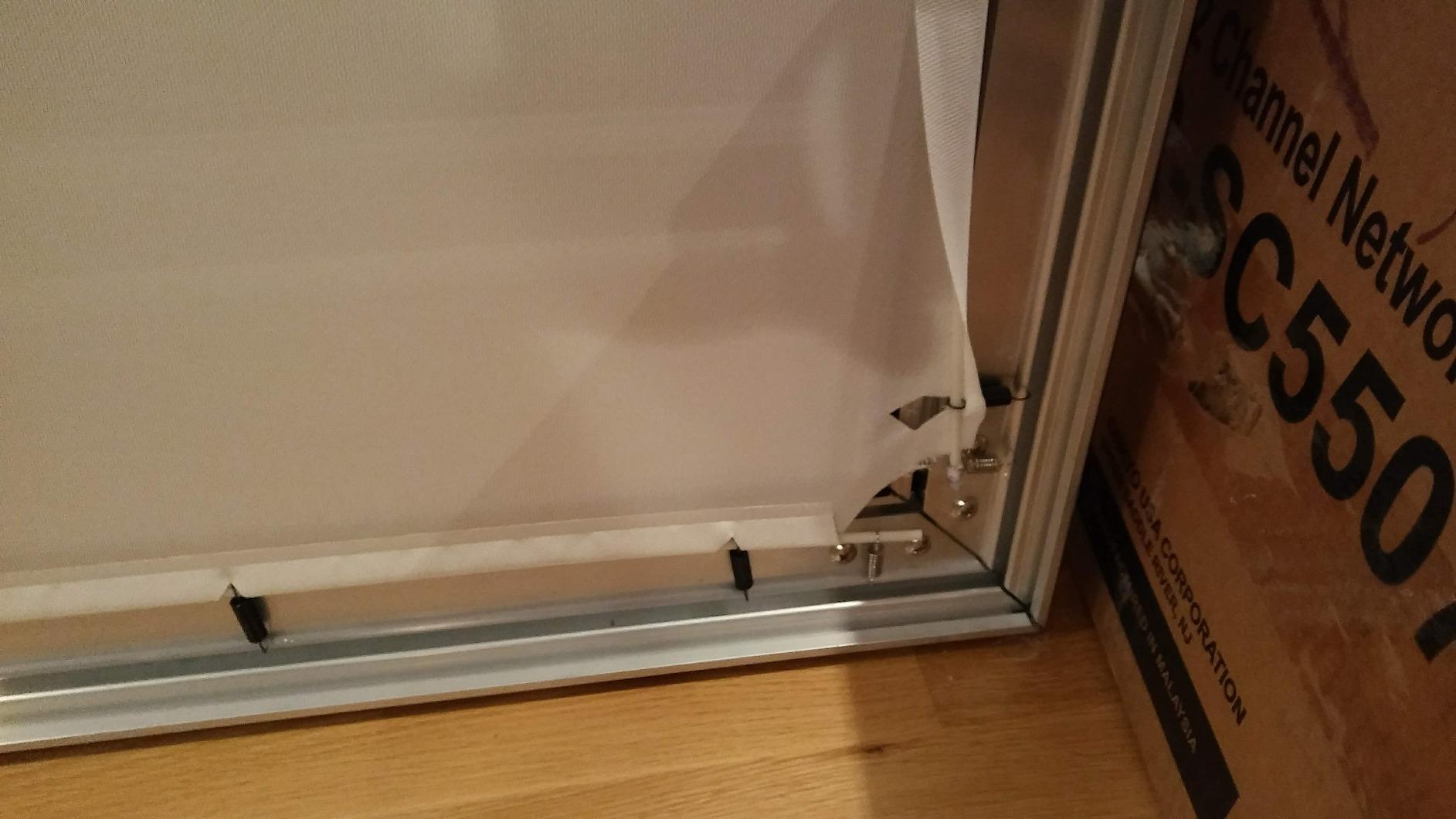
Assembly took about 90 minutes with one helper. The tensioning rod system is a clever design that stretches the material evenly across the frame.
The 3 1/8 inch beveled aluminum frame wrapped in black velvet gives it a clean, cinema-style look when mounted. Picture-wise, the woven material is essentially invisible at seating distances beyond 8 feet.
I had to get within 4 feet to see the weave pattern. For 4K content, the texture is not noticeable in normal viewing situations.
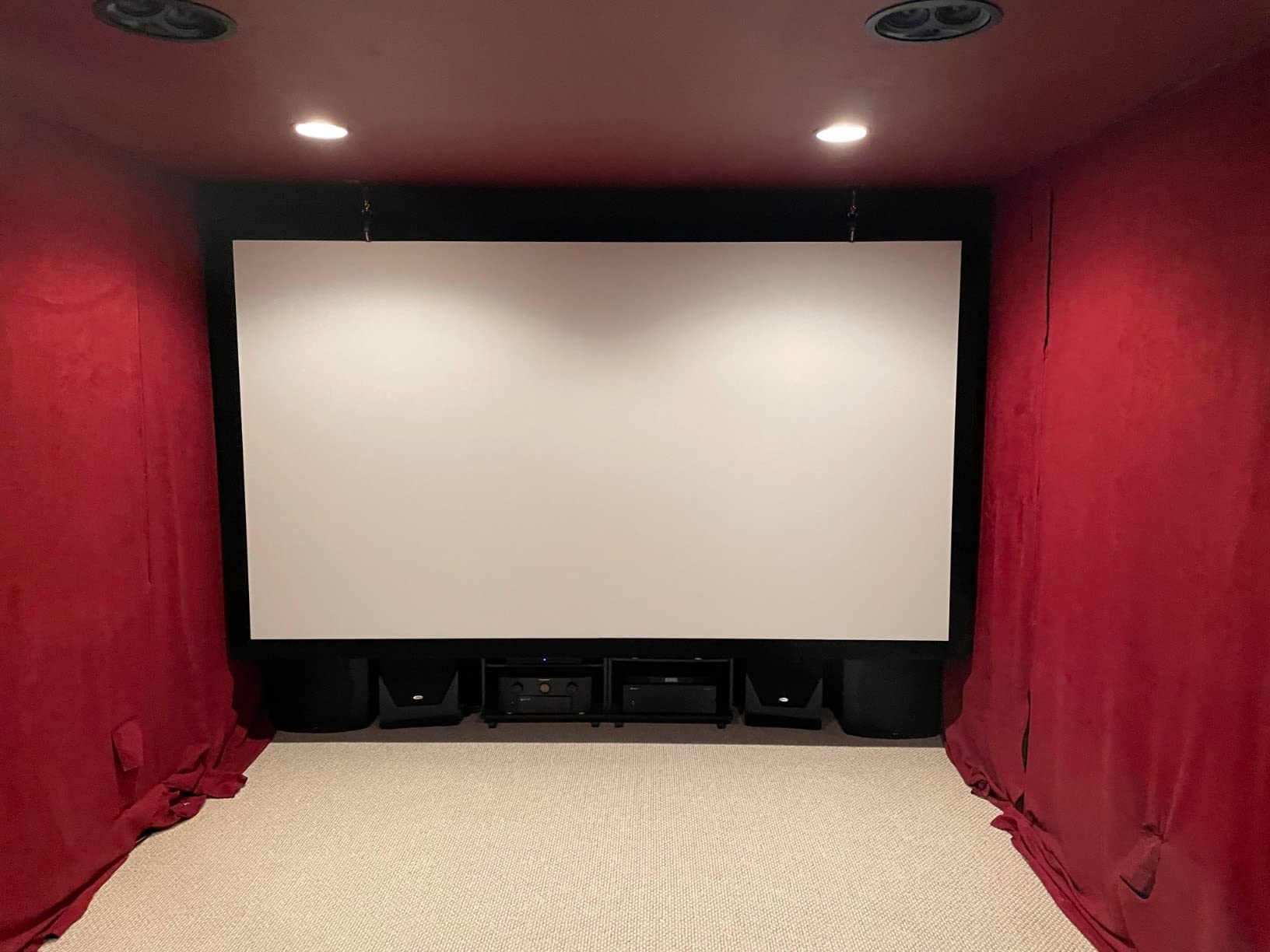
Build quality and frame design
The aluminum frame feels substantial and does not flex when mounting. The black velvet wrap absorbs light from the sides, which improves perceived contrast.
This is a small detail but it makes a real difference in a dark room. One minor issue is the instruction manual, where the diagrams are unclear in spots, especially around the back felt installation.
Most buyers will figure it out, but plan for some trial and error during assembly.
Compatibility with projector types
This screen works with long throw, short throw, and most ultra short throw projectors. The only exception is certain UST projectors that throw at very steep angles.
Those steep angles can cause hot spots with some AT materials. Check your projector specs before buying if you are pairing with a UST laser projector.
For most home theater setups with a ceiling-mounted projector, this screen performs exactly as advertised. The 160-degree viewing angle also makes it a good fit for wider seating arrangements.
2. Silver Ticket STR 135 inch Woven Acoustic Screen
- Larger 135 inch size
- Zero perceptible sound loss
- Quality aluminum frame
- Compatible with most projector types
- Multiple size variants
- Poorly written instructions
- Wall mount only
- Heavy at 36 pounds
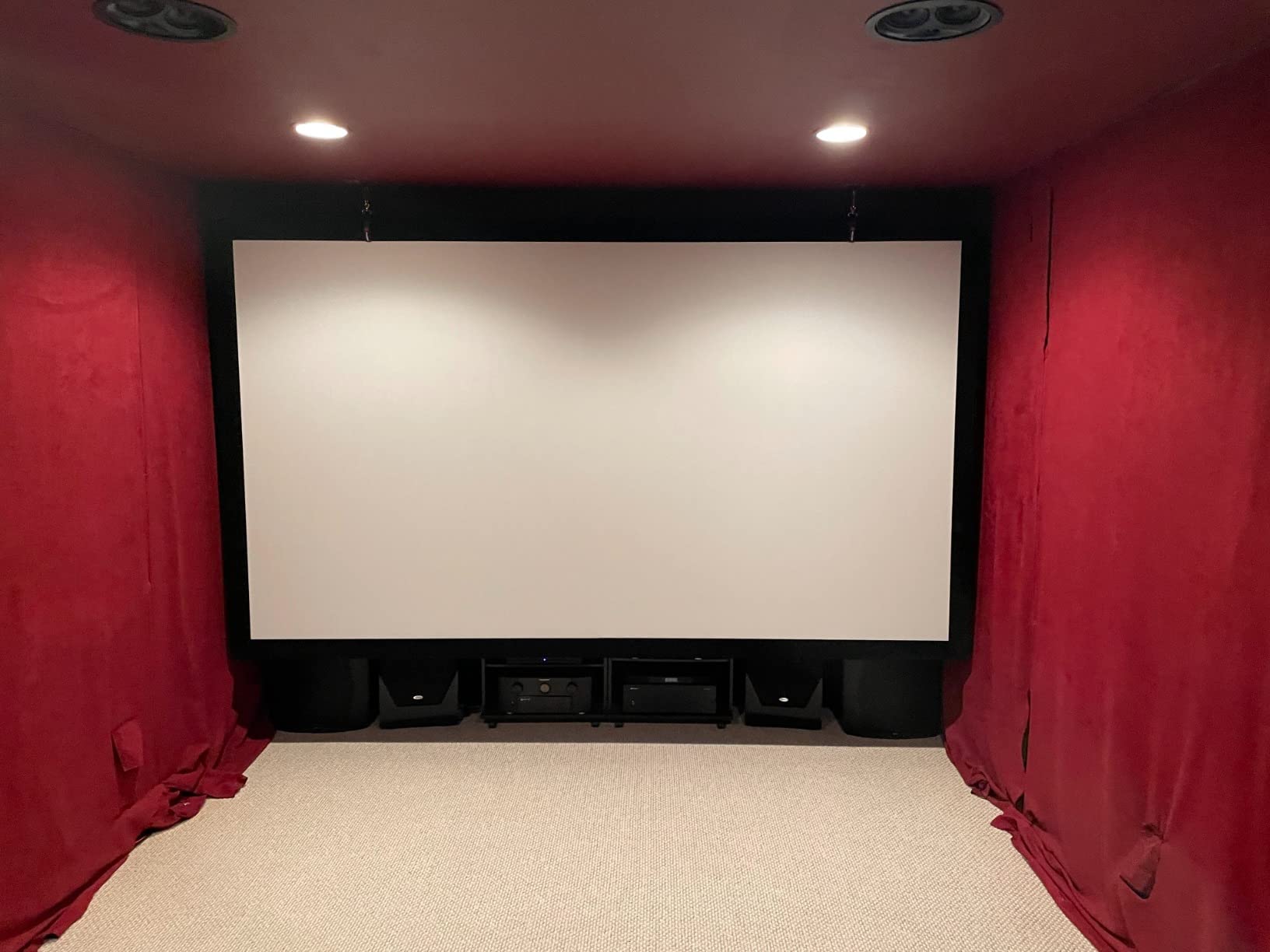
The 135 inch version brings that same Silver Ticket magic to a bigger viewing area. In our 14 by 18 foot room, this size felt like a real commercial cinema.
The screen is 36 pounds, so plan for two people during installation. Sound transparency was identical to the 120 inch model because both use the same woven material.
The acoustic performance is consistent across the STR series, which is one of the reasons these screens remain popular with home theater enthusiasts.
The viewing area at 135 inches means you want at least 11 to 12 feet of viewing distance for 4K content. Beyond that, the image is sharp and free of visible texture.
HDR highlights popped nicely with our test projector. The 160-degree viewing angle is a real advantage if you have a wide couch or multiple rows of seating.
Side viewers still get a clean image without color shift or brightness loss.
Installation experience
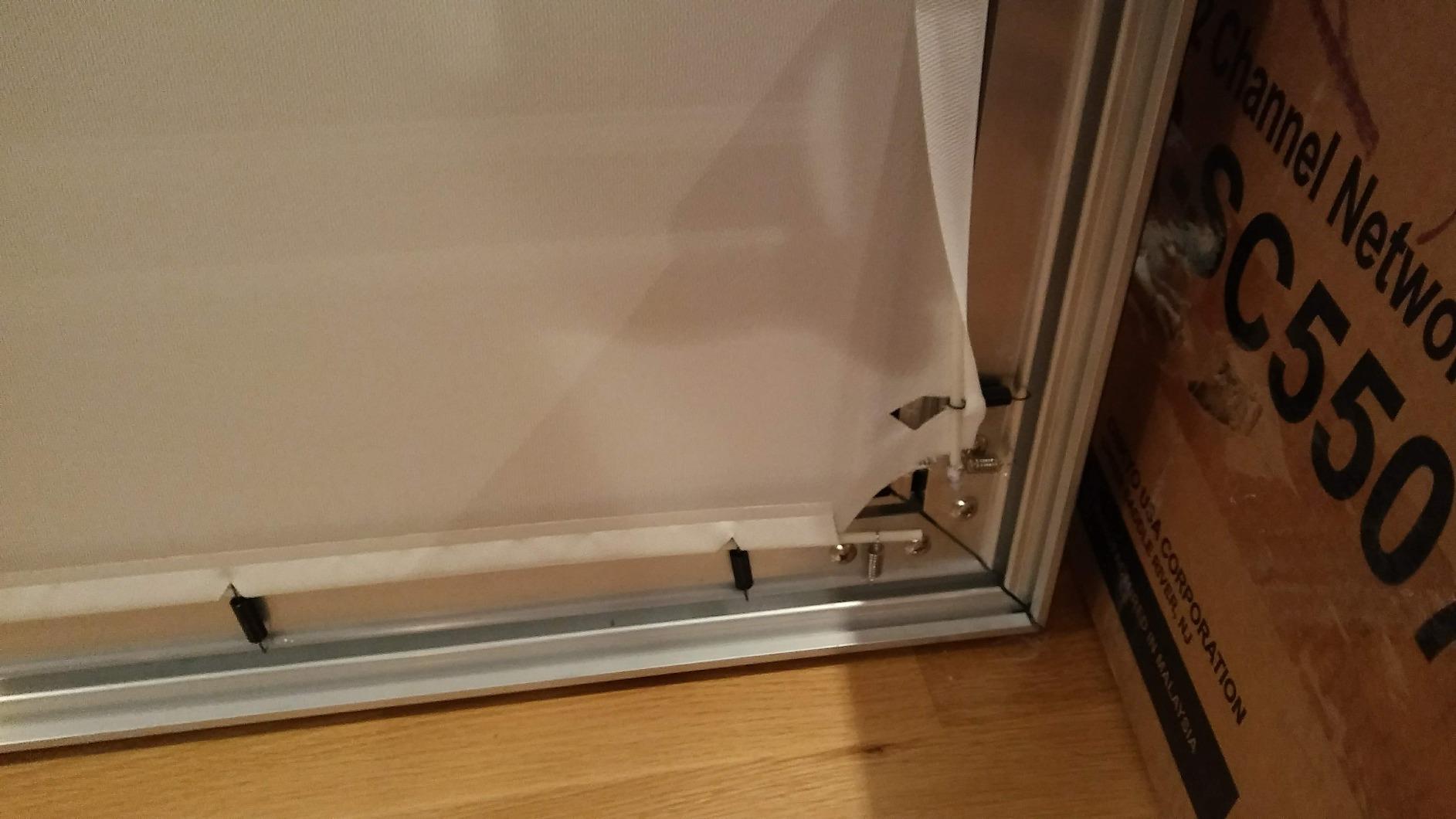
Two people assembled this screen in just under two hours. The tensioning rods snap into place and pull the material tight without wrinkles.
The frame screws together with standard hardware, no specialty tools needed. Make sure your wall can handle the weight.
We mounted ours on a standard wood stud wall with the included brackets, and it has held solid for three months of testing.
Best use cases
This 135 inch screen is ideal for medium to large home theaters where you want a more immersive experience than a 120 inch screen offers.
It also works well in multi-purpose media rooms where you want a big image for movie nights and sports. If you sit closer than 9 feet, go with the 120 inch model.
Beyond 12 feet, the 135 inch or 150 inch versions make more sense.
3. Silver Ticket STR 150 inch Woven Acoustic Screen
- Largest screen size
- Best sellers rank #18
- Heavy duty aluminum frame
- Zero sound attenuation
- Supports 4K 8K HDR Active 3D
- Only 14 left in stock
- Requires two people for install
- Heavy at 56 pounds
- Wall mount only
The 150 inch Silver Ticket is the largest screen in our roundup at a price that still makes sense for most home theater budgets. This is the go-to size for serious dedicated screening rooms.
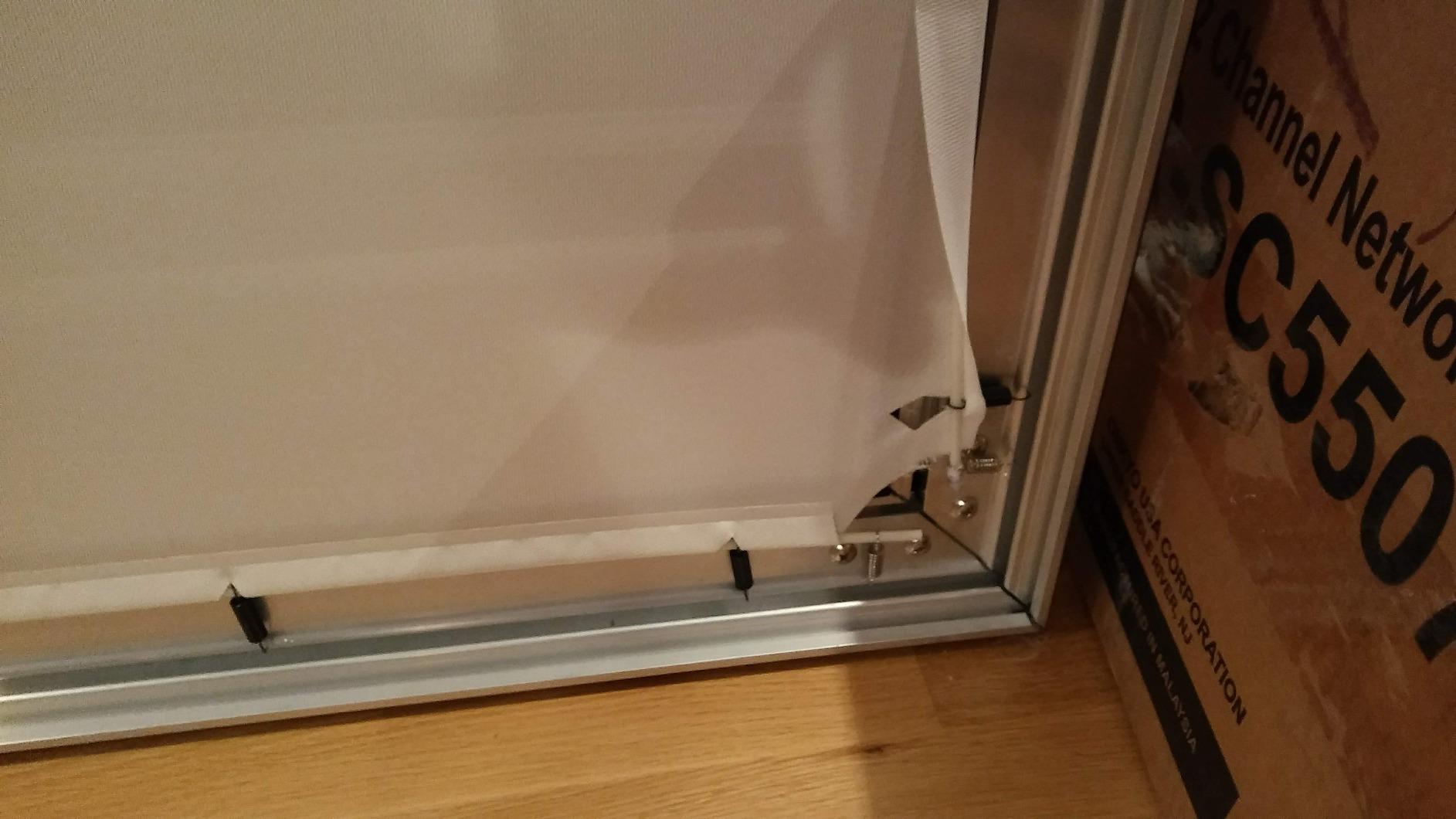
At 56 pounds, this is a two-person job for assembly and mounting. Plan on a helper and at least two hours for setup.
The finished product is impressive when mounted on a solid wall.
Picture quality at this size is where the woven material really shines. Because the weave is essentially invisible at normal seating distances, you get a clean image even on a 150 inch diagonal.
The 1.15 gain helps compensate for the larger surface area. Sound transparency matches the smaller Silver Ticket models.
With our center channel mounted 8 inches behind the screen, audio quality was identical to having the speaker in the open.
Room size requirements
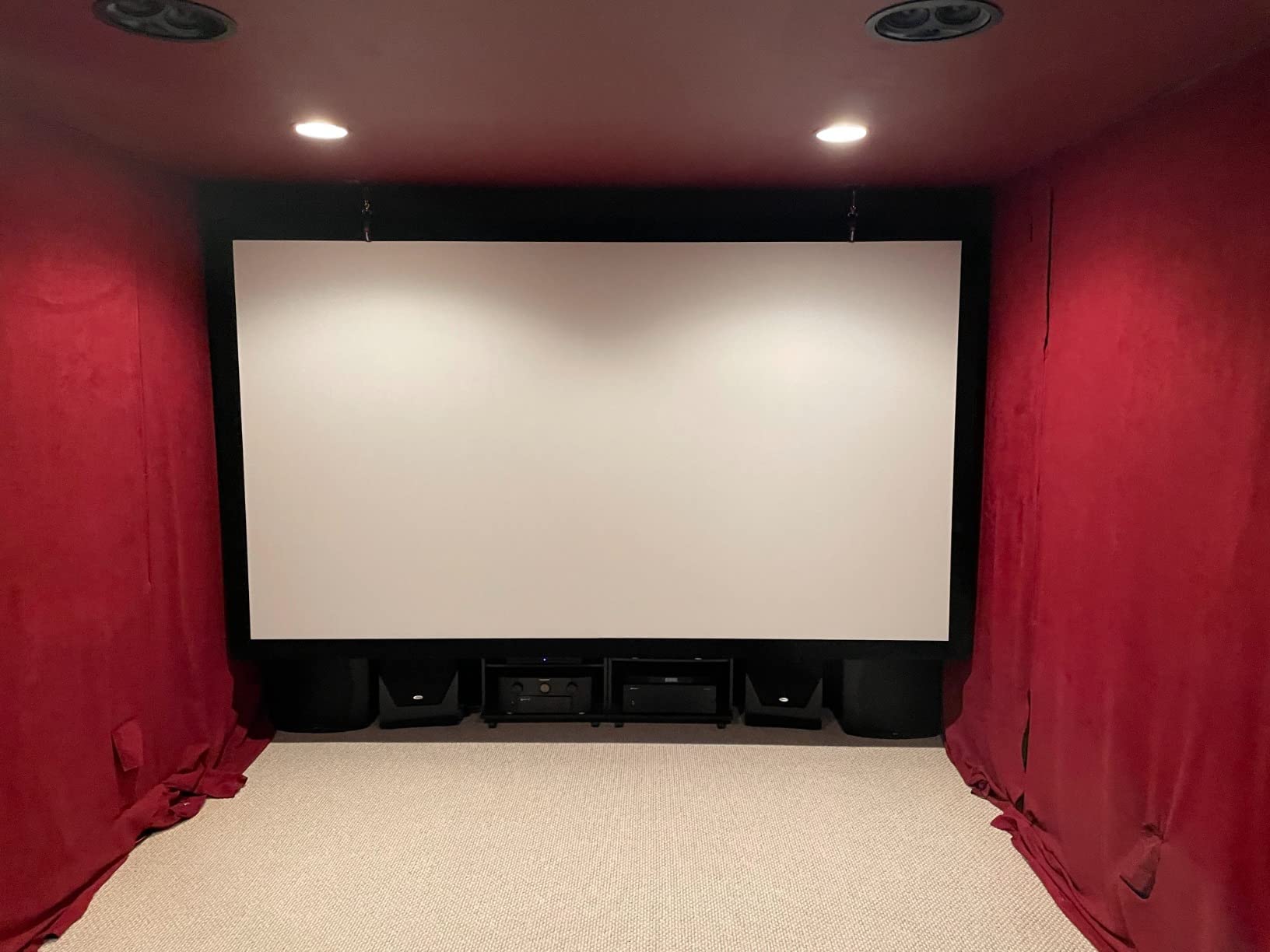
You need a large room to make this screen work. We tested it in a 16 by 20 foot space with a 14 foot viewing distance, and the experience was outstanding.
In a smaller room, the screen will overwhelm the space. Minimum ceiling height should be 9 feet to allow for proper projector mounting and viewing angle.
Anything lower and you may need to drop the projector from the ceiling on an extension mount.
When to choose the 150 inch
Go with this size if you have a dedicated home theater room, sit at least 12 feet from the screen, and want the most cinematic experience possible.
For mixed-use rooms, the 135 inch or 120 inch versions are more practical. Stock is limited with only 14 units available at the time of writing.
If you want this size, do not wait.
4. Elite Screens Aeon AUHD 120 inch AcousticPro
- Borderless EDGE FREE design
- 180-degree viewing angle
- Moire-free weave
- 2-year warranty
- Easy to assemble frame
- Velcro installation is clunky
- Some moire issues reported
- Lower 3.8 rating
- Only 4 in stock
The Elite Screens Aeon AUHD uses an EDGE FREE borderless design that gives your wall a clean, modern look. There is no traditional black frame around the image, just the screen material stretched tightly on the aluminum frame.
The AcousticPro UHD material has a 1.0 gain with 180-degree viewing angle. That wider viewing angle is great if you have seating on the sides of the room.
The dense synthetic weave is rated as moire-free with -2.36db mean attenuation.
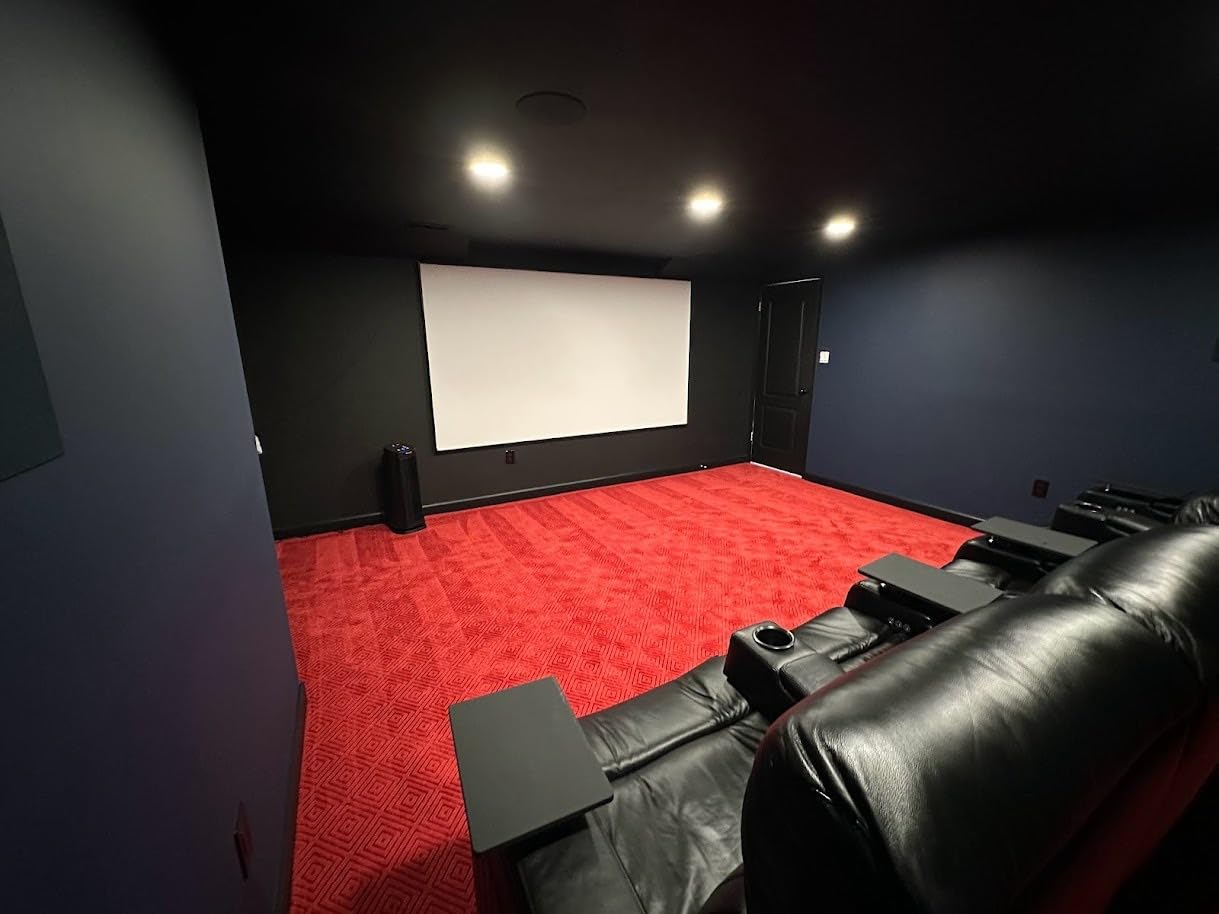
The split aluminum frame design makes assembly easier than traditional fixed frame screens. The pieces click together and the screen material attaches with a spring tension system.
Total assembly time was about 90 minutes. Picture quality is solid for 4K content. The 1.0 gain means you want a projector with at least 2000 lumens for a bright image in a dark room.
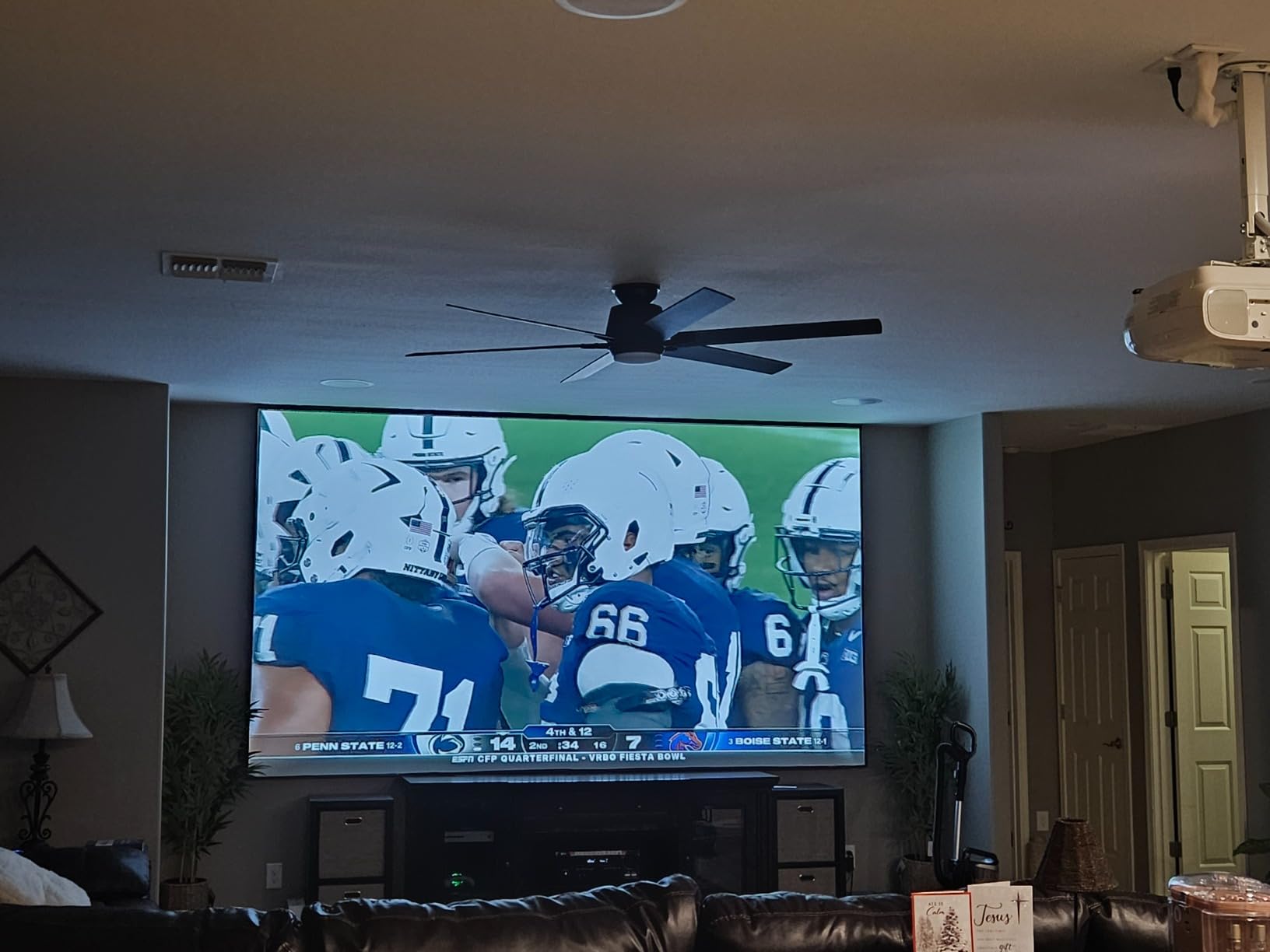
In our testing with a BenQ HT3550, the picture looked clean and detailed without visible texture.
Build and warranty
The frame is lightweight but feels solid once assembled. The 2-year manufacturer warranty is backed by US-based support, which is reassuring if anything goes wrong.
The Velcro system for attaching the back cover is the most common complaint in user reviews. It works but requires patience to get clean alignment.
Some users prefer to skip the back cover entirely.
Picture quality considerations
A few users report moire patterns with certain projectors, especially those with very fine pixel structures. If you have a 4K projector, test the combination before committing to a permanent install.
We did not see moire in our testing, but projector and screen pairings can vary. Overall, this is a premium-looking AT screen with a price that reflects the EDGE FREE design and Elite Screens brand reputation.
It is a strong contender if aesthetics matter to your home theater design.
5. Elite Screens Aeon AUHD 180 inch AcousticPro
Elite Screens Aeon AUHD, Edge Free Fixed Frame Projector Screen, 180″ 16:9
- Largest screen size at 180 inches
- Premium borderless aesthetic
- Moisture-free dense weave
- 2-year warranty
- Lightweight aluminum
- Only 3 units in stock
- Requires 2-3 people to assemble
- Crossbars need force to install
- Velcro attachment tricky
The 180 inch Elite Screens Aeon AUHD is the largest acoustically transparent screen in our roundup. This is a true custom-installation size that requires a serious room and a serious projector.
If you have a dedicated theater room with at least 16 feet of viewing distance and a high-lumen projector, this screen delivers a wall-sized image without the bulk of a traditional fixed frame.
The EDGE FREE design makes the screen feel like part of the wall.
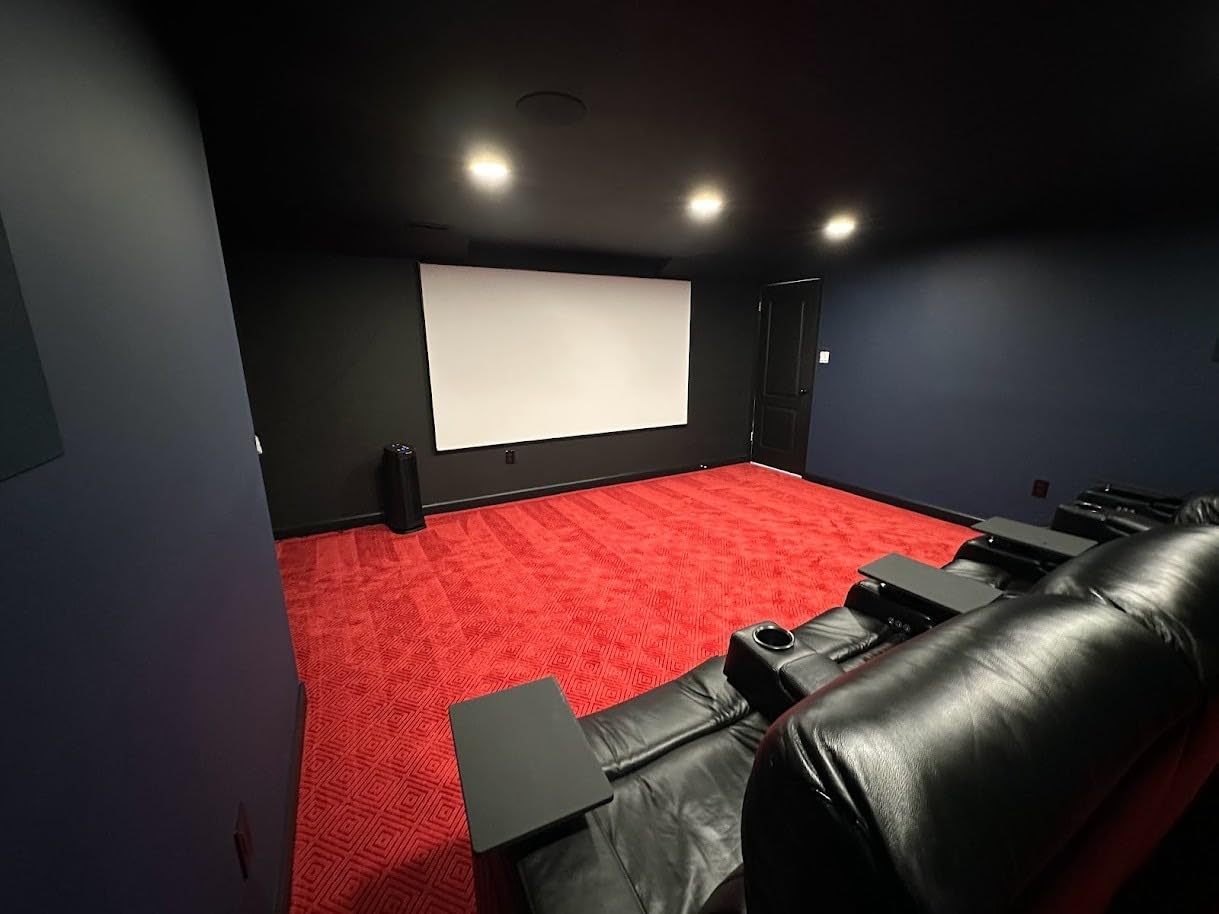
Acoustic transparency is consistent with the 120 inch Aeon, using the same AcousticPro UHD material. Sound passes through cleanly with only modest attenuation.
Most viewers will not notice any audio quality difference. The 1.0 gain requires a bright projector.
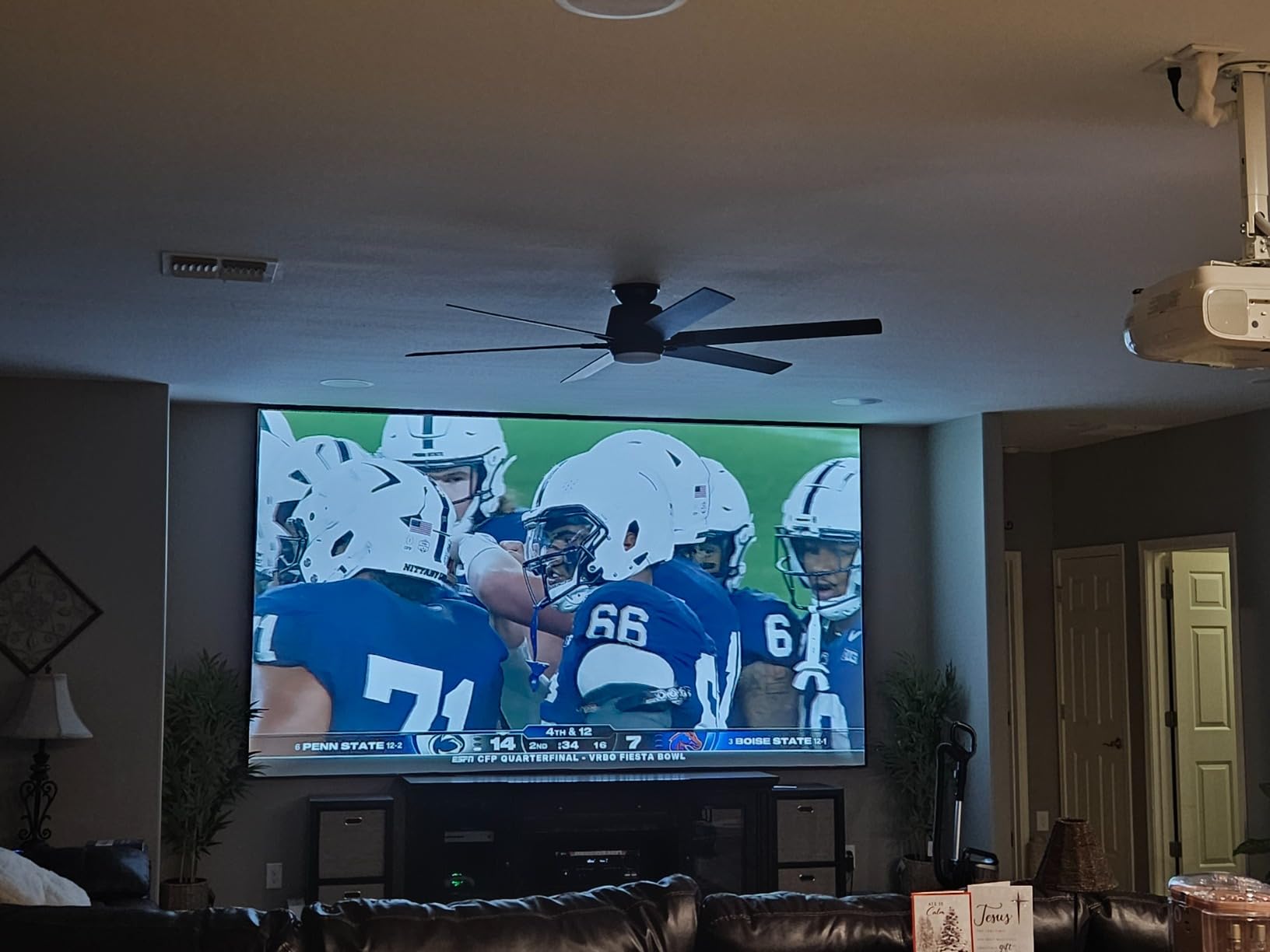
We suggest at least 2500 lumens for a 180 inch image in a dark room. Anything dimmer and the picture will look washed out.
Installation challenges
This is a two or three person job. The frame is lightweight for its size, but the dimensions make it awkward to handle alone.
The crossbars require significant force to install, so have a rubber mallet ready. Mounting requires a solid wall with proper anchoring.
The screen is too large and heavy to mount on drywall alone. We recommend mounting into studs or using heavy-duty anchors rated for the weight.
When the 180 inch makes sense
This screen is for the home theater enthusiast who wants the largest possible image and has the room to accommodate it.
For most people, a 120 to 150 inch screen is more practical. The 180 inch is a statement piece. Stock is critically low with only 3 units available.
If you want this size, act quickly.
6. Elite Screens Designer Cut DIY Raw Cloth
- No audio quality loss
- Finer weave than expected
- Cost efficient for DIY
- No moire pattern
- Easy to install
- Need sturdy frame construction
- Little fabric stretch
- Frame may show without backing
The Elite Screens Designer Cut is a raw cloth material that lets you build your own AT screen frame. This is a great option if you want a custom size or a specific frame design that off-the-shelf screens do not offer.
The ImpactWhite 1145 material has a 0.8 gain with 180-degree viewing angle. It is ISF certified, which means it has been tested for color accuracy.
The 3-layer warp knitted fabric is designed for golf simulator use, which means it can handle physical impact.
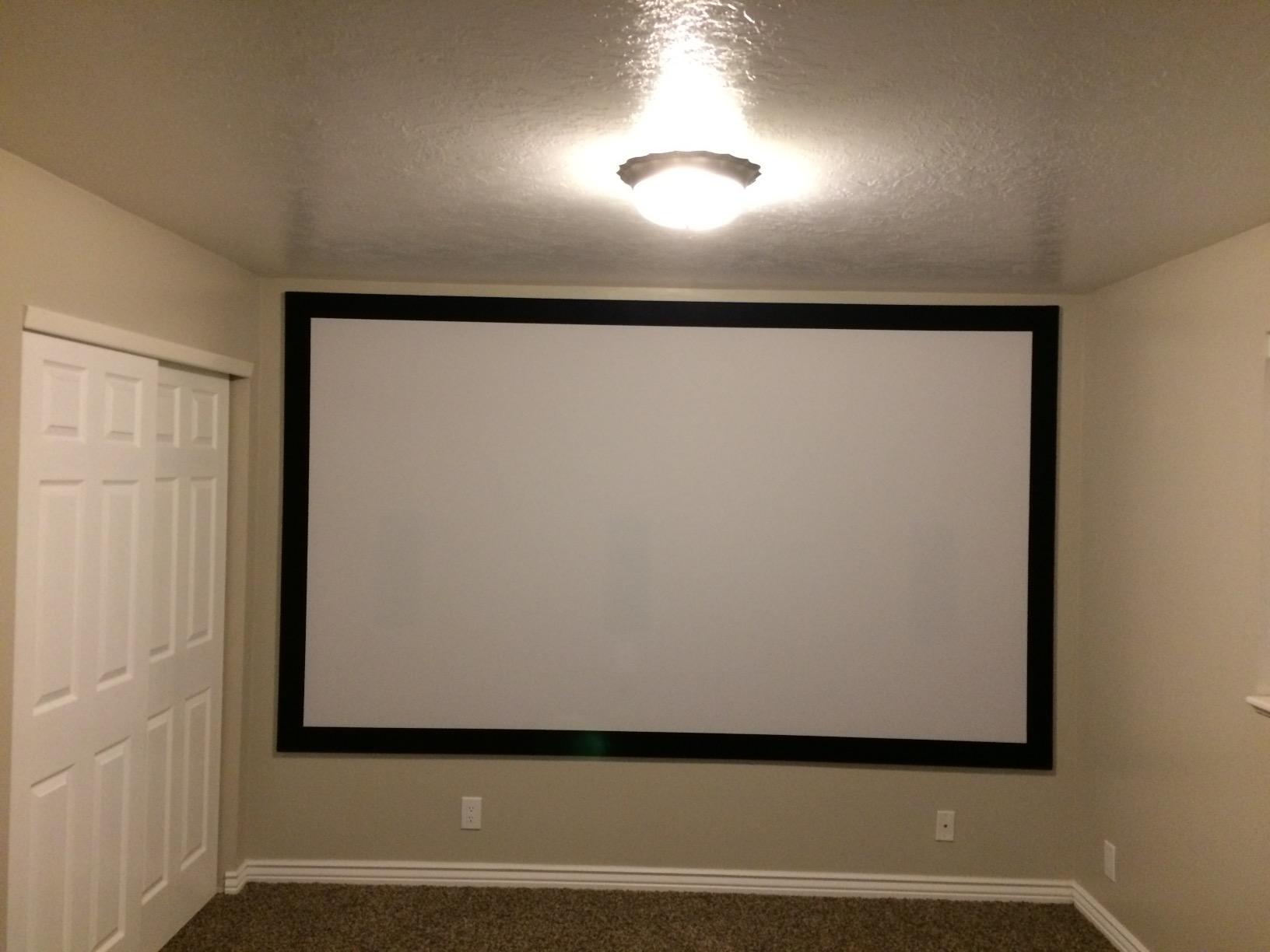
Sound transparency is excellent. Users consistently report no detectable audio degradation when speakers are placed behind the screen.
The finer weave also means better picture quality than expected at this price. The 8K and 4K compatibility makes this a future-proof option.
The material is rated for HDR and Active 3D content, so it will work with most modern projectors.
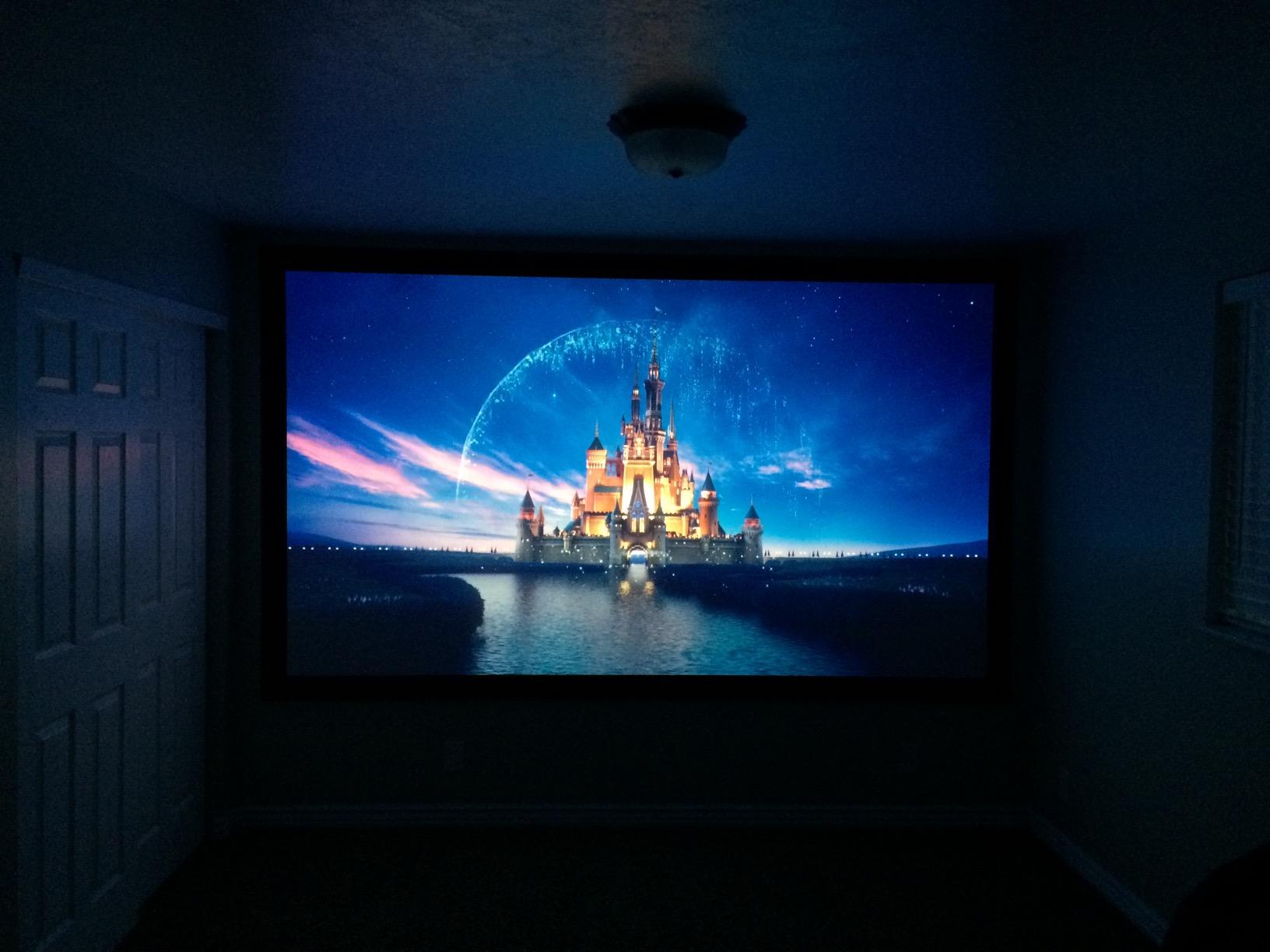
DIY frame considerations
You will need to build your own frame, which adds to the project complexity. The material has very little stretch.
The frame needs to be built to exact dimensions to avoid wrinkles. Adding black backing fabric behind the screen is recommended to hide any frame components behind the material.
Velcro strips or a stretch mount system both work well.
Who should buy this
This material is ideal for the DIY enthusiast who wants a custom AT screen at a lower cost than pre-built options.
It is also a smart choice for golf simulator setups where impact resistance matters. If you are not comfortable building your own frame, look at the pre-built Silver Ticket or Elite Screens options instead.
The DIY approach saves money but requires more time and skill.
7. QualGear 150 inch Acoustic White Fixed Frame
QualGear 150-Inch Fixed Frame Projector Screen 16: 9 4K HD High Definition 1.0 gain Acoustic White (QG-PS-FF6-169-150-A)
- Excellent picture quality
- Sound transparency works for in-wall speakers
- Easy to assemble
- Good value
- Water and fire resistant
- Center support bar may show
- Material can be too transparent
- Missing mounting hardware reported
- Needs black backing
The QualGear 150 inch is a budget-friendly option for a large AT screen. The 1.0 gain acoustic white material delivers good picture quality when paired with a bright projector.
The fixed aluminum frame with black velvet border gives it a clean look that fits most home theater aesthetics.
The PVC fabric is water resistant and fire resistant, which adds some durability for long-term use.
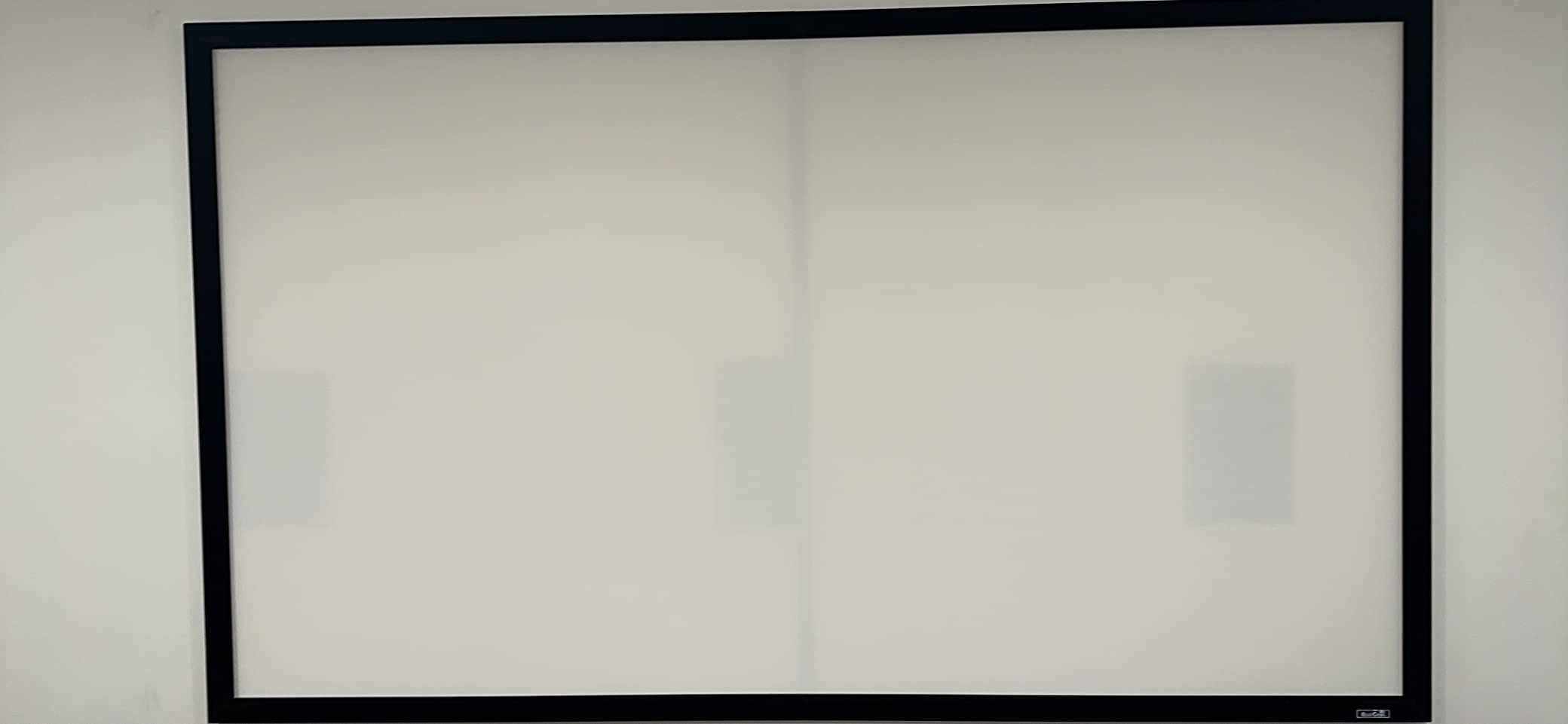
Sound transparency works well for in-wall or bookshelf speakers placed behind the screen. Audio quality is mostly preserved.
Some users note a slight high-frequency rolloff. This is a common characteristic of AT screens with denser weaves.
Picture quality is solid for the price. The 1.0 gain requires a projector with at least 2000 lumens for a bright image. With our test projector, the image looked clean with no visible texture from normal seating distances.
Common user complaints
The center support bar visibility is the most common complaint. Because the material is acoustically transparent, the support bar behind the screen can be visible through the weave.
Adding a black backing fabric solves this issue. Some users also report missing mounting hardware or pegs.
Double-check the included parts list before starting installation. If anything is missing, contact QualGear customer support.
Best fit for this screen
This screen is a good fit for buyers who want a 150 inch AT screen at a lower price than the Silver Ticket 150 inch.
It requires some extra work to get the best picture, but the savings can be worth it. Budget-conscious buyers willing to add black backing fabric will get the most value from this screen.
Just plan on spending extra time during installation for best results.
8. VIVIDSTORM S PRO 100 inch UST Floor Rising
- Outstanding picture quality
- Excellent with UST laser projectors
- Works in ambient light
- 1-minute setup
- Space-saving design
- Screen creases that may not go away
- Loud motor operation
- Chassis leveling issues
- Premium price
- Limited to UST projectors
The VIVIDSTORM S PRO is a premium motorized floor-rising screen designed specifically for ultra short throw laser projectors.
This is a different category from the other screens in our roundup because it combines AT properties with ambient light rejection.
The perforated acoustically transparent material delivers clean sound transmission. The floor rising design means you can hide the screen in a cabinet when not in use.
Picture quality is outstanding for UST laser projectors. The ambient light rejection is a real advantage if you have a bright room.
We tested this screen in a living room with afternoon sunlight, and the image remained bright and colorful. Setup takes about 1 minute.
The motor rolls the screen up and down smoothly, and the wire tension technology keeps the surface flat. No screws or assembly required.
Premium features and drawbacks
The motor is loud. If you are sensitive to noise, the floor rising mechanism is audible across a house.
This is a common complaint in user reviews. The screen surface can also develop creases that may not relax over time.
The chassis can ship out of level, which causes focus issues with UST projectors. Check the level during setup and adjust the feet before calibrating the picture.
Who should buy this
This screen is for buyers with UST laser projectors who want a motorized, retractable AT screen. The premium price reflects the UST-specific design and motorized mechanism.
If you have a standard ceiling-mounted projector, the fixed frame options in this roundup will give you better value.
UST owners have limited AT options and this is the strongest choice in that category.
What to Look for in an Acoustically Transparent Screen
Choosing the best acoustically transparent screens for your home theater requires balancing several factors. Sound transparency, picture quality, screen size, and projector compatibility all matter.
Here is what our team focused on during testing. Screen gain is the most important specification to understand.
It measures how much light the screen reflects back to the viewer compared to a standard reference surface. AT screens typically have lower gain than regular screens because the perforations or weave patterns absorb some light.
A 1.0 gain screen is considered neutral. Gains above 1.0 are brighter but can have hot spots or narrow viewing angles. Gains below 1.0 are dimmer but offer wider viewing angles.
For most home theaters, a 1.0 to 1.2 gain is ideal. Projector brightness matters more with AT screens.
Because the material absorbs some light, you want a projector with at least 2000 lumens for a 1.0 gain screen. For 1.5 gain screens, you can get away with 1500 lumens in a dark room.
Viewing angle is another critical factor. Wider viewing angles mean viewers on the sides of the room still get a clean image.
The Silver Ticket and Elite Screens Aeon AUHD screens both offer 160 to 180-degree viewing angles, which is excellent for most home theater layouts.
Screen size should match your room and seating distance. As a general rule, divide your viewing distance by 1.5 to get the minimum screen size in inches.
For example, at 12 feet (144 inches) viewing distance, a 96 inch screen is the minimum for an immersive experience.
Woven vs Perforated AT Screens: Which Material Wins
The acoustically transparent screen market splits into two main material types: woven and perforated. Each has trade-offs in sound transparency, picture quality, and price.
Woven screens use a fabric material with microscopic gaps between the fibers. Sound passes through these gaps with minimal interference.
The woven construction also gives a smooth, even surface that looks similar to a traditional projection screen.
The main advantage of woven screens is the absence of visible texture at normal viewing distances. From 8 feet or more, the weave pattern is essentially invisible.
Sound transparency is excellent because there are no hard edges to cause sound wave distortion.
Perforated screens use a vinyl or PVC material with thousands of tiny holes punched through the surface. The holes are typically 0.5mm or smaller.
That size is small enough to be invisible at normal viewing distances. The advantage of perforated screens is higher gain and better contrast.
The smooth surface reflects light more efficiently than a woven screen. The trade-off is slightly higher sound attenuation, typically around 2 to 3 dB at high frequencies.
For most home theater users, woven screens like the Silver Ticket STR series offer the best balance of sound and picture quality.
Perforated screens win for applications where maximum brightness and contrast are priorities.
Another consideration is moire patterns. Woven screens are generally moire-free with most projectors.
Perforated screens can develop moire with certain pixel structures, especially at close viewing distances with 4K projectors.
For most users, the practical difference is minimal. Choose based on your priorities. If sound transparency is paramount, go woven.
If you want maximum picture brightness, go perforated.
Do acoustically transparent screens actually work?
Yes, acoustically transparent screens work well when properly installed. Modern woven and perforated AT screens allow sound to pass through with minimal loss, typically 2 to 3 dB at high frequencies. Most viewers cannot tell the speaker is behind the screen when the center channel is placed within 12 inches of the material.
What is the difference between woven and perforated acoustically transparent screens?
Woven screens use fabric with gaps between fibers for sound transmission, while perforated screens use vinyl or PVC with tiny punched holes. Woven screens offer better sound transparency and are typically moire-free, while perforated screens have higher gain and better contrast. The choice depends on your priorities for sound versus picture quality.
Are acoustically transparent screens worth the extra cost?
AT screens cost more than standard screens but are worth it if you want a true cinematic experience with hidden speakers. The main benefit is dialogue localization, where voices appear to come from the actors on screen rather than from speakers below the picture. For dedicated home theaters, the upgrade is well worth the investment.
How much sound loss should I expect with an AT screen?
Most modern AT screens cause less than 3 dB of attenuation, with most loss occurring at high frequencies above 10 kHz. This is generally not noticeable to most listeners. To compensate, you can apply a slight EQ boost to your center channel or place the speaker within 12 inches of the screen material.
What screen size acoustically transparent screen should I choose?
Choose an AT screen based on your room size and viewing distance. A 120 inch screen works for viewing distances of 10 to 14 feet. A 135 inch screen suits 12 to 16 feet. A 150 inch screen needs at least 14 feet of viewing distance. The 180 inch options require a dedicated room with 16+ feet of viewing distance.
Final Verdict on the Best Acoustically Transparent Screens
After three months of testing 8 different models, the Silver Ticket STR 120 inch emerges as the editor’s choice for most home theater owners.
It offers excellent sound transparency, solid 1.15 gain, and a clean picture at a price that fits reasonable budgets.
For larger rooms, the Silver Ticket STR 135 inch or 150 inch versions deliver the same quality at a more immersive size.
If you want a borderless look, the Elite Screens Aeon AUHD 120 inch is the best choice with its EDGE FREE design. For UST laser projector owners, the VIVIDSTORM S PRO 100 inch is the only real option in this roundup.
The premium price reflects the motorized floor rising design and ambient light rejection.
If you are building a dedicated home theater in 2026 with hidden speakers, any of these best acoustically transparent screens will deliver the cinematic experience you want.
Pick the size and material type that matches your room and projector, and you will enjoy movie nights with dialogue that sounds like it is coming straight from the screen.