
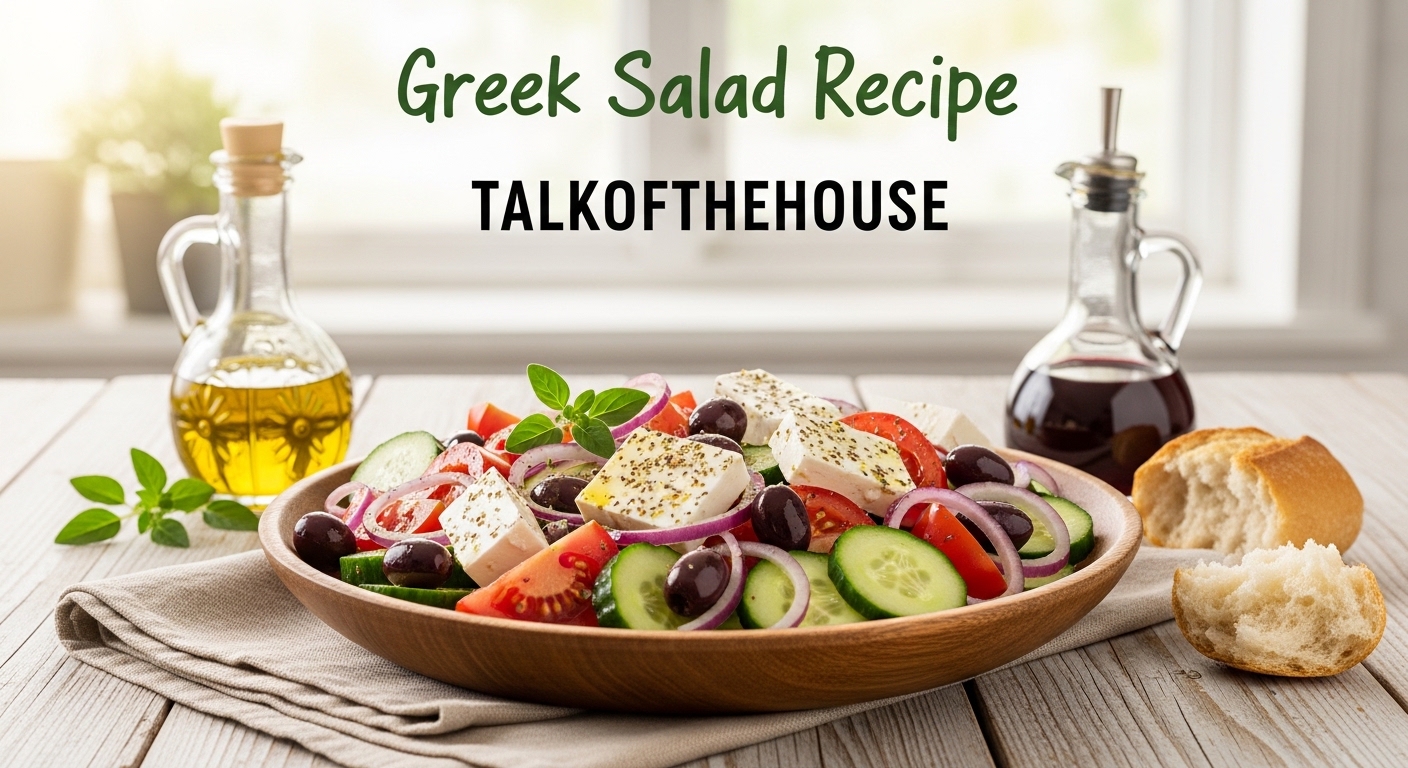
Some of my favorite summer memories involve sitting at a small taverna overlooking the Aegean Sea, a chilled glass of white wine in hand, and a bowl of classic greek salad recipe in front of me. There is something magical about the simplicity of horiatiki, the traditional Greek village salad that captures the essence of Mediterranean cuisine in every bite.
If you have only had Greek salad at American chain restaurants, you are in for a revelation. An authentic traditional greek salad contains no lettuce at all. Instead, it showcases ripe summer tomatoes, crisp cucumbers, and creamy feta cheese in a way that lets each ingredient shine. I spent weeks perfecting this recipe after returning from a trip to the Greek islands, and I am excited to share what I learned.
What makes this dish special is not fancy technique or obscure ingredients. It is the quality of the components and the respect for tradition. Once you taste the real thing, you will never look at those sad lettuce-based imposters the same way again.
Table of Contents
What is Traditional Greek Salad (Horiatiki)?
Horiatiki, pronounced hoh-ree-ah-TEE-kee, literally translates to village salad in Greek. The name tells you everything about its origins. This was not a restaurant creation designed to impress diners. It was a practical dish that Greek farmers and villagers prepared with whatever grew in their gardens during the hot summer months.
Unlike the lettuce-heavy versions you might find at salad bars in the United States, a proper horiatiki consists entirely of chunked vegetables. The traditional greek salad ingredients are tomatoes, cucumbers, bell peppers, red onion, Kalamata olives, and a substantial block of feta cheese. The vegetables are cut into big, rustic pieces rather than small bites. This is important because you want to taste each ingredient individually while still getting that perfect combination in every forkful.
The absence of lettuce is not an oversight. It is intentional. Greeks use lettuce in other salads, but horiatiki celebrates the peak-of-season vegetables that need no filler. The juices that collect at the bottom of the bowl are considered liquid gold, meant to be sopped up with crusty bread. In fact, serving this salad without bread would be considered almost criminal in Greece.
During my travels through Patmos and Kos, I noticed that every family had their own slight variation. Some added a pinch of dried mint. Others included capers if they lived near the sea. But the core ingredients never changed. The salad reflected what was fresh and available, making it the ultimate expression of Mediterranean cooking philosophy.
Greek Salad Ingredients
The beauty of this recipe lies in its simplicity. You need only a handful of quality ingredients, and the dressing is nothing more than good olive oil and vinegar. Here is what you will need to serve four people as a side dish or two people as a light main course:
- Tomatoes: Four large ripe tomatoes, cut into wedges. Choose tomatoes that feel heavy for their size and yield slightly to pressure. They should smell fragrant at the stem end. During peak summer, heirloom varieties from the farmers market will give you the best flavor. In the off-season, opt for cherry tomatoes or vine-ripened Campari tomatoes.
- Cucumbers: One English cucumber, sliced into thick half-moons. English cucumbers work best because they have minimal seeds and thin skin that does not require peeling. If you use regular cucumbers, peel them and scoop out the seedy center to prevent excess moisture in your salad.
- Bell Pepper: One green bell pepper, sliced into rings. Green is traditional, though some regions use red or yellow. The pepper adds a fresh crunch and slight bitterness that balances the sweetness of the tomatoes.
- Onion: Half of a red onion, sliced into thin rings. I will share a crucial trick later for mellowing the sharpness of raw onion without losing the crunch.
- Olives: Half a cup of Kalamata olives. These dark purple Greek olives have a rich, fruity flavor that stands up to the other bold ingredients. Traditional recipes often leave the pits in, which preserves more flavor, but I prefer pitted for easier eating with guests.
- Cheese: Eight ounces of feta cheese in a block, not the pre-crumbled kind. This is absolutely crucial. The block retains moisture and has a creamier, more luxurious texture. Look for cheese made with sheep’s milk or a sheep and goat blend, preferably stored in brine. Avoid cow’s milk feta which tends to be drier and less flavorful.
- Seasonings: One teaspoon of dried Greek oregano, plus sea salt and freshly ground black pepper to taste. Do not substitute Italian oregano here. Greek oregano has a more robust, slightly peppery flavor that defines the dish. Look for it at Mediterranean markets or specialty spice shops.
- The Dressing Base: One-third cup of extra virgin olive oil and two tablespoons of red wine vinegar. The quality of your olive oil matters enormously in this recipe since you will taste it so clearly. Use the best extra virgin olive oil you can afford. A peppery Greek oil would be perfect here.
The Dressing
Traditional greek salad dressing could not be simpler. There is no mustard, no lemon juice, no garlic, and definitely no sugar. The dressing consists of just three components: extra virgin olive oil, red wine vinegar, and dried oregano. That is it.
The classic ratio is three parts oil to one part vinegar. I prefer a slightly sharper dressing, so I use a ratio closer to five parts oil to one part vinegar. You can adjust to your taste, but do not skip the vinegar entirely. It brightens the tomatoes and cuts through the richness of the feta perfectly.
Unlike vinaigrettes that require whisking or shaking to emulsify, this dressing is simply drizzled over the salad. The oil and vinegar will separate naturally in the bowl, creating pools of flavor that you can dip bread into. This is the authentic way to serve it, and trying to create a fully blended dressing actually misses the point.
The oregano is sprinkled on at the end, not mixed into the dressing. This allows the dried herb to bloom slightly in the oil and vinegar, releasing its aromatic oils. The result is a salad that smells as incredible as it tastes.
How to Make Greek Salad
Step 1: Mellow the Onions
This is the secret I learned from home cooks on Reddit. Slice your red onion into thin rings and place them in a bowl of ice water with a splash of vinegar. Let them soak for ten minutes, then drain well and pat dry. This removes the harsh bite while keeping the crunch and subtle sweetness. Your guests will thank you for this step.
Step 2: Prepare the Tomatoes
Cut your ripe tomatoes into wedges or large chunks. Place them in your serving bowl and sprinkle with a generous pinch of salt. Let them sit for five minutes. This draws out the tomato juices, which will become part of your dressing. Do not discard this liquid. It is pure flavor.
Step 3: Add the Remaining Vegetables
Slice your cucumber into thick half-moons and your bell pepper into rings. Add these to the bowl along with your drained onions. The vegetables should be cut into substantial pieces, not tiny dice. Remember, this is a rustic village salad, not a refined restaurant plate.
Step 4: Add the Olives
Scatter your Kalamata olives over the top. If they are not pitted, warn your guests so they do not crack a tooth. I prefer to leave them whole for a more authentic presentation.
Step 5: Dress the Salad
Drizzle the olive oil and red wine vinegar over everything. Sprinkle generously with dried Greek oregano, sea salt, and black pepper. Do not toss yet. The layering creates visual appeal and allows guests to mix at the table.
Step 6: The Feta Block
Here is the most important step. Place your entire block of feta cheese right on top of the vegetables. Do not crumble it. In Greece, the feta sits like a crown on the salad. Each person breaks off chunks with their fork as they eat, mixing the creamy cheese with the vegetables and juices below. This keeps the feta from disappearing into the salad and allows everyone to get the perfect bite.
Step 7: Serve Immediately
Bring the bowl to the table with a loaf of crusty bread. Mix the salad gently at the table, breaking the feta into rough chunks as you go. The juices at the bottom are meant to be soaked up with bread.
Serving Suggestions
A classic greek salad recipe works beautifully as a first course, side dish, or light lunch. I serve it alongside grilled lamb chops or chicken souvlaki for a complete Mediterranean meal. The salad’s bright acidity cuts through rich meats perfectly, cleansing the palate between bites.
Do not forget the bread. A loaf of crusty sourdough or country bread is essential for scooping up the juices that collect at the bottom of the bowl. Greeks call this the sauce of the salad, and it is often the best part. If you have access to a Greek bakery, pick up a loaf of horiatiko psomi, a dense country bread that is perfect for this purpose.
For wine pairings, reach for a crisp Assyrtiko from Santorini or any dry Greek white wine. Assyrtiko has a mineral quality that complements the tomatoes and olive oil beautifully. A chilled rose also works wonderfully on hot summer afternoons. If you prefer non-alcoholic options, try sparkling water with a wedge of lemon or a splash of sour cherry juice.
This salad shines at summer gatherings and outdoor dinners. It requires no cooking, can be assembled in fifteen minutes, and looks stunning in a large white serving bowl. Your guests will appreciate the refreshing contrast to heavier grilled foods. I often set out bowls of olives and almonds alongside for a complete Mediterranean spread.
Tips and Variations
Choose the Right Tomatoes
The success of your salad depends entirely on tomato quality. In summer, use ripe beefsteak or heirloom varieties from the farmers market. Brandywine and Cherokee Purple are exceptional choices. In winter, opt for cherry tomatoes which tend to have better flavor year-round than large tomatoes shipped from far away. Never refrigerate your tomatoes, as cold destroys their flavor compounds.
Make-Ahead Tips
You can prep the vegetables up to four hours ahead, but keep them separate until serving. Cut and salt the tomatoes, store the cucumbers and peppers in a container, and keep your soaked onions drained and wrapped. Assemble and dress just before eating to prevent sogginess. The feta can sit out at room temperature, which actually improves its flavor and texture.
The Onion Soaking Trick
I cannot emphasize enough how much better this salad tastes with mellowed onions. The ten-minute soak in ice water with vinegar transforms harsh raw onion into something sweet and palatable. This tip comes straight from Greek home cooks and makes all the difference. If you are particularly sensitive to onion, you can extend the soak to fifteen minutes.
Regional Variations
Some Greek islands add capers or a pinch of dried mint. Others include a few pepperoncini peppers for heat. The Dodecanese islands often use local herbs like savory or thyme instead of oregano. Feel free to experiment, but keep additions minimal. The charm of horiatiki is its restraint. Add too much and you lose the purity of the dish.
Storage
Leftovers do not keep well once dressed. If you must store leftovers, remove the feta and store vegetables separately. The salad will lose its crisp texture but can be eaten within a day as a marinated vegetable dish. The dressed vegetables are actually delicious the next day served over warm rice or folded into an omelet.
Frequently Asked Questions
What is in traditional Greek salad?
A traditional Greek salad, called horiatiki, contains tomatoes, cucumbers, green bell pepper, red onion, Kalamata olives, and a block of feta cheese. It is dressed with extra virgin olive oil, red wine vinegar, and dried oregano. Authentic Greek salad never contains lettuce.
What is a 6 ingredient Greek salad?
A simple 6-ingredient Greek salad consists of tomatoes, cucumber, red onion, Kalamata olives, feta cheese, and olive oil. This pared-down version skips the bell pepper and vinegar, relying on the natural juices of salted tomatoes and the rich olive oil to carry the dish.
What is the traditional dressing for Greek salad?
The traditional dressing for Greek salad is simply extra virgin olive oil, red wine vinegar, and dried Greek oregano. The typical ratio is three parts oil to one part vinegar. Unlike Americanized versions, authentic Greek dressing contains no mustard, lemon juice, garlic, or sugar.
Which salad is best for heart patients?
Greek salad is an excellent choice for heart health due to its high content of monounsaturated fats from olive oil, antioxidants from tomatoes and olives, and minimal saturated fat when enjoyed in moderation. The Mediterranean diet, which features this salad regularly, has been extensively studied for cardiovascular benefits. Always consult your doctor about specific dietary needs.
Why does traditional Greek salad have no lettuce?
Traditional Greek salad omits lettuce because it was originally a village dish made from whatever grew in Greek gardens during summer. Tomatoes, cucumbers, and peppers were abundant, while lettuce was not traditionally grown in the hot Mediterranean climate. The vegetables create their own juices, making the dish self-dressing without any leafy filler.
Can you make Greek salad ahead of time?
You can prep the vegetables up to four hours ahead, but store them separately and do not dress until serving. Once combined with salt and vinegar, the vegetables will release moisture and soften. For best texture and flavor, assemble and dress the salad no more than fifteen minutes before eating.
Conclusion
This classic greek salad recipe brings a taste of the Mediterranean to your table with minimal effort and maximum flavor. By honoring the traditional preparation methods I learned in Greece, from the onion-soaking trick to the block of feta placed proudly on top, you will create something far more authentic than any restaurant version.
The next time you need a refreshing side dish for a summer barbecue or a light lunch that feels like a vacation, give this horiatiki a try. Gather the best ingredients you can find, invite some friends over, and transport yourselves to a sun-drenched taverna by the sea. The simplicity is the magic.
Once you experience the real thing, you will understand why Greeks have been eating this salad for generations. It is honest food that lets beautiful ingredients speak for themselves. That is the true spirit of the Mediterranean.